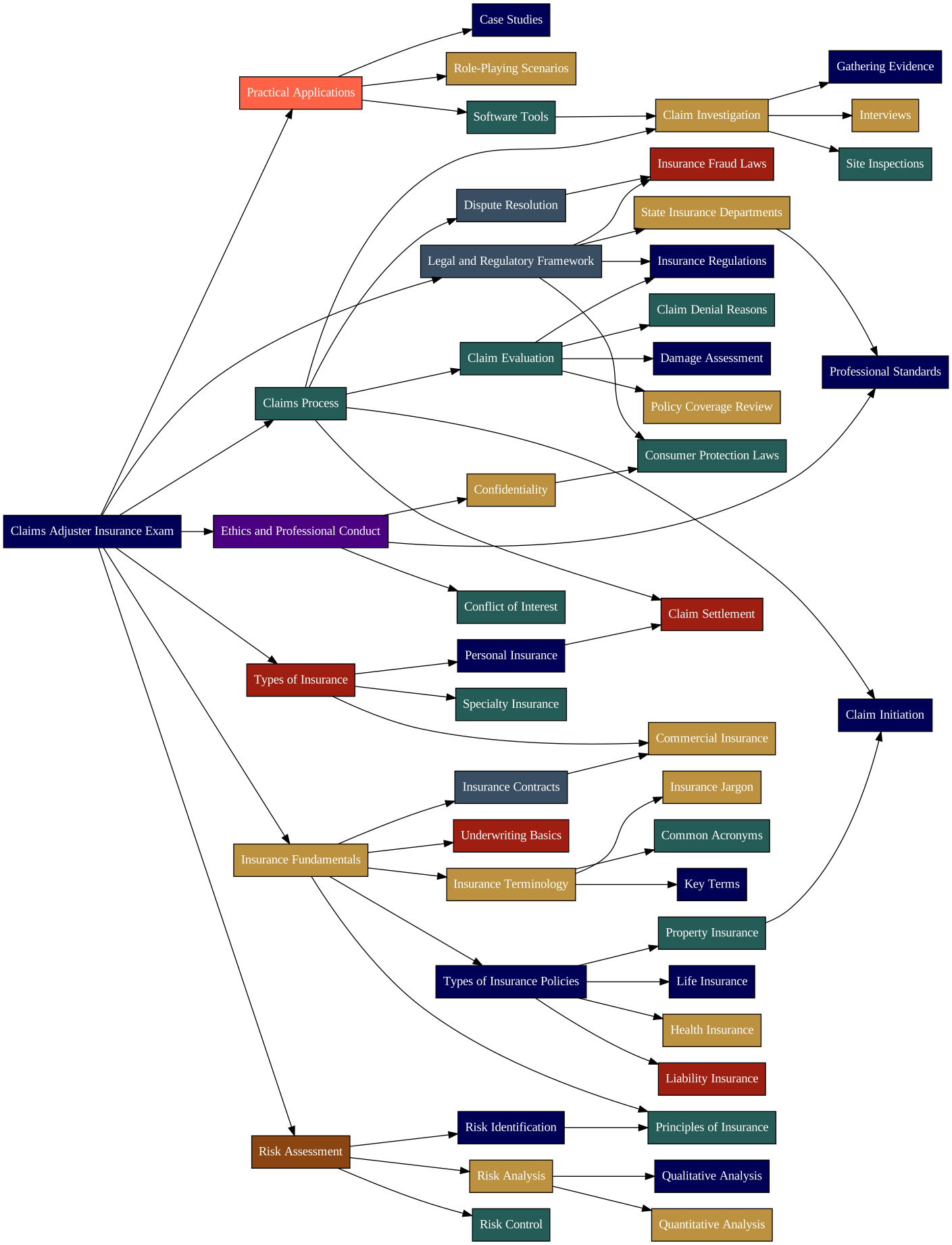
Quiz-summary
0 of 30 questions completed
Questions:
- 1
- 2
- 3
- 4
- 5
- 6
- 7
- 8
- 9
- 10
- 11
- 12
- 13
- 14
- 15
- 16
- 17
- 18
- 19
- 20
- 21
- 22
- 23
- 24
- 25
- 26
- 27
- 28
- 29
- 30
Information
Premium Practice Questions
You have already completed the quiz before. Hence you can not start it again.
Quiz is loading...
You must sign in or sign up to start the quiz.
You have to finish following quiz, to start this quiz:
Results
0 of 30 questions answered correctly
Your time:
Time has elapsed
You have reached 0 of 0 points, (0)
Categories
- Not categorized 0%
- 1
- 2
- 3
- 4
- 5
- 6
- 7
- 8
- 9
- 10
- 11
- 12
- 13
- 14
- 15
- 16
- 17
- 18
- 19
- 20
- 21
- 22
- 23
- 24
- 25
- 26
- 27
- 28
- 29
- 30
- Answered
- Review
-
Question 1 of 30
1. Question
When you are faced with advising a client in Tennessee who is trying to choose between different personal lines insurance options, what factors should you emphasize that significantly influence their decision-making process? Consider the varying influences of personal experiences, social circles, and economic situations. How you present these factors could guide your client to a more informed decision that aligns with their specific needs and values, reflecting their unique circumstances in the context of Tennessee’s insurance landscape.
Correct
Consumer decisions in personal lines insurance are influenced by a variety of factors, with emotional, social, and economic elements playing significant roles. Firstly, emotional factors such as fear of loss, anxiety about financial stability, and the desire for security can heavily influence a consumer’s choice in insurance products. For instance, a consumer may prioritize comprehensive coverage due to a previous negative experience, thus showing how personal history impacts decision-making. Additionally, social influence, including the opinions of family and friends, can lead to consumers choosing familiar brands or products that others recommend, showcasing the importance of trust and societal norms in these decisions. Moreover, economic factors, such as a consumer’s perceived value for money and overall financial situation, also impact their choices. In Tennessee, regulations may affect how products are marketed and sold, as agents must ensure consumers fully understand the policies available, further influencing their final decisions. Understanding these influences helps insurance professionals tailor their offerings and communication strategies effectively.
Incorrect
Consumer decisions in personal lines insurance are influenced by a variety of factors, with emotional, social, and economic elements playing significant roles. Firstly, emotional factors such as fear of loss, anxiety about financial stability, and the desire for security can heavily influence a consumer’s choice in insurance products. For instance, a consumer may prioritize comprehensive coverage due to a previous negative experience, thus showing how personal history impacts decision-making. Additionally, social influence, including the opinions of family and friends, can lead to consumers choosing familiar brands or products that others recommend, showcasing the importance of trust and societal norms in these decisions. Moreover, economic factors, such as a consumer’s perceived value for money and overall financial situation, also impact their choices. In Tennessee, regulations may affect how products are marketed and sold, as agents must ensure consumers fully understand the policies available, further influencing their final decisions. Understanding these influences helps insurance professionals tailor their offerings and communication strategies effectively.
-
Question 2 of 30
2. Question
When you are faced with a situation where a client is unsure about the implications of exclusions and limitations in their personal line insurance policy in Tennessee, how would you best describe the importance of understanding these elements? In particular, why is it essential for the client to be aware of how exclusions can affect their claims process and what limitations might apply to their coverage?
Correct
Understanding exclusions and limitations in personal line insurance is crucial, particularly in Tennessee, where policies may have specific clauses that could impact coverage. Exclusions are particular conditions or circumstances under which the insurer will not pay for a loss. They are designed to limit the insurer’s liability and protect against potentially unmanageable risks. For instance, typical exclusions might involve damage from floods or earthquakes, which are often not covered under standard homeowners’ insurance policies. Limitations, on the other hand, typically refer to the maximum amount an insurer will pay for a specific type of loss or within a certain period. This can include caps on coverage for personal property or liability claims. In Tennessee, it’s important for policyholders to thoroughly review their policies and understand these exclusions and limitations as they can significantly impact the financial implications after a loss occurs. When clients inquire about their policies, agents must accurately explain these terms and encourage clients to consider endorsements or additional coverage if their needs are not fully met by standard policies.
Incorrect
Understanding exclusions and limitations in personal line insurance is crucial, particularly in Tennessee, where policies may have specific clauses that could impact coverage. Exclusions are particular conditions or circumstances under which the insurer will not pay for a loss. They are designed to limit the insurer’s liability and protect against potentially unmanageable risks. For instance, typical exclusions might involve damage from floods or earthquakes, which are often not covered under standard homeowners’ insurance policies. Limitations, on the other hand, typically refer to the maximum amount an insurer will pay for a specific type of loss or within a certain period. This can include caps on coverage for personal property or liability claims. In Tennessee, it’s important for policyholders to thoroughly review their policies and understand these exclusions and limitations as they can significantly impact the financial implications after a loss occurs. When clients inquire about their policies, agents must accurately explain these terms and encourage clients to consider endorsements or additional coverage if their needs are not fully met by standard policies.
-
Question 3 of 30
3. Question
During a client consultation in Tennessee, the homeowner expresses confusion about the differences between various types of coverage in their personal lines insurance policy. They ask you to clarify how dwelling, personal property, and liability coverage function within their policy. How would you best explain the key distinctions and interrelationships between these coverage types, ensuring the client understands their importance in protecting their home and personal assets?
Correct
In Tennessee, understanding the various types of coverage under a personal lines insurance policy is essential for both insurance professionals and clients. The dwelling coverage component is tailored to protect the physical structure of a home, allowing homeowners to recover from damages due to specific perils such as fire, storms, and vandalism. Personal property coverage, on the other hand, extends beyond the physical structure and provides compensation for personal belongings within the home, which can include furniture, clothing, and electronics. Liability coverage is another crucial aspect, designed to safeguard policyholders against claims arising from injuries or damages occurring on their property or attributed to their actions. For example, if a guest is injured while visiting a home, liability coverage can help cover medical expenses and legal fees. Each of these coverages serves a distinct purpose but collectively provides a comprehensive safety net for individuals and families in Tennessee.
Incorrect
In Tennessee, understanding the various types of coverage under a personal lines insurance policy is essential for both insurance professionals and clients. The dwelling coverage component is tailored to protect the physical structure of a home, allowing homeowners to recover from damages due to specific perils such as fire, storms, and vandalism. Personal property coverage, on the other hand, extends beyond the physical structure and provides compensation for personal belongings within the home, which can include furniture, clothing, and electronics. Liability coverage is another crucial aspect, designed to safeguard policyholders against claims arising from injuries or damages occurring on their property or attributed to their actions. For example, if a guest is injured while visiting a home, liability coverage can help cover medical expenses and legal fees. Each of these coverages serves a distinct purpose but collectively provides a comprehensive safety net for individuals and families in Tennessee.
-
Question 4 of 30
4. Question
When reviewing an application for personal line insurance in Tennessee, what is the most critical factor that underwriters must consider to align their assessment with state regulations and guidelines? In this context, it is essential to evaluate how various aspects of the applicant’s profile can influence the overall risk assessment process. For example, consider scenarios where a potential policyholder has multiple previous claims or where the property is situated in a high-risk area. Understanding the weight that should be given to these factors is integral to making an informed decision. How do underwriters prioritize these aspects to ensure compliance with the regulations while also protecting the insurer’s interests?
Correct
Underwriting guidelines for personal lines insurance in Tennessee are crucial for evaluating the risk associated with insuring a particular individual or property. These guidelines dictate the criteria by which underwriters assess applications for policies such as homeowners, renters, or personal auto insurance. Key factors include the applicant’s credit history, claims history, coverage needs, and the overall risk profile of the property being insured. For instance, an underwriter may consider whether the property is located in a flood-prone area or the crime rates in the vicinity. Additionally, underwriting guidelines help insurance companies remain compliant with state regulations and laws, which mandate fair treatment of all applicants. A significant aspect is that these guidelines must balance the insurer’s desire to minimize losses while ensuring that eligible applicants can still access necessary coverage. This balance is essential to avoid discriminatory practices and to ensure that underwriting procedures are fair. The implementation of these guidelines is not just about risk assessment; it also involves making informed decisions that align with regulatory requirements while reflecting the company’s underwriting philosophy.
Incorrect
Underwriting guidelines for personal lines insurance in Tennessee are crucial for evaluating the risk associated with insuring a particular individual or property. These guidelines dictate the criteria by which underwriters assess applications for policies such as homeowners, renters, or personal auto insurance. Key factors include the applicant’s credit history, claims history, coverage needs, and the overall risk profile of the property being insured. For instance, an underwriter may consider whether the property is located in a flood-prone area or the crime rates in the vicinity. Additionally, underwriting guidelines help insurance companies remain compliant with state regulations and laws, which mandate fair treatment of all applicants. A significant aspect is that these guidelines must balance the insurer’s desire to minimize losses while ensuring that eligible applicants can still access necessary coverage. This balance is essential to avoid discriminatory practices and to ensure that underwriting procedures are fair. The implementation of these guidelines is not just about risk assessment; it also involves making informed decisions that align with regulatory requirements while reflecting the company’s underwriting philosophy.
-
Question 5 of 30
5. Question
Consider a scenario where an insurance agent is advising a client in Tennessee about their insurance options. The client expresses confusion regarding the distinctions between personal lines and commercial lines insurance. How would you best explain the key differences that the client needs to understand in order to make an informed decision about their insurance needs?
Correct
Understanding the differences between personal lines and commercial lines insurance is crucial for anyone preparing for the Tennessee Personal Line Insurance Exam. Personal lines insurance refers to policies that cover individuals and families for personal needs. This includes products such as homeowners insurance, auto insurance, and personal liability coverage, designed to protect private assets and provide liability protection for personal activities. On the other hand, commercial lines insurance encompasses policies tailored for businesses, which address risks associated with business operations, including property damage, liability, and employee-related risks. The nature of coverage, the complexity of the underwriting process, and the risk management strategies differ significantly between these two categories. For instance, commercial lines typically involve more extensive underwriting assessments due to the potential for greater financial loss, necessitating a deeper understanding of business operations and needs. Furthermore, the regulations and law governing these lines can vary, making it essential for agents specializing in personal insurance to grasp these distinctions fully to ensure compliance with state laws and best practices in Tennessee.
Incorrect
Understanding the differences between personal lines and commercial lines insurance is crucial for anyone preparing for the Tennessee Personal Line Insurance Exam. Personal lines insurance refers to policies that cover individuals and families for personal needs. This includes products such as homeowners insurance, auto insurance, and personal liability coverage, designed to protect private assets and provide liability protection for personal activities. On the other hand, commercial lines insurance encompasses policies tailored for businesses, which address risks associated with business operations, including property damage, liability, and employee-related risks. The nature of coverage, the complexity of the underwriting process, and the risk management strategies differ significantly between these two categories. For instance, commercial lines typically involve more extensive underwriting assessments due to the potential for greater financial loss, necessitating a deeper understanding of business operations and needs. Furthermore, the regulations and law governing these lines can vary, making it essential for agents specializing in personal insurance to grasp these distinctions fully to ensure compliance with state laws and best practices in Tennessee.
-
Question 6 of 30
6. Question
Consider a scenario where a potential client in Tennessee is evaluating different personal lines insurance options. The client is influenced by various external and internal factors as they consider their coverage needs. In this context, which factor is most likely to have the greatest impact on their decision-making process regarding the choice of insurance policy?
Correct
Understanding the factors influencing consumer decisions in personal lines insurance is essential for agents and insurers operating in Tennessee. Various elements can affect how consumers make decisions regarding insurance products, including their personal values, perceived risks, and financial situations. One primary factor is the consumers’ perceived need for coverage, which is often linked to their life circumstances, such as owning a home or starting a family. Additionally, buyers may be influenced by social factors, like recommendations from friends and family or online reviews, which can significantly sway their choices. Marketing strategies employed by insurance companies also play a critical role; appealing advertisements that resonate with the target demographic can enhance brand awareness and trust. Furthermore, pricing and policy features are crucial, as consumers often compare different products based on premiums and coverage options. Understanding these nuanced influences helps insurance professionals tailor their offerings and effectively communicate the value of their products to customers.
Incorrect
Understanding the factors influencing consumer decisions in personal lines insurance is essential for agents and insurers operating in Tennessee. Various elements can affect how consumers make decisions regarding insurance products, including their personal values, perceived risks, and financial situations. One primary factor is the consumers’ perceived need for coverage, which is often linked to their life circumstances, such as owning a home or starting a family. Additionally, buyers may be influenced by social factors, like recommendations from friends and family or online reviews, which can significantly sway their choices. Marketing strategies employed by insurance companies also play a critical role; appealing advertisements that resonate with the target demographic can enhance brand awareness and trust. Furthermore, pricing and policy features are crucial, as consumers often compare different products based on premiums and coverage options. Understanding these nuanced influences helps insurance professionals tailor their offerings and effectively communicate the value of their products to customers.
-
Question 7 of 30
7. Question
When analyzing a client’s needs in Tennessee, insurance professionals often encounter various risks that can impact personal lines coverage. How can understanding the role of risk management positively influence the recommendations made to clients regarding their insurance policies? Consider how different factors, such as state regulations, economic conditions, and individual circumstances, might shape these risk management strategies. This understanding can be pivotal in ensuring that clients are effectively protected against potential losses while simultaneously fostering their trust in the insurance process.
Correct
Risk management is a critical aspect of personal lines insurance, particularly in Tennessee, where various geographical and socio-economic factors influence the types of risks faced by individuals. Effective risk management involves identifying, assessing, and prioritizing risks to mitigate negative impacts on insured parties. In the context of personal lines, this may include homeowners insurance, auto insurance, and personal liability coverage. By recognizing potential hazards, such as natural disasters, theft, or accidents, insurance professionals can work with clients to develop strategies that minimize exposure to risk. These strategies might include recommending coverage limits that are adequate for a client’s specific needs or advising on loss prevention measures. Additionally, understanding state regulations and consumer protection laws in Tennessee helps agents communicate the importance of adequate coverage to clients. This holistic approach not only protects clients but also fosters trust and enhances long-term relationships, reinforcing the agent’s role as a valuable advisor in their financial and risk management decisions.
Incorrect
Risk management is a critical aspect of personal lines insurance, particularly in Tennessee, where various geographical and socio-economic factors influence the types of risks faced by individuals. Effective risk management involves identifying, assessing, and prioritizing risks to mitigate negative impacts on insured parties. In the context of personal lines, this may include homeowners insurance, auto insurance, and personal liability coverage. By recognizing potential hazards, such as natural disasters, theft, or accidents, insurance professionals can work with clients to develop strategies that minimize exposure to risk. These strategies might include recommending coverage limits that are adequate for a client’s specific needs or advising on loss prevention measures. Additionally, understanding state regulations and consumer protection laws in Tennessee helps agents communicate the importance of adequate coverage to clients. This holistic approach not only protects clients but also fosters trust and enhances long-term relationships, reinforcing the agent’s role as a valuable advisor in their financial and risk management decisions.
-
Question 8 of 30
8. Question
Consider a scenario where a Tennessee homeowner has incurred a loss due to fire damage to their personal property. The homeowner had purchased a personal property insurance policy that utilizes replacement cost valuation. After assessing the damage, the claims adjuster reviews the actual cash value of the items lost versus the replacement cost coverage in the policy. Which valuation method would be most beneficial for the homeowner in this situation, and how should they expect their claim to be handled based on Tennessee regulations?
Correct
Valuation of personal property is an essential aspect of personal lines insurance, particularly when assessing claims and determining coverage amounts. In Tennessee, various methods can be utilized to value personal property, including actual cash value (ACV), replacement cost, and agreed value. Actual cash value accounts for depreciation, representing the current market value after considering its age and condition. Replacement cost, on the other hand, provides for the cost of replacing the item without deducting for depreciation, thus ensuring that the policyholder can replace their belongings adequately after a loss. Agreed value policies require a mutual agreement on the value of an item at the time the policy is written, which can streamline the claims process significantly. Understanding these methods is crucial for agents to effectively communicate choices to clients, meet regulatory guidelines, and ensure compliance with Tennessee’s insurance laws. This knowledge helps prevent disputes during the claims process, ensuring policyholders receive appropriate compensation and satisfaction from their insurance coverage.
Incorrect
Valuation of personal property is an essential aspect of personal lines insurance, particularly when assessing claims and determining coverage amounts. In Tennessee, various methods can be utilized to value personal property, including actual cash value (ACV), replacement cost, and agreed value. Actual cash value accounts for depreciation, representing the current market value after considering its age and condition. Replacement cost, on the other hand, provides for the cost of replacing the item without deducting for depreciation, thus ensuring that the policyholder can replace their belongings adequately after a loss. Agreed value policies require a mutual agreement on the value of an item at the time the policy is written, which can streamline the claims process significantly. Understanding these methods is crucial for agents to effectively communicate choices to clients, meet regulatory guidelines, and ensure compliance with Tennessee’s insurance laws. This knowledge helps prevent disputes during the claims process, ensuring policyholders receive appropriate compensation and satisfaction from their insurance coverage.
-
Question 9 of 30
9. Question
In Tennessee, when assessing the financial responsibility required for personal lines insurance, a policyholder is concerned about potential liabilities arising from incidents occurring on their property. Given the importance of personal liability coverage, how does this insurance function to protect the policyholder, especially in terms of legal costs and damages associated with claims?
Correct
Financial responsibility in Tennessee mandates that individuals carry certain levels of insurance coverage to protect against personal liability. This requirement is crucial, as it ensures that policyholders are equipped to cover potential damages or injuries caused to others. In practice, personal liability coverage, typically included in homeowner’s or renter’s insurance, offers a safeguard against lawsuits and claims arising from incidents such as accidents on the insured property. The coverage is often designed to cover legal fees, court costs, and any awarded damages, which can escalate quickly depending on the severity of the incident. Additionally, understanding the difference between liability limits is essential; for example, a policy may have a general liability limit that caps the total payout for all claims during a policy period, as opposed to individual limits for specific types of claims. Familiarity with these financial aspects of personal lines insurance empowers agents and clients alike to make informed decisions that align with Tennessee’s regulatory framework, ensuring that adequate protection is in place.
Incorrect
Financial responsibility in Tennessee mandates that individuals carry certain levels of insurance coverage to protect against personal liability. This requirement is crucial, as it ensures that policyholders are equipped to cover potential damages or injuries caused to others. In practice, personal liability coverage, typically included in homeowner’s or renter’s insurance, offers a safeguard against lawsuits and claims arising from incidents such as accidents on the insured property. The coverage is often designed to cover legal fees, court costs, and any awarded damages, which can escalate quickly depending on the severity of the incident. Additionally, understanding the difference between liability limits is essential; for example, a policy may have a general liability limit that caps the total payout for all claims during a policy period, as opposed to individual limits for specific types of claims. Familiarity with these financial aspects of personal lines insurance empowers agents and clients alike to make informed decisions that align with Tennessee’s regulatory framework, ensuring that adequate protection is in place.
-
Question 10 of 30
10. Question
A critical incident occurs where a tenant in Tennessee experiences significant damage to their personal property due to a burst water pipe. This tenant has a standard renters insurance policy that covers personal property. In reviewing the coverage limits and conditions of this policy, what crucial aspect should the tenant consider to ensure that they have sufficient protection for their possessions? The tenant also needs to evaluate whether their coverage reflects true value in case of loss.
Correct
Coverage for personal property is a fundamental aspect of insurance that protects individuals from losses concerning their belongings, and it is essential to understand the nuances regarding what is covered and under what circumstances. In Tennessee, homeowners and renters insurance policies typically provide coverage for personal property on a named perils basis or an open perils basis. Named perils specifically outline what events or situations are covered, such as theft, fire, or vandalism, while open perils coverage typically protects against all risks unless specifically excluded. Furthermore, policyholders must comprehend the differences between actual cash value (ACV) and replacement cost coverage when it comes to personal property. ACV considers depreciation, while replacement cost allows the insured to replace the damaged or lost items without deducting for depreciation. Different policies may also have varying limits on types of property, such as jewelry, electronics, or collectibles, and understanding these limits is crucial when selecting a policy that adequately covers personal belongings. Finally, exclusions are a key area of focus; certain items, like personal computers or high-value artworks, may require additional coverage via endorsements or riders to be fully protected.
Incorrect
Coverage for personal property is a fundamental aspect of insurance that protects individuals from losses concerning their belongings, and it is essential to understand the nuances regarding what is covered and under what circumstances. In Tennessee, homeowners and renters insurance policies typically provide coverage for personal property on a named perils basis or an open perils basis. Named perils specifically outline what events or situations are covered, such as theft, fire, or vandalism, while open perils coverage typically protects against all risks unless specifically excluded. Furthermore, policyholders must comprehend the differences between actual cash value (ACV) and replacement cost coverage when it comes to personal property. ACV considers depreciation, while replacement cost allows the insured to replace the damaged or lost items without deducting for depreciation. Different policies may also have varying limits on types of property, such as jewelry, electronics, or collectibles, and understanding these limits is crucial when selecting a policy that adequately covers personal belongings. Finally, exclusions are a key area of focus; certain items, like personal computers or high-value artworks, may require additional coverage via endorsements or riders to be fully protected.
-
Question 11 of 30
11. Question
When evaluating insurance options, you recognize that many individuals underestimate the importance of personal umbrella insurance in Tennessee. Consider a scenario where a homeowner with a substantial net worth faces a lawsuit after a guest is injured on their property. The homeowner’s underlying homeowner’s insurance policy has a liability limit that is nearly reached due to medical expenses and legal fees. In this situation, how would the personal umbrella insurance aid the homeowner, and what specific scenarios might it cover beyond typical homeowner’s insurance?
Correct
Personal Umbrella Insurance serves as an essential safeguard for individuals seeking to protect their assets and financial stability. In Tennessee, this type of insurance provides an extra layer of liability coverage that kicks in after the limits of underlying policies, such as homeowners or auto insurance, have been exhausted. It is especially crucial for individuals with significant assets or those who are at higher risk of being sued, such as homeowners with pools or landlords. One primary benefit of personal umbrella insurance is its broad coverage; it often protects against various claims that might not be covered by standard policies, including libel, slander, and certain legal defense costs. Additionally, it usually comes at a relatively low cost compared to the coverage it provides, making it an attractive option. However, it is important to understand that the umbrella policy does not operate in isolation; it requires underlying liability insurance and typically includes exclusions, emphasizing the need for a comprehensive review of one’s coverage portfolio. Maintaining this aware and informed perspective is critical for ensuring adequate financial protection.
Incorrect
Personal Umbrella Insurance serves as an essential safeguard for individuals seeking to protect their assets and financial stability. In Tennessee, this type of insurance provides an extra layer of liability coverage that kicks in after the limits of underlying policies, such as homeowners or auto insurance, have been exhausted. It is especially crucial for individuals with significant assets or those who are at higher risk of being sued, such as homeowners with pools or landlords. One primary benefit of personal umbrella insurance is its broad coverage; it often protects against various claims that might not be covered by standard policies, including libel, slander, and certain legal defense costs. Additionally, it usually comes at a relatively low cost compared to the coverage it provides, making it an attractive option. However, it is important to understand that the umbrella policy does not operate in isolation; it requires underlying liability insurance and typically includes exclusions, emphasizing the need for a comprehensive review of one’s coverage portfolio. Maintaining this aware and informed perspective is critical for ensuring adequate financial protection.
-
Question 12 of 30
12. Question
Consider a scenario where an insurance agent in Tennessee is discussing personal lines insurance options with a potential client for their homeowner’s insurance policy. During the conversation, the agent neglects to provide crucial information regarding the exclusions of certain perils under the policy. If the client later encounters a situation where the insurer denies a claim based on one of these exclusions, which of the following legal and regulatory principles would most directly apply to the agent’s responsibilities in this context?
Correct
In Tennessee, personal lines insurance is heavily regulated to protect consumers and ensure that insurance practices remain fair and transparent. One fundamental aspect of this regulatory landscape is the requirement for insurance companies and agents to adhere to ethical standards and conduct. The Tennessee Department of Commerce and Insurance oversees these regulations and establishes detailed rules that mandate how insurance providers must engage with their clients, including guidelines for disclosures about coverage, exclusions, and the policy’s limitations. Violation of these conduct rules can lead to penalties, including fines and possible revocation of licenses. Furthermore, policyholders are expected to be provided with clear and comprehensible information regarding the terms of their policies, allowing them to make informed decisions. This legal framework aims to foster trust between consumers and insurers, mitigate potential disputes, and enhance the overall integrity of the insurance market within the state. Understanding these regulations is critical for agents when advising clients or handling claims, ensuring that they remain compliant with state laws and uphold their ethical obligations.
Incorrect
In Tennessee, personal lines insurance is heavily regulated to protect consumers and ensure that insurance practices remain fair and transparent. One fundamental aspect of this regulatory landscape is the requirement for insurance companies and agents to adhere to ethical standards and conduct. The Tennessee Department of Commerce and Insurance oversees these regulations and establishes detailed rules that mandate how insurance providers must engage with their clients, including guidelines for disclosures about coverage, exclusions, and the policy’s limitations. Violation of these conduct rules can lead to penalties, including fines and possible revocation of licenses. Furthermore, policyholders are expected to be provided with clear and comprehensible information regarding the terms of their policies, allowing them to make informed decisions. This legal framework aims to foster trust between consumers and insurers, mitigate potential disputes, and enhance the overall integrity of the insurance market within the state. Understanding these regulations is critical for agents when advising clients or handling claims, ensuring that they remain compliant with state laws and uphold their ethical obligations.
-
Question 13 of 30
13. Question
Consider a scenario where a resident of Tennessee is reviewing their auto insurance policy renewal. They notice that their premium has increased, prompting them to investigate the underlying reasons. After assessing several factors, they find that their driving record shows a recent accident, but they also consider other elements such as their age, the type of vehicle, and where they live. Given this context, which factor is most likely to have the most significant impact on the premium increase?
Correct
Auto insurance premiums are influenced by various factors that insurers consider when assessing risk. One of the most critical elements is the driver’s driving history, including any past accidents, violations, or claims. A clean driving record typically results in lower premiums, as it signifies responsible behavior behind the wheel. Additionally, demographic factors such as age, gender, and marital status come into play; younger, less experienced drivers usually face higher premiums due to the increased likelihood of accidents. Another significant factor is the type of vehicle being insured; high-performance or luxury cars often attract higher premiums because they are more expensive to repair or replace. Furthermore, geographical location, including crime rates and accident statistics in a driver’s area, significantly affects rates. For example, urban areas with higher traffic densities tend to have higher premiums compared to rural areas. Lastly, coverage choices, such as higher deductibles and additional protections, can also alter the cost of premiums. Understanding these factors can empower consumers to make informed choices regarding their auto insurance policies.
Incorrect
Auto insurance premiums are influenced by various factors that insurers consider when assessing risk. One of the most critical elements is the driver’s driving history, including any past accidents, violations, or claims. A clean driving record typically results in lower premiums, as it signifies responsible behavior behind the wheel. Additionally, demographic factors such as age, gender, and marital status come into play; younger, less experienced drivers usually face higher premiums due to the increased likelihood of accidents. Another significant factor is the type of vehicle being insured; high-performance or luxury cars often attract higher premiums because they are more expensive to repair or replace. Furthermore, geographical location, including crime rates and accident statistics in a driver’s area, significantly affects rates. For example, urban areas with higher traffic densities tend to have higher premiums compared to rural areas. Lastly, coverage choices, such as higher deductibles and additional protections, can also alter the cost of premiums. Understanding these factors can empower consumers to make informed choices regarding their auto insurance policies.
-
Question 14 of 30
14. Question
When you are faced with advising a client in Tennessee who is considering renters insurance, what key aspects should you highlight regarding the coverage’s primary benefits and protections? This client is unsure whether obtaining renters insurance is worthwhile, and you need to explain not only the coverage for personal property but also the liability aspects and potential requirements from landlords. It’s critical to ensure that the client understands the importance of being adequately protected against various risks that could impact their financial and legal standing.
Correct
When discussing renters insurance in Tennessee, it’s important to grasp the nuances of what this type of insurance coverage entails. Renters insurance primarily provides personal property protection for individuals who lease or rent an apartment, home, or other living space. Unlike homeowners insurance, which covers the physical structure of a property, renters insurance focuses on protecting the renter’s belongings against risks such as theft, fire, and certain types of water damage. Additionally, renters insurance may also offer liability coverage, which protects against legal claims arising from injuries or damages occurring in the rented space. This coverage can be vital if a visitor injures themselves and seeks compensation, or if the renter accidentally causes damage to the property. In Tennessee, as is common in many states, lenders may require proof of renters insurance for particular lease agreements. Understanding these underlying principles helps renters appreciate the necessity of this coverage and make informed decisions regarding their insurance needs.
Incorrect
When discussing renters insurance in Tennessee, it’s important to grasp the nuances of what this type of insurance coverage entails. Renters insurance primarily provides personal property protection for individuals who lease or rent an apartment, home, or other living space. Unlike homeowners insurance, which covers the physical structure of a property, renters insurance focuses on protecting the renter’s belongings against risks such as theft, fire, and certain types of water damage. Additionally, renters insurance may also offer liability coverage, which protects against legal claims arising from injuries or damages occurring in the rented space. This coverage can be vital if a visitor injures themselves and seeks compensation, or if the renter accidentally causes damage to the property. In Tennessee, as is common in many states, lenders may require proof of renters insurance for particular lease agreements. Understanding these underlying principles helps renters appreciate the necessity of this coverage and make informed decisions regarding their insurance needs.
-
Question 15 of 30
15. Question
A client in Tennessee is considering purchasing insurance to protect their personal property and liability exposure related to their home. They are unsure whether to choose homeowners insurance or renters insurance. When advising your client, what are the most important distinctions between these two types of insurance that you should explain to them? Highlight any specific coverage aspects related to the state of Tennessee that may influence their decision, along with any unique regulations that could apply.
Correct
Personal lines insurance encompasses a variety of policies designed to protect individuals and their personal property. One common type includes homeowners insurance, which not only provides coverage for the dwelling but also offers liability protection. Essentially, it safeguards against damages to the home due to specific perils, such as fire or theft, while simultaneously covering personal liability claims, such as injuries sustained by others on the property. Understanding the distinctions and components of homeowners insurance versus other personal lines like renters insurance is critical for agents. Renters insurance, for instance, covers personal property but not the structure itself, which is the responsibility of the landlord. Moreover, knowledge of how policies can vary by state, including any unique regulations Tennessee may impose, is essential. Agents must also be familiar with exclusions and endorsements which affect coverage. Ultimately, being well-versed in personal lines insurance allows providers to better serve clients by offering tailored advice and effective risk management strategies.
Incorrect
Personal lines insurance encompasses a variety of policies designed to protect individuals and their personal property. One common type includes homeowners insurance, which not only provides coverage for the dwelling but also offers liability protection. Essentially, it safeguards against damages to the home due to specific perils, such as fire or theft, while simultaneously covering personal liability claims, such as injuries sustained by others on the property. Understanding the distinctions and components of homeowners insurance versus other personal lines like renters insurance is critical for agents. Renters insurance, for instance, covers personal property but not the structure itself, which is the responsibility of the landlord. Moreover, knowledge of how policies can vary by state, including any unique regulations Tennessee may impose, is essential. Agents must also be familiar with exclusions and endorsements which affect coverage. Ultimately, being well-versed in personal lines insurance allows providers to better serve clients by offering tailored advice and effective risk management strategies.
-
Question 16 of 30
16. Question
When considering the underwriting guidelines for personal lines insurance in Tennessee, what are the key factors that an underwriter must evaluate to determine the risk and make coverage decisions? This assessment is crucial because it shapes the insurer’s overall risk management strategy and impacts how policies are priced. Underwriters must not only focus on traditional metrics such as the applicant’s claims history and credit score but also assess conditions unique to Tennessee, such as environmental hazards, local regulations, and demographic considerations. In your analysis, highlight which elements are most critical to ensure both compliance with state laws and effective risk assessment in the underwriting process.
Correct
Underwriting guidelines for personal lines insurance are crucial as they establish the criteria by which insurers assess the risk of insuring a client. Insurers utilize these guidelines to determine the acceptability of risks presented by applicants and to ensure that they are not taking on undue exposure. The process often involves evaluating several factors, including the applicant’s claims history, credit score, the condition of the property, and any previous insurance coverage issues. In Tennessee, underwriters are expected to follow state regulations that promote fair treatment and prohibit discrimination based on personal characteristics that do not relate to the actual risk. This includes ensuring that applicants are evaluated based on objective data rather than subjective assumptions. Additionally, effective underwriting must balance the insurer’s need to mitigate risk with the obligation to provide coverage at a fair price. The guidelines also serve to protect the insurer’s financial health while ensuring that customers receive appropriate and necessary insurance coverage, fostering a responsible and sustainable insurance market.
Incorrect
Underwriting guidelines for personal lines insurance are crucial as they establish the criteria by which insurers assess the risk of insuring a client. Insurers utilize these guidelines to determine the acceptability of risks presented by applicants and to ensure that they are not taking on undue exposure. The process often involves evaluating several factors, including the applicant’s claims history, credit score, the condition of the property, and any previous insurance coverage issues. In Tennessee, underwriters are expected to follow state regulations that promote fair treatment and prohibit discrimination based on personal characteristics that do not relate to the actual risk. This includes ensuring that applicants are evaluated based on objective data rather than subjective assumptions. Additionally, effective underwriting must balance the insurer’s need to mitigate risk with the obligation to provide coverage at a fair price. The guidelines also serve to protect the insurer’s financial health while ensuring that customers receive appropriate and necessary insurance coverage, fostering a responsible and sustainable insurance market.
-
Question 17 of 30
17. Question
When analyzing a system for personal liability exposure in Tennessee, consider the various scenarios that could lead to potential claims against an individual. A homeowner frequently hosts gatherings at their residence, has multiple pets, and is an active participant in local sports leagues. Given these circumstances, which of the following best describes the homeowner’s personal liability exposure? It is essential to evaluate how these activities may contribute to risk, what insurance measures should be implemented to mitigate these risks, and the overall implications for the homeowner’s financial responsibility should an incident arise. Understanding these factors can help guide homeowners in selecting appropriate liability coverage.
Correct
Personal liability exposure encompasses the risks that individuals face in their daily lives that could result in legal claims for damages caused to others. Such exposure is often encountered in scenarios involving negligence, where the actions (or inactions) of an individual lead to injury or property damage. In Tennessee, understanding personal liability exposure is crucial for individuals to protect themselves through appropriate insurance coverage, typically offered by homeowners or renters insurance policies. These policies provide liability coverage that can help pay for legal fees and damages if the insured is found responsible for harming someone. Various factors can increase personal liability exposure, including owning pets, hosting social gatherings, and engaging in recreational activities. Recognizing these factors is essential for individuals to assess their risk effectively. Moreover, Tennessee law emphasizes the need for personal responsibility and may impose significant financial burdens on individuals who do not take adequate precautions to mitigate these risks. Thus, educating clients about their personal liability exposure and ways to manage it through appropriate insurance is a vital aspect of personal line insurance practice.
Incorrect
Personal liability exposure encompasses the risks that individuals face in their daily lives that could result in legal claims for damages caused to others. Such exposure is often encountered in scenarios involving negligence, where the actions (or inactions) of an individual lead to injury or property damage. In Tennessee, understanding personal liability exposure is crucial for individuals to protect themselves through appropriate insurance coverage, typically offered by homeowners or renters insurance policies. These policies provide liability coverage that can help pay for legal fees and damages if the insured is found responsible for harming someone. Various factors can increase personal liability exposure, including owning pets, hosting social gatherings, and engaging in recreational activities. Recognizing these factors is essential for individuals to assess their risk effectively. Moreover, Tennessee law emphasizes the need for personal responsibility and may impose significant financial burdens on individuals who do not take adequate precautions to mitigate these risks. Thus, educating clients about their personal liability exposure and ways to manage it through appropriate insurance is a vital aspect of personal line insurance practice.
-
Question 18 of 30
18. Question
When analyzing a situation where a policyholder has filed a claim for a covered loss under their homeowners insurance in Tennessee, how should the insurer proceed in accordance with the Fair Claims Settlement Practices Act? The policyholder expresses concern about the length of time it is taking to process their claim and has not received a clear explanation regarding the status. What steps are required by the insurer to ensure compliance with the act and maintain a positive relationship with the policyholder?
Correct
The Fair Claims Settlement Practices Act is a crucial component of consumer protection in the state of Tennessee. It establishes fundamental standards regarding how insurance claims should be managed to ensure fairness and transparency. Under this act, insurers must act in good faith and provide a prompt and equitable settlement of claims. Failure to adhere to these principles can result in significant penalties for the insurer, including fines and potential legal action from policyholders. Another critical aspect of the act is that it mandates that insurers must provide written explanations for claim denials, ensuring that policyholders have a clear understanding of the reasons behind the insurer’s decision. This transparency helps maintain trust between insurers and insured parties. Additionally, the act emphasizes the importance of timely communication. Insurers are required to respond to claims within specific timeframes and must handle claims without unreasonable delay. Understanding these obligations is vital for insurance professionals working in Tennessee, as it not only affects compliance but also shapes customer relationships and overall service quality.
Incorrect
The Fair Claims Settlement Practices Act is a crucial component of consumer protection in the state of Tennessee. It establishes fundamental standards regarding how insurance claims should be managed to ensure fairness and transparency. Under this act, insurers must act in good faith and provide a prompt and equitable settlement of claims. Failure to adhere to these principles can result in significant penalties for the insurer, including fines and potential legal action from policyholders. Another critical aspect of the act is that it mandates that insurers must provide written explanations for claim denials, ensuring that policyholders have a clear understanding of the reasons behind the insurer’s decision. This transparency helps maintain trust between insurers and insured parties. Additionally, the act emphasizes the importance of timely communication. Insurers are required to respond to claims within specific timeframes and must handle claims without unreasonable delay. Understanding these obligations is vital for insurance professionals working in Tennessee, as it not only affects compliance but also shapes customer relationships and overall service quality.
-
Question 19 of 30
19. Question
Consider a scenario where an insurance agent in Tennessee is tasked with evaluating a client’s application for homeowner’s insurance. The agent must assess various factors, including the property’s age, the client’s previous claims history, and the neighborhood’s risk of flooding. Given the importance of accurately determining the insurability of the property, which principle of risk assessment should the agent prioritize to ensure that both the client and the insurance company are protected?
Correct
Risk assessment is a foundational element in the field of insurance, particularly within the context of personal lines. It involves identifying potential risks, analyzing the likelihood and consequences of these risks, and determining how to manage them. In Tennessee, insurance professionals must be adept at evaluating risk factors which include, but are not limited to, the characteristics of the property insured, the behavior of the policyholders, and the environment in which the insured resides. Understanding risk assessment also necessitates awareness of how underwriting guidelines impact the assessment process. For instance, factors like a homeowner’s claims history, the construction type of the dwelling, and the locality’s susceptibility to natural disasters can significantly influence risk ratings and premiums. An effective risk assessment not only protects insurance providers from excessive losses but also ensures that policyholders receive adequate coverage tailored to their specific needs. Failure to properly assess risks may lead to catastrophic financial consequences for both the insurer and the insured, reinforcing the critical nature of this skill in personal line insurance.
Incorrect
Risk assessment is a foundational element in the field of insurance, particularly within the context of personal lines. It involves identifying potential risks, analyzing the likelihood and consequences of these risks, and determining how to manage them. In Tennessee, insurance professionals must be adept at evaluating risk factors which include, but are not limited to, the characteristics of the property insured, the behavior of the policyholders, and the environment in which the insured resides. Understanding risk assessment also necessitates awareness of how underwriting guidelines impact the assessment process. For instance, factors like a homeowner’s claims history, the construction type of the dwelling, and the locality’s susceptibility to natural disasters can significantly influence risk ratings and premiums. An effective risk assessment not only protects insurance providers from excessive losses but also ensures that policyholders receive adequate coverage tailored to their specific needs. Failure to properly assess risks may lead to catastrophic financial consequences for both the insurer and the insured, reinforcing the critical nature of this skill in personal line insurance.
-
Question 20 of 30
20. Question
During a review of an insurance company’s financial practices in Tennessee, you notice discrepancies in how reserves and claims liabilities are being reported. The claims department has indicated a change in the reporting procedures, but there seems to be confusion about how future claims are estimated. In this context, what is the most important step the insurer should take to ensure they are prepared for potential claims, while also adhering to Tennessee regulations and ethical standards in insurance practices?
Correct
Understanding reserves and claims liabilities is crucial for effective personal line insurance management in Tennessee. Reserves are the funds set aside by insurers to pay future claims, reflecting the company’s commitment to cover its liabilities. Claims liabilities refer specifically to the insurer’s obligation to pay claims that have already been reported or are expected to arise from events that have occurred. Accurately estimating these reserves requires a comprehensive understanding of the claims process, historical claim patterns, and the potential risks involved in underwriting policies. Failure to maintain adequate reserves can lead to financial instability for an insurer, potentially impacting its ability to fulfill obligations to policyholders. Moreover, Tennessee regulations mandate that insurers must regularly evaluate and adjust their reserves to ensure financial health and compliance. This evaluation process not only protects policyholders but also contributes to the overall stability of the insurance market within the state. Insurers must employ sound actuarial practices and accounting principles when establishing and reviewing these reserves to remain in compliance with state regulations and to uphold ethical standards in the industry.
Incorrect
Understanding reserves and claims liabilities is crucial for effective personal line insurance management in Tennessee. Reserves are the funds set aside by insurers to pay future claims, reflecting the company’s commitment to cover its liabilities. Claims liabilities refer specifically to the insurer’s obligation to pay claims that have already been reported or are expected to arise from events that have occurred. Accurately estimating these reserves requires a comprehensive understanding of the claims process, historical claim patterns, and the potential risks involved in underwriting policies. Failure to maintain adequate reserves can lead to financial instability for an insurer, potentially impacting its ability to fulfill obligations to policyholders. Moreover, Tennessee regulations mandate that insurers must regularly evaluate and adjust their reserves to ensure financial health and compliance. This evaluation process not only protects policyholders but also contributes to the overall stability of the insurance market within the state. Insurers must employ sound actuarial practices and accounting principles when establishing and reviewing these reserves to remain in compliance with state regulations and to uphold ethical standards in the industry.
-
Question 21 of 30
21. Question
When analyzing a personal liability scenario in Tennessee, consider a situation where a homeowner’s guest suffers an injury due to a slippery floor inside the residence. The guest decides to file a claim against the homeowner for medical expenses and lost wages. In navigating the complexities of this liability, which aspects should the homeowner’s insurance policy cover to ensure adequate protection against such claims, and what are the potential limitations or exclusions that the homeowner should be aware of?
Correct
Liability coverage within personal lines insurance is designed to protect individuals against claims resulting from injuries and damage to other people or property. In Tennessee, personal liability coverage is generally included in homeowners and renters insurance policies. This coverage addresses legal expenses, damages awarded in lawsuits, and various liability exposures that an individual may face. Understanding the nuances of this coverage is crucial for both insurance agents and policyholders. For instance, personal liability coverage typically extends to claims arising from actions occurring on the insured’s premises, but it may also cover incidents occurring away from home, such as while traveling or during recreational activities. However, there are exclusions, such as intentional acts or damage to one’s own property. A good grasp of these details aids in assessing risk and determining adequate coverage limits that align with an individual’s lifestyle and potential exposure. Thus, it is essential to substantiate the coverage by evaluating real-world scenarios where liability may arise, ensuring policyholders are well-informed about their protections.
Incorrect
Liability coverage within personal lines insurance is designed to protect individuals against claims resulting from injuries and damage to other people or property. In Tennessee, personal liability coverage is generally included in homeowners and renters insurance policies. This coverage addresses legal expenses, damages awarded in lawsuits, and various liability exposures that an individual may face. Understanding the nuances of this coverage is crucial for both insurance agents and policyholders. For instance, personal liability coverage typically extends to claims arising from actions occurring on the insured’s premises, but it may also cover incidents occurring away from home, such as while traveling or during recreational activities. However, there are exclusions, such as intentional acts or damage to one’s own property. A good grasp of these details aids in assessing risk and determining adequate coverage limits that align with an individual’s lifestyle and potential exposure. Thus, it is essential to substantiate the coverage by evaluating real-world scenarios where liability may arise, ensuring policyholders are well-informed about their protections.
-
Question 22 of 30
22. Question
In Tennessee, when assessing a liability claim, how should insurers approach the situation where the claimant’s actions may have contributed to the incident? Consider a scenario where a pedestrian, while crossing a busy street, fails to observe traffic signals and is subsequently struck by a vehicle. What defense might the vehicle driver invoke to mitigate their liability in this case?
Correct
Defenses against liability claims are essential tools for personal lines insurance in Tennessee. These defenses allow insurers to mitigate or eliminate liability in certain situations. One common defense is the absence of negligence, which asserts that the insured did not act negligently or that there was no breach of duty owed to the claimant. Another key defense is comparative negligence, which can reduce the liability based on the claimant’s own degree of fault in contributing to an incident. It’s important to differentiate between various defenses, including strict liability and intentional torts, as these concepts have distinct implications for claims handling. For instance, in situations where the claimant may have engaged in risky behavior or violated safety protocols, these facts can influence liability outcomes significantly. Understanding these nuances is crucial, as they can dictate how claims are investigated and resolved under the legal framework outlined in Tennessee statutes. Insurers must have a solid grasp of these defenses to effectively manage potential risks and liabilities in their personal lines portfolios.
Incorrect
Defenses against liability claims are essential tools for personal lines insurance in Tennessee. These defenses allow insurers to mitigate or eliminate liability in certain situations. One common defense is the absence of negligence, which asserts that the insured did not act negligently or that there was no breach of duty owed to the claimant. Another key defense is comparative negligence, which can reduce the liability based on the claimant’s own degree of fault in contributing to an incident. It’s important to differentiate between various defenses, including strict liability and intentional torts, as these concepts have distinct implications for claims handling. For instance, in situations where the claimant may have engaged in risky behavior or violated safety protocols, these facts can influence liability outcomes significantly. Understanding these nuances is crucial, as they can dictate how claims are investigated and resolved under the legal framework outlined in Tennessee statutes. Insurers must have a solid grasp of these defenses to effectively manage potential risks and liabilities in their personal lines portfolios.
-
Question 23 of 30
23. Question
When analyzing the implications of climate change on personal lines insurance coverage in Tennessee, it becomes essential to consider how insurers are modifying their underwriting practices and policy offerings. Given the increasing frequency of severe weather events and the associated risks, what is the primary approach insurers are taking in response to these challenges? This includes both changes in coverage terms and shifts in premium structures that reflect the evolving landscape of natural disasters. Additionally, how are these factors influencing the obligations placed on insurers regarding communication with policyholders about their coverage limits and claims processes? Understanding these nuanced changes is imperative for effectively navigating the complexities of personal lines insurance in this dynamic environmental context.
Correct
The impact of climate change on personal lines insurance coverage is significant, particularly in Tennessee where the prevalence of extreme weather events such as floods, storms, and wildfires is increasing. Insurers are adapting their policies and coverage limits in response to these evolving risks. A key aspect of this adaptation is the reevaluation of underwriting criteria and premium pricing based on the heightened risk associated with climate-related events. This may result in insurers offering coverage options that are more aligned with sustainable building practices, incentivizing homeowners to implement loss prevention measures, and requiring policyholders to disclose any previous damage related to climate events. The legal framework surrounding personal lines insurance in Tennessee also mandates clear communication of policy terms and the necessity for insurers to act in good faith when assessing claims arising from climate-change-induced damage. Consequently, understanding these dynamics is critical for both policyholders and professionals in the insurance industry as it directly influences risk assessment, policy formulation, and customer engagement strategies.
Incorrect
The impact of climate change on personal lines insurance coverage is significant, particularly in Tennessee where the prevalence of extreme weather events such as floods, storms, and wildfires is increasing. Insurers are adapting their policies and coverage limits in response to these evolving risks. A key aspect of this adaptation is the reevaluation of underwriting criteria and premium pricing based on the heightened risk associated with climate-related events. This may result in insurers offering coverage options that are more aligned with sustainable building practices, incentivizing homeowners to implement loss prevention measures, and requiring policyholders to disclose any previous damage related to climate events. The legal framework surrounding personal lines insurance in Tennessee also mandates clear communication of policy terms and the necessity for insurers to act in good faith when assessing claims arising from climate-change-induced damage. Consequently, understanding these dynamics is critical for both policyholders and professionals in the insurance industry as it directly influences risk assessment, policy formulation, and customer engagement strategies.
-
Question 24 of 30
24. Question
When you are faced with a situation where a policyholder in Tennessee has submitted a claim for damages under their personal line insurance policy, it is essential to understand the critical steps involved in the claims process. The policyholder has reported the incident but is unsure about the next procedural steps the insurer must take in order to ensure the claim is processed appropriately. What is the primary responsibility of the insurance company upon receiving this claim that directly influences the outcome of the claims process?
Correct
The claims process is a critical aspect of personal line insurance, representing the mechanism through which policyholders seek compensation for a loss covered under their insurance policy. In Tennessee, the claims process must adhere to state regulations that ensure fair treatment of insured individuals. One key part of this process is the need for timely notification of the insurer about a claim. Failure to report a claim promptly may lead to complications or even denial based on the policy’s terms. Moreover, the insurer is responsible for thorough investigation of the claims submitted, which involves evaluating the circumstances surrounding the loss, verifying coverage, and determining the validity of the claim. Insurers are also required to communicate effectively with policyholders about claim status updates and any additional information needed to process the claim efficiently. Understanding the nuances of the claims process, including the rights of the insured and obligations of the insurer, is essential for effective claims management. Policyholders should also be aware of the appeals process in case their claims are denied, which involves the rights to ask for reconsideration and how they can provide additional evidence to support their claims.
Incorrect
The claims process is a critical aspect of personal line insurance, representing the mechanism through which policyholders seek compensation for a loss covered under their insurance policy. In Tennessee, the claims process must adhere to state regulations that ensure fair treatment of insured individuals. One key part of this process is the need for timely notification of the insurer about a claim. Failure to report a claim promptly may lead to complications or even denial based on the policy’s terms. Moreover, the insurer is responsible for thorough investigation of the claims submitted, which involves evaluating the circumstances surrounding the loss, verifying coverage, and determining the validity of the claim. Insurers are also required to communicate effectively with policyholders about claim status updates and any additional information needed to process the claim efficiently. Understanding the nuances of the claims process, including the rights of the insured and obligations of the insurer, is essential for effective claims management. Policyholders should also be aware of the appeals process in case their claims are denied, which involves the rights to ask for reconsideration and how they can provide additional evidence to support their claims.
-
Question 25 of 30
25. Question
When you are faced with the task of helping clients in Tennessee understand their personal insurance options, it is imperative to emphasize the importance of insurance literacy. This fundamental understanding allows clients to navigate complex policy details, recognize the coverage they need, and avoid common pitfalls. How would you articulate the various advantages of being insurance literate in terms of assessing risk and making informed choices about personal insurance products? Consider the implications of this knowledge on their overall financial well-being and long-term planning.
Correct
Insurance literacy is a crucial skill that empowers individuals to make informed decisions regarding their personal insurance needs and policies. Understanding the fundamentals of insurance, including key terms, types of coverage, and the implications of various insurance products, ensures that consumers are not only safeguarded against unforeseen risks but also able to advocate for themselves effectively. In Tennessee, where natural disasters such as tornadoes and flooding can occur, having a solid grasp of insurance principles is essential. This knowledge helps residents assess appropriate coverage levels, discern between needed policies, and identify potential gaps in protection. Additionally, insurance literacy plays a vital role in understanding policy exclusions and limitations, which can substantially impact claim outcomes. Consumers who lack this knowledge might unwittingly enter into contracts that do not adequately protect their interests or fail to take advantage of available discounts based on their lifestyle or risk management practices. Therefore, enhancing insurance literacy can lead to better financial security and more robust risk management strategies.
Incorrect
Insurance literacy is a crucial skill that empowers individuals to make informed decisions regarding their personal insurance needs and policies. Understanding the fundamentals of insurance, including key terms, types of coverage, and the implications of various insurance products, ensures that consumers are not only safeguarded against unforeseen risks but also able to advocate for themselves effectively. In Tennessee, where natural disasters such as tornadoes and flooding can occur, having a solid grasp of insurance principles is essential. This knowledge helps residents assess appropriate coverage levels, discern between needed policies, and identify potential gaps in protection. Additionally, insurance literacy plays a vital role in understanding policy exclusions and limitations, which can substantially impact claim outcomes. Consumers who lack this knowledge might unwittingly enter into contracts that do not adequately protect their interests or fail to take advantage of available discounts based on their lifestyle or risk management practices. Therefore, enhancing insurance literacy can lead to better financial security and more robust risk management strategies.
-
Question 26 of 30
26. Question
While working on a homeowner’s insurance policy for a client in Tennessee, you discover they are unaware of the differences between dwelling coverage and personal property coverage. How would you best explain these two critical concepts, particularly focusing on their roles in a standard homeowners insurance policy? Consider the implications of each coverage type and how they affect the overall protection plan provided by the policy, including any optional enhancements that might be available to the client to increase their coverage limits.
Correct
Homeowners insurance is a critical element in personal line insurance, particularly in Tennessee, due to its multifaceted nature that covers both property damage and liability. One key aspect of homeowners insurance is the distinction between the various coverage types available. For instance, a standard homeowners policy often includes a dwelling coverage section, which covers the physical structure of the home from specific perils such as fire, storm damage, and theft. In addition, there are provisions for personal property coverage that protects belongings within the home. However, liability coverage is equally vital, as it protects the policyholder from legal claims arising from injuries or damages that occur on their property. In Tennessee, many homeowners are also aware of the potential for optional endorsements that can enhance their coverage, such as flood insurance or personal umbrella policies. Understanding these distinctions is essential for agents and clients alike, as it allows them to tailor the policy to meet specific needs and liabilities. For example, if a homeowner frequently entertains guests, they’ll need to consider the implications of liability coverage more seriously. This nuanced understanding of how different aspects of homeowners insurance work together is crucial for ensuring adequate protection and adherence to the laws governing insurance practices in Tennessee.
Incorrect
Homeowners insurance is a critical element in personal line insurance, particularly in Tennessee, due to its multifaceted nature that covers both property damage and liability. One key aspect of homeowners insurance is the distinction between the various coverage types available. For instance, a standard homeowners policy often includes a dwelling coverage section, which covers the physical structure of the home from specific perils such as fire, storm damage, and theft. In addition, there are provisions for personal property coverage that protects belongings within the home. However, liability coverage is equally vital, as it protects the policyholder from legal claims arising from injuries or damages that occur on their property. In Tennessee, many homeowners are also aware of the potential for optional endorsements that can enhance their coverage, such as flood insurance or personal umbrella policies. Understanding these distinctions is essential for agents and clients alike, as it allows them to tailor the policy to meet specific needs and liabilities. For example, if a homeowner frequently entertains guests, they’ll need to consider the implications of liability coverage more seriously. This nuanced understanding of how different aspects of homeowners insurance work together is crucial for ensuring adequate protection and adherence to the laws governing insurance practices in Tennessee.
-
Question 27 of 30
27. Question
You are reviewing the insurance policies of several clients in Tennessee, and you encounter a case where a client is unsure about the benefits of Personal Injury Protection (PIP) coverage after a recent automobile accident. The client believes they may not need PIP if they have comprehensive health insurance. How would you advise this client regarding the significance of PIP in their situation, especially considering the specifics of Tennessee insurance regulations and statutes?
Correct
Personal Injury Protection (PIP) is a key component of automobile insurance policies in Tennessee, designed to provide coverage for medical expenses and related costs resulting from automobile accidents, regardless of fault. This means that if a policyholder is injured in a car accident, their PIP coverage will kick in to pay for medical bills, lost wages, and other applicable expenses. There are specific statutes under Tennessee law that mandate which medical costs are covered under PIP, including hospital expenses, rehabilitation, and certain out-of-pocket costs. It’s essential to note that PIP coverage typically has limits, which can vary by policy, and it’s crucial for policyholders to understand these limits to avoid unexpected out-of-pocket expenses. Furthermore, under Tennessee’s “limited tort” option, individuals may choose to limit their ability to file lawsuits for non-economic damages, thereby affecting their PIP usage. A thorough understanding of PIP not only helps in choosing the right coverage but also in advising clients accurately about their rights and options following an accident.
Incorrect
Personal Injury Protection (PIP) is a key component of automobile insurance policies in Tennessee, designed to provide coverage for medical expenses and related costs resulting from automobile accidents, regardless of fault. This means that if a policyholder is injured in a car accident, their PIP coverage will kick in to pay for medical bills, lost wages, and other applicable expenses. There are specific statutes under Tennessee law that mandate which medical costs are covered under PIP, including hospital expenses, rehabilitation, and certain out-of-pocket costs. It’s essential to note that PIP coverage typically has limits, which can vary by policy, and it’s crucial for policyholders to understand these limits to avoid unexpected out-of-pocket expenses. Furthermore, under Tennessee’s “limited tort” option, individuals may choose to limit their ability to file lawsuits for non-economic damages, thereby affecting their PIP usage. A thorough understanding of PIP not only helps in choosing the right coverage but also in advising clients accurately about their rights and options following an accident.
-
Question 28 of 30
28. Question
When analyzing the impact of insurance fraud within Tennessee’s personal lines insurance landscape, what are the primary consequences that can arise from such fraudulent activities? Consider the implications not only for the individuals committing fraud but also for consumers and the insurance market as a whole. How does fraud influence policy pricing and regulatory measures, and what lasting effects might it have on public perception of the insurance industry?
Correct
Insurance fraud is a serious crime that can have far-reaching consequences not just for the perpetrator, but also for the insurance industry, consumers, and society as a whole. In Tennessee, as in many states, engaging in insurance fraud can lead to severe penalties, including criminal charges, fines, and imprisonment. Furthermore, the ramifications extend beyond individual consequences, as insurance fraud can lead to increased premiums for all policyholders. Insurers may raise rates to counterbalance the fraudulent claims they process, which ultimately affects every consumer in the market. Claims data shows that fraudulent activities distort the risk assessment models used in underwriting, which can lead to mispriced policies and unsustainable business practices for insurers. Additionally, insurance fraud undermines public trust in the insurance system and can lead to stricter regulations that further burden legitimate policyholders. Understanding these consequences is crucial for those in the personal lines insurance sector as they navigate the complexities of ethical practices and regulatory compliance.
Incorrect
Insurance fraud is a serious crime that can have far-reaching consequences not just for the perpetrator, but also for the insurance industry, consumers, and society as a whole. In Tennessee, as in many states, engaging in insurance fraud can lead to severe penalties, including criminal charges, fines, and imprisonment. Furthermore, the ramifications extend beyond individual consequences, as insurance fraud can lead to increased premiums for all policyholders. Insurers may raise rates to counterbalance the fraudulent claims they process, which ultimately affects every consumer in the market. Claims data shows that fraudulent activities distort the risk assessment models used in underwriting, which can lead to mispriced policies and unsustainable business practices for insurers. Additionally, insurance fraud undermines public trust in the insurance system and can lead to stricter regulations that further burden legitimate policyholders. Understanding these consequences is crucial for those in the personal lines insurance sector as they navigate the complexities of ethical practices and regulatory compliance.
-
Question 29 of 30
29. Question
Consider a scenario where a resident of Tennessee is looking to enhance their personal liability protection due to concerns over potential lawsuits related to their home and personal activities. They already have auto and homeowners insurance policies with adequate liability limits, but they are considering whether to purchase a personal umbrella insurance policy. What should the individual primarily understand about the coverage limits and exclusions associated with personal umbrella insurance in Tennessee, particularly in relation to their existing policies?
Correct
Personal umbrella insurance is designed to provide an extra layer of liability protection beyond what standard homeowners, auto, or marine insurance policies offer. It essentially acts as a safety net, covering claims that exceed the limits of these underlying policies. This type of insurance is particularly critical in Tennessee where the risk of lawsuits may be heightened by societal factors. Umbrella policies typically cover a wide range of liabilities, including bodily injury, property damage, and certain personal liabilities like defamation or invasion of privacy. Importantly, for a claim to be covered under an umbrella policy, it must typically stem from a covered underlying policy, which often requires that the insured has minimum liability limits in those policies. Furthermore, umbrella insurance does not usually cover any intentional acts, business liabilities, or certain types of damages like those resulting from professional services. Understanding the nuances of personal umbrella insurance, including its limitations and what types of claims are covered, is vital for proper risk management and ensuring adequate protection against unforeseen events.
Incorrect
Personal umbrella insurance is designed to provide an extra layer of liability protection beyond what standard homeowners, auto, or marine insurance policies offer. It essentially acts as a safety net, covering claims that exceed the limits of these underlying policies. This type of insurance is particularly critical in Tennessee where the risk of lawsuits may be heightened by societal factors. Umbrella policies typically cover a wide range of liabilities, including bodily injury, property damage, and certain personal liabilities like defamation or invasion of privacy. Importantly, for a claim to be covered under an umbrella policy, it must typically stem from a covered underlying policy, which often requires that the insured has minimum liability limits in those policies. Furthermore, umbrella insurance does not usually cover any intentional acts, business liabilities, or certain types of damages like those resulting from professional services. Understanding the nuances of personal umbrella insurance, including its limitations and what types of claims are covered, is vital for proper risk management and ensuring adequate protection against unforeseen events.
-
Question 30 of 30
30. Question
While working on a project to understand consumer behaviors regarding personal lines insurance in Tennessee, you discover that various factors significantly influence their decisions. For instance, consider how life events such as marriage or the purchase of a home might impact an individual’s perception of their insurance needs. Additionally, think about the role of emotional factors stemming from past experiences with claims or losses. In this context, which aspect most directly contributes to shaping a consumer’s perception of the necessity for personal insurance coverage?
Correct
Consumer decisions in personal lines insurance are influenced by a range of factors, including personal circumstances, market conditions, and policy features. One key aspect is the individual’s perceived need for coverage. This perception is often shaped by life events such as marriage, home purchases, or having children, which amplify the desire for financial protection against potential losses. Additionally, consumers are influenced by their understanding of policy terms, including coverage limits, deductibles, and exclusions, which affect their risk tolerance and ultimately their purchasing decisions. Emotional factors also play a significant role; for instance, a person’s previous experiences with losses or claims can lead to a heightened awareness of risks and a greater inclination to purchase insurance. Furthermore, external factors such as social norms and the communication strategies of insurance providers can sway consumer behavior. Educating consumers about their options and addressing any misconceptions is crucial to ensuring they make informed decisions aligned with their needs and financial situations. This approach not only helps consumers feel more secure but also fosters trust in the insurance industry as a whole.
Incorrect
Consumer decisions in personal lines insurance are influenced by a range of factors, including personal circumstances, market conditions, and policy features. One key aspect is the individual’s perceived need for coverage. This perception is often shaped by life events such as marriage, home purchases, or having children, which amplify the desire for financial protection against potential losses. Additionally, consumers are influenced by their understanding of policy terms, including coverage limits, deductibles, and exclusions, which affect their risk tolerance and ultimately their purchasing decisions. Emotional factors also play a significant role; for instance, a person’s previous experiences with losses or claims can lead to a heightened awareness of risks and a greater inclination to purchase insurance. Furthermore, external factors such as social norms and the communication strategies of insurance providers can sway consumer behavior. Educating consumers about their options and addressing any misconceptions is crucial to ensuring they make informed decisions aligned with their needs and financial situations. This approach not only helps consumers feel more secure but also fosters trust in the insurance industry as a whole.