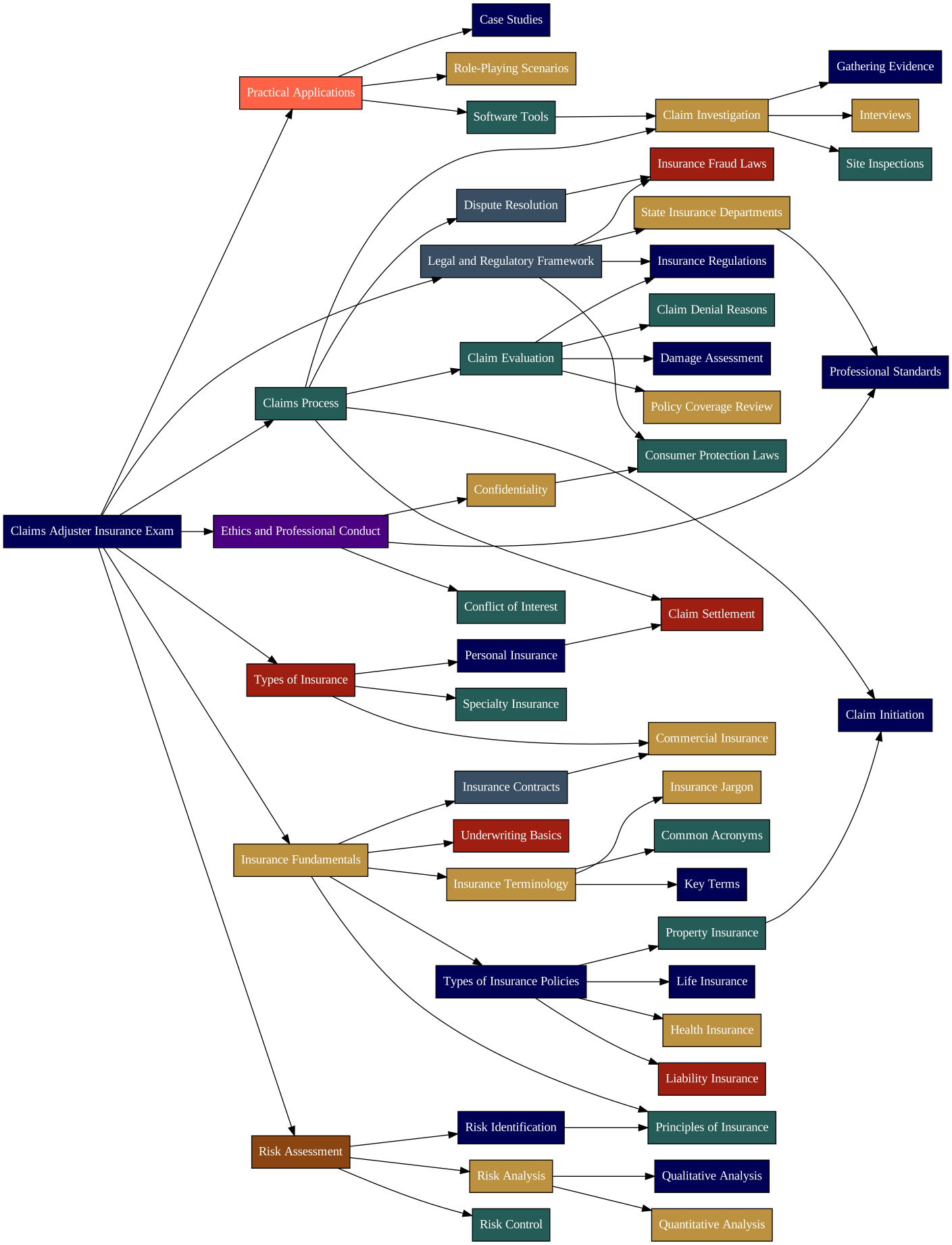
Here are 14 in-depth Q&A study notes to help you prepare for the exam.
Explain the “Increased Cost of Compliance” (ICC) coverage under a Standard Flood Insurance Policy (SFIP) and how it applies specifically in the context of Alaska’s unique building codes and environmental regulations related to flood mitigation.
Increased Cost of Compliance (ICC) coverage, as outlined in the Standard Flood Insurance Policy (SFIP), provides financial assistance to policyholders to comply with state or community floodplain management regulations after a flood event. This coverage is triggered when a structure is declared substantially damaged or repetitively damaged, necessitating compliance with current floodplain ordinances during repair or reconstruction.
In Alaska, this is particularly relevant due to the state’s unique environmental conditions and building codes. Alaska’s remote communities often face challenges in accessing resources and expertise for flood mitigation. ICC coverage can help homeowners meet stricter elevation requirements, implement floodproofing measures, or even relocate structures to safer areas. The coverage typically covers costs associated with elevation, floodproofing, demolition, or relocation, up to a specified limit (e.g., $30,000).
The SFIP outlines the specific conditions and limitations of ICC coverage. Policyholders must adhere to local floodplain management regulations, which are often based on FEMA guidelines but may be adapted to Alaska’s specific needs. Understanding these regulations and the SFIP’s ICC provisions is crucial for Alaskan homeowners in flood-prone areas.
Discuss the implications of the Biggert-Waters Flood Insurance Reform Act of 2012 and the Homeowner Flood Insurance Affordability Act of 2014 on flood insurance rates and availability in Alaska, particularly for properties that were previously grandfathered or located in areas with outdated flood maps.
The Biggert-Waters Flood Insurance Reform Act of 2012 (BW-12) and the Homeowner Flood Insurance Affordability Act of 2014 (HFIAA) significantly altered the landscape of flood insurance, impacting rates and availability, especially in states like Alaska. BW-12 aimed to make the NFIP more financially stable by phasing out subsidized rates for certain properties, including those that were grandfathered or located in areas with outdated flood maps. This led to substantial rate increases for many policyholders.
HFIAA partially rolled back some of the more drastic provisions of BW-12, aiming to moderate rate increases and delay some of the changes. However, it still mandated that rates reflect the true flood risk. In Alaska, where many communities rely on older flood maps and have a significant number of grandfathered properties, these legislative changes created considerable uncertainty and affordability challenges. Properties that were previously subsidized faced the prospect of much higher premiums, potentially impacting property values and the ability of residents to afford flood insurance. The Acts emphasize the importance of accurate flood risk assessment and the need for communities to update their flood maps to reflect current conditions.
Explain the concept of “substantial improvement” and “substantial damage” as defined by FEMA and how these definitions are used to determine compliance requirements for properties in Alaska’s Special Flood Hazard Areas (SFHAs). Provide examples specific to Alaskan construction practices.
“Substantial improvement” and “substantial damage” are critical concepts in floodplain management, as defined by FEMA and adopted by communities participating in the National Flood Insurance Program (NFIP). “Substantial improvement” refers to any reconstruction, rehabilitation, addition, or other improvement of a structure, the cost of which equals or exceeds 50% of the market value of the structure before the start of construction of the improvement. “Substantial damage” means damage of any origin sustained by a structure whereby the cost of restoring the structure to its before-damaged condition would equal or exceed 50% of the market value of the structure before the damage occurred.
In Alaska’s SFHAs, these definitions trigger specific compliance requirements. If a structure undergoes substantial improvement or sustains substantial damage, it must be brought into compliance with current floodplain management regulations. This often means elevating the structure above the Base Flood Elevation (BFE).
Examples in Alaska include: A cabin in a riverside community undergoing renovations where the cost exceeds 50% of its pre-renovation value, triggering the need to elevate the structure. Or, a home damaged by spring flooding where the repair costs are more than half the home’s value, requiring elevation or other floodproofing measures during reconstruction. These regulations aim to reduce future flood losses and ensure that structures are resilient to flood events.
Describe the role of Community Rating System (CRS) in Alaska and how a community’s participation in the CRS program can affect flood insurance premiums for its residents. What are some specific activities Alaskan communities can undertake to improve their CRS rating?
The Community Rating System (CRS) is a voluntary incentive program that recognizes and encourages community floodplain management activities that exceed the minimum requirements of the National Flood Insurance Program (NFIP). In Alaska, as in other states, a community’s participation in the CRS program can significantly impact flood insurance premiums for its residents. The CRS uses a class system, ranging from Class 1 (the best) to Class 10 (no credit). For each class improvement, flood insurance premiums are reduced for properties in the SFHA.
Alaskan communities can undertake various activities to improve their CRS rating. These include: adopting and enforcing stricter floodplain management regulations, providing public information and outreach about flood risks, implementing drainage improvements, preserving open space in floodplains, and conducting flood preparedness activities. Given Alaska’s unique environment, activities like protecting wetlands, managing coastal erosion, and developing community-specific flood warning systems can be particularly effective. By actively engaging in these activities, Alaskan communities can reduce flood risk, protect property, and lower flood insurance costs for their residents.
Explain the difference between flood insurance coverage for building property and personal property (contents) under the SFIP. Provide specific examples of what is typically covered and not covered under each type of coverage, with considerations for the Alaskan context.
Under the Standard Flood Insurance Policy (SFIP), there are distinct coverage options for building property and personal property (contents). Building property coverage protects the physical structure of the insured building, including the foundation, walls, permanently installed fixtures, and essential equipment like furnaces and water heaters. Personal property (contents) coverage, on the other hand, covers the insured’s belongings within the building, such as furniture, clothing, electronics, and appliances.
Examples of what is typically covered under building property include: damage to the foundation from floodwaters, repairs to walls and floors, and replacement of a damaged furnace. Examples of what is not covered include: land, landscaping, and detached structures. For contents coverage, covered items include: damage to furniture and electronics from floodwaters. Exclusions include: money, valuable papers, and property belonging to tenants. In the Alaskan context, considerations include the types of building materials used (e.g., log cabins) and the storage of seasonal equipment (e.g., snowmobiles), which may or may not be covered depending on the specific policy and circumstances.
Discuss the process of filing a flood insurance claim in Alaska, including the documentation required, the role of the insurance adjuster, and the potential for disputes or appeals. What specific challenges might Alaskan residents face during the claims process compared to residents in other states?
Filing a flood insurance claim in Alaska involves several steps. First, the policyholder must notify their insurance company or the NFIP Direct of the flood loss as soon as possible. They must then complete and submit a Proof of Loss form, providing detailed information about the damage and the estimated cost of repairs. This form must be submitted within 60 days of the flood event. The insurance company will assign an adjuster to inspect the damage and prepare an estimate of the covered losses.
The adjuster plays a crucial role in assessing the damage and determining the amount of the claim payment. If the policyholder disagrees with the adjuster’s assessment, they have the right to dispute the decision and provide additional documentation to support their claim. If the dispute cannot be resolved, the policyholder can appeal the decision.
Alaskan residents may face unique challenges during the claims process due to the state’s remote locations, limited access to contractors and building materials, and the potential for delays due to weather conditions. The availability of qualified adjusters familiar with Alaskan construction practices and environmental conditions can also be a challenge.
Explain the concept of “Base Flood Elevation” (BFE) and its significance in determining flood insurance rates and building requirements in Alaska’s flood zones. How are BFEs determined, and what factors can influence their accuracy and reliability in the context of Alaska’s changing climate and coastal erosion?
The Base Flood Elevation (BFE) is the elevation to which floodwater is expected to rise during a base flood, which has a 1% annual chance of occurring (also known as a 100-year flood). The BFE is a critical factor in determining flood insurance rates and building requirements in flood zones. Properties built below the BFE are at a higher risk of flooding and typically face higher insurance premiums. Building codes in flood zones often require structures to be elevated to or above the BFE to minimize flood damage.
BFEs are typically determined through engineering studies that analyze historical flood data, topography, and other relevant factors. FEMA publishes Flood Insurance Rate Maps (FIRMs) that show BFEs for different areas.
In Alaska, several factors can influence the accuracy and reliability of BFEs. Climate change is leading to rising sea levels, increased storm intensity, and thawing permafrost, which can alter flood patterns and increase flood risk. Coastal erosion is also a significant concern in many Alaskan communities, as it can change the topography and increase the vulnerability of properties to flooding. These factors highlight the need for regular updates to BFEs and FIRMs to reflect current conditions and future flood risks.
How does the Principle of Indemnity apply to flood insurance policies in Alaska, and what are some specific scenarios where the application of this principle might be complex or disputed following a flood event?
The Principle of Indemnity aims to restore the insured to their pre-loss financial condition, preventing them from profiting from a loss. In flood insurance, this means the policy will cover the actual cash value (ACV) or replacement cost value (RCV) of the damaged property, depending on the policy terms and the insured’s eligibility. Complexities arise when determining ACV, especially for older structures or unique building materials common in Alaska. Disputes can occur when the insured believes the settlement doesn’t adequately cover the cost of repairs or replacement, considering current construction costs and local building codes. The National Flood Insurance Program (NFIP) guidelines outline specific procedures for claims adjustment, including appraisal processes for disputed valuations. Understanding the policy’s specific valuation method and documenting pre-loss condition are crucial for a smooth claims process. Furthermore, Alaska’s unique environmental conditions and remote locations can complicate damage assessments and repair logistics, potentially leading to disagreements over the indemnity amount.
Explain the “Increased Cost of Compliance” (ICC) coverage under a Standard Flood Insurance Policy (SFIP), detailing the specific circumstances under which it applies in Alaska and the types of mitigation measures it can fund.
Increased Cost of Compliance (ICC) coverage, available under the Standard Flood Insurance Policy (SFIP), helps policyholders meet community floodplain management regulations after a flood event. In Alaska, this is particularly relevant due to the state’s diverse floodplain environments and varying levels of community participation in the NFIP. ICC coverage can be used when a structure is declared substantially damaged (damage exceeds 50% of the structure’s market value) or repetitively damaged. It can fund mitigation measures such as elevation, relocation, demolition, or floodproofing of the structure to comply with local ordinances. The maximum ICC coverage is $30,000. To access ICC coverage, the community must have a floodplain management ordinance in effect that requires compliance with specific standards. The NFIP Floodplain Management Handbook provides detailed guidance on ICC coverage and eligible mitigation activities. Alaska-specific considerations might include the availability of qualified contractors and the feasibility of certain mitigation measures in remote areas.
Discuss the implications of the “Write Your Own” (WYO) program for flood insurance agents and policyholders in Alaska, focusing on the responsibilities of WYO companies and the potential impact on claims handling and customer service.
The “Write Your Own” (WYO) program allows private insurance companies to write and service flood insurance policies under the NFIP. In Alaska, this means that many flood insurance policies are issued and managed by WYO companies rather than directly by FEMA. WYO companies are responsible for adhering to NFIP rules and regulations, including underwriting, claims processing, and customer service. They receive expense allowances for these services. For policyholders, the WYO program can offer the convenience of dealing with a familiar insurance company. However, it’s crucial to understand that all SFIP policies, regardless of whether they are written by FEMA or a WYO company, are governed by the same terms and conditions. Potential impacts on claims handling and customer service can vary depending on the WYO company’s efficiency and expertise in flood insurance. Policyholders should be aware of their rights and responsibilities under the SFIP and understand the process for appealing claims decisions. The NFIP Servicing Guide provides detailed information on WYO company responsibilities.
Explain the concept of “substantial damage” in the context of flood insurance and floodplain management in Alaska, and how it triggers specific requirements for property owners and communities participating in the NFIP.
“Substantial damage” refers to damage sustained by a structure whereby the cost of restoring the structure to its before-damage condition would equal or exceed 50% of the market value of the structure before the damage occurred. This definition is crucial for floodplain management and flood insurance because it triggers specific requirements under the NFIP. In Alaska, where many communities participate in the NFIP, a determination of substantial damage requires the property owner to bring the structure into compliance with current floodplain management regulations. This often involves elevating the structure above the base flood elevation (BFE) or floodproofing it. Communities are responsible for enforcing these regulations. Failure to comply can result in the loss of flood insurance eligibility for the property and potentially for the entire community. FEMA’s regulations, specifically 44 CFR Part 59 and 60, outline the requirements related to substantial damage and substantial improvement. The determination of market value and the cost of repairs are critical components of the substantial damage assessment.
Describe the different types of flood zones used by FEMA on Flood Insurance Rate Maps (FIRMs) in Alaska, and explain how these zones influence flood insurance requirements and premiums for property owners.
FEMA uses various flood zones on Flood Insurance Rate Maps (FIRMs) to indicate the level of flood risk in different areas. These zones significantly impact flood insurance requirements and premiums. In Alaska, common flood zones include:
**Zone A:** Areas with a 1% annual chance of flooding (100-year floodplain) where base flood elevations (BFEs) are not determined. Mandatory flood insurance purchase requirement applies for properties with a mortgage from a federally regulated or insured lender.
**Zone AE:** Areas with a 1% annual chance of flooding where BFEs are determined. Mandatory flood insurance purchase requirement applies.
**Zone VE:** Coastal areas with a 1% annual chance of flooding and additional hazards due to wave action. Mandatory flood insurance purchase requirement applies. These zones typically have the highest flood insurance premiums.
**Zone X (Shaded):** Areas with a 0.2% annual chance of flooding (500-year floodplain). Flood insurance is not mandatory, but recommended.
**Zone X (Unshaded):** Areas with minimal flood risk. Flood insurance is not mandatory, but recommended.
The closer a property is to a high-risk flood zone (Zone A, AE, or VE), the higher the flood insurance premium will generally be. Properties in mandatory flood insurance zones must maintain coverage for the life of the loan. FEMA provides detailed information on flood zones and their implications on its website and through local floodplain administrators.
What are the specific requirements for obtaining flood insurance in Alaska if a property is located in a Special Flood Hazard Area (SFHA) and is financed by a federally regulated or insured lender? Detail the consequences of failing to maintain flood insurance coverage.
If a property in Alaska is located within a Special Flood Hazard Area (SFHA) and is financed by a federally regulated or insured lender, flood insurance is mandatory. The amount of insurance required is typically the lesser of the replacement cost of the structure or the maximum coverage available under the NFIP, which is $250,000 for residential buildings and $500,000 for non-residential buildings. Lenders are responsible for ensuring that borrowers maintain flood insurance coverage for the life of the loan. If a borrower fails to maintain coverage, the lender is required to force-place flood insurance, which is typically more expensive and provides less coverage than a policy purchased by the borrower. Furthermore, failing to maintain flood insurance can result in a violation of the loan agreement and potentially lead to foreclosure. The Flood Disaster Protection Act of 1973 and the National Flood Insurance Reform Act of 1994 outline these requirements. FEMA provides guidance to lenders on flood insurance compliance through various publications and training programs.
Explain the process of appealing a flood insurance claim decision in Alaska, including the required documentation, timelines, and potential outcomes. What role does the Independent Claims Review play in this process?
The process of appealing a flood insurance claim decision in Alaska involves several steps. First, the policyholder must submit a written appeal to the WYO company or FEMA (if it’s a direct FEMA policy) within 60 days of receiving the claim determination letter. The appeal should clearly state the reasons for disagreement and include supporting documentation, such as repair estimates, photographs, and expert opinions. The WYO company or FEMA will review the appeal and issue a written response. If the policyholder remains dissatisfied, they can request an Independent Claims Review (ICR). The ICR is a neutral third-party review of the claim file. The ICR reviewer will assess whether the claim was handled in accordance with NFIP rules and regulations. While the ICR’s findings are not binding, they can influence the final claim decision. If the policyholder is still not satisfied after the ICR, they have the option to file a lawsuit against the WYO company or FEMA in federal court. The NFIP Claims Manual provides detailed guidance on the appeals process and the ICR. It’s crucial to adhere to the timelines and documentation requirements to ensure a successful appeal.