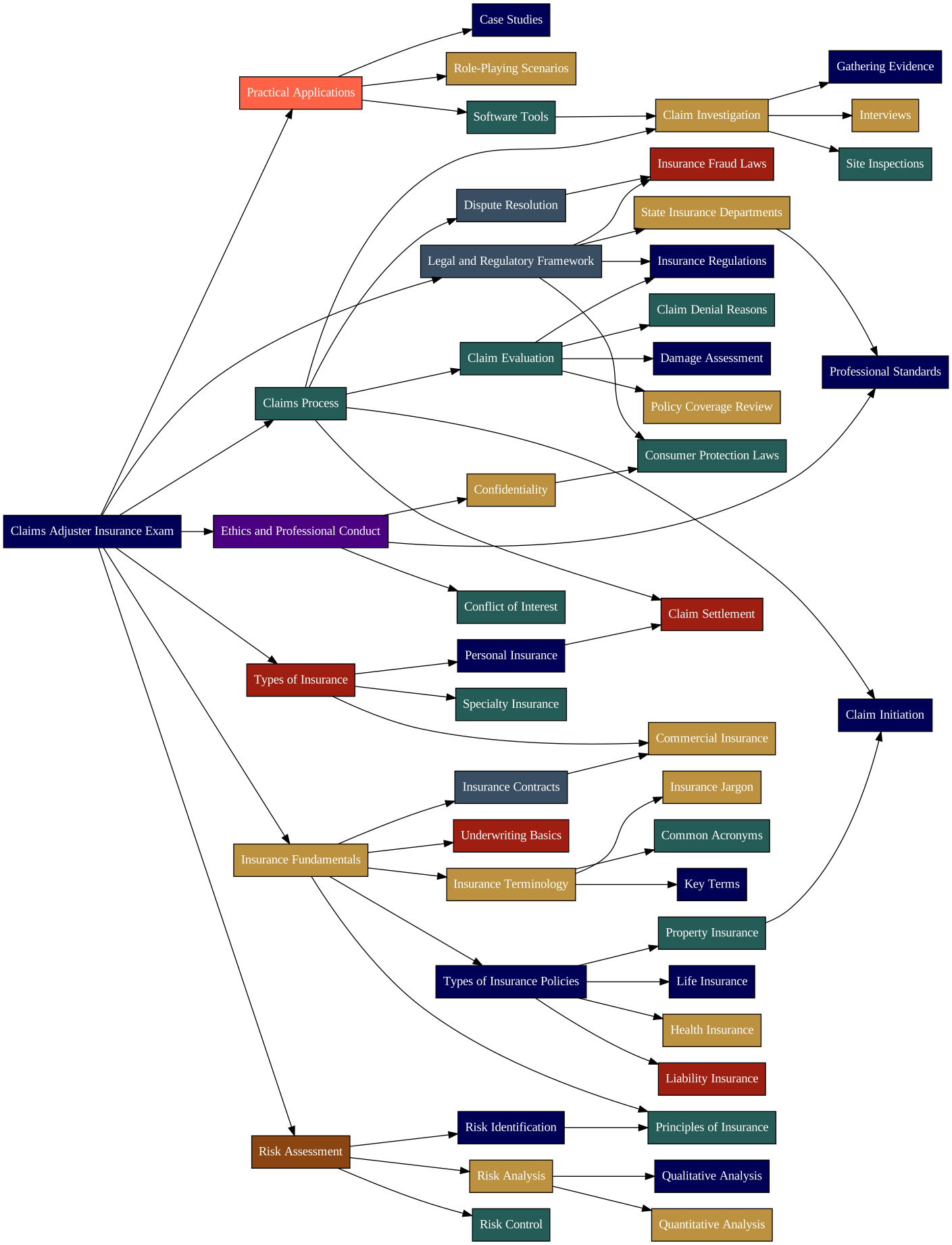
Quiz-summary
0 of 30 questions completed
Questions:
- 1
- 2
- 3
- 4
- 5
- 6
- 7
- 8
- 9
- 10
- 11
- 12
- 13
- 14
- 15
- 16
- 17
- 18
- 19
- 20
- 21
- 22
- 23
- 24
- 25
- 26
- 27
- 28
- 29
- 30
Information
Premium Practice Questions
You have already completed the quiz before. Hence you can not start it again.
Quiz is loading...
You must sign in or sign up to start the quiz.
You have to finish following quiz, to start this quiz:
Results
0 of 30 questions answered correctly
Your time:
Time has elapsed
You have reached 0 of 0 points, (0)
Categories
- Not categorized 0%
- 1
- 2
- 3
- 4
- 5
- 6
- 7
- 8
- 9
- 10
- 11
- 12
- 13
- 14
- 15
- 16
- 17
- 18
- 19
- 20
- 21
- 22
- 23
- 24
- 25
- 26
- 27
- 28
- 29
- 30
- Answered
- Review
-
Question 1 of 30
1. Question
Jian, a new client, secures a commercial property insurance policy through your brokerage for his warehouse. Six months later, a fire causes significant damage. During the claims process, the insurer discovers that two years prior to Jian obtaining the policy, the warehouse had experienced two minor incidents: a small electrical fire quickly contained and a minor roof leak causing minimal water damage. Jian did not disclose these incidents during the application process. The underwriter states that the company’s policy is to require disclosure of any similar prior incidents, regardless of their severity. Considering the principles of utmost good faith and the Insurance Contracts Act 1984, what is the MOST likely outcome regarding the validity of Jian’s insurance policy?
Correct
The scenario presents a complex situation involving potential non-disclosure and its impact on policy validity under the principles of utmost good faith (uberrimae fidei). Under the Insurance Contracts Act 1984 (ICA), Section 21 deals with the duty of disclosure. An insured has a duty to disclose to the insurer, before the relevant contract of insurance is entered into, every matter that is known to the insured, and that a reasonable person in the circumstances would have disclosed to the insurer. Section 26 specifies remedies for misrepresentation or non-disclosure. If the failure to disclose was fraudulent, the insurer may avoid the contract. If the failure was not fraudulent, the insurer’s liability is limited to what it would have been had the failure not occurred, unless the insurer would not have entered into the contract on any terms. In this case, if Jian knew about the prior incidents and a reasonable person would have disclosed them, his failure constitutes non-disclosure. If this non-disclosure is deemed fraudulent, the insurer can avoid the policy entirely. If not fraudulent, the insurer’s liability is limited, or the policy might be voidable if the insurer proves they would not have issued the policy at all had they known about the prior incidents. The key is determining whether Jian knew and whether a reasonable person would have disclosed. The underwriter’s statement about similar incidents needing disclosure reinforces the importance of this information. The insurer must prove that the non-disclosure was material and that it would have affected their decision to issue the policy.
Incorrect
The scenario presents a complex situation involving potential non-disclosure and its impact on policy validity under the principles of utmost good faith (uberrimae fidei). Under the Insurance Contracts Act 1984 (ICA), Section 21 deals with the duty of disclosure. An insured has a duty to disclose to the insurer, before the relevant contract of insurance is entered into, every matter that is known to the insured, and that a reasonable person in the circumstances would have disclosed to the insurer. Section 26 specifies remedies for misrepresentation or non-disclosure. If the failure to disclose was fraudulent, the insurer may avoid the contract. If the failure was not fraudulent, the insurer’s liability is limited to what it would have been had the failure not occurred, unless the insurer would not have entered into the contract on any terms. In this case, if Jian knew about the prior incidents and a reasonable person would have disclosed them, his failure constitutes non-disclosure. If this non-disclosure is deemed fraudulent, the insurer can avoid the policy entirely. If not fraudulent, the insurer’s liability is limited, or the policy might be voidable if the insurer proves they would not have issued the policy at all had they known about the prior incidents. The key is determining whether Jian knew and whether a reasonable person would have disclosed. The underwriter’s statement about similar incidents needing disclosure reinforces the importance of this information. The insurer must prove that the non-disclosure was material and that it would have affected their decision to issue the policy.
-
Question 2 of 30
2. Question
David, an insurance broker, receives a tip from a contact at a construction firm about a planned safety upgrade to a large industrial facility, which will significantly reduce its fire risk. This information is not yet public knowledge and isn’t part of the standard risk assessment process used by insurers. David immediately uses this information to negotiate a lower premium for his client, the owner of the industrial facility, without disclosing the source of his information to the insurer. Which fundamental principle of insurance broking is MOST directly violated by David’s actions?
Correct
The scenario describes a situation where a broker, David, acts on information obtained from a source that isn’t publicly available and isn’t part of the standard underwriting process. This raises ethical and regulatory concerns. The key principle violated is the duty to treat all clients fairly and avoid using privileged information to gain an advantage for one client over others. This is closely tied to insider trading principles, although it doesn’t involve securities. Using non-public information compromises the integrity of the insurance market and can lead to unfair outcomes. While there might be a perceived benefit to the client initially, the long-term consequences, including reputational damage and potential regulatory penalties, outweigh any short-term gain. The broker’s actions could also be seen as a breach of fiduciary duty, as they are not acting in the best interests of all clients. The duty of utmost good faith (uberrimae fidei) requires transparency and honesty in all dealings, which is clearly absent here. Acting on non-public information is unethical and potentially illegal. The broker should rely on publicly available information and standard underwriting practices to ensure fair treatment of all clients.
Incorrect
The scenario describes a situation where a broker, David, acts on information obtained from a source that isn’t publicly available and isn’t part of the standard underwriting process. This raises ethical and regulatory concerns. The key principle violated is the duty to treat all clients fairly and avoid using privileged information to gain an advantage for one client over others. This is closely tied to insider trading principles, although it doesn’t involve securities. Using non-public information compromises the integrity of the insurance market and can lead to unfair outcomes. While there might be a perceived benefit to the client initially, the long-term consequences, including reputational damage and potential regulatory penalties, outweigh any short-term gain. The broker’s actions could also be seen as a breach of fiduciary duty, as they are not acting in the best interests of all clients. The duty of utmost good faith (uberrimae fidei) requires transparency and honesty in all dealings, which is clearly absent here. Acting on non-public information is unethical and potentially illegal. The broker should rely on publicly available information and standard underwriting practices to ensure fair treatment of all clients.
-
Question 3 of 30
3. Question
GreenTech, a tech startup heavily reliant on cloud-based services, sought insurance advice from Javier, an insurance broker. Javier recommended a standard business insurance policy. Six months later, GreenTech suffered a significant data breach resulting in substantial financial losses. GreenTech claims Javier did not adequately assess their cyber liability risks and is seeking compensation. Which of the following is the MOST likely outcome regarding Javier’s professional indemnity insurance?
Correct
The scenario highlights a complex situation involving professional indemnity insurance, the duty of care owed by a broker, and the potential for a claim arising from a broker’s advice. The core issue revolves around whether the broker, Javier, adequately assessed and communicated the risks associated with the client’s (GreenTech’s) specific business operations, particularly concerning the cyber liability exposure inherent in their reliance on cloud-based services. A broker’s duty of care requires them to act with the skill, care, and diligence that a reasonably competent broker would exercise in similar circumstances. This includes understanding the client’s business, identifying relevant risks, and advising on appropriate insurance coverage. If Javier failed to adequately assess GreenTech’s cyber risks or to explain the limitations of the initial policy in relation to cyber events, he may have breached his duty of care. The fact that GreenTech specifically relied on Javier’s expertise in selecting the insurance policy strengthens their potential claim against him. The professional indemnity insurance policy is designed to protect Javier against claims arising from his professional negligence. The policy’s coverage will depend on its specific terms and conditions, including any exclusions or limitations. However, if Javier is found to have breached his duty of care, the policy would likely respond to cover the costs of defending the claim and any damages awarded to GreenTech, up to the policy limit. The regulatory framework governing insurance broking, including the Corporations Act 2001 (Cth) and the Australian Securities and Investments Commission (ASIC) regulations, also plays a role. These regulations impose obligations on brokers to act honestly, fairly, and professionally, and to provide appropriate advice to their clients. A breach of these regulations could also expose Javier to regulatory action. Therefore, the most likely outcome is that Javier’s professional indemnity insurance policy will be triggered to cover the claim, assuming no exclusions apply and that Javier is found to have been negligent in his duties.
Incorrect
The scenario highlights a complex situation involving professional indemnity insurance, the duty of care owed by a broker, and the potential for a claim arising from a broker’s advice. The core issue revolves around whether the broker, Javier, adequately assessed and communicated the risks associated with the client’s (GreenTech’s) specific business operations, particularly concerning the cyber liability exposure inherent in their reliance on cloud-based services. A broker’s duty of care requires them to act with the skill, care, and diligence that a reasonably competent broker would exercise in similar circumstances. This includes understanding the client’s business, identifying relevant risks, and advising on appropriate insurance coverage. If Javier failed to adequately assess GreenTech’s cyber risks or to explain the limitations of the initial policy in relation to cyber events, he may have breached his duty of care. The fact that GreenTech specifically relied on Javier’s expertise in selecting the insurance policy strengthens their potential claim against him. The professional indemnity insurance policy is designed to protect Javier against claims arising from his professional negligence. The policy’s coverage will depend on its specific terms and conditions, including any exclusions or limitations. However, if Javier is found to have breached his duty of care, the policy would likely respond to cover the costs of defending the claim and any damages awarded to GreenTech, up to the policy limit. The regulatory framework governing insurance broking, including the Corporations Act 2001 (Cth) and the Australian Securities and Investments Commission (ASIC) regulations, also plays a role. These regulations impose obligations on brokers to act honestly, fairly, and professionally, and to provide appropriate advice to their clients. A breach of these regulations could also expose Javier to regulatory action. Therefore, the most likely outcome is that Javier’s professional indemnity insurance policy will be triggered to cover the claim, assuming no exclusions apply and that Javier is found to have been negligent in his duties.
-
Question 4 of 30
4. Question
Jamila, an insurance broker, recommends a loss adjusting firm owned by her brother to a new client, Ben. Jamila does not disclose her familial relationship with the loss adjuster to Ben. Ben later discovers the connection and feels Jamila may have prioritized her family’s interests over his. Which of the following best describes the ethical breach Jamila has potentially committed?
Correct
The scenario describes a situation where a broker has a potential conflict of interest. While not explicitly illegal to recommend a family member’s business, the broker has a duty of utmost good faith and must act in the client’s best interests. This requires full disclosure of the relationship and ensuring the client understands they are free to choose another provider. Failing to disclose the relationship violates ethical standards and potentially breaches the broker’s fiduciary duty. The client’s perception is also important; even if the service is excellent and fairly priced, the lack of disclosure creates an appearance of impropriety. Best practice dictates transparency and allowing the client to make an informed decision, free from any perceived pressure or undue influence. This aligns with the principles of fair dealing and maintaining the integrity of the insurance broking profession. The core issue is not whether the family member provides a good service, but whether the client was given all the information necessary to make an impartial decision.
Incorrect
The scenario describes a situation where a broker has a potential conflict of interest. While not explicitly illegal to recommend a family member’s business, the broker has a duty of utmost good faith and must act in the client’s best interests. This requires full disclosure of the relationship and ensuring the client understands they are free to choose another provider. Failing to disclose the relationship violates ethical standards and potentially breaches the broker’s fiduciary duty. The client’s perception is also important; even if the service is excellent and fairly priced, the lack of disclosure creates an appearance of impropriety. Best practice dictates transparency and allowing the client to make an informed decision, free from any perceived pressure or undue influence. This aligns with the principles of fair dealing and maintaining the integrity of the insurance broking profession. The core issue is not whether the family member provides a good service, but whether the client was given all the information necessary to make an impartial decision.
-
Question 5 of 30
5. Question
Javier, a business owner, explicitly informed his insurance broker about his deep concern regarding potential supply chain disruptions stemming from geopolitical instability affecting his primary overseas supplier. The broker recommended a standard business interruption policy, neglecting to specifically address or exclude disruptions arising from supply chain vulnerabilities. Subsequently, a political event caused a significant disruption, leading to substantial financial losses for Javier’s business. Which of the following best describes the likely outcome regarding the broker’s liability?
Correct
The scenario involves a complex situation where a business owner, Javier, relies on his broker’s advice regarding business interruption insurance. Javier explicitly stated his concern about potential supply chain disruptions due to geopolitical instability affecting a critical supplier located overseas. The broker recommended a standard business interruption policy without specifically addressing or excluding supply chain disruptions. When a disruption occurs due to a political event, Javier’s business suffers significant losses. The key issue is whether the broker fulfilled their duty of care and provided appropriate advice. A broker’s duty includes understanding the client’s specific needs, assessing the risks relevant to their business, and recommending suitable insurance coverage. Standard business interruption policies often have limitations regarding supply chain disruptions, especially those caused by geopolitical events. If the broker failed to highlight these limitations or suggest endorsements that could provide broader coverage, they may have breached their duty. In determining liability, courts or regulatory bodies will consider whether the broker acted reasonably and professionally, considering Javier’s expressed concerns. Factors such as the complexity of the risk, the availability of alternative insurance products, and the broker’s expertise will be taken into account. The outcome hinges on whether the broker’s actions fell below the expected standard of care for a reasonably competent insurance broker in similar circumstances.
Incorrect
The scenario involves a complex situation where a business owner, Javier, relies on his broker’s advice regarding business interruption insurance. Javier explicitly stated his concern about potential supply chain disruptions due to geopolitical instability affecting a critical supplier located overseas. The broker recommended a standard business interruption policy without specifically addressing or excluding supply chain disruptions. When a disruption occurs due to a political event, Javier’s business suffers significant losses. The key issue is whether the broker fulfilled their duty of care and provided appropriate advice. A broker’s duty includes understanding the client’s specific needs, assessing the risks relevant to their business, and recommending suitable insurance coverage. Standard business interruption policies often have limitations regarding supply chain disruptions, especially those caused by geopolitical events. If the broker failed to highlight these limitations or suggest endorsements that could provide broader coverage, they may have breached their duty. In determining liability, courts or regulatory bodies will consider whether the broker acted reasonably and professionally, considering Javier’s expressed concerns. Factors such as the complexity of the risk, the availability of alternative insurance products, and the broker’s expertise will be taken into account. The outcome hinges on whether the broker’s actions fell below the expected standard of care for a reasonably competent insurance broker in similar circumstances.
-
Question 6 of 30
6. Question
TechSolutions Inc., a software development firm, faces increasing cyber risk exposures. They have experienced several near-miss incidents involving attempted data breaches. While they currently have a comprehensive cyber insurance policy, the premiums are rising sharply. Considering the principles of risk control and the specific context of a technology company, which risk control strategy should their insurance broker MOST likely recommend as the primary focus to effectively manage their cyber risks and potentially mitigate rising insurance costs?
Correct
When assessing risk control strategies, insurance brokers must prioritize methods that most effectively reduce the likelihood and severity of potential losses while aligning with the client’s operational capabilities and financial resources. Risk avoidance, while theoretically the most effective, is often impractical as it involves ceasing activities that generate revenue or are integral to the client’s business model. Risk transfer, through insurance, is a common strategy but does not eliminate the underlying risk; it merely shifts the financial burden. Loss prevention focuses on reducing the frequency of losses through measures such as safety training, equipment maintenance, and security protocols. Loss reduction aims to minimize the severity of losses that do occur, for example, by implementing disaster recovery plans, installing sprinkler systems, or diversifying supply chains. The most suitable strategy depends on a comprehensive evaluation of the risk’s characteristics, the client’s risk appetite, and the cost-benefit analysis of each control measure. A combination of strategies is often employed to achieve optimal risk management. Loss prevention and reduction strategies are often favored because they directly address the sources of risk and can provide a tangible return on investment by minimizing disruptions and reducing insurance premiums. The choice must also consider legal and regulatory requirements, industry best practices, and the potential impact on the client’s reputation.
Incorrect
When assessing risk control strategies, insurance brokers must prioritize methods that most effectively reduce the likelihood and severity of potential losses while aligning with the client’s operational capabilities and financial resources. Risk avoidance, while theoretically the most effective, is often impractical as it involves ceasing activities that generate revenue or are integral to the client’s business model. Risk transfer, through insurance, is a common strategy but does not eliminate the underlying risk; it merely shifts the financial burden. Loss prevention focuses on reducing the frequency of losses through measures such as safety training, equipment maintenance, and security protocols. Loss reduction aims to minimize the severity of losses that do occur, for example, by implementing disaster recovery plans, installing sprinkler systems, or diversifying supply chains. The most suitable strategy depends on a comprehensive evaluation of the risk’s characteristics, the client’s risk appetite, and the cost-benefit analysis of each control measure. A combination of strategies is often employed to achieve optimal risk management. Loss prevention and reduction strategies are often favored because they directly address the sources of risk and can provide a tangible return on investment by minimizing disruptions and reducing insurance premiums. The choice must also consider legal and regulatory requirements, industry best practices, and the potential impact on the client’s reputation.
-
Question 7 of 30
7. Question
Aisha, an insurance broker, notices inconsistencies in a client’s (Javier) claim history that suggest possible fraudulent activity related to several high-value commercial property claims. Javier is a long-standing client who has generated substantial revenue for Aisha’s brokerage. What is Aisha’s most ethically responsible course of action, considering her duties to both her client and the legal/regulatory environment?
Correct
The scenario involves assessing the ethical obligations of an insurance broker when faced with conflicting duties: to their client and to uphold legal and regulatory compliance. The core ethical dilemma lies in balancing client advocacy with the responsibility to prevent or report potential fraudulent activities. Under the Insurance Brokers Code of Practice and relevant legislation like the Corporations Act 2001 (Cth) and the Australian Securities and Investments Commission Act 2001 (Cth), brokers have a duty to act honestly, fairly, and professionally. This includes reporting suspected fraud. However, brokers also have a fiduciary duty to act in the best interests of their clients. In this scenario, ignoring the suspicious activity would breach the broker’s duty to act honestly and comply with legal and regulatory requirements. Directly confronting the client without proper assessment could jeopardize the client relationship and potentially alert the client to destroy evidence. Immediately reporting the client without due diligence could damage the client’s reputation and expose the broker to legal action if the suspicion proves unfounded. The most ethically sound approach is to conduct further internal inquiries to gather more information and assess the validity of the suspicions. This allows the broker to fulfill their duty to the client by avoiding hasty accusations while also fulfilling their duty to the insurer and regulatory bodies by investigating potential fraud. If the internal inquiries confirm the suspicions, the broker should then proceed to report the matter to the appropriate authorities while also considering their obligations to the client. This approach balances the conflicting duties and ensures compliance with ethical and legal standards.
Incorrect
The scenario involves assessing the ethical obligations of an insurance broker when faced with conflicting duties: to their client and to uphold legal and regulatory compliance. The core ethical dilemma lies in balancing client advocacy with the responsibility to prevent or report potential fraudulent activities. Under the Insurance Brokers Code of Practice and relevant legislation like the Corporations Act 2001 (Cth) and the Australian Securities and Investments Commission Act 2001 (Cth), brokers have a duty to act honestly, fairly, and professionally. This includes reporting suspected fraud. However, brokers also have a fiduciary duty to act in the best interests of their clients. In this scenario, ignoring the suspicious activity would breach the broker’s duty to act honestly and comply with legal and regulatory requirements. Directly confronting the client without proper assessment could jeopardize the client relationship and potentially alert the client to destroy evidence. Immediately reporting the client without due diligence could damage the client’s reputation and expose the broker to legal action if the suspicion proves unfounded. The most ethically sound approach is to conduct further internal inquiries to gather more information and assess the validity of the suspicions. This allows the broker to fulfill their duty to the client by avoiding hasty accusations while also fulfilling their duty to the insurer and regulatory bodies by investigating potential fraud. If the internal inquiries confirm the suspicions, the broker should then proceed to report the matter to the appropriate authorities while also considering their obligations to the client. This approach balances the conflicting duties and ensures compliance with ethical and legal standards.
-
Question 8 of 30
8. Question
A manufacturing client, “Precision Products,” experiences a significant business interruption due to a sudden regulatory change that halts their operations. Their general insurance policy includes business interruption coverage, but the insurer denies the claim, arguing the regulatory change was an unforeseen event not explicitly covered. Precision Products contends their broker, Anya Sharma, did not adequately assess their risk profile or explain the policy’s limitations regarding regulatory changes. Considering the principles of general insurance, risk assessment, broker responsibilities, and relevant Australian legislation, what is the MOST likely outcome regarding Anya Sharma’s potential liability?
Correct
The scenario presents a complex situation involving a claim denial based on policy interpretation and potential broker negligence. The core issue revolves around the ambiguity in the policy wording regarding “business interruption” and whether the unforeseen regulatory changes leading to the client’s operational halt fall within the intended scope of coverage. The broker’s role is crucial here; they have a duty to understand the client’s business, assess their risks accurately, and ensure the insurance policy adequately covers those risks. The regulatory change, while unexpected, could be argued as a foreseeable risk within the context of the industry. The broker’s failure to anticipate or address this specific risk, or to adequately explain the policy’s limitations regarding such events, could constitute a breach of their professional duty. The client’s reliance on the broker’s expertise and the potential financial loss resulting from the claim denial are key factors in determining the broker’s potential liability. The relevant legislation, such as the Insurance Contracts Act 1984 (Cth) and the Australian Securities and Investments Commission Act 2001 (Cth), imposes obligations on brokers to act with reasonable care and skill and to provide clear and accurate advice. The concept of “reasonable foreseeability” is central to determining negligence. If a reasonable broker, with knowledge of the client’s industry and the regulatory environment, would have considered the possibility of such regulatory changes and their impact on business operations, the broker may be held liable. The ethical considerations also come into play, as brokers have a responsibility to act in the best interests of their clients and to avoid conflicts of interest.
Incorrect
The scenario presents a complex situation involving a claim denial based on policy interpretation and potential broker negligence. The core issue revolves around the ambiguity in the policy wording regarding “business interruption” and whether the unforeseen regulatory changes leading to the client’s operational halt fall within the intended scope of coverage. The broker’s role is crucial here; they have a duty to understand the client’s business, assess their risks accurately, and ensure the insurance policy adequately covers those risks. The regulatory change, while unexpected, could be argued as a foreseeable risk within the context of the industry. The broker’s failure to anticipate or address this specific risk, or to adequately explain the policy’s limitations regarding such events, could constitute a breach of their professional duty. The client’s reliance on the broker’s expertise and the potential financial loss resulting from the claim denial are key factors in determining the broker’s potential liability. The relevant legislation, such as the Insurance Contracts Act 1984 (Cth) and the Australian Securities and Investments Commission Act 2001 (Cth), imposes obligations on brokers to act with reasonable care and skill and to provide clear and accurate advice. The concept of “reasonable foreseeability” is central to determining negligence. If a reasonable broker, with knowledge of the client’s industry and the regulatory environment, would have considered the possibility of such regulatory changes and their impact on business operations, the broker may be held liable. The ethical considerations also come into play, as brokers have a responsibility to act in the best interests of their clients and to avoid conflicts of interest.
-
Question 9 of 30
9. Question
A construction company, “BuildSafe Pty Ltd,” frequently undertakes projects involving the demolition of old buildings. While demolishing a building in a densely populated area, there’s a significant risk of debris causing damage to neighboring properties and potential injuries to pedestrians. BuildSafe Pty Ltd. has implemented safety nets and barricades, increased worker training, and secured public liability insurance. Considering the principles of risk control strategies, which combination of strategies is BuildSafe Pty Ltd. employing to manage this specific risk?
Correct
The core of effective risk management lies in the appropriate application of control strategies to mitigate identified risks. Risk control strategies aim to reduce the likelihood or impact of a risk event. Avoidance, a strategy where the activity causing the risk is ceased, is suitable for risks with unacceptable consequences. Risk reduction involves implementing measures to lessen the probability or severity of a risk, such as installing sprinkler systems to reduce fire damage. Risk transfer shifts the financial burden of a risk to another party, often through insurance or contractual agreements. Risk acceptance, a deliberate decision to bear the potential consequences of a risk, is appropriate when the cost of control outweighs the benefits or when the risk is minimal. The selection of the most suitable risk control strategy depends on a thorough evaluation of the risk’s likelihood, impact, and the cost-effectiveness of available control measures, aligning with the organization’s risk appetite and tolerance. Understanding the nuances of each strategy and their applicability in diverse scenarios is crucial for effective risk management in insurance broking. A broker must advise clients on the optimal combination of these strategies to achieve the best possible risk mitigation outcome within their budgetary constraints and risk tolerance levels.
Incorrect
The core of effective risk management lies in the appropriate application of control strategies to mitigate identified risks. Risk control strategies aim to reduce the likelihood or impact of a risk event. Avoidance, a strategy where the activity causing the risk is ceased, is suitable for risks with unacceptable consequences. Risk reduction involves implementing measures to lessen the probability or severity of a risk, such as installing sprinkler systems to reduce fire damage. Risk transfer shifts the financial burden of a risk to another party, often through insurance or contractual agreements. Risk acceptance, a deliberate decision to bear the potential consequences of a risk, is appropriate when the cost of control outweighs the benefits or when the risk is minimal. The selection of the most suitable risk control strategy depends on a thorough evaluation of the risk’s likelihood, impact, and the cost-effectiveness of available control measures, aligning with the organization’s risk appetite and tolerance. Understanding the nuances of each strategy and their applicability in diverse scenarios is crucial for effective risk management in insurance broking. A broker must advise clients on the optimal combination of these strategies to achieve the best possible risk mitigation outcome within their budgetary constraints and risk tolerance levels.
-
Question 10 of 30
10. Question
Quality Constructions completed a large commercial building project. Three months after completion, a significant structural defect was discovered in the building’s foundation. The defect stemmed from a design flaw that occurred during the construction phase. The client is claiming $1.5 million to rectify the defect and associated consequential losses. Quality Constructions held a construction all risks policy, a professional indemnity policy, and a defect warranty was included in the construction contract. The professional indemnity policy is on a claims-made basis and was renewed annually. The defect was potentially discoverable during the previous policy period but was not detected or disclosed during renewal. Which policy is most likely to respond to the claim, and what key insurance principles will influence the insurer’s decision?
Correct
The scenario describes a complex situation involving overlapping policy periods, potential negligence, and the interplay between different types of insurance policies. The core issue revolves around which policy should respond to the claim and the extent of coverage available. Firstly, the principle of “utmost good faith” (uberrimae fidei) is fundamental to insurance contracts. Both the insured and the insurer must act honestly and disclose all relevant information. In this case, if the insured (Quality Constructions) was aware of the potential defect during the previous policy period but failed to disclose it upon renewal, it could affect the validity of the current policy. Secondly, the concept of “occurrence” is crucial. An occurrence is typically defined as an event that results in damage. If the damage was ongoing from the previous policy period, it raises questions about when the occurrence actually took place. If the damage was reasonably discoverable during the previous policy, the previous policy might be triggered. Thirdly, the “claims-made” nature of professional indemnity policies means that the policy in force when the claim is made is the one that responds, regardless of when the negligent act occurred (subject to retroactive dates and other policy terms). However, the existence of a defect warranty in the construction contract introduces a contractual liability element. Fourthly, the interplay between the professional indemnity policy and the construction all risks policy needs to be considered. The construction all risks policy is designed to cover physical loss or damage to the project during construction. However, it typically excludes liability for defective workmanship unless it results in physical damage to other parts of the project. Finally, the principle of indemnity aims to restore the insured to the position they were in before the loss, but not to profit from it. Double insurance, where the same risk is insured under two policies, can complicate matters. Contribution clauses in policies determine how insurers share the loss in such cases. Based on these principles, the most likely outcome is that the current professional indemnity policy would respond, but the insurer would likely investigate whether there was a failure to disclose the potential defect during the renewal process. The construction all risks policy might respond if the defective workmanship caused physical damage to other parts of the building, but this is less likely. The previous professional indemnity policy might be triggered if the damage was reasonably discoverable during its period. The defect warranty introduces a contractual liability element that the professional indemnity policy might cover, subject to its terms and conditions.
Incorrect
The scenario describes a complex situation involving overlapping policy periods, potential negligence, and the interplay between different types of insurance policies. The core issue revolves around which policy should respond to the claim and the extent of coverage available. Firstly, the principle of “utmost good faith” (uberrimae fidei) is fundamental to insurance contracts. Both the insured and the insurer must act honestly and disclose all relevant information. In this case, if the insured (Quality Constructions) was aware of the potential defect during the previous policy period but failed to disclose it upon renewal, it could affect the validity of the current policy. Secondly, the concept of “occurrence” is crucial. An occurrence is typically defined as an event that results in damage. If the damage was ongoing from the previous policy period, it raises questions about when the occurrence actually took place. If the damage was reasonably discoverable during the previous policy, the previous policy might be triggered. Thirdly, the “claims-made” nature of professional indemnity policies means that the policy in force when the claim is made is the one that responds, regardless of when the negligent act occurred (subject to retroactive dates and other policy terms). However, the existence of a defect warranty in the construction contract introduces a contractual liability element. Fourthly, the interplay between the professional indemnity policy and the construction all risks policy needs to be considered. The construction all risks policy is designed to cover physical loss or damage to the project during construction. However, it typically excludes liability for defective workmanship unless it results in physical damage to other parts of the project. Finally, the principle of indemnity aims to restore the insured to the position they were in before the loss, but not to profit from it. Double insurance, where the same risk is insured under two policies, can complicate matters. Contribution clauses in policies determine how insurers share the loss in such cases. Based on these principles, the most likely outcome is that the current professional indemnity policy would respond, but the insurer would likely investigate whether there was a failure to disclose the potential defect during the renewal process. The construction all risks policy might respond if the defective workmanship caused physical damage to other parts of the building, but this is less likely. The previous professional indemnity policy might be triggered if the damage was reasonably discoverable during its period. The defect warranty introduces a contractual liability element that the professional indemnity policy might cover, subject to its terms and conditions.
-
Question 11 of 30
11. Question
Javier, an insurance broker, discovers his close friend and director of a construction company, is seeking insurance. During the risk assessment, Javier notices inconsistencies in the company’s financial records, raising suspicions of potential money laundering. What is Javier’s MOST appropriate course of action, considering both ethical obligations and regulatory requirements under the Financial Transactions Reports Act 1988 (Cth)?
Correct
The scenario highlights a complex situation where an insurance broker, Javier, must navigate competing ethical obligations and regulatory requirements. The core issue revolves around the potential conflict of interest arising from Javier’s personal relationship with the director of a construction company seeking insurance. While transparency and disclosure are paramount in ethical broking practice, the question focuses on the broker’s responsibility to comply with anti-money laundering (AML) regulations. According to AML regulations, specifically the Financial Transactions Reports Act 1988 (Cth) in Australia, designated service providers (DSPs), which include insurance brokers, have specific obligations to identify and report suspicious matters. These obligations are not overridden by client confidentiality or personal relationships. If Javier suspects that the construction company is involved in money laundering activities, he is legally obligated to report these suspicions to AUSTRAC (Australian Transaction Reports and Analysis Centre), the relevant regulatory body. Failing to report suspicious matters can result in significant penalties, including fines and imprisonment. The scenario presents a situation where Javier’s ethical duty to maintain client confidentiality clashes with his legal duty to report suspicious activities. In such cases, the legal duty takes precedence. Disclosing suspicions to the client would not only be a breach of AML regulations but could also compromise any potential investigation. Therefore, Javier’s primary responsibility is to comply with his AML obligations by reporting his suspicions to AUSTRAC, regardless of his personal relationship with the director or the potential impact on his business. This aligns with the broader role of insurance brokers in upholding the integrity of the financial system and preventing financial crime.
Incorrect
The scenario highlights a complex situation where an insurance broker, Javier, must navigate competing ethical obligations and regulatory requirements. The core issue revolves around the potential conflict of interest arising from Javier’s personal relationship with the director of a construction company seeking insurance. While transparency and disclosure are paramount in ethical broking practice, the question focuses on the broker’s responsibility to comply with anti-money laundering (AML) regulations. According to AML regulations, specifically the Financial Transactions Reports Act 1988 (Cth) in Australia, designated service providers (DSPs), which include insurance brokers, have specific obligations to identify and report suspicious matters. These obligations are not overridden by client confidentiality or personal relationships. If Javier suspects that the construction company is involved in money laundering activities, he is legally obligated to report these suspicions to AUSTRAC (Australian Transaction Reports and Analysis Centre), the relevant regulatory body. Failing to report suspicious matters can result in significant penalties, including fines and imprisonment. The scenario presents a situation where Javier’s ethical duty to maintain client confidentiality clashes with his legal duty to report suspicious activities. In such cases, the legal duty takes precedence. Disclosing suspicions to the client would not only be a breach of AML regulations but could also compromise any potential investigation. Therefore, Javier’s primary responsibility is to comply with his AML obligations by reporting his suspicions to AUSTRAC, regardless of his personal relationship with the director or the potential impact on his business. This aligns with the broader role of insurance brokers in upholding the integrity of the financial system and preventing financial crime.
-
Question 12 of 30
12. Question
A commercial property insurance broker, acting for “TechForward Innovations,” presents a proposal to an underwriter. The property, a newly constructed tech startup hub, is located in an area prone to seasonal flooding, though the building itself is elevated. The broker highlights the building’s modern fire suppression system and security features but omits mentioning TechForward’s recent history of financial instability and lack of a formal risk management plan. The underwriter, sensing potential issues, requests TechForward’s financial statements and a detailed risk management plan before making a decision. Based on these circumstances, what is the MOST probable underwriting outcome?
Correct
The scenario presents a complex situation where multiple factors contribute to the ultimate underwriting decision. The underwriter must consider not only the physical risks associated with the location and construction of the building but also the intangible aspects of the client’s risk management practices and financial stability. The underwriter’s primary goal is to assess the overall risk profile and determine if the risk is acceptable based on the insurer’s underwriting guidelines and risk appetite. A key element is the broker’s duty to disclose all material facts that could influence the underwriting decision, as failure to do so could lead to policy disputes or even declinature of claims later on. In this case, the underwriter’s request for a detailed risk management plan and financial statements indicates a thorough approach to risk assessment, recognizing that these factors can significantly impact the likelihood and severity of potential losses. Ultimately, the underwriter must balance the desire to write profitable business with the need to protect the insurer from excessive risk exposure. The underwriter will likely require a higher premium, specific risk mitigation measures to be implemented, and potentially a higher deductible to reflect the increased risk presented by the client’s profile. These conditions aim to align the premium with the actual risk exposure and incentivize the client to improve their risk management practices.
Incorrect
The scenario presents a complex situation where multiple factors contribute to the ultimate underwriting decision. The underwriter must consider not only the physical risks associated with the location and construction of the building but also the intangible aspects of the client’s risk management practices and financial stability. The underwriter’s primary goal is to assess the overall risk profile and determine if the risk is acceptable based on the insurer’s underwriting guidelines and risk appetite. A key element is the broker’s duty to disclose all material facts that could influence the underwriting decision, as failure to do so could lead to policy disputes or even declinature of claims later on. In this case, the underwriter’s request for a detailed risk management plan and financial statements indicates a thorough approach to risk assessment, recognizing that these factors can significantly impact the likelihood and severity of potential losses. Ultimately, the underwriter must balance the desire to write profitable business with the need to protect the insurer from excessive risk exposure. The underwriter will likely require a higher premium, specific risk mitigation measures to be implemented, and potentially a higher deductible to reflect the increased risk presented by the client’s profile. These conditions aim to align the premium with the actual risk exposure and incentivize the client to improve their risk management practices.
-
Question 13 of 30
13. Question
David, an insurance broker, is assessing the risk profile of a manufacturing plant seeking general insurance. Initially, the plant’s risk assessment revealed several significant vulnerabilities, making it difficult to secure favorable terms from insurers. David recommended and the client implemented an upgraded fire suppression system and enhanced security protocols. Furthermore, the client agreed to a substantially higher deductible than initially proposed. What is the MOST likely reason David is now confident he can secure better insurance terms for the manufacturing plant?
Correct
The scenario describes a situation where a broker, David, is dealing with a complex risk assessment for a manufacturing plant. The core issue revolves around the interplay between various risk control strategies and their impact on the underwriting process, specifically regarding the application of deductibles and the overall risk profile presented to insurers. A key concept here is that risk control measures directly influence the insurer’s perception of the risk. Effective risk control, such as implementing robust fire suppression systems, reduces the likelihood and potential severity of a loss. This, in turn, can lead to more favorable underwriting terms, including lower premiums or the willingness of insurers to offer coverage at all. The application of deductibles is another crucial element. A higher deductible signifies that the insured is willing to absorb a greater portion of any potential loss. This demonstrates a commitment to risk management and reduces the insurer’s exposure, which can also translate into more favorable premium rates. In David’s situation, his initial assessment likely identified significant risks that made the plant unattractive to insurers. By recommending and implementing enhanced risk control measures, such as the upgraded fire suppression system and improved security protocols, David has demonstrably reduced the plant’s risk profile. This reduction in risk, coupled with the client’s willingness to accept a higher deductible, makes the risk more palatable to underwriters. The combination of proactive risk management and a higher deductible signals to insurers that the client is actively working to mitigate potential losses, making them a more desirable risk to insure. This proactive approach justifies David’s confidence in securing better terms.
Incorrect
The scenario describes a situation where a broker, David, is dealing with a complex risk assessment for a manufacturing plant. The core issue revolves around the interplay between various risk control strategies and their impact on the underwriting process, specifically regarding the application of deductibles and the overall risk profile presented to insurers. A key concept here is that risk control measures directly influence the insurer’s perception of the risk. Effective risk control, such as implementing robust fire suppression systems, reduces the likelihood and potential severity of a loss. This, in turn, can lead to more favorable underwriting terms, including lower premiums or the willingness of insurers to offer coverage at all. The application of deductibles is another crucial element. A higher deductible signifies that the insured is willing to absorb a greater portion of any potential loss. This demonstrates a commitment to risk management and reduces the insurer’s exposure, which can also translate into more favorable premium rates. In David’s situation, his initial assessment likely identified significant risks that made the plant unattractive to insurers. By recommending and implementing enhanced risk control measures, such as the upgraded fire suppression system and improved security protocols, David has demonstrably reduced the plant’s risk profile. This reduction in risk, coupled with the client’s willingness to accept a higher deductible, makes the risk more palatable to underwriters. The combination of proactive risk management and a higher deductible signals to insurers that the client is actively working to mitigate potential losses, making them a more desirable risk to insure. This proactive approach justifies David’s confidence in securing better terms.
-
Question 14 of 30
14. Question
Mr. Elara, a long-standing client of broker Javier, seeks advice on renewing his business insurance. Javier has recently entered into a referral agreement with Stellar Insurance, where he receives a substantial commission for each new client he brings to them. Without fully assessing Mr. Elara’s current coverage or exploring other options, Javier advises him to switch to Stellar Insurance, citing their “superior customer service.” Javier does not disclose the referral agreement to Mr. Elara. Which fundamental ethical principle has Javier most clearly violated?
Correct
The scenario presents a complex situation involving multiple parties and potential conflicts of interest, requiring a nuanced understanding of ethical obligations in insurance broking. The core issue revolves around the broker’s duty to act in the client’s best interests, as mandated by regulatory bodies and professional codes of conduct. In this case, advising Mr. Elara to switch insurers solely based on a referral agreement with Stellar Insurance constitutes a breach of this duty. The broker’s primary responsibility is to assess Mr. Elara’s specific needs and risk profile and recommend the most suitable insurance coverage, regardless of any personal financial incentives. Furthermore, the broker’s failure to disclose the referral agreement to Mr. Elara violates the principle of transparency and informed consent. Clients have the right to know about any potential conflicts of interest that may influence the broker’s advice. By withholding this information, the broker deprives Mr. Elara of the opportunity to make an informed decision about his insurance coverage. The relevant legislation and regulatory guidelines emphasize the importance of disclosure and transparency in all dealings with clients. Finally, recommending Stellar Insurance without conducting a thorough comparison of available options and without considering Mr. Elara’s existing coverage further demonstrates a failure to prioritize the client’s best interests. A responsible broker would have assessed Mr. Elara’s needs, compared various insurance products, and provided a recommendation based on objective criteria.
Incorrect
The scenario presents a complex situation involving multiple parties and potential conflicts of interest, requiring a nuanced understanding of ethical obligations in insurance broking. The core issue revolves around the broker’s duty to act in the client’s best interests, as mandated by regulatory bodies and professional codes of conduct. In this case, advising Mr. Elara to switch insurers solely based on a referral agreement with Stellar Insurance constitutes a breach of this duty. The broker’s primary responsibility is to assess Mr. Elara’s specific needs and risk profile and recommend the most suitable insurance coverage, regardless of any personal financial incentives. Furthermore, the broker’s failure to disclose the referral agreement to Mr. Elara violates the principle of transparency and informed consent. Clients have the right to know about any potential conflicts of interest that may influence the broker’s advice. By withholding this information, the broker deprives Mr. Elara of the opportunity to make an informed decision about his insurance coverage. The relevant legislation and regulatory guidelines emphasize the importance of disclosure and transparency in all dealings with clients. Finally, recommending Stellar Insurance without conducting a thorough comparison of available options and without considering Mr. Elara’s existing coverage further demonstrates a failure to prioritize the client’s best interests. A responsible broker would have assessed Mr. Elara’s needs, compared various insurance products, and provided a recommendation based on objective criteria.
-
Question 15 of 30
15. Question
A general insurance broker, Javier, consistently recommends a particular comprehensive business insurance policy to his small business clients. This policy offers a higher commission to Javier compared to other similar policies available in the market. While the policy provides broad coverage, it also includes several exclusions that are not clearly explained to the clients. Several clients later discover these exclusions when making claims, leading to disputes. Which of the following best describes the primary ethical concern in Javier’s actions?
Correct
The core principle in determining whether an insurance broker has acted unethically when providing advice lies in whether the advice was truly in the client’s best interests. This involves a holistic assessment of the client’s financial situation, risk profile, and specific needs. A breach of ethical conduct occurs if the broker prioritizes their own interests (e.g., higher commissions from certain products) over the client’s needs, fails to disclose potential conflicts of interest, or provides advice that is unsuitable or inappropriate for the client’s circumstances. Furthermore, ethical behavior mandates transparency and honesty in all dealings, including clearly explaining policy terms, conditions, exclusions, and the associated costs. The advice should be well-reasoned, based on sound judgment, and supported by adequate documentation. The absence of these elements raises concerns about potential unethical conduct. Moreover, the broker must adhere to the relevant industry codes of conduct and regulatory requirements, such as those outlined by ASIC, which emphasize the duty to act in the client’s best interests. A pattern of providing advice that consistently benefits the broker more than the client, or a failure to adequately assess the client’s needs, would be strong indicators of unethical behavior.
Incorrect
The core principle in determining whether an insurance broker has acted unethically when providing advice lies in whether the advice was truly in the client’s best interests. This involves a holistic assessment of the client’s financial situation, risk profile, and specific needs. A breach of ethical conduct occurs if the broker prioritizes their own interests (e.g., higher commissions from certain products) over the client’s needs, fails to disclose potential conflicts of interest, or provides advice that is unsuitable or inappropriate for the client’s circumstances. Furthermore, ethical behavior mandates transparency and honesty in all dealings, including clearly explaining policy terms, conditions, exclusions, and the associated costs. The advice should be well-reasoned, based on sound judgment, and supported by adequate documentation. The absence of these elements raises concerns about potential unethical conduct. Moreover, the broker must adhere to the relevant industry codes of conduct and regulatory requirements, such as those outlined by ASIC, which emphasize the duty to act in the client’s best interests. A pattern of providing advice that consistently benefits the broker more than the client, or a failure to adequately assess the client’s needs, would be strong indicators of unethical behavior.
-
Question 16 of 30
16. Question
“GreenThumb Landscaping,” an insured landscaping company, subcontracts “Quality Irrigation Systems” for irrigation installations. During an installation at a client’s property, “Quality Irrigation Systems” negligently damages the neighboring property, causing significant damage to a prized garden. The owner of “Quality Irrigation Systems” is a close personal friend of the insurance broker who arranged “GreenThumb Landscaping’s” general liability policy. Considering the broker’s responsibilities and potential conflicts of interest, what is the MOST appropriate immediate course of action for the insurance broker?
Correct
The scenario presents a complex situation involving multiple parties and potential negligence. To determine the appropriate course of action for the insurance broker, we need to consider several key factors. First, the broker has a duty of care to their client, “GreenThumb Landscaping,” to provide sound advice and secure adequate insurance coverage. This includes assessing the client’s risks and recommending appropriate policy limits and coverage types. Second, the broker also has a responsibility to act ethically and professionally, which includes disclosing any potential conflicts of interest. In this case, the broker’s personal relationship with the owner of “Quality Irrigation Systems” could create a conflict of interest if it influences their recommendations to “GreenThumb Landscaping.” Third, the broker must understand the principles of negligence and vicarious liability. “GreenThumb Landscaping” could be held vicariously liable for the actions of “Quality Irrigation Systems” if the latter’s negligence caused damage to the neighbor’s property. The insurance policy should ideally cover such potential liabilities. Given these considerations, the broker’s best course of action is to immediately notify “GreenThumb Landscaping” of the potential claim and advise them to notify their insurer. The broker should also fully disclose their relationship with “Quality Irrigation Systems” to both “GreenThumb Landscaping” and the insurer. It is also important to review the policy wording to ensure that it covers vicarious liability and that the policy limits are adequate to cover the potential damages. The broker should also advise “GreenThumb Landscaping” to seek legal advice to determine their potential liability and to protect their interests. The broker should document all communications and actions taken in relation to this matter.
Incorrect
The scenario presents a complex situation involving multiple parties and potential negligence. To determine the appropriate course of action for the insurance broker, we need to consider several key factors. First, the broker has a duty of care to their client, “GreenThumb Landscaping,” to provide sound advice and secure adequate insurance coverage. This includes assessing the client’s risks and recommending appropriate policy limits and coverage types. Second, the broker also has a responsibility to act ethically and professionally, which includes disclosing any potential conflicts of interest. In this case, the broker’s personal relationship with the owner of “Quality Irrigation Systems” could create a conflict of interest if it influences their recommendations to “GreenThumb Landscaping.” Third, the broker must understand the principles of negligence and vicarious liability. “GreenThumb Landscaping” could be held vicariously liable for the actions of “Quality Irrigation Systems” if the latter’s negligence caused damage to the neighbor’s property. The insurance policy should ideally cover such potential liabilities. Given these considerations, the broker’s best course of action is to immediately notify “GreenThumb Landscaping” of the potential claim and advise them to notify their insurer. The broker should also fully disclose their relationship with “Quality Irrigation Systems” to both “GreenThumb Landscaping” and the insurer. It is also important to review the policy wording to ensure that it covers vicarious liability and that the policy limits are adequate to cover the potential damages. The broker should also advise “GreenThumb Landscaping” to seek legal advice to determine their potential liability and to protect their interests. The broker should document all communications and actions taken in relation to this matter.
-
Question 17 of 30
17. Question
AssureLink, an insurance brokerage, advised TechForward, a tech startup, on their cyber insurance needs. TechForward experienced a ransomware attack, resulting in substantial financial losses. TechForward is now claiming AssureLink was negligent because the cyber insurance policy’s sub-limits for ransomware were insufficient to cover their losses, and AssureLink failed to adequately advise them on this limitation. Which of the following factors would MOST strongly support AssureLink’s defense against TechForward’s professional indemnity claim?
Correct
The scenario presents a complex situation where a brokerage firm, “AssureLink,” is facing a potential professional indemnity claim due to alleged negligence in advising a client, “TechForward,” on their cyber insurance coverage. TechForward suffered a significant financial loss because the policy’s sub-limits for ransomware attacks were inadequate, a fact AssureLink allegedly failed to highlight. The key issue revolves around the broker’s duty of care, which includes providing competent advice, accurately representing policy terms, and ensuring the client understands the coverage’s limitations. Relevant legislation, such as the Insurance Contracts Act 1984 (Cth) and the Corporations Act 2001 (Cth), imposes obligations on brokers to act in the client’s best interests and disclose relevant information. The question asks which factor would *most* strongly support AssureLink’s defense against the claim. While several factors could contribute, the most compelling would be evidence demonstrating that AssureLink *explicitly* and *clearly* informed TechForward about the ransomware sub-limits and the potential inadequacy of that coverage, and that TechForward acknowledged and accepted this limitation. This would shift the responsibility, at least partially, to TechForward for making an informed decision, mitigating AssureLink’s potential liability. Other factors, such as industry practice or TechForward’s internal risk assessment, are less decisive because they don’t directly address the core issue of whether AssureLink fulfilled its duty to inform the client about the specific policy limitations. A comprehensive, documented risk assessment conducted *jointly* with the client and explicitly referencing the sub-limits would be even stronger evidence, but the question focuses on the “most” supportive factor.
Incorrect
The scenario presents a complex situation where a brokerage firm, “AssureLink,” is facing a potential professional indemnity claim due to alleged negligence in advising a client, “TechForward,” on their cyber insurance coverage. TechForward suffered a significant financial loss because the policy’s sub-limits for ransomware attacks were inadequate, a fact AssureLink allegedly failed to highlight. The key issue revolves around the broker’s duty of care, which includes providing competent advice, accurately representing policy terms, and ensuring the client understands the coverage’s limitations. Relevant legislation, such as the Insurance Contracts Act 1984 (Cth) and the Corporations Act 2001 (Cth), imposes obligations on brokers to act in the client’s best interests and disclose relevant information. The question asks which factor would *most* strongly support AssureLink’s defense against the claim. While several factors could contribute, the most compelling would be evidence demonstrating that AssureLink *explicitly* and *clearly* informed TechForward about the ransomware sub-limits and the potential inadequacy of that coverage, and that TechForward acknowledged and accepted this limitation. This would shift the responsibility, at least partially, to TechForward for making an informed decision, mitigating AssureLink’s potential liability. Other factors, such as industry practice or TechForward’s internal risk assessment, are less decisive because they don’t directly address the core issue of whether AssureLink fulfilled its duty to inform the client about the specific policy limitations. A comprehensive, documented risk assessment conducted *jointly* with the client and explicitly referencing the sub-limits would be even stronger evidence, but the question focuses on the “most” supportive factor.
-
Question 18 of 30
18. Question
A building owner, Javier, seeks insurance for a commercial property through an insurance broker, Anya. A building inspection report, previously commissioned for a sale that fell through, noted the presence of asbestos in a non-removable section of the building. Javier did not explicitly mention this to Anya, assuming the previous disclosure to the building inspector was sufficient. Anya, unaware of the asbestos, secures a policy for Javier. Six months later, asbestos-related health issues arise among tenants, leading to substantial liability claims. Which of the following best describes the likely outcome regarding the insurance policy and Anya’s professional liability?
Correct
The core principle at play is the concept of *utmost good faith* (uberrimae fidei), a cornerstone of insurance contracts. This principle mandates that both parties, the insurer and the insured, act honestly and disclose all material facts relevant to the risk being insured. A “material fact” is any information that could influence the insurer’s decision to accept the risk or the premium they would charge. In this scenario, the presence of asbestos, even if previously disclosed to a different entity (the building inspector), constitutes a material fact that could significantly impact the insurer’s assessment of the property’s risk profile, particularly concerning potential liability claims related to health hazards. Failure to disclose this information, even if unintentional, represents a breach of the duty of utmost good faith. While the broker has a responsibility to act in the client’s best interest, this does not supersede the obligation to provide complete and accurate information to the insurer. The broker’s professional duty extends to advising the client on their disclosure obligations. The broker’s potential liability arises from their failure to ensure that all material facts were disclosed to the insurer. The client also has a responsibility to disclose all known material facts. The outcome is likely to be that the insurer can void the policy due to non-disclosure of a material fact, potentially leaving the client uninsured for any asbestos-related claims. The broker could face professional liability for failing to properly advise the client on their disclosure obligations and for not ensuring the insurer received all necessary information for accurate risk assessment. The regulatory framework governing insurance broking emphasizes transparency and full disclosure to protect both insurers and insured parties.
Incorrect
The core principle at play is the concept of *utmost good faith* (uberrimae fidei), a cornerstone of insurance contracts. This principle mandates that both parties, the insurer and the insured, act honestly and disclose all material facts relevant to the risk being insured. A “material fact” is any information that could influence the insurer’s decision to accept the risk or the premium they would charge. In this scenario, the presence of asbestos, even if previously disclosed to a different entity (the building inspector), constitutes a material fact that could significantly impact the insurer’s assessment of the property’s risk profile, particularly concerning potential liability claims related to health hazards. Failure to disclose this information, even if unintentional, represents a breach of the duty of utmost good faith. While the broker has a responsibility to act in the client’s best interest, this does not supersede the obligation to provide complete and accurate information to the insurer. The broker’s professional duty extends to advising the client on their disclosure obligations. The broker’s potential liability arises from their failure to ensure that all material facts were disclosed to the insurer. The client also has a responsibility to disclose all known material facts. The outcome is likely to be that the insurer can void the policy due to non-disclosure of a material fact, potentially leaving the client uninsured for any asbestos-related claims. The broker could face professional liability for failing to properly advise the client on their disclosure obligations and for not ensuring the insurer received all necessary information for accurate risk assessment. The regulatory framework governing insurance broking emphasizes transparency and full disclosure to protect both insurers and insured parties.
-
Question 19 of 30
19. Question
Javier, an insurance broker, has a long-standing reciprocal agreement with a particular insurer: for every ten clients Javier places with them, he receives a substantial bonus. A manufacturing company approaches Javier seeking comprehensive general liability insurance. Javier knows that this insurer offers slightly less comprehensive coverage and has a higher premium compared to two other insurers, but is considering recommending them due to the bonus incentive. What is Javier’s MOST ethically sound course of action?
Correct
The scenario describes a situation where a broker, Javier, is faced with a conflict of interest. Javier’s primary duty is to act in the best interests of his client, the manufacturing company. This duty is enshrined in both ethical guidelines and regulatory frameworks governing insurance broking. Recommending a particular insurer solely because of a pre-existing agreement that benefits Javier personally (higher commission or reciprocal business arrangements) violates this fundamental principle. The core of ethical broking lies in providing impartial advice and placing the client’s needs above the broker’s own. This involves a thorough assessment of the client’s risk profile, a comprehensive market review to identify the most suitable coverage, and transparent communication about the rationale behind the recommendation. Failure to disclose the conflict of interest and prioritizing personal gain over client welfare not only breaches ethical standards but can also lead to legal repercussions and reputational damage. Regulatory bodies, such as ASIC in Australia, have strict guidelines regarding conflicts of interest and require brokers to manage and disclose them appropriately. The correct course of action for Javier is to disclose the conflict of interest to the client, explain the reasons for recommending the particular insurer (based on objective criteria like coverage, price, and financial stability), and allow the client to make an informed decision. If the client is not comfortable with the recommendation due to the conflict, Javier should explore alternative options.
Incorrect
The scenario describes a situation where a broker, Javier, is faced with a conflict of interest. Javier’s primary duty is to act in the best interests of his client, the manufacturing company. This duty is enshrined in both ethical guidelines and regulatory frameworks governing insurance broking. Recommending a particular insurer solely because of a pre-existing agreement that benefits Javier personally (higher commission or reciprocal business arrangements) violates this fundamental principle. The core of ethical broking lies in providing impartial advice and placing the client’s needs above the broker’s own. This involves a thorough assessment of the client’s risk profile, a comprehensive market review to identify the most suitable coverage, and transparent communication about the rationale behind the recommendation. Failure to disclose the conflict of interest and prioritizing personal gain over client welfare not only breaches ethical standards but can also lead to legal repercussions and reputational damage. Regulatory bodies, such as ASIC in Australia, have strict guidelines regarding conflicts of interest and require brokers to manage and disclose them appropriately. The correct course of action for Javier is to disclose the conflict of interest to the client, explain the reasons for recommending the particular insurer (based on objective criteria like coverage, price, and financial stability), and allow the client to make an informed decision. If the client is not comfortable with the recommendation due to the conflict, Javier should explore alternative options.
-
Question 20 of 30
20. Question
A severe windstorm strikes a commercial property owned by “Prosperity Investments,” causing a partial collapse of the building. An investigation reveals that a pre-existing, but previously undetected, structural defect in a load-bearing wall significantly weakened the building’s integrity. The windstorm exacerbated this weakness, leading to the collapse. The general insurance policy held by Prosperity Investments covers windstorm damage, but excludes damage caused by or resulting from inherent defects or faulty workmanship. The policy also contains an anti-concurrent causation clause related to excluded perils. How is the insurer most likely to respond to Prosperity Investments’ claim for the building collapse?
Correct
The scenario highlights a complex situation involving concurrent causation and policy interpretation. Concurrent causation arises when two or more independent causes combine to produce a single loss, and at least one of the causes is excluded under the insurance policy. The “efficient proximate cause” doctrine is often applied to determine which cause is the primary driver of the loss. However, many modern policies contain “anti-concurrent causation” wording, specifically designed to exclude coverage when a covered peril and an excluded peril contribute to the loss, regardless of which peril occurred first or was the dominant cause. In this case, the windstorm (covered peril) and the pre-existing structural defect (typically an excluded peril) both contributed to the collapse. If the policy contains anti-concurrent causation wording related to structural defects, the insurer would likely deny the claim, even if the windstorm was a significant factor. This is because the presence of the excluded structural defect, contributing to the loss, triggers the exclusion. The insurer’s assessment would involve detailed investigation to determine the relative contribution of each cause. If the policy lacks anti-concurrent causation wording, the efficient proximate cause doctrine might lead to coverage if the windstorm was deemed the primary cause. However, the presence of the structural defect complicates the situation and would likely lead to a coverage dispute.
Incorrect
The scenario highlights a complex situation involving concurrent causation and policy interpretation. Concurrent causation arises when two or more independent causes combine to produce a single loss, and at least one of the causes is excluded under the insurance policy. The “efficient proximate cause” doctrine is often applied to determine which cause is the primary driver of the loss. However, many modern policies contain “anti-concurrent causation” wording, specifically designed to exclude coverage when a covered peril and an excluded peril contribute to the loss, regardless of which peril occurred first or was the dominant cause. In this case, the windstorm (covered peril) and the pre-existing structural defect (typically an excluded peril) both contributed to the collapse. If the policy contains anti-concurrent causation wording related to structural defects, the insurer would likely deny the claim, even if the windstorm was a significant factor. This is because the presence of the excluded structural defect, contributing to the loss, triggers the exclusion. The insurer’s assessment would involve detailed investigation to determine the relative contribution of each cause. If the policy lacks anti-concurrent causation wording, the efficient proximate cause doctrine might lead to coverage if the windstorm was deemed the primary cause. However, the presence of the structural defect complicates the situation and would likely lead to a coverage dispute.
-
Question 21 of 30
21. Question
Alistair, an insurance broker, is approached by a new client, Gabriela, seeking comprehensive business insurance for her growing tech startup. Alistair’s brother-in-law owns 45% of shares in a small underwriting agency, “Innovate Underwriters,” specializing in tech-related insurance. Alistair believes Innovate Underwriters could be a suitable option for Gabriela, but does not disclose his familial connection and ownership stake to Gabriela. Which of the following best describes Alistair’s ethical obligation in this situation under the Insurance Brokers Code of Practice?
Correct
The core concept revolves around the ethical obligations of an insurance broker, specifically concerning the disclosure of potential conflicts of interest. An insurance broker, acting as a fiduciary, has a paramount duty to act in the best interests of their client. This duty necessitates transparency regarding any situation where the broker’s interests, or the interests of a related party, could potentially influence their advice or actions. The Insurance Brokers Code of Practice mandates such disclosures to ensure informed consent and maintain the integrity of the broking process. Failure to disclose such conflicts undermines the client’s ability to make informed decisions and breaches the ethical standards expected of a professional insurance broker. In this scenario, the broker’s close family member owning a significant stake in the underwriting agency creates a direct conflict, as the broker might be incentivized to favor that agency regardless of whether it offers the most suitable coverage for the client. The broker’s responsibility extends beyond simply avoiding direct harm to the client; it requires proactively ensuring that the client is fully aware of any potential biases that could affect the broker’s recommendations. Disclosure allows the client to assess the situation and decide whether to proceed with the broker’s services, seek independent advice, or explore alternative options.
Incorrect
The core concept revolves around the ethical obligations of an insurance broker, specifically concerning the disclosure of potential conflicts of interest. An insurance broker, acting as a fiduciary, has a paramount duty to act in the best interests of their client. This duty necessitates transparency regarding any situation where the broker’s interests, or the interests of a related party, could potentially influence their advice or actions. The Insurance Brokers Code of Practice mandates such disclosures to ensure informed consent and maintain the integrity of the broking process. Failure to disclose such conflicts undermines the client’s ability to make informed decisions and breaches the ethical standards expected of a professional insurance broker. In this scenario, the broker’s close family member owning a significant stake in the underwriting agency creates a direct conflict, as the broker might be incentivized to favor that agency regardless of whether it offers the most suitable coverage for the client. The broker’s responsibility extends beyond simply avoiding direct harm to the client; it requires proactively ensuring that the client is fully aware of any potential biases that could affect the broker’s recommendations. Disclosure allows the client to assess the situation and decide whether to proceed with the broker’s services, seek independent advice, or explore alternative options.
-
Question 22 of 30
22. Question
Javier, an insurance broker, has a long-standing personal friendship with the owner of a construction company. This company is now seeking professional indemnity insurance. Javier is aware that he receives a higher referral fee from one particular insurer. Javier discloses his friendship with the construction company owner to his new client, a property developer seeking advice on insuring a large construction project, but proceeds to recommend the insurer offering the higher referral fee without explicitly stating the fee structure or suggesting alternative brokers. Which of the following best describes Javier’s ethical position in this scenario?
Correct
The scenario presents a complex situation involving multiple parties and potential conflicts of interest, requiring a careful assessment of ethical responsibilities. According to the Australian Securities and Investments Commission (ASIC) Regulatory Guide 175 (RG 175) on licensing and training, brokers have a duty to act in the best interests of their clients. This includes providing advice that is appropriate to the client’s needs and circumstances, and disclosing any conflicts of interest that may arise. The Corporations Act 2001 also reinforces these duties, emphasizing the importance of honesty, fairness, and professionalism in financial services. In this case, Javier’s prior relationship with the construction company, coupled with the potential for personal gain (referral fees), creates a clear conflict of interest. While disclosing the relationship is a necessary step, it is not sufficient to fully mitigate the ethical concerns. Javier must also ensure that his advice to the client is objective and unbiased, and that the client understands the potential implications of the conflict. The best course of action is for Javier to fully disclose the conflict, recuse himself from providing advice on this specific insurance placement, and suggest that the client seek independent advice from another broker. This ensures that the client’s interests are protected and that Javier avoids any potential breach of his ethical and legal obligations. Therefore, simply disclosing and proceeding with the placement is insufficient; a more proactive approach is required to safeguard the client’s best interests and uphold the integrity of the insurance broking profession.
Incorrect
The scenario presents a complex situation involving multiple parties and potential conflicts of interest, requiring a careful assessment of ethical responsibilities. According to the Australian Securities and Investments Commission (ASIC) Regulatory Guide 175 (RG 175) on licensing and training, brokers have a duty to act in the best interests of their clients. This includes providing advice that is appropriate to the client’s needs and circumstances, and disclosing any conflicts of interest that may arise. The Corporations Act 2001 also reinforces these duties, emphasizing the importance of honesty, fairness, and professionalism in financial services. In this case, Javier’s prior relationship with the construction company, coupled with the potential for personal gain (referral fees), creates a clear conflict of interest. While disclosing the relationship is a necessary step, it is not sufficient to fully mitigate the ethical concerns. Javier must also ensure that his advice to the client is objective and unbiased, and that the client understands the potential implications of the conflict. The best course of action is for Javier to fully disclose the conflict, recuse himself from providing advice on this specific insurance placement, and suggest that the client seek independent advice from another broker. This ensures that the client’s interests are protected and that Javier avoids any potential breach of his ethical and legal obligations. Therefore, simply disclosing and proceeding with the placement is insufficient; a more proactive approach is required to safeguard the client’s best interests and uphold the integrity of the insurance broking profession.
-
Question 23 of 30
23. Question
Javier, an insurance broker, has been close friends with the owner of “Build-It-Right Constructions” for over 15 years. Build-It-Right is now seeking a comprehensive insurance package for an upcoming large-scale project. Considering ethical responsibilities and legal obligations, what is Javier’s MOST appropriate course of action?
Correct
The scenario describes a situation where a broker, Javier, faces a potential conflict of interest. He has a long-standing personal relationship with the owner of a construction company, and this company is seeking insurance. Javier’s duty as a broker is to act in the best interests of his client, which means obtaining the most suitable coverage at the best possible price. This requires impartiality in assessing different insurers and policy options. The core of the ethical dilemma lies in whether Javier’s personal relationship with the construction company owner could compromise his objectivity. Could this relationship lead him to favor certain insurers or policies that might benefit his friend but not necessarily be the best choice for the construction company? Disclosing the relationship is crucial. Transparency allows the construction company to make an informed decision about whether they are comfortable with Javier handling their insurance needs, given the potential for bias. It also protects Javier from accusations of unethical behavior later on. Failure to disclose could lead to a breach of his fiduciary duty and damage his professional reputation. The principle of *uberrimae fidei* (utmost good faith) is central to insurance contracts and extends to the broker-client relationship. Disclosure ensures this principle is upheld. By disclosing, Javier allows the client to decide if they are comfortable with the potential conflict. If they are not, they can choose another broker. If they are, Javier can proceed with the client’s informed consent, documenting the disclosure.
Incorrect
The scenario describes a situation where a broker, Javier, faces a potential conflict of interest. He has a long-standing personal relationship with the owner of a construction company, and this company is seeking insurance. Javier’s duty as a broker is to act in the best interests of his client, which means obtaining the most suitable coverage at the best possible price. This requires impartiality in assessing different insurers and policy options. The core of the ethical dilemma lies in whether Javier’s personal relationship with the construction company owner could compromise his objectivity. Could this relationship lead him to favor certain insurers or policies that might benefit his friend but not necessarily be the best choice for the construction company? Disclosing the relationship is crucial. Transparency allows the construction company to make an informed decision about whether they are comfortable with Javier handling their insurance needs, given the potential for bias. It also protects Javier from accusations of unethical behavior later on. Failure to disclose could lead to a breach of his fiduciary duty and damage his professional reputation. The principle of *uberrimae fidei* (utmost good faith) is central to insurance contracts and extends to the broker-client relationship. Disclosure ensures this principle is upheld. By disclosing, Javier allows the client to decide if they are comfortable with the potential conflict. If they are not, they can choose another broker. If they are, Javier can proceed with the client’s informed consent, documenting the disclosure.
-
Question 24 of 30
24. Question
A large-scale construction project is underway involving “BuildWell Constructions” as the primary contractor, “Apex Designs” as the architectural firm, and “Landmark Properties” as the project owner. During excavation, a gas line is accidentally ruptured due to inaccurate utility mapping, resulting in significant property damage and injuries to several workers. Subsequent investigations reveal shared responsibility: BuildWell failed to properly verify utility locations, Apex Designs’ site plans contained outdated information, and Landmark Properties did not provide complete historical records. Considering the shared negligence and the need for comprehensive risk transfer, which risk transfer mechanism would be MOST suitable to address the liabilities arising from this incident, ensuring streamlined claims management and adequate coverage for all involved parties?
Correct
The scenario describes a complex situation involving multiple parties and potential legal liabilities arising from a construction project. To determine the most appropriate risk transfer mechanism, we need to analyze the potential exposures and the effectiveness of each option. A hold harmless agreement, while seemingly straightforward, primarily protects one party (in this case, the project owner) from liability arising from the contractor’s negligence. However, it may not fully address liabilities arising from the owner’s own negligence or the negligence of other parties involved in the project. A surety bond provides a guarantee that the contractor will fulfill their contractual obligations, but it doesn’t directly transfer the risk of liability for accidents or injuries. A consolidated insurance program (CIP), also known as a “wrap-up” policy, provides comprehensive insurance coverage for all parties involved in a construction project, including the owner, contractor, and subcontractors. This approach centralizes risk management and ensures consistent coverage across the project, reducing the potential for gaps or disputes between different insurance policies. It also simplifies claims handling and can potentially lower overall insurance costs due to economies of scale. A professional indemnity policy covers the design professionals for their errors and omissions.
Incorrect
The scenario describes a complex situation involving multiple parties and potential legal liabilities arising from a construction project. To determine the most appropriate risk transfer mechanism, we need to analyze the potential exposures and the effectiveness of each option. A hold harmless agreement, while seemingly straightforward, primarily protects one party (in this case, the project owner) from liability arising from the contractor’s negligence. However, it may not fully address liabilities arising from the owner’s own negligence or the negligence of other parties involved in the project. A surety bond provides a guarantee that the contractor will fulfill their contractual obligations, but it doesn’t directly transfer the risk of liability for accidents or injuries. A consolidated insurance program (CIP), also known as a “wrap-up” policy, provides comprehensive insurance coverage for all parties involved in a construction project, including the owner, contractor, and subcontractors. This approach centralizes risk management and ensures consistent coverage across the project, reducing the potential for gaps or disputes between different insurance policies. It also simplifies claims handling and can potentially lower overall insurance costs due to economies of scale. A professional indemnity policy covers the design professionals for their errors and omissions.
-
Question 25 of 30
25. Question
Aisha, an insurance broker, is approached by a new client, Ben, seeking property insurance for his warehouse. Ben mentions in passing that he had a small fire in the warehouse five years ago, but insists it’s “not a big deal” and doesn’t want it included in the insurance application because it might increase the premium. Aisha suspects this non-disclosure could significantly impact the policy’s validity. Ben explicitly instructs Aisha not to include any details about the previous fire in the application. What is Aisha’s most appropriate course of action, considering her ethical and legal obligations?
Correct
The scenario involves a complex situation requiring an understanding of broker responsibilities, ethical considerations, and the regulatory environment. Specifically, it tests the application of the Insurance Contracts Act 1984 concerning the duty of disclosure and misrepresentation, alongside the ethical obligations of a broker to act in the client’s best interest. The core issue revolves around whether the broker, knowing about the potential for non-disclosure affecting the policy’s validity, acted appropriately. The correct course of action is to meticulously document the client’s instructions, advise them of the potential consequences of their decision (policy invalidation due to non-disclosure), and then proceed according to the client’s informed instructions. This demonstrates adherence to both legal and ethical standards. Failing to advise the client adequately or proceeding without proper documentation could expose the broker to liability. The Insurance Contracts Act 1984 places a duty on the insured to disclose all matters relevant to the insurer’s decision to accept the risk. A breach of this duty can allow the insurer to avoid the policy. Brokers have a professional duty to ensure clients understand these obligations and the potential ramifications of non-compliance. Acting solely on the client’s instruction without providing necessary advice, or altering documents, would breach these duties.
Incorrect
The scenario involves a complex situation requiring an understanding of broker responsibilities, ethical considerations, and the regulatory environment. Specifically, it tests the application of the Insurance Contracts Act 1984 concerning the duty of disclosure and misrepresentation, alongside the ethical obligations of a broker to act in the client’s best interest. The core issue revolves around whether the broker, knowing about the potential for non-disclosure affecting the policy’s validity, acted appropriately. The correct course of action is to meticulously document the client’s instructions, advise them of the potential consequences of their decision (policy invalidation due to non-disclosure), and then proceed according to the client’s informed instructions. This demonstrates adherence to both legal and ethical standards. Failing to advise the client adequately or proceeding without proper documentation could expose the broker to liability. The Insurance Contracts Act 1984 places a duty on the insured to disclose all matters relevant to the insurer’s decision to accept the risk. A breach of this duty can allow the insurer to avoid the policy. Brokers have a professional duty to ensure clients understand these obligations and the potential ramifications of non-compliance. Acting solely on the client’s instruction without providing necessary advice, or altering documents, would breach these duties.
-
Question 26 of 30
26. Question
“AssuredCover,” an insurance broking firm, has a practice of preferentially directing clients to insurance providers offering higher commission rates, without explicit disclosure of this practice to clients. Furthermore, client risk assessments are superficial, primarily focusing on securing the highest possible commission rather than tailored coverage. AssuredCover lacks a formal conflict of interest policy and provides minimal training to its brokers on ethical conduct and regulatory compliance. Which of the following represents the MOST significant area of non-compliance with regulatory and ethical standards?
Correct
The scenario involves a complex interplay of regulatory compliance, ethical considerations, and risk management within the context of an insurance broking firm. The core issue revolves around potential breaches of the *Insurance Act 1984* (or its equivalent in the relevant jurisdiction) and the *Corporations Act 2001* (or its equivalent), particularly concerning conflicts of interest and the duty to act in the client’s best interest. Specifically, the firm’s practice of preferentially directing clients to insurers that provide higher commission rates, without fully disclosing this practice and its potential impact on the client’s policy terms and premiums, constitutes a significant conflict of interest. This practice violates the fundamental principle of acting in the client’s best interest, which is a cornerstone of insurance broking ethics and regulatory compliance. The *Insurance Act* typically mandates that brokers must disclose any potential conflicts of interest to clients and obtain their informed consent before proceeding. The *Corporations Act* imposes similar duties on financial service providers, requiring them to act honestly and fairly. Furthermore, the failure to adequately assess the client’s specific needs and risk profile before recommending an insurance product represents a failure in risk management. A responsible broker must conduct a thorough assessment of the client’s circumstances to ensure that the recommended policy provides appropriate coverage at a competitive price. Simply directing clients to insurers with higher commissions, without considering their individual needs, exposes the client to the risk of inadequate coverage or inflated premiums. The firm’s lack of a documented conflict of interest policy and its failure to provide adequate training to its brokers on ethical conduct and regulatory compliance further exacerbate the situation. A robust conflict of interest policy should outline the procedures for identifying, managing, and disclosing conflicts of interest, while comprehensive training programs should equip brokers with the knowledge and skills necessary to navigate ethical dilemmas and comply with relevant regulations. Therefore, the most significant area of non-compliance relates to the failure to manage and disclose conflicts of interest, which directly undermines the client’s best interest and violates both the *Insurance Act* and the *Corporations Act* (or their equivalents).
Incorrect
The scenario involves a complex interplay of regulatory compliance, ethical considerations, and risk management within the context of an insurance broking firm. The core issue revolves around potential breaches of the *Insurance Act 1984* (or its equivalent in the relevant jurisdiction) and the *Corporations Act 2001* (or its equivalent), particularly concerning conflicts of interest and the duty to act in the client’s best interest. Specifically, the firm’s practice of preferentially directing clients to insurers that provide higher commission rates, without fully disclosing this practice and its potential impact on the client’s policy terms and premiums, constitutes a significant conflict of interest. This practice violates the fundamental principle of acting in the client’s best interest, which is a cornerstone of insurance broking ethics and regulatory compliance. The *Insurance Act* typically mandates that brokers must disclose any potential conflicts of interest to clients and obtain their informed consent before proceeding. The *Corporations Act* imposes similar duties on financial service providers, requiring them to act honestly and fairly. Furthermore, the failure to adequately assess the client’s specific needs and risk profile before recommending an insurance product represents a failure in risk management. A responsible broker must conduct a thorough assessment of the client’s circumstances to ensure that the recommended policy provides appropriate coverage at a competitive price. Simply directing clients to insurers with higher commissions, without considering their individual needs, exposes the client to the risk of inadequate coverage or inflated premiums. The firm’s lack of a documented conflict of interest policy and its failure to provide adequate training to its brokers on ethical conduct and regulatory compliance further exacerbate the situation. A robust conflict of interest policy should outline the procedures for identifying, managing, and disclosing conflicts of interest, while comprehensive training programs should equip brokers with the knowledge and skills necessary to navigate ethical dilemmas and comply with relevant regulations. Therefore, the most significant area of non-compliance relates to the failure to manage and disclose conflicts of interest, which directly undermines the client’s best interest and violates both the *Insurance Act* and the *Corporations Act* (or their equivalents).
-
Question 27 of 30
27. Question
Javier, an insurance broker, is placing a commercial property insurance policy for a client’s industrial complex. The complex comprises several interconnected buildings with varying occupancy types (manufacturing, warehousing, and offices). Recently, there has been a surge of arson incidents targeting industrial properties in the surrounding area, although none have directly affected the client’s complex. The client believes their enhanced security measures mitigate the risk. Which of the following insurance principles is MOST directly relevant to Javier’s responsibility in this situation, and what action should he take?
Correct
The scenario describes a situation where a broker, Javier, is placing a complex commercial property risk with multiple interconnected buildings and varying occupancy types. The core issue revolves around the principle of *utmost good faith* (uberrimae fidei), which requires both the insured (the client) and the insurer to act honestly and disclose all material facts relevant to the risk being insured. A material fact is one that would influence a prudent insurer in determining whether to accept the risk and, if so, on what terms (premium, conditions, exclusions). In this case, the recent increase in arson incidents in the surrounding industrial area is a material fact. Even if the client believes their security measures are adequate, the insurer needs to assess the increased risk of arson affecting the property. Javier, as the broker, has a duty to advise his client to disclose this information. Failure to disclose material facts, whether intentional or unintentional, can lead to the policy being voided or a claim being denied. The principle of *indemnity* aims to restore the insured to the same financial position they were in immediately before the loss, no better, no worse. While relevant to insurance in general, it’s not the primary principle at stake here. *Proximate cause* relates to determining the direct cause of a loss, which isn’t the central issue in this pre-placement scenario. *Insurable interest* requires the insured to have a financial stake in the insured object; while the client clearly has insurable interest, the question focuses on disclosure obligations. Therefore, Javier’s primary responsibility is to ensure the client understands the importance of disclosing the arson incidents to the insurer to uphold the principle of utmost good faith.
Incorrect
The scenario describes a situation where a broker, Javier, is placing a complex commercial property risk with multiple interconnected buildings and varying occupancy types. The core issue revolves around the principle of *utmost good faith* (uberrimae fidei), which requires both the insured (the client) and the insurer to act honestly and disclose all material facts relevant to the risk being insured. A material fact is one that would influence a prudent insurer in determining whether to accept the risk and, if so, on what terms (premium, conditions, exclusions). In this case, the recent increase in arson incidents in the surrounding industrial area is a material fact. Even if the client believes their security measures are adequate, the insurer needs to assess the increased risk of arson affecting the property. Javier, as the broker, has a duty to advise his client to disclose this information. Failure to disclose material facts, whether intentional or unintentional, can lead to the policy being voided or a claim being denied. The principle of *indemnity* aims to restore the insured to the same financial position they were in immediately before the loss, no better, no worse. While relevant to insurance in general, it’s not the primary principle at stake here. *Proximate cause* relates to determining the direct cause of a loss, which isn’t the central issue in this pre-placement scenario. *Insurable interest* requires the insured to have a financial stake in the insured object; while the client clearly has insurable interest, the question focuses on disclosure obligations. Therefore, Javier’s primary responsibility is to ensure the client understands the importance of disclosing the arson incidents to the insurer to uphold the principle of utmost good faith.
-
Question 28 of 30
28. Question
“SafeTech Solutions,” a burgeoning tech firm specializing in AI-driven cybersecurity, seeks general liability insurance. During the underwriting process, the insurer discovers that SafeTech lacks documented internal safety protocols, despite a recent string of minor workplace incidents (e.g., employees tripping over cables, minor equipment malfunctions). While no major injuries have occurred, the insurer declines to offer coverage, citing concerns about potential future claims. Which general insurance principle MOST accurately justifies the insurer’s decision to decline coverage in this scenario?
Correct
The scenario highlights a complex interplay of factors influencing an insurer’s decision to decline coverage. The core issue revolves around the concept of *moral hazard*, which arises when a policyholder’s behavior changes after obtaining insurance, potentially increasing the likelihood of a claim. In this case, the insurer suspects that the lack of documented safety protocols and the company’s recent history of minor workplace incidents suggest a lax attitude toward risk management, which could lead to more frequent and severe claims. The insurer is not necessarily claiming fraud (which requires proof of intentional deception), but rather making a judgment about the *risk profile* of the business. The insurer is evaluating the *probability* and *severity* of potential future losses based on the available information. *Utmost good faith* is a principle that requires both parties to the insurance contract to be honest and transparent, and the insurer is implicitly questioning whether the company has fully disclosed its risk management practices. The principle of *indemnity* is not directly relevant at this stage, as no claim has been made. The insurer’s decision is based on its assessment of the *inherent risk* associated with insuring the business, considering the absence of documented safety protocols and the company’s history of incidents. This is further linked to *adverse selection*, where businesses with higher-than-average risk are more likely to seek insurance, potentially leading to an imbalance in the insurer’s portfolio. The decision is a practical application of *risk evaluation* and *risk selection* by the insurer.
Incorrect
The scenario highlights a complex interplay of factors influencing an insurer’s decision to decline coverage. The core issue revolves around the concept of *moral hazard*, which arises when a policyholder’s behavior changes after obtaining insurance, potentially increasing the likelihood of a claim. In this case, the insurer suspects that the lack of documented safety protocols and the company’s recent history of minor workplace incidents suggest a lax attitude toward risk management, which could lead to more frequent and severe claims. The insurer is not necessarily claiming fraud (which requires proof of intentional deception), but rather making a judgment about the *risk profile* of the business. The insurer is evaluating the *probability* and *severity* of potential future losses based on the available information. *Utmost good faith* is a principle that requires both parties to the insurance contract to be honest and transparent, and the insurer is implicitly questioning whether the company has fully disclosed its risk management practices. The principle of *indemnity* is not directly relevant at this stage, as no claim has been made. The insurer’s decision is based on its assessment of the *inherent risk* associated with insuring the business, considering the absence of documented safety protocols and the company’s history of incidents. This is further linked to *adverse selection*, where businesses with higher-than-average risk are more likely to seek insurance, potentially leading to an imbalance in the insurer’s portfolio. The decision is a practical application of *risk evaluation* and *risk selection* by the insurer.
-
Question 29 of 30
29. Question
Javier owns a small bakery and recently took out a general insurance policy for fire and perils. Prior to obtaining the policy, he undertook some renovations, including updating the interior decor and replacing some tiling in the kitchen area. Javier believed these were purely cosmetic and didn’t inform the insurer. A fire subsequently occurs, causing significant damage. The insurer discovers the renovations during the claims assessment. Under the Insurance Contracts Act 1984, what is the MOST likely course of action the insurer will take?
Correct
The scenario highlights a complex situation involving potential non-disclosure and misrepresentation. Section 21 of the Insurance Contracts Act 1984 imposes a duty of disclosure on the insured, requiring them to disclose every matter known to them that is relevant to the insurer’s decision to accept the risk and on what terms. “Relevant” is defined as what a reasonable person in the circumstances would disclose. Section 26 of the Act deals with misrepresentation and non-disclosure. If the non-disclosure is fraudulent, the insurer may avoid the contract. If the non-disclosure is not fraudulent but is substantial, the insurer may avoid the contract. If the non-disclosure is not fraudulent and not substantial, the insurer’s liability is reduced to the extent it would have been had the disclosure been made. Here, given that Javier believed the renovations were purely cosmetic and didn’t impact structural integrity or increase fire risk, it’s unlikely to be considered fraudulent. However, the insurer’s perspective is crucial. If the insurer can prove that a reasonable person would have disclosed the renovations, and that this information would have materially affected their underwriting decision (e.g., by increasing the premium or declining coverage), then the insurer has grounds to take action. The most likely outcome is that the insurer will reduce its liability to reflect the premium it would have charged had the renovations been disclosed. This aligns with the principle of indemnity, aiming to put Javier in the same financial position he would have been in had the loss not occurred, considering the undisclosed information. Complete avoidance of the policy would be less likely unless the non-disclosure was deemed substantial and would have led to a complete refusal of coverage.
Incorrect
The scenario highlights a complex situation involving potential non-disclosure and misrepresentation. Section 21 of the Insurance Contracts Act 1984 imposes a duty of disclosure on the insured, requiring them to disclose every matter known to them that is relevant to the insurer’s decision to accept the risk and on what terms. “Relevant” is defined as what a reasonable person in the circumstances would disclose. Section 26 of the Act deals with misrepresentation and non-disclosure. If the non-disclosure is fraudulent, the insurer may avoid the contract. If the non-disclosure is not fraudulent but is substantial, the insurer may avoid the contract. If the non-disclosure is not fraudulent and not substantial, the insurer’s liability is reduced to the extent it would have been had the disclosure been made. Here, given that Javier believed the renovations were purely cosmetic and didn’t impact structural integrity or increase fire risk, it’s unlikely to be considered fraudulent. However, the insurer’s perspective is crucial. If the insurer can prove that a reasonable person would have disclosed the renovations, and that this information would have materially affected their underwriting decision (e.g., by increasing the premium or declining coverage), then the insurer has grounds to take action. The most likely outcome is that the insurer will reduce its liability to reflect the premium it would have charged had the renovations been disclosed. This aligns with the principle of indemnity, aiming to put Javier in the same financial position he would have been in had the loss not occurred, considering the undisclosed information. Complete avoidance of the policy would be less likely unless the non-disclosure was deemed substantial and would have led to a complete refusal of coverage.
-
Question 30 of 30
30. Question
Aisha, an insurance broker, is advising “Tech Solutions Ltd.” on risk management. Tech Solutions is heavily focused on risk mitigation strategies for cyberattacks, believing robust firewalls and employee training are sufficient. However, Aisha recognizes that a successful cyberattack could cause significant business interruption. Tech Solutions has not explicitly asked about cyber insurance, and seems resistant to the idea due to its cost. What is Aisha’s most appropriate course of action regarding risk financing options?
Correct
The question explores the nuanced responsibility of an insurance broker when advising a client on risk financing options, particularly in the context of a complex, multi-faceted risk like business interruption following a cyberattack. The core issue is whether the broker has a duty to proactively suggest a specific, potentially costly, risk transfer mechanism (cyber insurance) when the client has already expressed a preference for risk mitigation strategies. The key lies in understanding the broker’s duty of care, which extends beyond simply fulfilling the client’s explicit instructions. It includes a responsibility to provide informed advice, considering the client’s specific circumstances, the nature of the risks they face, and the available risk management options. This duty is heightened when the risk is complex and potentially catastrophic, like a cyberattack leading to significant business interruption. While the client’s preference for risk mitigation is relevant, the broker must assess whether those strategies are sufficient given the potential severity of the risk. If the broker reasonably believes that risk transfer (cyber insurance) is a necessary component of a comprehensive risk management plan, they have a duty to advise the client accordingly, even if it means challenging the client’s initial preference. Failure to do so could expose the broker to liability for negligence if the client suffers a loss that could have been avoided or mitigated with appropriate insurance coverage. The broker must document this advice. The legal and regulatory environment governing insurance broking, including principles of agency law and professional standards, reinforces this duty of care. Brokers are expected to act in their client’s best interests, which may require them to go beyond simply following instructions and providing proactive, informed advice. This includes explaining the limitations of risk mitigation strategies and the potential benefits of risk transfer mechanisms like cyber insurance.
Incorrect
The question explores the nuanced responsibility of an insurance broker when advising a client on risk financing options, particularly in the context of a complex, multi-faceted risk like business interruption following a cyberattack. The core issue is whether the broker has a duty to proactively suggest a specific, potentially costly, risk transfer mechanism (cyber insurance) when the client has already expressed a preference for risk mitigation strategies. The key lies in understanding the broker’s duty of care, which extends beyond simply fulfilling the client’s explicit instructions. It includes a responsibility to provide informed advice, considering the client’s specific circumstances, the nature of the risks they face, and the available risk management options. This duty is heightened when the risk is complex and potentially catastrophic, like a cyberattack leading to significant business interruption. While the client’s preference for risk mitigation is relevant, the broker must assess whether those strategies are sufficient given the potential severity of the risk. If the broker reasonably believes that risk transfer (cyber insurance) is a necessary component of a comprehensive risk management plan, they have a duty to advise the client accordingly, even if it means challenging the client’s initial preference. Failure to do so could expose the broker to liability for negligence if the client suffers a loss that could have been avoided or mitigated with appropriate insurance coverage. The broker must document this advice. The legal and regulatory environment governing insurance broking, including principles of agency law and professional standards, reinforces this duty of care. Brokers are expected to act in their client’s best interests, which may require them to go beyond simply following instructions and providing proactive, informed advice. This includes explaining the limitations of risk mitigation strategies and the potential benefits of risk transfer mechanisms like cyber insurance.