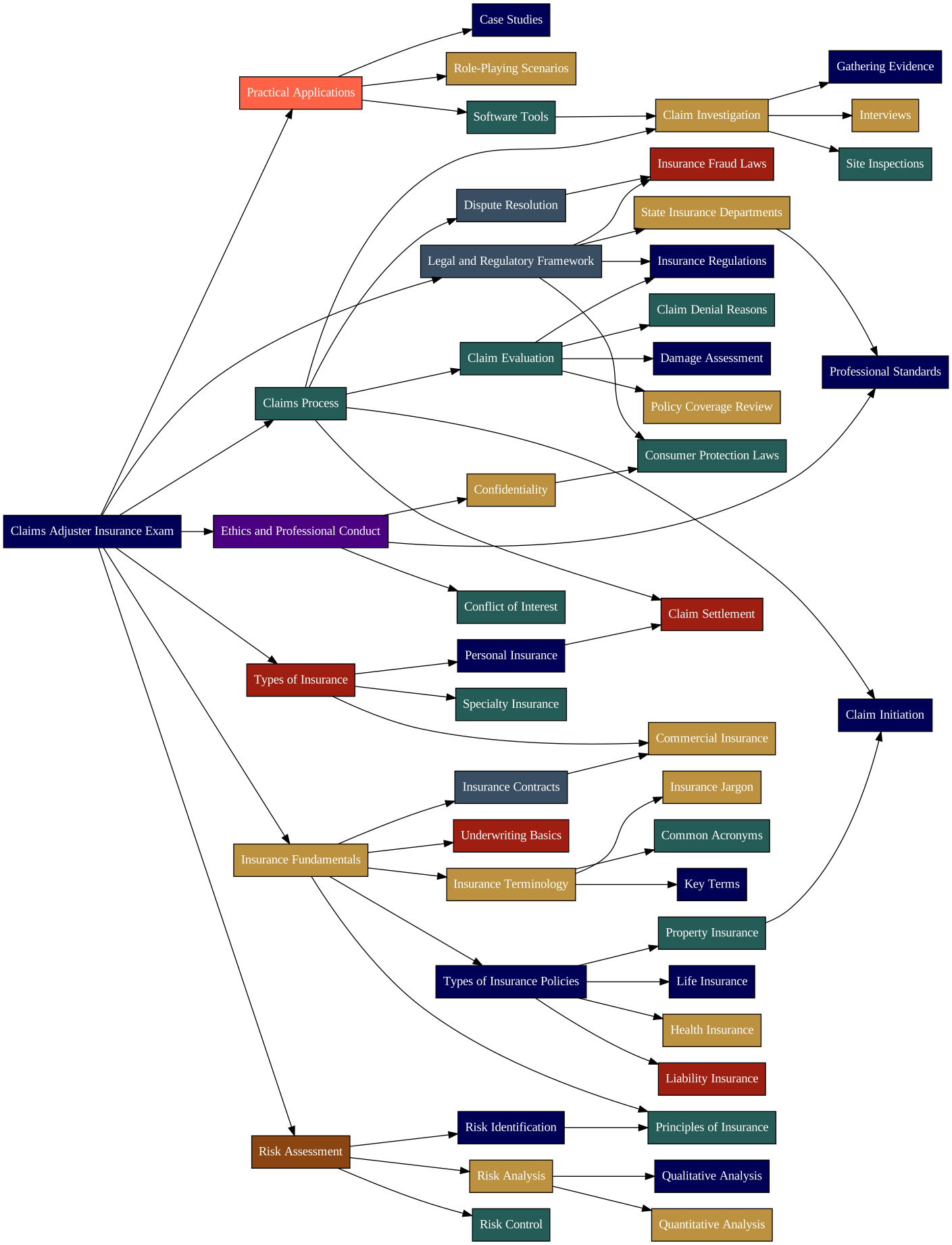
Quiz-summary
0 of 30 questions completed
Questions:
- 1
- 2
- 3
- 4
- 5
- 6
- 7
- 8
- 9
- 10
- 11
- 12
- 13
- 14
- 15
- 16
- 17
- 18
- 19
- 20
- 21
- 22
- 23
- 24
- 25
- 26
- 27
- 28
- 29
- 30
Information
Premium Practice Questions
You have already completed the quiz before. Hence you can not start it again.
Quiz is loading...
You must sign in or sign up to start the quiz.
You have to finish following quiz, to start this quiz:
Results
0 of 30 questions answered correctly
Your time:
Time has elapsed
You have reached 0 of 0 points, (0)
Categories
- Not categorized 0%
- 1
- 2
- 3
- 4
- 5
- 6
- 7
- 8
- 9
- 10
- 11
- 12
- 13
- 14
- 15
- 16
- 17
- 18
- 19
- 20
- 21
- 22
- 23
- 24
- 25
- 26
- 27
- 28
- 29
- 30
- Answered
- Review
-
Question 1 of 30
1. Question
Kahu, a homeowner in Christchurch, filed a claim with “Southern Cross Insurance” for earthquake damage. The claim was initially denied. Kahu then escalated the matter to the Insurance and Financial Services Ombudsman (IFSO). The IFSO ruled in favor of Kahu, determining that the damage was indeed covered under the policy. Southern Cross Insurance disagrees with the IFSO’s determination and is considering rejecting it. What are the MOST significant potential consequences Southern Cross Insurance faces if they choose to reject the IFSO’s determination?
Correct
The Insurance and Financial Services Ombudsman (IFSO) scheme plays a crucial role in New Zealand’s insurance landscape by providing a free, independent, and impartial dispute resolution service for consumers who have complaints against their insurers. While the IFSO’s decisions are not legally binding in the same way as a court judgment, insurers who are members of the scheme are generally expected to comply with the Ombudsman’s determinations. Refusal to comply can lead to the IFSO publicly naming the insurer, which can severely damage their reputation and erode consumer trust. Furthermore, the IFSO can refer cases of serious misconduct or systemic issues to regulatory bodies like the Financial Markets Authority (FMA) for further investigation and potential enforcement action. The FMA has the power to impose sanctions, including fines and license revocation, on insurers who fail to meet their regulatory obligations. Therefore, while an IFSO determination is not a court order, the consequences of non-compliance are significant and can have serious repercussions for an insurer’s business and standing in the market. The framework encourages compliance through reputational risk, regulatory oversight, and potential legal action by affected parties. An insurer’s decision to reject an IFSO determination is a serious matter that requires careful consideration of the potential consequences.
Incorrect
The Insurance and Financial Services Ombudsman (IFSO) scheme plays a crucial role in New Zealand’s insurance landscape by providing a free, independent, and impartial dispute resolution service for consumers who have complaints against their insurers. While the IFSO’s decisions are not legally binding in the same way as a court judgment, insurers who are members of the scheme are generally expected to comply with the Ombudsman’s determinations. Refusal to comply can lead to the IFSO publicly naming the insurer, which can severely damage their reputation and erode consumer trust. Furthermore, the IFSO can refer cases of serious misconduct or systemic issues to regulatory bodies like the Financial Markets Authority (FMA) for further investigation and potential enforcement action. The FMA has the power to impose sanctions, including fines and license revocation, on insurers who fail to meet their regulatory obligations. Therefore, while an IFSO determination is not a court order, the consequences of non-compliance are significant and can have serious repercussions for an insurer’s business and standing in the market. The framework encourages compliance through reputational risk, regulatory oversight, and potential legal action by affected parties. An insurer’s decision to reject an IFSO determination is a serious matter that requires careful consideration of the potential consequences.
-
Question 2 of 30
2. Question
Aisha applies for home insurance in Christchurch, New Zealand. The application asks if the property has ever been affected by earthquakes. Aisha truthfully states that the house suffered minor cosmetic damage in the 2011 earthquake, but neglects to mention that the land beneath the house was subsequently classified by the local council as TC3 (Technical Category 3) – indicating a higher risk of liquefaction in future seismic events. The insurer approves the policy at standard rates. Two years later, a moderate earthquake causes significant structural damage to Aisha’s home due to liquefaction. The insurer denies the claim, citing non-disclosure. Which of the following best describes the likely legal outcome of this situation, considering the principles of *uberrima fides* and relevant New Zealand legislation?
Correct
The principle of utmost good faith, or *uberrima fides*, is a cornerstone of insurance contracts in New Zealand. It requires both the insurer and the insured to act honestly and disclose all material facts relevant to the risk being insured. This duty exists both before the contract is entered into (at inception) and during the term of the policy, especially at the time of a claim. A “material fact” is any information that would influence a prudent insurer in deciding whether to accept the risk, and if so, on what terms. Failure to disclose a material fact, even if unintentional, can give the insurer grounds to avoid the policy or reject a claim. The Insurance Law Reform Act 1977 further clarifies these obligations, focusing on the insured’s duty to disclose information they know or a reasonable person in their circumstances would know. The concept of ‘inducement’ is also critical; the non-disclosure must have induced the insurer to enter into the contract on the terms agreed. The regulatory framework, including the Financial Markets Conduct Act 2013, also emphasizes fair dealing and transparency in insurance practices. Therefore, the insured is obligated to disclose all facts they know or should reasonably know that are relevant to the insurer’s assessment of the risk, and the insurer must demonstrate that the non-disclosure induced them to enter into the contract on the agreed terms.
Incorrect
The principle of utmost good faith, or *uberrima fides*, is a cornerstone of insurance contracts in New Zealand. It requires both the insurer and the insured to act honestly and disclose all material facts relevant to the risk being insured. This duty exists both before the contract is entered into (at inception) and during the term of the policy, especially at the time of a claim. A “material fact” is any information that would influence a prudent insurer in deciding whether to accept the risk, and if so, on what terms. Failure to disclose a material fact, even if unintentional, can give the insurer grounds to avoid the policy or reject a claim. The Insurance Law Reform Act 1977 further clarifies these obligations, focusing on the insured’s duty to disclose information they know or a reasonable person in their circumstances would know. The concept of ‘inducement’ is also critical; the non-disclosure must have induced the insurer to enter into the contract on the terms agreed. The regulatory framework, including the Financial Markets Conduct Act 2013, also emphasizes fair dealing and transparency in insurance practices. Therefore, the insured is obligated to disclose all facts they know or should reasonably know that are relevant to the insurer’s assessment of the risk, and the insurer must demonstrate that the non-disclosure induced them to enter into the contract on the agreed terms.
-
Question 3 of 30
3. Question
Aroha applies for house insurance. The application form asks if the property has ever been used for commercial purposes. Aroha, honestly believing her occasional cake decorating business, operating solely online and generating minimal income, doesn’t qualify as “commercial,” answers “no.” A fire later damages her kitchen, and the insurer discovers evidence of the cake business. Under New Zealand insurance law and principles, what is the most likely outcome regarding Aroha’s claim?
Correct
The concept of utmost good faith, or *uberrima fides*, is a cornerstone of insurance contracts. It mandates that both the insurer and the insured act honestly and disclose all material facts relevant to the risk being insured. A material fact is something that would influence a prudent insurer’s decision to accept the risk or the terms on which they would accept it. This duty exists from the pre-contractual stage and continues throughout the duration of the insurance policy. Failure to disclose a material fact, whether intentional or unintentional, can give the insurer the right to avoid the policy. The Insurance Law Reform Act 1977 further clarifies the obligations of disclosure. Section 5 specifically addresses non-disclosure or misrepresentation. It allows the insurer to avoid the policy if the non-disclosure or misrepresentation was material and would have influenced a prudent insurer. However, the Act also provides some protection for the insured, particularly if the non-disclosure was innocent. The *subrogation* is the right of an insurer to take over the rights and remedies of the insured against a third party who caused the loss, after having indemnified the insured. It prevents the insured from recovering twice for the same loss. In the given scenario, the insurer’s reliance on the principle of *uberrima fides* and the provisions of the Insurance Law Reform Act 1977 is crucial in determining the validity of the claim and the insurer’s right to avoid the policy.
Incorrect
The concept of utmost good faith, or *uberrima fides*, is a cornerstone of insurance contracts. It mandates that both the insurer and the insured act honestly and disclose all material facts relevant to the risk being insured. A material fact is something that would influence a prudent insurer’s decision to accept the risk or the terms on which they would accept it. This duty exists from the pre-contractual stage and continues throughout the duration of the insurance policy. Failure to disclose a material fact, whether intentional or unintentional, can give the insurer the right to avoid the policy. The Insurance Law Reform Act 1977 further clarifies the obligations of disclosure. Section 5 specifically addresses non-disclosure or misrepresentation. It allows the insurer to avoid the policy if the non-disclosure or misrepresentation was material and would have influenced a prudent insurer. However, the Act also provides some protection for the insured, particularly if the non-disclosure was innocent. The *subrogation* is the right of an insurer to take over the rights and remedies of the insured against a third party who caused the loss, after having indemnified the insured. It prevents the insured from recovering twice for the same loss. In the given scenario, the insurer’s reliance on the principle of *uberrima fides* and the provisions of the Insurance Law Reform Act 1977 is crucial in determining the validity of the claim and the insurer’s right to avoid the policy.
-
Question 4 of 30
4. Question
A homeowner in Christchurch, New Zealand, insures their contents, including antique furniture inherited from their grandparents. When completing the insurance application, they estimate the furniture’s value at $10,000, based on their limited knowledge. Following a fire, a professional appraisal reveals the furniture is worth $50,000. The insurer denies the claim, citing a breach of utmost good faith. Under the Fair Insurance Code and relevant legislation, what is the most likely outcome regarding the insurer’s decision to deny the claim?
Correct
The principle of utmost good faith (uberrima fides) is a cornerstone of insurance contracts in New Zealand, requiring both the insurer and the insured to act honestly and disclose all material facts. A “material fact” is any information that would influence a prudent insurer in deciding whether to accept a risk and, if so, on what terms. This duty applies before the contract is entered into (at inception and renewal) and during the claims process. The Insurance Law Reform Act 1977 (and subsequent amendments) and the Fair Insurance Code provide the legal and ethical framework. The Fair Insurance Code, in particular, emphasizes transparency and fairness in dealing with customers. A failure to disclose a material fact, even if unintentional, can give the insurer grounds to avoid the policy, meaning they can treat it as if it never existed and refuse to pay a claim. In this scenario, the homeowner, while completing the insurance application, honestly believed the value of their antique furniture was lower than its actual market value due to a lack of recent professional appraisal and limited knowledge of the antiques market. However, antique furniture is often considered high value items, and a prudent homeowner should have sought an expert valuation before insuring the items. The insurer, upon discovering the true value after a claim, argues that the underestimation constitutes a failure to disclose a material fact, as a higher valuation would have affected their underwriting decision (potentially leading to a higher premium or different policy terms). The key issue is whether the homeowner’s honest but mistaken belief negates the breach of utmost good faith. While honesty is a factor, the duty requires reasonable diligence in ascertaining and disclosing material facts. The question is whether a reasonable person in the homeowner’s position would have sought a professional appraisal given the nature of the items. Because antique furniture are considered high value items, the homeowner has failed to disclose a material fact. Therefore, the insurer is likely to be successful in avoiding the policy.
Incorrect
The principle of utmost good faith (uberrima fides) is a cornerstone of insurance contracts in New Zealand, requiring both the insurer and the insured to act honestly and disclose all material facts. A “material fact” is any information that would influence a prudent insurer in deciding whether to accept a risk and, if so, on what terms. This duty applies before the contract is entered into (at inception and renewal) and during the claims process. The Insurance Law Reform Act 1977 (and subsequent amendments) and the Fair Insurance Code provide the legal and ethical framework. The Fair Insurance Code, in particular, emphasizes transparency and fairness in dealing with customers. A failure to disclose a material fact, even if unintentional, can give the insurer grounds to avoid the policy, meaning they can treat it as if it never existed and refuse to pay a claim. In this scenario, the homeowner, while completing the insurance application, honestly believed the value of their antique furniture was lower than its actual market value due to a lack of recent professional appraisal and limited knowledge of the antiques market. However, antique furniture is often considered high value items, and a prudent homeowner should have sought an expert valuation before insuring the items. The insurer, upon discovering the true value after a claim, argues that the underestimation constitutes a failure to disclose a material fact, as a higher valuation would have affected their underwriting decision (potentially leading to a higher premium or different policy terms). The key issue is whether the homeowner’s honest but mistaken belief negates the breach of utmost good faith. While honesty is a factor, the duty requires reasonable diligence in ascertaining and disclosing material facts. The question is whether a reasonable person in the homeowner’s position would have sought a professional appraisal given the nature of the items. Because antique furniture are considered high value items, the homeowner has failed to disclose a material fact. Therefore, the insurer is likely to be successful in avoiding the policy.
-
Question 5 of 30
5. Question
Aroha, dissatisfied with her insurer’s handling of a house fire claim, sought resolution through the Insurance and Financial Services Ombudsman (IFSO). The IFSO ruled in Aroha’s favor, awarding her $250,000 in compensation. However, Aroha believes her actual losses exceed this amount by $50,000. Considering the legal framework governing the IFSO scheme in New Zealand, what recourse does Aroha have?
Correct
The Insurance and Financial Services Ombudsman (IFSO) scheme in New Zealand provides a crucial avenue for resolving disputes between insurers and policyholders. The IFSO’s decisions are binding on the insurer if the ombudsman rules in favor of the policyholder, up to a certain monetary limit. The insurer must comply with the decision. However, the policyholder is not bound and retains the right to pursue legal action in court if they are not satisfied with the IFSO’s decision. This ensures a balance of power, allowing consumers access to a free and impartial dispute resolution process while preserving their legal rights. The IFSO operates within the framework of the Financial Service Providers (Registration and Dispute Resolution) Act 2008, which mandates that all financial service providers, including insurers, must belong to a dispute resolution scheme. The IFSO’s role is to investigate and resolve complaints fairly and efficiently, promoting confidence in the insurance industry. Its existence underscores the importance of consumer protection and ethical conduct within the insurance sector in New Zealand. The IFSO’s decisions also contribute to the development of case law and precedents, shaping industry practices and informing policy interpretations.
Incorrect
The Insurance and Financial Services Ombudsman (IFSO) scheme in New Zealand provides a crucial avenue for resolving disputes between insurers and policyholders. The IFSO’s decisions are binding on the insurer if the ombudsman rules in favor of the policyholder, up to a certain monetary limit. The insurer must comply with the decision. However, the policyholder is not bound and retains the right to pursue legal action in court if they are not satisfied with the IFSO’s decision. This ensures a balance of power, allowing consumers access to a free and impartial dispute resolution process while preserving their legal rights. The IFSO operates within the framework of the Financial Service Providers (Registration and Dispute Resolution) Act 2008, which mandates that all financial service providers, including insurers, must belong to a dispute resolution scheme. The IFSO’s role is to investigate and resolve complaints fairly and efficiently, promoting confidence in the insurance industry. Its existence underscores the importance of consumer protection and ethical conduct within the insurance sector in New Zealand. The IFSO’s decisions also contribute to the development of case law and precedents, shaping industry practices and informing policy interpretations.
-
Question 6 of 30
6. Question
What is the significance of the Fair Insurance Code in the context of personal lines insurance in New Zealand?
Correct
In New Zealand, the Fair Insurance Code sets out standards of good practice for insurers. It aims to promote transparency, fairness, and efficiency in the insurance industry. While adherence to the Fair Insurance Code is not legally mandated, it represents a commitment by insurers to uphold high standards of conduct and provide fair treatment to their customers. The code covers various aspects of the insurance relationship, including policy wording, claims handling, and dispute resolution. Insurers that subscribe to the Fair Insurance Code agree to abide by its principles and guidelines. This can provide consumers with greater confidence in their dealings with insurers. The Fair Insurance Code is administered by the Insurance Council of New Zealand (ICNZ). While the ICNZ monitors compliance with the code, it does not have the power to enforce legal penalties for breaches. However, breaches of the code can be taken into account by the IFSO in resolving disputes. The Fair Insurance Code complements the legal and regulatory framework governing insurance in New Zealand, contributing to a more ethical and consumer-friendly insurance market.
Incorrect
In New Zealand, the Fair Insurance Code sets out standards of good practice for insurers. It aims to promote transparency, fairness, and efficiency in the insurance industry. While adherence to the Fair Insurance Code is not legally mandated, it represents a commitment by insurers to uphold high standards of conduct and provide fair treatment to their customers. The code covers various aspects of the insurance relationship, including policy wording, claims handling, and dispute resolution. Insurers that subscribe to the Fair Insurance Code agree to abide by its principles and guidelines. This can provide consumers with greater confidence in their dealings with insurers. The Fair Insurance Code is administered by the Insurance Council of New Zealand (ICNZ). While the ICNZ monitors compliance with the code, it does not have the power to enforce legal penalties for breaches. However, breaches of the code can be taken into account by the IFSO in resolving disputes. The Fair Insurance Code complements the legal and regulatory framework governing insurance in New Zealand, contributing to a more ethical and consumer-friendly insurance market.
-
Question 7 of 30
7. Question
Ms. Apetera is purchasing a home in Auckland and obtains insurance. The insurer is aware that leaky building syndrome is a significant issue in Auckland, potentially affecting property values and insurance premiums, but does not proactively inform Ms. Apetera of this risk or inquire specifically about pre-existing leaky building claims in the area. Ms. Apetera does not disclose that a neighboring property had a leaky building claim five years prior, as she was unaware this could be relevant. Later, Ms. Apetera’s property develops a leak, and the insurer attempts to void the policy, citing non-disclosure. Which statement BEST describes the legal position regarding utmost good faith (uberrima fides) in this scenario under New Zealand law and relevant industry codes?
Correct
The concept of utmost good faith (uberrima fides) is central to insurance contracts in New Zealand. It places a high burden on both the insurer and the insured to act honestly and disclose all material facts relevant to the risk being insured. This principle is enshrined in common law and reinforced by the Insurance Law Reform Act 1985. A material fact is one that would influence a prudent insurer in determining whether to accept the risk, and if so, at what premium and under what conditions. The insured has a duty to disclose all such facts, even if not specifically asked. Failure to do so can render the policy voidable by the insurer. The insurer also has a duty of utmost good faith in dealing with claims and providing information to the insured. In the scenario, the insurer’s failure to proactively inform Ms. Apetera about the potential impact of a pre-existing leaky building claim on her future premiums, despite being aware of the widespread issue and its potential materiality, constitutes a breach of this duty. While Ms. Apetera also has a responsibility to disclose, the insurer’s superior knowledge and failure to act reasonably to alert her to a known material issue tilts the balance in favor of a finding that the insurer did not act in utmost good faith. The Insurance Council of New Zealand (ICNZ) Code of Practice also emphasizes fair and transparent communication with policyholders.
Incorrect
The concept of utmost good faith (uberrima fides) is central to insurance contracts in New Zealand. It places a high burden on both the insurer and the insured to act honestly and disclose all material facts relevant to the risk being insured. This principle is enshrined in common law and reinforced by the Insurance Law Reform Act 1985. A material fact is one that would influence a prudent insurer in determining whether to accept the risk, and if so, at what premium and under what conditions. The insured has a duty to disclose all such facts, even if not specifically asked. Failure to do so can render the policy voidable by the insurer. The insurer also has a duty of utmost good faith in dealing with claims and providing information to the insured. In the scenario, the insurer’s failure to proactively inform Ms. Apetera about the potential impact of a pre-existing leaky building claim on her future premiums, despite being aware of the widespread issue and its potential materiality, constitutes a breach of this duty. While Ms. Apetera also has a responsibility to disclose, the insurer’s superior knowledge and failure to act reasonably to alert her to a known material issue tilts the balance in favor of a finding that the insurer did not act in utmost good faith. The Insurance Council of New Zealand (ICNZ) Code of Practice also emphasizes fair and transparent communication with policyholders.
-
Question 8 of 30
8. Question
Auckland resident, Moana, experienced significant water damage to her home following a burst pipe. Her insurer denied her claim, citing a policy exclusion related to gradual deterioration, despite Moana arguing the damage was sudden and unforeseen. Dissatisfied with the insurer’s decision, Moana escalated the complaint. Which of the following best describes the likely role and potential outcome of the Insurance and Financial Services Ombudsman (IFSO) scheme in this scenario?
Correct
The Insurance and Financial Services Ombudsman (IFSO) scheme in New Zealand plays a crucial role in resolving disputes between insurers and policyholders. Its primary function is to provide a free, independent, and impartial dispute resolution service. When a policyholder believes their claim has been unfairly denied or handled improperly, they can lodge a complaint with the IFSO. The IFSO investigates the complaint, considering the policy wording, relevant legislation (such as the Insurance Law Reform Act 1985 and the Fair Insurance Code), and industry best practices. A key aspect of the IFSO’s role is to determine whether the insurer acted reasonably and fairly in accordance with the policy terms and conditions. The IFSO can make a range of decisions, including upholding the insurer’s decision, recommending a settlement, or directing the insurer to pay compensation. The IFSO’s decisions are binding on the insurer, but the policyholder is not obligated to accept the decision and can pursue other legal avenues if they choose. The scheme aims to promote confidence in the insurance industry by ensuring fair and accessible dispute resolution. The IFSO’s existence and function are integral to consumer protection within the New Zealand insurance market.
Incorrect
The Insurance and Financial Services Ombudsman (IFSO) scheme in New Zealand plays a crucial role in resolving disputes between insurers and policyholders. Its primary function is to provide a free, independent, and impartial dispute resolution service. When a policyholder believes their claim has been unfairly denied or handled improperly, they can lodge a complaint with the IFSO. The IFSO investigates the complaint, considering the policy wording, relevant legislation (such as the Insurance Law Reform Act 1985 and the Fair Insurance Code), and industry best practices. A key aspect of the IFSO’s role is to determine whether the insurer acted reasonably and fairly in accordance with the policy terms and conditions. The IFSO can make a range of decisions, including upholding the insurer’s decision, recommending a settlement, or directing the insurer to pay compensation. The IFSO’s decisions are binding on the insurer, but the policyholder is not obligated to accept the decision and can pursue other legal avenues if they choose. The scheme aims to promote confidence in the insurance industry by ensuring fair and accessible dispute resolution. The IFSO’s existence and function are integral to consumer protection within the New Zealand insurance market.
-
Question 9 of 30
9. Question
Aisha applies for home insurance in Christchurch. She doesn’t mention that her property suffered minor flooding five years ago, causing minimal damage and being fully repaired. The insurance application form did not specifically ask about prior flooding. Two years into the policy, a major flood causes significant damage to Aisha’s home. The insurer denies the claim, citing non-disclosure of the previous flood. Under New Zealand law and the principles of utmost good faith, which of the following statements is MOST likely to determine the outcome of the claim?
Correct
The principle of utmost good faith (uberrima fides) is a cornerstone of insurance contracts. It requires both parties, the insurer and the insured, to act honestly and disclose all material facts relevant to the risk being insured. A “material fact” is any information that could influence the insurer’s decision to accept the risk or the terms on which they accept it. This duty exists before the contract is entered into (at the time of application), during the term of the policy, and even during the claims process. Failure to disclose a material fact, whether intentional or unintentional, can give the insurer the right to avoid (cancel) the policy or deny a claim. The Insurance Law Reform Act 1977 in New Zealand modifies the strict application of utmost good faith, particularly regarding non-disclosure. The Act states that an insurer cannot decline a claim or cancel a policy due to non-disclosure unless the non-disclosure was fraudulent or the insured failed to disclose information that a reasonable person in the circumstances would have disclosed. The “reasonable person” test introduces an element of objectivity. The insurer also has a responsibility to ask clear and specific questions during the application process. If they don’t ask, the insured isn’t necessarily obligated to volunteer information unless it’s something that a reasonable person would know is relevant. The burden of proof rests on the insurer to demonstrate that a non-disclosure was material and that a reasonable person would have disclosed it. Furthermore, the insurer must prove that they would have acted differently had they known the undisclosed information (e.g., charged a higher premium, imposed specific exclusions, or declined coverage altogether).
Incorrect
The principle of utmost good faith (uberrima fides) is a cornerstone of insurance contracts. It requires both parties, the insurer and the insured, to act honestly and disclose all material facts relevant to the risk being insured. A “material fact” is any information that could influence the insurer’s decision to accept the risk or the terms on which they accept it. This duty exists before the contract is entered into (at the time of application), during the term of the policy, and even during the claims process. Failure to disclose a material fact, whether intentional or unintentional, can give the insurer the right to avoid (cancel) the policy or deny a claim. The Insurance Law Reform Act 1977 in New Zealand modifies the strict application of utmost good faith, particularly regarding non-disclosure. The Act states that an insurer cannot decline a claim or cancel a policy due to non-disclosure unless the non-disclosure was fraudulent or the insured failed to disclose information that a reasonable person in the circumstances would have disclosed. The “reasonable person” test introduces an element of objectivity. The insurer also has a responsibility to ask clear and specific questions during the application process. If they don’t ask, the insured isn’t necessarily obligated to volunteer information unless it’s something that a reasonable person would know is relevant. The burden of proof rests on the insurer to demonstrate that a non-disclosure was material and that a reasonable person would have disclosed it. Furthermore, the insurer must prove that they would have acted differently had they known the undisclosed information (e.g., charged a higher premium, imposed specific exclusions, or declined coverage altogether).
-
Question 10 of 30
10. Question
Which of the following factors would an underwriter *most* likely consider when assessing the risk associated with a comprehensive car insurance policy application in Auckland, New Zealand?
Correct
Underwriting in personal lines insurance involves assessing and classifying risks to determine appropriate premiums and policy terms. Several factors influence these decisions. Claims history is a significant indicator of future risk; a history of frequent or large claims suggests a higher likelihood of future losses. The type of cover requested also impacts underwriting; comprehensive policies generally attract higher premiums than basic policies. Location is crucial, particularly for home and auto insurance. Areas prone to natural disasters or high crime rates are considered higher risk. The insured’s personal characteristics, such as age, driving record, and credit history (where permitted by law), can also be factors. Underwriters use these factors, along with statistical data and risk models, to assess the overall risk and determine whether to accept the risk, decline it, or offer coverage with specific terms and conditions.
Incorrect
Underwriting in personal lines insurance involves assessing and classifying risks to determine appropriate premiums and policy terms. Several factors influence these decisions. Claims history is a significant indicator of future risk; a history of frequent or large claims suggests a higher likelihood of future losses. The type of cover requested also impacts underwriting; comprehensive policies generally attract higher premiums than basic policies. Location is crucial, particularly for home and auto insurance. Areas prone to natural disasters or high crime rates are considered higher risk. The insured’s personal characteristics, such as age, driving record, and credit history (where permitted by law), can also be factors. Underwriters use these factors, along with statistical data and risk models, to assess the overall risk and determine whether to accept the risk, decline it, or offer coverage with specific terms and conditions.
-
Question 11 of 30
11. Question
Mei Ling is applying for a new home insurance policy in New Zealand. On the application, she is asked about previous insurance claims. She remembers having a small water damage claim five years ago on a previous property, covered by a different insurer, but decides not to disclose it, thinking it’s insignificant and too old to matter. A year later, she experiences significant water damage at her new property and files a claim. The insurer investigates and discovers the previous undisclosed claim. Which principle of insurance is most directly relevant to this situation, and what is the likely outcome?
Correct
The principle of utmost good faith (uberrima fides) is a cornerstone of insurance contracts. It requires both the insurer and the insured to act honestly and disclose all material facts relevant to the risk being insured. A material fact is any information that could influence the insurer’s decision to accept the risk or the terms of the policy. In the given scenario, the key question is whether Mei Ling’s previous claim for water damage, even if it was under a different policy with a different insurer, constitutes a material fact. The fact that she experienced a similar issue previously, particularly one related to water damage which can indicate underlying structural problems or vulnerabilities, is highly relevant to assessing the risk of insuring her current property. Even if the previous claim was deemed minor, its relevance lies in establishing a pattern or a pre-existing condition that could increase the likelihood of future claims. Failing to disclose this information would be a breach of utmost good faith. The insurer could potentially void the policy or refuse to pay a claim if they discover the non-disclosure, especially if the current claim is related to water damage. The insurer’s ability to make an informed decision about accepting the risk was directly impacted by the omission of this information. The materiality of the previous claim is judged from the perspective of a reasonable insurer.
Incorrect
The principle of utmost good faith (uberrima fides) is a cornerstone of insurance contracts. It requires both the insurer and the insured to act honestly and disclose all material facts relevant to the risk being insured. A material fact is any information that could influence the insurer’s decision to accept the risk or the terms of the policy. In the given scenario, the key question is whether Mei Ling’s previous claim for water damage, even if it was under a different policy with a different insurer, constitutes a material fact. The fact that she experienced a similar issue previously, particularly one related to water damage which can indicate underlying structural problems or vulnerabilities, is highly relevant to assessing the risk of insuring her current property. Even if the previous claim was deemed minor, its relevance lies in establishing a pattern or a pre-existing condition that could increase the likelihood of future claims. Failing to disclose this information would be a breach of utmost good faith. The insurer could potentially void the policy or refuse to pay a claim if they discover the non-disclosure, especially if the current claim is related to water damage. The insurer’s ability to make an informed decision about accepting the risk was directly impacted by the omission of this information. The materiality of the previous claim is judged from the perspective of a reasonable insurer.
-
Question 12 of 30
12. Question
How does reinsurance primarily benefit insurance companies in the context of managing personal lines insurance claims?
Correct
Reinsurance plays a critical role in the insurance market by providing insurers with a mechanism to transfer risk and protect their financial stability. Through reinsurance, an insurer (the ceding company) transfers a portion of its risk to another insurer (the reinsurer). This allows the ceding company to underwrite more business and manage its exposure to large or catastrophic losses. There are two main types of reinsurance: facultative and treaty. Facultative reinsurance covers individual risks, while treaty reinsurance covers a portfolio of risks. Reinsurance agreements can have a significant impact on claims management, as they may specify how claims are handled and settled.
Incorrect
Reinsurance plays a critical role in the insurance market by providing insurers with a mechanism to transfer risk and protect their financial stability. Through reinsurance, an insurer (the ceding company) transfers a portion of its risk to another insurer (the reinsurer). This allows the ceding company to underwrite more business and manage its exposure to large or catastrophic losses. There are two main types of reinsurance: facultative and treaty. Facultative reinsurance covers individual risks, while treaty reinsurance covers a portfolio of risks. Reinsurance agreements can have a significant impact on claims management, as they may specify how claims are handled and settled.
-
Question 13 of 30
13. Question
What is the primary purpose of the principle of subrogation in insurance?
Correct
Subrogation is a fundamental principle in insurance law. It grants the insurer the right to step into the shoes of the insured after a claim has been paid and pursue recovery from a responsible third party. This prevents the insured from receiving double compensation for the same loss. For example, if a driver is at fault in a car accident and their insurance company pays out a claim to the other driver, the insurer can then pursue the at-fault driver (or their insurance company) to recover the amount paid out. Subrogation rights are typically outlined in the insurance policy. However, there are limitations to subrogation. The insurer’s right to subrogate is limited to the extent of the payment made to the insured. The insurer also cannot pursue a subrogation claim if the insured has already released the responsible party from liability. The purpose of subrogation is to ensure that the ultimate burden of the loss falls on the party responsible for causing the damage.
Incorrect
Subrogation is a fundamental principle in insurance law. It grants the insurer the right to step into the shoes of the insured after a claim has been paid and pursue recovery from a responsible third party. This prevents the insured from receiving double compensation for the same loss. For example, if a driver is at fault in a car accident and their insurance company pays out a claim to the other driver, the insurer can then pursue the at-fault driver (or their insurance company) to recover the amount paid out. Subrogation rights are typically outlined in the insurance policy. However, there are limitations to subrogation. The insurer’s right to subrogate is limited to the extent of the payment made to the insured. The insurer also cannot pursue a subrogation claim if the insured has already released the responsible party from liability. The purpose of subrogation is to ensure that the ultimate burden of the loss falls on the party responsible for causing the damage.
-
Question 14 of 30
14. Question
During the investigation of a motor vehicle accident claim, a claims adjuster, Hana, discovers that her close friend was involved in the accident as the other driver. Hana realizes that she might struggle to remain impartial in handling the claim due to her personal relationship. What is the most ethical course of action for Hana in this situation?
Correct
Ethical considerations are paramount in insurance claims handling. Claims professionals must act with integrity, honesty, and fairness in all their dealings with policyholders, colleagues, and other stakeholders. Conflicts of interest must be identified and managed appropriately to avoid compromising the impartiality of the claims process. Professional conduct requires adherence to industry codes of ethics and legal requirements. Ethical dilemmas may arise in various situations, such as when dealing with suspected fraud, assessing complex claims, or managing conflicting interests. Ethical training and awareness are essential for claims professionals to navigate these challenges and uphold the integrity of the insurance industry. The Insurance Council of New Zealand (ICNZ) has a Code of Conduct that provides guidance on ethical behavior for its members.
Incorrect
Ethical considerations are paramount in insurance claims handling. Claims professionals must act with integrity, honesty, and fairness in all their dealings with policyholders, colleagues, and other stakeholders. Conflicts of interest must be identified and managed appropriately to avoid compromising the impartiality of the claims process. Professional conduct requires adherence to industry codes of ethics and legal requirements. Ethical dilemmas may arise in various situations, such as when dealing with suspected fraud, assessing complex claims, or managing conflicting interests. Ethical training and awareness are essential for claims professionals to navigate these challenges and uphold the integrity of the insurance industry. The Insurance Council of New Zealand (ICNZ) has a Code of Conduct that provides guidance on ethical behavior for its members.
-
Question 15 of 30
15. Question
Aisha applies for home insurance in Christchurch, New Zealand. She accurately answers all questions on the application form but does not disclose that a large sinkhole had opened up on a neighboring property six months prior, a fact she believes is irrelevant because it’s not *her* property. Three months after the policy is issued, a similar sinkhole appears on Aisha’s land, causing significant damage. The insurer denies the claim, citing a breach of *uberrima fides*. Which statement BEST justifies the insurer’s decision, considering the relevant legal principles and regulatory context in New Zealand?
Correct
The principle of *uberrima fides*, or utmost good faith, is a cornerstone of insurance contracts in New Zealand. It places a high burden on both the insurer and the insured to act honestly and transparently. This duty extends beyond simply answering direct questions; it requires proactive disclosure of any material facts that could influence the insurer’s decision to offer coverage or the terms of that coverage. A “material fact” is any information that would reasonably affect the judgment of a prudent insurer in determining whether to accept the risk or fixing the premium or conditions of the policy. This principle is particularly important during the application process, but it also applies throughout the life of the policy, including during the claims process. Failure to disclose a material fact, whether intentional or unintentional, can give the insurer grounds to void the policy or deny a claim. The Insurance Law Reform Act 1977 and the Contract and Commercial Law Act 2017 (specifically around misrepresentation) provide the legal framework supporting this principle in New Zealand. Furthermore, the duty of utmost good faith requires insurers to act fairly and reasonably in handling claims, even if the policy wording is ambiguous. This includes thoroughly investigating claims, providing clear and timely communication, and making decisions based on the available evidence. The IFSO (Insurance & Financial Services Ombudsman) scheme plays a crucial role in resolving disputes related to the duty of utmost good faith, ensuring that both insurers and policyholders adhere to these ethical and legal obligations.
Incorrect
The principle of *uberrima fides*, or utmost good faith, is a cornerstone of insurance contracts in New Zealand. It places a high burden on both the insurer and the insured to act honestly and transparently. This duty extends beyond simply answering direct questions; it requires proactive disclosure of any material facts that could influence the insurer’s decision to offer coverage or the terms of that coverage. A “material fact” is any information that would reasonably affect the judgment of a prudent insurer in determining whether to accept the risk or fixing the premium or conditions of the policy. This principle is particularly important during the application process, but it also applies throughout the life of the policy, including during the claims process. Failure to disclose a material fact, whether intentional or unintentional, can give the insurer grounds to void the policy or deny a claim. The Insurance Law Reform Act 1977 and the Contract and Commercial Law Act 2017 (specifically around misrepresentation) provide the legal framework supporting this principle in New Zealand. Furthermore, the duty of utmost good faith requires insurers to act fairly and reasonably in handling claims, even if the policy wording is ambiguous. This includes thoroughly investigating claims, providing clear and timely communication, and making decisions based on the available evidence. The IFSO (Insurance & Financial Services Ombudsman) scheme plays a crucial role in resolving disputes related to the duty of utmost good faith, ensuring that both insurers and policyholders adhere to these ethical and legal obligations.
-
Question 16 of 30
16. Question
Kiara, a claims manager at “AssureNow” in Auckland, is reviewing the company’s compliance protocols. “AssureNow” is a member of the Insurance Council of New Zealand (ICNZ). Kiara is unsure of the exact legal standing of the ICNZ’s Code of Practice. Which of the following statements best describes the enforceability of the ICNZ’s Code of Practice on “AssureNow”?
Correct
The Insurance Council of New Zealand (ICNZ) plays a crucial role in self-regulation and advocacy within the New Zealand insurance market. While it doesn’t directly enforce laws (that’s the role of government bodies like the Financial Markets Authority (FMA)), it sets standards and codes of practice for its members. These codes often exceed the minimum legal requirements, demonstrating a commitment to ethical conduct and consumer protection. Adherence to these codes is a condition of ICNZ membership, creating a strong incentive for insurers to comply. Therefore, while not a legal mandate in the strictest sense, adherence to ICNZ codes is effectively a requirement for insurers seeking to operate within the mainstream New Zealand insurance market and benefit from the council’s representation and resources. Failure to comply can lead to expulsion from the ICNZ, which carries significant reputational and practical consequences for an insurer. The ICNZ also engages in advocacy, representing the industry’s interests to government and the public, which further reinforces the importance of its standards. The IFSO (Insurance & Financial Services Ombudsman) operates independently to resolve disputes between insurers and policyholders, providing an avenue for redress when ICNZ’s self-regulation isn’t enough. The FMA focuses on market conduct and licensing, ensuring insurers meet legal obligations and maintain financial stability.
Incorrect
The Insurance Council of New Zealand (ICNZ) plays a crucial role in self-regulation and advocacy within the New Zealand insurance market. While it doesn’t directly enforce laws (that’s the role of government bodies like the Financial Markets Authority (FMA)), it sets standards and codes of practice for its members. These codes often exceed the minimum legal requirements, demonstrating a commitment to ethical conduct and consumer protection. Adherence to these codes is a condition of ICNZ membership, creating a strong incentive for insurers to comply. Therefore, while not a legal mandate in the strictest sense, adherence to ICNZ codes is effectively a requirement for insurers seeking to operate within the mainstream New Zealand insurance market and benefit from the council’s representation and resources. Failure to comply can lead to expulsion from the ICNZ, which carries significant reputational and practical consequences for an insurer. The ICNZ also engages in advocacy, representing the industry’s interests to government and the public, which further reinforces the importance of its standards. The IFSO (Insurance & Financial Services Ombudsman) operates independently to resolve disputes between insurers and policyholders, providing an avenue for redress when ICNZ’s self-regulation isn’t enough. The FMA focuses on market conduct and licensing, ensuring insurers meet legal obligations and maintain financial stability.
-
Question 17 of 30
17. Question
Following a severe earthquake, Mere’s house suffers extensive structural damage. Her insurance company, “AnchorSure,” needs to assess the loss to determine the claim settlement. Which of the following methods is MOST likely to be used by AnchorSure to assess the property damage and determine the claim amount, ensuring compliance with industry best practices in New Zealand?
Correct
When assessing property damage claims under a house insurance policy in New Zealand, several methods are used to determine the appropriate settlement amount. One common approach is obtaining quotes from multiple reputable builders or contractors to estimate the cost of repairs. These quotes should be detailed and clearly outline the scope of work required. Another method involves using independent loss adjusters or assessors who are experienced in evaluating property damage and providing impartial assessments of the repair costs. They consider factors such as the extent of the damage, the materials required, and labor costs. For total losses, the policy may specify a replacement value or indemnity value. Replacement value aims to cover the cost of rebuilding or replacing the property with new materials of similar quality, while indemnity value takes into account depreciation. The assessment process must comply with the terms and conditions of the insurance policy and relevant legislation, ensuring fairness and accuracy in determining the settlement amount.
Incorrect
When assessing property damage claims under a house insurance policy in New Zealand, several methods are used to determine the appropriate settlement amount. One common approach is obtaining quotes from multiple reputable builders or contractors to estimate the cost of repairs. These quotes should be detailed and clearly outline the scope of work required. Another method involves using independent loss adjusters or assessors who are experienced in evaluating property damage and providing impartial assessments of the repair costs. They consider factors such as the extent of the damage, the materials required, and labor costs. For total losses, the policy may specify a replacement value or indemnity value. Replacement value aims to cover the cost of rebuilding or replacing the property with new materials of similar quality, while indemnity value takes into account depreciation. The assessment process must comply with the terms and conditions of the insurance policy and relevant legislation, ensuring fairness and accuracy in determining the settlement amount.
-
Question 18 of 30
18. Question
Auckland resident, Hana, applies for home insurance. She accurately states the age and construction materials of her house. However, she fails to mention that the property experienced minor flooding five years ago due to a burst water main on the street, which was resolved by the local council. The insurer does not ask about previous flooding. Two years later, Hana’s home suffers significant flood damage due to a heavy storm. The insurer rejects her claim, citing non-disclosure. Based on the principle of utmost good faith (uberrima fides) under New Zealand law, which of the following is the most likely outcome?
Correct
The principle of utmost good faith (uberrima fides) is a cornerstone of insurance contracts in New Zealand. It places a duty on both the insurer and the insured to act honestly and disclose all material facts relevant to the risk being insured. This duty applies from the initial application stage and continues throughout the duration of the policy, including during the claims process. A “material fact” is any information that could influence the insurer’s decision to accept the risk, the terms of the policy, or the premium charged. The insured’s failure to disclose a material fact, even if unintentional, can give the insurer grounds to avoid the policy or reject a claim. The test for materiality is whether a reasonable insurer would consider the fact relevant to its underwriting decision. This principle is deeply embedded in New Zealand insurance law and is often cited in disputes regarding non-disclosure. Insurers rely on the information provided by the insured to accurately assess risk and price their policies accordingly. The duty of utmost good faith ensures fairness and transparency in the insurance relationship. In practice, this means an insured must proactively disclose any information that they know, or ought reasonably to know, could affect the insurer’s assessment of the risk. The insurer also has a reciprocal duty to be transparent and provide clear and accurate information about the policy terms and conditions.
Incorrect
The principle of utmost good faith (uberrima fides) is a cornerstone of insurance contracts in New Zealand. It places a duty on both the insurer and the insured to act honestly and disclose all material facts relevant to the risk being insured. This duty applies from the initial application stage and continues throughout the duration of the policy, including during the claims process. A “material fact” is any information that could influence the insurer’s decision to accept the risk, the terms of the policy, or the premium charged. The insured’s failure to disclose a material fact, even if unintentional, can give the insurer grounds to avoid the policy or reject a claim. The test for materiality is whether a reasonable insurer would consider the fact relevant to its underwriting decision. This principle is deeply embedded in New Zealand insurance law and is often cited in disputes regarding non-disclosure. Insurers rely on the information provided by the insured to accurately assess risk and price their policies accordingly. The duty of utmost good faith ensures fairness and transparency in the insurance relationship. In practice, this means an insured must proactively disclose any information that they know, or ought reasonably to know, could affect the insurer’s assessment of the risk. The insurer also has a reciprocal duty to be transparent and provide clear and accurate information about the policy terms and conditions.
-
Question 19 of 30
19. Question
Anya purchases a homeowner’s insurance policy in New Zealand. When completing the application, she does not disclose that her property experienced minor water damage three years prior, which was repaired at the time. A year later, a major flood causes significant damage to Anya’s home, and she files a claim. During the claims investigation, the insurer discovers the previous water damage incident, which Anya genuinely believed was insignificant and fully resolved. Based on the principles of utmost good faith and relevant New Zealand legislation, what is the most likely outcome?
Correct
The concept of utmost good faith (uberrima fides) is central to insurance contracts. It requires both the insurer and the insured to act honestly and disclose all material facts relevant to the risk being insured. A material fact is something that would influence the insurer’s decision to offer coverage or the terms of that coverage. In the scenario, Anya’s failure to disclose the previous water damage constitutes a breach of utmost good faith. Even if Anya believed the previous issue was resolved and minor, its relevance lies in its potential impact on the insurer’s assessment of the property’s risk profile. The insurer is entitled to rely on the information provided by the insured to accurately assess the risk. The fact that a prior claim existed, regardless of its perceived severity by Anya, is information the insurer would reasonably want to know. The Insurance Law Reform Act 1977 (New Zealand) reinforces the duty of disclosure. Section 5 of the Act implies a duty on the insured to disclose to the insurer, before the contract is entered into, every matter that the insured knows to be a matter relevant to the decision of the insurer to accept the risk or not. The insurer, upon discovering the non-disclosure, has the right to avoid the contract, meaning they can treat it as if it never existed, especially if the non-disclosure is material and induces the insurer to enter into the contract on certain terms.
Incorrect
The concept of utmost good faith (uberrima fides) is central to insurance contracts. It requires both the insurer and the insured to act honestly and disclose all material facts relevant to the risk being insured. A material fact is something that would influence the insurer’s decision to offer coverage or the terms of that coverage. In the scenario, Anya’s failure to disclose the previous water damage constitutes a breach of utmost good faith. Even if Anya believed the previous issue was resolved and minor, its relevance lies in its potential impact on the insurer’s assessment of the property’s risk profile. The insurer is entitled to rely on the information provided by the insured to accurately assess the risk. The fact that a prior claim existed, regardless of its perceived severity by Anya, is information the insurer would reasonably want to know. The Insurance Law Reform Act 1977 (New Zealand) reinforces the duty of disclosure. Section 5 of the Act implies a duty on the insured to disclose to the insurer, before the contract is entered into, every matter that the insured knows to be a matter relevant to the decision of the insurer to accept the risk or not. The insurer, upon discovering the non-disclosure, has the right to avoid the contract, meaning they can treat it as if it never existed, especially if the non-disclosure is material and induces the insurer to enter into the contract on certain terms.
-
Question 20 of 30
20. Question
Hine renews her home insurance policy. She forgets to mention a water damage claim she made two years prior with a different insurer. The insurer discovers this omission after a subsequent claim is filed. Under the Insurance Law Reform Act 1977 and the principle of utmost good faith, what is the most likely outcome regarding the insurer’s ability to avoid the policy?
Correct
The concept of utmost good faith (uberrima fides) is central to insurance contracts. It requires both the insurer and the insured to act honestly and disclose all material facts relevant to the risk being insured. A material fact is one that would influence the insurer’s decision to accept the risk or the terms on which it is accepted. This duty extends throughout the life of the contract, including at the time of renewal. The Insurance Law Reform Act 1977 modifies the strict application of utmost good faith by requiring insurers to ask specific questions to elicit relevant information from the insured. This places a greater onus on the insurer to inquire about potential risks. Furthermore, Section 5(1) of the Act states that a breach of the duty of utmost good faith by the insured only entitles the insurer to avoid the contract if the misrepresentation or non-disclosure was fraudulent or, if not fraudulent, of such a nature that the insurer would not have entered into the contract on the same terms if the true facts had been known. Therefore, the insurer’s remedy depends on the nature and impact of the non-disclosure. In this scenario, the insured failed to disclose a prior claim, which is a material fact. The insurer’s action depends on whether the non-disclosure was fraudulent. If not fraudulent, the insurer must demonstrate that they would not have offered the same terms had they known about the prior claim.
Incorrect
The concept of utmost good faith (uberrima fides) is central to insurance contracts. It requires both the insurer and the insured to act honestly and disclose all material facts relevant to the risk being insured. A material fact is one that would influence the insurer’s decision to accept the risk or the terms on which it is accepted. This duty extends throughout the life of the contract, including at the time of renewal. The Insurance Law Reform Act 1977 modifies the strict application of utmost good faith by requiring insurers to ask specific questions to elicit relevant information from the insured. This places a greater onus on the insurer to inquire about potential risks. Furthermore, Section 5(1) of the Act states that a breach of the duty of utmost good faith by the insured only entitles the insurer to avoid the contract if the misrepresentation or non-disclosure was fraudulent or, if not fraudulent, of such a nature that the insurer would not have entered into the contract on the same terms if the true facts had been known. Therefore, the insurer’s remedy depends on the nature and impact of the non-disclosure. In this scenario, the insured failed to disclose a prior claim, which is a material fact. The insurer’s action depends on whether the non-disclosure was fraudulent. If not fraudulent, the insurer must demonstrate that they would not have offered the same terms had they known about the prior claim.
-
Question 21 of 30
21. Question
Aisha applies for house insurance in Christchurch. She accurately states that her home is constructed of brick and tile and is located 500 meters from a river. She genuinely believes the river poses no flood risk. However, she fails to mention that her property suffered minor flood damage five years prior, which was repaired and not declared to the local council. Six months after the policy is incepted, a major flood causes significant damage to Aisha’s home. The insurer discovers the prior flood damage. Which of the following best describes the likely outcome regarding the claim?
Correct
The principle of *uberrima fides*, or utmost good faith, is a cornerstone of insurance contracts. It places a duty on both the insurer and the insured to act honestly and disclose all material facts relevant to the risk being insured. A “material fact” is one that would influence a prudent insurer in determining whether to accept the risk, and if so, at what premium and under what conditions. This duty exists from the initial application stage and continues throughout the policy period, including during the claims process. Failure to disclose a material fact, even if unintentional, can render the policy voidable by the insurer. This is because the insurer’s decision to provide coverage and the terms of that coverage are based on an accurate assessment of the risk, which relies on the information provided by the insured. The insurer must demonstrate that the undisclosed fact was indeed material and that its non-disclosure would have affected their decision-making process. The Insurance Law Reform Act 1977 in New Zealand also addresses aspects of disclosure, but the core principle of utmost good faith remains paramount.
Incorrect
The principle of *uberrima fides*, or utmost good faith, is a cornerstone of insurance contracts. It places a duty on both the insurer and the insured to act honestly and disclose all material facts relevant to the risk being insured. A “material fact” is one that would influence a prudent insurer in determining whether to accept the risk, and if so, at what premium and under what conditions. This duty exists from the initial application stage and continues throughout the policy period, including during the claims process. Failure to disclose a material fact, even if unintentional, can render the policy voidable by the insurer. This is because the insurer’s decision to provide coverage and the terms of that coverage are based on an accurate assessment of the risk, which relies on the information provided by the insured. The insurer must demonstrate that the undisclosed fact was indeed material and that its non-disclosure would have affected their decision-making process. The Insurance Law Reform Act 1977 in New Zealand also addresses aspects of disclosure, but the core principle of utmost good faith remains paramount.
-
Question 22 of 30
22. Question
Aisha is applying for a house insurance policy in Christchurch. The house is located near the Avon River, and while it has never flooded, Aisha is aware that the local council has identified the area as having a slightly elevated flood risk compared to other parts of the city due to climate change projections. Aisha doesn’t mention this to the insurance company, believing it’s the council’s responsibility to manage flood risks. Later, the house floods during an unusually heavy rain event. Which principle of insurance is most directly relevant to the insurer’s potential decision to decline the claim?
Correct
The principle of utmost good faith (uberrima fides) places a significant duty on both the insurer and the insured. This duty requires both parties to disclose all material facts relevant to the insurance contract. A “material fact” is any information that could influence the insurer’s decision to accept the risk or the terms upon which they accept it. This includes information that might affect the premium charged, the policy conditions, or whether the insurer would have issued the policy at all. The Insurance Law Reform Act 1977 further clarifies these obligations within the New Zealand legal framework. The Act emphasizes the importance of pre-contractual disclosure and provides remedies for misrepresentation or non-disclosure. The insured’s duty extends to providing honest and accurate information to the best of their knowledge. Failure to disclose a material fact, even unintentionally, can give the insurer grounds to avoid the policy. The insurer also has a reciprocal duty to act honestly and fairly in its dealings with the insured. This includes providing clear and accurate information about the policy terms and conditions and handling claims in a timely and transparent manner. A breach of utmost good faith can have serious consequences, potentially invalidating the insurance contract and leaving the insured without coverage. The test of materiality is whether a reasonable insurer would consider the fact relevant to their decision-making process.
Incorrect
The principle of utmost good faith (uberrima fides) places a significant duty on both the insurer and the insured. This duty requires both parties to disclose all material facts relevant to the insurance contract. A “material fact” is any information that could influence the insurer’s decision to accept the risk or the terms upon which they accept it. This includes information that might affect the premium charged, the policy conditions, or whether the insurer would have issued the policy at all. The Insurance Law Reform Act 1977 further clarifies these obligations within the New Zealand legal framework. The Act emphasizes the importance of pre-contractual disclosure and provides remedies for misrepresentation or non-disclosure. The insured’s duty extends to providing honest and accurate information to the best of their knowledge. Failure to disclose a material fact, even unintentionally, can give the insurer grounds to avoid the policy. The insurer also has a reciprocal duty to act honestly and fairly in its dealings with the insured. This includes providing clear and accurate information about the policy terms and conditions and handling claims in a timely and transparent manner. A breach of utmost good faith can have serious consequences, potentially invalidating the insurance contract and leaving the insured without coverage. The test of materiality is whether a reasonable insurer would consider the fact relevant to their decision-making process.
-
Question 23 of 30
23. Question
Aisha applies for home insurance in Christchurch, New Zealand. She accurately states that her home is constructed of brick and tile and is located 500 meters from a river. However, she fails to mention that the property experienced minor flooding ten years prior, resulting in water damage to the basement. Aisha believed this was insignificant as the council has since installed improved flood defenses. Six months later, the property suffers significant flood damage. The insurer investigates and discovers the prior flood event. Which of the following best describes the insurer’s most likely course of action under the principle of *uberrima fides* and relevant New Zealand legislation?
Correct
The principle of utmost good faith, or *uberrima fides*, is a cornerstone of insurance contracts. It mandates that both the insurer and the insured must act honestly and disclose all material facts relevant to the insurance policy. A material fact is any information that could influence the insurer’s decision to accept the risk or determine the premium. In the context of personal lines insurance, non-disclosure or misrepresentation of material facts can have significant consequences. The insurer may have the right to avoid the policy, meaning they can treat it as if it never existed, and deny any claims. This right is typically exercised when the non-disclosure is discovered before a claim is made or during the claims process. The Insurance Law Reform Act 1977 (New Zealand) provides some relief against strict avoidance, allowing the insurer to reduce the claim payment instead of avoiding the policy entirely if the non-disclosure was not fraudulent. However, if the non-disclosure is deemed fraudulent, the insurer generally retains the right to avoid the policy completely. The materiality of a fact is determined objectively, meaning it is assessed based on whether a reasonable insurer would consider the information relevant. The insured’s subjective belief about the importance of the fact is not the deciding factor.
Incorrect
The principle of utmost good faith, or *uberrima fides*, is a cornerstone of insurance contracts. It mandates that both the insurer and the insured must act honestly and disclose all material facts relevant to the insurance policy. A material fact is any information that could influence the insurer’s decision to accept the risk or determine the premium. In the context of personal lines insurance, non-disclosure or misrepresentation of material facts can have significant consequences. The insurer may have the right to avoid the policy, meaning they can treat it as if it never existed, and deny any claims. This right is typically exercised when the non-disclosure is discovered before a claim is made or during the claims process. The Insurance Law Reform Act 1977 (New Zealand) provides some relief against strict avoidance, allowing the insurer to reduce the claim payment instead of avoiding the policy entirely if the non-disclosure was not fraudulent. However, if the non-disclosure is deemed fraudulent, the insurer generally retains the right to avoid the policy completely. The materiality of a fact is determined objectively, meaning it is assessed based on whether a reasonable insurer would consider the information relevant. The insured’s subjective belief about the importance of the fact is not the deciding factor.
-
Question 24 of 30
24. Question
Aroha applies for motor vehicle insurance in New Zealand. She answers all questions on the application honestly but fails to disclose two prior convictions for careless driving from five years ago. She genuinely forgot about them. Six months later, Aroha is involved in a collision caused by another driver running a red light, resulting in significant damage to her vehicle. Aroha lodges a claim with her insurer. Upon investigating the claim, the insurer discovers Aroha’s prior driving convictions, which she had not disclosed. Based on the principle of *uberrima fides*, what is the *most likely* outcome regarding Aroha’s claim?
Correct
The question explores the principle of *uberrima fides* (utmost good faith) within the context of New Zealand insurance law and its practical application to claims scenarios. *Uberrima fides* requires both the insurer and the insured to act honestly and disclose all material facts relevant to the insurance contract. A material fact is something that would influence a prudent insurer’s decision to offer coverage or the terms of that coverage. Non-disclosure of a material fact, even if unintentional, can give the insurer grounds to avoid the policy or reject a claim. In this scenario, Aroha failed to disclose her prior convictions for careless driving when applying for her motor vehicle insurance. These convictions are highly relevant to assessing her risk profile as a driver. A prudent insurer would likely view a driver with multiple careless driving convictions as a higher risk and might either decline coverage, increase the premium, or impose specific conditions on the policy. The key issue is whether Aroha’s non-disclosure was a breach of *uberrima fides* that justifies the insurer declining her claim. The insurer’s decision hinges on demonstrating that Aroha’s driving record was indeed a material fact that would have altered their underwriting decision. If the insurer can prove this, they are within their rights to decline the claim, despite the collision not being directly related to her prior driving offences. The Insurance Law Reform Act 1977, while not explicitly mentioned in the scenario, is the underlying legislation that governs the duty of disclosure and materiality in New Zealand insurance contracts. The insurer must act reasonably and fairly in assessing the materiality of the non-disclosure and its impact on the risk.
Incorrect
The question explores the principle of *uberrima fides* (utmost good faith) within the context of New Zealand insurance law and its practical application to claims scenarios. *Uberrima fides* requires both the insurer and the insured to act honestly and disclose all material facts relevant to the insurance contract. A material fact is something that would influence a prudent insurer’s decision to offer coverage or the terms of that coverage. Non-disclosure of a material fact, even if unintentional, can give the insurer grounds to avoid the policy or reject a claim. In this scenario, Aroha failed to disclose her prior convictions for careless driving when applying for her motor vehicle insurance. These convictions are highly relevant to assessing her risk profile as a driver. A prudent insurer would likely view a driver with multiple careless driving convictions as a higher risk and might either decline coverage, increase the premium, or impose specific conditions on the policy. The key issue is whether Aroha’s non-disclosure was a breach of *uberrima fides* that justifies the insurer declining her claim. The insurer’s decision hinges on demonstrating that Aroha’s driving record was indeed a material fact that would have altered their underwriting decision. If the insurer can prove this, they are within their rights to decline the claim, despite the collision not being directly related to her prior driving offences. The Insurance Law Reform Act 1977, while not explicitly mentioned in the scenario, is the underlying legislation that governs the duty of disclosure and materiality in New Zealand insurance contracts. The insurer must act reasonably and fairly in assessing the materiality of the non-disclosure and its impact on the risk.
-
Question 25 of 30
25. Question
A claims adjuster at Tūmanako Insurance suspects that a policyholder, Hana, has deliberately inflated the value of her stolen jewellery in a home insurance claim. What is the most appropriate course of action for the claims adjuster to take in this situation, considering ethical and legal considerations?
Correct
Claims fraud is a significant issue in the insurance industry, costing insurers and policyholders billions of dollars each year. Claims fraud can take many forms, including staged accidents, inflated claims, false statements, and concealment of material facts. Detecting and preventing claims fraud requires a multi-faceted approach that includes training claims adjusters to identify red flags, using data analytics to detect suspicious patterns, and working with law enforcement to prosecute fraudulent claims. Insurers also use various technologies to combat claims fraud, such as fraud detection software, video surveillance, and social media monitoring. The legal implications of insurance fraud are serious. In New Zealand, insurance fraud is a criminal offense that can result in fines, imprisonment, and a criminal record. Insurers also have the right to deny fraudulent claims and to recover any payments made on those claims. The Insurance Council of New Zealand (ICNZ) works with its members to promote ethical behavior and to combat insurance fraud. The ICNZ provides training and resources to help insurers detect and prevent fraud, and it also works with law enforcement to prosecute fraudulent claims.
Incorrect
Claims fraud is a significant issue in the insurance industry, costing insurers and policyholders billions of dollars each year. Claims fraud can take many forms, including staged accidents, inflated claims, false statements, and concealment of material facts. Detecting and preventing claims fraud requires a multi-faceted approach that includes training claims adjusters to identify red flags, using data analytics to detect suspicious patterns, and working with law enforcement to prosecute fraudulent claims. Insurers also use various technologies to combat claims fraud, such as fraud detection software, video surveillance, and social media monitoring. The legal implications of insurance fraud are serious. In New Zealand, insurance fraud is a criminal offense that can result in fines, imprisonment, and a criminal record. Insurers also have the right to deny fraudulent claims and to recover any payments made on those claims. The Insurance Council of New Zealand (ICNZ) works with its members to promote ethical behavior and to combat insurance fraud. The ICNZ provides training and resources to help insurers detect and prevent fraud, and it also works with law enforcement to prosecute fraudulent claims.
-
Question 26 of 30
26. Question
Auckland resident, Mei, applies for home insurance. Question 7 on the application asks: “Have you ever had any claims related to water damage on any property you have owned?”. Mei, recalling a minor leak five years ago that she repaired herself and didn’t claim, answers “No.” Two years later, a major flood causes extensive damage to Mei’s home, and she files a claim. During the claims investigation, the insurer discovers records of the previous leak. The insurer denies Mei’s claim, citing a breach of *uberrima fides*. Which of the following best describes the most likely legal outcome of this situation, considering New Zealand’s regulatory framework and the principles of insurance?
Correct
In New Zealand’s insurance landscape, a crucial aspect is the principle of *uberrima fides*, or utmost good faith. This principle places a high burden on both the insurer and the insured to act honestly and disclose all relevant information during the insurance application and claims process. A breach of *uberrima fides* can have significant consequences, potentially leading to the policy being voided or the claim being denied. The Insurance Law Reform Act 1977 and the Fair Insurance Code further reinforce the obligations related to good faith and fair dealing in insurance contracts. The *Cholmondeley* case (hypothetical), where the insured failed to disclose a prior history of water damage claims, is a relevant example. This case highlights that non-disclosure, even if unintentional, can be a breach of *uberrima fides* if the information is deemed material to the risk being insured. The materiality of information is judged by whether a reasonable insurer would consider it relevant in assessing the risk and determining the premium. Furthermore, the Consumer Insurance (Disclosure and Representations) Act 2012 (UK legislation, provided for context, not directly applicable in NZ but highlights the concept) influences how insurers approach disclosure, emphasizing the consumer’s duty to take reasonable care not to make misrepresentations. The Insurance and Financial Services Ombudsman (IFSO) provides a mechanism for resolving disputes related to breaches of *uberrima fides*, ensuring fairness and transparency in the insurance industry. Understanding these legal and regulatory aspects is crucial for claims professionals in New Zealand.
Incorrect
In New Zealand’s insurance landscape, a crucial aspect is the principle of *uberrima fides*, or utmost good faith. This principle places a high burden on both the insurer and the insured to act honestly and disclose all relevant information during the insurance application and claims process. A breach of *uberrima fides* can have significant consequences, potentially leading to the policy being voided or the claim being denied. The Insurance Law Reform Act 1977 and the Fair Insurance Code further reinforce the obligations related to good faith and fair dealing in insurance contracts. The *Cholmondeley* case (hypothetical), where the insured failed to disclose a prior history of water damage claims, is a relevant example. This case highlights that non-disclosure, even if unintentional, can be a breach of *uberrima fides* if the information is deemed material to the risk being insured. The materiality of information is judged by whether a reasonable insurer would consider it relevant in assessing the risk and determining the premium. Furthermore, the Consumer Insurance (Disclosure and Representations) Act 2012 (UK legislation, provided for context, not directly applicable in NZ but highlights the concept) influences how insurers approach disclosure, emphasizing the consumer’s duty to take reasonable care not to make misrepresentations. The Insurance and Financial Services Ombudsman (IFSO) provides a mechanism for resolving disputes related to breaches of *uberrima fides*, ensuring fairness and transparency in the insurance industry. Understanding these legal and regulatory aspects is crucial for claims professionals in New Zealand.
-
Question 27 of 30
27. Question
Hinemoa has a home insurance policy with ‘PacificGuard Insurance’. Her policy includes a standard exclusion for ‘damage caused by gradual deterioration or lack of maintenance’. A slow, undetected leak in her bathroom causes significant mold growth and structural damage over several months. When Hinemoa files a claim, PacificGuard denies it based on the exclusion. What is the most likely reason for PacificGuard’s denial, considering the policy wording?
Correct
Understanding exclusions and limitations in personal lines insurance policies is crucial for both insurers and policyholders. Exclusions define specific events, circumstances, or types of losses that are not covered by the policy. Limitations, on the other hand, specify the extent or amount of coverage provided for certain types of losses. Common exclusions include wear and tear, pre-existing conditions, acts of war, and intentional damage. Limitations may apply to specific items, such as jewelry or artwork, or to certain types of losses, such as water damage caused by gradual leaks. Insurers must clearly communicate exclusions and limitations to policyholders, and policyholders must understand these provisions to avoid unexpected claim denials. Disputes often arise regarding the interpretation and application of exclusions and limitations, highlighting the importance of clear policy wording and effective communication. The enforceability of exclusions depends on their clarity and reasonableness, as well as compliance with relevant legislation, such as the Fair Trading Act 1986.
Incorrect
Understanding exclusions and limitations in personal lines insurance policies is crucial for both insurers and policyholders. Exclusions define specific events, circumstances, or types of losses that are not covered by the policy. Limitations, on the other hand, specify the extent or amount of coverage provided for certain types of losses. Common exclusions include wear and tear, pre-existing conditions, acts of war, and intentional damage. Limitations may apply to specific items, such as jewelry or artwork, or to certain types of losses, such as water damage caused by gradual leaks. Insurers must clearly communicate exclusions and limitations to policyholders, and policyholders must understand these provisions to avoid unexpected claim denials. Disputes often arise regarding the interpretation and application of exclusions and limitations, highlighting the importance of clear policy wording and effective communication. The enforceability of exclusions depends on their clarity and reasonableness, as well as compliance with relevant legislation, such as the Fair Trading Act 1986.
-
Question 28 of 30
28. Question
Aisha applies for home insurance in Christchurch. She doesn’t mention a significant history of subsidence affecting the property’s foundations, a fact she is aware of from a previous engineering report. Six months later, a major earthquake causes further structural damage, and Aisha lodges a claim. The insurer discovers the pre-existing subsidence issue during their investigation. Which of the following best describes the likely outcome regarding the claim, considering the principle of *uberrima fides* and relevant New Zealand legislation?
Correct
The concept of utmost good faith, or *uberrima fides*, is a cornerstone of insurance contracts in New Zealand. It places a duty on both the insurer and the insured to act honestly and disclose all material facts relevant to the risk being insured. A material fact is one that would influence a prudent insurer’s decision to accept the risk or the terms upon which it is accepted. The Insurance Law Reform Act 1977 (and subsequent amendments) in New Zealand significantly impacts how this principle is applied. While the insured has a duty to disclose material facts, the insurer also has a responsibility to ask clear and specific questions to elicit the necessary information. A failure by the insured to disclose a material fact, even if unintentional, can potentially void the policy, but only if the insurer can demonstrate that the non-disclosure induced them to enter into the contract on certain terms. The Consumer Insurance (Fairness of Presentation and Disclosure) Act 2011 (UK) has influenced discussions around disclosure duties in New Zealand, prompting consideration of a more consumer-friendly approach where the insured’s duty is to take reasonable care not to make a misrepresentation, rather than a strict duty of disclosure. The application of utmost good faith is fact-specific and often litigated, requiring careful consideration of the information available to both parties and the reasonableness of their conduct. This means a complete failure to disclose a known pre-existing condition related to the claim could be a breach of utmost good faith.
Incorrect
The concept of utmost good faith, or *uberrima fides*, is a cornerstone of insurance contracts in New Zealand. It places a duty on both the insurer and the insured to act honestly and disclose all material facts relevant to the risk being insured. A material fact is one that would influence a prudent insurer’s decision to accept the risk or the terms upon which it is accepted. The Insurance Law Reform Act 1977 (and subsequent amendments) in New Zealand significantly impacts how this principle is applied. While the insured has a duty to disclose material facts, the insurer also has a responsibility to ask clear and specific questions to elicit the necessary information. A failure by the insured to disclose a material fact, even if unintentional, can potentially void the policy, but only if the insurer can demonstrate that the non-disclosure induced them to enter into the contract on certain terms. The Consumer Insurance (Fairness of Presentation and Disclosure) Act 2011 (UK) has influenced discussions around disclosure duties in New Zealand, prompting consideration of a more consumer-friendly approach where the insured’s duty is to take reasonable care not to make a misrepresentation, rather than a strict duty of disclosure. The application of utmost good faith is fact-specific and often litigated, requiring careful consideration of the information available to both parties and the reasonableness of their conduct. This means a complete failure to disclose a known pre-existing condition related to the claim could be a breach of utmost good faith.
-
Question 29 of 30
29. Question
Hine, a claims adjuster, is assigned a claim involving a fire at a residential property. During the investigation, she discovers that the property owner is her cousin. Hine knows she can handle the claim fairly, but is aware of potential perceptions of bias. What is Hine’s most ethically responsible course of action?
Correct
Ethical considerations are paramount in insurance claims handling. Claims professionals must act with integrity, honesty, and fairness in all their dealings with claimants, insurers, and other stakeholders. Conflicts of interest can arise when a claims professional has a personal or financial interest that could compromise their objectivity or impartiality. It is essential to disclose any potential conflicts of interest and take steps to mitigate their impact. Ethical dilemmas can arise in various situations, such as when dealing with fraudulent claims, interpreting ambiguous policy wording, or negotiating settlements. Claims professionals must adhere to a code of conduct and ethical guidelines that promote professionalism and integrity. Ethical training and awareness programs can help claims professionals identify and address ethical issues effectively. The importance of maintaining confidentiality and protecting sensitive information is also a key ethical consideration.
Incorrect
Ethical considerations are paramount in insurance claims handling. Claims professionals must act with integrity, honesty, and fairness in all their dealings with claimants, insurers, and other stakeholders. Conflicts of interest can arise when a claims professional has a personal or financial interest that could compromise their objectivity or impartiality. It is essential to disclose any potential conflicts of interest and take steps to mitigate their impact. Ethical dilemmas can arise in various situations, such as when dealing with fraudulent claims, interpreting ambiguous policy wording, or negotiating settlements. Claims professionals must adhere to a code of conduct and ethical guidelines that promote professionalism and integrity. Ethical training and awareness programs can help claims professionals identify and address ethical issues effectively. The importance of maintaining confidentiality and protecting sensitive information is also a key ethical consideration.
-
Question 30 of 30
30. Question
Aisha is applying for home insurance in Christchurch, New Zealand. She accurately states that her house is constructed of brick and has a monitored alarm system. However, she neglects to mention that the property experienced significant flooding five years ago, requiring extensive repairs, although no claims were made at the time. The insurer approves the policy without requesting further information. Six months later, the house floods again. The insurer denies the claim, citing non-disclosure. Which of the following statements best reflects the likely legal outcome under New Zealand law and the principle of *uberrima fides*?
Correct
The principle of utmost good faith, or *uberrima fides*, is a cornerstone of insurance contracts. It requires both the insurer and the insured to act honestly and disclose all material facts relevant to the risk being insured. A material fact is any information that could influence the insurer’s decision to accept the risk or the terms of the policy. The duty to disclose material facts rests primarily on the insured, as they possess the most knowledge about the risk. Failure to disclose a material fact, even unintentionally, can render the policy voidable at the insurer’s option. The insurer also has a duty of utmost good faith, including being transparent about policy terms and fairly handling claims. In the context of personal lines insurance in New Zealand, this principle is reinforced by the Insurance Law Reform Act 1977, which imposes a duty of disclosure on the insured. The Act aims to balance the interests of both parties, ensuring that insurers have sufficient information to assess risk while protecting consumers from unfair policy cancellations due to minor or inconsequential non-disclosures. The Insurance Contracts Act 1984 (Australia) is not applicable in New Zealand, however, it addresses similar concepts. The Financial Markets Conduct Act 2013 further emphasizes the importance of fair dealing and transparency in financial services, including insurance. Therefore, both parties must act honestly and disclose all material facts.
Incorrect
The principle of utmost good faith, or *uberrima fides*, is a cornerstone of insurance contracts. It requires both the insurer and the insured to act honestly and disclose all material facts relevant to the risk being insured. A material fact is any information that could influence the insurer’s decision to accept the risk or the terms of the policy. The duty to disclose material facts rests primarily on the insured, as they possess the most knowledge about the risk. Failure to disclose a material fact, even unintentionally, can render the policy voidable at the insurer’s option. The insurer also has a duty of utmost good faith, including being transparent about policy terms and fairly handling claims. In the context of personal lines insurance in New Zealand, this principle is reinforced by the Insurance Law Reform Act 1977, which imposes a duty of disclosure on the insured. The Act aims to balance the interests of both parties, ensuring that insurers have sufficient information to assess risk while protecting consumers from unfair policy cancellations due to minor or inconsequential non-disclosures. The Insurance Contracts Act 1984 (Australia) is not applicable in New Zealand, however, it addresses similar concepts. The Financial Markets Conduct Act 2013 further emphasizes the importance of fair dealing and transparency in financial services, including insurance. Therefore, both parties must act honestly and disclose all material facts.