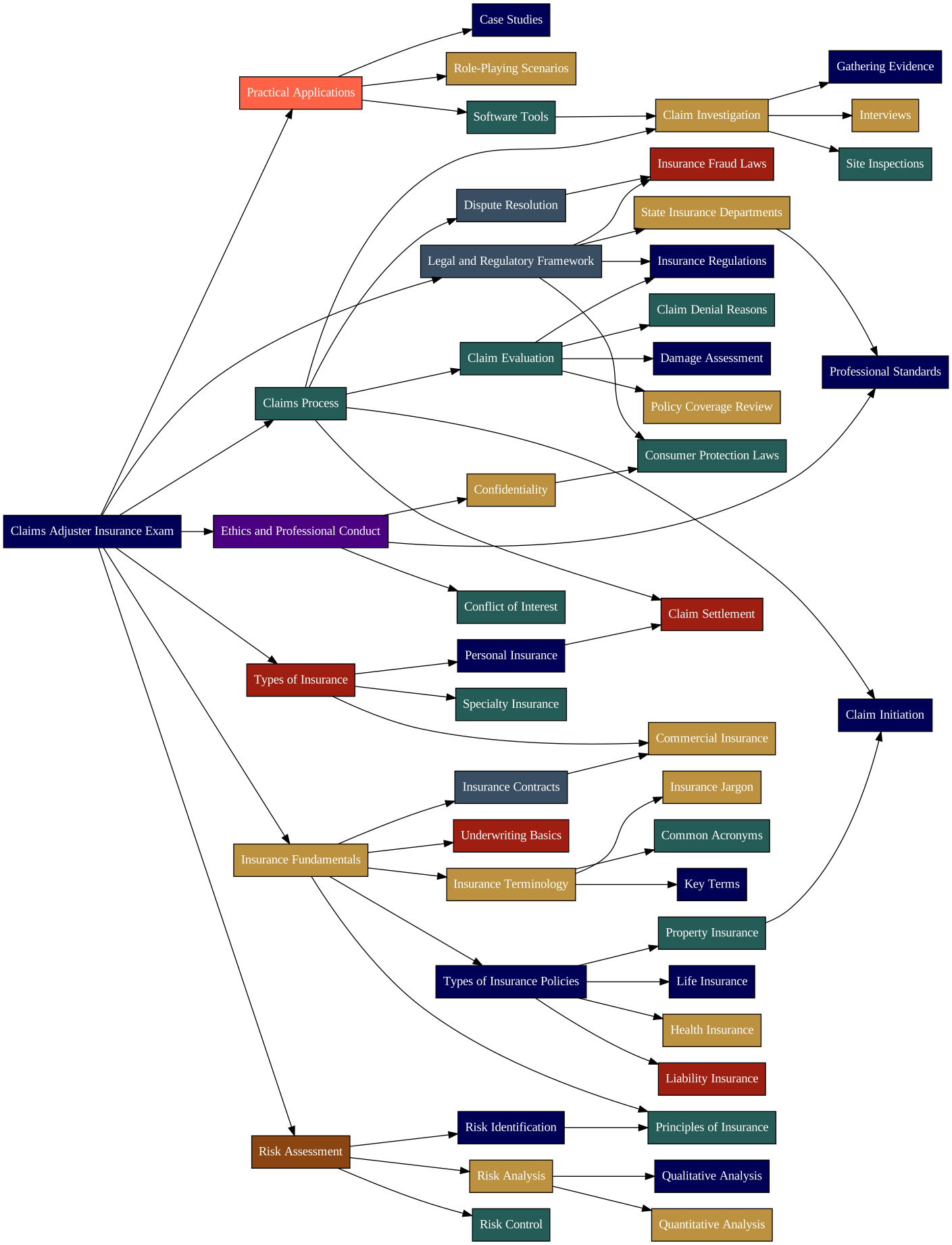
Quiz-summary
0 of 30 questions completed
Questions:
- 1
- 2
- 3
- 4
- 5
- 6
- 7
- 8
- 9
- 10
- 11
- 12
- 13
- 14
- 15
- 16
- 17
- 18
- 19
- 20
- 21
- 22
- 23
- 24
- 25
- 26
- 27
- 28
- 29
- 30
Information
Premium Practice Questions
You have already completed the quiz before. Hence you can not start it again.
Quiz is loading...
You must sign in or sign up to start the quiz.
You have to finish following quiz, to start this quiz:
Results
0 of 30 questions answered correctly
Your time:
Time has elapsed
You have reached 0 of 0 points, (0)
Categories
- Not categorized 0%
- 1
- 2
- 3
- 4
- 5
- 6
- 7
- 8
- 9
- 10
- 11
- 12
- 13
- 14
- 15
- 16
- 17
- 18
- 19
- 20
- 21
- 22
- 23
- 24
- 25
- 26
- 27
- 28
- 29
- 30
- Answered
- Review
-
Question 1 of 30
1. Question
During the investigation of a homeowner’s claim for water damage, several red flags suggest potential fraudulent activity by the claimant, Xiao. Which of the following actions would be MOST ethically and legally questionable for the claims handler to take?
Correct
When handling claims involving potentially fraudulent activity, it’s essential to adhere to ethical guidelines and legal frameworks. Making unsubstantiated accusations of fraud can lead to defamation lawsuits. Defamation occurs when someone makes a false statement that harms another person’s reputation. The elements of defamation typically include: a false and defamatory statement, publication of the statement to a third party, and damages to the person’s reputation. The standard of proof for insurance fraud is generally higher than the standard for ordinary civil claims. Insurers typically need to demonstrate clear and convincing evidence of fraud. Suspicion alone is not sufficient. The Australian Financial Complaints Authority (AFCA) provides a mechanism for resolving disputes between insurers and policyholders. AFCA can review claims handling decisions and determine whether the insurer acted fairly and reasonably. The Privacy Act 1988 governs the handling of personal information. Insurers must handle personal information responsibly and avoid disclosing it to unauthorized parties. If an insurer suspects fraud, they may need to share information with law enforcement agencies, but they must do so in compliance with privacy laws.
Incorrect
When handling claims involving potentially fraudulent activity, it’s essential to adhere to ethical guidelines and legal frameworks. Making unsubstantiated accusations of fraud can lead to defamation lawsuits. Defamation occurs when someone makes a false statement that harms another person’s reputation. The elements of defamation typically include: a false and defamatory statement, publication of the statement to a third party, and damages to the person’s reputation. The standard of proof for insurance fraud is generally higher than the standard for ordinary civil claims. Insurers typically need to demonstrate clear and convincing evidence of fraud. Suspicion alone is not sufficient. The Australian Financial Complaints Authority (AFCA) provides a mechanism for resolving disputes between insurers and policyholders. AFCA can review claims handling decisions and determine whether the insurer acted fairly and reasonably. The Privacy Act 1988 governs the handling of personal information. Insurers must handle personal information responsibly and avoid disclosing it to unauthorized parties. If an insurer suspects fraud, they may need to share information with law enforcement agencies, but they must do so in compliance with privacy laws.
-
Question 2 of 30
2. Question
Miguel’s home sustained roof damage from a severe hailstorm. He immediately placed a tarpaulin over the damaged area. However, he failed to properly secure the tarpaulin, and a subsequent rainstorm caused significant water damage inside the house. Which of the following best describes how the insurer should handle the claim, considering the Insurance Contracts Act 1984 (ICA) and ASIC regulatory guidance?
Correct
The Insurance Contracts Act 1984 (ICA) is a cornerstone of Australian insurance law, designed to protect consumers and ensure fairness in insurance contracts. Section 54 of the ICA is particularly relevant to claims handling. It prevents insurers from denying a claim solely because of some act or omission by the insured after the contract was entered into, provided that the act or omission did not cause the loss. The insurer can only reduce its liability to the extent that the act or omission caused the loss. The Australian Securities and Investments Commission (ASIC) plays a crucial role in regulating the insurance industry, ensuring compliance with the law, and protecting consumers. ASIC’s regulatory guides provide guidance on claims handling and dispute resolution. In this scenario, Miguel’s failure to properly secure the tarpaulin after the initial storm damage constitutes an act or omission after the contract was entered into. However, the key is whether this act caused the subsequent water damage. If the water damage would have occurred regardless of whether the tarpaulin was secured, then Section 54 would prevent the insurer from denying the claim entirely. However, if the failure to secure the tarpaulin exacerbated the damage, the insurer can reduce its liability to the extent of the increased damage caused by the unsecured tarpaulin. The insurer needs to assess the extent to which the subsequent water damage was directly attributable to Miguel’s negligence in not securing the tarpaulin. This requires a thorough investigation and assessment of the damages. The insurer’s decision must be consistent with the principles of good faith claims handling and the requirements of the ICA and ASIC guidelines. The insurer must communicate clearly and transparently with Miguel about the basis for its decision and provide him with the opportunity to provide further information.
Incorrect
The Insurance Contracts Act 1984 (ICA) is a cornerstone of Australian insurance law, designed to protect consumers and ensure fairness in insurance contracts. Section 54 of the ICA is particularly relevant to claims handling. It prevents insurers from denying a claim solely because of some act or omission by the insured after the contract was entered into, provided that the act or omission did not cause the loss. The insurer can only reduce its liability to the extent that the act or omission caused the loss. The Australian Securities and Investments Commission (ASIC) plays a crucial role in regulating the insurance industry, ensuring compliance with the law, and protecting consumers. ASIC’s regulatory guides provide guidance on claims handling and dispute resolution. In this scenario, Miguel’s failure to properly secure the tarpaulin after the initial storm damage constitutes an act or omission after the contract was entered into. However, the key is whether this act caused the subsequent water damage. If the water damage would have occurred regardless of whether the tarpaulin was secured, then Section 54 would prevent the insurer from denying the claim entirely. However, if the failure to secure the tarpaulin exacerbated the damage, the insurer can reduce its liability to the extent of the increased damage caused by the unsecured tarpaulin. The insurer needs to assess the extent to which the subsequent water damage was directly attributable to Miguel’s negligence in not securing the tarpaulin. This requires a thorough investigation and assessment of the damages. The insurer’s decision must be consistent with the principles of good faith claims handling and the requirements of the ICA and ASIC guidelines. The insurer must communicate clearly and transparently with Miguel about the basis for its decision and provide him with the opportunity to provide further information.
-
Question 3 of 30
3. Question
A severe storm hits Queensland, causing significant damage to a homeowner’s property. The high winds initially tear a section of the roof off, creating a large opening. Heavy rain then enters the house through the opening, causing extensive water damage to the interior. The homeowner’s insurance policy covers wind damage but explicitly excludes flood damage. The homeowner did not take any immediate steps to cover the opening in the roof after the wind damage occurred, as they were away on holiday and only returned three days later. Considering the principle of proximate cause and the homeowner’s duty to mitigate damages, how will the insurer most likely handle this claim?
Correct
The scenario presents a complex situation involving a homeowner’s insurance claim following a severe storm. The key lies in understanding the interplay between the policy’s coverage for wind damage, the exclusion for flood damage, and the concept of proximate cause. Proximate cause refers to the primary cause that sets in motion a chain of events leading to a loss. In cases where multiple perils contribute to a loss, the proximate cause determines whether the loss is covered. In this instance, the initial wind damage compromised the roof, creating an opening through which rainwater entered and caused further damage. If the wind damage is deemed the proximate cause, the subsequent water damage may be covered, even though the policy excludes flood damage. However, this depends on the specific wording of the policy and how the insurer interprets the sequence of events. Furthermore, the insured has a duty to mitigate further damage after a loss. If they failed to take reasonable steps to protect the property from further damage after the initial wind damage, this could affect the extent of coverage. The insurer’s assessment will involve a thorough investigation, including a review of weather reports, an inspection of the property, and an interpretation of the policy language to determine the proximate cause and the insured’s compliance with their duty to mitigate damages. The claim outcome hinges on whether the wind damage was the dominant and efficient cause of the total loss, and whether the homeowner acted responsibly to prevent further damage.
Incorrect
The scenario presents a complex situation involving a homeowner’s insurance claim following a severe storm. The key lies in understanding the interplay between the policy’s coverage for wind damage, the exclusion for flood damage, and the concept of proximate cause. Proximate cause refers to the primary cause that sets in motion a chain of events leading to a loss. In cases where multiple perils contribute to a loss, the proximate cause determines whether the loss is covered. In this instance, the initial wind damage compromised the roof, creating an opening through which rainwater entered and caused further damage. If the wind damage is deemed the proximate cause, the subsequent water damage may be covered, even though the policy excludes flood damage. However, this depends on the specific wording of the policy and how the insurer interprets the sequence of events. Furthermore, the insured has a duty to mitigate further damage after a loss. If they failed to take reasonable steps to protect the property from further damage after the initial wind damage, this could affect the extent of coverage. The insurer’s assessment will involve a thorough investigation, including a review of weather reports, an inspection of the property, and an interpretation of the policy language to determine the proximate cause and the insured’s compliance with their duty to mitigate damages. The claim outcome hinges on whether the wind damage was the dominant and efficient cause of the total loss, and whether the homeowner acted responsibly to prevent further damage.
-
Question 4 of 30
4. Question
Aaliyah recently filed a homeowner’s insurance claim for water damage to her basement following a heavy rainstorm. During the claims investigation, the insurer discovers that Aaliyah had experienced a similar incident of water damage three years prior, which she did not disclose when applying for the insurance policy. Aaliyah claims she didn’t disclose it because she considered the previous incident minor and believed she had fully resolved the issue. Based on the principle of *uberrimae fidei*, what is the most likely outcome regarding Aaliyah’s current claim?
Correct
The duty of utmost good faith, or *uberrimae fidei*, is a cornerstone of insurance contracts. It requires both the insurer and the insured to act honestly and disclose all material facts relevant to the risk being insured. A material fact is one that would influence a prudent insurer in determining whether to accept the risk, and if so, at what premium and under what conditions. In the scenario presented, the homeowner, Aaliyah, failed to disclose a prior incident of water damage in her basement, even though she believed it was minor and fully resolved. The key question is whether this non-disclosure constitutes a breach of the duty of utmost good faith. The fact that the previous water damage occurred, regardless of Aaliyah’s perception of its severity or her attempts to rectify it, is a material fact. A prudent insurer would likely consider a property with a history of water damage as a higher risk, potentially impacting their underwriting decision. Therefore, Aaliyah’s failure to disclose the prior water damage constitutes a breach of the duty of utmost good faith, potentially jeopardizing her current claim for subsequent water damage. This is because the insurer was not given the opportunity to properly assess the risk associated with insuring her property, based on complete and accurate information. The principle of *uberrimae fidei* aims to ensure fairness and transparency in the insurance relationship, allowing insurers to make informed decisions based on a full understanding of the risk they are undertaking. The resolution is not dependent on the current claim being related to the prior incident, but rather on the initial failure to disclose.
Incorrect
The duty of utmost good faith, or *uberrimae fidei*, is a cornerstone of insurance contracts. It requires both the insurer and the insured to act honestly and disclose all material facts relevant to the risk being insured. A material fact is one that would influence a prudent insurer in determining whether to accept the risk, and if so, at what premium and under what conditions. In the scenario presented, the homeowner, Aaliyah, failed to disclose a prior incident of water damage in her basement, even though she believed it was minor and fully resolved. The key question is whether this non-disclosure constitutes a breach of the duty of utmost good faith. The fact that the previous water damage occurred, regardless of Aaliyah’s perception of its severity or her attempts to rectify it, is a material fact. A prudent insurer would likely consider a property with a history of water damage as a higher risk, potentially impacting their underwriting decision. Therefore, Aaliyah’s failure to disclose the prior water damage constitutes a breach of the duty of utmost good faith, potentially jeopardizing her current claim for subsequent water damage. This is because the insurer was not given the opportunity to properly assess the risk associated with insuring her property, based on complete and accurate information. The principle of *uberrimae fidei* aims to ensure fairness and transparency in the insurance relationship, allowing insurers to make informed decisions based on a full understanding of the risk they are undertaking. The resolution is not dependent on the current claim being related to the prior incident, but rather on the initial failure to disclose.
-
Question 5 of 30
5. Question
When applying for a homeowner’s insurance policy, Mr. Tran intentionally fails to disclose that he has had three previous fire claims in the past five years. He believes this information will result in a higher premium or denial of coverage. Which principle of insurance has Mr. Tran violated?
Correct
The duty of utmost good faith (uberrimae fidei) is a fundamental principle in insurance contracts. It requires both the insurer and the insured to act honestly and disclose all material facts that could influence the other party’s decision to enter into the contract. This duty is particularly important at the time of application for insurance, as the insurer relies on the information provided by the applicant to assess the risk and determine the premium. Failure to disclose material facts, whether intentional or unintentional, can render the policy voidable. The duty of utmost good faith extends throughout the duration of the insurance contract, but its application is most critical during the application process.
Incorrect
The duty of utmost good faith (uberrimae fidei) is a fundamental principle in insurance contracts. It requires both the insurer and the insured to act honestly and disclose all material facts that could influence the other party’s decision to enter into the contract. This duty is particularly important at the time of application for insurance, as the insurer relies on the information provided by the applicant to assess the risk and determine the premium. Failure to disclose material facts, whether intentional or unintentional, can render the policy voidable. The duty of utmost good faith extends throughout the duration of the insurance contract, but its application is most critical during the application process.
-
Question 6 of 30
6. Question
A homeowners insurance claim is filed by Ms. Devi for water damage to her basement, with a significant loss reported for antique furniture and valuable artwork. During the initial inspection, the claims adjuster notices the furniture appears newer than described, and Ms. Devi avoids providing receipts, citing they were lost in the flood. She also seems unusually eager to settle quickly. Which of the following actions represents the MOST appropriate next step for the claims handler, balancing fraud detection with ethical claims handling?
Correct
The question explores the complexities of handling a claim involving potential fraud indicators within a homeowners insurance policy, specifically concerning personal property valuation and replacement. The key is understanding how inconsistencies in reported losses, coupled with behavioral red flags, should influence the claims handler’s approach while adhering to ethical and legal guidelines. The initial step involves carefully documenting all observed inconsistencies, such as discrepancies between the claimed value of items and their apparent condition or age, and behavioral cues like reluctance to provide documentation. Next, a thorough investigation is required, which may include requesting additional proof of ownership and value, conducting background checks (within legal boundaries), and potentially involving a specialist investigator if the suspicions are strong. It’s crucial to avoid making direct accusations of fraud, which could lead to legal repercussions. Instead, the claims handler should focus on gathering sufficient evidence to support a denial of the claim or to negotiate a settlement based on the actual value of the loss. Simultaneously, the handler must be aware of privacy regulations and ensure that all actions are compliant with data protection laws. The process requires balancing the insurer’s interest in preventing fraud with the claimant’s right to fair treatment and due process. Ethical considerations dictate that the claimant is treated with respect and provided with clear explanations for any requests for information or delays in processing the claim. The final decision on the claim should be based on a comprehensive evaluation of all available evidence, considering both the policy terms and applicable legal precedents.
Incorrect
The question explores the complexities of handling a claim involving potential fraud indicators within a homeowners insurance policy, specifically concerning personal property valuation and replacement. The key is understanding how inconsistencies in reported losses, coupled with behavioral red flags, should influence the claims handler’s approach while adhering to ethical and legal guidelines. The initial step involves carefully documenting all observed inconsistencies, such as discrepancies between the claimed value of items and their apparent condition or age, and behavioral cues like reluctance to provide documentation. Next, a thorough investigation is required, which may include requesting additional proof of ownership and value, conducting background checks (within legal boundaries), and potentially involving a specialist investigator if the suspicions are strong. It’s crucial to avoid making direct accusations of fraud, which could lead to legal repercussions. Instead, the claims handler should focus on gathering sufficient evidence to support a denial of the claim or to negotiate a settlement based on the actual value of the loss. Simultaneously, the handler must be aware of privacy regulations and ensure that all actions are compliant with data protection laws. The process requires balancing the insurer’s interest in preventing fraud with the claimant’s right to fair treatment and due process. Ethical considerations dictate that the claimant is treated with respect and provided with clear explanations for any requests for information or delays in processing the claim. The final decision on the claim should be based on a comprehensive evaluation of all available evidence, considering both the policy terms and applicable legal precedents.
-
Question 7 of 30
7. Question
What is the primary purpose of adding a rider or endorsement to a personal lines insurance policy?
Correct
The question assesses understanding of policy endorsements and riders. Endorsements or riders are amendments to an existing insurance policy that change the policy’s coverage, terms, or conditions. They can add, remove, or modify coverage for specific perils, property, or situations. They are used to tailor a standard policy to meet the specific needs of the insured. In this scenario, the rider modifies the standard policy to cover jewelry specifically.
Incorrect
The question assesses understanding of policy endorsements and riders. Endorsements or riders are amendments to an existing insurance policy that change the policy’s coverage, terms, or conditions. They can add, remove, or modify coverage for specific perils, property, or situations. They are used to tailor a standard policy to meet the specific needs of the insured. In this scenario, the rider modifies the standard policy to cover jewelry specifically.
-
Question 8 of 30
8. Question
An insurance company issues a “reservation of rights” letter to a policyholder after receiving a claim. What does this action MOST fundamentally signify?
Correct
In the context of insurance claims, “reservation of rights” refers to a formal notification by an insurer to its insured that the insurer is investigating a claim but reserves its right to deny coverage at a later date if it determines that the claim is not covered under the policy. This is typically done when there is uncertainty about whether coverage exists, such as when the facts of the loss are unclear or when there is a question about the interpretation of the policy language. The purpose of a reservation of rights is to protect the insurer’s interests by allowing it to investigate the claim without waiving its right to deny coverage. It also provides notice to the insured that coverage is not guaranteed and that they may need to take steps to protect their own interests, such as hiring their own attorney. A reservation of rights should be issued promptly after the insurer becomes aware of a potential coverage issue. It should clearly state the reasons why coverage may not exist and the specific policy provisions that are in question.
Incorrect
In the context of insurance claims, “reservation of rights” refers to a formal notification by an insurer to its insured that the insurer is investigating a claim but reserves its right to deny coverage at a later date if it determines that the claim is not covered under the policy. This is typically done when there is uncertainty about whether coverage exists, such as when the facts of the loss are unclear or when there is a question about the interpretation of the policy language. The purpose of a reservation of rights is to protect the insurer’s interests by allowing it to investigate the claim without waiving its right to deny coverage. It also provides notice to the insured that coverage is not guaranteed and that they may need to take steps to protect their own interests, such as hiring their own attorney. A reservation of rights should be issued promptly after the insurer becomes aware of a potential coverage issue. It should clearly state the reasons why coverage may not exist and the specific policy provisions that are in question.
-
Question 9 of 30
9. Question
Aisha applies for homeowner’s insurance on her newly purchased property. During the application process, she fails to mention a history of water damage in the basement, which she had attempted to repair herself prior to listing the property for sale. A month after the policy is in effect, a major flood occurs, causing extensive damage to the basement. Aisha files a claim with the insurance company. Upon investigation, the claims adjuster discovers evidence of the previous water damage and Aisha’s attempted repairs. Based on the principles of utmost good faith and the regulatory environment surrounding personal lines insurance claims, what is the most likely course of action for the insurer?
Correct
The scenario presents a complex situation involving potential misrepresentation and a pre-existing condition in a homeowner’s insurance claim. The key to answering this question lies in understanding the duty of utmost good faith, a fundamental principle in insurance contracts. This duty requires both the insurer and the insured to act honestly and disclose all relevant information. When an insured fails to disclose a material fact, such as a pre-existing water damage issue, it can be considered a breach of this duty. In this case, the insurer’s actions must be guided by the principles of fairness and transparency, as outlined in the relevant regulations and ethical guidelines. The insurer must conduct a thorough investigation to determine the extent of the non-disclosure and its impact on the claim. The insurer should also consider whether the non-disclosure was intentional or unintentional. Depending on the findings, the insurer may have grounds to deny the claim, but must do so in a manner that is consistent with its legal and ethical obligations. Furthermore, the insurer must communicate its decision to the insured in a clear and timely manner, providing a detailed explanation of the reasons for the denial. In this scenario, the insurer is likely to deny the claim due to the insured’s failure to disclose the pre-existing condition, which constitutes a breach of the duty of utmost good faith.
Incorrect
The scenario presents a complex situation involving potential misrepresentation and a pre-existing condition in a homeowner’s insurance claim. The key to answering this question lies in understanding the duty of utmost good faith, a fundamental principle in insurance contracts. This duty requires both the insurer and the insured to act honestly and disclose all relevant information. When an insured fails to disclose a material fact, such as a pre-existing water damage issue, it can be considered a breach of this duty. In this case, the insurer’s actions must be guided by the principles of fairness and transparency, as outlined in the relevant regulations and ethical guidelines. The insurer must conduct a thorough investigation to determine the extent of the non-disclosure and its impact on the claim. The insurer should also consider whether the non-disclosure was intentional or unintentional. Depending on the findings, the insurer may have grounds to deny the claim, but must do so in a manner that is consistent with its legal and ethical obligations. Furthermore, the insurer must communicate its decision to the insured in a clear and timely manner, providing a detailed explanation of the reasons for the denial. In this scenario, the insurer is likely to deny the claim due to the insured’s failure to disclose the pre-existing condition, which constitutes a breach of the duty of utmost good faith.
-
Question 10 of 30
10. Question
A personal lines insurer aims to improve its claims processing efficiency and customer satisfaction. The insurer decides to invest in new technologies. Which of the following initiatives would be MOST effective in achieving these goals?
Correct
The Role of Technology in Claims Processing has rapidly evolved. Claims management software streamlines the entire claims process, from initial reporting to final settlement. It facilitates efficient data entry, document management, and communication. The use of Artificial Intelligence (AI) and Machine Learning (ML) is increasingly prevalent. AI can automate tasks such as fraud detection, damage assessment, and customer service inquiries. ML algorithms can analyze vast amounts of data to identify patterns and predict claim outcomes, enabling more informed decision-making. Digital communication tools enhance interaction with claimants. Online claim submission portals allow policyholders to easily report claims and upload supporting documents. Virtual adjustments and inspections leverage technologies like video conferencing and drone imagery to assess damages remotely, saving time and resources. Data analytics in claims provides valuable insights. Predictive analytics can forecast claim frequency and severity, enabling insurers to allocate resources effectively. Data-driven decision-making improves claims handling efficiency and accuracy.
Incorrect
The Role of Technology in Claims Processing has rapidly evolved. Claims management software streamlines the entire claims process, from initial reporting to final settlement. It facilitates efficient data entry, document management, and communication. The use of Artificial Intelligence (AI) and Machine Learning (ML) is increasingly prevalent. AI can automate tasks such as fraud detection, damage assessment, and customer service inquiries. ML algorithms can analyze vast amounts of data to identify patterns and predict claim outcomes, enabling more informed decision-making. Digital communication tools enhance interaction with claimants. Online claim submission portals allow policyholders to easily report claims and upload supporting documents. Virtual adjustments and inspections leverage technologies like video conferencing and drone imagery to assess damages remotely, saving time and resources. Data analytics in claims provides valuable insights. Predictive analytics can forecast claim frequency and severity, enabling insurers to allocate resources effectively. Data-driven decision-making improves claims handling efficiency and accuracy.
-
Question 11 of 30
11. Question
A homeowner notices that the flooring under their kitchen sink is warped and damaged. Upon investigation, it is discovered that there has been a slow leak under the sink for several months, gradually causing the damage to the floor. The homeowner files a claim with their insurance company. What is the most likely reason the insurance company might deny this claim?
Correct
This scenario highlights the importance of understanding policy exclusions, specifically those related to wear and tear, in homeowners insurance. Standard homeowners policies are designed to cover sudden and accidental losses, not damage that occurs gradually over time due to normal wear and tear. Wear and tear exclusions are intended to prevent homeowners from using their insurance policies as maintenance contracts. In this case, the slow leak under the sink, which caused gradual damage to the floor over several months, would likely be considered wear and tear. The insurance company would likely deny the claim because the damage was not the result of a sudden and accidental event, but rather a gradual process of deterioration. It is the homeowner’s responsibility to maintain their property and prevent such issues from occurring.
Incorrect
This scenario highlights the importance of understanding policy exclusions, specifically those related to wear and tear, in homeowners insurance. Standard homeowners policies are designed to cover sudden and accidental losses, not damage that occurs gradually over time due to normal wear and tear. Wear and tear exclusions are intended to prevent homeowners from using their insurance policies as maintenance contracts. In this case, the slow leak under the sink, which caused gradual damage to the floor over several months, would likely be considered wear and tear. The insurance company would likely deny the claim because the damage was not the result of a sudden and accidental event, but rather a gradual process of deterioration. It is the homeowner’s responsibility to maintain their property and prevent such issues from occurring.
-
Question 12 of 30
12. Question
A severe storm damages the roof of Ms. Adebayo’s home. Upon investigation, the adjuster discovers that the roof was poorly constructed with substandard materials, making it more vulnerable to storm damage than a properly built roof. Ms. Adebayo’s homeowner’s policy contains a standard exclusion for losses caused by faulty workmanship. Considering the principle of “ensuing loss” and the insurer’s duty of good faith, what is the *most* accurate assessment of the insurer’s obligation in this scenario?
Correct
The scenario presents a complex situation involving a homeowner’s insurance claim following a severe storm. The key is to understand the interplay between negligence, policy exclusions (particularly related to faulty workmanship or inherent defects), and the insurer’s responsibility. In this case, the initial damage was caused by a covered peril (storm). However, the subsequent investigation revealed that the extent of the damage was exacerbated by pre-existing faulty workmanship in the roof’s construction, which made it more susceptible to storm damage. Most homeowner’s policies exclude coverage for losses resulting from faulty workmanship or inherent defects. However, the “ensuing loss” provision is crucial here. This provision typically states that if a covered peril (like a storm) causes damage that wouldn’t have occurred but for the faulty workmanship, the damage directly caused by the covered peril might still be covered. The insurer will likely argue that the pre-existing condition contributed significantly to the loss, potentially limiting their liability to the portion of the damage directly and solely attributable to the storm. The insurer’s obligations are also governed by the principles of good faith and fair dealing. They must conduct a thorough investigation, clearly explain the policy provisions, and make a reasonable determination regarding coverage. If the insurer denies the claim entirely based solely on the faulty workmanship, without considering the extent to which the storm directly caused damage, they may be acting in bad faith. Conversely, if they acknowledge the storm’s contribution but limit coverage to the damage directly caused by the storm, after a thorough and documented assessment, they would likely be acting within their rights. The insurer must also adhere to relevant insurance regulations and guidelines regarding claim handling, communication, and dispute resolution.
Incorrect
The scenario presents a complex situation involving a homeowner’s insurance claim following a severe storm. The key is to understand the interplay between negligence, policy exclusions (particularly related to faulty workmanship or inherent defects), and the insurer’s responsibility. In this case, the initial damage was caused by a covered peril (storm). However, the subsequent investigation revealed that the extent of the damage was exacerbated by pre-existing faulty workmanship in the roof’s construction, which made it more susceptible to storm damage. Most homeowner’s policies exclude coverage for losses resulting from faulty workmanship or inherent defects. However, the “ensuing loss” provision is crucial here. This provision typically states that if a covered peril (like a storm) causes damage that wouldn’t have occurred but for the faulty workmanship, the damage directly caused by the covered peril might still be covered. The insurer will likely argue that the pre-existing condition contributed significantly to the loss, potentially limiting their liability to the portion of the damage directly and solely attributable to the storm. The insurer’s obligations are also governed by the principles of good faith and fair dealing. They must conduct a thorough investigation, clearly explain the policy provisions, and make a reasonable determination regarding coverage. If the insurer denies the claim entirely based solely on the faulty workmanship, without considering the extent to which the storm directly caused damage, they may be acting in bad faith. Conversely, if they acknowledge the storm’s contribution but limit coverage to the damage directly caused by the storm, after a thorough and documented assessment, they would likely be acting within their rights. The insurer must also adhere to relevant insurance regulations and guidelines regarding claim handling, communication, and dispute resolution.
-
Question 13 of 30
13. Question
Following a surge in complaints regarding delayed claims processing and inadequate communication, “SecureCover Insurance” is found to be consistently failing to meet the mandated timeframes for responding to complaints, as stipulated in regulations concerning internal dispute resolution procedures. Furthermore, their written responses often lack detailed explanations for claim denials. Which regulatory body is most likely to take direct enforcement action against SecureCover Insurance for these violations?
Correct
The Australian Securities and Investments Commission (ASIC) Regulatory Guide 271 outlines requirements for internal dispute resolution (IDR) procedures for financial firms, including insurers. The guide mandates that firms must have effective IDR processes to handle complaints fairly, efficiently, and transparently. It also sets timeframes for responding to complaints and requires firms to provide written reasons for their decisions. Failing to adhere to RG 271 can lead to regulatory action by ASIC, including fines and other penalties. The Insurance Council of Australia (ICA) also provides guidance on best practices for claims handling, but it is not a regulatory body. The Financial Ombudsman Service (FOS), now the Australian Financial Complaints Authority (AFCA), provides external dispute resolution (EDR) services, but insurers are responsible for their internal processes first. The Privacy Act 1988 governs the handling of personal information, but RG 271 specifically addresses dispute resolution. Therefore, non-compliance with RG 271 would most directly result in regulatory action from ASIC.
Incorrect
The Australian Securities and Investments Commission (ASIC) Regulatory Guide 271 outlines requirements for internal dispute resolution (IDR) procedures for financial firms, including insurers. The guide mandates that firms must have effective IDR processes to handle complaints fairly, efficiently, and transparently. It also sets timeframes for responding to complaints and requires firms to provide written reasons for their decisions. Failing to adhere to RG 271 can lead to regulatory action by ASIC, including fines and other penalties. The Insurance Council of Australia (ICA) also provides guidance on best practices for claims handling, but it is not a regulatory body. The Financial Ombudsman Service (FOS), now the Australian Financial Complaints Authority (AFCA), provides external dispute resolution (EDR) services, but insurers are responsible for their internal processes first. The Privacy Act 1988 governs the handling of personal information, but RG 271 specifically addresses dispute resolution. Therefore, non-compliance with RG 271 would most directly result in regulatory action from ASIC.
-
Question 14 of 30
14. Question
A hurricane causes significant damage to a homeowner’s property, including wind damage to the roof and flooding of the basement. The homeowner has a standard homeowners insurance policy with a separate flood insurance policy. How will the claims likely be handled, considering the typical coverage provisions for these types of policies?
Correct
The question assesses the understanding of special considerations in personal lines claims, specifically focusing on the unique aspects of homeowners claims involving natural disasters and coverage limitations. Natural disasters, such as hurricanes, floods, and earthquakes, can cause widespread damage to homes and personal property. Homeowners insurance policies typically cover some types of natural disasters, but they often have specific exclusions and limitations. Understanding these exclusions and limitations is crucial for accurate claims handling. The question tests the ability to apply policy provisions to a specific scenario involving a natural disaster and to determine the extent of coverage.
Incorrect
The question assesses the understanding of special considerations in personal lines claims, specifically focusing on the unique aspects of homeowners claims involving natural disasters and coverage limitations. Natural disasters, such as hurricanes, floods, and earthquakes, can cause widespread damage to homes and personal property. Homeowners insurance policies typically cover some types of natural disasters, but they often have specific exclusions and limitations. Understanding these exclusions and limitations is crucial for accurate claims handling. The question tests the ability to apply policy provisions to a specific scenario involving a natural disaster and to determine the extent of coverage.
-
Question 15 of 30
15. Question
Aisha experiences significant water damage to her home due to a severe storm surge. She holds a standard homeowners insurance policy with a \$500,000 coverage limit, a separate flood insurance policy with a \$250,000 coverage limit, and a personal umbrella policy with a \$1,000,000 coverage limit. The total damage is assessed at \$600,000, with \$400,000 attributed to flood damage and \$200,000 to wind and rain damage (covered by the homeowner’s policy). Assuming all policies have standard ‘other insurance’ clauses, what is the MOST accurate application of coverage considering the principle of indemnity and typical policy structures?
Correct
The scenario involves a complex situation where a homeowner, Aisha, has multiple insurance policies that could potentially cover the same loss. This requires a careful examination of the policy language of each policy, including homeowners, flood, and personal umbrella, to determine which policy provides primary coverage and which provides excess coverage. The principle of indemnity aims to restore the insured to their pre-loss condition, preventing them from profiting from the loss. The ‘other insurance’ clause is a critical component in determining how multiple policies respond to the same loss. In this case, the homeowners policy likely excludes flood damage, making the flood policy primary for the flood-related damage. The personal umbrella policy typically provides excess coverage, meaning it only kicks in after the limits of the primary policies (homeowners and flood) are exhausted. If the homeowners policy covers damages not related to the flood, it would act as primary for those damages. The adjuster needs to determine the total covered loss under each policy and apply the appropriate policy limits and deductibles. If the total covered loss exceeds the limits of the primary policies, the umbrella policy would then provide coverage up to its policy limit. The adjuster must also consider any applicable state regulations regarding claims handling and coordination of benefits.
Incorrect
The scenario involves a complex situation where a homeowner, Aisha, has multiple insurance policies that could potentially cover the same loss. This requires a careful examination of the policy language of each policy, including homeowners, flood, and personal umbrella, to determine which policy provides primary coverage and which provides excess coverage. The principle of indemnity aims to restore the insured to their pre-loss condition, preventing them from profiting from the loss. The ‘other insurance’ clause is a critical component in determining how multiple policies respond to the same loss. In this case, the homeowners policy likely excludes flood damage, making the flood policy primary for the flood-related damage. The personal umbrella policy typically provides excess coverage, meaning it only kicks in after the limits of the primary policies (homeowners and flood) are exhausted. If the homeowners policy covers damages not related to the flood, it would act as primary for those damages. The adjuster needs to determine the total covered loss under each policy and apply the appropriate policy limits and deductibles. If the total covered loss exceeds the limits of the primary policies, the umbrella policy would then provide coverage up to its policy limit. The adjuster must also consider any applicable state regulations regarding claims handling and coordination of benefits.
-
Question 16 of 30
16. Question
What is a key advantage of utilizing claims management software in personal lines insurance claims, beyond basic process automation?
Correct
Claims management software streamlines the claims process by automating tasks, improving efficiency, and enhancing data analysis. These systems typically include features for claim intake, document management, fraud detection, and reporting. One significant advantage of using claims management software is the ability to track and analyze key performance indicators (KPIs) related to claims processing. KPIs such as claim settlement time, customer satisfaction scores, and fraud detection rates can be monitored in real-time, providing valuable insights into the effectiveness of the claims management process. This data can be used to identify areas for improvement, optimize resource allocation, and enhance decision-making. For example, if the data shows that claim settlement times are consistently longer for certain types of claims, the insurer can investigate the reasons for the delay and implement strategies to improve efficiency. Claims management software also facilitates better communication and collaboration among stakeholders, including adjusters, investigators, and legal counsel.
Incorrect
Claims management software streamlines the claims process by automating tasks, improving efficiency, and enhancing data analysis. These systems typically include features for claim intake, document management, fraud detection, and reporting. One significant advantage of using claims management software is the ability to track and analyze key performance indicators (KPIs) related to claims processing. KPIs such as claim settlement time, customer satisfaction scores, and fraud detection rates can be monitored in real-time, providing valuable insights into the effectiveness of the claims management process. This data can be used to identify areas for improvement, optimize resource allocation, and enhance decision-making. For example, if the data shows that claim settlement times are consistently longer for certain types of claims, the insurer can investigate the reasons for the delay and implement strategies to improve efficiency. Claims management software also facilitates better communication and collaboration among stakeholders, including adjusters, investigators, and legal counsel.
-
Question 17 of 30
17. Question
During the investigation of a fire damage claim at a residential property, several red flags emerge, including inconsistencies in the claimant’s statements and unusual timing of the claim submission. What is the most appropriate initial course of action for the claims adjuster, Kai, to take?
Correct
When handling claims involving potential fraud, it is crucial to proceed with caution and objectivity. Prematurely accusing a claimant of fraud can lead to legal repercussions and damage the insurer’s reputation. Instead, the focus should be on gathering and analyzing evidence to determine the validity of the claim. Red flags, such as inconsistencies in statements, unusual timing, or suspicious documentation, should prompt further investigation. This may involve interviewing the claimant and witnesses, obtaining expert opinions, and reviewing relevant records. If the investigation reveals sufficient evidence of fraud, the insurer may consider denying the claim and reporting the matter to law enforcement. However, this decision should be based on a thorough and objective assessment of the facts, not on speculation or personal biases. Maintaining open communication with the claimant, while carefully managing the information shared, is also important.
Incorrect
When handling claims involving potential fraud, it is crucial to proceed with caution and objectivity. Prematurely accusing a claimant of fraud can lead to legal repercussions and damage the insurer’s reputation. Instead, the focus should be on gathering and analyzing evidence to determine the validity of the claim. Red flags, such as inconsistencies in statements, unusual timing, or suspicious documentation, should prompt further investigation. This may involve interviewing the claimant and witnesses, obtaining expert opinions, and reviewing relevant records. If the investigation reveals sufficient evidence of fraud, the insurer may consider denying the claim and reporting the matter to law enforcement. However, this decision should be based on a thorough and objective assessment of the facts, not on speculation or personal biases. Maintaining open communication with the claimant, while carefully managing the information shared, is also important.
-
Question 18 of 30
18. Question
A claims adjuster is negotiating a settlement with a claimant who sustained an injury in a car accident. The adjuster offers a lump-sum settlement to cover medical expenses, lost wages, and pain and suffering. The claimant is unsure about accepting the offer, as they are still receiving medical treatment and are uncertain about future medical expenses. What is the MOST ethical course of action for the claims adjuster?
Correct
This question tests the understanding of “lump-sum” settlements in claims management. A lump-sum settlement involves a one-time payment to the claimant to resolve the claim in its entirety. It’s crucial that the claimant fully understands the implications before agreeing to a lump-sum settlement, as they are typically waiving their right to pursue further compensation for the same claim in the future. In the scenario, the claimant is uncertain about future medical expenses related to the injury. Accepting a lump-sum settlement now would mean they are responsible for any future medical costs, even if they exceed the settlement amount. The adjuster has an ethical obligation to ensure the claimant understands this risk. The best course of action is to advise the claimant to seek independent legal and financial advice to fully assess their options and make an informed decision. This ensures the claimant is protected and that the settlement is fair and equitable.
Incorrect
This question tests the understanding of “lump-sum” settlements in claims management. A lump-sum settlement involves a one-time payment to the claimant to resolve the claim in its entirety. It’s crucial that the claimant fully understands the implications before agreeing to a lump-sum settlement, as they are typically waiving their right to pursue further compensation for the same claim in the future. In the scenario, the claimant is uncertain about future medical expenses related to the injury. Accepting a lump-sum settlement now would mean they are responsible for any future medical costs, even if they exceed the settlement amount. The adjuster has an ethical obligation to ensure the claimant understands this risk. The best course of action is to advise the claimant to seek independent legal and financial advice to fully assess their options and make an informed decision. This ensures the claimant is protected and that the settlement is fair and equitable.
-
Question 19 of 30
19. Question
A fire severely damages Isabella’s home. During the claims process, it emerges that Isabella failed to disclose a previous minor kitchen fire from five years ago when applying for the homeowner’s insurance. The insurer contends this non-disclosure voids the policy. According to the *Insurance Contracts Act 1984* and related legal principles concerning utmost good faith, what is the MOST accurate assessment of the insurer’s position?
Correct
The *Insurance Contracts Act 1984* (ICA) implies a duty of utmost good faith in all insurance contracts. This duty extends to both the insurer and the insured. Section 13 of the ICA specifically deals with the insured’s duty of disclosure before entering into a contract of insurance. While the insured has a responsibility to disclose matters relevant to the insurer’s decision to accept the risk and on what terms, this duty is qualified. An insured is not required to disclose matters that diminish the risk, are of common knowledge, the insurer knows or should know, or the insurer has waived the need for disclosure. The insurer, on the other hand, has a duty to act fairly and reasonably in handling claims. This includes investigating claims promptly, making fair and reasonable decisions, and communicating clearly with the insured. The Australian Securities and Investments Commission (ASIC) also plays a crucial role in overseeing the insurance industry and ensuring compliance with relevant laws and regulations. Failing to act in utmost good faith can have significant legal and financial consequences for both parties, including policy cancellation or denial of claims. In the scenario, the insurer must consider whether the non-disclosure was deliberate, reckless, or innocent. The remedy available to the insurer will depend on the nature of the non-disclosure and its impact on the insurer’s ability to assess the risk.
Incorrect
The *Insurance Contracts Act 1984* (ICA) implies a duty of utmost good faith in all insurance contracts. This duty extends to both the insurer and the insured. Section 13 of the ICA specifically deals with the insured’s duty of disclosure before entering into a contract of insurance. While the insured has a responsibility to disclose matters relevant to the insurer’s decision to accept the risk and on what terms, this duty is qualified. An insured is not required to disclose matters that diminish the risk, are of common knowledge, the insurer knows or should know, or the insurer has waived the need for disclosure. The insurer, on the other hand, has a duty to act fairly and reasonably in handling claims. This includes investigating claims promptly, making fair and reasonable decisions, and communicating clearly with the insured. The Australian Securities and Investments Commission (ASIC) also plays a crucial role in overseeing the insurance industry and ensuring compliance with relevant laws and regulations. Failing to act in utmost good faith can have significant legal and financial consequences for both parties, including policy cancellation or denial of claims. In the scenario, the insurer must consider whether the non-disclosure was deliberate, reckless, or innocent. The remedy available to the insurer will depend on the nature of the non-disclosure and its impact on the insurer’s ability to assess the risk.
-
Question 20 of 30
20. Question
A claims adjuster, Javier, notices several inconsistencies in a claimant’s statement regarding an auto accident. The accident occurred shortly after the policy was initiated, and the claimant appears unusually eager to settle quickly. What is Javier’s MOST appropriate next step, considering ethical claims handling practices?
Correct
The scenario presents a complex situation involving potential fraud and ethical considerations. The key here is to identify “red flags” indicative of fraudulent activity. These include inconsistencies in the claim details (e.g., conflicting accounts of the accident), unusual timing (e.g., the accident occurring shortly after the policy was taken out), and the claimant’s demeanor (e.g., being overly insistent or evasive). However, it’s crucial to remember that red flags are merely indicators and not conclusive proof of fraud. A thorough investigation is necessary to gather sufficient evidence to support a fraud allegation. This investigation should be conducted ethically and in compliance with all applicable laws and regulations. It’s also important to consider the potential impact of a fraud investigation on the claimant and to avoid making unsubstantiated accusations. If the investigation reveals strong evidence of fraud, the insurer may be obligated to report the matter to law enforcement authorities. However, the decision to report should be made carefully and only after consulting with legal counsel. Throughout the process, the claims adjuster must adhere to the highest ethical standards and ensure that all actions are fair, transparent, and respectful of the claimant’s rights.
Incorrect
The scenario presents a complex situation involving potential fraud and ethical considerations. The key here is to identify “red flags” indicative of fraudulent activity. These include inconsistencies in the claim details (e.g., conflicting accounts of the accident), unusual timing (e.g., the accident occurring shortly after the policy was taken out), and the claimant’s demeanor (e.g., being overly insistent or evasive). However, it’s crucial to remember that red flags are merely indicators and not conclusive proof of fraud. A thorough investigation is necessary to gather sufficient evidence to support a fraud allegation. This investigation should be conducted ethically and in compliance with all applicable laws and regulations. It’s also important to consider the potential impact of a fraud investigation on the claimant and to avoid making unsubstantiated accusations. If the investigation reveals strong evidence of fraud, the insurer may be obligated to report the matter to law enforcement authorities. However, the decision to report should be made carefully and only after consulting with legal counsel. Throughout the process, the claims adjuster must adhere to the highest ethical standards and ensure that all actions are fair, transparent, and respectful of the claimant’s rights.
-
Question 21 of 30
21. Question
During a covered kitchen fire claim, Aisha’s 20-year-old stove is damaged beyond repair. A comparable new stove, with updated energy-efficient features, is installed as a replacement. The insurer argues that the new stove represents a betterment. Which of the following approaches would be MOST consistent with standard claims handling practices regarding betterment?
Correct
The concept of betterment arises when repairs or replacements made as part of a claim result in the insured property being in a better condition than it was before the loss. Insurers generally do not pay for betterment. The principle behind this is that insurance is intended to indemnify the insured for their loss, not to provide them with a windfall gain. Determining whether betterment has occurred can be subjective and depend on the specific circumstances of the claim. Common examples of betterment include replacing old, worn-out materials with new ones, or upgrading to a higher-quality product during repairs. In some cases, insurers may deduct the cost of betterment from the claim payment, requiring the insured to pay the difference.
Incorrect
The concept of betterment arises when repairs or replacements made as part of a claim result in the insured property being in a better condition than it was before the loss. Insurers generally do not pay for betterment. The principle behind this is that insurance is intended to indemnify the insured for their loss, not to provide them with a windfall gain. Determining whether betterment has occurred can be subjective and depend on the specific circumstances of the claim. Common examples of betterment include replacing old, worn-out materials with new ones, or upgrading to a higher-quality product during repairs. In some cases, insurers may deduct the cost of betterment from the claim payment, requiring the insured to pay the difference.
-
Question 22 of 30
22. Question
Which of the following emerging trends in personal lines insurance presents the MOST significant challenge for claims handlers in the immediate future?
Correct
Current trends in personal lines insurance are shaping the future of the industry and impacting claims management practices. The impact of climate change on insurance is significant, with increasing frequency and severity of natural disasters leading to higher claims costs. Emerging risks in personal lines, such as cyber risks and identity theft, are creating new challenges for insurers. Innovations in claims processing, such as AI-powered claims assessment and virtual claims handling, are improving efficiency and customer satisfaction. The role of Insurtech is growing, with new technologies and business models disrupting traditional insurance practices. Understanding these trends and developments is essential for claims handlers to adapt to the changing landscape and provide effective service to policyholders.
Incorrect
Current trends in personal lines insurance are shaping the future of the industry and impacting claims management practices. The impact of climate change on insurance is significant, with increasing frequency and severity of natural disasters leading to higher claims costs. Emerging risks in personal lines, such as cyber risks and identity theft, are creating new challenges for insurers. Innovations in claims processing, such as AI-powered claims assessment and virtual claims handling, are improving efficiency and customer satisfaction. The role of Insurtech is growing, with new technologies and business models disrupting traditional insurance practices. Understanding these trends and developments is essential for claims handlers to adapt to the changing landscape and provide effective service to policyholders.
-
Question 23 of 30
23. Question
A claims adjuster, Javier, is assigned a homeowner’s insurance claim. During the investigation, Javier discovers that the claimant’s preferred repair shop is owned by Javier’s spouse. Which of the following actions represents the MOST ethical course of conduct for Javier in this situation, according to ANZIIF’s professional conduct guidelines for claims handling?
Correct
The question addresses the ethical considerations faced by claims adjusters, specifically focusing on conflicts of interest. A conflict of interest arises when a claims adjuster’s personal interests, or the interests of a close associate, could potentially compromise their impartiality in handling a claim. This is a critical aspect of ethical claims handling, as it directly impacts the fairness and integrity of the claims process. The scenario highlights a situation where an adjuster’s spouse owns a repair shop that could benefit from the adjuster’s claim decisions. The most ethical course of action is for the adjuster to disclose this potential conflict to their supervisor and recuse themselves from handling the claim. This ensures transparency and prevents any perception of bias. Disclosure and recusal are standard practices in such situations, aligning with professional conduct guidelines and ethical standards. Other options, such as handling the claim without disclosing the relationship or subtly steering business to the spouse’s shop, are clear violations of ethical principles and could lead to disciplinary action or legal repercussions. Recommending the shop only if it’s the best option might seem reasonable, but it doesn’t address the underlying conflict of interest and the potential for perceived bias. The core principle is to avoid any situation where personal relationships could influence claim decisions, maintaining objectivity and fairness for all parties involved.
Incorrect
The question addresses the ethical considerations faced by claims adjusters, specifically focusing on conflicts of interest. A conflict of interest arises when a claims adjuster’s personal interests, or the interests of a close associate, could potentially compromise their impartiality in handling a claim. This is a critical aspect of ethical claims handling, as it directly impacts the fairness and integrity of the claims process. The scenario highlights a situation where an adjuster’s spouse owns a repair shop that could benefit from the adjuster’s claim decisions. The most ethical course of action is for the adjuster to disclose this potential conflict to their supervisor and recuse themselves from handling the claim. This ensures transparency and prevents any perception of bias. Disclosure and recusal are standard practices in such situations, aligning with professional conduct guidelines and ethical standards. Other options, such as handling the claim without disclosing the relationship or subtly steering business to the spouse’s shop, are clear violations of ethical principles and could lead to disciplinary action or legal repercussions. Recommending the shop only if it’s the best option might seem reasonable, but it doesn’t address the underlying conflict of interest and the potential for perceived bias. The core principle is to avoid any situation where personal relationships could influence claim decisions, maintaining objectivity and fairness for all parties involved.
-
Question 24 of 30
24. Question
Aisha, a recent immigrant, purchases a homeowner’s insurance policy. She doesn’t mention a minor water leak in her basement, which she believes is insignificant and easily managed with a dehumidifier. Six months later, a major flood occurs, revealing extensive pre-existing water damage from the original leak, which was actually more significant than she initially thought. The insurer denies the claim, citing non-disclosure. Under the principles of *uberrimae fidei* and considering the Australian regulatory environment, what is the MOST likely outcome, and what factors will be MOST critical in determining the outcome?
Correct
The principle of *uberrimae fidei*, or utmost good faith, is a cornerstone of insurance contracts. It mandates that both parties, the insurer and the insured, must act honestly and disclose all material facts relevant to the risk being insured. Material facts are those that could influence the insurer’s decision to accept the risk or the terms of the insurance contract. The Insurance Contracts Act 1984 (ICA) in Australia codifies aspects of this duty, particularly regarding pre-contractual disclosure. While the insured has a duty to disclose, the insurer also has a responsibility to ask clear and specific questions to elicit relevant information. Failure to disclose material facts, whether intentional or unintentional, can give the insurer grounds to avoid the policy. However, the ICA also provides some relief for non-disclosure, especially if the non-disclosure was innocent and the insurer would have still accepted the risk, albeit potentially on different terms. Furthermore, the insurer must act fairly in handling claims and cannot unreasonably deny coverage. The Australian Financial Complaints Authority (AFCA) provides a mechanism for resolving disputes between insurers and insured parties, ensuring fairness and transparency in the claims process. This scenario highlights the importance of both parties acting in good faith and the consequences of failing to do so.
Incorrect
The principle of *uberrimae fidei*, or utmost good faith, is a cornerstone of insurance contracts. It mandates that both parties, the insurer and the insured, must act honestly and disclose all material facts relevant to the risk being insured. Material facts are those that could influence the insurer’s decision to accept the risk or the terms of the insurance contract. The Insurance Contracts Act 1984 (ICA) in Australia codifies aspects of this duty, particularly regarding pre-contractual disclosure. While the insured has a duty to disclose, the insurer also has a responsibility to ask clear and specific questions to elicit relevant information. Failure to disclose material facts, whether intentional or unintentional, can give the insurer grounds to avoid the policy. However, the ICA also provides some relief for non-disclosure, especially if the non-disclosure was innocent and the insurer would have still accepted the risk, albeit potentially on different terms. Furthermore, the insurer must act fairly in handling claims and cannot unreasonably deny coverage. The Australian Financial Complaints Authority (AFCA) provides a mechanism for resolving disputes between insurers and insured parties, ensuring fairness and transparency in the claims process. This scenario highlights the importance of both parties acting in good faith and the consequences of failing to do so.
-
Question 25 of 30
25. Question
In a complex liability claim involving significant long-term medical expenses for the claimant, which type of settlement would be most advantageous for both the claimant and the insurer, considering factors such as financial security, tax implications, and long-term cost management?
Correct
Claims settlement techniques vary depending on the nature of the claim and the preferences of the parties involved. Lump-sum settlements involve a one-time payment to the claimant to resolve the claim. Structured settlements involve a series of periodic payments over a specified period of time, often used in cases involving serious injuries or long-term disabilities. Negotiation strategies for settlements involve preparing for settlement discussions, understanding the strengths and weaknesses of your case, and being willing to compromise. Closing the settlement involves documenting the terms of the agreement and obtaining a release from the claimant.
Incorrect
Claims settlement techniques vary depending on the nature of the claim and the preferences of the parties involved. Lump-sum settlements involve a one-time payment to the claimant to resolve the claim. Structured settlements involve a series of periodic payments over a specified period of time, often used in cases involving serious injuries or long-term disabilities. Negotiation strategies for settlements involve preparing for settlement discussions, understanding the strengths and weaknesses of your case, and being willing to compromise. Closing the settlement involves documenting the terms of the agreement and obtaining a release from the claimant.
-
Question 26 of 30
26. Question
During a claim involving significant property damage and emotional distress, a claims handler, Fatima, is speaking with the policyholder, Mr. Nguyen. Which of the following responses demonstrates the MOST appropriate use of empathy in this situation?
Correct
The question examines the role of empathy in claims handling, particularly in sensitive situations involving vulnerable claimants. Empathy involves understanding and sharing the feelings of another person. In claims handling, demonstrating empathy can significantly improve the customer experience and build trust. However, it’s crucial to distinguish empathy from sympathy. Sympathy involves feeling sorry for someone, which can be perceived as condescending or patronizing. While acknowledging the claimant’s distress is important, it should be done in a way that validates their feelings without expressing pity. Offering practical assistance and clear explanations of the claims process demonstrates genuine care and support. Promising outcomes that cannot be guaranteed is unethical and can lead to further disappointment. Focusing solely on the policy terms without acknowledging the claimant’s emotional state can be perceived as insensitive and uncaring. The key is to balance empathy with professionalism, providing both emotional support and accurate information.
Incorrect
The question examines the role of empathy in claims handling, particularly in sensitive situations involving vulnerable claimants. Empathy involves understanding and sharing the feelings of another person. In claims handling, demonstrating empathy can significantly improve the customer experience and build trust. However, it’s crucial to distinguish empathy from sympathy. Sympathy involves feeling sorry for someone, which can be perceived as condescending or patronizing. While acknowledging the claimant’s distress is important, it should be done in a way that validates their feelings without expressing pity. Offering practical assistance and clear explanations of the claims process demonstrates genuine care and support. Promising outcomes that cannot be guaranteed is unethical and can lead to further disappointment. Focusing solely on the policy terms without acknowledging the claimant’s emotional state can be perceived as insensitive and uncaring. The key is to balance empathy with professionalism, providing both emotional support and accurate information.
-
Question 27 of 30
27. Question
A claims handler discovers that the claimant in a newly assigned homeowner’s insurance claim is their close personal friend. What is the MOST appropriate course of action for the claims handler to take to adhere to ethical standards and professional conduct guidelines?
Correct
The question addresses the crucial aspect of handling conflicts of interest in claims handling, specifically when a claims handler has a personal relationship with the claimant. Ethical standards and professional conduct guidelines mandate that claims handlers must avoid situations where their personal interests could compromise their objectivity and impartiality in handling a claim. In this scenario, the claims handler’s close friendship with the claimant creates a clear conflict of interest. Even if the claims handler intends to be fair, the appearance of bias can undermine the integrity of the claims process. Disclosing the relationship to the supervisor is the first step, but the supervisor must then determine the appropriate course of action. The most appropriate response is to reassign the claim to another handler, ensuring that the claim is handled impartially and without any perceived or actual bias. Simply documenting the relationship is insufficient, and continuing to handle the claim would violate ethical guidelines.
Incorrect
The question addresses the crucial aspect of handling conflicts of interest in claims handling, specifically when a claims handler has a personal relationship with the claimant. Ethical standards and professional conduct guidelines mandate that claims handlers must avoid situations where their personal interests could compromise their objectivity and impartiality in handling a claim. In this scenario, the claims handler’s close friendship with the claimant creates a clear conflict of interest. Even if the claims handler intends to be fair, the appearance of bias can undermine the integrity of the claims process. Disclosing the relationship to the supervisor is the first step, but the supervisor must then determine the appropriate course of action. The most appropriate response is to reassign the claim to another handler, ensuring that the claim is handled impartially and without any perceived or actual bias. Simply documenting the relationship is insufficient, and continuing to handle the claim would violate ethical guidelines.
-
Question 28 of 30
28. Question
What is the PRIMARY role of ANZIIF in the context of personal lines insurance claims review and professional development?
Correct
Understanding the role of ANZIIF in insurance education is crucial for claims professionals. ANZIIF provides education, training, and professional development opportunities for individuals working in the insurance and financial services industries. ANZIIF certifications and qualifications are widely recognized and respected within the industry, demonstrating a commitment to professional excellence and ethical conduct. These programs cover a wide range of topics relevant to claims management, including policy interpretation, claims handling techniques, legal and ethical considerations, and customer service. ANZIIF also plays a role in promoting ethical standards and best practices within the industry.
Incorrect
Understanding the role of ANZIIF in insurance education is crucial for claims professionals. ANZIIF provides education, training, and professional development opportunities for individuals working in the insurance and financial services industries. ANZIIF certifications and qualifications are widely recognized and respected within the industry, demonstrating a commitment to professional excellence and ethical conduct. These programs cover a wide range of topics relevant to claims management, including policy interpretation, claims handling techniques, legal and ethical considerations, and customer service. ANZIIF also plays a role in promoting ethical standards and best practices within the industry.
-
Question 29 of 30
29. Question
Aisha, a homeowner in Queensland, submits a claim for water damage to her living room ceiling. During the claims investigation, it’s discovered that Aisha had a similar water damage claim two years prior, which was partially addressed but not fully resolved. Additionally, the investigation reveals evidence suggesting the current leak may have stemmed from a long-term, gradual plumbing issue rather than a sudden event. Aisha also admits she noticed dampness several weeks before reporting the claim but delayed reporting it, thinking it was minor condensation. Considering the principles of utmost good faith, policy exclusions, proximate cause, and the duty to mitigate loss, what is the MOST LIKELY outcome of Aisha’s claim?
Correct
The scenario involves a complex situation where multiple factors contribute to the claim decision. Firstly, the principle of *utmost good faith* requires both the insurer and insured to be honest and transparent. If Aisha failed to disclose the previous water damage, it could be a breach of this principle, potentially voiding the policy or affecting the claim settlement. Secondly, policy exclusions are critical. Standard homeowners’ policies often exclude damage resulting from gradual deterioration, wear and tear, or faulty workmanship. If the leak stemmed from a long-term plumbing issue, it might fall under an exclusion. However, if the leak was sudden and accidental (e.g., a pipe burst due to freezing), it’s more likely to be covered. Thirdly, the concept of *proximate cause* is relevant. The insurer will investigate the direct cause of the damage. Even if a faulty pipe contributed, the sudden burst could be considered the proximate cause, making the damage covered. Fourthly, the *duty to mitigate loss* requires Aisha to take reasonable steps to prevent further damage once she discovers the leak. If she delayed reporting the leak or taking action, the insurer might reduce the claim payout to reflect the avoidable additional damage. Finally, the insurer’s claims adjuster needs to balance the policy terms, legal principles, and ethical considerations to reach a fair and reasonable decision. They must document their findings thoroughly and communicate clearly with Aisha, explaining the rationale behind their decision. The presence of a previous claim, if similar in nature and not properly addressed, further complicates the evaluation, potentially leaning towards denial based on pre-existing conditions or failure to maintain the property. All these factors will influence whether the claim is paid in full, partially paid, or denied.
Incorrect
The scenario involves a complex situation where multiple factors contribute to the claim decision. Firstly, the principle of *utmost good faith* requires both the insurer and insured to be honest and transparent. If Aisha failed to disclose the previous water damage, it could be a breach of this principle, potentially voiding the policy or affecting the claim settlement. Secondly, policy exclusions are critical. Standard homeowners’ policies often exclude damage resulting from gradual deterioration, wear and tear, or faulty workmanship. If the leak stemmed from a long-term plumbing issue, it might fall under an exclusion. However, if the leak was sudden and accidental (e.g., a pipe burst due to freezing), it’s more likely to be covered. Thirdly, the concept of *proximate cause* is relevant. The insurer will investigate the direct cause of the damage. Even if a faulty pipe contributed, the sudden burst could be considered the proximate cause, making the damage covered. Fourthly, the *duty to mitigate loss* requires Aisha to take reasonable steps to prevent further damage once she discovers the leak. If she delayed reporting the leak or taking action, the insurer might reduce the claim payout to reflect the avoidable additional damage. Finally, the insurer’s claims adjuster needs to balance the policy terms, legal principles, and ethical considerations to reach a fair and reasonable decision. They must document their findings thoroughly and communicate clearly with Aisha, explaining the rationale behind their decision. The presence of a previous claim, if similar in nature and not properly addressed, further complicates the evaluation, potentially leaning towards denial based on pre-existing conditions or failure to maintain the property. All these factors will influence whether the claim is paid in full, partially paid, or denied.
-
Question 30 of 30
30. Question
What is the MOST significant benefit of using artificial intelligence (AI) and machine learning (ML) in claims management?
Correct
The question focuses on understanding the role of technology in claims management, specifically the use of artificial intelligence (AI) and machine learning (ML). AI and ML are increasingly being used in claims processing to automate tasks, improve efficiency, and enhance decision-making. One key application of AI/ML is in fraud detection, where algorithms can analyze large volumes of claims data to identify patterns and anomalies that may indicate fraudulent activity. These algorithms can identify red flags that might be missed by human adjusters, and can help to prioritize claims for further investigation. The question requires the candidate to identify the MOST significant benefit of using AI and machine learning in claims management.
Incorrect
The question focuses on understanding the role of technology in claims management, specifically the use of artificial intelligence (AI) and machine learning (ML). AI and ML are increasingly being used in claims processing to automate tasks, improve efficiency, and enhance decision-making. One key application of AI/ML is in fraud detection, where algorithms can analyze large volumes of claims data to identify patterns and anomalies that may indicate fraudulent activity. These algorithms can identify red flags that might be missed by human adjusters, and can help to prioritize claims for further investigation. The question requires the candidate to identify the MOST significant benefit of using AI and machine learning in claims management.