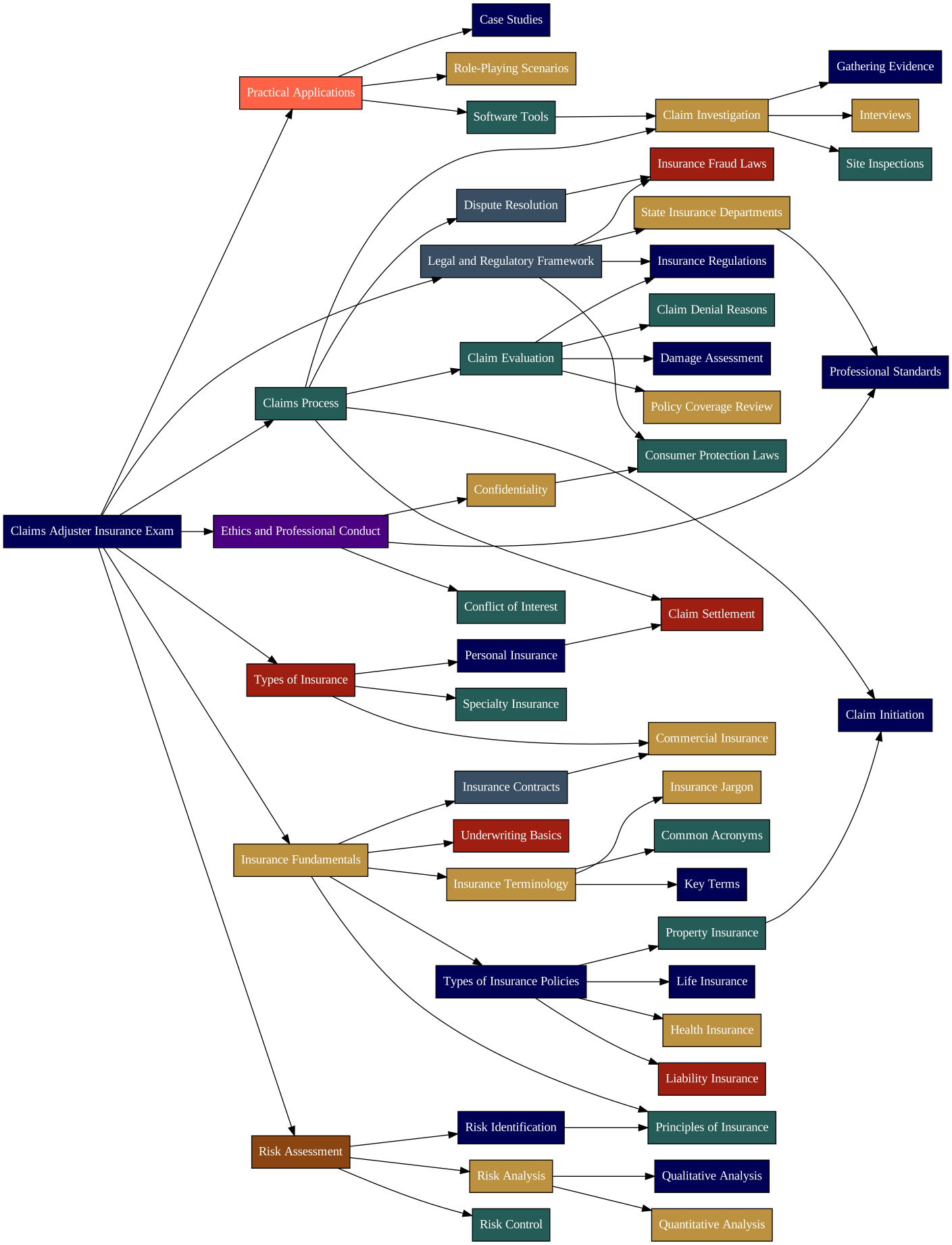
Quiz-summary
0 of 30 questions completed
Questions:
- 1
- 2
- 3
- 4
- 5
- 6
- 7
- 8
- 9
- 10
- 11
- 12
- 13
- 14
- 15
- 16
- 17
- 18
- 19
- 20
- 21
- 22
- 23
- 24
- 25
- 26
- 27
- 28
- 29
- 30
Information
Premium Practice Questions
You have already completed the quiz before. Hence you can not start it again.
Quiz is loading...
You must sign in or sign up to start the quiz.
You have to finish following quiz, to start this quiz:
Results
0 of 30 questions answered correctly
Your time:
Time has elapsed
You have reached 0 of 0 points, (0)
Categories
- Not categorized 0%
- 1
- 2
- 3
- 4
- 5
- 6
- 7
- 8
- 9
- 10
- 11
- 12
- 13
- 14
- 15
- 16
- 17
- 18
- 19
- 20
- 21
- 22
- 23
- 24
- 25
- 26
- 27
- 28
- 29
- 30
- Answered
- Review
-
Question 1 of 30
1. Question
Mr. Dubois, a claims handler, is assigned a life insurance claim where the beneficiary is his close relative. What is Mr. Dubois’s *most* ethical course of action in this situation?
Correct
This question addresses the ethical considerations surrounding conflicts of interest in claims handling. A conflict of interest arises when a claims handler’s personal interests, relationships, or affiliations could potentially compromise their objectivity and impartiality in assessing and settling a claim. In the scenario, Mr. Dubois is assigned to handle a claim where the beneficiary is his close relative. This creates a clear conflict of interest because Mr. Dubois might be inclined to favor his relative’s claim, even if it is not entirely valid or justified. Ethical standards for claims professionals require them to avoid situations where their personal relationships could influence their professional judgment. Transparency and disclosure are essential in managing conflicts of interest. Mr. Dubois has a responsibility to disclose his relationship with the beneficiary to his supervisor. The supervisor can then reassign the claim to another handler who does not have a conflict of interest. This ensures that the claim is assessed fairly and impartially, protecting the integrity of the claims process and maintaining public trust in the insurance industry. Failure to disclose a conflict of interest can have serious consequences, including disciplinary action, legal repercussions, and damage to the insurer’s reputation.
Incorrect
This question addresses the ethical considerations surrounding conflicts of interest in claims handling. A conflict of interest arises when a claims handler’s personal interests, relationships, or affiliations could potentially compromise their objectivity and impartiality in assessing and settling a claim. In the scenario, Mr. Dubois is assigned to handle a claim where the beneficiary is his close relative. This creates a clear conflict of interest because Mr. Dubois might be inclined to favor his relative’s claim, even if it is not entirely valid or justified. Ethical standards for claims professionals require them to avoid situations where their personal relationships could influence their professional judgment. Transparency and disclosure are essential in managing conflicts of interest. Mr. Dubois has a responsibility to disclose his relationship with the beneficiary to his supervisor. The supervisor can then reassign the claim to another handler who does not have a conflict of interest. This ensures that the claim is assessed fairly and impartially, protecting the integrity of the claims process and maintaining public trust in the insurance industry. Failure to disclose a conflict of interest can have serious consequences, including disciplinary action, legal repercussions, and damage to the insurer’s reputation.
-
Question 2 of 30
2. Question
A life insurance claim is submitted following the death of Mr. Jian, with his spouse, Mrs. Li, as the beneficiary. The insurer conducts an initial investigation, reviewing the policy details, death certificate, and medical records. The investigation reveals no immediate discrepancies or reasons to suspect fraud. However, the insurer delays the claim settlement, citing the need for further investigation without providing specific reasons or timelines to Mrs. Li. Six weeks pass with no updates. Considering the insurer’s duty of utmost good faith and relevant consumer protection laws, what is the MOST appropriate course of action for the insurer?
Correct
The core principle at play here is the insurer’s duty of utmost good faith (uberrimae fidei), which extends throughout the claims process. This duty requires the insurer to act honestly and fairly in its dealings with the insured. While insurers have a right to investigate claims, that right is not absolute and must be exercised reasonably. Delaying a claim without a legitimate reason, especially when the insurer possesses sufficient information to make a decision, can be a breach of this duty. The regulatory bodies governing life insurance, such as APRA, emphasize the importance of timely and fair claims handling. Consumer protection laws reinforce this by providing avenues for redress when insurers act unfairly. The scenario highlights the tension between the insurer’s need to verify the claim and the claimant’s right to a prompt decision. In this case, the initial investigation yielded no red flags, and the insurer’s continued delay suggests a potential breach of its duty of utmost good faith. Therefore, the most appropriate course of action is to expedite the claims process and provide a clear explanation for any remaining delays, demonstrating transparency and fairness. This adheres to ethical considerations in claims handling, focusing on maintaining trust and acting in the best interest of the claimant, within the bounds of the policy and applicable laws.
Incorrect
The core principle at play here is the insurer’s duty of utmost good faith (uberrimae fidei), which extends throughout the claims process. This duty requires the insurer to act honestly and fairly in its dealings with the insured. While insurers have a right to investigate claims, that right is not absolute and must be exercised reasonably. Delaying a claim without a legitimate reason, especially when the insurer possesses sufficient information to make a decision, can be a breach of this duty. The regulatory bodies governing life insurance, such as APRA, emphasize the importance of timely and fair claims handling. Consumer protection laws reinforce this by providing avenues for redress when insurers act unfairly. The scenario highlights the tension between the insurer’s need to verify the claim and the claimant’s right to a prompt decision. In this case, the initial investigation yielded no red flags, and the insurer’s continued delay suggests a potential breach of its duty of utmost good faith. Therefore, the most appropriate course of action is to expedite the claims process and provide a clear explanation for any remaining delays, demonstrating transparency and fairness. This adheres to ethical considerations in claims handling, focusing on maintaining trust and acting in the best interest of the claimant, within the bounds of the policy and applicable laws.
-
Question 3 of 30
3. Question
A life insurance policy has a face value of $500,000 with an accidental death benefit rider that pays an additional $250,000. At the time of death, there is an outstanding policy loan of $50,000 and unpaid premiums totaling $10,000. The policy also contains a two-year contestability period, which has already expired. Assuming no misrepresentation was discovered during the application process, what is the total claim amount payable to the beneficiary?
Correct
The scenario involves a complex claim assessment where multiple factors contribute to the final settlement amount. The policy’s terms and conditions are paramount, especially regarding exclusions and limitations. The initial policy limit of $500,000 is the starting point. The accidental death benefit rider increases the payout by an additional amount, contingent on the specific terms outlined in the policy. Any outstanding loans against the policy principal reduce the payable amount. Additionally, unpaid premiums at the time of death are deducted from the settlement. The existence of a contestability period allows the insurer to investigate the validity of the policy and any potential misrepresentations made during the application process. If misrepresentation is discovered, it can affect the claim amount. The key is to deduct the outstanding loan and unpaid premiums from the sum of the initial policy limit and the accidental death benefit, while also considering the impact of the contestability period. In this case, the accidental death benefit increases the total payout by $250,000. The outstanding loan of $50,000 and unpaid premiums of $10,000 are then deducted. The contestability period has expired, so it doesn’t affect the claim. Therefore, the calculation is: $500,000 (initial policy) + $250,000 (accidental death benefit) – $50,000 (outstanding loan) – $10,000 (unpaid premiums) = $690,000.
Incorrect
The scenario involves a complex claim assessment where multiple factors contribute to the final settlement amount. The policy’s terms and conditions are paramount, especially regarding exclusions and limitations. The initial policy limit of $500,000 is the starting point. The accidental death benefit rider increases the payout by an additional amount, contingent on the specific terms outlined in the policy. Any outstanding loans against the policy principal reduce the payable amount. Additionally, unpaid premiums at the time of death are deducted from the settlement. The existence of a contestability period allows the insurer to investigate the validity of the policy and any potential misrepresentations made during the application process. If misrepresentation is discovered, it can affect the claim amount. The key is to deduct the outstanding loan and unpaid premiums from the sum of the initial policy limit and the accidental death benefit, while also considering the impact of the contestability period. In this case, the accidental death benefit increases the total payout by $250,000. The outstanding loan of $50,000 and unpaid premiums of $10,000 are then deducted. The contestability period has expired, so it doesn’t affect the claim. Therefore, the calculation is: $500,000 (initial policy) + $250,000 (accidental death benefit) – $50,000 (outstanding loan) – $10,000 (unpaid premiums) = $690,000.
-
Question 4 of 30
4. Question
Javier took out a life insurance policy. Six months later, he passed away due to a sudden heart attack. During the claims assessment, the insurer discovers that Javier failed to disclose his pre-existing hypertension and elevated cholesterol levels on his application. The insurer suspects this non-disclosure might be material. According to the Insurance Contracts Act and standard claims handling practices, what is the MOST appropriate initial course of action for the insurer?
Correct
The scenario describes a complex situation involving a life insurance claim where the policyholder, Javier, died shortly after the policy’s inception. A key aspect is the non-disclosure of pre-existing medical conditions, specifically hypertension and elevated cholesterol, during the application process. This non-disclosure is material because these conditions could have influenced the insurer’s decision to issue the policy or the premium charged. The insurer’s actions are governed by the Insurance Contracts Act, which allows the insurer to avoid the policy if non-disclosure is established as fraudulent or if the insurer would not have entered into the contract on the same terms had the disclosure been made. The insurer must investigate thoroughly, obtaining medical records and possibly consulting with medical professionals to determine the materiality of the non-disclosure. If the non-disclosure is deemed material and fraudulent, the insurer can deny the claim. If the non-disclosure is material but not fraudulent, the insurer may reduce the claim payout to reflect the premium that would have been charged had the pre-existing conditions been disclosed. The insurer’s obligation extends to acting in good faith and fairly towards the claimant, even when denying the claim, which includes providing a clear and justified explanation for the decision. The existence of a contestability period (typically two years) is also relevant. If Javier died within this period, the insurer has a greater right to investigate and potentially deny the claim based on misrepresentation or non-disclosure. Consumer protection laws require the insurer to handle the claim promptly and fairly, and the claimant has the right to appeal the insurer’s decision through internal and external dispute resolution mechanisms.
Incorrect
The scenario describes a complex situation involving a life insurance claim where the policyholder, Javier, died shortly after the policy’s inception. A key aspect is the non-disclosure of pre-existing medical conditions, specifically hypertension and elevated cholesterol, during the application process. This non-disclosure is material because these conditions could have influenced the insurer’s decision to issue the policy or the premium charged. The insurer’s actions are governed by the Insurance Contracts Act, which allows the insurer to avoid the policy if non-disclosure is established as fraudulent or if the insurer would not have entered into the contract on the same terms had the disclosure been made. The insurer must investigate thoroughly, obtaining medical records and possibly consulting with medical professionals to determine the materiality of the non-disclosure. If the non-disclosure is deemed material and fraudulent, the insurer can deny the claim. If the non-disclosure is material but not fraudulent, the insurer may reduce the claim payout to reflect the premium that would have been charged had the pre-existing conditions been disclosed. The insurer’s obligation extends to acting in good faith and fairly towards the claimant, even when denying the claim, which includes providing a clear and justified explanation for the decision. The existence of a contestability period (typically two years) is also relevant. If Javier died within this period, the insurer has a greater right to investigate and potentially deny the claim based on misrepresentation or non-disclosure. Consumer protection laws require the insurer to handle the claim promptly and fairly, and the claimant has the right to appeal the insurer’s decision through internal and external dispute resolution mechanisms.
-
Question 5 of 30
5. Question
Aisha purchased a life insurance policy with a two-year suicide clause. Fifteen months later, she died by suicide. Her husband, Ben, files a claim. During the claims investigation, the insurer discovers Aisha had been experiencing symptoms of depression for several months prior to purchasing the policy, although she never sought medical treatment or formal diagnosis. She did, however, confide in a close friend about her feelings. What is the most likely outcome of Ben’s claim, considering the suicide clause and the undisclosed pre-existing condition?
Correct
The scenario explores the complexities of claims involving suicide clauses and pre-existing mental health conditions. A key aspect is the “contestability period,” typically two years from the policy’s inception. If death by suicide occurs within this period, the insurer may deny the claim, potentially refunding premiums paid. However, the presence of a pre-existing mental health condition, even if not formally diagnosed, complicates matters. Insurers will investigate whether the insured was aware of the condition and if it influenced their decision to take out the policy. Non-disclosure of a known pre-existing condition could be considered misrepresentation, potentially voiding the policy. The insurer’s investigation would involve reviewing medical records, pharmacy records, and potentially interviewing family members to determine the insured’s state of mind and awareness of any mental health issues before purchasing the policy. Even if the suicide occurs outside the contestability period, the insurer may still investigate if there’s evidence of material misrepresentation regarding mental health. The insurer must act ethically and in good faith, balancing the policyholder’s rights with the need to prevent fraud and misrepresentation. The regulatory framework emphasizes fair claims handling and consumer protection.
Incorrect
The scenario explores the complexities of claims involving suicide clauses and pre-existing mental health conditions. A key aspect is the “contestability period,” typically two years from the policy’s inception. If death by suicide occurs within this period, the insurer may deny the claim, potentially refunding premiums paid. However, the presence of a pre-existing mental health condition, even if not formally diagnosed, complicates matters. Insurers will investigate whether the insured was aware of the condition and if it influenced their decision to take out the policy. Non-disclosure of a known pre-existing condition could be considered misrepresentation, potentially voiding the policy. The insurer’s investigation would involve reviewing medical records, pharmacy records, and potentially interviewing family members to determine the insured’s state of mind and awareness of any mental health issues before purchasing the policy. Even if the suicide occurs outside the contestability period, the insurer may still investigate if there’s evidence of material misrepresentation regarding mental health. The insurer must act ethically and in good faith, balancing the policyholder’s rights with the need to prevent fraud and misrepresentation. The regulatory framework emphasizes fair claims handling and consumer protection.
-
Question 6 of 30
6. Question
Aisha applied for a life insurance policy five years ago, failing to disclose a history of anxiety for which she occasionally took medication. She recently passed away due to a sudden heart attack. The insurance company discovers the undisclosed anxiety during the claims assessment. Considering the principle of utmost good faith and relevant legal frameworks, what is the most likely outcome regarding the claim?
Correct
The principle of utmost good faith (uberrimae fidei) requires both parties to a contract of insurance to act honestly and disclose all material facts. A material fact is one that would influence the insurer’s decision to accept the risk or determine the premium. In life insurance, this includes medical history, lifestyle, and occupation. If an applicant knowingly withholds or misrepresents material information, the insurer may have grounds to void the policy. This is particularly relevant when the non-disclosure directly relates to the cause of death. The insurer must demonstrate that the information was material, the applicant knew about it, and it was not disclosed. The insurer’s actions must also be reasonable and in accordance with relevant legislation, such as the Insurance Contracts Act. The burden of proof rests on the insurer to demonstrate the breach of utmost good faith. Furthermore, the timing of the claim is important; if a significant period has passed since the policy was issued, the insurer’s ability to contest the claim may be limited, particularly if the non-disclosure was not directly related to the cause of death. The concept of inducement is also important: the insurer must show that it would not have entered into the contract on the same terms had it known the true facts.
Incorrect
The principle of utmost good faith (uberrimae fidei) requires both parties to a contract of insurance to act honestly and disclose all material facts. A material fact is one that would influence the insurer’s decision to accept the risk or determine the premium. In life insurance, this includes medical history, lifestyle, and occupation. If an applicant knowingly withholds or misrepresents material information, the insurer may have grounds to void the policy. This is particularly relevant when the non-disclosure directly relates to the cause of death. The insurer must demonstrate that the information was material, the applicant knew about it, and it was not disclosed. The insurer’s actions must also be reasonable and in accordance with relevant legislation, such as the Insurance Contracts Act. The burden of proof rests on the insurer to demonstrate the breach of utmost good faith. Furthermore, the timing of the claim is important; if a significant period has passed since the policy was issued, the insurer’s ability to contest the claim may be limited, particularly if the non-disclosure was not directly related to the cause of death. The concept of inducement is also important: the insurer must show that it would not have entered into the contract on the same terms had it known the true facts.
-
Question 7 of 30
7. Question
Aisha took out a life insurance policy 2.5 years ago. She recently passed away due to complications arising from a previously undiagnosed case of sleep apnea. During the claims assessment, the insurer discovers evidence suggesting Aisha suffered from sleep apnea symptoms before taking out the policy, although she was never formally diagnosed and was unaware of the condition. The insurer’s underwriting guidelines state that applicants with known sleep apnea are subject to higher premiums. Which of the following actions is the insurer MOST likely to take, considering the Insurance Contracts Act and ethical claims handling?
Correct
The scenario describes a situation where a life insurance claim is being assessed, and the insurer suspects non-disclosure of a pre-existing medical condition (undiagnosed sleep apnea) that could have materially impacted the underwriting decision. According to the Insurance Contracts Act, the insurer has a limited timeframe to avoid the contract for non-disclosure. If the non-disclosure is discovered after this period (typically three years), the insurer’s ability to avoid the contract is restricted, especially if the non-disclosure was innocent (i.e., the insured was unaware of the condition). In this case, the insured had no knowledge of the sleep apnea and it was only discovered during the claims investigation. The key here is the materiality of the non-disclosure. Would the insurer have declined the policy or charged a higher premium had they known about the sleep apnea? If the answer is yes, and the insurer is still within the statutory period for avoiding the contract, they may be able to reduce the claim payout to reflect the premium that would have been charged had the condition been disclosed. However, given the insured’s lack of knowledge and the policy being in force for 2.5 years, avoiding the contract entirely is unlikely. A more appropriate course of action would be to assess the impact of the non-disclosure on the risk and adjust the claim payout accordingly, ensuring compliance with consumer protection laws and ethical claims handling practices.
Incorrect
The scenario describes a situation where a life insurance claim is being assessed, and the insurer suspects non-disclosure of a pre-existing medical condition (undiagnosed sleep apnea) that could have materially impacted the underwriting decision. According to the Insurance Contracts Act, the insurer has a limited timeframe to avoid the contract for non-disclosure. If the non-disclosure is discovered after this period (typically three years), the insurer’s ability to avoid the contract is restricted, especially if the non-disclosure was innocent (i.e., the insured was unaware of the condition). In this case, the insured had no knowledge of the sleep apnea and it was only discovered during the claims investigation. The key here is the materiality of the non-disclosure. Would the insurer have declined the policy or charged a higher premium had they known about the sleep apnea? If the answer is yes, and the insurer is still within the statutory period for avoiding the contract, they may be able to reduce the claim payout to reflect the premium that would have been charged had the condition been disclosed. However, given the insured’s lack of knowledge and the policy being in force for 2.5 years, avoiding the contract entirely is unlikely. A more appropriate course of action would be to assess the impact of the non-disclosure on the risk and adjust the claim payout accordingly, ensuring compliance with consumer protection laws and ethical claims handling practices.
-
Question 8 of 30
8. Question
Alana applied for a life insurance policy. She did not disclose that she occasionally snored loudly, as she wasn’t diagnosed with sleep apnea. Two years later, Alana passed away due to complications from an undiagnosed severe sleep apnea. The insurer discovers this during the claims investigation and seeks to deny the claim, alleging non-disclosure. Under the Insurance Contracts Act 1984 (Cth), which of the following best describes the insurer’s most likely course of action if they cannot prove fraudulent non-disclosure, but can demonstrate that they would have charged a 25% higher premium had they known about the sleep apnea?
Correct
The scenario explores the complexities of a life insurance claim involving a pre-existing condition (undiagnosed sleep apnea) and the insurer’s potential reliance on non-disclosure. The key lies in determining whether the non-disclosure was fraudulent or merely negligent, and whether the insurer would have issued the policy on the same terms had they known about the sleep apnea. Section 29 of the Insurance Contracts Act 1984 (Cth) is critical here. It dictates that if the non-disclosure was fraudulent, the insurer can avoid the contract entirely. However, if it was not fraudulent, the insurer’s remedy is limited to what they would have done had they known the truth. This requires assessing the insurer’s underwriting guidelines and practices related to sleep apnea at the time the policy was issued. If the insurer can prove they would have charged a higher premium or imposed specific exclusions, they can adjust the claim payout accordingly. The insurer bears the onus of proof. If they cannot prove what they would have done, they must pay the claim in full. The case hinges on demonstrating the materiality of the non-disclosure (would it have affected the underwriting decision?) and the insured’s state of mind (did they deliberately conceal the information?).
Incorrect
The scenario explores the complexities of a life insurance claim involving a pre-existing condition (undiagnosed sleep apnea) and the insurer’s potential reliance on non-disclosure. The key lies in determining whether the non-disclosure was fraudulent or merely negligent, and whether the insurer would have issued the policy on the same terms had they known about the sleep apnea. Section 29 of the Insurance Contracts Act 1984 (Cth) is critical here. It dictates that if the non-disclosure was fraudulent, the insurer can avoid the contract entirely. However, if it was not fraudulent, the insurer’s remedy is limited to what they would have done had they known the truth. This requires assessing the insurer’s underwriting guidelines and practices related to sleep apnea at the time the policy was issued. If the insurer can prove they would have charged a higher premium or imposed specific exclusions, they can adjust the claim payout accordingly. The insurer bears the onus of proof. If they cannot prove what they would have done, they must pay the claim in full. The case hinges on demonstrating the materiality of the non-disclosure (would it have affected the underwriting decision?) and the insured’s state of mind (did they deliberately conceal the information?).
-
Question 9 of 30
9. Question
Kwame purchased a life insurance policy 5 years ago. He recently passed away due to a heart attack. During the claims assessment, the insurer discovers that Kwame had a prior history of cardiac issues, diagnosed several years before the policy inception, which he did not disclose on his application. The insurer’s legal team advises that this non-disclosure is a material fact. Considering legal and regulatory frameworks, consumer protection laws, and ethical considerations, what is the MOST appropriate course of action for the insurer?
Correct
The scenario highlights a complex situation involving potential non-disclosure and its impact on a life insurance claim. The insurer’s investigation revealed that the deceased, Kwame, had a history of cardiac issues predating the policy’s inception, which he failed to disclose. This non-disclosure is a material fact that could have altered the insurer’s decision to issue the policy or the terms under which it was issued. Insurance law generally dictates that such non-disclosure allows the insurer to void the policy from its beginning, especially if the undisclosed condition directly contributed to the cause of death. However, the insurer must also consider the principle of utmost good faith, which requires them to act fairly and reasonably. Factors such as the length of time the policy was in force (5 years) and whether Kwame genuinely forgot about the prior condition or intentionally concealed it are relevant. Consumer protection laws may also influence the outcome, requiring the insurer to demonstrate that the non-disclosure was material and would have significantly impacted the underwriting decision. The regulatory bodies would expect the insurer to have followed proper underwriting procedure and that the claim investigation was performed diligently and ethically. In this case, voiding the policy entirely may be deemed too harsh, especially if the non-disclosure was unintentional. A potential compromise could involve paying out a reduced claim amount, reflecting the increased risk that Kwame presented at the time the policy was issued. The legal team’s advice would be crucial in determining the appropriate course of action, balancing the insurer’s rights with the claimant’s interests and legal obligations.
Incorrect
The scenario highlights a complex situation involving potential non-disclosure and its impact on a life insurance claim. The insurer’s investigation revealed that the deceased, Kwame, had a history of cardiac issues predating the policy’s inception, which he failed to disclose. This non-disclosure is a material fact that could have altered the insurer’s decision to issue the policy or the terms under which it was issued. Insurance law generally dictates that such non-disclosure allows the insurer to void the policy from its beginning, especially if the undisclosed condition directly contributed to the cause of death. However, the insurer must also consider the principle of utmost good faith, which requires them to act fairly and reasonably. Factors such as the length of time the policy was in force (5 years) and whether Kwame genuinely forgot about the prior condition or intentionally concealed it are relevant. Consumer protection laws may also influence the outcome, requiring the insurer to demonstrate that the non-disclosure was material and would have significantly impacted the underwriting decision. The regulatory bodies would expect the insurer to have followed proper underwriting procedure and that the claim investigation was performed diligently and ethically. In this case, voiding the policy entirely may be deemed too harsh, especially if the non-disclosure was unintentional. A potential compromise could involve paying out a reduced claim amount, reflecting the increased risk that Kwame presented at the time the policy was issued. The legal team’s advice would be crucial in determining the appropriate course of action, balancing the insurer’s rights with the claimant’s interests and legal obligations.
-
Question 10 of 30
10. Question
A life insurance claim is submitted shortly after the policy’s inception. The insured died from a rare pre-existing heart condition, which was not disclosed on the application. The claims adjuster suspects potential fraud. Which of the following actions should the adjuster prioritize, aligning with ethical and legal obligations?
Correct
In scenarios involving potential fraud in life insurance claims, a claims adjuster’s primary responsibility is to conduct a thorough investigation while adhering to ethical and legal guidelines. This investigation involves gathering and verifying all relevant documentation, including the death certificate, medical records, and the policy application. It’s crucial to look for inconsistencies or red flags that might indicate fraudulent activity. This could include discrepancies in the information provided, unusual timing of the policy purchase relative to the cause of death, or any evidence suggesting misrepresentation of facts during the application process. The adjuster must also be aware of the legal and regulatory framework governing claims settlement, including consumer protection laws and compliance requirements. If fraud is suspected, the adjuster should follow the company’s established protocols for reporting and handling such cases, which may involve consulting with legal counsel and potentially notifying regulatory bodies. Maintaining transparency and objectivity throughout the investigation is paramount to ensure fair treatment of all parties involved while protecting the insurer from fraudulent claims. The adjuster’s actions must comply with ethical standards and professional conduct guidelines, avoiding any conflicts of interest and ensuring that all decisions are based on factual evidence and sound judgment.
Incorrect
In scenarios involving potential fraud in life insurance claims, a claims adjuster’s primary responsibility is to conduct a thorough investigation while adhering to ethical and legal guidelines. This investigation involves gathering and verifying all relevant documentation, including the death certificate, medical records, and the policy application. It’s crucial to look for inconsistencies or red flags that might indicate fraudulent activity. This could include discrepancies in the information provided, unusual timing of the policy purchase relative to the cause of death, or any evidence suggesting misrepresentation of facts during the application process. The adjuster must also be aware of the legal and regulatory framework governing claims settlement, including consumer protection laws and compliance requirements. If fraud is suspected, the adjuster should follow the company’s established protocols for reporting and handling such cases, which may involve consulting with legal counsel and potentially notifying regulatory bodies. Maintaining transparency and objectivity throughout the investigation is paramount to ensure fair treatment of all parties involved while protecting the insurer from fraudulent claims. The adjuster’s actions must comply with ethical standards and professional conduct guidelines, avoiding any conflicts of interest and ensuring that all decisions are based on factual evidence and sound judgment.
-
Question 11 of 30
11. Question
Aisha, recently widowed, submits a life insurance claim for her deceased husband, Ben. During the claims assessment, the insurer discovers that Ben failed to disclose a pre-existing heart condition on his application. While the condition wasn’t the direct cause of death (a car accident), the insurer believes it was a material fact that would have affected their underwriting decision. Aisha argues that Ben was unaware of the severity of his condition and acted in good faith. Considering the principle of utmost good faith (uberrimae fidei), which of the following best describes the insurer’s most appropriate course of action under Australian law?
Correct
In life insurance claims, the principle of utmost good faith (uberrimae fidei) places a significant responsibility on both the insurer and the insured. The insured is obligated to disclose all material facts that could influence the insurer’s decision to issue the policy or determine the premium. A failure to disclose, even if unintentional, can provide grounds for the insurer to deny a claim or void the policy, especially if the undisclosed information would have led the insurer to decline coverage or charge a higher premium. Conversely, the insurer also has a duty to act in good faith, fairly investigating claims and making reasonable settlement offers. The insurer must clearly communicate the reasons for any claim denial and provide the claimant with an opportunity to appeal or provide additional information. The duty of good faith extends to handling claims promptly and efficiently, adhering to all relevant legal and regulatory requirements, and avoiding any actions that could be perceived as deceptive or misleading. The specific legal and regulatory frameworks governing insurance claims, such as the Insurance Contracts Act 1984 (Australia), outline the obligations of both parties and provide recourse for breaches of good faith. Consumer protection laws further reinforce these obligations, ensuring that insurers treat policyholders fairly and ethically. Breaching the duty of utmost good faith can result in legal action, financial penalties, and reputational damage for the insurer. Therefore, a balanced application of this principle is essential for maintaining trust and fairness in the insurance relationship.
Incorrect
In life insurance claims, the principle of utmost good faith (uberrimae fidei) places a significant responsibility on both the insurer and the insured. The insured is obligated to disclose all material facts that could influence the insurer’s decision to issue the policy or determine the premium. A failure to disclose, even if unintentional, can provide grounds for the insurer to deny a claim or void the policy, especially if the undisclosed information would have led the insurer to decline coverage or charge a higher premium. Conversely, the insurer also has a duty to act in good faith, fairly investigating claims and making reasonable settlement offers. The insurer must clearly communicate the reasons for any claim denial and provide the claimant with an opportunity to appeal or provide additional information. The duty of good faith extends to handling claims promptly and efficiently, adhering to all relevant legal and regulatory requirements, and avoiding any actions that could be perceived as deceptive or misleading. The specific legal and regulatory frameworks governing insurance claims, such as the Insurance Contracts Act 1984 (Australia), outline the obligations of both parties and provide recourse for breaches of good faith. Consumer protection laws further reinforce these obligations, ensuring that insurers treat policyholders fairly and ethically. Breaching the duty of utmost good faith can result in legal action, financial penalties, and reputational damage for the insurer. Therefore, a balanced application of this principle is essential for maintaining trust and fairness in the insurance relationship.
-
Question 12 of 30
12. Question
A life insurance company issued a policy to Mr. Jian, failing to adequately investigate his medical history during underwriting. Mr. Jian had declared a pre-existing condition of Stage 1 hypertension on his application, but the insurer did not request further medical records or clarification. Two years later, Mr. Jian passed away due to complications arising from a stroke. The insurer now seeks to reject the claim, arguing that the pre-existing hypertension was a material fact not fully disclosed, even though Mr. Jian made the declaration on the application. Based on insurance law, regulatory guidelines, and ethical considerations, what is the MOST appropriate course of action for the insurer?
Correct
The scenario describes a situation where an insurer, due to an oversight, failed to properly assess the risk associated with a policyholder’s pre-existing medical condition, specifically, Stage 1 hypertension. This failure to adequately investigate the policyholder’s medical history before issuing the policy has significant implications under insurance law and regulatory guidelines. The insurer is obligated to act in good faith and with utmost fairness towards the policyholder. Even though the policyholder did not intentionally conceal the condition, the insurer’s error in underwriting cannot automatically void the policy. The principle of *contra proferentem* may apply, meaning that any ambiguity in the policy terms will be construed against the insurer, especially since they had the opportunity to clarify the medical history during the application process. Moreover, consumer protection laws mandate that insurers must handle claims reasonably and fairly. Rejecting the claim outright could be deemed unfair, particularly if the hypertension was not directly causative of the death. The insurer should consider factors such as the severity of the condition, its impact on the policyholder’s overall health, and whether it was a material factor in the cause of death. The insurer should explore options such as offering a partial settlement, particularly if the hypertension only indirectly contributed to the death. The insurer’s conduct must align with ethical considerations, ensuring transparency and fair treatment.
Incorrect
The scenario describes a situation where an insurer, due to an oversight, failed to properly assess the risk associated with a policyholder’s pre-existing medical condition, specifically, Stage 1 hypertension. This failure to adequately investigate the policyholder’s medical history before issuing the policy has significant implications under insurance law and regulatory guidelines. The insurer is obligated to act in good faith and with utmost fairness towards the policyholder. Even though the policyholder did not intentionally conceal the condition, the insurer’s error in underwriting cannot automatically void the policy. The principle of *contra proferentem* may apply, meaning that any ambiguity in the policy terms will be construed against the insurer, especially since they had the opportunity to clarify the medical history during the application process. Moreover, consumer protection laws mandate that insurers must handle claims reasonably and fairly. Rejecting the claim outright could be deemed unfair, particularly if the hypertension was not directly causative of the death. The insurer should consider factors such as the severity of the condition, its impact on the policyholder’s overall health, and whether it was a material factor in the cause of death. The insurer should explore options such as offering a partial settlement, particularly if the hypertension only indirectly contributed to the death. The insurer’s conduct must align with ethical considerations, ensuring transparency and fair treatment.
-
Question 13 of 30
13. Question
Jamila’s spouse, Ben, recently passed away after being found unresponsive in their garage with the car running. The life insurance policy has a standard suicide clause excluding coverage for suicide within the first two years, and the policy is 18 months old. The insurer suspects suicide based on circumstantial evidence but lacks definitive proof. If the insurer denies the claim without further investigation, what is the MOST likely legal and ethical consequence?
Correct
The scenario highlights a complex situation involving the interplay between policy terms, regulatory requirements, and ethical considerations in life insurance claims. The core issue revolves around whether the insurer is obligated to pay out the claim given the ambiguity surrounding the policyholder’s actions leading to death and the potential violation of consumer protection laws if the claim is denied without sufficient investigation. The insurer’s obligation hinges on a thorough investigation to determine if the policyholder’s actions constituted suicide, which may be excluded under the policy’s terms, particularly if the policy has a suicide clause within a specific timeframe from inception. If the investigation is inconclusive or suggests that the policyholder’s actions were not intentional, the insurer may be obligated to pay the claim. Consumer protection laws mandate that insurers act in good faith and conduct reasonable investigations before denying claims. Denying a claim based solely on circumstantial evidence without a proper investigation could be seen as a violation of these laws. Furthermore, the insurer has a duty to communicate transparently with the beneficiary and provide clear reasons for any decision to deny the claim. The regulatory bodies governing life insurance would likely scrutinize the insurer’s handling of the claim to ensure compliance with these laws and ethical standards. The ethical considerations involve balancing the insurer’s financial interests with the beneficiary’s right to receive the policy benefits. While insurers have a right to protect themselves against fraudulent claims, they also have a responsibility to treat policyholders and their beneficiaries fairly and with empathy, especially in times of grief.
Incorrect
The scenario highlights a complex situation involving the interplay between policy terms, regulatory requirements, and ethical considerations in life insurance claims. The core issue revolves around whether the insurer is obligated to pay out the claim given the ambiguity surrounding the policyholder’s actions leading to death and the potential violation of consumer protection laws if the claim is denied without sufficient investigation. The insurer’s obligation hinges on a thorough investigation to determine if the policyholder’s actions constituted suicide, which may be excluded under the policy’s terms, particularly if the policy has a suicide clause within a specific timeframe from inception. If the investigation is inconclusive or suggests that the policyholder’s actions were not intentional, the insurer may be obligated to pay the claim. Consumer protection laws mandate that insurers act in good faith and conduct reasonable investigations before denying claims. Denying a claim based solely on circumstantial evidence without a proper investigation could be seen as a violation of these laws. Furthermore, the insurer has a duty to communicate transparently with the beneficiary and provide clear reasons for any decision to deny the claim. The regulatory bodies governing life insurance would likely scrutinize the insurer’s handling of the claim to ensure compliance with these laws and ethical standards. The ethical considerations involve balancing the insurer’s financial interests with the beneficiary’s right to receive the policy benefits. While insurers have a right to protect themselves against fraudulent claims, they also have a responsibility to treat policyholders and their beneficiaries fairly and with empathy, especially in times of grief.
-
Question 14 of 30
14. Question
Jamal signs up for a critical illness policy. Six months later, he’s diagnosed with a specific type of cancer covered by the policy. The insurer discovers Jamal experienced fatigue and unexplained weight loss prior to the policy start date, but he never sought medical advice. The insurer suspects this indicates a pre-existing condition. What action should the insurer prioritize?
Correct
This scenario delves into the complexities of handling claims for critical illness policies, particularly concerning pre-existing conditions and the interpretation of policy definitions. Critical illness policies typically have waiting periods and exclusions for pre-existing conditions. A “pre-existing condition” is generally defined as a condition for which the insured received medical advice, diagnosis, or treatment before the policy’s effective date. The insurer’s investigation must focus on whether the diagnosed condition meets the policy’s definition of a covered critical illness and whether it was truly pre-existing. This requires careful review of medical records, consultation with medical professionals, and a thorough understanding of the policy wording. The insurer cannot simply deny the claim based on a suspicion of a pre-existing condition; they must have evidence to support their determination. If the condition was not diagnosed or treated before the policy’s effective date, it may not be considered pre-existing, even if the symptoms were present. The insurer must also consider the policy’s definition of “diagnosis” and “treatment” to determine whether they apply to the specific circumstances of the claim. This highlights the importance of precise policy wording and the need for insurers to conduct thorough and objective investigations to ensure fair claims settlement.
Incorrect
This scenario delves into the complexities of handling claims for critical illness policies, particularly concerning pre-existing conditions and the interpretation of policy definitions. Critical illness policies typically have waiting periods and exclusions for pre-existing conditions. A “pre-existing condition” is generally defined as a condition for which the insured received medical advice, diagnosis, or treatment before the policy’s effective date. The insurer’s investigation must focus on whether the diagnosed condition meets the policy’s definition of a covered critical illness and whether it was truly pre-existing. This requires careful review of medical records, consultation with medical professionals, and a thorough understanding of the policy wording. The insurer cannot simply deny the claim based on a suspicion of a pre-existing condition; they must have evidence to support their determination. If the condition was not diagnosed or treated before the policy’s effective date, it may not be considered pre-existing, even if the symptoms were present. The insurer must also consider the policy’s definition of “diagnosis” and “treatment” to determine whether they apply to the specific circumstances of the claim. This highlights the importance of precise policy wording and the need for insurers to conduct thorough and objective investigations to ensure fair claims settlement.
-
Question 15 of 30
15. Question
A life insurance claim is submitted following the death of Mr. Adebayo. His beneficiary, Ms. Chen, provides all required documentation, including a death certificate and medical records. The insurer, however, delays the claim settlement, citing a suspicion of potential fraud based on an anonymous tip received two weeks prior to the claim submission. Despite the provided documentation aligning with the policy terms and no concrete evidence of fraud emerging from a preliminary internal review, the insurer continues to postpone settlement, demanding further investigations that are not directly related to the initial tip. Which of the following best describes the insurer’s potential breach of conduct?
Correct
The core principle lies in the insurer’s obligation to act in good faith, which extends beyond mere honesty to encompass a duty to be considerate of the insured’s interests. This includes diligently investigating claims, providing clear and transparent communication, and avoiding unreasonable delays. The scenario presents a situation where the insurer, despite possessing sufficient evidence to process the claim, unduly delays settlement due to an unsubstantiated suspicion of fraud. This constitutes a breach of the duty of good faith. While insurers have a right to investigate potential fraud, this right must be exercised reasonably and not used as a tactic to avoid or delay legitimate claims. Consumer protection laws, such as the Insurance Contracts Act, reinforce this duty by implying a term of good faith into insurance contracts. Regulatory bodies like APRA monitor insurer conduct and can impose penalties for breaches of this duty. The ethical handling of claims demands that insurers balance their need to prevent fraud with their obligation to provide timely and fair settlement to beneficiaries. Failure to do so can result in legal action and reputational damage. The key is whether a reasonable insurer, acting diligently and fairly, would have settled the claim based on the available evidence.
Incorrect
The core principle lies in the insurer’s obligation to act in good faith, which extends beyond mere honesty to encompass a duty to be considerate of the insured’s interests. This includes diligently investigating claims, providing clear and transparent communication, and avoiding unreasonable delays. The scenario presents a situation where the insurer, despite possessing sufficient evidence to process the claim, unduly delays settlement due to an unsubstantiated suspicion of fraud. This constitutes a breach of the duty of good faith. While insurers have a right to investigate potential fraud, this right must be exercised reasonably and not used as a tactic to avoid or delay legitimate claims. Consumer protection laws, such as the Insurance Contracts Act, reinforce this duty by implying a term of good faith into insurance contracts. Regulatory bodies like APRA monitor insurer conduct and can impose penalties for breaches of this duty. The ethical handling of claims demands that insurers balance their need to prevent fraud with their obligation to provide timely and fair settlement to beneficiaries. Failure to do so can result in legal action and reputational damage. The key is whether a reasonable insurer, acting diligently and fairly, would have settled the claim based on the available evidence.
-
Question 16 of 30
16. Question
A life insurance claims adjuster, Javier, discovers that a claimant, Mrs. Nguyen, unknowingly misrepresented her late husband’s smoking habits on the original policy application. The policy contains a contestability clause. Javier also knows that Mrs. Nguyen is facing severe financial hardship and the claim represents her only source of income. Ethically, what is Javier’s MOST appropriate course of action, considering the legal and regulatory framework?
Correct
The core of ethical claims handling rests on several pillars: transparency, fairness, and adherence to both the letter and spirit of the law. Transparency requires clear communication with claimants about the claims process, policy terms, and any reasons for denial or partial settlement. Fairness dictates that all claimants are treated equitably, regardless of their background or the complexity of their claim. Adherence to the law means not only complying with relevant statutes and regulations but also avoiding any practices that could be construed as deceptive or misleading. Conflicts of interest must be identified and managed proactively to ensure impartiality. Furthermore, claims professionals have a responsibility to maintain confidentiality and protect the privacy of claimants’ personal information. Failing to uphold these ethical standards can lead to legal repercussions, reputational damage, and erosion of public trust in the insurance industry. The regulatory bodies emphasize the importance of ethical conduct through codes of ethics and conduct guidelines, and non-compliance can result in disciplinary actions, including license revocation. Ethical decision-making involves a careful assessment of the potential impact of actions on all stakeholders, ensuring that the outcome is just and equitable.
Incorrect
The core of ethical claims handling rests on several pillars: transparency, fairness, and adherence to both the letter and spirit of the law. Transparency requires clear communication with claimants about the claims process, policy terms, and any reasons for denial or partial settlement. Fairness dictates that all claimants are treated equitably, regardless of their background or the complexity of their claim. Adherence to the law means not only complying with relevant statutes and regulations but also avoiding any practices that could be construed as deceptive or misleading. Conflicts of interest must be identified and managed proactively to ensure impartiality. Furthermore, claims professionals have a responsibility to maintain confidentiality and protect the privacy of claimants’ personal information. Failing to uphold these ethical standards can lead to legal repercussions, reputational damage, and erosion of public trust in the insurance industry. The regulatory bodies emphasize the importance of ethical conduct through codes of ethics and conduct guidelines, and non-compliance can result in disciplinary actions, including license revocation. Ethical decision-making involves a careful assessment of the potential impact of actions on all stakeholders, ensuring that the outcome is just and equitable.
-
Question 17 of 30
17. Question
Elderly Mrs. Nguyen, recently widowed and diagnosed with early-stage dementia, submits a life insurance claim following her husband’s death. The claim form is partially completed and contains several inconsistencies. A claims officer, recognizing Mrs. Nguyen’s cognitive difficulties, processes the claim based solely on the information provided, leading to a significantly reduced payout due to misinterpretation of policy terms. Which principle has the insurer most likely breached?
Correct
The core principle revolves around the insurer’s responsibility to act in good faith when handling claims, particularly concerning vulnerable claimants. The duty of utmost good faith, stemming from insurance law, necessitates insurers to act honestly and fairly, prioritizing the claimant’s interests as much as their own. This extends to proactively assisting claimants, especially those with diminished capacity or limited understanding of the claims process. The Australian Securities and Investments Commission (ASIC) regulatory guidelines emphasize fair treatment of vulnerable consumers. Failing to provide adequate assistance, especially when the insurer is aware of the claimant’s vulnerability, can constitute a breach of this duty, potentially leading to legal repercussions and reputational damage. The insurer must take reasonable steps to ensure the claimant understands their rights and the claims process, potentially involving providing information in accessible formats, offering support services, or seeking assistance from independent advocates. The insurer cannot simply rely on standard procedures if it is apparent that the claimant cannot navigate them effectively due to vulnerability. The key is proactive support tailored to the individual’s needs, demonstrating a commitment to fairness and ethical claims handling.
Incorrect
The core principle revolves around the insurer’s responsibility to act in good faith when handling claims, particularly concerning vulnerable claimants. The duty of utmost good faith, stemming from insurance law, necessitates insurers to act honestly and fairly, prioritizing the claimant’s interests as much as their own. This extends to proactively assisting claimants, especially those with diminished capacity or limited understanding of the claims process. The Australian Securities and Investments Commission (ASIC) regulatory guidelines emphasize fair treatment of vulnerable consumers. Failing to provide adequate assistance, especially when the insurer is aware of the claimant’s vulnerability, can constitute a breach of this duty, potentially leading to legal repercussions and reputational damage. The insurer must take reasonable steps to ensure the claimant understands their rights and the claims process, potentially involving providing information in accessible formats, offering support services, or seeking assistance from independent advocates. The insurer cannot simply rely on standard procedures if it is apparent that the claimant cannot navigate them effectively due to vulnerability. The key is proactive support tailored to the individual’s needs, demonstrating a commitment to fairness and ethical claims handling.
-
Question 18 of 30
18. Question
Zenith Insurance initially denies a life insurance claim filed by Alana, the beneficiary of a policy held by her deceased spouse, Kai. Zenith’s denial is based on a clause they interpret as excluding coverage due to Kai’s pre-existing heart condition, which Kai had disclosed during the application process. Alana contends that Zenith never adequately explained the implications of this clause at the time of application, and that Kai reasonably believed his condition was covered given the information he provided. Considering the principles of utmost good faith and the insurer’s responsibilities, which of the following statements BEST describes Zenith’s potential breach of duty?
Correct
In life insurance claims, the principle of utmost good faith (uberrimae fidei) places a significant responsibility on both the insurer and the insured. While the insured is obligated to disclose all material facts relevant to the risk being insured, the insurer also has a duty to act fairly and honestly in assessing and settling claims. This includes conducting thorough investigations, providing clear explanations for decisions, and avoiding unfair practices. The insurer’s duty is not merely to avoid active misrepresentation, but also to proactively disclose information that could reasonably influence the claimant’s understanding of their rights and the claim settlement process. Regulatory bodies like APRA (Australian Prudential Regulation Authority) oversee insurers’ conduct to ensure compliance with these principles and consumer protection laws. Failing to act in good faith can lead to legal repercussions and reputational damage for the insurer. The concept of “reasonable expectations” also plays a role, where courts may interpret policy terms in line with what a reasonable person would expect the policy to cover, even if a strict literal reading of the policy might suggest otherwise. This emphasizes the insurer’s responsibility to ensure policy terms are clear and unambiguous.
Incorrect
In life insurance claims, the principle of utmost good faith (uberrimae fidei) places a significant responsibility on both the insurer and the insured. While the insured is obligated to disclose all material facts relevant to the risk being insured, the insurer also has a duty to act fairly and honestly in assessing and settling claims. This includes conducting thorough investigations, providing clear explanations for decisions, and avoiding unfair practices. The insurer’s duty is not merely to avoid active misrepresentation, but also to proactively disclose information that could reasonably influence the claimant’s understanding of their rights and the claim settlement process. Regulatory bodies like APRA (Australian Prudential Regulation Authority) oversee insurers’ conduct to ensure compliance with these principles and consumer protection laws. Failing to act in good faith can lead to legal repercussions and reputational damage for the insurer. The concept of “reasonable expectations” also plays a role, where courts may interpret policy terms in line with what a reasonable person would expect the policy to cover, even if a strict literal reading of the policy might suggest otherwise. This emphasizes the insurer’s responsibility to ensure policy terms are clear and unambiguous.
-
Question 19 of 30
19. Question
A life insurance claim is submitted by Ms. Devi, a recent immigrant with limited English proficiency, following the sudden death of her spouse. Ms. Devi appears distressed and struggles to understand the claim form requirements. The claims officer, adhering strictly to internal protocols, provides the standard claim form and a brief explanation in English, without offering further assistance or translation services. Which of the following best describes the potential ethical and legal implications of the claims officer’s actions under ANZIIF guidelines and relevant legislation?
Correct
The core principle at play here revolves around the insurer’s responsibility to act in good faith, particularly when handling claims from vulnerable individuals. The Insurance Contracts Act 1984 (ICA) in Australia and equivalent legislation in New Zealand mandates that insurers act with utmost good faith. This duty extends beyond merely processing claims according to the policy wording; it encompasses a proactive obligation to assist the claimant, especially when they are demonstrably vulnerable due to factors like bereavement, lack of financial literacy, or language barriers. Failing to provide clear explanations, offering assistance with required documentation, and ensuring the claimant understands their rights and options can be construed as a breach of this duty. The insurer’s actions must demonstrate a genuine effort to facilitate a fair and just settlement, recognizing the claimant’s circumstances and potential difficulties in navigating the claims process. The absence of such proactive assistance, especially given the readily apparent vulnerability, could expose the insurer to legal repercussions and reputational damage. The regulatory bodies like ASIC (Australian Securities and Investments Commission) and the Financial Markets Authority (FMA) in New Zealand, oversee and enforce these standards, holding insurers accountable for ethical and responsible claims handling practices.
Incorrect
The core principle at play here revolves around the insurer’s responsibility to act in good faith, particularly when handling claims from vulnerable individuals. The Insurance Contracts Act 1984 (ICA) in Australia and equivalent legislation in New Zealand mandates that insurers act with utmost good faith. This duty extends beyond merely processing claims according to the policy wording; it encompasses a proactive obligation to assist the claimant, especially when they are demonstrably vulnerable due to factors like bereavement, lack of financial literacy, or language barriers. Failing to provide clear explanations, offering assistance with required documentation, and ensuring the claimant understands their rights and options can be construed as a breach of this duty. The insurer’s actions must demonstrate a genuine effort to facilitate a fair and just settlement, recognizing the claimant’s circumstances and potential difficulties in navigating the claims process. The absence of such proactive assistance, especially given the readily apparent vulnerability, could expose the insurer to legal repercussions and reputational damage. The regulatory bodies like ASIC (Australian Securities and Investments Commission) and the Financial Markets Authority (FMA) in New Zealand, oversee and enforce these standards, holding insurers accountable for ethical and responsible claims handling practices.
-
Question 20 of 30
20. Question
Aisha increased her life insurance coverage from $250,000 to $750,000 on January 15, 2024. Sadly, she passed away on March 1, 2024, due to a previously undiagnosed heart condition. During the claims assessment, the insurer discovers Aisha visited a cardiologist for chest pains six months before increasing her coverage, but she did not disclose this information on her application for increased coverage. According to the Insurance Contracts Act 1984 (ICA) and considering the principle of utmost good faith, what is the MOST likely course of action for the insurer?
Correct
The scenario presents a complex situation involving a life insurance claim where the policyholder’s death occurred shortly after a significant policy change. Understanding the insurer’s obligations under the Insurance Contracts Act 1984 (ICA) is crucial. Section 29 of the ICA deals with non-disclosure and misrepresentation. If the insurer can prove that the policyholder failed to disclose information that would have influenced their decision to accept the risk or the terms of the policy, they may be able to avoid the claim. However, Section 31 of the ICA provides some relief to the insured if the failure to disclose was not fraudulent. In this case, the increase in coverage and the subsequent death within a short period raise suspicion. The insurer must investigate whether the policyholder knew of a pre-existing condition or any other factor that would have materially affected the risk. If non-disclosure is proven, the insurer’s options depend on whether the non-disclosure was fraudulent or innocent. If fraudulent, the insurer can avoid the policy entirely. If innocent, the insurer’s liability is reduced to the amount that would have been payable had the non-disclosure not occurred (i.e., the original policy amount), or the insurer may choose to uphold the policy and pay the full claim amount. Furthermore, the concept of *utmost good faith* (uberrimae fidei) is central to insurance contracts, requiring both parties to act honestly and disclose all relevant information. Given the circumstances, the insurer must act reasonably and fairly in its investigation and decision-making process, considering all available evidence and legal principles. The insurer also needs to consider the impact of consumer protection laws, which aim to protect vulnerable consumers from unfair practices. The insurer must ensure that its actions are consistent with these laws and that it treats the claimant fairly.
Incorrect
The scenario presents a complex situation involving a life insurance claim where the policyholder’s death occurred shortly after a significant policy change. Understanding the insurer’s obligations under the Insurance Contracts Act 1984 (ICA) is crucial. Section 29 of the ICA deals with non-disclosure and misrepresentation. If the insurer can prove that the policyholder failed to disclose information that would have influenced their decision to accept the risk or the terms of the policy, they may be able to avoid the claim. However, Section 31 of the ICA provides some relief to the insured if the failure to disclose was not fraudulent. In this case, the increase in coverage and the subsequent death within a short period raise suspicion. The insurer must investigate whether the policyholder knew of a pre-existing condition or any other factor that would have materially affected the risk. If non-disclosure is proven, the insurer’s options depend on whether the non-disclosure was fraudulent or innocent. If fraudulent, the insurer can avoid the policy entirely. If innocent, the insurer’s liability is reduced to the amount that would have been payable had the non-disclosure not occurred (i.e., the original policy amount), or the insurer may choose to uphold the policy and pay the full claim amount. Furthermore, the concept of *utmost good faith* (uberrimae fidei) is central to insurance contracts, requiring both parties to act honestly and disclose all relevant information. Given the circumstances, the insurer must act reasonably and fairly in its investigation and decision-making process, considering all available evidence and legal principles. The insurer also needs to consider the impact of consumer protection laws, which aim to protect vulnerable consumers from unfair practices. The insurer must ensure that its actions are consistent with these laws and that it treats the claimant fairly.
-
Question 21 of 30
21. Question
Aisha purchased a life insurance policy three years ago. The policy includes a standard two-year suicide clause and a two-year contestability clause. Aisha recently passed away, and the initial investigation suggests the death was a suicide. The insurer also discovers some discrepancies in Aisha’s original application regarding her medical history, although there is no concrete evidence of deliberate fraud. Under these circumstances, what is the most appropriate course of action for the insurer regarding the claim?
Correct
The scenario describes a situation where a life insurance claim is potentially affected by the suicide clause. The suicide clause generally stipulates a period (often two years) during which the policy will not pay out if the insured commits suicide. If the death occurs after this period, the claim is typically paid. In this case, the policy was issued three years prior to the death, which means the suicide clause is no longer applicable. Furthermore, the policy included a contestability clause, which typically allows the insurer to investigate misrepresentations or omissions made during the application process within a specified period (usually two years). Since more than two years have passed since the policy was issued, the contestability clause also does not apply. Therefore, the insurer cannot deny the claim based on the suicide clause or the contestability clause, even if it is determined that the insured died by suicide and there were potential misrepresentations in the application. However, if the application contained fraudulent statements that were material to the acceptance of the risk, and the insurer can prove this fraud, they may have grounds to contest the claim, even after the contestability period. However, the scenario states that there is no evidence of fraud. Therefore, the claim should be paid.
Incorrect
The scenario describes a situation where a life insurance claim is potentially affected by the suicide clause. The suicide clause generally stipulates a period (often two years) during which the policy will not pay out if the insured commits suicide. If the death occurs after this period, the claim is typically paid. In this case, the policy was issued three years prior to the death, which means the suicide clause is no longer applicable. Furthermore, the policy included a contestability clause, which typically allows the insurer to investigate misrepresentations or omissions made during the application process within a specified period (usually two years). Since more than two years have passed since the policy was issued, the contestability clause also does not apply. Therefore, the insurer cannot deny the claim based on the suicide clause or the contestability clause, even if it is determined that the insured died by suicide and there were potential misrepresentations in the application. However, if the application contained fraudulent statements that were material to the acceptance of the risk, and the insurer can prove this fraud, they may have grounds to contest the claim, even after the contestability period. However, the scenario states that there is no evidence of fraud. Therefore, the claim should be paid.
-
Question 22 of 30
22. Question
Aisha’s husband, Kwame, recently passed away unexpectedly. Aisha submits a life insurance claim. During the claims assessment, the insurer discovers that Kwame had undiagnosed sleep apnea for several years before applying for the policy, a condition he never disclosed. The insurer suspects non-disclosure. Which of the following actions should the insurer prioritize to ensure compliance with legal and ethical standards while assessing the claim?
Correct
The scenario describes a situation involving a life insurance claim where the policyholder died due to a pre-existing condition (undiagnosed sleep apnea) that was not disclosed during the policy application. The insurer is investigating potential non-disclosure, which could impact the claim’s validity. Relevant legal and regulatory frameworks, such as the Insurance Contracts Act and consumer protection laws, mandate that policyholders have a duty of disclosure. This means they must disclose all information relevant to the insurer’s decision to accept the risk and on what terms. Failure to disclose known pre-existing conditions can be considered non-disclosure, potentially voiding the policy or reducing the claim payout. The insurer’s actions must adhere to ethical standards and principles of good faith. They must conduct a thorough investigation, considering all available evidence, including medical records and witness statements. The insurer also needs to assess whether the non-disclosure was deliberate or unintentional. The outcome of the claim depends on the materiality of the non-disclosure. If the insurer can prove that they would not have issued the policy or would have issued it on different terms had they known about the sleep apnea, they may be entitled to deny the claim or reduce the payout. Consumer protection laws require insurers to act fairly and reasonably in handling claims, providing clear explanations for their decisions. The insurer must also inform the claimant of their rights to appeal or seek external dispute resolution if they disagree with the decision.
Incorrect
The scenario describes a situation involving a life insurance claim where the policyholder died due to a pre-existing condition (undiagnosed sleep apnea) that was not disclosed during the policy application. The insurer is investigating potential non-disclosure, which could impact the claim’s validity. Relevant legal and regulatory frameworks, such as the Insurance Contracts Act and consumer protection laws, mandate that policyholders have a duty of disclosure. This means they must disclose all information relevant to the insurer’s decision to accept the risk and on what terms. Failure to disclose known pre-existing conditions can be considered non-disclosure, potentially voiding the policy or reducing the claim payout. The insurer’s actions must adhere to ethical standards and principles of good faith. They must conduct a thorough investigation, considering all available evidence, including medical records and witness statements. The insurer also needs to assess whether the non-disclosure was deliberate or unintentional. The outcome of the claim depends on the materiality of the non-disclosure. If the insurer can prove that they would not have issued the policy or would have issued it on different terms had they known about the sleep apnea, they may be entitled to deny the claim or reduce the payout. Consumer protection laws require insurers to act fairly and reasonably in handling claims, providing clear explanations for their decisions. The insurer must also inform the claimant of their rights to appeal or seek external dispute resolution if they disagree with the decision.
-
Question 23 of 30
23. Question
A life insurance policyholder dies by suicide four years after taking out the policy. The policy includes a standard suicide clause. There is no initial evidence of fraud or misrepresentation during the policy application. What is the MOST appropriate initial action for the insurer?
Correct
This scenario highlights the complexities of handling claims involving suicide clauses in life insurance policies. Most policies have a suicide exclusion period, typically one to three years from the policy’s inception. If death by suicide occurs within this period, the claim is usually denied, although premiums paid are often refunded. However, if the suicide occurs after the exclusion period, the claim is generally payable, unless there is evidence of fraud or misrepresentation at the time of application. In this case, the policy was taken out four years ago, exceeding the typical exclusion period. Therefore, the insurer should process the claim as a valid claim, unless they have concrete evidence that the policyholder intentionally took out the policy with the premeditated intention of committing suicide after the exclusion period. The insurer should also be sensitive to the family’s grief and handle the claim with empathy and respect. Investigating for potential fraud requires a high level of evidence and should not be undertaken lightly.
Incorrect
This scenario highlights the complexities of handling claims involving suicide clauses in life insurance policies. Most policies have a suicide exclusion period, typically one to three years from the policy’s inception. If death by suicide occurs within this period, the claim is usually denied, although premiums paid are often refunded. However, if the suicide occurs after the exclusion period, the claim is generally payable, unless there is evidence of fraud or misrepresentation at the time of application. In this case, the policy was taken out four years ago, exceeding the typical exclusion period. Therefore, the insurer should process the claim as a valid claim, unless they have concrete evidence that the policyholder intentionally took out the policy with the premeditated intention of committing suicide after the exclusion period. The insurer should also be sensitive to the family’s grief and handle the claim with empathy and respect. Investigating for potential fraud requires a high level of evidence and should not be undertaken lightly.
-
Question 24 of 30
24. Question
Aisha, a new immigrant, applied for a life insurance policy. Due to language barriers and a misunderstanding of the application form, she unintentionally understated her smoking history. Six months after the policy was issued, Aisha passed away. During the claims assessment, the insurer discovered the discrepancy in her smoking history. Assuming the policy contains a standard two-year contestability clause, what is the MOST likely outcome, considering the principle of utmost good faith and consumer protection laws?
Correct
In life insurance claims, the principle of *utmost good faith* (uberrimae fidei) places a significant responsibility on both the insurer and the insured. This principle necessitates complete honesty and transparency in all dealings. When a policyholder unintentionally misrepresents or omits information during the application process, the insurer’s response depends on the materiality of the misrepresented fact. Material facts are those that would influence the insurer’s decision to issue the policy or affect the premium charged. If the misrepresentation is deemed material, even if unintentional, the insurer may have grounds to void the policy, especially if the policy includes a contestability clause (typically two years from policy inception). However, consumer protection laws and ethical considerations require insurers to act reasonably and fairly. They must demonstrate that the misrepresentation was indeed material and that they relied on the incorrect information when issuing the policy. If the misrepresentation is not material, the insurer may adjust the policy terms or premium to reflect the correct information, rather than voiding the policy. The insurer must also consider any relevant legislation or regulatory guidelines that may limit their ability to void a policy based on unintentional misrepresentation. The insurer’s internal claims handling procedures and documented evidence of the materiality assessment are critical in defending their decision.
Incorrect
In life insurance claims, the principle of *utmost good faith* (uberrimae fidei) places a significant responsibility on both the insurer and the insured. This principle necessitates complete honesty and transparency in all dealings. When a policyholder unintentionally misrepresents or omits information during the application process, the insurer’s response depends on the materiality of the misrepresented fact. Material facts are those that would influence the insurer’s decision to issue the policy or affect the premium charged. If the misrepresentation is deemed material, even if unintentional, the insurer may have grounds to void the policy, especially if the policy includes a contestability clause (typically two years from policy inception). However, consumer protection laws and ethical considerations require insurers to act reasonably and fairly. They must demonstrate that the misrepresentation was indeed material and that they relied on the incorrect information when issuing the policy. If the misrepresentation is not material, the insurer may adjust the policy terms or premium to reflect the correct information, rather than voiding the policy. The insurer must also consider any relevant legislation or regulatory guidelines that may limit their ability to void a policy based on unintentional misrepresentation. The insurer’s internal claims handling procedures and documented evidence of the materiality assessment are critical in defending their decision.
-
Question 25 of 30
25. Question
Zenith Insurance has recently implemented a new policy where claims handlers are strongly incentivized to settle claims within 48 hours, with bonuses tied directly to the speed of settlement. Management emphasizes that rapid claim resolution is paramount for improving customer satisfaction scores and reducing administrative costs. A senior claims handler, Aaliyah, feels pressured to approve claims quickly, even when she suspects further investigation might be warranted. Considering the ethical and regulatory implications of this policy, which of the following statements is MOST accurate?
Correct
The core of ethical claims handling lies in balancing the insurer’s financial responsibility with the claimant’s legitimate entitlement. A conflict of interest arises when a claims handler’s personal interests, or the interests of the insurer, could potentially compromise their impartiality in assessing a claim. This scenario highlights a subtle but significant ethical dilemma. Encouraging the claims handler to prioritize speed over thoroughness creates an environment where corners might be cut, potentially leading to unfair claim outcomes. While efficiency is desirable, it should not come at the expense of due diligence and accurate assessment. The regulator, in this context, would likely view such a directive with concern, as it could be interpreted as an attempt to reduce claim payouts by potentially overlooking crucial details or denying valid claims. Furthermore, the pressure to expedite claims processing could lead to increased errors and appeals, ultimately undermining the insurer’s reputation and increasing administrative costs. Ethical claims handling demands a commitment to fairness, transparency, and adherence to legal and regulatory requirements. Insurers must foster a culture that values ethical conduct and provides claims handlers with the resources and support they need to make sound, impartial decisions. The insurer’s directive could be perceived as a breach of the duty of good faith and fair dealing, which requires insurers to act honestly and fairly in handling claims.
Incorrect
The core of ethical claims handling lies in balancing the insurer’s financial responsibility with the claimant’s legitimate entitlement. A conflict of interest arises when a claims handler’s personal interests, or the interests of the insurer, could potentially compromise their impartiality in assessing a claim. This scenario highlights a subtle but significant ethical dilemma. Encouraging the claims handler to prioritize speed over thoroughness creates an environment where corners might be cut, potentially leading to unfair claim outcomes. While efficiency is desirable, it should not come at the expense of due diligence and accurate assessment. The regulator, in this context, would likely view such a directive with concern, as it could be interpreted as an attempt to reduce claim payouts by potentially overlooking crucial details or denying valid claims. Furthermore, the pressure to expedite claims processing could lead to increased errors and appeals, ultimately undermining the insurer’s reputation and increasing administrative costs. Ethical claims handling demands a commitment to fairness, transparency, and adherence to legal and regulatory requirements. Insurers must foster a culture that values ethical conduct and provides claims handlers with the resources and support they need to make sound, impartial decisions. The insurer’s directive could be perceived as a breach of the duty of good faith and fair dealing, which requires insurers to act honestly and fairly in handling claims.
-
Question 26 of 30
26. Question
Aisha submitted a life insurance claim following the death of her spouse, Ben. During the claims assessment, the insurer discovers that Ben failed to disclose a pre-existing heart condition on his application, a condition he was aware of but downplayed during the application process. The policy had been in force for three years prior to Ben’s death, and the death was not directly related to the heart condition. Considering Australian insurance law and regulatory practices, what is the insurer’s MOST appropriate initial course of action?
Correct
The scenario describes a situation where a life insurance claim is potentially impacted by non-disclosure of pre-existing conditions. In such cases, insurers typically investigate the policyholder’s medical history to determine if the non-disclosure was intentional or unintentional, and if it materially affected the risk assessment during underwriting. If the non-disclosure is deemed fraudulent or materially impacts the risk, the insurer may have grounds to contest or deny the claim, subject to relevant insurance laws and regulations, including consumer protection laws. The insurer’s actions must be reasonable and in good faith, considering the policy terms, the severity of the non-disclosure, and the impact on the insurer’s risk assessment. Furthermore, regulatory bodies like APRA oversee insurer conduct to ensure compliance with legal and ethical standards. The burden of proof typically rests on the insurer to demonstrate that the non-disclosure was material and would have affected the policy’s issuance or terms. Therefore, the insurer’s most likely course of action is to investigate the matter thoroughly to determine the materiality of the non-disclosure and its impact on the policy’s validity before making a final decision on the claim.
Incorrect
The scenario describes a situation where a life insurance claim is potentially impacted by non-disclosure of pre-existing conditions. In such cases, insurers typically investigate the policyholder’s medical history to determine if the non-disclosure was intentional or unintentional, and if it materially affected the risk assessment during underwriting. If the non-disclosure is deemed fraudulent or materially impacts the risk, the insurer may have grounds to contest or deny the claim, subject to relevant insurance laws and regulations, including consumer protection laws. The insurer’s actions must be reasonable and in good faith, considering the policy terms, the severity of the non-disclosure, and the impact on the insurer’s risk assessment. Furthermore, regulatory bodies like APRA oversee insurer conduct to ensure compliance with legal and ethical standards. The burden of proof typically rests on the insurer to demonstrate that the non-disclosure was material and would have affected the policy’s issuance or terms. Therefore, the insurer’s most likely course of action is to investigate the matter thoroughly to determine the materiality of the non-disclosure and its impact on the policy’s validity before making a final decision on the claim.
-
Question 27 of 30
27. Question
A life insurance claim is submitted following the death of Elara, who passed away three years after taking out a policy. The insurer discovers Elara failed to disclose a pre-existing heart condition on her application. The death certificate indicates the cause of death was cardiac arrest. Elara’s beneficiary, her elderly mother, is now facing significant financial hardship. Considering the insurer’s duty of utmost good faith, consumer protection laws, and the timeframe since the policy inception, what is the MOST ETHICALLY SOUND and LEGALLY defensible course of action for the insurer?
Correct
The core principle at play here involves the insurer’s duty of utmost good faith (uberrimae fidei) and how it intersects with the concept of misrepresentation or non-disclosure by the policyholder. While insurers have a right to contest claims based on material misrepresentation, this right is not absolute, especially when dealing with vulnerable beneficiaries. The insurer must demonstrate that the misrepresentation was material to the risk assessment and that the policyholder acted deliberately or recklessly. Furthermore, the insurer’s own conduct, including its underwriting practices and claims handling procedures, will be scrutinized. If the insurer had opportunities to uncover the pre-existing condition during the underwriting process but failed to do so, or if its claims investigation was inadequate, it may be estopped from denying the claim. The concept of “reasonable reliance” is crucial; the insurer must have reasonably relied on the misrepresented information to its detriment. Additionally, consumer protection laws and regulations impose obligations on insurers to act fairly and reasonably, particularly when dealing with bereaved families. The insurer must balance its legitimate interest in preventing fraud with its duty to provide coverage in accordance with the policy terms and the law. In situations involving suicide clauses, the insurer typically has a defined period (e.g., two years) during which suicide is excluded. After this period, the claim is generally payable, regardless of the cause of death. This timeframe is designed to prevent adverse selection and moral hazard while still providing coverage to beneficiaries after a reasonable period.
Incorrect
The core principle at play here involves the insurer’s duty of utmost good faith (uberrimae fidei) and how it intersects with the concept of misrepresentation or non-disclosure by the policyholder. While insurers have a right to contest claims based on material misrepresentation, this right is not absolute, especially when dealing with vulnerable beneficiaries. The insurer must demonstrate that the misrepresentation was material to the risk assessment and that the policyholder acted deliberately or recklessly. Furthermore, the insurer’s own conduct, including its underwriting practices and claims handling procedures, will be scrutinized. If the insurer had opportunities to uncover the pre-existing condition during the underwriting process but failed to do so, or if its claims investigation was inadequate, it may be estopped from denying the claim. The concept of “reasonable reliance” is crucial; the insurer must have reasonably relied on the misrepresented information to its detriment. Additionally, consumer protection laws and regulations impose obligations on insurers to act fairly and reasonably, particularly when dealing with bereaved families. The insurer must balance its legitimate interest in preventing fraud with its duty to provide coverage in accordance with the policy terms and the law. In situations involving suicide clauses, the insurer typically has a defined period (e.g., two years) during which suicide is excluded. After this period, the claim is generally payable, regardless of the cause of death. This timeframe is designed to prevent adverse selection and moral hazard while still providing coverage to beneficiaries after a reasonable period.
-
Question 28 of 30
28. Question
A life insurance claim is submitted following the death of Kwame, who had a policy for five years. During the claims process, Kwame’s beneficiary mentions in passing that Kwame “lived life to the fullest” and “enjoyed many parties”. This statement contrasts with Kwame’s application, which indicated a moderate lifestyle with no history of risky behaviour. What is the MOST appropriate course of action for the insurer, considering their duty of utmost good faith and relevant consumer protection laws?
Correct
The core principle at play here revolves around the insurer’s duty of utmost good faith (uberrimae fidei). This duty extends beyond mere honesty; it requires proactive disclosure of all material facts that could influence the insurer’s decision to accept the risk or determine the premium. In the context of a life insurance claim, the insurer must conduct a thorough investigation, especially when there are indicators of potential non-disclosure or misrepresentation. Failing to do so can lead to a breach of this duty. In this scenario, while the beneficiary’s statement about the deceased’s lifestyle is not direct evidence of fraud, it raises a ‘red flag.’ A reasonable insurer, acting in good faith, would investigate further to determine if the policyholder withheld or misrepresented information about their health or lifestyle during the application process. This investigation might involve obtaining medical records, interviewing acquaintances, and reviewing other relevant documentation. The insurer cannot simply deny the claim based on a hunch or suspicion. They must have reasonable grounds, supported by evidence, to allege fraud or misrepresentation. Furthermore, consumer protection laws mandate fair claims handling practices. Insurers must act promptly, investigate thoroughly, and communicate clearly with the claimant. Delaying the claim without a valid reason or failing to provide a clear explanation for the denial can constitute a breach of these laws. The regulatory bodies overseeing life insurance companies also emphasize the importance of ethical claims handling. This includes treating claimants with respect, providing them with accurate information, and resolving claims fairly and efficiently.
Incorrect
The core principle at play here revolves around the insurer’s duty of utmost good faith (uberrimae fidei). This duty extends beyond mere honesty; it requires proactive disclosure of all material facts that could influence the insurer’s decision to accept the risk or determine the premium. In the context of a life insurance claim, the insurer must conduct a thorough investigation, especially when there are indicators of potential non-disclosure or misrepresentation. Failing to do so can lead to a breach of this duty. In this scenario, while the beneficiary’s statement about the deceased’s lifestyle is not direct evidence of fraud, it raises a ‘red flag.’ A reasonable insurer, acting in good faith, would investigate further to determine if the policyholder withheld or misrepresented information about their health or lifestyle during the application process. This investigation might involve obtaining medical records, interviewing acquaintances, and reviewing other relevant documentation. The insurer cannot simply deny the claim based on a hunch or suspicion. They must have reasonable grounds, supported by evidence, to allege fraud or misrepresentation. Furthermore, consumer protection laws mandate fair claims handling practices. Insurers must act promptly, investigate thoroughly, and communicate clearly with the claimant. Delaying the claim without a valid reason or failing to provide a clear explanation for the denial can constitute a breach of these laws. The regulatory bodies overseeing life insurance companies also emphasize the importance of ethical claims handling. This includes treating claimants with respect, providing them with accurate information, and resolving claims fairly and efficiently.
-
Question 29 of 30
29. Question
A life insurance claim involving a significant sum is submitted following the death of the policyholder, Alana Moretti. During the claims assessment, the claims handler, Kai, discovers a discrepancy in the policy application regarding Alana’s smoking history. While the initial application indicated Alana was a non-smoker, medical records obtained during the claims investigation reveal she had been a regular smoker for several years prior to her death, a factor that would have significantly impacted the premium. Kai is considering denying the claim outright based on this misrepresentation. Which of the following actions best exemplifies the insurer fulfilling its duty of good faith in this scenario, in accordance with insurance law and regulatory requirements?
Correct
The core principle revolves around the insurer’s responsibility to act in good faith when handling claims, as dictated by insurance law and regulatory frameworks. This encompasses several key duties. Firstly, the insurer must conduct a thorough and timely investigation of the claim, gathering all necessary information and evidence to make an informed decision. Secondly, the insurer has a duty to provide clear and transparent communication to the claimant, explaining the claims process, providing updates on the investigation, and clearly articulating the reasons for any denial or partial payment. Thirdly, the insurer must fairly assess the claim based on the policy terms and applicable laws, avoiding unreasonable delays or attempts to undervalue the claim. Finally, the insurer must act with honesty and integrity throughout the claims process, avoiding any deceptive or misleading practices. A breach of any of these duties can expose the insurer to legal action for bad faith, potentially resulting in compensatory and punitive damages. Therefore, a claims handler must prioritize these aspects to ensure ethical and compliant claims settlement.
Incorrect
The core principle revolves around the insurer’s responsibility to act in good faith when handling claims, as dictated by insurance law and regulatory frameworks. This encompasses several key duties. Firstly, the insurer must conduct a thorough and timely investigation of the claim, gathering all necessary information and evidence to make an informed decision. Secondly, the insurer has a duty to provide clear and transparent communication to the claimant, explaining the claims process, providing updates on the investigation, and clearly articulating the reasons for any denial or partial payment. Thirdly, the insurer must fairly assess the claim based on the policy terms and applicable laws, avoiding unreasonable delays or attempts to undervalue the claim. Finally, the insurer must act with honesty and integrity throughout the claims process, avoiding any deceptive or misleading practices. A breach of any of these duties can expose the insurer to legal action for bad faith, potentially resulting in compensatory and punitive damages. Therefore, a claims handler must prioritize these aspects to ensure ethical and compliant claims settlement.
-
Question 30 of 30
30. Question
Alistair, a director of “NovaTech Solutions,” recently passed away. NovaTech held a life insurance policy on Alistair, assigned to the company as collateral for a significant business loan. Alistair’s spouse, Bronte, is the named beneficiary. Following Alistair’s death, NovaTech submitted a claim for the full policy amount. However, a regulatory body has initiated an investigation into NovaTech’s financial dealings, suspecting Alistair of fraudulent activities that may have negatively impacted the company. What is the most ethically and legally sound approach for the insurance company to take in settling this claim, considering the assignment, beneficiary designation, and ongoing investigation?
Correct
The scenario involves a complex situation where a life insurance claim is being assessed following the death of the policyholder, who was also a director of a company. The policy was assigned to the company as collateral for a loan. The key consideration is the interplay between the assignment, the policy’s beneficiary designation (the deceased’s spouse), and the potential impact of the deceased’s actions regarding company finances, which are now under investigation for potential fraud. The assignment of the policy to the company takes precedence regarding the debt owed to the company. The company, as the assignee, has the first right to the policy proceeds to the extent of the outstanding debt. However, the investigation into potential fraud introduces complications. If the deceased director engaged in fraudulent activities that negatively impacted the company’s financial position, this could influence the company’s claim on the policy. The regulatory body overseeing the insurance company would be interested in ensuring that the claims settlement process is fair and transparent, and that any potential proceeds are not used to conceal or benefit from fraudulent activities. The spouse’s rights as the beneficiary are secondary to the assignment. After the company’s debt is settled, any remaining proceeds would typically go to the spouse. However, the investigation could delay or complicate this process. The insurance company must also consider its ethical obligations to act fairly and honestly in handling the claim. This includes thoroughly investigating the circumstances surrounding the death and the company’s financial situation before making a final settlement decision. Therefore, the most appropriate course of action is to settle the company’s claim to the extent of the outstanding debt, while placing the remaining balance in trust pending the outcome of the fraud investigation. This approach protects the interests of all parties involved, complies with regulatory requirements, and upholds ethical standards.
Incorrect
The scenario involves a complex situation where a life insurance claim is being assessed following the death of the policyholder, who was also a director of a company. The policy was assigned to the company as collateral for a loan. The key consideration is the interplay between the assignment, the policy’s beneficiary designation (the deceased’s spouse), and the potential impact of the deceased’s actions regarding company finances, which are now under investigation for potential fraud. The assignment of the policy to the company takes precedence regarding the debt owed to the company. The company, as the assignee, has the first right to the policy proceeds to the extent of the outstanding debt. However, the investigation into potential fraud introduces complications. If the deceased director engaged in fraudulent activities that negatively impacted the company’s financial position, this could influence the company’s claim on the policy. The regulatory body overseeing the insurance company would be interested in ensuring that the claims settlement process is fair and transparent, and that any potential proceeds are not used to conceal or benefit from fraudulent activities. The spouse’s rights as the beneficiary are secondary to the assignment. After the company’s debt is settled, any remaining proceeds would typically go to the spouse. However, the investigation could delay or complicate this process. The insurance company must also consider its ethical obligations to act fairly and honestly in handling the claim. This includes thoroughly investigating the circumstances surrounding the death and the company’s financial situation before making a final settlement decision. Therefore, the most appropriate course of action is to settle the company’s claim to the extent of the outstanding debt, while placing the remaining balance in trust pending the outcome of the fraud investigation. This approach protects the interests of all parties involved, complies with regulatory requirements, and upholds ethical standards.