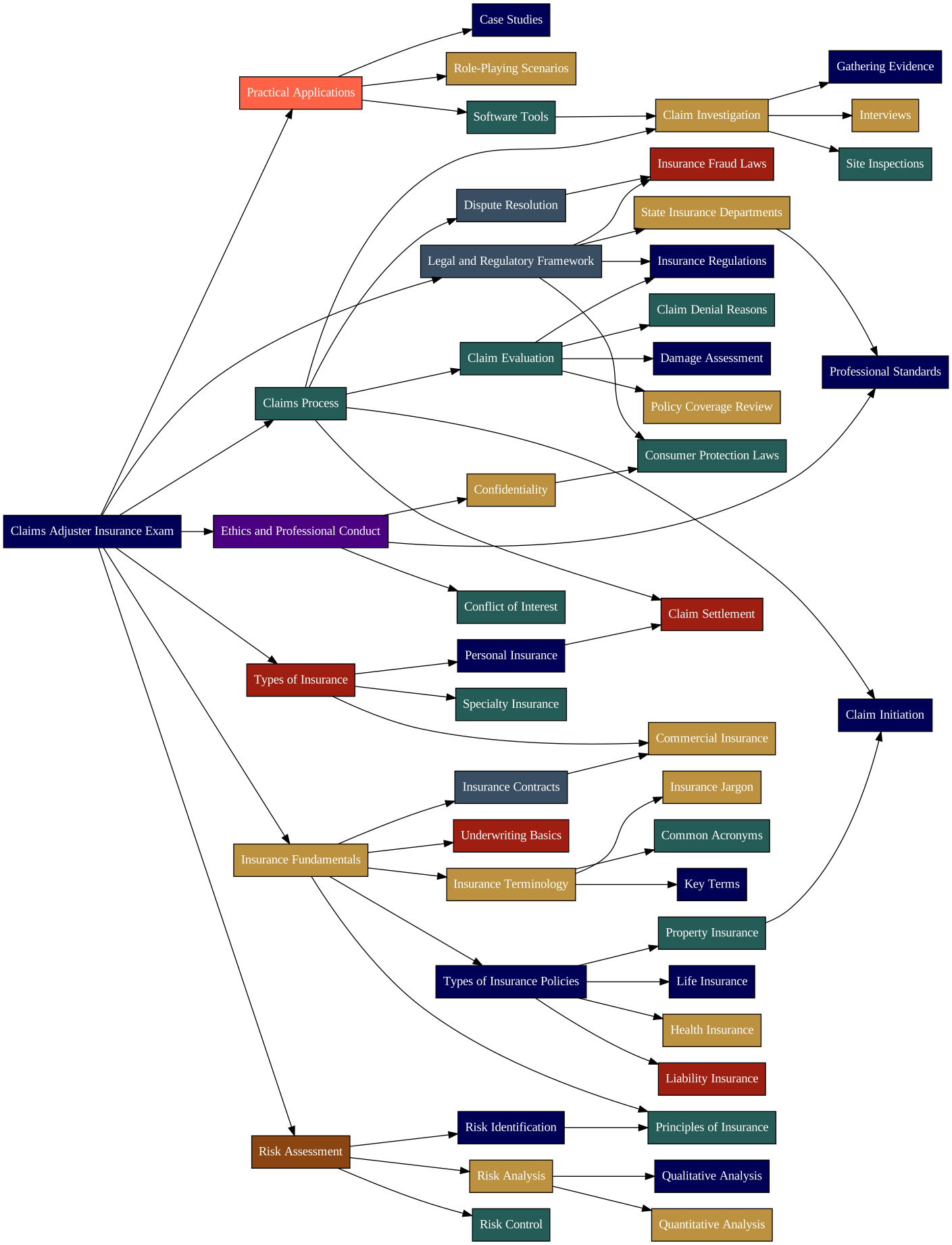
Quiz-summary
0 of 30 questions completed
Questions:
- 1
- 2
- 3
- 4
- 5
- 6
- 7
- 8
- 9
- 10
- 11
- 12
- 13
- 14
- 15
- 16
- 17
- 18
- 19
- 20
- 21
- 22
- 23
- 24
- 25
- 26
- 27
- 28
- 29
- 30
Information
Premium Practice Questions
You have already completed the quiz before. Hence you can not start it again.
Quiz is loading...
You must sign in or sign up to start the quiz.
You have to finish following quiz, to start this quiz:
Results
0 of 30 questions answered correctly
Your time:
Time has elapsed
You have reached 0 of 0 points, (0)
Categories
- Not categorized 0%
- 1
- 2
- 3
- 4
- 5
- 6
- 7
- 8
- 9
- 10
- 11
- 12
- 13
- 14
- 15
- 16
- 17
- 18
- 19
- 20
- 21
- 22
- 23
- 24
- 25
- 26
- 27
- 28
- 29
- 30
- Answered
- Review
-
Question 1 of 30
1. Question
A fire damaged Mrs. Devi’s home, and she filed a claim with her insurer. During the initial interview, Mrs. Devi stated that several valuable antiques were destroyed in the fire. However, the fire investigator’s report indicates minimal damage to the area where Mrs. Devi claims the antiques were located. Furthermore, a neighbor mentioned that Mrs. Devi had been trying to sell some antiques recently. As the claims adjuster, what is the MOST ETHICALLY sound and legally compliant course of action?
Correct
The scenario presents a situation where a claims adjuster must navigate conflicting information and potential fraud indicators. The core principle at play is the duty of utmost good faith (uberrimae fidei), which requires both the insurer and the insured to act honestly and disclose all relevant information. This duty is particularly important during the claims process. The adjuster must balance the claimant’s right to fair compensation with the insurer’s responsibility to protect against fraudulent claims. A thorough investigation, including detailed interviews, site inspections, and document verification, is crucial. Understanding the legal and regulatory framework surrounding claims handling, including consumer protection laws and insurance legislation, is essential for making informed decisions. Ethical considerations, such as transparency and impartiality, must guide the adjuster’s actions. The adjuster needs to assess the consistency of the claimant’s statements, the plausibility of the claim, and any potential motives for exaggeration or fabrication. Utilizing data analytics and fraud detection software can assist in identifying red flags and patterns indicative of fraudulent activity. The adjuster should also consider the impact of their decisions on the claimant’s well-being and the insurer’s reputation. Effective communication and negotiation skills are necessary to resolve the claim fairly and efficiently. Documenting all findings and actions taken is crucial for maintaining a clear audit trail and ensuring compliance with regulatory requirements. The adjuster’s ultimate goal is to reach a just and equitable resolution that upholds the principles of insurance and protects the interests of all parties involved. In this case, the most appropriate action is to continue the investigation while informing the claimant of the ongoing process, ensuring transparency and adhering to ethical standards.
Incorrect
The scenario presents a situation where a claims adjuster must navigate conflicting information and potential fraud indicators. The core principle at play is the duty of utmost good faith (uberrimae fidei), which requires both the insurer and the insured to act honestly and disclose all relevant information. This duty is particularly important during the claims process. The adjuster must balance the claimant’s right to fair compensation with the insurer’s responsibility to protect against fraudulent claims. A thorough investigation, including detailed interviews, site inspections, and document verification, is crucial. Understanding the legal and regulatory framework surrounding claims handling, including consumer protection laws and insurance legislation, is essential for making informed decisions. Ethical considerations, such as transparency and impartiality, must guide the adjuster’s actions. The adjuster needs to assess the consistency of the claimant’s statements, the plausibility of the claim, and any potential motives for exaggeration or fabrication. Utilizing data analytics and fraud detection software can assist in identifying red flags and patterns indicative of fraudulent activity. The adjuster should also consider the impact of their decisions on the claimant’s well-being and the insurer’s reputation. Effective communication and negotiation skills are necessary to resolve the claim fairly and efficiently. Documenting all findings and actions taken is crucial for maintaining a clear audit trail and ensuring compliance with regulatory requirements. The adjuster’s ultimate goal is to reach a just and equitable resolution that upholds the principles of insurance and protects the interests of all parties involved. In this case, the most appropriate action is to continue the investigation while informing the claimant of the ongoing process, ensuring transparency and adhering to ethical standards.
-
Question 2 of 30
2. Question
Aisha applies for a homeowner’s insurance policy. She neglects to mention a substantial water damage claim she filed three years prior with a different insurer, relating to a burst pipe that caused significant structural damage. Two months after her new policy commences, Aisha experiences another major water leak. The insurer discovers the prior claim during their investigation. Based on the principle of *uberrimae fidei* and common insurance practices, what is the insurer MOST likely to do?
Correct
The principle of *uberrimae fidei* (utmost good faith) necessitates complete honesty and disclosure from both parties in an insurance contract. While insurers are obligated to clearly explain policy terms and conditions, insureds must also truthfully represent their risk profile. Withholding information about prior claims history constitutes a breach of this principle. The insurer’s action depends on the materiality of the non-disclosure. Materiality refers to whether the undisclosed information would have influenced the insurer’s decision to accept the risk or the premium charged. If the prior claim was significant and relevant to the current risk (e.g., a history of water damage claims when applying for homeowner’s insurance), the insurer has grounds to void the policy *ab initio* (from the beginning), treating it as if it never existed. They would also be justified in denying the current claim. If the non-disclosure was deemed immaterial (e.g., a very minor claim from many years ago that wouldn’t have affected the underwriting decision), the insurer might still be obligated to honor the claim, but could potentially adjust the policy terms or premium going forward. Consumer protection legislation and regulatory bodies also play a role, ensuring that insurers act fairly and reasonably, and that consumers have avenues for dispute resolution. The *Insurance Contracts Act* (or equivalent legislation in the relevant jurisdiction) typically outlines the specific conditions under which an insurer can avoid a policy for non-disclosure.
Incorrect
The principle of *uberrimae fidei* (utmost good faith) necessitates complete honesty and disclosure from both parties in an insurance contract. While insurers are obligated to clearly explain policy terms and conditions, insureds must also truthfully represent their risk profile. Withholding information about prior claims history constitutes a breach of this principle. The insurer’s action depends on the materiality of the non-disclosure. Materiality refers to whether the undisclosed information would have influenced the insurer’s decision to accept the risk or the premium charged. If the prior claim was significant and relevant to the current risk (e.g., a history of water damage claims when applying for homeowner’s insurance), the insurer has grounds to void the policy *ab initio* (from the beginning), treating it as if it never existed. They would also be justified in denying the current claim. If the non-disclosure was deemed immaterial (e.g., a very minor claim from many years ago that wouldn’t have affected the underwriting decision), the insurer might still be obligated to honor the claim, but could potentially adjust the policy terms or premium going forward. Consumer protection legislation and regulatory bodies also play a role, ensuring that insurers act fairly and reasonably, and that consumers have avenues for dispute resolution. The *Insurance Contracts Act* (or equivalent legislation in the relevant jurisdiction) typically outlines the specific conditions under which an insurer can avoid a policy for non-disclosure.
-
Question 3 of 30
3. Question
Heavy rainfall causes significant flooding in a warehouse owned by “Oceanic Imports,” resulting in substantial damage to imported goods. An inspection reveals that the warehouse’s drainage system was poorly maintained, contributing to the severity of the flooding. Furthermore, the flood barriers erected around the warehouse were inadequate to handle the volume of water. Under the principle of proximate cause, which factor should the insurance company primarily consider when determining whether to accept or deny the claim?
Correct
The core principle at play here is *proximate cause*. Proximate cause refers to the primary cause that sets in motion a chain of events that ultimately leads to a loss. It’s not simply about what happened last, but what was the dominant, efficient cause. In this scenario, the initial heavy rainfall is the proximate cause. While the poorly maintained drainage contributed to the flooding, and the inadequate flood barriers exacerbated the damage, the rainfall was the event that initiated the entire sequence. The drainage and barriers are contributing factors, but not the *proximate* cause. Insurance policies typically respond based on the proximate cause, assuming that the cause is a covered peril. If “flood” (defined as water damage caused by heavy rainfall) is a covered peril, the claim should be accepted, even if other factors worsened the outcome. If the proximate cause was something else, like a burst pipe inside the warehouse (not related to the rainfall), the claim would be assessed based on whether that specific cause is covered. The fact that the drainage was substandard or the barriers were insufficient doesn’t automatically negate the claim if the *covered peril* (the rainfall) was the dominant cause. The principle of indemnity aims to restore the insured to their pre-loss condition, considering the policy’s terms and conditions. Denying the claim solely based on the contributing factors would be a misapplication of the proximate cause principle.
Incorrect
The core principle at play here is *proximate cause*. Proximate cause refers to the primary cause that sets in motion a chain of events that ultimately leads to a loss. It’s not simply about what happened last, but what was the dominant, efficient cause. In this scenario, the initial heavy rainfall is the proximate cause. While the poorly maintained drainage contributed to the flooding, and the inadequate flood barriers exacerbated the damage, the rainfall was the event that initiated the entire sequence. The drainage and barriers are contributing factors, but not the *proximate* cause. Insurance policies typically respond based on the proximate cause, assuming that the cause is a covered peril. If “flood” (defined as water damage caused by heavy rainfall) is a covered peril, the claim should be accepted, even if other factors worsened the outcome. If the proximate cause was something else, like a burst pipe inside the warehouse (not related to the rainfall), the claim would be assessed based on whether that specific cause is covered. The fact that the drainage was substandard or the barriers were insufficient doesn’t automatically negate the claim if the *covered peril* (the rainfall) was the dominant cause. The principle of indemnity aims to restore the insured to their pre-loss condition, considering the policy’s terms and conditions. Denying the claim solely based on the contributing factors would be a misapplication of the proximate cause principle.
-
Question 4 of 30
4. Question
Aisha applies for an auto insurance policy. In the application, she is asked about her driving history. She truthfully states that she has not had any accidents in the past five years. Unbeknownst to the insurer, Aisha had three minor accidents in the three years before that, none resulting in serious injury or significant property damage, but each involving a claim payment. If Aisha subsequently files a claim for a new accident, what principle of insurance might the insurer invoke to potentially deny the claim or void the policy, and why?
Correct
The principle of *uberrimae fidei*, or utmost good faith, is a cornerstone of insurance contracts. It dictates that both parties, the insurer and the insured, must act honestly and disclose all material facts relevant to the risk being insured. A material fact is any information that could influence the insurer’s decision to accept the risk or the terms of the policy. This duty extends to the period before the contract is finalized (pre-contractual) and continues throughout the duration of the policy. Failure to disclose material facts, whether intentional (fraudulent misrepresentation) or unintentional (innocent misrepresentation), can render the policy voidable at the insurer’s option. The insurer can then deny a claim or even rescind the policy entirely. The key consideration is whether the undisclosed information would have altered the insurer’s assessment of the risk. The concept of “reasonable person” is also relevant: would a reasonable person consider the information important in deciding whether to insure the risk and on what terms? This principle ensures fairness and transparency in the insurance relationship. In the scenario, the failure to disclose the prior accidents constitutes a breach of *uberrimae fidei*, potentially allowing the insurer to void the policy.
Incorrect
The principle of *uberrimae fidei*, or utmost good faith, is a cornerstone of insurance contracts. It dictates that both parties, the insurer and the insured, must act honestly and disclose all material facts relevant to the risk being insured. A material fact is any information that could influence the insurer’s decision to accept the risk or the terms of the policy. This duty extends to the period before the contract is finalized (pre-contractual) and continues throughout the duration of the policy. Failure to disclose material facts, whether intentional (fraudulent misrepresentation) or unintentional (innocent misrepresentation), can render the policy voidable at the insurer’s option. The insurer can then deny a claim or even rescind the policy entirely. The key consideration is whether the undisclosed information would have altered the insurer’s assessment of the risk. The concept of “reasonable person” is also relevant: would a reasonable person consider the information important in deciding whether to insure the risk and on what terms? This principle ensures fairness and transparency in the insurance relationship. In the scenario, the failure to disclose the prior accidents constitutes a breach of *uberrimae fidei*, potentially allowing the insurer to void the policy.
-
Question 5 of 30
5. Question
Aisha purchased a comprehensive health insurance policy. During the application process, she did not disclose a recurring back problem she had been managing with physiotherapy for the past year. Six months after the policy’s commencement, Aisha suffered a severe back injury while lifting a heavy object at work, requiring surgery and extensive rehabilitation. She submitted a claim to her insurer. Assuming the insurer discovers the pre-existing back problem during claims investigation, what is the insurer MOST likely to do, based on fundamental insurance principles and claims management practices?
Correct
The core principle revolves around *utmost good faith* (uberrimae fidei), requiring both parties—insurer and insured—to act honestly and disclose all relevant information. This principle directly impacts the claims process, especially concerning pre-existing conditions. Non-disclosure of a pre-existing condition constitutes a breach of this principle, potentially invalidating the insurance contract or leading to a denial of the claim. The insurer’s decision to deny the claim would hinge on whether the non-disclosure was material; that is, whether knowing about the condition would have affected the insurer’s decision to issue the policy or the terms upon which it was issued. The *duty of disclosure* falls squarely on the insured. While insurers have a responsibility to ask clear and unambiguous questions, the onus is on the insured to provide truthful and complete answers. Regulatory frameworks, such as the Insurance Contracts Act (ICA) in some jurisdictions, further define the obligations of both parties and provide avenues for redress in cases of dispute. The concept of *causation* is also relevant; the insurer must demonstrate a clear link between the non-disclosed pre-existing condition and the claimed loss. Finally, the principle of *indemnity* aims to restore the insured to their pre-loss financial position. However, indemnity cannot be achieved if the policy is voided due to a breach of utmost good faith. Therefore, the insurer’s likely action, based on the scenario and general insurance principles, is to deny the claim, contingent on the materiality of the non-disclosure.
Incorrect
The core principle revolves around *utmost good faith* (uberrimae fidei), requiring both parties—insurer and insured—to act honestly and disclose all relevant information. This principle directly impacts the claims process, especially concerning pre-existing conditions. Non-disclosure of a pre-existing condition constitutes a breach of this principle, potentially invalidating the insurance contract or leading to a denial of the claim. The insurer’s decision to deny the claim would hinge on whether the non-disclosure was material; that is, whether knowing about the condition would have affected the insurer’s decision to issue the policy or the terms upon which it was issued. The *duty of disclosure* falls squarely on the insured. While insurers have a responsibility to ask clear and unambiguous questions, the onus is on the insured to provide truthful and complete answers. Regulatory frameworks, such as the Insurance Contracts Act (ICA) in some jurisdictions, further define the obligations of both parties and provide avenues for redress in cases of dispute. The concept of *causation* is also relevant; the insurer must demonstrate a clear link between the non-disclosed pre-existing condition and the claimed loss. Finally, the principle of *indemnity* aims to restore the insured to their pre-loss financial position. However, indemnity cannot be achieved if the policy is voided due to a breach of utmost good faith. Therefore, the insurer’s likely action, based on the scenario and general insurance principles, is to deny the claim, contingent on the materiality of the non-disclosure.
-
Question 6 of 30
6. Question
Aaliyah applies for a comprehensive health insurance policy. She has a history of chronic back pain, for which she occasionally seeks treatment. The application form asks general questions about her health but does not specifically inquire about pre-existing conditions. Aaliyah does not disclose her back pain. Six months later, she files a claim for extensive physiotherapy and pain management related to her back. The insurer discovers her pre-existing condition. Based on the principle of utmost good faith and standard insurance practices, what is the *most likely* outcome?
Correct
The core principle at play is *utmost good faith* (uberrimae fidei). This principle dictates that both the insurer and the insured have a duty to disclose all material facts relevant to the insurance contract. A material fact is one that would influence the insurer’s decision to accept the risk or the terms upon which it would accept it. Failure to disclose a material fact, even unintentionally, can render the policy voidable at the insurer’s option. In this scenario, Aaliyah’s pre-existing back condition is undoubtedly a material fact for a health insurance policy. The question turns on whether Aaliyah was asked a specific question about pre-existing conditions. If the application form or process included a clear and unambiguous question about prior medical history, including back problems, Aaliyah’s failure to disclose is a breach of her duty of utmost good faith. This gives the insurer the right to void the policy. However, if the application process did not specifically inquire about pre-existing conditions, the situation is more nuanced. While the duty of utmost good faith still applies, it’s harder for the insurer to argue a breach if they didn’t provide Aaliyah with a clear opportunity to disclose the information. The insurer has a responsibility to ask pertinent questions. Even if the policy is voided, the insurer may still have to return the premiums paid, depending on the specific legislation and policy terms. Consumer protection laws often require insurers to act fairly, even when a breach of utmost good faith has occurred. The outcome depends on the specific wording of the insurance contract, the relevant insurance legislation in the jurisdiction, and case law precedents.
Incorrect
The core principle at play is *utmost good faith* (uberrimae fidei). This principle dictates that both the insurer and the insured have a duty to disclose all material facts relevant to the insurance contract. A material fact is one that would influence the insurer’s decision to accept the risk or the terms upon which it would accept it. Failure to disclose a material fact, even unintentionally, can render the policy voidable at the insurer’s option. In this scenario, Aaliyah’s pre-existing back condition is undoubtedly a material fact for a health insurance policy. The question turns on whether Aaliyah was asked a specific question about pre-existing conditions. If the application form or process included a clear and unambiguous question about prior medical history, including back problems, Aaliyah’s failure to disclose is a breach of her duty of utmost good faith. This gives the insurer the right to void the policy. However, if the application process did not specifically inquire about pre-existing conditions, the situation is more nuanced. While the duty of utmost good faith still applies, it’s harder for the insurer to argue a breach if they didn’t provide Aaliyah with a clear opportunity to disclose the information. The insurer has a responsibility to ask pertinent questions. Even if the policy is voided, the insurer may still have to return the premiums paid, depending on the specific legislation and policy terms. Consumer protection laws often require insurers to act fairly, even when a breach of utmost good faith has occurred. The outcome depends on the specific wording of the insurance contract, the relevant insurance legislation in the jurisdiction, and case law precedents.
-
Question 7 of 30
7. Question
Kwame rents an apartment in Dunedin. He wants to take out an insurance policy. Which of the following can Kwame MOST legitimately insure under his own name, demonstrating a valid insurable interest?
Correct
The key principle at play here is *insurable interest*. Insurable interest requires that the policyholder must have a legitimate financial or other demonstrable interest in the insured property or subject matter. This prevents wagering or gambling on losses and ensures that the policyholder suffers a genuine loss if the insured event occurs. In this scenario, Kwame, as a tenant, has an insurable interest in his personal belongings within the apartment. He would suffer a financial loss if those belongings were damaged or destroyed. However, he does *not* have an insurable interest in the apartment building itself, as he does not own it and would not suffer a direct financial loss if the building were damaged (beyond the potential loss of his tenancy, which is a separate issue). The landlord, as the owner of the building, *does* have an insurable interest in the building. Therefore, Kwame can only insure his personal belongings. Attempting to insure the building itself would likely be rejected by the insurer because he lacks the required insurable interest. The concept of *indemnity* is also relevant, as any insurance policy Kwame takes out on his belongings would aim to indemnify him for the loss of those belongings, restoring him to his pre-loss financial position.
Incorrect
The key principle at play here is *insurable interest*. Insurable interest requires that the policyholder must have a legitimate financial or other demonstrable interest in the insured property or subject matter. This prevents wagering or gambling on losses and ensures that the policyholder suffers a genuine loss if the insured event occurs. In this scenario, Kwame, as a tenant, has an insurable interest in his personal belongings within the apartment. He would suffer a financial loss if those belongings were damaged or destroyed. However, he does *not* have an insurable interest in the apartment building itself, as he does not own it and would not suffer a direct financial loss if the building were damaged (beyond the potential loss of his tenancy, which is a separate issue). The landlord, as the owner of the building, *does* have an insurable interest in the building. Therefore, Kwame can only insure his personal belongings. Attempting to insure the building itself would likely be rejected by the insurer because he lacks the required insurable interest. The concept of *indemnity* is also relevant, as any insurance policy Kwame takes out on his belongings would aim to indemnify him for the loss of those belongings, restoring him to his pre-loss financial position.
-
Question 8 of 30
8. Question
Jian takes out a comprehensive disability insurance policy. He suffers a stroke six months later, leaving him unable to work. During the claims process, the insurer discovers that Jian had a pre-existing heart condition that he did not disclose on his application. The heart condition, while not the direct cause of the stroke, is determined to be a factor that would have affected the insurer’s decision to issue the policy. Based on insurance principles and practices, what is the most likely outcome?
Correct
The core principle at play here is *utmost good faith* (uberrimae fidei), a cornerstone of insurance contracts. It dictates that both parties – the insurer and the insured – must act honestly and disclose all material facts relevant to the insurance. Material facts are those that would influence the insurer’s decision to accept the risk or the premium charged. In this scenario, Jian’s failure to disclose his prior heart condition constitutes a breach of this duty. Even though the stroke wasn’t directly caused by the pre-existing heart condition, the heart condition itself is a material fact. Had the insurer known about it, they might have assessed Jian’s risk profile differently, potentially leading to a higher premium or even a refusal to provide coverage. The insurer is within their rights to deny the claim due to this non-disclosure. The concept of *proximate cause* is also relevant, though less directly. Proximate cause refers to the dominant cause that sets in motion the chain of events leading to the loss. While the stroke is the immediate cause of Jian’s disability, the undisclosed heart condition significantly influenced the insurer’s risk assessment. The *Insurance Contracts Act* and relevant consumer protection legislation also come into play. These laws aim to protect consumers, but they also uphold the insurer’s right to rely on the information provided by the insured. While insurers have a duty of good faith to claimants, they are not obligated to pay claims when the insured has violated their duty of disclosure. The insurer’s actions must still be reasonable and in accordance with the law. They should investigate the claim thoroughly and provide Jian with a clear explanation for the denial.
Incorrect
The core principle at play here is *utmost good faith* (uberrimae fidei), a cornerstone of insurance contracts. It dictates that both parties – the insurer and the insured – must act honestly and disclose all material facts relevant to the insurance. Material facts are those that would influence the insurer’s decision to accept the risk or the premium charged. In this scenario, Jian’s failure to disclose his prior heart condition constitutes a breach of this duty. Even though the stroke wasn’t directly caused by the pre-existing heart condition, the heart condition itself is a material fact. Had the insurer known about it, they might have assessed Jian’s risk profile differently, potentially leading to a higher premium or even a refusal to provide coverage. The insurer is within their rights to deny the claim due to this non-disclosure. The concept of *proximate cause* is also relevant, though less directly. Proximate cause refers to the dominant cause that sets in motion the chain of events leading to the loss. While the stroke is the immediate cause of Jian’s disability, the undisclosed heart condition significantly influenced the insurer’s risk assessment. The *Insurance Contracts Act* and relevant consumer protection legislation also come into play. These laws aim to protect consumers, but they also uphold the insurer’s right to rely on the information provided by the insured. While insurers have a duty of good faith to claimants, they are not obligated to pay claims when the insured has violated their duty of disclosure. The insurer’s actions must still be reasonable and in accordance with the law. They should investigate the claim thoroughly and provide Jian with a clear explanation for the denial.
-
Question 9 of 30
9. Question
Anya, a claims adjuster, is managing a complex liability claim. Her insured’s dog bit a pedestrian, causing injury. The pedestrian also had a pre-existing health condition that was aggravated by the dog bite. Furthermore, the pedestrian delayed seeking medical attention for several days after the incident. Which principle is MOST critical for Anya to consider when determining the extent of her insured’s liability?
Correct
The scenario describes a situation where a claims adjuster, Anya, is handling a complex liability claim involving potential negligence. The core issue revolves around the principle of *proximate cause*, which dictates that the injury or damage must be a direct and foreseeable result of the negligent act. Several factors complicate the determination of proximate cause here. Firstly, the pre-existing health condition of the injured party, which could have exacerbated the injuries sustained in the accident. Secondly, the potential contribution of the injured party’s own actions (or inactions) to the severity of the injuries. Finally, the time elapsed between the incident and the manifestation of the full extent of the injuries introduces uncertainty. In this context, a claims adjuster must meticulously investigate the incident, gathering all relevant evidence, including medical records, witness statements, and expert opinions. The adjuster must then apply the legal principles of negligence and proximate cause to determine the extent to which the insured party is liable for the injuries. The adjuster must also consider any applicable legal defenses, such as contributory negligence or assumption of risk. The ultimate goal is to reach a fair and equitable settlement that takes into account all of the relevant factors and protects the interests of both the insured party and the injured party. This requires a thorough understanding of insurance law, claims handling procedures, and ethical considerations.
Incorrect
The scenario describes a situation where a claims adjuster, Anya, is handling a complex liability claim involving potential negligence. The core issue revolves around the principle of *proximate cause*, which dictates that the injury or damage must be a direct and foreseeable result of the negligent act. Several factors complicate the determination of proximate cause here. Firstly, the pre-existing health condition of the injured party, which could have exacerbated the injuries sustained in the accident. Secondly, the potential contribution of the injured party’s own actions (or inactions) to the severity of the injuries. Finally, the time elapsed between the incident and the manifestation of the full extent of the injuries introduces uncertainty. In this context, a claims adjuster must meticulously investigate the incident, gathering all relevant evidence, including medical records, witness statements, and expert opinions. The adjuster must then apply the legal principles of negligence and proximate cause to determine the extent to which the insured party is liable for the injuries. The adjuster must also consider any applicable legal defenses, such as contributory negligence or assumption of risk. The ultimate goal is to reach a fair and equitable settlement that takes into account all of the relevant factors and protects the interests of both the insured party and the injured party. This requires a thorough understanding of insurance law, claims handling procedures, and ethical considerations.
-
Question 10 of 30
10. Question
A major hailstorm has struck Brisbane, causing widespread property damage. As a claims adjuster handling home insurance claims, you encounter a claim from Ms. Anya Sharma. Anya’s roof sustained significant damage, and she has submitted quotes from two contractors: Contractor A, who is offering the repair for $15,000, and Contractor B, who is offering a repair for $10,000. Contractor B is known in the industry for using lower-quality materials, and you suspect their repair might not meet building code standards. Anya is insistent on using Contractor B because of the lower price, but you are concerned about the long-term quality and compliance of the repair. Furthermore, you have received an anonymous tip suggesting that Anya and Contractor B might have a pre-existing arrangement to inflate the claim. Considering your responsibilities for good faith claims handling, regulatory compliance, and ethical conduct, what is the MOST appropriate course of action?
Correct
The scenario describes a situation where a claims adjuster is faced with conflicting information and potential ethical dilemmas. To determine the most appropriate action, we must consider the principles of good faith claims handling, regulatory compliance, and ethical conduct. Good faith claims handling requires the adjuster to act honestly and fairly, with due regard for the claimant’s interests. Regulatory compliance involves adhering to all applicable insurance laws and regulations, including those related to disclosure and fair claims practices. Ethical conduct involves making decisions that are consistent with professional standards and values, such as integrity, transparency, and impartiality. In this specific scenario, the adjuster has a duty to investigate the claim thoroughly, gather all relevant information, and make a fair and objective assessment of the damages. The adjuster must also be transparent with the claimant, explaining the basis for the claim decision and providing all necessary documentation. If the adjuster suspects fraud or misrepresentation, they have a duty to report it to the appropriate authorities, but they must do so based on credible evidence and without malice. Ignoring the claimant’s concerns or delaying the investigation would be a violation of good faith claims handling. Pressuring the claimant to accept a low settlement offer would be unethical and potentially illegal. Therefore, the most appropriate action for the claims adjuster is to conduct a thorough investigation, gather all relevant information, and make a fair and objective assessment of the damages, while remaining transparent with the claimant and adhering to all applicable laws and regulations.
Incorrect
The scenario describes a situation where a claims adjuster is faced with conflicting information and potential ethical dilemmas. To determine the most appropriate action, we must consider the principles of good faith claims handling, regulatory compliance, and ethical conduct. Good faith claims handling requires the adjuster to act honestly and fairly, with due regard for the claimant’s interests. Regulatory compliance involves adhering to all applicable insurance laws and regulations, including those related to disclosure and fair claims practices. Ethical conduct involves making decisions that are consistent with professional standards and values, such as integrity, transparency, and impartiality. In this specific scenario, the adjuster has a duty to investigate the claim thoroughly, gather all relevant information, and make a fair and objective assessment of the damages. The adjuster must also be transparent with the claimant, explaining the basis for the claim decision and providing all necessary documentation. If the adjuster suspects fraud or misrepresentation, they have a duty to report it to the appropriate authorities, but they must do so based on credible evidence and without malice. Ignoring the claimant’s concerns or delaying the investigation would be a violation of good faith claims handling. Pressuring the claimant to accept a low settlement offer would be unethical and potentially illegal. Therefore, the most appropriate action for the claims adjuster is to conduct a thorough investigation, gather all relevant information, and make a fair and objective assessment of the damages, while remaining transparent with the claimant and adhering to all applicable laws and regulations.
-
Question 11 of 30
11. Question
Jamila applied for a comprehensive health insurance policy. During the application process, she completely forgot about a pre-existing heart condition she had been diagnosed with five years prior, which was now stable and managed with medication. She answered all questions honestly to the best of her recollection. Six months after the policy was issued, Jamila experienced a heart-related emergency and filed a claim. Upon reviewing her medical records, the insurance company discovered the pre-existing condition, which she had not disclosed. Based on the principle of *uberrimae fidei* and relevant legislation, what is the most likely outcome?
Correct
The principle of *uberrimae fidei*, or utmost good faith, is a cornerstone of insurance contracts. It mandates that both parties, the insurer and the insured, act honestly and disclose all material facts relevant to the risk being insured. A material fact is any information that could influence the insurer’s decision to accept the risk or the terms on which it is accepted (e.g., premium). Failure to disclose a material fact, whether intentional (fraudulent misrepresentation) or unintentional (non-disclosure), can render the insurance contract voidable by the insurer. This means the insurer has the option to cancel the policy and deny any claims. In this scenario, Jamila’s pre-existing heart condition is undoubtedly a material fact. It significantly increases the risk of a health-related claim. Even if Jamila genuinely forgot about it, the non-disclosure constitutes a breach of *uberrimae fidei*. The insurer is entitled to void the policy because they were not given the opportunity to accurately assess the risk they were undertaking. Consumer Insurance (Disclosure and Representations) Act 2012 is relevant here, which imposes a duty on consumers to take reasonable care not to make a misrepresentation. While the Act aims to protect consumers, a failure to disclose a known material fact, even if forgotten, can still be a breach. The insurer’s action is further supported by the principle of indemnity, which aims to restore the insured to their pre-loss condition. By not knowing about the heart condition, the insurer could not properly price the risk and ensure indemnity would be appropriately managed.
Incorrect
The principle of *uberrimae fidei*, or utmost good faith, is a cornerstone of insurance contracts. It mandates that both parties, the insurer and the insured, act honestly and disclose all material facts relevant to the risk being insured. A material fact is any information that could influence the insurer’s decision to accept the risk or the terms on which it is accepted (e.g., premium). Failure to disclose a material fact, whether intentional (fraudulent misrepresentation) or unintentional (non-disclosure), can render the insurance contract voidable by the insurer. This means the insurer has the option to cancel the policy and deny any claims. In this scenario, Jamila’s pre-existing heart condition is undoubtedly a material fact. It significantly increases the risk of a health-related claim. Even if Jamila genuinely forgot about it, the non-disclosure constitutes a breach of *uberrimae fidei*. The insurer is entitled to void the policy because they were not given the opportunity to accurately assess the risk they were undertaking. Consumer Insurance (Disclosure and Representations) Act 2012 is relevant here, which imposes a duty on consumers to take reasonable care not to make a misrepresentation. While the Act aims to protect consumers, a failure to disclose a known material fact, even if forgotten, can still be a breach. The insurer’s action is further supported by the principle of indemnity, which aims to restore the insured to their pre-loss condition. By not knowing about the heart condition, the insurer could not properly price the risk and ensure indemnity would be appropriately managed.
-
Question 12 of 30
12. Question
An insurance company is investigating a property damage claim where it suspects the damage may have been caused by faulty workmanship, which is excluded under the policy. What action should the insurer take to protect its rights while investigating the claim?
Correct
A reservation of rights letter is a crucial communication tool used by insurance companies when investigating a claim where there is a potential coverage issue. It informs the insured that the insurer is investigating the claim but reserves its right to deny coverage at a later date if the investigation reveals that the loss is not covered under the policy. The purpose of a reservation of rights letter is to protect the insurer’s interests. By issuing the letter, the insurer avoids being estopped (prevented) from denying coverage later on, even if it has already begun investigating the claim. This is because, without a reservation of rights, the insured might argue that the insurer’s actions in investigating the claim imply an acceptance of coverage. Common situations where a reservation of rights letter is issued include instances where there is a question of whether the loss falls within the policy’s coverage provisions, whether the insured has complied with policy conditions, or whether there is a potential exclusion that applies. The letter should clearly state the specific coverage concerns and the reasons why the insurer is reserving its rights. It should also advise the insured to take steps to protect their own interests, such as seeking independent legal advice.
Incorrect
A reservation of rights letter is a crucial communication tool used by insurance companies when investigating a claim where there is a potential coverage issue. It informs the insured that the insurer is investigating the claim but reserves its right to deny coverage at a later date if the investigation reveals that the loss is not covered under the policy. The purpose of a reservation of rights letter is to protect the insurer’s interests. By issuing the letter, the insurer avoids being estopped (prevented) from denying coverage later on, even if it has already begun investigating the claim. This is because, without a reservation of rights, the insured might argue that the insurer’s actions in investigating the claim imply an acceptance of coverage. Common situations where a reservation of rights letter is issued include instances where there is a question of whether the loss falls within the policy’s coverage provisions, whether the insured has complied with policy conditions, or whether there is a potential exclusion that applies. The letter should clearly state the specific coverage concerns and the reasons why the insurer is reserving its rights. It should also advise the insured to take steps to protect their own interests, such as seeking independent legal advice.
-
Question 13 of 30
13. Question
Chen, a 45-year-old construction worker, recently injured his back at work and has lodged a claim under his income protection insurance policy. During the claims assessment, the insurer discovers that Chen had a history of back problems, including several physiotherapy sessions and a prior injury, which he did not disclose when applying for the policy two years ago. Chen claims he genuinely forgot about these past issues. Based on the principle of *uberrimae fidei*, what is the MOST likely outcome regarding Chen’s claim and insurance policy?
Correct
The core principle at play here is *uberrimae fidei*, often referred to as utmost good faith. This principle mandates that both parties to an insurance contract—the insurer and the insured—must act honestly and disclose all material facts relevant to the insurance policy. A material fact is any piece of information that could influence the insurer’s decision to accept the risk or the terms on which it accepts it. In this scenario, Chen failed to disclose his prior history of back problems when applying for the income protection insurance. This is a material fact because a history of back problems significantly increases the likelihood of a claim related to back issues. The insurer, if aware of this history, might have declined to offer the policy, offered it at a higher premium, or included specific exclusions related to Chen’s back. Because Chen breached the duty of *uberrimae fidei* by failing to disclose a material fact, the insurer is entitled to avoid (cancel) the policy. The insurer’s action is not based on the current claim itself, but on the misrepresentation made at the time of application. Even if Chen’s current back injury was completely unrelated to his pre-existing condition, the insurer could still void the policy due to the breach of utmost good faith. The insurer’s ability to void the policy stems from the fundamental requirement of honesty and full disclosure in insurance contracts. The fact that Chen genuinely forgot is irrelevant; the duty is absolute.
Incorrect
The core principle at play here is *uberrimae fidei*, often referred to as utmost good faith. This principle mandates that both parties to an insurance contract—the insurer and the insured—must act honestly and disclose all material facts relevant to the insurance policy. A material fact is any piece of information that could influence the insurer’s decision to accept the risk or the terms on which it accepts it. In this scenario, Chen failed to disclose his prior history of back problems when applying for the income protection insurance. This is a material fact because a history of back problems significantly increases the likelihood of a claim related to back issues. The insurer, if aware of this history, might have declined to offer the policy, offered it at a higher premium, or included specific exclusions related to Chen’s back. Because Chen breached the duty of *uberrimae fidei* by failing to disclose a material fact, the insurer is entitled to avoid (cancel) the policy. The insurer’s action is not based on the current claim itself, but on the misrepresentation made at the time of application. Even if Chen’s current back injury was completely unrelated to his pre-existing condition, the insurer could still void the policy due to the breach of utmost good faith. The insurer’s ability to void the policy stems from the fundamental requirement of honesty and full disclosure in insurance contracts. The fact that Chen genuinely forgot is irrelevant; the duty is absolute.
-
Question 14 of 30
14. Question
A homeowner, Javier, hires a local contractor, Anya, to repair a section of their roof. While Anya is working, a weakened stair on the scaffolding collapses, causing Anya to fall and sustain serious injuries. Javier was aware that the stair was unstable but did not warn Anya. Anya is now seeking compensation for her medical expenses and lost income. Under a standard homeowner’s insurance policy, what is the MOST likely outcome regarding Javier’s liability coverage?
Correct
The scenario presents a complex situation involving potential liability arising from a contractor’s actions on a homeowner’s property. The homeowner’s insurance policy will respond if the homeowner is found legally liable for the contractor’s injuries. The key factor is establishing negligence on the part of the homeowner. If the homeowner knew about a hazardous condition (e.g., a weakened stair) and failed to warn the contractor, they could be deemed negligent. The policy’s liability coverage would then kick in, subject to the policy’s terms, conditions, and exclusions. Standard homeowner’s policies typically include coverage for bodily injury and property damage for which the insured is legally responsible. The policy’s deductible would apply to the liability claim, and the coverage is limited to the policy’s liability limit. The investigation needs to determine if the homeowner had a duty of care, breached that duty, and if that breach directly caused the contractor’s injuries. Factors such as the contractor’s experience, the visibility of the hazard, and any warnings given are crucial. Even if the contractor was partially at fault, the homeowner could still be held liable under comparative negligence principles. It’s also important to consider any contractual agreements between the homeowner and the contractor that might shift liability. The absence of a formal contract does not eliminate the homeowner’s potential liability. The claims adjuster must thoroughly investigate the incident, gather evidence, and assess the legal liability of the homeowner before making a coverage determination.
Incorrect
The scenario presents a complex situation involving potential liability arising from a contractor’s actions on a homeowner’s property. The homeowner’s insurance policy will respond if the homeowner is found legally liable for the contractor’s injuries. The key factor is establishing negligence on the part of the homeowner. If the homeowner knew about a hazardous condition (e.g., a weakened stair) and failed to warn the contractor, they could be deemed negligent. The policy’s liability coverage would then kick in, subject to the policy’s terms, conditions, and exclusions. Standard homeowner’s policies typically include coverage for bodily injury and property damage for which the insured is legally responsible. The policy’s deductible would apply to the liability claim, and the coverage is limited to the policy’s liability limit. The investigation needs to determine if the homeowner had a duty of care, breached that duty, and if that breach directly caused the contractor’s injuries. Factors such as the contractor’s experience, the visibility of the hazard, and any warnings given are crucial. Even if the contractor was partially at fault, the homeowner could still be held liable under comparative negligence principles. It’s also important to consider any contractual agreements between the homeowner and the contractor that might shift liability. The absence of a formal contract does not eliminate the homeowner’s potential liability. The claims adjuster must thoroughly investigate the incident, gather evidence, and assess the legal liability of the homeowner before making a coverage determination.
-
Question 15 of 30
15. Question
An insurance policy contains a clause that is open to multiple interpretations. In the event of a dispute over the meaning of the clause, which legal principle will a court most likely apply when interpreting the policy language?
Correct
This question addresses the importance of clear and unambiguous policy language in insurance contracts. Insurance policies are contracts of adhesion, meaning they are drafted by one party (the insurer) and offered to the other party (the insured) on a take-it-or-leave-it basis. Due to this imbalance of power, courts often interpret ambiguous policy language in favor of the insured. This is known as the principle of *contra proferentem*. If a policy provision is unclear or susceptible to multiple interpretations, the court will adopt the interpretation that is most favorable to the insured’s coverage expectations. This principle encourages insurers to draft their policies with precision and clarity to avoid disputes and ensure that insureds understand the scope of their coverage.
Incorrect
This question addresses the importance of clear and unambiguous policy language in insurance contracts. Insurance policies are contracts of adhesion, meaning they are drafted by one party (the insurer) and offered to the other party (the insured) on a take-it-or-leave-it basis. Due to this imbalance of power, courts often interpret ambiguous policy language in favor of the insured. This is known as the principle of *contra proferentem*. If a policy provision is unclear or susceptible to multiple interpretations, the court will adopt the interpretation that is most favorable to the insured’s coverage expectations. This principle encourages insurers to draft their policies with precision and clarity to avoid disputes and ensure that insureds understand the scope of their coverage.
-
Question 16 of 30
16. Question
A major hailstorm hits Adelaide, causing widespread damage to vehicles. AutoSure Insurance receives an influx of claims. One claimant, Elias, submits a claim for damage to his vintage car, providing photographic evidence and repair estimates from reputable mechanics. AutoSure’s adjuster, pressured by the high volume of claims and internal cost-cutting directives, denies Elias’s claim, citing a vaguely worded policy exclusion regarding “pre-existing conditions,” despite no evidence suggesting the damage was pre-existing. Elias believes the adjuster did not properly investigate the claim. Which principle of insurance has AutoSure potentially violated in its handling of Elias’s claim?
Correct
In a claims management context, “good faith” signifies a commitment to fairness, honesty, and transparency in all dealings with the insured. This principle mandates that the insurer act in the best interests of the insured, conducting thorough and impartial investigations, providing clear and honest explanations of policy terms and coverage, and making reasonable and timely decisions regarding claims. Acting in good faith also entails refraining from actions that could unfairly disadvantage the insured, such as unreasonably delaying claim processing, denying valid claims without proper justification, or misrepresenting policy provisions. The concept of “utmost good faith,” or *uberrimae fidei*, places an even higher burden on both parties, particularly the insurer, requiring full disclosure of all material facts relevant to the insurance contract. This is especially crucial during the underwriting process but extends throughout the claims handling process as well. A breach of good faith can expose the insurer to legal repercussions, including bad faith claims and punitive damages. The insurer’s actions are assessed based on whether a reasonable insurer, acting fairly and objectively, would have handled the claim in the same manner. This involves considering all available evidence, applying policy terms correctly, and adhering to industry best practices and regulatory guidelines.
Incorrect
In a claims management context, “good faith” signifies a commitment to fairness, honesty, and transparency in all dealings with the insured. This principle mandates that the insurer act in the best interests of the insured, conducting thorough and impartial investigations, providing clear and honest explanations of policy terms and coverage, and making reasonable and timely decisions regarding claims. Acting in good faith also entails refraining from actions that could unfairly disadvantage the insured, such as unreasonably delaying claim processing, denying valid claims without proper justification, or misrepresenting policy provisions. The concept of “utmost good faith,” or *uberrimae fidei*, places an even higher burden on both parties, particularly the insurer, requiring full disclosure of all material facts relevant to the insurance contract. This is especially crucial during the underwriting process but extends throughout the claims handling process as well. A breach of good faith can expose the insurer to legal repercussions, including bad faith claims and punitive damages. The insurer’s actions are assessed based on whether a reasonable insurer, acting fairly and objectively, would have handled the claim in the same manner. This involves considering all available evidence, applying policy terms correctly, and adhering to industry best practices and regulatory guidelines.
-
Question 17 of 30
17. Question
A claims adjuster, Anya Petrova, is assigned a property damage claim resulting from a burst water pipe in a residential building. During the initial investigation, Anya discovers that the claimant, Dimitri Volkov, is her second cousin, a fact that was previously unknown to her employer, “SecureSure Insurance.” Anya believes she can handle the claim impartially despite the familial connection. According to the ethical guidelines for claims adjusters and principles of conflict of interest management, what is Anya’s MOST appropriate course of action?
Correct
The scenario presents a complex situation involving a potential conflict of interest for a claims adjuster. Ethical standards in claims handling demand transparency and the avoidance of situations where personal interests could compromise impartial decision-making. Disclosure is paramount. The adjuster must inform their employer (the insurance company) about the relationship with the claimant. This allows the company to assess the potential conflict and take appropriate action, which might include reassigning the claim to another adjuster. Failure to disclose creates an ethical breach and could lead to biased handling of the claim, potentially disadvantaging either the insurer or the claimant. Even if the adjuster believes they can remain impartial, the appearance of impropriety can damage the insurer’s reputation and undermine public trust. Furthermore, the adjuster has a duty to act in good faith, which includes avoiding situations where their judgment could be questioned. The principle of “uberrimae fidei” (utmost good faith) applies to all parties in an insurance contract, including the claims adjuster. Therefore, the adjuster’s primary responsibility is to disclose the relationship and allow the insurance company to determine the best course of action to ensure a fair and unbiased claims process. Simply recusing oneself without informing the company is insufficient as it doesn’t address the underlying ethical concern and prevents the company from managing the situation appropriately.
Incorrect
The scenario presents a complex situation involving a potential conflict of interest for a claims adjuster. Ethical standards in claims handling demand transparency and the avoidance of situations where personal interests could compromise impartial decision-making. Disclosure is paramount. The adjuster must inform their employer (the insurance company) about the relationship with the claimant. This allows the company to assess the potential conflict and take appropriate action, which might include reassigning the claim to another adjuster. Failure to disclose creates an ethical breach and could lead to biased handling of the claim, potentially disadvantaging either the insurer or the claimant. Even if the adjuster believes they can remain impartial, the appearance of impropriety can damage the insurer’s reputation and undermine public trust. Furthermore, the adjuster has a duty to act in good faith, which includes avoiding situations where their judgment could be questioned. The principle of “uberrimae fidei” (utmost good faith) applies to all parties in an insurance contract, including the claims adjuster. Therefore, the adjuster’s primary responsibility is to disclose the relationship and allow the insurance company to determine the best course of action to ensure a fair and unbiased claims process. Simply recusing oneself without informing the company is insufficient as it doesn’t address the underlying ethical concern and prevents the company from managing the situation appropriately.
-
Question 18 of 30
18. Question
Following a severe storm, a property damage claim is submitted by homeowner, Elias Vance. The claim amount is significantly higher than what seems reasonable given the visible damage to the property. Elias initially stated the roof was completely destroyed, but later admitted only a section was affected. A contractor known for inflating repair costs provided the initial estimate. Elias has been hesitant to provide detailed documentation supporting the claim. Which of the following actions should the claims adjuster prioritize, considering insurance legislation, compliance and consumer protection?
Correct
The scenario presents a complex situation involving potential fraud indicators within a property damage claim following a severe storm. Several red flags are present: an unusually high claim amount relative to the property’s apparent condition, inconsistencies in the claimant’s statements regarding the extent of the damage, a contractor with a history of questionable practices recommending repairs, and the claimant’s reluctance to provide supporting documentation. A prudent claims adjuster must consider all these factors holistically, rather than individually, to assess the likelihood of fraudulent activity. The adjuster’s primary responsibility is to conduct a thorough and impartial investigation. This includes verifying the extent of the damage independently through a qualified loss adjuster, scrutinizing the contractor’s estimate for inflated costs or unnecessary repairs, obtaining corroborating evidence from neighbors or local authorities regarding the storm’s impact, and carefully reviewing the claimant’s policy for any exclusions or limitations that may apply. Furthermore, the adjuster should document all findings meticulously and maintain open communication with the claimant while remaining vigilant for any further inconsistencies or suspicious behavior. Given the presence of multiple fraud indicators, escalating the claim to the Special Investigations Unit (SIU) is the most appropriate course of action. The SIU possesses specialized expertise in fraud detection and investigation, including access to databases and resources that can help uncover patterns of fraudulent activity. Premature denial of the claim without sufficient evidence could expose the insurer to legal action for bad faith claims handling, while passively accepting the claim without proper scrutiny could result in financial losses and encourage future fraudulent claims. Engaging the SIU ensures a thorough and objective investigation, protecting the insurer’s interests while upholding ethical claims handling practices.
Incorrect
The scenario presents a complex situation involving potential fraud indicators within a property damage claim following a severe storm. Several red flags are present: an unusually high claim amount relative to the property’s apparent condition, inconsistencies in the claimant’s statements regarding the extent of the damage, a contractor with a history of questionable practices recommending repairs, and the claimant’s reluctance to provide supporting documentation. A prudent claims adjuster must consider all these factors holistically, rather than individually, to assess the likelihood of fraudulent activity. The adjuster’s primary responsibility is to conduct a thorough and impartial investigation. This includes verifying the extent of the damage independently through a qualified loss adjuster, scrutinizing the contractor’s estimate for inflated costs or unnecessary repairs, obtaining corroborating evidence from neighbors or local authorities regarding the storm’s impact, and carefully reviewing the claimant’s policy for any exclusions or limitations that may apply. Furthermore, the adjuster should document all findings meticulously and maintain open communication with the claimant while remaining vigilant for any further inconsistencies or suspicious behavior. Given the presence of multiple fraud indicators, escalating the claim to the Special Investigations Unit (SIU) is the most appropriate course of action. The SIU possesses specialized expertise in fraud detection and investigation, including access to databases and resources that can help uncover patterns of fraudulent activity. Premature denial of the claim without sufficient evidence could expose the insurer to legal action for bad faith claims handling, while passively accepting the claim without proper scrutiny could result in financial losses and encourage future fraudulent claims. Engaging the SIU ensures a thorough and objective investigation, protecting the insurer’s interests while upholding ethical claims handling practices.
-
Question 19 of 30
19. Question
A fire severely damages Mrs. Devi’s kitchen. Her insurance policy requires claims to be submitted within 30 days of the incident. Mrs. Devi, recovering from minor injuries sustained in the fire, submits her claim on day 32. The claims adjuster immediately denies the claim, citing the late submission, without investigating the reason for the delay or informing Mrs. Devi of any appeal options. Which of the following best describes the primary ethical and legal concern raised by the adjuster’s actions?
Correct
The scenario highlights a conflict between the insurer’s duty to act in good faith and the claimant’s right to a fair and transparent claims process. Good faith requires the insurer to be honest, fair, and diligent in handling the claim. Transparency involves providing clear and understandable explanations for decisions. Consumer protection laws, like those outlined in the Insurance Contracts Act, mandate insurers to act with utmost good faith. In this situation, simply denying the claim based on a technicality (a slightly late submission) without considering extenuating circumstances or informing the claimant of potential appeal options could be viewed as a breach of good faith. The insurer should have assessed the claim’s merits independently of the submission delay and communicated clearly the reasons for the denial and available recourse. The ethical handling of the claim would involve considering the potential impact of the denial on the claimant, balancing the insurer’s interests with the claimant’s rights, and adhering to principles of fairness and transparency. The claims adjuster should have also investigated whether the delay significantly impacted the insurer’s ability to assess the claim or resulted in any prejudice. Ignoring these aspects may lead to regulatory scrutiny and reputational damage.
Incorrect
The scenario highlights a conflict between the insurer’s duty to act in good faith and the claimant’s right to a fair and transparent claims process. Good faith requires the insurer to be honest, fair, and diligent in handling the claim. Transparency involves providing clear and understandable explanations for decisions. Consumer protection laws, like those outlined in the Insurance Contracts Act, mandate insurers to act with utmost good faith. In this situation, simply denying the claim based on a technicality (a slightly late submission) without considering extenuating circumstances or informing the claimant of potential appeal options could be viewed as a breach of good faith. The insurer should have assessed the claim’s merits independently of the submission delay and communicated clearly the reasons for the denial and available recourse. The ethical handling of the claim would involve considering the potential impact of the denial on the claimant, balancing the insurer’s interests with the claimant’s rights, and adhering to principles of fairness and transparency. The claims adjuster should have also investigated whether the delay significantly impacted the insurer’s ability to assess the claim or resulted in any prejudice. Ignoring these aspects may lead to regulatory scrutiny and reputational damage.
-
Question 20 of 30
20. Question
Aisha applies for a homeowner’s insurance policy. The application asks about prior claims history, and Aisha, honestly forgetting about a small water damage claim she filed three years ago, answers “no.” The insurer later discovers this claim. Which insurance principle has Aisha potentially violated, and what is the likely consequence?
Correct
The principle of *uberrimae fidei*, or utmost good faith, requires both the insurer and the insured to act honestly and openly with each other, disclosing all relevant information. This duty is particularly strong on the insured because they possess the most knowledge about the risk being insured. A material fact is any information that would influence the insurer’s decision to accept the risk or determine the premium. Non-disclosure of a material fact, even if unintentional, can give the insurer grounds to void the policy. In contrast, *caveat emptor*, meaning “let the buyer beware,” places the onus on the buyer to perform due diligence. This principle is generally *not* applicable to insurance contracts due to the information asymmetry. A warranty is a promise or guarantee made by the insured to the insurer, and its breach can also void the policy. While the insurer has a duty of good faith, the insured’s duty is higher, requiring complete and honest disclosure. The *contra proferentem* rule applies when there is ambiguity in the policy wording, in which case the ambiguity is construed against the insurer who drafted the policy. In this scenario, the failure to disclose prior claims history, which directly relates to the risk being insured, constitutes a breach of the duty of utmost good faith.
Incorrect
The principle of *uberrimae fidei*, or utmost good faith, requires both the insurer and the insured to act honestly and openly with each other, disclosing all relevant information. This duty is particularly strong on the insured because they possess the most knowledge about the risk being insured. A material fact is any information that would influence the insurer’s decision to accept the risk or determine the premium. Non-disclosure of a material fact, even if unintentional, can give the insurer grounds to void the policy. In contrast, *caveat emptor*, meaning “let the buyer beware,” places the onus on the buyer to perform due diligence. This principle is generally *not* applicable to insurance contracts due to the information asymmetry. A warranty is a promise or guarantee made by the insured to the insurer, and its breach can also void the policy. While the insurer has a duty of good faith, the insured’s duty is higher, requiring complete and honest disclosure. The *contra proferentem* rule applies when there is ambiguity in the policy wording, in which case the ambiguity is construed against the insurer who drafted the policy. In this scenario, the failure to disclose prior claims history, which directly relates to the risk being insured, constitutes a breach of the duty of utmost good faith.
-
Question 21 of 30
21. Question
A claims adjuster, Anya, is handling a complex personal injury claim following a motor vehicle accident. The claimant, Ben, is experiencing significant pain and has mounting medical bills, but the full extent of his injuries is not yet clear. Anya offers Ben a settlement that is lower than his initial demand, emphasizing that accepting now would provide immediate financial relief and avoid the uncertainties of a prolonged legal battle. She also mentions that further medical evaluations could take months and might not significantly increase the settlement offer. What is the most pressing ethical concern arising from Anya’s handling of this claim?
Correct
The scenario describes a situation where a claims adjuster is balancing their duty to the insurer (cost containment) with the claimant’s right to fair compensation and timely resolution. The core ethical dilemma revolves around transparency and potential coercion. The adjuster is essentially offering a quick settlement that might be less than the claimant is entitled to, without fully disclosing the claimant’s rights or the potential value of their claim if they pursued further legal or medical avenues. This action is ethically questionable because it prioritizes the insurer’s financial interests over the claimant’s well-being and informed decision-making. Ethical claims handling requires adjusters to act with integrity, honesty, and fairness, ensuring claimants understand their rights and options. Delaying a claim without a valid reason, offering a settlement significantly below the claim’s potential value without proper justification, or pressuring a claimant to accept a settlement are all breaches of ethical conduct. In this scenario, the adjuster’s actions could be perceived as an attempt to minimize the insurer’s payout at the expense of the claimant’s rights, which is a violation of ethical principles in insurance claims management. Furthermore, regulatory frameworks often mandate fair claims practices, requiring insurers to act in good faith and avoid deceptive or unfair settlement tactics. The adjuster’s behavior should be evaluated against these ethical and regulatory standards to determine whether it constitutes a breach of ethical conduct.
Incorrect
The scenario describes a situation where a claims adjuster is balancing their duty to the insurer (cost containment) with the claimant’s right to fair compensation and timely resolution. The core ethical dilemma revolves around transparency and potential coercion. The adjuster is essentially offering a quick settlement that might be less than the claimant is entitled to, without fully disclosing the claimant’s rights or the potential value of their claim if they pursued further legal or medical avenues. This action is ethically questionable because it prioritizes the insurer’s financial interests over the claimant’s well-being and informed decision-making. Ethical claims handling requires adjusters to act with integrity, honesty, and fairness, ensuring claimants understand their rights and options. Delaying a claim without a valid reason, offering a settlement significantly below the claim’s potential value without proper justification, or pressuring a claimant to accept a settlement are all breaches of ethical conduct. In this scenario, the adjuster’s actions could be perceived as an attempt to minimize the insurer’s payout at the expense of the claimant’s rights, which is a violation of ethical principles in insurance claims management. Furthermore, regulatory frameworks often mandate fair claims practices, requiring insurers to act in good faith and avoid deceptive or unfair settlement tactics. The adjuster’s behavior should be evaluated against these ethical and regulatory standards to determine whether it constitutes a breach of ethical conduct.
-
Question 22 of 30
22. Question
Aisha takes out a comprehensive health insurance policy. She has a pre-existing back condition, which she believes is minor and doesn’t mention on the application form. Six months later, Aisha injures her back further in a car accident and lodges a claim. Upon reviewing her medical history, the insurer discovers Aisha’s pre-existing condition. Based on the principle of utmost good faith and assuming the relevant insurance legislation allows for it, what is the most likely course of action the insurer will take?
Correct
The principle of *utmost good faith* (uberrimae fidei) mandates a higher standard of honesty for both parties in an insurance contract than is typically required in other contractual relationships. This principle necessitates complete transparency and disclosure of all material facts relevant to the risk being insured. A *material fact* is any information that could influence the insurer’s decision to accept the risk or determine the premium. In the scenario, Aisha’s pre-existing back condition is undoubtedly a material fact. Even if Aisha genuinely believed her condition was minor and wouldn’t affect her claim, its non-disclosure constitutes a breach of utmost good faith. The insurer is entitled to all information that could reasonably impact their assessment of the risk. The insurer’s remedies for breach of utmost good faith depend on the severity and intent of the non-disclosure. If the non-disclosure was innocent (i.e., unintentional and without fraudulent intent), the insurer might be able to void the policy *ab initio* (from the beginning), effectively treating the policy as if it never existed. This would typically involve returning the premiums paid. However, some legislation may limit the insurer’s ability to void the policy entirely, particularly if the non-disclosure was innocent and unrelated to the subsequent claim. If the non-disclosure was fraudulent (i.e., intentional and with the intent to deceive), the insurer would have stronger grounds to void the policy and potentially refuse to pay the claim. In this case, since the back condition is related to the claim, the insurer is most likely to deny the claim and potentially void the policy, depending on whether the non-disclosure is deemed innocent or fraudulent under the relevant insurance legislation. It’s important to note that consumer protection laws and industry codes of practice may impose additional obligations on the insurer to act fairly and reasonably.
Incorrect
The principle of *utmost good faith* (uberrimae fidei) mandates a higher standard of honesty for both parties in an insurance contract than is typically required in other contractual relationships. This principle necessitates complete transparency and disclosure of all material facts relevant to the risk being insured. A *material fact* is any information that could influence the insurer’s decision to accept the risk or determine the premium. In the scenario, Aisha’s pre-existing back condition is undoubtedly a material fact. Even if Aisha genuinely believed her condition was minor and wouldn’t affect her claim, its non-disclosure constitutes a breach of utmost good faith. The insurer is entitled to all information that could reasonably impact their assessment of the risk. The insurer’s remedies for breach of utmost good faith depend on the severity and intent of the non-disclosure. If the non-disclosure was innocent (i.e., unintentional and without fraudulent intent), the insurer might be able to void the policy *ab initio* (from the beginning), effectively treating the policy as if it never existed. This would typically involve returning the premiums paid. However, some legislation may limit the insurer’s ability to void the policy entirely, particularly if the non-disclosure was innocent and unrelated to the subsequent claim. If the non-disclosure was fraudulent (i.e., intentional and with the intent to deceive), the insurer would have stronger grounds to void the policy and potentially refuse to pay the claim. In this case, since the back condition is related to the claim, the insurer is most likely to deny the claim and potentially void the policy, depending on whether the non-disclosure is deemed innocent or fraudulent under the relevant insurance legislation. It’s important to note that consumer protection laws and industry codes of practice may impose additional obligations on the insurer to act fairly and reasonably.
-
Question 23 of 30
23. Question
Aisha applies for a comprehensive home insurance policy. She truthfully answers all questions on the application form but neglects to mention that she was previously denied similar coverage by another insurance company six months prior due to concerns about the property’s location in a high-risk flood zone. A year later, Aisha’s home sustains significant flood damage, and she files a claim. Upon investigating the claim, the insurer discovers the prior denial. Under which principle of insurance is the insurer most likely entitled to void Aisha’s policy from its inception?
Correct
The principle of *utmost good faith* (uberrimae fidei) is a cornerstone of insurance contracts. It mandates that both parties, the insurer and the insured, must act honestly and disclose all relevant information. A material fact is any information that could influence the insurer’s decision to accept the risk or the premium charged. In this scenario, a previous rejection for similar coverage by another insurer is a material fact. It demonstrates a heightened risk profile, as another insurer has already deemed the risk unacceptable. Failure to disclose this information constitutes a breach of utmost good faith. The insurer is entitled to void the policy *ab initio* (from the beginning) due to this non-disclosure, provided they can demonstrate the non-disclosure was material and would have affected their decision. The concept of *proximate cause* is relevant in determining whether a loss is covered, but it’s secondary to the initial breach of utmost good faith. The insurer’s action is based on the contract’s formation, not the claim itself. The principle of *indemnity* seeks to restore the insured to their pre-loss financial position, but it is not applicable here as the policy is being voided due to a breach of contract. The *duty of disclosure* is the insured’s responsibility to reveal all material facts, which was violated in this case.
Incorrect
The principle of *utmost good faith* (uberrimae fidei) is a cornerstone of insurance contracts. It mandates that both parties, the insurer and the insured, must act honestly and disclose all relevant information. A material fact is any information that could influence the insurer’s decision to accept the risk or the premium charged. In this scenario, a previous rejection for similar coverage by another insurer is a material fact. It demonstrates a heightened risk profile, as another insurer has already deemed the risk unacceptable. Failure to disclose this information constitutes a breach of utmost good faith. The insurer is entitled to void the policy *ab initio* (from the beginning) due to this non-disclosure, provided they can demonstrate the non-disclosure was material and would have affected their decision. The concept of *proximate cause* is relevant in determining whether a loss is covered, but it’s secondary to the initial breach of utmost good faith. The insurer’s action is based on the contract’s formation, not the claim itself. The principle of *indemnity* seeks to restore the insured to their pre-loss financial position, but it is not applicable here as the policy is being voided due to a breach of contract. The *duty of disclosure* is the insured’s responsibility to reveal all material facts, which was violated in this case.
-
Question 24 of 30
24. Question
Ms. Dubois returns home from a week-long vacation to discover significant water damage to her living room. Upon investigation, it is revealed that a pipe had burst in the adjacent property owned by Mr. Nguyen, resulting in substantial water leakage into Ms. Dubois’ home. Mr. Nguyen claims he had no prior knowledge of any plumbing issues and maintains that his pipes were installed according to code. However, Ms. Dubois later discovers that Mr. Nguyen had received a warning from a plumber six months prior regarding the aging condition of some pipes, but he deferred repairs due to cost concerns. Based on general insurance principles and practices, what is the most likely outcome regarding liability for the water damage?
Correct
The scenario presents a complex situation involving a claim for water damage potentially stemming from a burst pipe within a neighboring property. Determining liability necessitates a careful consideration of negligence, duty of care, and causation. The principle of negligence dictates that a party can be held liable for damages if they failed to exercise reasonable care, resulting in harm to another. In this context, the question revolves around whether the neighbor, Mr. Nguyen, acted negligently in maintaining his plumbing system. Establishing negligence requires demonstrating that Mr. Nguyen owed a duty of care to Ms. Dubois, breached that duty, and that the breach directly caused the water damage to Ms. Dubois’ property. If Mr. Nguyen was aware of a pre-existing plumbing issue (e.g., previous leaks, aging pipes) and failed to take reasonable steps to address it, this could constitute a breach of his duty of care. The “reasonable person” standard would be applied to assess whether Mr. Nguyen’s actions were prudent under the circumstances. Furthermore, the principle of causation must be established. This means proving that the burst pipe in Mr. Nguyen’s property was the direct and proximate cause of the water damage in Ms. Dubois’ home. If the damage was caused by an unforeseeable event (e.g., a sudden and unprecedented cold snap causing the pipes to burst despite reasonable maintenance), Mr. Nguyen might not be held liable. Finally, the concept of *res ipsa loquitur* (the thing speaks for itself) might be relevant if the circumstances surrounding the burst pipe strongly suggest negligence, even without direct evidence. However, its applicability depends on the specific details of the situation and the legal jurisdiction. Therefore, the most accurate assessment is that Mr. Nguyen is likely liable if he failed to exercise reasonable care in maintaining his plumbing, and this failure directly caused the water damage.
Incorrect
The scenario presents a complex situation involving a claim for water damage potentially stemming from a burst pipe within a neighboring property. Determining liability necessitates a careful consideration of negligence, duty of care, and causation. The principle of negligence dictates that a party can be held liable for damages if they failed to exercise reasonable care, resulting in harm to another. In this context, the question revolves around whether the neighbor, Mr. Nguyen, acted negligently in maintaining his plumbing system. Establishing negligence requires demonstrating that Mr. Nguyen owed a duty of care to Ms. Dubois, breached that duty, and that the breach directly caused the water damage to Ms. Dubois’ property. If Mr. Nguyen was aware of a pre-existing plumbing issue (e.g., previous leaks, aging pipes) and failed to take reasonable steps to address it, this could constitute a breach of his duty of care. The “reasonable person” standard would be applied to assess whether Mr. Nguyen’s actions were prudent under the circumstances. Furthermore, the principle of causation must be established. This means proving that the burst pipe in Mr. Nguyen’s property was the direct and proximate cause of the water damage in Ms. Dubois’ home. If the damage was caused by an unforeseeable event (e.g., a sudden and unprecedented cold snap causing the pipes to burst despite reasonable maintenance), Mr. Nguyen might not be held liable. Finally, the concept of *res ipsa loquitur* (the thing speaks for itself) might be relevant if the circumstances surrounding the burst pipe strongly suggest negligence, even without direct evidence. However, its applicability depends on the specific details of the situation and the legal jurisdiction. Therefore, the most accurate assessment is that Mr. Nguyen is likely liable if he failed to exercise reasonable care in maintaining his plumbing, and this failure directly caused the water damage.
-
Question 25 of 30
25. Question
Anya applies for a health insurance policy. During the application, she does not disclose a pre-existing medical condition that she believes is minor and unrelated to general health. Six months later, she files a claim related to that very condition. The insurance company investigates and discovers Anya’s non-disclosure. Under which principle of insurance is the company most likely justified in voiding Anya’s policy, assuming the non-disclosure is deemed material to the risk assessment?
Correct
The principle of *uberrimae fidei* (utmost good faith) is a cornerstone of insurance contracts. It mandates a duty of honesty and full disclosure from both parties, the insurer and the insured. This duty is particularly critical during the application process, where the insurer relies on the information provided by the applicant to assess the risk and determine the premium. In this scenario, Anya’s failure to disclose her prior medical condition, even if she believed it was insignificant, constitutes a breach of *uberrimae fidei*. The insurance company’s decision to void the policy hinges on the materiality of the undisclosed information. Materiality is judged based on whether a reasonable insurer, knowing the undisclosed fact, would have declined the risk or charged a higher premium. The fact that Anya’s undisclosed condition directly relates to the claim strengthens the insurer’s position. It demonstrates a causal link between the non-disclosure and the loss suffered. The insurer isn’t obligated to prove intentional fraud; a simple failure to disclose a material fact is sufficient grounds for voiding the policy under the principle of *uberrimae fidei*. Consumer protection laws and regulations acknowledge the insurer’s right to rely on the applicant’s honesty and accuracy in risk assessment. While these laws aim to protect consumers from unfair practices, they also uphold the fundamental principle of good faith in insurance contracts. The insurer must demonstrate that the non-disclosure was material to their decision to issue the policy.
Incorrect
The principle of *uberrimae fidei* (utmost good faith) is a cornerstone of insurance contracts. It mandates a duty of honesty and full disclosure from both parties, the insurer and the insured. This duty is particularly critical during the application process, where the insurer relies on the information provided by the applicant to assess the risk and determine the premium. In this scenario, Anya’s failure to disclose her prior medical condition, even if she believed it was insignificant, constitutes a breach of *uberrimae fidei*. The insurance company’s decision to void the policy hinges on the materiality of the undisclosed information. Materiality is judged based on whether a reasonable insurer, knowing the undisclosed fact, would have declined the risk or charged a higher premium. The fact that Anya’s undisclosed condition directly relates to the claim strengthens the insurer’s position. It demonstrates a causal link between the non-disclosure and the loss suffered. The insurer isn’t obligated to prove intentional fraud; a simple failure to disclose a material fact is sufficient grounds for voiding the policy under the principle of *uberrimae fidei*. Consumer protection laws and regulations acknowledge the insurer’s right to rely on the applicant’s honesty and accuracy in risk assessment. While these laws aim to protect consumers from unfair practices, they also uphold the fundamental principle of good faith in insurance contracts. The insurer must demonstrate that the non-disclosure was material to their decision to issue the policy.
-
Question 26 of 30
26. Question
“GreenLeaf Organics,” a local farm, experiences frequent, minor equipment malfunctions (e.g., small leaks, sensor failures) that each cost approximately $500 to repair. These incidents occur, on average, twice a month. Considering their risk management strategy, which of the following approaches would be MOST appropriate for GreenLeaf Organics, given the nature of these equipment malfunctions, in accordance with standard insurance principles and practices?
Correct
The scenario involves assessing the most appropriate risk management technique when dealing with a high-frequency, low-severity risk. Risk retention is the acceptance of the potential for loss, bearing the consequences of the risk. This is usually most suitable for risks that are low in severity, so the financial impact of each occurrence is manageable, and high in frequency, as the cost of transferring the risk (e.g., through insurance) could be greater than the cost of simply handling the losses as they occur. Risk transfer, like insurance, involves shifting the risk to another party, which is generally better suited for low-frequency, high-severity risks. Risk avoidance involves eliminating the risk altogether, which might not be practical or desirable in many business contexts. Risk reduction aims to minimize the likelihood or impact of the risk, which could be used in conjunction with risk retention but isn’t the primary strategy in this case. Given the high frequency and low severity, retaining the risk and budgeting for expected losses is the most economically sensible approach. This also aligns with efficient claims management, where resources are focused on more significant potential losses.
Incorrect
The scenario involves assessing the most appropriate risk management technique when dealing with a high-frequency, low-severity risk. Risk retention is the acceptance of the potential for loss, bearing the consequences of the risk. This is usually most suitable for risks that are low in severity, so the financial impact of each occurrence is manageable, and high in frequency, as the cost of transferring the risk (e.g., through insurance) could be greater than the cost of simply handling the losses as they occur. Risk transfer, like insurance, involves shifting the risk to another party, which is generally better suited for low-frequency, high-severity risks. Risk avoidance involves eliminating the risk altogether, which might not be practical or desirable in many business contexts. Risk reduction aims to minimize the likelihood or impact of the risk, which could be used in conjunction with risk retention but isn’t the primary strategy in this case. Given the high frequency and low severity, retaining the risk and budgeting for expected losses is the most economically sensible approach. This also aligns with efficient claims management, where resources are focused on more significant potential losses.
-
Question 27 of 30
27. Question
Anya recently took out a life insurance policy. Two years later, she passed away. During the claims assessment, the insurer discovered that Anya had previously been denied life insurance by another company due to a pre-existing heart condition, a fact she did not disclose on her application. Based on insurance principles and practices, what is the most likely outcome?
Correct
The principle of utmost good faith, or *uberrimae fidei*, is a cornerstone of insurance contracts. It necessitates complete honesty and transparency from both the insurer and the insured. A material fact is any information that could influence an insurer’s decision to issue a policy or determine its premium. Non-disclosure of a material fact allows the insurer to void the policy from its inception, treating it as if it never existed. This is because the insurer entered the contract based on incomplete or inaccurate information. In the given scenario, Anya’s previous denial of a life insurance claim due to a pre-existing heart condition is undoubtedly a material fact. It directly relates to her health and mortality risk, which are fundamental considerations for a life insurance policy. Her failure to disclose this information constitutes a breach of *uberrimae fidei*. The insurer, upon discovering this non-disclosure, has the right to void the policy. This differs from simply declining a future claim; voiding the policy means treating it as if it was never in effect, potentially requiring the return of premiums paid, depending on policy terms and applicable legislation. The insurer’s action is justified based on the fundamental principle that insurance contracts rely on complete and honest disclosure. The insurer is not obligated to pay the claim, and can void the policy from the start date.
Incorrect
The principle of utmost good faith, or *uberrimae fidei*, is a cornerstone of insurance contracts. It necessitates complete honesty and transparency from both the insurer and the insured. A material fact is any information that could influence an insurer’s decision to issue a policy or determine its premium. Non-disclosure of a material fact allows the insurer to void the policy from its inception, treating it as if it never existed. This is because the insurer entered the contract based on incomplete or inaccurate information. In the given scenario, Anya’s previous denial of a life insurance claim due to a pre-existing heart condition is undoubtedly a material fact. It directly relates to her health and mortality risk, which are fundamental considerations for a life insurance policy. Her failure to disclose this information constitutes a breach of *uberrimae fidei*. The insurer, upon discovering this non-disclosure, has the right to void the policy. This differs from simply declining a future claim; voiding the policy means treating it as if it was never in effect, potentially requiring the return of premiums paid, depending on policy terms and applicable legislation. The insurer’s action is justified based on the fundamental principle that insurance contracts rely on complete and honest disclosure. The insurer is not obligated to pay the claim, and can void the policy from the start date.
-
Question 28 of 30
28. Question
Mateo, a claims adjuster, is assigned a claim involving significant property damage. He discovers that the claimant is his close relative. What is Mateo’s MOST ethical course of action in this situation?
Correct
The scenario highlights the importance of adhering to ethical standards in claims handling, specifically regarding conflicts of interest. As a claims adjuster, Mateo has a duty to act impartially and in the best interests of the insurance company, while also treating claimants fairly. Adjusting a claim involving his close relative creates a conflict of interest, as his personal relationship could potentially influence his objectivity and decision-making. Even if Mateo intends to handle the claim fairly, the appearance of impropriety can undermine trust and damage the insurer’s reputation. Disclosure is a key mechanism for managing conflicts of interest. By disclosing his relationship to his supervisor, Mateo allows the company to assess the situation and determine the appropriate course of action. The supervisor can then decide whether Mateo should recuse himself from the claim or implement safeguards to ensure impartiality. Failure to disclose the conflict of interest would be a breach of ethical conduct and could have serious consequences, including disciplinary action or legal repercussions.
Incorrect
The scenario highlights the importance of adhering to ethical standards in claims handling, specifically regarding conflicts of interest. As a claims adjuster, Mateo has a duty to act impartially and in the best interests of the insurance company, while also treating claimants fairly. Adjusting a claim involving his close relative creates a conflict of interest, as his personal relationship could potentially influence his objectivity and decision-making. Even if Mateo intends to handle the claim fairly, the appearance of impropriety can undermine trust and damage the insurer’s reputation. Disclosure is a key mechanism for managing conflicts of interest. By disclosing his relationship to his supervisor, Mateo allows the company to assess the situation and determine the appropriate course of action. The supervisor can then decide whether Mateo should recuse himself from the claim or implement safeguards to ensure impartiality. Failure to disclose the conflict of interest would be a breach of ethical conduct and could have serious consequences, including disciplinary action or legal repercussions.
-
Question 29 of 30
29. Question
Elara experiences a burst pipe in her home causing significant water damage. Before notifying her insurer, “SecureHome Insurance,” she hires a contractor to perform emergency repairs to prevent further damage. These repairs include water extraction, drying, and temporary sealing of the affected area. The total cost of these mitigation efforts is $5,000. Upon submitting her claim, SecureHome Insurance disputes the mitigation expenses, citing that Elara did not obtain prior authorization and that some of the repairs resulted in betterment to the property. Considering the principles of insurance, claims handling best practices, and regulatory expectations, which of the following statements MOST accurately reflects SecureHome Insurance’s obligation regarding the mitigation expenses?
Correct
The scenario presents a complex situation involving a claim stemming from a property damage incident where the insured, Elara, has undertaken mitigation efforts before formally notifying the insurer. The crucial aspect lies in determining the insurer’s obligation to cover these mitigation expenses, considering the principles of reasonable action, policy conditions, and the potential for betterment. Firstly, Elara’s actions to prevent further damage are generally viewed favourably under insurance principles. The principle of indemnity dictates that the insured should be restored to their pre-loss condition, and reasonable steps taken to minimize the loss align with this principle. However, the extent to which these mitigation costs are covered depends heavily on the policy wording. Most policies contain a clause obligating the insurer to cover reasonable costs incurred by the insured to prevent further damage, but these are often subject to limitations. Secondly, the concept of “betterment” is important. If Elara’s actions have improved the property beyond its original condition, the insurer may only be liable for the cost of restoring the property to its pre-loss state, excluding the betterment portion. Determining what constitutes betterment requires careful assessment. For example, if Elara installed higher-grade materials during the mitigation, the insurer might argue that they are only responsible for the cost of materials of similar quality to those originally present. Thirdly, the notification clause in the insurance policy plays a crucial role. While Elara acted quickly, her failure to notify the insurer immediately could potentially impact coverage, depending on the policy’s specific requirements. If the policy explicitly states that failure to notify promptly may void coverage for mitigation expenses, the insurer might deny the claim, or a portion of it. However, the insurer must demonstrate that they were prejudiced by the delay in notification. Finally, the regulatory environment and consumer protection laws also come into play. Insurers are generally expected to act in good faith and treat their customers fairly. Unreasonable denial of a legitimate claim for mitigation expenses could be viewed as a breach of this duty. The relevant insurance legislation and regulatory bodies would need to be considered in determining the insurer’s obligations. In summary, the insurer’s obligation hinges on a combination of factors: the reasonableness of Elara’s actions, the specific wording of the policy (particularly regarding mitigation expenses and notification requirements), the presence of any betterment, and the insurer’s duty to act in good faith. The insurer must assess all these factors to determine the appropriate level of coverage for Elara’s mitigation expenses.
Incorrect
The scenario presents a complex situation involving a claim stemming from a property damage incident where the insured, Elara, has undertaken mitigation efforts before formally notifying the insurer. The crucial aspect lies in determining the insurer’s obligation to cover these mitigation expenses, considering the principles of reasonable action, policy conditions, and the potential for betterment. Firstly, Elara’s actions to prevent further damage are generally viewed favourably under insurance principles. The principle of indemnity dictates that the insured should be restored to their pre-loss condition, and reasonable steps taken to minimize the loss align with this principle. However, the extent to which these mitigation costs are covered depends heavily on the policy wording. Most policies contain a clause obligating the insurer to cover reasonable costs incurred by the insured to prevent further damage, but these are often subject to limitations. Secondly, the concept of “betterment” is important. If Elara’s actions have improved the property beyond its original condition, the insurer may only be liable for the cost of restoring the property to its pre-loss state, excluding the betterment portion. Determining what constitutes betterment requires careful assessment. For example, if Elara installed higher-grade materials during the mitigation, the insurer might argue that they are only responsible for the cost of materials of similar quality to those originally present. Thirdly, the notification clause in the insurance policy plays a crucial role. While Elara acted quickly, her failure to notify the insurer immediately could potentially impact coverage, depending on the policy’s specific requirements. If the policy explicitly states that failure to notify promptly may void coverage for mitigation expenses, the insurer might deny the claim, or a portion of it. However, the insurer must demonstrate that they were prejudiced by the delay in notification. Finally, the regulatory environment and consumer protection laws also come into play. Insurers are generally expected to act in good faith and treat their customers fairly. Unreasonable denial of a legitimate claim for mitigation expenses could be viewed as a breach of this duty. The relevant insurance legislation and regulatory bodies would need to be considered in determining the insurer’s obligations. In summary, the insurer’s obligation hinges on a combination of factors: the reasonableness of Elara’s actions, the specific wording of the policy (particularly regarding mitigation expenses and notification requirements), the presence of any betterment, and the insurer’s duty to act in good faith. The insurer must assess all these factors to determine the appropriate level of coverage for Elara’s mitigation expenses.
-
Question 30 of 30
30. Question
A massive earthquake strikes the coastal city of Aotearoa, New Zealand, severely weakening the structural integrity of a warehouse owned by Tane Mahuta. The warehouse is insured under a standard property insurance policy that includes earthquake coverage but explicitly excludes flood damage. Three days after the earthquake, a tsunami, triggered by a separate seismic event hundreds of kilometers away, inundates the already-damaged warehouse, causing further and more extensive damage to the remaining inventory. The claims adjuster, Hana, is tasked with determining the extent of the insurance coverage. Given the principles of proximate cause, concurrent causation, and *contra proferentem*, which of the following approaches is MOST appropriate for Hana to take in assessing this claim?
Correct
The scenario involves a complex situation requiring the application of multiple insurance principles. Specifically, it tests the understanding of *proximate cause*, *concurrent causation*, and the interpretation of policy exclusions related to flood damage. Proximate cause refers to the primary cause that sets in motion a chain of events leading to a loss. Concurrent causation arises when two or more independent causes contribute to a loss, and at least one is covered by the policy while others may be excluded. The “efficient proximate cause” rule dictates that if the covered peril sets in motion a chain of events, the entire loss is covered, even if subsequent events are excluded. The *contra proferentem* rule states that any ambiguity in an insurance policy is to be construed against the insurer (the party who drafted the contract). In this scenario, while the policy excludes flood damage, the initial earthquake is a covered peril. The earthquake weakened the building structure, which subsequently led to the flood causing further damage. If the earthquake is deemed the efficient proximate cause of the entire loss, the policy should cover the full extent of the damage, including that caused by the flood. However, if the flood damage is considered a separate, concurrent cause, the exclusion would apply to the flood-related damage. Applying the principle of *contra proferentem*, ambiguities in the policy regarding the interaction of earthquake and flood damage should be interpreted in favor of the insured, assuming the policy language is unclear on this specific sequence of events. Therefore, the claims adjuster must thoroughly investigate the sequence of events, the policy wording, and relevant legal precedents to determine the extent of coverage.
Incorrect
The scenario involves a complex situation requiring the application of multiple insurance principles. Specifically, it tests the understanding of *proximate cause*, *concurrent causation*, and the interpretation of policy exclusions related to flood damage. Proximate cause refers to the primary cause that sets in motion a chain of events leading to a loss. Concurrent causation arises when two or more independent causes contribute to a loss, and at least one is covered by the policy while others may be excluded. The “efficient proximate cause” rule dictates that if the covered peril sets in motion a chain of events, the entire loss is covered, even if subsequent events are excluded. The *contra proferentem* rule states that any ambiguity in an insurance policy is to be construed against the insurer (the party who drafted the contract). In this scenario, while the policy excludes flood damage, the initial earthquake is a covered peril. The earthquake weakened the building structure, which subsequently led to the flood causing further damage. If the earthquake is deemed the efficient proximate cause of the entire loss, the policy should cover the full extent of the damage, including that caused by the flood. However, if the flood damage is considered a separate, concurrent cause, the exclusion would apply to the flood-related damage. Applying the principle of *contra proferentem*, ambiguities in the policy regarding the interaction of earthquake and flood damage should be interpreted in favor of the insured, assuming the policy language is unclear on this specific sequence of events. Therefore, the claims adjuster must thoroughly investigate the sequence of events, the policy wording, and relevant legal precedents to determine the extent of coverage.