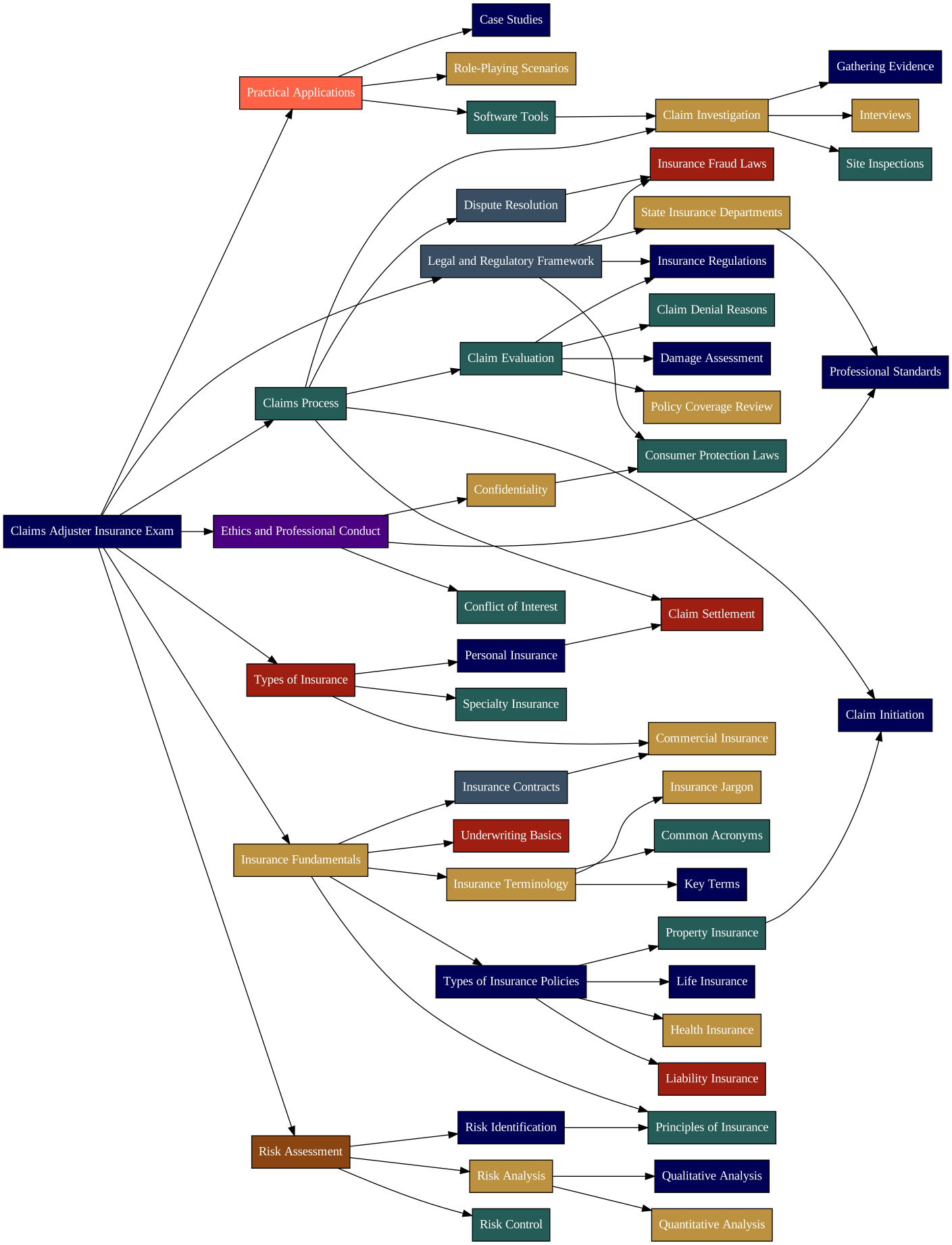
Quiz-summary
0 of 29 questions completed
Questions:
- 1
- 2
- 3
- 4
- 5
- 6
- 7
- 8
- 9
- 10
- 11
- 12
- 13
- 14
- 15
- 16
- 17
- 18
- 19
- 20
- 21
- 22
- 23
- 24
- 25
- 26
- 27
- 28
- 29
Information
Premium Practice Questions
You have already completed the quiz before. Hence you can not start it again.
Quiz is loading...
You must sign in or sign up to start the quiz.
You have to finish following quiz, to start this quiz:
Results
0 of 29 questions answered correctly
Your time:
Time has elapsed
You have reached 0 of 0 points, (0)
Categories
- Not categorized 0%
- 1
- 2
- 3
- 4
- 5
- 6
- 7
- 8
- 9
- 10
- 11
- 12
- 13
- 14
- 15
- 16
- 17
- 18
- 19
- 20
- 21
- 22
- 23
- 24
- 25
- 26
- 27
- 28
- 29
- Answered
- Review
-
Question 1 of 29
1. Question
A recent public outcry has emerged regarding perceived unethical claims handling practices by several insurers in New Zealand. Which statement best describes the roles of the Insurance Council of New Zealand (ICNZ), the Financial Markets Authority (FMA), and the Reserve Bank of New Zealand (RBNZ) in addressing this situation?
Correct
The Insurance Council of New Zealand (ICNZ) plays a crucial role in setting standards and promoting ethical conduct within the New Zealand insurance industry. While it doesn’t directly legislate or enforce laws (that’s the role of government bodies and regulators), it establishes codes of practice and guidelines that member companies are expected to adhere to. These guidelines often exceed the minimum legal requirements, aiming to build public trust and confidence in the industry. The Financial Markets Authority (FMA) and the Reserve Bank of New Zealand (RBNZ) are the primary regulators. The FMA oversees the conduct of financial service providers, including insurers, ensuring fair dealing and consumer protection. The RBNZ focuses on the financial stability of the insurance sector, monitoring solvency and risk management practices. The Insurance Ombudsman provides a dispute resolution service, handling complaints between consumers and insurance companies. The Commerce Commission enforces laws related to fair trading and consumer protection, which can also impact the insurance industry. Therefore, the ICNZ primarily influences ethical standards and best practices, while the FMA and RBNZ are the key regulatory bodies.
Incorrect
The Insurance Council of New Zealand (ICNZ) plays a crucial role in setting standards and promoting ethical conduct within the New Zealand insurance industry. While it doesn’t directly legislate or enforce laws (that’s the role of government bodies and regulators), it establishes codes of practice and guidelines that member companies are expected to adhere to. These guidelines often exceed the minimum legal requirements, aiming to build public trust and confidence in the industry. The Financial Markets Authority (FMA) and the Reserve Bank of New Zealand (RBNZ) are the primary regulators. The FMA oversees the conduct of financial service providers, including insurers, ensuring fair dealing and consumer protection. The RBNZ focuses on the financial stability of the insurance sector, monitoring solvency and risk management practices. The Insurance Ombudsman provides a dispute resolution service, handling complaints between consumers and insurance companies. The Commerce Commission enforces laws related to fair trading and consumer protection, which can also impact the insurance industry. Therefore, the ICNZ primarily influences ethical standards and best practices, while the FMA and RBNZ are the key regulatory bodies.
-
Question 2 of 29
2. Question
A recent earthquake has caused widespread damage in Christchurch. Several policyholders have complained about delays and unfair treatment in the handling of their claims. Which of the following statements best describes the role of the Insurance Council of New Zealand (ICNZ) in addressing these complaints and ensuring fair claims management practices following this catastrophic event?
Correct
The Insurance Council of New Zealand (ICNZ) plays a crucial role in setting standards and advocating for best practices within the insurance industry. While it doesn’t directly handle individual consumer complaints (that’s the Insurance & Financial Services Ombudsman’s role), it significantly influences how insurers operate. The Fair Insurance Code, developed and maintained by ICNZ, outlines the standards of service that insurers must provide to their customers. This includes handling claims fairly, efficiently, and transparently. Breaches of the Fair Insurance Code, while not directly punishable by law in the same way as breaches of legislation, can lead to reputational damage for the insurer and can be taken into account by the Insurance & Financial Services Ombudsman when resolving disputes. The ICNZ also engages in advocacy to ensure that government policy and regulation are aligned with the interests of a sustainable and responsible insurance sector. Therefore, understanding the ICNZ’s role in setting standards and advocating for best practices is key to understanding the overall regulatory framework in New Zealand. The ICNZ also provides resources and training to its members to promote professionalism and ethical conduct. The Reserve Bank of New Zealand (RBNZ) oversees the financial stability of insurers, and the Financial Markets Authority (FMA) regulates their market conduct, but the ICNZ’s self-regulatory function is vital for promoting consumer confidence and industry integrity.
Incorrect
The Insurance Council of New Zealand (ICNZ) plays a crucial role in setting standards and advocating for best practices within the insurance industry. While it doesn’t directly handle individual consumer complaints (that’s the Insurance & Financial Services Ombudsman’s role), it significantly influences how insurers operate. The Fair Insurance Code, developed and maintained by ICNZ, outlines the standards of service that insurers must provide to their customers. This includes handling claims fairly, efficiently, and transparently. Breaches of the Fair Insurance Code, while not directly punishable by law in the same way as breaches of legislation, can lead to reputational damage for the insurer and can be taken into account by the Insurance & Financial Services Ombudsman when resolving disputes. The ICNZ also engages in advocacy to ensure that government policy and regulation are aligned with the interests of a sustainable and responsible insurance sector. Therefore, understanding the ICNZ’s role in setting standards and advocating for best practices is key to understanding the overall regulatory framework in New Zealand. The ICNZ also provides resources and training to its members to promote professionalism and ethical conduct. The Reserve Bank of New Zealand (RBNZ) oversees the financial stability of insurers, and the Financial Markets Authority (FMA) regulates their market conduct, but the ICNZ’s self-regulatory function is vital for promoting consumer confidence and industry integrity.
-
Question 3 of 29
3. Question
Tama insures his car for its full market value. After a few months, he starts driving recklessly, knowing that any damage will be covered by his insurance. This change in Tama’s behavior after obtaining insurance is an example of which of the following insurance concepts?
Correct
The concept of “moral hazard” in insurance refers to the increased risk that the insured party will behave differently once they have insurance coverage. This can manifest in various ways, such as taking less care to prevent losses or even intentionally causing a loss to collect insurance benefits. Insurers attempt to mitigate moral hazard through various mechanisms, including deductibles, co-insurance, and careful underwriting practices. Deductibles require the insured to bear a portion of the loss, providing an incentive to avoid losses. Co-insurance requires the insured to share a percentage of the loss, further aligning their interests with the insurer. Underwriting involves assessing the risk profile of the applicant and setting premiums accordingly.
Incorrect
The concept of “moral hazard” in insurance refers to the increased risk that the insured party will behave differently once they have insurance coverage. This can manifest in various ways, such as taking less care to prevent losses or even intentionally causing a loss to collect insurance benefits. Insurers attempt to mitigate moral hazard through various mechanisms, including deductibles, co-insurance, and careful underwriting practices. Deductibles require the insured to bear a portion of the loss, providing an incentive to avoid losses. Co-insurance requires the insured to share a percentage of the loss, further aligning their interests with the insurer. Underwriting involves assessing the risk profile of the applicant and setting premiums accordingly.
-
Question 4 of 29
4. Question
What is the primary objective of the Fair Insurance Code in the New Zealand insurance industry?
Correct
The Fair Insurance Code sets out minimum standards for insurers in their dealings with customers. This includes providing clear and transparent information about policy terms and conditions, handling claims fairly and efficiently, and having effective complaints resolution processes. While not legally binding in the same way as legislation, adherence to the Code is expected of insurers and demonstrates a commitment to ethical and responsible conduct. Breaching the Code can lead to reputational damage and potential regulatory scrutiny. The Code aims to promote trust and confidence in the insurance industry by ensuring that customers are treated fairly and with respect. It covers various aspects of the insurance relationship, from initial policy purchase to claims handling and dispute resolution. The Code is regularly reviewed and updated to reflect changing consumer expectations and industry best practices. It complements existing legislation and regulations, providing a framework for ethical and responsible insurance practices.
Incorrect
The Fair Insurance Code sets out minimum standards for insurers in their dealings with customers. This includes providing clear and transparent information about policy terms and conditions, handling claims fairly and efficiently, and having effective complaints resolution processes. While not legally binding in the same way as legislation, adherence to the Code is expected of insurers and demonstrates a commitment to ethical and responsible conduct. Breaching the Code can lead to reputational damage and potential regulatory scrutiny. The Code aims to promote trust and confidence in the insurance industry by ensuring that customers are treated fairly and with respect. It covers various aspects of the insurance relationship, from initial policy purchase to claims handling and dispute resolution. The Code is regularly reviewed and updated to reflect changing consumer expectations and industry best practices. It complements existing legislation and regulations, providing a framework for ethical and responsible insurance practices.
-
Question 5 of 29
5. Question
During the processing of a health insurance claim in New Zealand, what specific obligations does an insurer have under the Privacy Act 2020 regarding the claimant’s medical information?
Correct
In New Zealand, the Privacy Act 2020 governs the collection, use, and disclosure of personal information. Insurers must comply with this Act when handling personal claims. This includes obtaining informed consent from claimants before collecting sensitive information, such as medical records. Claimants have the right to access and correct their personal information held by the insurer. Insurers must ensure that personal information is stored securely and protected from unauthorized access. The Health Information Privacy Code 2020 provides additional protections for health information. Breaches of privacy can result in legal action and reputational damage. Therefore, insurers must implement robust privacy policies and procedures to safeguard claimants’ personal information.
Incorrect
In New Zealand, the Privacy Act 2020 governs the collection, use, and disclosure of personal information. Insurers must comply with this Act when handling personal claims. This includes obtaining informed consent from claimants before collecting sensitive information, such as medical records. Claimants have the right to access and correct their personal information held by the insurer. Insurers must ensure that personal information is stored securely and protected from unauthorized access. The Health Information Privacy Code 2020 provides additional protections for health information. Breaches of privacy can result in legal action and reputational damage. Therefore, insurers must implement robust privacy policies and procedures to safeguard claimants’ personal information.
-
Question 6 of 29
6. Question
A claims manager at “Southern Cross Insurance” discovers a systemic issue in their company’s handling of earthquake claims, where adjusters are subtly pressured to undervalue payouts. While not explicitly illegal, this practice clearly violates the Insurance Council of New Zealand (ICNZ) Code of Conduct. Which of the following best describes the immediate consequences and the roles of relevant bodies in addressing this situation?
Correct
The Insurance Council of New Zealand (ICNZ) plays a pivotal role in shaping ethical conduct and professionalism within the insurance industry. While the ICNZ doesn’t directly legislate or enforce laws (that’s the role of government bodies and regulatory authorities like the Financial Markets Authority – FMA), it establishes a Code of Conduct that member companies are expected to adhere to. This code provides guidelines for fair and transparent dealings with customers, including claims handling. The ICNZ also advocates for industry best practices and works to improve public understanding of insurance. The Insurance Ombudsman, on the other hand, is a dispute resolution mechanism, offering an avenue for consumers to resolve complaints against insurers. The FMA regulates the financial markets, including insurance, ensuring compliance with relevant legislation like the Financial Markets Conduct Act 2013. A breach of the ICNZ Code of Conduct, while not a legal violation, can lead to reputational damage and potential expulsion from the ICNZ, impacting a company’s standing within the industry. The Earthquake Commission (EQC) is a government agency that provides natural disaster insurance for residential properties.
Incorrect
The Insurance Council of New Zealand (ICNZ) plays a pivotal role in shaping ethical conduct and professionalism within the insurance industry. While the ICNZ doesn’t directly legislate or enforce laws (that’s the role of government bodies and regulatory authorities like the Financial Markets Authority – FMA), it establishes a Code of Conduct that member companies are expected to adhere to. This code provides guidelines for fair and transparent dealings with customers, including claims handling. The ICNZ also advocates for industry best practices and works to improve public understanding of insurance. The Insurance Ombudsman, on the other hand, is a dispute resolution mechanism, offering an avenue for consumers to resolve complaints against insurers. The FMA regulates the financial markets, including insurance, ensuring compliance with relevant legislation like the Financial Markets Conduct Act 2013. A breach of the ICNZ Code of Conduct, while not a legal violation, can lead to reputational damage and potential expulsion from the ICNZ, impacting a company’s standing within the industry. The Earthquake Commission (EQC) is a government agency that provides natural disaster insurance for residential properties.
-
Question 7 of 29
7. Question
What is the primary role of the Insurance Ombudsman Scheme (IOS) in the context of personal claims in New Zealand?
Correct
The Insurance Ombudsman Scheme (IOS) provides a free and independent dispute resolution service for insurance policyholders who have a complaint against their insurer. It is an alternative to court action and aims to resolve disputes fairly and efficiently. The IOS can investigate complaints about a wide range of insurance issues, including claims handling, policy interpretation, and unfair treatment. While the IOS’s decisions are not legally binding in the same way as a court judgment, insurers are generally expected to comply with its rulings. The IOS is funded by the insurance industry but operates independently. The courts can hear insurance disputes, but this is a more formal and costly process. Consumer advocacy groups can provide advice and support to policyholders, but they cannot make binding decisions on disputes. The Financial Markets Authority (FMA) has a broader regulatory role but does not directly resolve individual insurance disputes.
Incorrect
The Insurance Ombudsman Scheme (IOS) provides a free and independent dispute resolution service for insurance policyholders who have a complaint against their insurer. It is an alternative to court action and aims to resolve disputes fairly and efficiently. The IOS can investigate complaints about a wide range of insurance issues, including claims handling, policy interpretation, and unfair treatment. While the IOS’s decisions are not legally binding in the same way as a court judgment, insurers are generally expected to comply with its rulings. The IOS is funded by the insurance industry but operates independently. The courts can hear insurance disputes, but this is a more formal and costly process. Consumer advocacy groups can provide advice and support to policyholders, but they cannot make binding decisions on disputes. The Financial Markets Authority (FMA) has a broader regulatory role but does not directly resolve individual insurance disputes.
-
Question 8 of 29
8. Question
A claims manager, Hana, suspects a claimant, Wiremu, of exaggerating the extent of his injuries following a car accident. Which of the following actions should Hana prioritize to ensure compliance with New Zealand’s regulatory framework while investigating the claim?
Correct
In New Zealand’s insurance regulatory framework, several key pieces of legislation govern the handling of personal claims. The Insurance (Prudential Supervision) Act 2010 focuses on the financial stability of insurers, indirectly impacting claims by ensuring insurers have the resources to meet their obligations. The Fair Insurance Code sets standards for fair and transparent claims handling, emphasizing good faith and clear communication. The Consumer Guarantees Act 1993 provides guarantees to consumers regarding the quality of services, including insurance claims handling, and allows for remedies if these guarantees are not met. The Privacy Act 2020 governs the collection, use, and disclosure of personal information, which is critical in claims management, ensuring that claimants’ data is protected. Finally, the Contract and Commercial Law Act 2017 consolidates various contract laws, influencing the interpretation and enforcement of insurance contracts. A claims manager must navigate these laws to ensure compliance and fair outcomes for claimants. Understanding the interplay between these acts is crucial for ethical and effective claims management. For example, while investigating a potentially fraudulent claim, the claims manager must adhere strictly to the Privacy Act 2020 regarding data collection and usage, while also fulfilling their obligations under the Fair Insurance Code to act in good faith and provide clear explanations to the claimant.
Incorrect
In New Zealand’s insurance regulatory framework, several key pieces of legislation govern the handling of personal claims. The Insurance (Prudential Supervision) Act 2010 focuses on the financial stability of insurers, indirectly impacting claims by ensuring insurers have the resources to meet their obligations. The Fair Insurance Code sets standards for fair and transparent claims handling, emphasizing good faith and clear communication. The Consumer Guarantees Act 1993 provides guarantees to consumers regarding the quality of services, including insurance claims handling, and allows for remedies if these guarantees are not met. The Privacy Act 2020 governs the collection, use, and disclosure of personal information, which is critical in claims management, ensuring that claimants’ data is protected. Finally, the Contract and Commercial Law Act 2017 consolidates various contract laws, influencing the interpretation and enforcement of insurance contracts. A claims manager must navigate these laws to ensure compliance and fair outcomes for claimants. Understanding the interplay between these acts is crucial for ethical and effective claims management. For example, while investigating a potentially fraudulent claim, the claims manager must adhere strictly to the Privacy Act 2020 regarding data collection and usage, while also fulfilling their obligations under the Fair Insurance Code to act in good faith and provide clear explanations to the claimant.
-
Question 9 of 29
9. Question
A claimant, Hana, alleges that an insurer, “KiwiCover,” consistently delays claim assessments beyond reasonable timeframes outlined in their policy, potentially breaching the Insurance Council of New Zealand (ICNZ) Code of Conduct regarding fair and timely claims handling. Hana believes KiwiCover is deliberately stalling to discourage her from pursuing the claim. While the Insurance & Financial Services Ombudsman Scheme (IFSO) is available for dispute resolution, what is the most appropriate initial step to address the potential breach of the ICNZ Code of Conduct within the insurance industry framework?
Correct
The Insurance Council of New Zealand (ICNZ) plays a crucial role in setting industry standards and advocating for best practices. While it doesn’t directly handle individual consumer complaints (that’s the Insurance & Financial Services Ombudsman Scheme, IFSO), the ICNZ’s Code of Conduct influences how insurers operate. Breaching the code could lead to reputational damage for the insurer and influence how the IFSO views their conduct in a dispute. The Commerce Commission enforces fair trading laws, which also impact insurance practices. While the Reserve Bank of New Zealand (RBNZ) oversees the financial stability of insurers, it doesn’t directly adjudicate individual claim disputes or breaches of the ICNZ Code of Conduct. The Financial Markets Authority (FMA) regulates financial service providers, which includes insurers, but the specific scenario focuses on a potential breach of the ICNZ Code of Conduct, making the ICNZ the most directly relevant body for initial industry-level consideration. Therefore, reporting the potential breach of the ICNZ Code of Conduct to the Insurance Council of New Zealand is the most appropriate first step in ensuring industry standards are upheld and potentially influencing future claims handling practices.
Incorrect
The Insurance Council of New Zealand (ICNZ) plays a crucial role in setting industry standards and advocating for best practices. While it doesn’t directly handle individual consumer complaints (that’s the Insurance & Financial Services Ombudsman Scheme, IFSO), the ICNZ’s Code of Conduct influences how insurers operate. Breaching the code could lead to reputational damage for the insurer and influence how the IFSO views their conduct in a dispute. The Commerce Commission enforces fair trading laws, which also impact insurance practices. While the Reserve Bank of New Zealand (RBNZ) oversees the financial stability of insurers, it doesn’t directly adjudicate individual claim disputes or breaches of the ICNZ Code of Conduct. The Financial Markets Authority (FMA) regulates financial service providers, which includes insurers, but the specific scenario focuses on a potential breach of the ICNZ Code of Conduct, making the ICNZ the most directly relevant body for initial industry-level consideration. Therefore, reporting the potential breach of the ICNZ Code of Conduct to the Insurance Council of New Zealand is the most appropriate first step in ensuring industry standards are upheld and potentially influencing future claims handling practices.
-
Question 10 of 29
10. Question
In the context of insurance claims management, what is meant by the term “subrogation”?
Correct
In the context of insurance claims management, the term “subrogation” refers to the legal right of an insurer to pursue a third party who caused the loss or damage for which the insurer has paid out a claim. For example, if an insured individual’s car is damaged in an accident caused by another driver, the insurer may pay for the repairs to the insured’s car and then seek to recover those costs from the at-fault driver or their insurance company. The purpose of subrogation is to prevent the at-fault party from being unjustly enriched by their actions and to allow the insurer to recoup the funds it has paid out in claims. It also helps to keep insurance premiums lower by reducing the overall cost of claims. Subrogation typically involves the insurer stepping into the shoes of the insured and pursuing legal action against the responsible party. The insured is usually required to cooperate with the insurer in the subrogation process, providing information and documentation as needed. Therefore, the correct definition of subrogation is the insurer’s right to recover claim payments from a responsible third party.
Incorrect
In the context of insurance claims management, the term “subrogation” refers to the legal right of an insurer to pursue a third party who caused the loss or damage for which the insurer has paid out a claim. For example, if an insured individual’s car is damaged in an accident caused by another driver, the insurer may pay for the repairs to the insured’s car and then seek to recover those costs from the at-fault driver or their insurance company. The purpose of subrogation is to prevent the at-fault party from being unjustly enriched by their actions and to allow the insurer to recoup the funds it has paid out in claims. It also helps to keep insurance premiums lower by reducing the overall cost of claims. Subrogation typically involves the insurer stepping into the shoes of the insured and pursuing legal action against the responsible party. The insured is usually required to cooperate with the insurer in the subrogation process, providing information and documentation as needed. Therefore, the correct definition of subrogation is the insurer’s right to recover claim payments from a responsible third party.
-
Question 11 of 29
11. Question
During the assessment of a health insurance claim, a claims handler, Aroha, needs to share a claimant’s medical records with an external medical consultant for expert opinion. Which principle under the Privacy Act 2020 is MOST relevant to Aroha’s decision-making process regarding the secure handling and sharing of this sensitive information?
Correct
When handling personal claims, particularly those involving sensitive health information, claims handlers must adhere strictly to privacy and data protection laws. In New Zealand, the Privacy Act 2020 governs the collection, use, and disclosure of personal information. This Act establishes 13 Information Privacy Principles that organizations must follow. Principle 5 specifically addresses the storage and security of personal information, requiring organizations to take reasonable steps to protect personal information from loss, unauthorized access, use, modification, or disclosure. Breaching the Privacy Act can result in significant penalties, including fines and reputational damage. Claims handlers must be trained on these principles and ensure that all personal information is handled securely and confidentially. The Health Information Privacy Code 2020 provides additional specific guidance on handling health information.
Incorrect
When handling personal claims, particularly those involving sensitive health information, claims handlers must adhere strictly to privacy and data protection laws. In New Zealand, the Privacy Act 2020 governs the collection, use, and disclosure of personal information. This Act establishes 13 Information Privacy Principles that organizations must follow. Principle 5 specifically addresses the storage and security of personal information, requiring organizations to take reasonable steps to protect personal information from loss, unauthorized access, use, modification, or disclosure. Breaching the Privacy Act can result in significant penalties, including fines and reputational damage. Claims handlers must be trained on these principles and ensure that all personal information is handled securely and confidentially. The Health Information Privacy Code 2020 provides additional specific guidance on handling health information.
-
Question 12 of 29
12. Question
A claimant, Wiremu, alleges mishandling of his earthquake claim by “SecureCover Insurance”. He believes the assessor undervalued the damage and delayed the settlement. SecureCover is a member of the Insurance Council of New Zealand (ICNZ). Which course of action best represents SecureCover’s immediate responsibility, balancing ethical claims management and regulatory compliance within the New Zealand insurance landscape?
Correct
The Insurance Council of New Zealand (ICNZ) plays a crucial role in setting industry standards and advocating for best practices. While it doesn’t directly legislate or enforce laws (that’s the role of government bodies and regulators like the Financial Markets Authority (FMA) or the Reserve Bank of New Zealand (RBNZ)), it significantly influences how insurance companies operate. The ICNZ develops codes of practice and guidelines that member companies are expected to adhere to. These cover various aspects of claims management, including ethical conduct, claims handling procedures, and dispute resolution. Compliance with ICNZ standards often becomes a benchmark for assessing an insurer’s professionalism and commitment to fair treatment of customers. The Insurance Ombudsman is a dispute resolution service, offering an avenue for consumers to resolve issues with their insurer. While the Ombudsman’s decisions are binding on insurers (up to a certain financial limit), they operate independently of the ICNZ, providing an impartial assessment of disputes. Insurers are expected to cooperate fully with the Ombudsman’s investigations. Therefore, adhering to ICNZ standards and cooperating with the Insurance Ombudsman are both vital aspects of ethical and effective claims management in New Zealand.
Incorrect
The Insurance Council of New Zealand (ICNZ) plays a crucial role in setting industry standards and advocating for best practices. While it doesn’t directly legislate or enforce laws (that’s the role of government bodies and regulators like the Financial Markets Authority (FMA) or the Reserve Bank of New Zealand (RBNZ)), it significantly influences how insurance companies operate. The ICNZ develops codes of practice and guidelines that member companies are expected to adhere to. These cover various aspects of claims management, including ethical conduct, claims handling procedures, and dispute resolution. Compliance with ICNZ standards often becomes a benchmark for assessing an insurer’s professionalism and commitment to fair treatment of customers. The Insurance Ombudsman is a dispute resolution service, offering an avenue for consumers to resolve issues with their insurer. While the Ombudsman’s decisions are binding on insurers (up to a certain financial limit), they operate independently of the ICNZ, providing an impartial assessment of disputes. Insurers are expected to cooperate fully with the Ombudsman’s investigations. Therefore, adhering to ICNZ standards and cooperating with the Insurance Ombudsman are both vital aspects of ethical and effective claims management in New Zealand.
-
Question 13 of 29
13. Question
Kiara’s insurance company in New Zealand is experiencing rapid growth in its personal claims portfolio. While this expansion increases market share, the company’s solvency margin is nearing the regulatory minimum set by the Reserve Bank of New Zealand (RBNZ). Which of the following actions would be the MOST appropriate for Kiara, as the claims manager, to recommend to the company’s executive team to address this situation and ensure ongoing compliance with the Insurance (Prudential Supervision) Act 2010?
Correct
In New Zealand’s regulatory framework, the Insurance (Prudential Supervision) Act 2010 is pivotal. It mandates that insurers maintain adequate solvency margins to ensure they can meet their financial obligations to policyholders. Solvency margins act as a financial buffer, providing a cushion against unexpected losses or adverse economic conditions. The Reserve Bank of New Zealand (RBNZ) is the primary regulator responsible for overseeing the solvency of insurers. The RBNZ sets specific solvency standards that insurers must adhere to, which include minimum capital requirements and risk management practices. These standards are designed to protect policyholders and maintain the stability of the insurance sector. Failing to meet these solvency requirements can result in regulatory intervention, including corrective action plans, restrictions on business activities, or, in severe cases, the revocation of an insurer’s license. Therefore, maintaining adequate solvency is not just a matter of financial prudence but also a legal and regulatory obligation for insurers operating in New Zealand. Solvency is calculated based on factors such as assets, liabilities, and risk exposures. Insurers must regularly report their solvency position to the RBNZ and undergo independent audits to verify their compliance. The Act also empowers the RBNZ to take enforcement actions against insurers that breach solvency requirements.
Incorrect
In New Zealand’s regulatory framework, the Insurance (Prudential Supervision) Act 2010 is pivotal. It mandates that insurers maintain adequate solvency margins to ensure they can meet their financial obligations to policyholders. Solvency margins act as a financial buffer, providing a cushion against unexpected losses or adverse economic conditions. The Reserve Bank of New Zealand (RBNZ) is the primary regulator responsible for overseeing the solvency of insurers. The RBNZ sets specific solvency standards that insurers must adhere to, which include minimum capital requirements and risk management practices. These standards are designed to protect policyholders and maintain the stability of the insurance sector. Failing to meet these solvency requirements can result in regulatory intervention, including corrective action plans, restrictions on business activities, or, in severe cases, the revocation of an insurer’s license. Therefore, maintaining adequate solvency is not just a matter of financial prudence but also a legal and regulatory obligation for insurers operating in New Zealand. Solvency is calculated based on factors such as assets, liabilities, and risk exposures. Insurers must regularly report their solvency position to the RBNZ and undergo independent audits to verify their compliance. The Act also empowers the RBNZ to take enforcement actions against insurers that breach solvency requirements.
-
Question 14 of 29
14. Question
Which statement accurately describes the interplay between the Insurance Council of New Zealand (ICNZ), the Reserve Bank of New Zealand (RBNZ), the Financial Markets Authority (FMA), and the Insurance Ombudsman in the context of personal claims management in New Zealand?
Correct
The Insurance Council of New Zealand (ICNZ) plays a pivotal role in shaping ethical conduct and professional standards within the New Zealand insurance industry. While not a regulator in the legal sense, ICNZ enforces a Code of Conduct on its members. This code covers various aspects of insurance operations, including claims management. The ICNZ’s influence extends to promoting fair and transparent claims handling practices. The Insurance (Prudential Supervision) Act 2010 establishes the regulatory framework for insurers in New Zealand, with the Reserve Bank of New Zealand (RBNZ) as the primary regulator. The RBNZ sets prudential standards that insurers must meet to ensure their financial stability and ability to meet their obligations to policyholders. These standards indirectly impact claims management by requiring insurers to maintain adequate reserves and have robust processes for handling claims. The Financial Markets Authority (FMA) oversees the conduct of financial service providers, including insurers, in New Zealand. The FMA’s role is to ensure that insurers comply with fair dealing obligations and provide clear and accurate information to consumers. This includes ensuring that claims are handled fairly and that policyholders are treated with respect. The Insurance Ombudsman Scheme provides a dispute resolution mechanism for policyholders who have complaints about their insurance claims. The Ombudsman’s decisions are binding on insurers, and the scheme provides an independent avenue for resolving disputes. This scheme impacts claims management by ensuring that insurers handle claims fairly and in accordance with their policy terms and conditions. Therefore, the most accurate statement is that the ICNZ sets standards for ethical conduct and professional claims handling, while the RBNZ focuses on financial stability, the FMA ensures fair dealing, and the Insurance Ombudsman provides dispute resolution.
Incorrect
The Insurance Council of New Zealand (ICNZ) plays a pivotal role in shaping ethical conduct and professional standards within the New Zealand insurance industry. While not a regulator in the legal sense, ICNZ enforces a Code of Conduct on its members. This code covers various aspects of insurance operations, including claims management. The ICNZ’s influence extends to promoting fair and transparent claims handling practices. The Insurance (Prudential Supervision) Act 2010 establishes the regulatory framework for insurers in New Zealand, with the Reserve Bank of New Zealand (RBNZ) as the primary regulator. The RBNZ sets prudential standards that insurers must meet to ensure their financial stability and ability to meet their obligations to policyholders. These standards indirectly impact claims management by requiring insurers to maintain adequate reserves and have robust processes for handling claims. The Financial Markets Authority (FMA) oversees the conduct of financial service providers, including insurers, in New Zealand. The FMA’s role is to ensure that insurers comply with fair dealing obligations and provide clear and accurate information to consumers. This includes ensuring that claims are handled fairly and that policyholders are treated with respect. The Insurance Ombudsman Scheme provides a dispute resolution mechanism for policyholders who have complaints about their insurance claims. The Ombudsman’s decisions are binding on insurers, and the scheme provides an independent avenue for resolving disputes. This scheme impacts claims management by ensuring that insurers handle claims fairly and in accordance with their policy terms and conditions. Therefore, the most accurate statement is that the ICNZ sets standards for ethical conduct and professional claims handling, while the RBNZ focuses on financial stability, the FMA ensures fair dealing, and the Insurance Ombudsman provides dispute resolution.
-
Question 15 of 29
15. Question
Which of the following statements BEST describes the role of the Insurance Council of New Zealand (ICNZ) within the broader regulatory framework governing personal claims management in New Zealand?
Correct
The Insurance Council of New Zealand (ICNZ) plays a crucial role in setting standards and advocating for best practices within the New Zealand insurance industry. While it doesn’t directly legislate or enforce laws (that’s the government’s role through acts like the Insurance Law Reform Act 1985 and the Financial Markets Conduct Act 2013, enforced by bodies like the Financial Markets Authority), the ICNZ’s Code of Conduct and other guidelines significantly influence how insurers operate. The ICNZ works to promote consumer confidence and ethical behavior. The Insurance Ombudsman is a separate entity that handles disputes between insurers and policyholders, providing an independent avenue for resolution. The Reserve Bank of New Zealand (RBNZ) oversees the financial stability of insurers, ensuring they have adequate capital to meet their obligations. Therefore, understanding the ICNZ’s role in self-regulation and advocacy, distinct from governmental regulation and dispute resolution, is key to grasping the insurance landscape in New Zealand. The ICNZ’s influence is primarily through its members adopting and adhering to its standards and guidelines, which then shape industry practice.
Incorrect
The Insurance Council of New Zealand (ICNZ) plays a crucial role in setting standards and advocating for best practices within the New Zealand insurance industry. While it doesn’t directly legislate or enforce laws (that’s the government’s role through acts like the Insurance Law Reform Act 1985 and the Financial Markets Conduct Act 2013, enforced by bodies like the Financial Markets Authority), the ICNZ’s Code of Conduct and other guidelines significantly influence how insurers operate. The ICNZ works to promote consumer confidence and ethical behavior. The Insurance Ombudsman is a separate entity that handles disputes between insurers and policyholders, providing an independent avenue for resolution. The Reserve Bank of New Zealand (RBNZ) oversees the financial stability of insurers, ensuring they have adequate capital to meet their obligations. Therefore, understanding the ICNZ’s role in self-regulation and advocacy, distinct from governmental regulation and dispute resolution, is key to grasping the insurance landscape in New Zealand. The ICNZ’s influence is primarily through its members adopting and adhering to its standards and guidelines, which then shape industry practice.
-
Question 16 of 29
16. Question
Which of the following statements BEST describes the distinct roles of the Insurance Council of New Zealand (ICNZ), the Financial Markets Authority (FMA), the Reserve Bank of New Zealand (RBNZ), and the Commerce Commission in regulating the New Zealand insurance industry?
Correct
The Insurance Council of New Zealand (ICNZ) plays a pivotal role in self-regulation and advocacy within the New Zealand insurance sector. While it advocates for the industry and establishes codes of conduct, it doesn’t directly enact legislation; that’s the domain of Parliament. The Financial Markets Authority (FMA) oversees the conduct of financial service providers, including insurers, ensuring compliance with the Financial Markets Conduct Act 2013. The Reserve Bank of New Zealand (RBNZ) supervises the financial solvency of insurers, ensuring they can meet their obligations to policyholders, under the Insurance (Prudential Supervision) Act 2010. The Commerce Commission enforces competition laws, preventing anti-competitive practices within the insurance market. Therefore, the ICNZ primarily focuses on industry advocacy and self-regulation through codes of conduct, while the FMA monitors market conduct, the RBNZ ensures financial stability, and the Commerce Commission promotes fair competition. The interplay between these organizations shapes the regulatory landscape of the New Zealand insurance industry.
Incorrect
The Insurance Council of New Zealand (ICNZ) plays a pivotal role in self-regulation and advocacy within the New Zealand insurance sector. While it advocates for the industry and establishes codes of conduct, it doesn’t directly enact legislation; that’s the domain of Parliament. The Financial Markets Authority (FMA) oversees the conduct of financial service providers, including insurers, ensuring compliance with the Financial Markets Conduct Act 2013. The Reserve Bank of New Zealand (RBNZ) supervises the financial solvency of insurers, ensuring they can meet their obligations to policyholders, under the Insurance (Prudential Supervision) Act 2010. The Commerce Commission enforces competition laws, preventing anti-competitive practices within the insurance market. Therefore, the ICNZ primarily focuses on industry advocacy and self-regulation through codes of conduct, while the FMA monitors market conduct, the RBNZ ensures financial stability, and the Commerce Commission promotes fair competition. The interplay between these organizations shapes the regulatory landscape of the New Zealand insurance industry.
-
Question 17 of 29
17. Question
A claimant, Aaliyah, is dissatisfied with “SecureFuture Insurance’s” decision to decline her income protection claim. After exhausting SecureFuture’s internal complaints process, she escalates the matter to the Insurance and Financial Services Ombudsman (IFSO) scheme. What is the potential outcome of the IFSO’s involvement in this case?
Correct
The Insurance and Financial Services Ombudsman (IFSO) scheme provides a free and independent dispute resolution service for consumers who have complaints against their insurers. The IFSO’s decisions are binding on the insurer, up to a certain monetary limit, but not on the consumer, who retains the right to pursue legal action if they are not satisfied with the outcome. The IFSO can investigate a wide range of complaints, including those related to claim denials, policy interpretation, and service quality. However, the IFSO does not have the power to change insurance legislation or to force insurers to change their underwriting practices. The IFSO’s role is to resolve individual disputes fairly and impartially, based on the specific facts and circumstances of each case.
Incorrect
The Insurance and Financial Services Ombudsman (IFSO) scheme provides a free and independent dispute resolution service for consumers who have complaints against their insurers. The IFSO’s decisions are binding on the insurer, up to a certain monetary limit, but not on the consumer, who retains the right to pursue legal action if they are not satisfied with the outcome. The IFSO can investigate a wide range of complaints, including those related to claim denials, policy interpretation, and service quality. However, the IFSO does not have the power to change insurance legislation or to force insurers to change their underwriting practices. The IFSO’s role is to resolve individual disputes fairly and impartially, based on the specific facts and circumstances of each case.
-
Question 18 of 29
18. Question
“Moana Insurance” is planning its future claims strategy. Which factor is MOST crucial to consider?
Correct
Impact of Climate Change: This increases property damage and natural disasters. Technological Innovations: These transform claims processing. Changes in Consumer Behavior: These influence interactions with claimants. Regulatory Changes: These shape the insurance landscape.
Incorrect
Impact of Climate Change: This increases property damage and natural disasters. Technological Innovations: These transform claims processing. Changes in Consumer Behavior: These influence interactions with claimants. Regulatory Changes: These shape the insurance landscape.
-
Question 19 of 29
19. Question
A recent internal audit at “Aotearoa General Insurance” revealed inconsistencies in claims handling procedures across different branches. Management is concerned about potential regulatory non-compliance and reputational damage. Which statement BEST describes the roles of key organizations in addressing this situation?
Correct
The Insurance Council of New Zealand (ICNZ) plays a pivotal role in setting industry standards and advocating for best practices within the insurance sector. While it doesn’t directly enact legislation (that’s the government’s role through Parliament), it significantly influences how insurers operate. The ICNZ’s Code of Conduct, for instance, sets out ethical and professional standards that member companies are expected to adhere to. The Financial Markets Authority (FMA) is the primary regulator, overseeing financial service providers, including insurers, to ensure compliance with the Financial Markets Conduct Act 2013 and other relevant legislation. The Reserve Bank of New Zealand (RBNZ) also plays a role, particularly in relation to the financial stability of insurers, ensuring they have adequate capital to meet their obligations. The Insurance (Prudential Supervision) Act 2010 empowers the RBNZ to supervise insurers’ solvency and risk management practices. Therefore, while the ICNZ promotes best practices and influences standards, the FMA and RBNZ are the key regulatory bodies with legal authority to enforce compliance and supervise insurers. Understanding the distinct roles of these organizations is crucial for effective claims management, as it dictates the framework within which claims are processed and disputes are resolved.
Incorrect
The Insurance Council of New Zealand (ICNZ) plays a pivotal role in setting industry standards and advocating for best practices within the insurance sector. While it doesn’t directly enact legislation (that’s the government’s role through Parliament), it significantly influences how insurers operate. The ICNZ’s Code of Conduct, for instance, sets out ethical and professional standards that member companies are expected to adhere to. The Financial Markets Authority (FMA) is the primary regulator, overseeing financial service providers, including insurers, to ensure compliance with the Financial Markets Conduct Act 2013 and other relevant legislation. The Reserve Bank of New Zealand (RBNZ) also plays a role, particularly in relation to the financial stability of insurers, ensuring they have adequate capital to meet their obligations. The Insurance (Prudential Supervision) Act 2010 empowers the RBNZ to supervise insurers’ solvency and risk management practices. Therefore, while the ICNZ promotes best practices and influences standards, the FMA and RBNZ are the key regulatory bodies with legal authority to enforce compliance and supervise insurers. Understanding the distinct roles of these organizations is crucial for effective claims management, as it dictates the framework within which claims are processed and disputes are resolved.
-
Question 20 of 29
20. Question
An insurance company, Tahi Assurance, aims to improve its fraud detection rate in personal injury claims. Which technological application would BEST enable Tahi Assurance to identify unusual patterns and correlations within claims data to flag potentially fraudulent claims?
Correct
Data analytics plays an increasingly significant role in modern claims management. While traditional methods rely on manual review and historical data, data analytics can identify patterns and anomalies that might otherwise go unnoticed. Claims management software streamlines processes, but data analytics provides deeper insights. Underwriting principles inform risk assessment, but data analytics can refine these assessments based on real-time claims data. Fraud detection techniques are enhanced by data analytics, which can flag suspicious claims based on various factors. Data analytics enables insurers to make more informed decisions, improve efficiency, and reduce fraud.
Incorrect
Data analytics plays an increasingly significant role in modern claims management. While traditional methods rely on manual review and historical data, data analytics can identify patterns and anomalies that might otherwise go unnoticed. Claims management software streamlines processes, but data analytics provides deeper insights. Underwriting principles inform risk assessment, but data analytics can refine these assessments based on real-time claims data. Fraud detection techniques are enhanced by data analytics, which can flag suspicious claims based on various factors. Data analytics enables insurers to make more informed decisions, improve efficiency, and reduce fraud.
-
Question 21 of 29
21. Question
Under the Privacy Act 2020 in New Zealand, what obligations do insurance companies have when collecting and using claimants’ personal information during the handling of personal claims?
Correct
In New Zealand, the Privacy Act 2020 governs the collection, use, and disclosure of personal information by organizations, including insurance companies. When handling personal claims, insurers collect sensitive information about claimants, such as medical records, financial details, and personal circumstances. The Privacy Act requires insurers to obtain informed consent from claimants before collecting and using their personal information. Claimants have the right to access their personal information held by the insurer and to request corrections if the information is inaccurate. Insurers must also take reasonable steps to protect personal information from unauthorized access, use, or disclosure. Failure to comply with the Privacy Act can result in penalties and reputational damage for the insurer. Claims handlers must be well-versed in the requirements of the Privacy Act to ensure that they handle personal information in a lawful and ethical manner.
Incorrect
In New Zealand, the Privacy Act 2020 governs the collection, use, and disclosure of personal information by organizations, including insurance companies. When handling personal claims, insurers collect sensitive information about claimants, such as medical records, financial details, and personal circumstances. The Privacy Act requires insurers to obtain informed consent from claimants before collecting and using their personal information. Claimants have the right to access their personal information held by the insurer and to request corrections if the information is inaccurate. Insurers must also take reasonable steps to protect personal information from unauthorized access, use, or disclosure. Failure to comply with the Privacy Act can result in penalties and reputational damage for the insurer. Claims handlers must be well-versed in the requirements of the Privacy Act to ensure that they handle personal information in a lawful and ethical manner.
-
Question 22 of 29
22. Question
A claimant, Hana, disputes a rejected claim for $450,000 with her insurer, SecureLife, following a total and permanent disability event. After an extensive review, the Insurance Ombudsman determines that SecureLife should pay Hana $400,000. Hana accepts the Ombudsman’s determination. Considering the Insurance Ombudsman’s jurisdictional limit for binding decisions is $350,000 and the framework of the Insurance Ombudsman Scheme in New Zealand, what is the binding nature of the Ombudsman’s decision on SecureLife?
Correct
The Insurance Ombudsman scheme in New Zealand provides a crucial avenue for resolving disputes between insurers and policyholders. Understanding its operational framework, particularly concerning binding decisions, is essential for effective claims management. A decision is binding on the insurer if the complainant accepts the Ombudsman’s determination. The insurer cannot appeal the decision once accepted by the complainant. The financial limit on the Insurance Ombudsman’s authority is crucial. The Insurance Ombudsman can make a binding decision up to a certain monetary limit. This limit is important because it defines the scope of the Ombudsman’s power to resolve disputes. For amounts exceeding this limit, the Ombudsman’s decision is not binding. It serves as a recommendation, and the claimant can pursue other avenues, such as legal action. The Insurance Council of New Zealand (ICNZ) plays a role in setting standards and promoting best practices within the industry, but it doesn’t directly influence the binding nature of an Ombudsman’s decision. The decision’s binding nature is dependent on the complainant’s acceptance and the monetary value falling within the Ombudsman’s jurisdiction. This is governed by the Insurance Ombudsman Scheme’s Terms of Reference.
Incorrect
The Insurance Ombudsman scheme in New Zealand provides a crucial avenue for resolving disputes between insurers and policyholders. Understanding its operational framework, particularly concerning binding decisions, is essential for effective claims management. A decision is binding on the insurer if the complainant accepts the Ombudsman’s determination. The insurer cannot appeal the decision once accepted by the complainant. The financial limit on the Insurance Ombudsman’s authority is crucial. The Insurance Ombudsman can make a binding decision up to a certain monetary limit. This limit is important because it defines the scope of the Ombudsman’s power to resolve disputes. For amounts exceeding this limit, the Ombudsman’s decision is not binding. It serves as a recommendation, and the claimant can pursue other avenues, such as legal action. The Insurance Council of New Zealand (ICNZ) plays a role in setting standards and promoting best practices within the industry, but it doesn’t directly influence the binding nature of an Ombudsman’s decision. The decision’s binding nature is dependent on the complainant’s acceptance and the monetary value falling within the Ombudsman’s jurisdiction. This is governed by the Insurance Ombudsman Scheme’s Terms of Reference.
-
Question 23 of 29
23. Question
Kiara, a claims manager at “AssureNow NZ,” discovers that the company’s current assets are dangerously close to its liabilities, potentially breaching a critical regulatory threshold. Considering the regulatory framework governing insurance in New Zealand, which of the following scenarios would represent the most direct violation of regulatory requirements, potentially triggering intervention by the Reserve Bank of New Zealand (RBNZ)?
Correct
In New Zealand’s insurance regulatory landscape, the Insurance (Prudential Supervision) Act 2010 plays a crucial role in ensuring the financial stability of insurers. A key aspect of this act is the requirement for insurers to maintain adequate solvency margins. Solvency margin represents the excess of assets over liabilities that an insurer must hold to meet its obligations to policyholders. The Reserve Bank of New Zealand (RBNZ) oversees the enforcement of these solvency requirements. If an insurer fails to maintain the required solvency margin, the RBNZ has the authority to intervene, which could include directing the insurer to take corrective actions, restricting its activities, or, in severe cases, placing the insurer under statutory management. The Insurance Intermediaries Act 1994 regulates the conduct of insurance intermediaries, ensuring they act in the best interests of their clients. This act mandates that intermediaries provide clear and accurate information to consumers, disclose any conflicts of interest, and act with reasonable care and skill. Failure to comply with this act can result in penalties, including fines and the revocation of licenses. The Fair Insurance Code sets out minimum standards of service that insurers must provide to their customers. This code covers various aspects of the insurance relationship, including claims handling, complaints resolution, and communication. While not legally binding, adherence to the Fair Insurance Code is considered best practice and is expected by the RBNZ. Breaching the code can lead to reputational damage and regulatory scrutiny. Therefore, an insurer operating below the required solvency margin, is the most direct violation of regulatory requirements.
Incorrect
In New Zealand’s insurance regulatory landscape, the Insurance (Prudential Supervision) Act 2010 plays a crucial role in ensuring the financial stability of insurers. A key aspect of this act is the requirement for insurers to maintain adequate solvency margins. Solvency margin represents the excess of assets over liabilities that an insurer must hold to meet its obligations to policyholders. The Reserve Bank of New Zealand (RBNZ) oversees the enforcement of these solvency requirements. If an insurer fails to maintain the required solvency margin, the RBNZ has the authority to intervene, which could include directing the insurer to take corrective actions, restricting its activities, or, in severe cases, placing the insurer under statutory management. The Insurance Intermediaries Act 1994 regulates the conduct of insurance intermediaries, ensuring they act in the best interests of their clients. This act mandates that intermediaries provide clear and accurate information to consumers, disclose any conflicts of interest, and act with reasonable care and skill. Failure to comply with this act can result in penalties, including fines and the revocation of licenses. The Fair Insurance Code sets out minimum standards of service that insurers must provide to their customers. This code covers various aspects of the insurance relationship, including claims handling, complaints resolution, and communication. While not legally binding, adherence to the Fair Insurance Code is considered best practice and is expected by the RBNZ. Breaching the code can lead to reputational damage and regulatory scrutiny. Therefore, an insurer operating below the required solvency margin, is the most direct violation of regulatory requirements.
-
Question 24 of 29
24. Question
During the claims process, an insurance company collects sensitive medical information from a claimant, Wiremu. Which principle of the Privacy Act 2020 is most directly relevant to the handling and storage of Wiremu’s medical information?
Correct
The Privacy Act 2020 in New Zealand governs the collection, use, and disclosure of personal information by organizations, including insurance companies. Principle 5 of the Act specifically addresses the storage and security of personal information. It mandates that agencies holding personal information must ensure that it is protected by reasonable security safeguards against loss, unauthorized access, use, modification, or disclosure. This principle is particularly relevant in claims management, where sensitive personal and medical information is routinely handled. Breaches of Principle 5 can lead to significant penalties and reputational damage. Insurers must implement robust data security measures, such as encryption, access controls, and regular security audits, to comply with the Privacy Act and protect the privacy of their customers. Therefore, maintaining the security of personal information is not just a matter of ethical practice but also a legal requirement under the Privacy Act 2020.
Incorrect
The Privacy Act 2020 in New Zealand governs the collection, use, and disclosure of personal information by organizations, including insurance companies. Principle 5 of the Act specifically addresses the storage and security of personal information. It mandates that agencies holding personal information must ensure that it is protected by reasonable security safeguards against loss, unauthorized access, use, modification, or disclosure. This principle is particularly relevant in claims management, where sensitive personal and medical information is routinely handled. Breaches of Principle 5 can lead to significant penalties and reputational damage. Insurers must implement robust data security measures, such as encryption, access controls, and regular security audits, to comply with the Privacy Act and protect the privacy of their customers. Therefore, maintaining the security of personal information is not just a matter of ethical practice but also a legal requirement under the Privacy Act 2020.
-
Question 25 of 29
25. Question
When an individual, Tane, applies for a new life insurance policy, which core insurance function is responsible for evaluating his health history, lifestyle, and other relevant factors to determine the appropriate premium and coverage terms?
Correct
Underwriting is the process of assessing risk and determining whether to offer insurance coverage, and if so, at what price and under what terms. It involves evaluating the applicant’s risk profile, considering factors like age, health, occupation, and lifestyle for life and health insurance, or property characteristics and location for property insurance. While claims management handles claims after a loss has occurred, and policy administration manages policy details and renewals, neither involves the initial risk assessment. Risk management is a broader concept that encompasses identifying, assessing, and mitigating risks, but underwriting is the specific application of risk assessment to the insurance process. Therefore, underwriting is the core function that determines the acceptability of risk and the terms of coverage.
Incorrect
Underwriting is the process of assessing risk and determining whether to offer insurance coverage, and if so, at what price and under what terms. It involves evaluating the applicant’s risk profile, considering factors like age, health, occupation, and lifestyle for life and health insurance, or property characteristics and location for property insurance. While claims management handles claims after a loss has occurred, and policy administration manages policy details and renewals, neither involves the initial risk assessment. Risk management is a broader concept that encompasses identifying, assessing, and mitigating risks, but underwriting is the specific application of risk assessment to the insurance process. Therefore, underwriting is the core function that determines the acceptability of risk and the terms of coverage.
-
Question 26 of 29
26. Question
Which statement BEST describes the interplay between the Insurance Council of New Zealand (ICNZ), relevant legislation, and regulatory bodies in shaping personal claims management practices in New Zealand?
Correct
The Insurance Council of New Zealand (ICNZ) plays a pivotal role in shaping industry standards and advocating for best practices. While not a direct regulator like the Reserve Bank of New Zealand (RBNZ), the ICNZ sets codes of conduct and promotes ethical behavior among its members. The Insurance (Prudential Supervision) Act 2010, overseen by the RBNZ, establishes the regulatory framework for insurers, focusing on financial stability and policyholder protection. The Financial Markets Conduct Act 2013 addresses market conduct and consumer protection, ensuring fair dealing by financial service providers, including insurers. The Fair Insurance Code provides a set of principles for fair and transparent interactions between insurers and their customers, covering areas such as claims handling and dispute resolution. The Insurance Ombudsman scheme offers a mechanism for resolving disputes between insurers and policyholders, providing an independent and impartial assessment of complaints. These various elements create a multi-faceted system where the ICNZ promotes best practices, while legislation and regulatory bodies enforce compliance and protect consumer rights.
Incorrect
The Insurance Council of New Zealand (ICNZ) plays a pivotal role in shaping industry standards and advocating for best practices. While not a direct regulator like the Reserve Bank of New Zealand (RBNZ), the ICNZ sets codes of conduct and promotes ethical behavior among its members. The Insurance (Prudential Supervision) Act 2010, overseen by the RBNZ, establishes the regulatory framework for insurers, focusing on financial stability and policyholder protection. The Financial Markets Conduct Act 2013 addresses market conduct and consumer protection, ensuring fair dealing by financial service providers, including insurers. The Fair Insurance Code provides a set of principles for fair and transparent interactions between insurers and their customers, covering areas such as claims handling and dispute resolution. The Insurance Ombudsman scheme offers a mechanism for resolving disputes between insurers and policyholders, providing an independent and impartial assessment of complaints. These various elements create a multi-faceted system where the ICNZ promotes best practices, while legislation and regulatory bodies enforce compliance and protect consumer rights.
-
Question 27 of 29
27. Question
An insurance company in New Zealand experiences a significant increase in personal claims following a major earthquake. To what risk management mechanism would the insurer most likely turn to protect its financial stability in the face of these unexpectedly high claims?
Correct
Reinsurance is a critical mechanism for insurers to manage their risk exposure. It involves an insurer (the ceding company) transferring a portion of its risk to another insurer (the reinsurer). This allows the ceding company to protect its capital and solvency in the event of large or unexpected claims. Reinsurance can be structured in various ways, including proportional (where the reinsurer shares a percentage of each claim) and non-proportional (where the reinsurer only pays out when claims exceed a certain threshold). Reinsurance is particularly important for managing catastrophic risks, such as earthquakes or major weather events. It enables insurers to provide coverage for risks that would otherwise be too large for them to bear alone.
Incorrect
Reinsurance is a critical mechanism for insurers to manage their risk exposure. It involves an insurer (the ceding company) transferring a portion of its risk to another insurer (the reinsurer). This allows the ceding company to protect its capital and solvency in the event of large or unexpected claims. Reinsurance can be structured in various ways, including proportional (where the reinsurer shares a percentage of each claim) and non-proportional (where the reinsurer only pays out when claims exceed a certain threshold). Reinsurance is particularly important for managing catastrophic risks, such as earthquakes or major weather events. It enables insurers to provide coverage for risks that would otherwise be too large for them to bear alone.
-
Question 28 of 29
28. Question
Following a severe earthquake in Wellington, numerous homes and businesses are damaged. What is the most critical initial step insurance companies should take in coordinating with emergency services and government agencies during the immediate aftermath?
Correct
In the context of claims management in catastrophic events in New Zealand, such as earthquakes or major floods, coordination with emergency services and government agencies is paramount. These events often result in widespread damage and displacement, requiring a coordinated response to ensure the safety and well-being of affected individuals. Insurance companies must work closely with emergency services to assess the extent of the damage, identify affected policyholders, and provide immediate assistance. Government agencies play a crucial role in providing emergency relief, coordinating evacuation efforts, and establishing temporary shelters. Insurance companies need to align their claims handling processes with the government’s disaster response plan to avoid duplication of efforts and ensure efficient allocation of resources. This coordination may involve sharing information, participating in joint assessments, and providing financial assistance to support relief efforts. Effective communication and collaboration between insurance companies, emergency services, and government agencies are essential to minimize the impact of catastrophic events and facilitate a swift recovery.
Incorrect
In the context of claims management in catastrophic events in New Zealand, such as earthquakes or major floods, coordination with emergency services and government agencies is paramount. These events often result in widespread damage and displacement, requiring a coordinated response to ensure the safety and well-being of affected individuals. Insurance companies must work closely with emergency services to assess the extent of the damage, identify affected policyholders, and provide immediate assistance. Government agencies play a crucial role in providing emergency relief, coordinating evacuation efforts, and establishing temporary shelters. Insurance companies need to align their claims handling processes with the government’s disaster response plan to avoid duplication of efforts and ensure efficient allocation of resources. This coordination may involve sharing information, participating in joint assessments, and providing financial assistance to support relief efforts. Effective communication and collaboration between insurance companies, emergency services, and government agencies are essential to minimize the impact of catastrophic events and facilitate a swift recovery.
-
Question 29 of 29
29. Question
During a training session, a new claims handler, Amiria, asks about the legal enforceability of the Fair Insurance Code. How should a senior claims manager accurately describe the Code’s status?
Correct
The Fair Insurance Code is a self-regulatory code of practice developed by the Insurance Council of New Zealand (ICNZ). It sets out minimum standards of service and conduct for insurers in their dealings with policyholders. While not legally binding in the same way as legislation, it represents a commitment by ICNZ members to fair and ethical practices. The Code covers various aspects of the insurance relationship, including policy wording, claims handling, complaints resolution, and communication. It aims to promote transparency, fairness, and efficiency in the insurance industry. Key provisions of the Code include clear and concise policy documentation, prompt and fair claims assessment, and accessible complaints procedures. Insurers are expected to adhere to the Code’s principles and to provide training to their staff to ensure compliance. Breaches of the Code can result in reputational damage for the insurer and may be taken into account by the Insurance Ombudsman in resolving disputes. The Code is regularly reviewed and updated to reflect changing consumer expectations and industry best practices. Claims managers need to be familiar with the Code’s provisions to ensure that their claims handling practices align with industry standards and ethical obligations.
Incorrect
The Fair Insurance Code is a self-regulatory code of practice developed by the Insurance Council of New Zealand (ICNZ). It sets out minimum standards of service and conduct for insurers in their dealings with policyholders. While not legally binding in the same way as legislation, it represents a commitment by ICNZ members to fair and ethical practices. The Code covers various aspects of the insurance relationship, including policy wording, claims handling, complaints resolution, and communication. It aims to promote transparency, fairness, and efficiency in the insurance industry. Key provisions of the Code include clear and concise policy documentation, prompt and fair claims assessment, and accessible complaints procedures. Insurers are expected to adhere to the Code’s principles and to provide training to their staff to ensure compliance. Breaches of the Code can result in reputational damage for the insurer and may be taken into account by the Insurance Ombudsman in resolving disputes. The Code is regularly reviewed and updated to reflect changing consumer expectations and industry best practices. Claims managers need to be familiar with the Code’s provisions to ensure that their claims handling practices align with industry standards and ethical obligations.