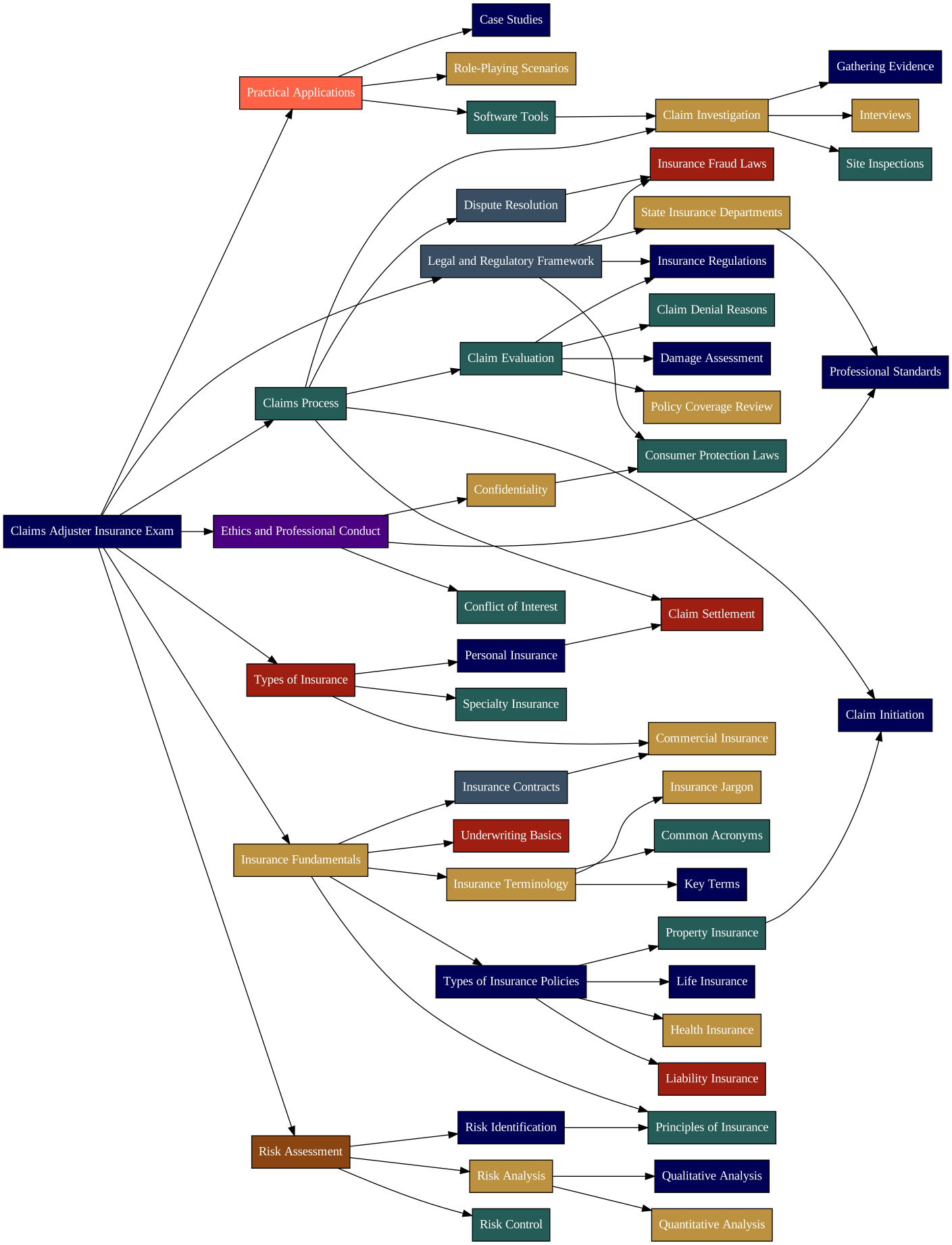
Quiz-summary
0 of 30 questions completed
Questions:
- 1
- 2
- 3
- 4
- 5
- 6
- 7
- 8
- 9
- 10
- 11
- 12
- 13
- 14
- 15
- 16
- 17
- 18
- 19
- 20
- 21
- 22
- 23
- 24
- 25
- 26
- 27
- 28
- 29
- 30
Information
Premium Practice Questions
You have already completed the quiz before. Hence you can not start it again.
Quiz is loading...
You must sign in or sign up to start the quiz.
You have to finish following quiz, to start this quiz:
Results
0 of 30 questions answered correctly
Your time:
Time has elapsed
You have reached 0 of 0 points, (0)
Categories
- Not categorized 0%
- 1
- 2
- 3
- 4
- 5
- 6
- 7
- 8
- 9
- 10
- 11
- 12
- 13
- 14
- 15
- 16
- 17
- 18
- 19
- 20
- 21
- 22
- 23
- 24
- 25
- 26
- 27
- 28
- 29
- 30
- Answered
- Review
-
Question 1 of 30
1. Question
A recent bushfire has devastated a rural community with a high proportion of elderly residents and individuals with limited English proficiency. Many residents have lost their homes and are now facing complex insurance claims processes. Maria, an insurance claims officer, is assigned to assist these affected individuals. Considering the principles of caring for vulnerable customers, which of the following approaches best reflects Maria’s ethical and legal obligations in this crisis situation?
Correct
Vulnerability, in the context of insurance, extends beyond simple disadvantage and encompasses situations where an individual’s capacity to make informed decisions or effectively navigate the insurance process is significantly impaired. This impairment can stem from a variety of factors, including cognitive impairments, physical disabilities, mental health conditions, age-related vulnerabilities, language barriers, low financial literacy, or sudden life events like bereavement or job loss. Understanding the nuances of vulnerability is crucial for insurance professionals to uphold their duty of care. This duty necessitates proactive identification of vulnerable customers, tailoring communication to their specific needs, and ensuring fair and transparent treatment throughout the insurance lifecycle, from product selection to claims handling. Failing to recognize and address vulnerability can lead to adverse outcomes, such as unsuitable product purchases, difficulty understanding policy terms, or inequitable claims settlements. Legal and regulatory frameworks, including consumer protection laws and anti-discrimination laws, further reinforce the obligation of insurers to protect vulnerable customers. The ethical responsibility of insurance professionals extends beyond mere compliance with regulations; it demands a commitment to acting in the best interests of vulnerable individuals and promoting their financial well-being. This involves continuous training, collaboration with support services, and a willingness to adapt practices to meet the diverse needs of vulnerable populations.
Incorrect
Vulnerability, in the context of insurance, extends beyond simple disadvantage and encompasses situations where an individual’s capacity to make informed decisions or effectively navigate the insurance process is significantly impaired. This impairment can stem from a variety of factors, including cognitive impairments, physical disabilities, mental health conditions, age-related vulnerabilities, language barriers, low financial literacy, or sudden life events like bereavement or job loss. Understanding the nuances of vulnerability is crucial for insurance professionals to uphold their duty of care. This duty necessitates proactive identification of vulnerable customers, tailoring communication to their specific needs, and ensuring fair and transparent treatment throughout the insurance lifecycle, from product selection to claims handling. Failing to recognize and address vulnerability can lead to adverse outcomes, such as unsuitable product purchases, difficulty understanding policy terms, or inequitable claims settlements. Legal and regulatory frameworks, including consumer protection laws and anti-discrimination laws, further reinforce the obligation of insurers to protect vulnerable customers. The ethical responsibility of insurance professionals extends beyond mere compliance with regulations; it demands a commitment to acting in the best interests of vulnerable individuals and promoting their financial well-being. This involves continuous training, collaboration with support services, and a willingness to adapt practices to meet the diverse needs of vulnerable populations.
-
Question 2 of 30
2. Question
“InsureAll,” a national insurance provider, is proactively auditing its current policies and procedures to ensure adherence to consumer protection laws and its duty of care towards vulnerable customers, as outlined in the ANZIIF Foundation Certificate in Insurance Caring for the Vulnerable Customer 2020 GICUST-20-01. Which of the following actions BEST demonstrates a comprehensive approach to fulfilling this responsibility?
Correct
The scenario describes a situation where an insurance company is reviewing its policies and procedures to ensure compliance with consumer protection laws and the duty of care owed to vulnerable customers. The key aspect is proactively identifying and mitigating potential risks associated with serving vulnerable individuals. This involves several layers of assessment and adaptation. Firstly, the company must conduct a comprehensive review of its existing policies to identify any areas that may disproportionately affect vulnerable customers or fail to adequately address their specific needs. This includes examining policy language, claims processes, and customer service interactions. Secondly, the company needs to implement training programs for its staff to enhance their understanding of vulnerability and equip them with the skills to effectively communicate and support vulnerable customers. This training should cover topics such as active listening, empathy, cultural sensitivity, and recognizing signs of vulnerability. Thirdly, the company should establish clear protocols for identifying vulnerable customers and documenting their specific needs. This may involve using questionnaires, surveys, or observational methods. Fourthly, the company must adapt its communication strategies to ensure that information is accessible and understandable to all customers, regardless of their literacy level or cognitive abilities. This may involve simplifying language, using visual aids, and providing information in multiple formats. Fifthly, the company should establish a system for monitoring and evaluating the effectiveness of its support strategies. This may involve tracking customer feedback, analyzing claims data, and conducting regular audits. The overarching goal is to create a customer-centric approach that prioritizes the needs of vulnerable individuals and ensures that they receive fair and equitable treatment.
Incorrect
The scenario describes a situation where an insurance company is reviewing its policies and procedures to ensure compliance with consumer protection laws and the duty of care owed to vulnerable customers. The key aspect is proactively identifying and mitigating potential risks associated with serving vulnerable individuals. This involves several layers of assessment and adaptation. Firstly, the company must conduct a comprehensive review of its existing policies to identify any areas that may disproportionately affect vulnerable customers or fail to adequately address their specific needs. This includes examining policy language, claims processes, and customer service interactions. Secondly, the company needs to implement training programs for its staff to enhance their understanding of vulnerability and equip them with the skills to effectively communicate and support vulnerable customers. This training should cover topics such as active listening, empathy, cultural sensitivity, and recognizing signs of vulnerability. Thirdly, the company should establish clear protocols for identifying vulnerable customers and documenting their specific needs. This may involve using questionnaires, surveys, or observational methods. Fourthly, the company must adapt its communication strategies to ensure that information is accessible and understandable to all customers, regardless of their literacy level or cognitive abilities. This may involve simplifying language, using visual aids, and providing information in multiple formats. Fifthly, the company should establish a system for monitoring and evaluating the effectiveness of its support strategies. This may involve tracking customer feedback, analyzing claims data, and conducting regular audits. The overarching goal is to create a customer-centric approach that prioritizes the needs of vulnerable individuals and ensures that they receive fair and equitable treatment.
-
Question 3 of 30
3. Question
Which of the following best encapsulates the definition of “vulnerability” in the context of the ANZIIF Foundation Certificate in Insurance Caring for the Vulnerable Customer 2020 (GICUST-20-01), considering relevant legal and regulatory frameworks?
Correct
Vulnerability, as defined within the insurance context and particularly concerning vulnerable customers, extends beyond simple disadvantage. It encompasses situations where a customer’s capacity to make informed decisions, understand their rights, or effectively engage with insurance providers is significantly impaired. This impairment can arise from a multitude of factors, including cognitive impairments, language barriers, financial hardship, or traumatic experiences. The key consideration is whether these factors substantially hinder the customer’s ability to protect their own interests within the insurance process. The duty of care owed to vulnerable customers is heightened, demanding proactive identification of vulnerability, tailored communication strategies, and a commitment to fair and transparent practices. Legal frameworks, such as consumer protection laws and anti-discrimination legislation, reinforce these obligations, emphasizing the need for insurers to avoid practices that could exploit or disadvantage vulnerable individuals. A customer’s lack of assertiveness, while potentially correlated with vulnerability, is not, on its own, a definitive indicator. Similarly, a customer’s comprehension of basic insurance concepts does not automatically negate the possibility of underlying vulnerabilities that could affect their decision-making process in more complex scenarios. The definition is not solely based on the insurer’s perception, but on the customer’s actual ability to engage effectively.
Incorrect
Vulnerability, as defined within the insurance context and particularly concerning vulnerable customers, extends beyond simple disadvantage. It encompasses situations where a customer’s capacity to make informed decisions, understand their rights, or effectively engage with insurance providers is significantly impaired. This impairment can arise from a multitude of factors, including cognitive impairments, language barriers, financial hardship, or traumatic experiences. The key consideration is whether these factors substantially hinder the customer’s ability to protect their own interests within the insurance process. The duty of care owed to vulnerable customers is heightened, demanding proactive identification of vulnerability, tailored communication strategies, and a commitment to fair and transparent practices. Legal frameworks, such as consumer protection laws and anti-discrimination legislation, reinforce these obligations, emphasizing the need for insurers to avoid practices that could exploit or disadvantage vulnerable individuals. A customer’s lack of assertiveness, while potentially correlated with vulnerability, is not, on its own, a definitive indicator. Similarly, a customer’s comprehension of basic insurance concepts does not automatically negate the possibility of underlying vulnerabilities that could affect their decision-making process in more complex scenarios. The definition is not solely based on the insurer’s perception, but on the customer’s actual ability to engage effectively.
-
Question 4 of 30
4. Question
An insurance company, “SecureFuture,” is facing increasing pressure to meet quarterly profit targets. A significant portion of their customer base consists of elderly individuals with pre-existing health conditions. To improve profitability, SecureFuture implements a policy of more rigorously scrutinizing claims from these elderly customers, leading to a higher rate of claim denials. This action, while potentially boosting short-term profits, raises significant ethical concerns. Which of the following best describes the central ethical dilemma faced by SecureFuture in this scenario, considering the principles outlined in the ANZIIF Foundation Certificate in Insurance Caring for the Vulnerable Customer 2020 GICUST-20-01?
Correct
The core principle underpinning ethical responsibilities in insurance is balancing the insurer’s need for profitability with the insurer’s duty to provide appropriate care and service to vulnerable customers. Ethical dilemmas arise when these two needs conflict. For example, insurers might be tempted to deny claims to boost profits, even when the customer has a legitimate claim. Insurers need to consider both the short-term and long-term impacts of their decisions on vulnerable customers. Short-term profit gains from denying legitimate claims can lead to long-term reputational damage and loss of customer trust. Anti-Discrimination Laws play a crucial role in protecting vulnerable customers. These laws prohibit insurers from discriminating against individuals based on protected characteristics such as age, disability, or mental health status. Insurers must ensure that their products and services are accessible and appropriate for all customers, regardless of their vulnerability. This includes providing clear and easy-to-understand information, offering flexible payment options, and providing support throughout the claims process. Training programs should focus on developing staff’s empathy, communication, and problem-solving skills. Staff should be trained to identify signs of vulnerability and to tailor their communication and service accordingly. This includes simplifying language, using visual aids, and providing emotional support. Insurance professionals should actively engage in advocacy and policy development to promote the interests of vulnerable customers. This includes working with advocacy groups, participating in industry forums, and lobbying for policy changes that protect vulnerable customers. Insurance professionals should also strive to create a culture of ethical decision-making within their organizations. This includes establishing clear ethical guidelines, providing regular ethics training, and encouraging employees to report unethical behavior.
Incorrect
The core principle underpinning ethical responsibilities in insurance is balancing the insurer’s need for profitability with the insurer’s duty to provide appropriate care and service to vulnerable customers. Ethical dilemmas arise when these two needs conflict. For example, insurers might be tempted to deny claims to boost profits, even when the customer has a legitimate claim. Insurers need to consider both the short-term and long-term impacts of their decisions on vulnerable customers. Short-term profit gains from denying legitimate claims can lead to long-term reputational damage and loss of customer trust. Anti-Discrimination Laws play a crucial role in protecting vulnerable customers. These laws prohibit insurers from discriminating against individuals based on protected characteristics such as age, disability, or mental health status. Insurers must ensure that their products and services are accessible and appropriate for all customers, regardless of their vulnerability. This includes providing clear and easy-to-understand information, offering flexible payment options, and providing support throughout the claims process. Training programs should focus on developing staff’s empathy, communication, and problem-solving skills. Staff should be trained to identify signs of vulnerability and to tailor their communication and service accordingly. This includes simplifying language, using visual aids, and providing emotional support. Insurance professionals should actively engage in advocacy and policy development to promote the interests of vulnerable customers. This includes working with advocacy groups, participating in industry forums, and lobbying for policy changes that protect vulnerable customers. Insurance professionals should also strive to create a culture of ethical decision-making within their organizations. This includes establishing clear ethical guidelines, providing regular ethics training, and encouraging employees to report unethical behavior.
-
Question 5 of 30
5. Question
Jamal, an insurance broker, notices that a prospective client, Elisabetta, an 80-year-old woman with limited English proficiency, appears confused and overwhelmed when discussing the details of a complex life insurance policy. Elisabetta repeatedly asks for clarification on the same clauses and seems unable to grasp the long-term implications of the contract. Under the ANZIIF Foundation Certificate in Insurance Caring for the Vulnerable Customer guidelines, what is Jamal’s *most* appropriate course of action, considering his duty of care and relevant consumer protection laws?
Correct
The core of this question lies in understanding the legal and ethical duty of care owed by insurance professionals to vulnerable customers. This duty extends beyond mere compliance with regulations; it requires proactive measures to ensure fair treatment and avoid exploitation. Consumer protection laws mandate that insurers act in good faith and with due diligence when dealing with all customers, but this responsibility is heightened when dealing with individuals exhibiting signs of vulnerability. Anti-discrimination laws prohibit unfair treatment based on protected characteristics (disability, age, etc.), and insurers must be vigilant in avoiding practices that could be considered discriminatory. Privacy and data protection regulations are also crucial; insurers must handle sensitive information with utmost care and transparency. The assessment of “reasonable steps” considers the insurer’s knowledge of the customer’s vulnerability, the potential impact of the insurance product or service, and the available resources to provide appropriate support. Failing to take such steps can lead to legal repercussions, reputational damage, and, most importantly, harm to the vulnerable individual. The concept of “unconscionable conduct” under Australian Consumer Law is particularly relevant, as it prohibits businesses from taking unfair advantage of a consumer’s vulnerability or disadvantage. Therefore, a response that reflects a proactive and ethically sound approach to assisting the vulnerable customer, considering all relevant legal and regulatory factors, is the most appropriate.
Incorrect
The core of this question lies in understanding the legal and ethical duty of care owed by insurance professionals to vulnerable customers. This duty extends beyond mere compliance with regulations; it requires proactive measures to ensure fair treatment and avoid exploitation. Consumer protection laws mandate that insurers act in good faith and with due diligence when dealing with all customers, but this responsibility is heightened when dealing with individuals exhibiting signs of vulnerability. Anti-discrimination laws prohibit unfair treatment based on protected characteristics (disability, age, etc.), and insurers must be vigilant in avoiding practices that could be considered discriminatory. Privacy and data protection regulations are also crucial; insurers must handle sensitive information with utmost care and transparency. The assessment of “reasonable steps” considers the insurer’s knowledge of the customer’s vulnerability, the potential impact of the insurance product or service, and the available resources to provide appropriate support. Failing to take such steps can lead to legal repercussions, reputational damage, and, most importantly, harm to the vulnerable individual. The concept of “unconscionable conduct” under Australian Consumer Law is particularly relevant, as it prohibits businesses from taking unfair advantage of a consumer’s vulnerability or disadvantage. Therefore, a response that reflects a proactive and ethically sound approach to assisting the vulnerable customer, considering all relevant legal and regulatory factors, is the most appropriate.
-
Question 6 of 30
6. Question
Ayesha, an insurance broker, is assisting a new client, Bob, who has recently immigrated and has limited English proficiency. During their conversation, Bob expresses confusion about the policy terms and conditions. Ayesha, pressed for time due to a busy schedule, quickly summarizes the key points and encourages Bob to sign the agreement. Later, Bob files a complaint, claiming he didn’t fully understand the policy’s exclusions and feels misled. Which principle has Ayesha most likely violated in her interaction with Bob?
Correct
Vulnerability, in the context of insurance, extends beyond simple disadvantage. It encompasses situations where an individual’s capacity to make informed decisions or advocate for their own interests is significantly impaired. This impairment can arise from a multitude of factors including cognitive impairments, mental health conditions, physical disabilities, age-related limitations, language barriers, low literacy, or financial hardship. Understanding the nuances of these factors is crucial for insurance professionals. Consumer protection laws mandate that insurers act fairly and reasonably when dealing with all customers, but this duty is heightened when dealing with vulnerable individuals. Insurers must take proactive steps to identify vulnerability and adjust their practices accordingly. This may involve simplifying communication, providing additional support during the claims process, or offering tailored product advice. Failure to do so can result in regulatory sanctions and reputational damage. The concept of “reasonableness” is central to determining whether an insurer has met its duty of care. Reasonableness is evaluated based on what a prudent insurer, possessing the necessary expertise and resources, would have done in similar circumstances. This includes considering the specific vulnerabilities of the customer, the complexity of the insurance product, and the potential consequences of making an inappropriate decision. The insurer must demonstrate that it has taken reasonable steps to ensure that the customer understands the product and its implications. Furthermore, the principles of procedural fairness dictate that insurers must provide vulnerable customers with a fair opportunity to present their case, access information, and challenge decisions. This requires insurers to have clear and transparent processes for handling complaints and disputes, and to provide vulnerable customers with appropriate assistance to navigate these processes.
Incorrect
Vulnerability, in the context of insurance, extends beyond simple disadvantage. It encompasses situations where an individual’s capacity to make informed decisions or advocate for their own interests is significantly impaired. This impairment can arise from a multitude of factors including cognitive impairments, mental health conditions, physical disabilities, age-related limitations, language barriers, low literacy, or financial hardship. Understanding the nuances of these factors is crucial for insurance professionals. Consumer protection laws mandate that insurers act fairly and reasonably when dealing with all customers, but this duty is heightened when dealing with vulnerable individuals. Insurers must take proactive steps to identify vulnerability and adjust their practices accordingly. This may involve simplifying communication, providing additional support during the claims process, or offering tailored product advice. Failure to do so can result in regulatory sanctions and reputational damage. The concept of “reasonableness” is central to determining whether an insurer has met its duty of care. Reasonableness is evaluated based on what a prudent insurer, possessing the necessary expertise and resources, would have done in similar circumstances. This includes considering the specific vulnerabilities of the customer, the complexity of the insurance product, and the potential consequences of making an inappropriate decision. The insurer must demonstrate that it has taken reasonable steps to ensure that the customer understands the product and its implications. Furthermore, the principles of procedural fairness dictate that insurers must provide vulnerable customers with a fair opportunity to present their case, access information, and challenge decisions. This requires insurers to have clear and transparent processes for handling complaints and disputes, and to provide vulnerable customers with appropriate assistance to navigate these processes.
-
Question 7 of 30
7. Question
Jamila, an insurance broker, is assisting Mr. Nguyen, a recent immigrant who speaks limited English, with selecting a suitable home insurance policy. Mr. Nguyen expresses confusion about the policy’s flood coverage, as he lives near a river. He also mentions he recently lost his job and is worried about premium affordability. Considering the principles of caring for vulnerable customers, what is Jamila’s MOST appropriate course of action?
Correct
Vulnerability, in the context of insurance, extends beyond easily identifiable groups and encompasses a spectrum of temporary and permanent conditions. It’s crucial to understand that vulnerability isn’t solely defined by fixed characteristics like age or disability, but also by circumstances that impair a customer’s ability to make informed decisions about insurance. The Australian Securities and Investments Commission (ASIC) Regulatory Guide 216 (RG 216) provides guidance on how to identify and assist vulnerable consumers, emphasizing a proactive approach. A key aspect is recognizing the dynamic nature of vulnerability. A customer might be temporarily vulnerable due to factors like bereavement, job loss, or a medical emergency. These situations can significantly impact their decision-making capacity and require tailored support from insurance providers. Insurance professionals need to be equipped to identify these transient vulnerabilities and adapt their communication and service delivery accordingly. Furthermore, effective communication is paramount. This involves simplifying complex insurance jargon, offering multiple communication channels (phone, email, in-person), and actively listening to the customer’s needs and concerns. Cultural sensitivity is also essential, particularly when dealing with non-native speakers or individuals from diverse cultural backgrounds. Insurance professionals should be trained to recognize cultural nuances and adapt their communication style to ensure clear understanding and build trust. The duty of care extends to proactively identifying potential vulnerabilities and taking reasonable steps to mitigate any potential harm to the customer.
Incorrect
Vulnerability, in the context of insurance, extends beyond easily identifiable groups and encompasses a spectrum of temporary and permanent conditions. It’s crucial to understand that vulnerability isn’t solely defined by fixed characteristics like age or disability, but also by circumstances that impair a customer’s ability to make informed decisions about insurance. The Australian Securities and Investments Commission (ASIC) Regulatory Guide 216 (RG 216) provides guidance on how to identify and assist vulnerable consumers, emphasizing a proactive approach. A key aspect is recognizing the dynamic nature of vulnerability. A customer might be temporarily vulnerable due to factors like bereavement, job loss, or a medical emergency. These situations can significantly impact their decision-making capacity and require tailored support from insurance providers. Insurance professionals need to be equipped to identify these transient vulnerabilities and adapt their communication and service delivery accordingly. Furthermore, effective communication is paramount. This involves simplifying complex insurance jargon, offering multiple communication channels (phone, email, in-person), and actively listening to the customer’s needs and concerns. Cultural sensitivity is also essential, particularly when dealing with non-native speakers or individuals from diverse cultural backgrounds. Insurance professionals should be trained to recognize cultural nuances and adapt their communication style to ensure clear understanding and build trust. The duty of care extends to proactively identifying potential vulnerabilities and taking reasonable steps to mitigate any potential harm to the customer.
-
Question 8 of 30
8. Question
What is the MOST significant benefit of demonstrating cultural competence when providing insurance services to diverse populations?
Correct
This question focuses on the importance of cultural competence in insurance, particularly when serving diverse populations. Cultural competence involves understanding and respecting cultural differences, adapting services to meet the unique needs of different cultural groups, and providing training to staff on cultural sensitivity. In the context of insurance, cultural competence can help insurance professionals build trust with customers from diverse backgrounds, communicate effectively, and avoid misunderstandings or biases. It also involves being aware of cultural norms and values that may influence customers’ attitudes towards insurance, their communication styles, and their decision-making processes. For example, some cultures may have a greater emphasis on family and community, which may influence their insurance needs and preferences. Cultural competence also requires being aware of language barriers and providing services in multiple languages or using interpreters when necessary. Failing to demonstrate cultural competence can lead to misunderstandings, dissatisfaction, and even discrimination.
Incorrect
This question focuses on the importance of cultural competence in insurance, particularly when serving diverse populations. Cultural competence involves understanding and respecting cultural differences, adapting services to meet the unique needs of different cultural groups, and providing training to staff on cultural sensitivity. In the context of insurance, cultural competence can help insurance professionals build trust with customers from diverse backgrounds, communicate effectively, and avoid misunderstandings or biases. It also involves being aware of cultural norms and values that may influence customers’ attitudes towards insurance, their communication styles, and their decision-making processes. For example, some cultures may have a greater emphasis on family and community, which may influence their insurance needs and preferences. Cultural competence also requires being aware of language barriers and providing services in multiple languages or using interpreters when necessary. Failing to demonstrate cultural competence can lead to misunderstandings, dissatisfaction, and even discrimination.
-
Question 9 of 30
9. Question
A recent regulatory review of “SecureFuture Insurance” revealed inconsistencies in their handling of vulnerable customers. While the company has policies referencing the definition of vulnerability according to ANZIIF guidelines, their practical application demonstrates a lack of comprehensive understanding. Specifically, customer service representatives are not consistently identifying signs of vulnerability beyond obvious physical disabilities, and internal training focuses primarily on avoiding legal repercussions rather than proactive support. Which of the following statements BEST describes the MOST significant failing of “SecureFuture Insurance” in meeting its duty of care towards vulnerable customers, considering both the legal and ethical dimensions?
Correct
Vulnerability, in the context of insurance, extends beyond simple disadvantage. It encompasses situations where a customer’s capacity to make informed decisions or effectively navigate insurance processes is significantly impaired. This impairment can stem from various factors, including cognitive impairments, language barriers, health conditions, or life events that create a power imbalance between the insurer and the insured. The duty of care, a fundamental principle in insurance, requires insurers to take reasonable steps to avoid causing harm to customers. For vulnerable customers, this duty is heightened. It necessitates proactive identification of vulnerability, adaptation of communication methods, and implementation of support mechanisms to ensure fair outcomes. Failing to adequately address the needs of vulnerable customers can lead to breaches of consumer protection laws, anti-discrimination legislation, and privacy regulations. Insurance regulations and consumer protection laws mandate fair treatment and prohibit discriminatory practices. Anti-discrimination laws protect individuals from unfair treatment based on protected characteristics such as disability, age, or ethnicity. Privacy and data protection regulations govern the collection, use, and disclosure of personal information, ensuring that vulnerable customers’ sensitive data is handled with utmost care and confidentiality. The interplay between these factors determines the extent to which an insurer meets its ethical and legal obligations to vulnerable customers.
Incorrect
Vulnerability, in the context of insurance, extends beyond simple disadvantage. It encompasses situations where a customer’s capacity to make informed decisions or effectively navigate insurance processes is significantly impaired. This impairment can stem from various factors, including cognitive impairments, language barriers, health conditions, or life events that create a power imbalance between the insurer and the insured. The duty of care, a fundamental principle in insurance, requires insurers to take reasonable steps to avoid causing harm to customers. For vulnerable customers, this duty is heightened. It necessitates proactive identification of vulnerability, adaptation of communication methods, and implementation of support mechanisms to ensure fair outcomes. Failing to adequately address the needs of vulnerable customers can lead to breaches of consumer protection laws, anti-discrimination legislation, and privacy regulations. Insurance regulations and consumer protection laws mandate fair treatment and prohibit discriminatory practices. Anti-discrimination laws protect individuals from unfair treatment based on protected characteristics such as disability, age, or ethnicity. Privacy and data protection regulations govern the collection, use, and disclosure of personal information, ensuring that vulnerable customers’ sensitive data is handled with utmost care and confidentiality. The interplay between these factors determines the extent to which an insurer meets its ethical and legal obligations to vulnerable customers.
-
Question 10 of 30
10. Question
A recent independent audit of “SecureSure Insurance” reveals a pattern of denying claims from elderly customers diagnosed with early-stage dementia, citing “failure to fully understand policy terms” as the primary reason. Internal training primarily focuses on sales targets, with minimal emphasis on identifying and assisting vulnerable customers. Which of the following represents the MOST significant breach of regulatory and ethical obligations, considering the principles outlined in the ANZIIF Foundation Certificate in Insurance Caring for the Vulnerable Customer 2020 GICUST-20-01?
Correct
Vulnerability in the context of insurance isn’t solely about financial hardship; it encompasses a range of factors that can impair a customer’s ability to make informed decisions or advocate for their own interests. These factors include cognitive impairments, health conditions, life events (bereavement, job loss), language barriers, and low financial literacy. The duty of care requires insurers to take reasonable steps to identify and respond to vulnerability, tailoring their communication and processes to meet the customer’s specific needs. This includes adapting communication styles, providing clear and concise information, and offering additional support during the claims process. Anti-discrimination laws prohibit insurers from unfairly discriminating against vulnerable customers based on protected characteristics like disability or age. Privacy regulations require insurers to handle sensitive personal information with care and transparency, ensuring that vulnerable customers understand how their data is being used. The concept of “reasonable steps” is crucial; insurers aren’t expected to be mind-readers, but they are expected to have systems and training in place to identify potential vulnerability and respond appropriately. Ignoring clear signs of vulnerability, such as a customer repeatedly asking the same questions or expressing confusion about policy terms, would likely be considered a breach of the duty of care. Furthermore, insurers must be proactive in ensuring their products and services are accessible to vulnerable customers, for example, by providing information in multiple formats (large print, audio) or offering assistance with completing forms. The regulatory framework emphasizes fairness and transparency in all dealings with vulnerable customers, aiming to prevent exploitation or disadvantage.
Incorrect
Vulnerability in the context of insurance isn’t solely about financial hardship; it encompasses a range of factors that can impair a customer’s ability to make informed decisions or advocate for their own interests. These factors include cognitive impairments, health conditions, life events (bereavement, job loss), language barriers, and low financial literacy. The duty of care requires insurers to take reasonable steps to identify and respond to vulnerability, tailoring their communication and processes to meet the customer’s specific needs. This includes adapting communication styles, providing clear and concise information, and offering additional support during the claims process. Anti-discrimination laws prohibit insurers from unfairly discriminating against vulnerable customers based on protected characteristics like disability or age. Privacy regulations require insurers to handle sensitive personal information with care and transparency, ensuring that vulnerable customers understand how their data is being used. The concept of “reasonable steps” is crucial; insurers aren’t expected to be mind-readers, but they are expected to have systems and training in place to identify potential vulnerability and respond appropriately. Ignoring clear signs of vulnerability, such as a customer repeatedly asking the same questions or expressing confusion about policy terms, would likely be considered a breach of the duty of care. Furthermore, insurers must be proactive in ensuring their products and services are accessible to vulnerable customers, for example, by providing information in multiple formats (large print, audio) or offering assistance with completing forms. The regulatory framework emphasizes fairness and transparency in all dealings with vulnerable customers, aiming to prevent exploitation or disadvantage.
-
Question 11 of 30
11. Question
A recent bushfire has devastated a rural community. Mei, a Mandarin-speaking migrant with limited English proficiency, lost her home and all her belongings. She has a comprehensive home insurance policy but is overwhelmed by the claims process and struggles to understand the policy wording and the forms she needs to complete. Considering the principles of caring for vulnerable customers under ANZIIF guidelines and relevant consumer protection laws, what is the MOST appropriate course of action for the insurance company to take?
Correct
Vulnerability in insurance extends beyond easily identifiable groups and requires a nuanced understanding of individual circumstances. While the elderly, disabled, low-income individuals, non-native speakers, and those with mental health issues are recognized as potentially vulnerable, vulnerability can arise from a combination of factors or a temporary situation. The key aspect of vulnerability is the impaired ability to make informed decisions or advocate for oneself in insurance matters. This can be due to cognitive impairments, language barriers, financial constraints, emotional distress, or a lack of understanding of insurance products and processes. Consumer protection laws, such as those enforced by ASIC in Australia, mandate that insurers act fairly and reasonably, and this includes taking extra care when dealing with vulnerable customers. The duty of care requires insurers to proactively identify and address vulnerability, tailoring communication and processes to meet the specific needs of the individual. This could involve simplifying complex policy documents, providing assistance with claims processes, or offering alternative communication methods. Failing to recognize and address vulnerability can lead to unfair outcomes, breaches of regulatory requirements, and reputational damage for the insurer. Therefore, a comprehensive understanding of vulnerability requires recognizing the dynamic and multifaceted nature of the concept and applying appropriate measures to protect vulnerable customers.
Incorrect
Vulnerability in insurance extends beyond easily identifiable groups and requires a nuanced understanding of individual circumstances. While the elderly, disabled, low-income individuals, non-native speakers, and those with mental health issues are recognized as potentially vulnerable, vulnerability can arise from a combination of factors or a temporary situation. The key aspect of vulnerability is the impaired ability to make informed decisions or advocate for oneself in insurance matters. This can be due to cognitive impairments, language barriers, financial constraints, emotional distress, or a lack of understanding of insurance products and processes. Consumer protection laws, such as those enforced by ASIC in Australia, mandate that insurers act fairly and reasonably, and this includes taking extra care when dealing with vulnerable customers. The duty of care requires insurers to proactively identify and address vulnerability, tailoring communication and processes to meet the specific needs of the individual. This could involve simplifying complex policy documents, providing assistance with claims processes, or offering alternative communication methods. Failing to recognize and address vulnerability can lead to unfair outcomes, breaches of regulatory requirements, and reputational damage for the insurer. Therefore, a comprehensive understanding of vulnerability requires recognizing the dynamic and multifaceted nature of the concept and applying appropriate measures to protect vulnerable customers.
-
Question 12 of 30
12. Question
Aysha, an insurance claims officer, is handling a complex claim for a 78-year-old client, Kenji, who has recently been diagnosed with early-stage dementia. Kenji has a valid claim for long-term disability benefits, and Aysha offers him a lump-sum settlement as an alternative to monthly payments. Kenji seems confused but agrees to the lump sum. Considering the ethical duty of care towards vulnerable customers, what is Aysha’s MOST appropriate course of action?
Correct
The core of the question revolves around the ethical duty of care insurers owe to vulnerable customers, especially when a claim could significantly impact their well-being. This duty transcends mere adherence to policy terms and legal obligations; it necessitates proactive measures to ensure the customer understands the implications of their choices and receives appropriate support. The scenario highlights a customer, potentially facing financial hardship and cognitive difficulties, being offered a lump sum settlement. While legally permissible, accepting such a settlement might not be in their best long-term interest if they lack the capacity to manage the funds effectively or if ongoing care is required. The ethical dilemma lies in balancing the insurer’s commercial interests (settling the claim efficiently) with the vulnerable customer’s well-being. Simply processing the claim according to standard procedures might constitute a breach of the duty of care. Instead, the insurer should explore alternative solutions that prioritize the customer’s needs, such as structured settlements, guardianship arrangements (if appropriate and legally feasible), or referrals to financial counseling services. The key is to facilitate informed decision-making and prevent potential exploitation or financial mismanagement. Consumer Protection Laws and Anti-Discrimination Laws are relevant here, as the insurer must ensure the vulnerable customer is not unfairly disadvantaged due to their vulnerability. The concept of “unconscionable conduct” may also be relevant, particularly if the insurer knowingly takes advantage of the customer’s vulnerability.
Incorrect
The core of the question revolves around the ethical duty of care insurers owe to vulnerable customers, especially when a claim could significantly impact their well-being. This duty transcends mere adherence to policy terms and legal obligations; it necessitates proactive measures to ensure the customer understands the implications of their choices and receives appropriate support. The scenario highlights a customer, potentially facing financial hardship and cognitive difficulties, being offered a lump sum settlement. While legally permissible, accepting such a settlement might not be in their best long-term interest if they lack the capacity to manage the funds effectively or if ongoing care is required. The ethical dilemma lies in balancing the insurer’s commercial interests (settling the claim efficiently) with the vulnerable customer’s well-being. Simply processing the claim according to standard procedures might constitute a breach of the duty of care. Instead, the insurer should explore alternative solutions that prioritize the customer’s needs, such as structured settlements, guardianship arrangements (if appropriate and legally feasible), or referrals to financial counseling services. The key is to facilitate informed decision-making and prevent potential exploitation or financial mismanagement. Consumer Protection Laws and Anti-Discrimination Laws are relevant here, as the insurer must ensure the vulnerable customer is not unfairly disadvantaged due to their vulnerability. The concept of “unconscionable conduct” may also be relevant, particularly if the insurer knowingly takes advantage of the customer’s vulnerability.
-
Question 13 of 30
13. Question
Jamal, a recent immigrant with limited English proficiency, is applying for home insurance. During the sales process, he seems hesitant and asks several clarifying questions about the policy’s jargon-heavy terms and conditions. You notice he struggles to understand some key clauses. As an insurance professional, what is your MOST appropriate course of action, considering your duty of care and the principles of caring for vulnerable customers?
Correct
The scenario highlights a situation where a customer, due to their limited English proficiency and unfamiliarity with insurance terminology, is unable to fully comprehend the terms and conditions of the policy being offered. This falls under the category of vulnerability stemming from communication barriers. Insurance professionals have a duty of care to ensure that customers understand the products they are purchasing, especially when vulnerability is apparent. This duty is reinforced by consumer protection laws, which aim to prevent exploitation of vulnerable individuals. The most appropriate course of action is to provide the customer with clear, simplified explanations, potentially using visual aids or translation services, and to confirm their understanding before proceeding. Rushing the process or assuming understanding based on a superficial agreement could lead to mis-selling and a breach of ethical responsibilities. Offering a standard policy without addressing the communication barrier disregards the customer’s vulnerability. Suggesting they seek external help is a valid long-term strategy but does not address the immediate need for clear communication during the sales process. The core principle is to ensure informed consent and prevent potential detriment to the customer due to their vulnerability. This involves adapting communication methods to suit the customer’s needs and ensuring they have a complete understanding of the product and its implications.
Incorrect
The scenario highlights a situation where a customer, due to their limited English proficiency and unfamiliarity with insurance terminology, is unable to fully comprehend the terms and conditions of the policy being offered. This falls under the category of vulnerability stemming from communication barriers. Insurance professionals have a duty of care to ensure that customers understand the products they are purchasing, especially when vulnerability is apparent. This duty is reinforced by consumer protection laws, which aim to prevent exploitation of vulnerable individuals. The most appropriate course of action is to provide the customer with clear, simplified explanations, potentially using visual aids or translation services, and to confirm their understanding before proceeding. Rushing the process or assuming understanding based on a superficial agreement could lead to mis-selling and a breach of ethical responsibilities. Offering a standard policy without addressing the communication barrier disregards the customer’s vulnerability. Suggesting they seek external help is a valid long-term strategy but does not address the immediate need for clear communication during the sales process. The core principle is to ensure informed consent and prevent potential detriment to the customer due to their vulnerability. This involves adapting communication methods to suit the customer’s needs and ensuring they have a complete understanding of the product and its implications.
-
Question 14 of 30
14. Question
A recent migrant, Omar, is seeking property insurance. He has limited English proficiency, is unfamiliar with Australian insurance regulations, and is experiencing financial strain due to initial relocation costs. Which of the following best encapsulates why Omar should be considered a vulnerable customer in this scenario?
Correct
Understanding vulnerability in the context of insurance requires recognizing how various factors interact to diminish a customer’s capacity to make informed decisions or navigate the insurance process effectively. It’s not solely about the presence of a single vulnerability factor, but the cumulative impact of multiple factors, and how these factors affect a person’s ability to understand and act on insurance information. For instance, a customer with a mild cognitive impairment might be considered vulnerable when coupled with low financial literacy and limited access to support networks. Insurance professionals have a duty of care to identify and respond to these vulnerabilities appropriately. This involves adapting communication methods, providing additional support, and ensuring fair outcomes, all within the bounds of legal and ethical guidelines. Anti-discrimination laws are crucial here, preventing unfair treatment based on protected characteristics, while privacy regulations ensure sensitive information is handled responsibly. The duty of care requires insurers to act reasonably and responsibly, considering the specific vulnerabilities of their customers. This includes simplifying complex policy terms, offering assistance with claims processes, and providing clear and accessible information about insurance products. Failure to do so could lead to breaches of consumer protection laws and reputational damage.
Incorrect
Understanding vulnerability in the context of insurance requires recognizing how various factors interact to diminish a customer’s capacity to make informed decisions or navigate the insurance process effectively. It’s not solely about the presence of a single vulnerability factor, but the cumulative impact of multiple factors, and how these factors affect a person’s ability to understand and act on insurance information. For instance, a customer with a mild cognitive impairment might be considered vulnerable when coupled with low financial literacy and limited access to support networks. Insurance professionals have a duty of care to identify and respond to these vulnerabilities appropriately. This involves adapting communication methods, providing additional support, and ensuring fair outcomes, all within the bounds of legal and ethical guidelines. Anti-discrimination laws are crucial here, preventing unfair treatment based on protected characteristics, while privacy regulations ensure sensitive information is handled responsibly. The duty of care requires insurers to act reasonably and responsibly, considering the specific vulnerabilities of their customers. This includes simplifying complex policy terms, offering assistance with claims processes, and providing clear and accessible information about insurance products. Failure to do so could lead to breaches of consumer protection laws and reputational damage.
-
Question 15 of 30
15. Question
A recent independent review of “Secure Future Insurance” revealed a systemic failure to adequately support vulnerable customers. While the company had policies in place referencing the definition of vulnerability according to the ANZIIF Foundation Certificate in Insurance Caring for the Vulnerable Customer guidelines, the review found that frontline staff consistently failed to identify vulnerability indicators in practice, particularly in cases involving subtle cognitive impairments or temporary situational vulnerabilities. Furthermore, complex policy documents were not adapted for easier comprehension, leading to misunderstandings and potential financial detriment for vulnerable customers. Considering the legal and regulatory framework surrounding consumer protection and anti-discrimination, what is the MOST significant potential consequence for “Secure Future Insurance” arising from these findings?
Correct
Vulnerability, in the context of insurance, extends beyond easily identifiable groups and encompasses individuals whose circumstances significantly impair their ability to make informed decisions or protect their own interests. This impairment can stem from a range of factors, including cognitive impairments (which may not always be immediately apparent), temporary situations like bereavement or sudden job loss, and systemic issues like digital exclusion. Insurance professionals have a duty of care to proactively identify and support vulnerable customers, adapting their communication and processes to ensure equitable access to services. This includes understanding the nuances of various vulnerabilities, such as how a non-native speaker might struggle with complex policy documents even with good general language skills, or how someone with fluctuating mental health might experience periods of heightened vulnerability. Furthermore, the legal and regulatory framework, particularly consumer protection laws and anti-discrimination laws, mandates that insurers provide fair and equitable treatment, which necessitates reasonable adjustments for vulnerable customers. It’s not merely about avoiding explicit discrimination but about actively removing barriers that prevent vulnerable individuals from accessing and understanding insurance products and services. Failure to do so can lead to regulatory penalties and reputational damage. The key lies in a proactive approach involving staff training, robust vulnerability identification processes, and a commitment to clear, accessible communication.
Incorrect
Vulnerability, in the context of insurance, extends beyond easily identifiable groups and encompasses individuals whose circumstances significantly impair their ability to make informed decisions or protect their own interests. This impairment can stem from a range of factors, including cognitive impairments (which may not always be immediately apparent), temporary situations like bereavement or sudden job loss, and systemic issues like digital exclusion. Insurance professionals have a duty of care to proactively identify and support vulnerable customers, adapting their communication and processes to ensure equitable access to services. This includes understanding the nuances of various vulnerabilities, such as how a non-native speaker might struggle with complex policy documents even with good general language skills, or how someone with fluctuating mental health might experience periods of heightened vulnerability. Furthermore, the legal and regulatory framework, particularly consumer protection laws and anti-discrimination laws, mandates that insurers provide fair and equitable treatment, which necessitates reasonable adjustments for vulnerable customers. It’s not merely about avoiding explicit discrimination but about actively removing barriers that prevent vulnerable individuals from accessing and understanding insurance products and services. Failure to do so can lead to regulatory penalties and reputational damage. The key lies in a proactive approach involving staff training, robust vulnerability identification processes, and a commitment to clear, accessible communication.
-
Question 16 of 30
16. Question
A recent migrant, Fatima, with limited English proficiency and minimal understanding of insurance products, approaches an insurance broker, Kenji, seeking life insurance. Kenji, eager to meet his sales targets, quickly recommends a complex whole-of-life policy without adequately explaining its features, benefits, or associated costs in a manner Fatima can understand. Fatima, trusting Kenji’s expertise, purchases the policy. Six months later, Fatima discovers she cannot afford the premiums and the policy’s surrender value is significantly less than the premiums paid. What is the MOST likely consequence of Kenji’s actions, considering the heightened duty of care owed to vulnerable customers?
Correct
The core principle revolves around understanding the heightened duty of care insurers owe to vulnerable customers, particularly concerning product suitability. This duty extends beyond merely offering a product; it necessitates a proactive assessment of the customer’s individual circumstances, comprehension level, and specific needs. The insurer must ensure the customer genuinely understands the product’s features, benefits, and limitations, and that it aligns with their financial situation and risk profile. This involves simplifying complex information, providing clear and accessible explanations, and verifying understanding. Failure to adequately assess suitability can lead to mis-selling, financial detriment, and breaches of consumer protection laws. The insurer must document their assessment process and the rationale behind recommending a particular product. The question explores the consequences of neglecting this duty, highlighting the potential for regulatory scrutiny, reputational damage, and legal action. The scenario underscores that simply having a compliant product is insufficient; the application of that product to a vulnerable customer requires diligent and empathetic consideration. The most appropriate course of action is to thoroughly review the customer’s situation, explain the product in plain language, and document the entire process to demonstrate due diligence and adherence to the duty of care.
Incorrect
The core principle revolves around understanding the heightened duty of care insurers owe to vulnerable customers, particularly concerning product suitability. This duty extends beyond merely offering a product; it necessitates a proactive assessment of the customer’s individual circumstances, comprehension level, and specific needs. The insurer must ensure the customer genuinely understands the product’s features, benefits, and limitations, and that it aligns with their financial situation and risk profile. This involves simplifying complex information, providing clear and accessible explanations, and verifying understanding. Failure to adequately assess suitability can lead to mis-selling, financial detriment, and breaches of consumer protection laws. The insurer must document their assessment process and the rationale behind recommending a particular product. The question explores the consequences of neglecting this duty, highlighting the potential for regulatory scrutiny, reputational damage, and legal action. The scenario underscores that simply having a compliant product is insufficient; the application of that product to a vulnerable customer requires diligent and empathetic consideration. The most appropriate course of action is to thoroughly review the customer’s situation, explain the product in plain language, and document the entire process to demonstrate due diligence and adherence to the duty of care.
-
Question 17 of 30
17. Question
Aisha, a newly licensed insurance broker, is assisting Kenji, an 80-year-old man with moderate hearing loss and limited digital literacy, in selecting a suitable health insurance policy. Kenji is overwhelmed by the policy documents and expresses confusion about the different coverage options. Aisha, pressed for time due to a busy schedule, quickly summarizes the key features of each plan and encourages Kenji to make a decision before the promotional period ends. Which of the following best describes Aisha’s actions in relation to her duty of care towards a vulnerable customer?
Correct
Vulnerability, within the context of insurance, extends beyond simple definitions of disadvantage. It encompasses a spectrum of situations where an individual’s capacity to make informed decisions, access services, or advocate for their own interests is significantly impaired. This impairment can arise from a combination of factors, including cognitive limitations, physical disabilities, health conditions (both mental and physical), age-related vulnerabilities (affecting both younger and older individuals), language barriers, literacy challenges, financial hardship, and social isolation. Understanding these intersecting factors is crucial. For instance, a low-income individual with a disability may face compounded challenges in navigating the complexities of insurance policies and claims processes. The legal and regulatory frameworks surrounding insurance, such as consumer protection laws and anti-discrimination laws, aim to address these vulnerabilities and ensure fair treatment. However, the practical application of these laws requires insurance professionals to actively identify and respond to the specific needs of vulnerable customers. This involves adapting communication styles, simplifying policy language, providing accessible formats, and offering tailored support throughout the insurance lifecycle, from initial purchase to claims settlement. Ignoring these vulnerabilities can lead to financial exploitation, inadequate coverage, and a breakdown of trust in the insurance industry. The duty of care owed by insurance providers necessitates a proactive approach to identifying and mitigating the risks faced by vulnerable customers, fostering a more inclusive and equitable insurance environment.
Incorrect
Vulnerability, within the context of insurance, extends beyond simple definitions of disadvantage. It encompasses a spectrum of situations where an individual’s capacity to make informed decisions, access services, or advocate for their own interests is significantly impaired. This impairment can arise from a combination of factors, including cognitive limitations, physical disabilities, health conditions (both mental and physical), age-related vulnerabilities (affecting both younger and older individuals), language barriers, literacy challenges, financial hardship, and social isolation. Understanding these intersecting factors is crucial. For instance, a low-income individual with a disability may face compounded challenges in navigating the complexities of insurance policies and claims processes. The legal and regulatory frameworks surrounding insurance, such as consumer protection laws and anti-discrimination laws, aim to address these vulnerabilities and ensure fair treatment. However, the practical application of these laws requires insurance professionals to actively identify and respond to the specific needs of vulnerable customers. This involves adapting communication styles, simplifying policy language, providing accessible formats, and offering tailored support throughout the insurance lifecycle, from initial purchase to claims settlement. Ignoring these vulnerabilities can lead to financial exploitation, inadequate coverage, and a breakdown of trust in the insurance industry. The duty of care owed by insurance providers necessitates a proactive approach to identifying and mitigating the risks faced by vulnerable customers, fostering a more inclusive and equitable insurance environment.
-
Question 18 of 30
18. Question
During a routine policy renewal discussion, insurance agent Javier notices that his client, Mrs. Ito, an 80-year-old widow, seems unusually confused and hesitant when discussing changes to her home insurance policy. She repeatedly asks the same questions and struggles to recall previous conversations about her coverage. While Mrs. Ito has always been a meticulous and engaged client, Javier observes a marked decline in her cognitive abilities. Considering the principles of “Caring for the Vulnerable Customer,” what is Javier’s MOST appropriate next step?
Correct
Vulnerability, in the context of insurance, extends beyond easily identifiable categories like age or disability. It encompasses situations where a customer’s capacity to make informed decisions or advocate for their interests is significantly impaired. This impairment can arise from a combination of factors – financial hardship, cognitive limitations, language barriers, health issues (both mental and physical), and social isolation. The legal and regulatory framework, particularly consumer protection laws and the duty of care, mandates that insurers proactively identify and address these vulnerabilities. This requires more than simply asking a customer if they are vulnerable; it demands active listening, empathy, and the ability to recognize subtle cues indicating potential difficulties. The assessment of vulnerability should be holistic, considering not only individual circumstances but also the interaction between these circumstances and the complexities of insurance products and processes. For instance, a customer with limited English proficiency might struggle to understand complex policy documents, even if they possess otherwise sound financial literacy. Similarly, a person experiencing grief or trauma may find it challenging to navigate the claims process effectively. The duty of care requires insurers to adapt their communication and processes to meet the specific needs of vulnerable customers, ensuring they can access and understand insurance products and services fairly. Ignoring these nuanced aspects of vulnerability can lead to poor outcomes, financial detriment, and breaches of regulatory requirements.
Incorrect
Vulnerability, in the context of insurance, extends beyond easily identifiable categories like age or disability. It encompasses situations where a customer’s capacity to make informed decisions or advocate for their interests is significantly impaired. This impairment can arise from a combination of factors – financial hardship, cognitive limitations, language barriers, health issues (both mental and physical), and social isolation. The legal and regulatory framework, particularly consumer protection laws and the duty of care, mandates that insurers proactively identify and address these vulnerabilities. This requires more than simply asking a customer if they are vulnerable; it demands active listening, empathy, and the ability to recognize subtle cues indicating potential difficulties. The assessment of vulnerability should be holistic, considering not only individual circumstances but also the interaction between these circumstances and the complexities of insurance products and processes. For instance, a customer with limited English proficiency might struggle to understand complex policy documents, even if they possess otherwise sound financial literacy. Similarly, a person experiencing grief or trauma may find it challenging to navigate the claims process effectively. The duty of care requires insurers to adapt their communication and processes to meet the specific needs of vulnerable customers, ensuring they can access and understand insurance products and services fairly. Ignoring these nuanced aspects of vulnerability can lead to poor outcomes, financial detriment, and breaches of regulatory requirements.
-
Question 19 of 30
19. Question
A recent stroke has left Kwame with impaired cognitive function and limited mobility. He is attempting to renew his home insurance policy online but is struggling to understand the policy wording and the implications of certain clauses. He inadvertently selects a lower level of coverage than he previously had, unaware of the potential financial consequences should he need to make a claim. According to the ANZIIF Foundation Certificate in Insurance Caring for the Vulnerable Customer 2020 GICUST-20-01, which of the following best describes the core issue in this scenario?
Correct
Vulnerability, as defined within the context of insurance and customer care, extends beyond simple disadvantage. It encompasses situations where a customer’s capacity to make informed decisions or advocate for their own interests is significantly impaired due to a range of factors, including cognitive impairments, health conditions, life events, or financial constraints. This impairment directly impacts their ability to understand and navigate the complexities of insurance products and services, thereby placing them at risk of detriment. Consumer protection laws and the duty of care require insurance professionals to take proactive steps to identify and support vulnerable customers. This involves not only recognizing the signs of vulnerability but also adapting communication styles, simplifying processes, and providing appropriate assistance to ensure fair outcomes. The concept of “detriment” is central; a vulnerable customer is more likely to experience financial loss, emotional distress, or other negative consequences as a result of their interaction with an insurance provider if their vulnerability is not adequately addressed. The duty of care necessitates that insurance providers act reasonably and ethically to mitigate these risks. The question is designed to assess understanding of the interplay between vulnerability, detriment, and the legal obligations of insurance professionals.
Incorrect
Vulnerability, as defined within the context of insurance and customer care, extends beyond simple disadvantage. It encompasses situations where a customer’s capacity to make informed decisions or advocate for their own interests is significantly impaired due to a range of factors, including cognitive impairments, health conditions, life events, or financial constraints. This impairment directly impacts their ability to understand and navigate the complexities of insurance products and services, thereby placing them at risk of detriment. Consumer protection laws and the duty of care require insurance professionals to take proactive steps to identify and support vulnerable customers. This involves not only recognizing the signs of vulnerability but also adapting communication styles, simplifying processes, and providing appropriate assistance to ensure fair outcomes. The concept of “detriment” is central; a vulnerable customer is more likely to experience financial loss, emotional distress, or other negative consequences as a result of their interaction with an insurance provider if their vulnerability is not adequately addressed. The duty of care necessitates that insurance providers act reasonably and ethically to mitigate these risks. The question is designed to assess understanding of the interplay between vulnerability, detriment, and the legal obligations of insurance professionals.
-
Question 20 of 30
20. Question
Aysha, an insurance claims officer, is processing a property damage claim for Mr. Ito, an 80-year-old client. Mr. Ito has mild cognitive impairment, which Aysha is unaware of. Aysha sends Mr. Ito a complex claim form with detailed legal jargon and expects him to complete it independently within 14 days. Mr. Ito struggles to understand the form and misses the deadline, leading to a delay in his claim processing. Which of the following statements BEST describes Aysha’s actions in this scenario?
Correct
The core principle revolves around ensuring equitable treatment and outcomes for vulnerable customers, recognizing that identical processes can yield disparate impacts due to individual circumstances. The scenario underscores the importance of proactive identification of vulnerability and tailored communication strategies. Failing to adjust the claims process to accommodate the customer’s cognitive limitations constitutes a breach of the insurer’s duty of care. This duty extends beyond mere compliance with legal minimums; it necessitates active measures to ensure the customer comprehends the information and can effectively participate in the process. The legal and regulatory framework, including consumer protection laws and anti-discrimination laws, mandates that insurers provide reasonable adjustments to accommodate the needs of vulnerable customers. Simply adhering to standard procedures, without considering the customer’s cognitive impairments, constitutes indirect discrimination. Furthermore, ethical considerations demand a balancing act between profit motives and the welfare of vulnerable customers. Prioritizing efficiency over effective communication and support undermines the insurer’s ethical obligations. The correct approach involves actively assessing the customer’s understanding, providing clear and simplified explanations, and offering alternative communication methods, such as involving a trusted advocate or utilizing visual aids. This demonstrates a commitment to fairness, transparency, and the well-being of the vulnerable customer.
Incorrect
The core principle revolves around ensuring equitable treatment and outcomes for vulnerable customers, recognizing that identical processes can yield disparate impacts due to individual circumstances. The scenario underscores the importance of proactive identification of vulnerability and tailored communication strategies. Failing to adjust the claims process to accommodate the customer’s cognitive limitations constitutes a breach of the insurer’s duty of care. This duty extends beyond mere compliance with legal minimums; it necessitates active measures to ensure the customer comprehends the information and can effectively participate in the process. The legal and regulatory framework, including consumer protection laws and anti-discrimination laws, mandates that insurers provide reasonable adjustments to accommodate the needs of vulnerable customers. Simply adhering to standard procedures, without considering the customer’s cognitive impairments, constitutes indirect discrimination. Furthermore, ethical considerations demand a balancing act between profit motives and the welfare of vulnerable customers. Prioritizing efficiency over effective communication and support undermines the insurer’s ethical obligations. The correct approach involves actively assessing the customer’s understanding, providing clear and simplified explanations, and offering alternative communication methods, such as involving a trusted advocate or utilizing visual aids. This demonstrates a commitment to fairness, transparency, and the well-being of the vulnerable customer.
-
Question 21 of 30
21. Question
Aisha, a recent immigrant with limited English proficiency, applies for home insurance. The insurer, after a brief phone conversation, denies her application, stating, “We don’t cover properties in areas with high immigrant populations due to perceived increased risk of property damage.” Which legal principle is MOST likely being violated in this scenario, and why?
Correct
The core of this question lies in understanding the nuanced application of anti-discrimination laws within the insurance context, particularly concerning vulnerable customers. Anti-discrimination laws aim to prevent unfair treatment based on protected characteristics. In insurance, this translates to ensuring that vulnerable individuals are not unfairly denied coverage, charged excessive premiums, or subjected to disadvantageous terms solely due to their vulnerability. However, it’s crucial to differentiate between justifiable risk assessment and unlawful discrimination. Insurers are permitted to assess risk based on actuarial data and statistical evidence. The key is that any differential treatment must be based on sound actuarial principles and not simply on a person’s status as a member of a vulnerable group. For example, charging a higher premium to an elderly individual solely based on age, without considering specific health conditions or other risk factors, could be deemed discriminatory. Conversely, if a person with a specific disability presents a demonstrably higher risk profile (supported by actuarial data), a higher premium might be justifiable, provided it’s not disproportionate or aimed at excluding the individual entirely. The “reasonable adjustments” principle is also vital. Insurers have a duty to make reasonable adjustments to their policies, practices, and procedures to accommodate the needs of vulnerable customers, ensuring they have equal access to insurance products and services. This might involve providing information in alternative formats, offering assistance with the application process, or modifying policy terms to better suit their circumstances. The scenario underscores the ethical and legal tightrope insurers must walk: balancing risk assessment with the imperative to treat all customers fairly and equitably, especially those who are most vulnerable.
Incorrect
The core of this question lies in understanding the nuanced application of anti-discrimination laws within the insurance context, particularly concerning vulnerable customers. Anti-discrimination laws aim to prevent unfair treatment based on protected characteristics. In insurance, this translates to ensuring that vulnerable individuals are not unfairly denied coverage, charged excessive premiums, or subjected to disadvantageous terms solely due to their vulnerability. However, it’s crucial to differentiate between justifiable risk assessment and unlawful discrimination. Insurers are permitted to assess risk based on actuarial data and statistical evidence. The key is that any differential treatment must be based on sound actuarial principles and not simply on a person’s status as a member of a vulnerable group. For example, charging a higher premium to an elderly individual solely based on age, without considering specific health conditions or other risk factors, could be deemed discriminatory. Conversely, if a person with a specific disability presents a demonstrably higher risk profile (supported by actuarial data), a higher premium might be justifiable, provided it’s not disproportionate or aimed at excluding the individual entirely. The “reasonable adjustments” principle is also vital. Insurers have a duty to make reasonable adjustments to their policies, practices, and procedures to accommodate the needs of vulnerable customers, ensuring they have equal access to insurance products and services. This might involve providing information in alternative formats, offering assistance with the application process, or modifying policy terms to better suit their circumstances. The scenario underscores the ethical and legal tightrope insurers must walk: balancing risk assessment with the imperative to treat all customers fairly and equitably, especially those who are most vulnerable.
-
Question 22 of 30
22. Question
Aisha, an insurance agent, is under pressure to meet a quarterly sales target. She identifies a potential client, Mr. Nguyen, who is elderly, speaks limited English, and appears to have limited financial literacy. Aisha believes she can convince Mr. Nguyen to purchase a comprehensive life insurance policy, which would significantly help her meet her target. However, she suspects that the policy may be more expensive than what Mr. Nguyen truly needs and that a simpler, more affordable policy would be more suitable for his circumstances. Considering the ethical responsibilities outlined in the ANZIIF Foundation Certificate in Insurance Caring for the Vulnerable Customer, what is Aisha’s most ethical course of action?
Correct
The core of the question revolves around understanding the ethical responsibilities insurance professionals have towards vulnerable customers, specifically when faced with a conflict between profit maximization and customer well-being. The scenario presents a situation where aggressively pursuing a sales target could potentially lead to a vulnerable customer purchasing a product that isn’t truly suitable for their needs, thus jeopardizing their financial security and trust in the insurance provider. The ethical framework dictates that the customer’s best interests must always take precedence, even if it means sacrificing potential profit. This aligns with the duty of care that insurance professionals owe to their clients, particularly those who are vulnerable. Anti-discrimination laws also play a role, ensuring that vulnerable customers are not exploited or taken advantage of due to their circumstances. Furthermore, transparency and honesty are paramount in building and maintaining trust, which is especially crucial when dealing with vulnerable individuals. Therefore, the most ethical course of action is to prioritize the customer’s needs and financial well-being, even if it means not meeting the sales target. This approach reflects a commitment to ethical conduct and responsible business practices within the insurance industry. Understanding the long-term impact of unethical behavior on both the customer and the company’s reputation is also crucial.
Incorrect
The core of the question revolves around understanding the ethical responsibilities insurance professionals have towards vulnerable customers, specifically when faced with a conflict between profit maximization and customer well-being. The scenario presents a situation where aggressively pursuing a sales target could potentially lead to a vulnerable customer purchasing a product that isn’t truly suitable for their needs, thus jeopardizing their financial security and trust in the insurance provider. The ethical framework dictates that the customer’s best interests must always take precedence, even if it means sacrificing potential profit. This aligns with the duty of care that insurance professionals owe to their clients, particularly those who are vulnerable. Anti-discrimination laws also play a role, ensuring that vulnerable customers are not exploited or taken advantage of due to their circumstances. Furthermore, transparency and honesty are paramount in building and maintaining trust, which is especially crucial when dealing with vulnerable individuals. Therefore, the most ethical course of action is to prioritize the customer’s needs and financial well-being, even if it means not meeting the sales target. This approach reflects a commitment to ethical conduct and responsible business practices within the insurance industry. Understanding the long-term impact of unethical behavior on both the customer and the company’s reputation is also crucial.
-
Question 23 of 30
23. Question
A new insurance regulation mandates a heightened “duty of care” towards vulnerable customers. Which of the following best describes the comprehensive obligations this places on insurance providers beyond simply adhering to anti-discrimination laws?
Correct
The core of the question lies in understanding the ‘duty of care’ principle within the context of insurance regulations, particularly as it applies to vulnerable customers. This principle dictates that insurers must act responsibly and ethically, taking into account the specific needs and circumstances of vulnerable individuals. This goes beyond simply avoiding direct discrimination; it requires proactive measures to ensure fair and equitable treatment. Consumer protection laws reinforce this duty, demanding that insurers provide clear, accessible information and avoid practices that could exploit vulnerabilities. Anti-discrimination laws, while primarily focused on preventing explicit bias, also contribute to the overall framework by prohibiting unfair treatment based on protected characteristics that often correlate with vulnerability. Privacy and data protection regulations are crucial because vulnerable individuals may be more susceptible to data breaches or misuse of personal information. The legal and regulatory framework aims to ensure that vulnerable customers are not disadvantaged or exploited due to their circumstances. The correct response must reflect the proactive and comprehensive nature of this duty within the insurance context.
Incorrect
The core of the question lies in understanding the ‘duty of care’ principle within the context of insurance regulations, particularly as it applies to vulnerable customers. This principle dictates that insurers must act responsibly and ethically, taking into account the specific needs and circumstances of vulnerable individuals. This goes beyond simply avoiding direct discrimination; it requires proactive measures to ensure fair and equitable treatment. Consumer protection laws reinforce this duty, demanding that insurers provide clear, accessible information and avoid practices that could exploit vulnerabilities. Anti-discrimination laws, while primarily focused on preventing explicit bias, also contribute to the overall framework by prohibiting unfair treatment based on protected characteristics that often correlate with vulnerability. Privacy and data protection regulations are crucial because vulnerable individuals may be more susceptible to data breaches or misuse of personal information. The legal and regulatory framework aims to ensure that vulnerable customers are not disadvantaged or exploited due to their circumstances. The correct response must reflect the proactive and comprehensive nature of this duty within the insurance context.
-
Question 24 of 30
24. Question
A recent bushfire has devastated a rural community. Mei, an insurance broker, is assisting residents with their claims. She encounters a client, George, an elderly farmer who is visibly distressed and struggling to understand the complex claim forms. George’s farm was his sole source of income, and he expresses confusion about the different types of coverage he had. Mei notices George’s limited English proficiency and that he seems overwhelmed by the paperwork. Considering the principles of caring for vulnerable customers under the ANZIIF framework and relevant legislation, what is Mei’s MOST appropriate course of action?
Correct
Vulnerability in the context of insurance is multifaceted, encompassing various factors that can impair a customer’s ability to make informed decisions or effectively engage with insurance products and services. This vulnerability can arise from cognitive impairments, such as dementia or learning disabilities, which directly affect a person’s comprehension and decision-making capabilities. Emotional or psychological distress, stemming from events like bereavement or trauma, can significantly impact a customer’s judgment and resilience. Economic hardship, including low income or debt, limits options and increases susceptibility to exploitation. Social isolation, such as that experienced by elderly individuals or those lacking a support network, can exacerbate vulnerability. Language barriers, particularly for non-native speakers, impede understanding of complex insurance terms and conditions. Physical disabilities may create barriers to accessing services or understanding information. Legal frameworks such as the ASIC Act 2001 and the Insurance Contracts Act 1984 mandate that insurers act with utmost good faith and fairness, requiring them to consider the specific needs and vulnerabilities of their customers. The duty of care necessitates that insurers take reasonable steps to avoid causing harm and to provide clear, accessible information. Failing to identify and address these vulnerabilities can lead to unsuitable product recommendations, unfair claims handling, and ultimately, financial detriment for the customer. The key is proactive identification, tailored communication, and a commitment to ethical and transparent practices.
Incorrect
Vulnerability in the context of insurance is multifaceted, encompassing various factors that can impair a customer’s ability to make informed decisions or effectively engage with insurance products and services. This vulnerability can arise from cognitive impairments, such as dementia or learning disabilities, which directly affect a person’s comprehension and decision-making capabilities. Emotional or psychological distress, stemming from events like bereavement or trauma, can significantly impact a customer’s judgment and resilience. Economic hardship, including low income or debt, limits options and increases susceptibility to exploitation. Social isolation, such as that experienced by elderly individuals or those lacking a support network, can exacerbate vulnerability. Language barriers, particularly for non-native speakers, impede understanding of complex insurance terms and conditions. Physical disabilities may create barriers to accessing services or understanding information. Legal frameworks such as the ASIC Act 2001 and the Insurance Contracts Act 1984 mandate that insurers act with utmost good faith and fairness, requiring them to consider the specific needs and vulnerabilities of their customers. The duty of care necessitates that insurers take reasonable steps to avoid causing harm and to provide clear, accessible information. Failing to identify and address these vulnerabilities can lead to unsuitable product recommendations, unfair claims handling, and ultimately, financial detriment for the customer. The key is proactive identification, tailored communication, and a commitment to ethical and transparent practices.
-
Question 25 of 30
25. Question
A junior insurance agent, Kenji, encounters a new client, Mrs. Nguyen, who recently immigrated and has limited English proficiency. Kenji notices Mrs. Nguyen seems confused by the complex terms of a comprehensive life insurance policy, which offers him a higher commission compared to a simpler, more basic plan. Considering his ethical obligations and the principles of caring for vulnerable customers, what should Kenji prioritize?
Correct
The core of this question revolves around understanding the ethical responsibilities insurance professionals have when dealing with vulnerable customers, specifically balancing profit motives with the duty of care. The scenario highlights a situation where a potentially vulnerable customer, due to their limited English proficiency and possible lack of financial literacy, might be susceptible to purchasing an insurance product that doesn’t fully meet their needs. The ethical dilemma arises because selling the higher-commission product would increase profit for the insurance professional and the company, but it might not be in the best interest of the customer. The ‘duty of care’ principle is paramount. It dictates that insurance professionals must act in the best interests of their clients, especially those who are vulnerable. This includes ensuring they understand the product they are purchasing, that it meets their specific needs, and that they are not being exploited due to their vulnerability. Consumer protection laws also reinforce this principle, aiming to prevent unfair or deceptive practices. The most ethical course of action is to prioritize the customer’s needs and ensure they fully understand the product being offered. This might involve simplifying the language used, providing visual aids, seeking assistance from a translator or advocate, or even recommending a more suitable, albeit less profitable, product. Failing to do so could be considered unethical and potentially illegal, depending on the specific regulations in place. Insurance professionals have a responsibility to act with integrity and transparency, building trust with their clients and ensuring they are making informed decisions. Profit should not come at the expense of a vulnerable customer’s well-being.
Incorrect
The core of this question revolves around understanding the ethical responsibilities insurance professionals have when dealing with vulnerable customers, specifically balancing profit motives with the duty of care. The scenario highlights a situation where a potentially vulnerable customer, due to their limited English proficiency and possible lack of financial literacy, might be susceptible to purchasing an insurance product that doesn’t fully meet their needs. The ethical dilemma arises because selling the higher-commission product would increase profit for the insurance professional and the company, but it might not be in the best interest of the customer. The ‘duty of care’ principle is paramount. It dictates that insurance professionals must act in the best interests of their clients, especially those who are vulnerable. This includes ensuring they understand the product they are purchasing, that it meets their specific needs, and that they are not being exploited due to their vulnerability. Consumer protection laws also reinforce this principle, aiming to prevent unfair or deceptive practices. The most ethical course of action is to prioritize the customer’s needs and ensure they fully understand the product being offered. This might involve simplifying the language used, providing visual aids, seeking assistance from a translator or advocate, or even recommending a more suitable, albeit less profitable, product. Failing to do so could be considered unethical and potentially illegal, depending on the specific regulations in place. Insurance professionals have a responsibility to act with integrity and transparency, building trust with their clients and ensuring they are making informed decisions. Profit should not come at the expense of a vulnerable customer’s well-being.
-
Question 26 of 30
26. Question
Elderly Mrs. Rodriguez, with demonstrably limited financial literacy, is being pitched a complex investment-linked insurance policy by insurance agent Kenji. Under the Duty of Care principles outlined in ANZIIF’s Caring for the Vulnerable Customer guidelines, what is Kenji’s MOST appropriate course of action?
Correct
The core of this question revolves around understanding the Duty of Care insurance professionals owe to vulnerable customers, particularly in the context of financial literacy and product suitability. The Duty of Care, as mandated by insurance regulations and consumer protection laws, requires insurance professionals to act in the best interests of their clients. For vulnerable customers, this responsibility is amplified. Assessing financial literacy is a key aspect of fulfilling this duty. If a customer demonstrates limited understanding of insurance products and financial concepts, the insurance professional must take extra steps to ensure they comprehend the product they are purchasing. This might involve simplifying explanations, using visual aids, or seeking assistance from a trusted third party. Furthermore, the insurance professional has a responsibility to ensure the product is suitable for the customer’s needs and circumstances. This includes considering their financial situation, risk profile, and long-term goals. Selling a complex or expensive product to a customer with limited financial literacy could be considered a breach of the Duty of Care, particularly if a simpler, more affordable product would have been more appropriate. The scenario highlights a situation where an elderly customer with limited financial literacy is being presented with a complex investment-linked insurance product. The most appropriate course of action is to thoroughly assess their understanding, explain the product in simple terms, and ensure it aligns with their needs and financial capabilities. If the product is deemed unsuitable or the customer does not fully understand it, the insurance professional should recommend alternative options or decline the sale. This upholds the ethical responsibilities and legal obligations associated with the Duty of Care. It also reinforces the importance of trust and transparency in the relationship between the insurance professional and the vulnerable customer.
Incorrect
The core of this question revolves around understanding the Duty of Care insurance professionals owe to vulnerable customers, particularly in the context of financial literacy and product suitability. The Duty of Care, as mandated by insurance regulations and consumer protection laws, requires insurance professionals to act in the best interests of their clients. For vulnerable customers, this responsibility is amplified. Assessing financial literacy is a key aspect of fulfilling this duty. If a customer demonstrates limited understanding of insurance products and financial concepts, the insurance professional must take extra steps to ensure they comprehend the product they are purchasing. This might involve simplifying explanations, using visual aids, or seeking assistance from a trusted third party. Furthermore, the insurance professional has a responsibility to ensure the product is suitable for the customer’s needs and circumstances. This includes considering their financial situation, risk profile, and long-term goals. Selling a complex or expensive product to a customer with limited financial literacy could be considered a breach of the Duty of Care, particularly if a simpler, more affordable product would have been more appropriate. The scenario highlights a situation where an elderly customer with limited financial literacy is being presented with a complex investment-linked insurance product. The most appropriate course of action is to thoroughly assess their understanding, explain the product in simple terms, and ensure it aligns with their needs and financial capabilities. If the product is deemed unsuitable or the customer does not fully understand it, the insurance professional should recommend alternative options or decline the sale. This upholds the ethical responsibilities and legal obligations associated with the Duty of Care. It also reinforces the importance of trust and transparency in the relationship between the insurance professional and the vulnerable customer.
-
Question 27 of 30
27. Question
SecureFuture Insurance is approached by Mrs. Devi, a long-term policyholder, who is struggling to pay her premiums due to unexpected medical bills. SecureFuture is considering offering Mrs. Devi a reduced premium payment plan. Which of the following best describes the primary considerations SecureFuture must balance when making this decision, ensuring adherence to ANZIIF guidelines and relevant regulations?
Correct
The scenario describes a situation where an insurance provider, “SecureFuture,” is dealing with a customer, Mrs. Devi, who is experiencing financial hardship due to unexpected medical bills. SecureFuture is considering offering a reduced premium payment plan to Mrs. Devi. The core issue revolves around balancing ethical responsibilities, regulatory compliance, and business sustainability. Consumer protection laws mandate fair treatment and prohibit discriminatory practices against vulnerable customers. Insurance regulations require firms to act in the best interests of their customers, especially those in vulnerable circumstances. The duty of care necessitates going beyond merely selling a policy and includes ongoing support and flexibility when customers face difficulties. A reduced premium payment plan aligns with ethical considerations by demonstrating empathy and support during a challenging time. It also complies with consumer protection laws by ensuring fair treatment and preventing policy cancellation due to temporary financial constraints. However, SecureFuture must assess the long-term financial impact of offering reduced premiums to avoid compromising its financial stability. This requires a careful evaluation of Mrs. Devi’s situation, a structured approach to offering the payment plan, and documentation of the decision-making process. SecureFuture needs to ensure that the reduced premium payment plan is sustainable for both Mrs. Devi and the company, aligning with ethical responsibilities, regulatory compliance, and business sustainability. The decision should be well-documented to demonstrate adherence to regulatory requirements and ethical standards.
Incorrect
The scenario describes a situation where an insurance provider, “SecureFuture,” is dealing with a customer, Mrs. Devi, who is experiencing financial hardship due to unexpected medical bills. SecureFuture is considering offering a reduced premium payment plan to Mrs. Devi. The core issue revolves around balancing ethical responsibilities, regulatory compliance, and business sustainability. Consumer protection laws mandate fair treatment and prohibit discriminatory practices against vulnerable customers. Insurance regulations require firms to act in the best interests of their customers, especially those in vulnerable circumstances. The duty of care necessitates going beyond merely selling a policy and includes ongoing support and flexibility when customers face difficulties. A reduced premium payment plan aligns with ethical considerations by demonstrating empathy and support during a challenging time. It also complies with consumer protection laws by ensuring fair treatment and preventing policy cancellation due to temporary financial constraints. However, SecureFuture must assess the long-term financial impact of offering reduced premiums to avoid compromising its financial stability. This requires a careful evaluation of Mrs. Devi’s situation, a structured approach to offering the payment plan, and documentation of the decision-making process. SecureFuture needs to ensure that the reduced premium payment plan is sustainable for both Mrs. Devi and the company, aligning with ethical responsibilities, regulatory compliance, and business sustainability. The decision should be well-documented to demonstrate adherence to regulatory requirements and ethical standards.
-
Question 28 of 30
28. Question
Jamal, an insurance broker, is under pressure to meet his monthly sales targets. He identifies Mrs. Nguyen, an elderly woman with limited English proficiency and visible signs of cognitive decline, as a potential client for a comprehensive life insurance policy. While Mrs. Nguyen expresses confusion about the policy details, Jamal reassures her that it’s the “best option” for her future security, downplaying the high premiums and complex terms. He proceeds with the sale, knowing that the policy offers him a significant commission. Which ethical principle is Jamal most clearly violating in this scenario?
Correct
The core of ethical practice in insurance, especially when dealing with vulnerable customers, revolves around balancing the insurer’s profitability with the customer’s well-being. This requires a deep understanding of the ethical responsibilities outlined in the relevant insurance regulations and consumer protection laws. One of the most critical aspects is ensuring that vulnerable customers are not exploited due to their circumstances. This includes avoiding practices that might lead them to purchase unsuitable or unnecessary insurance products. A key concept here is “suitability,” which means the product aligns with the customer’s actual needs and financial capabilities. Furthermore, transparency is paramount. Vulnerable customers must have a clear and complete understanding of the terms and conditions of their insurance policies, including any limitations or exclusions. The insurer has a duty of care to ensure this understanding, often requiring simplification of complex jargon and the use of accessible communication methods. Failing to uphold these ethical standards can lead to breaches of consumer protection laws, reputational damage, and ultimately, a failure to meet the needs of those who are most reliant on the protection insurance provides. Balancing profit and customer care necessitates a proactive approach, where the insurer actively seeks to understand the unique challenges faced by vulnerable customers and adapts its processes and products accordingly. This includes ongoing training for staff to enhance their awareness of vulnerability factors and improve their communication skills.
Incorrect
The core of ethical practice in insurance, especially when dealing with vulnerable customers, revolves around balancing the insurer’s profitability with the customer’s well-being. This requires a deep understanding of the ethical responsibilities outlined in the relevant insurance regulations and consumer protection laws. One of the most critical aspects is ensuring that vulnerable customers are not exploited due to their circumstances. This includes avoiding practices that might lead them to purchase unsuitable or unnecessary insurance products. A key concept here is “suitability,” which means the product aligns with the customer’s actual needs and financial capabilities. Furthermore, transparency is paramount. Vulnerable customers must have a clear and complete understanding of the terms and conditions of their insurance policies, including any limitations or exclusions. The insurer has a duty of care to ensure this understanding, often requiring simplification of complex jargon and the use of accessible communication methods. Failing to uphold these ethical standards can lead to breaches of consumer protection laws, reputational damage, and ultimately, a failure to meet the needs of those who are most reliant on the protection insurance provides. Balancing profit and customer care necessitates a proactive approach, where the insurer actively seeks to understand the unique challenges faced by vulnerable customers and adapts its processes and products accordingly. This includes ongoing training for staff to enhance their awareness of vulnerability factors and improve their communication skills.
-
Question 29 of 30
29. Question
Mrs. Rodriguez, a non-native English speaker with limited literacy, is attempting to file a claim for property damage after a storm. She is struggling to understand the complex claim form and is having difficulty gathering the required documentation. The claims adjuster, pressed for time, insists that she complete the form immediately and provides no additional assistance. Which aspect of the claims process is most clearly being mishandled in this scenario, according to the principles of caring for vulnerable customers?
Correct
The claims process can be particularly challenging for vulnerable customers due to its complexity and potential for delays. Challenges faced by vulnerable customers include difficulty understanding the claims forms, navigating the required documentation, communicating with claims adjusters, and accessing appropriate support services. Support mechanisms for claims should include simplified claims forms, dedicated claims officers who are trained to work with vulnerable customers, access to interpreters or translators, and assistance with gathering necessary documentation. Fairness and transparency in claims handling are essential to ensure that vulnerable customers are treated equitably and with respect. A scenario where a customer with a disability is denied a claim due to a technicality in the policy, without any attempt to understand their circumstances or provide reasonable accommodations, would be considered unfair and discriminatory. Insurance providers have a responsibility to proactively identify vulnerable customers and provide them with the support they need to navigate the claims process successfully. This might involve providing additional time to submit documentation, offering alternative methods of communication, or connecting them with relevant support services.
Incorrect
The claims process can be particularly challenging for vulnerable customers due to its complexity and potential for delays. Challenges faced by vulnerable customers include difficulty understanding the claims forms, navigating the required documentation, communicating with claims adjusters, and accessing appropriate support services. Support mechanisms for claims should include simplified claims forms, dedicated claims officers who are trained to work with vulnerable customers, access to interpreters or translators, and assistance with gathering necessary documentation. Fairness and transparency in claims handling are essential to ensure that vulnerable customers are treated equitably and with respect. A scenario where a customer with a disability is denied a claim due to a technicality in the policy, without any attempt to understand their circumstances or provide reasonable accommodations, would be considered unfair and discriminatory. Insurance providers have a responsibility to proactively identify vulnerable customers and provide them with the support they need to navigate the claims process successfully. This might involve providing additional time to submit documentation, offering alternative methods of communication, or connecting them with relevant support services.
-
Question 30 of 30
30. Question
Maria, a recent immigrant who speaks limited English and has little understanding of insurance products, is presented with a complex life insurance policy by an insurance agent. The policy offers high coverage with numerous add-ons, but also carries substantial premiums. Considering the principles of “Caring for the Vulnerable Customer,” what is the insurance agent’s MOST important responsibility in this scenario?
Correct
The core of the question revolves around understanding the insurer’s duty of care towards vulnerable customers, particularly in the context of product suitability and financial literacy. The insurer has a responsibility to ensure the product aligns with the customer’s needs and that the customer comprehends the product’s features, benefits, and risks. The insurer needs to consider the customer’s financial literacy level. Failing to do so could result in mis-selling, unsuitable coverage, and financial hardship for the customer. The scenario highlights a customer, Maria, who is a non-native speaker with limited financial literacy. The insurer must take extra precautions to explain the policy clearly, potentially using visual aids or a translator, and assessing Maria’s understanding. Selling her a complex policy that doesn’t meet her needs would be a breach of the duty of care. The insurer must consider the client’s current financial situation, future needs and any existing insurance coverage before making a product recommendation. The insurer must document all interactions and explanations provided to Maria to demonstrate adherence to the duty of care. If the product is deemed unsuitable, the insurer should recommend alternative solutions or decline to sell the policy. It’s crucial to understand that the duty of care is not just about avoiding legal repercussions, but about ethical behavior and ensuring fair outcomes for all customers, especially those in vulnerable situations.
Incorrect
The core of the question revolves around understanding the insurer’s duty of care towards vulnerable customers, particularly in the context of product suitability and financial literacy. The insurer has a responsibility to ensure the product aligns with the customer’s needs and that the customer comprehends the product’s features, benefits, and risks. The insurer needs to consider the customer’s financial literacy level. Failing to do so could result in mis-selling, unsuitable coverage, and financial hardship for the customer. The scenario highlights a customer, Maria, who is a non-native speaker with limited financial literacy. The insurer must take extra precautions to explain the policy clearly, potentially using visual aids or a translator, and assessing Maria’s understanding. Selling her a complex policy that doesn’t meet her needs would be a breach of the duty of care. The insurer must consider the client’s current financial situation, future needs and any existing insurance coverage before making a product recommendation. The insurer must document all interactions and explanations provided to Maria to demonstrate adherence to the duty of care. If the product is deemed unsuitable, the insurer should recommend alternative solutions or decline to sell the policy. It’s crucial to understand that the duty of care is not just about avoiding legal repercussions, but about ethical behavior and ensuring fair outcomes for all customers, especially those in vulnerable situations.