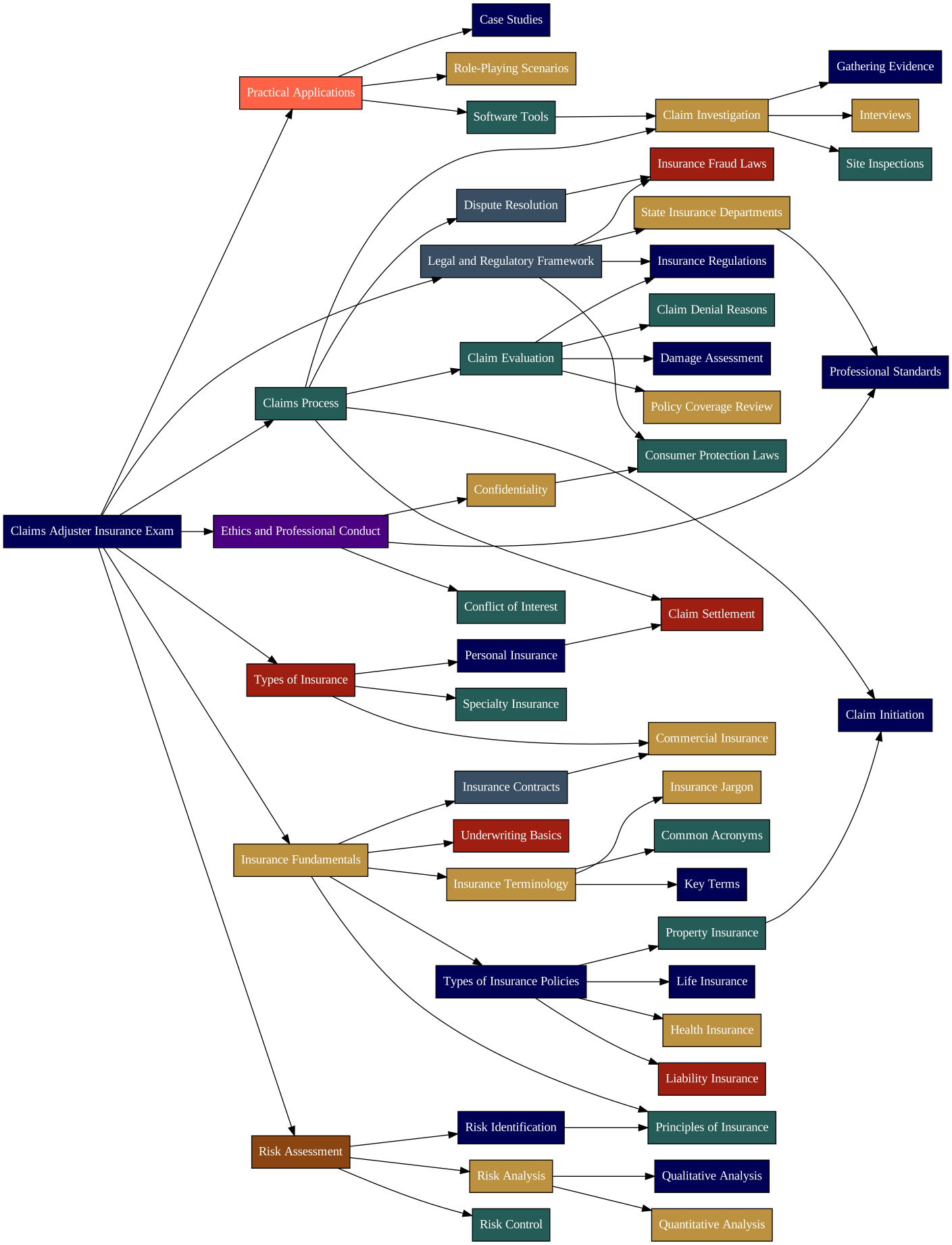
Quiz-summary
0 of 30 questions completed
Questions:
- 1
- 2
- 3
- 4
- 5
- 6
- 7
- 8
- 9
- 10
- 11
- 12
- 13
- 14
- 15
- 16
- 17
- 18
- 19
- 20
- 21
- 22
- 23
- 24
- 25
- 26
- 27
- 28
- 29
- 30
Information
Premium Practice Questions
You have already completed the quiz before. Hence you can not start it again.
Quiz is loading...
You must sign in or sign up to start the quiz.
You have to finish following quiz, to start this quiz:
Results
0 of 30 questions answered correctly
Your time:
Time has elapsed
You have reached 0 of 0 points, (0)
Categories
- Not categorized 0%
- 1
- 2
- 3
- 4
- 5
- 6
- 7
- 8
- 9
- 10
- 11
- 12
- 13
- 14
- 15
- 16
- 17
- 18
- 19
- 20
- 21
- 22
- 23
- 24
- 25
- 26
- 27
- 28
- 29
- 30
- Answered
- Review
-
Question 1 of 30
1. Question
Which of the following BEST describes the primary purpose of “risk classification” in the underwriting process?
Correct
The question probes understanding of the underwriting process, specifically risk classification. Risk classification is the process of grouping applicants with similar risk profiles together, allowing insurers to charge appropriate premiums based on the likelihood and potential severity of a loss. The correct answer is “Grouping applicants with similar risk characteristics to determine appropriate premium rates.” This accurately describes the purpose of risk classification. By categorizing applicants based on factors like age, location, claims history, and other relevant variables, insurers can more accurately assess their risk exposure and set premiums accordingly. The other options are incorrect because they describe different aspects of underwriting. While underwriting does involve assessing individual risk, risk classification is about grouping similar risks. Setting policy limits and deductibles is a separate step that follows risk assessment and classification. Reducing the insurer’s overall exposure is a broader goal of underwriting, but risk classification is a specific tool used to achieve that goal. Effective risk classification is essential for insurers to maintain profitability and ensure fairness in pricing.
Incorrect
The question probes understanding of the underwriting process, specifically risk classification. Risk classification is the process of grouping applicants with similar risk profiles together, allowing insurers to charge appropriate premiums based on the likelihood and potential severity of a loss. The correct answer is “Grouping applicants with similar risk characteristics to determine appropriate premium rates.” This accurately describes the purpose of risk classification. By categorizing applicants based on factors like age, location, claims history, and other relevant variables, insurers can more accurately assess their risk exposure and set premiums accordingly. The other options are incorrect because they describe different aspects of underwriting. While underwriting does involve assessing individual risk, risk classification is about grouping similar risks. Setting policy limits and deductibles is a separate step that follows risk assessment and classification. Reducing the insurer’s overall exposure is a broader goal of underwriting, but risk classification is a specific tool used to achieve that goal. Effective risk classification is essential for insurers to maintain profitability and ensure fairness in pricing.
-
Question 2 of 30
2. Question
BuildRite, a construction company, is bidding on a large government infrastructure project with significant potential risks, including weather delays and unexpected site conditions. What is the MOST effective way for BuildRite to demonstrate its financial stability and ability to complete the project to the government?
Correct
The scenario involves a construction company, “BuildRite,” that is bidding on a large government infrastructure project. The project involves significant risks, including potential delays due to weather, unexpected site conditions, and regulatory hurdles. The MOST effective way for BuildRite to demonstrate its financial stability and ability to complete the project is to obtain a surety bond. A surety bond is a three-party agreement that guarantees the project owner (the government) that BuildRite will fulfill its contractual obligations. If BuildRite fails to complete the project as agreed, the surety company will step in to ensure completion or compensate the government for its losses. While insurance policies can cover specific risks such as property damage or liability, they do not provide the same level of assurance regarding project completion. A bank loan would provide BuildRite with financing, but it does not guarantee project completion. A letter of intent is simply a preliminary agreement and does not offer any financial guarantees. Therefore, a surety bond is the most effective way for BuildRite to demonstrate its financial stability and ability to complete the infrastructure project.
Incorrect
The scenario involves a construction company, “BuildRite,” that is bidding on a large government infrastructure project. The project involves significant risks, including potential delays due to weather, unexpected site conditions, and regulatory hurdles. The MOST effective way for BuildRite to demonstrate its financial stability and ability to complete the project is to obtain a surety bond. A surety bond is a three-party agreement that guarantees the project owner (the government) that BuildRite will fulfill its contractual obligations. If BuildRite fails to complete the project as agreed, the surety company will step in to ensure completion or compensate the government for its losses. While insurance policies can cover specific risks such as property damage or liability, they do not provide the same level of assurance regarding project completion. A bank loan would provide BuildRite with financing, but it does not guarantee project completion. A letter of intent is simply a preliminary agreement and does not offer any financial guarantees. Therefore, a surety bond is the most effective way for BuildRite to demonstrate its financial stability and ability to complete the infrastructure project.
-
Question 3 of 30
3. Question
Hector, a homeowner, recently installed a new sprinkler system in his garden. Due to a faulty connection during installation, the sprinkler malfunctioned and sprayed water onto his neighbor’s property, causing significant damage to their prized rose bushes and patio furniture. The neighbor, angered by the incident, is demanding compensation for the damages. Assuming Hector has a standard homeowner’s insurance policy, which of the following best describes the most likely outcome regarding coverage for the damage to the neighbor’s property?
Correct
The scenario presents a complex situation involving property damage, liability, and potential negligence, requiring an understanding of different insurance coverages and their applicability. The core issue revolves around whether the damage to the neighboring property caused by the faulty sprinkler system is covered under Hector’s homeowner’s insurance, specifically focusing on the liability component. General liability coverage within a homeowner’s policy typically protects the insured against financial losses resulting from bodily injury or property damage to others caused by the insured’s negligence. In this case, the faulty sprinkler system, if proven to be a result of Hector’s negligence (e.g., improper maintenance or installation), could trigger the liability coverage. However, the policy conditions, exclusions, and limits of liability will determine the extent of the coverage. The concept of negligence is central here; it must be established that Hector had a duty of care, breached that duty, and that the breach directly caused the damage. Furthermore, the policy’s exclusions, such as those for faulty workmanship or inherent defects, could potentially limit or negate coverage. Understanding the interplay between negligence, policy coverage, and exclusions is crucial in determining the outcome of the claim.
Incorrect
The scenario presents a complex situation involving property damage, liability, and potential negligence, requiring an understanding of different insurance coverages and their applicability. The core issue revolves around whether the damage to the neighboring property caused by the faulty sprinkler system is covered under Hector’s homeowner’s insurance, specifically focusing on the liability component. General liability coverage within a homeowner’s policy typically protects the insured against financial losses resulting from bodily injury or property damage to others caused by the insured’s negligence. In this case, the faulty sprinkler system, if proven to be a result of Hector’s negligence (e.g., improper maintenance or installation), could trigger the liability coverage. However, the policy conditions, exclusions, and limits of liability will determine the extent of the coverage. The concept of negligence is central here; it must be established that Hector had a duty of care, breached that duty, and that the breach directly caused the damage. Furthermore, the policy’s exclusions, such as those for faulty workmanship or inherent defects, could potentially limit or negate coverage. Understanding the interplay between negligence, policy coverage, and exclusions is crucial in determining the outcome of the claim.
-
Question 4 of 30
4. Question
An underwriter is evaluating a new application for commercial property insurance. Which of the following actions would MOST accurately reflect the PRIMARY goal of risk classification during the underwriting process?
Correct
Underwriting is the process an insurer uses to evaluate the risk associated with insuring a particular asset, person, or entity. A crucial aspect of this process involves classifying risks based on their likelihood of loss and potential severity. This classification directly impacts the premium the insurer charges. In this scenario, the underwriter must consider various factors to determine the appropriate risk classification for a new business applying for commercial property insurance. Factors such as the building’s construction materials, occupancy type (e.g., retail, manufacturing), fire protection systems, location (proximity to fire hydrants, earthquake zones), and loss history are all relevant. A building constructed with fire-resistant materials, equipped with a sprinkler system, and located near a fire station would be considered a lower risk than a building constructed of wood, used for storing flammable materials, and located far from emergency services. The underwriter’s goal is to group similar risks together to ensure fairness and accuracy in pricing. Higher risk classifications attract higher premiums to reflect the increased probability and potential magnitude of a claim. Accurate risk classification is essential for the insurer’s profitability and solvency, as it allows them to adequately cover potential losses and maintain a sustainable business model. Failing to properly assess and classify risk can lead to underpricing policies, which can jeopardize the insurer’s ability to pay claims and remain financially stable. Therefore, a comprehensive risk assessment and appropriate classification are paramount in the underwriting process.
Incorrect
Underwriting is the process an insurer uses to evaluate the risk associated with insuring a particular asset, person, or entity. A crucial aspect of this process involves classifying risks based on their likelihood of loss and potential severity. This classification directly impacts the premium the insurer charges. In this scenario, the underwriter must consider various factors to determine the appropriate risk classification for a new business applying for commercial property insurance. Factors such as the building’s construction materials, occupancy type (e.g., retail, manufacturing), fire protection systems, location (proximity to fire hydrants, earthquake zones), and loss history are all relevant. A building constructed with fire-resistant materials, equipped with a sprinkler system, and located near a fire station would be considered a lower risk than a building constructed of wood, used for storing flammable materials, and located far from emergency services. The underwriter’s goal is to group similar risks together to ensure fairness and accuracy in pricing. Higher risk classifications attract higher premiums to reflect the increased probability and potential magnitude of a claim. Accurate risk classification is essential for the insurer’s profitability and solvency, as it allows them to adequately cover potential losses and maintain a sustainable business model. Failing to properly assess and classify risk can lead to underpricing policies, which can jeopardize the insurer’s ability to pay claims and remain financially stable. Therefore, a comprehensive risk assessment and appropriate classification are paramount in the underwriting process.
-
Question 5 of 30
5. Question
Javier owns a retail store and recently suffered a significant loss due to a burglary. He submitted a claim to his commercial property insurer. During the claims investigation, the insurer discovered that Javier had not disclosed that the store’s security system was non-functional and that the fire suppression equipment was outdated when he applied for the policy. Based on general insurance principles, what is the most likely outcome regarding Javier’s claim?
Correct
The scenario describes a situation where a business owner, Javier, has not fully disclosed material facts regarding the security system and fire suppression measures in his commercial property insurance application. The principle of *utmost good faith* (uberrimae fidei) requires both parties to an insurance contract to act honestly and disclose all relevant information. Javier’s failure to disclose the lack of a functional security system and outdated fire suppression equipment constitutes a breach of this principle. This breach gives the insurer grounds to void the policy from its inception, meaning that the insurer can treat the policy as if it never existed. Consequently, the insurer is not obligated to pay the claim. The concept of *material fact* is central here. A material fact is any piece of information that could influence an insurer’s decision to accept a risk or the terms of the insurance. The absence of a working security system and an outdated fire suppression system are clearly material facts because they significantly increase the risk of theft and fire damage, potentially impacting the premium the insurer would charge or whether they would offer coverage at all. The *principle of indemnity* aims to restore the insured to the financial position they were in before the loss, but it does not apply when the policy is voided due to a breach of utmost good faith. Similarly, the *principle of insurable interest*, which requires the insured to have a financial stake in the insured property, is not relevant because the issue is not whether Javier has an insurable interest, but whether he acted in good faith. The *principle of contribution* applies when multiple policies cover the same risk, which is not the case here.
Incorrect
The scenario describes a situation where a business owner, Javier, has not fully disclosed material facts regarding the security system and fire suppression measures in his commercial property insurance application. The principle of *utmost good faith* (uberrimae fidei) requires both parties to an insurance contract to act honestly and disclose all relevant information. Javier’s failure to disclose the lack of a functional security system and outdated fire suppression equipment constitutes a breach of this principle. This breach gives the insurer grounds to void the policy from its inception, meaning that the insurer can treat the policy as if it never existed. Consequently, the insurer is not obligated to pay the claim. The concept of *material fact* is central here. A material fact is any piece of information that could influence an insurer’s decision to accept a risk or the terms of the insurance. The absence of a working security system and an outdated fire suppression system are clearly material facts because they significantly increase the risk of theft and fire damage, potentially impacting the premium the insurer would charge or whether they would offer coverage at all. The *principle of indemnity* aims to restore the insured to the financial position they were in before the loss, but it does not apply when the policy is voided due to a breach of utmost good faith. Similarly, the *principle of insurable interest*, which requires the insured to have a financial stake in the insured property, is not relevant because the issue is not whether Javier has an insurable interest, but whether he acted in good faith. The *principle of contribution* applies when multiple policies cover the same risk, which is not the case here.
-
Question 6 of 30
6. Question
“GreenTech Innovations” manufactures solar panels. They are seeking insurance coverage to protect themselves from potential lawsuits if their solar panels have defects that cause property damage or bodily injury to customers. Which type of insurance policy would best cover these types of claims?
Correct
The scenario describes a situation where a business, “GreenTech Innovations,” is seeking insurance coverage for potential lawsuits arising from defects in the solar panels they manufacture. These defects could cause property damage or bodily injury to customers. Product Liability insurance is specifically designed to protect businesses from financial losses arising from claims of injury or damage caused by their products. It covers the costs of defending against lawsuits and paying settlements or judgments. General Liability insurance covers bodily injury or property damage caused by the business’s operations or premises, but it typically excludes product-related liabilities. Professional Liability insurance covers errors and omissions in professional services, which is not relevant here. Workers’ Compensation covers injuries to employees, not customers. Therefore, Product Liability insurance is the most appropriate coverage for “GreenTech Innovations” in this scenario.
Incorrect
The scenario describes a situation where a business, “GreenTech Innovations,” is seeking insurance coverage for potential lawsuits arising from defects in the solar panels they manufacture. These defects could cause property damage or bodily injury to customers. Product Liability insurance is specifically designed to protect businesses from financial losses arising from claims of injury or damage caused by their products. It covers the costs of defending against lawsuits and paying settlements or judgments. General Liability insurance covers bodily injury or property damage caused by the business’s operations or premises, but it typically excludes product-related liabilities. Professional Liability insurance covers errors and omissions in professional services, which is not relevant here. Workers’ Compensation covers injuries to employees, not customers. Therefore, Product Liability insurance is the most appropriate coverage for “GreenTech Innovations” in this scenario.
-
Question 7 of 30
7. Question
Under New Zealand’s regulatory framework for insurance, what is the PRIMARY purpose of consumer protection laws?
Correct
This question delves into the regulatory environment of insurance, specifically focusing on consumer protection laws and the duty of disclosure. Consumer protection laws are designed to protect consumers from unfair or deceptive practices by businesses, including insurance companies. These laws often require insurers to provide clear and accurate information to consumers about their policies, including the terms and conditions, exclusions, and limitations of coverage. The duty of disclosure requires insurers to proactively disclose all material information that a consumer would need to make an informed decision about whether to purchase a particular policy. This includes information about the insurer’s financial stability, claims handling practices, and complaint resolution procedures. Failure to comply with consumer protection laws or the duty of disclosure can result in penalties, such as fines, license suspension, or legal action. The Insurance Council of New Zealand (ICNZ) also has a Code of Practice that sets out standards of conduct for insurers.
Incorrect
This question delves into the regulatory environment of insurance, specifically focusing on consumer protection laws and the duty of disclosure. Consumer protection laws are designed to protect consumers from unfair or deceptive practices by businesses, including insurance companies. These laws often require insurers to provide clear and accurate information to consumers about their policies, including the terms and conditions, exclusions, and limitations of coverage. The duty of disclosure requires insurers to proactively disclose all material information that a consumer would need to make an informed decision about whether to purchase a particular policy. This includes information about the insurer’s financial stability, claims handling practices, and complaint resolution procedures. Failure to comply with consumer protection laws or the duty of disclosure can result in penalties, such as fines, license suspension, or legal action. The Insurance Council of New Zealand (ICNZ) also has a Code of Practice that sets out standards of conduct for insurers.
-
Question 8 of 30
8. Question
A negligent contractor damaged a building owned by insured company, causing significant financial loss. After paying the claim, the insurance company decided to sue the contractor to recover the amount they paid out. This action is an example of what insurance principle?
Correct
The question explores the concept of subrogation. Subrogation is the legal right of an insurer to pursue a third party who caused a loss to the insured. In this case, a negligent contractor damaged a building owned by insured company. After paying the claim to insured company, the insurance company can “step into the shoes” of the insured and sue the contractor to recover the amount they paid out in the claim. This prevents the insured from receiving double compensation (from both the insurer and the contractor) and holds the responsible party accountable. The other options are incorrect because they describe different insurance principles. Indemnity aims to restore the insured to their pre-loss condition. Contribution applies when multiple insurance policies cover the same loss. Utmost good faith requires honesty and transparency from both parties.
Incorrect
The question explores the concept of subrogation. Subrogation is the legal right of an insurer to pursue a third party who caused a loss to the insured. In this case, a negligent contractor damaged a building owned by insured company. After paying the claim to insured company, the insurance company can “step into the shoes” of the insured and sue the contractor to recover the amount they paid out in the claim. This prevents the insured from receiving double compensation (from both the insurer and the contractor) and holds the responsible party accountable. The other options are incorrect because they describe different insurance principles. Indemnity aims to restore the insured to their pre-loss condition. Contribution applies when multiple insurance policies cover the same loss. Utmost good faith requires honesty and transparency from both parties.
-
Question 9 of 30
9. Question
Mr. Nguyen owns an antique clock that was damaged in a fire. The clock was valued at $5,000 before the fire. The insurance adjuster determined that the actual cash value (ACV) of the clock, taking into account depreciation, was $3,000. If Mr. Nguyen’s insurance policy is based on the principle of indemnity and covers actual cash value, how much compensation should he expect to receive for the damage to the clock?
Correct
The principle of indemnity is a cornerstone of insurance, aiming to restore the insured to the financial position they were in immediately before the loss, no better and no worse. In the given scenario, Mr. Nguyen’s antique clock was damaged in a fire. The clock was valued at $5,000 before the fire. However, due to its age and rarity, the actual cash value (ACV) of the clock, considering depreciation, was determined to be $3,000. If the insurance policy is based on ACV, Mr. Nguyen would receive $3,000, representing the depreciated value of the clock. Replacement cost coverage, on the other hand, would pay the cost to replace the clock with a new one of similar kind and quality, without deducting for depreciation. However, the question specifies that the policy is based on ACV. Therefore, the principle of indemnity dictates that Mr. Nguyen should be compensated for the actual cash value of the clock at the time of the loss.
Incorrect
The principle of indemnity is a cornerstone of insurance, aiming to restore the insured to the financial position they were in immediately before the loss, no better and no worse. In the given scenario, Mr. Nguyen’s antique clock was damaged in a fire. The clock was valued at $5,000 before the fire. However, due to its age and rarity, the actual cash value (ACV) of the clock, considering depreciation, was determined to be $3,000. If the insurance policy is based on ACV, Mr. Nguyen would receive $3,000, representing the depreciated value of the clock. Replacement cost coverage, on the other hand, would pay the cost to replace the clock with a new one of similar kind and quality, without deducting for depreciation. However, the question specifies that the policy is based on ACV. Therefore, the principle of indemnity dictates that Mr. Nguyen should be compensated for the actual cash value of the clock at the time of the loss.
-
Question 10 of 30
10. Question
An insurance agent is compensated primarily through commissions. They frequently recommend that their clients switch to new insurance policies, even when the existing policies still adequately meet their needs, because the agent earns a higher commission on new policies. Which ethical consideration is most directly raised by this scenario?
Correct
This question addresses the ethical considerations surrounding conflicts of interest in insurance. A conflict of interest arises when an insurance professional’s personal interests or loyalties could potentially compromise their ability to act in the best interests of their client or employer. In this scenario, advising clients to switch policies solely to generate commissions, without considering whether the new policies are truly beneficial for the clients, constitutes a clear conflict of interest. While transparency and disclosure are important, they don’t eliminate the conflict of interest itself. The fundamental problem is that the agent’s financial incentive is misaligned with the clients’ needs. The ethical course of action is to prioritize the clients’ best interests, even if it means forgoing a commission.
Incorrect
This question addresses the ethical considerations surrounding conflicts of interest in insurance. A conflict of interest arises when an insurance professional’s personal interests or loyalties could potentially compromise their ability to act in the best interests of their client or employer. In this scenario, advising clients to switch policies solely to generate commissions, without considering whether the new policies are truly beneficial for the clients, constitutes a clear conflict of interest. While transparency and disclosure are important, they don’t eliminate the conflict of interest itself. The fundamental problem is that the agent’s financial incentive is misaligned with the clients’ needs. The ethical course of action is to prioritize the clients’ best interests, even if it means forgoing a commission.
-
Question 11 of 30
11. Question
Which of the following best describes the social responsibility of insurers in a modern society?
Correct
The correct answer is that the social responsibility of insurers includes promoting economic stability by providing financial protection against various risks, supporting community development through investments and charitable contributions, and promoting insurance accessibility and inclusivity to underserved populations. While insurers are businesses that seek to generate profits, they also have a responsibility to contribute to the well-being of society. Maximizing shareholder value is a primary goal of any corporation, but it is not the sole aspect of social responsibility. Complying with regulations is a legal requirement, but it does not encompass the full scope of social responsibility.
Incorrect
The correct answer is that the social responsibility of insurers includes promoting economic stability by providing financial protection against various risks, supporting community development through investments and charitable contributions, and promoting insurance accessibility and inclusivity to underserved populations. While insurers are businesses that seek to generate profits, they also have a responsibility to contribute to the well-being of society. Maximizing shareholder value is a primary goal of any corporation, but it is not the sole aspect of social responsibility. Complying with regulations is a legal requirement, but it does not encompass the full scope of social responsibility.
-
Question 12 of 30
12. Question
Jamal receives his new commercial property insurance policy documents. Which section of the policy should Jamal MOST carefully review to quickly confirm the insured property’s address, the policy’s effective dates, and the maximum coverage amount for building damage?
Correct
The declarations page of an insurance policy is a critical component that summarizes the key information about the policy. It typically includes the name and address of the insured, the property or risk being insured, the policy period, the coverage limits, and the premium amount. The declarations page serves as a quick reference guide for policyholders, providing them with a concise overview of their insurance coverage. It is often the first page of the insurance policy and is used by both the insured and the insurer to verify the accuracy of the policy details. In the event of a claim, the declarations page is used to confirm that the policy was in effect at the time of the loss and to determine the coverage limits. It is essential for policyholders to carefully review the declarations page to ensure that all the information is correct and that they understand the scope of their coverage. Any errors or omissions on the declarations page should be reported to the insurer immediately to avoid potential problems in the event of a claim.
Incorrect
The declarations page of an insurance policy is a critical component that summarizes the key information about the policy. It typically includes the name and address of the insured, the property or risk being insured, the policy period, the coverage limits, and the premium amount. The declarations page serves as a quick reference guide for policyholders, providing them with a concise overview of their insurance coverage. It is often the first page of the insurance policy and is used by both the insured and the insurer to verify the accuracy of the policy details. In the event of a claim, the declarations page is used to confirm that the policy was in effect at the time of the loss and to determine the coverage limits. It is essential for policyholders to carefully review the declarations page to ensure that all the information is correct and that they understand the scope of their coverage. Any errors or omissions on the declarations page should be reported to the insurer immediately to avoid potential problems in the event of a claim.
-
Question 13 of 30
13. Question
“Precision Engineering Ltd.” had a professional liability insurance policy with a claims-made policy form in 2022. An engineering error occurred during that year. The policy expired on December 31, 2022. A claim related to the error was made against “Precision Engineering Ltd.” in 2024. Assuming “Precision Engineering Ltd.” did not renew their policy or purchase an extended reporting period endorsement, would the 2022 policy cover the claim?
Correct
The question tests the understanding of occurrence vs. claims-made policy forms. An occurrence policy covers claims arising from incidents that occur during the policy period, regardless of when the claim is actually made. A claims-made policy, on the other hand, covers claims that are both made and reported to the insurer during the policy period. In this case, “Precision Engineering Ltd.” had a claims-made professional liability policy in 2022. The engineering error occurred in 2022, but the claim was made in 2024, after the policy had expired. Because the claim was not made during the policy period, the 2022 policy would not cover the claim. However, if “Precision Engineering Ltd.” had purchased an extended reporting period endorsement (also known as a “tail” coverage), it would have extended the period during which claims could be reported, potentially providing coverage for the 2024 claim.
Incorrect
The question tests the understanding of occurrence vs. claims-made policy forms. An occurrence policy covers claims arising from incidents that occur during the policy period, regardless of when the claim is actually made. A claims-made policy, on the other hand, covers claims that are both made and reported to the insurer during the policy period. In this case, “Precision Engineering Ltd.” had a claims-made professional liability policy in 2022. The engineering error occurred in 2022, but the claim was made in 2024, after the policy had expired. Because the claim was not made during the policy period, the 2022 policy would not cover the claim. However, if “Precision Engineering Ltd.” had purchased an extended reporting period endorsement (also known as a “tail” coverage), it would have extended the period during which claims could be reported, potentially providing coverage for the 2024 claim.
-
Question 14 of 30
14. Question
A delivery driver slips and falls on an icy patch in front of SecureTech’s office building, sustaining a serious injury. The driver sues SecureTech, alleging negligence in maintaining a safe premises. SecureTech has a general liability insurance policy. What is the most likely role of the insurance company in this situation?
Correct
This scenario tests the understanding of third-party liability coverage and the concept of negligence. General liability insurance protects a business from financial losses if it is found legally liable for bodily injury or property damage to a third party. Negligence is a key element in establishing liability; it refers to a failure to exercise the standard of care that a reasonably prudent person would exercise under similar circumstances. In this case, if a court determines that SecureTech was negligent in maintaining its premises (i.e., failed to take reasonable steps to prevent the icy conditions that led to the injury), it could be held liable for the delivery driver’s injuries. The delivery driver, as a third party, can sue SecureTech to recover damages for medical expenses, lost wages, and pain and suffering. If SecureTech has a general liability policy, it would cover these damages, up to the policy limits, as well as the costs of defending the lawsuit. The insurance company would investigate the incident, assess SecureTech’s potential liability, and negotiate a settlement with the delivery driver or defend SecureTech in court. The outcome depends on the specific facts of the case, the applicable laws, and the strength of the evidence presented by both sides.
Incorrect
This scenario tests the understanding of third-party liability coverage and the concept of negligence. General liability insurance protects a business from financial losses if it is found legally liable for bodily injury or property damage to a third party. Negligence is a key element in establishing liability; it refers to a failure to exercise the standard of care that a reasonably prudent person would exercise under similar circumstances. In this case, if a court determines that SecureTech was negligent in maintaining its premises (i.e., failed to take reasonable steps to prevent the icy conditions that led to the injury), it could be held liable for the delivery driver’s injuries. The delivery driver, as a third party, can sue SecureTech to recover damages for medical expenses, lost wages, and pain and suffering. If SecureTech has a general liability policy, it would cover these damages, up to the policy limits, as well as the costs of defending the lawsuit. The insurance company would investigate the incident, assess SecureTech’s potential liability, and negotiate a settlement with the delivery driver or defend SecureTech in court. The outcome depends on the specific facts of the case, the applicable laws, and the strength of the evidence presented by both sides.
-
Question 15 of 30
15. Question
A warehouse fire started due to faulty electrical wiring. The fire then triggered the sprinkler system, which caused water damage to inventory stored in the warehouse. If the insurance policy covers fire damage but excludes water damage, what principle will the insurer use to determine if the water damage is also covered?
Correct
The concept of proximate cause is a crucial element in determining whether a loss is covered by an insurance policy. Proximate cause refers to the primary or dominant cause that sets in motion a chain of events leading to a loss. It is not necessarily the cause that is closest in time to the loss, but rather the cause that is the most direct and efficient in bringing about the loss. In insurance claims, the insurer will investigate the cause of the loss to determine whether it was a covered peril under the policy. If the proximate cause of the loss is a covered peril, the claim will be paid, even if there were other contributing factors. However, if the proximate cause is an excluded peril, the claim will be denied, even if there were other covered perils that contributed to the loss. Determining the proximate cause can be complex, especially when there are multiple causes or contributing factors. Insurers will often rely on expert opinions and thorough investigations to establish the proximate cause of a loss.
Incorrect
The concept of proximate cause is a crucial element in determining whether a loss is covered by an insurance policy. Proximate cause refers to the primary or dominant cause that sets in motion a chain of events leading to a loss. It is not necessarily the cause that is closest in time to the loss, but rather the cause that is the most direct and efficient in bringing about the loss. In insurance claims, the insurer will investigate the cause of the loss to determine whether it was a covered peril under the policy. If the proximate cause of the loss is a covered peril, the claim will be paid, even if there were other contributing factors. However, if the proximate cause is an excluded peril, the claim will be denied, even if there were other covered perils that contributed to the loss. Determining the proximate cause can be complex, especially when there are multiple causes or contributing factors. Insurers will often rely on expert opinions and thorough investigations to establish the proximate cause of a loss.
-
Question 16 of 30
16. Question
An underwriter is assessing the risk for a commercial property insurance policy. The property is located in an area known to be susceptible to bushfires. What is the MOST important factor the underwriter should consider when evaluating this risk?
Correct
The scenario describes a situation where an underwriter is assessing a risk for a commercial property insurance policy. The property is located in an area known to be susceptible to bushfires. When assessing this risk, the underwriter should consider several factors: the property’s location relative to bushfire-prone areas; the construction materials used in the building (e.g., whether it is made of fire-resistant materials); the presence of any fire protection measures, such as sprinklers or fire alarms; the business’s fire safety plan; and the historical frequency and severity of bushfires in the area. Based on these factors, the underwriter may decide to: accept the risk at a standard premium; accept the risk with additional conditions or exclusions (e.g., excluding coverage for bushfire damage); charge a higher premium to reflect the increased risk; or decline to insure the property altogether. The underwriter’s goal is to accurately assess the risk and ensure that the premium charged is commensurate with the potential for loss. This helps the insurer maintain its financial stability and ability to pay claims.
Incorrect
The scenario describes a situation where an underwriter is assessing a risk for a commercial property insurance policy. The property is located in an area known to be susceptible to bushfires. When assessing this risk, the underwriter should consider several factors: the property’s location relative to bushfire-prone areas; the construction materials used in the building (e.g., whether it is made of fire-resistant materials); the presence of any fire protection measures, such as sprinklers or fire alarms; the business’s fire safety plan; and the historical frequency and severity of bushfires in the area. Based on these factors, the underwriter may decide to: accept the risk at a standard premium; accept the risk with additional conditions or exclusions (e.g., excluding coverage for bushfire damage); charge a higher premium to reflect the increased risk; or decline to insure the property altogether. The underwriter’s goal is to accurately assess the risk and ensure that the premium charged is commensurate with the potential for loss. This helps the insurer maintain its financial stability and ability to pay claims.
-
Question 17 of 30
17. Question
Mr. O’Connell has a motor insurance policy with a \$500 deductible. He is involved in an accident, and the total cost to repair his car is \$3,000. How much will Mr. O’Connell have to pay out-of-pocket?
Correct
The scenario presents a situation where a policyholder, Mr. O’Connell, has a motor insurance policy with a deductible. A deductible is the amount the policyholder must pay out-of-pocket before the insurance company begins to pay for a covered loss. In this case, Mr. O’Connell has a \$500 deductible. The total cost to repair his car is \$3,000. Therefore, Mr. O’Connell will be responsible for paying the first \$500, and the insurance company will pay the remaining \$2,500. The deductible is a way for the policyholder to share in the risk and helps to reduce the cost of the insurance policy.
Incorrect
The scenario presents a situation where a policyholder, Mr. O’Connell, has a motor insurance policy with a deductible. A deductible is the amount the policyholder must pay out-of-pocket before the insurance company begins to pay for a covered loss. In this case, Mr. O’Connell has a \$500 deductible. The total cost to repair his car is \$3,000. Therefore, Mr. O’Connell will be responsible for paying the first \$500, and the insurance company will pay the remaining \$2,500. The deductible is a way for the policyholder to share in the risk and helps to reduce the cost of the insurance policy.
-
Question 18 of 30
18. Question
Given the increasing prevalence of cyber attacks, what is the PRIMARY purpose of cyber insurance for businesses?
Correct
*Cyber insurance* is a specialized type of insurance designed to protect businesses from the financial losses associated with cyber risks and incidents. These risks include data breaches, ransomware attacks, denial-of-service attacks, and other malicious cyber activities. A comprehensive cyber insurance policy typically covers a range of expenses, such as data recovery costs, legal fees, notification costs (informing affected customers about a data breach), business interruption losses, and extortion payments (in the case of ransomware). It may also provide access to incident response services, such as forensic investigation and crisis management. Given the increasing frequency and sophistication of cyber attacks, cyber insurance has become an essential risk management tool for businesses of all sizes. Standard property insurance policies generally do not cover cyber-related losses, highlighting the need for this specialized coverage.
Incorrect
*Cyber insurance* is a specialized type of insurance designed to protect businesses from the financial losses associated with cyber risks and incidents. These risks include data breaches, ransomware attacks, denial-of-service attacks, and other malicious cyber activities. A comprehensive cyber insurance policy typically covers a range of expenses, such as data recovery costs, legal fees, notification costs (informing affected customers about a data breach), business interruption losses, and extortion payments (in the case of ransomware). It may also provide access to incident response services, such as forensic investigation and crisis management. Given the increasing frequency and sophistication of cyber attacks, cyber insurance has become an essential risk management tool for businesses of all sizes. Standard property insurance policies generally do not cover cyber-related losses, highlighting the need for this specialized coverage.
-
Question 19 of 30
19. Question
Javier, a small bakery owner, has a commercial property insurance policy with an “all-risks” insuring agreement. During a renovation, a newly installed oven malfunctions due to faulty workmanship, causing a fire that damages the bakery’s interior. Javier submits a claim, but the insurer denies it, citing an exclusion for losses caused by “faulty workmanship.” Which of the following statements BEST describes the likely legal position regarding the claim denial?
Correct
The scenario describes a situation where a small business owner, Javier, faces a claim denial due to a policy exclusion. The core issue revolves around understanding the interaction between the insuring agreement, exclusions, and the burden of proof in insurance claims. The insuring agreement initially provides broad coverage for risks, but exclusions carve out specific circumstances where coverage does not apply. In general insurance, the insurer bears the initial burden of proving that a claim falls within an exclusion once the insured has demonstrated a loss occurred that appears to be covered by the policy’s insuring agreement. The concept of proximate cause is also relevant; the loss must be directly and proximately caused by a covered peril, not an excluded one. If the insurer can demonstrate that the damage was primarily caused by an excluded event (e.g., faulty workmanship), the claim can be denied. The insured then has the option to argue that an exception to the exclusion applies or that the dominant cause of the loss was actually a covered peril. In this case, if the insurer successfully proves faulty workmanship was the primary cause, and no exceptions apply, the denial is likely valid. This highlights the importance of carefully reviewing policy exclusions and understanding the burden of proof in claims disputes.
Incorrect
The scenario describes a situation where a small business owner, Javier, faces a claim denial due to a policy exclusion. The core issue revolves around understanding the interaction between the insuring agreement, exclusions, and the burden of proof in insurance claims. The insuring agreement initially provides broad coverage for risks, but exclusions carve out specific circumstances where coverage does not apply. In general insurance, the insurer bears the initial burden of proving that a claim falls within an exclusion once the insured has demonstrated a loss occurred that appears to be covered by the policy’s insuring agreement. The concept of proximate cause is also relevant; the loss must be directly and proximately caused by a covered peril, not an excluded one. If the insurer can demonstrate that the damage was primarily caused by an excluded event (e.g., faulty workmanship), the claim can be denied. The insured then has the option to argue that an exception to the exclusion applies or that the dominant cause of the loss was actually a covered peril. In this case, if the insurer successfully proves faulty workmanship was the primary cause, and no exceptions apply, the denial is likely valid. This highlights the importance of carefully reviewing policy exclusions and understanding the burden of proof in claims disputes.
-
Question 20 of 30
20. Question
Which component of an insurance policy provides a concise summary of the policy’s key information, including the policyholder’s name, insured property, coverage limits, and policy period?
Correct
The declarations page of an insurance policy provides a summary of the key information relevant to the insurance coverage. This typically includes the policyholder’s name and address, the insured property or risk, the policy period (start and end dates), the coverage limits, the deductible, and the premium amount. It essentially acts as a snapshot of the policy’s essential details. The insuring agreement outlines the insurer’s promises and the scope of coverage provided. Exclusions specify the perils, risks, or property that are not covered by the policy. Conditions detail the responsibilities of both the insurer and the insured, as well as the procedures for filing a claim and resolving disputes.
Incorrect
The declarations page of an insurance policy provides a summary of the key information relevant to the insurance coverage. This typically includes the policyholder’s name and address, the insured property or risk, the policy period (start and end dates), the coverage limits, the deductible, and the premium amount. It essentially acts as a snapshot of the policy’s essential details. The insuring agreement outlines the insurer’s promises and the scope of coverage provided. Exclusions specify the perils, risks, or property that are not covered by the policy. Conditions detail the responsibilities of both the insurer and the insured, as well as the procedures for filing a claim and resolving disputes.
-
Question 21 of 30
21. Question
Code Wizards, a software company, is developing a new AI-powered cybersecurity product. If the product fails to prevent a cyberattack, causing a client’s data breach, which type of insurance policy would best serve as a risk transfer mechanism for Code Wizards against potential lawsuits alleging professional negligence?
Correct
The scenario describes a situation where a software company, “Code Wizards,” is developing a new AI-powered cybersecurity product. The product is designed to protect businesses from cyberattacks. However, if the product fails to perform as expected and a client suffers a data breach, Code Wizards could face legal action. The core issue revolves around transferring the financial risk associated with this potential professional negligence. General liability insurance is designed to protect businesses from financial losses they may be legally obligated to pay to third parties due to bodily injury or property damage caused by the business’s operations. Professional liability insurance (also known as errors and omissions insurance) covers businesses against claims of negligence or errors in the professional services they provide. Product liability insurance specifically covers businesses against claims arising from defective products that cause bodily injury or property damage. Cyber insurance covers a business’ liability for data breaches. While cyber insurance is important, the question is about the liability of the company because of the product’s failure to perform as expected. In this scenario, the most appropriate type of insurance is professional liability insurance because the potential liability stems from the failure of their professional service (the AI cybersecurity product) to perform as expected, leading to financial loss for their clients.
Incorrect
The scenario describes a situation where a software company, “Code Wizards,” is developing a new AI-powered cybersecurity product. The product is designed to protect businesses from cyberattacks. However, if the product fails to perform as expected and a client suffers a data breach, Code Wizards could face legal action. The core issue revolves around transferring the financial risk associated with this potential professional negligence. General liability insurance is designed to protect businesses from financial losses they may be legally obligated to pay to third parties due to bodily injury or property damage caused by the business’s operations. Professional liability insurance (also known as errors and omissions insurance) covers businesses against claims of negligence or errors in the professional services they provide. Product liability insurance specifically covers businesses against claims arising from defective products that cause bodily injury or property damage. Cyber insurance covers a business’ liability for data breaches. While cyber insurance is important, the question is about the liability of the company because of the product’s failure to perform as expected. In this scenario, the most appropriate type of insurance is professional liability insurance because the potential liability stems from the failure of their professional service (the AI cybersecurity product) to perform as expected, leading to financial loss for their clients.
-
Question 22 of 30
22. Question
Which of the following BEST describes the purpose of exclusions in an insurance policy?
Correct
The scenario involves understanding the concept of an “exclusion” in an insurance policy. Exclusions are specific events, perils, or circumstances that are not covered by the policy. They are clearly defined in the policy document and serve to limit the scope of coverage. The purpose of exclusions is to allow the insurer to manage risk and keep premiums affordable. By excluding certain high-risk or uninsurable events, the insurer can avoid potentially large losses and offer coverage at a more reasonable price. Common examples of exclusions include flood damage (in standard homeowner’s policies), earthquake damage, war, and intentional acts. It’s important for policyholders to carefully review the exclusions in their policy to understand what is not covered. In the given options, the statement that best describes the purpose of exclusions in an insurance policy is to limit the scope of coverage by specifying events or perils that are not covered.
Incorrect
The scenario involves understanding the concept of an “exclusion” in an insurance policy. Exclusions are specific events, perils, or circumstances that are not covered by the policy. They are clearly defined in the policy document and serve to limit the scope of coverage. The purpose of exclusions is to allow the insurer to manage risk and keep premiums affordable. By excluding certain high-risk or uninsurable events, the insurer can avoid potentially large losses and offer coverage at a more reasonable price. Common examples of exclusions include flood damage (in standard homeowner’s policies), earthquake damage, war, and intentional acts. It’s important for policyholders to carefully review the exclusions in their policy to understand what is not covered. In the given options, the statement that best describes the purpose of exclusions in an insurance policy is to limit the scope of coverage by specifying events or perils that are not covered.
-
Question 23 of 30
23. Question
Javier, a small business owner, is evaluating Business Interruption insurance policies to protect his business from potential losses due to unforeseen events like flooding. He is presented with several policy options with varying “Excess” (deductible), “Indemnity Period” (maximum time for loss recovery), and “Sum Insured” (maximum payout). Javier is most concerned about a prolonged business interruption that could significantly impact his financial stability. Considering his risk profile and the principles of risk management, which policy condition should Javier prioritize to ensure adequate financial recovery in the event of a major flood-related business interruption, even if it means a slightly higher premium?
Correct
The scenario describes a situation where a small business owner, Javier, faces a complex risk management decision. Javier must balance the cost of insurance against the potential financial impact of a business interruption due to a flood. The key factor is understanding how different policy conditions affect the actual financial recovery. A Business Interruption policy typically covers lost profits and continuing expenses during the period of restoration. However, the “Excess” or “Deductible” represents the amount Javier must absorb before the insurance coverage kicks in. A higher excess translates to a lower premium but increases Javier’s out-of-pocket expenses in the event of a claim. The “Indemnity Period” defines the maximum time the policy will pay for business interruption losses. A shorter indemnity period reduces the insurer’s potential liability, resulting in a lower premium, but may not fully cover Javier’s losses if the business takes longer to recover. The “Sum Insured” represents the maximum amount the insurer will pay out for a covered loss. Choosing an adequate sum insured is crucial to ensure sufficient coverage for potential losses. The most suitable policy is one that balances affordability with adequate coverage for the potential business interruption. In this case, Javier’s primary concern should be to protect his business from significant financial loss due to a prolonged interruption. Therefore, he should prioritize an adequate indemnity period and sum insured, even if it means accepting a slightly higher premium or a moderate excess.
Incorrect
The scenario describes a situation where a small business owner, Javier, faces a complex risk management decision. Javier must balance the cost of insurance against the potential financial impact of a business interruption due to a flood. The key factor is understanding how different policy conditions affect the actual financial recovery. A Business Interruption policy typically covers lost profits and continuing expenses during the period of restoration. However, the “Excess” or “Deductible” represents the amount Javier must absorb before the insurance coverage kicks in. A higher excess translates to a lower premium but increases Javier’s out-of-pocket expenses in the event of a claim. The “Indemnity Period” defines the maximum time the policy will pay for business interruption losses. A shorter indemnity period reduces the insurer’s potential liability, resulting in a lower premium, but may not fully cover Javier’s losses if the business takes longer to recover. The “Sum Insured” represents the maximum amount the insurer will pay out for a covered loss. Choosing an adequate sum insured is crucial to ensure sufficient coverage for potential losses. The most suitable policy is one that balances affordability with adequate coverage for the potential business interruption. In this case, Javier’s primary concern should be to protect his business from significant financial loss due to a prolonged interruption. Therefore, he should prioritize an adequate indemnity period and sum insured, even if it means accepting a slightly higher premium or a moderate excess.
-
Question 24 of 30
24. Question
“Oceanic Insurance” is assessing its reserve requirements for a specific line of commercial property insurance. They have estimated the ultimate cost of outstanding claims to be $5 million. Regulatory guidelines stipulate a minimum reserve level based on historical claims data and a risk-adjusted capital charge. Oceanic also has a reinsurance treaty in place that covers 60% of any claim exceeding $1 million, up to a maximum of $4 million per claim. Considering these factors, which of the following best describes the PRIMARY factor that will MOST significantly influence Oceanic Insurance’s final reserve calculation, assuming all other factors remain constant?
Correct
The core principle revolves around understanding how insurers manage the financial implications of potential claim payouts. A crucial aspect of this is setting aside sufficient funds to cover these future obligations. These funds are known as reserves. The calculation of these reserves is not arbitrary; it’s a sophisticated process that takes into account several factors. One of the most significant factors is the estimated ultimate cost of claims, which includes not only the initial assessment but also potential future developments such as legal costs, inflation affecting repair costs, and the possibility of claims being reopened or reassessed. In addition to the estimated ultimate cost of claims, insurers also consider the time value of money. A dollar paid out today is worth more than a dollar paid out in the future due to the potential for investment and earning interest. Therefore, insurers may discount their reserves to reflect this time value, although regulatory requirements often restrict the extent to which discounting is permitted. Furthermore, regulatory bodies often mandate specific reserve requirements to ensure that insurers maintain adequate solvency and can meet their obligations to policyholders. These requirements may be based on statistical models, historical claims data, or industry benchmarks. Reinsurance also plays a crucial role in reserve management. When an insurer purchases reinsurance, it transfers a portion of its risk to another insurer (the reinsurer). This reduces the amount of reserves the primary insurer needs to hold because the reinsurer will cover a portion of the claims. Therefore, the level of reinsurance coverage directly impacts the reserve calculation. In summary, the calculation of reserves involves a complex interplay of estimating ultimate claim costs, considering the time value of money, adhering to regulatory requirements, and factoring in the impact of reinsurance arrangements. It is a critical process that ensures the financial stability of the insurer and its ability to fulfill its promises to policyholders.
Incorrect
The core principle revolves around understanding how insurers manage the financial implications of potential claim payouts. A crucial aspect of this is setting aside sufficient funds to cover these future obligations. These funds are known as reserves. The calculation of these reserves is not arbitrary; it’s a sophisticated process that takes into account several factors. One of the most significant factors is the estimated ultimate cost of claims, which includes not only the initial assessment but also potential future developments such as legal costs, inflation affecting repair costs, and the possibility of claims being reopened or reassessed. In addition to the estimated ultimate cost of claims, insurers also consider the time value of money. A dollar paid out today is worth more than a dollar paid out in the future due to the potential for investment and earning interest. Therefore, insurers may discount their reserves to reflect this time value, although regulatory requirements often restrict the extent to which discounting is permitted. Furthermore, regulatory bodies often mandate specific reserve requirements to ensure that insurers maintain adequate solvency and can meet their obligations to policyholders. These requirements may be based on statistical models, historical claims data, or industry benchmarks. Reinsurance also plays a crucial role in reserve management. When an insurer purchases reinsurance, it transfers a portion of its risk to another insurer (the reinsurer). This reduces the amount of reserves the primary insurer needs to hold because the reinsurer will cover a portion of the claims. Therefore, the level of reinsurance coverage directly impacts the reserve calculation. In summary, the calculation of reserves involves a complex interplay of estimating ultimate claim costs, considering the time value of money, adhering to regulatory requirements, and factoring in the impact of reinsurance arrangements. It is a critical process that ensures the financial stability of the insurer and its ability to fulfill its promises to policyholders.
-
Question 25 of 30
25. Question
A small business owner, Javier, submitted a claim to his insurer for property damage caused by a burst water pipe. After several weeks, the insurer denied the claim without providing a detailed explanation or citing specific policy exclusions. Javier suspects the denial is arbitrary and not based on a legitimate assessment of the damage or policy terms. Which regulatory principle is MOST likely being violated by the insurer’s actions?
Correct
The scenario highlights a critical aspect of insurance regulation concerning consumer protection and fair practices. Regulatory bodies like APRA (Australian Prudential Regulation Authority) in Australia, or similar bodies in other jurisdictions, mandate that insurers must handle claims fairly, transparently, and in a timely manner. This includes providing clear explanations for claim denials. Insurers are obligated to act in good faith, meaning they must consider the interests of the insured as well as their own. Failing to provide a legitimate, well-documented reason for denying a claim is a violation of these principles. The insurer’s actions could be viewed as an attempt to avoid their contractual obligations. This is particularly problematic because insurance contracts are based on the principle of indemnity, which aims to restore the insured to their pre-loss financial position. By arbitrarily denying the claim without proper justification, the insurer is undermining this fundamental principle and potentially causing financial harm to the insured party. Consumer protection laws are designed to prevent such behavior and ensure that insurers fulfill their promises. The insurer’s actions could lead to regulatory scrutiny, fines, and reputational damage. The regulatory environment also requires insurers to have internal dispute resolution processes and access to external dispute resolution schemes, such as the Financial Ombudsman Service (FOS) or similar bodies, to handle complaints from dissatisfied customers.
Incorrect
The scenario highlights a critical aspect of insurance regulation concerning consumer protection and fair practices. Regulatory bodies like APRA (Australian Prudential Regulation Authority) in Australia, or similar bodies in other jurisdictions, mandate that insurers must handle claims fairly, transparently, and in a timely manner. This includes providing clear explanations for claim denials. Insurers are obligated to act in good faith, meaning they must consider the interests of the insured as well as their own. Failing to provide a legitimate, well-documented reason for denying a claim is a violation of these principles. The insurer’s actions could be viewed as an attempt to avoid their contractual obligations. This is particularly problematic because insurance contracts are based on the principle of indemnity, which aims to restore the insured to their pre-loss financial position. By arbitrarily denying the claim without proper justification, the insurer is undermining this fundamental principle and potentially causing financial harm to the insured party. Consumer protection laws are designed to prevent such behavior and ensure that insurers fulfill their promises. The insurer’s actions could lead to regulatory scrutiny, fines, and reputational damage. The regulatory environment also requires insurers to have internal dispute resolution processes and access to external dispute resolution schemes, such as the Financial Ombudsman Service (FOS) or similar bodies, to handle complaints from dissatisfied customers.
-
Question 26 of 30
26. Question
Raj has a homeowner’s insurance policy with a \$1,000 deductible. A severe hailstorm damages his roof, resulting in \$8,000 in repair costs. How much will Raj’s insurance company pay for the roof repairs?
Correct
The scenario describes a situation where a homeowner, Raj, has a standard homeowner’s insurance policy with a \$1,000 deductible. A severe hailstorm damages his roof, resulting in \$8,000 in repair costs. The deductible is the amount the insured (Raj) must pay out-of-pocket before the insurance company starts paying for the covered loss. In this case, Raj is responsible for the first \$1,000 of the repair costs. The insurance company will then cover the remaining amount, which is the total repair cost minus the deductible. Calculation: * Total Repair Cost: \$8,000 * Deductible: \$1,000 * Insurance Payment: \$8,000 – \$1,000 = \$7,000 Therefore, the insurance company will pay \$7,000, and Raj will pay the \$1,000 deductible.
Incorrect
The scenario describes a situation where a homeowner, Raj, has a standard homeowner’s insurance policy with a \$1,000 deductible. A severe hailstorm damages his roof, resulting in \$8,000 in repair costs. The deductible is the amount the insured (Raj) must pay out-of-pocket before the insurance company starts paying for the covered loss. In this case, Raj is responsible for the first \$1,000 of the repair costs. The insurance company will then cover the remaining amount, which is the total repair cost minus the deductible. Calculation: * Total Repair Cost: \$8,000 * Deductible: \$1,000 * Insurance Payment: \$8,000 – \$1,000 = \$7,000 Therefore, the insurance company will pay \$7,000, and Raj will pay the \$1,000 deductible.
-
Question 27 of 30
27. Question
Which piece of legislation in New Zealand specifically governs the prudential supervision of insurance companies, setting out requirements for licensing, capital adequacy, and risk management?
Correct
The Financial Sector (Prudential Supervision) Act 2010 (FSP Act) in New Zealand provides the framework for the prudential supervision of financial institutions, including insurance companies. The Act aims to promote the soundness and stability of the financial system and to protect the interests of depositors, policyholders, and other consumers of financial services. The Insurance (Prudential Supervision) Act 2010 (IPSA) specifically governs the prudential supervision of insurance companies in New Zealand. IPSA sets out the licensing requirements for insurers, the capital adequacy requirements, the risk management standards, and the reporting requirements. The Fair Insurance Code sets out standards of good practice for the way insurers deal with their customers. The Consumer Guarantees Act 1993 provides guarantees to consumers who purchase goods or services for personal, domestic, or household use. While it applies to some aspects of insurance, it is not the primary legislation governing insurance regulation.
Incorrect
The Financial Sector (Prudential Supervision) Act 2010 (FSP Act) in New Zealand provides the framework for the prudential supervision of financial institutions, including insurance companies. The Act aims to promote the soundness and stability of the financial system and to protect the interests of depositors, policyholders, and other consumers of financial services. The Insurance (Prudential Supervision) Act 2010 (IPSA) specifically governs the prudential supervision of insurance companies in New Zealand. IPSA sets out the licensing requirements for insurers, the capital adequacy requirements, the risk management standards, and the reporting requirements. The Fair Insurance Code sets out standards of good practice for the way insurers deal with their customers. The Consumer Guarantees Act 1993 provides guarantees to consumers who purchase goods or services for personal, domestic, or household use. While it applies to some aspects of insurance, it is not the primary legislation governing insurance regulation.
-
Question 28 of 30
28. Question
What is the PRIMARY role of insurance in business continuity planning?
Correct
Business continuity planning is a proactive process that involves identifying potential threats and developing strategies to ensure the continued operation of a business in the event of a disruption. Risk assessment is a critical component of business continuity planning, where potential risks are identified and evaluated based on their likelihood and impact. A disaster recovery plan outlines the steps to be taken to restore critical business functions and data in the event of a disaster. Insurance plays a vital role in business continuity by providing financial protection against losses resulting from various risks, such as property damage, business interruption, and liability claims.
Incorrect
Business continuity planning is a proactive process that involves identifying potential threats and developing strategies to ensure the continued operation of a business in the event of a disruption. Risk assessment is a critical component of business continuity planning, where potential risks are identified and evaluated based on their likelihood and impact. A disaster recovery plan outlines the steps to be taken to restore critical business functions and data in the event of a disaster. Insurance plays a vital role in business continuity by providing financial protection against losses resulting from various risks, such as property damage, business interruption, and liability claims.
-
Question 29 of 30
29. Question
Javier obtained a homeowner’s insurance policy without disclosing that he possessed a valuable art collection worth $500,000. A year later, his home was burglarized, and the art collection was stolen. Javier filed a claim for the loss of the art. Based on general insurance principles, what is the MOST likely outcome regarding Javier’s claim for the stolen art?
Correct
The scenario describes a situation where a policyholder, Javier, intentionally misrepresented a material fact (the presence of a high-value art collection) when applying for homeowners insurance. This act of misrepresentation directly impacts the insurer’s ability to accurately assess the risk associated with insuring Javier’s property. The principle of *utmost good faith* (uberrimae fidei) requires both parties to an insurance contract to act honestly and disclose all relevant information. Javier’s failure to disclose the art collection constitutes a breach of this principle. The *principle of indemnity* aims to restore the insured to the same financial position they were in before the loss, no better, no worse. Because the undeclared art collection was not considered during the underwriting process, it wasn’t factored into the premium calculation. Indemnifying Javier for the full value of the stolen art would violate the principle of indemnity, as he essentially obtained coverage without paying the appropriate premium for that level of risk. Furthermore, the insurer has grounds to void the policy due to Javier’s breach of utmost good faith, especially if the presence of the art collection would have significantly affected the underwriting decision (e.g., leading to a higher premium or a refusal to insure). The *principle of insurable interest* requires the insured to have a financial interest in the insured object. While Javier has an insurable interest in his home and its contents, the issue here is the misrepresentation regarding the specific high-value items. The *principle of proximate cause* determines whether a loss is covered based on the direct cause of the loss. While theft is a covered peril, the misrepresentation complicates the situation. Therefore, the insurer is likely within their rights to deny the claim for the stolen art, potentially void the policy due to the breach of utmost good faith, and only consider covering losses related to items accurately declared in the original application. This protects the integrity of the insurance contract and prevents unjust enrichment.
Incorrect
The scenario describes a situation where a policyholder, Javier, intentionally misrepresented a material fact (the presence of a high-value art collection) when applying for homeowners insurance. This act of misrepresentation directly impacts the insurer’s ability to accurately assess the risk associated with insuring Javier’s property. The principle of *utmost good faith* (uberrimae fidei) requires both parties to an insurance contract to act honestly and disclose all relevant information. Javier’s failure to disclose the art collection constitutes a breach of this principle. The *principle of indemnity* aims to restore the insured to the same financial position they were in before the loss, no better, no worse. Because the undeclared art collection was not considered during the underwriting process, it wasn’t factored into the premium calculation. Indemnifying Javier for the full value of the stolen art would violate the principle of indemnity, as he essentially obtained coverage without paying the appropriate premium for that level of risk. Furthermore, the insurer has grounds to void the policy due to Javier’s breach of utmost good faith, especially if the presence of the art collection would have significantly affected the underwriting decision (e.g., leading to a higher premium or a refusal to insure). The *principle of insurable interest* requires the insured to have a financial interest in the insured object. While Javier has an insurable interest in his home and its contents, the issue here is the misrepresentation regarding the specific high-value items. The *principle of proximate cause* determines whether a loss is covered based on the direct cause of the loss. While theft is a covered peril, the misrepresentation complicates the situation. Therefore, the insurer is likely within their rights to deny the claim for the stolen art, potentially void the policy due to the breach of utmost good faith, and only consider covering losses related to items accurately declared in the original application. This protects the integrity of the insurance contract and prevents unjust enrichment.
-
Question 30 of 30
30. Question
David has experienced water damage to his basement due to a burst pipe. Which type of homeowner’s insurance policy form would provide the broadest coverage for this type of loss, assuming the policy does not contain specific exclusions for water damage or burst pipes?
Correct
The scenario describes a situation where a homeowner, David, is seeking coverage for water damage to his basement caused by a burst pipe. The type of policy form determines which perils are covered. A named peril policy only covers losses caused by perils specifically listed in the policy. An all-risks policy (also known as an open peril policy) covers losses from any peril unless specifically excluded. Therefore, if David has an all-risks policy, the burst pipe would likely be covered unless water damage or burst pipes are specifically excluded. With a named peril policy, the coverage depends on whether “burst pipes” or “water damage” is a listed peril.
Incorrect
The scenario describes a situation where a homeowner, David, is seeking coverage for water damage to his basement caused by a burst pipe. The type of policy form determines which perils are covered. A named peril policy only covers losses caused by perils specifically listed in the policy. An all-risks policy (also known as an open peril policy) covers losses from any peril unless specifically excluded. Therefore, if David has an all-risks policy, the burst pipe would likely be covered unless water damage or burst pipes are specifically excluded. With a named peril policy, the coverage depends on whether “burst pipes” or “water damage” is a listed peril.