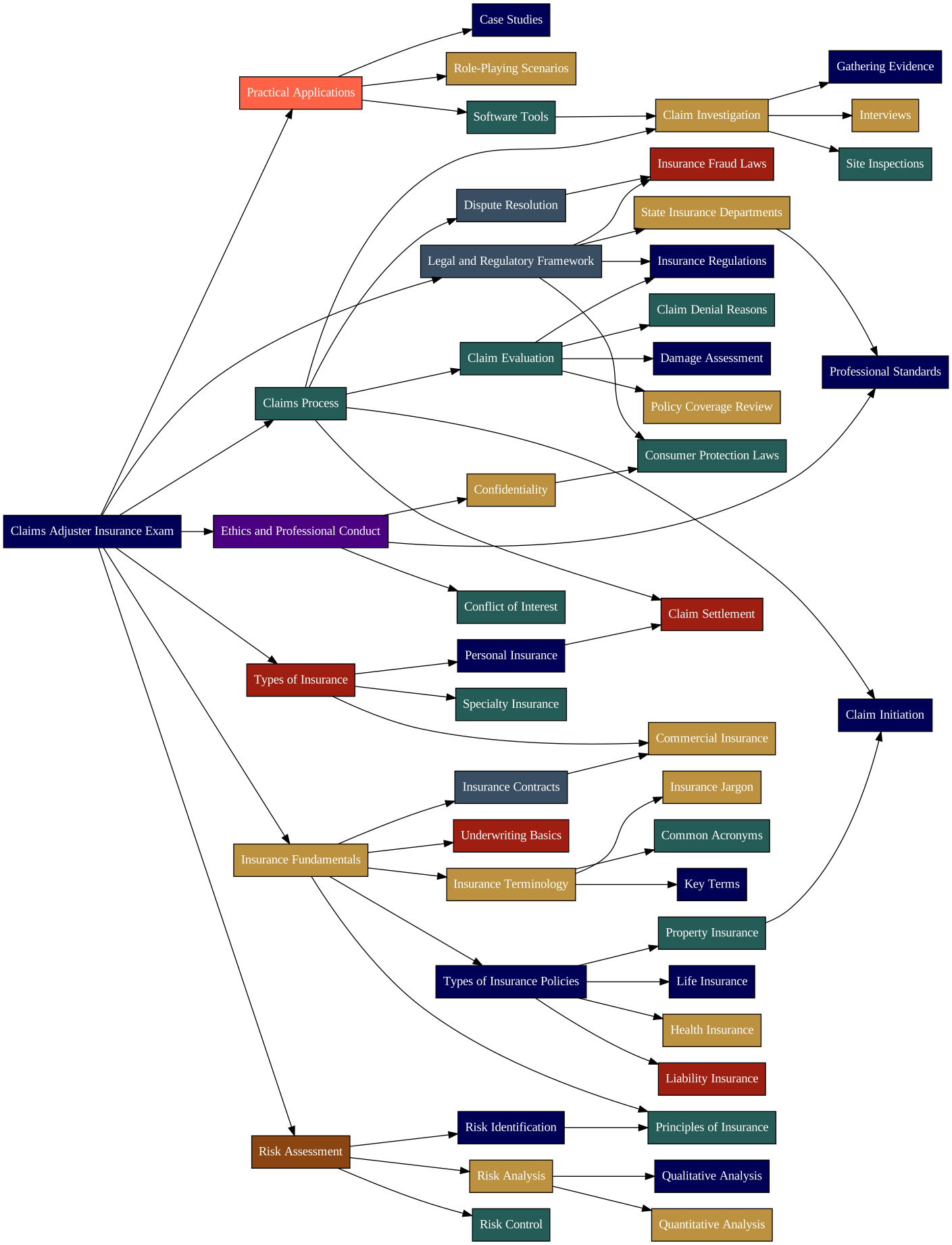
Quiz-summary
0 of 30 questions completed
Questions:
- 1
- 2
- 3
- 4
- 5
- 6
- 7
- 8
- 9
- 10
- 11
- 12
- 13
- 14
- 15
- 16
- 17
- 18
- 19
- 20
- 21
- 22
- 23
- 24
- 25
- 26
- 27
- 28
- 29
- 30
Information
Premium Practice Questions
You have already completed the quiz before. Hence you can not start it again.
Quiz is loading...
You must sign in or sign up to start the quiz.
You have to finish following quiz, to start this quiz:
Results
0 of 30 questions answered correctly
Your time:
Time has elapsed
You have reached 0 of 0 points, (0)
Categories
- Not categorized 0%
- 1
- 2
- 3
- 4
- 5
- 6
- 7
- 8
- 9
- 10
- 11
- 12
- 13
- 14
- 15
- 16
- 17
- 18
- 19
- 20
- 21
- 22
- 23
- 24
- 25
- 26
- 27
- 28
- 29
- 30
- Answered
- Review
-
Question 1 of 30
1. Question
Zenith Insurance is experiencing a period of rapid growth, expanding into new and potentially volatile markets. While currently meeting the Prescribed Capital Amount (PCA) set by APRA, internal risk assessments indicate a significant increase in potential underwriting and investment risks. Which of the following actions is MOST crucial for Zenith Insurance to undertake to ensure ongoing compliance with APRA’s regulatory framework and maintain long-term financial stability?
Correct
The Australian Prudential Regulation Authority (APRA) plays a critical role in overseeing the financial health and stability of the insurance industry. A core function is setting and enforcing prudential standards that ensure insurers maintain adequate capital reserves. These reserves act as a buffer to absorb unexpected losses, safeguarding policyholders’ interests. A key aspect of these standards is the Prescribed Capital Amount (PCA), which represents the minimum level of capital an insurer must hold. This is determined by assessing various risks the insurer faces, including underwriting risk, investment risk, and operational risk. The Capital Adequacy Standard (CAS) goes beyond the PCA. It establishes a framework for assessing an insurer’s overall capital adequacy, considering not just the minimum requirement but also the quality and composition of the capital. Insurers must demonstrate that they hold sufficient capital to cover potential adverse outcomes arising from their business activities. This involves stress testing and scenario analysis to evaluate the impact of various shocks on their capital position. Failure to meet APRA’s capital adequacy requirements can trigger a range of supervisory actions, from increased monitoring and reporting to restrictions on business activities and, in severe cases, intervention or even license revocation. APRA’s focus is on proactive supervision, encouraging insurers to maintain robust risk management practices and adequate capital buffers to ensure their long-term solvency and ability to meet their obligations to policyholders. The goal is to prevent situations where an insurer’s financial distress could lead to losses for policyholders or instability in the broader financial system. APRA’s intervention powers are designed to protect the interests of policyholders and maintain confidence in the insurance industry.
Incorrect
The Australian Prudential Regulation Authority (APRA) plays a critical role in overseeing the financial health and stability of the insurance industry. A core function is setting and enforcing prudential standards that ensure insurers maintain adequate capital reserves. These reserves act as a buffer to absorb unexpected losses, safeguarding policyholders’ interests. A key aspect of these standards is the Prescribed Capital Amount (PCA), which represents the minimum level of capital an insurer must hold. This is determined by assessing various risks the insurer faces, including underwriting risk, investment risk, and operational risk. The Capital Adequacy Standard (CAS) goes beyond the PCA. It establishes a framework for assessing an insurer’s overall capital adequacy, considering not just the minimum requirement but also the quality and composition of the capital. Insurers must demonstrate that they hold sufficient capital to cover potential adverse outcomes arising from their business activities. This involves stress testing and scenario analysis to evaluate the impact of various shocks on their capital position. Failure to meet APRA’s capital adequacy requirements can trigger a range of supervisory actions, from increased monitoring and reporting to restrictions on business activities and, in severe cases, intervention or even license revocation. APRA’s focus is on proactive supervision, encouraging insurers to maintain robust risk management practices and adequate capital buffers to ensure their long-term solvency and ability to meet their obligations to policyholders. The goal is to prevent situations where an insurer’s financial distress could lead to losses for policyholders or instability in the broader financial system. APRA’s intervention powers are designed to protect the interests of policyholders and maintain confidence in the insurance industry.
-
Question 2 of 30
2. Question
A seasoned insurance underwriter, Astrid, is grappling with integrating AI-driven risk assessment tools into her workflow for commercial property insurance. While the AI promises faster processing and broader data analysis, Astrid is concerned about potential biases in the algorithms and the lack of transparency in how the AI arrives at its conclusions. Furthermore, new regulations regarding data privacy and algorithmic accountability are being introduced. Which of the following best encapsulates the most critical challenge Astrid faces in this scenario?
Correct
The question explores the complexities of insurance underwriting in a rapidly evolving technological landscape. It requires understanding how underwriters must balance traditional risk assessment methods with the integration of new data sources and analytical tools, while remaining compliant with regulatory standards and ethical considerations. The core challenge is to adapt to technological advancements without compromising the accuracy, fairness, and transparency of the underwriting process. A crucial aspect is the integration of big data and AI. Underwriters must critically evaluate the reliability and potential biases of algorithms and data sets. Over-reliance on these tools without human oversight can lead to inaccurate risk assessments and discriminatory outcomes. The regulatory environment, particularly concerning privacy and data protection, adds another layer of complexity. Underwriters must ensure that the use of new technologies complies with laws like the Privacy Act 1988 (Cth) and the Australian Prudential Regulation Authority’s (APRA) standards. Furthermore, the question touches upon the need for continuous professional development. Underwriters must acquire new skills to effectively utilize and interpret data analytics, understand the implications of emerging technologies, and adapt to evolving regulatory requirements. Ethical considerations are paramount. Underwriters must ensure that their decisions are fair, transparent, and non-discriminatory, regardless of the technology used. This involves actively mitigating potential biases in algorithms and data, and maintaining a commitment to serving the best interests of their clients. Failing to adapt and integrate these considerations can lead to reputational damage, regulatory penalties, and ultimately, a decline in the quality of underwriting decisions.
Incorrect
The question explores the complexities of insurance underwriting in a rapidly evolving technological landscape. It requires understanding how underwriters must balance traditional risk assessment methods with the integration of new data sources and analytical tools, while remaining compliant with regulatory standards and ethical considerations. The core challenge is to adapt to technological advancements without compromising the accuracy, fairness, and transparency of the underwriting process. A crucial aspect is the integration of big data and AI. Underwriters must critically evaluate the reliability and potential biases of algorithms and data sets. Over-reliance on these tools without human oversight can lead to inaccurate risk assessments and discriminatory outcomes. The regulatory environment, particularly concerning privacy and data protection, adds another layer of complexity. Underwriters must ensure that the use of new technologies complies with laws like the Privacy Act 1988 (Cth) and the Australian Prudential Regulation Authority’s (APRA) standards. Furthermore, the question touches upon the need for continuous professional development. Underwriters must acquire new skills to effectively utilize and interpret data analytics, understand the implications of emerging technologies, and adapt to evolving regulatory requirements. Ethical considerations are paramount. Underwriters must ensure that their decisions are fair, transparent, and non-discriminatory, regardless of the technology used. This involves actively mitigating potential biases in algorithms and data, and maintaining a commitment to serving the best interests of their clients. Failing to adapt and integrate these considerations can lead to reputational damage, regulatory penalties, and ultimately, a decline in the quality of underwriting decisions.
-
Question 3 of 30
3. Question
Imagine you are a compliance officer at “SafeGuard Insurance,” an Australian general insurance provider. A new marketing campaign featuring celebrity endorsements is about to launch. Which of the following actions represents the MOST critical initial step to ensure compliance with Australian regulations, specifically focusing on the roles of APRA and ASIC and the Insurance Contracts Act 1984?
Correct
The core of insurance regulation in Australia revolves around ensuring fairness, transparency, and stability within the industry, primarily safeguarding the interests of consumers. APRA (Australian Prudential Regulation Authority) oversees the financial soundness of insurance companies, focusing on their ability to meet policyholder obligations. This involves setting capital adequacy requirements, monitoring investment strategies, and conducting regular stress tests to assess resilience against adverse events. ASIC (Australian Securities and Investments Commission), on the other hand, regulates the conduct of insurance providers, ensuring they act honestly, efficiently, and fairly. This includes overseeing the sale and marketing of insurance products, handling complaints, and enforcing consumer protection laws. Both APRA and ASIC play distinct but complementary roles in maintaining the integrity of the insurance sector. The Insurance Contracts Act 1984 is a key piece of legislation that governs the relationship between insurers and policyholders, setting out requirements for disclosure, good faith, and claims handling. Understanding the interplay between these regulatory bodies and legislative frameworks is crucial for navigating the complexities of the Australian insurance landscape. A failure to comply with these regulations can result in significant penalties, reputational damage, and even the revocation of licenses. Therefore, insurance professionals must possess a thorough understanding of the regulatory environment and its implications for their business operations.
Incorrect
The core of insurance regulation in Australia revolves around ensuring fairness, transparency, and stability within the industry, primarily safeguarding the interests of consumers. APRA (Australian Prudential Regulation Authority) oversees the financial soundness of insurance companies, focusing on their ability to meet policyholder obligations. This involves setting capital adequacy requirements, monitoring investment strategies, and conducting regular stress tests to assess resilience against adverse events. ASIC (Australian Securities and Investments Commission), on the other hand, regulates the conduct of insurance providers, ensuring they act honestly, efficiently, and fairly. This includes overseeing the sale and marketing of insurance products, handling complaints, and enforcing consumer protection laws. Both APRA and ASIC play distinct but complementary roles in maintaining the integrity of the insurance sector. The Insurance Contracts Act 1984 is a key piece of legislation that governs the relationship between insurers and policyholders, setting out requirements for disclosure, good faith, and claims handling. Understanding the interplay between these regulatory bodies and legislative frameworks is crucial for navigating the complexities of the Australian insurance landscape. A failure to comply with these regulations can result in significant penalties, reputational damage, and even the revocation of licenses. Therefore, insurance professionals must possess a thorough understanding of the regulatory environment and its implications for their business operations.
-
Question 4 of 30
4. Question
Which mechanism provides the MOST robust and comprehensive approach to promoting ethical conduct within the Australian general insurance industry, considering the interplay of internal practices and external oversight?
Correct
The core of ethical conduct within financial services, particularly insurance, hinges on acting with integrity and transparency. This means avoiding conflicts of interest, disclosing all relevant information to clients, and upholding the highest standards of professional behavior. A “Chinese wall,” or information barrier, is a policy implemented within an organization to prevent the flow of inside information between departments that could create conflicts of interest. For instance, if a financial institution has both an underwriting department and an investment banking division, a Chinese wall would prevent information about upcoming mergers or acquisitions from being shared with the underwriting team, which could unfairly influence insurance risk assessments or pricing. Professional indemnity insurance is designed to protect financial professionals from claims of negligence or errors and omissions in their professional services. It does not directly address ethical breaches or intentional misconduct, though it may provide coverage for unintentional errors that lead to ethical concerns. Continuing Professional Development (CPD) is crucial for maintaining competence and staying updated on evolving regulations and ethical standards. However, CPD alone does not guarantee ethical behavior; it must be coupled with a commitment to ethical principles and a strong ethical culture within the organization. The Australian Securities and Investments Commission (ASIC) plays a vital role in enforcing ethical conduct and compliance within the financial services industry. ASIC has the authority to investigate and prosecute individuals and organizations that engage in unethical or illegal behavior. While internal compliance departments are essential for ensuring adherence to regulations and ethical guidelines, ASIC provides an external oversight mechanism that holds the industry accountable. Therefore, the most effective mechanism for promoting ethical conduct is a combination of robust regulatory oversight by ASIC, internal compliance programs, professional indemnity insurance, and a strong ethical culture fostered through ongoing training and awareness.
Incorrect
The core of ethical conduct within financial services, particularly insurance, hinges on acting with integrity and transparency. This means avoiding conflicts of interest, disclosing all relevant information to clients, and upholding the highest standards of professional behavior. A “Chinese wall,” or information barrier, is a policy implemented within an organization to prevent the flow of inside information between departments that could create conflicts of interest. For instance, if a financial institution has both an underwriting department and an investment banking division, a Chinese wall would prevent information about upcoming mergers or acquisitions from being shared with the underwriting team, which could unfairly influence insurance risk assessments or pricing. Professional indemnity insurance is designed to protect financial professionals from claims of negligence or errors and omissions in their professional services. It does not directly address ethical breaches or intentional misconduct, though it may provide coverage for unintentional errors that lead to ethical concerns. Continuing Professional Development (CPD) is crucial for maintaining competence and staying updated on evolving regulations and ethical standards. However, CPD alone does not guarantee ethical behavior; it must be coupled with a commitment to ethical principles and a strong ethical culture within the organization. The Australian Securities and Investments Commission (ASIC) plays a vital role in enforcing ethical conduct and compliance within the financial services industry. ASIC has the authority to investigate and prosecute individuals and organizations that engage in unethical or illegal behavior. While internal compliance departments are essential for ensuring adherence to regulations and ethical guidelines, ASIC provides an external oversight mechanism that holds the industry accountable. Therefore, the most effective mechanism for promoting ethical conduct is a combination of robust regulatory oversight by ASIC, internal compliance programs, professional indemnity insurance, and a strong ethical culture fostered through ongoing training and awareness.
-
Question 5 of 30
5. Question
Quantium Financial, a large insurance provider, is implementing a new Customer Relationship Management (CRM) system across all departments. Senior management is eager to see rapid adoption and improved customer satisfaction scores. Which approach to implementation would MOST likely ensure a successful and sustainable CRM rollout, considering the potential for organizational inertia and the need for regulatory compliance?
Correct
The question explores the complexities of implementing a new CRM system within a large financial services organization, focusing on the critical aspect of change management. A successful CRM implementation requires more than just technological deployment; it demands a comprehensive strategy that addresses employee resistance, integrates with existing systems, and aligns with the organization’s overall strategic goals. Simply choosing the most technologically advanced system or focusing solely on data migration overlooks the human element and the need for a phased approach. Ignoring employee concerns and failing to provide adequate training can lead to low adoption rates and ultimately, project failure. Rushing the implementation without proper testing and integration can disrupt existing workflows and negatively impact customer service. Therefore, a well-defined change management plan, encompassing communication, training, and stakeholder engagement, is paramount for a successful CRM implementation. This includes identifying change champions, addressing potential resistance, and continuously monitoring and evaluating the implementation process to make necessary adjustments. The plan should also detail how the new system will integrate with existing IT infrastructure and business processes to ensure a seamless transition and minimize disruption.
Incorrect
The question explores the complexities of implementing a new CRM system within a large financial services organization, focusing on the critical aspect of change management. A successful CRM implementation requires more than just technological deployment; it demands a comprehensive strategy that addresses employee resistance, integrates with existing systems, and aligns with the organization’s overall strategic goals. Simply choosing the most technologically advanced system or focusing solely on data migration overlooks the human element and the need for a phased approach. Ignoring employee concerns and failing to provide adequate training can lead to low adoption rates and ultimately, project failure. Rushing the implementation without proper testing and integration can disrupt existing workflows and negatively impact customer service. Therefore, a well-defined change management plan, encompassing communication, training, and stakeholder engagement, is paramount for a successful CRM implementation. This includes identifying change champions, addressing potential resistance, and continuously monitoring and evaluating the implementation process to make necessary adjustments. The plan should also detail how the new system will integrate with existing IT infrastructure and business processes to ensure a seamless transition and minimize disruption.
-
Question 6 of 30
6. Question
Zenith Financial Group, a large conglomerate offering banking, insurance, and investment services, is implementing a new enterprise-wide risk management framework. The Chief Risk Officer, Anya Sharma, recognizes the need to balance centralized control with the operational autonomy of individual business units. Which of the following approaches BEST achieves this balance, ensuring effective risk management across the entire organization while allowing for business-specific nuances?
Correct
The question explores the complexities of implementing a comprehensive risk management framework within a large, diversified financial services organization, specifically focusing on the challenges of balancing centralized control with decentralized operational autonomy. A key aspect of this involves understanding the interplay between enterprise-wide risk policies and the specific risk profiles of individual business units. The scenario emphasizes the need for a framework that not only identifies and assesses risks across the organization but also ensures that risk mitigation strategies are effectively implemented and monitored at all levels. The correct approach involves establishing a framework that sets clear, overarching risk management principles and standards applicable to all business units, while simultaneously allowing each unit the flexibility to tailor its risk management practices to its unique operational context and risk exposures. This balance is crucial for fostering both accountability and responsiveness. Regular reporting and monitoring mechanisms are essential to ensure compliance with enterprise-wide standards and to identify emerging risks that may require adjustments to the overall risk management strategy. The risk appetite should be clearly defined at the enterprise level and cascaded down to individual business units, providing a clear understanding of acceptable risk levels. Training and awareness programs play a vital role in embedding a risk-conscious culture throughout the organization.
Incorrect
The question explores the complexities of implementing a comprehensive risk management framework within a large, diversified financial services organization, specifically focusing on the challenges of balancing centralized control with decentralized operational autonomy. A key aspect of this involves understanding the interplay between enterprise-wide risk policies and the specific risk profiles of individual business units. The scenario emphasizes the need for a framework that not only identifies and assesses risks across the organization but also ensures that risk mitigation strategies are effectively implemented and monitored at all levels. The correct approach involves establishing a framework that sets clear, overarching risk management principles and standards applicable to all business units, while simultaneously allowing each unit the flexibility to tailor its risk management practices to its unique operational context and risk exposures. This balance is crucial for fostering both accountability and responsiveness. Regular reporting and monitoring mechanisms are essential to ensure compliance with enterprise-wide standards and to identify emerging risks that may require adjustments to the overall risk management strategy. The risk appetite should be clearly defined at the enterprise level and cascaded down to individual business units, providing a clear understanding of acceptable risk levels. Training and awareness programs play a vital role in embedding a risk-conscious culture throughout the organization.
-
Question 7 of 30
7. Question
A regional general insurance company, “Coastal Cover,” is planning to integrate AI into its underwriting process to improve efficiency and accuracy. Which of the following actions is MOST critical for Coastal Cover to undertake to ensure regulatory compliance and ethical operation in accordance with Australian law, specifically concerning potential algorithmic bias and data privacy?
Correct
The question explores the impact of technological advancements, specifically Artificial Intelligence (AI), on the underwriting process within the general insurance sector, considering regulatory compliance. The core issue is how AI can be leveraged while adhering to regulations and maintaining ethical standards. Underwriting involves assessing risks and determining appropriate premiums. AI can enhance this process by analyzing vast datasets to predict risk more accurately and efficiently. However, this raises several regulatory concerns. First, data privacy regulations, such as the Privacy Act 1988 (Australia), dictate how personal information can be collected, used, and disclosed. AI algorithms must be designed to comply with these regulations, ensuring data is handled securely and ethically. Second, algorithmic bias is a significant concern. If the data used to train AI models reflects existing biases, the AI may perpetuate or even amplify these biases, leading to unfair or discriminatory outcomes. This could violate anti-discrimination laws. Insurers must implement measures to detect and mitigate algorithmic bias. Third, transparency and explainability are crucial. Regulators increasingly require insurers to explain how their AI models arrive at decisions, particularly when those decisions impact consumers. This is challenging because complex AI models can be “black boxes,” making it difficult to understand their reasoning. Fourth, regulatory compliance requires ongoing monitoring and adaptation. As AI technology evolves and new regulations are introduced, insurers must continuously update their AI models and processes to remain compliant. This requires a robust governance framework and a culture of compliance. Finally, the use of AI in underwriting may impact the role of human underwriters. While AI can automate many tasks, human oversight is still necessary to ensure fairness, accuracy, and compliance. Insurers must carefully consider the balance between AI and human involvement in the underwriting process.
Incorrect
The question explores the impact of technological advancements, specifically Artificial Intelligence (AI), on the underwriting process within the general insurance sector, considering regulatory compliance. The core issue is how AI can be leveraged while adhering to regulations and maintaining ethical standards. Underwriting involves assessing risks and determining appropriate premiums. AI can enhance this process by analyzing vast datasets to predict risk more accurately and efficiently. However, this raises several regulatory concerns. First, data privacy regulations, such as the Privacy Act 1988 (Australia), dictate how personal information can be collected, used, and disclosed. AI algorithms must be designed to comply with these regulations, ensuring data is handled securely and ethically. Second, algorithmic bias is a significant concern. If the data used to train AI models reflects existing biases, the AI may perpetuate or even amplify these biases, leading to unfair or discriminatory outcomes. This could violate anti-discrimination laws. Insurers must implement measures to detect and mitigate algorithmic bias. Third, transparency and explainability are crucial. Regulators increasingly require insurers to explain how their AI models arrive at decisions, particularly when those decisions impact consumers. This is challenging because complex AI models can be “black boxes,” making it difficult to understand their reasoning. Fourth, regulatory compliance requires ongoing monitoring and adaptation. As AI technology evolves and new regulations are introduced, insurers must continuously update their AI models and processes to remain compliant. This requires a robust governance framework and a culture of compliance. Finally, the use of AI in underwriting may impact the role of human underwriters. While AI can automate many tasks, human oversight is still necessary to ensure fairness, accuracy, and compliance. Insurers must carefully consider the balance between AI and human involvement in the underwriting process.
-
Question 8 of 30
8. Question
In a large, established general insurance company, a noticeable decline in employee engagement and productivity has been observed, particularly among younger employees (Gen Z and Millennials). These employees express frustration with the company’s rigid hierarchical structure, limited opportunities for remote work, and slow adoption of modern technologies. Senior management, primarily consisting of Baby Boomers and Gen X, adhere to traditional management styles and are hesitant to implement significant changes. Which of the following strategies would be MOST effective in addressing this issue and improving overall organizational behavior?
Correct
The question explores the complexities of organizational behavior within the financial services sector, particularly focusing on the impact of differing generational values and technological advancements on employee engagement and productivity. It delves into how traditional hierarchical structures might clash with the expectations of younger employees who value autonomy and digital fluency. The scenario highlights a common challenge faced by many financial institutions: bridging the gap between established practices and the evolving needs and preferences of a diverse workforce. Effective strategies for managing this include fostering open communication channels where employees can voice their concerns and ideas, implementing flexible work arrangements to accommodate different lifestyles and preferences, and providing opportunities for professional development that enhance both technical skills and soft skills such as collaboration and leadership. Moreover, creating a culture of continuous learning and innovation can empower employees to adapt to technological changes and contribute to the organization’s success. The correct answer emphasizes the importance of adapting management styles to align with the values and expectations of a diverse workforce, including leveraging technology to enhance employee engagement and productivity. This approach recognizes that employee satisfaction and performance are closely linked to feeling valued, supported, and empowered within the organization.
Incorrect
The question explores the complexities of organizational behavior within the financial services sector, particularly focusing on the impact of differing generational values and technological advancements on employee engagement and productivity. It delves into how traditional hierarchical structures might clash with the expectations of younger employees who value autonomy and digital fluency. The scenario highlights a common challenge faced by many financial institutions: bridging the gap between established practices and the evolving needs and preferences of a diverse workforce. Effective strategies for managing this include fostering open communication channels where employees can voice their concerns and ideas, implementing flexible work arrangements to accommodate different lifestyles and preferences, and providing opportunities for professional development that enhance both technical skills and soft skills such as collaboration and leadership. Moreover, creating a culture of continuous learning and innovation can empower employees to adapt to technological changes and contribute to the organization’s success. The correct answer emphasizes the importance of adapting management styles to align with the values and expectations of a diverse workforce, including leveraging technology to enhance employee engagement and productivity. This approach recognizes that employee satisfaction and performance are closely linked to feeling valued, supported, and empowered within the organization.
-
Question 9 of 30
9. Question
A general insurance company needs to set aside funds today to cover a potential claim payment of $1,102,500 that is expected to be paid out in 2 years. Assuming the company can earn a guaranteed annual interest rate of 5% on its investments, how much should the company set aside today to meet this future obligation, based on the principle of the time value of money?
Correct
The time value of money (TVM) is a fundamental concept in finance that states that money available at the present time is worth more than the same amount in the future due to its potential earning capacity. This principle is based on the idea that money can be invested and earn interest, thereby increasing its value over time. TVM is a crucial consideration in financial decision-making, as it allows individuals and businesses to compare the value of cash flows occurring at different points in time. There are two main components to the time value of money: present value (PV) and future value (FV). Present value is the current worth of a future sum of money or stream of cash flows, given a specified rate of return. It is calculated by discounting the future cash flows back to the present using a discount rate, which reflects the opportunity cost of capital. Future value, on the other hand, is the value of an asset or investment at a specified date in the future, based on an assumed rate of growth. It is calculated by compounding the present value forward using an interest rate. The formula for calculating the future value of a single sum is: \[FV = PV (1 + r)^n\] where: FV = Future Value, PV = Present Value, r = Interest Rate per period, n = Number of periods. The formula for calculating the present value of a single sum is: \[PV = \frac{FV}{(1 + r)^n}\] where: PV = Present Value, FV = Future Value, r = Discount Rate per period, n = Number of periods. Understanding the time value of money is essential for making informed financial decisions, such as evaluating investment opportunities, planning for retirement, and managing debt. It allows individuals and businesses to compare the costs and benefits of different options and to choose the one that maximizes their wealth.
Incorrect
The time value of money (TVM) is a fundamental concept in finance that states that money available at the present time is worth more than the same amount in the future due to its potential earning capacity. This principle is based on the idea that money can be invested and earn interest, thereby increasing its value over time. TVM is a crucial consideration in financial decision-making, as it allows individuals and businesses to compare the value of cash flows occurring at different points in time. There are two main components to the time value of money: present value (PV) and future value (FV). Present value is the current worth of a future sum of money or stream of cash flows, given a specified rate of return. It is calculated by discounting the future cash flows back to the present using a discount rate, which reflects the opportunity cost of capital. Future value, on the other hand, is the value of an asset or investment at a specified date in the future, based on an assumed rate of growth. It is calculated by compounding the present value forward using an interest rate. The formula for calculating the future value of a single sum is: \[FV = PV (1 + r)^n\] where: FV = Future Value, PV = Present Value, r = Interest Rate per period, n = Number of periods. The formula for calculating the present value of a single sum is: \[PV = \frac{FV}{(1 + r)^n}\] where: PV = Present Value, FV = Future Value, r = Discount Rate per period, n = Number of periods. Understanding the time value of money is essential for making informed financial decisions, such as evaluating investment opportunities, planning for retirement, and managing debt. It allows individuals and businesses to compare the costs and benefits of different options and to choose the one that maximizes their wealth.
-
Question 10 of 30
10. Question
A medium-sized general insurance company, “SafeGuard Insurance,” is experiencing rapid growth in its home insurance portfolio. While this growth is positive, the company’s risk management team identifies a potential systemic risk: an increasing concentration of policies in regions highly susceptible to bushfires. Considering APRA’s regulatory oversight, which of the following actions would be MOST crucial for SafeGuard Insurance to undertake to ensure ongoing compliance and maintain financial stability?
Correct
The Australian Prudential Regulation Authority (APRA) plays a crucial role in the financial services industry, particularly concerning insurance. APRA’s main objective is to ensure the stability of the financial system and protect the interests of depositors, policyholders, and superannuation fund members. APRA achieves this through setting prudential standards that insurance companies must adhere to. These standards cover various aspects of the business, including capital adequacy, risk management, and governance. Capital adequacy requirements are in place to ensure that insurers have enough financial resources to meet their obligations to policyholders, even in adverse circumstances. Risk management frameworks require insurers to identify, assess, and manage the risks they face, such as underwriting risk, investment risk, and operational risk. Governance standards ensure that insurers are well-managed and that their boards and senior management are accountable for their actions. Compliance with APRA’s prudential standards is mandatory for all authorized insurance companies in Australia. Failure to comply can result in enforcement action, including financial penalties, restrictions on business activities, and even revocation of authorization. APRA also conducts regular reviews and assessments of insurers to ensure that they are meeting the required standards. The regulatory framework aims to create a stable and reliable insurance industry that protects consumers and contributes to the overall health of the financial system.
Incorrect
The Australian Prudential Regulation Authority (APRA) plays a crucial role in the financial services industry, particularly concerning insurance. APRA’s main objective is to ensure the stability of the financial system and protect the interests of depositors, policyholders, and superannuation fund members. APRA achieves this through setting prudential standards that insurance companies must adhere to. These standards cover various aspects of the business, including capital adequacy, risk management, and governance. Capital adequacy requirements are in place to ensure that insurers have enough financial resources to meet their obligations to policyholders, even in adverse circumstances. Risk management frameworks require insurers to identify, assess, and manage the risks they face, such as underwriting risk, investment risk, and operational risk. Governance standards ensure that insurers are well-managed and that their boards and senior management are accountable for their actions. Compliance with APRA’s prudential standards is mandatory for all authorized insurance companies in Australia. Failure to comply can result in enforcement action, including financial penalties, restrictions on business activities, and even revocation of authorization. APRA also conducts regular reviews and assessments of insurers to ensure that they are meeting the required standards. The regulatory framework aims to create a stable and reliable insurance industry that protects consumers and contributes to the overall health of the financial system.
-
Question 11 of 30
11. Question
“SecureFuture” Insurance experiences rapid market share growth due to innovative products and aggressive sales. Which statement BEST describes the MOST LIKELY regulatory concern and subsequent action by APRA and ASIC?
Correct
In the Australian insurance landscape, regulatory bodies such as APRA (Australian Prudential Regulation Authority) and ASIC (Australian Securities and Investments Commission) play distinct but interconnected roles. APRA’s primary focus is prudential supervision, ensuring the financial soundness and stability of insurance companies. This involves setting capital adequacy requirements, monitoring solvency, and overseeing risk management practices. ASIC, on the other hand, is concerned with market integrity and consumer protection. It regulates the conduct of financial service providers, including insurers, to ensure fair dealing, transparency, and compliance with consumer protection laws. The scenario presented involves an insurance company, “SecureFuture,” that is experiencing rapid growth in its market share due to aggressive sales tactics and innovative product offerings. While this growth is positive from a business perspective, it also presents potential risks that require careful management. One such risk is the potential for underpricing of insurance policies to gain market share. This could lead to inadequate reserves to cover future claims, jeopardizing the company’s financial stability. Another risk is the potential for mis-selling of insurance products, where customers are sold policies that do not meet their needs or are not fully informed about the terms and conditions. This could result in customer complaints, reputational damage, and regulatory action. APRA would be primarily concerned with SecureFuture’s capital adequacy and solvency position, given its rapid growth. They would want to ensure that the company has sufficient capital to support its increased liabilities and that its risk management practices are adequate to address the potential risks associated with its growth strategy. ASIC would be more concerned with SecureFuture’s sales practices and compliance with consumer protection laws. They would want to ensure that the company is not engaging in mis-selling or other unfair practices and that its customers are being treated fairly. The interaction between APRA and ASIC in this scenario would involve information sharing and coordination to ensure that SecureFuture is operating in a safe and sound manner and that its customers are being protected.
Incorrect
In the Australian insurance landscape, regulatory bodies such as APRA (Australian Prudential Regulation Authority) and ASIC (Australian Securities and Investments Commission) play distinct but interconnected roles. APRA’s primary focus is prudential supervision, ensuring the financial soundness and stability of insurance companies. This involves setting capital adequacy requirements, monitoring solvency, and overseeing risk management practices. ASIC, on the other hand, is concerned with market integrity and consumer protection. It regulates the conduct of financial service providers, including insurers, to ensure fair dealing, transparency, and compliance with consumer protection laws. The scenario presented involves an insurance company, “SecureFuture,” that is experiencing rapid growth in its market share due to aggressive sales tactics and innovative product offerings. While this growth is positive from a business perspective, it also presents potential risks that require careful management. One such risk is the potential for underpricing of insurance policies to gain market share. This could lead to inadequate reserves to cover future claims, jeopardizing the company’s financial stability. Another risk is the potential for mis-selling of insurance products, where customers are sold policies that do not meet their needs or are not fully informed about the terms and conditions. This could result in customer complaints, reputational damage, and regulatory action. APRA would be primarily concerned with SecureFuture’s capital adequacy and solvency position, given its rapid growth. They would want to ensure that the company has sufficient capital to support its increased liabilities and that its risk management practices are adequate to address the potential risks associated with its growth strategy. ASIC would be more concerned with SecureFuture’s sales practices and compliance with consumer protection laws. They would want to ensure that the company is not engaging in mis-selling or other unfair practices and that its customers are being treated fairly. The interaction between APRA and ASIC in this scenario would involve information sharing and coordination to ensure that SecureFuture is operating in a safe and sound manner and that its customers are being protected.
-
Question 12 of 30
12. Question
Zenith Insurance’s board discovers that a recently launched policy, designed to cover emerging cybersecurity risks for small businesses, contains ambiguous clauses that could lead to widespread claim denials. The policy has been heavily marketed, and initial sales figures are strong, contributing significantly to the company’s projected revenue for the quarter. Rectifying the ambiguity would require a costly revision of the policy and potentially impact the company’s short-term financial performance. However, continuing with the policy as is could expose Zenith to significant reputational damage and potential legal action from aggrieved policyholders. Which of the following actions best demonstrates ethical leadership and robust corporate governance in this situation, aligning with the regulatory expectations of ASIC?
Correct
The question explores the interplay between corporate governance principles and ethical considerations within the Australian financial services industry, specifically focusing on insurance companies. It requires understanding of the responsibilities of a board of directors, the role of ethical frameworks, and the potential consequences of failing to uphold these standards. The core of the scenario lies in identifying which action best exemplifies a commitment to ethical leadership and robust corporate governance in the face of conflicting stakeholder interests and potential financial repercussions. A strong corporate governance framework is crucial for financial service entities, as it ensures accountability, transparency, and ethical conduct. This framework is usually overseen by the board of directors, who are responsible for setting the strategic direction, monitoring performance, and ensuring compliance with relevant laws and regulations. Ethical considerations are also paramount in the financial services industry, where decisions can have a significant impact on individuals, businesses, and the broader economy. A robust ethical framework helps to guide decision-making, promote trust, and prevent misconduct. The Australian Securities and Investments Commission (ASIC) plays a critical role in regulating the financial services industry and enforcing compliance with relevant laws and regulations. ASIC has the power to investigate and take action against companies that engage in misconduct, including breaches of corporate governance principles and ethical standards.
Incorrect
The question explores the interplay between corporate governance principles and ethical considerations within the Australian financial services industry, specifically focusing on insurance companies. It requires understanding of the responsibilities of a board of directors, the role of ethical frameworks, and the potential consequences of failing to uphold these standards. The core of the scenario lies in identifying which action best exemplifies a commitment to ethical leadership and robust corporate governance in the face of conflicting stakeholder interests and potential financial repercussions. A strong corporate governance framework is crucial for financial service entities, as it ensures accountability, transparency, and ethical conduct. This framework is usually overseen by the board of directors, who are responsible for setting the strategic direction, monitoring performance, and ensuring compliance with relevant laws and regulations. Ethical considerations are also paramount in the financial services industry, where decisions can have a significant impact on individuals, businesses, and the broader economy. A robust ethical framework helps to guide decision-making, promote trust, and prevent misconduct. The Australian Securities and Investments Commission (ASIC) plays a critical role in regulating the financial services industry and enforcing compliance with relevant laws and regulations. ASIC has the power to investigate and take action against companies that engage in misconduct, including breaches of corporate governance principles and ethical standards.
-
Question 13 of 30
13. Question
Kaito, a financial advisor, recommends a particular general insurance policy to a new client, Anya, highlighting its comprehensive coverage. While the policy indeed offers extensive benefits, Kaito fails to mention that it carries significantly higher premiums compared to other suitable policies available in the market. Kaito receives a higher commission from the recommended policy. Which ethical consideration is MOST directly compromised by Kaito’s actions?
Correct
The core of ethical decision-making in financial services, especially in insurance, revolves around balancing the interests of various stakeholders while adhering to regulatory frameworks and professional standards. This scenario requires understanding of the Australian Securities and Investments Commission (ASIC)’s regulatory guidelines, particularly those related to fair treatment of customers and disclosure of conflicts of interest. It also tests the comprehension of the Insurance Council of Australia (ICA)’s Code of Practice, which emphasizes transparency and ethical conduct. A key consideration is whether the advisor prioritized their own financial gain (through higher commissions) over the client’s needs. Furthermore, the question probes the understanding of the fiduciary duty owed by financial advisors to their clients, which mandates acting in the client’s best interest. A breach of this duty can lead to legal and regulatory consequences. The ethical implications extend to the advisor’s responsibility to fully disclose all relevant information, including the potential impact of higher premiums due to the specific policy recommendation. A failure to do so would be a violation of ethical standards and potentially constitute misleading conduct under the ASIC Act. The advisor’s conduct should be evaluated against the backdrop of promoting trust and confidence in the financial services industry, which is a fundamental principle underlying ethical behavior.
Incorrect
The core of ethical decision-making in financial services, especially in insurance, revolves around balancing the interests of various stakeholders while adhering to regulatory frameworks and professional standards. This scenario requires understanding of the Australian Securities and Investments Commission (ASIC)’s regulatory guidelines, particularly those related to fair treatment of customers and disclosure of conflicts of interest. It also tests the comprehension of the Insurance Council of Australia (ICA)’s Code of Practice, which emphasizes transparency and ethical conduct. A key consideration is whether the advisor prioritized their own financial gain (through higher commissions) over the client’s needs. Furthermore, the question probes the understanding of the fiduciary duty owed by financial advisors to their clients, which mandates acting in the client’s best interest. A breach of this duty can lead to legal and regulatory consequences. The ethical implications extend to the advisor’s responsibility to fully disclose all relevant information, including the potential impact of higher premiums due to the specific policy recommendation. A failure to do so would be a violation of ethical standards and potentially constitute misleading conduct under the ASIC Act. The advisor’s conduct should be evaluated against the backdrop of promoting trust and confidence in the financial services industry, which is a fundamental principle underlying ethical behavior.
-
Question 14 of 30
14. Question
Ms. Anya recently took out a comprehensive health insurance policy. During the application process, she inadvertently failed to disclose a prior diagnosis of mild hypertension, which she had been managing with medication and had almost forgotten about. Six months later, she submitted a claim for a significant cardiac event, unrelated to her hypertension. The insurer, upon reviewing her medical history, discovered the non-disclosure and is now attempting to avoid the entire policy. Under the Insurance Contracts Act 1984 (ICA), which of the following statements best describes the insurer’s legal position?
Correct
The question explores the complexities surrounding the duty of utmost good faith in insurance contracts, particularly when an insurer seeks to avoid a claim due to non-disclosure. The Insurance Contracts Act 1984 (ICA) imposes a duty of utmost good faith on both the insurer and the insured. Section 13 of the ICA specifically addresses the insurer’s duty. Section 21 outlines the insured’s duty of disclosure. However, Section 29(3) limits the insurer’s ability to avoid a contract for non-disclosure or misrepresentation if the insured’s conduct was fraudulent. In this scenario, while Ms. Anya failed to disclose a prior medical condition (mild hypertension), there’s no indication that this non-disclosure was fraudulent. The insurer can only avoid the policy if it can prove that Ms. Anya acted fraudulently, which is a high legal bar to clear. If the non-disclosure was not fraudulent, the insurer’s remedies are limited to those outlined in Section 28 of the ICA, which may include reducing the claim amount to reflect the premium that would have been charged had the insurer known about the hypertension. The key is determining whether the non-disclosure was intentional and aimed at deceiving the insurer. If Ms. Anya genuinely forgot about the condition or didn’t realize its significance, it’s unlikely to be considered fraudulent. Therefore, the insurer likely cannot completely avoid the policy based solely on non-fraudulent non-disclosure.
Incorrect
The question explores the complexities surrounding the duty of utmost good faith in insurance contracts, particularly when an insurer seeks to avoid a claim due to non-disclosure. The Insurance Contracts Act 1984 (ICA) imposes a duty of utmost good faith on both the insurer and the insured. Section 13 of the ICA specifically addresses the insurer’s duty. Section 21 outlines the insured’s duty of disclosure. However, Section 29(3) limits the insurer’s ability to avoid a contract for non-disclosure or misrepresentation if the insured’s conduct was fraudulent. In this scenario, while Ms. Anya failed to disclose a prior medical condition (mild hypertension), there’s no indication that this non-disclosure was fraudulent. The insurer can only avoid the policy if it can prove that Ms. Anya acted fraudulently, which is a high legal bar to clear. If the non-disclosure was not fraudulent, the insurer’s remedies are limited to those outlined in Section 28 of the ICA, which may include reducing the claim amount to reflect the premium that would have been charged had the insurer known about the hypertension. The key is determining whether the non-disclosure was intentional and aimed at deceiving the insurer. If Ms. Anya genuinely forgot about the condition or didn’t realize its significance, it’s unlikely to be considered fraudulent. Therefore, the insurer likely cannot completely avoid the policy based solely on non-fraudulent non-disclosure.
-
Question 15 of 30
15. Question
“FinServ Innovations,” a financial services firm, is evaluating the adoption of a new AI-powered platform to streamline its customer service operations. The platform promises to significantly reduce response times and personalize customer interactions. However, the platform also raises concerns about data security, algorithmic bias, and potential job displacement. Before implementing the platform, what is the MOST comprehensive approach FinServ Innovations should take to ensure responsible and sustainable adoption, aligning with regulatory expectations and ethical standards?
Correct
The scenario describes a situation where a financial services firm is considering adopting a new technology platform. The key issue revolves around balancing the potential benefits of the technology (increased efficiency, improved customer service) with the risks (cybersecurity threats, data privacy concerns, operational disruptions). A thorough risk assessment is crucial before implementing any new technology. This involves identifying potential threats, evaluating their likelihood and impact, and developing mitigation strategies. These strategies might include enhanced cybersecurity protocols, data encryption, employee training, and business continuity plans. The regulatory environment, particularly concerning data privacy (like the Privacy Act 1988 and the Australian Privacy Principles), also needs careful consideration. The firm must ensure that the new technology complies with all relevant regulations and protects customer data. Furthermore, the organization’s ethical obligations to its customers must be upheld. This includes transparency about how data is used and ensuring that the technology does not discriminate against any group. The firm’s decision should be guided by a risk management framework that integrates ethical considerations, regulatory compliance, and business objectives.
Incorrect
The scenario describes a situation where a financial services firm is considering adopting a new technology platform. The key issue revolves around balancing the potential benefits of the technology (increased efficiency, improved customer service) with the risks (cybersecurity threats, data privacy concerns, operational disruptions). A thorough risk assessment is crucial before implementing any new technology. This involves identifying potential threats, evaluating their likelihood and impact, and developing mitigation strategies. These strategies might include enhanced cybersecurity protocols, data encryption, employee training, and business continuity plans. The regulatory environment, particularly concerning data privacy (like the Privacy Act 1988 and the Australian Privacy Principles), also needs careful consideration. The firm must ensure that the new technology complies with all relevant regulations and protects customer data. Furthermore, the organization’s ethical obligations to its customers must be upheld. This includes transparency about how data is used and ensuring that the technology does not discriminate against any group. The firm’s decision should be guided by a risk management framework that integrates ethical considerations, regulatory compliance, and business objectives.
-
Question 16 of 30
16. Question
What is the future value of a \$10,000 investment compounded annually at an interest rate of 5% over a period of 3 years?
Correct
The calculation of the time value of money is a fundamental concept in finance. The future value (FV) of an investment can be calculated using the formula: \[FV = PV (1 + r)^n\] where PV is the present value, r is the interest rate per period, and n is the number of periods. In this case, PV = \$10,000, r = 5% or 0.05, and n = 3 years. Substituting these values into the formula, we get: \[FV = 10000 (1 + 0.05)^3\] \[FV = 10000 (1.05)^3\] \[FV = 10000 \times 1.157625\] \[FV = 11576.25\] Therefore, the future value of the investment after 3 years is \$11,576.25.
Incorrect
The calculation of the time value of money is a fundamental concept in finance. The future value (FV) of an investment can be calculated using the formula: \[FV = PV (1 + r)^n\] where PV is the present value, r is the interest rate per period, and n is the number of periods. In this case, PV = \$10,000, r = 5% or 0.05, and n = 3 years. Substituting these values into the formula, we get: \[FV = 10000 (1 + 0.05)^3\] \[FV = 10000 (1.05)^3\] \[FV = 10000 \times 1.157625\] \[FV = 11576.25\] Therefore, the future value of the investment after 3 years is \$11,576.25.
-
Question 17 of 30
17. Question
A financial advisor recommends a particular investment product to a client, knowing that it will generate a significantly higher commission for the advisor compared to other, more suitable and lower-cost options available to the client. Which ethical principle is the advisor MOST likely violating?
Correct
This question examines the importance of ethical conduct and professional responsibilities in financial planning and advisory services. Financial planners have a fiduciary duty to act in the best interests of their clients, which means prioritizing the client’s needs and objectives above their own. This includes providing advice that is suitable for the client’s individual circumstances, disclosing any conflicts of interest, and acting with integrity and transparency. In this scenario, the financial advisor is recommending a product that generates a higher commission for themselves, even though a more suitable and lower-cost option is available for the client. This is a clear breach of their ethical and professional responsibilities. Recommending a product solely for personal gain violates the fiduciary duty to act in the client’s best interests. While generating revenue is important for the advisor’s business, it should not come at the expense of the client’s financial well-being. Regulatory bodies like ASIC emphasize the importance of ethical conduct and can take disciplinary action against advisors who violate these principles.
Incorrect
This question examines the importance of ethical conduct and professional responsibilities in financial planning and advisory services. Financial planners have a fiduciary duty to act in the best interests of their clients, which means prioritizing the client’s needs and objectives above their own. This includes providing advice that is suitable for the client’s individual circumstances, disclosing any conflicts of interest, and acting with integrity and transparency. In this scenario, the financial advisor is recommending a product that generates a higher commission for themselves, even though a more suitable and lower-cost option is available for the client. This is a clear breach of their ethical and professional responsibilities. Recommending a product solely for personal gain violates the fiduciary duty to act in the client’s best interests. While generating revenue is important for the advisor’s business, it should not come at the expense of the client’s financial well-being. Regulatory bodies like ASIC emphasize the importance of ethical conduct and can take disciplinary action against advisors who violate these principles.
-
Question 18 of 30
18. Question
Which statement MOST accurately reflects the core mandate of the Australian Prudential Regulation Authority (APRA) concerning the general insurance sector in Australia, and how does it achieve this mandate?
Correct
The Australian Prudential Regulation Authority (APRA) plays a critical role in overseeing the financial health and stability of the insurance industry. Its primary objective is to protect the interests of depositors, policyholders, and superannuation fund members. APRA achieves this through a framework of prudential standards and regulations that govern various aspects of insurance business operations. These standards cover areas such as capital adequacy, risk management, governance, and reporting. Capital adequacy requirements ensure that insurers maintain sufficient capital reserves to absorb potential losses and meet their obligations to policyholders. Risk management standards require insurers to identify, assess, and manage risks effectively, including operational, financial, and strategic risks. Governance standards promote sound corporate governance practices, ensuring that insurers are managed prudently and in the best interests of their stakeholders. Reporting requirements mandate that insurers provide APRA with regular and accurate information about their financial performance and risk profile. By enforcing these standards, APRA aims to maintain the stability and integrity of the insurance industry, fostering confidence among consumers and promoting the long-term sustainability of the sector. A key aspect of APRA’s role involves proactive supervision, which includes monitoring insurers’ compliance with prudential standards, conducting on-site reviews, and engaging in dialogue with insurers’ management teams. APRA also has the power to take enforcement action against insurers that fail to comply with its requirements, including imposing penalties, issuing directions, and, in extreme cases, revoking licenses. The legal framework underpinning APRA’s authority is primarily the Australian Prudential Regulation Authority Act 1998.
Incorrect
The Australian Prudential Regulation Authority (APRA) plays a critical role in overseeing the financial health and stability of the insurance industry. Its primary objective is to protect the interests of depositors, policyholders, and superannuation fund members. APRA achieves this through a framework of prudential standards and regulations that govern various aspects of insurance business operations. These standards cover areas such as capital adequacy, risk management, governance, and reporting. Capital adequacy requirements ensure that insurers maintain sufficient capital reserves to absorb potential losses and meet their obligations to policyholders. Risk management standards require insurers to identify, assess, and manage risks effectively, including operational, financial, and strategic risks. Governance standards promote sound corporate governance practices, ensuring that insurers are managed prudently and in the best interests of their stakeholders. Reporting requirements mandate that insurers provide APRA with regular and accurate information about their financial performance and risk profile. By enforcing these standards, APRA aims to maintain the stability and integrity of the insurance industry, fostering confidence among consumers and promoting the long-term sustainability of the sector. A key aspect of APRA’s role involves proactive supervision, which includes monitoring insurers’ compliance with prudential standards, conducting on-site reviews, and engaging in dialogue with insurers’ management teams. APRA also has the power to take enforcement action against insurers that fail to comply with its requirements, including imposing penalties, issuing directions, and, in extreme cases, revoking licenses. The legal framework underpinning APRA’s authority is primarily the Australian Prudential Regulation Authority Act 1998.
-
Question 19 of 30
19. Question
Javier, the owner of a rapidly growing tech startup, recognizes the critical role Anya, his Chief Technology Officer, plays in the company’s success. Anya possesses unique technical skills and deep industry knowledge that are directly responsible for the company’s recent innovative product launch and subsequent market gains. Javier decides to take out a key person insurance policy on Anya’s life, with the company as the beneficiary. Considering the principles of insurable interest and the regulatory environment governing insurance in Australia, which of the following statements is most accurate?
Correct
The question addresses the critical concept of insurable interest, a fundamental principle in insurance law. Insurable interest means that the policyholder must stand to suffer a direct financial loss if the event insured against occurs. This principle prevents wagering on losses and ensures that insurance serves its intended purpose of indemnifying against genuine losses. Without insurable interest, an insurance contract is generally considered void. The Australian Prudential Regulation Authority (APRA) oversees the insurance industry in Australia, and while APRA doesn’t directly define insurable interest in legislation, the principle is embedded in common law and is a key consideration in insurance practices that APRA regulates. The Insurance Contracts Act 1984 (Cth) also influences the interpretation and application of insurable interest in Australia. The scenario involves a business owner, Javier, taking out a key person insurance policy on a valuable employee, Anya. The business benefits directly from Anya’s contributions, and the loss of Anya would result in a financial loss for the business. Therefore, Javier’s business has an insurable interest in Anya. The existence of insurable interest is crucial for the validity of the policy.
Incorrect
The question addresses the critical concept of insurable interest, a fundamental principle in insurance law. Insurable interest means that the policyholder must stand to suffer a direct financial loss if the event insured against occurs. This principle prevents wagering on losses and ensures that insurance serves its intended purpose of indemnifying against genuine losses. Without insurable interest, an insurance contract is generally considered void. The Australian Prudential Regulation Authority (APRA) oversees the insurance industry in Australia, and while APRA doesn’t directly define insurable interest in legislation, the principle is embedded in common law and is a key consideration in insurance practices that APRA regulates. The Insurance Contracts Act 1984 (Cth) also influences the interpretation and application of insurable interest in Australia. The scenario involves a business owner, Javier, taking out a key person insurance policy on a valuable employee, Anya. The business benefits directly from Anya’s contributions, and the loss of Anya would result in a financial loss for the business. Therefore, Javier’s business has an insurable interest in Anya. The existence of insurable interest is crucial for the validity of the policy.
-
Question 20 of 30
20. Question
A fire severely damages Mrs. Chen’s small business, covered by a comprehensive insurance policy. The policy contains a clause that technically allows the insurer to deny the claim due to a minor, unintentional breach of a safety regulation that had no bearing on the cause of the fire. Legally, the insurer is within its rights to deny the claim. However, denying the claim would likely bankrupt Mrs. Chen and her family. Considering the ethical implications, what is the MOST ethically sound approach for the claims manager?
Correct
The question explores the application of ethical frameworks within the context of insurance claims management, specifically focusing on situations where adhering strictly to legal requirements might conflict with broader ethical considerations or create unintended negative consequences for the claimant. A purely legalistic approach, while ensuring compliance with regulations and policy terms, may not always align with principles of fairness, compassion, or the reasonable expectations of the insured party. The scenario presented necessitates a nuanced judgment, balancing the insurer’s obligations under the law and the insurance contract with the ethical imperative to act in good faith and consider the claimant’s circumstances. Utilitarianism, as an ethical framework, suggests choosing the action that maximizes overall well-being or happiness for the greatest number of people affected. In this context, a utilitarian approach might involve considering the broader impact of the claims decision, not only on the insurer’s profitability but also on the claimant’s financial stability and emotional well-being. Deontology, on the other hand, emphasizes adherence to moral duties and rules, regardless of the consequences. A deontological approach would prioritize fulfilling the insurer’s contractual obligations and complying with legal requirements, even if it results in hardship for the claimant. Virtue ethics focuses on the character of the decision-maker and the virtues they embody, such as honesty, fairness, and compassion. A virtue ethics perspective would encourage the claims manager to act in a way that reflects these virtues, even if it requires going beyond the strict letter of the law. The correct approach involves a thoughtful integration of these ethical frameworks, recognizing that a rigid adherence to legal requirements without considering the ethical implications can undermine trust in the insurance industry and lead to unjust outcomes. This integration necessitates a commitment to transparency, open communication, and a willingness to consider the claimant’s perspective.
Incorrect
The question explores the application of ethical frameworks within the context of insurance claims management, specifically focusing on situations where adhering strictly to legal requirements might conflict with broader ethical considerations or create unintended negative consequences for the claimant. A purely legalistic approach, while ensuring compliance with regulations and policy terms, may not always align with principles of fairness, compassion, or the reasonable expectations of the insured party. The scenario presented necessitates a nuanced judgment, balancing the insurer’s obligations under the law and the insurance contract with the ethical imperative to act in good faith and consider the claimant’s circumstances. Utilitarianism, as an ethical framework, suggests choosing the action that maximizes overall well-being or happiness for the greatest number of people affected. In this context, a utilitarian approach might involve considering the broader impact of the claims decision, not only on the insurer’s profitability but also on the claimant’s financial stability and emotional well-being. Deontology, on the other hand, emphasizes adherence to moral duties and rules, regardless of the consequences. A deontological approach would prioritize fulfilling the insurer’s contractual obligations and complying with legal requirements, even if it results in hardship for the claimant. Virtue ethics focuses on the character of the decision-maker and the virtues they embody, such as honesty, fairness, and compassion. A virtue ethics perspective would encourage the claims manager to act in a way that reflects these virtues, even if it requires going beyond the strict letter of the law. The correct approach involves a thoughtful integration of these ethical frameworks, recognizing that a rigid adherence to legal requirements without considering the ethical implications can undermine trust in the insurance industry and lead to unjust outcomes. This integration necessitates a commitment to transparency, open communication, and a willingness to consider the claimant’s perspective.
-
Question 21 of 30
21. Question
“SecureSure Insurance” has implemented a new sales strategy focused on rapid market share growth. This involves offering policies with significantly reduced premiums to attract new customers, particularly in high-risk demographics. Initial results show a substantial increase in sales and revenue. However, an internal audit reveals that the company’s risk assessment processes have not been adequately updated to account for the increased risk profile of the new customer base, potentially jeopardizing the company’s long-term solvency. As a compliance officer, what is the MOST appropriate course of action, considering the roles of APRA and ASIC?
Correct
The question explores the interplay between regulatory bodies, specifically APRA (Australian Prudential Regulation Authority) and ASIC (Australian Securities & Investments Commission), and their respective roles in overseeing the insurance industry. APRA’s primary focus is on prudential regulation, ensuring the financial soundness and stability of insurance companies to protect policyholders. This involves monitoring solvency, capital adequacy, and risk management practices. ASIC, on the other hand, is concerned with market conduct and consumer protection, ensuring fair and transparent dealings between insurers and their customers. This includes regulating product disclosure, claims handling, and preventing misleading or deceptive conduct. The scenario presented involves an insurer engaging in aggressive sales tactics that, while boosting short-term profits, potentially compromise long-term financial stability by attracting high-risk clients without adequate risk assessment. This situation highlights the overlapping responsibilities of APRA and ASIC. APRA would be concerned about the potential impact on the insurer’s solvency and ability to meet future claims obligations, while ASIC would focus on whether the sales tactics are misleading or unfair to consumers. The most appropriate course of action involves reporting the concerns to both APRA and ASIC, allowing each regulator to investigate the matter within their respective areas of expertise and take appropriate action. Ignoring the issue or only reporting to one regulator could result in incomplete oversight and potentially exacerbate the problem.
Incorrect
The question explores the interplay between regulatory bodies, specifically APRA (Australian Prudential Regulation Authority) and ASIC (Australian Securities & Investments Commission), and their respective roles in overseeing the insurance industry. APRA’s primary focus is on prudential regulation, ensuring the financial soundness and stability of insurance companies to protect policyholders. This involves monitoring solvency, capital adequacy, and risk management practices. ASIC, on the other hand, is concerned with market conduct and consumer protection, ensuring fair and transparent dealings between insurers and their customers. This includes regulating product disclosure, claims handling, and preventing misleading or deceptive conduct. The scenario presented involves an insurer engaging in aggressive sales tactics that, while boosting short-term profits, potentially compromise long-term financial stability by attracting high-risk clients without adequate risk assessment. This situation highlights the overlapping responsibilities of APRA and ASIC. APRA would be concerned about the potential impact on the insurer’s solvency and ability to meet future claims obligations, while ASIC would focus on whether the sales tactics are misleading or unfair to consumers. The most appropriate course of action involves reporting the concerns to both APRA and ASIC, allowing each regulator to investigate the matter within their respective areas of expertise and take appropriate action. Ignoring the issue or only reporting to one regulator could result in incomplete oversight and potentially exacerbate the problem.
-
Question 22 of 30
22. Question
Sunil, a financial advisor, is approached by three individuals seeking life insurance policies: Anya, who wants to insure the life of her business partner; Ben, a lender who wants to insure the life of his borrower; and Chloe, who wants to insure the life of her close friend. Considering the principle of insurable interest, which of the following scenarios is most likely to be considered valid and enforceable under the Insurance Contracts Act 1984 (Cth)?
Correct
The question addresses the core principles of insurance, specifically the concept of insurable interest and how it applies to various relationships. Insurable interest exists when a person or entity benefits from the continued existence of the insured object or person, or would be prejudiced by its loss or damage. This principle is fundamental to preventing wagering and ensuring that insurance contracts are used for legitimate risk transfer purposes. In the scenario presented, understanding the legal and ethical implications of insurable interest is critical. A business partner has a clear insurable interest in the life of another partner, as the death of one partner could significantly impact the business’s operations and financial stability. A creditor also has an insurable interest in the life of a debtor, limited to the amount of the debt. A close friend, however, typically does not have an insurable interest unless there is a demonstrable financial dependence or business relationship. The absence of insurable interest can render an insurance policy unenforceable, as it violates the principle that insurance should compensate for actual losses, not create speculative gains. The Insurance Contracts Act 1984 (Cth) is a key piece of legislation that governs insurance contracts in Australia. It outlines the requirements for insurable interest and provides guidelines for determining its existence. Furthermore, APRA (Australian Prudential Regulation Authority) oversees the insurance industry to ensure compliance with these regulations and to protect the interests of policyholders. Understanding these regulatory aspects is crucial for anyone working in the financial services sector, particularly in insurance.
Incorrect
The question addresses the core principles of insurance, specifically the concept of insurable interest and how it applies to various relationships. Insurable interest exists when a person or entity benefits from the continued existence of the insured object or person, or would be prejudiced by its loss or damage. This principle is fundamental to preventing wagering and ensuring that insurance contracts are used for legitimate risk transfer purposes. In the scenario presented, understanding the legal and ethical implications of insurable interest is critical. A business partner has a clear insurable interest in the life of another partner, as the death of one partner could significantly impact the business’s operations and financial stability. A creditor also has an insurable interest in the life of a debtor, limited to the amount of the debt. A close friend, however, typically does not have an insurable interest unless there is a demonstrable financial dependence or business relationship. The absence of insurable interest can render an insurance policy unenforceable, as it violates the principle that insurance should compensate for actual losses, not create speculative gains. The Insurance Contracts Act 1984 (Cth) is a key piece of legislation that governs insurance contracts in Australia. It outlines the requirements for insurable interest and provides guidelines for determining its existence. Furthermore, APRA (Australian Prudential Regulation Authority) oversees the insurance industry to ensure compliance with these regulations and to protect the interests of policyholders. Understanding these regulatory aspects is crucial for anyone working in the financial services sector, particularly in insurance.
-
Question 23 of 30
23. Question
An insurance company, “SafeGuard Insurance,” experiences a significant increase in claims due to a series of unexpected hailstorms across several states. Which action is MOST directly related to APRA’s (Australian Prudential Regulation Authority) primary concern regarding SafeGuard Insurance’s financial stability in this situation?
Correct
The Australian Prudential Regulation Authority (APRA) plays a crucial role in overseeing the financial health and stability of the insurance industry. A core element of this oversight is ensuring that insurance companies maintain adequate capital reserves. These reserves act as a buffer against unexpected losses, such as a surge in claims following a natural disaster or a significant downturn in investment performance. APRA sets specific capital adequacy requirements that insurers must meet, calculated using a complex framework that considers various risk factors. This framework requires insurers to hold a certain amount of capital relative to their risk profile, ensuring they can meet their obligations to policyholders even in adverse circumstances. The specific capital requirements are detailed in APRA’s prudential standards and are regularly reviewed and updated to reflect changes in the economic environment and the insurance industry. This stringent regulatory oversight by APRA is vital for maintaining public confidence in the insurance sector and protecting the interests of policyholders. Failing to meet these requirements can lead to regulatory intervention, including restrictions on business operations or even revocation of an insurer’s license. Therefore, a strong understanding of APRA’s capital adequacy requirements is essential for anyone working in the Australian insurance industry.
Incorrect
The Australian Prudential Regulation Authority (APRA) plays a crucial role in overseeing the financial health and stability of the insurance industry. A core element of this oversight is ensuring that insurance companies maintain adequate capital reserves. These reserves act as a buffer against unexpected losses, such as a surge in claims following a natural disaster or a significant downturn in investment performance. APRA sets specific capital adequacy requirements that insurers must meet, calculated using a complex framework that considers various risk factors. This framework requires insurers to hold a certain amount of capital relative to their risk profile, ensuring they can meet their obligations to policyholders even in adverse circumstances. The specific capital requirements are detailed in APRA’s prudential standards and are regularly reviewed and updated to reflect changes in the economic environment and the insurance industry. This stringent regulatory oversight by APRA is vital for maintaining public confidence in the insurance sector and protecting the interests of policyholders. Failing to meet these requirements can lead to regulatory intervention, including restrictions on business operations or even revocation of an insurer’s license. Therefore, a strong understanding of APRA’s capital adequacy requirements is essential for anyone working in the Australian insurance industry.
-
Question 24 of 30
24. Question
Kaito, a claims officer at SecureSure Insurance, is reviewing a complex claim for business interruption following a fire at a manufacturing plant. The policy wording is ambiguous regarding the calculation of lost profits during the interruption period. Kaito, under pressure to minimize the payout, interprets the ambiguity in favor of SecureSure, potentially denying a significant portion of the claim. Which of the following best describes the primary regulatory and ethical considerations Kaito should prioritize in this situation?
Correct
The core of insurance regulation in Australia lies in balancing consumer protection with the operational needs of insurers. APRA’s role is primarily prudential, focusing on the financial stability of insurers to ensure they can meet their obligations to policyholders. ASIC, on the other hand, concentrates on market conduct and consumer protection, ensuring fair dealing and transparency. The Insurance Contracts Act 1984 is pivotal, setting out the legal framework for insurance contracts, including the duty of utmost good faith, which applies to both insurers and insured parties. Consumer protection laws, such as the Australian Consumer Law (ACL), also apply to insurance, prohibiting misleading or deceptive conduct. Ethical considerations are paramount, requiring insurers to act honestly, fairly, and professionally. Misinterpreting or misapplying these regulations can lead to severe penalties, including fines, license revocation, and reputational damage. The interplay between these elements creates a complex regulatory landscape that demands a deep understanding of both the legal requirements and the ethical obligations of insurance professionals. A failure in understanding these elements can lead to systemic risk in the financial system.
Incorrect
The core of insurance regulation in Australia lies in balancing consumer protection with the operational needs of insurers. APRA’s role is primarily prudential, focusing on the financial stability of insurers to ensure they can meet their obligations to policyholders. ASIC, on the other hand, concentrates on market conduct and consumer protection, ensuring fair dealing and transparency. The Insurance Contracts Act 1984 is pivotal, setting out the legal framework for insurance contracts, including the duty of utmost good faith, which applies to both insurers and insured parties. Consumer protection laws, such as the Australian Consumer Law (ACL), also apply to insurance, prohibiting misleading or deceptive conduct. Ethical considerations are paramount, requiring insurers to act honestly, fairly, and professionally. Misinterpreting or misapplying these regulations can lead to severe penalties, including fines, license revocation, and reputational damage. The interplay between these elements creates a complex regulatory landscape that demands a deep understanding of both the legal requirements and the ethical obligations of insurance professionals. A failure in understanding these elements can lead to systemic risk in the financial system.
-
Question 25 of 30
25. Question
Zenith Insurance outsources its entire claims processing function to a third-party provider, “ClaimSolve,” located overseas. ClaimSolve experiences a major system outage due to a cyberattack, severely impacting Zenith’s ability to process claims. According to APRA’s SPS 231 Outsourcing and the principles of operational resilience, which of the following statements is MOST accurate regarding Zenith’s responsibilities?
Correct
The core of the question lies in understanding the interplay between APRA’s prudential standards, particularly SPS 231 Outsourcing, and the operational resilience of an insurance provider. SPS 231 mandates that outsourcing arrangements do not impede APRA’s ability to effectively supervise the insurer, nor should they introduce unacceptable risks. The standard requires insurers to maintain ultimate responsibility for all outsourced activities, regardless of the service provider’s location or capabilities. Therefore, the insurer must ensure that its operational resilience, which encompasses its ability to withstand and recover from disruptions, is not compromised by outsourcing. This means having robust contingency plans, clear lines of responsibility, and ongoing monitoring of the service provider’s performance. Furthermore, the insurer must retain the ability to regain control of the outsourced function if necessary, even in adverse circumstances. The insurer’s operational risk management framework needs to explicitly address the risks introduced by outsourcing, including concentration risk (reliance on a single provider), data security risk, and the risk of service disruption. The insurer cannot simply delegate responsibility for operational resilience to the service provider; it must actively manage and oversee the outsourced function to ensure its own resilience. It also needs to ensure that the service provider adheres to the same regulatory requirements as the insurer, especially regarding data protection and privacy. This extends to scenarios where the service provider further subcontracts elements of the outsourced service.
Incorrect
The core of the question lies in understanding the interplay between APRA’s prudential standards, particularly SPS 231 Outsourcing, and the operational resilience of an insurance provider. SPS 231 mandates that outsourcing arrangements do not impede APRA’s ability to effectively supervise the insurer, nor should they introduce unacceptable risks. The standard requires insurers to maintain ultimate responsibility for all outsourced activities, regardless of the service provider’s location or capabilities. Therefore, the insurer must ensure that its operational resilience, which encompasses its ability to withstand and recover from disruptions, is not compromised by outsourcing. This means having robust contingency plans, clear lines of responsibility, and ongoing monitoring of the service provider’s performance. Furthermore, the insurer must retain the ability to regain control of the outsourced function if necessary, even in adverse circumstances. The insurer’s operational risk management framework needs to explicitly address the risks introduced by outsourcing, including concentration risk (reliance on a single provider), data security risk, and the risk of service disruption. The insurer cannot simply delegate responsibility for operational resilience to the service provider; it must actively manage and oversee the outsourced function to ensure its own resilience. It also needs to ensure that the service provider adheres to the same regulatory requirements as the insurer, especially regarding data protection and privacy. This extends to scenarios where the service provider further subcontracts elements of the outsourced service.
-
Question 26 of 30
26. Question
A medium-sized general insurance company, “SafeGuard Insurance,” is experiencing rapid growth in its property insurance portfolio. Internal audits reveal a concerning trend: claims payouts are increasing significantly due to underestimation of rebuilding costs in disaster-prone areas. Furthermore, a surge in customer complaints alleges misleading information regarding policy exclusions during the sales process. Which of the following best describes the roles of APRA and ASIC, respectively, in addressing these issues at SafeGuard Insurance?
Correct
The core of insurance regulation in Australia involves a dual system, primarily overseen by the Australian Prudential Regulation Authority (APRA) and the Australian Securities and Investments Commission (ASIC). APRA’s mandate is focused on the prudential supervision of insurers, ensuring their financial stability and ability to meet policyholder obligations. This involves setting capital adequacy standards, monitoring solvency, and overseeing risk management practices. ASIC, on the other hand, is concerned with market conduct and consumer protection. Their role includes regulating the sale and marketing of insurance products, ensuring fair and transparent dealings with consumers, and enforcing disclosure requirements. A critical distinction lies in their respective focuses: APRA safeguards the financial health of insurers, while ASIC protects the interests of consumers. For instance, APRA might intervene if an insurer’s capital reserves fall below the required level, potentially jeopardizing its ability to pay claims. ASIC would investigate if an insurer engages in misleading advertising or fails to handle claims fairly. The Insurance Act 1973 and the Corporations Act 2001 provide the legislative framework for these regulatory activities, empowering both APRA and ASIC to take enforcement actions, including imposing penalties and revoking licenses, to maintain the integrity of the insurance industry and protect consumers. The interplay between these two bodies is essential for a well-functioning and trustworthy insurance market.
Incorrect
The core of insurance regulation in Australia involves a dual system, primarily overseen by the Australian Prudential Regulation Authority (APRA) and the Australian Securities and Investments Commission (ASIC). APRA’s mandate is focused on the prudential supervision of insurers, ensuring their financial stability and ability to meet policyholder obligations. This involves setting capital adequacy standards, monitoring solvency, and overseeing risk management practices. ASIC, on the other hand, is concerned with market conduct and consumer protection. Their role includes regulating the sale and marketing of insurance products, ensuring fair and transparent dealings with consumers, and enforcing disclosure requirements. A critical distinction lies in their respective focuses: APRA safeguards the financial health of insurers, while ASIC protects the interests of consumers. For instance, APRA might intervene if an insurer’s capital reserves fall below the required level, potentially jeopardizing its ability to pay claims. ASIC would investigate if an insurer engages in misleading advertising or fails to handle claims fairly. The Insurance Act 1973 and the Corporations Act 2001 provide the legislative framework for these regulatory activities, empowering both APRA and ASIC to take enforcement actions, including imposing penalties and revoking licenses, to maintain the integrity of the insurance industry and protect consumers. The interplay between these two bodies is essential for a well-functioning and trustworthy insurance market.
-
Question 27 of 30
27. Question
A newly licensed financial advisor, Kai, is meeting with a prospective client, Aaliyah, who expresses a desire to retire comfortably at age 60 and leave a significant inheritance for her children. Which of the following steps should Kai prioritize to effectively address Aaliyah’s financial planning needs?
Correct
In the context of financial planning, understanding a client’s goals and objectives is paramount. This involves a thorough assessment of their current financial situation, risk tolerance, time horizon, and personal values. Financial planners use this information to develop personalized financial plans that align with the client’s aspirations. Investment analysis and portfolio management are key components of financial planning, involving the selection and management of assets to achieve specific financial goals. Tax planning is another critical aspect, aiming to minimize tax liabilities and maximize after-tax returns. Retirement planning focuses on ensuring clients have sufficient financial resources to maintain their desired lifestyle during retirement. Estate planning involves arranging for the distribution of assets upon death, in accordance with the client’s wishes. These services are provided by financial planners and advisors who have the necessary qualifications and licenses to provide financial advice.
Incorrect
In the context of financial planning, understanding a client’s goals and objectives is paramount. This involves a thorough assessment of their current financial situation, risk tolerance, time horizon, and personal values. Financial planners use this information to develop personalized financial plans that align with the client’s aspirations. Investment analysis and portfolio management are key components of financial planning, involving the selection and management of assets to achieve specific financial goals. Tax planning is another critical aspect, aiming to minimize tax liabilities and maximize after-tax returns. Retirement planning focuses on ensuring clients have sufficient financial resources to maintain their desired lifestyle during retirement. Estate planning involves arranging for the distribution of assets upon death, in accordance with the client’s wishes. These services are provided by financial planners and advisors who have the necessary qualifications and licenses to provide financial advice.
-
Question 28 of 30
28. Question
FinServ Australia, a diversified financial services group, is implementing a new enterprise-wide risk management framework to comply with updated APRA and ASIC regulations. Which of the following represents the MOST comprehensive approach to ensuring the framework’s long-term effectiveness and adaptability?
Correct
The question explores the complexities of implementing a comprehensive risk management framework within a large, diversified financial services organization operating under the Australian regulatory landscape. A critical aspect of such a framework is its ability to adapt to evolving regulatory requirements, particularly those imposed by APRA (Australian Prudential Regulation Authority) and ASIC (Australian Securities & Investments Commission). APRA focuses on the stability of financial institutions, while ASIC is concerned with market integrity and consumer protection. A robust framework must integrate risk identification, assessment, mitigation, and monitoring processes across all business units. This includes operational risk, credit risk, market risk, and compliance risk. The framework’s effectiveness hinges on clear lines of responsibility, adequate resources, and a culture of risk awareness. Key performance indicators (KPIs) and regular reporting are crucial for monitoring the framework’s performance and identifying areas for improvement. Scenario analysis and stress testing are also essential tools for assessing the organization’s resilience to potential shocks. Furthermore, the framework should incorporate a robust governance structure, including a risk management committee with appropriate oversight and independence. The framework should be regularly reviewed and updated to reflect changes in the business environment, regulatory requirements, and industry best practices. Finally, the framework should be aligned with the organization’s overall strategic objectives and risk appetite.
Incorrect
The question explores the complexities of implementing a comprehensive risk management framework within a large, diversified financial services organization operating under the Australian regulatory landscape. A critical aspect of such a framework is its ability to adapt to evolving regulatory requirements, particularly those imposed by APRA (Australian Prudential Regulation Authority) and ASIC (Australian Securities & Investments Commission). APRA focuses on the stability of financial institutions, while ASIC is concerned with market integrity and consumer protection. A robust framework must integrate risk identification, assessment, mitigation, and monitoring processes across all business units. This includes operational risk, credit risk, market risk, and compliance risk. The framework’s effectiveness hinges on clear lines of responsibility, adequate resources, and a culture of risk awareness. Key performance indicators (KPIs) and regular reporting are crucial for monitoring the framework’s performance and identifying areas for improvement. Scenario analysis and stress testing are also essential tools for assessing the organization’s resilience to potential shocks. Furthermore, the framework should incorporate a robust governance structure, including a risk management committee with appropriate oversight and independence. The framework should be regularly reviewed and updated to reflect changes in the business environment, regulatory requirements, and industry best practices. Finally, the framework should be aligned with the organization’s overall strategic objectives and risk appetite.
-
Question 29 of 30
29. Question
After a severe hailstorm, Ms. Anya Sharma submitted a claim to her insurer, SecureCover Ltd., for damage to her roof. SecureCover’s claims officer, Ben, suspects that the damage existed prior to the storm based on a preliminary inspection and aerial imagery. Ben, without further investigation or communicating with Anya, denies the claim citing a pre-existing condition exclusion in the policy. Later, Anya obtains an independent assessment confirming the hail damage and lodges a complaint with the Australian Financial Complaints Authority (AFCA). Which of the following best describes the fundamental failing in SecureCover’s claims management process based on the information provided?
Correct
The core of effective claims management lies in a meticulous and ethical approach to assessing and settling claims. It’s not merely about processing paperwork, but understanding the nuances of policy wording, relevant legislation (like the Insurance Contracts Act 1984 in Australia), and the specific circumstances surrounding each claim. A robust claims management system incorporates several key elements: thorough investigation to verify the validity of the claim, accurate assessment of the loss or damage, fair and timely communication with the claimant, and adherence to all regulatory requirements and internal policies. The Insurance Contracts Act 1984 imposes a duty of utmost good faith on both the insurer and the insured. This means the insurer must act honestly and fairly in handling claims. Failure to do so can result in legal repercussions and reputational damage. Furthermore, the Australian Financial Complaints Authority (AFCA) provides an avenue for consumers to resolve disputes with financial service providers, including insurers. Effective claims management also involves identifying and mitigating potential fraud. This requires implementing robust fraud detection mechanisms and training claims staff to recognize red flags. Finally, the process should be continuously reviewed and improved to ensure efficiency, accuracy, and customer satisfaction. This includes monitoring key performance indicators (KPIs) such as claim settlement times, customer satisfaction scores, and the cost of claims.
Incorrect
The core of effective claims management lies in a meticulous and ethical approach to assessing and settling claims. It’s not merely about processing paperwork, but understanding the nuances of policy wording, relevant legislation (like the Insurance Contracts Act 1984 in Australia), and the specific circumstances surrounding each claim. A robust claims management system incorporates several key elements: thorough investigation to verify the validity of the claim, accurate assessment of the loss or damage, fair and timely communication with the claimant, and adherence to all regulatory requirements and internal policies. The Insurance Contracts Act 1984 imposes a duty of utmost good faith on both the insurer and the insured. This means the insurer must act honestly and fairly in handling claims. Failure to do so can result in legal repercussions and reputational damage. Furthermore, the Australian Financial Complaints Authority (AFCA) provides an avenue for consumers to resolve disputes with financial service providers, including insurers. Effective claims management also involves identifying and mitigating potential fraud. This requires implementing robust fraud detection mechanisms and training claims staff to recognize red flags. Finally, the process should be continuously reviewed and improved to ensure efficiency, accuracy, and customer satisfaction. This includes monitoring key performance indicators (KPIs) such as claim settlement times, customer satisfaction scores, and the cost of claims.
-
Question 30 of 30
30. Question
To effectively manage and mitigate risks, general insurance companies employ several strategies. Which of the following best illustrates how an insurer leverages a combination of risk transfer and risk assessment to ensure financial stability and meet regulatory requirements?
Correct
The question explores the core principles of insurance, focusing on how insurers mitigate risk through various mechanisms. A crucial aspect of insurance is risk pooling, where premiums from many policyholders are used to cover the losses of a few. This principle relies on the law of large numbers, which states that as the number of insured individuals increases, the predictability of losses improves. Reinsurance is another vital tool for insurers. It’s essentially insurance for insurers, allowing them to transfer a portion of their risk to another insurance company, thus limiting their exposure to large losses from catastrophic events. Underwriting plays a critical role in assessing and classifying risks. Insurers evaluate the risk profile of potential policyholders and determine the appropriate premium to charge based on the assessed risk. This process involves gathering information, analyzing data, and applying actuarial principles to predict future losses. By carefully selecting and pricing risks, insurers can maintain profitability and ensure their ability to pay claims. Risk mitigation is a broad strategy that includes both risk reduction and risk transfer. Insurers encourage policyholders to take steps to reduce their own risks, such as installing security systems or implementing safety measures. This can lower the likelihood of losses and, consequently, reduce claims. The regulatory environment also significantly impacts how insurers manage risk. Regulations set by bodies like APRA (Australian Prudential Regulation Authority) impose capital requirements and other standards that insurers must meet to ensure their financial stability and ability to meet their obligations to policyholders.
Incorrect
The question explores the core principles of insurance, focusing on how insurers mitigate risk through various mechanisms. A crucial aspect of insurance is risk pooling, where premiums from many policyholders are used to cover the losses of a few. This principle relies on the law of large numbers, which states that as the number of insured individuals increases, the predictability of losses improves. Reinsurance is another vital tool for insurers. It’s essentially insurance for insurers, allowing them to transfer a portion of their risk to another insurance company, thus limiting their exposure to large losses from catastrophic events. Underwriting plays a critical role in assessing and classifying risks. Insurers evaluate the risk profile of potential policyholders and determine the appropriate premium to charge based on the assessed risk. This process involves gathering information, analyzing data, and applying actuarial principles to predict future losses. By carefully selecting and pricing risks, insurers can maintain profitability and ensure their ability to pay claims. Risk mitigation is a broad strategy that includes both risk reduction and risk transfer. Insurers encourage policyholders to take steps to reduce their own risks, such as installing security systems or implementing safety measures. This can lower the likelihood of losses and, consequently, reduce claims. The regulatory environment also significantly impacts how insurers manage risk. Regulations set by bodies like APRA (Australian Prudential Regulation Authority) impose capital requirements and other standards that insurers must meet to ensure their financial stability and ability to meet their obligations to policyholders.