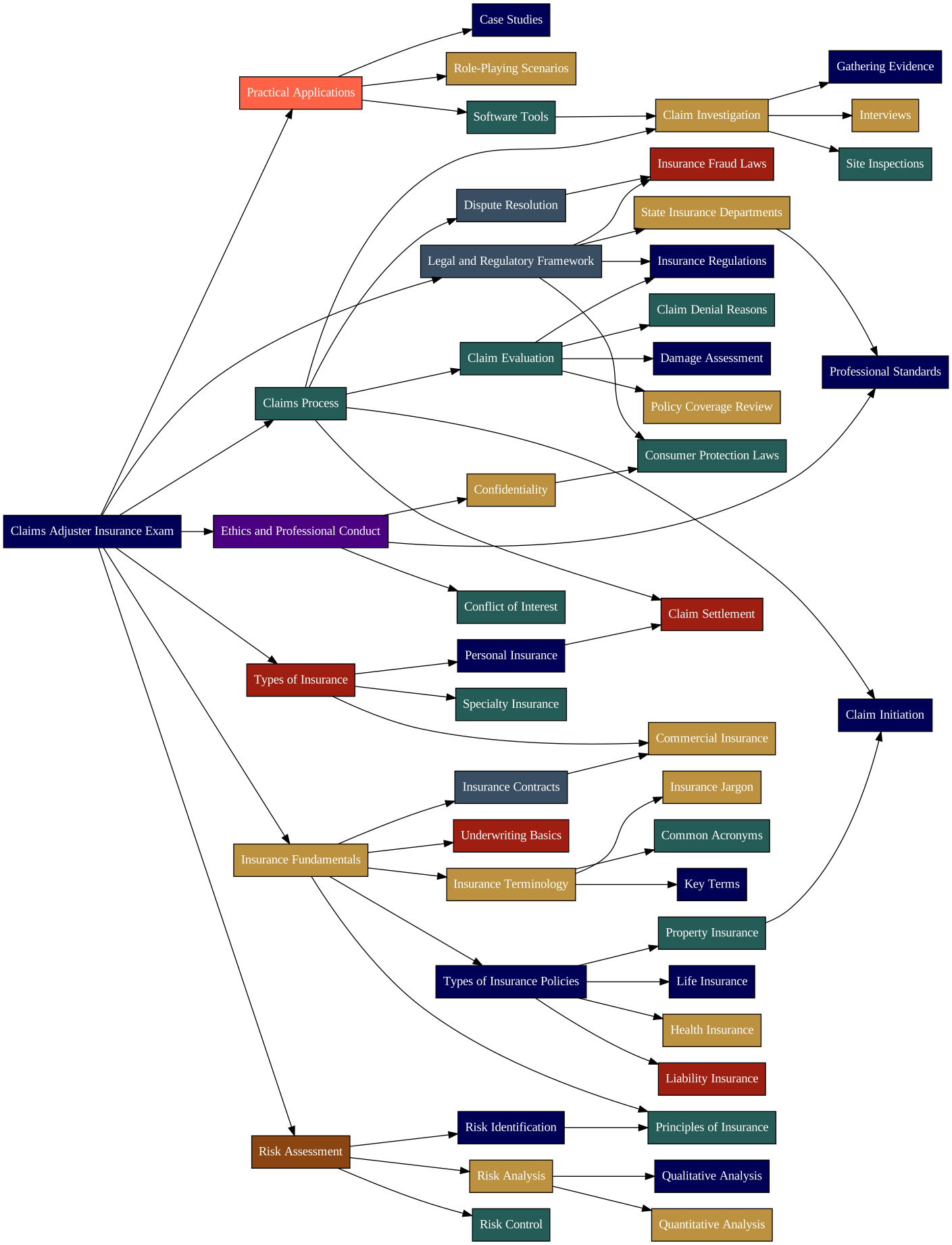
Quiz-summary
0 of 30 questions completed
Questions:
- 1
- 2
- 3
- 4
- 5
- 6
- 7
- 8
- 9
- 10
- 11
- 12
- 13
- 14
- 15
- 16
- 17
- 18
- 19
- 20
- 21
- 22
- 23
- 24
- 25
- 26
- 27
- 28
- 29
- 30
Information
Premium Practice Questions
You have already completed the quiz before. Hence you can not start it again.
Quiz is loading...
You must sign in or sign up to start the quiz.
You have to finish following quiz, to start this quiz:
Results
0 of 30 questions answered correctly
Your time:
Time has elapsed
You have reached 0 of 0 points, (0)
Categories
- Not categorized 0%
- 1
- 2
- 3
- 4
- 5
- 6
- 7
- 8
- 9
- 10
- 11
- 12
- 13
- 14
- 15
- 16
- 17
- 18
- 19
- 20
- 21
- 22
- 23
- 24
- 25
- 26
- 27
- 28
- 29
- 30
- Answered
- Review
-
Question 1 of 30
1. Question
A claimant, Javier, experienced a house fire and submitted a claim under his homeowner’s insurance policy. During the claims assessment, the insurer discovered that Javier had failed to disclose a previous minor electrical fire in the same property five years prior when applying for the policy. The insurer is now considering denying the claim based on non-disclosure. However, an independent electrical engineer’s report indicates that the current fire was caused by a faulty gas appliance, unrelated to the previous electrical issue. Furthermore, Javier had assigned the benefits of his insurance policy to his mortgage provider, SecureLoans, as part of his mortgage agreement. If the insurer denies the claim, considering the legal and regulatory framework, which of the following actions is MOST likely to be successful for Javier and SecureLoans?
Correct
The Insurance Contracts Act 1984 (ICA) significantly impacts claims handling, particularly concerning the duty of utmost good faith. This duty requires both the insurer and the insured to act honestly and fairly in their dealings with each other. Section 13 of the ICA specifically addresses misrepresentation and non-disclosure by the insured *before* the contract is entered into. It outlines the insurer’s remedies if the insured fails to disclose information that would have been relevant to the insurer’s decision to offer coverage or the terms of that coverage. Section 54 of the ICA is crucial as it limits the circumstances in which an insurer can refuse to pay a claim due to a breach of a policy condition. If the insured’s act or omission that constitutes the breach could not reasonably have caused or contributed to the loss, the insurer cannot rely on the breach to deny the claim. This section aims to prevent insurers from relying on minor or technical breaches to avoid paying legitimate claims. Section 47 provides for situations where the insured has assigned their rights under the policy to a third party, such as a lender. The insurer must recognise the rights of the assignee. The Australian Financial Complaints Authority (AFCA) provides consumers with a free, fair, and independent dispute resolution service for financial services, including insurance. Understanding the interplay between these sections of the ICA and the role of AFCA is vital for effective and ethical claims management.
Incorrect
The Insurance Contracts Act 1984 (ICA) significantly impacts claims handling, particularly concerning the duty of utmost good faith. This duty requires both the insurer and the insured to act honestly and fairly in their dealings with each other. Section 13 of the ICA specifically addresses misrepresentation and non-disclosure by the insured *before* the contract is entered into. It outlines the insurer’s remedies if the insured fails to disclose information that would have been relevant to the insurer’s decision to offer coverage or the terms of that coverage. Section 54 of the ICA is crucial as it limits the circumstances in which an insurer can refuse to pay a claim due to a breach of a policy condition. If the insured’s act or omission that constitutes the breach could not reasonably have caused or contributed to the loss, the insurer cannot rely on the breach to deny the claim. This section aims to prevent insurers from relying on minor or technical breaches to avoid paying legitimate claims. Section 47 provides for situations where the insured has assigned their rights under the policy to a third party, such as a lender. The insurer must recognise the rights of the assignee. The Australian Financial Complaints Authority (AFCA) provides consumers with a free, fair, and independent dispute resolution service for financial services, including insurance. Understanding the interplay between these sections of the ICA and the role of AFCA is vital for effective and ethical claims management.
-
Question 2 of 30
2. Question
A fire claim has been lodged by Mrs. Nguyen, whose home was severely damaged. During the investigation, the insurer discovers that Mrs. Nguyen had failed to replace the smoke detector batteries for over a year, a clear breach of her policy conditions. The insurer is considering denying the claim based on this breach. Under the Insurance Contracts Act 1984 (ICA), what is the MOST crucial factor the insurer MUST establish to deny the claim based on Mrs. Nguyen’s failure to maintain the smoke detectors?
Correct
The Insurance Contracts Act 1984 (ICA) is a cornerstone of insurance law in Australia, designed to protect consumers and ensure fairness in insurance contracts. Section 54 of the ICA is particularly relevant in claims management. It prevents insurers from denying claims based on acts or omissions by the insured or another person, unless the insurer can demonstrate that the act or omission caused or contributed to the loss. This provision is designed to protect insured parties from having their claims rejected due to minor or unintentional breaches of policy conditions that did not actually cause the loss. It shifts the burden of proof onto the insurer to demonstrate a causal link. In the context of claims management, understanding Section 54 is crucial for assessing the validity of claims and determining whether an insurer can rightfully deny a claim based on a breach of policy conditions. A claims manager must carefully analyze the circumstances surrounding the loss and the insured’s actions to determine if a causal connection exists. If the insurer cannot prove that the act or omission contributed to the loss, the claim should generally be paid, subject to other policy terms and conditions. This requires a thorough investigation, including gathering evidence and consulting with legal counsel when necessary. Moreover, the ICA also imposes a duty of utmost good faith on both the insurer and the insured. This means both parties must act honestly and fairly throughout the insurance relationship, including during the claims process. The insurer must disclose all relevant information to the insured, and the insured must provide accurate and complete information to the insurer. Breaching this duty can have significant consequences, including the potential for legal action.
Incorrect
The Insurance Contracts Act 1984 (ICA) is a cornerstone of insurance law in Australia, designed to protect consumers and ensure fairness in insurance contracts. Section 54 of the ICA is particularly relevant in claims management. It prevents insurers from denying claims based on acts or omissions by the insured or another person, unless the insurer can demonstrate that the act or omission caused or contributed to the loss. This provision is designed to protect insured parties from having their claims rejected due to minor or unintentional breaches of policy conditions that did not actually cause the loss. It shifts the burden of proof onto the insurer to demonstrate a causal link. In the context of claims management, understanding Section 54 is crucial for assessing the validity of claims and determining whether an insurer can rightfully deny a claim based on a breach of policy conditions. A claims manager must carefully analyze the circumstances surrounding the loss and the insured’s actions to determine if a causal connection exists. If the insurer cannot prove that the act or omission contributed to the loss, the claim should generally be paid, subject to other policy terms and conditions. This requires a thorough investigation, including gathering evidence and consulting with legal counsel when necessary. Moreover, the ICA also imposes a duty of utmost good faith on both the insurer and the insured. This means both parties must act honestly and fairly throughout the insurance relationship, including during the claims process. The insurer must disclose all relevant information to the insured, and the insured must provide accurate and complete information to the insurer. Breaching this duty can have significant consequences, including the potential for legal action.
-
Question 3 of 30
3. Question
A claimant, Omar, accidentally left his stove on, causing a minor kitchen fire. The insurance company denies his claim, citing a policy clause stating that any damage resulting from negligence is not covered. Which of the following best describes the legal and regulatory considerations relevant to this claim denial, considering the Insurance Contracts Act 1984 and the ASIC Act 2001?
Correct
The Insurance Contracts Act 1984 (ICA) is a cornerstone of Australian insurance law, designed to protect consumers and ensure fairness in insurance contracts. Section 54 of the ICA is particularly relevant to claims management. It prevents insurers from refusing to pay a claim solely because of some act or omission by the insured after the contract was entered into, provided that the act or omission did not cause the loss. This provision shifts the focus from strict compliance with policy conditions to whether the breach of the condition caused the loss. Furthermore, Section 13 of the Australian Securities and Investments Commission Act 2001 (ASIC Act) outlines the general obligations of financial services licensees, including insurers. These obligations include acting honestly, efficiently, and fairly. In claims management, this translates to handling claims promptly, fairly, and transparently. A failure to adhere to these obligations can result in regulatory action by ASIC. The General Insurance Code of Practice, while not legislation, sets industry standards for claims handling. It emphasizes clear communication, timely decision-making, and providing reasons for claim denials. Insurers are expected to adhere to the Code, and breaches can be subject to industry sanctions. The combination of the ICA, the ASIC Act, and the General Insurance Code of Practice creates a framework for ethical and compliant claims management. Failing to consider these elements can lead to legal and reputational risks for insurers. Therefore, understanding these regulatory aspects is crucial for effective claims management.
Incorrect
The Insurance Contracts Act 1984 (ICA) is a cornerstone of Australian insurance law, designed to protect consumers and ensure fairness in insurance contracts. Section 54 of the ICA is particularly relevant to claims management. It prevents insurers from refusing to pay a claim solely because of some act or omission by the insured after the contract was entered into, provided that the act or omission did not cause the loss. This provision shifts the focus from strict compliance with policy conditions to whether the breach of the condition caused the loss. Furthermore, Section 13 of the Australian Securities and Investments Commission Act 2001 (ASIC Act) outlines the general obligations of financial services licensees, including insurers. These obligations include acting honestly, efficiently, and fairly. In claims management, this translates to handling claims promptly, fairly, and transparently. A failure to adhere to these obligations can result in regulatory action by ASIC. The General Insurance Code of Practice, while not legislation, sets industry standards for claims handling. It emphasizes clear communication, timely decision-making, and providing reasons for claim denials. Insurers are expected to adhere to the Code, and breaches can be subject to industry sanctions. The combination of the ICA, the ASIC Act, and the General Insurance Code of Practice creates a framework for ethical and compliant claims management. Failing to consider these elements can lead to legal and reputational risks for insurers. Therefore, understanding these regulatory aspects is crucial for effective claims management.
-
Question 4 of 30
4. Question
What is the PRIMARY function of underwriting in the context of risk assessment within an insurance company?
Correct
The role of underwriting in risk assessment is critical in the insurance process. Underwriting is the process by which an insurer evaluates the risk associated with insuring a particular individual or entity. Underwriters assess various factors, such as the applicant’s health, lifestyle, occupation, and financial history, to determine whether to accept the risk and, if so, on what terms. They use this information to calculate the appropriate premium and to set any necessary exclusions or limitations on coverage. Effective underwriting helps to ensure that the insurer is adequately compensated for the risk it is taking on and that the insurance policy is priced fairly. It also helps to prevent adverse selection, which occurs when individuals with a higher-than-average risk are more likely to purchase insurance. Underwriting plays a crucial role in maintaining the financial stability of the insurance company and ensuring that it can meet its obligations to policyholders. The underwriting process is governed by various laws and regulations, including those related to discrimination and privacy.
Incorrect
The role of underwriting in risk assessment is critical in the insurance process. Underwriting is the process by which an insurer evaluates the risk associated with insuring a particular individual or entity. Underwriters assess various factors, such as the applicant’s health, lifestyle, occupation, and financial history, to determine whether to accept the risk and, if so, on what terms. They use this information to calculate the appropriate premium and to set any necessary exclusions or limitations on coverage. Effective underwriting helps to ensure that the insurer is adequately compensated for the risk it is taking on and that the insurance policy is priced fairly. It also helps to prevent adverse selection, which occurs when individuals with a higher-than-average risk are more likely to purchase insurance. Underwriting plays a crucial role in maintaining the financial stability of the insurance company and ensuring that it can meet its obligations to policyholders. The underwriting process is governed by various laws and regulations, including those related to discrimination and privacy.
-
Question 5 of 30
5. Question
During the claim assessment process for a house fire, “Apex Insurance” discovers that Mr. Chen, the policyholder, inadvertently failed to disclose a minor structural modification made to his property five years prior. This modification, while not directly contributing to the fire, technically breaches a policy condition regarding prior alterations. Apex Insurance is now evaluating its obligations under the Insurance Contracts Act 1984. Considering the duty of utmost good faith, which course of action best reflects Apex Insurance’s legal and ethical responsibilities?
Correct
The Insurance Contracts Act 1984 (ICA) imposes a duty of utmost good faith on both the insurer and the insured. This duty requires parties to act honestly and fairly in their dealings with each other. Section 13 of the ICA specifically addresses the duty of the insurer. While the insurer is not required to act in the insured’s best interests in all circumstances, they must act honestly and fairly, and with reasonable speed. This includes providing clear and concise information, promptly investigating claims, and making fair decisions. The duty of utmost good faith does not extend to requiring the insurer to disregard their own legitimate commercial interests or to act as a fiduciary. Insurers must balance their obligations to the insured with their own business needs and legal responsibilities. The insurer also has a right to deny the claim if there is a valid reason and it is backed by evidence.
Incorrect
The Insurance Contracts Act 1984 (ICA) imposes a duty of utmost good faith on both the insurer and the insured. This duty requires parties to act honestly and fairly in their dealings with each other. Section 13 of the ICA specifically addresses the duty of the insurer. While the insurer is not required to act in the insured’s best interests in all circumstances, they must act honestly and fairly, and with reasonable speed. This includes providing clear and concise information, promptly investigating claims, and making fair decisions. The duty of utmost good faith does not extend to requiring the insurer to disregard their own legitimate commercial interests or to act as a fiduciary. Insurers must balance their obligations to the insured with their own business needs and legal responsibilities. The insurer also has a right to deny the claim if there is a valid reason and it is backed by evidence.
-
Question 6 of 30
6. Question
Kwame takes out a homeowner’s insurance policy. He fails to disclose a pre-existing heart condition on his application. Several months later, Kwame’s house is damaged in a fire. The insurance company discovers Kwame’s non-disclosure during the claims process and seeks to deny the claim outright. Under which section of the Insurance Contracts Act 1984 would the insurer’s ability to deny the claim be most directly limited, and what principle does this section establish?
Correct
The Insurance Contracts Act 1984 (ICA) is a cornerstone of Australian insurance law, governing the relationship between insurers and insured parties. Section 54 of the ICA is particularly crucial in claims management, focusing on the insurer’s obligations when an insured party breaches the contract. It prevents insurers from denying a claim outright due to a breach if the breach did not cause or contribute to the loss. The insurer is liable to pay the claim, but its liability is reduced to the extent of the prejudice caused by the breach. Prejudice refers to the detriment suffered by the insurer due to the insured’s breach, such as hindering the investigation or increasing the loss. In the scenario, Kwame failed to disclose a pre-existing heart condition, a clear breach of his duty of disclosure under Section 21 of the ICA. However, the fire damage to his property is unrelated to his heart condition. Section 54 comes into play because the breach (non-disclosure of a pre-existing condition) did not cause or contribute to the loss (fire damage). The insurer cannot deny the claim outright. Instead, they must assess whether Kwame’s non-disclosure prejudiced their position. If, for instance, Kwame’s heart condition made it more difficult for him to provide information about the fire, or if it somehow complicated the investigation, the insurer could reduce the payout to reflect this prejudice. If there is no prejudice, the claim should be paid in full. The key is establishing a direct link between the breach and the prejudice suffered by the insurer. The insurer bears the onus of proving prejudice.
Incorrect
The Insurance Contracts Act 1984 (ICA) is a cornerstone of Australian insurance law, governing the relationship between insurers and insured parties. Section 54 of the ICA is particularly crucial in claims management, focusing on the insurer’s obligations when an insured party breaches the contract. It prevents insurers from denying a claim outright due to a breach if the breach did not cause or contribute to the loss. The insurer is liable to pay the claim, but its liability is reduced to the extent of the prejudice caused by the breach. Prejudice refers to the detriment suffered by the insurer due to the insured’s breach, such as hindering the investigation or increasing the loss. In the scenario, Kwame failed to disclose a pre-existing heart condition, a clear breach of his duty of disclosure under Section 21 of the ICA. However, the fire damage to his property is unrelated to his heart condition. Section 54 comes into play because the breach (non-disclosure of a pre-existing condition) did not cause or contribute to the loss (fire damage). The insurer cannot deny the claim outright. Instead, they must assess whether Kwame’s non-disclosure prejudiced their position. If, for instance, Kwame’s heart condition made it more difficult for him to provide information about the fire, or if it somehow complicated the investigation, the insurer could reduce the payout to reflect this prejudice. If there is no prejudice, the claim should be paid in full. The key is establishing a direct link between the breach and the prejudice suffered by the insurer. The insurer bears the onus of proving prejudice.
-
Question 7 of 30
7. Question
A claim arises from a homeowner’s policy after a severe storm causes damage. The policy covers “direct physical loss” to the dwelling. The homeowner’s mature oak tree, located 10 meters from the house, falls during the storm, damaging the roof. The insurer denies the claim, arguing that the tree itself was not directly damaged by the storm, only indirectly as a result of wind force, and therefore the damage to the roof is not covered. Considering the Insurance Contracts Act 1984, the doctrine of reasonable expectations, and the principle of *contra proferentem*, which of the following statements is MOST accurate regarding the likely outcome of a dispute?
Correct
In claims management, understanding the nuances of policy interpretation is crucial. Policies are designed to be comprehensive, but ambiguities can arise, especially when dealing with complex or novel situations. Incorrect policy interpretation can lead to underpayment or overpayment of claims, both of which have significant financial and reputational consequences for the insurer. Underpaying a claim can lead to legal action, damage to the insurer’s reputation, and regulatory scrutiny. Overpaying a claim, while seemingly less problematic, can erode profitability and create a precedent that is difficult to reverse. The Insurance Contracts Act 1984 (ICA) in Australia provides guidance on policy interpretation, emphasizing the principle of *contra proferentem*, which means that any ambiguity in the policy wording should be construed against the insurer (the party who drafted the contract). This principle is particularly relevant when dealing with consumer insurance contracts. Additionally, the ICA imposes a duty of utmost good faith on both the insurer and the insured. This duty requires both parties to act honestly and fairly in their dealings with each other. The *doctrine of reasonable expectations* is another important consideration. This doctrine suggests that policyholders are entitled to the coverage they reasonably expect, even if a strict reading of the policy language might suggest otherwise. Courts often consider this doctrine when interpreting ambiguous policy provisions. The application of these principles requires claims managers to possess a strong understanding of insurance law, excellent analytical skills, and the ability to consider the circumstances of each claim holistically. Claims managers must also be adept at documenting their interpretation of policy terms and the rationale behind their decisions.
Incorrect
In claims management, understanding the nuances of policy interpretation is crucial. Policies are designed to be comprehensive, but ambiguities can arise, especially when dealing with complex or novel situations. Incorrect policy interpretation can lead to underpayment or overpayment of claims, both of which have significant financial and reputational consequences for the insurer. Underpaying a claim can lead to legal action, damage to the insurer’s reputation, and regulatory scrutiny. Overpaying a claim, while seemingly less problematic, can erode profitability and create a precedent that is difficult to reverse. The Insurance Contracts Act 1984 (ICA) in Australia provides guidance on policy interpretation, emphasizing the principle of *contra proferentem*, which means that any ambiguity in the policy wording should be construed against the insurer (the party who drafted the contract). This principle is particularly relevant when dealing with consumer insurance contracts. Additionally, the ICA imposes a duty of utmost good faith on both the insurer and the insured. This duty requires both parties to act honestly and fairly in their dealings with each other. The *doctrine of reasonable expectations* is another important consideration. This doctrine suggests that policyholders are entitled to the coverage they reasonably expect, even if a strict reading of the policy language might suggest otherwise. Courts often consider this doctrine when interpreting ambiguous policy provisions. The application of these principles requires claims managers to possess a strong understanding of insurance law, excellent analytical skills, and the ability to consider the circumstances of each claim holistically. Claims managers must also be adept at documenting their interpretation of policy terms and the rationale behind their decisions.
-
Question 8 of 30
8. Question
During the claims assessment for a house fire, “Secure Insurance” discovers that Ms. Devi, the policyholder, failed to disclose a prior arson attempt on a different property five years ago when applying for the insurance policy. The insurer believes this non-disclosure significantly impacts their risk assessment. According to the Insurance Contracts Act 1984, which of the following actions is MOST appropriate for “Secure Insurance” to take?
Correct
The Insurance Contracts Act 1984 (ICA) imposes several obligations on insurers concerning disclosure and good faith. Section 21 mandates insurers to clearly inform the insured of their duty of disclosure before entering into a contract of insurance. Section 22 outlines the insured’s duty to disclose matters relevant to the insurer’s decision to accept the risk and the terms of the policy. Section 23 specifies the remedies available to the insurer if the insured breaches this duty, which can include avoiding the contract or reducing the claim payout, depending on the nature of the non-disclosure (fraudulent or non-fraudulent) and its impact on the insurer’s risk assessment. The duty of utmost good faith, implied by common law and reinforced by the ICA, requires both parties to act honestly and fairly in their dealings. This duty extends to the claims handling process, requiring insurers to act reasonably and promptly in assessing and settling claims. Failure to comply with these obligations can lead to legal action against the insurer, including claims for breach of contract or misleading and deceptive conduct under the Australian Consumer Law. The Australian Financial Complaints Authority (AFCA) provides a mechanism for resolving disputes between insurers and consumers, ensuring fair and impartial resolution of complaints related to insurance claims.
Incorrect
The Insurance Contracts Act 1984 (ICA) imposes several obligations on insurers concerning disclosure and good faith. Section 21 mandates insurers to clearly inform the insured of their duty of disclosure before entering into a contract of insurance. Section 22 outlines the insured’s duty to disclose matters relevant to the insurer’s decision to accept the risk and the terms of the policy. Section 23 specifies the remedies available to the insurer if the insured breaches this duty, which can include avoiding the contract or reducing the claim payout, depending on the nature of the non-disclosure (fraudulent or non-fraudulent) and its impact on the insurer’s risk assessment. The duty of utmost good faith, implied by common law and reinforced by the ICA, requires both parties to act honestly and fairly in their dealings. This duty extends to the claims handling process, requiring insurers to act reasonably and promptly in assessing and settling claims. Failure to comply with these obligations can lead to legal action against the insurer, including claims for breach of contract or misleading and deceptive conduct under the Australian Consumer Law. The Australian Financial Complaints Authority (AFCA) provides a mechanism for resolving disputes between insurers and consumers, ensuring fair and impartial resolution of complaints related to insurance claims.
-
Question 9 of 30
9. Question
Javier has lodged a claim for the theft of his antique coin collection. During the assessment, it’s discovered that Javier unintentionally failed to disclose that he occasionally stored the coins in a non-fireproof safe, although the theft was unrelated to fire risk. Which of the following represents the MOST appropriate course of action for the claims officer, considering both legal and ethical obligations?
Correct
In personal claims management, the interplay between legal frameworks, ethical considerations, and practical application significantly influences the claim’s trajectory. Consider a scenario where a claimant, Javier, is disputing the assessed value of his stolen antique coin collection. Understanding the Insurance Contracts Act 1984 (ICA) is crucial. Section 54 of the ICA deals with situations where an insured breaches the contract, but the insurer’s interests are not prejudiced. If Javier inadvertently failed to disclose a minor detail about the coin’s storage but this omission didn’t contribute to the loss, Section 54 could prevent the insurer from denying the claim outright. Simultaneously, ethical considerations dictate transparency and fairness. The claims officer must meticulously document all communication, evidence, and assessment rationale. They must also inform Javier of his rights, including access to internal dispute resolution (IDR) and the Australian Financial Complaints Authority (AFCA) if he remains dissatisfied. Furthermore, privacy laws, like the Privacy Act 1988, mandate the secure handling of Javier’s personal information. Failure to comply with these regulations could lead to legal repercussions and reputational damage. The claim’s resolution necessitates a balanced approach, adhering to legal obligations, upholding ethical standards, and employing effective communication to manage Javier’s expectations and ensure a fair outcome. A deep understanding of these elements ensures responsible and compliant claims management.
Incorrect
In personal claims management, the interplay between legal frameworks, ethical considerations, and practical application significantly influences the claim’s trajectory. Consider a scenario where a claimant, Javier, is disputing the assessed value of his stolen antique coin collection. Understanding the Insurance Contracts Act 1984 (ICA) is crucial. Section 54 of the ICA deals with situations where an insured breaches the contract, but the insurer’s interests are not prejudiced. If Javier inadvertently failed to disclose a minor detail about the coin’s storage but this omission didn’t contribute to the loss, Section 54 could prevent the insurer from denying the claim outright. Simultaneously, ethical considerations dictate transparency and fairness. The claims officer must meticulously document all communication, evidence, and assessment rationale. They must also inform Javier of his rights, including access to internal dispute resolution (IDR) and the Australian Financial Complaints Authority (AFCA) if he remains dissatisfied. Furthermore, privacy laws, like the Privacy Act 1988, mandate the secure handling of Javier’s personal information. Failure to comply with these regulations could lead to legal repercussions and reputational damage. The claim’s resolution necessitates a balanced approach, adhering to legal obligations, upholding ethical standards, and employing effective communication to manage Javier’s expectations and ensure a fair outcome. A deep understanding of these elements ensures responsible and compliant claims management.
-
Question 10 of 30
10. Question
A claimant, Ms. Devi, alleges her insurer, “SafeGuard Insurance,” mishandled her property damage claim following a severe storm. SafeGuard Insurance initially denied the claim, citing an exclusion clause related to pre-existing structural issues. Ms. Devi believes SafeGuard Insurance failed to properly investigate the damage and is acting in bad faith. Ms. Devi now intends to pursue the matter further. Considering the regulatory environment and focusing on the legal and ethical obligations of the insurer, which of the following actions *best* represents SafeGuard Insurance fulfilling its obligations under the Insurance Contracts Act 1984 (ICA) and complying with ASIC regulatory guidance, *after* Ms. Devi expresses her dissatisfaction with the initial denial?
Correct
In managing personal claims, understanding the interplay between the Insurance Contracts Act 1984 (ICA) and the Australian Securities and Investments Commission (ASIC) regulatory guidance is crucial. The ICA establishes the foundational legal principles governing insurance contracts, including the duty of utmost good faith. This duty requires both the insurer and the insured to act honestly and fairly in their dealings with each other. ASIC, on the other hand, provides regulatory guidance and oversight to ensure that insurers comply with the ICA and other relevant legislation. ASIC’s role includes monitoring insurer behavior, investigating potential breaches of the law, and taking enforcement action where necessary. A critical aspect of claims management is adhering to privacy laws, particularly the Privacy Act 1988 (Cth) and the Australian Privacy Principles (APPs). Claims handlers must ensure that they collect, use, and disclose personal information only for the purposes of assessing and managing the claim, and that they do so in accordance with the APPs. This includes obtaining consent where required, providing clear and concise information about how personal information will be handled, and implementing appropriate security measures to protect personal information from unauthorized access or disclosure. Breaching privacy laws can result in significant penalties and reputational damage for the insurer. Furthermore, understanding the role of internal dispute resolution (IDR) and external dispute resolution (EDR) schemes is essential. Insurers are required to have an IDR process in place to handle complaints from claimants. If a claimant is not satisfied with the outcome of the IDR process, they can escalate the complaint to an EDR scheme, such as the Australian Financial Complaints Authority (AFCA). AFCA provides a free and independent dispute resolution service for consumers who have a complaint against a financial services provider, including insurers. Claims handlers must be familiar with the IDR and EDR processes and ensure that they comply with the requirements of these schemes.
Incorrect
In managing personal claims, understanding the interplay between the Insurance Contracts Act 1984 (ICA) and the Australian Securities and Investments Commission (ASIC) regulatory guidance is crucial. The ICA establishes the foundational legal principles governing insurance contracts, including the duty of utmost good faith. This duty requires both the insurer and the insured to act honestly and fairly in their dealings with each other. ASIC, on the other hand, provides regulatory guidance and oversight to ensure that insurers comply with the ICA and other relevant legislation. ASIC’s role includes monitoring insurer behavior, investigating potential breaches of the law, and taking enforcement action where necessary. A critical aspect of claims management is adhering to privacy laws, particularly the Privacy Act 1988 (Cth) and the Australian Privacy Principles (APPs). Claims handlers must ensure that they collect, use, and disclose personal information only for the purposes of assessing and managing the claim, and that they do so in accordance with the APPs. This includes obtaining consent where required, providing clear and concise information about how personal information will be handled, and implementing appropriate security measures to protect personal information from unauthorized access or disclosure. Breaching privacy laws can result in significant penalties and reputational damage for the insurer. Furthermore, understanding the role of internal dispute resolution (IDR) and external dispute resolution (EDR) schemes is essential. Insurers are required to have an IDR process in place to handle complaints from claimants. If a claimant is not satisfied with the outcome of the IDR process, they can escalate the complaint to an EDR scheme, such as the Australian Financial Complaints Authority (AFCA). AFCA provides a free and independent dispute resolution service for consumers who have a complaint against a financial services provider, including insurers. Claims handlers must be familiar with the IDR and EDR processes and ensure that they comply with the requirements of these schemes.
-
Question 11 of 30
11. Question
A commercial property insurance policy held by “Tech Solutions Pty Ltd” contains a clause requiring the insured to maintain a fully operational sprinkler system. A fire occurs on a weekend when the sprinkler system was inadvertently switched off for routine maintenance, a fact discovered during the claims assessment. The subsequent investigation reveals that the fire was caused by faulty electrical wiring, completely unrelated to the sprinkler system’s operational status. Under Section 54 of the Insurance Contracts Act 1984 (ICA), what is the most appropriate course of action for the insurer?
Correct
The Insurance Contracts Act 1984 (ICA) in Australia governs insurance contracts and aims to provide fairness and balance in the relationship between insurers and insured parties. Section 54 of the ICA is crucial, dealing with the insurer’s obligation to indemnify even when the insured breaches the contract. Specifically, it addresses situations where the insured’s act or omission could have caused or contributed to the loss, but the insurer can still be liable if the act or omission did not cause the loss. The core principle is that the insurer cannot refuse to pay a claim solely based on a breach by the insured if that breach was unrelated to the actual loss. This requires a careful examination of causation. If the insured breaches a term but that breach had no bearing on the loss, the insurer is still obligated to indemnify. However, if the breach *did* contribute to the loss, the insurer’s liability may be reduced proportionally to the extent of the insured’s contribution to the loss. The burden of proof rests on the insurer to demonstrate that the insured’s actions caused or contributed to the loss. Furthermore, the insurer must act reasonably and fairly in assessing the claim and determining the extent to which the breach affected the loss. Failing to act in good faith can lead to legal repercussions and reputational damage. Understanding Section 54 and its implications is critical for claims managers to ensure fair and lawful claims handling.
Incorrect
The Insurance Contracts Act 1984 (ICA) in Australia governs insurance contracts and aims to provide fairness and balance in the relationship between insurers and insured parties. Section 54 of the ICA is crucial, dealing with the insurer’s obligation to indemnify even when the insured breaches the contract. Specifically, it addresses situations where the insured’s act or omission could have caused or contributed to the loss, but the insurer can still be liable if the act or omission did not cause the loss. The core principle is that the insurer cannot refuse to pay a claim solely based on a breach by the insured if that breach was unrelated to the actual loss. This requires a careful examination of causation. If the insured breaches a term but that breach had no bearing on the loss, the insurer is still obligated to indemnify. However, if the breach *did* contribute to the loss, the insurer’s liability may be reduced proportionally to the extent of the insured’s contribution to the loss. The burden of proof rests on the insurer to demonstrate that the insured’s actions caused or contributed to the loss. Furthermore, the insurer must act reasonably and fairly in assessing the claim and determining the extent to which the breach affected the loss. Failing to act in good faith can lead to legal repercussions and reputational damage. Understanding Section 54 and its implications is critical for claims managers to ensure fair and lawful claims handling.
-
Question 12 of 30
12. Question
In assessing a personal injury claim following a car accident, what type of documentation would be most crucial for the adjuster to obtain to determine the extent of the claimant’s injuries and treatment needs?
Correct
When assessing a claim, adjusters need to gather and analyze evidence to determine the validity and extent of the loss. This process often involves obtaining various types of documentation to support the claim. Police reports are crucial in cases involving theft, vandalism, or motor vehicle accidents, providing an official record of the incident and any findings of fault. Medical reports are essential for personal injury claims, detailing the nature and extent of the injuries, treatment received, and prognosis for recovery. Witness statements can provide valuable corroboration of the events leading to the loss, offering an independent perspective. Financial records, such as bank statements, tax returns, and receipts, may be necessary to substantiate income loss claims or to verify the value of damaged property. All of these documents contribute to a comprehensive assessment of the claim, enabling the adjuster to make an informed and fair decision.
Incorrect
When assessing a claim, adjusters need to gather and analyze evidence to determine the validity and extent of the loss. This process often involves obtaining various types of documentation to support the claim. Police reports are crucial in cases involving theft, vandalism, or motor vehicle accidents, providing an official record of the incident and any findings of fault. Medical reports are essential for personal injury claims, detailing the nature and extent of the injuries, treatment received, and prognosis for recovery. Witness statements can provide valuable corroboration of the events leading to the loss, offering an independent perspective. Financial records, such as bank statements, tax returns, and receipts, may be necessary to substantiate income loss claims or to verify the value of damaged property. All of these documents contribute to a comprehensive assessment of the claim, enabling the adjuster to make an informed and fair decision.
-
Question 13 of 30
13. Question
A commercial property insurance policy requires the insured, “Gadget Solutions,” to maintain a fully operational sprinkler system. Due to a negligent oversight, the sprinkler system was deactivated for routine maintenance but never reactivated. A fire broke out due to faulty electrical wiring, causing significant damage. Investigations reveal that the deactivated sprinkler system did not contribute to the extent of the fire damage because the fire started in an area remote from the sprinkler system’s coverage. According to Section 54 of the Insurance Contracts Act 1984, what is the most appropriate course of action for the insurer?
Correct
The Insurance Contracts Act 1984 (ICA) in Australia is a cornerstone of insurance law, designed to protect consumers and ensure fairness in insurance contracts. Section 54 of the ICA is particularly relevant in claims management, focusing on the insurer’s obligation to act fairly when an insured breaches the terms of the contract. Specifically, Section 54 prevents insurers from denying a claim outright if the insured’s act or omission that breached the contract did not contribute to the loss. This section shifts the focus from strict contractual compliance to a more equitable assessment of the relationship between the breach and the loss. In the context of claims handling, this means that even if an insured has failed to comply with a policy condition (e.g., failing to maintain a security system as required), the insurer cannot reject the claim if that failure had no bearing on the actual loss suffered. The onus is on the insurer to demonstrate a causal link between the breach and the loss. If the insurer can prove that the breach did contribute to the loss, they may reduce the payout to reflect the extent of the contribution. This ensures that consumers are not unfairly penalized for minor breaches that are unrelated to the incident giving rise to the claim. The principle of utmost good faith, also enshrined in the ICA, further reinforces the need for insurers to act honestly and fairly in all dealings with insured parties. Understanding and applying Section 54 is crucial for claims managers to ensure compliance with legal requirements and ethical standards in claims handling.
Incorrect
The Insurance Contracts Act 1984 (ICA) in Australia is a cornerstone of insurance law, designed to protect consumers and ensure fairness in insurance contracts. Section 54 of the ICA is particularly relevant in claims management, focusing on the insurer’s obligation to act fairly when an insured breaches the terms of the contract. Specifically, Section 54 prevents insurers from denying a claim outright if the insured’s act or omission that breached the contract did not contribute to the loss. This section shifts the focus from strict contractual compliance to a more equitable assessment of the relationship between the breach and the loss. In the context of claims handling, this means that even if an insured has failed to comply with a policy condition (e.g., failing to maintain a security system as required), the insurer cannot reject the claim if that failure had no bearing on the actual loss suffered. The onus is on the insurer to demonstrate a causal link between the breach and the loss. If the insurer can prove that the breach did contribute to the loss, they may reduce the payout to reflect the extent of the contribution. This ensures that consumers are not unfairly penalized for minor breaches that are unrelated to the incident giving rise to the claim. The principle of utmost good faith, also enshrined in the ICA, further reinforces the need for insurers to act honestly and fairly in all dealings with insured parties. Understanding and applying Section 54 is crucial for claims managers to ensure compliance with legal requirements and ethical standards in claims handling.
-
Question 14 of 30
14. Question
A fire significantly damages Mrs. Adebayo’s home. During the claims assessment, the insurer discovers Mrs. Adebayo failed to disclose a minor prior claim for water damage five years earlier when she took out the policy. The insurer argues breach of utmost good faith and intends to deny the entire fire claim. According to the Insurance Contracts Act 1984 (ICA), what is the MOST appropriate course of action for the insurer?
Correct
The Insurance Contracts Act 1984 (ICA) in Australia outlines the obligations of both the insurer and the insured. A crucial aspect is the duty of utmost good faith, which extends to both parties throughout the insurance relationship, not just at inception. Section 13 of the ICA specifically addresses this duty. If an insurer breaches this duty, Section 54 of the ICA may come into play. Section 54 provides relief against forfeiture for non-disclosure or misrepresentation. It allows the insurer to reduce its liability to the extent that it was prejudiced by the breach, rather than automatically denying the claim. This means the insurer must demonstrate a direct link between the insured’s actions and the loss suffered. The insurer cannot deny the entire claim if the breach is minor or unrelated to the cause of the loss. This section is crucial for consumer protection, preventing insurers from unfairly denying claims based on technicalities. It ensures a fair and equitable outcome, proportionate to the actual prejudice suffered by the insurer. Therefore, understanding Section 54 in conjunction with the duty of utmost good faith is paramount for claims managers.
Incorrect
The Insurance Contracts Act 1984 (ICA) in Australia outlines the obligations of both the insurer and the insured. A crucial aspect is the duty of utmost good faith, which extends to both parties throughout the insurance relationship, not just at inception. Section 13 of the ICA specifically addresses this duty. If an insurer breaches this duty, Section 54 of the ICA may come into play. Section 54 provides relief against forfeiture for non-disclosure or misrepresentation. It allows the insurer to reduce its liability to the extent that it was prejudiced by the breach, rather than automatically denying the claim. This means the insurer must demonstrate a direct link between the insured’s actions and the loss suffered. The insurer cannot deny the entire claim if the breach is minor or unrelated to the cause of the loss. This section is crucial for consumer protection, preventing insurers from unfairly denying claims based on technicalities. It ensures a fair and equitable outcome, proportionate to the actual prejudice suffered by the insurer. Therefore, understanding Section 54 in conjunction with the duty of utmost good faith is paramount for claims managers.
-
Question 15 of 30
15. Question
During the claims process, under what specific circumstances might an insurer be found to have breached their duty of utmost good faith as defined by the Insurance Contracts Act 1984, potentially leading to legal repercussions?
Correct
The Insurance Contracts Act 1984 (ICA) significantly impacts claims management in Australia, particularly concerning the duty of utmost good faith. This duty, enshrined in sections 13 and 14 of the ICA, requires both the insurer and the insured to act honestly and fairly towards each other throughout the insurance relationship, including during the claims process. Section 13 specifically outlines the insurer’s obligation, while section 14 addresses the insured’s duty. A breach of this duty can have serious consequences, potentially invalidating the insurance contract or leading to legal action. The ICA also addresses issues of misrepresentation and non-disclosure by the insured. Section 21 of the ICA deals with the duty of disclosure before the contract is entered into, requiring the insured to disclose matters relevant to the insurer’s decision to accept the risk. Section 26 outlines the remedies available to the insurer if the insured breaches this duty, which can range from avoiding the contract to reducing the insurer’s liability. Furthermore, the ICA influences claims management through provisions related to time limits for making claims and the handling of disputes. While the ICA doesn’t specify exact time limits, it implies a reasonable timeframe, and the General Insurance Code of Practice provides further guidance. The ICA also provides mechanisms for resolving disputes, including access to external dispute resolution schemes like the Australian Financial Complaints Authority (AFCA). Understanding these provisions is crucial for effective and compliant claims management.
Incorrect
The Insurance Contracts Act 1984 (ICA) significantly impacts claims management in Australia, particularly concerning the duty of utmost good faith. This duty, enshrined in sections 13 and 14 of the ICA, requires both the insurer and the insured to act honestly and fairly towards each other throughout the insurance relationship, including during the claims process. Section 13 specifically outlines the insurer’s obligation, while section 14 addresses the insured’s duty. A breach of this duty can have serious consequences, potentially invalidating the insurance contract or leading to legal action. The ICA also addresses issues of misrepresentation and non-disclosure by the insured. Section 21 of the ICA deals with the duty of disclosure before the contract is entered into, requiring the insured to disclose matters relevant to the insurer’s decision to accept the risk. Section 26 outlines the remedies available to the insurer if the insured breaches this duty, which can range from avoiding the contract to reducing the insurer’s liability. Furthermore, the ICA influences claims management through provisions related to time limits for making claims and the handling of disputes. While the ICA doesn’t specify exact time limits, it implies a reasonable timeframe, and the General Insurance Code of Practice provides further guidance. The ICA also provides mechanisms for resolving disputes, including access to external dispute resolution schemes like the Australian Financial Complaints Authority (AFCA). Understanding these provisions is crucial for effective and compliant claims management.
-
Question 16 of 30
16. Question
Following a severe storm, Ms. Anya Sharma submitted a claim for damage to her roof. During the claims assessment, the insurer hired an external investigator who, without informing Ms. Sharma, interviewed her neighbors and accessed publicly available social media posts to gather information about her maintenance habits. While the investigation didn’t uncover any explicit evidence of fraud, Ms. Sharma feels her privacy was violated and believes the insurer acted unfairly. Which statement best describes the insurer’s potential breach of duty under the Insurance Contracts Act 1984?
Correct
The Insurance Contracts Act 1984 (ICA) implies a duty of utmost good faith in insurance contracts, requiring both the insurer and the insured to act honestly and fairly towards each other. Section 13 of the ICA specifically addresses the duty of the insurer. This duty extends throughout the entire claims process, including the investigation and assessment stages. While the ICA doesn’t explicitly mandate specific investigation techniques, it requires that any investigation be conducted reasonably and fairly, with due consideration for the claimant’s circumstances. Breaching this duty can have significant consequences for the insurer, potentially leading to claims of bad faith, denial of coverage, or even punitive damages. This obligation necessitates transparency in the claims handling process, informing the claimant about the investigation’s progress, and providing clear explanations for any decisions made.
Incorrect
The Insurance Contracts Act 1984 (ICA) implies a duty of utmost good faith in insurance contracts, requiring both the insurer and the insured to act honestly and fairly towards each other. Section 13 of the ICA specifically addresses the duty of the insurer. This duty extends throughout the entire claims process, including the investigation and assessment stages. While the ICA doesn’t explicitly mandate specific investigation techniques, it requires that any investigation be conducted reasonably and fairly, with due consideration for the claimant’s circumstances. Breaching this duty can have significant consequences for the insurer, potentially leading to claims of bad faith, denial of coverage, or even punitive damages. This obligation necessitates transparency in the claims handling process, informing the claimant about the investigation’s progress, and providing clear explanations for any decisions made.
-
Question 17 of 30
17. Question
A commercial building owned by “TechForward Innovations” suffered significant water damage. TechForward submitted a claim, including initial documentation. The insurer, “SecureSure Insurance,” initially denied the claim, stating insufficient evidence. TechForward then provided all requested additional documentation, including expert reports. SecureSure acknowledged receipt but took an additional 6 weeks to reassess the claim, eventually approving it. During this delay, TechForward experienced significant business interruption losses. Which statement BEST describes SecureSure’s potential breach of legal and regulatory obligations under the Insurance Contracts Act 1984?
Correct
The Insurance Contracts Act 1984 (ICA) significantly impacts claims management, particularly concerning the duty of utmost good faith. This duty requires both the insurer and the insured to act honestly and fairly towards each other throughout the insurance relationship, including during the claims process. Section 13 of the ICA specifically addresses the insurer’s duty of utmost good faith. A breach of this duty by the insurer can have severe consequences, potentially leading to the insurer being liable for damages beyond the policy coverage, as demonstrated in cases like CGU Insurance Ltd v Porthouse. When assessing a claim, the insurer must conduct a thorough investigation and make a decision within a reasonable timeframe. Unreasonable delays in claims handling can constitute a breach of the duty of utmost good faith. What constitutes a “reasonable timeframe” depends on the complexity of the claim and the availability of necessary information. Section 54 of the ICA also plays a role here, as it allows the insurer to refuse a claim only if the insured’s failure to comply with a policy condition has prejudiced the insurer’s interests. The Australian Financial Complaints Authority (AFCA) provides a mechanism for resolving disputes between insurers and insured parties. AFCA considers whether the insurer acted fairly and reasonably in handling the claim, including whether they complied with the ICA and relevant industry codes of practice. In the scenario, the insurer’s initial denial based on incomplete information and subsequent delay in reassessment after receiving the requested documents raises concerns about a potential breach of the duty of utmost good faith. The insurer’s actions could be perceived as prioritizing their own interests over the insured’s legitimate claim, particularly if the delay caused financial hardship or other detriment to the insured.
Incorrect
The Insurance Contracts Act 1984 (ICA) significantly impacts claims management, particularly concerning the duty of utmost good faith. This duty requires both the insurer and the insured to act honestly and fairly towards each other throughout the insurance relationship, including during the claims process. Section 13 of the ICA specifically addresses the insurer’s duty of utmost good faith. A breach of this duty by the insurer can have severe consequences, potentially leading to the insurer being liable for damages beyond the policy coverage, as demonstrated in cases like CGU Insurance Ltd v Porthouse. When assessing a claim, the insurer must conduct a thorough investigation and make a decision within a reasonable timeframe. Unreasonable delays in claims handling can constitute a breach of the duty of utmost good faith. What constitutes a “reasonable timeframe” depends on the complexity of the claim and the availability of necessary information. Section 54 of the ICA also plays a role here, as it allows the insurer to refuse a claim only if the insured’s failure to comply with a policy condition has prejudiced the insurer’s interests. The Australian Financial Complaints Authority (AFCA) provides a mechanism for resolving disputes between insurers and insured parties. AFCA considers whether the insurer acted fairly and reasonably in handling the claim, including whether they complied with the ICA and relevant industry codes of practice. In the scenario, the insurer’s initial denial based on incomplete information and subsequent delay in reassessment after receiving the requested documents raises concerns about a potential breach of the duty of utmost good faith. The insurer’s actions could be perceived as prioritizing their own interests over the insured’s legitimate claim, particularly if the delay caused financial hardship or other detriment to the insured.
-
Question 18 of 30
18. Question
A fire engulfs Mr. Chen’s warehouse, insured for \$500,000. During the claims assessment, the insurer discovers Mr. Chen knowingly violated a safety regulation regarding flammable material storage, a breach of his policy. Further investigation reveals Mr. Chen intentionally exaggerated the value of the lost inventory by \$100,000. According to the Insurance Contracts Act 1984 (ICA) and general insurance principles, what is the MOST appropriate course of action for the insurer?
Correct
The Insurance Contracts Act 1984 (ICA) governs the relationship between insurers and insured parties in Australia. Section 54 of the ICA is crucial for claims management as it addresses situations where an insured breaches the terms of their policy. Specifically, Section 54 prevents an insurer from refusing to pay a claim solely based on the insured’s breach if the breach did not cause or contribute to the loss. However, the insurer is still entitled to reduce the payout to the extent of the prejudice caused by the breach. In scenarios involving fraud, insurers must adhere to strict legal and ethical guidelines. The insurer needs to prove that the claimant acted fraudulently with the intention to deceive. If fraud is proven, the insurer is generally entitled to deny the claim in its entirety. However, the insurer must act in good faith and follow due process, ensuring that the claimant is given a fair opportunity to respond to the allegations of fraud. The regulatory environment also requires insurers to report suspected fraudulent activities to relevant authorities, such as the Australian Financial Crimes Exchange (AFCX). The Australian Securities and Investments Commission (ASIC) also plays a role in overseeing the conduct of insurers and ensuring compliance with the law. The scenario requires a careful balancing act. While an insurer has a right to deny a fraudulent claim, they must ensure that their actions are legally sound and ethically responsible. It also highlights the importance of thorough investigation, clear communication, and adherence to the relevant legislation.
Incorrect
The Insurance Contracts Act 1984 (ICA) governs the relationship between insurers and insured parties in Australia. Section 54 of the ICA is crucial for claims management as it addresses situations where an insured breaches the terms of their policy. Specifically, Section 54 prevents an insurer from refusing to pay a claim solely based on the insured’s breach if the breach did not cause or contribute to the loss. However, the insurer is still entitled to reduce the payout to the extent of the prejudice caused by the breach. In scenarios involving fraud, insurers must adhere to strict legal and ethical guidelines. The insurer needs to prove that the claimant acted fraudulently with the intention to deceive. If fraud is proven, the insurer is generally entitled to deny the claim in its entirety. However, the insurer must act in good faith and follow due process, ensuring that the claimant is given a fair opportunity to respond to the allegations of fraud. The regulatory environment also requires insurers to report suspected fraudulent activities to relevant authorities, such as the Australian Financial Crimes Exchange (AFCX). The Australian Securities and Investments Commission (ASIC) also plays a role in overseeing the conduct of insurers and ensuring compliance with the law. The scenario requires a careful balancing act. While an insurer has a right to deny a fraudulent claim, they must ensure that their actions are legally sound and ethically responsible. It also highlights the importance of thorough investigation, clear communication, and adherence to the relevant legislation.
-
Question 19 of 30
19. Question
Khin applies for a home insurance policy and states that her house has a monitored alarm system, resulting in a lower premium. After a burglary, it’s discovered the alarm system was never actually connected. The insurer seeks to deny the claim entirely based on this misrepresentation. Under Section 54 of the Insurance Contracts Act 1984, which of the following is the *most* accurate course of action for the insurer?
Correct
The Insurance Contracts Act 1984 (ICA) in Australia fundamentally governs the relationship between insurers and insured parties. Section 54 of the ICA is crucial because it addresses situations where an insured breaches the terms of their insurance policy. Specifically, it prevents insurers from denying a claim outright based on a breach if the breach did *not* cause or contribute to the loss. The insurer must demonstrate a causal link between the breach and the loss. This protection is designed to prevent insurers from relying on minor or technical breaches to avoid legitimate claims. However, Section 54 does not provide unlimited protection. If the breach *did* cause or contribute to the loss, the insurer’s liability may be reduced. The reduction is proportionate to the extent to which the insurer’s interests were prejudiced by the breach. This means the insurer needs to quantify the financial impact of the insured’s breach. For instance, if a policyholder failed to install a required security system (a breach), and that failure directly led to a burglary loss that would have been prevented by the system, the insurer can reduce the payout. The reduction reflects the difference between the actual loss and what the loss would have been had the security system been installed. The concept of ‘prejudice’ is key. Prejudice refers to the harm or disadvantage suffered by the insurer as a result of the insured’s breach. It could involve increased costs, inability to properly assess the risk, or a greater likelihood of a loss occurring. The insurer bears the onus of proving both the breach and the prejudice. This provision aims to achieve fairness by balancing the insurer’s right to enforce policy terms with the insured’s right to claim where the breach is unrelated to the loss. Understanding Section 54 is essential for claims managers as it directly impacts claim assessment and resolution.
Incorrect
The Insurance Contracts Act 1984 (ICA) in Australia fundamentally governs the relationship between insurers and insured parties. Section 54 of the ICA is crucial because it addresses situations where an insured breaches the terms of their insurance policy. Specifically, it prevents insurers from denying a claim outright based on a breach if the breach did *not* cause or contribute to the loss. The insurer must demonstrate a causal link between the breach and the loss. This protection is designed to prevent insurers from relying on minor or technical breaches to avoid legitimate claims. However, Section 54 does not provide unlimited protection. If the breach *did* cause or contribute to the loss, the insurer’s liability may be reduced. The reduction is proportionate to the extent to which the insurer’s interests were prejudiced by the breach. This means the insurer needs to quantify the financial impact of the insured’s breach. For instance, if a policyholder failed to install a required security system (a breach), and that failure directly led to a burglary loss that would have been prevented by the system, the insurer can reduce the payout. The reduction reflects the difference between the actual loss and what the loss would have been had the security system been installed. The concept of ‘prejudice’ is key. Prejudice refers to the harm or disadvantage suffered by the insurer as a result of the insured’s breach. It could involve increased costs, inability to properly assess the risk, or a greater likelihood of a loss occurring. The insurer bears the onus of proving both the breach and the prejudice. This provision aims to achieve fairness by balancing the insurer’s right to enforce policy terms with the insured’s right to claim where the breach is unrelated to the loss. Understanding Section 54 is essential for claims managers as it directly impacts claim assessment and resolution.
-
Question 20 of 30
20. Question
A personal insurance claim has been filed by Mrs. Devi for water damage to her property following a severe storm. The insurer suspects Mrs. Devi failed to maintain her roof adequately, potentially contributing to the extent of the damage. During the claim assessment, the claims officer, under pressure to reduce payouts, delays the investigation and avoids communicating regularly with Mrs. Devi, hoping she will abandon the claim. Which of the following best describes the potential legal ramifications of the claims officer’s actions under the Insurance Contracts Act 1984 (ICA)?
Correct
The Insurance Contracts Act 1984 (ICA) significantly impacts claims management, particularly concerning the duty of utmost good faith. Section 13 of the ICA mandates that both the insurer and the insured act with utmost good faith towards each other. This duty extends beyond mere honesty; it requires transparency and a proactive disclosure of information relevant to the insurance contract. An insurer breaching this duty by, for example, unreasonably delaying claim processing or failing to adequately investigate a claim, could face legal repercussions. The insured can seek remedies such as damages, specific performance, or even avoidance of the contract. The Australian Financial Complaints Authority (AFCA) also plays a crucial role in resolving disputes related to breaches of utmost good faith. AFCA decisions are binding on insurers up to certain monetary limits and provide an accessible alternative to court proceedings. Therefore, understanding the implications of Section 13 and the potential recourse available to claimants is essential for ethical and legally sound claims management. Furthermore, the application of Section 54 of the ICA, dealing with situations where an insured breaches the contract, but the breach did not cause the loss, is also relevant. Insurers cannot deny a claim solely based on a breach if the breach was unrelated to the loss event.
Incorrect
The Insurance Contracts Act 1984 (ICA) significantly impacts claims management, particularly concerning the duty of utmost good faith. Section 13 of the ICA mandates that both the insurer and the insured act with utmost good faith towards each other. This duty extends beyond mere honesty; it requires transparency and a proactive disclosure of information relevant to the insurance contract. An insurer breaching this duty by, for example, unreasonably delaying claim processing or failing to adequately investigate a claim, could face legal repercussions. The insured can seek remedies such as damages, specific performance, or even avoidance of the contract. The Australian Financial Complaints Authority (AFCA) also plays a crucial role in resolving disputes related to breaches of utmost good faith. AFCA decisions are binding on insurers up to certain monetary limits and provide an accessible alternative to court proceedings. Therefore, understanding the implications of Section 13 and the potential recourse available to claimants is essential for ethical and legally sound claims management. Furthermore, the application of Section 54 of the ICA, dealing with situations where an insured breaches the contract, but the breach did not cause the loss, is also relevant. Insurers cannot deny a claim solely based on a breach if the breach was unrelated to the loss event.
-
Question 21 of 30
21. Question
A personal injury claim has been lodged against “SafeSure Insurance” following a motor vehicle accident. During the claim assessment, the claims officer, David, discovers that the claimant, Aisha, inadvertently failed to disclose a minor pre-existing back condition when she initially took out the policy. David suspects this non-disclosure might be relevant to the extent of Aisha’s claimed injuries. According to the Insurance Contracts Act 1984 (ICA), what is SafeSure Insurance primarily required to demonstrate before denying the claim based on Aisha’s non-disclosure?
Correct
The Insurance Contracts Act 1984 (ICA) significantly impacts claims management, particularly concerning the duty of utmost good faith. Section 13 of the ICA codifies this duty, requiring both the insurer and the insured to act honestly and fairly in their dealings with each other. This duty extends to all aspects of the insurance contract, including claims handling. Breaching this duty can have serious consequences, potentially allowing the aggrieved party to avoid the contract or seek damages. Specifically, Section 54 of the ICA provides relief against forfeiture for non-disclosure or misrepresentation. If an insured breaches their duty of disclosure, the insurer cannot automatically deny a claim if the non-disclosure was not fraudulent and the insurer was not prejudiced. The insurer must demonstrate that they would have acted differently had they known the true facts. Section 47 dictates that insurers must not engage in misleading or deceptive conduct, further emphasizing the importance of ethical and transparent claims handling. The Australian Securities and Investments Commission (ASIC) also plays a crucial role in regulating the insurance industry and ensuring compliance with the ICA. ASIC can take enforcement action against insurers who breach the ICA or engage in unfair claims handling practices. Therefore, understanding the ICA, particularly sections 13, 54, and 47, is essential for effective and compliant claims management. Failing to adhere to these principles can expose insurers to legal and regulatory risks, as well as reputational damage.
Incorrect
The Insurance Contracts Act 1984 (ICA) significantly impacts claims management, particularly concerning the duty of utmost good faith. Section 13 of the ICA codifies this duty, requiring both the insurer and the insured to act honestly and fairly in their dealings with each other. This duty extends to all aspects of the insurance contract, including claims handling. Breaching this duty can have serious consequences, potentially allowing the aggrieved party to avoid the contract or seek damages. Specifically, Section 54 of the ICA provides relief against forfeiture for non-disclosure or misrepresentation. If an insured breaches their duty of disclosure, the insurer cannot automatically deny a claim if the non-disclosure was not fraudulent and the insurer was not prejudiced. The insurer must demonstrate that they would have acted differently had they known the true facts. Section 47 dictates that insurers must not engage in misleading or deceptive conduct, further emphasizing the importance of ethical and transparent claims handling. The Australian Securities and Investments Commission (ASIC) also plays a crucial role in regulating the insurance industry and ensuring compliance with the ICA. ASIC can take enforcement action against insurers who breach the ICA or engage in unfair claims handling practices. Therefore, understanding the ICA, particularly sections 13, 54, and 47, is essential for effective and compliant claims management. Failing to adhere to these principles can expose insurers to legal and regulatory risks, as well as reputational damage.
-
Question 22 of 30
22. Question
A claimant, Raj Patel, has lodged a property damage claim following a severe storm. During the claim assessment, it is discovered that Raj failed to regularly clean the gutters of his house, leading to water damage during the storm. The insurer is considering denying the claim based on a clause in the policy requiring homeowners to maintain their property. Under which section of the Insurance Contracts Act 1984 would the insurer’s decision be most significantly impacted, and how does this section typically apply in such a scenario?
Correct
The Insurance Contracts Act 1984 (ICA) significantly impacts claims management by outlining the obligations of both insurers and insured parties. Section 13 of the ICA imposes a duty of utmost good faith on both parties throughout the insurance relationship, including during the claims process. This means insurers must act honestly and fairly when handling claims. Section 54 of the ICA provides that an insurer cannot refuse to pay a claim due to some act or omission of the insured, including a failure to comply with a policy condition, where the act or omission did not cause or contribute to the loss. This section is crucial in preventing insurers from denying claims based on minor technicalities. Section 47 states that the insurer must notify the insured in writing of any unusual terms in the policy before entering into the contract, or the insurer cannot rely on those terms to deny a claim. Consumer rights and protections, such as those provided by the Australian Securities and Investments Commission (ASIC), also play a role in ensuring fair claims handling. Dispute resolution mechanisms, like the Australian Financial Complaints Authority (AFCA), offer avenues for consumers to resolve disputes with insurers. The insurer must also comply with privacy laws, such as the Privacy Act 1988 (Cth), when handling personal information during the claims process. These legal and regulatory frameworks collectively ensure that personal claims are managed fairly, transparently, and in accordance with the law. Failure to adhere to these regulations can result in legal and financial penalties for the insurer.
Incorrect
The Insurance Contracts Act 1984 (ICA) significantly impacts claims management by outlining the obligations of both insurers and insured parties. Section 13 of the ICA imposes a duty of utmost good faith on both parties throughout the insurance relationship, including during the claims process. This means insurers must act honestly and fairly when handling claims. Section 54 of the ICA provides that an insurer cannot refuse to pay a claim due to some act or omission of the insured, including a failure to comply with a policy condition, where the act or omission did not cause or contribute to the loss. This section is crucial in preventing insurers from denying claims based on minor technicalities. Section 47 states that the insurer must notify the insured in writing of any unusual terms in the policy before entering into the contract, or the insurer cannot rely on those terms to deny a claim. Consumer rights and protections, such as those provided by the Australian Securities and Investments Commission (ASIC), also play a role in ensuring fair claims handling. Dispute resolution mechanisms, like the Australian Financial Complaints Authority (AFCA), offer avenues for consumers to resolve disputes with insurers. The insurer must also comply with privacy laws, such as the Privacy Act 1988 (Cth), when handling personal information during the claims process. These legal and regulatory frameworks collectively ensure that personal claims are managed fairly, transparently, and in accordance with the law. Failure to adhere to these regulations can result in legal and financial penalties for the insurer.
-
Question 23 of 30
23. Question
Klara submits a property damage claim following a kitchen fire. During the claims assessment, the assessor discovers Klara delayed notifying the insurer by two weeks due to emotional distress. The insurer initially denies the claim, citing a breach of the policy condition requiring prompt notification. Which of the following statements BEST reflects the insurer’s ability to deny the claim under Section 54 of the Insurance Contracts Act 1984?
Correct
The Insurance Contracts Act 1984 (ICA) is a cornerstone of Australian insurance law, designed to protect consumers and ensure fairness in insurance contracts. Section 54 of the ICA is particularly crucial in claims management. It prevents insurers from denying claims based on acts or omissions by the insured that occurred after the contract was entered into, unless the insurer’s interests were prejudiced by those acts or omissions. “Prejudice” in this context refers to a situation where the insurer’s ability to properly investigate or manage the claim is negatively impacted, or where the insurer suffers a financial loss due to the insured’s actions. The concept of “prejudice” is central to understanding Section 54. It’s not enough for an insurer to simply point to a breach of policy conditions; they must demonstrate a tangible negative impact. This could involve the loss of evidence, increased costs, or an inability to accurately assess the extent of the loss. The burden of proof lies with the insurer to establish this prejudice. Furthermore, the ICA imposes a duty of utmost good faith on both the insurer and the insured. This means that both parties must act honestly and fairly in their dealings with each other. In the context of claims management, this requires insurers to handle claims promptly and fairly, and to provide clear and accurate information to claimants. Claimants, in turn, must provide truthful information and cooperate with the insurer’s investigation. Breaching the duty of utmost good faith can have significant consequences, including the potential for legal action and damages. Understanding these aspects of the Insurance Contracts Act 1984 is vital for anyone working in claims management, as it dictates the legal framework within which claims must be handled.
Incorrect
The Insurance Contracts Act 1984 (ICA) is a cornerstone of Australian insurance law, designed to protect consumers and ensure fairness in insurance contracts. Section 54 of the ICA is particularly crucial in claims management. It prevents insurers from denying claims based on acts or omissions by the insured that occurred after the contract was entered into, unless the insurer’s interests were prejudiced by those acts or omissions. “Prejudice” in this context refers to a situation where the insurer’s ability to properly investigate or manage the claim is negatively impacted, or where the insurer suffers a financial loss due to the insured’s actions. The concept of “prejudice” is central to understanding Section 54. It’s not enough for an insurer to simply point to a breach of policy conditions; they must demonstrate a tangible negative impact. This could involve the loss of evidence, increased costs, or an inability to accurately assess the extent of the loss. The burden of proof lies with the insurer to establish this prejudice. Furthermore, the ICA imposes a duty of utmost good faith on both the insurer and the insured. This means that both parties must act honestly and fairly in their dealings with each other. In the context of claims management, this requires insurers to handle claims promptly and fairly, and to provide clear and accurate information to claimants. Claimants, in turn, must provide truthful information and cooperate with the insurer’s investigation. Breaching the duty of utmost good faith can have significant consequences, including the potential for legal action and damages. Understanding these aspects of the Insurance Contracts Act 1984 is vital for anyone working in claims management, as it dictates the legal framework within which claims must be handled.
-
Question 24 of 30
24. Question
A claimant, Maria, alleges that “Fairway Insurance” breached its duty of utmost good faith under the Insurance Contracts Act 1984 (ICA) during the handling of her property damage claim following a severe storm. Which of the following best describes the potential consequences if Fairway Insurance is found to have breached this duty?
Correct
The Insurance Contracts Act 1984 (ICA) in Australia imposes a duty of utmost good faith on both the insurer and the insured. This duty extends throughout the entire insurance relationship, from pre-contractual negotiations to claims handling. For insurers, this means acting honestly and fairly, with due regard to the interests of the insured. Section 13 of the ICA specifically addresses the insurer’s duty. A breach of this duty by the insurer can have significant consequences, potentially including the insurer being prevented from relying on policy exclusions or limitations, or even the policy being avoided entirely. The *Australian Financial Complaints Authority* (AFCA) provides a mechanism for consumers to resolve disputes with financial firms, including insurers. AFCA considers breaches of the duty of utmost good faith when determining whether an insurer has acted fairly. While the ICA doesn’t explicitly define all possible remedies for breach, the courts and AFCA have the power to order remedies that are just and equitable in the circumstances, including ordering the insurer to pay the claim, even if it would otherwise have been denied. The principles of *Subrogation* allow an insurer who has paid a claim to step into the shoes of the insured and pursue any rights the insured may have against a third party who caused the loss, but it doesn’t directly address the breach of good faith. *Caveat emptor*, meaning “let the buyer beware,” is a common law principle that places the onus on the buyer to perform due diligence before making a purchase. It is not relevant in the context of the insurer’s duty of utmost good faith under the ICA.
Incorrect
The Insurance Contracts Act 1984 (ICA) in Australia imposes a duty of utmost good faith on both the insurer and the insured. This duty extends throughout the entire insurance relationship, from pre-contractual negotiations to claims handling. For insurers, this means acting honestly and fairly, with due regard to the interests of the insured. Section 13 of the ICA specifically addresses the insurer’s duty. A breach of this duty by the insurer can have significant consequences, potentially including the insurer being prevented from relying on policy exclusions or limitations, or even the policy being avoided entirely. The *Australian Financial Complaints Authority* (AFCA) provides a mechanism for consumers to resolve disputes with financial firms, including insurers. AFCA considers breaches of the duty of utmost good faith when determining whether an insurer has acted fairly. While the ICA doesn’t explicitly define all possible remedies for breach, the courts and AFCA have the power to order remedies that are just and equitable in the circumstances, including ordering the insurer to pay the claim, even if it would otherwise have been denied. The principles of *Subrogation* allow an insurer who has paid a claim to step into the shoes of the insured and pursue any rights the insured may have against a third party who caused the loss, but it doesn’t directly address the breach of good faith. *Caveat emptor*, meaning “let the buyer beware,” is a common law principle that places the onus on the buyer to perform due diligence before making a purchase. It is not relevant in the context of the insurer’s duty of utmost good faith under the ICA.
-
Question 25 of 30
25. Question
Aisha took out a comprehensive home and contents insurance policy. A clause in the policy stipulated that she must notify the insurer within 30 days of any structural renovations. Aisha completed minor renovations to her kitchen but forgot to notify the insurer. Three months later, a severe storm caused significant water damage to her home, unrelated to the kitchen renovations. The insurer denied Aisha’s claim, citing her failure to notify them of the renovations as a breach of policy conditions. If Aisha escalates the dispute to AFCA, what is the most likely outcome?
Correct
The Insurance Contracts Act 1984 (ICA) significantly impacts claims management by outlining the obligations of both insurers and insured parties. Section 54 of the ICA is particularly crucial as it addresses situations where an insured breaches the policy terms but the breach did not contribute to the loss. This section prevents insurers from denying a claim solely based on a non-prejudicial breach. The Australian Financial Complaints Authority (AFCA) provides a dispute resolution mechanism for consumers who are dissatisfied with an insurer’s decision. AFCA considers fairness, reasonableness, and industry best practices when resolving disputes. Understanding these elements is essential for ethical and legally sound claims management. The question tests the application of Section 54 of the ICA and AFCA’s role in resolving claim disputes, requiring a nuanced understanding of how these factors interact in a real-world scenario. A claims manager needs to understand that even if a policyholder breaches a term, the insurer cannot deny the claim if the breach did not contribute to the loss. Further, the role of AFCA is to ensure fairness and reasonableness in claim handling, providing an avenue for dispute resolution outside of court.
Incorrect
The Insurance Contracts Act 1984 (ICA) significantly impacts claims management by outlining the obligations of both insurers and insured parties. Section 54 of the ICA is particularly crucial as it addresses situations where an insured breaches the policy terms but the breach did not contribute to the loss. This section prevents insurers from denying a claim solely based on a non-prejudicial breach. The Australian Financial Complaints Authority (AFCA) provides a dispute resolution mechanism for consumers who are dissatisfied with an insurer’s decision. AFCA considers fairness, reasonableness, and industry best practices when resolving disputes. Understanding these elements is essential for ethical and legally sound claims management. The question tests the application of Section 54 of the ICA and AFCA’s role in resolving claim disputes, requiring a nuanced understanding of how these factors interact in a real-world scenario. A claims manager needs to understand that even if a policyholder breaches a term, the insurer cannot deny the claim if the breach did not contribute to the loss. Further, the role of AFCA is to ensure fairness and reasonableness in claim handling, providing an avenue for dispute resolution outside of court.
-
Question 26 of 30
26. Question
Aisha applies for health insurance but fails to disclose a pre-existing back condition. She later submits a claim related to this condition. The insurer discovers the non-disclosure. Under the Insurance Contracts Act 1984, which of the following actions is MOST appropriate for the insurer, assuming the non-disclosure was unintentional and the insurer can demonstrate they would have offered coverage but with a specific exclusion for back conditions?
Correct
The Insurance Contracts Act 1984 (ICA) significantly impacts claims handling, especially concerning utmost good faith, misrepresentation, and non-disclosure. Section 13 mandates that insurers and insureds act with utmost good faith. Section 21 addresses the insured’s duty to disclose matters relevant to the insurer’s decision to accept the risk and on what terms. Section 26 outlines remedies for misrepresentation or non-disclosure by the insured. The scenario involves non-disclosure of a pre-existing condition. If the non-disclosure was fraudulent, the insurer can avoid the contract (Section 29(3)). However, if the non-disclosure was innocent, Section 28 provides more nuanced remedies. The insurer’s remedy depends on whether they would have entered into the contract had the non-disclosure not occurred. If the insurer would not have entered into the contract, they may avoid it. If the insurer would have entered into the contract but on different terms (e.g., higher premium or specific exclusion), the claim should be settled as if those terms were in place. The insurer must demonstrate that they would have applied different terms. Denying the claim outright is only appropriate if the insurer proves they would not have offered coverage at all. Failing to apply Section 28 correctly could expose the insurer to legal action for breach of contract or unfair claims handling. Proper documentation of underwriting guidelines and practices is crucial to justify the insurer’s actions.
Incorrect
The Insurance Contracts Act 1984 (ICA) significantly impacts claims handling, especially concerning utmost good faith, misrepresentation, and non-disclosure. Section 13 mandates that insurers and insureds act with utmost good faith. Section 21 addresses the insured’s duty to disclose matters relevant to the insurer’s decision to accept the risk and on what terms. Section 26 outlines remedies for misrepresentation or non-disclosure by the insured. The scenario involves non-disclosure of a pre-existing condition. If the non-disclosure was fraudulent, the insurer can avoid the contract (Section 29(3)). However, if the non-disclosure was innocent, Section 28 provides more nuanced remedies. The insurer’s remedy depends on whether they would have entered into the contract had the non-disclosure not occurred. If the insurer would not have entered into the contract, they may avoid it. If the insurer would have entered into the contract but on different terms (e.g., higher premium or specific exclusion), the claim should be settled as if those terms were in place. The insurer must demonstrate that they would have applied different terms. Denying the claim outright is only appropriate if the insurer proves they would not have offered coverage at all. Failing to apply Section 28 correctly could expose the insurer to legal action for breach of contract or unfair claims handling. Proper documentation of underwriting guidelines and practices is crucial to justify the insurer’s actions.
-
Question 27 of 30
27. Question
During the assessment of a complex property damage claim following a severe storm, claims officer Anya discovers a potential ambiguity in the policy wording regarding the definition of “storm damage” and its applicability to the specific type of damage sustained by the claimant, Mr. Chen. Simultaneously, Anya’s close friend is a contractor who could potentially be engaged to undertake the repairs, presenting a conflict of interest. Considering the legal and ethical obligations under the Insurance Contracts Act 1984 (ICA), relevant ASIC guidelines, and the Privacy Act 1988 (Cth), what is Anya’s MOST appropriate course of action?
Correct
Effective claims management hinges on a comprehensive understanding of the interplay between ethical conduct, legal obligations, and customer service excellence. A claims officer’s actions must consistently align with the principles outlined in the Insurance Contracts Act 1984 (ICA), particularly concerning the duty of utmost good faith. This duty requires transparency, honesty, and fairness in all interactions with claimants. Furthermore, the Australian Securities and Investments Commission (ASIC) plays a crucial role in regulating the insurance industry, ensuring compliance with relevant laws and promoting consumer protection. Failing to adhere to ASIC’s guidelines can result in significant penalties and reputational damage. Beyond legal and regulatory compliance, ethical considerations demand that claims officers avoid conflicts of interest, protect claimant privacy in accordance with the Privacy Act 1988 (Cth), and make impartial decisions based on factual evidence. In situations where policy interpretation is ambiguous, the principle of *contra proferentem* dictates that the ambiguity should be resolved in favor of the insured. Balancing these factors requires a nuanced approach that prioritizes both the insurer’s financial interests and the claimant’s legitimate entitlements. A robust internal compliance framework, coupled with ongoing training on ethical decision-making, is essential for fostering a culture of integrity within the claims management team.
Incorrect
Effective claims management hinges on a comprehensive understanding of the interplay between ethical conduct, legal obligations, and customer service excellence. A claims officer’s actions must consistently align with the principles outlined in the Insurance Contracts Act 1984 (ICA), particularly concerning the duty of utmost good faith. This duty requires transparency, honesty, and fairness in all interactions with claimants. Furthermore, the Australian Securities and Investments Commission (ASIC) plays a crucial role in regulating the insurance industry, ensuring compliance with relevant laws and promoting consumer protection. Failing to adhere to ASIC’s guidelines can result in significant penalties and reputational damage. Beyond legal and regulatory compliance, ethical considerations demand that claims officers avoid conflicts of interest, protect claimant privacy in accordance with the Privacy Act 1988 (Cth), and make impartial decisions based on factual evidence. In situations where policy interpretation is ambiguous, the principle of *contra proferentem* dictates that the ambiguity should be resolved in favor of the insured. Balancing these factors requires a nuanced approach that prioritizes both the insurer’s financial interests and the claimant’s legitimate entitlements. A robust internal compliance framework, coupled with ongoing training on ethical decision-making, is essential for fostering a culture of integrity within the claims management team.
-
Question 28 of 30
28. Question
During the claims assessment of a house fire claim lodged by Ms. Devi, an assessor employed by “Secure Homes Insurance” discovers that Ms. Devi inadvertently failed to disclose a minor plumbing issue from five years prior, which had no bearing on the fire’s cause. The assessor, under pressure to reduce claim payouts, recommends denying the claim based on non-disclosure, citing a breach of the insured’s duty of disclosure. However, the Claims Manager, Mr. Chen, is concerned about potential breaches of the insurer’s obligations. Which of the following actions best demonstrates Mr. Chen’s adherence to the insurer’s duty of utmost good faith as per the Insurance Contracts Act 1984?
Correct
The Insurance Contracts Act 1984 (ICA) in Australia imposes a duty of utmost good faith on both the insurer and the insured. This duty extends throughout the entire insurance relationship, from pre-contractual negotiations to claims handling. Section 13 of the ICA specifically addresses the duty of the insurer. A breach of this duty by the insurer can have significant consequences, potentially including the insurer being prevented from relying on policy exclusions or even having the insurance contract rescinded. The ICA aims to protect consumers and ensure fairness in insurance dealings. It is designed to address the power imbalance between insurers and insured parties, requiring insurers to act honestly, fairly, and with reasonable skill and diligence. In the context of claims management, this means insurers must handle claims promptly, investigate them thoroughly, and make decisions based on reasonable grounds. The Financial Ombudsman Service (FOS), now the Australian Financial Complaints Authority (AFCA), provides a mechanism for resolving disputes between insurers and consumers. While AFCA decisions are not legally binding in the same way as court judgments, they carry significant weight and can influence industry practices. The Australian Prudential Regulation Authority (APRA) oversees the financial stability of insurers, but it does not directly adjudicate individual claims disputes.
Incorrect
The Insurance Contracts Act 1984 (ICA) in Australia imposes a duty of utmost good faith on both the insurer and the insured. This duty extends throughout the entire insurance relationship, from pre-contractual negotiations to claims handling. Section 13 of the ICA specifically addresses the duty of the insurer. A breach of this duty by the insurer can have significant consequences, potentially including the insurer being prevented from relying on policy exclusions or even having the insurance contract rescinded. The ICA aims to protect consumers and ensure fairness in insurance dealings. It is designed to address the power imbalance between insurers and insured parties, requiring insurers to act honestly, fairly, and with reasonable skill and diligence. In the context of claims management, this means insurers must handle claims promptly, investigate them thoroughly, and make decisions based on reasonable grounds. The Financial Ombudsman Service (FOS), now the Australian Financial Complaints Authority (AFCA), provides a mechanism for resolving disputes between insurers and consumers. While AFCA decisions are not legally binding in the same way as court judgments, they carry significant weight and can influence industry practices. The Australian Prudential Regulation Authority (APRA) oversees the financial stability of insurers, but it does not directly adjudicate individual claims disputes.
-
Question 29 of 30
29. Question
A severe hailstorm damages several properties in suburban Melbourne. An insured homeowner, Aisha, lodges a claim for roof repairs. During the claim assessment, the insurer discovers Aisha had previously made minor roof repairs herself without disclosing this to them, although these repairs are unrelated to the current hail damage. Considering the principle of *uberrimae fidei* and relevant Australian legislation, what is the insurer’s MOST appropriate course of action?
Correct
In the context of claims management, especially within the Australian regulatory framework, the principle of *uberrimae fidei* (utmost good faith) extends beyond the initial disclosure at policy inception. It requires both the insurer and the insured to act honestly and openly throughout the entire claims process. The insurer must handle claims fairly, transparently, and in a timely manner, adhering to the Insurance Contracts Act 1984 and relevant consumer protection laws. This includes providing clear explanations for decisions, promptly investigating claims, and avoiding unreasonable delays or denials. Failure to act in utmost good faith can lead to legal repercussions and reputational damage for the insurer. The insured also has a reciprocal duty to cooperate fully with the insurer, providing accurate information and documentation, and not attempting to make fraudulent claims. Breaching this duty can result in the claim being denied or the policy being cancelled. The Australian Financial Complaints Authority (AFCA) plays a crucial role in resolving disputes related to breaches of utmost good faith, emphasizing the importance of ethical conduct and fair dealing in claims management. Therefore, continuous adherence to utmost good faith is paramount for both parties throughout the entire claims lifecycle.
Incorrect
In the context of claims management, especially within the Australian regulatory framework, the principle of *uberrimae fidei* (utmost good faith) extends beyond the initial disclosure at policy inception. It requires both the insurer and the insured to act honestly and openly throughout the entire claims process. The insurer must handle claims fairly, transparently, and in a timely manner, adhering to the Insurance Contracts Act 1984 and relevant consumer protection laws. This includes providing clear explanations for decisions, promptly investigating claims, and avoiding unreasonable delays or denials. Failure to act in utmost good faith can lead to legal repercussions and reputational damage for the insurer. The insured also has a reciprocal duty to cooperate fully with the insurer, providing accurate information and documentation, and not attempting to make fraudulent claims. Breaching this duty can result in the claim being denied or the policy being cancelled. The Australian Financial Complaints Authority (AFCA) plays a crucial role in resolving disputes related to breaches of utmost good faith, emphasizing the importance of ethical conduct and fair dealing in claims management. Therefore, continuous adherence to utmost good faith is paramount for both parties throughout the entire claims lifecycle.
-
Question 30 of 30
30. Question
Javier owns a small business and has a property insurance policy with a clause stating that the alarm system must be activated whenever the premises are unattended. One night, Javier forgets to set the alarm. A fire breaks out due to faulty electrical wiring, causing significant damage. The insurance company denies Javier’s claim, citing the breach of the alarm clause. Under the Insurance Contracts Act 1984 (ICA), what is the *most likely* outcome, assuming the policy *explicitly* states that failure to activate the alarm at any time voids coverage for fire damage, regardless of causation?
Correct
The Insurance Contracts Act 1984 (ICA) in Australia fundamentally governs the relationship between insurers and insured parties. Section 54 of the ICA is pivotal in protecting insured parties from claim denials based on technical breaches of policy conditions, especially when those breaches did not contribute to the loss. This section mandates that insurers cannot refuse to pay a claim solely because of the insured’s act or omission if the insured can demonstrate that the act or omission did not cause or contribute to the loss. The burden of proof rests on the insured to demonstrate the lack of causal connection. However, there are exceptions to this protection. Section 54(2) outlines circumstances where the insurer *can* deny a claim, even if the insured’s breach didn’t cause the loss. This typically involves situations where the policy explicitly states that specific actions by the insured void coverage, regardless of causation. These are usually tied to fundamental risk management obligations placed on the insured. Now, consider a scenario where a business owner, Javier, unintentionally violates a security clause in their property insurance policy by failing to activate the alarm system on a single occasion. A fire subsequently breaks out due to faulty wiring, completely unrelated to the deactivated alarm. Javier submits a claim, but the insurer initially denies it, citing the breach of the security clause. Under Section 54, Javier can argue that the deactivated alarm didn’t cause or contribute to the fire. However, if the policy *explicitly* stated that failure to activate the alarm at any time would void coverage for fire damage, the insurer *could* potentially deny the claim, even though the alarm’s status had no bearing on the fire’s origin. This hinges on the specific wording of the policy and whether it clearly articulates such a condition, effectively overriding the general protection offered by Section 54(1). The court would need to interpret the policy language and determine the intent of the parties when entering into the contract.
Incorrect
The Insurance Contracts Act 1984 (ICA) in Australia fundamentally governs the relationship between insurers and insured parties. Section 54 of the ICA is pivotal in protecting insured parties from claim denials based on technical breaches of policy conditions, especially when those breaches did not contribute to the loss. This section mandates that insurers cannot refuse to pay a claim solely because of the insured’s act or omission if the insured can demonstrate that the act or omission did not cause or contribute to the loss. The burden of proof rests on the insured to demonstrate the lack of causal connection. However, there are exceptions to this protection. Section 54(2) outlines circumstances where the insurer *can* deny a claim, even if the insured’s breach didn’t cause the loss. This typically involves situations where the policy explicitly states that specific actions by the insured void coverage, regardless of causation. These are usually tied to fundamental risk management obligations placed on the insured. Now, consider a scenario where a business owner, Javier, unintentionally violates a security clause in their property insurance policy by failing to activate the alarm system on a single occasion. A fire subsequently breaks out due to faulty wiring, completely unrelated to the deactivated alarm. Javier submits a claim, but the insurer initially denies it, citing the breach of the security clause. Under Section 54, Javier can argue that the deactivated alarm didn’t cause or contribute to the fire. However, if the policy *explicitly* stated that failure to activate the alarm at any time would void coverage for fire damage, the insurer *could* potentially deny the claim, even though the alarm’s status had no bearing on the fire’s origin. This hinges on the specific wording of the policy and whether it clearly articulates such a condition, effectively overriding the general protection offered by Section 54(1). The court would need to interpret the policy language and determine the intent of the parties when entering into the contract.