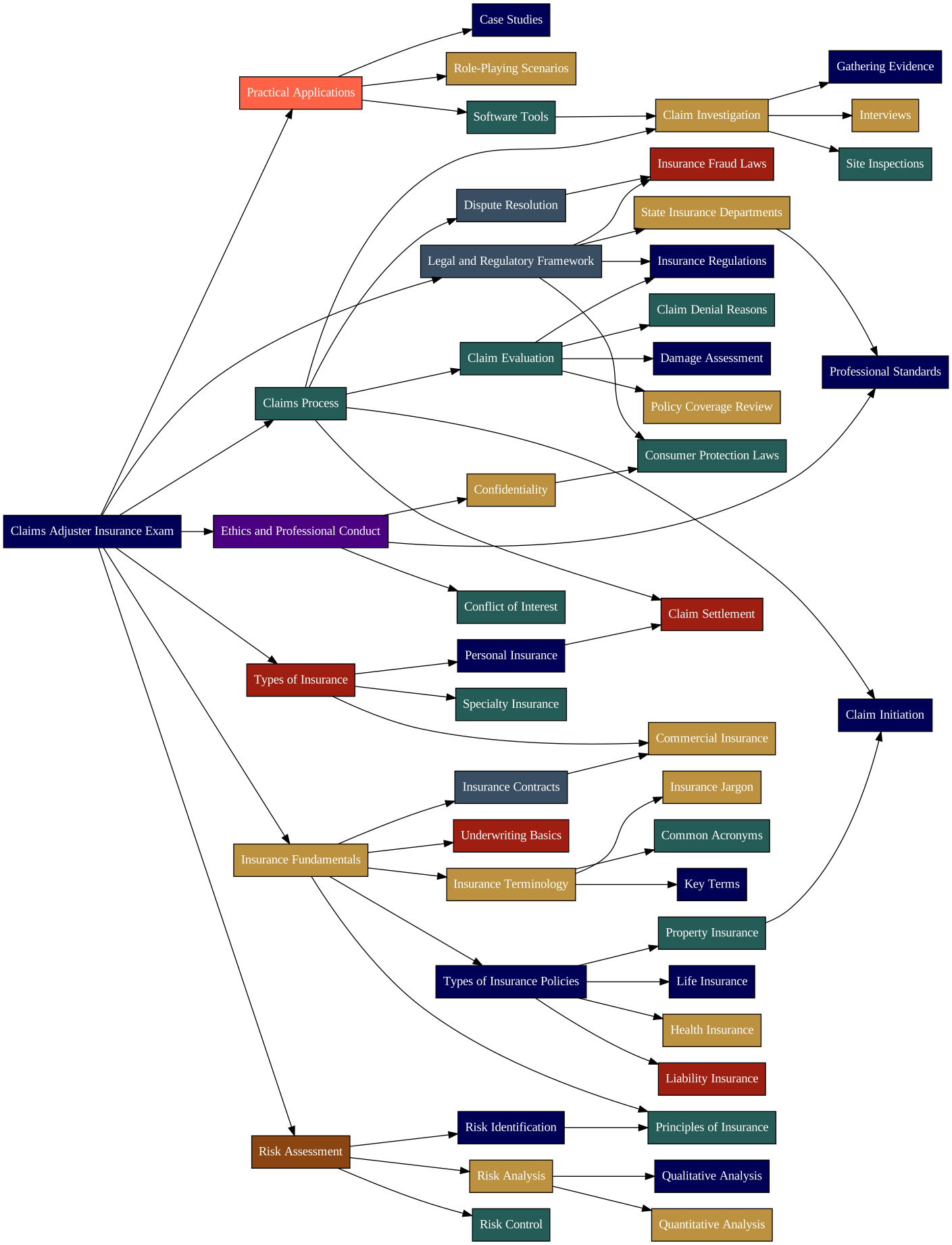
Quiz-summary
0 of 30 questions completed
Questions:
- 1
- 2
- 3
- 4
- 5
- 6
- 7
- 8
- 9
- 10
- 11
- 12
- 13
- 14
- 15
- 16
- 17
- 18
- 19
- 20
- 21
- 22
- 23
- 24
- 25
- 26
- 27
- 28
- 29
- 30
Information
Premium Practice Questions
You have already completed the quiz before. Hence you can not start it again.
Quiz is loading...
You must sign in or sign up to start the quiz.
You have to finish following quiz, to start this quiz:
Results
0 of 30 questions answered correctly
Your time:
Time has elapsed
You have reached 0 of 0 points, (0)
Categories
- Not categorized 0%
- 1
- 2
- 3
- 4
- 5
- 6
- 7
- 8
- 9
- 10
- 11
- 12
- 13
- 14
- 15
- 16
- 17
- 18
- 19
- 20
- 21
- 22
- 23
- 24
- 25
- 26
- 27
- 28
- 29
- 30
- Answered
- Review
-
Question 1 of 30
1. Question
Amara, the owner of a small online retail business, experienced a significant data breach resulting in substantial financial losses. Her existing insurance policy, arranged by broker Kenji, did not adequately cover cyber liability. Amara claims Kenji never explicitly highlighted the limited cyber coverage or suggested additional protection, despite Amara informing Kenji six months prior about a significant increase in her online sales. Which of the following statements BEST describes Kenji’s potential breach of duty?
Correct
The core issue revolves around the broker’s duty of care, encompassing both legal and ethical obligations. While brokers aren’t explicitly required to anticipate every conceivable future risk, they *are* obligated to provide advice that is reasonable and appropriate based on the client’s disclosed circumstances and the foreseeable risks associated with their business operations. The broker’s failure to adequately explain the limitations of the existing policy, particularly concerning cyber liability, and to proactively recommend additional coverage options constitutes a breach of this duty. This is further compounded by the fact that cyber threats are a well-recognized and increasingly prevalent risk for businesses of all sizes. The regulatory environment, particularly ASIC’s guidance on providing clear and concise advice, also plays a role. The broker should have ensured that Amara understood the scope of her coverage and the potential consequences of being underinsured against cyber risks. Ignoring the client’s operational changes (increased online sales) and not adjusting the risk assessment accordingly demonstrates a lack of proactive risk management. This situation highlights the importance of continuous professional development for brokers to stay abreast of emerging risks and evolving insurance products. The broker’s actions also raise ethical concerns related to prioritizing their own commission over the client’s best interests. This scenario underscores the need for brokers to document their advice and recommendations clearly, including any limitations of coverage and alternative options considered.
Incorrect
The core issue revolves around the broker’s duty of care, encompassing both legal and ethical obligations. While brokers aren’t explicitly required to anticipate every conceivable future risk, they *are* obligated to provide advice that is reasonable and appropriate based on the client’s disclosed circumstances and the foreseeable risks associated with their business operations. The broker’s failure to adequately explain the limitations of the existing policy, particularly concerning cyber liability, and to proactively recommend additional coverage options constitutes a breach of this duty. This is further compounded by the fact that cyber threats are a well-recognized and increasingly prevalent risk for businesses of all sizes. The regulatory environment, particularly ASIC’s guidance on providing clear and concise advice, also plays a role. The broker should have ensured that Amara understood the scope of her coverage and the potential consequences of being underinsured against cyber risks. Ignoring the client’s operational changes (increased online sales) and not adjusting the risk assessment accordingly demonstrates a lack of proactive risk management. This situation highlights the importance of continuous professional development for brokers to stay abreast of emerging risks and evolving insurance products. The broker’s actions also raise ethical concerns related to prioritizing their own commission over the client’s best interests. This scenario underscores the need for brokers to document their advice and recommendations clearly, including any limitations of coverage and alternative options considered.
-
Question 2 of 30
2. Question
Alejandro, a newly appointed compliance officer at “SecureSure Broking,” discovers a pattern of inconsistencies in the client files related to the disclosure of commissions received from insurers. While the brokerage has a documented policy on commission disclosure, it appears that several brokers have been providing generic statements without specifying the exact commission amounts. Furthermore, Alejandro identifies a few instances where client files lack evidence of a thorough needs analysis conducted before recommending specific insurance products. Considering the regulatory and ethical obligations of insurance brokers, what is Alejandro’s MOST appropriate course of action?
Correct
Insurance brokers operate within a complex regulatory environment that includes bodies such as ASIC and APRA. ASIC’s role primarily revolves around market integrity and consumer protection within the financial services industry, including insurance. This involves licensing, monitoring compliance, and taking enforcement action where necessary. APRA, on the other hand, focuses on the prudential regulation of financial institutions, including some insurers, ensuring their financial stability. Ethical conduct is paramount, requiring brokers to act in the best interests of their clients, disclose conflicts of interest, and maintain confidentiality. Failing to adhere to these regulatory and ethical standards can result in severe penalties, including fines, license revocation, and reputational damage. AML/CTF obligations require brokers to implement procedures to prevent the use of their services for money laundering or terrorism financing. These obligations include customer due diligence, transaction monitoring, and reporting suspicious activities. The Privacy Act and related regulations impose strict requirements on how brokers collect, use, store, and disclose personal information. Breaching these laws can lead to significant fines and legal action. Therefore, a comprehensive understanding of these regulations and ethical standards is crucial for insurance brokers to operate legally and ethically.
Incorrect
Insurance brokers operate within a complex regulatory environment that includes bodies such as ASIC and APRA. ASIC’s role primarily revolves around market integrity and consumer protection within the financial services industry, including insurance. This involves licensing, monitoring compliance, and taking enforcement action where necessary. APRA, on the other hand, focuses on the prudential regulation of financial institutions, including some insurers, ensuring their financial stability. Ethical conduct is paramount, requiring brokers to act in the best interests of their clients, disclose conflicts of interest, and maintain confidentiality. Failing to adhere to these regulatory and ethical standards can result in severe penalties, including fines, license revocation, and reputational damage. AML/CTF obligations require brokers to implement procedures to prevent the use of their services for money laundering or terrorism financing. These obligations include customer due diligence, transaction monitoring, and reporting suspicious activities. The Privacy Act and related regulations impose strict requirements on how brokers collect, use, store, and disclose personal information. Breaching these laws can lead to significant fines and legal action. Therefore, a comprehensive understanding of these regulations and ethical standards is crucial for insurance brokers to operate legally and ethically.
-
Question 3 of 30
3. Question
Omar, an insurance broker, places a client’s business with an insurer from whom he receives a higher commission than other comparable insurers. Omar does not disclose this commission arrangement to the client, even though it’s significantly higher than the industry average and could be perceived as influencing his recommendation. What are the potential consequences of Omar’s actions, considering relevant legislation and industry codes?
Correct
The Insurance Brokers Code of Practice, overseen by NIBA, sets standards for professional conduct. ASIC’s Regulatory Guide 128 outlines expectations for brokers to act in their clients’ best interests. The Corporations Act 2001 also plays a crucial role, especially concerning financial services licensing and disclosure requirements. The question asks about a broker failing to disclose a conflict of interest, which directly violates the Code of Practice and potentially breaches ASIC’s guidelines on acting in the client’s best interest. A material conflict of interest is one that could reasonably be expected to influence the broker’s advice or actions. Failing to disclose this deprives the client of the opportunity to make an informed decision. The client can take action, including lodging a formal complaint with the broker’s internal dispute resolution (IDR) process, escalating to the Australian Financial Complaints Authority (AFCA) if the IDR is unsatisfactory, or potentially pursuing legal action for breach of duty of care or statutory obligations under the Corporations Act. NIBA can also investigate breaches of its Code of Practice, potentially leading to sanctions.
Incorrect
The Insurance Brokers Code of Practice, overseen by NIBA, sets standards for professional conduct. ASIC’s Regulatory Guide 128 outlines expectations for brokers to act in their clients’ best interests. The Corporations Act 2001 also plays a crucial role, especially concerning financial services licensing and disclosure requirements. The question asks about a broker failing to disclose a conflict of interest, which directly violates the Code of Practice and potentially breaches ASIC’s guidelines on acting in the client’s best interest. A material conflict of interest is one that could reasonably be expected to influence the broker’s advice or actions. Failing to disclose this deprives the client of the opportunity to make an informed decision. The client can take action, including lodging a formal complaint with the broker’s internal dispute resolution (IDR) process, escalating to the Australian Financial Complaints Authority (AFCA) if the IDR is unsatisfactory, or potentially pursuing legal action for breach of duty of care or statutory obligations under the Corporations Act. NIBA can also investigate breaches of its Code of Practice, potentially leading to sanctions.
-
Question 4 of 30
4. Question
A newly licensed insurance broker, Kwame, consistently fails to adequately disclose potential conflicts of interest to his clients, as mandated by ASIC regulations. He also neglects to maintain the minimum level of professional indemnity insurance required by law. Which of the following consequences is Kwame MOST likely to face as a direct result of these compliance failures?
Correct
Insurance brokers operate within a complex regulatory framework designed to protect consumers and ensure the integrity of the insurance market. ASIC (Australian Securities and Investments Commission) plays a crucial role in overseeing the conduct of insurance brokers, ensuring they act in the best interests of their clients. This includes requirements related to providing appropriate advice, disclosing conflicts of interest, and maintaining adequate professional indemnity insurance. APRA (Australian Prudential Regulation Authority), on the other hand, primarily regulates insurance companies themselves, focusing on their financial stability and solvency. While APRA’s direct oversight of brokers is limited, their regulations indirectly impact brokers by influencing the products available and the operational requirements of insurers. The Insurance Brokers Code of Practice sets out standards of conduct and service that brokers should adhere to, promoting ethical behavior and client satisfaction. Failing to comply with these regulations and standards can lead to penalties, including fines, license suspension, or even revocation. Understanding the interplay between ASIC’s regulatory oversight, APRA’s prudential supervision, and the ethical guidelines outlined in the Code of Practice is crucial for insurance brokers to operate effectively and maintain their professional standing. A breach of these regulatory requirements could significantly impact the broker’s ability to conduct business and maintain client trust.
Incorrect
Insurance brokers operate within a complex regulatory framework designed to protect consumers and ensure the integrity of the insurance market. ASIC (Australian Securities and Investments Commission) plays a crucial role in overseeing the conduct of insurance brokers, ensuring they act in the best interests of their clients. This includes requirements related to providing appropriate advice, disclosing conflicts of interest, and maintaining adequate professional indemnity insurance. APRA (Australian Prudential Regulation Authority), on the other hand, primarily regulates insurance companies themselves, focusing on their financial stability and solvency. While APRA’s direct oversight of brokers is limited, their regulations indirectly impact brokers by influencing the products available and the operational requirements of insurers. The Insurance Brokers Code of Practice sets out standards of conduct and service that brokers should adhere to, promoting ethical behavior and client satisfaction. Failing to comply with these regulations and standards can lead to penalties, including fines, license suspension, or even revocation. Understanding the interplay between ASIC’s regulatory oversight, APRA’s prudential supervision, and the ethical guidelines outlined in the Code of Practice is crucial for insurance brokers to operate effectively and maintain their professional standing. A breach of these regulatory requirements could significantly impact the broker’s ability to conduct business and maintain client trust.
-
Question 5 of 30
5. Question
A boutique insurance broking firm, “Assured Futures,” specializing in high-net-worth individuals, has experienced a recent surge in client complaints regarding perceived lack of personalized service despite a company-wide initiative emphasizing client-centricity. Internal audits reveal that while brokers are technically compliant with regulatory requirements and achieving sales targets, client retention rates have declined by 15% in the last quarter. Analyzing these trends, which of the following actions would most comprehensively address the underlying issues and ensure long-term sustainable improvement in service performance, considering both regulatory compliance and client satisfaction?
Correct
Insurance brokers operate within a complex regulatory landscape governed by bodies like ASIC and APRA, ensuring consumer protection and market integrity. Ethical conduct is paramount, requiring brokers to act in the client’s best interests, disclose potential conflicts of interest, and maintain client confidentiality under privacy laws. Understanding client needs involves comprehensive risk assessment and providing suitable insurance solutions from a range of insurers. Performance is evaluated using KPIs such as client retention rates, Net Promoter Score (NPS), and compliance adherence. Continuous improvement is fostered through regular training, feedback analysis, and adapting to evolving market trends and regulatory changes. Scenario analysis is crucial for evaluating the effectiveness of risk management strategies and business continuity plans. Financial acumen involves understanding profitability analysis, cost management, and financial regulations impacting brokers. Technology plays a significant role in enhancing service performance through insurance broking software, data analytics, and cybersecurity measures.
Incorrect
Insurance brokers operate within a complex regulatory landscape governed by bodies like ASIC and APRA, ensuring consumer protection and market integrity. Ethical conduct is paramount, requiring brokers to act in the client’s best interests, disclose potential conflicts of interest, and maintain client confidentiality under privacy laws. Understanding client needs involves comprehensive risk assessment and providing suitable insurance solutions from a range of insurers. Performance is evaluated using KPIs such as client retention rates, Net Promoter Score (NPS), and compliance adherence. Continuous improvement is fostered through regular training, feedback analysis, and adapting to evolving market trends and regulatory changes. Scenario analysis is crucial for evaluating the effectiveness of risk management strategies and business continuity plans. Financial acumen involves understanding profitability analysis, cost management, and financial regulations impacting brokers. Technology plays a significant role in enhancing service performance through insurance broking software, data analytics, and cybersecurity measures.
-
Question 6 of 30
6. Question
Klara, an insurance broker, discovers that a long-standing client, Tech Solutions Pty Ltd, has inadvertently misrepresented the security measures in place at their data center, potentially affecting their cyber insurance policy. Klara suspects no malicious intent but recognizes the discrepancy could impact a future claim. According to regulatory compliance and ethical standards, what is Klara’s MOST appropriate course of action?
Correct
Insurance brokers must adhere to strict regulatory and ethical standards to protect clients and maintain the integrity of the industry. ASIC (Australian Securities & Investments Commission) plays a crucial role in overseeing insurance brokers’ conduct, ensuring compliance with the Corporations Act 2001 and other relevant legislation. A core ethical principle is the duty of utmost good faith (uberrimae fidei), requiring brokers to act honestly, fairly, and with due skill and care in all dealings with clients. This includes providing clear and accurate information, disclosing any conflicts of interest, and acting in the client’s best interests. Failure to comply with these standards can result in penalties, including fines, license suspension, or revocation. Professional indemnity insurance is mandatory for brokers to protect against potential liabilities arising from negligence or errors in their advice. Furthermore, brokers must maintain adequate financial resources and have robust internal controls to manage risks effectively. The regulatory framework also addresses issues such as anti-money laundering (AML) and counter-terrorism financing (CTF), requiring brokers to implement procedures to detect and report suspicious transactions. Continuous professional development is essential for brokers to stay up-to-date with regulatory changes and best practices, ensuring they can provide competent and ethical advice to their clients. Understanding the interplay between these regulatory requirements and ethical obligations is crucial for brokers to operate effectively and maintain client trust.
Incorrect
Insurance brokers must adhere to strict regulatory and ethical standards to protect clients and maintain the integrity of the industry. ASIC (Australian Securities & Investments Commission) plays a crucial role in overseeing insurance brokers’ conduct, ensuring compliance with the Corporations Act 2001 and other relevant legislation. A core ethical principle is the duty of utmost good faith (uberrimae fidei), requiring brokers to act honestly, fairly, and with due skill and care in all dealings with clients. This includes providing clear and accurate information, disclosing any conflicts of interest, and acting in the client’s best interests. Failure to comply with these standards can result in penalties, including fines, license suspension, or revocation. Professional indemnity insurance is mandatory for brokers to protect against potential liabilities arising from negligence or errors in their advice. Furthermore, brokers must maintain adequate financial resources and have robust internal controls to manage risks effectively. The regulatory framework also addresses issues such as anti-money laundering (AML) and counter-terrorism financing (CTF), requiring brokers to implement procedures to detect and report suspicious transactions. Continuous professional development is essential for brokers to stay up-to-date with regulatory changes and best practices, ensuring they can provide competent and ethical advice to their clients. Understanding the interplay between these regulatory requirements and ethical obligations is crucial for brokers to operate effectively and maintain client trust.
-
Question 7 of 30
7. Question
Javier, an insurance broker, receives a significant volume-based bonus from a particular insurer if he places a certain percentage of his business with them. He’s concerned about a potential conflict of interest. According to ethical standards and regulatory compliance within the insurance broking industry, which of the following actions BEST addresses this conflict?
Correct
The scenario describes a situation where an insurance broker, Javier, faces a conflict of interest. He is incentivized to place business with a particular insurer due to a volume-based bonus, potentially leading him to prioritize his own financial gain over his clients’ best interests. This situation directly relates to ethical considerations and regulatory compliance within the insurance broking industry. Relevant legislation, such as the Corporations Act 2001 (specifically sections dealing with conflicts of interest and disclosure obligations), and regulatory guidance from ASIC (Australian Securities and Investments Commission) emphasize the importance of transparency and prioritizing client needs. The core issue is whether Javier is fulfilling his fiduciary duty to act in the best interests of his clients. A fiduciary duty requires the broker to place the client’s interests above their own. The volume bonus creates a potential breach of this duty. The key is to identify the action that best mitigates this conflict while upholding ethical standards and regulatory requirements. Disclosing the bonus arrangement to clients is crucial, as it allows them to make informed decisions. Documenting the rationale for placing business with a particular insurer, even with the bonus, demonstrates due diligence and ensures that the client’s needs are still being met. Regularly reviewing placement decisions ensures ongoing compliance and client-centricity. The combination of disclosure, documentation, and review represents the most comprehensive approach to managing the conflict of interest. Simply placing business with the insurer offering the best commission for Javier is unethical and non-compliant. Disclosing the arrangement without documenting the rationale is insufficient, and only documenting the rationale without disclosure is also inadequate.
Incorrect
The scenario describes a situation where an insurance broker, Javier, faces a conflict of interest. He is incentivized to place business with a particular insurer due to a volume-based bonus, potentially leading him to prioritize his own financial gain over his clients’ best interests. This situation directly relates to ethical considerations and regulatory compliance within the insurance broking industry. Relevant legislation, such as the Corporations Act 2001 (specifically sections dealing with conflicts of interest and disclosure obligations), and regulatory guidance from ASIC (Australian Securities and Investments Commission) emphasize the importance of transparency and prioritizing client needs. The core issue is whether Javier is fulfilling his fiduciary duty to act in the best interests of his clients. A fiduciary duty requires the broker to place the client’s interests above their own. The volume bonus creates a potential breach of this duty. The key is to identify the action that best mitigates this conflict while upholding ethical standards and regulatory requirements. Disclosing the bonus arrangement to clients is crucial, as it allows them to make informed decisions. Documenting the rationale for placing business with a particular insurer, even with the bonus, demonstrates due diligence and ensures that the client’s needs are still being met. Regularly reviewing placement decisions ensures ongoing compliance and client-centricity. The combination of disclosure, documentation, and review represents the most comprehensive approach to managing the conflict of interest. Simply placing business with the insurer offering the best commission for Javier is unethical and non-compliant. Disclosing the arrangement without documenting the rationale is insufficient, and only documenting the rationale without disclosure is also inadequate.
-
Question 8 of 30
8. Question
SecureSure Brokers, an insurance broking firm, has experienced a decline in client satisfaction scores and increased scrutiny from ASIC regarding compliance procedures. As the newly appointed Quality Assurance Manager, you are tasked with implementing a Continuous Improvement Process (CIP) to address these issues. Which of the following strategies would be the MOST effective initial step in establishing a sustainable and comprehensive CIP at SecureSure Brokers, considering both client satisfaction and regulatory requirements?
Correct
The question explores the nuanced application of Continuous Improvement Processes (CIP) within an insurance broking firm, particularly focusing on the integration of client feedback, regulatory compliance, and staff training to enhance service performance. The scenario involves a firm, “SecureSure Brokers,” grappling with declining client satisfaction scores and increased regulatory scrutiny. To answer the question correctly, one must understand that CIP is not a one-time fix but an ongoing cycle of planning, doing, checking, and acting (PDCA). It involves systematically collecting client feedback, analyzing performance data, identifying areas for improvement, implementing changes, and then monitoring the impact of those changes. The correct answer will reflect a holistic approach that considers all these elements. Ignoring regulatory compliance would expose the firm to legal risks. Neglecting staff training would hinder the effective implementation of new processes. Focusing solely on client feedback without internal process improvements would be insufficient. The Australian Securities and Investments Commission (ASIC) Regulatory Guide 104 (RG 104) provides guidance on licensing: Organisational competence, highlighting the importance of ongoing training and competence assessment. APRA also sets standards for operational risk management that necessitate continuous improvement. A robust CIP aligns with these regulatory expectations, fostering a culture of continuous learning and adaptation. Therefore, the most effective strategy involves a combination of proactively gathering client feedback, conducting regular staff training on compliance and service delivery, and implementing process improvements based on the feedback and training outcomes, all while adhering to regulatory guidelines.
Incorrect
The question explores the nuanced application of Continuous Improvement Processes (CIP) within an insurance broking firm, particularly focusing on the integration of client feedback, regulatory compliance, and staff training to enhance service performance. The scenario involves a firm, “SecureSure Brokers,” grappling with declining client satisfaction scores and increased regulatory scrutiny. To answer the question correctly, one must understand that CIP is not a one-time fix but an ongoing cycle of planning, doing, checking, and acting (PDCA). It involves systematically collecting client feedback, analyzing performance data, identifying areas for improvement, implementing changes, and then monitoring the impact of those changes. The correct answer will reflect a holistic approach that considers all these elements. Ignoring regulatory compliance would expose the firm to legal risks. Neglecting staff training would hinder the effective implementation of new processes. Focusing solely on client feedback without internal process improvements would be insufficient. The Australian Securities and Investments Commission (ASIC) Regulatory Guide 104 (RG 104) provides guidance on licensing: Organisational competence, highlighting the importance of ongoing training and competence assessment. APRA also sets standards for operational risk management that necessitate continuous improvement. A robust CIP aligns with these regulatory expectations, fostering a culture of continuous learning and adaptation. Therefore, the most effective strategy involves a combination of proactively gathering client feedback, conducting regular staff training on compliance and service delivery, and implementing process improvements based on the feedback and training outcomes, all while adhering to regulatory guidelines.
-
Question 9 of 30
9. Question
A seasoned insurance broker, Fatima, consistently achieves high sales targets but has received multiple client complaints regarding inadequate disclosure of policy exclusions and potential conflicts of interest. Which of the following best describes the potential regulatory consequences Fatima faces, considering her sales performance versus compliance with ethical and legal obligations?
Correct
Understanding the regulatory environment is crucial for insurance brokers. ASIC’s role in regulating financial services, including insurance broking, is paramount. ASIC enforces the Corporations Act 2001 and other relevant legislation to ensure brokers operate fairly, honestly, and efficiently. APRA, while primarily focused on the solvency of insurers, also influences broker conduct through its prudential standards for insurers. The Insurance Brokers Code of Practice sets out professional standards and ethical guidelines. Failing to comply with these regulations can result in penalties, legal action, and reputational damage. A key aspect of regulatory compliance is ensuring that brokers provide appropriate advice, act in the client’s best interests, and disclose any conflicts of interest. This includes adhering to the General Insurance Code of Practice, which outlines standards for insurers and brokers in dealing with customers. Staying updated with regulatory changes through continuous professional development is essential for maintaining compliance and providing high-quality service. Furthermore, understanding the implications of the Financial Sector Reform Act and other relevant legislation is critical for navigating the complex regulatory landscape.
Incorrect
Understanding the regulatory environment is crucial for insurance brokers. ASIC’s role in regulating financial services, including insurance broking, is paramount. ASIC enforces the Corporations Act 2001 and other relevant legislation to ensure brokers operate fairly, honestly, and efficiently. APRA, while primarily focused on the solvency of insurers, also influences broker conduct through its prudential standards for insurers. The Insurance Brokers Code of Practice sets out professional standards and ethical guidelines. Failing to comply with these regulations can result in penalties, legal action, and reputational damage. A key aspect of regulatory compliance is ensuring that brokers provide appropriate advice, act in the client’s best interests, and disclose any conflicts of interest. This includes adhering to the General Insurance Code of Practice, which outlines standards for insurers and brokers in dealing with customers. Staying updated with regulatory changes through continuous professional development is essential for maintaining compliance and providing high-quality service. Furthermore, understanding the implications of the Financial Sector Reform Act and other relevant legislation is critical for navigating the complex regulatory landscape.
-
Question 10 of 30
10. Question
Jamila, a newly accredited insurance broker, is approached by an insurer offering significantly higher commission rates for specific bundled home and contents insurance policies. These policies, while comprehensive, include several add-ons that may not be necessary for all of Jamila’s clients, potentially increasing their premiums unnecessarily. Considering Jamila’s ethical obligations, which of the following actions would be most appropriate?
Correct
The core of ethical conduct in insurance broking hinges on upholding fiduciary duties, which mandates acting in the client’s best interests above all else. This involves providing transparent and unbiased advice, disclosing any potential conflicts of interest, and ensuring the client fully understands the insurance products being recommended. ASIC’s regulatory framework reinforces these ethical obligations, emphasizing the importance of competence, honesty, and fairness in all dealings. Breaching these ethical standards can lead to severe consequences, including legal penalties, reputational damage, and loss of professional accreditation. Scenario analysis is crucial in identifying potential ethical dilemmas, such as recommending products with higher commissions but less suitable coverage, or failing to disclose relationships with specific insurers. A robust ethical framework, incorporating regular training and adherence to industry codes of conduct, is essential for navigating these complexities and maintaining client trust. Furthermore, understanding and adhering to the General Insurance Code of Practice is also vital in ensuring the highest ethical standards are maintained. The question is designed to assess the candidate’s understanding of the ethical obligations of an insurance broker, particularly in relation to fiduciary duties and the potential consequences of breaching those duties.
Incorrect
The core of ethical conduct in insurance broking hinges on upholding fiduciary duties, which mandates acting in the client’s best interests above all else. This involves providing transparent and unbiased advice, disclosing any potential conflicts of interest, and ensuring the client fully understands the insurance products being recommended. ASIC’s regulatory framework reinforces these ethical obligations, emphasizing the importance of competence, honesty, and fairness in all dealings. Breaching these ethical standards can lead to severe consequences, including legal penalties, reputational damage, and loss of professional accreditation. Scenario analysis is crucial in identifying potential ethical dilemmas, such as recommending products with higher commissions but less suitable coverage, or failing to disclose relationships with specific insurers. A robust ethical framework, incorporating regular training and adherence to industry codes of conduct, is essential for navigating these complexities and maintaining client trust. Furthermore, understanding and adhering to the General Insurance Code of Practice is also vital in ensuring the highest ethical standards are maintained. The question is designed to assess the candidate’s understanding of the ethical obligations of an insurance broker, particularly in relation to fiduciary duties and the potential consequences of breaching those duties.
-
Question 11 of 30
11. Question
Jamila, an insurance broker, notices that one of her long-term clients, Mr. Nguyen, has become increasingly unresponsive to email updates regarding policy renewals and market changes. He also seems hesitant during phone calls, often deferring decisions. Previously, Mr. Nguyen was very engaged and proactive in managing his insurance portfolio. What is the MOST effective initial step Jamila should take to address this change in client behavior and ensure continued client satisfaction?
Correct
The core of effective client relationship management in insurance broking hinges on understanding and adapting to diverse client needs and communication styles. A proactive approach involves not only fulfilling immediate requests but also anticipating future requirements and tailoring communication to suit individual preferences. This includes providing information in accessible formats, actively soliciting feedback, and demonstrating empathy and understanding. Moreover, it is crucial to document all interactions and agreements meticulously to avoid misunderstandings and ensure transparency. In this scenario, simply providing standard policy documents or relying solely on digital communication may not address the client’s underlying concerns or preferences. A truly effective approach requires a personalized strategy that considers the client’s specific circumstances, communication preferences, and level of understanding. Ignoring these nuances can lead to dissatisfaction, misunderstandings, and ultimately, loss of the client’s business. Therefore, the best course of action is to actively engage with the client, understand their needs, and tailor the communication and service accordingly.
Incorrect
The core of effective client relationship management in insurance broking hinges on understanding and adapting to diverse client needs and communication styles. A proactive approach involves not only fulfilling immediate requests but also anticipating future requirements and tailoring communication to suit individual preferences. This includes providing information in accessible formats, actively soliciting feedback, and demonstrating empathy and understanding. Moreover, it is crucial to document all interactions and agreements meticulously to avoid misunderstandings and ensure transparency. In this scenario, simply providing standard policy documents or relying solely on digital communication may not address the client’s underlying concerns or preferences. A truly effective approach requires a personalized strategy that considers the client’s specific circumstances, communication preferences, and level of understanding. Ignoring these nuances can lead to dissatisfaction, misunderstandings, and ultimately, loss of the client’s business. Therefore, the best course of action is to actively engage with the client, understand their needs, and tailor the communication and service accordingly.
-
Question 12 of 30
12. Question
What is the PRIMARY role of the Australian Prudential Regulation Authority (APRA) in relation to the insurance broking industry?
Correct
Understanding the role of the Australian Prudential Regulation Authority (APRA) is crucial for insurance brokers. APRA regulates insurers, not insurance brokers directly. APRA’s main goal is to ensure the financial stability of the insurance industry and protect policyholder interests. While brokers are not directly regulated by APRA, their actions can indirectly impact APRA’s objectives. For instance, brokers have a responsibility to recommend financially sound insurers to their clients. Recommending an insurer that is financially unstable could ultimately harm policyholders and undermine confidence in the insurance industry, which would be of concern to APRA. ASIC regulates the conduct of insurance brokers.
Incorrect
Understanding the role of the Australian Prudential Regulation Authority (APRA) is crucial for insurance brokers. APRA regulates insurers, not insurance brokers directly. APRA’s main goal is to ensure the financial stability of the insurance industry and protect policyholder interests. While brokers are not directly regulated by APRA, their actions can indirectly impact APRA’s objectives. For instance, brokers have a responsibility to recommend financially sound insurers to their clients. Recommending an insurer that is financially unstable could ultimately harm policyholders and undermine confidence in the insurance industry, which would be of concern to APRA. ASIC regulates the conduct of insurance brokers.
-
Question 13 of 30
13. Question
Jamila, a client of “SecureFuture Insurance,” lodges a formal complaint regarding a misinterpretation of policy coverage that led to a rejected claim. SecureFuture Insurance acknowledges the complaint after 10 business days and provides a resolution response after 45 calendar days. Which aspect of the Insurance Brokers Code of Practice has SecureFuture Insurance most likely breached in this scenario?
Correct
The Insurance Brokers Code of Practice mandates specific procedures for handling client complaints, emphasizing fairness, accessibility, and timeliness. A core principle is that brokers must have an internal dispute resolution (IDR) process that adheres to the standards set by the Australian Financial Complaints Authority (AFCA). This includes acknowledging the complaint promptly (within a specified timeframe, often 5 business days), investigating the matter thoroughly, and providing a written response outlining the findings and proposed resolution within a reasonable timeframe (typically no more than 30 calendar days). If the client remains dissatisfied after the IDR process, the broker must inform them of their right to escalate the complaint to AFCA, an independent external dispute resolution (EDR) scheme. Failing to adhere to these requirements constitutes a breach of the Code and can lead to regulatory sanctions. The broker must also maintain records of all complaints received and the outcomes of their resolution, demonstrating a commitment to continuous improvement in service delivery. The process should be easily accessible to clients, with clear information available on how to lodge a complaint. The broker should also ensure that staff are adequately trained in handling complaints effectively and empathetically.
Incorrect
The Insurance Brokers Code of Practice mandates specific procedures for handling client complaints, emphasizing fairness, accessibility, and timeliness. A core principle is that brokers must have an internal dispute resolution (IDR) process that adheres to the standards set by the Australian Financial Complaints Authority (AFCA). This includes acknowledging the complaint promptly (within a specified timeframe, often 5 business days), investigating the matter thoroughly, and providing a written response outlining the findings and proposed resolution within a reasonable timeframe (typically no more than 30 calendar days). If the client remains dissatisfied after the IDR process, the broker must inform them of their right to escalate the complaint to AFCA, an independent external dispute resolution (EDR) scheme. Failing to adhere to these requirements constitutes a breach of the Code and can lead to regulatory sanctions. The broker must also maintain records of all complaints received and the outcomes of their resolution, demonstrating a commitment to continuous improvement in service delivery. The process should be easily accessible to clients, with clear information available on how to lodge a complaint. The broker should also ensure that staff are adequately trained in handling complaints effectively and empathetically.
-
Question 14 of 30
14. Question
“Secure Cover,” an insurance broking firm, is developing a business continuity plan (BCP). Which of the following elements is MOST critical for ensuring the BCP’s effectiveness in minimizing disruption to client service during a major IT system failure?
Correct
Business continuity planning (BCP) in insurance broking involves several critical components. Risk assessment identifies potential threats and vulnerabilities that could disrupt business operations, such as natural disasters, cyberattacks, or pandemics. Impact analysis evaluates the potential consequences of these disruptions on key business functions, including client service, claims processing, and data management. Recovery strategies outline specific actions to restore critical functions within defined timeframes, such as data backup and recovery, alternative office locations, and remote work arrangements. Communication plans ensure timely and effective communication with clients, employees, and stakeholders during a disruption. Testing and exercising the BCP regularly validates its effectiveness and identifies areas for improvement. Documentation of the BCP ensures clear guidance for staff during a crisis. Assignment of roles and responsibilities ensures accountability and coordination during the recovery process. Resource allocation provides the necessary financial and human resources to implement and maintain the BCP. Regular review and updates ensure the BCP remains relevant and effective in addressing evolving threats and business needs.
Incorrect
Business continuity planning (BCP) in insurance broking involves several critical components. Risk assessment identifies potential threats and vulnerabilities that could disrupt business operations, such as natural disasters, cyberattacks, or pandemics. Impact analysis evaluates the potential consequences of these disruptions on key business functions, including client service, claims processing, and data management. Recovery strategies outline specific actions to restore critical functions within defined timeframes, such as data backup and recovery, alternative office locations, and remote work arrangements. Communication plans ensure timely and effective communication with clients, employees, and stakeholders during a disruption. Testing and exercising the BCP regularly validates its effectiveness and identifies areas for improvement. Documentation of the BCP ensures clear guidance for staff during a crisis. Assignment of roles and responsibilities ensures accountability and coordination during the recovery process. Resource allocation provides the necessary financial and human resources to implement and maintain the BCP. Regular review and updates ensure the BCP remains relevant and effective in addressing evolving threats and business needs.
-
Question 15 of 30
15. Question
“AssureCover Brokers” is experiencing a decline in client retention rates. They decide to implement the Plan-Do-Check-Act (PDCA) cycle to address this issue. After implementing a pilot program to enhance client communication (the “Do” phase), what is the MOST critical next step in the PDCA cycle to ensure the success of their continuous improvement initiative?
Correct
The question explores the application of continuous improvement principles, specifically the Plan-Do-Check-Act (PDCA) cycle, within an insurance broking context. Continuous improvement is crucial for maintaining service excellence, adapting to market changes, and meeting evolving client needs. The PDCA cycle provides a structured approach to identifying areas for improvement, implementing changes, evaluating their effectiveness, and making necessary adjustments. In this scenario, the brokerage is experiencing a decline in client retention. Applying the PDCA cycle involves several steps. “Plan” involves identifying the root causes of client attrition through data analysis and feedback. “Do” entails implementing a pilot program to address these causes, such as enhanced communication or personalized service offerings. “Check” requires monitoring the pilot program’s impact on client retention rates and gathering feedback on the implemented changes. “Act” involves standardizing successful changes across the entire brokerage and continuously monitoring performance to ensure ongoing improvement. Failing to properly “Check” the impact of changes before acting could lead to implementing ineffective strategies across the entire brokerage, wasting resources and potentially further damaging client relationships. Similarly, skipping the “Plan” stage and implementing changes based on assumptions could address the wrong issues. Neglecting to “Act” by standardizing successful changes would limit the overall impact of the improvement initiative. Therefore, a rigorous “Check” phase is essential to validate the effectiveness of the implemented changes before broader implementation.
Incorrect
The question explores the application of continuous improvement principles, specifically the Plan-Do-Check-Act (PDCA) cycle, within an insurance broking context. Continuous improvement is crucial for maintaining service excellence, adapting to market changes, and meeting evolving client needs. The PDCA cycle provides a structured approach to identifying areas for improvement, implementing changes, evaluating their effectiveness, and making necessary adjustments. In this scenario, the brokerage is experiencing a decline in client retention. Applying the PDCA cycle involves several steps. “Plan” involves identifying the root causes of client attrition through data analysis and feedback. “Do” entails implementing a pilot program to address these causes, such as enhanced communication or personalized service offerings. “Check” requires monitoring the pilot program’s impact on client retention rates and gathering feedback on the implemented changes. “Act” involves standardizing successful changes across the entire brokerage and continuously monitoring performance to ensure ongoing improvement. Failing to properly “Check” the impact of changes before acting could lead to implementing ineffective strategies across the entire brokerage, wasting resources and potentially further damaging client relationships. Similarly, skipping the “Plan” stage and implementing changes based on assumptions could address the wrong issues. Neglecting to “Act” by standardizing successful changes would limit the overall impact of the improvement initiative. Therefore, a rigorous “Check” phase is essential to validate the effectiveness of the implemented changes before broader implementation.
-
Question 16 of 30
16. Question
“Proactive Insurance Solutions” is looking to leverage technology to improve its service performance. Which of the following initiatives would MOST directly contribute to enhancing client satisfaction and efficiency in their operations?
Correct
The role of technology in enhancing service performance in insurance broking is significant. Insurance broking software and tools streamline various processes, from client onboarding and policy management to claims processing and reporting. Customer Relationship Management (CRM) systems help brokers manage client interactions, track communications, and personalize service delivery. Data analytics tools provide insights into client behavior, risk profiles, and market trends, enabling brokers to make more informed decisions and offer tailored advice. Online portals and mobile apps allow clients to access policy information, submit claims, and communicate with their brokers conveniently. Automation of routine tasks, such as generating quotes and sending renewal reminders, improves efficiency and reduces errors. Cybersecurity measures are essential to protect client data and maintain trust. Embracing technology enables brokers to deliver faster, more efficient, and more personalized service, ultimately enhancing client satisfaction and loyalty.
Incorrect
The role of technology in enhancing service performance in insurance broking is significant. Insurance broking software and tools streamline various processes, from client onboarding and policy management to claims processing and reporting. Customer Relationship Management (CRM) systems help brokers manage client interactions, track communications, and personalize service delivery. Data analytics tools provide insights into client behavior, risk profiles, and market trends, enabling brokers to make more informed decisions and offer tailored advice. Online portals and mobile apps allow clients to access policy information, submit claims, and communicate with their brokers conveniently. Automation of routine tasks, such as generating quotes and sending renewal reminders, improves efficiency and reduces errors. Cybersecurity measures are essential to protect client data and maintain trust. Embracing technology enables brokers to deliver faster, more efficient, and more personalized service, ultimately enhancing client satisfaction and loyalty.
-
Question 17 of 30
17. Question
What is the PRIMARY purpose of implementing risk management principles in an insurance broking business?
Correct
The question addresses the core principles of risk management within the context of insurance broking. While understanding market trends (option b) and sales techniques (option d) are important for business success, they don’t directly relate to risk management. Complying with regulatory requirements (option c) is essential for legal operation, but it’s a consequence of risk management rather than its primary goal. The fundamental purpose of risk management in insurance broking is to identify, assess, and mitigate potential risks that could impact the business or its clients (option a). This involves identifying potential hazards, evaluating the likelihood and severity of their occurrence, and implementing strategies to reduce or eliminate those risks. These strategies can include insurance coverage, internal controls, business continuity planning, and employee training. Effective risk management protects the business from financial losses, reputational damage, and legal liabilities, while also ensuring that clients receive appropriate advice and coverage.
Incorrect
The question addresses the core principles of risk management within the context of insurance broking. While understanding market trends (option b) and sales techniques (option d) are important for business success, they don’t directly relate to risk management. Complying with regulatory requirements (option c) is essential for legal operation, but it’s a consequence of risk management rather than its primary goal. The fundamental purpose of risk management in insurance broking is to identify, assess, and mitigate potential risks that could impact the business or its clients (option a). This involves identifying potential hazards, evaluating the likelihood and severity of their occurrence, and implementing strategies to reduce or eliminate those risks. These strategies can include insurance coverage, internal controls, business continuity planning, and employee training. Effective risk management protects the business from financial losses, reputational damage, and legal liabilities, while also ensuring that clients receive appropriate advice and coverage.
-
Question 18 of 30
18. Question
A new client, Alana, receives her comprehensive business insurance policy documents from her broker, David. Alana acknowledges receipt. Three months later, Alana lodges a claim which is denied because the specific event is excluded under a clause she claims she was not aware of. David argues he provided all necessary documentation as per legal requirements. Which of the following best describes David’s primary failing in client relationship management?
Correct
The core of effective client relationship management in insurance broking lies in understanding and proactively addressing client needs and expectations, particularly regarding policy coverage. Simply providing the legally required documentation or relying on standardized communication is insufficient. Brokers must actively ensure clients comprehend the intricacies of their policies, including limitations and exclusions. Failing to do so can lead to dissatisfaction, disputes, and potential professional negligence claims. Regular reviews and tailored communication are crucial, adapting to the client’s level of understanding and specific circumstances. The Corporations Act 2001 and the Australian Securities and Investments Commission (ASIC) Regulatory Guide 164 (Licensing: Organisational competence) emphasize the need for licensees to provide adequate and appropriate advice. Proactive clarification goes beyond mere compliance; it fosters trust and demonstrates a commitment to the client’s best interests, ultimately enhancing client loyalty and retention. Ignoring the client’s comprehension level is a significant oversight that can have severe repercussions for both the client and the broker.
Incorrect
The core of effective client relationship management in insurance broking lies in understanding and proactively addressing client needs and expectations, particularly regarding policy coverage. Simply providing the legally required documentation or relying on standardized communication is insufficient. Brokers must actively ensure clients comprehend the intricacies of their policies, including limitations and exclusions. Failing to do so can lead to dissatisfaction, disputes, and potential professional negligence claims. Regular reviews and tailored communication are crucial, adapting to the client’s level of understanding and specific circumstances. The Corporations Act 2001 and the Australian Securities and Investments Commission (ASIC) Regulatory Guide 164 (Licensing: Organisational competence) emphasize the need for licensees to provide adequate and appropriate advice. Proactive clarification goes beyond mere compliance; it fosters trust and demonstrates a commitment to the client’s best interests, ultimately enhancing client loyalty and retention. Ignoring the client’s comprehension level is a significant oversight that can have severe repercussions for both the client and the broker.
-
Question 19 of 30
19. Question
Jamila, a newly appointed compliance officer at “AssuredCover Broking,” discovers a historical pattern of brokers consistently recommending insurance products from a single insurer, “SecureGuard,” even when comparable or superior products from other insurers are available. SecureGuard offers AssuredCover Broking slightly higher commission rates. Which ASIC Regulatory Guide is MOST directly relevant to Jamila’s immediate investigation into this practice, and what specific principle within that guide should she prioritize?
Correct
Insurance brokers operate within a highly regulated environment, and understanding these regulations is paramount for ethical and compliant practice. The Australian Securities and Investments Commission (ASIC) plays a crucial role in overseeing the insurance industry, with specific regulatory guides providing detailed instructions on various aspects of insurance broking. RG 128 outlines the licensing requirements for financial services businesses, including insurance brokers. RG 164 provides guidance on managing conflicts of interest, which are inevitable in the broking profession. RG 206 focuses on credit-related insurance, a common offering by brokers. RG 271 deals with internal dispute resolution, a key aspect of handling client complaints. Adhering to these regulatory guides is not merely about compliance; it’s about fostering trust and maintaining the integrity of the insurance broking sector. Brokers must implement robust systems and controls to ensure ongoing compliance with these regulations. Furthermore, understanding the nuances of each regulatory guide enables brokers to provide informed advice and act in the best interests of their clients. Failure to comply can result in penalties, reputational damage, and loss of license. Therefore, a comprehensive understanding of ASIC’s regulatory guides is essential for all insurance brokers.
Incorrect
Insurance brokers operate within a highly regulated environment, and understanding these regulations is paramount for ethical and compliant practice. The Australian Securities and Investments Commission (ASIC) plays a crucial role in overseeing the insurance industry, with specific regulatory guides providing detailed instructions on various aspects of insurance broking. RG 128 outlines the licensing requirements for financial services businesses, including insurance brokers. RG 164 provides guidance on managing conflicts of interest, which are inevitable in the broking profession. RG 206 focuses on credit-related insurance, a common offering by brokers. RG 271 deals with internal dispute resolution, a key aspect of handling client complaints. Adhering to these regulatory guides is not merely about compliance; it’s about fostering trust and maintaining the integrity of the insurance broking sector. Brokers must implement robust systems and controls to ensure ongoing compliance with these regulations. Furthermore, understanding the nuances of each regulatory guide enables brokers to provide informed advice and act in the best interests of their clients. Failure to comply can result in penalties, reputational damage, and loss of license. Therefore, a comprehensive understanding of ASIC’s regulatory guides is essential for all insurance brokers.
-
Question 20 of 30
20. Question
Following a series of client complaints regarding inadequate disclosure of policy exclusions, the compliance officer at “SecureSure Broking” discovers a systemic issue where brokers are not consistently providing clients with the prescribed Product Disclosure Statement (PDS) before policy inception, as mandated by ASIC regulations. Which of the following actions represents the MOST comprehensive and proactive approach for SecureSure Broking to rectify this compliance failure and mitigate future risks, considering the potential for regulatory penalties and reputational damage?
Correct
Insurance brokers operate within a complex regulatory framework designed to protect consumers and maintain market integrity. The Australian Securities and Investments Commission (ASIC) plays a pivotal role in this environment, responsible for licensing, monitoring, and enforcing regulations related to financial services, including insurance broking. ASIC’s regulatory oversight ensures that brokers act in the best interests of their clients, provide suitable advice, and comply with relevant laws such as the Corporations Act 2001 and the Insurance Contracts Act 1984. The regulatory framework extends to specific areas like disclosure requirements, handling client money, and managing conflicts of interest. Breaching these regulations can lead to significant penalties, including fines, license revocation, and reputational damage. Therefore, brokers must maintain a thorough understanding of their regulatory obligations and implement robust compliance procedures to mitigate risks. Furthermore, the General Insurance Code of Practice sets out standards of conduct for insurers and brokers, promoting fair and transparent dealings with customers. Adherence to this code is crucial for maintaining trust and confidence in the insurance industry. A failure to comply with regulatory requirements can have severe consequences for both the broker and their clients, underscoring the importance of ongoing training and professional development in this area. The regulatory landscape is constantly evolving, necessitating continuous monitoring and adaptation by insurance brokers to remain compliant and effective.
Incorrect
Insurance brokers operate within a complex regulatory framework designed to protect consumers and maintain market integrity. The Australian Securities and Investments Commission (ASIC) plays a pivotal role in this environment, responsible for licensing, monitoring, and enforcing regulations related to financial services, including insurance broking. ASIC’s regulatory oversight ensures that brokers act in the best interests of their clients, provide suitable advice, and comply with relevant laws such as the Corporations Act 2001 and the Insurance Contracts Act 1984. The regulatory framework extends to specific areas like disclosure requirements, handling client money, and managing conflicts of interest. Breaching these regulations can lead to significant penalties, including fines, license revocation, and reputational damage. Therefore, brokers must maintain a thorough understanding of their regulatory obligations and implement robust compliance procedures to mitigate risks. Furthermore, the General Insurance Code of Practice sets out standards of conduct for insurers and brokers, promoting fair and transparent dealings with customers. Adherence to this code is crucial for maintaining trust and confidence in the insurance industry. A failure to comply with regulatory requirements can have severe consequences for both the broker and their clients, underscoring the importance of ongoing training and professional development in this area. The regulatory landscape is constantly evolving, necessitating continuous monitoring and adaptation by insurance brokers to remain compliant and effective.
-
Question 21 of 30
21. Question
A newly established insurance brokerage, “Assured Futures,” is developing its operational framework. The CEO, Anya Sharma, wants to ensure the firm adheres to all regulatory and ethical obligations from the outset. Which of the following strategies would MOST comprehensively address the regulatory compliance and ethical considerations specific to insurance broking in Australia?
Correct
Insurance brokers operate within a complex regulatory environment, primarily governed by the Australian Securities and Investments Commission (ASIC). ASIC’s role is to regulate financial services to protect consumers and ensure market integrity. This includes licensing insurance brokers, monitoring their compliance with the Corporations Act 2001 and other relevant legislation, and taking enforcement action when necessary. A crucial aspect of compliance is adhering to the General Insurance Code of Practice, which sets out standards of service and conduct for insurers and insurance brokers. Furthermore, brokers must comply with the Financial Services Reform Act (FSRA), which requires them to provide clear and concise information to clients, including a Financial Services Guide (FSG) and a Statement of Advice (SOA) when providing personal advice. Ethical considerations are also paramount, requiring brokers to act in the best interests of their clients, avoid conflicts of interest, and maintain client confidentiality. Anti-Money Laundering and Counter-Terrorism Financing (AML/CTF) obligations, as mandated by AUSTRAC, necessitate brokers to implement procedures for identifying and reporting suspicious transactions. Privacy laws, such as the Privacy Act 1988 and the Australian Privacy Principles (APPs), also play a significant role, dictating how brokers collect, use, and disclose client information. This multifaceted regulatory landscape requires brokers to maintain up-to-date knowledge of all applicable laws and regulations and to implement robust compliance frameworks within their businesses.
Incorrect
Insurance brokers operate within a complex regulatory environment, primarily governed by the Australian Securities and Investments Commission (ASIC). ASIC’s role is to regulate financial services to protect consumers and ensure market integrity. This includes licensing insurance brokers, monitoring their compliance with the Corporations Act 2001 and other relevant legislation, and taking enforcement action when necessary. A crucial aspect of compliance is adhering to the General Insurance Code of Practice, which sets out standards of service and conduct for insurers and insurance brokers. Furthermore, brokers must comply with the Financial Services Reform Act (FSRA), which requires them to provide clear and concise information to clients, including a Financial Services Guide (FSG) and a Statement of Advice (SOA) when providing personal advice. Ethical considerations are also paramount, requiring brokers to act in the best interests of their clients, avoid conflicts of interest, and maintain client confidentiality. Anti-Money Laundering and Counter-Terrorism Financing (AML/CTF) obligations, as mandated by AUSTRAC, necessitate brokers to implement procedures for identifying and reporting suspicious transactions. Privacy laws, such as the Privacy Act 1988 and the Australian Privacy Principles (APPs), also play a significant role, dictating how brokers collect, use, and disclose client information. This multifaceted regulatory landscape requires brokers to maintain up-to-date knowledge of all applicable laws and regulations and to implement robust compliance frameworks within their businesses.
-
Question 22 of 30
22. Question
Which regulatory body is primarily responsible for licensing insurance brokers and monitoring their compliance with financial services laws in Australia?
Correct
The Australian Securities and Investments Commission (ASIC) plays a central role in regulating the insurance industry. ASIC’s responsibilities include licensing insurance brokers, monitoring compliance with financial services laws, and taking enforcement action against misconduct. While APRA regulates insurers’ financial stability, ASIC focuses on market conduct and consumer protection. The ACCC deals with broader competition and consumer law issues, and the FOS (now AFCA) handles dispute resolution. ASIC’s regulatory oversight ensures that insurance brokers operate ethically and professionally, protecting consumers’ interests.
Incorrect
The Australian Securities and Investments Commission (ASIC) plays a central role in regulating the insurance industry. ASIC’s responsibilities include licensing insurance brokers, monitoring compliance with financial services laws, and taking enforcement action against misconduct. While APRA regulates insurers’ financial stability, ASIC focuses on market conduct and consumer protection. The ACCC deals with broader competition and consumer law issues, and the FOS (now AFCA) handles dispute resolution. ASIC’s regulatory oversight ensures that insurance brokers operate ethically and professionally, protecting consumers’ interests.
-
Question 23 of 30
23. Question
David, a senior insurance broker at “Assured Futures,” is under pressure from management to recommend a particular insurance product from a partner company that offers higher commissions, even though it may not be the most suitable option for all clients. One of David’s long-standing clients, Ms. Anya Sharma, is seeking advice on a comprehensive business insurance policy. Recommending the partner company’s product would significantly boost David’s commission and contribute to the brokerage’s quarterly targets. However, David knows that a competitor offers a policy with better coverage and lower premiums for Ms. Sharma’s specific business needs. Considering the legal and ethical obligations of an insurance broker, what is David’s MOST appropriate course of action?
Correct
The question explores the complexities of ethical conduct within an insurance brokerage facing conflicting demands. It requires candidates to understand the core ethical obligations of an insurance broker, particularly the duty to act in the client’s best interest, and how these obligations are challenged when balancing the needs of multiple stakeholders. The regulatory framework, including the Corporations Act 2001 and ASIC’s regulatory guides, emphasizes the primacy of the client’s interests. Ignoring this duty can lead to severe penalties, including legal action and reputational damage. The scenario presents a situation where prioritizing short-term financial gains for the brokerage could compromise the long-term financial well-being of the client. Ethical decision-making in such situations requires a robust framework that prioritizes transparency, full disclosure, and informed consent. Brokers must be able to identify and manage conflicts of interest, ensuring that their advice is unbiased and solely focused on the client’s needs. Failing to do so undermines the trust that is fundamental to the broker-client relationship and can have significant legal and professional consequences. The best course of action involves providing the client with all available options, clearly explaining the potential benefits and risks of each, and allowing the client to make an informed decision based on their specific circumstances and financial goals.
Incorrect
The question explores the complexities of ethical conduct within an insurance brokerage facing conflicting demands. It requires candidates to understand the core ethical obligations of an insurance broker, particularly the duty to act in the client’s best interest, and how these obligations are challenged when balancing the needs of multiple stakeholders. The regulatory framework, including the Corporations Act 2001 and ASIC’s regulatory guides, emphasizes the primacy of the client’s interests. Ignoring this duty can lead to severe penalties, including legal action and reputational damage. The scenario presents a situation where prioritizing short-term financial gains for the brokerage could compromise the long-term financial well-being of the client. Ethical decision-making in such situations requires a robust framework that prioritizes transparency, full disclosure, and informed consent. Brokers must be able to identify and manage conflicts of interest, ensuring that their advice is unbiased and solely focused on the client’s needs. Failing to do so undermines the trust that is fundamental to the broker-client relationship and can have significant legal and professional consequences. The best course of action involves providing the client with all available options, clearly explaining the potential benefits and risks of each, and allowing the client to make an informed decision based on their specific circumstances and financial goals.
-
Question 24 of 30
24. Question
Jamila, a newly appointed compliance officer at “AssuredCover Broking,” discovers that several brokers have been consistently failing to document their “needs analysis” process for clients seeking complex business interruption insurance. This omission directly contravenes a specific requirement outlined in which regulatory document?
Correct
Insurance brokers operate within a complex regulatory environment, primarily governed by the Australian Securities and Investments Commission (ASIC). ASIC’s role is to regulate and enforce laws related to financial services, including insurance broking. A key aspect of this regulation is the requirement for brokers to hold an Australian Financial Services Licence (AFSL) or operate under the authorization of an AFSL holder. This licensing regime ensures that brokers meet certain standards of competence, integrity, and financial stability. Furthermore, the Corporations Act 2001 outlines the legal obligations of AFSL holders, including requirements related to disclosure, conflicts of interest, and providing appropriate advice. Failure to comply with these regulations can result in penalties, including fines, license suspension, or revocation. The General Insurance Code of Practice, while not law, sets out standards of best practice for the insurance industry and is often considered by ASIC in assessing compliance. Brokers must also adhere to privacy laws, such as the Privacy Act 1988, which governs the collection, use, and disclosure of personal information. Understanding these regulatory requirements is crucial for insurance brokers to operate ethically and legally, ensuring they provide appropriate advice and services to their clients while maintaining the integrity of the insurance industry.
Incorrect
Insurance brokers operate within a complex regulatory environment, primarily governed by the Australian Securities and Investments Commission (ASIC). ASIC’s role is to regulate and enforce laws related to financial services, including insurance broking. A key aspect of this regulation is the requirement for brokers to hold an Australian Financial Services Licence (AFSL) or operate under the authorization of an AFSL holder. This licensing regime ensures that brokers meet certain standards of competence, integrity, and financial stability. Furthermore, the Corporations Act 2001 outlines the legal obligations of AFSL holders, including requirements related to disclosure, conflicts of interest, and providing appropriate advice. Failure to comply with these regulations can result in penalties, including fines, license suspension, or revocation. The General Insurance Code of Practice, while not law, sets out standards of best practice for the insurance industry and is often considered by ASIC in assessing compliance. Brokers must also adhere to privacy laws, such as the Privacy Act 1988, which governs the collection, use, and disclosure of personal information. Understanding these regulatory requirements is crucial for insurance brokers to operate ethically and legally, ensuring they provide appropriate advice and services to their clients while maintaining the integrity of the insurance industry.
-
Question 25 of 30
25. Question
Aisha, an insurance broker, is managing a complex business interruption claim for a client following a sophisticated cyberattack that resulted in significant data breaches and operational downtime. Which of the following actions would be MOST crucial for Aisha to undertake to ensure optimal service performance and client satisfaction in this challenging scenario, considering the evolving nature of cyber risks and regulatory requirements?
Correct
The scenario describes a situation where an insurance broker, Aisha, is managing a complex claim involving a significant business interruption loss due to a cyberattack. Several factors contribute to the complexity: the evolving nature of cyber risks, the potential for legal liabilities, the need to coordinate with multiple stakeholders (IT forensics, legal counsel, the insurer’s claims department, and the client), and the reputational risks associated with data breaches. Effective claims management requires a deep understanding of the policy wording, particularly exclusions and limitations related to cyber events. Additionally, Aisha must ensure compliance with privacy laws (such as the Privacy Act 1988) regarding the handling of sensitive data exposed during the breach. Aisha’s role involves not only processing the claim but also providing guidance to the client on risk mitigation strategies to prevent future incidents. The best course of action involves a multi-faceted approach that includes thorough policy review, expert consultation, proactive communication, and adherence to legal and ethical standards. This ensures the client receives appropriate compensation while minimizing long-term damage to their business.
Incorrect
The scenario describes a situation where an insurance broker, Aisha, is managing a complex claim involving a significant business interruption loss due to a cyberattack. Several factors contribute to the complexity: the evolving nature of cyber risks, the potential for legal liabilities, the need to coordinate with multiple stakeholders (IT forensics, legal counsel, the insurer’s claims department, and the client), and the reputational risks associated with data breaches. Effective claims management requires a deep understanding of the policy wording, particularly exclusions and limitations related to cyber events. Additionally, Aisha must ensure compliance with privacy laws (such as the Privacy Act 1988) regarding the handling of sensitive data exposed during the breach. Aisha’s role involves not only processing the claim but also providing guidance to the client on risk mitigation strategies to prevent future incidents. The best course of action involves a multi-faceted approach that includes thorough policy review, expert consultation, proactive communication, and adherence to legal and ethical standards. This ensures the client receives appropriate compensation while minimizing long-term damage to their business.
-
Question 26 of 30
26. Question
A seasoned insurance broker, Javier, consistently places clients with insurer “SecureSure” due to a longstanding personal friendship with SecureSure’s regional manager, despite SecureSure’s premiums being demonstrably higher than competitors offering comparable coverage. Javier fully discloses this friendship to his clients but insists SecureSure’s slightly superior claims processing justifies the higher cost. Several clients have expressed dissatisfaction with the premium differences, yet Javier continues this practice. Which regulatory or ethical consideration is most directly being compromised in this scenario?
Correct
Insurance brokers operate within a complex regulatory framework designed to protect consumers and maintain the integrity of the insurance market. ASIC (Australian Securities & Investments Commission) plays a crucial role in regulating insurance brokers, ensuring they hold the necessary licenses and comply with financial services laws. APRA (Australian Prudential Regulation Authority) oversees the financial stability of insurance companies, which indirectly impacts brokers as they need to ensure their clients are dealing with financially sound insurers. The Corporations Act 2001 sets out the legal framework for companies, including insurance broking businesses, covering aspects like director duties, financial reporting, and corporate governance. Furthermore, the Insurance Contracts Act 1984 governs the relationship between insurers and insured parties, influencing how brokers advise their clients on policy terms and conditions. Ethical considerations are paramount, requiring brokers to act in their clients’ best interests, disclose any conflicts of interest, and provide clear and accurate advice. Anti-Money Laundering and Counter-Terrorism Financing (AML/CTF) legislation also imposes obligations on brokers to identify and report suspicious transactions. Therefore, a broker’s actions are scrutinized from multiple angles, necessitating a deep understanding of these regulatory and ethical obligations to avoid legal repercussions and maintain professional integrity. Failing to comply with these regulations can lead to penalties, loss of license, and reputational damage.
Incorrect
Insurance brokers operate within a complex regulatory framework designed to protect consumers and maintain the integrity of the insurance market. ASIC (Australian Securities & Investments Commission) plays a crucial role in regulating insurance brokers, ensuring they hold the necessary licenses and comply with financial services laws. APRA (Australian Prudential Regulation Authority) oversees the financial stability of insurance companies, which indirectly impacts brokers as they need to ensure their clients are dealing with financially sound insurers. The Corporations Act 2001 sets out the legal framework for companies, including insurance broking businesses, covering aspects like director duties, financial reporting, and corporate governance. Furthermore, the Insurance Contracts Act 1984 governs the relationship between insurers and insured parties, influencing how brokers advise their clients on policy terms and conditions. Ethical considerations are paramount, requiring brokers to act in their clients’ best interests, disclose any conflicts of interest, and provide clear and accurate advice. Anti-Money Laundering and Counter-Terrorism Financing (AML/CTF) legislation also imposes obligations on brokers to identify and report suspicious transactions. Therefore, a broker’s actions are scrutinized from multiple angles, necessitating a deep understanding of these regulatory and ethical obligations to avoid legal repercussions and maintain professional integrity. Failing to comply with these regulations can lead to penalties, loss of license, and reputational damage.
-
Question 27 of 30
27. Question
A small business owner, Javier, approaches an insurance broker, Anya, for professional indemnity insurance. Anya identifies two suitable policies: Policy A, which perfectly matches Javier’s business needs and risk profile but offers a lower commission, and Policy B, which offers a higher commission to Anya but is not as tailored to Javier’s specific circumstances. Anya does not disclose the commission difference and recommends Policy B, emphasizing its comprehensive coverage without fully explaining Policy A’s suitability. What is the most significant ethical concern in this scenario?
Correct
The core issue revolves around the ethical responsibilities of an insurance broker, particularly concerning conflicts of interest. An insurance broker has a fiduciary duty to act in the best interests of their client. Recommending a product primarily based on higher commission, without considering its suitability for the client’s needs, is a direct violation of this duty. ASIC Regulatory Guide 175 specifically addresses conflicts of interest and emphasizes the need for transparent disclosure and prioritization of client interests. Failing to disclose the higher commission and prioritizing it over the client’s needs would be a breach of the broker’s ethical obligations and potentially a violation of the Financial Services Reform Act. It’s essential to consider the implications of *caveat emptor* (buyer beware) in this context; while clients have a responsibility to understand their insurance, brokers must provide honest and unbiased advice. Therefore, the most ethical course of action involves fully disclosing the commission structure and clearly justifying why the recommended policy best suits the client’s risk profile, even if it means earning a lower commission. This aligns with principles of transparency, fairness, and acting in the client’s best interests, upholding the integrity of the insurance broking profession and adhering to regulatory expectations.
Incorrect
The core issue revolves around the ethical responsibilities of an insurance broker, particularly concerning conflicts of interest. An insurance broker has a fiduciary duty to act in the best interests of their client. Recommending a product primarily based on higher commission, without considering its suitability for the client’s needs, is a direct violation of this duty. ASIC Regulatory Guide 175 specifically addresses conflicts of interest and emphasizes the need for transparent disclosure and prioritization of client interests. Failing to disclose the higher commission and prioritizing it over the client’s needs would be a breach of the broker’s ethical obligations and potentially a violation of the Financial Services Reform Act. It’s essential to consider the implications of *caveat emptor* (buyer beware) in this context; while clients have a responsibility to understand their insurance, brokers must provide honest and unbiased advice. Therefore, the most ethical course of action involves fully disclosing the commission structure and clearly justifying why the recommended policy best suits the client’s risk profile, even if it means earning a lower commission. This aligns with principles of transparency, fairness, and acting in the client’s best interests, upholding the integrity of the insurance broking profession and adhering to regulatory expectations.
-
Question 28 of 30
28. Question
Aisha, a senior insurance broker, is reviewing her team’s client relationship management practices. She observes a rising trend in client complaints related to policy exclusions. Which of the following strategies would be MOST effective in proactively mitigating future conflicts arising from this specific issue, aligning with best practices in client relationship management and regulatory compliance?
Correct
The core of effective client relationship management in insurance broking lies in proactively addressing and mitigating potential conflicts before they escalate into formal complaints. This involves several key strategies. Firstly, transparent communication is paramount. Brokers must ensure clients fully understand the terms and conditions of their policies, including any limitations or exclusions. This reduces the likelihood of misunderstandings that can lead to disputes. Secondly, brokers should actively solicit feedback from clients throughout the policy lifecycle, not just at renewal. This allows for early identification of concerns and provides opportunities to address them promptly. Thirdly, a robust internal complaints handling process is essential. This process should be easily accessible to clients, clearly defined, and consistently applied. It should also include mechanisms for escalating unresolved issues to senior management. Finally, brokers should invest in ongoing training for their staff on conflict resolution techniques and customer service best practices. By implementing these strategies, insurance brokers can foster stronger client relationships, enhance client loyalty, and minimize the risk of formal complaints. The ultimate goal is to create a culture of proactive problem-solving and client-centricity.
Incorrect
The core of effective client relationship management in insurance broking lies in proactively addressing and mitigating potential conflicts before they escalate into formal complaints. This involves several key strategies. Firstly, transparent communication is paramount. Brokers must ensure clients fully understand the terms and conditions of their policies, including any limitations or exclusions. This reduces the likelihood of misunderstandings that can lead to disputes. Secondly, brokers should actively solicit feedback from clients throughout the policy lifecycle, not just at renewal. This allows for early identification of concerns and provides opportunities to address them promptly. Thirdly, a robust internal complaints handling process is essential. This process should be easily accessible to clients, clearly defined, and consistently applied. It should also include mechanisms for escalating unresolved issues to senior management. Finally, brokers should invest in ongoing training for their staff on conflict resolution techniques and customer service best practices. By implementing these strategies, insurance brokers can foster stronger client relationships, enhance client loyalty, and minimize the risk of formal complaints. The ultimate goal is to create a culture of proactive problem-solving and client-centricity.
-
Question 29 of 30
29. Question
A long-standing client, Elara, contacts your brokerage, irate that her recent claim for water damage was denied. She insists her policy covered “all water-related incidents.” Upon review, you discover Elara’s policy explicitly excludes damage from gradual seepage, which was the cause of the damage. Elara claims she was never informed of this exclusion. Which of the following actions represents the MOST effective approach to rectify this situation and improve future service performance?
Correct
The core of effective client relationship management in insurance broking hinges on a deep understanding of client needs, proactive communication, and a robust system for managing complaints. The scenario highlights a breakdown in communication and a failure to adequately address a client’s concerns regarding policy coverage. While all options touch on elements of client relationship management, the most critical aspect to address in this situation is the proactive identification and resolution of client misunderstandings. This involves not only clarifying the policy terms but also implementing a system to prevent similar issues in the future. Neglecting the proactive element and focusing solely on reactive measures, such as offering discounts or simply restating policy terms, fails to address the underlying systemic issue causing client dissatisfaction. A comprehensive approach requires a review of communication protocols, training for staff on effectively explaining complex policy details, and establishing feedback mechanisms to identify and rectify misunderstandings promptly. This aligns with the principles of continuous improvement in service delivery, ensuring that client expectations are consistently met and exceeded. Addressing the communication gap and implementing preventative measures is paramount for maintaining client loyalty and mitigating potential reputational damage.
Incorrect
The core of effective client relationship management in insurance broking hinges on a deep understanding of client needs, proactive communication, and a robust system for managing complaints. The scenario highlights a breakdown in communication and a failure to adequately address a client’s concerns regarding policy coverage. While all options touch on elements of client relationship management, the most critical aspect to address in this situation is the proactive identification and resolution of client misunderstandings. This involves not only clarifying the policy terms but also implementing a system to prevent similar issues in the future. Neglecting the proactive element and focusing solely on reactive measures, such as offering discounts or simply restating policy terms, fails to address the underlying systemic issue causing client dissatisfaction. A comprehensive approach requires a review of communication protocols, training for staff on effectively explaining complex policy details, and establishing feedback mechanisms to identify and rectify misunderstandings promptly. This aligns with the principles of continuous improvement in service delivery, ensuring that client expectations are consistently met and exceeded. Addressing the communication gap and implementing preventative measures is paramount for maintaining client loyalty and mitigating potential reputational damage.
-
Question 30 of 30
30. Question
A seasoned insurance broker, Javier, consistently places clients with insurers offering the highest commissions to him, without fully exploring alternative policies that might offer better coverage or lower premiums for the client. Javier argues that as long as the client’s basic needs are met, he is fulfilling his duty. Which section of the Corporations Act 2001 is Javier potentially violating, and why?
Correct
Insurance brokers operate within a complex regulatory framework, and understanding the specific obligations under the Corporations Act 2001 is crucial for ethical and compliant practice. The Act governs various aspects of financial services, including insurance broking. A key provision relevant to brokers is the obligation to act in the best interests of their clients. This fiduciary duty requires brokers to prioritize the client’s needs and objectives when providing advice and recommendations. Failing to disclose conflicts of interest, providing unsuitable advice, or engaging in misleading conduct can result in breaches of the Act. Furthermore, the Act imposes licensing requirements on individuals and entities providing financial services, including insurance broking. Brokers must hold an appropriate Australian Financial Services Licence (AFSL) or operate under the authority of a licensee. The Australian Securities and Investments Commission (ASIC) is responsible for administering and enforcing the Act, and it has the power to take enforcement action against brokers who violate its provisions. This can include imposing penalties, disqualifying individuals from providing financial services, or seeking court orders to remedy breaches. Therefore, it is paramount for insurance brokers to have a thorough understanding of the Corporations Act 2001 and its implications for their practice to ensure they meet their legal and ethical obligations.
Incorrect
Insurance brokers operate within a complex regulatory framework, and understanding the specific obligations under the Corporations Act 2001 is crucial for ethical and compliant practice. The Act governs various aspects of financial services, including insurance broking. A key provision relevant to brokers is the obligation to act in the best interests of their clients. This fiduciary duty requires brokers to prioritize the client’s needs and objectives when providing advice and recommendations. Failing to disclose conflicts of interest, providing unsuitable advice, or engaging in misleading conduct can result in breaches of the Act. Furthermore, the Act imposes licensing requirements on individuals and entities providing financial services, including insurance broking. Brokers must hold an appropriate Australian Financial Services Licence (AFSL) or operate under the authority of a licensee. The Australian Securities and Investments Commission (ASIC) is responsible for administering and enforcing the Act, and it has the power to take enforcement action against brokers who violate its provisions. This can include imposing penalties, disqualifying individuals from providing financial services, or seeking court orders to remedy breaches. Therefore, it is paramount for insurance brokers to have a thorough understanding of the Corporations Act 2001 and its implications for their practice to ensure they meet their legal and ethical obligations.