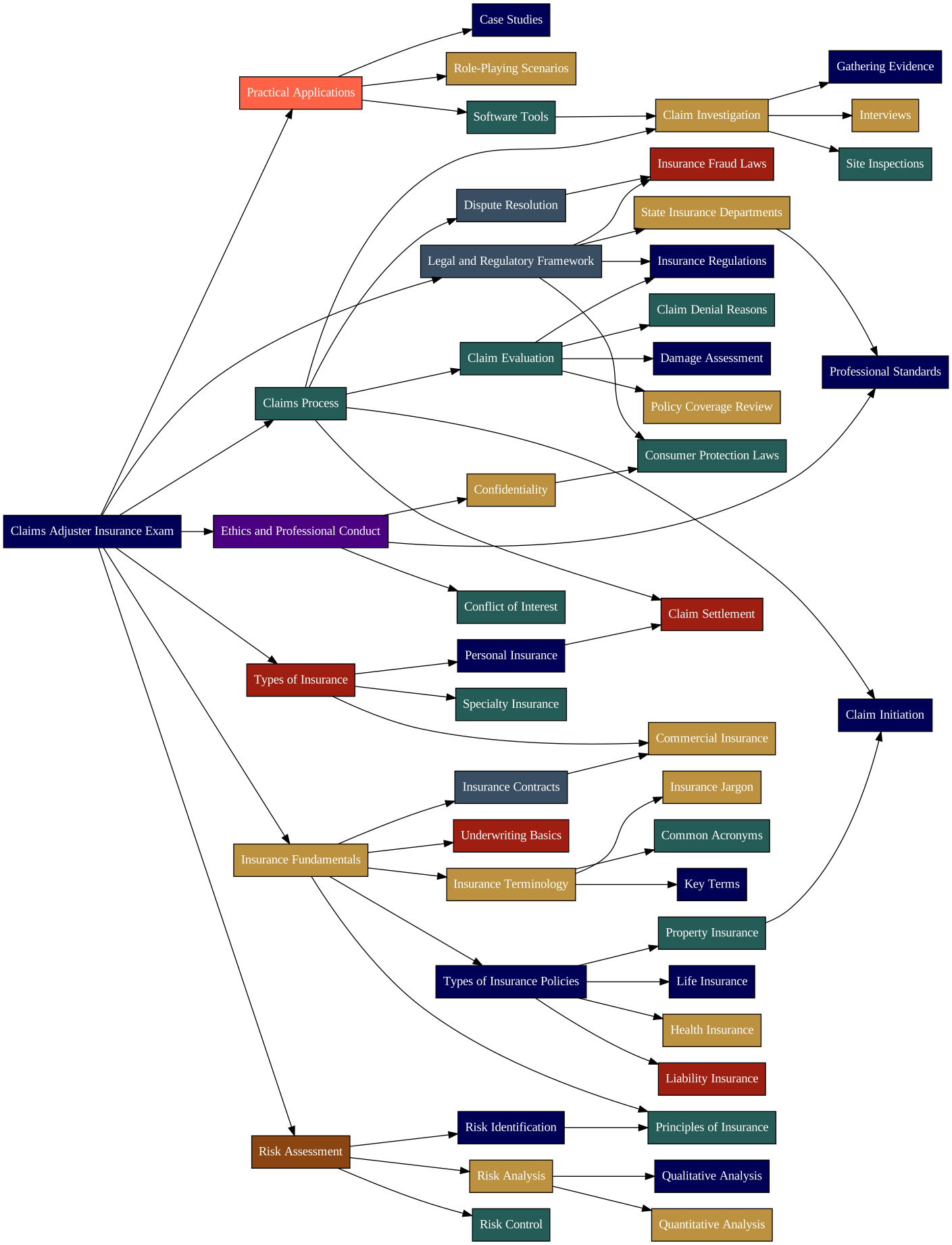
Quiz-summary
0 of 30 questions completed
Questions:
- 1
- 2
- 3
- 4
- 5
- 6
- 7
- 8
- 9
- 10
- 11
- 12
- 13
- 14
- 15
- 16
- 17
- 18
- 19
- 20
- 21
- 22
- 23
- 24
- 25
- 26
- 27
- 28
- 29
- 30
Information
Premium Practice Questions
You have already completed the quiz before. Hence you can not start it again.
Quiz is loading...
You must sign in or sign up to start the quiz.
You have to finish following quiz, to start this quiz:
Results
0 of 30 questions answered correctly
Your time:
Time has elapsed
You have reached 0 of 0 points, (0)
Categories
- Not categorized 0%
- 1
- 2
- 3
- 4
- 5
- 6
- 7
- 8
- 9
- 10
- 11
- 12
- 13
- 14
- 15
- 16
- 17
- 18
- 19
- 20
- 21
- 22
- 23
- 24
- 25
- 26
- 27
- 28
- 29
- 30
- Answered
- Review
-
Question 1 of 30
1. Question
When you are faced with the task of enhancing healthcare delivery in Florida, you might consider the various technologies that have emerged recently. How do these technologies specifically influence patient engagement and care coordination? Evaluate the roles of telemedicine, Electronic Health Records, and mobile health applications in reshaping the interactions between healthcare providers and patients. Additionally, think about the implications of these technologies on compliance with state regulations and the ethical considerations that must be taken into account. What overarching effects do these technological advancements have on the healthcare delivery system in Florida?
Correct
The impact of technology on health care delivery is profound, particularly in states like Florida where a rapidly evolving healthcare landscape necessitates innovation for improved patient outcomes. Technologies such as telemedicine, Electronic Health Records (EHRs), and mobile health applications have revolutionized how patients access and manage their health care. Telemedicine allows for remote consultations, increasing access for patients in rural or underserved areas, thereby eliminating traditional barriers to care. EHRs enhance the efficiency of record keeping and sharing, ensuring that patient data is readily available and can be securely exchanged among providers. This not only streamlines the clinical workflow but can also significantly reduce errors associated with paper records. Furthermore, mobile health applications empower patients to monitor their health in real time and provide healthcare providers with valuable data that can inform treatments and interventions. As technology continues to advance, ethical considerations arise, including privacy issues and the need for adherence to regulatory requirements in handling patient data. The integration of technology must be balanced with maintaining the human touch in healthcare, emphasizing that while technology plays a crucial role, successful health care delivery ultimately relies on strong patient-provider relationships.
Incorrect
The impact of technology on health care delivery is profound, particularly in states like Florida where a rapidly evolving healthcare landscape necessitates innovation for improved patient outcomes. Technologies such as telemedicine, Electronic Health Records (EHRs), and mobile health applications have revolutionized how patients access and manage their health care. Telemedicine allows for remote consultations, increasing access for patients in rural or underserved areas, thereby eliminating traditional barriers to care. EHRs enhance the efficiency of record keeping and sharing, ensuring that patient data is readily available and can be securely exchanged among providers. This not only streamlines the clinical workflow but can also significantly reduce errors associated with paper records. Furthermore, mobile health applications empower patients to monitor their health in real time and provide healthcare providers with valuable data that can inform treatments and interventions. As technology continues to advance, ethical considerations arise, including privacy issues and the need for adherence to regulatory requirements in handling patient data. The integration of technology must be balanced with maintaining the human touch in healthcare, emphasizing that while technology plays a crucial role, successful health care delivery ultimately relies on strong patient-provider relationships.
-
Question 2 of 30
2. Question
During a consultation in Florida, you advise a client who is considering disability insurance. They are uncertain about the differences between policies, particularly regarding how “disability” is defined and the implications of elimination periods. Your client is worried about becoming unable to perform their job due to a serious illness and wants to know how these factors might affect their coverage and benefits. What should you explain to them regarding the potential differences in disability definitions and elimination periods in disability insurance?
Correct
Disability insurance is designed to replace a portion of income for policyholders who cannot work due to a medical condition or injury. In Florida, this type of insurance is crucial as it helps individuals maintain their financial stability during challenging times. One key factor to consider is the definition of “disability,” which can vary between policies. Some policies may use a strict definition, requiring the insured to be unable to perform their specific occupation, while others may adopt a more liberal definition, covering any occupation that the insured is qualified to perform. Understanding these distinctions is essential when evaluating policy options. Additionally, the elimination period, which is the time between the onset of the disability and when benefits begin, can significantly impact the policy’s effectiveness. Those looking to purchase disability insurance in Florida should also be aware of state regulations governing such policies, including required disclosures and consumer protections. The nuances surrounding these factors can affect a policyholder’s experience and outcomes. Discussing these elements with clients is vital for ensuring they select a policy that meets their unique needs.
Incorrect
Disability insurance is designed to replace a portion of income for policyholders who cannot work due to a medical condition or injury. In Florida, this type of insurance is crucial as it helps individuals maintain their financial stability during challenging times. One key factor to consider is the definition of “disability,” which can vary between policies. Some policies may use a strict definition, requiring the insured to be unable to perform their specific occupation, while others may adopt a more liberal definition, covering any occupation that the insured is qualified to perform. Understanding these distinctions is essential when evaluating policy options. Additionally, the elimination period, which is the time between the onset of the disability and when benefits begin, can significantly impact the policy’s effectiveness. Those looking to purchase disability insurance in Florida should also be aware of state regulations governing such policies, including required disclosures and consumer protections. The nuances surrounding these factors can affect a policyholder’s experience and outcomes. Discussing these elements with clients is vital for ensuring they select a policy that meets their unique needs.
-
Question 3 of 30
3. Question
In the context of the Florida insurance market, how critical is it for agents to understand market cycles and economic indicators when advising clients on life and health insurance products? Consider the implications of economic downturns versus periods of growth and how these conditions can influence client decisions regarding insurance coverage. This understanding not only helps in tailoring advice but also ensures that agents can navigate their clients through varying financial landscapes. Hence, which aspect of economic indicators should an agent prioritize to provide comprehensive guidance?
Correct
Understanding market cycles and economic indicators is crucial for those involved in the Florida life and health insurance market. Market cycles reflect the fluctuations in economic activity that can affect insurance premiums, claims, and the overall financial stability of insurance companies. Economic indicators, such as unemployment rates, inflation, and consumer confidence, provide insights into the economic environment that can impact the insurance sector. For instance, during an economic downturn, customers may opt for fewer insurance products or lower coverage amounts due to financial constraints. This scenario could lead to a decrease in premiums collected by insurance companies. Conversely, during economic growth, increased disposable income might result in higher demand for insurance products. In Florida, understanding these dynamics is essential for agents and insurers to tailor their products effectively. Moreover, recognizing the correlation between market trends and consumer behavior allows for better strategic planning, ensuring that insurance companies remain competitive and solvent across various economic conditions. Thus, knowledge of market cycles and economic indicators is foundational for effective risk management and marketing strategies in the insurance industry.
Incorrect
Understanding market cycles and economic indicators is crucial for those involved in the Florida life and health insurance market. Market cycles reflect the fluctuations in economic activity that can affect insurance premiums, claims, and the overall financial stability of insurance companies. Economic indicators, such as unemployment rates, inflation, and consumer confidence, provide insights into the economic environment that can impact the insurance sector. For instance, during an economic downturn, customers may opt for fewer insurance products or lower coverage amounts due to financial constraints. This scenario could lead to a decrease in premiums collected by insurance companies. Conversely, during economic growth, increased disposable income might result in higher demand for insurance products. In Florida, understanding these dynamics is essential for agents and insurers to tailor their products effectively. Moreover, recognizing the correlation between market trends and consumer behavior allows for better strategic planning, ensuring that insurance companies remain competitive and solvent across various economic conditions. Thus, knowledge of market cycles and economic indicators is foundational for effective risk management and marketing strategies in the insurance industry.
-
Question 4 of 30
4. Question
You are reviewing a long-term care insurance policy for a client in Florida who is concerned about how their benefits will be activated should they require care. The client wishes to understand how the terms of benefit triggers work within their policy. Which of the following statements best describes a significant aspect regarding how benefit triggers function in this context?
Correct
Long-term care insurance (LTCI) is designed to cover extended caregiving services, which are essential as individuals age and may face challenges with daily activities. In Florida, policyholders must understand the specific features that differentiate LTCI from standard health insurance policies. One of the critical aspects to consider is the benefit triggers specified in the policy. Typically, a long-term care insurance policy may activate benefits based on an individual’s need for assistance with activities of daily living (ADLs), such as bathing, dressing, eating, or mobility. Alternatively, benefits may also be triggered by cognitive impairments, including conditions like Alzheimer’s disease. In Florida, insurers are mandated to provide clear definitions of these triggers within the policy documents so that consumers can make informed choices. Understanding the relationship between these triggers and the qualification for benefits is crucial, as it directly impacts access to covered services and the overall effectiveness of the insurance coverage. Additionally, Florida regulations require that insurers clearly disclose any exclusions, waiting periods, and the process to access benefits, ensuring consumers have a solid grasp on the terms they are agreeing to before purchasing a policy.
Incorrect
Long-term care insurance (LTCI) is designed to cover extended caregiving services, which are essential as individuals age and may face challenges with daily activities. In Florida, policyholders must understand the specific features that differentiate LTCI from standard health insurance policies. One of the critical aspects to consider is the benefit triggers specified in the policy. Typically, a long-term care insurance policy may activate benefits based on an individual’s need for assistance with activities of daily living (ADLs), such as bathing, dressing, eating, or mobility. Alternatively, benefits may also be triggered by cognitive impairments, including conditions like Alzheimer’s disease. In Florida, insurers are mandated to provide clear definitions of these triggers within the policy documents so that consumers can make informed choices. Understanding the relationship between these triggers and the qualification for benefits is crucial, as it directly impacts access to covered services and the overall effectiveness of the insurance coverage. Additionally, Florida regulations require that insurers clearly disclose any exclusions, waiting periods, and the process to access benefits, ensuring consumers have a solid grasp on the terms they are agreeing to before purchasing a policy.
-
Question 5 of 30
5. Question
When assessing a life insurance policy, particularly within the context of Florida law, it’s essential to recognize how various provisions impact both the policyholder and the selected beneficiaries. These provisions may include details about how the cash value accumulates, the implications of taking loans against this value, and how beneficiaries can be designated or modified. Consider a scenario where a policyholder opts to include an accidental death rider, allowing for an increased payout if the insured dies due to an accident. This situation raises several considerations, such as the potential financial implications for the beneficiaries and how the existence of such riders might influence the overall policy costs. With this understanding, how would you best describe the role of the cash value in relation to these policy options and the beneficiaries’ rights in navigating potential loans against this value?
Correct
In Florida, life insurance policies commonly include provisions regarding beneficiaries, riders, cash value, and loans, each of which plays a crucial role in determining the policy’s usability and benefits. Beneficiaries are the individuals or entities entitled to the death benefit upon the insured’s passing, and policyholders can designate primary and contingent beneficiaries. Additionally, riders are supplemental benefits that can be attached to a policy, providing additional coverage for events such as terminal illness or accidental death. Cash value is an intrinsic feature of whole life policies, where a portion of the premium goes towards building a savings component over time, which can be borrowed against. Loans against the cash value can help policyholders meet financial needs without surrendering their policies. Understanding how these elements work together allows agents and clients to tailor the life insurance policy according to specific needs and long-term plans, in alignment with Florida statutes and regulations that govern insurance contracts. This comprehensive approach promotes informed decision-making in policy selection and management.
Incorrect
In Florida, life insurance policies commonly include provisions regarding beneficiaries, riders, cash value, and loans, each of which plays a crucial role in determining the policy’s usability and benefits. Beneficiaries are the individuals or entities entitled to the death benefit upon the insured’s passing, and policyholders can designate primary and contingent beneficiaries. Additionally, riders are supplemental benefits that can be attached to a policy, providing additional coverage for events such as terminal illness or accidental death. Cash value is an intrinsic feature of whole life policies, where a portion of the premium goes towards building a savings component over time, which can be borrowed against. Loans against the cash value can help policyholders meet financial needs without surrendering their policies. Understanding how these elements work together allows agents and clients to tailor the life insurance policy according to specific needs and long-term plans, in alignment with Florida statutes and regulations that govern insurance contracts. This comprehensive approach promotes informed decision-making in policy selection and management.
-
Question 6 of 30
6. Question
In the context of Florida estate planning, imagine an individual named Sarah who is concerned about how her assets will be handled in the event of her death or incapacitation. She wants to ensure that her wishes are carried out without undue delay and with minimal expense. After researching her options, she is contemplating the roles of wills, trusts, and powers of attorney in her estate plan. Which of the following would most effectively allow her to manage her assets during her lifetime and facilitate their transfer after death without the need for probate?
Correct
Estate planning is a critical aspect of financial management that involves preparing for the transfer of an individual’s assets after death. In Florida, a comprehensive estate plan typically includes wills, trusts, and powers of attorney, each serving distinct yet complementary purposes. A will outlines how a person’s assets should be distributed after their passing and permits the appointment of guardians for minors. However, wills must go through probate, which can be time-consuming and costly. Trusts, on the other hand, allow for the management of assets during a person’s lifetime and can facilitate a smoother transfer of assets upon death without the need for probate, thus enhancing privacy and potentially reducing costs. Additionally, a power of attorney is a legal document that enables an individual to designate another person to make decisions on their behalf if they become incapacitated. This can include financial decisions or healthcare directives. Understanding the differences and appropriate applications of these estate planning tools is essential for effectively managing and protecting one’s assets in Florida.
Incorrect
Estate planning is a critical aspect of financial management that involves preparing for the transfer of an individual’s assets after death. In Florida, a comprehensive estate plan typically includes wills, trusts, and powers of attorney, each serving distinct yet complementary purposes. A will outlines how a person’s assets should be distributed after their passing and permits the appointment of guardians for minors. However, wills must go through probate, which can be time-consuming and costly. Trusts, on the other hand, allow for the management of assets during a person’s lifetime and can facilitate a smoother transfer of assets upon death without the need for probate, thus enhancing privacy and potentially reducing costs. Additionally, a power of attorney is a legal document that enables an individual to designate another person to make decisions on their behalf if they become incapacitated. This can include financial decisions or healthcare directives. Understanding the differences and appropriate applications of these estate planning tools is essential for effectively managing and protecting one’s assets in Florida.
-
Question 7 of 30
7. Question
When you are faced with the challenge of integrating emerging technologies such as insurtech, blockchain, and artificial intelligence into the existing framework of insurance regulations in Florida, what is the most critical factor to consider to ensure compliance and consumer protection?
Correct
The rise of insurtech, blockchain, and artificial intelligence (AI) has transformed the landscape of the insurance industry, particularly in Florida. Insurtech refers to innovations that aim to improve efficiency and customer experience in insurance services. By leveraging technology, insurers can enhance underwriting processes, streamline claims management, and improve customer engagement. Blockchain technology offers transparency, security, and efficiency in transactions, which can significantly reduce fraud and minimize operational costs. AI facilitates data analysis and predictive modeling, allowing insurers to better assess risks and tailor products to individual client needs. However, with these advancements come significant regulatory challenges. The Florida Office of Insurance Regulation (OIR) must ensure that these technologies comply with existing laws, protecting consumers while encouraging innovation. Additionally, ethical considerations regarding data privacy and algorithm bias must be addressed. Understanding how these emerging trends interact with regulatory frameworks and ethical standards is crucial for insurance professionals to navigate this evolving landscape effectively.
Incorrect
The rise of insurtech, blockchain, and artificial intelligence (AI) has transformed the landscape of the insurance industry, particularly in Florida. Insurtech refers to innovations that aim to improve efficiency and customer experience in insurance services. By leveraging technology, insurers can enhance underwriting processes, streamline claims management, and improve customer engagement. Blockchain technology offers transparency, security, and efficiency in transactions, which can significantly reduce fraud and minimize operational costs. AI facilitates data analysis and predictive modeling, allowing insurers to better assess risks and tailor products to individual client needs. However, with these advancements come significant regulatory challenges. The Florida Office of Insurance Regulation (OIR) must ensure that these technologies comply with existing laws, protecting consumers while encouraging innovation. Additionally, ethical considerations regarding data privacy and algorithm bias must be addressed. Understanding how these emerging trends interact with regulatory frameworks and ethical standards is crucial for insurance professionals to navigate this evolving landscape effectively.
-
Question 8 of 30
8. Question
Consider a scenario where an insurance agent in Florida is assisting a client who seeks to apply for a health insurance plan. The client has a history of hypertension but has managed the condition effectively for years without any complications. As the agent prepares the application, they must decide how to approach the underwriting process. What considerations should the agent primarily focus on in terms of risk classification when submitting the application, particularly regarding medical versus non-medical underwriting factors?
Correct
The underwriting process is critical in determining the eligibility, terms, and premium rates for applicants seeking life and health insurance coverage. In Florida, as in many jurisdictions, underwriters employ a risk classification system that categorizes applicants into distinct groups based on their health status, lifestyle, occupation, and other risk factors. Medical underwriting involves a thorough assessment of an applicant’s medical history, current health conditions, and potentially even physical examinations or lab tests. This comprehensive evaluation allows underwriters to make informed decisions regarding the application and the associated risks. Non-medical underwriting, on the other hand, assesses risk based on factors that do not involve medical evaluations, such as the applicant’s age, occupation, and personal habits (e.g., smoking status). Understanding both types of underwriting is essential, as they contribute to the overall assessment of risk. Properly classifying risk is vital for ensuring the insurer can maintain profitability while offering fair premiums to applicants. Misclassification, whether too lenient or too strict, can lead to adverse selection, where higher-risk individuals may dominate the pool, significantly impacting the insurer’s financial stability.
Incorrect
The underwriting process is critical in determining the eligibility, terms, and premium rates for applicants seeking life and health insurance coverage. In Florida, as in many jurisdictions, underwriters employ a risk classification system that categorizes applicants into distinct groups based on their health status, lifestyle, occupation, and other risk factors. Medical underwriting involves a thorough assessment of an applicant’s medical history, current health conditions, and potentially even physical examinations or lab tests. This comprehensive evaluation allows underwriters to make informed decisions regarding the application and the associated risks. Non-medical underwriting, on the other hand, assesses risk based on factors that do not involve medical evaluations, such as the applicant’s age, occupation, and personal habits (e.g., smoking status). Understanding both types of underwriting is essential, as they contribute to the overall assessment of risk. Properly classifying risk is vital for ensuring the insurer can maintain profitability while offering fair premiums to applicants. Misclassification, whether too lenient or too strict, can lead to adverse selection, where higher-risk individuals may dominate the pool, significantly impacting the insurer’s financial stability.
-
Question 9 of 30
9. Question
In the context of Florida’s current demographic trends, how would you describe the importance of retirement planning for individuals approaching retirement age? Consider factors such as healthcare costs, inflation, and the integration of Social Security benefits. What are the potential consequences of inadequate retirement planning in a state where many residents rely heavily on retirement savings for their financial stability?
Correct
Retirement planning is a crucial component of financial security, especially in the context of Florida’s unique demographic and economic landscape. With a significant portion of the state’s population reaching retirement age, understanding the implications of retirement savings is essential. Proper retirement planning involves not just saving a specific amount but also anticipating future needs, considering factors such as healthcare costs, lifestyle changes, and inflation. The decisions made during the planning process directly impact the financial stability and quality of life during retirement. Furthermore, retirement plans need to align with legal regulations and tax implications specific to Florida. For example, understanding the differences between qualified and non-qualified retirement accounts can significantly influence tax liability in retirement years. Additionally, there’s a need for comprehensive knowledge about Social Security benefits and how they can be integrated into an overall retirement strategy. Failure to adequately plan can lead to diminished financial resources, affecting not just individuals but also their families and the broader economy. Thus, retirement planning is not merely a personal issue; it has broader implications for societal well-being, particularly in a state like Florida known for its large retiree population.
Incorrect
Retirement planning is a crucial component of financial security, especially in the context of Florida’s unique demographic and economic landscape. With a significant portion of the state’s population reaching retirement age, understanding the implications of retirement savings is essential. Proper retirement planning involves not just saving a specific amount but also anticipating future needs, considering factors such as healthcare costs, lifestyle changes, and inflation. The decisions made during the planning process directly impact the financial stability and quality of life during retirement. Furthermore, retirement plans need to align with legal regulations and tax implications specific to Florida. For example, understanding the differences between qualified and non-qualified retirement accounts can significantly influence tax liability in retirement years. Additionally, there’s a need for comprehensive knowledge about Social Security benefits and how they can be integrated into an overall retirement strategy. Failure to adequately plan can lead to diminished financial resources, affecting not just individuals but also their families and the broader economy. Thus, retirement planning is not merely a personal issue; it has broader implications for societal well-being, particularly in a state like Florida known for its large retiree population.
-
Question 10 of 30
10. Question
When you are faced with developing a cybersecurity policy for an insurance company in Florida, which essential component must be included to ensure compliance with state regulations? This policy is critical in protecting sensitive customer information and mitigating risks associated with data breaches. Consider the guidelines stipulated by the Florida Office of Insurance Regulation and the implications of failing to adhere to these standards. As part of your approach, you will need to address not only the technical aspects of data protection but also the training and compliance measures for employees. What is the most crucial aspect that must be incorporated into this policy to be compliant with Florida’s regulatory framework and safeguard clients’ personal data?
Correct
In Florida, the regulation of cybersecurity and data protection within the insurance industry is crucial to ensuring the confidentiality and integrity of personal information. Insurers must establish comprehensive data security programs that align with the Florida Insurance Code and relevant regulatory guidelines. The Florida Office of Insurance Regulation (OIR) requires insurers to perform risk assessments, implement appropriate safeguards to protect sensitive information, and ensure proper training for employees on data security protocols. These practices are essential to mitigate risks associated with data breaches and cyber threats. Furthermore, insurers are liable for any unauthorized access to sensitive consumer data and must notify affected individuals promptly. The effective use of encryption, regular monitoring of systems, and robust incident response plans are all vital aspects of a strong cybersecurity framework. The primary goal is to create a culture of security awareness, where all employees understand their roles in protecting data and are familiar with the regulatory requirements governing these practices.
Incorrect
In Florida, the regulation of cybersecurity and data protection within the insurance industry is crucial to ensuring the confidentiality and integrity of personal information. Insurers must establish comprehensive data security programs that align with the Florida Insurance Code and relevant regulatory guidelines. The Florida Office of Insurance Regulation (OIR) requires insurers to perform risk assessments, implement appropriate safeguards to protect sensitive information, and ensure proper training for employees on data security protocols. These practices are essential to mitigate risks associated with data breaches and cyber threats. Furthermore, insurers are liable for any unauthorized access to sensitive consumer data and must notify affected individuals promptly. The effective use of encryption, regular monitoring of systems, and robust incident response plans are all vital aspects of a strong cybersecurity framework. The primary goal is to create a culture of security awareness, where all employees understand their roles in protecting data and are familiar with the regulatory requirements governing these practices.
-
Question 11 of 30
11. Question
Consider a scenario where an insurance company in Florida is implementing new digital technologies to streamline its operations. This includes using advanced data analytics to better understand client risks and improve underwriting practices. As the company progresses, it becomes evident that while these innovations enhance efficiency and scalability, they also introduce significant regulatory implications. In this context, what is the primary benefit of utilizing technology in the insurance industry, particularly regarding regulatory compliance and consumer protection?
Correct
The integration of technology into the insurance industry has profoundly transformed the way insurance products are marketed, sold, and managed. Technological advancements such as data analytics, artificial intelligence (AI), and digital platforms have increased efficiency, reduced operational costs, and enhanced customer experiences. One significant impact of technology is the ability to leverage big data to assess risk more accurately. Insurers can now analyze vast amounts of information about individuals and businesses, allowing for more tailored policies that reflect the actual risk of insuring a particular client, rather than relying on broad demographic categories. Furthermore, technology has streamlined the claims process, enabling faster and more transparent resolution of claims through automated systems and real-time tracking. This transformation is not merely operational; it also raises important regulatory considerations. Florida law requires that insurance companies adhere to standards that ensure data privacy and security, as well as consumer protection against fraud. Insurers must navigate these regulatory frameworks while innovating, promoting a balance between technological advancement and compliance. Thus, understanding how technology influences both the industry’s efficiency and regulatory obligations is crucial for future insurance professionals.
Incorrect
The integration of technology into the insurance industry has profoundly transformed the way insurance products are marketed, sold, and managed. Technological advancements such as data analytics, artificial intelligence (AI), and digital platforms have increased efficiency, reduced operational costs, and enhanced customer experiences. One significant impact of technology is the ability to leverage big data to assess risk more accurately. Insurers can now analyze vast amounts of information about individuals and businesses, allowing for more tailored policies that reflect the actual risk of insuring a particular client, rather than relying on broad demographic categories. Furthermore, technology has streamlined the claims process, enabling faster and more transparent resolution of claims through automated systems and real-time tracking. This transformation is not merely operational; it also raises important regulatory considerations. Florida law requires that insurance companies adhere to standards that ensure data privacy and security, as well as consumer protection against fraud. Insurers must navigate these regulatory frameworks while innovating, promoting a balance between technological advancement and compliance. Thus, understanding how technology influences both the industry’s efficiency and regulatory obligations is crucial for future insurance professionals.
-
Question 12 of 30
12. Question
When you are faced with navigating the complexities of health care systems in Florida, what are the essential regulatory considerations that govern how health insurance is delivered and managed? In this context, you must consider the impact of both state regulations and federal laws like the ACA and HIPAA. Additionally, examine how managed care organizations operate within these frameworks and understand their responsibilities toward consumers. This knowledge is essential for insurance professionals who must remain compliant while ensuring that clients receive adequate care and coverage. How do these regulations collectively shape the landscape of health care insurance in Florida, particularly in terms of patient rights and insurer obligations?
Correct
In Florida, health care systems are primarily governed by state and federal regulations that outline how health insurance operates, including the roles and responsibilities of health care providers, insurers, and patients. Key components of these regulations include the regulatory frameworks surrounding managed care organizations, provider networks, and the Health Insurance Portability and Accountability Act (HIPAA), which secures patient information and outlines coverage standards. Understanding the dynamic relationship between these entities is crucial for insurance professionals. Additionally, the Affordable Care Act (ACA) has significantly influenced health care delivery and insurance in Florida, mandating essential health benefits, preventing discrimination based on pre-existing conditions, and expanding Medicaid eligibility in some states. Professionals must grasp how these laws interact with Florida’s own insurance regulations, particularly in terms of consumer protections and the obligations of insurers towards policyholders. A clear comprehension of these systems not only aids compliance but also enhances the quality of service provided to clients navigating their healthcare needs.
Incorrect
In Florida, health care systems are primarily governed by state and federal regulations that outline how health insurance operates, including the roles and responsibilities of health care providers, insurers, and patients. Key components of these regulations include the regulatory frameworks surrounding managed care organizations, provider networks, and the Health Insurance Portability and Accountability Act (HIPAA), which secures patient information and outlines coverage standards. Understanding the dynamic relationship between these entities is crucial for insurance professionals. Additionally, the Affordable Care Act (ACA) has significantly influenced health care delivery and insurance in Florida, mandating essential health benefits, preventing discrimination based on pre-existing conditions, and expanding Medicaid eligibility in some states. Professionals must grasp how these laws interact with Florida’s own insurance regulations, particularly in terms of consumer protections and the obligations of insurers towards policyholders. A clear comprehension of these systems not only aids compliance but also enhances the quality of service provided to clients navigating their healthcare needs.
-
Question 13 of 30
13. Question
Consider a scenario where a new resident in Florida is exploring different health care options for herself and her family. She is particularly interested in understanding the nuances between health maintenance organizations (HMOs) and preferred provider organizations (PPOs). The resident seeks to know what kind of care coordination and choice of providers she can expect from each type of plan. What is the primary difference between an HMO and a PPO that she should be aware of as she evaluates her options?
Correct
Understanding the intricacies of health care systems is crucial for individuals preparing for the Florida Life and Health Insurance Exam. In the context of managed care, the distinction between health maintenance organizations (HMOs) and preferred provider organizations (PPOs) is significant. HMOs typically emphasize preventive care and often require members to choose a primary care physician (PCP) who coordinates all health services. In contrast, PPOs offer more flexibility, allowing members to see any health care provider, but they must pay higher out-of-pocket costs for services rendered outside of the network. Both HMOs and PPOs operate through different models of financing and delivery of healthcare services, impacting patient access, care coordination, and overall healthcare costs. For students preparing for the exam, comprehension of these models, along with the regulatory environment in Florida, is essential for making informed decisions about insurance plans and understanding consumer rights in various health care settings.
Incorrect
Understanding the intricacies of health care systems is crucial for individuals preparing for the Florida Life and Health Insurance Exam. In the context of managed care, the distinction between health maintenance organizations (HMOs) and preferred provider organizations (PPOs) is significant. HMOs typically emphasize preventive care and often require members to choose a primary care physician (PCP) who coordinates all health services. In contrast, PPOs offer more flexibility, allowing members to see any health care provider, but they must pay higher out-of-pocket costs for services rendered outside of the network. Both HMOs and PPOs operate through different models of financing and delivery of healthcare services, impacting patient access, care coordination, and overall healthcare costs. For students preparing for the exam, comprehension of these models, along with the regulatory environment in Florida, is essential for making informed decisions about insurance plans and understanding consumer rights in various health care settings.
-
Question 14 of 30
14. Question
During a client meeting, the discussion shifts to the different provisions of their life insurance policy. The client expresses a desire to understand how making changes to beneficiaries would affect their policy. They have named a spouse as a primary beneficiary and their children as contingent beneficiaries. In this context, what is the most important factor regarding the naming and changing of beneficiaries in compliance with Florida regulations that the client should keep in mind, especially concerning the impact on cash value loans and policy riders?
Correct
In Florida, understanding the provisions and options associated with life insurance policies is crucial for both agents and clients. Beneficiaries are key elements in a life insurance policy; they are the individuals or entities entitled to receive the policy’s death benefit upon the insured’s passing. Life insurance policies may provide for multiple beneficiaries, allowing clients to designate primary and contingent beneficiaries. Riders are additional provisions that modify the base policy, offering enhancements like accelerated death benefits, which allow access to funds in case of terminal illness. Cash value accumulation is another critical aspect of permanent life insurance policies, where a portion of the premium payments builds a cash value that can be borrowed against during the policyholder’s lifetime. However, loans against the cash value will reduce the death benefit and may incur interest. It’s essential to understand that a policy’s loan provisions and cash value impact both the policyholder’s financial situation and the eventual payout to beneficiaries. Therefore, a comprehensive grasp of these elements ensures that agents can effectively guide clients in making informed insurance decisions.
Incorrect
In Florida, understanding the provisions and options associated with life insurance policies is crucial for both agents and clients. Beneficiaries are key elements in a life insurance policy; they are the individuals or entities entitled to receive the policy’s death benefit upon the insured’s passing. Life insurance policies may provide for multiple beneficiaries, allowing clients to designate primary and contingent beneficiaries. Riders are additional provisions that modify the base policy, offering enhancements like accelerated death benefits, which allow access to funds in case of terminal illness. Cash value accumulation is another critical aspect of permanent life insurance policies, where a portion of the premium payments builds a cash value that can be borrowed against during the policyholder’s lifetime. However, loans against the cash value will reduce the death benefit and may incur interest. It’s essential to understand that a policy’s loan provisions and cash value impact both the policyholder’s financial situation and the eventual payout to beneficiaries. Therefore, a comprehensive grasp of these elements ensures that agents can effectively guide clients in making informed insurance decisions.
-
Question 15 of 30
15. Question
In the context of providing financial advice as a licensed life and health insurance agent in Florida, how would you approach the conversation with a client who is uncertain about their investment options? Given their varying risk tolerance and potential investment strategies, what principles of investment fundamentals should you emphasize to assist them effectively? Ensure to consider how Florida regulations influence your guidance and the ethical implications of your recommendations in your response.
Correct
Understanding the role of investment fundamentals is crucial for individuals working within the Florida Life and Health Insurance environment. Investments represent a significant aspect of the financial planning process and are closely tied to the objectives of risk management and wealth accumulation over time. An investor’s risk tolerance, time horizon, and financial goals dictate the suitability of various investment vehicles, such as stocks, bonds, mutual funds, and annuities. Furthermore, Florida law mandates that insurance professionals must maintain a keen awareness of how investments operate to fulfill fiduciary responsibilities. Additionally, the implications of policyholder decisions influenced by market dynamics must be carefully navigated to avoid conflicts of interest. A comprehensive understanding of concepts such as diversification, asset allocation, and the risk-return trade-off ensures that insurance professionals can provide informed advice and recommendations. Therefore, possessing knowledge of how these investment principles apply to life and health insurance products is essential to maintaining compliance with regulatory requirements and upholding high ethical standards.
Incorrect
Understanding the role of investment fundamentals is crucial for individuals working within the Florida Life and Health Insurance environment. Investments represent a significant aspect of the financial planning process and are closely tied to the objectives of risk management and wealth accumulation over time. An investor’s risk tolerance, time horizon, and financial goals dictate the suitability of various investment vehicles, such as stocks, bonds, mutual funds, and annuities. Furthermore, Florida law mandates that insurance professionals must maintain a keen awareness of how investments operate to fulfill fiduciary responsibilities. Additionally, the implications of policyholder decisions influenced by market dynamics must be carefully navigated to avoid conflicts of interest. A comprehensive understanding of concepts such as diversification, asset allocation, and the risk-return trade-off ensures that insurance professionals can provide informed advice and recommendations. Therefore, possessing knowledge of how these investment principles apply to life and health insurance products is essential to maintaining compliance with regulatory requirements and upholding high ethical standards.
-
Question 16 of 30
16. Question
Consider a scenario where a client in Florida is evaluating different life insurance options to secure their family’s financial future. They are particularly interested in understanding the distinctions between whole life, term life, and universal life insurance. What type of life insurance policy provides lifelong coverage and includes an investment component that accumulates cash value over time, which the policyholder can borrow against or use as collateral while still retaining the death benefit feature?
Correct
In Florida, life insurance policies offer financial protection to beneficiaries in the event of the insured’s death. Whole life insurance is a permanent coverage type that remains in force as long as premiums are paid and includes a cash value component. This cash value accumulates over time and can be accessed or borrowed against during the policyholder’s lifetime. Conversely, term life insurance provides coverage for a specified period, typically ranging from 10 to 30 years, and does not build any cash value. It is generally more affordable than whole life insurance but merely serves as a safety net for the duration of the term. Additionally, universal life insurance blends features of whole life and term insurance, providing flexibility in premium payments and death benefits. Understanding these differences is critical for Florida insurance professionals, as they must align policy recommendations with clients’ specific needs, financial situations, and long-term goals while adhering to relevant regulations, including ensuring full disclosure of policy features and implications.
Incorrect
In Florida, life insurance policies offer financial protection to beneficiaries in the event of the insured’s death. Whole life insurance is a permanent coverage type that remains in force as long as premiums are paid and includes a cash value component. This cash value accumulates over time and can be accessed or borrowed against during the policyholder’s lifetime. Conversely, term life insurance provides coverage for a specified period, typically ranging from 10 to 30 years, and does not build any cash value. It is generally more affordable than whole life insurance but merely serves as a safety net for the duration of the term. Additionally, universal life insurance blends features of whole life and term insurance, providing flexibility in premium payments and death benefits. Understanding these differences is critical for Florida insurance professionals, as they must align policy recommendations with clients’ specific needs, financial situations, and long-term goals while adhering to relevant regulations, including ensuring full disclosure of policy features and implications.
-
Question 17 of 30
17. Question
When you are faced with developing a risk management strategy for retirees in Florida, what is the most effective approach to ensure their financial stability? Given the unique risks associated with retirement, such as health care costs, market volatility, and environmental considerations, it’s essential to incorporate various elements into the strategy. Understanding how insurance products, asset diversification, and regular planning adjustments fit into the overall strategy will be crucial for successful outcomes. What principles should guide your approach to effectively manage these potential risks while maintaining the retirees’ financial independence and security?
Correct
Risk management is a critical component of retirement planning, particularly when considering how unexpected events can impact financial stability during retirement years. In Florida, where retirees often face unique risks such as hurricanes and health-related issues, it’s essential to adopt a comprehensive approach to manage these risks effectively. A well-crafted retirement plan incorporates strategies to mitigate risks associated with market volatility, health care costs, and unforeseen emergencies. One of the most effective ways to ensure financial security is through the use of insurance products, such as long-term care insurance and annuities, which can provide a safety net against significant expenses that could derail a retirement plan. Moreover, diversification of investment portfolios is crucial, as it helps to lessen the impact of any single market downturn. It’s equally important to engage in regular reviews of retirement plans to make adjustments based on changing circumstances and risks. This ongoing process of assessment and adjustment is fundamental to successful risk management and provides retirees with greater peace of mind, ensuring that they can maintain their desired standard of living throughout their retirement years.
Incorrect
Risk management is a critical component of retirement planning, particularly when considering how unexpected events can impact financial stability during retirement years. In Florida, where retirees often face unique risks such as hurricanes and health-related issues, it’s essential to adopt a comprehensive approach to manage these risks effectively. A well-crafted retirement plan incorporates strategies to mitigate risks associated with market volatility, health care costs, and unforeseen emergencies. One of the most effective ways to ensure financial security is through the use of insurance products, such as long-term care insurance and annuities, which can provide a safety net against significant expenses that could derail a retirement plan. Moreover, diversification of investment portfolios is crucial, as it helps to lessen the impact of any single market downturn. It’s equally important to engage in regular reviews of retirement plans to make adjustments based on changing circumstances and risks. This ongoing process of assessment and adjustment is fundamental to successful risk management and provides retirees with greater peace of mind, ensuring that they can maintain their desired standard of living throughout their retirement years.
-
Question 18 of 30
18. Question
You are reviewing a case where a client has submitted a claim for a severe injury resulting from a car accident. Throughout the investigation, you discover that the client has a history of submitting questionable claims, and the details of this particular incident do not align with the evidence collected. In accordance with Florida’s laws and regulations regarding insurance fraud, what should be your most appropriate course of action to ensure compliance and uphold ethical standards in the insurance industry?
Correct
Insurance fraud poses significant risks to both individual policyholders and the overall insurance system. Specifically in Florida, it is crucial to recognize that fraud can manifest in various forms, including exaggerated claims, false statements, staged accidents, and the submission of non-existent medical records. Engaging in such fraudulent activities can lead to severe legal consequences, including fines and imprisonment. Additionally, insurance fraud undermines the integrity of the insurance industry, causing increased premiums and reduced trust among consumers. Florida has implemented strict regulations and laws to combat insurance fraud, which include mandatory reporting of suspicious activities by insurance companies and agents. The implications of ignoring these laws can include disciplinary action from regulatory bodies, loss of licensure, and eventual civil litigation. It is essential for insurance professionals in Florida to maintain high ethical standards and adhere to the legal guidelines set forth, which not only protects the interests of policyholders but also preserves the sustainability of the insurance practice in the state.
Incorrect
Insurance fraud poses significant risks to both individual policyholders and the overall insurance system. Specifically in Florida, it is crucial to recognize that fraud can manifest in various forms, including exaggerated claims, false statements, staged accidents, and the submission of non-existent medical records. Engaging in such fraudulent activities can lead to severe legal consequences, including fines and imprisonment. Additionally, insurance fraud undermines the integrity of the insurance industry, causing increased premiums and reduced trust among consumers. Florida has implemented strict regulations and laws to combat insurance fraud, which include mandatory reporting of suspicious activities by insurance companies and agents. The implications of ignoring these laws can include disciplinary action from regulatory bodies, loss of licensure, and eventual civil litigation. It is essential for insurance professionals in Florida to maintain high ethical standards and adhere to the legal guidelines set forth, which not only protects the interests of policyholders but also preserves the sustainability of the insurance practice in the state.
-
Question 19 of 30
19. Question
A stakeholder approaches you about the implications of emerging technology in the Florida insurance market. They express concerns about how insurtech, blockchain, and artificial intelligence could alter traditional insurance processes and regulatory compliance. In addressing their concerns, which key advantage should you emphasize regarding these technologies in relation to the Florida insurance landscape?
Correct
The emergence of insurtech, blockchain technology, and artificial intelligence (AI) has revolutionized the insurance industry, particularly in Florida where insurance regulations are dynamic and evolving. Insurtech refers to the use of technology innovations designed to enhance the efficiency of the insurance market. This includes the automation of underwriting processes, enhancing customer experiences through digital platforms, and leveraging data analytics for risk assessment and pricing. Blockchain, on the other hand, offers a decentralized and secure method of information sharing, which can address issues such as fraud, improve claims processing, and increase transparency in insurance contracts. Additionally, AI can analyze vast amounts of data to predict trends and support decision-making in both underwriting and claims management. Together, these technologies can improve operational efficiencies, reduce costs, and provide better service to policyholders. However, they also present new regulatory challenges and ethical considerations, particularly regarding data privacy and the need for compliance with existing laws in Florida. Understanding these trends not only equips insurance professionals to navigate the changing landscape effectively but also helps them anticipate future developments that could impact their practices.
Incorrect
The emergence of insurtech, blockchain technology, and artificial intelligence (AI) has revolutionized the insurance industry, particularly in Florida where insurance regulations are dynamic and evolving. Insurtech refers to the use of technology innovations designed to enhance the efficiency of the insurance market. This includes the automation of underwriting processes, enhancing customer experiences through digital platforms, and leveraging data analytics for risk assessment and pricing. Blockchain, on the other hand, offers a decentralized and secure method of information sharing, which can address issues such as fraud, improve claims processing, and increase transparency in insurance contracts. Additionally, AI can analyze vast amounts of data to predict trends and support decision-making in both underwriting and claims management. Together, these technologies can improve operational efficiencies, reduce costs, and provide better service to policyholders. However, they also present new regulatory challenges and ethical considerations, particularly regarding data privacy and the need for compliance with existing laws in Florida. Understanding these trends not only equips insurance professionals to navigate the changing landscape effectively but also helps them anticipate future developments that could impact their practices.
-
Question 20 of 30
20. Question
Consider a scenario where a Florida insurance agent is reviewing a life insurance policy for a client who has a history of health issues. The policy includes several exclusions related to pre-existing conditions. What is the primary purpose of conducting a thorough analysis of this policy before advising the client on their coverage options?
Correct
Policy analysis involves a thorough examination of the terms, conditions, and provisions of an insurance policy to ensure that it meets the needs of the policyholder while adhering to legal and regulatory requirements. In Florida, life and health insurance policies must comply with specific state laws that govern their content, including the Florida Insurance Code and the regulations established by the Florida Department of Financial Services. A significant aspect of policy analysis is understanding how exclusions, limitations, and provisions affect the policyholder’s coverage. For instance, a policy may have certain exclusions related to pre-existing conditions or specific events that could lead to a denial of claims. Additionally, policy wording must be clear and transparent to avoid misleading consumers about their coverage. Effective policy analysis is crucial for agents and brokers to provide their clients with sound advice and ensure that they select a policy that aligns with their health needs and financial goals. Understanding the nuances of these policies helps in mitigating future disputes regarding claims and ensures compliance with state-specific regulations.
Incorrect
Policy analysis involves a thorough examination of the terms, conditions, and provisions of an insurance policy to ensure that it meets the needs of the policyholder while adhering to legal and regulatory requirements. In Florida, life and health insurance policies must comply with specific state laws that govern their content, including the Florida Insurance Code and the regulations established by the Florida Department of Financial Services. A significant aspect of policy analysis is understanding how exclusions, limitations, and provisions affect the policyholder’s coverage. For instance, a policy may have certain exclusions related to pre-existing conditions or specific events that could lead to a denial of claims. Additionally, policy wording must be clear and transparent to avoid misleading consumers about their coverage. Effective policy analysis is crucial for agents and brokers to provide their clients with sound advice and ensure that they select a policy that aligns with their health needs and financial goals. Understanding the nuances of these policies helps in mitigating future disputes regarding claims and ensures compliance with state-specific regulations.
-
Question 21 of 30
21. Question
When analyzing the insurance needs of expatriates residing in Florida, what is the primary consideration that agents should focus on to ensure adequate coverage? This encompasses not only the health care services available in their host country but also the specific regulations that govern expatriate insurance in Florida. Given Florida’s diverse population and the potential for complex health care needs, it’s crucial to understand the different types of coverage that might be necessary. This includes evaluating the extent of local health care services, understanding the implications of international health care networks, as well as considering the legal requirements set forth by Florida’s insurance regulations. Additionally, expatriates may face issues related to emergency care access and continuity of treatment, which requires a thoughtful analysis of available plans. What should be the primary focus for agents in this scenario?
Correct
Understanding the insurance needs of expatriates is crucial, especially in a state like Florida, which hosts a vibrant international community. Expatriates often have unique needs compared to local residents, particularly in terms of health care access and types of insurance coverage required. When faced with relocating to a new country, expats may require coverage that includes both local health care facilities and international providers, which necessitates a comprehensive understanding of their insurance options. Furthermore, they could be exposed to different legal and health care systems, making it essential for them to secure policies that account for potential gaps in coverage. In Florida, regulations often dictate that insurers provide clear information regarding these options; therefore, it is imperative for agents to guide expatriates toward comprehensive plans that cover a broad range of potential health care services, including emergency care and routine services, thereby ensuring adequate protection against unforeseen medical expenses. Overall, the correct approach combines understanding both regulatory requirements and the specific needs of expatriates to help them choose the most suitable insurance products.
Incorrect
Understanding the insurance needs of expatriates is crucial, especially in a state like Florida, which hosts a vibrant international community. Expatriates often have unique needs compared to local residents, particularly in terms of health care access and types of insurance coverage required. When faced with relocating to a new country, expats may require coverage that includes both local health care facilities and international providers, which necessitates a comprehensive understanding of their insurance options. Furthermore, they could be exposed to different legal and health care systems, making it essential for them to secure policies that account for potential gaps in coverage. In Florida, regulations often dictate that insurers provide clear information regarding these options; therefore, it is imperative for agents to guide expatriates toward comprehensive plans that cover a broad range of potential health care services, including emergency care and routine services, thereby ensuring adequate protection against unforeseen medical expenses. Overall, the correct approach combines understanding both regulatory requirements and the specific needs of expatriates to help them choose the most suitable insurance products.
-
Question 22 of 30
22. Question
You are reviewing the retirement planning strategy for a client based in Florida who is approaching retirement age. They currently have a mixture of traditional IRAs and a 401(k) plan through their employer. Your client is concerned about the potential tax implications and the adequacy of their investments to support their lifestyle after retirement. As you discuss their options, what is the most critical aspect they should consider to ensure a financially secure retirement in Florida?
Correct
Retirement planning is a crucial element of financial security that involves forecasting future income needs and strategizing to meet those needs. In Florida, as in most states, retirement plans can include individual retirement accounts (IRAs), 401(k) plans, and pensions among other vehicles. A key component of retirement planning is understanding the significance of tax implications and contribution limits associated with these plans. For instance, while traditional IRAs allow for pre-tax contributions, Roth IRAs involve after-tax contributions with tax-free withdrawals during retirement. Furthermore, knowing the minimum distribution rules and penalties for early withdrawals is essential for effective retirement planning. Additionally, Florida residents should be aware of the impact of inflation on retirement savings and consider strategies to mitigate this risk. Diversification of investment options plays a pivotal role in sustaining growth over the retirement phase. Ultimately, the goal of retirement planning is to ensure that individuals have adequate resources to maintain their lifestyle after they stop working, which requires a detailed understanding of personal finance principles and market conditions.
Incorrect
Retirement planning is a crucial element of financial security that involves forecasting future income needs and strategizing to meet those needs. In Florida, as in most states, retirement plans can include individual retirement accounts (IRAs), 401(k) plans, and pensions among other vehicles. A key component of retirement planning is understanding the significance of tax implications and contribution limits associated with these plans. For instance, while traditional IRAs allow for pre-tax contributions, Roth IRAs involve after-tax contributions with tax-free withdrawals during retirement. Furthermore, knowing the minimum distribution rules and penalties for early withdrawals is essential for effective retirement planning. Additionally, Florida residents should be aware of the impact of inflation on retirement savings and consider strategies to mitigate this risk. Diversification of investment options plays a pivotal role in sustaining growth over the retirement phase. Ultimately, the goal of retirement planning is to ensure that individuals have adequate resources to maintain their lifestyle after they stop working, which requires a detailed understanding of personal finance principles and market conditions.
-
Question 23 of 30
23. Question
In the context of Florida’s life and health insurance regulations, how do income replacement benefits typically calculate the amount payable to an insured individual or their beneficiaries? When you are faced with a client seeking to understand their potential benefits after a disabling event or loss of life, it’s crucial to evaluate various factors that contribute to the final benefit amount. For example, what role does the insured’s previous income play, and how do the duration of coverage and state-specific regulations shape the calculations?
Correct
Income replacement benefits in the context of life and health insurance are designed to provide financial support to families or dependents when the insured individual is unable to work due to illness or death. In Florida, the significance of understanding how these benefits are calculated is essential for both insurers and policyholders. The calculation often considers various factors, including previous income levels, the number of dependents, and specific state guidelines that govern these policies. A critical element in the calculation is the duration for which the benefits will be paid. For example, a policy that provides coverage for a set term will differ from one that provides lifetime benefits. Additionally, the tax implications and how previous income levels correlate with benefit amounts are crucial in assessing overall financial security. Insurance agents must stay informed about the state’s regulations regarding income replacement benefits to ensure compliance and to adequately explain options to clients. When guiding clients, agents should also consider the individual needs of the insured, including future income potential and any additional sources of income replacement they may have, such as disability insurance.
Incorrect
Income replacement benefits in the context of life and health insurance are designed to provide financial support to families or dependents when the insured individual is unable to work due to illness or death. In Florida, the significance of understanding how these benefits are calculated is essential for both insurers and policyholders. The calculation often considers various factors, including previous income levels, the number of dependents, and specific state guidelines that govern these policies. A critical element in the calculation is the duration for which the benefits will be paid. For example, a policy that provides coverage for a set term will differ from one that provides lifetime benefits. Additionally, the tax implications and how previous income levels correlate with benefit amounts are crucial in assessing overall financial security. Insurance agents must stay informed about the state’s regulations regarding income replacement benefits to ensure compliance and to adequately explain options to clients. When guiding clients, agents should also consider the individual needs of the insured, including future income potential and any additional sources of income replacement they may have, such as disability insurance.
-
Question 24 of 30
24. Question
When analyzing the consumer behavior of potential clients in Florida regarding life and health insurance, what primary factor should agents consider to effectively tailor their services and communication? It’s crucial to focus on the individual motivations and circumstances that drive people to seek insurance. Agents need to understand personal factors that include demographics such as age, health status, and financial condition, as these elements significantly influence insurance decisions. To maximize engagement and conversion rates, agents should also reflect on how social influences and community norms affect perceptions of insurance products. By gaining insights into what drives consumers, agents can create tailored marketing strategies that resonate with their target audience. Thus, comprehending these underlying factors not only enhances service delivery but also builds trust and rapport with clients, ultimately leading to better sales outcomes.
Correct
Understanding consumer behavior in the context of life and health insurance in Florida is crucial for agents and brokers. Consumer behavior refers to the decision-making process and actions of individuals when selecting insurance products. Several factors influence this behavior, including personal, social, and economic considerations. For instance, personal factors like age, health status, and financial situation play a significant role in shaping an individual’s insurance choices. Additionally, social influences such as family, friends, and cultural background can also affect preferences and perceptions regarding insurance coverage. Understanding these nuanced behaviors helps agents tailor their marketing strategies and communication effectively. It’s essential for agents to not only present the benefits of their products but also to engage with potential clients on a personal level. This could involve educating them about the importance of specific coverages or addressing misconceptions about insurance products. In Florida, where diverse populations reside, recognizing and adapting to varying consumer preferences and behaviors is essential for success in the insurance market.
Incorrect
Understanding consumer behavior in the context of life and health insurance in Florida is crucial for agents and brokers. Consumer behavior refers to the decision-making process and actions of individuals when selecting insurance products. Several factors influence this behavior, including personal, social, and economic considerations. For instance, personal factors like age, health status, and financial situation play a significant role in shaping an individual’s insurance choices. Additionally, social influences such as family, friends, and cultural background can also affect preferences and perceptions regarding insurance coverage. Understanding these nuanced behaviors helps agents tailor their marketing strategies and communication effectively. It’s essential for agents to not only present the benefits of their products but also to engage with potential clients on a personal level. This could involve educating them about the importance of specific coverages or addressing misconceptions about insurance products. In Florida, where diverse populations reside, recognizing and adapting to varying consumer preferences and behaviors is essential for success in the insurance market.
-
Question 25 of 30
25. Question
During a consultation with a client in Florida, they express a desire to understand the benefits and unique characteristics of group insurance plans compared to individual insurance options. You explain that one significant advantage of group policies is the way they facilitate coverage for individuals without necessitating personal medical assessments. However, they also want to know how costs are affected and what limitations may arise from these plans. As you summarize the critical aspects of group insurance, which feature would you highlight as one of its defining characteristics, especially in the context of risk distribution and affordability?
Correct
Group insurance plans are designed to cover a defined group of individuals, typically employees of a company or members of an organization. One of the primary characteristics of these plans is that they provide coverage without requiring individual medical underwriting for each participant, which is a significant differentiator from individual insurance plans. This collective approach helps in distributing the risk among a large population, thereby lowering costs and enhancing accessibility, as insurance eligibility is often guaranteed if an individual belongs to the group. Furthermore, group insurance coverage is usually less expensive compared to individual plans due to the economies of scale achieved by insuring a larger number of people at once. It’s important to note that while group plans can offer broader coverage options, they may also have limitations regarding the types of services covered and may not be as customizable as individual plans. Understanding these characteristics is crucial for individuals working in the Florida insurance industry, as it informs both clients and service providers about the advantages and potential drawbacks of group coverage.
Incorrect
Group insurance plans are designed to cover a defined group of individuals, typically employees of a company or members of an organization. One of the primary characteristics of these plans is that they provide coverage without requiring individual medical underwriting for each participant, which is a significant differentiator from individual insurance plans. This collective approach helps in distributing the risk among a large population, thereby lowering costs and enhancing accessibility, as insurance eligibility is often guaranteed if an individual belongs to the group. Furthermore, group insurance coverage is usually less expensive compared to individual plans due to the economies of scale achieved by insuring a larger number of people at once. It’s important to note that while group plans can offer broader coverage options, they may also have limitations regarding the types of services covered and may not be as customizable as individual plans. Understanding these characteristics is crucial for individuals working in the Florida insurance industry, as it informs both clients and service providers about the advantages and potential drawbacks of group coverage.
-
Question 26 of 30
26. Question
When you are faced with guiding a prospective client through the eligibility and enrollment process for a Florida health insurance plan, it is essential to assess various factors that could influence their approval. Consider a scenario where the client has a history of chronic conditions that may affect their health insurance options. In this context, what should be the primary focus when determining their eligibility? Understanding that this client may have unique needs, how do you ensure they receive the right information about their coverage options and address any concerns regarding underwriting?
Correct
Eligibility and enrollment processes for life and health insurance in Florida are governed by specific regulations that aim to protect consumers and ensure equitable access to insurance products. One key concept is the underwriting process, which evaluates an applicant’s eligibility based on various health, lifestyle, and demographic factors. Understanding eligibility also involves recognizing the implications of a consumer’s health history and the potential impact of pre-existing conditions. In Florida, insurers must comply with the Affordable Care Act, which prohibits discrimination based on health status, thus affecting how eligibility is determined. Additionally, applicants must be informed of their rights regarding enrollment periods, including open enrollment and special enrollment periods due to qualifying life events. These regulations are designed to promote transparency and fairness, ensuring applicants have a clear understanding of the criteria used to evaluate their eligibility. Therefore, a comprehensive understanding of both the technical aspects and the underlying legal framework is crucial for effectively navigating the enrollment process.
Incorrect
Eligibility and enrollment processes for life and health insurance in Florida are governed by specific regulations that aim to protect consumers and ensure equitable access to insurance products. One key concept is the underwriting process, which evaluates an applicant’s eligibility based on various health, lifestyle, and demographic factors. Understanding eligibility also involves recognizing the implications of a consumer’s health history and the potential impact of pre-existing conditions. In Florida, insurers must comply with the Affordable Care Act, which prohibits discrimination based on health status, thus affecting how eligibility is determined. Additionally, applicants must be informed of their rights regarding enrollment periods, including open enrollment and special enrollment periods due to qualifying life events. These regulations are designed to promote transparency and fairness, ensuring applicants have a clear understanding of the criteria used to evaluate their eligibility. Therefore, a comprehensive understanding of both the technical aspects and the underlying legal framework is crucial for effectively navigating the enrollment process.
-
Question 27 of 30
27. Question
Consider a scenario where an insurance agent in Florida is faced with a situation in which they have a financial interest in a specific life insurance policy that they are recommending to a client. The agent realizes that while this policy offers certain benefits, there are other options available that may better serve the client’s needs but do not provide the agent with a financial incentive. According to Florida law, what actions must the agent take to ensure compliance with the Code of Ethics and avoid the appearance of impropriety?
Correct
In the context of the Florida Life and Health Insurance Exam, understanding conflicts of interest and the requirements for disclosure is crucial for maintaining ethical standards within the industry. A conflict of interest arises when an insurance agent or broker has a personal interest that could improperly influence their professional judgment or actions. Florida law mandates that agents must disclose any potential conflicts of interest to clients to ensure transparency and maintain trust. This includes situations where an agent stands to gain financially from recommending certain policies or products over others. The Florida Statutes, specifically under the Insurance Code, outline the legal implications and responsibilities for agents regarding disclosure. This requirement serves to protect consumers from misleading practices and ensures that the agent’s primary duty is to serve the best interests of their clients. Failing to disclose conflicts of interest can lead to disciplinary action by the State, which may include fines, license suspension, or revocation. Thus, a thorough understanding of these principles is essential for compliance and ethical conduct within the industry.
Incorrect
In the context of the Florida Life and Health Insurance Exam, understanding conflicts of interest and the requirements for disclosure is crucial for maintaining ethical standards within the industry. A conflict of interest arises when an insurance agent or broker has a personal interest that could improperly influence their professional judgment or actions. Florida law mandates that agents must disclose any potential conflicts of interest to clients to ensure transparency and maintain trust. This includes situations where an agent stands to gain financially from recommending certain policies or products over others. The Florida Statutes, specifically under the Insurance Code, outline the legal implications and responsibilities for agents regarding disclosure. This requirement serves to protect consumers from misleading practices and ensures that the agent’s primary duty is to serve the best interests of their clients. Failing to disclose conflicts of interest can lead to disciplinary action by the State, which may include fines, license suspension, or revocation. Thus, a thorough understanding of these principles is essential for compliance and ethical conduct within the industry.
-
Question 28 of 30
28. Question
Consider a scenario where an individual in Florida has purchased an insurance policy that covers damages due to theft. After a burglary, they file a claim for the stolen items. What principle of insurance fundamentally governs the payout of their claim, ensuring that they are compensated for their loss but preventing them from gaining more than they lost? This principle is essential to ensure fairness in the insurance market and is a key concept that students must understand when preparing for the Florida Life and Health Insurance Exam.
Correct
Understanding the fundamental principles of insurance is crucial for anyone preparing to take the Florida Life and Health Insurance Exam. Insurance fundamentals cover a range of topics, including risk management, the nature of insurable risks, types of insurance contracts, and the basic terminologies associated with insurance policies. One of the primary concepts in insurance is the principle of indemnity, which states that the purpose of insurance is to restore the insured to the financial position they were in before a loss occurred, without allowing them to profit from the insurance coverage. This principle ensures that insured individuals receive compensation only for their actual losses and not more, which could encourage dishonest behavior. Additionally, understanding the difference between various types of insurance contracts, such as whole life, term life, and health insurance, is fundamental. Each type produces unique benefits, risks, and terms that policyholders must comprehend to make informed decisions. Thus, grasping the overarching principles of insurance helps individuals to not only pass the exam but also to practice ethically and effectively within the insurance industry.
Incorrect
Understanding the fundamental principles of insurance is crucial for anyone preparing to take the Florida Life and Health Insurance Exam. Insurance fundamentals cover a range of topics, including risk management, the nature of insurable risks, types of insurance contracts, and the basic terminologies associated with insurance policies. One of the primary concepts in insurance is the principle of indemnity, which states that the purpose of insurance is to restore the insured to the financial position they were in before a loss occurred, without allowing them to profit from the insurance coverage. This principle ensures that insured individuals receive compensation only for their actual losses and not more, which could encourage dishonest behavior. Additionally, understanding the difference between various types of insurance contracts, such as whole life, term life, and health insurance, is fundamental. Each type produces unique benefits, risks, and terms that policyholders must comprehend to make informed decisions. Thus, grasping the overarching principles of insurance helps individuals to not only pass the exam but also to practice ethically and effectively within the insurance industry.
-
Question 29 of 30
29. Question
During a review of your agency’s policies in Florida, you discover that there is a lack of clarity in how client information is handled, especially concerning the sharing of private health data. What is the most appropriate course of action to ensure compliance with state regulations regarding the confidentiality of client information? Consider the potential legal and ethical implications of your decision, as well as the importance of maintaining trust with your clients.
Correct
In Florida, confidentiality and the protection of client information are of paramount importance in the life and health insurance industries. This obligation is mandated by both state laws and ethical guidelines established by professional regulatory bodies. The primary aim of these regulations is to protect sensitive client information from unauthorized disclosure, ensuring that insurance professionals handle personal data with discretion and integrity. Specifically, the Florida Insurance Code emphasizes that insurance agents and companies must secure written consent before disclosing any personal health information related to a client. This is crucial not only for compliance with state law but also for maintaining trust and safeguarding the client’s privacy. Moreover, failure to adhere to confidentiality regulations can lead to severe consequences, including disciplinary action from regulatory authorities, civil lawsuits, and potential damage to the agency’s reputation. As such, insurance professionals must be well-versed in the nuances of privacy laws, including the Health Insurance Portability and Accountability Act (HIPAA), which sets federal standards for the privacy of health information. Understanding these regulatory frameworks is essential for effective risk management and ethical practice in the field.
Incorrect
In Florida, confidentiality and the protection of client information are of paramount importance in the life and health insurance industries. This obligation is mandated by both state laws and ethical guidelines established by professional regulatory bodies. The primary aim of these regulations is to protect sensitive client information from unauthorized disclosure, ensuring that insurance professionals handle personal data with discretion and integrity. Specifically, the Florida Insurance Code emphasizes that insurance agents and companies must secure written consent before disclosing any personal health information related to a client. This is crucial not only for compliance with state law but also for maintaining trust and safeguarding the client’s privacy. Moreover, failure to adhere to confidentiality regulations can lead to severe consequences, including disciplinary action from regulatory authorities, civil lawsuits, and potential damage to the agency’s reputation. As such, insurance professionals must be well-versed in the nuances of privacy laws, including the Health Insurance Portability and Accountability Act (HIPAA), which sets federal standards for the privacy of health information. Understanding these regulatory frameworks is essential for effective risk management and ethical practice in the field.
-
Question 30 of 30
30. Question
During a review of a new insurance policy for a Florida-based client, you discover that they are risk-averse and seek to minimize their exposure to potential financial losses. Given their preferences and the different strategies available for managing risk, which strategy would be most suitable for them if they wish to completely eliminate any potential risks associated with their insurance needs? Consider the implications of the various strategies, such as risk avoidance, risk reduction, risk transfer, and risk retention, in relation to the client’s specific requirements.
Correct
Risk management in the context of insurance involves various strategies that organizations and individuals can adopt to handle potential financial losses. In Florida, as well as other jurisdictions, understanding these strategies is crucial for effective decision-making in life and health insurance. Risk avoidance means eliminating the risk entirely, such as choosing not to participate in certain activities. For instance, a business might decide not to offer a product that has a high likelihood of causing liability claims. Risk reduction involves implementing measures to decrease the likelihood or impact of a risk, such as implementing stringent safety protocols in a workplace. Transferring risk typically involves purchasing insurance to shift the financial burden of a risk to an insurer. Lastly, risk retention accepts the risk and plans for potential loss, often suited for smaller risks where the cost of insurance may be disproportionate to the potential loss. Each of these strategies serves a distinct purpose, and understanding how they apply in different situations, especially in the insurance landscape of Florida, is essential for effective risk management.
Incorrect
Risk management in the context of insurance involves various strategies that organizations and individuals can adopt to handle potential financial losses. In Florida, as well as other jurisdictions, understanding these strategies is crucial for effective decision-making in life and health insurance. Risk avoidance means eliminating the risk entirely, such as choosing not to participate in certain activities. For instance, a business might decide not to offer a product that has a high likelihood of causing liability claims. Risk reduction involves implementing measures to decrease the likelihood or impact of a risk, such as implementing stringent safety protocols in a workplace. Transferring risk typically involves purchasing insurance to shift the financial burden of a risk to an insurer. Lastly, risk retention accepts the risk and plans for potential loss, often suited for smaller risks where the cost of insurance may be disproportionate to the potential loss. Each of these strategies serves a distinct purpose, and understanding how they apply in different situations, especially in the insurance landscape of Florida, is essential for effective risk management.