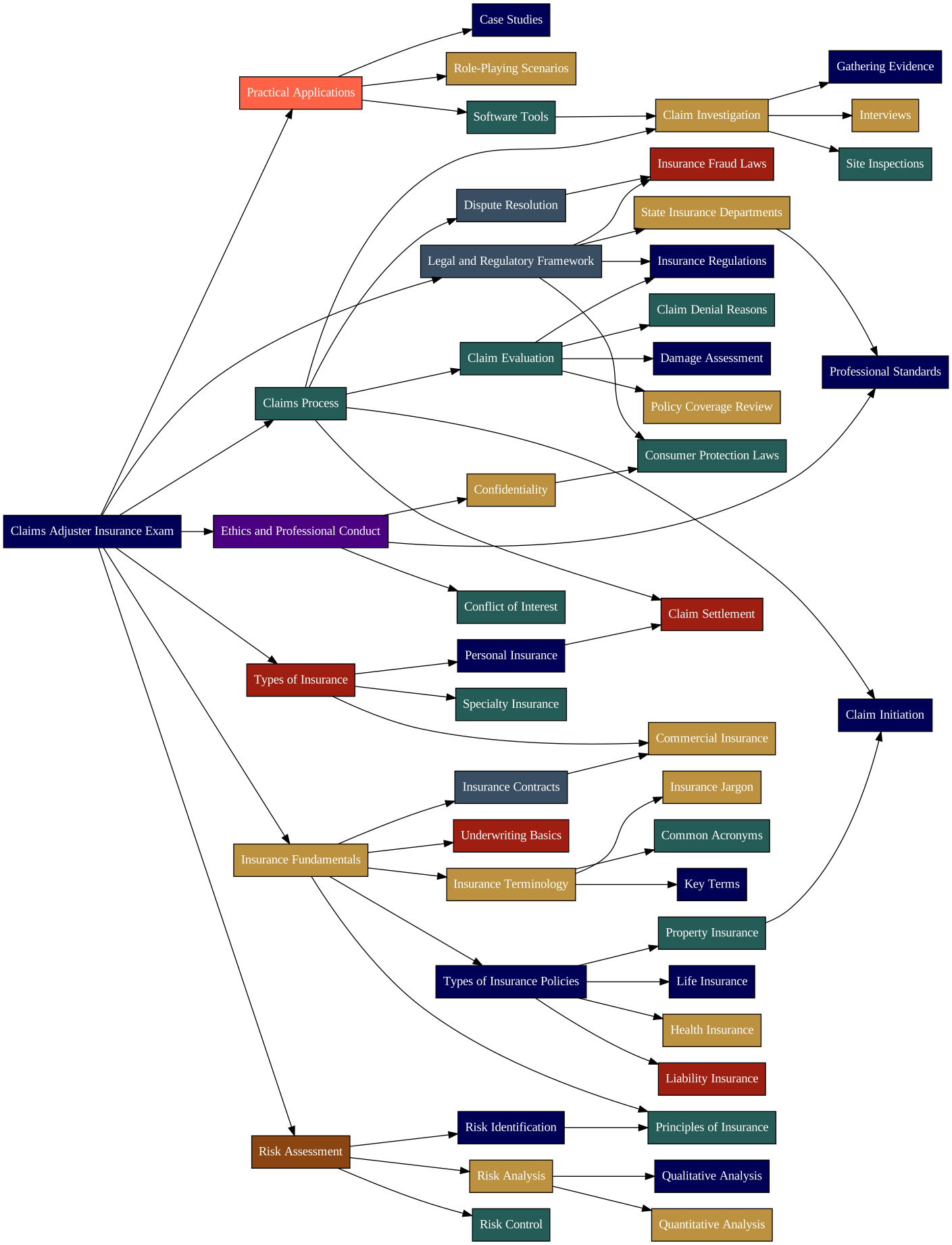
Quiz-summary
0 of 30 questions completed
Questions:
- 1
- 2
- 3
- 4
- 5
- 6
- 7
- 8
- 9
- 10
- 11
- 12
- 13
- 14
- 15
- 16
- 17
- 18
- 19
- 20
- 21
- 22
- 23
- 24
- 25
- 26
- 27
- 28
- 29
- 30
Information
Premium Practice Questions
You have already completed the quiz before. Hence you can not start it again.
Quiz is loading...
You must sign in or sign up to start the quiz.
You have to finish following quiz, to start this quiz:
Results
0 of 30 questions answered correctly
Your time:
Time has elapsed
You have reached 0 of 0 points, (0)
Categories
- Not categorized 0%
- 1
- 2
- 3
- 4
- 5
- 6
- 7
- 8
- 9
- 10
- 11
- 12
- 13
- 14
- 15
- 16
- 17
- 18
- 19
- 20
- 21
- 22
- 23
- 24
- 25
- 26
- 27
- 28
- 29
- 30
- Answered
- Review
-
Question 1 of 30
1. Question
In a scenario where you are part of a claims adjustment team in Hawaii, a disagreement arises among team members regarding the interpretation of a policy clause that impacts a significant claim. To resolve the conflict and ensure efficient handling of the claim, what strategy should you implement to improve team collaboration and communication? Consider factors such as the importance of clear communication, the ethical guidelines applicable to claims adjusters in Hawaii, and the potential impact on the claimant’s experience.
Correct
Effective team collaboration and communication are crucial elements for a claims adjuster in Hawaii, as the nature of the role often requires working with various stakeholders, including policyholders, agents, and legal representatives. A claims adjuster must not only assess damages or losses but also ensure that clear communication lines are maintained throughout the claims process. This involves sharing relevant information promptly, being transparent about the status of claims, and demonstrating empathy and understanding toward claimants. Furthermore, Hawaii’s regulatory framework emphasizes the necessity of ethical communication practices to uphold the integrity of the insurance process. The Hawaii Revised Statutes and the related administrative rules outline that claims adjusters must act in good faith and provide fair treatment to all parties involved. Miscommunication can lead to misunderstandings, delays, or even litigation, which underpins the importance of a collaborative approach within teams. By fostering an environment where open dialogue is encouraged, claims adjusters can navigate complex cases more effectively, ensuring that all aspects of a claim are addressed thoroughly and accurately.
Incorrect
Effective team collaboration and communication are crucial elements for a claims adjuster in Hawaii, as the nature of the role often requires working with various stakeholders, including policyholders, agents, and legal representatives. A claims adjuster must not only assess damages or losses but also ensure that clear communication lines are maintained throughout the claims process. This involves sharing relevant information promptly, being transparent about the status of claims, and demonstrating empathy and understanding toward claimants. Furthermore, Hawaii’s regulatory framework emphasizes the necessity of ethical communication practices to uphold the integrity of the insurance process. The Hawaii Revised Statutes and the related administrative rules outline that claims adjusters must act in good faith and provide fair treatment to all parties involved. Miscommunication can lead to misunderstandings, delays, or even litigation, which underpins the importance of a collaborative approach within teams. By fostering an environment where open dialogue is encouraged, claims adjusters can navigate complex cases more effectively, ensuring that all aspects of a claim are addressed thoroughly and accurately.
-
Question 2 of 30
2. Question
During a claims review process in Hawaii, you encounter a policyholder who is frustrated about the denial of their claim for flood damage. In this scenario, how should you best approach the situation to ensure effective communication and resolution? Your goal is to demonstrate active listening, promote understanding, and potentially alleviate the policyholder’s concerns. How can you structure the conversation to achieve these objectives while adhering to ethical standards and regulations in the insurance industry?
Correct
Effective communication skills are crucial for claims adjusters, especially in the areas of active listening, persuasion, and conflict resolution. In the context of Hawaii’s insurance framework, an adjuster’s ability to actively listen to policyholders can significantly influence the claims process. Active listening involves fully concentrating, understanding, responding, and remembering what the other person is saying. This skill not only helps in gathering accurate information but also ensures that the policyholder feels heard and understood, which can prevent unnecessary conflicts. Additionally, persuasion is key when adjusters need to explain the rationale behind certain decisions to stakeholders. For example, an adjuster may need to clarify why a particular claim was denied or why coverage is limited under specific circumstances outlined in the policy. Clear communication fosters trust and transparency, essential in any insurance interaction. Furthermore, conflict resolution techniques should be employed when disagreements arise. A successful claims adjuster must identify the underlying issues causing the conflict, address emotional responses, and facilitate a discussion that allows both parties to express their perspectives, ultimately guiding them to a mutually acceptable solution.
Incorrect
Effective communication skills are crucial for claims adjusters, especially in the areas of active listening, persuasion, and conflict resolution. In the context of Hawaii’s insurance framework, an adjuster’s ability to actively listen to policyholders can significantly influence the claims process. Active listening involves fully concentrating, understanding, responding, and remembering what the other person is saying. This skill not only helps in gathering accurate information but also ensures that the policyholder feels heard and understood, which can prevent unnecessary conflicts. Additionally, persuasion is key when adjusters need to explain the rationale behind certain decisions to stakeholders. For example, an adjuster may need to clarify why a particular claim was denied or why coverage is limited under specific circumstances outlined in the policy. Clear communication fosters trust and transparency, essential in any insurance interaction. Furthermore, conflict resolution techniques should be employed when disagreements arise. A successful claims adjuster must identify the underlying issues causing the conflict, address emotional responses, and facilitate a discussion that allows both parties to express their perspectives, ultimately guiding them to a mutually acceptable solution.
-
Question 3 of 30
3. Question
Consider a scenario where a claims adjuster in Hawaii is negotiating a settlement with a homeowner whose property was damaged by a severe storm. The homeowner is adamant about receiving a higher payout than the initial assessment, believing the damages are more extensive than reported. Given the cultural context and the need for effective negotiation, what approach should the adjuster take to address the homeowner’s concerns while also adhering to best practices in claims management?
Correct
Effective negotiation skills are critical for claims adjusters, particularly in Hawaii, where unique cultural and environmental factors may play a role in disputes and settlements. A claims adjuster needs to establish a rapport with all parties involved, whether that is the policyholder, the insurer, or third parties. The focus should be on achieving a fair outcome by understanding the needs and expectations of each party. Using active listening techniques allows the adjuster to gather crucial information that can aid in crafting a persuasive argument. Additionally, problem-solving and creative thinking become essential when negotiating settlements, especially when dealing with policy interpretations or coverage limits. Trust and transparency are also key elements to successful negotiations; by fostering these qualities, an adjuster can encourage open dialogue. Furthermore, the claims adjuster should be well-versed in relevant Hawaii-specific laws and regulations regarding insurance claims to advocate effectively. Overall, negotiation is not merely about reaching an agreement; it is about crafting solutions that satisfy all stakeholders to create enduring relationships and minimize future conflicts.
Incorrect
Effective negotiation skills are critical for claims adjusters, particularly in Hawaii, where unique cultural and environmental factors may play a role in disputes and settlements. A claims adjuster needs to establish a rapport with all parties involved, whether that is the policyholder, the insurer, or third parties. The focus should be on achieving a fair outcome by understanding the needs and expectations of each party. Using active listening techniques allows the adjuster to gather crucial information that can aid in crafting a persuasive argument. Additionally, problem-solving and creative thinking become essential when negotiating settlements, especially when dealing with policy interpretations or coverage limits. Trust and transparency are also key elements to successful negotiations; by fostering these qualities, an adjuster can encourage open dialogue. Furthermore, the claims adjuster should be well-versed in relevant Hawaii-specific laws and regulations regarding insurance claims to advocate effectively. Overall, negotiation is not merely about reaching an agreement; it is about crafting solutions that satisfy all stakeholders to create enduring relationships and minimize future conflicts.
-
Question 4 of 30
4. Question
While working on a property damage claim in Hawaii, you encounter a situation where the homeowner has suffered significant damage to their property due to a natural disaster. The client believes that the initial estimate provided by the insurance company is inadequate and does not reflect the true extent of the damages. As a claims adjuster, how would you approach the estimation of damages to ensure that it meets state regulations and ethical standards? Consider the various factors involved in accurately assessing property, bodily injury, and potential economic losses that may have arisen from this event.
Correct
Estimating damages in an insurance context involves evaluating the actual loss incurred by the policyholder, which can include property damage, bodily injury, and economic losses. In Hawaii, claims adjusters must adhere to specific regulations and ethical standards established by the state’s Department of Commerce and Consumer Affairs. This ensures that estimates are fair, reasonable, and justifiable based on the prevailing circumstances. For instance, property damage assessments may require consultations with contractors or appraisers to determine repair costs, while bodily injury claims may necessitate the review of medical reports and potential long-term impacts on the claimant’s life. Economic loss considerations add another layer of complexity, as they require adjusters to analyze lost wages, earning potential, and other financial impacts stemming from the incident. This involves an understanding of both the immediate and ongoing consequences of the loss. Adjusters must apply their knowledge of local laws, regulations, and valuation techniques to arrive at a comprehensive damage estimate. This not only fosters trust and accountability but also protects the interests of all parties involved in the claim process.
Incorrect
Estimating damages in an insurance context involves evaluating the actual loss incurred by the policyholder, which can include property damage, bodily injury, and economic losses. In Hawaii, claims adjusters must adhere to specific regulations and ethical standards established by the state’s Department of Commerce and Consumer Affairs. This ensures that estimates are fair, reasonable, and justifiable based on the prevailing circumstances. For instance, property damage assessments may require consultations with contractors or appraisers to determine repair costs, while bodily injury claims may necessitate the review of medical reports and potential long-term impacts on the claimant’s life. Economic loss considerations add another layer of complexity, as they require adjusters to analyze lost wages, earning potential, and other financial impacts stemming from the incident. This involves an understanding of both the immediate and ongoing consequences of the loss. Adjusters must apply their knowledge of local laws, regulations, and valuation techniques to arrive at a comprehensive damage estimate. This not only fosters trust and accountability but also protects the interests of all parties involved in the claim process.
-
Question 5 of 30
5. Question
When you discover a client is dissatisfied with the settlement offer made during the claims process in Hawaii, what approach would be most effective in addressing their concerns? Consider that the client expresses frustration and feels their claim has not been adequately considered. To resolve this situation, it would be essential to use a combination of active listening, persuasive communication, and conflict resolution strategies. How should you structure your follow-up conversation with this client to ensure they feel heard, their concerns are validated, and a constructive dialogue is established to move forward?
Correct
Effective communication skills, particularly in active listening, persuasion, and conflict resolution, are crucial for claims adjusters working in Hawaii. Active listening involves not only hearing what the claimant says but also understanding their emotions and perspective. This skill helps adjusters to gather accurate information and build trust with clients. Persuasion is equally important; adjusters must often explain complex insurance policies and negotiate settlements. Being persuasive means presenting facts and arguments compellingly to support the claims process and influence outcomes favorably for all parties involved. Conflict resolution skills are essential when disagreements arise, whether between the insurer and the claimant or among parties involved in a claim. Adjusters need to identify the root causes of conflicts and facilitate discussions to reach resolutions that consider all perspectives. By developing these skills, claims adjusters in Hawaii can navigate the intricacies of the claims process and ensure that communication remains clear and constructive, which is vital in maintaining good relationships with clients and upholding the ethical standards outlined in state regulations.
Incorrect
Effective communication skills, particularly in active listening, persuasion, and conflict resolution, are crucial for claims adjusters working in Hawaii. Active listening involves not only hearing what the claimant says but also understanding their emotions and perspective. This skill helps adjusters to gather accurate information and build trust with clients. Persuasion is equally important; adjusters must often explain complex insurance policies and negotiate settlements. Being persuasive means presenting facts and arguments compellingly to support the claims process and influence outcomes favorably for all parties involved. Conflict resolution skills are essential when disagreements arise, whether between the insurer and the claimant or among parties involved in a claim. Adjusters need to identify the root causes of conflicts and facilitate discussions to reach resolutions that consider all perspectives. By developing these skills, claims adjusters in Hawaii can navigate the intricacies of the claims process and ensure that communication remains clear and constructive, which is vital in maintaining good relationships with clients and upholding the ethical standards outlined in state regulations.
-
Question 6 of 30
6. Question
When you are faced with the decision to accept or deny a claim in Hawaii, how should you approach conducting a cost-benefit analysis to ensure that your decision aligns with regulatory expectations and ethical standards? Consider the various costs involved, the potential benefits of approval or denial, and the implications for the stakeholders involved in the claim process.
Correct
In claims management, particularly under the Hawaii claims adjusting framework, performing a cost-benefit analysis is crucial for effective decision-making. This analysis involves weighing the costs of pursuing a claim against the potential benefits that could be derived from it. Adjusters must take into consideration both direct costs, such as legal fees and administrative expenses, and indirect costs, which might include the impact on the insurer’s reputation and customer relationships. An effective cost-benefit analysis requires a thorough understanding of the insurable interests at stake, the likelihood of claim success, and the potential for subrogation. Moreover, the regulatory environment in Hawaii mandates that adjusters operate transparently and ethically, ensuring that all aspects of the claim assessment are carried out with integrity. By carefully considering these factors, claims adjusters can make informed decisions that not only protect the interests of the insurer but also uphold the ethical standards mandated by state law. This ensures that claims management is not only efficient but also adheres to the established guidelines of the industry.
Incorrect
In claims management, particularly under the Hawaii claims adjusting framework, performing a cost-benefit analysis is crucial for effective decision-making. This analysis involves weighing the costs of pursuing a claim against the potential benefits that could be derived from it. Adjusters must take into consideration both direct costs, such as legal fees and administrative expenses, and indirect costs, which might include the impact on the insurer’s reputation and customer relationships. An effective cost-benefit analysis requires a thorough understanding of the insurable interests at stake, the likelihood of claim success, and the potential for subrogation. Moreover, the regulatory environment in Hawaii mandates that adjusters operate transparently and ethically, ensuring that all aspects of the claim assessment are carried out with integrity. By carefully considering these factors, claims adjusters can make informed decisions that not only protect the interests of the insurer but also uphold the ethical standards mandated by state law. This ensures that claims management is not only efficient but also adheres to the established guidelines of the industry.
-
Question 7 of 30
7. Question
When you are faced with a high-value claim for a luxury yacht owned by a high-net-worth individual in Hawaii, what is the most critical first step in the adjustment process? Consider not only the asset’s value but also the expectations of the client and the regulatory environment in which you are operating. Given the complexity of the situation, how should you prioritize your initial actions to ensure both compliance and client satisfaction?
Correct
Adjusting claims for high-net-worth individuals requires an understanding of both the unique assets involved and the high level of service that these clients expect. High-net-worth individuals may possess complex asset portfolios that include luxury items such as fine art, jewelry, yachts, and real estate. Therefore, the claims adjuster needs to accurately assess not only the item’s replacement value but also the market demand and appraisal nuances that may significantly affect valuation. Beyond the financial aspects, these individuals often expect personalized communication and a responsive process. Adjusters must also be well-versed in the specifics of the insurance policies involved, as high-net-worth individuals may have customized coverage options that diverge from standard policies. Furthermore, maintaining a high code of conduct is paramount, as these clients rely on discretion and professionalism when dealing with their claims. Any mismanagement or lack of attention to detail can lead to dissatisfaction and potential loss of business. A thorough understanding of the laws and regulations specific to Hawaii’s insurance environment, along with tailored customer service, is essential to effectively adjust these types of claims.
Incorrect
Adjusting claims for high-net-worth individuals requires an understanding of both the unique assets involved and the high level of service that these clients expect. High-net-worth individuals may possess complex asset portfolios that include luxury items such as fine art, jewelry, yachts, and real estate. Therefore, the claims adjuster needs to accurately assess not only the item’s replacement value but also the market demand and appraisal nuances that may significantly affect valuation. Beyond the financial aspects, these individuals often expect personalized communication and a responsive process. Adjusters must also be well-versed in the specifics of the insurance policies involved, as high-net-worth individuals may have customized coverage options that diverge from standard policies. Furthermore, maintaining a high code of conduct is paramount, as these clients rely on discretion and professionalism when dealing with their claims. Any mismanagement or lack of attention to detail can lead to dissatisfaction and potential loss of business. A thorough understanding of the laws and regulations specific to Hawaii’s insurance environment, along with tailored customer service, is essential to effectively adjust these types of claims.
-
Question 8 of 30
8. Question
When you are faced with a new claim in Hawaii, how should you approach the initial assessment while ensuring compliance with state regulations and ethical standards? It is essential to consider the overarching claims process, which entails thorough investigation and documentation. During this phase, a claims adjuster must prioritize timely communication with the claimant to gather necessary information. Additionally, it is crucial to analyze the specific details of the claim, including potential coverage issues and any documentation provided by the insured. As you navigate this process, what is the most effective method to ensure that legal obligations are met while maintaining objectivity and fairness throughout the evaluation?
Correct
In the claims process for insurance, a key concept is the requirement of timely and adequate notification by the claimant to the insurer. Under Hawaii’s regulations, the claims adjuster must assess and verify the facts surrounding the claim promptly. This prompt action is crucial as it establishes the context for the evaluation of the claim, ensuring that all relevant information is available for a fair determination. The claims process involves several stages, including investigation, adjustment, and resolution. During the investigation, the claims adjuster gathers evidence, which may include interviews, inspection of damaged property, and review of documents. The adjuster must adhere to ethical standards and demonstrate objectivity, avoiding any bias that could influence the outcome. Furthermore, following state laws and insurance regulations is paramount, as these dictate the standard practices and processes a claims adjuster must follow. An understanding of these nuances is important for making informed decisions that align with both legal requirements and the best interests of all parties involved.
Incorrect
In the claims process for insurance, a key concept is the requirement of timely and adequate notification by the claimant to the insurer. Under Hawaii’s regulations, the claims adjuster must assess and verify the facts surrounding the claim promptly. This prompt action is crucial as it establishes the context for the evaluation of the claim, ensuring that all relevant information is available for a fair determination. The claims process involves several stages, including investigation, adjustment, and resolution. During the investigation, the claims adjuster gathers evidence, which may include interviews, inspection of damaged property, and review of documents. The adjuster must adhere to ethical standards and demonstrate objectivity, avoiding any bias that could influence the outcome. Furthermore, following state laws and insurance regulations is paramount, as these dictate the standard practices and processes a claims adjuster must follow. An understanding of these nuances is important for making informed decisions that align with both legal requirements and the best interests of all parties involved.
-
Question 9 of 30
9. Question
Consider a scenario where a homeowner in Hawaii files a claim for damage caused by volcanic activity. The insurance policy in question contains specific exclusions regarding natural disasters. How should the claims adjuster approach this situation, particularly concerning the exclusions stated in the policy? What factors should be considered when determining whether the claim is valid or not, and how should the adjuster’s findings be communicated to the policyholder to ensure clarity and compliance with Hawaii’s insurance regulations?
Correct
Exclusions and limitations in insurance policies are critical elements that claims adjusters must thoroughly understand to effectively evaluate claims, particularly in Hawaii. These exclusions typically specify situations or circumstances not covered by the policy, which can significantly impact a claimant’s ability to receive payment for losses. Common exclusions include liabilities arising from natural disasters, certain business operations, and acts of God. For example, in Hawaii, the prevalence of hurricanes and volcanic eruptions necessitates that insurers clearly articulate any exclusions related to these events. Claims adjusters must review the policy language carefully to identify such exclusions and communicate them transparently to clients. This ensures that clients have realistic expectations regarding coverage and can avoid misunderstandings that may lead to disputes. Additionally, the Hawaii insurance code emphasizes the importance of clear communication regarding exclusions, compelling adjusters to maintain thorough records and document conversations with policyholders. By understanding these nuances, claims adjusters can better serve clients and uphold the standards of professional conduct required by Hawaii’s regulatory framework.
Incorrect
Exclusions and limitations in insurance policies are critical elements that claims adjusters must thoroughly understand to effectively evaluate claims, particularly in Hawaii. These exclusions typically specify situations or circumstances not covered by the policy, which can significantly impact a claimant’s ability to receive payment for losses. Common exclusions include liabilities arising from natural disasters, certain business operations, and acts of God. For example, in Hawaii, the prevalence of hurricanes and volcanic eruptions necessitates that insurers clearly articulate any exclusions related to these events. Claims adjusters must review the policy language carefully to identify such exclusions and communicate them transparently to clients. This ensures that clients have realistic expectations regarding coverage and can avoid misunderstandings that may lead to disputes. Additionally, the Hawaii insurance code emphasizes the importance of clear communication regarding exclusions, compelling adjusters to maintain thorough records and document conversations with policyholders. By understanding these nuances, claims adjusters can better serve clients and uphold the standards of professional conduct required by Hawaii’s regulatory framework.
-
Question 10 of 30
10. Question
When analyzing the impact of claims on profitability, claims adjusters in Hawaii must consider how various factors can influence the financial health of an insurance company. For instance, the frequency and severity of claims can vary significantly based on the type of coverage offered and the geographical risks associated with Hawaii. Claims adjusters must evaluate whether a rise in claims correlates with increased operational costs, including payouts and legal fees, which could ultimately affect the company’s bottom line. Moreover, the regulatory framework in Hawaii dictates certain practices for claim processing that may either enhance or hinder profitability. In this context, what is one of the primary reasons claims can adversely affect an insurer’s profitability in Hawaii?
Correct
The profitability of insurance companies is significantly influenced by the volume and nature of claims they process. When claims are high, it can reduce the overall profitability of an insurer due to the payouts that must be made. A well-managed claims process can help mitigate this impact through effective claim assessments and fraud detection, which contribute to preserving the company’s profit margins. Factors such as the types of insurance coverage provided, the efficiency of the claims processing system, and the regulatory environment in Hawaii all play critical roles in this dynamic. For instance, regulatory requirements can dictate how quickly claims must be paid and the criteria for approving claims, which can have a direct impact on cash flow and profit. Moreover, an insurance company’s approach to underwriting—evaluating the risk associated with an applicant and determining the appropriate premiums—can also impact claims frequency and severity. Understanding these interactions is essential for claims adjusters as they navigate their responsibilities and work towards achieving a balance between customer satisfaction and the company’s financial health.
Incorrect
The profitability of insurance companies is significantly influenced by the volume and nature of claims they process. When claims are high, it can reduce the overall profitability of an insurer due to the payouts that must be made. A well-managed claims process can help mitigate this impact through effective claim assessments and fraud detection, which contribute to preserving the company’s profit margins. Factors such as the types of insurance coverage provided, the efficiency of the claims processing system, and the regulatory environment in Hawaii all play critical roles in this dynamic. For instance, regulatory requirements can dictate how quickly claims must be paid and the criteria for approving claims, which can have a direct impact on cash flow and profit. Moreover, an insurance company’s approach to underwriting—evaluating the risk associated with an applicant and determining the appropriate premiums—can also impact claims frequency and severity. Understanding these interactions is essential for claims adjusters as they navigate their responsibilities and work towards achieving a balance between customer satisfaction and the company’s financial health.
-
Question 11 of 30
11. Question
In the context of conducting investigations for insurance claims in Hawaii, what is considered a fundamental technique that claims adjusters should employ to ensure a thorough understanding of the incident and the parties involved? This involves gathering accurate information while maintaining compliance with state regulations regarding privacy and evidence handling. As you prepare to interview various stakeholders, including witnesses and claimants, how should you approach the situation to maximize the quality of the information collected? Think critically about the importance of communication skills and regulatory adherence in your investigation strategy.
Correct
Effective investigation techniques are crucial for claims adjusters in Hawaii to ensure that claims are handled accurately and fairly. Building a comprehensive understanding of the incident, collecting evidence, and evaluating the credibility of the information provided are all essential components of the investigation process. One important aspect is interviewing witnesses and involved parties, whereby the adjuster must employ techniques such as active listening, open-ended questioning, and building rapport to encourage honest and detailed responses. Furthermore, claims adjusters must remain aware of local laws and regulations related to privacy rights and the handling of sensitive information, ensuring compliance with Hawaii’s regulatory framework. Moreover, establishing the chain of custody for physical evidence is critical for maintaining the integrity of the investigation. An effective adjuster not only gathers facts but also synthesizes this information to form a cohesive narrative that reflects accuracy while considering all perspectives involved in the claim. By applying these techniques, adjusters can mitigate issues related to fraudulent claims and uphold ethical standards in their practice.
Incorrect
Effective investigation techniques are crucial for claims adjusters in Hawaii to ensure that claims are handled accurately and fairly. Building a comprehensive understanding of the incident, collecting evidence, and evaluating the credibility of the information provided are all essential components of the investigation process. One important aspect is interviewing witnesses and involved parties, whereby the adjuster must employ techniques such as active listening, open-ended questioning, and building rapport to encourage honest and detailed responses. Furthermore, claims adjusters must remain aware of local laws and regulations related to privacy rights and the handling of sensitive information, ensuring compliance with Hawaii’s regulatory framework. Moreover, establishing the chain of custody for physical evidence is critical for maintaining the integrity of the investigation. An effective adjuster not only gathers facts but also synthesizes this information to form a cohesive narrative that reflects accuracy while considering all perspectives involved in the claim. By applying these techniques, adjusters can mitigate issues related to fraudulent claims and uphold ethical standards in their practice.
-
Question 12 of 30
12. Question
When you are faced with a complex claim that involves multiple stakeholders, how should you approach communication and collaboration to ensure a smooth adjustment process in Hawaii? Consider how geographical challenges and cultural differences may impact your strategy. What practices should you prioritize to facilitate effective team dynamics and enhance mutual understanding among all parties involved in the claims process?
Correct
Effective team collaboration and communication are critical in the claims adjustment process, particularly in a state like Hawaii where geographical and cultural diversity plays a significant role. In collaborative environments, it’s essential for claims adjusters to openly share information, particularly when assessing claims that may involve multiple parties, including insurers, policyholders, and contractors. The ability to communicate clearly ensures that all stakeholders have a mutual understanding of the situation, timelines, and responsibilities. Furthermore, a collaborative culture allows for the pooling of diverse insights and perspectives, which can lead to more accurate assessments and timely resolutions. Adjusters must also be skilled in various communication channels, whether in-person meetings, phone calls, or written documentation, to ensure everyone involved is on the same page. Many laws and regulations in Hawaii emphasize ethical communication practices, mandating that claims adjusters maintain transparency and integrity in their interactions, which also builds trust among all parties involved. An environment that fosters collaboration not only enhances the efficiency of the claims process but can significantly improve the overall satisfaction of clients.
Incorrect
Effective team collaboration and communication are critical in the claims adjustment process, particularly in a state like Hawaii where geographical and cultural diversity plays a significant role. In collaborative environments, it’s essential for claims adjusters to openly share information, particularly when assessing claims that may involve multiple parties, including insurers, policyholders, and contractors. The ability to communicate clearly ensures that all stakeholders have a mutual understanding of the situation, timelines, and responsibilities. Furthermore, a collaborative culture allows for the pooling of diverse insights and perspectives, which can lead to more accurate assessments and timely resolutions. Adjusters must also be skilled in various communication channels, whether in-person meetings, phone calls, or written documentation, to ensure everyone involved is on the same page. Many laws and regulations in Hawaii emphasize ethical communication practices, mandating that claims adjusters maintain transparency and integrity in their interactions, which also builds trust among all parties involved. An environment that fosters collaboration not only enhances the efficiency of the claims process but can significantly improve the overall satisfaction of clients.
-
Question 13 of 30
13. Question
You are reviewing a case involving a claim for structural damage caused by a recent hurricane in Hawaii. Given the unique risks associated with natural disasters in this region, what specialized training or resources should you utilize to ensure an accurate assessment and successful resolution of this claim? Consider the implications of local building codes, the nuances of the insurance policy in question, and the historical context of claims in Hawaii as you make your decision.
Correct
In the realm of insurance claims, particularly in Hawaii, understanding specialized training and resources for unique claims types is crucial for claims adjusters. Given Hawaii’s unique geographical conditions, such as its susceptibility to natural disasters like hurricanes, earthquakes, and volcanic eruptions, adjusters must possess specific competencies to handle these complex claims effectively. This may include training in dealing with the intricacies of real estate damage assessments, understanding local building codes, and mastering the nuances of loss evaluation that differ significantly from more standardized claims. Additionally, adjusters often rely on specialized resources such as regional databases that detail historical claims and loss patterns specific to Hawaii, ensuring that they remain informed about current market conditions and risks. This specialized knowledge enables adjusters to address claims with greater accuracy and efficiency, ultimately minimizing the risk of disputes and enhancing customer satisfaction. Understanding these elements not only assists in managing claims but also reinforces the importance of adhering to ethical standards and regulatory guidelines within Hawaii’s insurance framework.
Incorrect
In the realm of insurance claims, particularly in Hawaii, understanding specialized training and resources for unique claims types is crucial for claims adjusters. Given Hawaii’s unique geographical conditions, such as its susceptibility to natural disasters like hurricanes, earthquakes, and volcanic eruptions, adjusters must possess specific competencies to handle these complex claims effectively. This may include training in dealing with the intricacies of real estate damage assessments, understanding local building codes, and mastering the nuances of loss evaluation that differ significantly from more standardized claims. Additionally, adjusters often rely on specialized resources such as regional databases that detail historical claims and loss patterns specific to Hawaii, ensuring that they remain informed about current market conditions and risks. This specialized knowledge enables adjusters to address claims with greater accuracy and efficiency, ultimately minimizing the risk of disputes and enhancing customer satisfaction. Understanding these elements not only assists in managing claims but also reinforces the importance of adhering to ethical standards and regulatory guidelines within Hawaii’s insurance framework.
-
Question 14 of 30
14. Question
When you are faced with the challenge of ensuring ongoing professional development as a claims adjuster in Hawaii, what resources would you consider most beneficial for enhancing your skills and knowledge? Recognizing the unique regulatory environment of Hawaii, you should focus not only on local sources but also on national organizations that provide training. Furthermore, the importance of networking with peers and participating in mentorship programs cannot be understated. Assess the variety of resources available, including those offered by the Hawaii Insurance Division and other organizations. Which resource would best facilitate your learning and professional growth within the claims adjusting landscape of Hawaii?
Correct
Professional growth and learning resources for claims adjusters in Hawaii include a variety of avenues designed to enhance skills, knowledge, and ethical standards within the field. One critical resource is the Hawaii Insurance Division, which offers numerous educational programs and materials that align with state regulations. These resources are vital for staying updated on legal changes and claims handling procedures specific to Hawaii. Additionally, national organizations such as the National Association of Insurance Commissioners (NAIC) and the International Association of Claims Professionals (IACP) provide training sessions, webinars, and certification courses that are recognized in Hawaii and help professionals advance their careers. Moreover, peer networking and mentorship opportunities through local insurance associations contribute significantly to professional development. Engaging with other claims adjusters allows for the sharing of best practices and experiences that can lead to improved performance. Thus, a combination of state-specific resources and broader national programs characterizes the comprehensive approach to professional development in the insurance sector.
Incorrect
Professional growth and learning resources for claims adjusters in Hawaii include a variety of avenues designed to enhance skills, knowledge, and ethical standards within the field. One critical resource is the Hawaii Insurance Division, which offers numerous educational programs and materials that align with state regulations. These resources are vital for staying updated on legal changes and claims handling procedures specific to Hawaii. Additionally, national organizations such as the National Association of Insurance Commissioners (NAIC) and the International Association of Claims Professionals (IACP) provide training sessions, webinars, and certification courses that are recognized in Hawaii and help professionals advance their careers. Moreover, peer networking and mentorship opportunities through local insurance associations contribute significantly to professional development. Engaging with other claims adjusters allows for the sharing of best practices and experiences that can lead to improved performance. Thus, a combination of state-specific resources and broader national programs characterizes the comprehensive approach to professional development in the insurance sector.
-
Question 15 of 30
15. Question
A claims adjuster in Hawaii is evaluating the tools at their disposal to enhance their efficiency while handling multiple claims in a geographically diverse area. This adjuster recognizes the importance of technology in improving the claims process, especially considering the unique challenges posed by the state’s environment, such as natural disasters and remote locations. Given this scenario, which tool would be most effective for the adjuster to not only improve communication and documentation but also to facilitate a thorough and expedited claims assessment?
Correct
In the domain of claims adjustment, the effective use of technology and tools can significantly enhance the claims process. A primary resource for adjusters is the claims management software, which helps streamline operations from the initial claim report to final settlement. This software typically allows adjusters to capture and store detailed information regarding the claim, including photographs, documentation, and communication logs, which is critical for thorough analysis and resolution. Additionally, adjusters often use mobile applications that enable them to perform field assessments and documentation on-site, thereby expediting the claims process. These tools afford adjusters the ability to analyze information efficiently and make informed decisions based on real-time data. In Hawaii, where unique geographical challenges can affect claims, technology becomes even more vital for comprehensive assessments. By utilizing tools that enhance communication with clients, insurance companies, and third-party administrators, adjusters can maintain transparency and foster trust throughout the claims process.
Incorrect
In the domain of claims adjustment, the effective use of technology and tools can significantly enhance the claims process. A primary resource for adjusters is the claims management software, which helps streamline operations from the initial claim report to final settlement. This software typically allows adjusters to capture and store detailed information regarding the claim, including photographs, documentation, and communication logs, which is critical for thorough analysis and resolution. Additionally, adjusters often use mobile applications that enable them to perform field assessments and documentation on-site, thereby expediting the claims process. These tools afford adjusters the ability to analyze information efficiently and make informed decisions based on real-time data. In Hawaii, where unique geographical challenges can affect claims, technology becomes even more vital for comprehensive assessments. By utilizing tools that enhance communication with clients, insurance companies, and third-party administrators, adjusters can maintain transparency and foster trust throughout the claims process.
-
Question 16 of 30
16. Question
Consider a scenario where a claims adjuster in Hawaii receives a claim related to property damage from a recent natural disaster. The adjuster is tasked with investigating the claim, which includes gathering evidence, interviewing the claimant, and reviewing the insurance policy for coverage details. In light of the guidelines provided by the Hawaii Department of Commerce and Consumer Affairs, what is the most critical responsibility the adjuster must uphold during this claims process?
Correct
In the context of the claims process in Hawaii, it is essential for adjusters to understand the regulatory framework that governs their responsibilities. The claims process typically begins with the notification of a loss, followed by an investigation to gather relevant information about the claim. This step includes assessing the damages, collecting statements from the involved parties, reviewing applicable policies, and determining coverage. Adjusters must adhere to the rules set forth by the Hawaii Department of Commerce and Consumer Affairs, which emphasize the need for transparency, fairness, and expedience in processing claims. After the investigation, adjusters present their findings and recommendations for settlement or denial of the claim. They must ensure compliance with the statutory requirement for timely responses to claims, often mandated by law. This entire process underscores the importance of adapting to regulatory changes and maintaining ethical conduct, which is crucial in fostering trust with clients and meeting the expectations of regulatory bodies. Understanding these intricacies helps adjusters navigate complex scenarios effectively and ethically.
Incorrect
In the context of the claims process in Hawaii, it is essential for adjusters to understand the regulatory framework that governs their responsibilities. The claims process typically begins with the notification of a loss, followed by an investigation to gather relevant information about the claim. This step includes assessing the damages, collecting statements from the involved parties, reviewing applicable policies, and determining coverage. Adjusters must adhere to the rules set forth by the Hawaii Department of Commerce and Consumer Affairs, which emphasize the need for transparency, fairness, and expedience in processing claims. After the investigation, adjusters present their findings and recommendations for settlement or denial of the claim. They must ensure compliance with the statutory requirement for timely responses to claims, often mandated by law. This entire process underscores the importance of adapting to regulatory changes and maintaining ethical conduct, which is crucial in fostering trust with clients and meeting the expectations of regulatory bodies. Understanding these intricacies helps adjusters navigate complex scenarios effectively and ethically.
-
Question 17 of 30
17. Question
When you are faced with a dispute regarding a workers’ compensation claim in Hawaii, it is critical to determine the appropriate course of action to ensure compliance with state laws and regulations. Consider a scenario where an employee has filed a claim for an injury sustained while performing work-related duties, but the employer contests the claim, citing a lack of medical evidence. As a claims adjuster, how would you approach this situation to facilitate a resolution, taking into account the rights of the employee, the obligations of the employer, and the legal ramifications involved? What steps should be taken to ensure that all parties’ interests are balanced while adhering to ethical standards?
Correct
Workers’ compensation claims in Hawaii are governed by specific laws and regulations that dictate the coverage and benefits available to injured employees. It is essential to understand that workers’ compensation is designed to provide financial support and medical benefits to employees who sustain injuries during the course of their employment, without requiring proof of fault. The system aims to protect both the worker and the employer by providing a no-fault insurance mechanism that allows injured workers to receive benefits promptly while limiting the employer’s liability for lawsuits. In disputes regarding workers’ compensation claims, a claims adjuster plays a crucial role by evaluating the validity of claims, ensuring adherence to state regulations, and facilitating communication between employees, employers, and insurance providers. Furthermore, it is vital for claims adjusters to adhere to ethical standards and codes of conduct, particularly when handling sensitive medical information and managing disputes. Understanding the nuances of these regulations and the implications for both employees and employers is vital for effective claims management.
Incorrect
Workers’ compensation claims in Hawaii are governed by specific laws and regulations that dictate the coverage and benefits available to injured employees. It is essential to understand that workers’ compensation is designed to provide financial support and medical benefits to employees who sustain injuries during the course of their employment, without requiring proof of fault. The system aims to protect both the worker and the employer by providing a no-fault insurance mechanism that allows injured workers to receive benefits promptly while limiting the employer’s liability for lawsuits. In disputes regarding workers’ compensation claims, a claims adjuster plays a crucial role by evaluating the validity of claims, ensuring adherence to state regulations, and facilitating communication between employees, employers, and insurance providers. Furthermore, it is vital for claims adjusters to adhere to ethical standards and codes of conduct, particularly when handling sensitive medical information and managing disputes. Understanding the nuances of these regulations and the implications for both employees and employers is vital for effective claims management.
-
Question 18 of 30
18. Question
Consider a scenario where a Hawaii-based insurance company is looking to implement new technology to enhance its claims processing efficiency. The management team is debating whether to adopt an automated claims management system or to rely on more traditional methods that involve significant manual oversight. What should be the primary consideration for the claims adjusters in this situation when evaluating the benefits of automation versus manual processes? They need to weigh the impact of technology on compliance with state laws, the speed of claim resolution, and the overall customer experience while ensuring that ethical standards are upheld in the claims handling process.
Correct
Innovations in claims processing and management are crucial for ensuring prompt and efficient service to policyholders while maintaining compliance with state regulations. In Hawaii, claims adjusters must be adept at utilizing technological advancements such as artificial intelligence, machine learning, and digital platforms for improved claims handling. These innovations can streamline the processing of claims, reduce the potential for errors, and facilitate better communication between the adjusters, insured parties, and insurers. For instance, automated claims systems can analyze claims data to flag anomalies that might indicate fraud or errors, allowing adjusters to focus on more complex cases. Furthermore, these systems can enhance customer service by providing real-time updates to policyholders about the status of their claims. However, while technology can significantly improve efficiency, it’s vital for claims adjusters to remain aware of the regulatory landscape and ethical considerations, ensuring that innovations do not compromise the integrity of their work or violate established laws in Hawaii. Thus, understanding how to integrate these innovations effectively while adhering to Hawaii’s claims regulations is essential for a successful claims adjuster.
Incorrect
Innovations in claims processing and management are crucial for ensuring prompt and efficient service to policyholders while maintaining compliance with state regulations. In Hawaii, claims adjusters must be adept at utilizing technological advancements such as artificial intelligence, machine learning, and digital platforms for improved claims handling. These innovations can streamline the processing of claims, reduce the potential for errors, and facilitate better communication between the adjusters, insured parties, and insurers. For instance, automated claims systems can analyze claims data to flag anomalies that might indicate fraud or errors, allowing adjusters to focus on more complex cases. Furthermore, these systems can enhance customer service by providing real-time updates to policyholders about the status of their claims. However, while technology can significantly improve efficiency, it’s vital for claims adjusters to remain aware of the regulatory landscape and ethical considerations, ensuring that innovations do not compromise the integrity of their work or violate established laws in Hawaii. Thus, understanding how to integrate these innovations effectively while adhering to Hawaii’s claims regulations is essential for a successful claims adjuster.
-
Question 19 of 30
19. Question
When you are faced with a situation where a policyholder files a claim for a loss that has resulted in significant personal hardship, it is essential to reflect on the core principles of insurance in Hawaii. The claims adjuster must determine the type of insurance policy in play while ensuring they adhere to the principle of indemnity, which guides the claims process. Given this scenario, which fundamental concept of insurance is most critical for ensuring equitable treatment of the policyholder, while also protecting the insurer’s interests and adhering to the legal standards set forth in Hawaii?
Correct
Understanding the fundamentals of insurance is crucial for claims adjusters, as it directly impacts their ability to effectively assess claims and interact with policyholders. Insurance serves as a risk management tool, providing policyholders with financial protection against unforeseen losses. A key aspect of this concept is the insurer’s responsibility to uphold the principle of indemnity, which dictates that the policyholder should not profit from their loss but merely be restored to the financial position they were in prior to the loss. This principle prevents moral hazard, ensuring that individuals are not incentivized to take excessive risks knowing that they will be compensated for their losses. Additionally, claims adjusters must be familiar with various types of insurance coverages, such as liability, property, and casualty, as each type has its own specific nuances and conditions. Familiarity with Hawaii’s specific statutes and regulations regarding claims handling is also essential, as these legal frameworks define the duties of adjusters and outline the rights of insured parties. A strong grasp of these concepts ensures adjusters can navigate complex claim situations effectively, providing fair outcomes for all parties involved.
Incorrect
Understanding the fundamentals of insurance is crucial for claims adjusters, as it directly impacts their ability to effectively assess claims and interact with policyholders. Insurance serves as a risk management tool, providing policyholders with financial protection against unforeseen losses. A key aspect of this concept is the insurer’s responsibility to uphold the principle of indemnity, which dictates that the policyholder should not profit from their loss but merely be restored to the financial position they were in prior to the loss. This principle prevents moral hazard, ensuring that individuals are not incentivized to take excessive risks knowing that they will be compensated for their losses. Additionally, claims adjusters must be familiar with various types of insurance coverages, such as liability, property, and casualty, as each type has its own specific nuances and conditions. Familiarity with Hawaii’s specific statutes and regulations regarding claims handling is also essential, as these legal frameworks define the duties of adjusters and outline the rights of insured parties. A strong grasp of these concepts ensures adjusters can navigate complex claim situations effectively, providing fair outcomes for all parties involved.
-
Question 20 of 30
20. Question
Consider a scenario where a claims adjuster in Hawaii receives a call from a frustrated policyholder whose recent claim was denied due to a technicality. The policyholder feels unheard and is concerned about their financial situation. What approach should the adjuster take to effectively address the policyholder’s concerns while adhering to customer service best practices and relevant regulations? Specifically, how can the adjuster demonstrate empathy and facilitate a constructive dialogue to resolve the issue and maintain the insurer’s reputation?
Correct
Effective customer service skills are essential for claims adjusters, particularly in Hawaii, where the cultural nuances may influence interactions. In the context of claims handling, being adept at empathy, active listening, and clear communication significantly impacts the resolution process. When an adjuster encounters a policyholder’s distress due to a claim denial or insufficient settlement, employing a compassionate approach can foster a more supportive environment. The adjuster must not only attend to the technical aspects of the claim but also reassure the insured that their concerns are taken seriously. Such interactions can mitigate tension and establish trust, crucial in customer service roles. Moreover, understanding local customs and practices in Hawaii can further enhance these skills, allowing for an approach that respects the unique context of each policyholder. Adjusters should also be aware of the regulatory requirements governing insurance practices in Hawaii, which emphasize fair and ethical treatment of consumers. Overall, excellent customer service skills are not just a benefit but a necessity for successful claims adjusters in aligning with both client needs and legal standards.
Incorrect
Effective customer service skills are essential for claims adjusters, particularly in Hawaii, where the cultural nuances may influence interactions. In the context of claims handling, being adept at empathy, active listening, and clear communication significantly impacts the resolution process. When an adjuster encounters a policyholder’s distress due to a claim denial or insufficient settlement, employing a compassionate approach can foster a more supportive environment. The adjuster must not only attend to the technical aspects of the claim but also reassure the insured that their concerns are taken seriously. Such interactions can mitigate tension and establish trust, crucial in customer service roles. Moreover, understanding local customs and practices in Hawaii can further enhance these skills, allowing for an approach that respects the unique context of each policyholder. Adjusters should also be aware of the regulatory requirements governing insurance practices in Hawaii, which emphasize fair and ethical treatment of consumers. Overall, excellent customer service skills are not just a benefit but a necessity for successful claims adjusters in aligning with both client needs and legal standards.
-
Question 21 of 30
21. Question
When you are faced with processing a new insurance claim in Hawaii, it is essential to navigate the complexities of cybersecurity effectively. Given the rise in cyber threats, how should an insurance adjuster prioritize cybersecurity measures in the claims process to protect sensitive information? Consider the implications of improperly managed data security and its effects on both the claimant and the insurance provider.
Correct
In the context of claims processing within Hawaii, cybersecurity considerations are paramount due to the sensitive nature of personal and financial data involved. An effective cybersecurity strategy incorporates multiple layers of protection across the entire claims process, from data entry to claim settlement. By implementing robust encryption protocols, organizations can secure the transfer of data, ensuring that unauthorized individuals cannot access sensitive information during transmission. Additionally, employee training is crucial; adjusters and support staff must be educated on recognizing phishing attempts or potential breaches, as human error often accounts for data exposure. Moreover, having a clear incident response plan helps organizations quickly address any breaches while adhering to state regulations regarding data privacy and protection. These measures, when executed together, create a comprehensive approach to cybersecurity, safeguarding not only the information of policyholders but also the credibility of the insurance industry in Hawaii.
Incorrect
In the context of claims processing within Hawaii, cybersecurity considerations are paramount due to the sensitive nature of personal and financial data involved. An effective cybersecurity strategy incorporates multiple layers of protection across the entire claims process, from data entry to claim settlement. By implementing robust encryption protocols, organizations can secure the transfer of data, ensuring that unauthorized individuals cannot access sensitive information during transmission. Additionally, employee training is crucial; adjusters and support staff must be educated on recognizing phishing attempts or potential breaches, as human error often accounts for data exposure. Moreover, having a clear incident response plan helps organizations quickly address any breaches while adhering to state regulations regarding data privacy and protection. These measures, when executed together, create a comprehensive approach to cybersecurity, safeguarding not only the information of policyholders but also the credibility of the insurance industry in Hawaii.
-
Question 22 of 30
22. Question
Consider a scenario where a claims adjuster in Hawaii is working on a complex case involving a natural disaster that has affected multiple properties. The adjuster recognizes that building strong professional relationships with stakeholders—such as the affected homeowners, local businesses, and insurance representatives—is essential for successfully navigating the claims process. In this context, what key approach should the claims adjuster prioritize to ensure effective communication and relationship management with these diverse stakeholders?
Correct
Building professional relationships with stakeholders is a critical component for successful claims adjusters in Hawaii, particularly due to the diverse nature of the state’s population and industries. Effective communication is vital in establishing trust and confidence among stakeholders, which includes policyholders, insurance companies, and other related entities. Trust can be fostered through transparent interaction, active listening, and demonstrating empathy towards the concerns of all parties involved. The importance of cultural sensitivity cannot be understated, especially in Hawaii, where diverse cultural backgrounds might influence stakeholder expectations and interpretations of policy terms. Furthermore, clear and consistent documentation strengthens relationships by ensuring that all parties have access to the same information, reducing misunderstandings. This continuous engagement with stakeholders allows for feedback opportunities, which can lead to improved claims processes and satisfaction rates. Ultimately, a successful claims adjuster knows that proactively nurturing these relationships not only facilitates smoother claims processing but also enhances the overall reputation of their practice and the insurance institution they represent.
Incorrect
Building professional relationships with stakeholders is a critical component for successful claims adjusters in Hawaii, particularly due to the diverse nature of the state’s population and industries. Effective communication is vital in establishing trust and confidence among stakeholders, which includes policyholders, insurance companies, and other related entities. Trust can be fostered through transparent interaction, active listening, and demonstrating empathy towards the concerns of all parties involved. The importance of cultural sensitivity cannot be understated, especially in Hawaii, where diverse cultural backgrounds might influence stakeholder expectations and interpretations of policy terms. Furthermore, clear and consistent documentation strengthens relationships by ensuring that all parties have access to the same information, reducing misunderstandings. This continuous engagement with stakeholders allows for feedback opportunities, which can lead to improved claims processes and satisfaction rates. Ultimately, a successful claims adjuster knows that proactively nurturing these relationships not only facilitates smoother claims processing but also enhances the overall reputation of their practice and the insurance institution they represent.
-
Question 23 of 30
23. Question
You are reviewing a case involving a claims adjuster in Hawaii who has recently taken on a significant number of unique claims types. This adjuster is struggling with the complexities of assessing damages related to natural disasters, particularly in the wake of recent volcanic activity. What is the most crucial aspect of specialized training that can enhance their ability to handle such claims effectively and ensure compliance with state-specific regulations?
Correct
In the context of specialized training for unique claims types, claims adjusters in Hawaii must be well-versed in handling a variety of scenarios, including those involving natural disasters, personal injury, and specific industry-related claims. For instance, Hawaii’s geographic location makes it susceptible to natural disasters such as hurricanes and volcanic eruptions, necessitating training specific to these events. Adjusters must understand how to assess damages effectively, taking into account local laws and regulations that govern claims in the state. Training should also include a thorough understanding of the unique cultural context of Hawaii, where community ties and local customs can influence claims practices and expectations. Additionally, adjusters may encounter claims related to tourism and hospitality, which require specialized knowledge about liability, safety standards, and guest expectations. By equipping adjusters with resources and training tailored to these unique claims, they can effectively navigate the complexities that arise, thereby ensuring fair and equitable outcomes in the claims process.
Incorrect
In the context of specialized training for unique claims types, claims adjusters in Hawaii must be well-versed in handling a variety of scenarios, including those involving natural disasters, personal injury, and specific industry-related claims. For instance, Hawaii’s geographic location makes it susceptible to natural disasters such as hurricanes and volcanic eruptions, necessitating training specific to these events. Adjusters must understand how to assess damages effectively, taking into account local laws and regulations that govern claims in the state. Training should also include a thorough understanding of the unique cultural context of Hawaii, where community ties and local customs can influence claims practices and expectations. Additionally, adjusters may encounter claims related to tourism and hospitality, which require specialized knowledge about liability, safety standards, and guest expectations. By equipping adjusters with resources and training tailored to these unique claims, they can effectively navigate the complexities that arise, thereby ensuring fair and equitable outcomes in the claims process.
-
Question 24 of 30
24. Question
You are reviewing a claim presented to you concerning a local restaurant in Hawaii that allegedly served a contaminated dish to a customer, resulting in food poisoning. The customer filed a general liability claim against the restaurant for damages. When assessing this claim, which of the following factors would be most critical in determining the restaurant’s liability? Consider not only the circumstances of the incident but also the implications of Hawaii’s regulations regarding food service establishments.
Correct
Liability claims encompass a wide range of situations and potential exposures faced by businesses and individuals, particularly in the context of general liability, professional liability, and product liability. In Hawaii, an understanding of these claims is crucial for claims adjusters to effectively navigate the complexities of insurance coverage and liability exposure. General liability typically pertains to bodily injury or property damage that a third party experiences due to the insured’s operations, while professional liability deals with claims arising from errors, omissions, or negligent acts in professional services. Product liability involves claims related to the safety and efficacy of products sold by a business. Each type has distinct requirements and defenses. Adjusters must thoroughly investigate the circumstances surrounding the claim to determine causation, assess damages, and evaluate coverage under the relevant policy. This involves understanding not only the factual scenario but also the applicable laws and regulations that govern liability in Hawaii. The interplay of these factors is critical in achieving fair outcomes for all parties involved.
Incorrect
Liability claims encompass a wide range of situations and potential exposures faced by businesses and individuals, particularly in the context of general liability, professional liability, and product liability. In Hawaii, an understanding of these claims is crucial for claims adjusters to effectively navigate the complexities of insurance coverage and liability exposure. General liability typically pertains to bodily injury or property damage that a third party experiences due to the insured’s operations, while professional liability deals with claims arising from errors, omissions, or negligent acts in professional services. Product liability involves claims related to the safety and efficacy of products sold by a business. Each type has distinct requirements and defenses. Adjusters must thoroughly investigate the circumstances surrounding the claim to determine causation, assess damages, and evaluate coverage under the relevant policy. This involves understanding not only the factual scenario but also the applicable laws and regulations that govern liability in Hawaii. The interplay of these factors is critical in achieving fair outcomes for all parties involved.
-
Question 25 of 30
25. Question
When you are faced with assessing a claim within the scope of the Hawaii Claims Adjuster Insurance Exam, it is essential to consider the relationship between the insurer and the insured. Which principle underlies the necessity for the insured to have a valid stake in the property or interest being insured? Understanding this principle is critical for claims adjusters as it ensures compliance with the legal frameworks governing insurance practices in Hawaii and affects the validity of claims made under the policy.
Correct
Understanding the fundamentals of insurance is crucial for claims adjusters, especially in a specific regulatory environment like Hawaii. Insurance is fundamentally a contract between the insurer and the insured, wherein the insurer agrees to indemnify the insured against loss in exchange for premium payments. A key aspect of insurance contracts is the concept of insurable interest, which states that the insured must have a legitimate interest in the subject matter of the insurance policy. This principle prevents insurance from being used as a gambling mechanism, ensuring that individuals or entities only seek coverage for assets or interests they actually own or have a stake in. Additionally, an understanding of risk management principles is essential for adjusters, as they must assess the likelihood of a claim occurring and the potential costs involved. The Hawaii Revised Statutes also govern relationships between insurers and policyholders, dictating procedures for claims processing, the handling of disputes, and ensuring that consumer rights are protected. By grasping these foundational concepts, claims adjusters can effectively navigate the complexities of claims processing while adhering to legal and ethical standards.
Incorrect
Understanding the fundamentals of insurance is crucial for claims adjusters, especially in a specific regulatory environment like Hawaii. Insurance is fundamentally a contract between the insurer and the insured, wherein the insurer agrees to indemnify the insured against loss in exchange for premium payments. A key aspect of insurance contracts is the concept of insurable interest, which states that the insured must have a legitimate interest in the subject matter of the insurance policy. This principle prevents insurance from being used as a gambling mechanism, ensuring that individuals or entities only seek coverage for assets or interests they actually own or have a stake in. Additionally, an understanding of risk management principles is essential for adjusters, as they must assess the likelihood of a claim occurring and the potential costs involved. The Hawaii Revised Statutes also govern relationships between insurers and policyholders, dictating procedures for claims processing, the handling of disputes, and ensuring that consumer rights are protected. By grasping these foundational concepts, claims adjusters can effectively navigate the complexities of claims processing while adhering to legal and ethical standards.
-
Question 26 of 30
26. Question
During a claims adjustment review, you encounter a case where a policyholder has health insurance coverage through both their employer and a second plan from their spouse’s employer. In the context of Hawaii’s health insurance regulations, how should you approach the process of coordinating benefits between these two insurers to avoid any potential liability issues? Ensure that your explanation includes considerations of primary and secondary coverage roles and the relevant state laws guiding these decisions.
Correct
In health insurance, the concept of “coordination of benefits” (COB) is essential, particularly in situations where an individual is covered by multiple health plans. This process ensures that claims are paid efficiently without exceeding the total cost of services. In Hawaii, as in other states, health insurers must navigate COB to determine primary and secondary payers, thereby avoiding duplication of benefits. The primary insurer is responsible for paying the claim first, while the secondary insurer covers any remaining eligible costs, up to the limits of its own policy. Understanding how these interactions occur is crucial for claims adjusters, as they must analyze the specific terms of each policy and the legal implications outlined in the Hawaii Revised Statutes (HRS) related to insurance. This knowledge prevents overpayment issues and ensures compliance with state regulations. Additionally, it protects insurers from potential fraud and helps in building a fair system for all policyholders. Being thorough in assessing coverage and determining responsibility affects both customer service and compliance with regulatory standards.
Incorrect
In health insurance, the concept of “coordination of benefits” (COB) is essential, particularly in situations where an individual is covered by multiple health plans. This process ensures that claims are paid efficiently without exceeding the total cost of services. In Hawaii, as in other states, health insurers must navigate COB to determine primary and secondary payers, thereby avoiding duplication of benefits. The primary insurer is responsible for paying the claim first, while the secondary insurer covers any remaining eligible costs, up to the limits of its own policy. Understanding how these interactions occur is crucial for claims adjusters, as they must analyze the specific terms of each policy and the legal implications outlined in the Hawaii Revised Statutes (HRS) related to insurance. This knowledge prevents overpayment issues and ensures compliance with state regulations. Additionally, it protects insurers from potential fraud and helps in building a fair system for all policyholders. Being thorough in assessing coverage and determining responsibility affects both customer service and compliance with regulatory standards.
-
Question 27 of 30
27. Question
In the context of a multi-vehicle accident in Hawaii, where several parties are involved, how should a claims adjuster approach the resolution of complex claims effectively? Given the intricacies of liability and the various state regulations governing such situations, it is essential for the adjuster to implement a comprehensive strategy. This includes accurately determining the extent of damages, assessing comparative negligence among the drivers, and facilitating clear communication between all involved parties. What is the best course of action for the adjuster to take in this scenario?
Correct
In handling complex claims, particularly in multi-vehicle accidents, claims adjusters must adopt a holistic and systematic approach. These accidents often involve numerous parties, multiple insurance policies, and varied degrees of loss or injury, which complicates the claims process. A critical aspect is understanding the principle of comparative negligence, which is pivotal in determining liability and damages in such cases. Each driver’s actions are assessed to establish the degree of responsibility attributed to them, which in turn affects the final settlement amounts. Having a well-structured communication strategy is essential for effectively managing the expectations of all parties involved. This includes ensuring that all relevant documentation, such as police reports and witness statements, are collected and analyzed meticulously. Adjusters must also be familiar with state regulations, as Hawaii law may influence how claims are processed and the timelines involved. Understanding these nuances not only facilitates smoother settlements but also helps in maintaining compliance with legal standards and ethical practices, which are crucial elements in upholding the integrity of the claims adjusting profession.
Incorrect
In handling complex claims, particularly in multi-vehicle accidents, claims adjusters must adopt a holistic and systematic approach. These accidents often involve numerous parties, multiple insurance policies, and varied degrees of loss or injury, which complicates the claims process. A critical aspect is understanding the principle of comparative negligence, which is pivotal in determining liability and damages in such cases. Each driver’s actions are assessed to establish the degree of responsibility attributed to them, which in turn affects the final settlement amounts. Having a well-structured communication strategy is essential for effectively managing the expectations of all parties involved. This includes ensuring that all relevant documentation, such as police reports and witness statements, are collected and analyzed meticulously. Adjusters must also be familiar with state regulations, as Hawaii law may influence how claims are processed and the timelines involved. Understanding these nuances not only facilitates smoother settlements but also helps in maintaining compliance with legal standards and ethical practices, which are crucial elements in upholding the integrity of the claims adjusting profession.
-
Question 28 of 30
28. Question
Consider a scenario where a claims adjuster in Hawaii is evaluating a property damage claim. The adjuster must decide whether to settle the claim quickly for a certain amount or engage in a lengthy litigation process that may yield a different outcome. How should the adjuster approach the situation regarding the cost-benefit analysis of the proposed settlement versus the potential legal costs and benefits?
Correct
Cost-benefit analysis plays a significant role in the claims management process as it aids adjusters in evaluating the financial implications of settling a claim versus the costs associated with litigation. In Hawaii, where the unique regulatory environment is defined by the state’s insurance laws, an adjuster must weigh the potential benefits of a quick settlement against the risks of prolonged legal disputes. When conducting this analysis, adjusters consider both tangible and intangible factors. Tangible factors include quantifiable financial figures related to claim payments and legal fees. Intangible factors may encompass client satisfaction, the potential impact on the insurer’s reputation, and the overall relationship with the insured. An effective claims adjuster will also assess the likelihood of litigation and its potential outcomes, including jury awards and legal expenses. Thus, understanding the broader implications of claims settlements, while maintaining compliance with Hawaii’s regulations concerning fair treatment and ethical standards, is vital for making informed decisions. This nuanced understanding ensures that claims are handled efficiently and ethically while pursuing the best outcomes for both the insured and the insurer.
Incorrect
Cost-benefit analysis plays a significant role in the claims management process as it aids adjusters in evaluating the financial implications of settling a claim versus the costs associated with litigation. In Hawaii, where the unique regulatory environment is defined by the state’s insurance laws, an adjuster must weigh the potential benefits of a quick settlement against the risks of prolonged legal disputes. When conducting this analysis, adjusters consider both tangible and intangible factors. Tangible factors include quantifiable financial figures related to claim payments and legal fees. Intangible factors may encompass client satisfaction, the potential impact on the insurer’s reputation, and the overall relationship with the insured. An effective claims adjuster will also assess the likelihood of litigation and its potential outcomes, including jury awards and legal expenses. Thus, understanding the broader implications of claims settlements, while maintaining compliance with Hawaii’s regulations concerning fair treatment and ethical standards, is vital for making informed decisions. This nuanced understanding ensures that claims are handled efficiently and ethically while pursuing the best outcomes for both the insured and the insurer.
-
Question 29 of 30
29. Question
While working on a project in Hawaii, a claims adjuster decides to utilize drone technology for assessing damage after a severe storm. What advantages does the use of drones provide in this context, particularly regarding regulatory compliance and efficiency in investigations? Additionally, what considerations should the adjuster keep in mind to ensure ethical usage of this technology? Explore how the incorporation of aerial imagery and data analysis software can impact the claims process positively while adhering to legal and ethical standards.
Correct
In the domain of claims adjusting in Hawaii, the use of technology, such as drones and advanced software applications, has transformed investigative practices. The utilization of drones for aerial photography allows adjusters to capture high-resolution images of properties, especially those that are hard to access or damaged. This capability is critical in providing clear visual evidence of loss, which can facilitate a more accurate assessment of damage and reduce the need for physical inspections in hazardous conditions. Additionally, software applications enable adjusters to organize and analyze data effectively, improving efficiency in the claims process. These technologies not only enhance the accuracy of investigations but also ensure compliance with relevant laws and regulations, as they can help maintain thorough documentation and provide evidence that might be needed in disputes. Adjusters must remain aware of privacy concerns and adhere to ethical guidelines while employing these technologies, ensuring that their use aligns with established codes of conduct in the industry.
Incorrect
In the domain of claims adjusting in Hawaii, the use of technology, such as drones and advanced software applications, has transformed investigative practices. The utilization of drones for aerial photography allows adjusters to capture high-resolution images of properties, especially those that are hard to access or damaged. This capability is critical in providing clear visual evidence of loss, which can facilitate a more accurate assessment of damage and reduce the need for physical inspections in hazardous conditions. Additionally, software applications enable adjusters to organize and analyze data effectively, improving efficiency in the claims process. These technologies not only enhance the accuracy of investigations but also ensure compliance with relevant laws and regulations, as they can help maintain thorough documentation and provide evidence that might be needed in disputes. Adjusters must remain aware of privacy concerns and adhere to ethical guidelines while employing these technologies, ensuring that their use aligns with established codes of conduct in the industry.
-
Question 30 of 30
30. Question
When you are faced with a situation where you need to assess the qualifications required for a claims adjuster in Hawaii, how would you best outline the key factors involved in the regulatory environment? It is important to consider the role of both state and federal regulations in this context, as well as the implications of these regulations on the licensing process. What are the critical elements that must be taken into account to ensure compliance in your role as a claims adjuster? This includes understanding how Hawaii’s specific laws govern the practice of claims adjustment and how they align with federal guidelines that might influence insurance operations. Be sure to evaluate the importance of adhering to these regulations to maintain ethical standards and protect consumer rights.
Correct
In the context of claims adjusting in Hawaii, it is crucial to understand the regulatory environment that dictates both state and federal oversight. Hawaii’s licensing requirements for adjusters are established by state law, requiring individuals to obtain a license in order to legally operate as claims adjusters within the state. This licensing process is designed to ensure that adjusters possess the necessary knowledge and skills to handle claims effectively and ethically. Federal regulations may also apply, particularly in relation to insurance practices and compliance, but they do not substitute for state licensing requirements. Adjusters must be aware of both these layers of regulation to operate successfully in Hawaii. This dual regulatory environment ensures that adjusters are compliant with both local statutes and broader federal guidelines, which can impact insurance practices, consumer protection laws, and claims handling procedures. Therefore, a comprehensive understanding of the interplay between state-specific regulations and federal laws is essential for any claims adjuster practicing in Hawaii.
Incorrect
In the context of claims adjusting in Hawaii, it is crucial to understand the regulatory environment that dictates both state and federal oversight. Hawaii’s licensing requirements for adjusters are established by state law, requiring individuals to obtain a license in order to legally operate as claims adjusters within the state. This licensing process is designed to ensure that adjusters possess the necessary knowledge and skills to handle claims effectively and ethically. Federal regulations may also apply, particularly in relation to insurance practices and compliance, but they do not substitute for state licensing requirements. Adjusters must be aware of both these layers of regulation to operate successfully in Hawaii. This dual regulatory environment ensures that adjusters are compliant with both local statutes and broader federal guidelines, which can impact insurance practices, consumer protection laws, and claims handling procedures. Therefore, a comprehensive understanding of the interplay between state-specific regulations and federal laws is essential for any claims adjuster practicing in Hawaii.