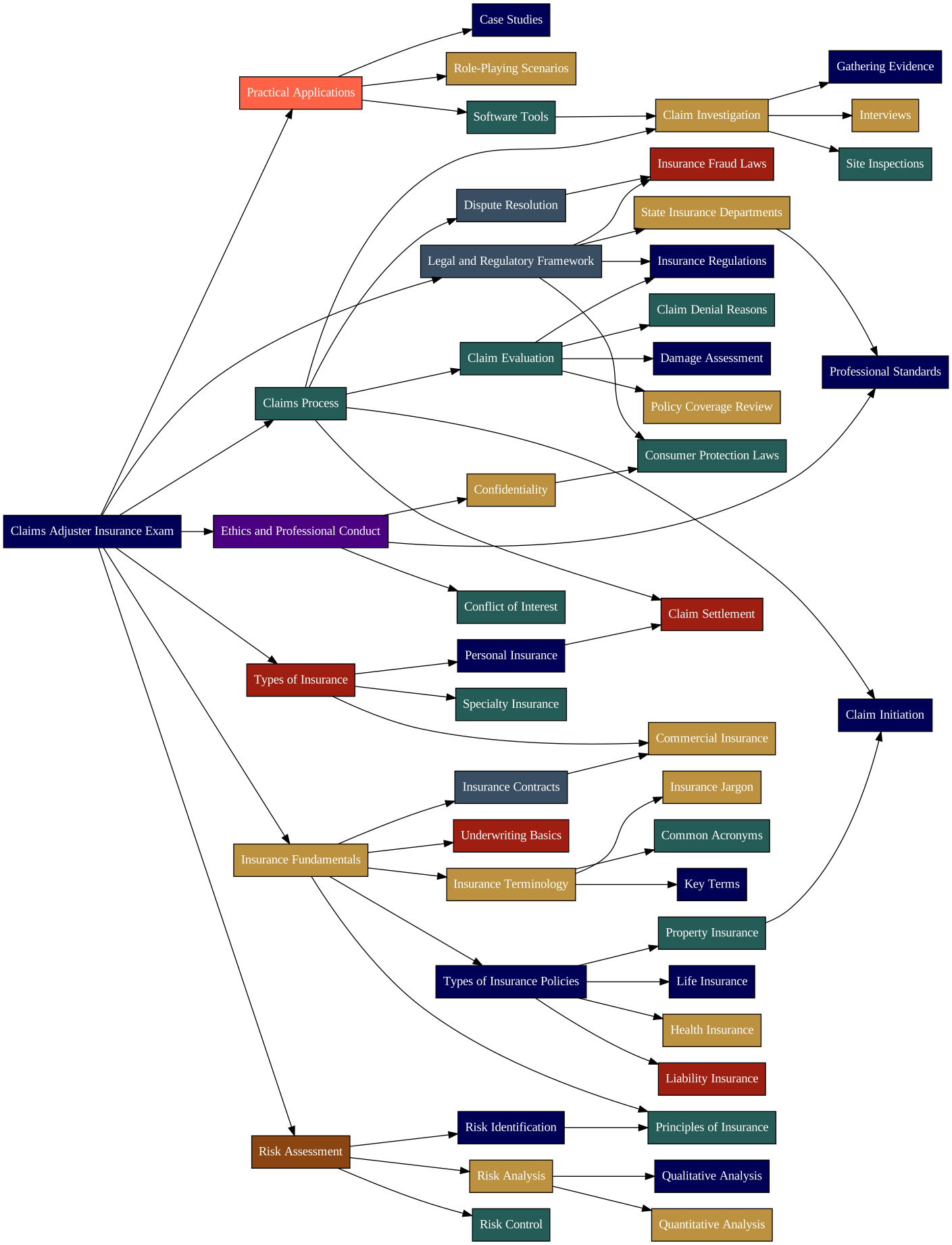
Quiz-summary
0 of 30 questions completed
Questions:
- 1
- 2
- 3
- 4
- 5
- 6
- 7
- 8
- 9
- 10
- 11
- 12
- 13
- 14
- 15
- 16
- 17
- 18
- 19
- 20
- 21
- 22
- 23
- 24
- 25
- 26
- 27
- 28
- 29
- 30
Information
Premium Practice Questions
You have already completed the quiz before. Hence you can not start it again.
Quiz is loading...
You must sign in or sign up to start the quiz.
You have to finish following quiz, to start this quiz:
Results
0 of 30 questions answered correctly
Your time:
Time has elapsed
You have reached 0 of 0 points, (0)
Categories
- Not categorized 0%
- 1
- 2
- 3
- 4
- 5
- 6
- 7
- 8
- 9
- 10
- 11
- 12
- 13
- 14
- 15
- 16
- 17
- 18
- 19
- 20
- 21
- 22
- 23
- 24
- 25
- 26
- 27
- 28
- 29
- 30
- Answered
- Review
-
Question 1 of 30
1. Question
Consider a scenario where an insured individual in Illinois has just reported a significant property damage claim due to a storm. The insurance company has assigned an adjuster to investigate the claim. As the adjuster begins the process, they are required to follow specific legal and ethical guidelines throughout the claims handling process. What is the primary responsibility of the adjuster when dealing with claims in Illinois, particularly concerning the reporting and settlement phases?
Correct
The claims process is a critical aspect of property and casualty insurance, particularly in Illinois, where statutes govern how claims must be reported, adjusted, and settled. When a claim is reported, it triggers a series of procedural steps that are designed to ensure fair treatment of the insured and timely processing of claims. It is essential for insurers to adhere to the Illinois Department of Insurance regulations, which require prompt investigation and a determination of liability. Once a claim is reported, adjusters evaluate the circumstances surrounding the claim, gathering evidence, interviewing witnesses, and assessing damages. This investigative phase must be conducted with transparency and integrity to uphold the insurer’s obligation under the law. After the adjustment phase, settlement discussions take place, where the insurer negotiates with the insured or their representatives to reach an agreement. Factors influencing settlement include the evidence gathered, coverage limits, and the severity of the loss. Understanding these nuances is vital for claims professionals to navigate the regulatory landscape effectively, ensuring compliance while protecting the interests of all parties involved.
Incorrect
The claims process is a critical aspect of property and casualty insurance, particularly in Illinois, where statutes govern how claims must be reported, adjusted, and settled. When a claim is reported, it triggers a series of procedural steps that are designed to ensure fair treatment of the insured and timely processing of claims. It is essential for insurers to adhere to the Illinois Department of Insurance regulations, which require prompt investigation and a determination of liability. Once a claim is reported, adjusters evaluate the circumstances surrounding the claim, gathering evidence, interviewing witnesses, and assessing damages. This investigative phase must be conducted with transparency and integrity to uphold the insurer’s obligation under the law. After the adjustment phase, settlement discussions take place, where the insurer negotiates with the insured or their representatives to reach an agreement. Factors influencing settlement include the evidence gathered, coverage limits, and the severity of the loss. Understanding these nuances is vital for claims professionals to navigate the regulatory landscape effectively, ensuring compliance while protecting the interests of all parties involved.
-
Question 2 of 30
2. Question
When you are faced with a situation where a prospective policyholder discloses a pre-existing condition during the underwriting process, how should you prioritize your ethical duties while ensuring compliance with Illinois insurance regulations? Consider the implications of your actions on the policyholder’s future coverage options. What is the most ethical approach to handling this disclosure, particularly in light of the responsibility to provide fair treatment and transparency in your assessment?
Correct
Ethics play a crucial role in the areas of underwriting, claims handling, and sales within the insurance industry in Illinois. Underwriters must adhere to ethical standards by ensuring that risk assessments are fair and based on accurate information, free from personal bias or discrimination. This accountability is essential because improper underwriting practices can lead to unjust denials of coverage or inappropriate premium pricing, ultimately harming policyholders. In claims handling, ethical conduct involves ensuring that claims are processed fairly and efficiently, protecting the rights of the insured while also safeguarding the insurer’s financial interests. Claims adjusters are expected to maintain transparency and communicate clearly with policyholders regarding their claims process. Lastly, in sales, ethical behavior includes providing potential clients with honest information about policies and avoiding high-pressure sales tactics. This approach fosters trust and establishes long-term relationships with clients. In summary, ethics are foundational for maintaining integrity and public confidence in the property and casualty insurance sector by ensuring fair treatment of all parties involved.
Incorrect
Ethics play a crucial role in the areas of underwriting, claims handling, and sales within the insurance industry in Illinois. Underwriters must adhere to ethical standards by ensuring that risk assessments are fair and based on accurate information, free from personal bias or discrimination. This accountability is essential because improper underwriting practices can lead to unjust denials of coverage or inappropriate premium pricing, ultimately harming policyholders. In claims handling, ethical conduct involves ensuring that claims are processed fairly and efficiently, protecting the rights of the insured while also safeguarding the insurer’s financial interests. Claims adjusters are expected to maintain transparency and communicate clearly with policyholders regarding their claims process. Lastly, in sales, ethical behavior includes providing potential clients with honest information about policies and avoiding high-pressure sales tactics. This approach fosters trust and establishes long-term relationships with clients. In summary, ethics are foundational for maintaining integrity and public confidence in the property and casualty insurance sector by ensuring fair treatment of all parties involved.
-
Question 3 of 30
3. Question
Consider a scenario where a new property insurance company is operating in Illinois and needs to understand the regulatory framework governing their operations. The company is aware of the National Association of Insurance Commissioners (NAIC) and is trying to grasp how it interacts with the state insurance department in Illinois. Which of the following statements best encapsulates the nature of this regulatory relationship and its implications for the insurance industry in Illinois?
Correct
The National Association of Insurance Commissioners (NAIC) plays a pivotal role in the regulation of insurance across the United States, including Illinois. Its primary function is to establish standards and guidelines through a collaborative framework, enabling states to adopt coherent practices for the insurance industry. Each state, including Illinois, has its own insurance department responsible for enforcing these regulations, tailoring policies and codes specific to state needs while adhering to the broader principles established by the NAIC. Insurance departments oversee licensing, financial solvency, market conduct, and consumer protection. They are tasked with ensuring that insurance companies operate fairly and maintain adequate reserves to protect policyholders. Additionally, these departments are crucial during crises to facilitate quick responses and consumer education. The relationship between NAIC and state insurance departments illustrates a dual regulatory framework, where the NAIC proposes model laws, and state departments implement them, allowing for both uniformity and flexibility in regulations. Thus, understanding this intricate relationship is vital for anyone preparing for the Illinois Property and Casualty Insurance Exam.
Incorrect
The National Association of Insurance Commissioners (NAIC) plays a pivotal role in the regulation of insurance across the United States, including Illinois. Its primary function is to establish standards and guidelines through a collaborative framework, enabling states to adopt coherent practices for the insurance industry. Each state, including Illinois, has its own insurance department responsible for enforcing these regulations, tailoring policies and codes specific to state needs while adhering to the broader principles established by the NAIC. Insurance departments oversee licensing, financial solvency, market conduct, and consumer protection. They are tasked with ensuring that insurance companies operate fairly and maintain adequate reserves to protect policyholders. Additionally, these departments are crucial during crises to facilitate quick responses and consumer education. The relationship between NAIC and state insurance departments illustrates a dual regulatory framework, where the NAIC proposes model laws, and state departments implement them, allowing for both uniformity and flexibility in regulations. Thus, understanding this intricate relationship is vital for anyone preparing for the Illinois Property and Casualty Insurance Exam.
-
Question 4 of 30
4. Question
When you are faced with evaluating the current landscape of the insurance industry in Illinois, which emerging trend significantly impacts both underwriting and claims processing within property and casualty insurance? Consider how advancements in technology, such as artificial intelligence and telematics, play a role in shaping these processes, and the implications they have for insurers’ responsibilities to maintain compliance with state regulations. Additionally, think about how these innovations align with consumer demands for personalized services and responsible corporate practices. Understanding this trend is essential for insurance professionals who are preparing for the Illinois Property and Casualty Insurance Exam, as it encapsulates the convergence of technology, ethics, and market dynamics in the insurance sector.
Correct
Emerging trends in insurance are significantly reshaping how policies are designed, marketed, and implemented within the industry. One of the foremost trends is the integration of technology, particularly artificial intelligence (AI) and machine learning, in underwriting and claims processing. These technologies enhance efficiency, allowing insurers to analyze vast amounts of data quickly and more accurately assess risk. Furthermore, the rise of telematics in auto insurance is noteworthy, where companies utilize data from drivers’ behaviors to tailor premiums, promoting safer driving practices and offering discounts for good behavior. Another critical trend is the growing emphasis on environmental, social, and governance (ESG) factors, which influences both underwriting criteria and investment strategies of insurance companies. These trends reflect a shift towards more personalized, data-driven, and responsible business practices, responding to consumer demand for such considerations. Insurers in Illinois must navigate these trends while adhering to state laws and regulations, ensuring compliance and ethical conduct in the face of evolving consumer expectations and technological advancements.
Incorrect
Emerging trends in insurance are significantly reshaping how policies are designed, marketed, and implemented within the industry. One of the foremost trends is the integration of technology, particularly artificial intelligence (AI) and machine learning, in underwriting and claims processing. These technologies enhance efficiency, allowing insurers to analyze vast amounts of data quickly and more accurately assess risk. Furthermore, the rise of telematics in auto insurance is noteworthy, where companies utilize data from drivers’ behaviors to tailor premiums, promoting safer driving practices and offering discounts for good behavior. Another critical trend is the growing emphasis on environmental, social, and governance (ESG) factors, which influences both underwriting criteria and investment strategies of insurance companies. These trends reflect a shift towards more personalized, data-driven, and responsible business practices, responding to consumer demand for such considerations. Insurers in Illinois must navigate these trends while adhering to state laws and regulations, ensuring compliance and ethical conduct in the face of evolving consumer expectations and technological advancements.
-
Question 5 of 30
5. Question
In the context of Illinois property and casualty insurance, consider a scenario where an insurance company is evaluating its exposure to various types of risks associated with its policyholders. The company identifies several high-risk factors but is unsure about the best approach to mitigate these risks effectively. What strategy should the company primarily focus on to ensure that they are aligning with both best practices in risk management and state regulations?
Correct
Risk management is fundamental to the property and casualty insurance industry, particularly within the regulatory framework of Illinois. Effective risk management involves a systematic process that includes risk identification, assessment, control, and financing. One of the key principles of risk management is avoiding unnecessary risks by implementing preventative measures, which is often more efficient than transferring or retaining risks. In Illinois, insurance providers are required to follow specific laws and regulations, ensuring that they assess risks comprehensively and implement appropriate strategies to mitigate them. This includes understanding the legal environment governing insurance policies and claims, which is crucial for both insurers and insured parties. Effective risk management not only helps in minimizing potential losses but also maintains the financial stability of the insurance entity. By fostering a culture of risk awareness and control, insurance professionals can better navigate uncertainties, comply with state regulations, and enhance customer trust.
Incorrect
Risk management is fundamental to the property and casualty insurance industry, particularly within the regulatory framework of Illinois. Effective risk management involves a systematic process that includes risk identification, assessment, control, and financing. One of the key principles of risk management is avoiding unnecessary risks by implementing preventative measures, which is often more efficient than transferring or retaining risks. In Illinois, insurance providers are required to follow specific laws and regulations, ensuring that they assess risks comprehensively and implement appropriate strategies to mitigate them. This includes understanding the legal environment governing insurance policies and claims, which is crucial for both insurers and insured parties. Effective risk management not only helps in minimizing potential losses but also maintains the financial stability of the insurance entity. By fostering a culture of risk awareness and control, insurance professionals can better navigate uncertainties, comply with state regulations, and enhance customer trust.
-
Question 6 of 30
6. Question
When you are faced with assessing the regulatory framework of property and casualty insurance in Illinois, it is vital to understand the distinct roles played by various bodies. Which of the following best characterizes the relationship between the National Association of Insurance Commissioners (NAIC) and the Illinois Department of Insurance? Consider how these organizations collaborate, as well as their individual regulatory functions within the state and at the national level. In what ways do they complement each other’s efforts in ensuring compliance and protecting consumers while fostering a robust insurance market?
Correct
In the context of property and casualty insurance in Illinois, it’s critical to understand the roles of various regulatory bodies that govern the industry, such as the National Association of Insurance Commissioners (NAIC) and the Illinois Department of Insurance. The NAIC is a collective organization of state insurance regulators that establishes model regulations and standards, influencing the way state laws are framed and enforced. It assists in coordinating regulatory practices across states to promote uniformity and facilitate interstate commerce in insurance. Conversely, the Illinois Department of Insurance is the specific regulatory body responsible for overseeing the insurance industry within Illinois. It ensures that insurance companies comply with state laws, protects consumer rights, and maintains market stability. The department conducts financial examinations of insurance entities, investigates consumer complaints, and enforces rules that protect policyholders. Understanding the interaction between state departments and national associations is crucial, as it shapes how insurance practices are implemented and regulated at both levels. Regulatory bodies not only uphold compliance and ethical standards but also foster a fair marketplace for consumers and insurers alike.
Incorrect
In the context of property and casualty insurance in Illinois, it’s critical to understand the roles of various regulatory bodies that govern the industry, such as the National Association of Insurance Commissioners (NAIC) and the Illinois Department of Insurance. The NAIC is a collective organization of state insurance regulators that establishes model regulations and standards, influencing the way state laws are framed and enforced. It assists in coordinating regulatory practices across states to promote uniformity and facilitate interstate commerce in insurance. Conversely, the Illinois Department of Insurance is the specific regulatory body responsible for overseeing the insurance industry within Illinois. It ensures that insurance companies comply with state laws, protects consumer rights, and maintains market stability. The department conducts financial examinations of insurance entities, investigates consumer complaints, and enforces rules that protect policyholders. Understanding the interaction between state departments and national associations is crucial, as it shapes how insurance practices are implemented and regulated at both levels. Regulatory bodies not only uphold compliance and ethical standards but also foster a fair marketplace for consumers and insurers alike.
-
Question 7 of 30
7. Question
During a review of insurance strategies within the context of Illinois’s approach to international insurance markets, you discover that many local companies are considering expanding into foreign markets. What factors should these companies prioritize to effectively navigate the complexities of international insurance regulations and ensure they are adequately covering risks unique to those markets?
Correct
In the context of international insurance markets, understanding how global risks are managed is crucial. An international insurance market provides opportunities for insurers to underwrite risks that may not be covered domestically due to regulatory, financial, or geographical limitations. For instance, various countries have different types of risks, regulatory requirements, and capital requirements that can significantly influence how insurance products are developed and marketed. As a result, companies may pursue solutions like reinsurance, where risk is spread among multiple insurers across borders to mitigate potential losses. This approach enhances the ability of insurers to manage their exposure to catastrophic losses. Additionally, engaging in international markets allows for greater diversification of risks, thus improving overall financial stability. One critical aspect of the international insurance landscape is the compliance with international regulations, which can vary widely and demand robust risk management practices. Understanding these dynamics is essential for any insurer looking to operate on a global scale, as varying regulations and market conditions can affect the availability of coverage and pricing strategies.
Incorrect
In the context of international insurance markets, understanding how global risks are managed is crucial. An international insurance market provides opportunities for insurers to underwrite risks that may not be covered domestically due to regulatory, financial, or geographical limitations. For instance, various countries have different types of risks, regulatory requirements, and capital requirements that can significantly influence how insurance products are developed and marketed. As a result, companies may pursue solutions like reinsurance, where risk is spread among multiple insurers across borders to mitigate potential losses. This approach enhances the ability of insurers to manage their exposure to catastrophic losses. Additionally, engaging in international markets allows for greater diversification of risks, thus improving overall financial stability. One critical aspect of the international insurance landscape is the compliance with international regulations, which can vary widely and demand robust risk management practices. Understanding these dynamics is essential for any insurer looking to operate on a global scale, as varying regulations and market conditions can affect the availability of coverage and pricing strategies.
-
Question 8 of 30
8. Question
Consider a scenario where an Illinois-based insurance company is faced with an unusual number of high-value property claims amidst a catastrophic event. The insurer is uncertain about its ability to hold onto these risks without affecting its financial stability. Given this scenario, which type of reinsurance would be most appropriate for the insurer to implement to address the immediate high-risk exposure while maintaining flexibility in its operations? This decision must take into account the balance between tailored coverage and the management of ongoing risks.
Correct
Reinsurance is a critical aspect of the insurance industry, allowing primary insurers to manage risk and enhance their underwriting capacity. In Illinois, the two primary types of reinsurance are facultative reinsurance and treaty reinsurance. Facultative reinsurance is a one-off negotiation between the insurer and reinsurer, covering a specific risk or policy. This type is usually sought for unique or high-risk exposures that exceed the insurer’s retention limits. Insurers have the discretion to select which risks to cede to reinsurers, allowing for tailored solutions but requiring careful assessment of each case. On the other hand, treaty reinsurance involves a pre-established agreement covering a block of business or specified risks over a defined period. This arrangement is advantageous for insurers seeking long-term risk management strategies since it reduces administrative burdens and provides more predictable results. The choice between facultative and treaty reinsurance depends on the insurer’s overall risk appetite, the nature of the exposures, and the desired control over cession decisions. Understanding these nuances is essential for effective risk management in the property and casualty insurance market in Illinois.
Incorrect
Reinsurance is a critical aspect of the insurance industry, allowing primary insurers to manage risk and enhance their underwriting capacity. In Illinois, the two primary types of reinsurance are facultative reinsurance and treaty reinsurance. Facultative reinsurance is a one-off negotiation between the insurer and reinsurer, covering a specific risk or policy. This type is usually sought for unique or high-risk exposures that exceed the insurer’s retention limits. Insurers have the discretion to select which risks to cede to reinsurers, allowing for tailored solutions but requiring careful assessment of each case. On the other hand, treaty reinsurance involves a pre-established agreement covering a block of business or specified risks over a defined period. This arrangement is advantageous for insurers seeking long-term risk management strategies since it reduces administrative burdens and provides more predictable results. The choice between facultative and treaty reinsurance depends on the insurer’s overall risk appetite, the nature of the exposures, and the desired control over cession decisions. Understanding these nuances is essential for effective risk management in the property and casualty insurance market in Illinois.
-
Question 9 of 30
9. Question
When reviewing an insurance policy in Illinois, you come across a provision stating that the company has the right to change policy terms with prior notice. How critical is it for the insurer to disclose this information clearly to the policyholder, and what are the potential consequences of failing to do so? Consider the implications of transparency and disclosure in maintaining trust and compliance in the insurance industry.
Correct
In Illinois, as in many states, disclosure requirements and transparency in insurance policies are crucial components of consumer protection. The law mandates that insurers provide clear and comprehensible information regarding policy terms, conditions, and coverage limitations. This ensures that policyholders have a complete understanding of what their policy entails and can make informed decisions. It is not only a matter of ethics but also a legal requirement aimed at preventing deceptive practices. Non-disclosure or unclear communication can lead to misunderstandings, where a policyholder believes they have coverage for specific events that are, in fact, excluded in the policy’s fine print. This lack of clarity can cause significant financial loss when a claim is denied based on undisclosed exclusions or limitations. Moreover, transparency fosters trust between the insurer and the insured, which is essential for maintaining a healthy insurance market. Therefore, adherence to these disclosure requirements is not merely operational but a foundational principle in the insurance industry, with significant implications for consumer rights and responsibilities.
Incorrect
In Illinois, as in many states, disclosure requirements and transparency in insurance policies are crucial components of consumer protection. The law mandates that insurers provide clear and comprehensible information regarding policy terms, conditions, and coverage limitations. This ensures that policyholders have a complete understanding of what their policy entails and can make informed decisions. It is not only a matter of ethics but also a legal requirement aimed at preventing deceptive practices. Non-disclosure or unclear communication can lead to misunderstandings, where a policyholder believes they have coverage for specific events that are, in fact, excluded in the policy’s fine print. This lack of clarity can cause significant financial loss when a claim is denied based on undisclosed exclusions or limitations. Moreover, transparency fosters trust between the insurer and the insured, which is essential for maintaining a healthy insurance market. Therefore, adherence to these disclosure requirements is not merely operational but a foundational principle in the insurance industry, with significant implications for consumer rights and responsibilities.
-
Question 10 of 30
10. Question
When you are faced with a situation where a policyholder has reported a loss incident under their property insurance coverage, what is the first step that an insurance company in Illinois should undertake to properly initiate the claims process? This step is foundational and sets the tone for subsequent actions, including the investigation and adjustment of the claim. It is critical for the insurer to act in accordance with state regulations while demonstrating good faith towards the insured. What is this initial step that acts as the trigger for the claims process?
Correct
In the context of property and casualty insurance, understanding the claims process is crucial for effective management and timely resolution of claims. When a policyholder experiences a loss, the first step is usually to report the incident to the insurance company. This initiates the claims process, allowing the insurer to assess the validity of the claim and determine the amount owed under the policy. An adjuster is then assigned to investigate the claim, which includes gathering evidence, interviewing parties involved, and reviewing policy details to ascertain coverage. Settlements can involve negotiations; thus, it’s essential for adjusters to clearly communicate the policyholder’s rights and the claims process. Communication is vital, as it helps manage expectations and fosters transparency. In Illinois specifically, regulations stipulate that insurers must act in good faith and provide timely responses to claims to protect consumers. Understanding the interplay between these steps is essential for insurance professionals to ensure compliance with laws and to deliver high-quality service to policyholders.
Incorrect
In the context of property and casualty insurance, understanding the claims process is crucial for effective management and timely resolution of claims. When a policyholder experiences a loss, the first step is usually to report the incident to the insurance company. This initiates the claims process, allowing the insurer to assess the validity of the claim and determine the amount owed under the policy. An adjuster is then assigned to investigate the claim, which includes gathering evidence, interviewing parties involved, and reviewing policy details to ascertain coverage. Settlements can involve negotiations; thus, it’s essential for adjusters to clearly communicate the policyholder’s rights and the claims process. Communication is vital, as it helps manage expectations and fosters transparency. In Illinois specifically, regulations stipulate that insurers must act in good faith and provide timely responses to claims to protect consumers. Understanding the interplay between these steps is essential for insurance professionals to ensure compliance with laws and to deliver high-quality service to policyholders.
-
Question 11 of 30
11. Question
In the context of the Illinois Property and Casualty Insurance Exam, suppose an individual files a claim for damages to their home due to a severe storm. The claim is reported to the insurance company, which then assigns an adjuster to assess the damage and determine an appropriate settlement. What is the critical responsibility of the claims adjuster during this process that aligns with Illinois regulations, especially concerning communication and decision-making related to the claim?
Correct
In Illinois, the claims process is a critical component of property and casualty insurance, involving the steps necessary for an insured party to receive payment after a loss. An important aspect of this process is the requirement for timely and accurate reporting of claims, as stipulated by the Illinois Insurance Code. Insurers must adhere to specific timelines for acknowledging and investigating claims, which helps promote fairness and efficiency. When a claim is reported, it is typically assigned to an adjuster who evaluates the circumstances, assesses the extent of the damage, and determines the appropriate settlement amount according to the policy’s coverage. The claims adjuster acts as the intermediary between the insured and the insurer, ensuring that claims are handled in compliance with state regulations. Additionally, the settlement process must be transparent, allowing the insured to understand how the settlement amount was reached and providing a clear explanation for any delays or denials. Insurers in Illinois are also bound by ethical standards, including the obligation to act in good faith, which is fundamental in maintaining trust and ensuring that policyholders’ rights are respected throughout the claims process.
Incorrect
In Illinois, the claims process is a critical component of property and casualty insurance, involving the steps necessary for an insured party to receive payment after a loss. An important aspect of this process is the requirement for timely and accurate reporting of claims, as stipulated by the Illinois Insurance Code. Insurers must adhere to specific timelines for acknowledging and investigating claims, which helps promote fairness and efficiency. When a claim is reported, it is typically assigned to an adjuster who evaluates the circumstances, assesses the extent of the damage, and determines the appropriate settlement amount according to the policy’s coverage. The claims adjuster acts as the intermediary between the insured and the insurer, ensuring that claims are handled in compliance with state regulations. Additionally, the settlement process must be transparent, allowing the insured to understand how the settlement amount was reached and providing a clear explanation for any delays or denials. Insurers in Illinois are also bound by ethical standards, including the obligation to act in good faith, which is fundamental in maintaining trust and ensuring that policyholders’ rights are respected throughout the claims process.
-
Question 12 of 30
12. Question
While reviewing the different types of liability insurance applicable in Illinois, you come across a business owner who operates a storefront that has experienced multiple slip-and-fall incidents. The owner wants to understand which type of liability insurance would be the most appropriate to protect against potential claims from customers injured on the premises. The business owner is also considering the implications of not having adequate insurance coverage in the event that a customer decides to sue for damages. Based on the specific scenario of bodily injury occurring on-site, which type of liability insurance would be most relevant for this business owner to consider?
Correct
Liability insurance is a critical concept in the Illinois insurance landscape, accommodating various types of coverage tailored to specific needs and risks associated with different professions, products, and employer-employee relationships. General liability insurance protects businesses from third-party claims for bodily injury, property damage, and personal injury, providing a safety net against accidents that could harm clients or visitors on the business premise. Professional liability insurance, also known as errors and omissions insurance, covers professionals like doctors, lawyers, and consultants against claims of negligence or failure to perform their professional duties adequately, which can lead to significant financial repercussions for the insured. Product liability insurance shields manufacturers and sellers from claims related to defects in their products that cause harm or injury. Finally, employers’ liability insurance provides coverage for employers against claims made by employees for workplace injuries or diseases that are not covered by workers’ compensation. Understanding these differences allows insurance professionals to advise clients accurately, ensuring that they procure the appropriate coverage for their unique circumstances, thereby mitigating financial risks associated with unforeseen liabilities.
Incorrect
Liability insurance is a critical concept in the Illinois insurance landscape, accommodating various types of coverage tailored to specific needs and risks associated with different professions, products, and employer-employee relationships. General liability insurance protects businesses from third-party claims for bodily injury, property damage, and personal injury, providing a safety net against accidents that could harm clients or visitors on the business premise. Professional liability insurance, also known as errors and omissions insurance, covers professionals like doctors, lawyers, and consultants against claims of negligence or failure to perform their professional duties adequately, which can lead to significant financial repercussions for the insured. Product liability insurance shields manufacturers and sellers from claims related to defects in their products that cause harm or injury. Finally, employers’ liability insurance provides coverage for employers against claims made by employees for workplace injuries or diseases that are not covered by workers’ compensation. Understanding these differences allows insurance professionals to advise clients accurately, ensuring that they procure the appropriate coverage for their unique circumstances, thereby mitigating financial risks associated with unforeseen liabilities.
-
Question 13 of 30
13. Question
When you are faced with evaluating the risk management strategies of an Illinois-based insurance company, it is crucial to assess the reinsurance agreements they have in place. What type of reinsurance would be most beneficial if the insurer anticipates a high loss exposure across multiple policies over a defined period? Considering the legal and regulatory requirements in Illinois, which structure allows for a comprehensive approach to covering overall risks rather than assessing each policy individually?
Correct
Reinsurance is a crucial aspect of the insurance industry that helps insurers mitigate risk by transferring portions of risk to other insurance entities. This allows primary insurers to stabilize their loss experience and manage capital requirements more effectively. A reinsurance agreement can take various forms, such as facultative reinsurance, which is negotiated on a case-by-case basis, or treaty reinsurance, where a reinsurer agrees to accept a portfolio of risks from the ceding insurer. An essential function of reinsurance is to provide stability and solvency to insurers, ensuring that they can honor their policyholder commitments even when faced with significant claims. In Illinois, state regulations require that all reinsurance arrangements adhere to certain standards to protect policyholders. This includes the need for proper documentation, adherence to agreed-upon terms, and regulatory oversight to ensure that the reinsurance transaction does not negatively impact the financial stability of the original insurer. Understanding these structures and agreements is vital for insurance professionals as it influences overall risk management strategies and compliance with the Illinois insurance code.
Incorrect
Reinsurance is a crucial aspect of the insurance industry that helps insurers mitigate risk by transferring portions of risk to other insurance entities. This allows primary insurers to stabilize their loss experience and manage capital requirements more effectively. A reinsurance agreement can take various forms, such as facultative reinsurance, which is negotiated on a case-by-case basis, or treaty reinsurance, where a reinsurer agrees to accept a portfolio of risks from the ceding insurer. An essential function of reinsurance is to provide stability and solvency to insurers, ensuring that they can honor their policyholder commitments even when faced with significant claims. In Illinois, state regulations require that all reinsurance arrangements adhere to certain standards to protect policyholders. This includes the need for proper documentation, adherence to agreed-upon terms, and regulatory oversight to ensure that the reinsurance transaction does not negatively impact the financial stability of the original insurer. Understanding these structures and agreements is vital for insurance professionals as it influences overall risk management strategies and compliance with the Illinois insurance code.
-
Question 14 of 30
14. Question
When analyzing a property insurance application in Illinois, an underwriter must consider multiple aspects that influence the decision-making process. Imagine you are assessing a property with a history of numerous claims, situated in a high-risk area vulnerable to natural disasters. In light of this scenario, which factor will most significantly impact the underwriting decision? It is essential to recognize how different elements such as the frequency of past claims, the specific characteristics of the property, and the overall conditions of the insurance market might intertwine. Understanding these nuances will enable a clearer perspective on the potential outcomes of underwriting actions.
Correct
Underwriting decisions in the context of Illinois property and casualty insurance are heavily influenced by a combination of risk factors, loss history, and prevailing market conditions. Risk factors include the characteristics of the property, such as its location, age, and construction type. For instance, properties located in areas prone to natural disasters (like floods or tornadoes) are considered higher risk. Loss history refers to any previous claims that have been made on the property, which can impact the underwriting decision; a property with a history of frequent claims may be perceived as a higher risk, leading to adjustments in premiums or even denial of coverage. Market conditions also play a crucial role; for example, during times of economic downturn or when there are significant changes in the reinsurance market, underwriting guidelines may become stricter. Thus, underwriters must carefully analyze these factors to determine an appropriate risk classification and premium, balancing the need to provide coverage with the necessity of maintaining financial stability for the insurer.
Incorrect
Underwriting decisions in the context of Illinois property and casualty insurance are heavily influenced by a combination of risk factors, loss history, and prevailing market conditions. Risk factors include the characteristics of the property, such as its location, age, and construction type. For instance, properties located in areas prone to natural disasters (like floods or tornadoes) are considered higher risk. Loss history refers to any previous claims that have been made on the property, which can impact the underwriting decision; a property with a history of frequent claims may be perceived as a higher risk, leading to adjustments in premiums or even denial of coverage. Market conditions also play a crucial role; for example, during times of economic downturn or when there are significant changes in the reinsurance market, underwriting guidelines may become stricter. Thus, underwriters must carefully analyze these factors to determine an appropriate risk classification and premium, balancing the need to provide coverage with the necessity of maintaining financial stability for the insurer.
-
Question 15 of 30
15. Question
When you are faced with the task of determining the appropriate insurance premium for a potential client in Illinois, various factors must be considered. These factors include the client’s personal risk profile, their history of past claims, and the current competitive landscape of the insurance market. How would you identify the principal factor that has the most significant impact on the insurance pricing? Consider how each of these elements interrelates and affects the overall cost of insurance, especially in a state with unique regulatory constraints and market conditions.
Correct
Insurance pricing is influenced by a combination of risk assessment, loss history, and market competition, which are critical factors in determining premiums. In Illinois, insurance companies conduct thorough risk assessments to evaluate an applicant’s risk profile. This process involves analyzing personal factors, such as age, driving history for auto insurance, and property characteristics for homeowners insurance. A favorable risk assessment can lead to lower premiums, while a negative assessment can increase costs. Loss history, which refers to the claims history of an individual or property, also plays a significant role. For instance, a history of frequent claims may signal higher risk, leading insurers to charge higher premiums. Additionally, market competition affects pricing strategies; when numerous insurers compete for the same market, they may offer lower rates to attract customers. Conversely, in a less competitive environment, insurers might have more latitude to impose higher prices. Understanding the interplay of these factors enables consumers and agents to navigate policy options and anticipate pricing trends effectively.
Incorrect
Insurance pricing is influenced by a combination of risk assessment, loss history, and market competition, which are critical factors in determining premiums. In Illinois, insurance companies conduct thorough risk assessments to evaluate an applicant’s risk profile. This process involves analyzing personal factors, such as age, driving history for auto insurance, and property characteristics for homeowners insurance. A favorable risk assessment can lead to lower premiums, while a negative assessment can increase costs. Loss history, which refers to the claims history of an individual or property, also plays a significant role. For instance, a history of frequent claims may signal higher risk, leading insurers to charge higher premiums. Additionally, market competition affects pricing strategies; when numerous insurers compete for the same market, they may offer lower rates to attract customers. Conversely, in a less competitive environment, insurers might have more latitude to impose higher prices. Understanding the interplay of these factors enables consumers and agents to navigate policy options and anticipate pricing trends effectively.
-
Question 16 of 30
16. Question
In a situation where a contractor is performing work on a residential property in Illinois, an accident occurs resulting in the injury of a neighbor who was watching the job. The neighbor files a claim against the contractor’s insurance policy for bodily injury. In addition, the contractor accidentally damages the neighbor’s fence during the project and the neighbor is also seeking compensation for the property damages incurred. How do the different insurance coverage components apply in this context in Illinois, particularly regarding bodily injury and property damage?
Correct
Bodily injury, property damage, and personal injury are three distinct coverage components in property and casualty insurance that serve to protect policyholders depending on the nature of the incident. Bodily injury coverage is specifically designed to address injuries sustained by individuals, including medical expenses, lost wages, and pain and suffering due to accidents or incidents caused by the insured. This component is critical in ensuring that individuals who are injured due to the policyholder’s actions have their needs addressed financially. Property damage coverage, on the other hand, pertains to damage to another person’s tangible property. This type of coverage covers the costs associated with repairing or replacing property that the insured is legally responsible for damaging. Personal injury coverage addresses non-physical harm, including claims of defamation, false arrest, or invasion of privacy. Each component requires a clear understanding of the nuances involved, especially in the context of Illinois regulations, as local laws may influence liability, claims processes, and definitions of coverage. A comprehensive grasp of these components ensures that all parties involved are adequately protected and that the policyholder fulfills their legal obligations.
Incorrect
Bodily injury, property damage, and personal injury are three distinct coverage components in property and casualty insurance that serve to protect policyholders depending on the nature of the incident. Bodily injury coverage is specifically designed to address injuries sustained by individuals, including medical expenses, lost wages, and pain and suffering due to accidents or incidents caused by the insured. This component is critical in ensuring that individuals who are injured due to the policyholder’s actions have their needs addressed financially. Property damage coverage, on the other hand, pertains to damage to another person’s tangible property. This type of coverage covers the costs associated with repairing or replacing property that the insured is legally responsible for damaging. Personal injury coverage addresses non-physical harm, including claims of defamation, false arrest, or invasion of privacy. Each component requires a clear understanding of the nuances involved, especially in the context of Illinois regulations, as local laws may influence liability, claims processes, and definitions of coverage. A comprehensive grasp of these components ensures that all parties involved are adequately protected and that the policyholder fulfills their legal obligations.
-
Question 17 of 30
17. Question
In the context of your role as an insurance claims adjuster in Illinois, you encounter a situation where a claim appears suspicious due to inconsistencies in the information provided. This includes conflicting details about the incident and questionable documentation submitted by the claimant. What steps should you prioritize to effectively handle this claim while ensuring compliance with Illinois insurance regulations and ethical standards in fraud detection and prevention?
Correct
Fraud detection and prevention in claims handling is a critical aspect of property and casualty insurance that aims to protect both insurers and policyholders from fraudulent activities. Insurers in Illinois are required to implement diligent investigations when they suspect a claim may be fraudulent. This involves recognizing patterns or discrepancies in claims submissions, verifying the authenticity of documentation, and interviewing claimants. The Illinois Insurance Code mandates that insurance companies establish procedures for fraud detection and report any suspected fraud to the appropriate authorities. Additionally, training for adjusters on identifying red flags is crucial. Effective fraud prevention not only protects the insurer’s financial integrity but also promotes fair treatment of genuine claimants. Understanding the various techniques, such as data analysis and behavioral observations, enhances an insurance professional’s ability to efficiently assess claims and determine their legitimacy. Ethical considerations are paramount; all investigations must respect the rights and privacy of claimants while remaining within legal boundaries prescribed by state regulations.
Incorrect
Fraud detection and prevention in claims handling is a critical aspect of property and casualty insurance that aims to protect both insurers and policyholders from fraudulent activities. Insurers in Illinois are required to implement diligent investigations when they suspect a claim may be fraudulent. This involves recognizing patterns or discrepancies in claims submissions, verifying the authenticity of documentation, and interviewing claimants. The Illinois Insurance Code mandates that insurance companies establish procedures for fraud detection and report any suspected fraud to the appropriate authorities. Additionally, training for adjusters on identifying red flags is crucial. Effective fraud prevention not only protects the insurer’s financial integrity but also promotes fair treatment of genuine claimants. Understanding the various techniques, such as data analysis and behavioral observations, enhances an insurance professional’s ability to efficiently assess claims and determine their legitimacy. Ethical considerations are paramount; all investigations must respect the rights and privacy of claimants while remaining within legal boundaries prescribed by state regulations.
-
Question 18 of 30
18. Question
In the context of the differences in insurance regulation across countries, how does the regulatory framework in Illinois differ from that in many other countries? Consider that in Illinois, the insurance industry is under the jurisdiction of the Illinois Department of Insurance, which impacts the licensing and operational practices of insurers. Conversely, many other countries may operate under a centralized regulatory authority that standardizes practices across the entire nation. How does this divergence affect consumer protection and market flexibility within Illinois compared to countries with different regulatory structures?
Correct
Insurance regulation varies significantly between countries due to cultural, economic, and legislative differences. In the United States, each state, including Illinois, has its own regulatory framework governed by state laws and regulations. This decentralized system allows different states to implement specific practices that align with their needs and conditions. For instance, Illinois utilizes the Illinois Department of Insurance to oversee licensing, solvency, and market conduct, which affects how insurance companies operate within the state. In contrast, many other countries employ a more centralized regulatory approach, where a national authority oversees all aspects of insurance. This can lead to more uniform practices but may lack the flexibility to respond to regional concerns effectively. Additionally, international norms can differ regarding consumer protection, financial stability, and systemic risk management. Understanding these differences is crucial for professionals in the insurance field, as they must navigate diverse regulatory landscapes when engaging in cross-border transactions or multinational insurance operations.
Incorrect
Insurance regulation varies significantly between countries due to cultural, economic, and legislative differences. In the United States, each state, including Illinois, has its own regulatory framework governed by state laws and regulations. This decentralized system allows different states to implement specific practices that align with their needs and conditions. For instance, Illinois utilizes the Illinois Department of Insurance to oversee licensing, solvency, and market conduct, which affects how insurance companies operate within the state. In contrast, many other countries employ a more centralized regulatory approach, where a national authority oversees all aspects of insurance. This can lead to more uniform practices but may lack the flexibility to respond to regional concerns effectively. Additionally, international norms can differ regarding consumer protection, financial stability, and systemic risk management. Understanding these differences is crucial for professionals in the insurance field, as they must navigate diverse regulatory landscapes when engaging in cross-border transactions or multinational insurance operations.
-
Question 19 of 30
19. Question
When you are faced with advising a small retail business owner in Illinois about their insurance needs, you must consider various available options. The owner expresses interest in a Businessowners Policy (BOP) due to its reputation for being a cost-effective solution that provides essential coverage. However, you need to ensure that this policy meets their specific needs. Which of the following statements best represents an important aspect to consider when determining if a BOP is suitable for this business owner?
Correct
A Businessowners Policy (BOP) is designed to provide a comprehensive insurance solution for small to medium-sized businesses. It typically bundles commercial property and general liability insurance into one package, which simplifies the insurance process for business owners and may provide cost savings compared to purchasing each type of coverage separately. In Illinois, BOPs are particularly advantageous for businesses that face similar risks and require both property coverage (for buildings and contents) and liability coverage (for injuries or damages that occur on their premises). However, it is crucial to understand that a BOP may not cover certain business types or specific high-risk activities, making it essential for business owners to evaluate their unique needs thoroughly. For instance, businesses with significant professional liability risks or those that require specific endorsements may need additional coverage outside of what a standard BOP offers. Understanding the scope, limitations, and requirements of a BOP allows an agent to accurately advise clients on whether this insurance solution is appropriate for them, ensuring compliance with Illinois regulations regarding adequate coverage for businesses.
Incorrect
A Businessowners Policy (BOP) is designed to provide a comprehensive insurance solution for small to medium-sized businesses. It typically bundles commercial property and general liability insurance into one package, which simplifies the insurance process for business owners and may provide cost savings compared to purchasing each type of coverage separately. In Illinois, BOPs are particularly advantageous for businesses that face similar risks and require both property coverage (for buildings and contents) and liability coverage (for injuries or damages that occur on their premises). However, it is crucial to understand that a BOP may not cover certain business types or specific high-risk activities, making it essential for business owners to evaluate their unique needs thoroughly. For instance, businesses with significant professional liability risks or those that require specific endorsements may need additional coverage outside of what a standard BOP offers. Understanding the scope, limitations, and requirements of a BOP allows an agent to accurately advise clients on whether this insurance solution is appropriate for them, ensuring compliance with Illinois regulations regarding adequate coverage for businesses.
-
Question 20 of 30
20. Question
When you are faced with the task of developing a new property and casualty insurance product in Illinois, what should be your primary consideration to ensure that the product is compliant and marketed effectively? Consider the regulatory environment and the need for consumer alignment in your strategy.
Correct
In the context of product development and marketing strategies for property and casualty insurance in Illinois, understanding the regulatory framework is vital for effectively introducing new insurance products to the market. The Illinois Department of Insurance (IDOI) oversees the approval of insurance products. Under Illinois law, insurers must obtain approval for rates and forms before they can be sold. This process includes submitting detailed documentation that outlines how the product meets customer needs and adheres to regulatory standards, including ensuring financial stability and transparency. Moreover, market research and consumer feedback play crucial roles in product development; understanding the needs and preferences of consumers can lead to more tailored offerings that meet specific risks faced by Illinois residents. Effective marketing strategies should highlight the unique features of the product while ensuring compliance with the Illinois Insurance Code, which mandates clear communication and fair representation of products to consumers. Thus, a comprehensive approach that balances regulatory compliance and market suitability is essential for successful product development in this field.
Incorrect
In the context of product development and marketing strategies for property and casualty insurance in Illinois, understanding the regulatory framework is vital for effectively introducing new insurance products to the market. The Illinois Department of Insurance (IDOI) oversees the approval of insurance products. Under Illinois law, insurers must obtain approval for rates and forms before they can be sold. This process includes submitting detailed documentation that outlines how the product meets customer needs and adheres to regulatory standards, including ensuring financial stability and transparency. Moreover, market research and consumer feedback play crucial roles in product development; understanding the needs and preferences of consumers can lead to more tailored offerings that meet specific risks faced by Illinois residents. Effective marketing strategies should highlight the unique features of the product while ensuring compliance with the Illinois Insurance Code, which mandates clear communication and fair representation of products to consumers. Thus, a comprehensive approach that balances regulatory compliance and market suitability is essential for successful product development in this field.
-
Question 21 of 30
21. Question
While working on a project related to property insurance in Illinois, you encounter a situation where a potential client has applied for coverage for a high-value commercial building. The client has provided detailed information about the property, including its location, construction materials, and prior claims history. As an underwriter, how would you best describe the primary objective of your role in this scenario regarding the assessment of the insurance application?
Correct
Underwriting is a critical process in the property and casualty insurance sector, particularly in Illinois, where it serves as a mechanism for assessing risk before issuing an insurance policy. The primary purpose of underwriting is to evaluate the likelihood of a claim being made and to determine appropriate premiums based on the assessed risk of insuring a particular individual, property, or business. Underwriters analyze various factors, including the applicant’s history, the nature of the property or business, industry exposure, and any mitigating factors that could influence risk levels. The objective is to ensure that the insurer can maintain financial viability while also providing coverage to individuals who need it. Moreover, underwriting helps in safeguarding against adverse selection, where individuals with higher risks disproportionately seek insurance, potentially leading to financial losses for insurers. By properly assessing risks and aligning them with corresponding coverage limits and premiums, underwriters play an essential role in balancing the insurer’s portfolio and ensuring that resources are allocated efficiently within the insurance market.
Incorrect
Underwriting is a critical process in the property and casualty insurance sector, particularly in Illinois, where it serves as a mechanism for assessing risk before issuing an insurance policy. The primary purpose of underwriting is to evaluate the likelihood of a claim being made and to determine appropriate premiums based on the assessed risk of insuring a particular individual, property, or business. Underwriters analyze various factors, including the applicant’s history, the nature of the property or business, industry exposure, and any mitigating factors that could influence risk levels. The objective is to ensure that the insurer can maintain financial viability while also providing coverage to individuals who need it. Moreover, underwriting helps in safeguarding against adverse selection, where individuals with higher risks disproportionately seek insurance, potentially leading to financial losses for insurers. By properly assessing risks and aligning them with corresponding coverage limits and premiums, underwriters play an essential role in balancing the insurer’s portfolio and ensuring that resources are allocated efficiently within the insurance market.
-
Question 22 of 30
22. Question
Consider a scenario where an insurance agent in Illinois is evaluating a new policy for a client. During this process, the agent realizes that certain material facts about the client’s health history may not favorably influence the underwriting decision. Instead of fully disclosing these details to the underwriter, the agent opts to omit this information, believing that this will help the client secure a more favorable rate. What ethical principles are being violated by the agent’s actions, and what are the potential implications of these violations in the context of Illinois property and casualty insurance regulations?
Correct
Ethics play a crucial role in underwriting, claims handling, and sales within the insurance industry, particularly in Illinois where regulatory frameworks emphasize integrity and transparency. Underwriting ethics require insurance professionals to assess risk fairly and without bias, ensuring decisions are based on sound actuarial principles rather than personal prejudices. In claims handling, ethical conduct involves treating claimants with respect, ensuring that the claims process is not only efficient but also just, where all claims are evaluated on their merits. Furthermore, in sales, agents must disclose all relevant information to potential policyholders, avoiding misrepresentation and ensuring that clients fully understand the policy terms and conditions. The Illinois Insurance Code mandates that insurers maintain high ethical standards to foster public trust, enhance the reputation of the insurance profession, and ensure equitable treatment of consumers. Failure to uphold these ethical standards can lead to disciplinary actions, including fines and license revocation, which highlights the importance of ethical practices in the industry.
Incorrect
Ethics play a crucial role in underwriting, claims handling, and sales within the insurance industry, particularly in Illinois where regulatory frameworks emphasize integrity and transparency. Underwriting ethics require insurance professionals to assess risk fairly and without bias, ensuring decisions are based on sound actuarial principles rather than personal prejudices. In claims handling, ethical conduct involves treating claimants with respect, ensuring that the claims process is not only efficient but also just, where all claims are evaluated on their merits. Furthermore, in sales, agents must disclose all relevant information to potential policyholders, avoiding misrepresentation and ensuring that clients fully understand the policy terms and conditions. The Illinois Insurance Code mandates that insurers maintain high ethical standards to foster public trust, enhance the reputation of the insurance profession, and ensure equitable treatment of consumers. Failure to uphold these ethical standards can lead to disciplinary actions, including fines and license revocation, which highlights the importance of ethical practices in the industry.
-
Question 23 of 30
23. Question
A homeowner in Illinois is evaluating their insurance policy and considers the implications of the different types of coverage offered. They want to ensure that their dwelling, personal property, and potential liability claims are adequately covered. When advising this homeowner, what is the most comprehensive approach to explain the interplay between these coverage types? Focus on the critical points regarding exclusions, the distinction between replacement cost and actual cash value, and any pertinent Illinois regulations that could impact their coverage needs.
Correct
Homeowners’ insurance policies are designed to provide comprehensive coverage for various aspects of a dwelling and its contents, which include personal property and liability. Understanding how these coverage types interact and the nuances of each is crucial for both policyholders and insurance professionals. Dwelling coverage typically protects the physical structure of the home against specified perils, while personal property coverage safeguards the items within the dwelling, such as furniture, electronics, and clothing. Liability coverage, on the other hand, protects the insured against legal claims for bodily injury or property damage occurring on the insured premises. One important aspect to consider is the concept of “exclusions,” which identifies circumstances under which coverage may not apply—this is vital as it delineates the boundaries of the policy. Additionally, variations in policies regarding replacement cost versus actual cash value can significantly impact the compensation received after a loss. In Illinois, specific state regulations also dictate certain minimum coverage requirements and consumer rights, which should always be reviewed when evaluating insurance options. Therefore, a nuanced understanding of how these coverage types function collectively and their limitations is essential for effective risk management.
Incorrect
Homeowners’ insurance policies are designed to provide comprehensive coverage for various aspects of a dwelling and its contents, which include personal property and liability. Understanding how these coverage types interact and the nuances of each is crucial for both policyholders and insurance professionals. Dwelling coverage typically protects the physical structure of the home against specified perils, while personal property coverage safeguards the items within the dwelling, such as furniture, electronics, and clothing. Liability coverage, on the other hand, protects the insured against legal claims for bodily injury or property damage occurring on the insured premises. One important aspect to consider is the concept of “exclusions,” which identifies circumstances under which coverage may not apply—this is vital as it delineates the boundaries of the policy. Additionally, variations in policies regarding replacement cost versus actual cash value can significantly impact the compensation received after a loss. In Illinois, specific state regulations also dictate certain minimum coverage requirements and consumer rights, which should always be reviewed when evaluating insurance options. Therefore, a nuanced understanding of how these coverage types function collectively and their limitations is essential for effective risk management.
-
Question 24 of 30
24. Question
Consider a scenario where a property and casualty insurance company in Illinois is looking to expand its operations internationally. What key factors should the company focus on to effectively navigate the challenges while leveraging opportunities in global insurance operations? The company must consider both regulatory compliance and technological advancements to enhance its operational strategy. When developing its approach, it must assess the differing regulatory environments, the potential for fintech solutions, and the necessity for market adaptability. What foundational concept underlies their strategy to mitigate these challenges while maximizing growth potential?
Correct
The challenges and opportunities in global insurance operations are multifaceted, particularly in a regulatory environment like Illinois. One significant challenge is the compliance with diverse regulations across different jurisdictions, which can complicate the offering of insurance products in multiple states or countries. Insurers must navigate varying laws, which may include licensing requirements, consumer protection laws, and financial solvency regulations. Conversely, these challenges present opportunities for innovation in product design and the adoption of technology to enhance compliance management. For instance, the use of insurtech solutions can streamline the regulatory reporting processes, reducing the administrative burden on insurance companies while ensuring compliance. Additionally, global operations can lead to the pooling of resources and risk diversification, allowing insurers to offer more competitive products and better service to their clients. As global markets evolve, understanding these dynamics is crucial for professionals in the property and casualty insurance sectors, especially in Illinois where local nuances play a vital role in operational success.
Incorrect
The challenges and opportunities in global insurance operations are multifaceted, particularly in a regulatory environment like Illinois. One significant challenge is the compliance with diverse regulations across different jurisdictions, which can complicate the offering of insurance products in multiple states or countries. Insurers must navigate varying laws, which may include licensing requirements, consumer protection laws, and financial solvency regulations. Conversely, these challenges present opportunities for innovation in product design and the adoption of technology to enhance compliance management. For instance, the use of insurtech solutions can streamline the regulatory reporting processes, reducing the administrative burden on insurance companies while ensuring compliance. Additionally, global operations can lead to the pooling of resources and risk diversification, allowing insurers to offer more competitive products and better service to their clients. As global markets evolve, understanding these dynamics is crucial for professionals in the property and casualty insurance sectors, especially in Illinois where local nuances play a vital role in operational success.
-
Question 25 of 30
25. Question
In the context of managing business risks under Illinois state regulations, consider a hypothetical manufacturing company that is evaluating its exposure to potential liability arising from workplace injuries. The management is deliberating whether they should stop certain high-risk operations, enhance safety protocols, obtain comprehensive insurance coverage, or simply set aside funds to handle potential claims. Which risk control technique would be the most effective approach if the company’s goal is to completely eliminate the risk of employee injuries associated with these operations?
Correct
Risk control techniques play a crucial role in managing potential losses associated with various types of risks in property and casualty insurance. Among the different techniques, risk avoidance, reduction, transfer, and retention are key strategies that organizations can implement based on their individual circumstances. Risk avoidance involves eliminating the possibility of risk by discontinuing a particular activity or practice that generates the risk. For example, a business may decide not to enter a certain market or offer specific services that carry high risks. On the other hand, risk reduction entails implementing measures or controls to lessen the likelihood or severity of a potential loss. This could include investing in safety equipment or conducting regular training for employees. Risk transfer shifts the responsibility of loss to another party, commonly seen in the use of insurance policies where the insurer assumes the financial burden in exchange for a premium. Lastly, risk retention involves accepting the risk and potentially setting aside resources to cover any losses that may occur. Understanding when and how to apply each technique is essential for effective risk management and is particularly relevant in the Illinois regulatory environment, where insurers must comply with specific statutes and regulations that govern these practices.
Incorrect
Risk control techniques play a crucial role in managing potential losses associated with various types of risks in property and casualty insurance. Among the different techniques, risk avoidance, reduction, transfer, and retention are key strategies that organizations can implement based on their individual circumstances. Risk avoidance involves eliminating the possibility of risk by discontinuing a particular activity or practice that generates the risk. For example, a business may decide not to enter a certain market or offer specific services that carry high risks. On the other hand, risk reduction entails implementing measures or controls to lessen the likelihood or severity of a potential loss. This could include investing in safety equipment or conducting regular training for employees. Risk transfer shifts the responsibility of loss to another party, commonly seen in the use of insurance policies where the insurer assumes the financial burden in exchange for a premium. Lastly, risk retention involves accepting the risk and potentially setting aside resources to cover any losses that may occur. Understanding when and how to apply each technique is essential for effective risk management and is particularly relevant in the Illinois regulatory environment, where insurers must comply with specific statutes and regulations that govern these practices.
-
Question 26 of 30
26. Question
While working on a client’s insurance portfolio review in Illinois, you discover that they possess a homeowners policy that includes both property and liability coverage. However, they operate a small home-based business without separate coverage for business interruption. Given this scenario, what is the most significant risk that the client is potentially facing due to the lack of coverage for their business activities?
Correct
In Illinois, property and casualty insurance encompasses a variety of coverage types designed to protect insured parties from various risks. Homeowners insurance is a common example, which typically includes coverage for property damage, personal liability, and additional living expenses. Property coverage protects against physical damage to the insured’s home and personal belongings, while liability coverage defends against claims of injury or damage to third parties. Business interruption insurance is particularly relevant for commercial entities, as it helps cover income loss due to a covered loss that disrupts normal operations. Understanding the distinctions and interconnections between these coverage components is essential for both consumers and professionals in the insurance field. When evaluating insurance needs, clients must recognize that while property damage recovery is crucial, having adequate liability coverage is equally important to shield against potential legal claims. In summary, a well-rounded insurance policy in Illinois should reflect a balance of property, liability, and, if applicable, business interruption coverage to safeguard against comprehensive risk exposures.
Incorrect
In Illinois, property and casualty insurance encompasses a variety of coverage types designed to protect insured parties from various risks. Homeowners insurance is a common example, which typically includes coverage for property damage, personal liability, and additional living expenses. Property coverage protects against physical damage to the insured’s home and personal belongings, while liability coverage defends against claims of injury or damage to third parties. Business interruption insurance is particularly relevant for commercial entities, as it helps cover income loss due to a covered loss that disrupts normal operations. Understanding the distinctions and interconnections between these coverage components is essential for both consumers and professionals in the insurance field. When evaluating insurance needs, clients must recognize that while property damage recovery is crucial, having adequate liability coverage is equally important to shield against potential legal claims. In summary, a well-rounded insurance policy in Illinois should reflect a balance of property, liability, and, if applicable, business interruption coverage to safeguard against comprehensive risk exposures.
-
Question 27 of 30
27. Question
Consider a scenario where an insurance agent in Illinois is tasked with assessing risks for a new client who operates a small manufacturing facility. The agent knows that traditional quantitative data is available, such as previous claims and industry loss ratios. However, they’ve also been advised to collect qualitative insights from the client and their employees regarding safety protocols and operational challenges. Which approach should the agent take to effectively analyze the risks associated with this manufacturing facility?
Correct
In property and casualty insurance, risk identification and analysis are critical components of effective insurance practice. The qualitative method of risk assessment typically involves subjective evaluation based on expert opinions, experiences, and observations. In contrast, quantitative methods rely on numerical data and statistical analysis to assess risk. Understanding the nuances between these methodologies allows insurance professionals to apply appropriate strategies to mitigate risks effectively. For instance, qualitative methods might be used to evaluate the potential reputational damage to an organization following a data breach, while quantitative methods may analyze historical loss data to project future claims costs. Each method has its advantages and limitations, and often they are used in conjunction to form a comprehensive risk profile. An insurance agent in Illinois must recognize these differences to accurately inform clients about potential exposures and help them make informed decisions about coverage options. This understanding is essential in complying with Illinois regulations, which require that insurance professionals act in their clients’ best interests and provide thorough assessments of risks.
Incorrect
In property and casualty insurance, risk identification and analysis are critical components of effective insurance practice. The qualitative method of risk assessment typically involves subjective evaluation based on expert opinions, experiences, and observations. In contrast, quantitative methods rely on numerical data and statistical analysis to assess risk. Understanding the nuances between these methodologies allows insurance professionals to apply appropriate strategies to mitigate risks effectively. For instance, qualitative methods might be used to evaluate the potential reputational damage to an organization following a data breach, while quantitative methods may analyze historical loss data to project future claims costs. Each method has its advantages and limitations, and often they are used in conjunction to form a comprehensive risk profile. An insurance agent in Illinois must recognize these differences to accurately inform clients about potential exposures and help them make informed decisions about coverage options. This understanding is essential in complying with Illinois regulations, which require that insurance professionals act in their clients’ best interests and provide thorough assessments of risks.
-
Question 28 of 30
28. Question
Consider a scenario where a retail store in Illinois suffers significant fire damage, resulting in extensive physical asset loss and disruption of business operations. The owner has a standard property insurance policy that covers physical damages but is unsure about their coverage for lost income during the recovery period. In this context, which component of insurance would be necessary to address the financial impacts resulting from temporary closure and lost sales?
Correct
In the context of Illinois property and casualty insurance, understanding the interplay between different types of coverage is critical. Property coverage typically protects physical assets, such as buildings and personal property, against risks like fire, theft, or natural disasters. Liability coverage, on the other hand, safeguards individuals and businesses from claims resulting from injuries or damages to other parties. Business interruption coverage is designed to help businesses maintain financial stability during periods when they cannot operate due to a covered loss, such as property damage. It compensates for lost income and ongoing expenses, ensuring that the business can resume operations as swiftly as possible. Each of these components plays a crucial role in a comprehensive insurance strategy. For instance, if a business suffers a property loss due to fire, their property coverage will address the damage, while business interruption coverage will help replace lost income. Understanding how these coverage components interact helps policyholders make informed decisions about their insurance needs and manage risks effectively.
Incorrect
In the context of Illinois property and casualty insurance, understanding the interplay between different types of coverage is critical. Property coverage typically protects physical assets, such as buildings and personal property, against risks like fire, theft, or natural disasters. Liability coverage, on the other hand, safeguards individuals and businesses from claims resulting from injuries or damages to other parties. Business interruption coverage is designed to help businesses maintain financial stability during periods when they cannot operate due to a covered loss, such as property damage. It compensates for lost income and ongoing expenses, ensuring that the business can resume operations as swiftly as possible. Each of these components plays a crucial role in a comprehensive insurance strategy. For instance, if a business suffers a property loss due to fire, their property coverage will address the damage, while business interruption coverage will help replace lost income. Understanding how these coverage components interact helps policyholders make informed decisions about their insurance needs and manage risks effectively.
-
Question 29 of 30
29. Question
You discover that a client has experienced difficulties in filing a claim with their insurance provider in Illinois. They are unsure of their rights and feel overwhelmed by the process. How should the role of the insurance ombudsman and consumer advocacy groups be characterized in this scenario? Furthermore, what strategies do these entities employ to assist consumers like your client in understanding their rights and navigating the claims process effectively?
Correct
In Illinois, the role of the insurance ombudsman is vital in facilitating communication between consumers and insurance companies. This position acts as an impartial advocate, providing consumers with information and support when navigating the complexities of insurance policies and claims processes. Ombudsmen are equipped to address grievances, clarify policy details, and assist in resolving disputes. They also educate consumers about their rights under Illinois law, ensuring they understand the protections afforded to them. Additionally, consumer advocacy groups work collaboratively with ombudsmen, often conducting outreach programs to raise awareness about consumer rights and best practices in insurance dealings. They empower consumers to voice their concerns and assist them in obtaining fair treatment from insurers. Overall, these entities play an essential role in enhancing transparency, trust, and accountability within the insurance sector, ensuring that consumer interests are safeguarded.
Incorrect
In Illinois, the role of the insurance ombudsman is vital in facilitating communication between consumers and insurance companies. This position acts as an impartial advocate, providing consumers with information and support when navigating the complexities of insurance policies and claims processes. Ombudsmen are equipped to address grievances, clarify policy details, and assist in resolving disputes. They also educate consumers about their rights under Illinois law, ensuring they understand the protections afforded to them. Additionally, consumer advocacy groups work collaboratively with ombudsmen, often conducting outreach programs to raise awareness about consumer rights and best practices in insurance dealings. They empower consumers to voice their concerns and assist them in obtaining fair treatment from insurers. Overall, these entities play an essential role in enhancing transparency, trust, and accountability within the insurance sector, ensuring that consumer interests are safeguarded.
-
Question 30 of 30
30. Question
Consider a scenario where a homeowner in Illinois experiences a significant fire in their residence due to a faulty electrical system. The fire causes damage to both the home and several neighboring properties. In navigating this situation, the homeowner must recognize the interplay between different types of insurance. Which type of insurance would primarily address the damage to their own property, while also considering coverage implications for the neighboring properties that were also impacted?
Correct
In Illinois, the distinction between property and casualty insurance is fundamental to understanding the insurance landscape. Property insurance specifically covers the loss or damage to physical property, such as homes, vehicles, and personal belongings, due to events like theft, fire, or natural disasters. Casualty insurance, on the other hand, primarily focuses on liability coverage, protecting individuals or businesses against claims resulting from injuries or damage to another party’s property. This type includes workers’ compensation and general liability insurance. It is critical for insurance professionals to grasp how these types of coverage interact, particularly in scenarios where a claim may involve both property damage and liability. For example, if a tenant accidentally causes a fire that damages another tenant’s property, both property and casualty coverages may be invoked. By understanding these nuances, agents can better advise clients on the appropriate types of coverage they need, ensuring their financial security and compliance with Illinois regulations.
Incorrect
In Illinois, the distinction between property and casualty insurance is fundamental to understanding the insurance landscape. Property insurance specifically covers the loss or damage to physical property, such as homes, vehicles, and personal belongings, due to events like theft, fire, or natural disasters. Casualty insurance, on the other hand, primarily focuses on liability coverage, protecting individuals or businesses against claims resulting from injuries or damage to another party’s property. This type includes workers’ compensation and general liability insurance. It is critical for insurance professionals to grasp how these types of coverage interact, particularly in scenarios where a claim may involve both property damage and liability. For example, if a tenant accidentally causes a fire that damages another tenant’s property, both property and casualty coverages may be invoked. By understanding these nuances, agents can better advise clients on the appropriate types of coverage they need, ensuring their financial security and compliance with Illinois regulations.