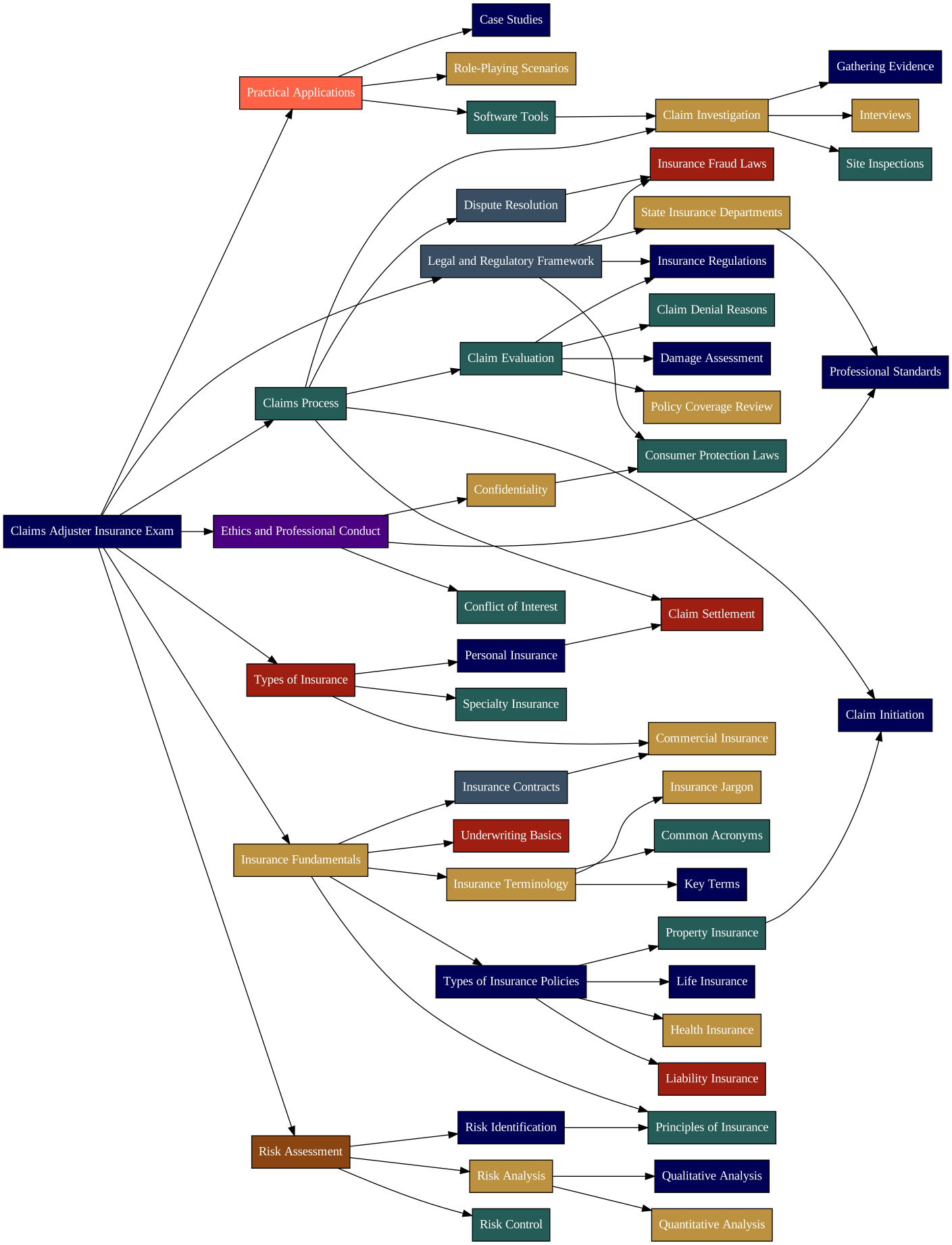
Quiz-summary
0 of 30 questions completed
Questions:
- 1
- 2
- 3
- 4
- 5
- 6
- 7
- 8
- 9
- 10
- 11
- 12
- 13
- 14
- 15
- 16
- 17
- 18
- 19
- 20
- 21
- 22
- 23
- 24
- 25
- 26
- 27
- 28
- 29
- 30
Information
Premium Practice Questions
You have already completed the quiz before. Hence you can not start it again.
Quiz is loading...
You must sign in or sign up to start the quiz.
You have to finish following quiz, to start this quiz:
Results
0 of 30 questions answered correctly
Your time:
Time has elapsed
You have reached 0 of 0 points, (0)
Categories
- Not categorized 0%
- 1
- 2
- 3
- 4
- 5
- 6
- 7
- 8
- 9
- 10
- 11
- 12
- 13
- 14
- 15
- 16
- 17
- 18
- 19
- 20
- 21
- 22
- 23
- 24
- 25
- 26
- 27
- 28
- 29
- 30
- Answered
- Review
-
Question 1 of 30
1. Question
When you are faced with the task of assessing a claim in Massachusetts, it is crucial to be aware of any recent legislative changes that may affect your responsibilities as an adjuster. A new law has been passed requiring insurance companies to enhance transparency in the claims process. This law is designed to protect consumers by ensuring they receive comprehensive information about their insurance policies, particularly regarding coverage limits and exclusions. As an adjuster, how should you interpret this new requirement in your daily operations? What measures might you need to implement to comply with the adjustments in policy handling and client communication?
Correct
Recent legislation has a significant impact on the insurance landscape in Massachusetts. Adjusters must stay informed about changes to laws and regulations affecting the industry. For instance, the Massachusetts Department of Insurance has enacted laws aimed at increasing transparency and protecting consumers. One vital recent change pertains to the requirements for mandatory disclosures to policyholders. This legislation mandates that insurance companies provide clear explanations regarding policy exclusions, limits, and the claims process. Failure to comply can result in penalties for the insurer, but it also affects how adjusters handle claims. Adjusters must ensure they are providing accurate information to clients and are aware of their obligations under these new laws. The need for proper training and adherence to ethical standards is critical, as adjusters are often the frontline representatives for insurers. They must navigate these changes sensitively and ensure that the interests of all parties are balanced while adhering to the new regulations.
Incorrect
Recent legislation has a significant impact on the insurance landscape in Massachusetts. Adjusters must stay informed about changes to laws and regulations affecting the industry. For instance, the Massachusetts Department of Insurance has enacted laws aimed at increasing transparency and protecting consumers. One vital recent change pertains to the requirements for mandatory disclosures to policyholders. This legislation mandates that insurance companies provide clear explanations regarding policy exclusions, limits, and the claims process. Failure to comply can result in penalties for the insurer, but it also affects how adjusters handle claims. Adjusters must ensure they are providing accurate information to clients and are aware of their obligations under these new laws. The need for proper training and adherence to ethical standards is critical, as adjusters are often the frontline representatives for insurers. They must navigate these changes sensitively and ensure that the interests of all parties are balanced while adhering to the new regulations.
-
Question 2 of 30
2. Question
Consider a scenario where a claims adjuster in Massachusetts is assessing a property damage claim resulting from a storm. The adjuster must gather information regarding the extent of the damage, the circumstances surrounding the event, and the relevant insurance policy provisions. What is the primary responsibility of the claims adjuster in this scenario concerning the claims process?
Correct
A claims adjuster plays a critical role in the insurance claims process, and in Massachusetts, their responsibilities are governed by specific regulations intended to ensure transparency, fairness, and adherence to legal standards. Adjusters are tasked with evaluating claims, determining the validity of coverage, and negotiating settlements. They must thoroughly investigate each claim, gather evidence, interview relevant parties, and analyze policy provisions to arrive at a fair assessment. This role demands not only a deep understanding of insurance policies but also the ability to communicate effectively with claimants, insurers, legal representatives, and other stakeholders. In addition, Massachusetts law requires adjusters to uphold ethical standards, including acting with integrity and fair dealing. They must maintain impartiality and objectivity, avoiding any conflicts of interest that may arise. Failure to meet these responsibilities can result in legal ramifications and damage to the adjuster’s professional reputation. Adjusters must also stay informed about changes in state laws and insurance practices to ensure compliance. Thus, understanding the nuances of their role is vital for successful claims management in an ever-evolving regulatory environment.
Incorrect
A claims adjuster plays a critical role in the insurance claims process, and in Massachusetts, their responsibilities are governed by specific regulations intended to ensure transparency, fairness, and adherence to legal standards. Adjusters are tasked with evaluating claims, determining the validity of coverage, and negotiating settlements. They must thoroughly investigate each claim, gather evidence, interview relevant parties, and analyze policy provisions to arrive at a fair assessment. This role demands not only a deep understanding of insurance policies but also the ability to communicate effectively with claimants, insurers, legal representatives, and other stakeholders. In addition, Massachusetts law requires adjusters to uphold ethical standards, including acting with integrity and fair dealing. They must maintain impartiality and objectivity, avoiding any conflicts of interest that may arise. Failure to meet these responsibilities can result in legal ramifications and damage to the adjuster’s professional reputation. Adjusters must also stay informed about changes in state laws and insurance practices to ensure compliance. Thus, understanding the nuances of their role is vital for successful claims management in an ever-evolving regulatory environment.
-
Question 3 of 30
3. Question
When you are faced with a complex claim situation in Massachusetts where the maximum policy limits are a crucial factor, how should you approach the negotiation process to ensure a fair settlement for the insured? Consider the implications of the policy limits on both the adjuster’s responsibilities and the claimant’s expectations when formulating your strategy.
Correct
The limits of an insurance policy can significantly influence claim settlements and negotiations between the adjuster and the insured or claimant. In Massachusetts, as in other states, an adjuster’s responsibility is not only to assess the damages incurred but also to ensure that the settlement stays within the contractual limits established by the policy. These limits define the maximum amount the insurer will pay for a covered loss, and they can vary based on many factors, including the type of coverage, the specific risk associated with the insured property, and any endorsements or exclusions that may apply. When negotiating settlements, the adjuster must be aware of these limits to effectively manage expectations and communicate the rationale behind settlement offers. If a claim exceeds the policy limits, the adjuster may need to work closely with legal counsel to explore possible remedies or additional coverage options. Ultimately, understanding how these limits operate aids the adjuster in advising clients accurately and crafting fair settlements that adhere to regulatory requirements while also meeting the financial needs of those they serve.
Incorrect
The limits of an insurance policy can significantly influence claim settlements and negotiations between the adjuster and the insured or claimant. In Massachusetts, as in other states, an adjuster’s responsibility is not only to assess the damages incurred but also to ensure that the settlement stays within the contractual limits established by the policy. These limits define the maximum amount the insurer will pay for a covered loss, and they can vary based on many factors, including the type of coverage, the specific risk associated with the insured property, and any endorsements or exclusions that may apply. When negotiating settlements, the adjuster must be aware of these limits to effectively manage expectations and communicate the rationale behind settlement offers. If a claim exceeds the policy limits, the adjuster may need to work closely with legal counsel to explore possible remedies or additional coverage options. Ultimately, understanding how these limits operate aids the adjuster in advising clients accurately and crafting fair settlements that adhere to regulatory requirements while also meeting the financial needs of those they serve.
-
Question 4 of 30
4. Question
Consider a scenario where a Massachusetts-based commercial insurance adjuster is faced with a complex claim involving significant damages from a recent hurricane, compounded by a concurrent cyberattack on the insured’s data management system that resulted in data loss. In this context, how should the adjuster prioritize the assessment of the claims, particularly in light of emerging risks related to climate change and cyber liability? Understanding the implications of both risks is crucial for effective resolution.
Correct
Emerging risks, particularly in the context of climate change and cyber liability, have significant implications for the insurance sector and adjusters in Massachusetts. Climate change, for instance, leads to more frequent and severe weather events, which in turn increases the risk associated with property and casualty insurance. Adjusters must understand how these changes affect coverage and claims processes. Similarly, cyber liability has become increasingly relevant as more businesses rely on digital infrastructure, making them vulnerable to data breaches and cyberattacks. Adjusters must be adept at managing claims related to these new risks, ensuring compliance with state regulations and understanding the nuances of policies that cover cyber-related incidents. The evolution of consumer needs is equally crucial as clients become more aware of the potential risks associated with technology and environmental changes, demanding tailored solutions. An adjuster who stays informed about these emerging risks is better equipped to assess claims accurately, advise clients, and navigate the regulatory landscape effectively.
Incorrect
Emerging risks, particularly in the context of climate change and cyber liability, have significant implications for the insurance sector and adjusters in Massachusetts. Climate change, for instance, leads to more frequent and severe weather events, which in turn increases the risk associated with property and casualty insurance. Adjusters must understand how these changes affect coverage and claims processes. Similarly, cyber liability has become increasingly relevant as more businesses rely on digital infrastructure, making them vulnerable to data breaches and cyberattacks. Adjusters must be adept at managing claims related to these new risks, ensuring compliance with state regulations and understanding the nuances of policies that cover cyber-related incidents. The evolution of consumer needs is equally crucial as clients become more aware of the potential risks associated with technology and environmental changes, demanding tailored solutions. An adjuster who stays informed about these emerging risks is better equipped to assess claims accurately, advise clients, and navigate the regulatory landscape effectively.
-
Question 5 of 30
5. Question
When you are faced with a claim involving property damage due to a spill of hazardous materials, you must carefully assess the situation. This scenario raises several questions about the environmental impact and the regulatory obligations involved. Which aspect is most critical for you to consider as an adjuster in relation to the claim and the impact on community safety? Understanding the requirements for conducting an environmental impact assessment is crucial here. In Massachusetts, what is the primary importance of having an EIA done in scenarios involving hazardous materials?
Correct
In Massachusetts, the handling of hazardous materials during the claims adjustment process is governed by specific laws and regulatory frameworks. Understanding environmental impact assessments is critical for adjusters, as they often play a key role in determining how these assessments affect claim outcomes. An environmental impact assessment (EIA) evaluates the potential environmental effects of a project, particularly those involving hazardous materials. Adjusters must be knowledgeable about the potential risks associated with hazardous substances, including the long-term implications for affected properties and communities. When a property claim involves hazardous materials, it becomes essential for the adjuster to assess whether an EIA has been conducted and to review its findings. They should ensure that the remediation efforts align with regulatory mandates and that all necessary precautions are taken to protect public health and the environment. Proper evaluation can influence the claims process, liability determinations, and the policyholder’s rights under their insurance coverage. Thus, the adjuster plays a pivotal role in facilitating transparent communication about environmental risks and ensuring compliance with Massachusetts environmental regulations.
Incorrect
In Massachusetts, the handling of hazardous materials during the claims adjustment process is governed by specific laws and regulatory frameworks. Understanding environmental impact assessments is critical for adjusters, as they often play a key role in determining how these assessments affect claim outcomes. An environmental impact assessment (EIA) evaluates the potential environmental effects of a project, particularly those involving hazardous materials. Adjusters must be knowledgeable about the potential risks associated with hazardous substances, including the long-term implications for affected properties and communities. When a property claim involves hazardous materials, it becomes essential for the adjuster to assess whether an EIA has been conducted and to review its findings. They should ensure that the remediation efforts align with regulatory mandates and that all necessary precautions are taken to protect public health and the environment. Proper evaluation can influence the claims process, liability determinations, and the policyholder’s rights under their insurance coverage. Thus, the adjuster plays a pivotal role in facilitating transparent communication about environmental risks and ensuring compliance with Massachusetts environmental regulations.
-
Question 6 of 30
6. Question
Consider a scenario where a Massachusetts insurance adjuster is reviewing the licensing requirements applicable to their profession. They encounter confusion regarding the differences between state and federal regulations that govern their practices. What should the adjuster recognize about their responsibilities under Massachusetts regulations compared to federal guidelines, particularly in relation to licensing and ethical conduct?
Correct
In the context of insurance, understanding the regulations governing both state and federal levels is crucial for adjusters in Massachusetts. State regulations primarily address specific licensing requirements, the ethical conduct of adjusters, and how claims should be handled within the state’s jurisdiction. These regulations are unique to Massachusetts and provide guidelines to ensure that adjusters operate within the law while safeguarding consumer rights. On the other hand, federal regulations, such as those established by the Insurance Information Institute and the Federal Insurance Office, may set broader standards that impact how insurance companies operate nationally, but they do not override state laws. The Massachusetts Division of Insurance oversees the licensing process for adjusters, ensuring that they meet educational and ethical standards before they are permitted to operate. An adjuster’s understanding of these distinctions helps them navigate the regulatory landscape effectively, enabling them to comply with both state laws and any applicable federal statutes while providing fair treatment to clients.
Incorrect
In the context of insurance, understanding the regulations governing both state and federal levels is crucial for adjusters in Massachusetts. State regulations primarily address specific licensing requirements, the ethical conduct of adjusters, and how claims should be handled within the state’s jurisdiction. These regulations are unique to Massachusetts and provide guidelines to ensure that adjusters operate within the law while safeguarding consumer rights. On the other hand, federal regulations, such as those established by the Insurance Information Institute and the Federal Insurance Office, may set broader standards that impact how insurance companies operate nationally, but they do not override state laws. The Massachusetts Division of Insurance oversees the licensing process for adjusters, ensuring that they meet educational and ethical standards before they are permitted to operate. An adjuster’s understanding of these distinctions helps them navigate the regulatory landscape effectively, enabling them to comply with both state laws and any applicable federal statutes while providing fair treatment to clients.
-
Question 7 of 30
7. Question
During a claim evaluation in Massachusetts, how should an adjuster navigate the balance between thorough investigation and prompt resolution? The scenario involves a homeowner filing a claim for storm damage to their roof. While the adjuster recognizes the need for a comprehensive assessment, they also understand the importance of maintaining open lines of communication with the claimant and adhering to state regulations regarding timely updates. What is the adjuster’s best approach to ensure compliance with both investigatory and regulatory obligations while promoting customer satisfaction?
Correct
In Massachusetts, the role of an adjuster is crucial in assessing and facilitating insurance claims. When an adjuster evaluates a claim, they must consider the specifics of the coverage, the incident’s nature, and applicable laws and regulations governing insurance practices. Adjusters are expected to act in good faith, maintain clear communication with the claimant, and uphold ethical standards in their evaluation process. One key aspect of adjusting claims is ensuring that there is not only a thorough investigation but also adherence to the timelines set forth by the Massachusetts Division of Insurance. This includes timely communication with the insured to keep them informed about the status of their claim. A failure to do so could lead to potential legal consequences as well as damages to the insurer’s reputation. Additionally, the Massachusetts Consumer Protection Act plays a role in this process, ensuring that claimants are treated fairly and that adjusters are held accountable for their actions, especially if they exhibit unfair claims handling practices.
Incorrect
In Massachusetts, the role of an adjuster is crucial in assessing and facilitating insurance claims. When an adjuster evaluates a claim, they must consider the specifics of the coverage, the incident’s nature, and applicable laws and regulations governing insurance practices. Adjusters are expected to act in good faith, maintain clear communication with the claimant, and uphold ethical standards in their evaluation process. One key aspect of adjusting claims is ensuring that there is not only a thorough investigation but also adherence to the timelines set forth by the Massachusetts Division of Insurance. This includes timely communication with the insured to keep them informed about the status of their claim. A failure to do so could lead to potential legal consequences as well as damages to the insurer’s reputation. Additionally, the Massachusetts Consumer Protection Act plays a role in this process, ensuring that claimants are treated fairly and that adjusters are held accountable for their actions, especially if they exhibit unfair claims handling practices.
-
Question 8 of 30
8. Question
When you are faced with a complex property damage claim in Massachusetts where the insured and the insurer have conflicting positions regarding liability and damages, what approach would best facilitate a successful negotiation and settlement? Consider the potential benefits and drawbacks of various methods, including interest-based negotiation, mediation, and positional bargaining. What would be the most effective technique to utilize in this scenario to help both parties arrive at a satisfactory resolution while adhering to the state’s regulatory guidelines?
Correct
In the context of claims adjustment in Massachusetts, understanding settlement techniques is crucial for effective negotiation and resolution of disputes between insurers and claimants. One commonly used technique is the “interests-based negotiation,” which prioritizes the underlying interests of the parties involved rather than their stated positions. This approach aims to foster collaboration and find mutually beneficial solutions, which can lead to quicker resolutions and enhanced satisfaction for both parties. In contrast, positional bargaining focuses on fixed claims and counterclaims, which can trigger conflicts. Another technique is the “mediation process,” where a neutral third-party mediator facilitates discussion, helping both sides to explore their interests and arrive at a fair settlement. It can be especially beneficial in Massachusetts, where the regulatory framework encourages amicable resolutions. The “best alternative to a negotiated agreement” (BATNA) concept also plays a critical role, as it empowers claimants to understand their options if negotiations fail, subsequently influencing their willingness to settle. Mastery of these techniques, as outlined in the Massachusetts General Laws and the regulatory guidelines of the Division of Insurance, is essential for effective claims resolution.
Incorrect
In the context of claims adjustment in Massachusetts, understanding settlement techniques is crucial for effective negotiation and resolution of disputes between insurers and claimants. One commonly used technique is the “interests-based negotiation,” which prioritizes the underlying interests of the parties involved rather than their stated positions. This approach aims to foster collaboration and find mutually beneficial solutions, which can lead to quicker resolutions and enhanced satisfaction for both parties. In contrast, positional bargaining focuses on fixed claims and counterclaims, which can trigger conflicts. Another technique is the “mediation process,” where a neutral third-party mediator facilitates discussion, helping both sides to explore their interests and arrive at a fair settlement. It can be especially beneficial in Massachusetts, where the regulatory framework encourages amicable resolutions. The “best alternative to a negotiated agreement” (BATNA) concept also plays a critical role, as it empowers claimants to understand their options if negotiations fail, subsequently influencing their willingness to settle. Mastery of these techniques, as outlined in the Massachusetts General Laws and the regulatory guidelines of the Division of Insurance, is essential for effective claims resolution.
-
Question 9 of 30
9. Question
When a Massachusetts adjuster is assessing a property damage claim, they must apply several foundational insurance principles to determine the correct compensation. One principle, indemnity, ensures that the insured is restored to their financial state before the loss without any profit from the claim. Furthermore, adjusters need to be mindful of the principle of insurable interest, which stipulates that the policyholder must have a legitimate interest in the property. Consider a situation where a homeowner files a claim after a fire destroys their kitchen. The adjuster must evaluate the damages based on these principles, ensuring they do not exceed the actual loss while also verifying the homeowner’s insurable interest in the property. Understanding these concepts is vital for making informed and compliant decisions. What is the primary purpose of the principle of indemnity in this context?
Correct
Understanding insurance principles is crucial for Massachusetts adjusters, as it directly impacts the effectiveness and legal compliance of their practices. A fundamental principle of insurance is the concept of indemnity, which is designed to prevent policyholders from profiting from a loss and instead return them to their pre-loss financial position. This principle underscores the importance of fair claims assessment and ensures that compensation is proportionate to the actual loss incurred. Another critical aspect is the principle of insurable interest, which mandates that an insured party must have a legitimate stake in the insured property, further reinforcing the ethical standards of the insurance industry. Additionally, the concept of subrogation allows insurers to pursue recovery from third parties that caused a loss, which helps maintain the financial integrity of the insurance process. Together, these principles form a framework that governs the expectations and responsibilities of adjusters in Massachusetts, ensuring that they act fairly and in accordance with both legal and ethical standards.
Incorrect
Understanding insurance principles is crucial for Massachusetts adjusters, as it directly impacts the effectiveness and legal compliance of their practices. A fundamental principle of insurance is the concept of indemnity, which is designed to prevent policyholders from profiting from a loss and instead return them to their pre-loss financial position. This principle underscores the importance of fair claims assessment and ensures that compensation is proportionate to the actual loss incurred. Another critical aspect is the principle of insurable interest, which mandates that an insured party must have a legitimate stake in the insured property, further reinforcing the ethical standards of the insurance industry. Additionally, the concept of subrogation allows insurers to pursue recovery from third parties that caused a loss, which helps maintain the financial integrity of the insurance process. Together, these principles form a framework that governs the expectations and responsibilities of adjusters in Massachusetts, ensuring that they act fairly and in accordance with both legal and ethical standards.
-
Question 10 of 30
10. Question
Consider a scenario where a Massachusetts-based delivery service employee, while making a routine delivery, accidentally causes a car accident by failing to stop at a red light. The driver of the other vehicle is injured and seeks compensation from the delivery service. Which of the following best describes the potential liability of the delivery service in this incident?
Correct
Understanding liability is crucial for adjusters, as it defines the framework for claiming damages in varying circumstances. In Massachusetts, there are three primary categories of liability: negligence, strict liability, and vicarious liability. Negligence is defined as the failure to take reasonable care to avoid causing injury to another person, which can result in the liable party being responsible for damages. Strict liability, on the other hand, applies in cases where a party is held liable without the need for proving negligence or fault, typically in cases involving inherently dangerous activities or defective products. Vicarious liability refers to a situation where an employer can be held liable for the negligent actions of an employee, provided those actions occurred within the scope of employment. This distinction is vital for adjusters when evaluating claims, as it affects the determination of liability and the potential for compensation. Adjusters must grasp these concepts holistically, as they influence how claims are processed and the responsibilities that may arise under Massachusetts law.
Incorrect
Understanding liability is crucial for adjusters, as it defines the framework for claiming damages in varying circumstances. In Massachusetts, there are three primary categories of liability: negligence, strict liability, and vicarious liability. Negligence is defined as the failure to take reasonable care to avoid causing injury to another person, which can result in the liable party being responsible for damages. Strict liability, on the other hand, applies in cases where a party is held liable without the need for proving negligence or fault, typically in cases involving inherently dangerous activities or defective products. Vicarious liability refers to a situation where an employer can be held liable for the negligent actions of an employee, provided those actions occurred within the scope of employment. This distinction is vital for adjusters when evaluating claims, as it affects the determination of liability and the potential for compensation. Adjusters must grasp these concepts holistically, as they influence how claims are processed and the responsibilities that may arise under Massachusetts law.
-
Question 11 of 30
11. Question
In the context of managing insurance claims in Massachusetts, how does claims management software contribute to the efficiency and effectiveness of the claims process, especially in light of regulatory requirements and ethical standards? Consider a scenario where an adjuster utilizes such software to track a claim from initiation through resolution. What is the primary benefit this tool provides to both the adjuster and the claimant in terms of compliance and service delivery?
Correct
Claims management software plays a pivotal role in the handling and processing of insurance claims, particularly in the context of the Massachusetts Adjuster License Exam. These tools enhance efficiency, accuracy, and transparency throughout the claims process. By offering a centralized platform for logging claims, tracking their progress, and managing communications, adjusters can ensure they meet regulatory requirements and uphold ethical standards. The software typically includes features such as automated claim workflows, document management systems, and customer relationship management (CRM) capabilities. It also aids in data analysis, allowing adjusters to identify patterns and potential fraud risks. Familiarity with claims management software aligns with the Massachusetts Division of Insurance regulations, which emphasize the importance of fair and timely claims processing. Adjusters are thus expected to be adept at utilizing technology to optimize their workflows while adhering to the code of conduct that mandates accuracy, integrity, and customer respect. This understanding not only supports regulatory compliance but also enhances the overall service quality provided to clients.
Incorrect
Claims management software plays a pivotal role in the handling and processing of insurance claims, particularly in the context of the Massachusetts Adjuster License Exam. These tools enhance efficiency, accuracy, and transparency throughout the claims process. By offering a centralized platform for logging claims, tracking their progress, and managing communications, adjusters can ensure they meet regulatory requirements and uphold ethical standards. The software typically includes features such as automated claim workflows, document management systems, and customer relationship management (CRM) capabilities. It also aids in data analysis, allowing adjusters to identify patterns and potential fraud risks. Familiarity with claims management software aligns with the Massachusetts Division of Insurance regulations, which emphasize the importance of fair and timely claims processing. Adjusters are thus expected to be adept at utilizing technology to optimize their workflows while adhering to the code of conduct that mandates accuracy, integrity, and customer respect. This understanding not only supports regulatory compliance but also enhances the overall service quality provided to clients.
-
Question 12 of 30
12. Question
Consider a scenario where an adjuster in Massachusetts is evaluating a claim for a homeowner who has suffered water damage due to a leaking pipe. The adjuster knows that the principle of indemnity plays a critical role in this situation. What must the adjuster ensure while assessing the claim to comply with both ethical standards and the Massachusetts Insurance Regulations?
Correct
Understanding the principles of insurance is crucial for adjusters, particularly in Massachusetts, where regulatory compliance plays a significant role in effective claims resolution. Insurance is fundamentally designed to provide financial protection against loss, which emphasizes the importance of risk management. The principle of indemnity, a core concept in insurance, asserts that policyholders should be restored to their financial position prior to a loss, without profit. This principle is vital in preventing claims fraud and ensuring the integrity of the insurance system. An adjuster’s role is to assess claims thoroughly, examining policy provisions to determine coverage, as well as evaluating evidence to substantiate losses. Additionally, the Massachusetts regulations mandate that adjusters act in good faith, exercising reasonable diligence and impartiality in their investigations. This involves not only adhering to the law but also maintaining ethical standards in dealing with policyholders and claimants. Only through strict adherence to these principles and legal frameworks can adjusters maintain professional credibility and serve the best interests of all parties involved.
Incorrect
Understanding the principles of insurance is crucial for adjusters, particularly in Massachusetts, where regulatory compliance plays a significant role in effective claims resolution. Insurance is fundamentally designed to provide financial protection against loss, which emphasizes the importance of risk management. The principle of indemnity, a core concept in insurance, asserts that policyholders should be restored to their financial position prior to a loss, without profit. This principle is vital in preventing claims fraud and ensuring the integrity of the insurance system. An adjuster’s role is to assess claims thoroughly, examining policy provisions to determine coverage, as well as evaluating evidence to substantiate losses. Additionally, the Massachusetts regulations mandate that adjusters act in good faith, exercising reasonable diligence and impartiality in their investigations. This involves not only adhering to the law but also maintaining ethical standards in dealing with policyholders and claimants. Only through strict adherence to these principles and legal frameworks can adjusters maintain professional credibility and serve the best interests of all parties involved.
-
Question 13 of 30
13. Question
When you are faced with a complex claim involving potential fraud in Massachusetts, how should you approach the necessary investigative techniques while maintaining compliance with legal standards? Consider that you have access to multiple methods, including surveillance and background checks. What would be the best practice to ensure that your investigation is thorough yet ethically sound?
Correct
In the context of the Massachusetts Adjuster License Exam, it is crucial to understand the various investigative techniques used by adjusters, particularly in claims handling. Surveillance, background checks, and forensic analysis are integral parts of the claims investigation process. Surveillance involves monitoring a claimant’s activities to verify their claims and ensure that their reported situations are consistent with their observed behaviors. Background checks entail examining the history and context of the claimant, which may reveal prior incidents or patterns that could influence the claim’s legitimacy. Forensic analysis is a more technical approach that can involve examining documents, records, or physical evidence related to the claim. These techniques must be applied responsibly and in compliance with Massachusetts laws, including privacy regulations, to avoid legal repercussions. A thorough understanding of these investigative techniques not only aids in accurately assessing claims but also upholds the integrity and ethical standards expected of licensed adjusters. Adjusters must balance their investigative efforts with respect for individuals’ rights, ensuring that their methods are ethical and legally permissible.
Incorrect
In the context of the Massachusetts Adjuster License Exam, it is crucial to understand the various investigative techniques used by adjusters, particularly in claims handling. Surveillance, background checks, and forensic analysis are integral parts of the claims investigation process. Surveillance involves monitoring a claimant’s activities to verify their claims and ensure that their reported situations are consistent with their observed behaviors. Background checks entail examining the history and context of the claimant, which may reveal prior incidents or patterns that could influence the claim’s legitimacy. Forensic analysis is a more technical approach that can involve examining documents, records, or physical evidence related to the claim. These techniques must be applied responsibly and in compliance with Massachusetts laws, including privacy regulations, to avoid legal repercussions. A thorough understanding of these investigative techniques not only aids in accurately assessing claims but also upholds the integrity and ethical standards expected of licensed adjusters. Adjusters must balance their investigative efforts with respect for individuals’ rights, ensuring that their methods are ethical and legally permissible.
-
Question 14 of 30
14. Question
Consider a scenario where you are an adjuster handling a complex property damage claim in Massachusetts following a severe storm. The policyholder has reported extensive damages, but there are potential risks that could affect the claim’s legitimacy, such as pre-existing conditions or unreported damages. Before proceeding with the evaluation, you need to conduct a thorough risk assessment. What is the most effective technique to identify and evaluate these potential risks while ensuring compliance with Massachusetts regulations and ethical standards?
Correct
Risk assessment is a critical component of the claims process as it helps adjusters identify and evaluate potential risks associated with a claim, ensuring that they make informed decisions during the investigation and settlement phases. In Massachusetts, a thorough risk assessment includes evaluating factors such as the nature of the claim, the circumstances surrounding the loss, and the variables that might increase or decrease the likelihood of a successful claim. Effective risk assessment should also take into account any regulatory implications, as Massachusetts has specific laws and regulations pertinent to insurance claims and the conduct of adjusters. Adjusters must remain familiar with these regulations to uphold ethical standards and protect consumers. Furthermore, they should employ techniques such as interviews, documentation review, and site inspections to gather relevant information. Understanding potential risks also aids in communicating clearly with stakeholders, ultimately minimizing disputes and enhancing the resolution of claims. By adhering to best practices in risk assessment, an adjuster ensures compliance with industry standards and maintains the integrity of the claims process.
Incorrect
Risk assessment is a critical component of the claims process as it helps adjusters identify and evaluate potential risks associated with a claim, ensuring that they make informed decisions during the investigation and settlement phases. In Massachusetts, a thorough risk assessment includes evaluating factors such as the nature of the claim, the circumstances surrounding the loss, and the variables that might increase or decrease the likelihood of a successful claim. Effective risk assessment should also take into account any regulatory implications, as Massachusetts has specific laws and regulations pertinent to insurance claims and the conduct of adjusters. Adjusters must remain familiar with these regulations to uphold ethical standards and protect consumers. Furthermore, they should employ techniques such as interviews, documentation review, and site inspections to gather relevant information. Understanding potential risks also aids in communicating clearly with stakeholders, ultimately minimizing disputes and enhancing the resolution of claims. By adhering to best practices in risk assessment, an adjuster ensures compliance with industry standards and maintains the integrity of the claims process.
-
Question 15 of 30
15. Question
A critical incident occurs where a claims adjuster in Massachusetts faces a situation involving a significant property claim that requires immediate attention. To expedite the assessment process, the adjuster decides to utilize various technological tools available at their disposal. Considering the importance of both efficiency and adherence to legal regulations, which approach would best align with the expectations for adjusters in Massachusetts while ensuring compliance with best practices?
Correct
In the realm of claims adjusting, leveraging technology is essential for enhancing efficiency, accuracy, and communication. The integration of advanced tools such as mobile apps, cloud computing, and artificial intelligence can significantly streamline the claims process, allowing adjusters to gather information and assess damages in real-time. For instance, mobile applications enable adjusters to take photographs, document claims on-site, and communicate findings instantly with their team or clients. Furthermore, cloud computing facilitates easy access to files, which helps maintain continuity and collaboration among various stakeholders involved in the claims process. However, the use of technology also introduces considerations surrounding data privacy and security. Adjusters must be aware of Massachusetts regulations regarding the handling of sensitive data and ensure that all technology utilized complies with the requisite standards. This proficiency not only fosters trust with clients but also aligns with the ethical conduct expected from adjusters in Massachusetts. Ultimately, understanding how to effectively apply technological tools in claims adjusting is critical to achieving favorable outcomes and maintaining professional integrity within the industry.
Incorrect
In the realm of claims adjusting, leveraging technology is essential for enhancing efficiency, accuracy, and communication. The integration of advanced tools such as mobile apps, cloud computing, and artificial intelligence can significantly streamline the claims process, allowing adjusters to gather information and assess damages in real-time. For instance, mobile applications enable adjusters to take photographs, document claims on-site, and communicate findings instantly with their team or clients. Furthermore, cloud computing facilitates easy access to files, which helps maintain continuity and collaboration among various stakeholders involved in the claims process. However, the use of technology also introduces considerations surrounding data privacy and security. Adjusters must be aware of Massachusetts regulations regarding the handling of sensitive data and ensure that all technology utilized complies with the requisite standards. This proficiency not only fosters trust with clients but also aligns with the ethical conduct expected from adjusters in Massachusetts. Ultimately, understanding how to effectively apply technological tools in claims adjusting is critical to achieving favorable outcomes and maintaining professional integrity within the industry.
-
Question 16 of 30
16. Question
Consider a scenario where a property adjuster in Massachusetts is assessing a claim for water damage to a homeowner’s basement. After gathering evidence and conducting interviews, the adjuster realizes that the damage exceeds the initial estimates provided by the homeowner. In this situation, what would be the most effective strategy for the adjuster to settle the claim while ensuring compliance with Massachusetts regulations and maintaining an ethical approach?
Correct
In the process of claims settlement, adjusters must consider a variety of factors that influence the final resolution of a claim. These factors may include the nature of the loss, the policy terms, and the expectations of the claimant. A key component of an effective settlement strategy is understanding the principle of negotiation, which involves more than just arriving at a numerical figure. Adjusters must advocate for fair compensation while also adhering to the Massachusetts regulations concerning ethical conduct and fair dealings. This means being transparent with the claimant, providing clear explanations of how settlements are derived, and remaining compliant with state laws regarding claims handling. The adjuster’s ability to build rapport and trust can significantly impact the settlement process, allowing for an amicable resolution that satisfies both parties. Additionally, adjusters should always keep in mind the potential for litigation and the importance of maintaining comprehensive documentation. By employing a holistic approach to claims settlement, adjusters can navigate complex interpersonal dynamics while ensuring they remain within the bounds of the law and uphold the highest ethical standards.
Incorrect
In the process of claims settlement, adjusters must consider a variety of factors that influence the final resolution of a claim. These factors may include the nature of the loss, the policy terms, and the expectations of the claimant. A key component of an effective settlement strategy is understanding the principle of negotiation, which involves more than just arriving at a numerical figure. Adjusters must advocate for fair compensation while also adhering to the Massachusetts regulations concerning ethical conduct and fair dealings. This means being transparent with the claimant, providing clear explanations of how settlements are derived, and remaining compliant with state laws regarding claims handling. The adjuster’s ability to build rapport and trust can significantly impact the settlement process, allowing for an amicable resolution that satisfies both parties. Additionally, adjusters should always keep in mind the potential for litigation and the importance of maintaining comprehensive documentation. By employing a holistic approach to claims settlement, adjusters can navigate complex interpersonal dynamics while ensuring they remain within the bounds of the law and uphold the highest ethical standards.
-
Question 17 of 30
17. Question
When you are faced with a property claim in Massachusetts where the insured has experienced a total loss due to a fire, you must determine the appropriate valuation method to apply based on the details of the policy. The insured has stated that they believe the market value of their property should be considered, citing the current demand in their neighborhood. However, your preliminary assessment reveals that the property was significantly aged and had already undergone depreciation. In this scenario, which method would best ensure compliance with industry standards and fair settlement practices while considering the intricacies of property valuation?
Correct
Understanding property valuation methods is crucial for insurance adjusters in Massachusetts, as these assessments directly influence claims handling and settlements. Actual cash value (ACV) is commonly defined as the replacement cost minus depreciation, representing the item’s worth at the time of loss. It reflects the insurer’s obligation to indemnify the policyholder fairly while considering the wear and tear on the property. Replacement cost, on the other hand, refers to the amount required to replace the damaged property without deducting for depreciation, essentially aiming to restore the property to its original condition. Market value assesses the property’s worth based on current market conditions and comparable sales in the area, which can fluctuate and may not correlate directly with the cost to replace the property or its depreciated value. Each method serves specific purposes, and adjusters must discern which is applicable based on the policy details, the nature of the loss, and the expectations of the policyholder. Ensuring compliance with Massachusetts regulations, including fair conduct and accurate reporting, reinforces the importance of mastering these valuation concepts.
Incorrect
Understanding property valuation methods is crucial for insurance adjusters in Massachusetts, as these assessments directly influence claims handling and settlements. Actual cash value (ACV) is commonly defined as the replacement cost minus depreciation, representing the item’s worth at the time of loss. It reflects the insurer’s obligation to indemnify the policyholder fairly while considering the wear and tear on the property. Replacement cost, on the other hand, refers to the amount required to replace the damaged property without deducting for depreciation, essentially aiming to restore the property to its original condition. Market value assesses the property’s worth based on current market conditions and comparable sales in the area, which can fluctuate and may not correlate directly with the cost to replace the property or its depreciated value. Each method serves specific purposes, and adjusters must discern which is applicable based on the policy details, the nature of the loss, and the expectations of the policyholder. Ensuring compliance with Massachusetts regulations, including fair conduct and accurate reporting, reinforces the importance of mastering these valuation concepts.
-
Question 18 of 30
18. Question
During a review of a case involving a hazardous materials release in Massachusetts, you encounter a situation where the potential environmental impact could be significant. As an adjuster, you must understand the procedural requirements to address this incident effectively. What are the key steps and considerations you should take into account when conducting an environmental impact assessment and determining the appropriate responses to such hazardous material claims? Your analysis should include relevant state regulations, the principles of ethical conduct in claims adjustment, and the potential ramifications of failing to follow established procedures.
Correct
In Massachusetts, understanding the environmental considerations surrounding hazardous materials is crucial for adjusters. When dealing with claims related to environmental incidents, adjusters must consider the potential effects on health and the environment. This includes evaluating the risks associated with the release of hazardous substances and determining the necessary remediation measures to restore affected areas. Adjusters should be familiar with the state’s regulations, including the Massachusetts Contingency Plan (MCP), which outlines the procedures for managing hazardous material releases and ensuring public safety. Additionally, an effective environmental impact assessment must be conducted to evaluate how proposed actions may alter the environment and to identify possible mitigation strategies. The adjuster’s role includes not only assessing the financial implications of such incidents for insurers but also adhering to ethical standards of practice, ensuring that all actions taken comply with state laws to protect community well-being. Proper training in environmental laws and ethical guidelines is essential for adjusters to effectively navigate claims involving hazardous materials.
Incorrect
In Massachusetts, understanding the environmental considerations surrounding hazardous materials is crucial for adjusters. When dealing with claims related to environmental incidents, adjusters must consider the potential effects on health and the environment. This includes evaluating the risks associated with the release of hazardous substances and determining the necessary remediation measures to restore affected areas. Adjusters should be familiar with the state’s regulations, including the Massachusetts Contingency Plan (MCP), which outlines the procedures for managing hazardous material releases and ensuring public safety. Additionally, an effective environmental impact assessment must be conducted to evaluate how proposed actions may alter the environment and to identify possible mitigation strategies. The adjuster’s role includes not only assessing the financial implications of such incidents for insurers but also adhering to ethical standards of practice, ensuring that all actions taken comply with state laws to protect community well-being. Proper training in environmental laws and ethical guidelines is essential for adjusters to effectively navigate claims involving hazardous materials.
-
Question 19 of 30
19. Question
When you are faced with a situation where two parties involved in an insurance claim are in heated disagreement, it is essential to employ effective conflict resolution strategies. As a Massachusetts adjuster, you must not only address the immediate concerns but also facilitate a constructive dialogue between the parties. How would you best approach this scenario to ensure that the disputes are managed effectively and that both parties feel their interests have been considered?
Correct
Conflict resolution in the context of insurance adjusting is crucial, especially when managing disputes related to claims. A skilled adjuster must use strategies that foster effective communication and understanding of the parties’ perspectives. One such strategy is the “interest-based approach,” which focuses on the underlying interests of each party rather than their positions. This method encourages collaboration and seeks solutions that meet the essential needs of all parties involved. Additionally, active listening is pivotal; it allows adjusters to fully comprehend the concerns and emotions of others before proposing solutions. This ensures that all voices are heard and valued, reducing hostility. Furthermore, maintaining a calm demeanor and demonstrating empathy can de-escalate tensions and build trust. In Massachusetts, adhering to regulations governing ethical conduct is paramount, as it reinforces the professional standards expected from adjusters and demonstrates their commitment to fair resolution processes. By integrating these strategies, adjusters can effectively resolve disputes, ensuring equitable outcomes while adhering to state regulations.
Incorrect
Conflict resolution in the context of insurance adjusting is crucial, especially when managing disputes related to claims. A skilled adjuster must use strategies that foster effective communication and understanding of the parties’ perspectives. One such strategy is the “interest-based approach,” which focuses on the underlying interests of each party rather than their positions. This method encourages collaboration and seeks solutions that meet the essential needs of all parties involved. Additionally, active listening is pivotal; it allows adjusters to fully comprehend the concerns and emotions of others before proposing solutions. This ensures that all voices are heard and valued, reducing hostility. Furthermore, maintaining a calm demeanor and demonstrating empathy can de-escalate tensions and build trust. In Massachusetts, adhering to regulations governing ethical conduct is paramount, as it reinforces the professional standards expected from adjusters and demonstrates their commitment to fair resolution processes. By integrating these strategies, adjusters can effectively resolve disputes, ensuring equitable outcomes while adhering to state regulations.
-
Question 20 of 30
20. Question
You are reviewing a recent report from an insurance industry publication that addresses the impact of new regulations on property claims in Massachusetts. The report highlights trends in consumer behavior and changes in legal precedents affecting claim settlements. Why is it essential for you as an insurance adjuster to stay informed through such publications? Consider how this knowledge impacts your professional responsibilities and enhances the value you provide to your clients.
Correct
Staying informed through industry publications such as journals, articles, and reports is crucial for insurance adjusters in Massachusetts. These resources provide up-to-date information on regulatory changes, industry trends, best practices, and case law that may impact the adjusting process. Adjusters who actively engage with these publications can enhance their knowledge base, make informed decisions, and offer better service to clients. For instance, understanding the nuances of emerging regulations can help adjusters navigate the complexities of claims processing and ensure compliance with Massachusetts state laws, including those set forth by the Division of Insurance. Furthermore, industry publications often highlight case studies that provide insight into successful claims handling and risk assessment strategies, which can be invaluable in real-world scenarios. By consistently reviewing reputable sources, adjusters can position themselves as knowledgeable professionals who are adept at dealing with the evolving landscape of the insurance industry, ultimately benefiting both themselves and their clients.
Incorrect
Staying informed through industry publications such as journals, articles, and reports is crucial for insurance adjusters in Massachusetts. These resources provide up-to-date information on regulatory changes, industry trends, best practices, and case law that may impact the adjusting process. Adjusters who actively engage with these publications can enhance their knowledge base, make informed decisions, and offer better service to clients. For instance, understanding the nuances of emerging regulations can help adjusters navigate the complexities of claims processing and ensure compliance with Massachusetts state laws, including those set forth by the Division of Insurance. Furthermore, industry publications often highlight case studies that provide insight into successful claims handling and risk assessment strategies, which can be invaluable in real-world scenarios. By consistently reviewing reputable sources, adjusters can position themselves as knowledgeable professionals who are adept at dealing with the evolving landscape of the insurance industry, ultimately benefiting both themselves and their clients.
-
Question 21 of 30
21. Question
When managing claims in Massachusetts, an adjuster discovers that the reserves set for an ongoing series of claims appear insufficient based on the most recent evaluations of loss projections. The adjuster is aware that accurate reserves are essential not only for the financial health of the insurer but also for meeting state regulations. In light of this information, what is the underlying importance of maintaining appropriate reserves in the context of claims management?
Correct
In the realm of claims management, particularly under the regulations governing the Massachusetts Adjuster License, reserves play a crucial role in ensuring that an insurer can adequately meet its liabilities for claims. Reserves represent the estimated amount an insurer anticipates needing to pay out on claims that have been reported but not yet settled, as well as those that have been incurred but not reported (IBNR). Proper reserve management is vital because it directly influences the insurer’s financial stability and regulatory compliance. In Massachusetts, adjusters must understand how to establish reserves accurately and the potential implications of under-reserving. Under-reserving can lead to significant regulatory scrutiny and financial shortfalls, as insurers may be unable to fulfill their obligations. Moreover, loss ratios, defined as the ratio of losses paid out in claims plus adjustment expenses to the total earned premiums, serve as a critical metric to evaluate an insurer’s claims-handling efficiency. An adjuster who comprehends the importance of reserves and loss ratios will be better positioned to manage claims effectively, ensuring compliance with state laws and promoting trust in the insurance process.
Incorrect
In the realm of claims management, particularly under the regulations governing the Massachusetts Adjuster License, reserves play a crucial role in ensuring that an insurer can adequately meet its liabilities for claims. Reserves represent the estimated amount an insurer anticipates needing to pay out on claims that have been reported but not yet settled, as well as those that have been incurred but not reported (IBNR). Proper reserve management is vital because it directly influences the insurer’s financial stability and regulatory compliance. In Massachusetts, adjusters must understand how to establish reserves accurately and the potential implications of under-reserving. Under-reserving can lead to significant regulatory scrutiny and financial shortfalls, as insurers may be unable to fulfill their obligations. Moreover, loss ratios, defined as the ratio of losses paid out in claims plus adjustment expenses to the total earned premiums, serve as a critical metric to evaluate an insurer’s claims-handling efficiency. An adjuster who comprehends the importance of reserves and loss ratios will be better positioned to manage claims effectively, ensuring compliance with state laws and promoting trust in the insurance process.
-
Question 22 of 30
22. Question
When addressing a complex marine insurance claim in Massachusetts, an adjuster discovers that the vessel encountered severe weather, leading to cargo being sacrificed for the safety of the ship and crew. In this scenario, what principle should the adjuster apply to determine the sharing of loss among the stakeholders? It is crucial for marine adjusters to understand the implications of such situations on claims, especially given the legal and financial complexities involved with marine insurance contracts and the varying interests of those affected. To fully grasp this principle, the adjuster must also consider how it aligns with Massachusetts laws regarding marine insurance, including how such losses are typically recovered and distributed among the parties involved.
Correct
Marine and aviation insurance claims have unique considerations due to the specialized nature of these industries. In marine insurance, the doctrine of “general average” can significantly impact claims. This principle allows for the apportionment of loss when cargo is jettisoned to save the vessel, meaning that all parties with a financial interest in the voyage share the losses. Adjusters must be adept in evaluating whether a claim falls under this doctrine and how to negotiate settlements among multiple stakeholders. On the other hand, aviation claims often involve complex regulatory frameworks, including Federal Aviation Administration (FAA) regulations and international treaties. These regulations can affect liability determinations and recovery processes, making it crucial for adjusters to be knowledgeable about applicable laws. Additionally, both marine and aviation claims may involve unique physical damages and loss evaluations that differ from standard property claims, requiring adjusters to possess specialized knowledge and skills in handling such nuances.
Incorrect
Marine and aviation insurance claims have unique considerations due to the specialized nature of these industries. In marine insurance, the doctrine of “general average” can significantly impact claims. This principle allows for the apportionment of loss when cargo is jettisoned to save the vessel, meaning that all parties with a financial interest in the voyage share the losses. Adjusters must be adept in evaluating whether a claim falls under this doctrine and how to negotiate settlements among multiple stakeholders. On the other hand, aviation claims often involve complex regulatory frameworks, including Federal Aviation Administration (FAA) regulations and international treaties. These regulations can affect liability determinations and recovery processes, making it crucial for adjusters to be knowledgeable about applicable laws. Additionally, both marine and aviation claims may involve unique physical damages and loss evaluations that differ from standard property claims, requiring adjusters to possess specialized knowledge and skills in handling such nuances.
-
Question 23 of 30
23. Question
You are reviewing the qualifications of several candidates for the position of claims adjuster in Massachusetts. As part of your evaluation, it is critical to consider the impact of relevant certifications on their professional capabilities. How would you explain the overall importance of certifications for adjusters in this state, particularly in relation to their competency and adherence to regulatory standards? Consider their role in promoting ethical practices, enhancing knowledge of state-specific insurance regulations, and building consumer trust, which can ultimately affect the insurance claims process.
Correct
In Massachusetts, adjusters are often required to hold specific certifications that validate their expertise and professionalism in the field. These certifications serve multiple purposes, including enhancing the adjuster’s knowledge of state laws and regulations, improving customer trust, and ensuring adherence to ethical standards. For instance, obtaining a certification from reputable organizations signifies that the adjuster has undergone a rigorous training process and is familiar with best practices in claims handling. Moreover, certifications often require continuing education, which helps adjusters stay updated on changes in legislation, evolving industry standards, and emerging technologies. This ongoing educational requirement not only benefits the adjusters by enhancing their skills but also protects consumers by ensuring that adjusters are well-versed in the latest information and techniques. Furthermore, many clients and employers view certifications as a validation of a professional adjuster’s commitment to their craft, thereby enhancing job prospects and fostering professional development. In summary, the importance of obtaining relevant certifications cannot be overstated, as they play a crucial role in the career advancement of adjusters and the overall integrity of the insurance adjusting profession in Massachusetts.
Incorrect
In Massachusetts, adjusters are often required to hold specific certifications that validate their expertise and professionalism in the field. These certifications serve multiple purposes, including enhancing the adjuster’s knowledge of state laws and regulations, improving customer trust, and ensuring adherence to ethical standards. For instance, obtaining a certification from reputable organizations signifies that the adjuster has undergone a rigorous training process and is familiar with best practices in claims handling. Moreover, certifications often require continuing education, which helps adjusters stay updated on changes in legislation, evolving industry standards, and emerging technologies. This ongoing educational requirement not only benefits the adjusters by enhancing their skills but also protects consumers by ensuring that adjusters are well-versed in the latest information and techniques. Furthermore, many clients and employers view certifications as a validation of a professional adjuster’s commitment to their craft, thereby enhancing job prospects and fostering professional development. In summary, the importance of obtaining relevant certifications cannot be overstated, as they play a crucial role in the career advancement of adjusters and the overall integrity of the insurance adjusting profession in Massachusetts.
-
Question 24 of 30
24. Question
In the context of claims handling in Massachusetts, what aspect of business continuity planning is most essential for adjusters to ensure effective management of claims during unexpected disruptions, such as natural disasters or technology failures? Consider how adjustments in operational strategies can support compliance with state regulations and enhance overall client satisfaction.
Correct
Business continuity planning is a critical element in the claims processes for insurance adjusters, particularly in the context of Massachusetts regulations. The importance of maintaining continuity in claims operations cannot be overstated, as disruptions can lead to significant delays in claim resolutions and adversely affect customer satisfaction. A robust continuity plan ensures that all necessary resources, including personnel, technology, and procedures, are available and operational even in the event of a disaster or significant operational disruption. In Massachusetts, adjusters are mandated to adhere to specific state laws and regulations regarding fair claims practices. An effective business continuity plan includes thorough training for adjusters on how to handle claims in a variety of scenarios, including natural disasters or system failures. This training ensures that customer claims are processed expeditiously and fairly, upholding the standards set by the Massachusetts Division of Insurance. Moreover, continuity plans often incorporate contingency strategies to manage communication with clients, ensure the availability of essential information, and enable swift decision-making processes. Therefore, understanding the nuances of business continuity planning is vital for adjusters to meet regulatory requirements and enhance service delivery during unforeseen events.
Incorrect
Business continuity planning is a critical element in the claims processes for insurance adjusters, particularly in the context of Massachusetts regulations. The importance of maintaining continuity in claims operations cannot be overstated, as disruptions can lead to significant delays in claim resolutions and adversely affect customer satisfaction. A robust continuity plan ensures that all necessary resources, including personnel, technology, and procedures, are available and operational even in the event of a disaster or significant operational disruption. In Massachusetts, adjusters are mandated to adhere to specific state laws and regulations regarding fair claims practices. An effective business continuity plan includes thorough training for adjusters on how to handle claims in a variety of scenarios, including natural disasters or system failures. This training ensures that customer claims are processed expeditiously and fairly, upholding the standards set by the Massachusetts Division of Insurance. Moreover, continuity plans often incorporate contingency strategies to manage communication with clients, ensure the availability of essential information, and enable swift decision-making processes. Therefore, understanding the nuances of business continuity planning is vital for adjusters to meet regulatory requirements and enhance service delivery during unforeseen events.
-
Question 25 of 30
25. Question
While working on a complex claim in Massachusetts, an adjuster discovers that one of the involved parties has shared sensitive information regarding the client’s health and personal details with a third party without the client’s consent. Given the adjuster’s ethical responsibilities, how should they proceed in this situation to ensure compliance with state regulations and uphold their fiduciary duties?
Correct
In Massachusetts, adjusters have an ethical obligation to uphold confidentiality, which entails protecting the sensitive information of clients and stakeholders involved in the claims process. This duty extends to all forms of communication and documentation, ensuring that confidential data is not disclosed to unauthorized parties. Additionally, adjusters are required to act in good faith and maintain a fiduciary responsibility toward their clients. This implies that they must prioritize the best interests of the client, avoiding any conflicts of interest or self-serving actions. For example, if an adjuster were to reveal client information to another party without consent, it could undermine the client’s trust and violate state regulations concerning the handling of confidential information. A breach of confidentiality not only jeopardizes the adjuster’s license but can also result in legal repercussions. Understanding these ethical principles is crucial for adjusters as they navigate their professional responsibilities and foster trust within the industry.
Incorrect
In Massachusetts, adjusters have an ethical obligation to uphold confidentiality, which entails protecting the sensitive information of clients and stakeholders involved in the claims process. This duty extends to all forms of communication and documentation, ensuring that confidential data is not disclosed to unauthorized parties. Additionally, adjusters are required to act in good faith and maintain a fiduciary responsibility toward their clients. This implies that they must prioritize the best interests of the client, avoiding any conflicts of interest or self-serving actions. For example, if an adjuster were to reveal client information to another party without consent, it could undermine the client’s trust and violate state regulations concerning the handling of confidential information. A breach of confidentiality not only jeopardizes the adjuster’s license but can also result in legal repercussions. Understanding these ethical principles is crucial for adjusters as they navigate their professional responsibilities and foster trust within the industry.
-
Question 26 of 30
26. Question
During a claims settlement discussion in Massachusetts, an adjuster encounters a situation where the claimant has unrealistic expectations regarding the compensation amount. Given the ethical obligations and settlement strategies involved, how should the adjuster approach this scenario to facilitate an effective resolution? It is essential for the adjuster to navigate the conversation carefully, ensuring compliance with Massachusetts insurance regulations while addressing the claimant’s concerns. The adjuster must balance their duty to the insurance company with the need to maintain a constructive dialogue with the claimant so as not to escalate tensions. Therefore, what would be the most appropriate course of action for the adjuster?
Correct
In the context of claims settlement, effective communication and negotiation skills are paramount for adjusters operating within Massachusetts. A skilled adjuster must be able to carefully analyze the specifics of a claim while understanding the underlying motivations of both the claimant and the insurer. This includes recognizing when a claim may require a more strategic settlement approach, such as mediation or arbitration, instead of proceeding to litigation. Claims settlement strategies often involve reaching a fair compromise that sticks to regulatory frameworks while also addressing the client’s needs and expectations. The Massachusetts Division of Insurance regulates this process, emphasizing transparency, fairness, and adherence to ethical standards. It is crucial for adjusters to remain objective and to avoid any potential conflicts of interest during negotiations. Successful claims adjustments often hinge on the adjuster’s ability to build rapport with claimants, facilitate open communication, and manage expectations effectively. Ultimately, the goal is to ensure a satisfactory resolution for all parties involved, in line with the policies in place under Massachusetts law.
Incorrect
In the context of claims settlement, effective communication and negotiation skills are paramount for adjusters operating within Massachusetts. A skilled adjuster must be able to carefully analyze the specifics of a claim while understanding the underlying motivations of both the claimant and the insurer. This includes recognizing when a claim may require a more strategic settlement approach, such as mediation or arbitration, instead of proceeding to litigation. Claims settlement strategies often involve reaching a fair compromise that sticks to regulatory frameworks while also addressing the client’s needs and expectations. The Massachusetts Division of Insurance regulates this process, emphasizing transparency, fairness, and adherence to ethical standards. It is crucial for adjusters to remain objective and to avoid any potential conflicts of interest during negotiations. Successful claims adjustments often hinge on the adjuster’s ability to build rapport with claimants, facilitate open communication, and manage expectations effectively. Ultimately, the goal is to ensure a satisfactory resolution for all parties involved, in line with the policies in place under Massachusetts law.
-
Question 27 of 30
27. Question
During a negotiation between a policyholder and an insurance company in Massachusetts, you find that both parties are increasingly frustrated and unwilling to compromise. How would you best approach this situation to facilitate a resolution? Consider the implications of conflict resolution strategies and the importance of maintaining a professional demeanor in accordance with Massachusetts regulations governing adjusters.
Correct
Effective negotiation skills are crucial for Massachusetts adjusters, particularly when resolving conflicts between policyholders and insurers. One essential strategy in negotiation is to actively listen and seek to understand the other party’s perspective. This involves asking open-ended questions that invite dialogue and clarify the interests behind each party’s positions. By demonstrating empathy and validating the other party’s feelings, a negotiator can build rapport and create a collaborative atmosphere, which is vital for conflict resolution. It’s also important to identify and articulate common goals, focusing on mutually beneficial outcomes rather than merely winning the argument. Additionally, using assertive communication techniques—such as clearly stating one’s own needs while respecting the other party—can foster a more productive conversation. The Massachusetts regulation emphasizes the importance of conducting negotiations with honesty and integrity, which aligns well with these strategies. Thus, successful adjustment disputes often hinge on the adjuster’s ability to blend assertiveness with empathy, enhancing the chances of reaching a satisfactory resolution for all involved.
Incorrect
Effective negotiation skills are crucial for Massachusetts adjusters, particularly when resolving conflicts between policyholders and insurers. One essential strategy in negotiation is to actively listen and seek to understand the other party’s perspective. This involves asking open-ended questions that invite dialogue and clarify the interests behind each party’s positions. By demonstrating empathy and validating the other party’s feelings, a negotiator can build rapport and create a collaborative atmosphere, which is vital for conflict resolution. It’s also important to identify and articulate common goals, focusing on mutually beneficial outcomes rather than merely winning the argument. Additionally, using assertive communication techniques—such as clearly stating one’s own needs while respecting the other party—can foster a more productive conversation. The Massachusetts regulation emphasizes the importance of conducting negotiations with honesty and integrity, which aligns well with these strategies. Thus, successful adjustment disputes often hinge on the adjuster’s ability to blend assertiveness with empathy, enhancing the chances of reaching a satisfactory resolution for all involved.
-
Question 28 of 30
28. Question
During a claims assessment in Massachusetts, you encounter a policyholder who has experienced severe water damage to their property. Understanding the financial implications of their claim is essential. How would you evaluate the situation to ensure that all direct and indirect losses are accounted for and that the policyholder receives fair compensation? Consider what factors you would examine in determining the full financial impact of the claim, including how additional living expenses might influence the settlement amount.
Correct
Financial acumen is crucial for an adjuster as it involves understanding the financial implications of insurance decisions, settlements, and claims processing. In Massachusetts, an adjuster must be adept at evaluating damages not only based on the physical loss but also how these losses impact the policyholder’s financial situation. This includes the ability to analyze losses in terms of both direct and indirect costs, such as lost income or additional living expenses when properties become uninhabitable. An effective adjuster will understand the importance of presenting a comprehensive view of losses to support claims, thus ensuring fair and just settlements. Additionally, awareness of the regulatory framework in Massachusetts governing claims handling and the ethical considerations of financial representation is essential. Adjusters should be prepared to address the nuances of different types of coverage and the financial language utilized in insurance policies, allowing for a deeper analysis of policyholder situations. This translates into better service, improved client relationships, and mitigated risk of disputes or legal challenges that could arise from misunderstandings.
Incorrect
Financial acumen is crucial for an adjuster as it involves understanding the financial implications of insurance decisions, settlements, and claims processing. In Massachusetts, an adjuster must be adept at evaluating damages not only based on the physical loss but also how these losses impact the policyholder’s financial situation. This includes the ability to analyze losses in terms of both direct and indirect costs, such as lost income or additional living expenses when properties become uninhabitable. An effective adjuster will understand the importance of presenting a comprehensive view of losses to support claims, thus ensuring fair and just settlements. Additionally, awareness of the regulatory framework in Massachusetts governing claims handling and the ethical considerations of financial representation is essential. Adjusters should be prepared to address the nuances of different types of coverage and the financial language utilized in insurance policies, allowing for a deeper analysis of policyholder situations. This translates into better service, improved client relationships, and mitigated risk of disputes or legal challenges that could arise from misunderstandings.
-
Question 29 of 30
29. Question
When negotiating a settlement in a claims scenario in Massachusetts, how should an adjuster approach the conversation to ensure both parties feel they have achieved a satisfactory agreement? An adjuster realizes that conflict may arise from differing perspectives on the validity of the claim and the compensation expected. To navigate this potential contention effectively, what strategy should the adjuster prioritize in their negotiation tactics without alienating the other party? The adjuster understands that building rapport and trust is crucial but needs to employ the most effective method that encourages collaborative problem-solving and a shared understanding.
Correct
In the context of negotiating settlements in Massachusetts, effective negotiation skills are critical for an adjuster. Understanding the principles of interest-based negotiation can significantly enhance the chances of reaching a mutually beneficial agreement. This approach focuses on the underlying interests of all parties rather than their stated positions. By identifying common goals and demonstrating empathy towards the other party’s needs, an adjuster can create a cooperative environment that fosters open communication. It’s essential to prepare thoroughly for negotiations by gathering all relevant information about the claim and being clear about one’s objectives. Adjusters should also anticipate potential objections and be ready with counterarguments that address those concerns without escalating conflict. Having a flexible mindset and being willing to explore alternative solutions can also lead to more favorable outcomes. The objective is to strive for an agreement that satisfies both parties, ensuring that the negotiation process is both productive and respectful, ultimately contributing to the integrity of the adjuster’s role in the claims process.
Incorrect
In the context of negotiating settlements in Massachusetts, effective negotiation skills are critical for an adjuster. Understanding the principles of interest-based negotiation can significantly enhance the chances of reaching a mutually beneficial agreement. This approach focuses on the underlying interests of all parties rather than their stated positions. By identifying common goals and demonstrating empathy towards the other party’s needs, an adjuster can create a cooperative environment that fosters open communication. It’s essential to prepare thoroughly for negotiations by gathering all relevant information about the claim and being clear about one’s objectives. Adjusters should also anticipate potential objections and be ready with counterarguments that address those concerns without escalating conflict. Having a flexible mindset and being willing to explore alternative solutions can also lead to more favorable outcomes. The objective is to strive for an agreement that satisfies both parties, ensuring that the negotiation process is both productive and respectful, ultimately contributing to the integrity of the adjuster’s role in the claims process.
-
Question 30 of 30
30. Question
During a claims investigation in Massachusetts, you are tasked with determining the validity of a claim submitted after a significant property damage incident. Upon receiving the initial report from the claimant, you recognize the importance of collecting comprehensive information to support your analysis. As you move forward, you must consider the appropriate methods for evidence collection and the need to maintain communication with the claimant, witnesses, and possibly other involved parties. What would be the most effective initial approach to ensure a thorough investigation that aligns with Massachusetts regulations?
Correct
The claims process is a crucial aspect of the insurance industry, particularly for adjusters who handle the reporting, investigation, evaluation, and settlement of claims. In Massachusetts, the adjuster must ensure that the claims process adheres to regulatory standards and industry best practices. The initial step in the claims process is reporting, where the policyholder submits their claim, often necessitating detailed information about the incident. Following this, the investigation phase involves gathering facts and evidence to determine the cause and extent of the loss. This may include interviewing witnesses, reviewing documents, and inspecting the damaged property. After the investigation, the adjuster evaluates the claim by assessing the coverage, determining liability, and estimating the loss’s monetary value. Once these steps are completed, the adjuster can proceed to negotiate a settlement with the claimant. Throughout this entire process, an adjuster in Massachusetts must exhibit professionalism, maintain transparent communication, and uphold the ethical standards set forth by state regulations and the National Association of Insurance Commissioners.
Incorrect
The claims process is a crucial aspect of the insurance industry, particularly for adjusters who handle the reporting, investigation, evaluation, and settlement of claims. In Massachusetts, the adjuster must ensure that the claims process adheres to regulatory standards and industry best practices. The initial step in the claims process is reporting, where the policyholder submits their claim, often necessitating detailed information about the incident. Following this, the investigation phase involves gathering facts and evidence to determine the cause and extent of the loss. This may include interviewing witnesses, reviewing documents, and inspecting the damaged property. After the investigation, the adjuster evaluates the claim by assessing the coverage, determining liability, and estimating the loss’s monetary value. Once these steps are completed, the adjuster can proceed to negotiate a settlement with the claimant. Throughout this entire process, an adjuster in Massachusetts must exhibit professionalism, maintain transparent communication, and uphold the ethical standards set forth by state regulations and the National Association of Insurance Commissioners.