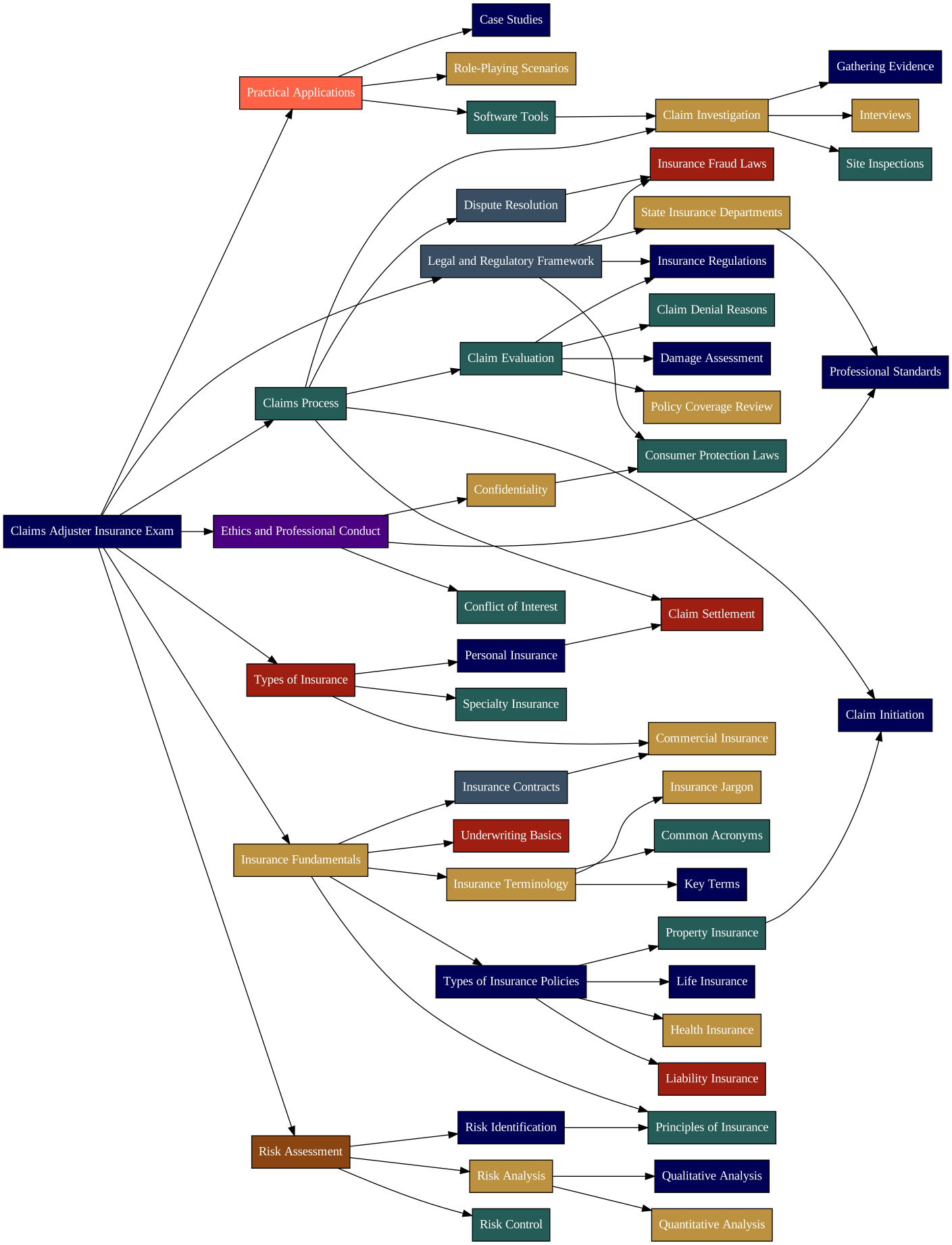
Quiz-summary
0 of 30 questions completed
Questions:
- 1
- 2
- 3
- 4
- 5
- 6
- 7
- 8
- 9
- 10
- 11
- 12
- 13
- 14
- 15
- 16
- 17
- 18
- 19
- 20
- 21
- 22
- 23
- 24
- 25
- 26
- 27
- 28
- 29
- 30
Information
Premium Practice Questions
You have already completed the quiz before. Hence you can not start it again.
Quiz is loading...
You must sign in or sign up to start the quiz.
You have to finish following quiz, to start this quiz:
Results
0 of 30 questions answered correctly
Your time:
Time has elapsed
You have reached 0 of 0 points, (0)
Categories
- Not categorized 0%
- 1
- 2
- 3
- 4
- 5
- 6
- 7
- 8
- 9
- 10
- 11
- 12
- 13
- 14
- 15
- 16
- 17
- 18
- 19
- 20
- 21
- 22
- 23
- 24
- 25
- 26
- 27
- 28
- 29
- 30
- Answered
- Review
-
Question 1 of 30
1. Question
Consider a scenario where you are an adjuster handling a complex liability claim in Minnesota. During your investigation, you are tasked with assessing various factors that could influence the claim’s outcome. As you gather information, you notice that there are discrepancies in the insured’s history and the circumstances surrounding the incident. How should you approach this situation to ensure a comprehensive risk assessment while adhering to ethical standards set forth by the Minnesota Department of Commerce? Specifically, consider how to identify and evaluate the implications of these discrepancies without compromising your objectivity or violating conduct regulations.
Correct
Risk assessment techniques are vital for adjusters in evaluating claims and determining the appropriate course of action. One of the most effective methods is the use of qualitative assessment, which involves analyzing the characteristics of potential risks without relying on numerical data. This allows an adjuster to understand the nature of the risks involved and how they may affect the claim. By identifying risk factors, such as the insured’s history, the context of the loss, and the potential for future risks, an adjuster can formulate a more comprehensive claim strategy. Moreover, the Minnesota Department of Commerce emphasizes the importance of adjusters maintaining objectivity and transparency during the risk evaluation process. This means that adjusters should be diligent in gathering all necessary information and avoiding any biases that may cloud their judgment. Notably, ethical considerations, including the duty to act in good faith and the commitment to fair treatment of all parties, are paramount. Adjusters must balance their findings with adherence to regulatory standards to foster trust and uphold the integrity of the claims process.
Incorrect
Risk assessment techniques are vital for adjusters in evaluating claims and determining the appropriate course of action. One of the most effective methods is the use of qualitative assessment, which involves analyzing the characteristics of potential risks without relying on numerical data. This allows an adjuster to understand the nature of the risks involved and how they may affect the claim. By identifying risk factors, such as the insured’s history, the context of the loss, and the potential for future risks, an adjuster can formulate a more comprehensive claim strategy. Moreover, the Minnesota Department of Commerce emphasizes the importance of adjusters maintaining objectivity and transparency during the risk evaluation process. This means that adjusters should be diligent in gathering all necessary information and avoiding any biases that may cloud their judgment. Notably, ethical considerations, including the duty to act in good faith and the commitment to fair treatment of all parties, are paramount. Adjusters must balance their findings with adherence to regulatory standards to foster trust and uphold the integrity of the claims process.
-
Question 2 of 30
2. Question
Consider a scenario where a Minnesota adjuster is assessing a homeowner’s claim for water damage after a heavy storm. The adjuster must determine whether the damage was caused by a covered event or not. While onsite, the homeowner expresses concern about how their previous claim for a similar issue was handled and suggests that they were underpaid in that instance. As the adjuster evaluates the current claim, what is the most critical consideration they must keep in mind when making their assessment and recommendation?
Correct
In the context of adjusting claims in Minnesota, it is crucial for adjusters to adhere to the guidelines and ethical standards set forth by the state’s Department of Commerce. These guidelines emphasize the need for honesty, integrity, and thoroughness in the claims process. When a claim is submitted, the adjuster must conduct a comprehensive investigation to ascertain the facts surrounding the claim, which includes assessing damage, verifying coverage, and determining liability. An important aspect of this process is ensuring that all information is gathered without bias and that all parties involved are treated fairly. Additionally, adjusters are required to communicate effectively and transparently with the insured to explain claim processes and decisions. Failing to adhere to these principles can not only jeopardize the claim itself but can also result in disciplinary actions against the adjuster, including the possibility of license suspension or revocation. Thus, an understanding of these ethical obligations is fundamental for success as a licensed adjuster in Minnesota.
Incorrect
In the context of adjusting claims in Minnesota, it is crucial for adjusters to adhere to the guidelines and ethical standards set forth by the state’s Department of Commerce. These guidelines emphasize the need for honesty, integrity, and thoroughness in the claims process. When a claim is submitted, the adjuster must conduct a comprehensive investigation to ascertain the facts surrounding the claim, which includes assessing damage, verifying coverage, and determining liability. An important aspect of this process is ensuring that all information is gathered without bias and that all parties involved are treated fairly. Additionally, adjusters are required to communicate effectively and transparently with the insured to explain claim processes and decisions. Failing to adhere to these principles can not only jeopardize the claim itself but can also result in disciplinary actions against the adjuster, including the possibility of license suspension or revocation. Thus, an understanding of these ethical obligations is fundamental for success as a licensed adjuster in Minnesota.
-
Question 3 of 30
3. Question
Consider a scenario where you are an adjuster handling a marine insurance claim involving a vessel that sank due to a sudden storm while navigating through a busy shipping lane. The owner of the vessel is seeking compensation for the loss. In this situation, what critical factors should you consider to accurately assess the claim and determine the insurance payout? Discuss the relevant regulations and standard practices unique to marine insurance that might influence your decision-making process.
Correct
Marine and aviation insurance claims are distinct due to specific risks and regulatory considerations that differ from standard insurance claims. One of the key aspects of managing these claims involves understanding the unique nature of maritime and aerial operations. For example, in marine insurance, the concept of “perils of the sea” encompasses risks such as rough weather, piracy, and the inherent dangers of navigation, which require specialized knowledge for effective claims handling. Additionally, aviation claims may involve complex regulatory frameworks set forth by the Federal Aviation Administration (FAA) and international aviation treaties, which dictate liability and compensation frameworks. In both cases, adjusters must be adept at interpreting not just the policy language but also relevant maritime and aviation laws, including the application of the Warsaw Convention or the Hague-Visby Rules. This nuanced understanding is critical in navigating claims processes, ensuring compliance with legal standards, and meeting the expectations of all parties involved, including insurers, insureds, and regulatory bodies.
Incorrect
Marine and aviation insurance claims are distinct due to specific risks and regulatory considerations that differ from standard insurance claims. One of the key aspects of managing these claims involves understanding the unique nature of maritime and aerial operations. For example, in marine insurance, the concept of “perils of the sea” encompasses risks such as rough weather, piracy, and the inherent dangers of navigation, which require specialized knowledge for effective claims handling. Additionally, aviation claims may involve complex regulatory frameworks set forth by the Federal Aviation Administration (FAA) and international aviation treaties, which dictate liability and compensation frameworks. In both cases, adjusters must be adept at interpreting not just the policy language but also relevant maritime and aviation laws, including the application of the Warsaw Convention or the Hague-Visby Rules. This nuanced understanding is critical in navigating claims processes, ensuring compliance with legal standards, and meeting the expectations of all parties involved, including insurers, insureds, and regulatory bodies.
-
Question 4 of 30
4. Question
While working on a project aimed at enhancing the claims process for your insurance agency in Minnesota, you are tasked with devising a business continuity plan. Given the unpredictable nature of events that could disrupt operations, it’s crucial to understand how continuity planning impacts the claims process. How would you describe the role of business continuity planning in ensuring that the claims processes remain efficient and compliant during such disruptions? Consider the implications for both the agency and the policyholders when developing this plan.
Correct
Business continuity planning (BCP) in the context of claims processes is vital for adjusters in Minnesota as it ensures that there is a structured approach to maintaining essential functions during a disruption. The importance of continuity cannot be overstated; it protects not just the interests of the insurance company but also serves the policyholders by facilitating timely and efficient claim handling. A well-implemented BCP encompasses risk assessment, response strategies, and recovery plans aimed at minimizing interruptions to claims processing. This means identifying potential risks that could impede operations, such as natural disasters or technology failures, and establishing protocols to mitigate these risks. Additionally, training staff on continuity procedures prepares them to act swiftly during emergencies, thereby preserving the integrity of the claims process. Furthermore, understanding the regulatory requirements specific to Minnesota, such as state laws governing the timeliness and handling of insurance claims, forms a critical part of BCP development. This ensures compliance, protects the rights of consumers, and enhances the reputation of the insurance company.
Incorrect
Business continuity planning (BCP) in the context of claims processes is vital for adjusters in Minnesota as it ensures that there is a structured approach to maintaining essential functions during a disruption. The importance of continuity cannot be overstated; it protects not just the interests of the insurance company but also serves the policyholders by facilitating timely and efficient claim handling. A well-implemented BCP encompasses risk assessment, response strategies, and recovery plans aimed at minimizing interruptions to claims processing. This means identifying potential risks that could impede operations, such as natural disasters or technology failures, and establishing protocols to mitigate these risks. Additionally, training staff on continuity procedures prepares them to act swiftly during emergencies, thereby preserving the integrity of the claims process. Furthermore, understanding the regulatory requirements specific to Minnesota, such as state laws governing the timeliness and handling of insurance claims, forms a critical part of BCP development. This ensures compliance, protects the rights of consumers, and enhances the reputation of the insurance company.
-
Question 5 of 30
5. Question
In the context of the Minnesota insurance market, how should an adjuster approach the recent trend of increased reliance on digital claims processing and data analytics? This emerging trend has been reshaping traditional methods and influences various aspects of the insurance industry. Adjusters must understand how to effectively integrate these technologies into their practices while still adhering to compliance and ethical standards set forth by Minnesota regulations. What is the most appropriate course of action for an adjuster in light of these market changes?
Correct
Understanding market trends and industry changes is crucial for adjusters, especially within Minnesota’s unique regulatory environment. Adjusters must remain knowledgeable about emerging trends that could influence claims processes and coverage options. For example, shifts towards digital claims processing and the increased use of telematics are changing how adjusters assess damages and evaluate risks. Additionally, knowledge of local economic conditions, including housing markets and environmental factors, can significantly impact claim assessments and the types of policies individuals and businesses seek. Adjusters should also be aware of regulatory changes that arise from evolving market dynamics to ensure compliance with Minnesota statutes. This includes understanding how trends affect underwriting practices, premium calculations, and policyholder rights. Therefore, keeping abreast of industry changes allows adjusters to provide more informed recommendations and maintain high standards of service aligned with Minnesota’s code of conduct for insurance professionals.
Incorrect
Understanding market trends and industry changes is crucial for adjusters, especially within Minnesota’s unique regulatory environment. Adjusters must remain knowledgeable about emerging trends that could influence claims processes and coverage options. For example, shifts towards digital claims processing and the increased use of telematics are changing how adjusters assess damages and evaluate risks. Additionally, knowledge of local economic conditions, including housing markets and environmental factors, can significantly impact claim assessments and the types of policies individuals and businesses seek. Adjusters should also be aware of regulatory changes that arise from evolving market dynamics to ensure compliance with Minnesota statutes. This includes understanding how trends affect underwriting practices, premium calculations, and policyholder rights. Therefore, keeping abreast of industry changes allows adjusters to provide more informed recommendations and maintain high standards of service aligned with Minnesota’s code of conduct for insurance professionals.
-
Question 6 of 30
6. Question
While investigating a claim in Minnesota, you notice that the claimant frequently changes the details of the incident in subsequent conversations with different adjusters. This repeated inconsistency raises concerns about the legitimacy of the claim. In addition to this, you have learned that the same claimant recently filed multiple claims with different insurers for similar incidents within a short time. What methods should you employ to best assess whether this situation indicates potential fraudulent activity? Consider the relevant fraudulent claim indicators that could be at play.
Correct
Identifying fraudulent claims is a critical responsibility for adjusters, especially in Minnesota’s insurance landscape. A red flag that often indicates potential fraud is a rapidly changing narrative from the claimant regarding the circumstances of the loss. This inconsistency can suggest that the claimant is attempting to fabricate or manipulate their story to benefit from their claim. Another common scheme is the existence of multiple claims from a single claimant, particularly within a short period; this could indicate an organized attempt to exploit the insurance system. Additionally, claims associated with unusual or improbable circumstances, such as theft occurring under suspicious conditions or damages that align exactly with the limits of a policy, should be viewed with caution. Adjusters are trained to utilize investigative skills and attention to detail to detect these signs. Understanding these red flags and common fraud schemes enables adjusters to take appropriate action when fraud is suspected, including reporting to the appropriate authorities and advising the insurance company on the next steps.
Incorrect
Identifying fraudulent claims is a critical responsibility for adjusters, especially in Minnesota’s insurance landscape. A red flag that often indicates potential fraud is a rapidly changing narrative from the claimant regarding the circumstances of the loss. This inconsistency can suggest that the claimant is attempting to fabricate or manipulate their story to benefit from their claim. Another common scheme is the existence of multiple claims from a single claimant, particularly within a short period; this could indicate an organized attempt to exploit the insurance system. Additionally, claims associated with unusual or improbable circumstances, such as theft occurring under suspicious conditions or damages that align exactly with the limits of a policy, should be viewed with caution. Adjusters are trained to utilize investigative skills and attention to detail to detect these signs. Understanding these red flags and common fraud schemes enables adjusters to take appropriate action when fraud is suspected, including reporting to the appropriate authorities and advising the insurance company on the next steps.
-
Question 7 of 30
7. Question
During a claims review process, an insurance adjuster in Minnesota is tasked with identifying potential risks associated with a new commercial property under a policyholder’s coverage. The adjuster must consider multiple aspects of the property, including its location, structure, and any environmental factors that may pose a risk. As part of the risk assessment procedure, what should the adjuster prioritize to ensure both compliance with Minnesota regulations and the protection of the policyholder’s interests?
Correct
In the context of risk assessment and management for insurance adjusters in Minnesota, it is crucial to identify potential hazards that could lead to financial loss and to evaluate the likelihood and impact of these risks. An adjuster must utilize a systematic approach to assess risks, not only to protect the interests of the policyholders but also to ensure compliance with state regulations. Risk management involves recognizing the various types of risks, including operational, financial, and reputational risks, and determining strategies for mitigation. The process also requires the adjuster to stay updated with Minnesota laws that govern insurance practices, which emphasize fair handling of claims and transparency in reporting risk factors. Understanding the principles of risk assessment includes evaluating both qualitative and quantitative factors and employing methods such as expert judgment, checklists, and the use of historical data. A well-rounded risk management plan acknowledges the dynamic nature of risks and incorporates regular reviews and updates to reflect changing conditions. Thus, an adjuster’s ability to critically analyze risks and apply appropriate measures can significantly impact the outcome of claims processing and overall insured value, highlighting the importance of thorough risk evaluation in the insurance adjusting process.
Incorrect
In the context of risk assessment and management for insurance adjusters in Minnesota, it is crucial to identify potential hazards that could lead to financial loss and to evaluate the likelihood and impact of these risks. An adjuster must utilize a systematic approach to assess risks, not only to protect the interests of the policyholders but also to ensure compliance with state regulations. Risk management involves recognizing the various types of risks, including operational, financial, and reputational risks, and determining strategies for mitigation. The process also requires the adjuster to stay updated with Minnesota laws that govern insurance practices, which emphasize fair handling of claims and transparency in reporting risk factors. Understanding the principles of risk assessment includes evaluating both qualitative and quantitative factors and employing methods such as expert judgment, checklists, and the use of historical data. A well-rounded risk management plan acknowledges the dynamic nature of risks and incorporates regular reviews and updates to reflect changing conditions. Thus, an adjuster’s ability to critically analyze risks and apply appropriate measures can significantly impact the outcome of claims processing and overall insured value, highlighting the importance of thorough risk evaluation in the insurance adjusting process.
-
Question 8 of 30
8. Question
When you are faced with the aftermath of a large-scale disaster in Minnesota, how should you approach the management of multiple catastrophic claims to ensure that you are adhering to both ethical standards and effective operational procedures? Consider the importance of a centralized claims management system, regulatory compliance, and the need for transparent communication with all stakeholders involved in the claims process. What is the most effective strategy to implement in this scenario that promotes efficiency and ethical responsibility?
Correct
In the context of handling catastrophic claims, adjusters must navigate the complexities of large-scale disasters where multiple claims are processed simultaneously. This requires a robust framework for managing mass claims effectively, ensuring efficient coordination among various stakeholders, including policyholders, insurers, and emergency management agencies. An essential principle in this setting is the concept of a centralized claims management approach, which allows for a streamlined process that enhances communication and expedites the resolution of claims. This method not only helps in managing the influx of claims but also provides a clear structure for assessing and prioritizing them based on severity and urgency. Moreover, adjusters must adhere to ethical guidelines that govern their conduct, particularly during high-pressure situations. They should maintain transparency, protect sensitive information, and communicate with empathy towards affected individuals. Additionally, understanding the significance of regulatory compliance and the laws that pertain to claims processing in Minnesota is crucial. This involves being aware of the specific provisions set forth in state regulations that dictate how claims must be handled during catastrophic events, ensuring that all practices align with legal standards while providing fair treatment to claimants.
Incorrect
In the context of handling catastrophic claims, adjusters must navigate the complexities of large-scale disasters where multiple claims are processed simultaneously. This requires a robust framework for managing mass claims effectively, ensuring efficient coordination among various stakeholders, including policyholders, insurers, and emergency management agencies. An essential principle in this setting is the concept of a centralized claims management approach, which allows for a streamlined process that enhances communication and expedites the resolution of claims. This method not only helps in managing the influx of claims but also provides a clear structure for assessing and prioritizing them based on severity and urgency. Moreover, adjusters must adhere to ethical guidelines that govern their conduct, particularly during high-pressure situations. They should maintain transparency, protect sensitive information, and communicate with empathy towards affected individuals. Additionally, understanding the significance of regulatory compliance and the laws that pertain to claims processing in Minnesota is crucial. This involves being aware of the specific provisions set forth in state regulations that dictate how claims must be handled during catastrophic events, ensuring that all practices align with legal standards while providing fair treatment to claimants.
-
Question 9 of 30
9. Question
Consider a scenario where a newly licensed insurance adjuster in Minnesota is struggling to navigate the intricacies of ethical guidelines and regulatory standards in their day-to-day operations. They seek assistance from a seasoned professional in the field who has agreed to act as their mentor. How would the interaction between the new adjuster and their mentor contribute to the adjuster’s understanding of the Minnesota insurance landscape and ethical considerations associated with their role?
Correct
In the context of obtaining a Minnesota Adjuster License, mentorship plays a vital role in fostering the development of essential skills and knowledge. Experienced adjusters serve as valuable resources for new entrants into the field, offering guidance that encompasses the nuances of insurance claims handling, regulatory compliance, and ethical conduct. By engaging in mentorship, new adjusters can gain insights into best practices and common pitfalls. Additionally, mentorship supports the professional growth of new adjusters by helping them build a robust network within the industry, which is crucial for career advancement. The Minnesota statutes governing adjusters emphasize ethical behavior and continuing education, which mentorship directly supports as experienced mentors can guide mentees in understanding the legal framework and ethical considerations specific to Minnesota. Mentees can also learn how to effectively communicate with clients, manage claims efficiently, and navigate complex situations that may arise during the claims process. Therefore, participating in mentorship opportunities not only enhances the adjuster’s capabilities but also aligns with the ethical expectations outlined in Minnesota’s insurance regulations.
Incorrect
In the context of obtaining a Minnesota Adjuster License, mentorship plays a vital role in fostering the development of essential skills and knowledge. Experienced adjusters serve as valuable resources for new entrants into the field, offering guidance that encompasses the nuances of insurance claims handling, regulatory compliance, and ethical conduct. By engaging in mentorship, new adjusters can gain insights into best practices and common pitfalls. Additionally, mentorship supports the professional growth of new adjusters by helping them build a robust network within the industry, which is crucial for career advancement. The Minnesota statutes governing adjusters emphasize ethical behavior and continuing education, which mentorship directly supports as experienced mentors can guide mentees in understanding the legal framework and ethical considerations specific to Minnesota. Mentees can also learn how to effectively communicate with clients, manage claims efficiently, and navigate complex situations that may arise during the claims process. Therefore, participating in mentorship opportunities not only enhances the adjuster’s capabilities but also aligns with the ethical expectations outlined in Minnesota’s insurance regulations.
-
Question 10 of 30
10. Question
When analyzing a claim in Minnesota, how should an adjuster ensure a thorough and effective claims process from the reporting stage to settlement? It involves several critical steps that must be managed carefully. Initially, the adjuster receives the claim report, which serves as the starting point for all further actions. What is the best approach for the adjuster to take at this stage to guarantee that the investigation and subsequent evaluation align with state regulations and the ethical expectations of the profession? Understanding the nuances of each step is essential to ensure that all parties receive fair treatment while also safeguarding the integrity of the claims process.
Correct
In the context of the claims process, the initial reporting stage is crucial as it sets the foundation for the entire investigation and evaluation. A well-documented claim report contains necessary details such as the nature of the incident, parties involved, and preliminary evidence. This documentation is vital for the adjuster to conduct a thorough investigation that will determine the validity of the claim. In Minnesota, as in many states, the adjuster is responsible for adhering to the regulations set forth by the Minnesota Department of Commerce, which includes maintaining transparency and fairness throughout the claims process. After the initial report, the adjuster must conduct a comprehensive investigation, which includes gathering additional evidence, interviewing witnesses, and assessing damages. The findings from this investigation lead to an informed evaluation of the claim, where the adjuster must weigh the evidence against the policy provisions. Finally, the settlement phase involves negotiating with the claimant or their representatives. Throughout these steps, the adjuster must ensure compliance with state laws, ethical standards, and best practices to protect the interests of all parties involved.
Incorrect
In the context of the claims process, the initial reporting stage is crucial as it sets the foundation for the entire investigation and evaluation. A well-documented claim report contains necessary details such as the nature of the incident, parties involved, and preliminary evidence. This documentation is vital for the adjuster to conduct a thorough investigation that will determine the validity of the claim. In Minnesota, as in many states, the adjuster is responsible for adhering to the regulations set forth by the Minnesota Department of Commerce, which includes maintaining transparency and fairness throughout the claims process. After the initial report, the adjuster must conduct a comprehensive investigation, which includes gathering additional evidence, interviewing witnesses, and assessing damages. The findings from this investigation lead to an informed evaluation of the claim, where the adjuster must weigh the evidence against the policy provisions. Finally, the settlement phase involves negotiating with the claimant or their representatives. Throughout these steps, the adjuster must ensure compliance with state laws, ethical standards, and best practices to protect the interests of all parties involved.
-
Question 11 of 30
11. Question
When you are faced with evaluating the current insurance market conditions in Minnesota, how would you consider the interplay between market dynamics and effective risk management strategies? Specifically, think about how different market environments, such as soft or hard markets, might affect the underwriting process, premiums, and overall risk evaluation. What should be the primary focus of your analysis to ensure optimal outcomes for your clients in such varying conditions?
Correct
In assessing the insurance market, particularly in Minnesota, it is crucial to understand that market conditions directly influence risk management strategies employed by adjusters. The market consists of various factors, including supply and demand dynamics, competition among insurers, regulatory impacts, and overall economic conditions. A successful adjuster must analyze these elements to determine the risk profile of the clients they serve. For instance, in a soft market where competition increases, insurers may lower their premiums to attract more business, which can lead to potential underwriting risks if not properly managed. Conversely, in a hard market, reduced capacity can result in higher premiums and stricter underwriting guidelines. This situation necessitates that the adjuster stay updated on market trends and adjust their risk assessment strategies accordingly. Overall, a nuanced understanding of these market dynamics allows adjusters to provide better service, ensure adequate coverage, and manage client expectations effectively.
Incorrect
In assessing the insurance market, particularly in Minnesota, it is crucial to understand that market conditions directly influence risk management strategies employed by adjusters. The market consists of various factors, including supply and demand dynamics, competition among insurers, regulatory impacts, and overall economic conditions. A successful adjuster must analyze these elements to determine the risk profile of the clients they serve. For instance, in a soft market where competition increases, insurers may lower their premiums to attract more business, which can lead to potential underwriting risks if not properly managed. Conversely, in a hard market, reduced capacity can result in higher premiums and stricter underwriting guidelines. This situation necessitates that the adjuster stay updated on market trends and adjust their risk assessment strategies accordingly. Overall, a nuanced understanding of these market dynamics allows adjusters to provide better service, ensure adequate coverage, and manage client expectations effectively.
-
Question 12 of 30
12. Question
Consider a scenario where a policyholder in Minnesota experiences damage to their home due to a severe storm. They file a claim to recover losses, and as an adjuster, you are tasked with determining the property’s value. The home is ten years old, and while it has sustained damage, it is also in a neighborhood that has seen a rise in real estate values. Given these factors, which valuation method would you employ to assess the claim accurately and provide the policyholder with a fair payout?
Correct
In Minnesota, property valuation is a crucial aspect of the claims adjusting process. Understanding the different methods of valuation—actual cash value (ACV), replacement cost, and market value—is essential for adjusters. Actual cash value refers to the cost to replace the damaged property minus depreciation. This method is often used for older properties where the depreciation factor significantly affects the overall valuation. On the other hand, replacement cost focuses on the expenses that would be incurred to replace the property with a similar kind, without accounting for depreciation; this is vital for newer properties or when ensuring full replacement is available to the policyholder. Market value, however, pertains to the price that the property would sell for on the open market and can fluctuate greatly based on external economic factors. An adjuster must apply the correct valuation method in response to the circumstances of the loss event. Each method has implications for the coverage and payout a policyholder receives, making the adjuster’s understanding of these concepts pivotal in their role.
Incorrect
In Minnesota, property valuation is a crucial aspect of the claims adjusting process. Understanding the different methods of valuation—actual cash value (ACV), replacement cost, and market value—is essential for adjusters. Actual cash value refers to the cost to replace the damaged property minus depreciation. This method is often used for older properties where the depreciation factor significantly affects the overall valuation. On the other hand, replacement cost focuses on the expenses that would be incurred to replace the property with a similar kind, without accounting for depreciation; this is vital for newer properties or when ensuring full replacement is available to the policyholder. Market value, however, pertains to the price that the property would sell for on the open market and can fluctuate greatly based on external economic factors. An adjuster must apply the correct valuation method in response to the circumstances of the loss event. Each method has implications for the coverage and payout a policyholder receives, making the adjuster’s understanding of these concepts pivotal in their role.
-
Question 13 of 30
13. Question
During a settlement negotiation for an insurance claim in Minnesota, you realize that the claimant is unaware of the implications of signing a release form. This release typically prevents them from filing further claims related to the same incident. To ensure that the settlement process is both fair and legally binding, what is the most critical step you must take before finalizing the settlement?
Correct
Finalizing settlements in insurance claims involves a comprehensive understanding of documentation, release forms, and payment processes. Importantly, proper documentation serves as evidence of the agreement reached between the insurer and the claimant. This includes forms that confirm the settlement amount, the scope of injury or damage covered, and any releases that the claimant must sign to ensure that they forfeit any further claims related to the incident. In Minnesota, adjusters must ensure that the release forms are clearly written, devoid of any ambiguous language, and explicitly outline the rights being waived by the claimant. The payment process is also critical, as it must adhere to Minnesota state laws that govern timeliness and method of payment. Adjusters should be aware that delays or errors during the payment process can lead to dissatisfaction on the part of the claimant and potential violations of state regulations. Moreover, ensuring transparency about the payment timeline and method enhances the trust between the adjuster and the claimant. Therefore, an effective approach to finalizing settlements involves meticulous attention to detail in documentation, clear communication about terms, and adherence to established payment protocols.
Incorrect
Finalizing settlements in insurance claims involves a comprehensive understanding of documentation, release forms, and payment processes. Importantly, proper documentation serves as evidence of the agreement reached between the insurer and the claimant. This includes forms that confirm the settlement amount, the scope of injury or damage covered, and any releases that the claimant must sign to ensure that they forfeit any further claims related to the incident. In Minnesota, adjusters must ensure that the release forms are clearly written, devoid of any ambiguous language, and explicitly outline the rights being waived by the claimant. The payment process is also critical, as it must adhere to Minnesota state laws that govern timeliness and method of payment. Adjusters should be aware that delays or errors during the payment process can lead to dissatisfaction on the part of the claimant and potential violations of state regulations. Moreover, ensuring transparency about the payment timeline and method enhances the trust between the adjuster and the claimant. Therefore, an effective approach to finalizing settlements involves meticulous attention to detail in documentation, clear communication about terms, and adherence to established payment protocols.
-
Question 14 of 30
14. Question
In the context of managing a new insurance claim in Minnesota, an adjuster encounters conflicting statements from the claimant and the witness regarding an incident. To ensure a fair assessment, which analytical approach should the adjuster prioritize to reconcile these differences and adhere to the ethical standards expected in this field?
Correct
Understanding the analytical skills required in the Minnesota Adjuster License Exam is crucial for effective problem-solving in insurance claims management. Adjusters must be adept at data analysis, which includes reviewing the details of a claim, understanding the nuances of various policies, and synthesizing this information into logical conclusions. Critical thinking plays a significant role, as adjusters need to identify key facts, evaluate the credibility of sources, and discern between various perspectives presented in claims. For instance, when evaluating a complex claim, an adjuster might encounter conflicting statements from involved parties. It is essential to remain unbiased, assess the evidence thoroughly, and apply relevant laws and regulations. An adjuster who can synthesize information effectively can identify potential red flags and inconsistencies, ensuring that all claims are reviewed fairly and truthfully. Strong problem-solving techniques help in navigating the often multifaceted issues that arise in claims, including liability disputes and coverage questions. Ultimately, the ability to analyze data, think critically, and solve problems underpins the ethical and professional responsibility outlined in Minnesota’s regulatory framework.
Incorrect
Understanding the analytical skills required in the Minnesota Adjuster License Exam is crucial for effective problem-solving in insurance claims management. Adjusters must be adept at data analysis, which includes reviewing the details of a claim, understanding the nuances of various policies, and synthesizing this information into logical conclusions. Critical thinking plays a significant role, as adjusters need to identify key facts, evaluate the credibility of sources, and discern between various perspectives presented in claims. For instance, when evaluating a complex claim, an adjuster might encounter conflicting statements from involved parties. It is essential to remain unbiased, assess the evidence thoroughly, and apply relevant laws and regulations. An adjuster who can synthesize information effectively can identify potential red flags and inconsistencies, ensuring that all claims are reviewed fairly and truthfully. Strong problem-solving techniques help in navigating the often multifaceted issues that arise in claims, including liability disputes and coverage questions. Ultimately, the ability to analyze data, think critically, and solve problems underpins the ethical and professional responsibility outlined in Minnesota’s regulatory framework.
-
Question 15 of 30
15. Question
A critical incident occurs where an individual files a claim for substantial damages after a property loss in Minnesota. As the adjuster assigned to the case, you must evaluate the claim’s financial implications not only for the immediate settlement but also how this claim could influence future premiums for the insured and ultimately affect the insurer’s financial stability. What key financial considerations should guide your evaluation to ensure that you are acting in both the client’s and the insurer’s best interests while adhering to Minnesota’s regulations and ethical standards?
Correct
Financial acumen in the context of insurance adjusting refers to the ability to understand and apply financial principles and concepts that influence the claims process and the financial implications for both the client and the insurance company. Adjusters must recognize how various factors, such as policy limits, deductible amounts, and potential subrogation opportunities, can affect the outcome of claims and the overall financial health of the organization. For instance, an adjuster assessing a claim should not only consider the immediate costs associated with the loss but also how it may impact premiums and reserves. Additionally, understanding the impact of claims on the insurer’s balance sheet, including loss ratios and expense ratios, is critical for making informed decisions that align with both the insurer’s and client’s interests. In Minnesota, insurance laws mandate that adjusters uphold ethical standards while managing claims, ensuring transparency and fairness in determining claim values. This understanding of financial factors and ethical obligations exemplifies the blend of financial acumen and professional conduct required in the role of an insurance adjuster.
Incorrect
Financial acumen in the context of insurance adjusting refers to the ability to understand and apply financial principles and concepts that influence the claims process and the financial implications for both the client and the insurance company. Adjusters must recognize how various factors, such as policy limits, deductible amounts, and potential subrogation opportunities, can affect the outcome of claims and the overall financial health of the organization. For instance, an adjuster assessing a claim should not only consider the immediate costs associated with the loss but also how it may impact premiums and reserves. Additionally, understanding the impact of claims on the insurer’s balance sheet, including loss ratios and expense ratios, is critical for making informed decisions that align with both the insurer’s and client’s interests. In Minnesota, insurance laws mandate that adjusters uphold ethical standards while managing claims, ensuring transparency and fairness in determining claim values. This understanding of financial factors and ethical obligations exemplifies the blend of financial acumen and professional conduct required in the role of an insurance adjuster.
-
Question 16 of 30
16. Question
When you are faced with the task of settling a claim in Minnesota, what approach would most effectively lead to a positive outcome for both the insurance company and the claimant? Given the varied interests and potential disputes that can arise during the negotiation process, consider the implications of your strategy. It is essential to understand how the chosen method influences relationships and future interactions with policyholders. What negotiation strategy should you employ to ensure that both parties feel heard and valued, while also adhering to the ethical standards expected in the insurance industry?
Correct
In the context of claims settlement strategies, understanding the implications of different negotiation techniques is pivotal for an adjuster operating in Minnesota. Adjusters often encounter a range of scenarios where the strategy applied can significantly influence the outcome of a claim. One prevalent approach is the collaborative negotiation process, which emphasizes open communication between the insurance company and the claimant. This approach is particularly beneficial in Minnesota, where maintaining a good relationship with policyholders can foster loyalty and potentially result in effective resolutions. By focusing on mutual interests and seeking win-win solutions, adjusters can reduce the likelihood of disputes escalating to litigation. Conversely, aggressive negotiation tactics may lead to short-term gains but can damage the insurer’s reputation and lead to long-term consequences, such as increased scrutiny from regulatory bodies or a decline in customer satisfaction. Therefore, it is crucial for adjusters to be well-versed in the implications of their negotiation strategies, as the ultimate goal should be not only to settle claims efficiently but also to uphold ethical standards and foster trust within the community.
Incorrect
In the context of claims settlement strategies, understanding the implications of different negotiation techniques is pivotal for an adjuster operating in Minnesota. Adjusters often encounter a range of scenarios where the strategy applied can significantly influence the outcome of a claim. One prevalent approach is the collaborative negotiation process, which emphasizes open communication between the insurance company and the claimant. This approach is particularly beneficial in Minnesota, where maintaining a good relationship with policyholders can foster loyalty and potentially result in effective resolutions. By focusing on mutual interests and seeking win-win solutions, adjusters can reduce the likelihood of disputes escalating to litigation. Conversely, aggressive negotiation tactics may lead to short-term gains but can damage the insurer’s reputation and lead to long-term consequences, such as increased scrutiny from regulatory bodies or a decline in customer satisfaction. Therefore, it is crucial for adjusters to be well-versed in the implications of their negotiation strategies, as the ultimate goal should be not only to settle claims efficiently but also to uphold ethical standards and foster trust within the community.
-
Question 17 of 30
17. Question
You discover that your insurance firm in Minnesota is facing challenges with its reserves in relation to the loss ratios within its claims management process. As an adjuster, how should you approach the evaluation of reserves to ensure that they align with the anticipated liabilities while also adhering to regulatory standards? What factors should you consider in determining whether the current reserves are adequate or require adjustment, and how might these reserves influence the overall operational health of the firm?
Correct
In claims management, particularly within the context of Minnesota, the importance of reserves cannot be overstated. Reserves are the funds that an insurance company sets aside to cover anticipated claims liabilities. They serve as a financial cushion that ensures the company can meet its obligations to policyholders when claims are made. Effective management of reserves is critical because it directly impacts an insurer’s financial stability and overall solvency. A well-calculated reserve ensures that a company can respond to claims promptly and adequately, reflecting a sound underwriting process. Moreover, loss ratios, which measure the losses paid out in claims compared to the premiums earned, are essential for assessing the adequacy of reserves. A low loss ratio might suggest that reserves are excessive, while a high loss ratio might indicate that reserves are insufficient. Therefore, balancing reserves with expected future claims is crucial for sustainable claims management practices. This balance helps maintain regulatory compliance and fosters trust with policyholders, as it demonstrates that the insurer is financially prepared to handle future claims. By maintaining appropriate reserves, an insurance adjuster can support the company’s financial integrity and ensure compliance with state regulations governing insurance practices.
Incorrect
In claims management, particularly within the context of Minnesota, the importance of reserves cannot be overstated. Reserves are the funds that an insurance company sets aside to cover anticipated claims liabilities. They serve as a financial cushion that ensures the company can meet its obligations to policyholders when claims are made. Effective management of reserves is critical because it directly impacts an insurer’s financial stability and overall solvency. A well-calculated reserve ensures that a company can respond to claims promptly and adequately, reflecting a sound underwriting process. Moreover, loss ratios, which measure the losses paid out in claims compared to the premiums earned, are essential for assessing the adequacy of reserves. A low loss ratio might suggest that reserves are excessive, while a high loss ratio might indicate that reserves are insufficient. Therefore, balancing reserves with expected future claims is crucial for sustainable claims management practices. This balance helps maintain regulatory compliance and fosters trust with policyholders, as it demonstrates that the insurer is financially prepared to handle future claims. By maintaining appropriate reserves, an insurance adjuster can support the company’s financial integrity and ensure compliance with state regulations governing insurance practices.
-
Question 18 of 30
18. Question
You are reviewing the regulatory framework relevant to insurance adjusters in Minnesota and are tasked with ensuring compliance with all relevant laws. In this context, which statement accurately reflects the relationship between state and federal regulations governing insurance adjusters? Understanding this relationship is essential for maintaining your licensing and practicing effectively within the legal bounds of your profession.
Correct
In Minnesota, adherence to both state and federal regulations regarding insurance is crucial for licensed adjusters. The primary framework for insurance regulation is established by the state, which includes the licensing requirements specified by the Minnesota Department of Commerce. These regulations ensure that adjusters are qualified and knowledgeable about the specific laws governing insurance practices in Minnesota. It’s also important to note that while state regulations govern the operational aspects of insurance, federal laws may introduce broader requirements, especially concerning consumer protection and financial accountability. Licensed adjusters must understand the distinction between state mandates, such as those pertaining to continuing education and ethical conduct, and federal statutes, like the Fair Claims Settlement Practices Act, which sets standards for claims handling. Failing to comply with state-specific regulations can result in penalties or the revocation of an adjuster’s license, while noncompliance with federal regulations may expose firms to significant legal repercussions. Thus, both layers of regulation must be navigated carefully by professionals in this field.
Incorrect
In Minnesota, adherence to both state and federal regulations regarding insurance is crucial for licensed adjusters. The primary framework for insurance regulation is established by the state, which includes the licensing requirements specified by the Minnesota Department of Commerce. These regulations ensure that adjusters are qualified and knowledgeable about the specific laws governing insurance practices in Minnesota. It’s also important to note that while state regulations govern the operational aspects of insurance, federal laws may introduce broader requirements, especially concerning consumer protection and financial accountability. Licensed adjusters must understand the distinction between state mandates, such as those pertaining to continuing education and ethical conduct, and federal statutes, like the Fair Claims Settlement Practices Act, which sets standards for claims handling. Failing to comply with state-specific regulations can result in penalties or the revocation of an adjuster’s license, while noncompliance with federal regulations may expose firms to significant legal repercussions. Thus, both layers of regulation must be navigated carefully by professionals in this field.
-
Question 19 of 30
19. Question
You are reviewing a case in Minnesota where two parties have a dispute regarding an insurance claim. They are considering whether to pursue mediation or arbitration as a means to resolve their differences. How would you explain the primary differences between these two methods of alternative dispute resolution to ensure that they choose the most appropriate option for their situation?
Correct
In the context of Minnesota’s insurance regulations, mediation and arbitration serve as alternative dispute resolution (ADR) methods designed to resolve conflicts without the need for litigation. Mediation involves a neutral third-party facilitator who assists the disputing parties in reaching a mutually agreeable solution. It is a collaborative process that emphasizes communication and compromise, allowing both sides to express their concerns and work together towards an acceptable resolution. Since mediation is non-binding, either party can withdraw at any point. On the other hand, arbitration is more structured and is typically binding, meaning the arbitrator’s decision is final and enforceable in a court of law. In Minnesota, courts often recognize arbitration agreements, particularly in the context of insurance disputes. The primary benefit of both methods lies in their ability to save time and reduce costs associated with traditional litigation, making them preferable for parties seeking to resolve their differences efficiently. Understanding the nuances of these processes is crucial for adjusters in Minnesota, as they may encounter situations where recommending mediation or arbitration could facilitate quicker resolutions and customer satisfaction in claims management.
Incorrect
In the context of Minnesota’s insurance regulations, mediation and arbitration serve as alternative dispute resolution (ADR) methods designed to resolve conflicts without the need for litigation. Mediation involves a neutral third-party facilitator who assists the disputing parties in reaching a mutually agreeable solution. It is a collaborative process that emphasizes communication and compromise, allowing both sides to express their concerns and work together towards an acceptable resolution. Since mediation is non-binding, either party can withdraw at any point. On the other hand, arbitration is more structured and is typically binding, meaning the arbitrator’s decision is final and enforceable in a court of law. In Minnesota, courts often recognize arbitration agreements, particularly in the context of insurance disputes. The primary benefit of both methods lies in their ability to save time and reduce costs associated with traditional litigation, making them preferable for parties seeking to resolve their differences efficiently. Understanding the nuances of these processes is crucial for adjusters in Minnesota, as they may encounter situations where recommending mediation or arbitration could facilitate quicker resolutions and customer satisfaction in claims management.
-
Question 20 of 30
20. Question
In the context of Minnesota’s insurance regulations, what is the primary importance of having a comprehensive business continuity plan for the claims process? Consider how this impacts the adjuster’s responsibilities and the overall trust of policyholders in the event of a disruption.
Correct
Business continuity planning is crucial in the claims process as it ensures that an organization can maintain essential functions during and after a disaster or significant disruption. In the context of Minnesota’s insurance regulatory framework, understanding the importance of continuity means recognizing the potential for claims processing delays and the impact it can have on policyholders. A robust plan includes strategies to manage risks, ensure data integrity, and maintain communication with all stakeholders including clients, regulators, and internal teams. It is important for adjusters to be familiar with these plans in order to provide timely and effective service. By fostering a resilient environment, the claims process can be streamlined, minimizing the disruption of client services. Furthermore, the Minnesota statutes necessitate that insurers be prepared for such events; failing to have a continuity plan might lead to regulatory repercussions. Hence, the awareness and execution of business continuity measures not only uphold the adjuster’s professional responsibility but also reinforce the trust of policyholders in the claims system.
Incorrect
Business continuity planning is crucial in the claims process as it ensures that an organization can maintain essential functions during and after a disaster or significant disruption. In the context of Minnesota’s insurance regulatory framework, understanding the importance of continuity means recognizing the potential for claims processing delays and the impact it can have on policyholders. A robust plan includes strategies to manage risks, ensure data integrity, and maintain communication with all stakeholders including clients, regulators, and internal teams. It is important for adjusters to be familiar with these plans in order to provide timely and effective service. By fostering a resilient environment, the claims process can be streamlined, minimizing the disruption of client services. Furthermore, the Minnesota statutes necessitate that insurers be prepared for such events; failing to have a continuity plan might lead to regulatory repercussions. Hence, the awareness and execution of business continuity measures not only uphold the adjuster’s professional responsibility but also reinforce the trust of policyholders in the claims system.
-
Question 21 of 30
21. Question
When you are faced with a claim that appears to exceed the policy limits set forth in the insurance contract, how should you approach the situation to ensure a fair settlement process? Consider a scenario where a client submits a claim for substantial property damage, and the adjuster’s role is to negotiate the settlement. Keeping in mind Minnesota’s insurance regulations and the principles governing policy limits, what is the best strategy for navigating this challenge while maintaining compliance and ensuring the client’s best interests are represented?
Correct
In the realm of insurance adjusters, understanding how policy limits impact claims is essential. Policy limits represent the maximum amount an insurer will pay for covered losses. These limits can significantly influence not only the settlement amounts available to policyholders but also the negotiation strategies employed by adjusters. For instance, an adjuster must evaluate a claim’s value against the applicable policy limits to determine whether the claim falls within the insurer’s payout capabilities. If the claim exceeds the limits, the adjuster may need to negotiate either for a settlement that adheres to these restrictions or work with other parties to facilitate additional compensation avenues. Furthermore, an adjuster should be well-versed in the concept of underinsurance, where policy limits do not fully cover actual damages, prompting discussions on additional coverages or endorsements. This understanding is paramount for adjusters operating in Minnesota, as state regulations may further influence how these limits are applied and interpreted within claim negotiations.
Incorrect
In the realm of insurance adjusters, understanding how policy limits impact claims is essential. Policy limits represent the maximum amount an insurer will pay for covered losses. These limits can significantly influence not only the settlement amounts available to policyholders but also the negotiation strategies employed by adjusters. For instance, an adjuster must evaluate a claim’s value against the applicable policy limits to determine whether the claim falls within the insurer’s payout capabilities. If the claim exceeds the limits, the adjuster may need to negotiate either for a settlement that adheres to these restrictions or work with other parties to facilitate additional compensation avenues. Furthermore, an adjuster should be well-versed in the concept of underinsurance, where policy limits do not fully cover actual damages, prompting discussions on additional coverages or endorsements. This understanding is paramount for adjusters operating in Minnesota, as state regulations may further influence how these limits are applied and interpreted within claim negotiations.
-
Question 22 of 30
22. Question
Consider a scenario where a Minnesota insurance adjuster is tasked with evaluating a claim for property damage after a severe storm. During the investigation, the adjuster notices discrepancies in the policyholder’s statements and supporting documents. To uphold ethical standards and comply with Minnesota’s legal requirements, what is the adjuster’s best course of action regarding these discrepancies while ensuring a fair and thorough claims process?
Correct
In Minnesota, the legal and regulatory framework governing insurance adjusters is primarily established by the Minnesota Department of Commerce and is enforced through various statutes and rules. One crucial aspect of this framework is the requirement for adjusters to adhere to the standards of conduct as outlined in the Minnesota Statutes, including the necessity for transparency in claims handling and maintaining ethical communication with all parties involved. Furthermore, adjusters must be aware of the laws surrounding improper claims handling practices, such as delaying payments or misrepresenting facts to policyholders. These regulations aim to protect consumers and ensure fair treatment in the claims process. An adjuster’s knowledge of these rules not only facilitates compliance but also builds trust in the insurance process by ensuring that they act in the best interest of the insured, employers, and the public. Violations of these statutes can lead to disciplinary actions, including fines, license suspension, or revocation, which underscores the significance of understanding and adhering to the regulatory framework.
Incorrect
In Minnesota, the legal and regulatory framework governing insurance adjusters is primarily established by the Minnesota Department of Commerce and is enforced through various statutes and rules. One crucial aspect of this framework is the requirement for adjusters to adhere to the standards of conduct as outlined in the Minnesota Statutes, including the necessity for transparency in claims handling and maintaining ethical communication with all parties involved. Furthermore, adjusters must be aware of the laws surrounding improper claims handling practices, such as delaying payments or misrepresenting facts to policyholders. These regulations aim to protect consumers and ensure fair treatment in the claims process. An adjuster’s knowledge of these rules not only facilitates compliance but also builds trust in the insurance process by ensuring that they act in the best interest of the insured, employers, and the public. Violations of these statutes can lead to disciplinary actions, including fines, license suspension, or revocation, which underscores the significance of understanding and adhering to the regulatory framework.
-
Question 23 of 30
23. Question
In a situation where you are adjusting claims in Minnesota, how should you integrate the effects of market fluctuations and inflation into your evaluation process? Considering these economic factors, what approach would best ensure that you maintain compliance with local insurance regulations while providing a fair settlement to policyholders? Your assessment must reflect an understanding of how these variables intertwine with the claims process and the broader implications for the insurance industry.
Correct
Understanding economic factors, such as market fluctuations and inflation, is critical for insurance adjusters in Minnesota. These elements significantly impact underwriting, claims processes, and overall insurance pricing. For instance, inflation can lead to increased costs of materials and repairs, thereby raising claim amounts. Adjusters must consider how these economic shifts affect the values of insured properties and liabilities. Market fluctuations, including changes in supply and demand dynamics, can also influence property values and exposure assessments. Being aware of these trends enables adjusters to provide accurate damage assessments and fair settlements while aligning with the regulatory framework and ethical standards specific to Minnesota. Adjusters are required to maintain a balance between industry practices and the financial realities impacting policyholders. Failure to account for these economic influences might result in underestimating claims or misaligning with the expectations of the insured, which can lead to regulatory scrutiny and damage to reputation.
Incorrect
Understanding economic factors, such as market fluctuations and inflation, is critical for insurance adjusters in Minnesota. These elements significantly impact underwriting, claims processes, and overall insurance pricing. For instance, inflation can lead to increased costs of materials and repairs, thereby raising claim amounts. Adjusters must consider how these economic shifts affect the values of insured properties and liabilities. Market fluctuations, including changes in supply and demand dynamics, can also influence property values and exposure assessments. Being aware of these trends enables adjusters to provide accurate damage assessments and fair settlements while aligning with the regulatory framework and ethical standards specific to Minnesota. Adjusters are required to maintain a balance between industry practices and the financial realities impacting policyholders. Failure to account for these economic influences might result in underestimating claims or misaligning with the expectations of the insured, which can lead to regulatory scrutiny and damage to reputation.
-
Question 24 of 30
24. Question
When you are faced with a scenario where a client has filed a property damage claim, how important is it for a Minnesota adjuster to utilize technology in the claims process? Discuss the potential benefits and drawbacks that might arise from using mobile applications and data analytics in this setting.
Correct
In the context of claims adjusting, technology plays a pivotal role in enhancing the efficiency and accuracy of the claims process. One of the most significant advancements is the use of mobile applications and cloud technology, which allow adjusters to gather and process information in real-time. This immediacy can aid in expediting claims, as adjusters can take photographs of damaged property, complete assessments, and submit reports directly from the site of the incident. Furthermore, the integration of data analytics helps adjusters analyze trends, detect fraud, and make more informed decisions based on historical data. Remote inspection technologies, including drones and video conferencing, are also becoming increasingly prevalent, allowing adjusters to assess damage from difficult-to-reach locations without physical presence. However, with the adoption of these technologies, adjusters must also be mindful of legal and ethical responsibilities, such as ensuring the privacy of clients and the security of sensitive data. Understanding these technological advancements and their implications is critical for adjusters operating within Minnesota’s regulatory framework.
Incorrect
In the context of claims adjusting, technology plays a pivotal role in enhancing the efficiency and accuracy of the claims process. One of the most significant advancements is the use of mobile applications and cloud technology, which allow adjusters to gather and process information in real-time. This immediacy can aid in expediting claims, as adjusters can take photographs of damaged property, complete assessments, and submit reports directly from the site of the incident. Furthermore, the integration of data analytics helps adjusters analyze trends, detect fraud, and make more informed decisions based on historical data. Remote inspection technologies, including drones and video conferencing, are also becoming increasingly prevalent, allowing adjusters to assess damage from difficult-to-reach locations without physical presence. However, with the adoption of these technologies, adjusters must also be mindful of legal and ethical responsibilities, such as ensuring the privacy of clients and the security of sensitive data. Understanding these technological advancements and their implications is critical for adjusters operating within Minnesota’s regulatory framework.
-
Question 25 of 30
25. Question
When you are faced with a situation where a confidential claim file is mistakenly sent to you, what is the most ethical course of action for an adjuster licensed in Minnesota? You must consider the implications of your response not only on the current situation but also on your fiduciary duties and the importance of maintaining confidentiality in all dealings. The information in this file may contain sensitive details that could adversely affect the claimant if mishandled. Therefore, thinking through your options is crucial to ensure compliance with ethical standards and legal responsibilities. What should you do in this scenario to align with the best practices expected in the insurance industry?
Correct
In the context of adjusting claims, ethical considerations play a critical role in maintaining trust and integrity within the insurance industry. Adjusters in Minnesota have a fiduciary duty to act in the best interest of both the insured and the insurance company. This involves being transparent about information, fair in their assessments, and diligent in following established protocols. Confidentiality is paramount; adjusters must protect sensitive information regarding claimants and must only disclose information to authorized parties. Failure to adhere to ethical standards can result in significant legal repercussions and damage to one’s professional reputation. An adjuster’s conduct must reflect professional integrity, ensuring they do not exploit their position for personal gain. This ethical framework guides adjusters through complex situations, allowing them to make informed decisions that uphold the industry standards and legal regulations that govern their actions. Understanding these responsibilities is essential in navigating the challenges of the profession and delivering fair and just outcomes for all parties involved.
Incorrect
In the context of adjusting claims, ethical considerations play a critical role in maintaining trust and integrity within the insurance industry. Adjusters in Minnesota have a fiduciary duty to act in the best interest of both the insured and the insurance company. This involves being transparent about information, fair in their assessments, and diligent in following established protocols. Confidentiality is paramount; adjusters must protect sensitive information regarding claimants and must only disclose information to authorized parties. Failure to adhere to ethical standards can result in significant legal repercussions and damage to one’s professional reputation. An adjuster’s conduct must reflect professional integrity, ensuring they do not exploit their position for personal gain. This ethical framework guides adjusters through complex situations, allowing them to make informed decisions that uphold the industry standards and legal regulations that govern their actions. Understanding these responsibilities is essential in navigating the challenges of the profession and delivering fair and just outcomes for all parties involved.
-
Question 26 of 30
26. Question
When you are faced with determining the appropriate coverage limits and exclusions for a homeowner’s insurance claim in Minnesota, what is the best perspective to adopt to ensure that you are providing the policyholder with an accurate appraisal? Consider how Minnesota’s insurance regulations affect both the coverage limits imposed and the exclusions that are typically included in standard homeowner policies. It’s important to think critically about how these aspects may differ from other states, especially in terms of consumer protection laws and adjuster responsibilities.
Correct
Coverage limits and exclusions are fundamental concepts in insurance that directly impact the policyholder’s financial protection in the event of a loss. Understanding these principles is crucial for an adjuster in Minnesota. Coverage limits refer to the maximum amount an insurance company will pay for a covered loss under a policy. It delineates the boundaries of the insurer’s liability and helps ensure both the insurer and the insured have clear expectations concerning claims. Exclusions, on the other hand, are specific conditions or circumstances that are not covered by the policy, which can often lead to disputes during claims. Adjusters must be adept at interpreting these limits and exclusions to assess claims accurately. In Minnesota, the Department of Commerce regulates insurance policies, ensuring they adhere to state laws and standards. Adjusters must familiarize themselves with not just the coverage details but also the legal framework surrounding exclusions to effectively communicate them to clients. A nuanced understanding of how these elements interact is critical for an adjuster to support fair and legal claims processing.
Incorrect
Coverage limits and exclusions are fundamental concepts in insurance that directly impact the policyholder’s financial protection in the event of a loss. Understanding these principles is crucial for an adjuster in Minnesota. Coverage limits refer to the maximum amount an insurance company will pay for a covered loss under a policy. It delineates the boundaries of the insurer’s liability and helps ensure both the insurer and the insured have clear expectations concerning claims. Exclusions, on the other hand, are specific conditions or circumstances that are not covered by the policy, which can often lead to disputes during claims. Adjusters must be adept at interpreting these limits and exclusions to assess claims accurately. In Minnesota, the Department of Commerce regulates insurance policies, ensuring they adhere to state laws and standards. Adjusters must familiarize themselves with not just the coverage details but also the legal framework surrounding exclusions to effectively communicate them to clients. A nuanced understanding of how these elements interact is critical for an adjuster to support fair and legal claims processing.
-
Question 27 of 30
27. Question
Consider a scenario where an adjuster in Minnesota is faced with a complex property claim involving significant damage due to a severe storm. The adjuster must assess the risks associated with the claim, including potential additional damages that may not be immediately visible. In this context, what is the most critical step the adjuster should take to fulfill their responsibility in risk assessment and management, ensuring compliance with Minnesota’s regulations and ethical standards?
Correct
Effective risk assessment and management are essential components of the insurance adjustment process, particularly for adjusters operating in Minnesota. Adjusters must identify, evaluate, and prioritize risks associated with various claims. A foundational aspect of this process involves understanding potential hazards and their impact, as well as the likelihood of their occurrence. In Minnesota, adjusters are required to adhere to best practices and legal standards that govern the assessment of risk, which typically involves both qualitative and quantitative assessments of the situation at hand. This includes conducting thorough investigations, gathering evidence, and using industry-standard methodologies to determine the nature and extent of the loss. The adjuster’s ability to communicate effectively with policyholders, insurance companies, and relevant stakeholders is also crucial in managing the claims process smoothly and transparently. Furthermore, adjusters must comply with Minnesota’s regulations on ethical conduct, which dictate that they act in good faith, uphold the integrity of their profession, and ensure that their assessments are fair and unbiased. This overall approach not only serves to protect the interests of all parties involved but also enhances the credibility of the adjuster within the industry.
Incorrect
Effective risk assessment and management are essential components of the insurance adjustment process, particularly for adjusters operating in Minnesota. Adjusters must identify, evaluate, and prioritize risks associated with various claims. A foundational aspect of this process involves understanding potential hazards and their impact, as well as the likelihood of their occurrence. In Minnesota, adjusters are required to adhere to best practices and legal standards that govern the assessment of risk, which typically involves both qualitative and quantitative assessments of the situation at hand. This includes conducting thorough investigations, gathering evidence, and using industry-standard methodologies to determine the nature and extent of the loss. The adjuster’s ability to communicate effectively with policyholders, insurance companies, and relevant stakeholders is also crucial in managing the claims process smoothly and transparently. Furthermore, adjusters must comply with Minnesota’s regulations on ethical conduct, which dictate that they act in good faith, uphold the integrity of their profession, and ensure that their assessments are fair and unbiased. This overall approach not only serves to protect the interests of all parties involved but also enhances the credibility of the adjuster within the industry.
-
Question 28 of 30
28. Question
In a scenario where you are analyzing multiple claims for similar incidents in Minnesota, you start noticing patterns that suggest potential fraudulent activity. As part of your responsibilities as an adjuster, you must determine how to best handle these suspicions while adhering to legal and ethical standards. What steps should you take to effectively manage this situation, ensuring compliance with Minnesota regulations and maintaining the integrity of the investigation?
Correct
Fraud detection and prevention are critical components in the role of an adjuster, particularly in Minnesota, where regulations have been established to protect the integrity of the insurance process. An adjuster must be vigilant in recognizing signs of fraud and must employ various techniques and methods to verify the legitimacy of claims. Understanding the common tactics used by fraudsters is essential; for example, suspiciously high repair costs or inconsistent statements from claimants might raise a red flag. Additionally, Minnesota laws require that adjusters report any evidence of fraud to the appropriate authorities, which reinforces the need for a thorough investigation. Adjusters should utilize tools like interviews and document verification to uncover inconsistencies, but they must also ensure they are compliant with state regulations regarding privacy and fair treatment. Building rapport with claimants can be instrumental in eliciting accurate information and reducing the potential for fraudulent claims. Ultimately, a successful fraud detection strategy involves a combination of keen observation, regulatory knowledge, and investigative skills.
Incorrect
Fraud detection and prevention are critical components in the role of an adjuster, particularly in Minnesota, where regulations have been established to protect the integrity of the insurance process. An adjuster must be vigilant in recognizing signs of fraud and must employ various techniques and methods to verify the legitimacy of claims. Understanding the common tactics used by fraudsters is essential; for example, suspiciously high repair costs or inconsistent statements from claimants might raise a red flag. Additionally, Minnesota laws require that adjusters report any evidence of fraud to the appropriate authorities, which reinforces the need for a thorough investigation. Adjusters should utilize tools like interviews and document verification to uncover inconsistencies, but they must also ensure they are compliant with state regulations regarding privacy and fair treatment. Building rapport with claimants can be instrumental in eliciting accurate information and reducing the potential for fraudulent claims. Ultimately, a successful fraud detection strategy involves a combination of keen observation, regulatory knowledge, and investigative skills.
-
Question 29 of 30
29. Question
During the handling of an auto claim in Minnesota, an adjuster faces a situation where two vehicles were involved in a collision at an intersection. Witness statements suggest both drivers may have contributed to the accident, but the police report indicates that one driver ran a red light. As the adjuster proceeds to assess liability, what critical elements should they consider to determine the extent of fault for each party involved in order to comply with Minnesota’s liability standards?
Correct
In the state of Minnesota, when assessing liability in auto claims, adjusters must carefully analyze the circumstances surrounding the incident to determine each party’s degree of fault. Liability assessment typically involves examining relevant factors such as traffic laws, witness statements, police reports, and any available video footage. Critical to this process is understanding the comparative negligence standard used in Minnesota, which allows for multiple parties to share fault in an accident. This means that an adjuster must accurately evaluate how much negligence can be attributed to each driver involved in the incident. In instances where damage evaluation is required, the adjuster should not only assess the damage to the vehicles but also consider any potential injuries sustained by drivers and passengers. Furthermore, when determining total loss, adjusters must evaluate whether the cost to repair the vehicle exceeds its actual cash value, taking into account depreciation and market value. This multifaceted approach ensures fair and accurate claim resolutions in compliance with Minnesota’s regulations and ethical standards.
Incorrect
In the state of Minnesota, when assessing liability in auto claims, adjusters must carefully analyze the circumstances surrounding the incident to determine each party’s degree of fault. Liability assessment typically involves examining relevant factors such as traffic laws, witness statements, police reports, and any available video footage. Critical to this process is understanding the comparative negligence standard used in Minnesota, which allows for multiple parties to share fault in an accident. This means that an adjuster must accurately evaluate how much negligence can be attributed to each driver involved in the incident. In instances where damage evaluation is required, the adjuster should not only assess the damage to the vehicles but also consider any potential injuries sustained by drivers and passengers. Furthermore, when determining total loss, adjusters must evaluate whether the cost to repair the vehicle exceeds its actual cash value, taking into account depreciation and market value. This multifaceted approach ensures fair and accurate claim resolutions in compliance with Minnesota’s regulations and ethical standards.
-
Question 30 of 30
30. Question
During a dispute over an insurance claim in Minnesota, the involved parties are considering their options for resolution. You are tasked with advising them on the most suitable alternative dispute resolution method to pursue, given that maintaining their relationship is crucial for future business interactions. What approach would you recommend, considering the importance of mutual agreement and the informal nature of discussions?
Correct
Mediation and arbitration are two alternative dispute resolution methods that are essential to understand for anyone working within the insurance industry in Minnesota. Mediation is a collaborative process where a neutral third party, the mediator, facilitates discussions between parties to help them reach a mutually acceptable resolution. This method emphasizes communication and can preserve relationships, which is particularly advantageous in insurance claims where ongoing relationships may be necessary. On the other hand, arbitration is a more formal process where an arbitrator makes a binding decision after hearing arguments and evidence from both sides. The key distinction between the two lies in the binding nature of the outcome; mediation relies on mutual consent, while arbitration results in a decision that the parties must adhere to. Understanding the appropriate contexts for employing these methods is vital, as there are legal considerations and regulatory frameworks in Minnesota that govern such processes. Familiarity with these methods not only impacts the efficacy of handling claims but also ensures compliance with state regulations and ethical standards in the adjustment profession.
Incorrect
Mediation and arbitration are two alternative dispute resolution methods that are essential to understand for anyone working within the insurance industry in Minnesota. Mediation is a collaborative process where a neutral third party, the mediator, facilitates discussions between parties to help them reach a mutually acceptable resolution. This method emphasizes communication and can preserve relationships, which is particularly advantageous in insurance claims where ongoing relationships may be necessary. On the other hand, arbitration is a more formal process where an arbitrator makes a binding decision after hearing arguments and evidence from both sides. The key distinction between the two lies in the binding nature of the outcome; mediation relies on mutual consent, while arbitration results in a decision that the parties must adhere to. Understanding the appropriate contexts for employing these methods is vital, as there are legal considerations and regulatory frameworks in Minnesota that govern such processes. Familiarity with these methods not only impacts the efficacy of handling claims but also ensures compliance with state regulations and ethical standards in the adjustment profession.