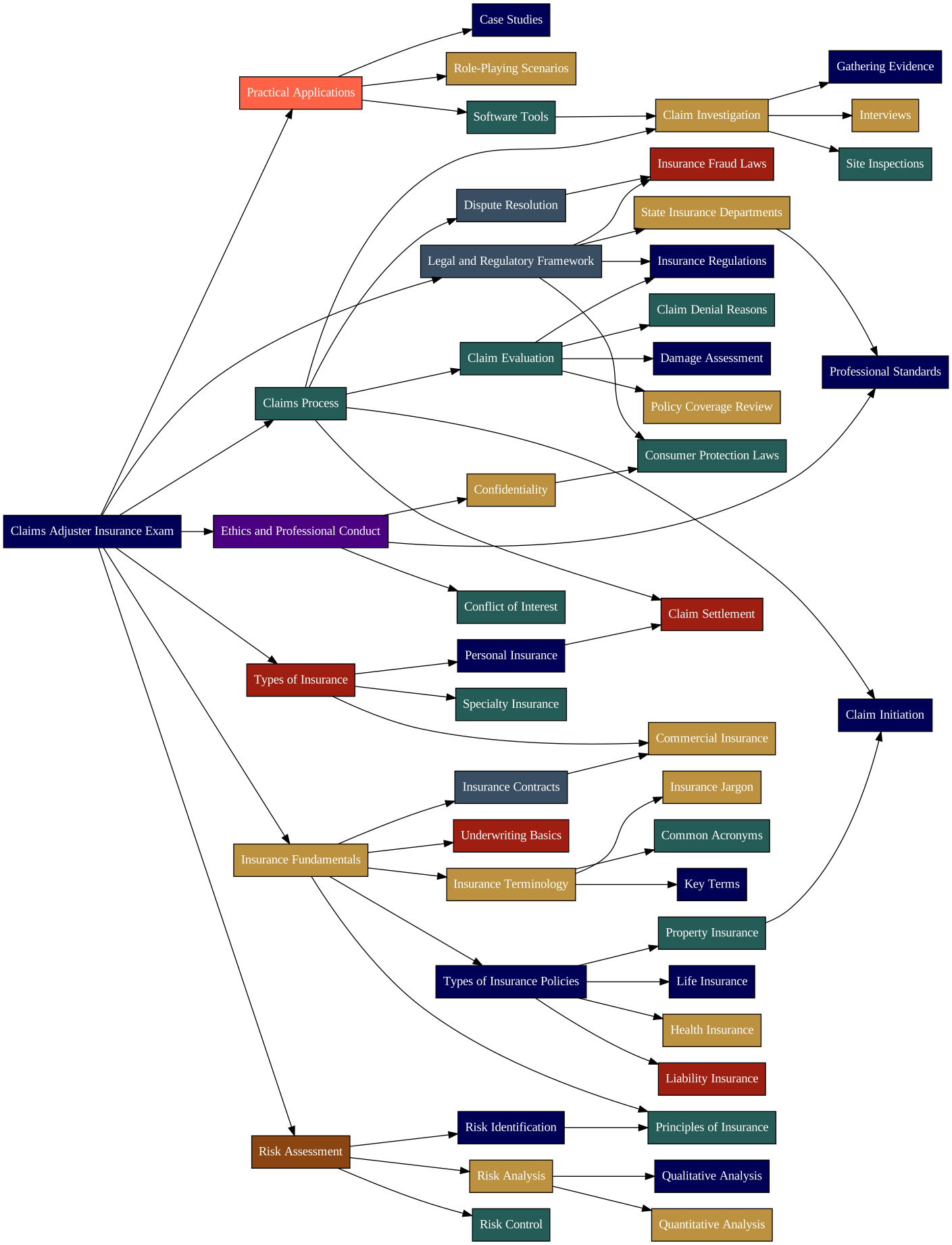
Quiz-summary
0 of 30 questions completed
Questions:
- 1
- 2
- 3
- 4
- 5
- 6
- 7
- 8
- 9
- 10
- 11
- 12
- 13
- 14
- 15
- 16
- 17
- 18
- 19
- 20
- 21
- 22
- 23
- 24
- 25
- 26
- 27
- 28
- 29
- 30
Information
Premium Practice Questions
You have already completed the quiz before. Hence you can not start it again.
Quiz is loading...
You must sign in or sign up to start the quiz.
You have to finish following quiz, to start this quiz:
Results
0 of 30 questions answered correctly
Your time:
Time has elapsed
You have reached 0 of 0 points, (0)
Categories
- Not categorized 0%
- 1
- 2
- 3
- 4
- 5
- 6
- 7
- 8
- 9
- 10
- 11
- 12
- 13
- 14
- 15
- 16
- 17
- 18
- 19
- 20
- 21
- 22
- 23
- 24
- 25
- 26
- 27
- 28
- 29
- 30
- Answered
- Review
-
Question 1 of 30
1. Question
In the context of personal line insurance policies in New Jersey, how would you describe the importance of the declarations page for both the insurer and the insured? Consider its role in defining coverage, listing critical policy details, and ensuring compliance with regulatory standards. Discuss how inaccuracies or omissions on this page might affect claims processing and the relationship between the parties involved in the insurance contract.
Correct
The declarations page is a crucial component of personal line insurance policies in New Jersey. It serves as a summary that provides essential information about the insurance contract, such as the named insured, policy limits, covered risks, effective dates, and premiums. Understanding the details included in the declarations page is vital for both insurers and insureds, as it lays the foundation for the coverage provided. For instance, if the declarations page incorrectly lists the address of the insured property, it may lead to disputes regarding coverage in the event of a claim. Additionally, this page often includes specific endorsements or exclusions that redefine or clarify coverage terms. Insurers in New Jersey are bound by regulations that mandate transparency and accuracy in the declarations page to ensure that consumers are fully informed. Failure to comply with these regulatory requirements may expose the insurer to potential legal liabilities. Therefore, comprehending the role of the declarations page not only helps in risk management but also ensures adherence to state laws and regulations.
Incorrect
The declarations page is a crucial component of personal line insurance policies in New Jersey. It serves as a summary that provides essential information about the insurance contract, such as the named insured, policy limits, covered risks, effective dates, and premiums. Understanding the details included in the declarations page is vital for both insurers and insureds, as it lays the foundation for the coverage provided. For instance, if the declarations page incorrectly lists the address of the insured property, it may lead to disputes regarding coverage in the event of a claim. Additionally, this page often includes specific endorsements or exclusions that redefine or clarify coverage terms. Insurers in New Jersey are bound by regulations that mandate transparency and accuracy in the declarations page to ensure that consumers are fully informed. Failure to comply with these regulatory requirements may expose the insurer to potential legal liabilities. Therefore, comprehending the role of the declarations page not only helps in risk management but also ensures adherence to state laws and regulations.
-
Question 2 of 30
2. Question
You are reviewing the insurance needs of a client who is renting an apartment in New Jersey. After discussing various coverage options, your client expresses concern about losing personal belongings due to theft or damage and whether their landlord’s insurance will cover this risk. As a knowledgeable insurance agent, how would you explain the importance of renters insurance in this context and what specific protections it offers to your client, particularly in New Jersey?
Correct
Renters insurance is essential for tenants in New Jersey as it provides coverage for personal property and liability. A tenant’s belongings, whether they are furniture, electronics, or clothing, are not protected under the landlord’s insurance policy. Renters insurance offers financial protection against losses due to theft, fire, or other perils as defined by the policy. Furthermore, it includes liability coverage, shielding the tenant from claims if someone is injured in their rented space. New Jersey law emphasizes the importance of disclosure by insurance producers regarding the scope of renters insurance, ensuring that clients understand what is covered and what is excluded. It is crucial to inform clients about the potential risks they face while renting and the protective measures that renters insurance can provide. Thus, knowing the nuances of how renters insurance operates will enable insurance professionals to guide tenants effectively, ensuring they make informed decisions about their coverage needs.
Incorrect
Renters insurance is essential for tenants in New Jersey as it provides coverage for personal property and liability. A tenant’s belongings, whether they are furniture, electronics, or clothing, are not protected under the landlord’s insurance policy. Renters insurance offers financial protection against losses due to theft, fire, or other perils as defined by the policy. Furthermore, it includes liability coverage, shielding the tenant from claims if someone is injured in their rented space. New Jersey law emphasizes the importance of disclosure by insurance producers regarding the scope of renters insurance, ensuring that clients understand what is covered and what is excluded. It is crucial to inform clients about the potential risks they face while renting and the protective measures that renters insurance can provide. Thus, knowing the nuances of how renters insurance operates will enable insurance professionals to guide tenants effectively, ensuring they make informed decisions about their coverage needs.
-
Question 3 of 30
3. Question
Consider a scenario where a homeowner in New Jersey is reviewing their insurance policy in light of recent severe weather events. They are concerned about the adequacy of their coverage due to the impacts of climate change. The homeowner learns that their current policy does not cover certain types of damages that have become more frequent due to climate change. What should the homeowner do to ensure their policy aligns with the current risks associated with climate change? Specifically, how can they best address the limitations of their coverage in the context of New Jersey’s insurance regulations and market practices?
Correct
Climate change is increasingly affecting personal lines insurance in New Jersey by leading to more frequent and intense weather events, such as floods, hurricanes, and wildfires. These changes directly influence the risk assessments that insurers conduct when underwriting policies. Insurance providers must consider the potential for increased claims due to environmental shifts, which can drive up premiums or even limit coverage availability in high-risk areas. For example, standard homeowners’ insurance might exclude damages due to flooding, a risk that is exacerbated by climate change. Insurers are required by state regulations to disclose how climate-related risks impact their coverage offerings. Additionally, the New Jersey Department of Banking and Insurance emphasizes the need for insurers to adopt sustainable practices and enhance their understanding of climate-related risk. Therefore, policyholders must be informed about the potential need for additional coverage options, such as flood insurance or endorsements that address climate change impacts, ensuring they are adequately protected against evolving hazards.
Incorrect
Climate change is increasingly affecting personal lines insurance in New Jersey by leading to more frequent and intense weather events, such as floods, hurricanes, and wildfires. These changes directly influence the risk assessments that insurers conduct when underwriting policies. Insurance providers must consider the potential for increased claims due to environmental shifts, which can drive up premiums or even limit coverage availability in high-risk areas. For example, standard homeowners’ insurance might exclude damages due to flooding, a risk that is exacerbated by climate change. Insurers are required by state regulations to disclose how climate-related risks impact their coverage offerings. Additionally, the New Jersey Department of Banking and Insurance emphasizes the need for insurers to adopt sustainable practices and enhance their understanding of climate-related risk. Therefore, policyholders must be informed about the potential need for additional coverage options, such as flood insurance or endorsements that address climate change impacts, ensuring they are adequately protected against evolving hazards.
-
Question 4 of 30
4. Question
When you are faced with the decision of selecting a personal line insurance policy in New Jersey, how can understanding the role of deductibles influence your choice? Suppose you have the option to either increase your deductible to lower your monthly premiums or keep it low for greater coverage during claims. What factors should you consider in determining the impact of this decision on your overall insurance strategy, especially regarding long-term costs and risk management?
Correct
Deductibles play a significant role in personal line insurance policies, particularly in how they affect premium costs and the overall risk management strategy of policyholders in New Jersey. A deductible is an amount that the insured must pay out of pocket before the insurance company covers any expenses. When a policyholder agrees to a higher deductible, it generally leads to lower premium costs because the insurer takes on less risk, anticipating that the insured will handle smaller claims themselves. Conversely, lower deductibles result in higher premiums since the insurer assumes more financial responsibility for claims. This trade-off requires the insured to evaluate their financial situation, risk tolerance, and likelihood of making claims. It is crucial for policyholders to understand that while higher deductibles can save money on premiums, they also mean that in the event of a claim, they will need to cover more expenses upfront. This decision-making process is essential for personal line insurance as it directly impacts both the affordability and the financial protection offered by the policy.
Incorrect
Deductibles play a significant role in personal line insurance policies, particularly in how they affect premium costs and the overall risk management strategy of policyholders in New Jersey. A deductible is an amount that the insured must pay out of pocket before the insurance company covers any expenses. When a policyholder agrees to a higher deductible, it generally leads to lower premium costs because the insurer takes on less risk, anticipating that the insured will handle smaller claims themselves. Conversely, lower deductibles result in higher premiums since the insurer assumes more financial responsibility for claims. This trade-off requires the insured to evaluate their financial situation, risk tolerance, and likelihood of making claims. It is crucial for policyholders to understand that while higher deductibles can save money on premiums, they also mean that in the event of a claim, they will need to cover more expenses upfront. This decision-making process is essential for personal line insurance as it directly impacts both the affordability and the financial protection offered by the policy.
-
Question 5 of 30
5. Question
When analyzing a client’s decision-making process regarding insurance purchases in New Jersey, it is essential to consider how consumer behavior influences their choices. Suppose a potential client has been researching auto insurance options but feels overwhelmed by the myriad of available policies. In this scenario, how should an insurance agent prioritize their approach to simplify the client’s decision-making process and build trust? What factors should be considered to effectively guide the consumer through their choices and ensure informed decisions?
Correct
Understanding consumer behavior in the context of insurance purchasing is pivotal for agents, as it influences how products are marketed and sold. In New Jersey, consumers are often guided by a combination of personal experiences, recommendations, and perceived value when choosing insurance. An agent must recognize that consumers are likely to rely heavily on the information provided to them about policy options, coverage types, and pricing. This influences not only their initial decision to purchase but also their long-term satisfaction with the choice made. Effective communication is crucial; agents should aim to educate clients about the implications of their choices, including understanding their own risk tolerance and coverage needs. Different marketing strategies, such as tailored communications or utilizing technology to provide personalized experiences, can further impact consumer decisions. Additionally, maintaining ethical standards and adhering to the New Jersey insurance regulations is critical to ensure that consumers are not misled. Ultimately, the agent’s understanding of consumer behavior shapes their approach to client engagement and service.
Incorrect
Understanding consumer behavior in the context of insurance purchasing is pivotal for agents, as it influences how products are marketed and sold. In New Jersey, consumers are often guided by a combination of personal experiences, recommendations, and perceived value when choosing insurance. An agent must recognize that consumers are likely to rely heavily on the information provided to them about policy options, coverage types, and pricing. This influences not only their initial decision to purchase but also their long-term satisfaction with the choice made. Effective communication is crucial; agents should aim to educate clients about the implications of their choices, including understanding their own risk tolerance and coverage needs. Different marketing strategies, such as tailored communications or utilizing technology to provide personalized experiences, can further impact consumer decisions. Additionally, maintaining ethical standards and adhering to the New Jersey insurance regulations is critical to ensure that consumers are not misled. Ultimately, the agent’s understanding of consumer behavior shapes their approach to client engagement and service.
-
Question 6 of 30
6. Question
In the context of New Jersey’s regulations for personal lines insurance products, how should marketing strategies be effectively developed to ensure compliance with state laws and ethical standards? Consider a scenario where an insurance agent is attempting to promote a new auto insurance policy. They want to utilize digital marketing strategies to reach a wider audience while adhering to the guidelines set forth by the New Jersey Department of Banking and Insurance. What approach should the agent take to ensure that their marketing efforts are not only effective but also compliant with relevant regulations?
Correct
In New Jersey, marketing strategies for personal lines insurance products must adhere to specific regulations and ethical guidelines to ensure consumer protection and maintain fair competition. The New Jersey Department of Banking and Insurance oversees these regulations, which include limitations on misrepresenting policy terms, the requirement for full disclosure of coverage details, and the obligation to avoid deceptive practices in advertising. Personal lines products, such as homeowners and auto insurance, often utilize targeted marketing approaches to reach specific demographics effectively. This includes the use of digital marketing techniques, social media campaigns, and community engagement initiatives that resonate with local consumers. Understanding the legal framework surrounding marketing practices is essential for agents to avoid potential violations that could lead to penalties or reputational damage. Thus, an agent’s ability to navigate these regulations while implementing innovative marketing strategies is crucial in building trust with clients and enhancing their insurance offerings in the highly competitive New Jersey market.
Incorrect
In New Jersey, marketing strategies for personal lines insurance products must adhere to specific regulations and ethical guidelines to ensure consumer protection and maintain fair competition. The New Jersey Department of Banking and Insurance oversees these regulations, which include limitations on misrepresenting policy terms, the requirement for full disclosure of coverage details, and the obligation to avoid deceptive practices in advertising. Personal lines products, such as homeowners and auto insurance, often utilize targeted marketing approaches to reach specific demographics effectively. This includes the use of digital marketing techniques, social media campaigns, and community engagement initiatives that resonate with local consumers. Understanding the legal framework surrounding marketing practices is essential for agents to avoid potential violations that could lead to penalties or reputational damage. Thus, an agent’s ability to navigate these regulations while implementing innovative marketing strategies is crucial in building trust with clients and enhancing their insurance offerings in the highly competitive New Jersey market.
-
Question 7 of 30
7. Question
Consider a scenario where a New Jersey-based insurance professional is exploring opportunities in the global personal lines insurance market. They notice that regulations and consumer expectations differ significantly from region to region. How should this professional approach the integration of global insights into their local strategies, particularly concerning the understanding of insurable interest and regulatory compliance?
Correct
Understanding personal lines insurance from a global perspective involves recognizing how different countries approach risk management and protection against personal liabilities. In New Jersey, the principle of “insurable interest” is crucial, meaning that an individual must have a stake in the insured property or person, which ensures that insurance serves its purpose of risk mitigation. Globally, various countries have diverse regulatory frameworks governing personal lines insurance, influencing policy coverage, premiums, and claims processes. For instance, European nations often emphasize consumer protection laws, while some Asian markets may focus on developing more innovative products tailored to evolving consumer needs. Additionally, understanding the cultural nuances and economic environments that affect how insurance is perceived and purchased can significantly enhance a professional’s ability to navigate the personal lines market effectively. A strong grasp of these differences not only aids compliance with local regulations but also informs strategy development for market entry or expansion. Ultimately, enhancing knowledge about global practices and regulations surrounding personal lines can provide insights into potential opportunities for growth within New Jersey’s dynamic insurance landscape.
Incorrect
Understanding personal lines insurance from a global perspective involves recognizing how different countries approach risk management and protection against personal liabilities. In New Jersey, the principle of “insurable interest” is crucial, meaning that an individual must have a stake in the insured property or person, which ensures that insurance serves its purpose of risk mitigation. Globally, various countries have diverse regulatory frameworks governing personal lines insurance, influencing policy coverage, premiums, and claims processes. For instance, European nations often emphasize consumer protection laws, while some Asian markets may focus on developing more innovative products tailored to evolving consumer needs. Additionally, understanding the cultural nuances and economic environments that affect how insurance is perceived and purchased can significantly enhance a professional’s ability to navigate the personal lines market effectively. A strong grasp of these differences not only aids compliance with local regulations but also informs strategy development for market entry or expansion. Ultimately, enhancing knowledge about global practices and regulations surrounding personal lines can provide insights into potential opportunities for growth within New Jersey’s dynamic insurance landscape.
-
Question 8 of 30
8. Question
Consider a scenario where a client in New Jersey is exploring options for protecting their personal assets. They are considering various types of personal lines insurance but are confused about the specific protections offered by each type. They inquire whether homeowners insurance would suffice for risks associated with personal property and liability, or if they should also consider additional types of insurance. In this context, how would you best explain the purpose of homeowners insurance compared to other personal lines insurance types?
Correct
Personal lines insurance encompasses a range of coverages tailored to individuals and families, which primarily consists of homeowners, auto, and renters insurance. Among the various types, homeowners insurance is specifically designed to protect the dwelling itself as well as personal property within it, offering liability coverage in case of injuries occurring on the property. Each type of personal lines insurance serves a specific purpose based on the nature of the potential risks involved. For example, auto insurance is mandated by law in New Jersey and includes several components such as liability, personal injury protection, and collision coverage. A nuanced understanding of these products is essential, especially regarding exclusions and endorsements that can modify standard coverages. Additionally, failure to maintain adequate coverage can lead to unexpected out-of-pocket expenses in the event of a loss. It is crucial for insurance professionals to explain these aspects to clients, ensuring they comprehend the full scope of protection and the implications associated with each type of personal lines insurance.
Incorrect
Personal lines insurance encompasses a range of coverages tailored to individuals and families, which primarily consists of homeowners, auto, and renters insurance. Among the various types, homeowners insurance is specifically designed to protect the dwelling itself as well as personal property within it, offering liability coverage in case of injuries occurring on the property. Each type of personal lines insurance serves a specific purpose based on the nature of the potential risks involved. For example, auto insurance is mandated by law in New Jersey and includes several components such as liability, personal injury protection, and collision coverage. A nuanced understanding of these products is essential, especially regarding exclusions and endorsements that can modify standard coverages. Additionally, failure to maintain adequate coverage can lead to unexpected out-of-pocket expenses in the event of a loss. It is crucial for insurance professionals to explain these aspects to clients, ensuring they comprehend the full scope of protection and the implications associated with each type of personal lines insurance.
-
Question 9 of 30
9. Question
During a review of a homeowners insurance policy in New Jersey, you come across a situation where a client is unsure whether to opt for actual cash value or replacement cost coverage. The client’s home was recently damaged in a storm, and they are concerned about how much they would be compensated for their losses. What factors should the client consider in deciding between these two types of coverage, and what insights can you provide about how each option would impact their claim settlement based on New Jersey’s insurance regulations?
Correct
Homeowners insurance in New Jersey is designed to protect both the dwelling and the personal property of the insured. One critical concept is the difference between actual cash value (ACV) and replacement cost coverage. ACV considers depreciation and reimburses the homeowner for the property’s value at the time of loss, minus depreciation, while replacement cost coverage pays for the cost to replace an item without factoring in depreciation. It is important for policyholders to understand these distinctions, as they greatly influence the compensation in the event of a claim. Additionally, New Jersey regulations require that homeowners insurance policies include specific forms of coverage, such as liability coverage, which protects against claims of injury or property damage to others. Therefore, understanding the types of coverage available, the implications of the chosen coverage type, and the state mandates regarding homeowners insurance is essential for individuals seeking to manage their risks effectively in New Jersey.
Incorrect
Homeowners insurance in New Jersey is designed to protect both the dwelling and the personal property of the insured. One critical concept is the difference between actual cash value (ACV) and replacement cost coverage. ACV considers depreciation and reimburses the homeowner for the property’s value at the time of loss, minus depreciation, while replacement cost coverage pays for the cost to replace an item without factoring in depreciation. It is important for policyholders to understand these distinctions, as they greatly influence the compensation in the event of a claim. Additionally, New Jersey regulations require that homeowners insurance policies include specific forms of coverage, such as liability coverage, which protects against claims of injury or property damage to others. Therefore, understanding the types of coverage available, the implications of the chosen coverage type, and the state mandates regarding homeowners insurance is essential for individuals seeking to manage their risks effectively in New Jersey.
-
Question 10 of 30
10. Question
In the context of insurance operations in New Jersey, it is crucial for agents to recognize and respond appropriately to potential insurance fraud. Consider a scenario where you, as an insurance agent, notice repeated claims from a client that appear unusually high or inconsistent with their previous history. As you delve deeper, you suspect that the claims may be fabricated or inflated. What is your best course of action to adhere to both ethical and legal responsibilities while also protecting the interests of all parties involved?
Correct
Insurance fraud encompasses a range of illicit activities that can undermine the integrity of the insurance industry. It typically involves the intentional deception of an insurer in order to gain an undeserved benefit, ultimately leading to financial loss for the company and, by extension, its policyholders. In New Jersey, both state law and ethical guidelines mandate that insurance agents conduct business with honesty and integrity. Agents are expected to report any suspicious activities, which may be indicators of fraud, such as inflated claims, staging accidents, or misrepresenting information on applications. Failure to report suspected fraudulent activities can result in severe repercussions, including loss of licensure and legal action under New Jersey’s insurance fraud statutes. Thus, a robust understanding of fraud prevention and the ethical obligations surrounding it is critical for agents. They must not only be aware of the signs of fraud but also understand the importance of maintaining ethical standards in their dealings with clients and insurers. This vigilance aids in preserving the trustworthiness of the insurance market and protecting consumers from the consequences of fraud.
Incorrect
Insurance fraud encompasses a range of illicit activities that can undermine the integrity of the insurance industry. It typically involves the intentional deception of an insurer in order to gain an undeserved benefit, ultimately leading to financial loss for the company and, by extension, its policyholders. In New Jersey, both state law and ethical guidelines mandate that insurance agents conduct business with honesty and integrity. Agents are expected to report any suspicious activities, which may be indicators of fraud, such as inflated claims, staging accidents, or misrepresenting information on applications. Failure to report suspected fraudulent activities can result in severe repercussions, including loss of licensure and legal action under New Jersey’s insurance fraud statutes. Thus, a robust understanding of fraud prevention and the ethical obligations surrounding it is critical for agents. They must not only be aware of the signs of fraud but also understand the importance of maintaining ethical standards in their dealings with clients and insurers. This vigilance aids in preserving the trustworthiness of the insurance market and protecting consumers from the consequences of fraud.
-
Question 11 of 30
11. Question
When analyzing the impact of global trends on the personal lines insurance market in New Jersey, which key factor is most likely to influence underwriting practices and policyholder behavior? Consider the implications of climate change, technological advancements, and shifting demographics on the industry. How do these trends potentially reshape the priorities and strategies for insurers and agents working within this framework? What aspects should they focus on to ensure they remain competitive and relevant in a rapidly changing environment, particularly in a state like New Jersey, where such shifts can significantly impact insurance offerings?
Correct
The personal lines insurance market in New Jersey, as in other states, is increasingly being influenced by global trends such as climate change, technological advancements, and demographic shifts. Climate change poses a significant risk to personal lines insurance by increasing the frequency and severity of natural disasters like hurricanes and floods, which can lead to higher claims costs. As a response, insurers may need to adjust their underwriting criteria, raise premiums, or restrict coverage for high-risk areas to maintain solvency. Additionally, advancements in technology, including telematics and artificial intelligence, are transforming how insurers assess risk and interact with customers. These technologies facilitate personalized insurance products that cater to individual needs and behaviors, promoting a more data-driven approach. Furthermore, demographic trends, such as an aging population or increased urbanization, require insurers to adapt their products and services to changing consumer demands. Understanding these global dynamics is essential for agents and insurers in New Jersey to navigate the evolving landscape of personal lines insurance effectively.
Incorrect
The personal lines insurance market in New Jersey, as in other states, is increasingly being influenced by global trends such as climate change, technological advancements, and demographic shifts. Climate change poses a significant risk to personal lines insurance by increasing the frequency and severity of natural disasters like hurricanes and floods, which can lead to higher claims costs. As a response, insurers may need to adjust their underwriting criteria, raise premiums, or restrict coverage for high-risk areas to maintain solvency. Additionally, advancements in technology, including telematics and artificial intelligence, are transforming how insurers assess risk and interact with customers. These technologies facilitate personalized insurance products that cater to individual needs and behaviors, promoting a more data-driven approach. Furthermore, demographic trends, such as an aging population or increased urbanization, require insurers to adapt their products and services to changing consumer demands. Understanding these global dynamics is essential for agents and insurers in New Jersey to navigate the evolving landscape of personal lines insurance effectively.
-
Question 12 of 30
12. Question
You are reviewing a client’s recent report of a property damage claim after a severe storm in New Jersey. To advise your client effectively, what are the essential steps they should take to ensure the claim is reported properly and processed without unnecessary delays? Consider the role of timely communication, documentation, and adherence to state regulations in your response.
Correct
When an insurance claim is reported in New Jersey, policyholders must follow specific procedures to ensure that the claim is processed efficiently. The first step is to notify the insurance company as soon as possible after the event has occurred. This is crucial because delayed reporting can lead to complications or even denial of the claim. In New Jersey, insurers are required by law to provide clear instructions on how to report a claim, typically available in the policy documentation or on the insurer’s website. Additionally, policyholders should gather all relevant information, including the date and time of the incident, a description of what occurred, and any involved parties’ details. It is also important to document any damages by taking photos or videos to support the claim. After reporting, the insurer may assign a claims adjuster to evaluate the situation. The insured must maintain communication with the insurer throughout the claims process, providing any further information requested in a timely manner. Understanding these steps is vital to ensuring a seamless claims experience while adhering to New Jersey’s regulations governing insurance reporting practices.
Incorrect
When an insurance claim is reported in New Jersey, policyholders must follow specific procedures to ensure that the claim is processed efficiently. The first step is to notify the insurance company as soon as possible after the event has occurred. This is crucial because delayed reporting can lead to complications or even denial of the claim. In New Jersey, insurers are required by law to provide clear instructions on how to report a claim, typically available in the policy documentation or on the insurer’s website. Additionally, policyholders should gather all relevant information, including the date and time of the incident, a description of what occurred, and any involved parties’ details. It is also important to document any damages by taking photos or videos to support the claim. After reporting, the insurer may assign a claims adjuster to evaluate the situation. The insured must maintain communication with the insurer throughout the claims process, providing any further information requested in a timely manner. Understanding these steps is vital to ensuring a seamless claims experience while adhering to New Jersey’s regulations governing insurance reporting practices.
-
Question 13 of 30
13. Question
During a review of a client’s personal insurance portfolio in New Jersey, you discover that they have recently installed a swimming pool. Given this new feature, how might this impact their personal liability exposure? It’s important to evaluate the risks associated with potential accidents or injuries that could occur in or around the pool area. Understanding the legal implications of having such an addition is crucial for advising the client on necessary coverage adjustments. What is the most critical aspect they should consider regarding their liability exposure due to this installation?
Correct
Understanding personal liability exposure is critical for anyone involved in personal lines insurance, especially in New Jersey. Personal liability exposure refers to the risk that an individual may face legal claims arising from injuries or damages caused to another person or their property. For instance, if a homeowner inadvertently causes harm to a guest due to unsafe conditions on their property, they may be held liable for medical expenses and other damages. This exposure extends to activities outside the home, such as driving a vehicle or engaging in recreational activities. Insurance policies often provide personal liability coverage, which protects policyholders from financial losses due to such claims. This coverage is essential not only for safeguarding one’s financial assets but also for ensuring compliance with local regulations and standards. In New Jersey, understanding the nuances of personal liability exposure is vital, as it involves both the state’s specific legal landscape and the broader implications of liability on personal finance. A well-informed policyholder can better mitigate risks and secure comprehensive coverage by recognizing and addressing their liability exposures.
Incorrect
Understanding personal liability exposure is critical for anyone involved in personal lines insurance, especially in New Jersey. Personal liability exposure refers to the risk that an individual may face legal claims arising from injuries or damages caused to another person or their property. For instance, if a homeowner inadvertently causes harm to a guest due to unsafe conditions on their property, they may be held liable for medical expenses and other damages. This exposure extends to activities outside the home, such as driving a vehicle or engaging in recreational activities. Insurance policies often provide personal liability coverage, which protects policyholders from financial losses due to such claims. This coverage is essential not only for safeguarding one’s financial assets but also for ensuring compliance with local regulations and standards. In New Jersey, understanding the nuances of personal liability exposure is vital, as it involves both the state’s specific legal landscape and the broader implications of liability on personal finance. A well-informed policyholder can better mitigate risks and secure comprehensive coverage by recognizing and addressing their liability exposures.
-
Question 14 of 30
14. Question
When analyzing the shifts in consumer preferences within the New Jersey personal lines insurance market, which behavior is most indicative of current trends? For example, as digital technology becomes more integrated into everyday life, how do consumer expectations align with the services provided by insurance companies? It’s essential to consider how these expectations shape the relationship between insurers and policyholders. Additionally, with a growing emphasis on personalized services and tailored products, what changes should insurance providers implement to meet these evolving demands? Understanding these nuances can significantly impact an insurer’s strategy in addressing consumer needs effectively.
Correct
Consumer preferences and behaviors in the personal line insurance sector are shaped by a variety of factors, including economic conditions, technological advancements, and societal trends. In New Jersey, like elsewhere, changes such as a shift towards digital interactions and increased emphasis on personalized service are noteworthy. For instance, many consumers now prefer to engage with insurance providers through mobile apps and websites rather than traditional phone calls. This shift reflects a broader trend towards convenience and efficiency. Additionally, consumers are increasingly seeking tailored insurance solutions that meet their specific needs rather than generic policies. This is partly driven by heightened awareness of coverage options and the desire for personal touch in service delivery. As a result, insurance companies must adapt their offerings and marketing strategies to stay relevant. Adapting to these changes not only enhances customer satisfaction but also builds loyalty, which is crucial in an industry that often experiences high competition. Understanding these consumer dynamics is essential for success in the New Jersey personal lines insurance market.
Incorrect
Consumer preferences and behaviors in the personal line insurance sector are shaped by a variety of factors, including economic conditions, technological advancements, and societal trends. In New Jersey, like elsewhere, changes such as a shift towards digital interactions and increased emphasis on personalized service are noteworthy. For instance, many consumers now prefer to engage with insurance providers through mobile apps and websites rather than traditional phone calls. This shift reflects a broader trend towards convenience and efficiency. Additionally, consumers are increasingly seeking tailored insurance solutions that meet their specific needs rather than generic policies. This is partly driven by heightened awareness of coverage options and the desire for personal touch in service delivery. As a result, insurance companies must adapt their offerings and marketing strategies to stay relevant. Adapting to these changes not only enhances customer satisfaction but also builds loyalty, which is crucial in an industry that often experiences high competition. Understanding these consumer dynamics is essential for success in the New Jersey personal lines insurance market.
-
Question 15 of 30
15. Question
When faced with a client dispute regarding personal line insurance in New Jersey, you are required to recommend a resolution process. Your client is unsure whether to pursue mediation or arbitration, as they have heard differing opinions on the effectiveness of both. Describe the key differences between mediation and arbitration, focusing on how each process might impact the resolution of their case and the relationship between the parties involved. What would you suggest as the most appropriate first step in resolving the conflict, taking into account the potential for maintaining a positive relationship while also achieving a clear resolution?
Correct
In New Jersey, mediation and arbitration are essential components of dispute resolution in personal line insurance. Mediation is a voluntary process where a neutral third party, the mediator, facilitates communication between disputing parties to help them reach a mutually satisfactory agreement. This process is non-binding, meaning that the parties are not obligated to accept the mediator’s suggestions. On the other hand, arbitration is a more formal procedure where an arbitrator reviews the evidence and arguments presented by both parties and makes a binding decision. The choice between mediation and arbitration can significantly affect the outcome of a dispute. Mediation tends to be more collaborative and can preserve business relationships, making it preferable for parties who wish to maintain a connection post-dispute. Conversely, arbitration is often faster and can provide a clearer resolution, which is crucial when a binding decision is necessary. Understanding these differences is vital for insurance professionals to guide clients effectively. Additionally, both processes are regulated under New Jersey law, ensuring they adhere to established standards and ethical practices, which is critical for maintaining trust and compliance in the insurance industry.
Incorrect
In New Jersey, mediation and arbitration are essential components of dispute resolution in personal line insurance. Mediation is a voluntary process where a neutral third party, the mediator, facilitates communication between disputing parties to help them reach a mutually satisfactory agreement. This process is non-binding, meaning that the parties are not obligated to accept the mediator’s suggestions. On the other hand, arbitration is a more formal procedure where an arbitrator reviews the evidence and arguments presented by both parties and makes a binding decision. The choice between mediation and arbitration can significantly affect the outcome of a dispute. Mediation tends to be more collaborative and can preserve business relationships, making it preferable for parties who wish to maintain a connection post-dispute. Conversely, arbitration is often faster and can provide a clearer resolution, which is crucial when a binding decision is necessary. Understanding these differences is vital for insurance professionals to guide clients effectively. Additionally, both processes are regulated under New Jersey law, ensuring they adhere to established standards and ethical practices, which is critical for maintaining trust and compliance in the insurance industry.
-
Question 16 of 30
16. Question
In the context of New Jersey homeowners insurance, you are reviewing a client’s policy and discover that it covers the replacement cost of the dwelling rather than the actual cash value. Given this situation, how might the replacement cost provision impact the client in the event of a total loss of their home due to a covered peril? What are the implications for their financial recovery and subsequent rebuilding process?
Correct
Homeowners insurance is a complex type of coverage that protects individuals against risks associated with owning a home, including damage to the property and liability for injuries that may occur on the premises. In New Jersey, homeowners policies primarily fall under the “HO” (Homeowners) classification, with HO-3 being the most common form used. This policy provides coverage for the dwelling, other structures, personal property, and liability, with specific exclusions noted within the policy. A critical aspect of homeowners insurance is the concept of replacement cost vs. actual cash value (ACV). Replacement cost coverage ensures that the property can be rebuilt or replaced without a deduction for depreciation, maintaining the value of the home. Conversely, ACV accounts for depreciation, which could lead to less compensation during a claim. New Jersey state regulations emphasize the importance of clear communication regarding these distinctions to protect consumer rights. Moreover, policyholders should be aware of different endorsements that can modify standard coverage, such as additional coverage for natural disasters like floods or earthquakes, which are often excluded from standard policies. Understanding these nuances is essential for agents to provide accurate advice to clients about their coverage needs.
Incorrect
Homeowners insurance is a complex type of coverage that protects individuals against risks associated with owning a home, including damage to the property and liability for injuries that may occur on the premises. In New Jersey, homeowners policies primarily fall under the “HO” (Homeowners) classification, with HO-3 being the most common form used. This policy provides coverage for the dwelling, other structures, personal property, and liability, with specific exclusions noted within the policy. A critical aspect of homeowners insurance is the concept of replacement cost vs. actual cash value (ACV). Replacement cost coverage ensures that the property can be rebuilt or replaced without a deduction for depreciation, maintaining the value of the home. Conversely, ACV accounts for depreciation, which could lead to less compensation during a claim. New Jersey state regulations emphasize the importance of clear communication regarding these distinctions to protect consumer rights. Moreover, policyholders should be aware of different endorsements that can modify standard coverage, such as additional coverage for natural disasters like floods or earthquakes, which are often excluded from standard policies. Understanding these nuances is essential for agents to provide accurate advice to clients about their coverage needs.
-
Question 17 of 30
17. Question
Consider a scenario where a New Jersey resident is reviewing their insurance options to comprehensively protect their assets. They must decide between several types of personal lines insurance, including homeowners, auto, renters, and umbrella insurance. Given the importance of understanding each type’s coverage and limitations, which of the following types of personal lines insurance is specifically designed to provide additional liability protection beyond what is covered in standard homeowners or auto insurance policies?
Correct
Personal lines insurance encompasses various types of insurance policies that individuals purchase to protect their assets and manage risks. In New Jersey, understanding the distinctions among these types is crucial for both insurance professionals and consumers. One of the most common forms of personal lines insurance is homeowners insurance, which protects individuals from risks related to their homes, such as fire, theft, or liability for injuries occurring on the property. Another significant type is auto insurance, mandatory in New Jersey, covering damages from automobile accidents, theft, and other vehicular risks. Additionally, renters insurance is essential for those who lease apartments or homes, providing protection for personal belongings against unforeseen events. Lastly, personal umbrella insurance offers an additional layer of liability coverage beyond the limits of existing policies, which is particularly valuable in a litigious society. Grasping these categories not only helps in selecting appropriate coverage but also ensures compliance with New Jersey regulations, safeguarding the interests of both insurers and policyholders.
Incorrect
Personal lines insurance encompasses various types of insurance policies that individuals purchase to protect their assets and manage risks. In New Jersey, understanding the distinctions among these types is crucial for both insurance professionals and consumers. One of the most common forms of personal lines insurance is homeowners insurance, which protects individuals from risks related to their homes, such as fire, theft, or liability for injuries occurring on the property. Another significant type is auto insurance, mandatory in New Jersey, covering damages from automobile accidents, theft, and other vehicular risks. Additionally, renters insurance is essential for those who lease apartments or homes, providing protection for personal belongings against unforeseen events. Lastly, personal umbrella insurance offers an additional layer of liability coverage beyond the limits of existing policies, which is particularly valuable in a litigious society. Grasping these categories not only helps in selecting appropriate coverage but also ensures compliance with New Jersey regulations, safeguarding the interests of both insurers and policyholders.
-
Question 18 of 30
18. Question
In the context of personal lines insurance in New Jersey, how should insurance providers adapt their strategies to effectively respond to the evolving consumer preferences and behaviors that have emerged in recent years? Consider the influence of digital technology, sustainability concerns, and regulatory compliance when analyzing how to best align offerings with consumer expectations.
Correct
Understanding changes in consumer preferences and behaviors is essential for anyone operating within the New Jersey personal lines insurance market. As consumers evolve, their needs, wants, and purchasing behaviors also transform. This evolution can stem from various factors, including economic conditions, technological advancements, and shifting cultural norms. For instance, a growing preference for digital engagement has compelled insurance providers to adopt online services, enhancing customer accessibility and improving service delivery. Consequently, insurers must adjust their marketing strategies to resonate with these new consumer behaviors while ensuring compliance with state regulations related to advertising and consumer rights. Additionally, an increased awareness of sustainability and social responsibility among consumers can influence their choice of insurance providers, pushing companies to tailor their offerings accordingly, such as through eco-friendly auto insurance policies. Understanding how these trends affect personal lines insurance can provide significant advantages in competitive markets, especially in a diverse state like New Jersey, where demographics and consumer behavior can vary widely across different regions.
Incorrect
Understanding changes in consumer preferences and behaviors is essential for anyone operating within the New Jersey personal lines insurance market. As consumers evolve, their needs, wants, and purchasing behaviors also transform. This evolution can stem from various factors, including economic conditions, technological advancements, and shifting cultural norms. For instance, a growing preference for digital engagement has compelled insurance providers to adopt online services, enhancing customer accessibility and improving service delivery. Consequently, insurers must adjust their marketing strategies to resonate with these new consumer behaviors while ensuring compliance with state regulations related to advertising and consumer rights. Additionally, an increased awareness of sustainability and social responsibility among consumers can influence their choice of insurance providers, pushing companies to tailor their offerings accordingly, such as through eco-friendly auto insurance policies. Understanding how these trends affect personal lines insurance can provide significant advantages in competitive markets, especially in a diverse state like New Jersey, where demographics and consumer behavior can vary widely across different regions.
-
Question 19 of 30
19. Question
While working on a case involving a personal lines insurance policy in New Jersey, you notice that there have been several disputes emerging from policyholders regarding their claims. Many of these disputes seem to stem from a misunderstanding of their coverage options and limits, particularly concerning the definitions between “actual cash value” and “replacement cost.” What strategies could you recommend to your clients to minimize these misunderstandings and prevent disputes in the future?
Correct
In the realm of personal lines insurance in New Jersey, common disputes often arise from differing interpretations of policy terms and coverage limits. One prevalent issue is the misunderstanding around the definitions of terms like “actual cash value” versus “replacement cost.” Policyholders may expect coverage that exceeds what is defined in their contracts, leading to dissatisfaction during the claims process. Another frequent area of conflict occurs with liability coverage, particularly in cases where the policyholder believes they are covered for certain incidents, but the insurer cites exclusions that were clearly stated in the policy documents. This highlights the necessity of clear communication and understanding of the policy terms by the insured. Furthermore, disputes can emerge from the claims adjustment process, where policyholders may feel that their claims are unfairly assessed based on the adjuster’s evaluation. It is crucial for agents and brokers to effectively educate clients about their policies, ensuring they are fully aware of what is covered and what is not. Awareness and proactive communication can significantly mitigate misunderstandings and disputes.
Incorrect
In the realm of personal lines insurance in New Jersey, common disputes often arise from differing interpretations of policy terms and coverage limits. One prevalent issue is the misunderstanding around the definitions of terms like “actual cash value” versus “replacement cost.” Policyholders may expect coverage that exceeds what is defined in their contracts, leading to dissatisfaction during the claims process. Another frequent area of conflict occurs with liability coverage, particularly in cases where the policyholder believes they are covered for certain incidents, but the insurer cites exclusions that were clearly stated in the policy documents. This highlights the necessity of clear communication and understanding of the policy terms by the insured. Furthermore, disputes can emerge from the claims adjustment process, where policyholders may feel that their claims are unfairly assessed based on the adjuster’s evaluation. It is crucial for agents and brokers to effectively educate clients about their policies, ensuring they are fully aware of what is covered and what is not. Awareness and proactive communication can significantly mitigate misunderstandings and disputes.
-
Question 20 of 30
20. Question
When you are faced with a client who is unsure about the significance of the declarations page in their homeowner’s insurance policy, how would you explain its purpose and importance within the context of New Jersey insurance regulations? Consider aspects such as coverage details, policyholder responsibilities, and potential consequences of inaccuracies on this page.
Correct
The declarations page of an insurance policy serves as a summary of the key elements of the coverage, providing vital information intended to clarify the specific details of the contract between the insurer and the insured. In New Jersey, this page typically includes the policyholder’s name and address, policy number, coverage types, effective dates, and the insured property’s information. Understanding the declarations page is crucial for both insurance agents and clients, as it represents the foundation of the insurance agreement. Errors or omissions in the declarations can significantly affect coverage interpretation, claims processing, and premium calculations. For instance, if a property’s value is inaccurately stated, this could lead to underinsurance during a claim, resulting in the insured receiving less than expected when they need it most. Therefore, agents must ensure that the declarations page is accurate and reflects the client’s needs. Regularly reviewing this page also allows policyholders to confirm the adequacy of coverage and make necessary adjustments, ensuring compliance with New Jersey regulations.
Incorrect
The declarations page of an insurance policy serves as a summary of the key elements of the coverage, providing vital information intended to clarify the specific details of the contract between the insurer and the insured. In New Jersey, this page typically includes the policyholder’s name and address, policy number, coverage types, effective dates, and the insured property’s information. Understanding the declarations page is crucial for both insurance agents and clients, as it represents the foundation of the insurance agreement. Errors or omissions in the declarations can significantly affect coverage interpretation, claims processing, and premium calculations. For instance, if a property’s value is inaccurately stated, this could lead to underinsurance during a claim, resulting in the insured receiving less than expected when they need it most. Therefore, agents must ensure that the declarations page is accurate and reflects the client’s needs. Regularly reviewing this page also allows policyholders to confirm the adequacy of coverage and make necessary adjustments, ensuring compliance with New Jersey regulations.
-
Question 21 of 30
21. Question
Consider a scenario where a licensed insurance agent in New Jersey is reviewing their professional development plan. They understand that to maintain their license, they must fulfill the continuing education requirements set forth by the state. This agent recognizes that ongoing education not only helps with compliance but also impacts their ability to serve clients effectively. How would you explain the overall importance of continuing education to this agent, considering both regulatory and professional aspects?
Correct
Continuing education is essential for professionals in the insurance industry, especially in New Jersey, where regulatory standards require agents to stay updated on best practices, legislative changes, and emerging trends. By participating in ongoing education, insurance agents enhance their knowledge and skills, enabling them to provide better service to clients and make informed decisions regarding policy recommendations. It also fosters a culture of professionalism and ethical conduct, as agents who engage in continuous learning are more likely to adhere to industry laws and regulations. In New Jersey, the Department of Banking and Insurance mandates specific continuing education credits for licensed insurance agents, ensuring that they are well-versed in current laws, ethical considerations, and market developments. This education aids in minimizing errors and improving client relationships, as agents become more adept at addressing diverse client needs. Furthermore, ongoing education contributes to the agent’s career growth by opening up opportunities for specialization and advancement within the field, reinforcing the importance of lifelong learning in maintaining a competitive edge in the evolving insurance landscape.
Incorrect
Continuing education is essential for professionals in the insurance industry, especially in New Jersey, where regulatory standards require agents to stay updated on best practices, legislative changes, and emerging trends. By participating in ongoing education, insurance agents enhance their knowledge and skills, enabling them to provide better service to clients and make informed decisions regarding policy recommendations. It also fosters a culture of professionalism and ethical conduct, as agents who engage in continuous learning are more likely to adhere to industry laws and regulations. In New Jersey, the Department of Banking and Insurance mandates specific continuing education credits for licensed insurance agents, ensuring that they are well-versed in current laws, ethical considerations, and market developments. This education aids in minimizing errors and improving client relationships, as agents become more adept at addressing diverse client needs. Furthermore, ongoing education contributes to the agent’s career growth by opening up opportunities for specialization and advancement within the field, reinforcing the importance of lifelong learning in maintaining a competitive edge in the evolving insurance landscape.
-
Question 22 of 30
22. Question
In the context of underwriting personal line insurance in New Jersey, consider a scenario where an insurance company is evaluating an applicant’s profile for a homeowners policy. The underwriter must take into account various personal characteristics to assess the risk accurately. How do factors such as age, credit score, and claims history influence the insurability and premium rates for this applicant? Specifically, which characteristic is most likely to be viewed as a positive indicator by insurers when determining eligibility for coverage in New Jersey?
Correct
In the context of personal lines insurance, especially in New Jersey, several personal characteristics play a significant role in determining an individual’s insurability and premium rates. Insurers often assess factors such as age, credit score, and claims history to evaluate the risk associated with insuring a particular individual. Age, for instance, can influence driving behavior and accident likelihood, with younger individuals generally perceived as higher risk due to inexperience. Similarly, a person’s credit score has become an increasingly important factor, as studies suggest a correlation between lower credit scores and a higher likelihood of filing claims. Thus, insurers typically assess a credit history that reflects financial responsibility. Lastly, a history of frequent or severe claims indicates a pattern of risk that can result in increased premiums or denial of coverage altogether. These factors collectively provide a comprehensive view of an applicant’s risk profile, allowing insurers to make informed decisions in accordance with New Jersey’s regulatory framework, which mandates fair and non-discriminatory practices.
Incorrect
In the context of personal lines insurance, especially in New Jersey, several personal characteristics play a significant role in determining an individual’s insurability and premium rates. Insurers often assess factors such as age, credit score, and claims history to evaluate the risk associated with insuring a particular individual. Age, for instance, can influence driving behavior and accident likelihood, with younger individuals generally perceived as higher risk due to inexperience. Similarly, a person’s credit score has become an increasingly important factor, as studies suggest a correlation between lower credit scores and a higher likelihood of filing claims. Thus, insurers typically assess a credit history that reflects financial responsibility. Lastly, a history of frequent or severe claims indicates a pattern of risk that can result in increased premiums or denial of coverage altogether. These factors collectively provide a comprehensive view of an applicant’s risk profile, allowing insurers to make informed decisions in accordance with New Jersey’s regulatory framework, which mandates fair and non-discriminatory practices.
-
Question 23 of 30
23. Question
While working on a case involving personal lines insurance in New Jersey, an insurance agent uncovers signs of potential fraud. One particular instance involves a client who has filed a claim for property damage, claiming items that were lost in a recent fire were worth far more than their actual value. This situation raises concerns about the integrity of the claim. In the context of personal lines insurance, which type of fraud is most likely being represented by this client’s actions, and how does it impact the overall insurance system?
Correct
Insurance fraud in personal lines represents a significant concern for insurers and policyholders alike, as it can lead to increased premiums and a loss of trust within the insurance system. Various types of insurance fraud manifest in the personal lines sector, including but not limited to, claims exaggeration, misrepresentation of facts, and staging accidents. Claims exaggeration occurs when a policyholder inflates the value of a loss in an effort to receive a larger payout than is warranted. For example, a person might claim that their damaged personal property was worth significantly more than its actual market value. Misrepresentation of facts can happen when an individual omits relevant information or provides false details when applying for insurance coverage or during the claims process. Staging accidents involves creating a false situation, such as faking a car collision, for the purpose of filing a fraudulent claim. Each of these forms of fraud poses risks not only to insurance companies but also to consumers who ultimately bear the financial burden through higher premiums. Understanding these various types of fraud is critical for agents and adjusters in New Jersey to effectively identify red flags and mitigate potential fraud in the personal lines insurance market.
Incorrect
Insurance fraud in personal lines represents a significant concern for insurers and policyholders alike, as it can lead to increased premiums and a loss of trust within the insurance system. Various types of insurance fraud manifest in the personal lines sector, including but not limited to, claims exaggeration, misrepresentation of facts, and staging accidents. Claims exaggeration occurs when a policyholder inflates the value of a loss in an effort to receive a larger payout than is warranted. For example, a person might claim that their damaged personal property was worth significantly more than its actual market value. Misrepresentation of facts can happen when an individual omits relevant information or provides false details when applying for insurance coverage or during the claims process. Staging accidents involves creating a false situation, such as faking a car collision, for the purpose of filing a fraudulent claim. Each of these forms of fraud poses risks not only to insurance companies but also to consumers who ultimately bear the financial burden through higher premiums. Understanding these various types of fraud is critical for agents and adjusters in New Jersey to effectively identify red flags and mitigate potential fraud in the personal lines insurance market.
-
Question 24 of 30
24. Question
You are reviewing a homeowner’s insurance policy for a client in New Jersey who is contemplating the best valuation method for their property. Your client is particularly concerned about how losses will be compensated in the event of a claim. They own several high-value items, some of which are older and may have depreciated significantly. In this context, which valuation method would most likely provide your client with the most financial protection if a total loss were to occur?
Correct
In the context of personal line insurance, understanding the distinction between actual cash value (ACV) and replacement cost is paramount for both agents and policyholders. Actual cash value is defined as the replacement cost of an item minus depreciation, thereby reflecting the item’s current market value. This method is often utilized to determine the compensation for a loss; thus, policyholders may receive less than the cost incurred to replace the lost or damaged item. On the other hand, replacement cost coverage pays for the actual expense to replace the item without deducting for depreciation, ensuring that the policyholder can purchase a new item of similar kind and quality. In New Jersey, as specified in various regulations, clarity on these valuation methods allows consumers to make informed decisions regarding their insurance options. When evaluating which coverage is more beneficial, one must consider factors such as the potential for total loss, the age of items insured, and the overall financial strategy for risk management. Given these intricacies, policyholders should engage in discussions with their agents to determine which valuation method best aligns with their individual circumstances and needs.
Incorrect
In the context of personal line insurance, understanding the distinction between actual cash value (ACV) and replacement cost is paramount for both agents and policyholders. Actual cash value is defined as the replacement cost of an item minus depreciation, thereby reflecting the item’s current market value. This method is often utilized to determine the compensation for a loss; thus, policyholders may receive less than the cost incurred to replace the lost or damaged item. On the other hand, replacement cost coverage pays for the actual expense to replace the item without deducting for depreciation, ensuring that the policyholder can purchase a new item of similar kind and quality. In New Jersey, as specified in various regulations, clarity on these valuation methods allows consumers to make informed decisions regarding their insurance options. When evaluating which coverage is more beneficial, one must consider factors such as the potential for total loss, the age of items insured, and the overall financial strategy for risk management. Given these intricacies, policyholders should engage in discussions with their agents to determine which valuation method best aligns with their individual circumstances and needs.
-
Question 25 of 30
25. Question
When you are faced with a situation where a client has been involved in a car accident in New Jersey, and another party is claiming injuries and damages, it is crucial to understand the implications of the liability coverage provided by their personal auto insurance policy. The client is concerned about how their policy addresses such claims. Can you explain the underlying concepts surrounding liability coverage in personal lines insurance, particularly how negligence is evaluated and what protections the policy provides?
Correct
Liability coverage in personal lines insurance is crucial because it provides financial protection against claims resulting from injuries and damage to other people or their property. In New Jersey, personal lines policies often include liability provisions that determine how claims are handled, as well as the limits of coverage. Policies typically cover bodily injury and property damage caused by the insured’s actions or negligence. When analyzing liability claims, understanding negligence is vital, as it assesses the actions of the insured in the context of what a reasonable person would do in similar circumstances. This assessment includes evaluating whether the insured took reasonable precautions to prevent harm. The coverage not only protects the insured financially but also covers legal defense costs, which can be substantial, even in cases where the insured is not found liable. It’s essential for policyholders to comprehend the terms of their liability coverage, including any exclusions and the limits of their policy, to ensure they have adequate protection should an incident occur.
Incorrect
Liability coverage in personal lines insurance is crucial because it provides financial protection against claims resulting from injuries and damage to other people or their property. In New Jersey, personal lines policies often include liability provisions that determine how claims are handled, as well as the limits of coverage. Policies typically cover bodily injury and property damage caused by the insured’s actions or negligence. When analyzing liability claims, understanding negligence is vital, as it assesses the actions of the insured in the context of what a reasonable person would do in similar circumstances. This assessment includes evaluating whether the insured took reasonable precautions to prevent harm. The coverage not only protects the insured financially but also covers legal defense costs, which can be substantial, even in cases where the insured is not found liable. It’s essential for policyholders to comprehend the terms of their liability coverage, including any exclusions and the limits of their policy, to ensure they have adequate protection should an incident occur.
-
Question 26 of 30
26. Question
When analyzing a homeowner’s insurance policy in New Jersey, it is essential to understand the implications of additional living expenses (ALE) coverage. Imagine a homeowner whose residence suffers significant damage from a covered event, rendering it unlivable. They must find temporary accommodations while repairs take place. How does ALE coverage function in this scenario, and what limitations should the homeowner be aware of regarding this type of coverage?
Correct
Additional living expenses (ALE) coverage is a crucial part of many homeowners’ insurance policies, particularly in the context of New Jersey regulations. In instances where a policyholder’s home becomes uninhabitable due to a covered peril – such as a fire, water damage, or natural disaster – ALE provides financial assistance for increased living costs. This coverage ensures that the homeowner can maintain a standard level of living while their home is being repaired or rebuilt. It’s important to note that ALE does not cover normal living expenses but rather those that exceed the policyholder’s usual costs. For example, if a family normally spends $2,000 a month on living expenses but incurs $2,500 due to the need for temporary housing, the insurance would cover the extra $500. In New Jersey, policies often have specific limits on ALE, such as a time frame (often up to 12 months) or a maximum dollar amount. Understanding this coverage is vital for both agents and policyholders to ensure adequate protection and compliance with state regulations. Therefore, a thorough understanding of ALE and its implications can significantly impact the overall effectiveness of a personal lines insurance policy.
Incorrect
Additional living expenses (ALE) coverage is a crucial part of many homeowners’ insurance policies, particularly in the context of New Jersey regulations. In instances where a policyholder’s home becomes uninhabitable due to a covered peril – such as a fire, water damage, or natural disaster – ALE provides financial assistance for increased living costs. This coverage ensures that the homeowner can maintain a standard level of living while their home is being repaired or rebuilt. It’s important to note that ALE does not cover normal living expenses but rather those that exceed the policyholder’s usual costs. For example, if a family normally spends $2,000 a month on living expenses but incurs $2,500 due to the need for temporary housing, the insurance would cover the extra $500. In New Jersey, policies often have specific limits on ALE, such as a time frame (often up to 12 months) or a maximum dollar amount. Understanding this coverage is vital for both agents and policyholders to ensure adequate protection and compliance with state regulations. Therefore, a thorough understanding of ALE and its implications can significantly impact the overall effectiveness of a personal lines insurance policy.
-
Question 27 of 30
27. Question
In the context of New Jersey’s insurance market, consider a scenario where a consumer is looking to purchase a homeowners insurance policy. They are unsure about the coverage options available and seek assistance. In this situation, what is the primary role of both agents and brokers in the purchasing process? Specifically, how do they ensure that the consumer understands their options and makes an informed decision about their insurance needs?
Correct
In New Jersey, agents and brokers play vital roles in the insurance purchasing process by acting as intermediaries between consumers and insurance carriers. Their primary responsibility is to facilitate effective communication regarding the various personal line insurance products available and to ensure that clients understand their options. Agents typically represent one or more insurance companies and have a fiduciary duty to act in the best interest of their clients. Brokers, on the other hand, work on behalf of the insured, assessing their needs and seeking policies from multiple insurers. This distinction highlights the broker’s role in providing unbiased recommendations tailored to the client’s situation. In either case, both agents and brokers must comply with the regulations set forth by the New Jersey Department of Banking and Insurance, which governs ethical practices and requires them to disclose any potential conflicts of interest. Additionally, they are responsible for ensuring that their clients obtain appropriate levels of coverage and understand the terms and conditions of their insurance policies. Their knowledge of the insurance market, coupled with an understanding of state laws, prepares them to guide clients through the often-complex landscape of personal lines insurance, making their role essential for consumers seeking comprehensive coverage.
Incorrect
In New Jersey, agents and brokers play vital roles in the insurance purchasing process by acting as intermediaries between consumers and insurance carriers. Their primary responsibility is to facilitate effective communication regarding the various personal line insurance products available and to ensure that clients understand their options. Agents typically represent one or more insurance companies and have a fiduciary duty to act in the best interest of their clients. Brokers, on the other hand, work on behalf of the insured, assessing their needs and seeking policies from multiple insurers. This distinction highlights the broker’s role in providing unbiased recommendations tailored to the client’s situation. In either case, both agents and brokers must comply with the regulations set forth by the New Jersey Department of Banking and Insurance, which governs ethical practices and requires them to disclose any potential conflicts of interest. Additionally, they are responsible for ensuring that their clients obtain appropriate levels of coverage and understand the terms and conditions of their insurance policies. Their knowledge of the insurance market, coupled with an understanding of state laws, prepares them to guide clients through the often-complex landscape of personal lines insurance, making their role essential for consumers seeking comprehensive coverage.
-
Question 28 of 30
28. Question
Consider a scenario where a personal line insurance provider in New Jersey is evaluating a new client who requests homeowners insurance. The insurer must conduct a comprehensive risk assessment to identify the potential hazards associated with the property and the client’s history. This assessment will involve analyzing various factors that can influence the risk levels and coverage needs. What are the key elements that should be included in this risk assessment to ensure compliance with New Jersey state regulations and to protect both the insurer and the client from unforeseen liabilities?
Correct
Risk assessment is a fundamental process that involves identifying, analyzing, and evaluating risks to make informed decisions about risk management. In New Jersey, personal line insurers must adhere to specific regulations that dictate how they assess and manage risks. The principles of risk assessment revolve around understanding potential hazards and their impact. This includes examining both the likelihood of an event occurring and the severity of its consequences. Insurers must also consider various factors such as client history, property values, and geographic considerations, which can influence risk levels. A thorough risk assessment not only helps insurers set appropriate premiums but also ensures compliance with state laws that require fair treatment of policyholders. By accurately measuring risk, companies can design tailored coverage options, implement risk mitigation strategies, and enhance customer trust. Additionally, the ethical aspect of risk assessment is paramount, as it requires transparency and integrity in communication with clients regarding their coverage options and exclusions. Failure to conduct an adequate risk assessment can lead to regulatory penalties and loss of consumer confidence, emphasizing the importance of this practice in personal line insurance.
Incorrect
Risk assessment is a fundamental process that involves identifying, analyzing, and evaluating risks to make informed decisions about risk management. In New Jersey, personal line insurers must adhere to specific regulations that dictate how they assess and manage risks. The principles of risk assessment revolve around understanding potential hazards and their impact. This includes examining both the likelihood of an event occurring and the severity of its consequences. Insurers must also consider various factors such as client history, property values, and geographic considerations, which can influence risk levels. A thorough risk assessment not only helps insurers set appropriate premiums but also ensures compliance with state laws that require fair treatment of policyholders. By accurately measuring risk, companies can design tailored coverage options, implement risk mitigation strategies, and enhance customer trust. Additionally, the ethical aspect of risk assessment is paramount, as it requires transparency and integrity in communication with clients regarding their coverage options and exclusions. Failure to conduct an adequate risk assessment can lead to regulatory penalties and loss of consumer confidence, emphasizing the importance of this practice in personal line insurance.
-
Question 29 of 30
29. Question
Consider a scenario where a personal lines insurance agent in New Jersey is evaluating the effectiveness of their customer service strategies. They discover that while they have a high number of new policyholders, many existing clients are not renewing their policies. In assessing this situation, the agent realizes that they must improve their approach to client engagement. What is the primary benefit of enhancing customer service in the context of retaining clients in New Jersey’s competitive insurance market?
Correct
In the realm of personal lines insurance in New Jersey, the importance of customer service and retention cannot be overstated. Effective customer service is vital for building trust and ensuring that clients feel valued throughout their insurance journey. It encompasses not only effective communication and responsiveness but also the ability to address and resolve concerns efficiently. When clients perceive that their insurer genuinely cares about their needs, they are more likely to remain loyal, which ultimately reduces churn rates. Retention strategies may include personalized communication, proactive outreach for policy reviews, and offering tailored products that fit the changing needs of customers. Moreover, quality customer service can lead to positive word-of-mouth, which is essential for attracting new clients. In New Jersey, where competition among personal line insurers is robust, companies that excel in customer service not only retain existing clients but also enhance their market reputation. Therefore, a company’s approach to customer service directly influences its overall success and sustainability in the insurance market.
Incorrect
In the realm of personal lines insurance in New Jersey, the importance of customer service and retention cannot be overstated. Effective customer service is vital for building trust and ensuring that clients feel valued throughout their insurance journey. It encompasses not only effective communication and responsiveness but also the ability to address and resolve concerns efficiently. When clients perceive that their insurer genuinely cares about their needs, they are more likely to remain loyal, which ultimately reduces churn rates. Retention strategies may include personalized communication, proactive outreach for policy reviews, and offering tailored products that fit the changing needs of customers. Moreover, quality customer service can lead to positive word-of-mouth, which is essential for attracting new clients. In New Jersey, where competition among personal line insurers is robust, companies that excel in customer service not only retain existing clients but also enhance their market reputation. Therefore, a company’s approach to customer service directly influences its overall success and sustainability in the insurance market.
-
Question 30 of 30
30. Question
When analyzing the financial condition of an insurer in New Jersey, it is essential to understand the role of reserves and claims liabilities. Imagine you are assessing an insurance company that has recently experienced increased claim frequency due to a major storm. The company must address how to manage its reserves effectively to cover the anticipated claims. What would be the most critical aspect for the insurer to consider in this scenario regarding their reserves and claims liabilities?
Correct
In the context of personal line insurance, reserves and claims liabilities represent significant components of an insurer’s financial health and operational efficiency. Reserves are funds set aside to cover future claims that the insurer anticipates based on current policies. This includes both reported claims and claims that have been incurred but not reported (IBNR). Accurate reserve estimation is crucial because underestimating these reserves can lead to liquidity issues, while overestimating may inflate liabilities on the balance sheet, impacting profitability. In New Jersey, regulated standards dictate that insurers must maintain sufficient reserves to ensure they can meet their claims obligations, thereby safeguarding policyholders’ interests. Claims liabilities, on the other hand, refer to the total amount that insurers expect to pay out for claims that have been filed. These liabilities must be reported accurately to comply with state regulations and to ensure the insurer’s solvency. The New Jersey Department of Banking and Insurance closely monitors these factors, ensuring that insurance companies are compliant with their financial obligations, thus reinforcing consumer trust and industry stability.
Incorrect
In the context of personal line insurance, reserves and claims liabilities represent significant components of an insurer’s financial health and operational efficiency. Reserves are funds set aside to cover future claims that the insurer anticipates based on current policies. This includes both reported claims and claims that have been incurred but not reported (IBNR). Accurate reserve estimation is crucial because underestimating these reserves can lead to liquidity issues, while overestimating may inflate liabilities on the balance sheet, impacting profitability. In New Jersey, regulated standards dictate that insurers must maintain sufficient reserves to ensure they can meet their claims obligations, thereby safeguarding policyholders’ interests. Claims liabilities, on the other hand, refer to the total amount that insurers expect to pay out for claims that have been filed. These liabilities must be reported accurately to comply with state regulations and to ensure the insurer’s solvency. The New Jersey Department of Banking and Insurance closely monitors these factors, ensuring that insurance companies are compliant with their financial obligations, thus reinforcing consumer trust and industry stability.