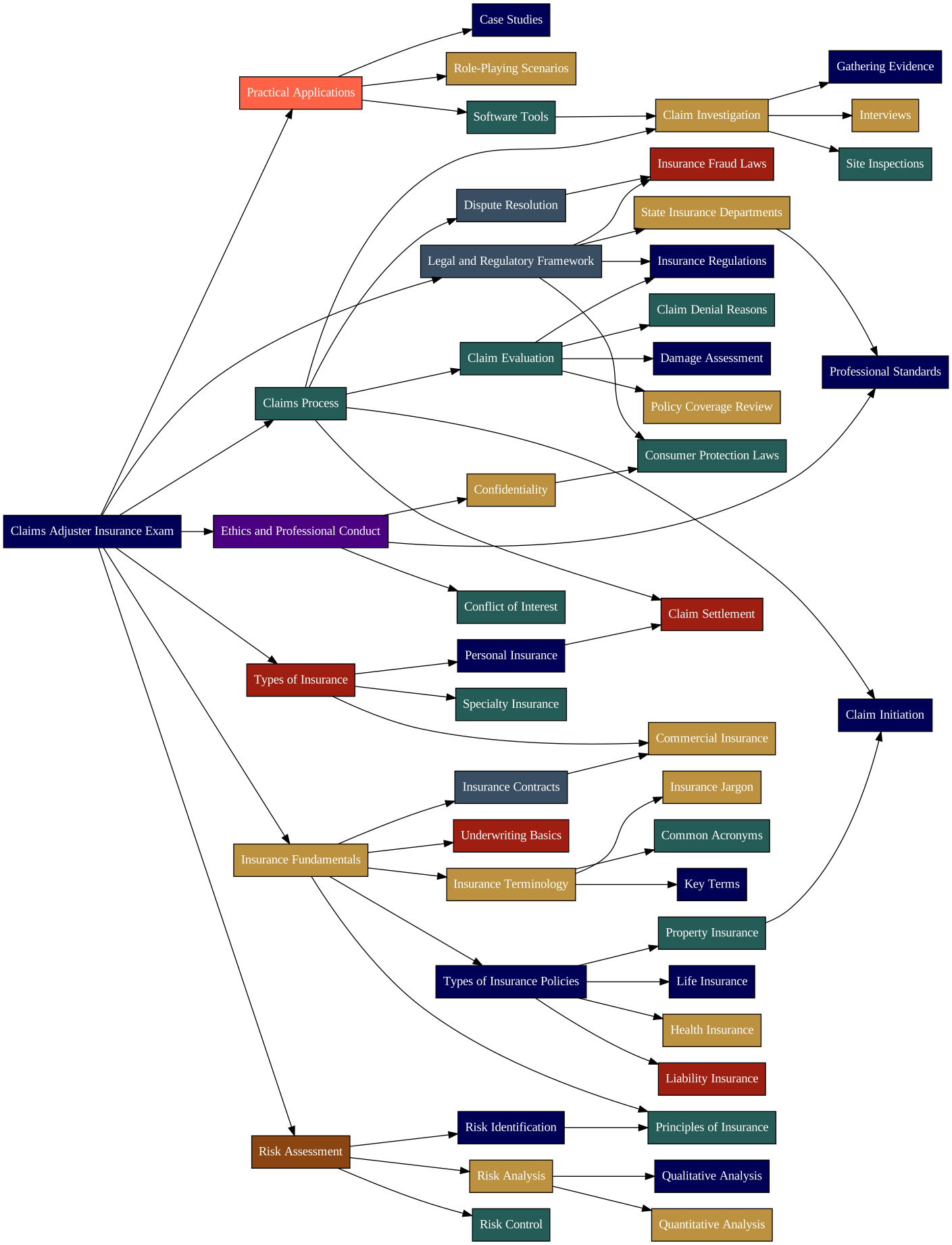
Quiz-summary
0 of 30 questions completed
Questions:
- 1
- 2
- 3
- 4
- 5
- 6
- 7
- 8
- 9
- 10
- 11
- 12
- 13
- 14
- 15
- 16
- 17
- 18
- 19
- 20
- 21
- 22
- 23
- 24
- 25
- 26
- 27
- 28
- 29
- 30
Information
Premium Practice Questions
You have already completed the quiz before. Hence you can not start it again.
Quiz is loading...
You must sign in or sign up to start the quiz.
You have to finish following quiz, to start this quiz:
Results
0 of 30 questions answered correctly
Your time:
Time has elapsed
You have reached 0 of 0 points, (0)
Categories
- Not categorized 0%
- 1
- 2
- 3
- 4
- 5
- 6
- 7
- 8
- 9
- 10
- 11
- 12
- 13
- 14
- 15
- 16
- 17
- 18
- 19
- 20
- 21
- 22
- 23
- 24
- 25
- 26
- 27
- 28
- 29
- 30
- Answered
- Review
-
Question 1 of 30
1. Question
In the context of New York personal line insurance, consider a scenario where a homeowner is hosting a party and an attendee trips and falls, sustaining injuries. The injured person decides to file a lawsuit against the homeowner for medical expenses and damages. What role does liability coverage play in this situation, and how might different coverage limits affect the homeowner’s financial responsibility in this case?
Correct
Liability coverage is a critical component of personal line insurance, particularly in New York. It protects individuals from the financial consequences that may arise from legal obligations to pay for bodily injuries or property damage caused to others. This type of insurance is essential for safeguarding personal assets against claims resulting from accidents, negligence, or other incidents where the policyholder is found liable. In New York, liability coverage often includes both bodily injury liability and property damage liability. It is important for policyholders to understand that the limits of liability coverage can greatly influence the financial outcome of a lawsuit or claim. For instance, if a policyholder has lower liability limits, they may find themselves financially responsible for any excess amounts awarded in a judgement against them. Furthermore, understanding nuances such as “per occurrence” and “aggregate limits” is crucial. “Per occurrence” refers to the maximum amount payable for a single incident, while “aggregate limits” typically reflect the total amount payable for all incidents within a policy period. This distinction can have significant implications for coverage adequacy during high-risk activities.
Incorrect
Liability coverage is a critical component of personal line insurance, particularly in New York. It protects individuals from the financial consequences that may arise from legal obligations to pay for bodily injuries or property damage caused to others. This type of insurance is essential for safeguarding personal assets against claims resulting from accidents, negligence, or other incidents where the policyholder is found liable. In New York, liability coverage often includes both bodily injury liability and property damage liability. It is important for policyholders to understand that the limits of liability coverage can greatly influence the financial outcome of a lawsuit or claim. For instance, if a policyholder has lower liability limits, they may find themselves financially responsible for any excess amounts awarded in a judgement against them. Furthermore, understanding nuances such as “per occurrence” and “aggregate limits” is crucial. “Per occurrence” refers to the maximum amount payable for a single incident, while “aggregate limits” typically reflect the total amount payable for all incidents within a policy period. This distinction can have significant implications for coverage adequacy during high-risk activities.
-
Question 2 of 30
2. Question
Consider a scenario where a New York resident experiences damage to their home due to a sudden storm. They quickly assess the damage and gather all necessary documentation. Before contacting their insurance company to report the claim, what steps should they prioritize to ensure that the claim is reported correctly and in compliance with New York regulations?
Correct
When reporting a claim in New York, it is crucial to follow certain procedures to ensure that the claim is processed efficiently and fairly. Policyholders are typically required to notify their insurance company promptly after an incident that may lead to a claim. The timely reporting of claims can significantly affect the outcome and speed of claims processing. Insurance companies may have specific timeframes within which the notice must be given; failing to comply with these may result in denial of the claim based on the policy’s terms. Furthermore, the policyholder must provide accurate and comprehensive information regarding the incident, including details such as the date, location, and nature of the loss, and any relevant documentation that supports their claim. In New York, the law also mandates that insurance companies must acknowledge receipt of a claim within a certain period and must keep the insured informed about the status of the claim. Each aspect of reporting a claim is essential in ensuring compliance with both regulatory requirements and the terms outlined in the insurance policy.
Incorrect
When reporting a claim in New York, it is crucial to follow certain procedures to ensure that the claim is processed efficiently and fairly. Policyholders are typically required to notify their insurance company promptly after an incident that may lead to a claim. The timely reporting of claims can significantly affect the outcome and speed of claims processing. Insurance companies may have specific timeframes within which the notice must be given; failing to comply with these may result in denial of the claim based on the policy’s terms. Furthermore, the policyholder must provide accurate and comprehensive information regarding the incident, including details such as the date, location, and nature of the loss, and any relevant documentation that supports their claim. In New York, the law also mandates that insurance companies must acknowledge receipt of a claim within a certain period and must keep the insured informed about the status of the claim. Each aspect of reporting a claim is essential in ensuring compliance with both regulatory requirements and the terms outlined in the insurance policy.
-
Question 3 of 30
3. Question
While working on a client’s homeowners insurance portfolio, you discover that they are unaware of how their policy defines and handles personal liability coverage. In the context of New York state regulations, explain the significance of personal liability coverage in a homeowners insurance policy. Which scenarios might prompt your client to consider the necessity of this coverage? Discuss the implications of lacking adequate personal liability coverage and how it can impact their financial well-being and peace of mind.
Correct
Homeowners insurance is a crucial aspect of personal lines insurance, as it provides financial protection against various risks associated with owning a home. In New York, homeowners are often guided by specific state regulations that influence coverage options and policy types available. A typical homeowners insurance policy covers four primary areas: the dwelling itself, other structures on the property, personal property within the home, and personal liability for injuries or damages occurring on the premises. Understanding the nuances of these coverages is essential for both homeowners and insurance professionals. For example, many policies are designed to offer replacement cost coverage for dwelling and personal property, which means they will cover the cost to replace lost or damaged items without deducting for depreciation. Additionally, homeowners should be aware of potential exclusions and limitations, such as coverage for flooding, which often requires separate policies or endorsements in New York. Therefore, a deep understanding of these policy features, as well as the relevant state-specific regulations and the insurance code, is vital for effective risk management and policy selection.
Incorrect
Homeowners insurance is a crucial aspect of personal lines insurance, as it provides financial protection against various risks associated with owning a home. In New York, homeowners are often guided by specific state regulations that influence coverage options and policy types available. A typical homeowners insurance policy covers four primary areas: the dwelling itself, other structures on the property, personal property within the home, and personal liability for injuries or damages occurring on the premises. Understanding the nuances of these coverages is essential for both homeowners and insurance professionals. For example, many policies are designed to offer replacement cost coverage for dwelling and personal property, which means they will cover the cost to replace lost or damaged items without deducting for depreciation. Additionally, homeowners should be aware of potential exclusions and limitations, such as coverage for flooding, which often requires separate policies or endorsements in New York. Therefore, a deep understanding of these policy features, as well as the relevant state-specific regulations and the insurance code, is vital for effective risk management and policy selection.
-
Question 4 of 30
4. Question
Consider a scenario where an insurance company operating in New York assesses its financial position regarding reserves and claims liabilities. The insurer identifies that while it has set aside a considerable amount for future claims, it has not adequately accounted for emerging losses related to recently reported claims. In this situation, what is the most appropriate course of action for the insurer to undertake to remain compliant with New York insurance regulations?
Correct
In the context of personal line insurance in New York, reserves and claims liabilities are critical components that ensure the financial stability and operational integrity of an insurer. Reserves are amounts that insurance companies set aside to pay future claims. This is essential for ensuring that an insurer has sufficient funds to meet its contractual obligations to policyholders. Claims liabilities refer to the insurer’s obligation to settle claims that have already occurred but have not yet been fully paid. In New York, these liabilities must be accurately assessed and accounted for in compliance with state regulations laid out by the New York State Department of Financial Services. Proper management of reserves ensures that insurers can respond promptly and effectively to claims, which is a fundamental aspect of maintaining policyholder trust and ensuring market stability. Regulatory guidance necessitates that insurers perform regular assessments to evaluate the adequacy of their reserves and claims liabilities, ensuring they retain the capacity to address emerging claims while also fulfilling solvency requirements.
Incorrect
In the context of personal line insurance in New York, reserves and claims liabilities are critical components that ensure the financial stability and operational integrity of an insurer. Reserves are amounts that insurance companies set aside to pay future claims. This is essential for ensuring that an insurer has sufficient funds to meet its contractual obligations to policyholders. Claims liabilities refer to the insurer’s obligation to settle claims that have already occurred but have not yet been fully paid. In New York, these liabilities must be accurately assessed and accounted for in compliance with state regulations laid out by the New York State Department of Financial Services. Proper management of reserves ensures that insurers can respond promptly and effectively to claims, which is a fundamental aspect of maintaining policyholder trust and ensuring market stability. Regulatory guidance necessitates that insurers perform regular assessments to evaluate the adequacy of their reserves and claims liabilities, ensuring they retain the capacity to address emerging claims while also fulfilling solvency requirements.
-
Question 5 of 30
5. Question
When you are faced with the task of evaluating how personal line insurance fits into an overarching risk management plan, it is essential to consider not only the protection it offers but also how it interacts with other risk mitigation strategies. Imagine you are advising a client in New York who is concerned about potential risks to their property and personal liability. They have expressed interest in various insurance products but are uncertain about how these fit into a broader strategy for managing their overall risk exposure. In this context, which of the following statements best explains the role of personal line insurance in a comprehensive risk management framework?
Correct
In the context of personal line insurance, understanding the role of insurance within a comprehensive risk management plan is crucial. Insurance serves as a first line of defense against various risks, such as property damage, liability claims, and personal injuries. By transferring potential financial losses to an insurance provider, individuals and families are better equipped to manage uncertainties in their lives. This protective measure is complemented by other risk management strategies, including risk avoidance, reduction, and acceptance. For instance, while insurance can compensate for losses after an event occurs, proactive steps, such as implementing safety measures or adopting strategies to avoid risky situations, can reduce the likelihood of those events altogether. In New York, where regulations emphasize consumer protection and responsible risk management practices, understanding how to incorporate insurance effectively is vital. It not only ensures compliance with state laws but also aligns with ethical standards that protect the interests of clients. Thus, the integration of insurance into a risk management plan fosters resilience and sustainability against financial adversity.
Incorrect
In the context of personal line insurance, understanding the role of insurance within a comprehensive risk management plan is crucial. Insurance serves as a first line of defense against various risks, such as property damage, liability claims, and personal injuries. By transferring potential financial losses to an insurance provider, individuals and families are better equipped to manage uncertainties in their lives. This protective measure is complemented by other risk management strategies, including risk avoidance, reduction, and acceptance. For instance, while insurance can compensate for losses after an event occurs, proactive steps, such as implementing safety measures or adopting strategies to avoid risky situations, can reduce the likelihood of those events altogether. In New York, where regulations emphasize consumer protection and responsible risk management practices, understanding how to incorporate insurance effectively is vital. It not only ensures compliance with state laws but also aligns with ethical standards that protect the interests of clients. Thus, the integration of insurance into a risk management plan fosters resilience and sustainability against financial adversity.
-
Question 6 of 30
6. Question
Consider a scenario where a personal lines insurance agent in New York is working with a client who wishes to minimize their risk exposure related to home and auto insurance. The agent wants to provide the client with comprehensive strategies that not only help in reducing potential claims but also make the client more aware of their personal safety practices. What should be the primary focus of the agent’s advice to effectively minimize the client’s risk exposure in both scenarios?
Correct
Minimizing risk exposure is a fundamental principle in personal line insurance. One effective strategy involves implementing effective loss prevention measures. This means taking proactive steps to reduce the likelihood and severity of losses before they occur. In the context of personal insurance, this could involve advising clients on home security measures, such as installing alarm systems, utilizing smoke detectors, and maintaining proper maintenance of their property. Additionally, educating clients about safe driving practices can significantly decrease the risk of auto accidents, which, in turn, minimizes claims. Another critical aspect is encouraging policyholders to engage in regular safety audits, ensuring that their properties meet safety standards and that any potential risks are addressed promptly. Furthermore, having clients participate in programs like defensive driving courses or home safety workshops can enhance their awareness and facilitate better risk management. Ultimately, these practices not only protect the insured but also assist insurers by reducing the frequency and severity of claims, leading to a more stable underwriting environment.
Incorrect
Minimizing risk exposure is a fundamental principle in personal line insurance. One effective strategy involves implementing effective loss prevention measures. This means taking proactive steps to reduce the likelihood and severity of losses before they occur. In the context of personal insurance, this could involve advising clients on home security measures, such as installing alarm systems, utilizing smoke detectors, and maintaining proper maintenance of their property. Additionally, educating clients about safe driving practices can significantly decrease the risk of auto accidents, which, in turn, minimizes claims. Another critical aspect is encouraging policyholders to engage in regular safety audits, ensuring that their properties meet safety standards and that any potential risks are addressed promptly. Furthermore, having clients participate in programs like defensive driving courses or home safety workshops can enhance their awareness and facilitate better risk management. Ultimately, these practices not only protect the insured but also assist insurers by reducing the frequency and severity of claims, leading to a more stable underwriting environment.
-
Question 7 of 30
7. Question
When you are faced with a scenario where an insured party is suspected of committing insurance fraud in New York, what are the potential consequences they might encounter as a result of this illegal activity? Consider the implications for both the insured and the insurer, along with the legal framework that governs such actions in New York.
Correct
Insurance fraud can have severe legal and financial consequences for both the insurer and the insured. In New York, the Insurance Law explicitly addresses fraudulent actions, categorizing them as misdemeanors or felonies depending on the severity and intent behind the act. For individuals involved in insurance fraud, the consequences may range from criminal charges leading to fines and imprisonment to civil penalties that could result in significant financial losses. Furthermore, an individual found guilty of insurance fraud may face long-term repercussions, including the inability to secure future insurance coverage or higher premiums due to their fraudulent history. Insurers are also empowered to deny coverage and terminate policies for fraud attempts, which means that the insured could be left without necessary coverage in critical situations. Additionally, the New York Department of Financial Services (DFS) actively investigates insurance fraud, and those found guilty may be subject to further scrutiny that impacts their professional reputation. Understanding these implications is essential for both insurance professionals and consumers to promote ethical behavior within the insurance industry.
Incorrect
Insurance fraud can have severe legal and financial consequences for both the insurer and the insured. In New York, the Insurance Law explicitly addresses fraudulent actions, categorizing them as misdemeanors or felonies depending on the severity and intent behind the act. For individuals involved in insurance fraud, the consequences may range from criminal charges leading to fines and imprisonment to civil penalties that could result in significant financial losses. Furthermore, an individual found guilty of insurance fraud may face long-term repercussions, including the inability to secure future insurance coverage or higher premiums due to their fraudulent history. Insurers are also empowered to deny coverage and terminate policies for fraud attempts, which means that the insured could be left without necessary coverage in critical situations. Additionally, the New York Department of Financial Services (DFS) actively investigates insurance fraud, and those found guilty may be subject to further scrutiny that impacts their professional reputation. Understanding these implications is essential for both insurance professionals and consumers to promote ethical behavior within the insurance industry.
-
Question 8 of 30
8. Question
When analyzing a homeowner’s insurance application in New York, what three property characteristics must be considered to determine the risk and appropriate premium for the policy? The applicant lives in an area that has been identified as undergoing rapid development, which raises questions about the infrastructure supporting older homes. The applicant’s property is over 50 years old and has recently experienced some minor repairs due to wear and tear. In evaluating the potential insurance risk associated with this property, how do location, age, and condition interact to influence the insurer’s underwriting process?
Correct
In New York, personal line insurance policies, particularly homeowners’ insurance, require careful consideration of property characteristics such as location, age, and condition. The location of a property significantly influences its risk profile; areas prone to natural disasters like floods or earthquakes may present higher risks and premiums. The age of a property is crucial because older homes may not meet current safety standards, often leading to higher rates of claims, particularly if the property has outdated electrical or plumbing systems. Additionally, the condition of the property plays a pivotal role in underwriting decisions. Insurers assess whether the property is well-maintained or shows signs of neglect or disrepair, which can increase the likelihood of claims. Thus, when evaluating a property for insurance purposes, all these factors interact to create a comprehensive risk assessment. Insurers often conduct inspections and utilize various forms of assessment documentation to guide their decisions, ensuring they provide coverage that adequately reflects the true risk associated with insuring the property.
Incorrect
In New York, personal line insurance policies, particularly homeowners’ insurance, require careful consideration of property characteristics such as location, age, and condition. The location of a property significantly influences its risk profile; areas prone to natural disasters like floods or earthquakes may present higher risks and premiums. The age of a property is crucial because older homes may not meet current safety standards, often leading to higher rates of claims, particularly if the property has outdated electrical or plumbing systems. Additionally, the condition of the property plays a pivotal role in underwriting decisions. Insurers assess whether the property is well-maintained or shows signs of neglect or disrepair, which can increase the likelihood of claims. Thus, when evaluating a property for insurance purposes, all these factors interact to create a comprehensive risk assessment. Insurers often conduct inspections and utilize various forms of assessment documentation to guide their decisions, ensuring they provide coverage that adequately reflects the true risk associated with insuring the property.
-
Question 9 of 30
9. Question
When you are faced with the task of explaining the concept and purpose of personal lines insurance in New York to a client, what key elements should you emphasize to ensure they understand its significance in protecting personal assets? Highlight how these policies mitigate financial risks and the importance of regulation in this context. Furthermore, discuss the various types of personal lines insurance available and how they cater to different needs within the state.
Correct
The purpose of personal lines insurance is to provide coverage that protects individuals and families from financial losses related to personal property and liability. In New York, personal lines insurance includes policies such as homeowners, renters, auto, and personal umbrella insurance. Each type of coverage addresses specific risks: homeowners insurance safeguards against risks to one’s home and possessions, renters insurance protects the personal belongings of those who lease homes, and auto insurance covers liabilities and damages related to vehicle use. The overarching goal is to ensure that policyholders can recover from unforeseen events, such as natural disasters, theft, or accidents, without incurring financial hardship. Additionally, personal lines insurance is regulated to ensure that policies offered in New York are fair, transparent, and provide adequate protection. Compliance with state laws, such as the New York Insurance Law, mandates that insurers provide clear information about coverage options and exclusions, ensuring that consumers understand the protections they are purchasing. This regulatory framework enhances consumer trust and promotes responsible insurance practices.
Incorrect
The purpose of personal lines insurance is to provide coverage that protects individuals and families from financial losses related to personal property and liability. In New York, personal lines insurance includes policies such as homeowners, renters, auto, and personal umbrella insurance. Each type of coverage addresses specific risks: homeowners insurance safeguards against risks to one’s home and possessions, renters insurance protects the personal belongings of those who lease homes, and auto insurance covers liabilities and damages related to vehicle use. The overarching goal is to ensure that policyholders can recover from unforeseen events, such as natural disasters, theft, or accidents, without incurring financial hardship. Additionally, personal lines insurance is regulated to ensure that policies offered in New York are fair, transparent, and provide adequate protection. Compliance with state laws, such as the New York Insurance Law, mandates that insurers provide clear information about coverage options and exclusions, ensuring that consumers understand the protections they are purchasing. This regulatory framework enhances consumer trust and promotes responsible insurance practices.
-
Question 10 of 30
10. Question
When you are faced with a situation where a New York policyholder feels misled by their insurance company regarding the terms of a personal line insurance policy, which of the following actions should be taken first to uphold consumer protection laws? Understanding how to navigate such situations is vital for maintaining ethical standards in the insurance industry. The policyholder claims that they were not properly informed about exclusions related to natural disasters and feels that their trust was compromised. Considering the responsibilities outlined by consumer protection laws, you must determine the best initial response to take that would effectively address the policyholder’s concerns and ensure compliance with state regulations.
Correct
Consumer protection laws are critical in the insurance industry as they seek to safeguard the rights of policyholders and ensure fair treatment. In New York, these laws are designed to promote transparency and prevent unfair practices within the market. One key aspect of consumer protection is the requirement for insurers to provide clear and accurate information about their policies, including coverage limits, exclusions, and premium costs. This transparency allows consumers to make informed decisions regarding their insurance needs. Additionally, the laws require that policyholders have access to a fair complaint process if they feel their rights have been violated or if they experience substandard service. The New York State Department of Financial Services oversees the enforcement of these laws and ensures that insurance providers adhere to ethical practices. These protections empower consumers by giving them recourse against fraud and unfair treatment, enhancing their confidence in the insurance marketplace.
Incorrect
Consumer protection laws are critical in the insurance industry as they seek to safeguard the rights of policyholders and ensure fair treatment. In New York, these laws are designed to promote transparency and prevent unfair practices within the market. One key aspect of consumer protection is the requirement for insurers to provide clear and accurate information about their policies, including coverage limits, exclusions, and premium costs. This transparency allows consumers to make informed decisions regarding their insurance needs. Additionally, the laws require that policyholders have access to a fair complaint process if they feel their rights have been violated or if they experience substandard service. The New York State Department of Financial Services oversees the enforcement of these laws and ensures that insurance providers adhere to ethical practices. These protections empower consumers by giving them recourse against fraud and unfair treatment, enhancing their confidence in the insurance marketplace.
-
Question 11 of 30
11. Question
When you are faced with a personal line insurance claim in New York, what is the initial step that initiates the formal claims process for both the insured and the insurer? Understanding this step is crucial as it will dictate the flow of communication and the responsibilities of both parties involved in the claims handling process. The clarity and accuracy in this first step can significantly influence the overall efficiency of the claim resolution. Furthermore, recognizing the legal and ethical implications tied to this procedure is essential for maintaining compliance with New York insurance regulations. What aspect of the claims process must the insured fulfill to set the stage for any subsequent investigation or assessment by the insurance company?
Correct
The claims process is a critical component of personal line insurance that requires a systematic approach to ensure efficient and fair resolution of claims. In New York, the claims process typically begins with the notification of the claim by the insured to the insurance company. This initial step is crucial as it sets the foundation for the subsequent investigation and evaluation of the claim. Following notification, the insurer will assign a claims adjuster who will be responsible for assessing the validity of the claim, gathering evidence, and determining the extent of the insurer’s liability. This investigation often includes interviews with the claimant, review of policy terms, and examination of relevant documentation and evidence related to the incident. Once the investigation is complete, the claims adjuster will communicate their findings and determine whether the claim should be accepted, denied, or negotiated. If accepted, claims may involve payment arrangements or settlement discussions. It’s also important for insurers to comply with New York state regulations, which mandate timely communication with the claimant regarding the status of the claim and any decisions made. The claims process must not only adhere to legal standards but also maintain ethical considerations, ensuring that all parties are treated fairly.
Incorrect
The claims process is a critical component of personal line insurance that requires a systematic approach to ensure efficient and fair resolution of claims. In New York, the claims process typically begins with the notification of the claim by the insured to the insurance company. This initial step is crucial as it sets the foundation for the subsequent investigation and evaluation of the claim. Following notification, the insurer will assign a claims adjuster who will be responsible for assessing the validity of the claim, gathering evidence, and determining the extent of the insurer’s liability. This investigation often includes interviews with the claimant, review of policy terms, and examination of relevant documentation and evidence related to the incident. Once the investigation is complete, the claims adjuster will communicate their findings and determine whether the claim should be accepted, denied, or negotiated. If accepted, claims may involve payment arrangements or settlement discussions. It’s also important for insurers to comply with New York state regulations, which mandate timely communication with the claimant regarding the status of the claim and any decisions made. The claims process must not only adhere to legal standards but also maintain ethical considerations, ensuring that all parties are treated fairly.
-
Question 12 of 30
12. Question
When you are faced with a client who has just experienced a loss and is seeking to file a claim under their personal line insurance policy in New York, it is essential to understand the steps involved in the claims process. After the initial reporting of the incident, what is the next critical action that both the insurer and the insured must engage in to ensure the claim is processed efficiently? Consider the regulatory obligations and best practices that govern this interaction, as well as the importance of clear communication and timely handling of the claim.
Correct
The claims process in personal line insurance is critical as it directly impacts the policyholder’s experience during a time of loss or distress. In New York, the claims process typically begins when the insured notifies the insurer of an incident that may lead to a claim. Insurers are obligated to acknowledge receipt of the claim promptly and to investigate the claim in a timely manner, as stipulated by New York State Insurance Regulation 64. Importantly, the insured has the right to receive clear communication from the insurer regarding the status of their claim and the steps involved in the process. Insurers must adhere to their duty of good faith and fair dealing, ensuring they engage in honest practices throughout the claims investigation. This includes disclosing relevant information, avoiding deceptive practices, and not delaying the claims process unnecessarily. The New York Department of Financial Services monitors insurers to ensure compliance with these standards, protecting consumers from unfair treatment. Understanding these requirements not only helps consumers navigate their claims but also enables insurance professionals to provide better service and uphold regulatory standards.
Incorrect
The claims process in personal line insurance is critical as it directly impacts the policyholder’s experience during a time of loss or distress. In New York, the claims process typically begins when the insured notifies the insurer of an incident that may lead to a claim. Insurers are obligated to acknowledge receipt of the claim promptly and to investigate the claim in a timely manner, as stipulated by New York State Insurance Regulation 64. Importantly, the insured has the right to receive clear communication from the insurer regarding the status of their claim and the steps involved in the process. Insurers must adhere to their duty of good faith and fair dealing, ensuring they engage in honest practices throughout the claims investigation. This includes disclosing relevant information, avoiding deceptive practices, and not delaying the claims process unnecessarily. The New York Department of Financial Services monitors insurers to ensure compliance with these standards, protecting consumers from unfair treatment. Understanding these requirements not only helps consumers navigate their claims but also enables insurance professionals to provide better service and uphold regulatory standards.
-
Question 13 of 30
13. Question
When you are faced with advising a client in New York who is trying to choose between personal lines and commercial lines insurance, what key distinction should guide your recommendation? Consider the client’s specific needs, the regulatory landscape, and the nature of the coverage provided. Personal lines generally cater to individual needs, while commercial lines address the complexities involved in business operations. Understanding which category your client falls into will be critical in ensuring they receive the appropriate advice and coverage tailored to their situation.
Correct
In the realm of insurance, it’s crucial to distinguish between personal lines and commercial lines as they serve different needs and are governed by different considerations. Personal lines insurance is designed for individuals and families, offering protection primarily for personal property and personal liabilities. Common examples include homeowners insurance, personal auto insurance, and renters insurance. These policies are typically straightforward, tailored to cover the risks associated with personal living situations, and they often have standardized underwriting guidelines. On the other hand, commercial lines are tailored for businesses and organizations, encompassing various types of policies that protect commercial property, business income, and liability against the risks inherent in conducting business activities. These include commercial auto insurance, general liability insurance, and property insurance for businesses. The underwriting process in commercial lines is more complex, as it must consider the unique operational risks, legal requirements, and financial exposures of the business in question. Understanding these distinctions is essential for insurance professionals in New York as they navigate the different regulatory frameworks, coverage needs, and market conditions associated with personal and commercial lines. This knowledge informs how agents advise clients and structure insurance packages to ensure adequate protection tailored to each client’s specific situation.
Incorrect
In the realm of insurance, it’s crucial to distinguish between personal lines and commercial lines as they serve different needs and are governed by different considerations. Personal lines insurance is designed for individuals and families, offering protection primarily for personal property and personal liabilities. Common examples include homeowners insurance, personal auto insurance, and renters insurance. These policies are typically straightforward, tailored to cover the risks associated with personal living situations, and they often have standardized underwriting guidelines. On the other hand, commercial lines are tailored for businesses and organizations, encompassing various types of policies that protect commercial property, business income, and liability against the risks inherent in conducting business activities. These include commercial auto insurance, general liability insurance, and property insurance for businesses. The underwriting process in commercial lines is more complex, as it must consider the unique operational risks, legal requirements, and financial exposures of the business in question. Understanding these distinctions is essential for insurance professionals in New York as they navigate the different regulatory frameworks, coverage needs, and market conditions associated with personal and commercial lines. This knowledge informs how agents advise clients and structure insurance packages to ensure adequate protection tailored to each client’s specific situation.
-
Question 14 of 30
14. Question
You are reviewing a homeowner’s insurance policy for a client in New York who is concerned about ensuring adequate protection for their newly renovated property. They are particularly interested in understanding how endorsements can affect their coverage. During your discussion, the client asks about the role of endorsements in modifying standard coverage and the potential advantages they might offer. What would you tell them regarding the significance of endorsements in personal line insurance, especially in terms of coverage customization and compliance with New York regulations?
Correct
In New York personal line insurance, endorsements are modifications or additions to the standard insurance policy. They are essential because they allow policyholders to customize coverage to meet their specific needs. A common type of endorsement is an “Additional Insured” endorsement, which extends coverage to additional parties, typically required in lease agreements or contractual relationships. Another important endorsement could be a “Replacement Cost” endorsement, which ensures that the insured receives compensation for the actual cost to replace the damaged property, rather than its depreciated value. Understanding the implications of these endorsements is critical for both the insurer and the insured, as the proper application can significantly alter the risk exposure and the premium calculations. Additionally, the New York State Insurance Department regulates the use of these endorsements, ensuring they are clearly explained and agreed upon by both parties. This fosters transparency and helps prevent disputes regarding coverage in the event of a claim, reinforcing the importance of thorough documentation and communication between insurers and policyholders.
Incorrect
In New York personal line insurance, endorsements are modifications or additions to the standard insurance policy. They are essential because they allow policyholders to customize coverage to meet their specific needs. A common type of endorsement is an “Additional Insured” endorsement, which extends coverage to additional parties, typically required in lease agreements or contractual relationships. Another important endorsement could be a “Replacement Cost” endorsement, which ensures that the insured receives compensation for the actual cost to replace the damaged property, rather than its depreciated value. Understanding the implications of these endorsements is critical for both the insurer and the insured, as the proper application can significantly alter the risk exposure and the premium calculations. Additionally, the New York State Insurance Department regulates the use of these endorsements, ensuring they are clearly explained and agreed upon by both parties. This fosters transparency and helps prevent disputes regarding coverage in the event of a claim, reinforcing the importance of thorough documentation and communication between insurers and policyholders.
-
Question 15 of 30
15. Question
In the context of New York personal line insurance, when a policyholder agrees to a settlement following a claim, what is the primary legal document that formalizes the agreement and protects the insurer from further claims? This document is essential in ensuring both parties understand their rights and responsibilities after the settlement. It is especially important that the terms clearly specify that the policyholder waives any future claims related to the incident in exchange for the settlement payment. By executing this document, both the insurer and the insured can mitigate potential disputes, thereby fostering a more efficient claims process. What is this critical document called?
Correct
In New York, the handling of settlements and payments in personal line insurance involves crucial legal principles that govern how claims are processed and compensated. Insurers are required to adhere to specific regulations that aim to protect consumers and ensure they receive fair treatment during the claims process. The New York Insurance Law mandates that claims must be paid in a timely manner, and claims settlement practices must be conducted with the utmost good faith. This means insurers cannot delay payments unjustly or mislead policyholders regarding the status of their claims. When a settlement is agreed upon, it is typically documented in a release form, which outlines the terms under which the insurer fulfills its obligations. This document often stipulates that the insured relinquishes their right to pursue further claims related to the incident in exchange for the settlement payment. Understanding these principles is critical for insurance professionals in New York, as they must navigate both legal requirements and ethical considerations to fulfill their duties responsibly.
Incorrect
In New York, the handling of settlements and payments in personal line insurance involves crucial legal principles that govern how claims are processed and compensated. Insurers are required to adhere to specific regulations that aim to protect consumers and ensure they receive fair treatment during the claims process. The New York Insurance Law mandates that claims must be paid in a timely manner, and claims settlement practices must be conducted with the utmost good faith. This means insurers cannot delay payments unjustly or mislead policyholders regarding the status of their claims. When a settlement is agreed upon, it is typically documented in a release form, which outlines the terms under which the insurer fulfills its obligations. This document often stipulates that the insured relinquishes their right to pursue further claims related to the incident in exchange for the settlement payment. Understanding these principles is critical for insurance professionals in New York, as they must navigate both legal requirements and ethical considerations to fulfill their duties responsibly.
-
Question 16 of 30
16. Question
Consider a scenario where a resident in New York is reviewing their homeowner’s insurance policy and is particularly concerned about how their personal property is valued in the event of a claim. They own a collection of valuable antiques and want to ensure that they are adequately covered. They encounter three common valuation methods: replacement cost, actual cash value, and agreed value. The resident seeks to understand how each method impacts their potential reimbursement in case of a loss. Which valuation method would typically provide the highest level of reimbursement for an insured item without deductions for depreciation, especially if the items are lost or damaged?
Correct
Valuation of personal property is a crucial aspect of personal line insurance that aims to establish the worth of items that are insured. This valuation can impact the overall cost of the insurance policy as well as the compensation provided in the event of a claim. In New York, personal property can be valued using several methods, including replacement cost, actual cash value, or agreed value. Replacement cost is the amount required to replace the property without deducting for depreciation, while actual cash value considers depreciation and is calculated as replacement cost minus depreciation. Agreed value is a predetermined value agreed upon by both the insurer and the insured, which simplifies claims processing. Understanding these valuation methods allows for a more informed assessment when determining coverage limits and premiums. In practice, the choice of valuation method can significantly affect the insured’s recovery after a loss, making it essential for agents and clients in New York to have a clear understanding of how to properly value personal property under these regulations.
Incorrect
Valuation of personal property is a crucial aspect of personal line insurance that aims to establish the worth of items that are insured. This valuation can impact the overall cost of the insurance policy as well as the compensation provided in the event of a claim. In New York, personal property can be valued using several methods, including replacement cost, actual cash value, or agreed value. Replacement cost is the amount required to replace the property without deducting for depreciation, while actual cash value considers depreciation and is calculated as replacement cost minus depreciation. Agreed value is a predetermined value agreed upon by both the insurer and the insured, which simplifies claims processing. Understanding these valuation methods allows for a more informed assessment when determining coverage limits and premiums. In practice, the choice of valuation method can significantly affect the insured’s recovery after a loss, making it essential for agents and clients in New York to have a clear understanding of how to properly value personal property under these regulations.
-
Question 17 of 30
17. Question
When you are faced with a situation where your client has been involved in a car accident, it is important to determine the extent of their liability regarding bodily injury and property damage. In New York, how should you advise your client to proceed in understanding their coverage and potential out-of-pocket expenses? Specifically, what key aspects of bodily injury and property damage insurance should your client be aware of when it comes to their financial responsibilities? Consider the implications of limits, exclusions, and state regulations that govern such coverage.
Correct
Bodily injury and property damage coverage are essential components of personal line insurance policies. This coverage protects insured individuals from financial loss resulting from liabilities they may incur due to injuries or damages caused to others. Understanding the nature of bodily injury and property damage is crucial in evaluating risk and ensuring appropriate policy limits. Bodily injury coverage typically encompasses medical expenses, loss of wages, and pain and suffering experienced by the injured party. Property damage coverage, on the other hand, addresses repair or replacement costs for damage inflicted on another person’s belongings. In the state of New York, insurance regulations stipulate specific minimum coverage requirements to ensure that individuals are adequately protected in the event of an accident. The distinction between bodily injury and property damage is not only critical for policyholders but also for insurers in assessing risk and determining premium rates. Failure to maintain adequate coverage could lead to substantial financial repercussions for individuals involved in accidents, highlighting the importance of understanding these coverage types in personal line insurance.
Incorrect
Bodily injury and property damage coverage are essential components of personal line insurance policies. This coverage protects insured individuals from financial loss resulting from liabilities they may incur due to injuries or damages caused to others. Understanding the nature of bodily injury and property damage is crucial in evaluating risk and ensuring appropriate policy limits. Bodily injury coverage typically encompasses medical expenses, loss of wages, and pain and suffering experienced by the injured party. Property damage coverage, on the other hand, addresses repair or replacement costs for damage inflicted on another person’s belongings. In the state of New York, insurance regulations stipulate specific minimum coverage requirements to ensure that individuals are adequately protected in the event of an accident. The distinction between bodily injury and property damage is not only critical for policyholders but also for insurers in assessing risk and determining premium rates. Failure to maintain adequate coverage could lead to substantial financial repercussions for individuals involved in accidents, highlighting the importance of understanding these coverage types in personal line insurance.
-
Question 18 of 30
18. Question
In the context of New York’s personal line insurance regulations, you are reviewing a client’s homeowners insurance policy, which includes coverage for personal property. Upon examination, you notice that the policy specifies an actual cash value for personal belongings. The client is concerned about how this might affect their compensation in the event of a claim. Given the client’s worries, what should you clarify regarding the implications of this type of coverage compared to other options available? Additionally, discuss how specific exclusions in the policy could impact their overall financial protection and what steps can be taken to augment their coverage.
Correct
Coverage for personal property under New York insurance regulations stipulates that homeowners and renters insurance policies typically provide protection for personal belongings within the covered residence. This coverage is usually based on actual cash value or replacement cost, depending on the specific policy language. Actual cash value considers depreciation, while replacement cost excludes depreciation, allowing the insured to replace lost or damaged items at current market prices. New York law requires insurers to clearly state the limits of coverage for personal property to ensure transparency for policyholders. Additionally, most policies will have specific exclusions and limitations, particularly for high-value items like jewelry, art, or collectibles, often necessitating additional riders or endorsements to extend coverage. It’s crucial for policyholders to conduct regular home inventories and stay informed on the limitations outlined in their policies, as failure to do so may result in inadequate compensation when claims are filed.
Incorrect
Coverage for personal property under New York insurance regulations stipulates that homeowners and renters insurance policies typically provide protection for personal belongings within the covered residence. This coverage is usually based on actual cash value or replacement cost, depending on the specific policy language. Actual cash value considers depreciation, while replacement cost excludes depreciation, allowing the insured to replace lost or damaged items at current market prices. New York law requires insurers to clearly state the limits of coverage for personal property to ensure transparency for policyholders. Additionally, most policies will have specific exclusions and limitations, particularly for high-value items like jewelry, art, or collectibles, often necessitating additional riders or endorsements to extend coverage. It’s crucial for policyholders to conduct regular home inventories and stay informed on the limitations outlined in their policies, as failure to do so may result in inadequate compensation when claims are filed.
-
Question 19 of 30
19. Question
When you are faced with advising a client about their auto insurance options in New York, they express concern about the high premiums they are paying despite being a safe driver. What is the most effective discount strategy an insurance agent can present to them that acknowledges their safe driving history and can lead to potential savings on their premiums?
Correct
In New York, insurance companies offer various discounts and incentives to encourage safe driving behaviors among policyholders. These discounts can significantly lower premiums and are often based on factors such as a driver’s history, completion of defensive driving courses, or usage-based insurance programs. For instance, the New York State Department of Financial Services mandates that insurers must provide a discount of at least 10% for drivers who successfully complete a state-approved accident prevention course. Additionally, insurers may also offer discounts for maintaining a clean driving record, which means no accidents, traffic violations, or claims within a specified period. By incentivizing safe driving, insurance companies aim to reduce the number of claims and foster a culture of responsible driving. Understanding these incentives is crucial for both agents and clients, as it allows for better decision-making when choosing insurance products and understanding the potential savings associated with safe driving practices. Moreover, discussing these discounts with clients is essential as it can help them save money while promoting safe driving habits.
Incorrect
In New York, insurance companies offer various discounts and incentives to encourage safe driving behaviors among policyholders. These discounts can significantly lower premiums and are often based on factors such as a driver’s history, completion of defensive driving courses, or usage-based insurance programs. For instance, the New York State Department of Financial Services mandates that insurers must provide a discount of at least 10% for drivers who successfully complete a state-approved accident prevention course. Additionally, insurers may also offer discounts for maintaining a clean driving record, which means no accidents, traffic violations, or claims within a specified period. By incentivizing safe driving, insurance companies aim to reduce the number of claims and foster a culture of responsible driving. Understanding these incentives is crucial for both agents and clients, as it allows for better decision-making when choosing insurance products and understanding the potential savings associated with safe driving practices. Moreover, discussing these discounts with clients is essential as it can help them save money while promoting safe driving habits.
-
Question 20 of 30
20. Question
When analyzing a personal insurance claim in New York, a claims representative discovers discrepancies in the information provided by the claimant. This situation requires a careful approach to determine the next steps. What is the primary responsibility of the claims representative once discrepancies are identified? The representative must balance thorough investigation with the need to maintain professionalism and comply with state regulations. Consider the various aspects of their role, including communication with the claimant, adherence to ethical standards, and the necessity to ensure a fair assessment of the claim in light of potential fraud or misrepresentation.
Correct
The role of adjusters and claims representatives is pivotal in the insurance industry, especially within the context of personal lines in New York. Adjusters are responsible for evaluating insurance claims to determine their validity and the extent of liability. They conduct thorough investigations that include gathering evidence, interviewing claimants and witnesses, and reviewing documents. This process not only helps in establishing the facts surrounding a claim but also ensures compliance with New York’s insurance regulations and laws. Claims representatives, on the other hand, act as liaisons between the insurer and the insured, guiding claimants through the claims process, explaining policy coverages, and addressing any questions or concerns. Their role is crucial in maintaining customer satisfaction and trust. In a competitive market like New York, effective communication and empathy are necessary traits for both adjusters and claims representatives as they navigate the complexities of claims handling. They must uphold ethical standards set forth by the New York Department of Financial Services, ensuring they treat all parties fairly and transparently throughout the claims process.
Incorrect
The role of adjusters and claims representatives is pivotal in the insurance industry, especially within the context of personal lines in New York. Adjusters are responsible for evaluating insurance claims to determine their validity and the extent of liability. They conduct thorough investigations that include gathering evidence, interviewing claimants and witnesses, and reviewing documents. This process not only helps in establishing the facts surrounding a claim but also ensures compliance with New York’s insurance regulations and laws. Claims representatives, on the other hand, act as liaisons between the insurer and the insured, guiding claimants through the claims process, explaining policy coverages, and addressing any questions or concerns. Their role is crucial in maintaining customer satisfaction and trust. In a competitive market like New York, effective communication and empathy are necessary traits for both adjusters and claims representatives as they navigate the complexities of claims handling. They must uphold ethical standards set forth by the New York Department of Financial Services, ensuring they treat all parties fairly and transparently throughout the claims process.
-
Question 21 of 30
21. Question
Consider a scenario where a New York homeowner is reviewing their insurance policy after experiencing severe water damage from a storm. The homeowner is puzzled because they believed their policy covered all types of water damage. However, when they carefully read the document, they find out that damage resulting from flooding is specifically excluded unless they have purchased a separate flood insurance rider. In the context of New York personal line insurance, which of the following best explains why such exclusions and limitations are important for policyholders to understand?
Correct
Exclusions and limitations in personal line insurance policies are vital concepts that distinctly affect the scope of coverage provided to policyholders. In New York, these exclusions are carefully outlined in policy documents and hold significant implications for insured parties. Exclusions refer to specific circumstances or events that are not covered by the insurance policy, which can include acts of war, intentional damage, or certain types of property. Limitations, on the other hand, specify certain conditions under which the coverage would apply, often setting caps on the extent of coverage for specific items or situations. For instance, a homeowner’s insurance policy might exclude damage from flooding unless the policy includes a separate rider for flood insurance. Understanding these nuances helps policyholders to prepare for potential risks and choose the right coverage for their needs. Therefore, when assessing the adequacy of a personal lines insurance policy, it is crucial to meticulously review the exclusions and limitations to avoid unexpected out-of-pocket expenses in the event of a claim.
Incorrect
Exclusions and limitations in personal line insurance policies are vital concepts that distinctly affect the scope of coverage provided to policyholders. In New York, these exclusions are carefully outlined in policy documents and hold significant implications for insured parties. Exclusions refer to specific circumstances or events that are not covered by the insurance policy, which can include acts of war, intentional damage, or certain types of property. Limitations, on the other hand, specify certain conditions under which the coverage would apply, often setting caps on the extent of coverage for specific items or situations. For instance, a homeowner’s insurance policy might exclude damage from flooding unless the policy includes a separate rider for flood insurance. Understanding these nuances helps policyholders to prepare for potential risks and choose the right coverage for their needs. Therefore, when assessing the adequacy of a personal lines insurance policy, it is crucial to meticulously review the exclusions and limitations to avoid unexpected out-of-pocket expenses in the event of a claim.
-
Question 22 of 30
22. Question
While working on a project to enhance your understanding of the claims process in New York, you come across a case where an insured party filed a claim for property damage. The insurance company acknowledges the claim but is slow in processing the payment due to ongoing investigations. In this scenario, what is the primary obligation of the insurance company under New York law regarding the settlement of this claim, specifically in terms of timely payment?
Correct
In New York, the process of settlement and payment in personal line insurance is influenced by various laws and regulations designed to protect consumers and ensure fair practices within the insurance industry. One critical aspect is the requirement for insurers to act in good faith when settling claims. This means that an insurer must thoroughly investigate claims, consider all available evidence, and avoid unreasonable delays in processing payments. When a claim is approved, it is essential that payments are made promptly to the insured or the designated beneficiary as stated in the policy. Additionally, New York law mandates that insurers provide a clear explanation of the settlement terms, including any deductions or reductions from the claim amount. This allows the insured to understand how the final payment amount was determined, fostering transparency and trust. Knowledge of these principles is vital for insurance professionals, as it directly impacts customer relations and compliance with state regulations.
Incorrect
In New York, the process of settlement and payment in personal line insurance is influenced by various laws and regulations designed to protect consumers and ensure fair practices within the insurance industry. One critical aspect is the requirement for insurers to act in good faith when settling claims. This means that an insurer must thoroughly investigate claims, consider all available evidence, and avoid unreasonable delays in processing payments. When a claim is approved, it is essential that payments are made promptly to the insured or the designated beneficiary as stated in the policy. Additionally, New York law mandates that insurers provide a clear explanation of the settlement terms, including any deductions or reductions from the claim amount. This allows the insured to understand how the final payment amount was determined, fostering transparency and trust. Knowledge of these principles is vital for insurance professionals, as it directly impacts customer relations and compliance with state regulations.
-
Question 23 of 30
23. Question
When you are faced with developing a comprehensive risk management plan in New York, how should you evaluate the role of insurance within this framework? Consider the various strategies that can be employed to mitigate risks and the importance of aligning insurance coverage with specific needs. How can proactive risk management methods enhance the effectiveness of insurance policies in protecting against losses?
Correct
In New York, the role of insurance within a comprehensive risk management plan is pivotal as it helps identify, assess, and mitigate risks. Insurance is not solely a tool for transferring risk; it is also a means of ensuring financial stability and security against unforeseen losses. A thorough risk management plan integrates various strategies, including loss prevention measures, which can reduce the likelihood of a loss occurring in the first place. For example, a homeowner might install security systems to deter burglaries, thereby minimizing their risk exposure. Additionally, insurance policies should be tailored to meet the specific needs of individuals or businesses, which often involves understanding their unique risks. A well-structured plan will also include regular reviews and adjustments to the insurance coverage as risks evolve over time. This alignment ensures that the insured parties are adequately protected against losses while adhering to New York’s regulatory requirements regarding compliance and ethical conduct in the insurance industry. Overall, the intersection of proactive risk management strategies and effective insurance coverage fosters resilience against potential financial impacts associated with various risks.
Incorrect
In New York, the role of insurance within a comprehensive risk management plan is pivotal as it helps identify, assess, and mitigate risks. Insurance is not solely a tool for transferring risk; it is also a means of ensuring financial stability and security against unforeseen losses. A thorough risk management plan integrates various strategies, including loss prevention measures, which can reduce the likelihood of a loss occurring in the first place. For example, a homeowner might install security systems to deter burglaries, thereby minimizing their risk exposure. Additionally, insurance policies should be tailored to meet the specific needs of individuals or businesses, which often involves understanding their unique risks. A well-structured plan will also include regular reviews and adjustments to the insurance coverage as risks evolve over time. This alignment ensures that the insured parties are adequately protected against losses while adhering to New York’s regulatory requirements regarding compliance and ethical conduct in the insurance industry. Overall, the intersection of proactive risk management strategies and effective insurance coverage fosters resilience against potential financial impacts associated with various risks.
-
Question 24 of 30
24. Question
When you are faced with the task of evaluating personal lines insurance in New York, it is essential to consider the broader global context. How does the regulatory environment in New York shape the delivery of personal lines insurance compared to other international markets? For example, if a significant natural disaster were to occur, how might the response differ based on the regulatory frameworks governing personal lines insurance in New York versus other countries? Understanding these dynamics can help in developing strategies that align with both local and global best practices. What insights can be drawn about the impact of consumer behavior and market trends on personal lines insurance offerings in various nations, especially in light of these regulations?
Correct
The global perspective on personal lines insurance is influenced by various regulatory frameworks, consumer behavior, and market dynamics that differ considerably between regions. In New York, the Department of Financial Services plays a pivotal role in overseeing insurance practices to ensure they align with state regulations aimed at protecting consumers. Understanding how personal lines insurance, such as homeowners and auto insurance, varies across different global markets can offer valuable insights into best practices and risk management strategies. For instance, in some countries, there exists a greater emphasis on government-sponsored insurance programs designed to provide coverage for natural disasters, whereas, in New York, insurers typically assess risks using actuarial data and underwriting guidelines specific to local conditions. Recognizing these variations helps insurance professionals appreciate the global market’s influence on local practices and build competitive strategies. Adapting to the changing needs of consumers, particularly in light of global events like climate change, requires an understanding of international trends and their local implications, ensuring that insurance offerings remain relevant and effective.
Incorrect
The global perspective on personal lines insurance is influenced by various regulatory frameworks, consumer behavior, and market dynamics that differ considerably between regions. In New York, the Department of Financial Services plays a pivotal role in overseeing insurance practices to ensure they align with state regulations aimed at protecting consumers. Understanding how personal lines insurance, such as homeowners and auto insurance, varies across different global markets can offer valuable insights into best practices and risk management strategies. For instance, in some countries, there exists a greater emphasis on government-sponsored insurance programs designed to provide coverage for natural disasters, whereas, in New York, insurers typically assess risks using actuarial data and underwriting guidelines specific to local conditions. Recognizing these variations helps insurance professionals appreciate the global market’s influence on local practices and build competitive strategies. Adapting to the changing needs of consumers, particularly in light of global events like climate change, requires an understanding of international trends and their local implications, ensuring that insurance offerings remain relevant and effective.
-
Question 25 of 30
25. Question
Consider a scenario where a homeowner in New York experiences a slip-and-fall incident in their driveway, resulting in injury to a neighbor. The neighbor files a claim against the homeowner’s personal liability insurance. Given the circumstances surrounding this incident, what critical factor should the homeowner consider regarding the coverage of the claim? Understanding the implications of coverage is vital in navigating any potential liabilities associated with personal lines insurance.
Correct
When handling common claims scenarios in personal lines insurance, it is crucial to differentiate between various types of claims and recognize the implications of specific policies and coverage limits. For instance, in the realm of homeowners insurance, understanding the subtleties of liability claims can significantly impact the outcome of a claim. In New York, insurance policies often include liability coverage that protects the homeowner against claims arising from bodily injury or property damage that occurs on their premises. However, not all incidents may be covered. For example, intentional acts or exclusions related to high-risk activities might result in denied claims. Moreover, the nature of the accident, such as whether it involves a guest or a trespasser, can further complicate the claim process. Insurers must also be diligent in applying relevant state laws and regulations, which guide liability limits and assumed responsibilities. Comprehensive understanding of the nuances in these scenarios ensures that agents can effectively assist clients in navigating potential claims and understanding their coverage rights within New York’s regulatory framework.
Incorrect
When handling common claims scenarios in personal lines insurance, it is crucial to differentiate between various types of claims and recognize the implications of specific policies and coverage limits. For instance, in the realm of homeowners insurance, understanding the subtleties of liability claims can significantly impact the outcome of a claim. In New York, insurance policies often include liability coverage that protects the homeowner against claims arising from bodily injury or property damage that occurs on their premises. However, not all incidents may be covered. For example, intentional acts or exclusions related to high-risk activities might result in denied claims. Moreover, the nature of the accident, such as whether it involves a guest or a trespasser, can further complicate the claim process. Insurers must also be diligent in applying relevant state laws and regulations, which guide liability limits and assumed responsibilities. Comprehensive understanding of the nuances in these scenarios ensures that agents can effectively assist clients in navigating potential claims and understanding their coverage rights within New York’s regulatory framework.
-
Question 26 of 30
26. Question
When reviewing a residential property for insurance purposes in New York, which of the following property characteristics would most significantly influence the underwriting process? Consider elements such as the property’s location, age, and overall condition, as these factors can have profound implications for risk assessment and insurance pricing. For example, a property located in a high-crime area or near hazardous materials might raise concerns for an insurer. Similarly, an older home may present more risks related to plumbing or electrical systems that could affect both the likelihood and cost of claims. Understanding how these various attributes interrelate is essential in determining the most appropriate insurance solutions for clients, as well as ensuring compliance with New York’s regulatory requirements in the insurance domain.
Correct
Understanding property characteristics is crucial in personal lines insurance, especially in a state like New York, where various factors impact policy underwriting and pricing. The location of a property significantly influences risk assessments, as it can be subject to specific environmental hazards, zoning laws, and local market conditions. For instance, properties in flood-prone areas may require additional coverage, while those in urban settings might have different liability implications due to higher population density and potential for property damage. The age of a property also plays a critical role; older homes may have outdated electrical systems or plumbing, which can increase the risk of loss or claims. Condition is equally important, as a well-maintained property is less likely to suffer significant damage compared to one that has deferred maintenance. Insurers in New York must evaluate these characteristics to determine appropriate coverage limits, premiums, and potential exclusions, ensuring the policyholders are adequately protected while mitigating risk for the insurer.
Incorrect
Understanding property characteristics is crucial in personal lines insurance, especially in a state like New York, where various factors impact policy underwriting and pricing. The location of a property significantly influences risk assessments, as it can be subject to specific environmental hazards, zoning laws, and local market conditions. For instance, properties in flood-prone areas may require additional coverage, while those in urban settings might have different liability implications due to higher population density and potential for property damage. The age of a property also plays a critical role; older homes may have outdated electrical systems or plumbing, which can increase the risk of loss or claims. Condition is equally important, as a well-maintained property is less likely to suffer significant damage compared to one that has deferred maintenance. Insurers in New York must evaluate these characteristics to determine appropriate coverage limits, premiums, and potential exclusions, ensuring the policyholders are adequately protected while mitigating risk for the insurer.
-
Question 27 of 30
27. Question
When you are faced with advising a client about their personal property insurance policy in New York, what is the most critical reason for understanding the exclusions and limitations outlined in the policy? Consider the implications they could have on potential claims and overall coverage. Furthermore, how can these exclusions impact the client’s ability to recover losses in various circumstances, such as theft, natural disasters, or personal liability situations?
Correct
Understanding exclusions and limitations in personal line insurance policies is crucial for both agents and policyholders in New York. Exclusions are provisions within an insurance policy that specifically outline what is not covered, thereby establishing clear boundaries on the insurer’s liability. These exclusions help to prevent moral hazard, mitigate risk, and maintain the integrity of the coverage. For example, common exclusions in personal property insurance may include damages related to natural disasters, wear and tear, or specific high-risk activities like operating a business from home. Awareness of these exclusions not only aids agents in advising clients on potential gaps in their coverage but also ensures that clients have appropriate expectations regarding their claims. Moreover, understanding limitations is equally important; these usually pertain to the maximum amount that an insurer will pay for a covered loss. Familiarity with both exclusions and limitations ensures that agents provide comprehensive service and help clients make informed decisions about their insurance needs.
Incorrect
Understanding exclusions and limitations in personal line insurance policies is crucial for both agents and policyholders in New York. Exclusions are provisions within an insurance policy that specifically outline what is not covered, thereby establishing clear boundaries on the insurer’s liability. These exclusions help to prevent moral hazard, mitigate risk, and maintain the integrity of the coverage. For example, common exclusions in personal property insurance may include damages related to natural disasters, wear and tear, or specific high-risk activities like operating a business from home. Awareness of these exclusions not only aids agents in advising clients on potential gaps in their coverage but also ensures that clients have appropriate expectations regarding their claims. Moreover, understanding limitations is equally important; these usually pertain to the maximum amount that an insurer will pay for a covered loss. Familiarity with both exclusions and limitations ensures that agents provide comprehensive service and help clients make informed decisions about their insurance needs.
-
Question 28 of 30
28. Question
When analyzing the implications of the Fair Claims Settlement Practices Act in New York, consider how this act affects the responsibilities of insurance companies in handling claims. For instance, if a client encounters an issue with a delayed claim process, what fundamental duty does the insurer have according to the act? The act is not only intended to expedite claims processing but also to safeguard consumer rights. Therefore, how does this requirement influence the conduct of insurers when managing claims and interacting with policyholders? It is essential for insurance professionals to navigate these obligations carefully while fostering a relationship based on transparency and trust with their clients.
Correct
The Fair Claims Settlement Practices Act in New York is designed to ensure that insurance claims are handled fairly and efficiently. This act mandates that insurers conduct a thorough investigation of claims, uphold standards of honesty, and issue payments promptly when claims are deemed valid. Moreover, the act specifies that insurers must communicate clearly with the policyholder regarding the status of a claim and provide accurate information about the claims process to ensure transparency. Violations of these practices can lead to regulatory penalties and damage the insurer’s reputation and trust among consumers. Understanding these regulations is critical for insurance professionals to maintain compliance and ensure ethical conduct while managing claims. Insurers are also obligated to provide a reasonable explanation for any claim denials, thereby empowering policyholders to understand their rights and the basis for the decisions made regarding their claims. Consequently, comprehensively grasping the provisions of the Fair Claims Settlement Practices Act is essential for effective claims management and upholding consumer trust in New York’s insurance marketplace.
Incorrect
The Fair Claims Settlement Practices Act in New York is designed to ensure that insurance claims are handled fairly and efficiently. This act mandates that insurers conduct a thorough investigation of claims, uphold standards of honesty, and issue payments promptly when claims are deemed valid. Moreover, the act specifies that insurers must communicate clearly with the policyholder regarding the status of a claim and provide accurate information about the claims process to ensure transparency. Violations of these practices can lead to regulatory penalties and damage the insurer’s reputation and trust among consumers. Understanding these regulations is critical for insurance professionals to maintain compliance and ensure ethical conduct while managing claims. Insurers are also obligated to provide a reasonable explanation for any claim denials, thereby empowering policyholders to understand their rights and the basis for the decisions made regarding their claims. Consequently, comprehensively grasping the provisions of the Fair Claims Settlement Practices Act is essential for effective claims management and upholding consumer trust in New York’s insurance marketplace.
-
Question 29 of 30
29. Question
When analyzing the framework of insurance regulations in New York, what is the primary responsibility of the New York State Department of Financial Services (DFS) regarding insurance providers? Consider the various aspects of consumer protection, financial oversight, and ethical standards that are inherent in this regulatory role as you formulate your response.
Correct
Insurance regulations in New York are designed to protect consumers and ensure a fair and competitive insurance marketplace. The New York State Department of Financial Services (DFS) is the primary regulatory body that oversees all insurance operations within the state. One of the critical components of these regulations is ensuring that insurance providers are solvent and able to meet their financial obligations to policyholders. This is achieved through a rigorous licensing process that evaluates the financial stability and ethical conduct of insurance providers prior to granting them permission to operate. Furthermore, the regulations stipulate that insurers must disclose policy details transparently, including any exclusions and coverage limits, to ensure that consumers make informed decisions. Additionally, the code of conduct mandates that insurance professionals act ethically and fairly, striving to serve the best interests of their clients. Such regulations are essential in maintaining the integrity of the insurance market, preventing fraud, and protecting consumers from unethical practices.
Incorrect
Insurance regulations in New York are designed to protect consumers and ensure a fair and competitive insurance marketplace. The New York State Department of Financial Services (DFS) is the primary regulatory body that oversees all insurance operations within the state. One of the critical components of these regulations is ensuring that insurance providers are solvent and able to meet their financial obligations to policyholders. This is achieved through a rigorous licensing process that evaluates the financial stability and ethical conduct of insurance providers prior to granting them permission to operate. Furthermore, the regulations stipulate that insurers must disclose policy details transparently, including any exclusions and coverage limits, to ensure that consumers make informed decisions. Additionally, the code of conduct mandates that insurance professionals act ethically and fairly, striving to serve the best interests of their clients. Such regulations are essential in maintaining the integrity of the insurance market, preventing fraud, and protecting consumers from unethical practices.
-
Question 30 of 30
30. Question
A client in New York is trying to decide on the levels of auto insurance coverage for their new vehicle. They know that New York has specific coverage requirements, but they are unsure what is legally mandated versus what is optional. They express concern over the potential costs if they were to be involved in an accident. What should the client prioritize in their auto insurance policy to adequately protect themselves while remaining compliant with state law?
Correct
In New York, auto insurance policies encompass specific coverage types that are mandated and those that are optional. Understanding the nuances of these coverages is crucial for consumers and insurance professionals alike. The mandatory coverage includes Liability Insurance, which protects the policyholder against bodily injury and property damage claims resulting from an accident they cause. Additionally, New York requires Personal Injury Protection (PIP), which covers medical expenses and lost wages for the insured and passengers, regardless of who is at fault in the accident. Optional coverages include Collision, which pays for damage to the insured’s vehicle regardless of fault, and Comprehensive, which covers non-collision-related incidents like theft or natural disasters. It’s essential to communicate to clients the importance of understanding both mandatory and optional coverages, as many consumers may not realize the implications of underinsuring their vehicles. Failing to obtain adequate coverage can lead to significant financial repercussions, especially in the event of a serious accident.
Incorrect
In New York, auto insurance policies encompass specific coverage types that are mandated and those that are optional. Understanding the nuances of these coverages is crucial for consumers and insurance professionals alike. The mandatory coverage includes Liability Insurance, which protects the policyholder against bodily injury and property damage claims resulting from an accident they cause. Additionally, New York requires Personal Injury Protection (PIP), which covers medical expenses and lost wages for the insured and passengers, regardless of who is at fault in the accident. Optional coverages include Collision, which pays for damage to the insured’s vehicle regardless of fault, and Comprehensive, which covers non-collision-related incidents like theft or natural disasters. It’s essential to communicate to clients the importance of understanding both mandatory and optional coverages, as many consumers may not realize the implications of underinsuring their vehicles. Failing to obtain adequate coverage can lead to significant financial repercussions, especially in the event of a serious accident.