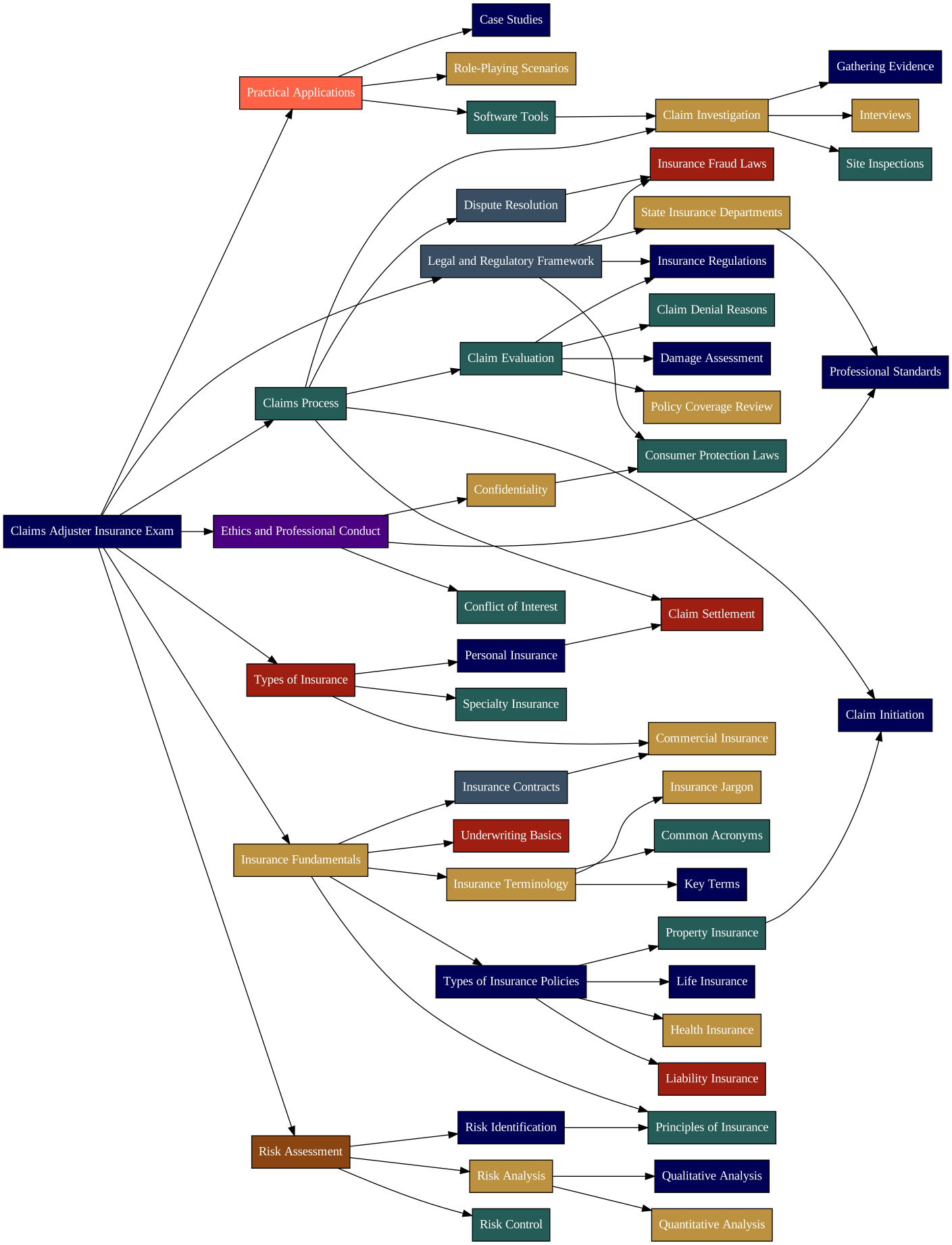
Quiz-summary
0 of 30 questions completed
Questions:
- 1
- 2
- 3
- 4
- 5
- 6
- 7
- 8
- 9
- 10
- 11
- 12
- 13
- 14
- 15
- 16
- 17
- 18
- 19
- 20
- 21
- 22
- 23
- 24
- 25
- 26
- 27
- 28
- 29
- 30
Information
Premium Practice Questions
You have already completed the quiz before. Hence you can not start it again.
Quiz is loading...
You must sign in or sign up to start the quiz.
You have to finish following quiz, to start this quiz:
Results
0 of 30 questions answered correctly
Your time:
Time has elapsed
You have reached 0 of 0 points, (0)
Categories
- Not categorized 0%
- 1
- 2
- 3
- 4
- 5
- 6
- 7
- 8
- 9
- 10
- 11
- 12
- 13
- 14
- 15
- 16
- 17
- 18
- 19
- 20
- 21
- 22
- 23
- 24
- 25
- 26
- 27
- 28
- 29
- 30
- Answered
- Review
-
Question 1 of 30
1. Question
When analyzing an insurance policy in New York, how would you best explain the principle of indemnity and its significance within the framework of property and casualty insurance? Consider how this principle affects the way claims are processed and the overall relationship between the insurer and the insured, particularly in light of state regulations that govern equitable treatment in the insurance industry.
Correct
In the context of property and casualty insurance, it is essential to understand the principle of indemnity, which assures that an insured party is compensated for their loss without profiting from the insurance claim. This principle aligns closely with the contractual nature of insurance agreements, which indicate that the goal of the policy is to restore the insured to their prior financial condition, not to allow them to gain financially from their losses. In New York, this principle is underscored by state regulations that require insurance products to adhere to the fundamental tenets of fairness and equity. The concept of indemnity ties into other aspects, such as actual cash value and replacement cost coverage options, which illustrate how various forms of insurance can influence the outcome of a claim. A comprehensive understanding of indemnity is crucial for agents and brokers, as they must convey this concept to clients and ensure clients select appropriate coverage. Understanding the nuances of indemnity helps prevent misunderstandings regarding claim payouts and the limits of coverage, which is a necessary knowledge area for anyone preparing for the New York Property and Casualty Insurance Exam.
Incorrect
In the context of property and casualty insurance, it is essential to understand the principle of indemnity, which assures that an insured party is compensated for their loss without profiting from the insurance claim. This principle aligns closely with the contractual nature of insurance agreements, which indicate that the goal of the policy is to restore the insured to their prior financial condition, not to allow them to gain financially from their losses. In New York, this principle is underscored by state regulations that require insurance products to adhere to the fundamental tenets of fairness and equity. The concept of indemnity ties into other aspects, such as actual cash value and replacement cost coverage options, which illustrate how various forms of insurance can influence the outcome of a claim. A comprehensive understanding of indemnity is crucial for agents and brokers, as they must convey this concept to clients and ensure clients select appropriate coverage. Understanding the nuances of indemnity helps prevent misunderstandings regarding claim payouts and the limits of coverage, which is a necessary knowledge area for anyone preparing for the New York Property and Casualty Insurance Exam.
-
Question 2 of 30
2. Question
When you are faced with a situation where you discover that a client has significantly inflated the damages in their insurance claim, what is the most ethically sound course of action for an agent operating under New York property and casualty insurance regulations? Consider the potential consequences of your decision on both the insurer and the client, as well as the long-term implications for your professional reputation and the industry as a whole.
Correct
In the insurance industry, ethical dilemmas frequently arise that challenge the integrity and decision-making processes of insurance professionals. One common situation involves handling claims that may have elements of fraud or misrepresentation. Insurers are often faced with the duty to investigate claims thoroughly while maintaining a fair and honest approach. A situation where an insurance agent discovers discrepancies in a client’s claim—such as inflated damages or exaggerated losses—presents a moral conundrum. The agent must balance the obligation to protect the insurer’s financial interests with the commitment to uphold ethical standards and regulatory laws in New York. Reporting the claim could lead to a financial loss for the insured, yet ignoring the fraud could result in increased premiums for all policyholders. Therefore, it is crucial for agents to understand the implications of their actions not only in terms of immediate outcomes but also regarding their long-term reputation and adherence to the New York Insurance Law, which mandates fair treatment and transparency. This balance of ethical conduct and regulatory compliance is essential for sustaining trust in the insurance industry.
Incorrect
In the insurance industry, ethical dilemmas frequently arise that challenge the integrity and decision-making processes of insurance professionals. One common situation involves handling claims that may have elements of fraud or misrepresentation. Insurers are often faced with the duty to investigate claims thoroughly while maintaining a fair and honest approach. A situation where an insurance agent discovers discrepancies in a client’s claim—such as inflated damages or exaggerated losses—presents a moral conundrum. The agent must balance the obligation to protect the insurer’s financial interests with the commitment to uphold ethical standards and regulatory laws in New York. Reporting the claim could lead to a financial loss for the insured, yet ignoring the fraud could result in increased premiums for all policyholders. Therefore, it is crucial for agents to understand the implications of their actions not only in terms of immediate outcomes but also regarding their long-term reputation and adherence to the New York Insurance Law, which mandates fair treatment and transparency. This balance of ethical conduct and regulatory compliance is essential for sustaining trust in the insurance industry.
-
Question 3 of 30
3. Question
You are reviewing the operational strategies of a multinational insurance company that provides both property and casualty coverage. As the company expands its reach into international markets, you must consider the legal and regulatory environments of various jurisdictions, including New York. What primary challenge do these operations face when trying to ensure compliance with New York’s strict insurance laws while also accommodating the diverse regulations of other countries? Furthermore, what strategic opportunities can arise from navigating these complexities effectively, and how can the company leverage them to enhance its global insurance offerings?
Correct
In the context of global insurance operations, understanding regulatory compliance is crucial for companies operating across jurisdictions, including New York. Insurance providers must navigate diverse legal environments, adapting to different regulations that govern policy issuance, claims handling, and consumer protection. In New York, the Department of Financial Services (DFS) regulates insurance practices, ensuring companies adhere to state laws while integrating international operations. Compliance challenges include understanding local consumer protection standards, privacy laws, and claims handling procedures, which can vary significantly. Failure to comply can result in severe penalties, including fines or loss of licensure. Furthermore, opportunities in global insurance markets often arise from partnerships and alliances that allow for a broader risk pool and diversification of products. However, these should be approached with caution, ensuring all regulatory requirements are met to mitigate potential risks. Insurance entities need to establish robust compliance programs that not only satisfy New York’s regulations but also accommodate international laws, thus promoting both operational integrity and competitive advantage in the global market.
Incorrect
In the context of global insurance operations, understanding regulatory compliance is crucial for companies operating across jurisdictions, including New York. Insurance providers must navigate diverse legal environments, adapting to different regulations that govern policy issuance, claims handling, and consumer protection. In New York, the Department of Financial Services (DFS) regulates insurance practices, ensuring companies adhere to state laws while integrating international operations. Compliance challenges include understanding local consumer protection standards, privacy laws, and claims handling procedures, which can vary significantly. Failure to comply can result in severe penalties, including fines or loss of licensure. Furthermore, opportunities in global insurance markets often arise from partnerships and alliances that allow for a broader risk pool and diversification of products. However, these should be approached with caution, ensuring all regulatory requirements are met to mitigate potential risks. Insurance entities need to establish robust compliance programs that not only satisfy New York’s regulations but also accommodate international laws, thus promoting both operational integrity and competitive advantage in the global market.
-
Question 4 of 30
4. Question
While working on a property insurance claim in New York, two parties found themselves at an impasse regarding the settlement terms. They were considering various methods to resolve their disagreement. In this situation, what would be the most effective approach for both parties to maintain control over the outcome while also ensuring a resolution that minimizes further conflict?
Correct
In the context of property and casualty insurance, the resolution of disputes is critical for maintaining trust and efficiency in the industry. Negotiation, mediation, and arbitration are three primary methods that allow parties to resolve conflicts without resorting to litigation. Negotiation is an informal process where parties communicate directly to reach an agreement. This method offers flexibility, but it requires a willingness to compromise and often hinges on the strength of each party’s argument. Mediation involves a neutral third party, the mediator, who facilitates communication and helps the disputing parties identify common ground to reach a mutually acceptable solution. Unlike negotiation, mediation is typically more structured and can enhance communication, especially in emotionally charged disputes. Arbitration, on the other hand, is a more formal process where an arbitrator hears the evidence and makes a binding decision. This method is akin to a trial but usually less formal and can be quicker than going through the court system. In New York, these dispute resolution methods are governed by specific regulations that emphasize fairness and the right to representation. Understanding the nuances of these methods is essential for insurance professionals to effectively guide clients through the resolution process.
Incorrect
In the context of property and casualty insurance, the resolution of disputes is critical for maintaining trust and efficiency in the industry. Negotiation, mediation, and arbitration are three primary methods that allow parties to resolve conflicts without resorting to litigation. Negotiation is an informal process where parties communicate directly to reach an agreement. This method offers flexibility, but it requires a willingness to compromise and often hinges on the strength of each party’s argument. Mediation involves a neutral third party, the mediator, who facilitates communication and helps the disputing parties identify common ground to reach a mutually acceptable solution. Unlike negotiation, mediation is typically more structured and can enhance communication, especially in emotionally charged disputes. Arbitration, on the other hand, is a more formal process where an arbitrator hears the evidence and makes a binding decision. This method is akin to a trial but usually less formal and can be quicker than going through the court system. In New York, these dispute resolution methods are governed by specific regulations that emphasize fairness and the right to representation. Understanding the nuances of these methods is essential for insurance professionals to effectively guide clients through the resolution process.
-
Question 5 of 30
5. Question
Consider a scenario where a property insurance agent in New York is trying to understand the regulatory environment in which they operate. They know that while the National Association of Insurance Commissioners (NAIC) provides a framework for regulating insurance, it is the individual state departments that enforce these regulations. Which statement most accurately describes the collective role of the NAIC and state insurance departments in the context of New York’s insurance landscape?
Correct
In the realm of property and casualty insurance, understanding the role of regulatory bodies is crucial for compliance and effective practice. The National Association of Insurance Commissioners (NAIC) serves as a collective organization that unites state insurance regulators to establish best practices, share knowledge, and enhance the regulatory framework across the states. Each state insurance department, including New York’s Department of Financial Services, operates under the guidance of these national standards while also enforcing state-specific regulations. This dual structure helps ensure that insurance practices are safe, sound, and fair while also permitting states to tailor regulations based on local needs. Knowledge of these regulatory bodies is essential for insurance professionals, as they navigate the complex landscape of insurance laws and compliance. In particular, understanding how the NAIC collaborates with individual states can illuminate the regulatory processes and help practitioners maintain adherence to ethical standards, consumer protection laws, and licensing requirements as prescribed by specific state regulations.
Incorrect
In the realm of property and casualty insurance, understanding the role of regulatory bodies is crucial for compliance and effective practice. The National Association of Insurance Commissioners (NAIC) serves as a collective organization that unites state insurance regulators to establish best practices, share knowledge, and enhance the regulatory framework across the states. Each state insurance department, including New York’s Department of Financial Services, operates under the guidance of these national standards while also enforcing state-specific regulations. This dual structure helps ensure that insurance practices are safe, sound, and fair while also permitting states to tailor regulations based on local needs. Knowledge of these regulatory bodies is essential for insurance professionals, as they navigate the complex landscape of insurance laws and compliance. In particular, understanding how the NAIC collaborates with individual states can illuminate the regulatory processes and help practitioners maintain adherence to ethical standards, consumer protection laws, and licensing requirements as prescribed by specific state regulations.
-
Question 6 of 30
6. Question
When assessing the commercial insurance needs for a medium-sized manufacturing operation in New York, you discover that the organization lacks coverage tailored to its unique risk exposure. The owner is particularly concerned about potential product liability claims that could arise from the goods produced. Given this scenario, what type of insurance policy should be prioritized to mitigate these specific risks effectively and meet regulatory compliance?
Correct
In New York, commercial insurance is crucial for businesses as it helps protect against various risks that could lead to financial losses. Understanding the scope of coverage is vital, as it can vary based on the business type and specific policy. General liability insurance is a fundamental component, covering claims related to bodily injury, property damage, and personal injury resulting from business activities. However, it does not cover professional mistakes; that falls under professional liability insurance, which is essential for service-oriented businesses. Additionally, commercial property insurance protects against damages to physical assets such as buildings and inventory, while workers’ compensation insurance is mandated by law for businesses with employees, covering work-related injuries and illnesses. It’s also important to note that New York’s laws require certain minimum coverages and conditions that must be met in policies to protect consumers adequately. Thus, when assessing the commercial insurance needs of a business, it is necessary to consider these various elements to ensure comprehensive coverage that aligns with regulatory requirements and the specific risks the business faces.
Incorrect
In New York, commercial insurance is crucial for businesses as it helps protect against various risks that could lead to financial losses. Understanding the scope of coverage is vital, as it can vary based on the business type and specific policy. General liability insurance is a fundamental component, covering claims related to bodily injury, property damage, and personal injury resulting from business activities. However, it does not cover professional mistakes; that falls under professional liability insurance, which is essential for service-oriented businesses. Additionally, commercial property insurance protects against damages to physical assets such as buildings and inventory, while workers’ compensation insurance is mandated by law for businesses with employees, covering work-related injuries and illnesses. It’s also important to note that New York’s laws require certain minimum coverages and conditions that must be met in policies to protect consumers adequately. Thus, when assessing the commercial insurance needs of a business, it is necessary to consider these various elements to ensure comprehensive coverage that aligns with regulatory requirements and the specific risks the business faces.
-
Question 7 of 30
7. Question
In the context of New York insurance regulations, how would you explain the key advantages of a Business Owners Policy (BOP) compared to purchasing separate commercial property and liability coverage? Consider a scenario where a local café seeks to streamline its insurance needs while ensuring comprehensive protection against potential risks.
Correct
A Business Owners Policy (BOP) offers a comprehensive package of coverage for small to medium-sized businesses, providing essential property and liability protection in a cost-effective manner. This policy typically includes coverage for commercial property, general liability, and business interruption, which is crucial for businesses that might face operational halts due to unforeseen events. In New York, the BOP is particularly advantageous for specific types of businesses, as it simplifies the insurance process by bundling these coverages together, thereby offering a streamlined approach to risk management. When assessing whether a business should opt for a BOP, it is essential to consider the nature of its operations, the risks inherent in its industry, and regulatory requirements specific to New York State. For instance, businesses located in certain high-risk areas may benefit from additional endorsements or separate policies for specific risks not covered under a standard BOP. Additionally, understanding the intricacies of the coverage limits and exclusions within the policy is vital to ensure adequate coverage for property damage and liability claims that may arise, especially in a densely populated urban environment like New York City.
Incorrect
A Business Owners Policy (BOP) offers a comprehensive package of coverage for small to medium-sized businesses, providing essential property and liability protection in a cost-effective manner. This policy typically includes coverage for commercial property, general liability, and business interruption, which is crucial for businesses that might face operational halts due to unforeseen events. In New York, the BOP is particularly advantageous for specific types of businesses, as it simplifies the insurance process by bundling these coverages together, thereby offering a streamlined approach to risk management. When assessing whether a business should opt for a BOP, it is essential to consider the nature of its operations, the risks inherent in its industry, and regulatory requirements specific to New York State. For instance, businesses located in certain high-risk areas may benefit from additional endorsements or separate policies for specific risks not covered under a standard BOP. Additionally, understanding the intricacies of the coverage limits and exclusions within the policy is vital to ensure adequate coverage for property damage and liability claims that may arise, especially in a densely populated urban environment like New York City.
-
Question 8 of 30
8. Question
During a review of the latest developments in the insurance industry in New York, you notice a significant shift towards integrating technology and sustainability into the insurance process. Notably, insurers are employing advanced analytics and artificial intelligence to refine their risk assessment methodologies and offer customized insurance solutions. Additionally, they are increasingly focusing on climate risks as part of their underwriting practices, which raises questions about compliance with regulatory standards in the state. How would you best characterize this trend and its implications for insurance professionals operating in New York?
Correct
Emerging trends in the insurance industry are shaping the way policies are designed, marketed, and administered. One of the most significant trends is the use of technology, particularly Artificial Intelligence (AI) and big data analytics, which enables insurers to assess risk more accurately and personalize coverage for policyholders. Insurers in New York are adapting to these changes by integrating digital platforms that streamline policy issuance and claims processing, enhancing customer experience. Additionally, there is a growing emphasis on sustainability and climate risk in underwriting practices, reflecting the increasing frequency of climate-related events. This shift is prompting insurers to develop products specifically addressing risks associated with environmental changes. Understanding these trends is essential for agents and brokers, as they need to not only keep pace with technological advancements but also ensure compliance with state regulations that govern digital practices and data privacy. This knowledge plays a crucial role in advising clients effectively and aligning insurance offerings with their unique needs.
Incorrect
Emerging trends in the insurance industry are shaping the way policies are designed, marketed, and administered. One of the most significant trends is the use of technology, particularly Artificial Intelligence (AI) and big data analytics, which enables insurers to assess risk more accurately and personalize coverage for policyholders. Insurers in New York are adapting to these changes by integrating digital platforms that streamline policy issuance and claims processing, enhancing customer experience. Additionally, there is a growing emphasis on sustainability and climate risk in underwriting practices, reflecting the increasing frequency of climate-related events. This shift is prompting insurers to develop products specifically addressing risks associated with environmental changes. Understanding these trends is essential for agents and brokers, as they need to not only keep pace with technological advancements but also ensure compliance with state regulations that govern digital practices and data privacy. This knowledge plays a crucial role in advising clients effectively and aligning insurance offerings with their unique needs.
-
Question 9 of 30
9. Question
You are reviewing a recent insurance claim in New York where the policyholder has reported significant property damage after a storm. The next step involves the insurance adjuster assessing the report. What crucial elements must the adjuster consider during this assessment to ensure that the claims process adheres to New York’s regulations? Explain the necessary steps the adjuster must take to gather information and reach a settlement, considering the importance of transparency and fairness throughout the process.
Correct
In New York, the claims process is critical to understanding how insurance policies function, particularly in terms of reporting, adjusting, and settlement. When a policyholder experiences a loss, prompt reporting is essential. This means that the insured must notify their insurer as soon as reasonably possible after an incident occurs. The insurer then appoints an adjuster who will assess the claim, a process which involves investigating the loss, determining coverage, and quantifying the damages or losses incurred. Adjusters must follow New York State regulations, such as acting in good faith and treating all parties fairly, as dictated by the New York Insurance Law. The adjuster’s report is a key element in proceeding towards settlement. If the claim is accepted, the settlement phase involves negotiating the amount the insurance company will pay. This step requires an understanding of both the insured’s policy limits and any potential exclusions in the coverage. Understanding these nuanced aspects ensures that both the insurer and the insured can navigate the claims process effectively and reach a fair resolution.
Incorrect
In New York, the claims process is critical to understanding how insurance policies function, particularly in terms of reporting, adjusting, and settlement. When a policyholder experiences a loss, prompt reporting is essential. This means that the insured must notify their insurer as soon as reasonably possible after an incident occurs. The insurer then appoints an adjuster who will assess the claim, a process which involves investigating the loss, determining coverage, and quantifying the damages or losses incurred. Adjusters must follow New York State regulations, such as acting in good faith and treating all parties fairly, as dictated by the New York Insurance Law. The adjuster’s report is a key element in proceeding towards settlement. If the claim is accepted, the settlement phase involves negotiating the amount the insurance company will pay. This step requires an understanding of both the insured’s policy limits and any potential exclusions in the coverage. Understanding these nuanced aspects ensures that both the insurer and the insured can navigate the claims process effectively and reach a fair resolution.
-
Question 10 of 30
10. Question
A critical incident occurs where an insurance company operating in New York is found to be non-compliant with certain consumer protection laws at the state level. During the investigation, the company claims that federal regulations should preempt state laws regarding their insurance practices. How should this situation be assessed in light of the regulatory framework governing insurance in New York and the United States? Consider the implications of the McCarran-Ferguson Act and how it delineates the roles of state and federal regulation in this context.
Correct
The regulation of insurance in the United States involves a complex interplay between state and federal authority. The primary responsibility for regulating insurance companies and their practices lies with the states, a system established by the McCarran-Ferguson Act of 1945. This law affirms that states can regulate the insurance industry unless there is a federal law that directly addresses it. New York, like other states, has its own Insurance Department that oversees the activities of insurers, ensuring compliance with state regulations aimed at protecting consumers, promoting fair competition, and maintaining solvency among insurers. While states have the first claim to regulate insurance, federal oversight can emerge, particularly in areas that cross state lines or involve interstate commerce. For example, federal laws like the Affordable Care Act (ACA) impose requirements on health insurance that states must follow. Therefore, understanding the basis of these regulatory powers is crucial for anyone working in the field, as it encompasses knowledge of both state-specific laws and the federal framework impacting insurance practices.
Incorrect
The regulation of insurance in the United States involves a complex interplay between state and federal authority. The primary responsibility for regulating insurance companies and their practices lies with the states, a system established by the McCarran-Ferguson Act of 1945. This law affirms that states can regulate the insurance industry unless there is a federal law that directly addresses it. New York, like other states, has its own Insurance Department that oversees the activities of insurers, ensuring compliance with state regulations aimed at protecting consumers, promoting fair competition, and maintaining solvency among insurers. While states have the first claim to regulate insurance, federal oversight can emerge, particularly in areas that cross state lines or involve interstate commerce. For example, federal laws like the Affordable Care Act (ACA) impose requirements on health insurance that states must follow. Therefore, understanding the basis of these regulatory powers is crucial for anyone working in the field, as it encompasses knowledge of both state-specific laws and the federal framework impacting insurance practices.
-
Question 11 of 30
11. Question
Consider a scenario where an individual is involved in a slip and fall accident at a grocery store in New York. The injured party claims that the store’s negligence led to the incident resulting in their injuries. What aspect of casualty insurance is primarily at stake in this situation, particularly concerning liability coverage and negligence laws in New York?
Correct
Casualty insurance in New York provides coverage for various liabilities that may arise from incidents involving bodily injury, property damage, or both. One essential aspect of casualty insurance is the liability coverage that protects individuals and businesses from claims resulting from injuries and damages to third parties. The principle of negligence plays a crucial role in determining liability; it involves a failure to exercise the care that a reasonably prudent person would under similar circumstances. New York adheres to a “comparative negligence” system, which means that damages awarded to a plaintiff can be reduced by the percentage of fault attributed to them. For instance, if a person is injured in a car accident where they were 30% at fault, the recovery amount would be decreased by that percentage. Understanding the nuances of liability policies, including exclusions, conditions, and limits of coverage, is vital for assessing risk and ensuring adequate protection under New York law. This knowledge is critical for insurance professionals to provide the best service and advice to clients effectively.
Incorrect
Casualty insurance in New York provides coverage for various liabilities that may arise from incidents involving bodily injury, property damage, or both. One essential aspect of casualty insurance is the liability coverage that protects individuals and businesses from claims resulting from injuries and damages to third parties. The principle of negligence plays a crucial role in determining liability; it involves a failure to exercise the care that a reasonably prudent person would under similar circumstances. New York adheres to a “comparative negligence” system, which means that damages awarded to a plaintiff can be reduced by the percentage of fault attributed to them. For instance, if a person is injured in a car accident where they were 30% at fault, the recovery amount would be decreased by that percentage. Understanding the nuances of liability policies, including exclusions, conditions, and limits of coverage, is vital for assessing risk and ensuring adequate protection under New York law. This knowledge is critical for insurance professionals to provide the best service and advice to clients effectively.
-
Question 12 of 30
12. Question
A consumer in New York recently purchased an auto insurance policy and later discovered some critical coverage details were omitted in the policy documentation provided by the insurer. When assessing the situation, what fundamental right does the consumer have in this scenario concerning the information provided about their insurance transaction? How should this right influence the actions taken by the insurer in ensuring transparency and proper communication with the consumer regarding their policy details?
Correct
Understanding consumer rights in insurance transactions is crucial for ensuring fair treatment and transparency within the insurance industry. In New York, consumers have specific rights protected under various laws and regulations, including the New York Insurance Law. One fundamental right is the ability to receive clear and truthful information about insurance products. Insurers must provide policyholders with adequate information to make informed decisions, which includes details on coverage, exclusions, and premium costs. Additionally, consumers have the right to contest or appeal decisions made by insurers regarding claims or coverage. This is often ensured through the Fair Claims Settlement Practices regulations, mandating that claims must be handled promptly and fairly. Another significant aspect is the right to privacy, where personal information collected by insurers must be safeguarded and used only for legitimate purposes relating to the insurance transaction. Violations of these rights can lead to legal repercussions for insurers and offer consumers recourse for grievances. Effective consumer education plays a vital role in reinforcing these rights, as informed consumers are better equipped to assert their rights.
Incorrect
Understanding consumer rights in insurance transactions is crucial for ensuring fair treatment and transparency within the insurance industry. In New York, consumers have specific rights protected under various laws and regulations, including the New York Insurance Law. One fundamental right is the ability to receive clear and truthful information about insurance products. Insurers must provide policyholders with adequate information to make informed decisions, which includes details on coverage, exclusions, and premium costs. Additionally, consumers have the right to contest or appeal decisions made by insurers regarding claims or coverage. This is often ensured through the Fair Claims Settlement Practices regulations, mandating that claims must be handled promptly and fairly. Another significant aspect is the right to privacy, where personal information collected by insurers must be safeguarded and used only for legitimate purposes relating to the insurance transaction. Violations of these rights can lead to legal repercussions for insurers and offer consumers recourse for grievances. Effective consumer education plays a vital role in reinforcing these rights, as informed consumers are better equipped to assert their rights.
-
Question 13 of 30
13. Question
When you are faced with the challenge of determining the appropriate premium for a property insurance policy in New York, how do the underwriting decisions impact the final premium amount? Consider the implications of risk assessment, regulatory requirements, and ethical considerations that underwriters must balance, especially when dealing with diverse applicants and their unique risk profiles.
Correct
Underwriting decisions are pivotal in determining the premiums for property and casualty insurance policies. In New York, underwriters assess various risk factors associated with the insured property or individual and decide whether to accept or decline coverage, as well as what premium to charge. When underwriting involves analyzing an applicant’s risk profile—such as their claims history, credit score, and property condition—it directly influences the calculated risk for the insurer. If the risk is deemed low, the corresponding premium is usually lower to remain competitive in the market. Conversely, a high-risk profile can lead to higher premiums to offset the anticipated potential for loss. Adhering to regulatory guidelines and ethical standards is essential to ensure that underwriting practices do not result in unfair discrimination against certain groups. Furthermore, underwriters must also navigate New York State regulations regarding rate-setting and must ensure that their decisions are grounded in sound actuarial principles while also being transparent and justifiable to consumers.
Incorrect
Underwriting decisions are pivotal in determining the premiums for property and casualty insurance policies. In New York, underwriters assess various risk factors associated with the insured property or individual and decide whether to accept or decline coverage, as well as what premium to charge. When underwriting involves analyzing an applicant’s risk profile—such as their claims history, credit score, and property condition—it directly influences the calculated risk for the insurer. If the risk is deemed low, the corresponding premium is usually lower to remain competitive in the market. Conversely, a high-risk profile can lead to higher premiums to offset the anticipated potential for loss. Adhering to regulatory guidelines and ethical standards is essential to ensure that underwriting practices do not result in unfair discrimination against certain groups. Furthermore, underwriters must also navigate New York State regulations regarding rate-setting and must ensure that their decisions are grounded in sound actuarial principles while also being transparent and justifiable to consumers.
-
Question 14 of 30
14. Question
In the context of New York’s insurance regulations, how would you characterize the primary function of casualty insurance as it relates to protecting against risk? Consider the implications of liability coverage and the types of incidents that are typically insured under casualty policies. Think about how these elements interact with state laws and the broader goals of financial protection for individuals and organizations within the state.
Correct
Casualty insurance encompasses a wide range of insurance products that protect against various forms of risk primarily related to liability and property loss. Within New York’s legal framework, casualty insurance is defined as coverage designed to protect individuals and businesses from legal liability for actions that cause injury or damage to others. This includes policies like general liability, professional liability, and workers’ compensation. The scope of casualty insurance is quite expansive; it covers incidents such as bodily injury, property damage, and personal injury. Each of these components is crucial for understanding how casualty insurance operates within the state, as policyholders must be aware of the intricacies and limitations of their coverage. Furthermore, casualty insurance is regulated by the New York Department of Financial Services, which enforces the insurance laws to safeguard consumers and ensure that claims are processed fairly. This comprehensive overview illustrates how casualty insurance operates as a protective measure against financial losses arising from the actions or inactions of a policyholder, solidifying its vital role in risk management for both individuals and businesses.
Incorrect
Casualty insurance encompasses a wide range of insurance products that protect against various forms of risk primarily related to liability and property loss. Within New York’s legal framework, casualty insurance is defined as coverage designed to protect individuals and businesses from legal liability for actions that cause injury or damage to others. This includes policies like general liability, professional liability, and workers’ compensation. The scope of casualty insurance is quite expansive; it covers incidents such as bodily injury, property damage, and personal injury. Each of these components is crucial for understanding how casualty insurance operates within the state, as policyholders must be aware of the intricacies and limitations of their coverage. Furthermore, casualty insurance is regulated by the New York Department of Financial Services, which enforces the insurance laws to safeguard consumers and ensure that claims are processed fairly. This comprehensive overview illustrates how casualty insurance operates as a protective measure against financial losses arising from the actions or inactions of a policyholder, solidifying its vital role in risk management for both individuals and businesses.
-
Question 15 of 30
15. Question
Consider a scenario where a property owner in New York files a claim for damage caused by a severe storm. The insurance adjuster arrives, assesses the damage, and determines that the repairs will cost less than what the property owner originally reported. In light of insurance principles and New York state regulations, what essential concept should guide the adjuster’s evaluation of the claim, taking into consideration the ethical implications of the claims process?
Correct
Insurance fundamentals provide the backbone for understanding how different types of insurance operate within the market and the principles that guide their implementation. One of the primary concepts within insurance is the principle of indemnity, which establishes that insurance should restore the insured to the financial position they held prior to a loss, without allowing them to gain a profit from the situation. This principle serves to deter insurance fraud and excessive claims, which can ultimately lead to higher premiums for all policyholders. Additionally, understanding the types of insurance—such as property insurance, liability insurance, and casualty insurance—as well as the distinctions between them is critical. Each type serves different purposes and has specific coverage limits and exclusions. In New York, regulations mandate that insurers adhere to the Fair Claims Settlement Practices regulations, which are designed to ensure that claims are handled promptly and fairly. This regulatory environment also emphasizes the importance of ethical conduct within the industry, supporting a framework where policyholders can have confidence in their insurer’s integrity and operational practices.
Incorrect
Insurance fundamentals provide the backbone for understanding how different types of insurance operate within the market and the principles that guide their implementation. One of the primary concepts within insurance is the principle of indemnity, which establishes that insurance should restore the insured to the financial position they held prior to a loss, without allowing them to gain a profit from the situation. This principle serves to deter insurance fraud and excessive claims, which can ultimately lead to higher premiums for all policyholders. Additionally, understanding the types of insurance—such as property insurance, liability insurance, and casualty insurance—as well as the distinctions between them is critical. Each type serves different purposes and has specific coverage limits and exclusions. In New York, regulations mandate that insurers adhere to the Fair Claims Settlement Practices regulations, which are designed to ensure that claims are handled promptly and fairly. This regulatory environment also emphasizes the importance of ethical conduct within the industry, supporting a framework where policyholders can have confidence in their insurer’s integrity and operational practices.
-
Question 16 of 30
16. Question
You are reviewing a homeowner’s insurance policy for a client in New York who is interested in understanding how specific additions may impact their coverage. They inquire about the differences between endorsements and riders, particularly in their applications and implications on existing policy provisions. To best assist your client, which statement accurately reflects the functionality of both endorsements and riders, considering their role in modifying insurance policies?
Correct
Endorsements and riders are crucial components of insurance policies in New York, serving to modify the standard terms and coverage provided in the base policy. An endorsement is a written document attached to an insurance policy that alters its terms or coverage. It can add, remove, or change the coverage provided by the policy. For instance, a homeowner’s policy may have an endorsement that provides additional coverage for jewelry, which may not be sufficiently covered under the standard policy limits. Riders, on the other hand, typically refer to additions that provide specific benefits or coverages for particular risks or circumstances. An example might be a rider that offers coverage for floods in a homeowner’s policy, which is usually excluded in standard policies. Importantly, both endorsements and riders must be agreed upon by the insurer and the insured, with the insurer providing clear documentation outlining these changes. Understanding the nuances of how endorsements and riders operate within New York’s regulatory framework is essential for insurance professionals to ensure compliance with the law and to adequately inform clients about their coverage options.
Incorrect
Endorsements and riders are crucial components of insurance policies in New York, serving to modify the standard terms and coverage provided in the base policy. An endorsement is a written document attached to an insurance policy that alters its terms or coverage. It can add, remove, or change the coverage provided by the policy. For instance, a homeowner’s policy may have an endorsement that provides additional coverage for jewelry, which may not be sufficiently covered under the standard policy limits. Riders, on the other hand, typically refer to additions that provide specific benefits or coverages for particular risks or circumstances. An example might be a rider that offers coverage for floods in a homeowner’s policy, which is usually excluded in standard policies. Importantly, both endorsements and riders must be agreed upon by the insurer and the insured, with the insurer providing clear documentation outlining these changes. Understanding the nuances of how endorsements and riders operate within New York’s regulatory framework is essential for insurance professionals to ensure compliance with the law and to adequately inform clients about their coverage options.
-
Question 17 of 30
17. Question
In the context of New York’s property and casualty insurance underwriting process, how do underwriters assess the risk associated with an applicant, and what factors must they consider during their decision-making? Specifically, imagine a scenario where an underwriter evaluates an application for a homeowner’s insurance policy. This application includes extensive details about the property location, the applicant’s prior claims history, and certain safety features of the home. Given this comprehensive overview, what is the primary consideration that underwriters focus on to determine the application’s acceptance or rejection, while also adhering to New York’s insurance regulations?
Correct
The underwriting process is crucial in the realm of property and casualty insurance, as it establishes the criteria by which risks are evaluated and premiums are determined. Underwriting involves assessing the applicant’s risk profile based on a variety of factors, including their claims history, property characteristics, and overall risk exposure. A key component of this process is the application phase, where prospective policyholders provide detailed information relevant to their coverage needs. Underwriters then analyze this data to determine the insurability of the applicant, assigning risk classifications that inform pricing and coverage terms. In New York, regulations dictate that underwriters must operate within ethical boundaries, ensuring that discrimination does not occur based on irrelevant factors. Proper documentation and transparent communication throughout the underwriting process are vital for maintaining compliance with state insurance laws. The final decision-making phase involves selecting an appropriate risk category, which could lead to acceptance, modification of terms, or outright denial of coverage. Therefore, familiarity with the underwriting process aids in making informed decisions that align with regulatory standards and ethical practices in the insurance industry.
Incorrect
The underwriting process is crucial in the realm of property and casualty insurance, as it establishes the criteria by which risks are evaluated and premiums are determined. Underwriting involves assessing the applicant’s risk profile based on a variety of factors, including their claims history, property characteristics, and overall risk exposure. A key component of this process is the application phase, where prospective policyholders provide detailed information relevant to their coverage needs. Underwriters then analyze this data to determine the insurability of the applicant, assigning risk classifications that inform pricing and coverage terms. In New York, regulations dictate that underwriters must operate within ethical boundaries, ensuring that discrimination does not occur based on irrelevant factors. Proper documentation and transparent communication throughout the underwriting process are vital for maintaining compliance with state insurance laws. The final decision-making phase involves selecting an appropriate risk category, which could lead to acceptance, modification of terms, or outright denial of coverage. Therefore, familiarity with the underwriting process aids in making informed decisions that align with regulatory standards and ethical practices in the insurance industry.
-
Question 18 of 30
18. Question
Consider a scenario where an insurance agency in New York is reviewing its pricing structure for homeowners’ insurance. The agency notices that clients with a history of multiple claims in the past three years are being charged significantly higher premiums than clients with no claims. In addition, the agency recognizes that it is operating in a highly competitive market where several other insurers offer lower premiums to attract customers. Given the factors influencing insurance pricing in this context, what should the agency prioritize in order to balance risk management and maintain its market position while adhering to state regulations?
Correct
Insurance pricing is influenced by a variety of factors that insurers must carefully assess to maintain profitability while remaining competitive. Understanding these factors is crucial for insurance professionals. Risk assessment plays a fundamental role, wherein insurers evaluate the likelihood of a policyholder filing a claim based on various indicators, such as location, driving history, or the nature of the insured property. Loss history is another critical element, as past claims can indicate future potential risks; a higher frequency of claims typically leads to higher premiums for policyholders. Market competition also impacts pricing strategies, as companies within the same geographical area or market segment may adjust their premiums to attract or retain customers. Regulators in New York closely monitor these practices to ensure no discriminatory practices arise, and all pricing remains justifiable based on the underlying risk. Therefore, a deep understanding of evaluating risk, acknowledging historical losses, and being aware of competitive pricing strategies within the legal framework ensures proper premium determination and aligns with the New York insurance regulations.
Incorrect
Insurance pricing is influenced by a variety of factors that insurers must carefully assess to maintain profitability while remaining competitive. Understanding these factors is crucial for insurance professionals. Risk assessment plays a fundamental role, wherein insurers evaluate the likelihood of a policyholder filing a claim based on various indicators, such as location, driving history, or the nature of the insured property. Loss history is another critical element, as past claims can indicate future potential risks; a higher frequency of claims typically leads to higher premiums for policyholders. Market competition also impacts pricing strategies, as companies within the same geographical area or market segment may adjust their premiums to attract or retain customers. Regulators in New York closely monitor these practices to ensure no discriminatory practices arise, and all pricing remains justifiable based on the underlying risk. Therefore, a deep understanding of evaluating risk, acknowledging historical losses, and being aware of competitive pricing strategies within the legal framework ensures proper premium determination and aligns with the New York insurance regulations.
-
Question 19 of 30
19. Question
When you are faced with evaluating the regulatory framework for property and casualty insurance in New York, which aspect is most critical in ensuring that insurers comply with market conduct laws? Consider how these regulations shape the structure and behavior of the insurance market within the state. It is essential to analyze the role of the New York State Department of Financial Services in overseeing insurer practices and ensuring consumer protection. What fundamental obligation do insurers have under the regulatory framework to maintain ethical conduct and transparency in their operations?
Correct
In New York, the regulatory environment for property and casualty insurance is governed by a framework of laws and regulations designed to ensure fair practices and protect consumer rights. A pivotal aspect of this framework is the oversight conducted by the New York State Department of Financial Services (DFS), which requires insurance providers to operate with a high level of transparency and accountability. Insurers must adhere to stringent licensing requirements, which involve submitting applications, undergoing financial examinations, and maintaining adequate reserves to meet policyholder obligations. Additionally, the DFS has established regulations concerning market conduct, mandating that companies provide clear disclosures regarding their policies, including terms, conditions, and pricing structures. Furthermore, the law mandates that insurers handle claims promptly and fairly, with specific timeframes within which claims must be acknowledged and processed. These laws not only serve to protect consumers but also establish a competitive marketplace by promoting ethical behavior among insurers, thereby enhancing public trust in the insurance system.
Incorrect
In New York, the regulatory environment for property and casualty insurance is governed by a framework of laws and regulations designed to ensure fair practices and protect consumer rights. A pivotal aspect of this framework is the oversight conducted by the New York State Department of Financial Services (DFS), which requires insurance providers to operate with a high level of transparency and accountability. Insurers must adhere to stringent licensing requirements, which involve submitting applications, undergoing financial examinations, and maintaining adequate reserves to meet policyholder obligations. Additionally, the DFS has established regulations concerning market conduct, mandating that companies provide clear disclosures regarding their policies, including terms, conditions, and pricing structures. Furthermore, the law mandates that insurers handle claims promptly and fairly, with specific timeframes within which claims must be acknowledged and processed. These laws not only serve to protect consumers but also establish a competitive marketplace by promoting ethical behavior among insurers, thereby enhancing public trust in the insurance system.
-
Question 20 of 30
20. Question
When analyzing a system of insurance practices, consider a scenario where an individual in New York submits a claim for damages that they knowingly exaggerated to receive a higher payout. This act not only impacts the integrity of the insurance process but also raises questions about the legal implications of such fraudulent behavior. As a result of this action, what could be the potential consequences the individual faces under New York law? How does the law address the issue of insurance fraud, and what defenses, if any, are typically ineffective in these situations? Assess the multifaceted nature of insurance fraud and its repercussions on both the perpetrator and the wider insurance market.
Correct
Insurance fraud is a significant offense that carries severe legal implications and consequences, particularly for policyholders and insurance professionals in New York. The New York Insurance Law defines fraud broadly in the context of insurance, emphasizing that any intentional act designed to mislead may constitute fraudulent behavior. This includes not only the misrepresentation of facts when purchasing insurance or filing claims but also the submission of false documents or concealment of material information. The consequences of committing insurance fraud can be severe, including criminal charges that may lead to incarceration and hefty fines. In addition, individuals found guilty of insurance fraud can face civil penalties, including the obligation to repay benefits unlawfully obtained, the potential loss of insurance licenses, and the denial of future claims. Insurance companies also have the right to cancel policies or refuse coverage based on evidence of fraud. Therefore, understanding the legal ramifications of fraudulent activity is essential for both consumers and professionals within the industry to navigate the complex landscape of insurance ethics and legality in New York.
Incorrect
Insurance fraud is a significant offense that carries severe legal implications and consequences, particularly for policyholders and insurance professionals in New York. The New York Insurance Law defines fraud broadly in the context of insurance, emphasizing that any intentional act designed to mislead may constitute fraudulent behavior. This includes not only the misrepresentation of facts when purchasing insurance or filing claims but also the submission of false documents or concealment of material information. The consequences of committing insurance fraud can be severe, including criminal charges that may lead to incarceration and hefty fines. In addition, individuals found guilty of insurance fraud can face civil penalties, including the obligation to repay benefits unlawfully obtained, the potential loss of insurance licenses, and the denial of future claims. Insurance companies also have the right to cancel policies or refuse coverage based on evidence of fraud. Therefore, understanding the legal ramifications of fraudulent activity is essential for both consumers and professionals within the industry to navigate the complex landscape of insurance ethics and legality in New York.
-
Question 21 of 30
21. Question
During a review of a client’s insurance portfolio in New York, you discover that they have purchased a life insurance policy on a distant relative with whom they have no financial ties. This situation leads you to question the validity of their insurable interest in the policy. How would you define the concept of insurable interest and its importance in the context of the insurance policy they have acquired?
Correct
In the context of insurance fundamentals, understanding the concept of insurable interest is crucial. Insurable interest is a legal requirement that mandates a policyholder must have a sufficient stake in the insured item or individual, meaning they would suffer a financial loss if the insured event occurs. This principle is essential as it prevents individuals from profiting from insurance claims made on an item or person they have no legitimate interest in. In New York, this principle is rooted deeply in the law to uphold ethical standards within the insurance industry. For property insurance, insurable interest typically exists when the owner of the property has an ownership stake in it. In contrast, without insurable interest, the contract could be considered void, as it would violate public policy. Insurers must confirm that the policyholder has an insurable interest at the time of purchasing the policy, as this is fundamental to the regulatory framework in New York. Understanding the nuances of insurable interest not only ensures compliance with state regulations but also centers the policy’s purpose around protection rather than speculation.
Incorrect
In the context of insurance fundamentals, understanding the concept of insurable interest is crucial. Insurable interest is a legal requirement that mandates a policyholder must have a sufficient stake in the insured item or individual, meaning they would suffer a financial loss if the insured event occurs. This principle is essential as it prevents individuals from profiting from insurance claims made on an item or person they have no legitimate interest in. In New York, this principle is rooted deeply in the law to uphold ethical standards within the insurance industry. For property insurance, insurable interest typically exists when the owner of the property has an ownership stake in it. In contrast, without insurable interest, the contract could be considered void, as it would violate public policy. Insurers must confirm that the policyholder has an insurable interest at the time of purchasing the policy, as this is fundamental to the regulatory framework in New York. Understanding the nuances of insurable interest not only ensures compliance with state regulations but also centers the policy’s purpose around protection rather than speculation.
-
Question 22 of 30
22. Question
When you are faced with a situation where an insurance agent discovers that a client has been misinformed about the coverage limits of their policy due to a prior miscommunication, what is the most ethical course of action that the agent should take in accordance with New York’s insurance regulations and ethical standards? In this scenario, the agent must balance their duty to the client with the legal requirements of disclosure and transparency. Considering the principles of good faith and fair dealing, which approach aligns best with ethical conduct in the insurance profession?
Correct
In the context of the New York Property and Casualty Insurance Exam, ethical principles underpin essential responsibilities that insurance professionals must uphold. One core principle is the duty of utmost good faith, which mandates that both the insurer and the insured must deal honestly and fairly with each other. This principle reflects the reliance that parties place on one another during the insurance contract’s formation and execution. Another critical aspect is the prohibition against misrepresentation, which entails ensuring that all information provided to clients is clear, accurate, and not misleading. A commitment to ethical standards enhances trust and fosters better relationships between agents, insurers, and policyholders. Additionally, ethical conduct includes following regulations established by the New York Department of Financial Services, which aim to protect consumers and ensure fair treatment in the insurance marketplace. Violations of these ethical principles can lead to disciplinary actions or loss of licensure. Therefore, it is crucial for insurance professionals to be well-versed in these ethical principles to maintain compliance and promote a culture of integrity within the industry.
Incorrect
In the context of the New York Property and Casualty Insurance Exam, ethical principles underpin essential responsibilities that insurance professionals must uphold. One core principle is the duty of utmost good faith, which mandates that both the insurer and the insured must deal honestly and fairly with each other. This principle reflects the reliance that parties place on one another during the insurance contract’s formation and execution. Another critical aspect is the prohibition against misrepresentation, which entails ensuring that all information provided to clients is clear, accurate, and not misleading. A commitment to ethical standards enhances trust and fosters better relationships between agents, insurers, and policyholders. Additionally, ethical conduct includes following regulations established by the New York Department of Financial Services, which aim to protect consumers and ensure fair treatment in the insurance marketplace. Violations of these ethical principles can lead to disciplinary actions or loss of licensure. Therefore, it is crucial for insurance professionals to be well-versed in these ethical principles to maintain compliance and promote a culture of integrity within the industry.
-
Question 23 of 30
23. Question
When reviewing a liability insurance policy in New York, you notice a clause that states certain activities are excluded from coverage. Knowing that exclusions can significantly affect the claims process, which of the following statements best explains the implications of these exclusions for the policyholder?
Correct
Understanding exclusions and limitations in liability insurance is crucial for insurance professionals, particularly in New York. These exclusions specify situations or conditions under which coverage is not provided, helping to protect insurers from claims that fall outside of the intended risk pool. For instance, many liability policies exclude coverage for intentional acts, knowing that claims resulting from deliberate wrongdoing are not a risk the insurer would cover. Additionally, other exclusions may relate to specific types of activities deemed high-risk, such as certain recreational activities or the operation of vehicles under specific conditions. The importance of these exclusions lies in their function to clearly delineate the scope of coverage, ensuring both the insurer and the insured have a mutual understanding of what is covered. New York law requires that these exclusions be clearly stated in the policy to avoid ambiguity and potential legal disputes. Thus, having a nuanced understanding of specific exclusions is essential for those navigating the complexities of property and casualty insurance.
Incorrect
Understanding exclusions and limitations in liability insurance is crucial for insurance professionals, particularly in New York. These exclusions specify situations or conditions under which coverage is not provided, helping to protect insurers from claims that fall outside of the intended risk pool. For instance, many liability policies exclude coverage for intentional acts, knowing that claims resulting from deliberate wrongdoing are not a risk the insurer would cover. Additionally, other exclusions may relate to specific types of activities deemed high-risk, such as certain recreational activities or the operation of vehicles under specific conditions. The importance of these exclusions lies in their function to clearly delineate the scope of coverage, ensuring both the insurer and the insured have a mutual understanding of what is covered. New York law requires that these exclusions be clearly stated in the policy to avoid ambiguity and potential legal disputes. Thus, having a nuanced understanding of specific exclusions is essential for those navigating the complexities of property and casualty insurance.
-
Question 24 of 30
24. Question
When you are faced with a situation where a client expresses dissatisfaction with their insurance policy in New York, how can the impact of consumer protection laws influence your handling of the complaint? Consider the obligations insurers have under these laws regarding transparency and fairness in the insurance process, as well as the potential repercussions for failing to comply with these regulations. What role do these laws play in ensuring that your client’s rights are upheld, particularly in the claims process and policy administration?
Correct
Consumer protection laws play a crucial role in shaping insurance practices, especially in New York, where strict regulations are enacted to safeguard consumers’ rights. These laws ensure that insurance companies adhere to fair practices, providing transparency regarding policy terms, conditions, and pricing. This is particularly important in the insurance sector, which can be complex and often confusing for consumers. One key aspect of these laws is the mandate for insurers to provide clear and concise policy information, enabling consumers to make informed decisions. Additionally, these laws govern the claims process, ensuring that consumers receive timely responses and fair treatment during the assessment of claims. Violations of consumer protection laws can result in penalties for insurance companies and provide grounds for consumer lawsuits. Furthermore, these laws promote ethical behavior within the insurance industry, compelling agents and brokers to act in the best interest of their clients. Overall, understanding consumer protection laws is vital for insurance professionals as it directly impacts how they develop and maintain client relationships and manage compliance.
Incorrect
Consumer protection laws play a crucial role in shaping insurance practices, especially in New York, where strict regulations are enacted to safeguard consumers’ rights. These laws ensure that insurance companies adhere to fair practices, providing transparency regarding policy terms, conditions, and pricing. This is particularly important in the insurance sector, which can be complex and often confusing for consumers. One key aspect of these laws is the mandate for insurers to provide clear and concise policy information, enabling consumers to make informed decisions. Additionally, these laws govern the claims process, ensuring that consumers receive timely responses and fair treatment during the assessment of claims. Violations of consumer protection laws can result in penalties for insurance companies and provide grounds for consumer lawsuits. Furthermore, these laws promote ethical behavior within the insurance industry, compelling agents and brokers to act in the best interest of their clients. Overall, understanding consumer protection laws is vital for insurance professionals as it directly impacts how they develop and maintain client relationships and manage compliance.
-
Question 25 of 30
25. Question
When you are faced with a situation in New York where a policyholder has submitted a property damage claim after a severe storm, it’s essential to recognize the obligations you have as an insurance adjuster. Consider the steps you should take from the initial receipt of the claim to its resolution. While you must evaluate the claim thoroughly, which essential action is required by New York state regulations to ensure proper claim handling procedures are followed, particularly in regard to timelines and documentation standards?
Correct
The process of claims handling in property and casualty insurance is crucial, especially within the legal and regulatory framework of New York. Insurers are required to adopt a fair approach when processing claims, ensuring that they adhere to both state regulations and the principles of good faith and fair dealing. A claim must be acknowledged promptly, and the insurer must conduct a thorough investigation, which may include gathering evidence, interviewing witnesses, and assessing damages. Under New York law, there are specific timelines within which insurers must notify claimants of their coverage decisions, as noncompliance can lead to legal repercussions or penalties. This framework aims to balance the interests of the insured while protecting the insurer’s rights. Furthermore, insurers must maintain accurate records of all communications and actions taken during the claims process, as this documentation is critical in the event of a dispute. Therefore, understanding the nuances of claims handling within New York’s regulatory landscape is essential for effective management and compliance.
Incorrect
The process of claims handling in property and casualty insurance is crucial, especially within the legal and regulatory framework of New York. Insurers are required to adopt a fair approach when processing claims, ensuring that they adhere to both state regulations and the principles of good faith and fair dealing. A claim must be acknowledged promptly, and the insurer must conduct a thorough investigation, which may include gathering evidence, interviewing witnesses, and assessing damages. Under New York law, there are specific timelines within which insurers must notify claimants of their coverage decisions, as noncompliance can lead to legal repercussions or penalties. This framework aims to balance the interests of the insured while protecting the insurer’s rights. Furthermore, insurers must maintain accurate records of all communications and actions taken during the claims process, as this documentation is critical in the event of a dispute. Therefore, understanding the nuances of claims handling within New York’s regulatory landscape is essential for effective management and compliance.
-
Question 26 of 30
26. Question
You are reviewing the elements that contribute to insurance pricing in New York, particularly focusing on factors such as risk assessment, loss history, and market competition. A potential client approaches you expressing confusion over how insurers arrive at their premiums. They specifically want to understand the interplay between their personal loss history, the general risk profile of their demographic group, and the competitive landscape among insurers in New York. How would you best explain this multifaceted relationship so that they grasp how these factors converge to influence their insurance premium decisions?
Correct
Insurance pricing is significantly influenced by a variety of factors, including risk assessment, loss history, and market competition. Risk assessment involves evaluating the likelihood of a loss occurring and the potential severity of that loss. Insurers use underwriting criteria to analyze the characteristics of the insured, such as age, occupation, health status, and geographical location, which help determine the risk profile. Loss history provides historical data regarding the frequency and severity of claims made by an insured entity or individual. A robust loss history can indicate a higher likelihood of future claims, leading to increased premiums. Market competition plays a crucial role as well; with multiple insurers offering similar products, competitive pressures can affect pricing strategies. Insurers may lower premiums to attract clients while ensuring they consider the other factors to maintain profitability. Furthermore, regulatory frameworks in states like New York dictate certain practices in pricing, which adds another layer of complexity. Therefore, a comprehensive understanding of these elements is vital for making informed decisions about insurance pricing.
Incorrect
Insurance pricing is significantly influenced by a variety of factors, including risk assessment, loss history, and market competition. Risk assessment involves evaluating the likelihood of a loss occurring and the potential severity of that loss. Insurers use underwriting criteria to analyze the characteristics of the insured, such as age, occupation, health status, and geographical location, which help determine the risk profile. Loss history provides historical data regarding the frequency and severity of claims made by an insured entity or individual. A robust loss history can indicate a higher likelihood of future claims, leading to increased premiums. Market competition plays a crucial role as well; with multiple insurers offering similar products, competitive pressures can affect pricing strategies. Insurers may lower premiums to attract clients while ensuring they consider the other factors to maintain profitability. Furthermore, regulatory frameworks in states like New York dictate certain practices in pricing, which adds another layer of complexity. Therefore, a comprehensive understanding of these elements is vital for making informed decisions about insurance pricing.
-
Question 27 of 30
27. Question
When reviewing the consumer protection laws applicable to insurance in New York, which key aspect must insurance providers adhere to while interacting with policyholders during the policy issuance and claims process? It is essential to consider the various protections designed to ensure that consumers are treated fairly and receive all necessary information regarding their insurance policies. Given the regulatory framework outlined by the New York Department of Financial Services, what is a primary requirement that insurers must follow to uphold consumer rights and maintain compliance with state regulations? This requirement not only affects how insurers manage disclosures but also influences their claims handling processes and overall customer service to ensure transparency and accountability.
Correct
Consumer protection in the insurance industry is crucial to ensure that policyholders are treated fairly and transparently. New York State has specific regulations to safeguard consumers, including the requirement for insurers to provide clear and honest disclosures regarding policy terms, conditions, and exclusions. Insurers are also obliged to handle claims promptly and with integrity, ensuring that policyholders are given the necessary information and support throughout the claims process. The New York Department of Financial Services oversees these regulations and enforces compliance through audits and investigations. Key provisions, such as the obligation to avoid misleading practices and the requirement for fair premium rates, serve to protect consumers from potential exploitation. Additionally, the law requires that insurers maintain adequate records of their communications with policyholders to aid in dispute resolution. This regulatory framework not only fosters trust between consumers and insurance providers but also promotes a healthier competitive environment within the insurance market. Understanding these protections is essential for insurance professionals to effectively advocate for and serve their clients.
Incorrect
Consumer protection in the insurance industry is crucial to ensure that policyholders are treated fairly and transparently. New York State has specific regulations to safeguard consumers, including the requirement for insurers to provide clear and honest disclosures regarding policy terms, conditions, and exclusions. Insurers are also obliged to handle claims promptly and with integrity, ensuring that policyholders are given the necessary information and support throughout the claims process. The New York Department of Financial Services oversees these regulations and enforces compliance through audits and investigations. Key provisions, such as the obligation to avoid misleading practices and the requirement for fair premium rates, serve to protect consumers from potential exploitation. Additionally, the law requires that insurers maintain adequate records of their communications with policyholders to aid in dispute resolution. This regulatory framework not only fosters trust between consumers and insurance providers but also promotes a healthier competitive environment within the insurance market. Understanding these protections is essential for insurance professionals to effectively advocate for and serve their clients.
-
Question 28 of 30
28. Question
You are reviewing a reinsurance agreement in the context of New York Property and Casualty Insurance regulations. The agreement allows the primary insurance company to transfer specific categories of risks to a reinsurer for an extended period without negotiating the terms for each individual risk. This arrangement is commonly known as what type of reinsurance? Consider the implications of this structure, including its impact on regulatory compliance, risk management strategies, and the financial stability of the insurance entity involved.
Correct
Reinsurance agreements serve as a financial safety net for insurance companies, allowing them to transfer risk to another insurer, known as the reinsurer. This process is crucial in managing liabilities and stabilizing financial performance in the face of significant claims. Understanding the structure and purpose of reinsurance is essential, especially within the regulatory environment of New York. One of the primary types of reinsurance is treaty reinsurance, where an insurer agrees to cede a defined set of risks to a reinsurer, typically covering a portfolio or category of business rather than specific policies. This type of arrangement allows for a more predictable financial outcome, as it establishes clear terms and conditions in advance. Conversely, facultative reinsurance involves the reinsurer reviewing and accepting individual risks as they arise. Each structure has its advantages; treaty reinsurance allows for streamlined processing and broader coverage, while facultative reinsurance provides flexibility for unique or high-risk situations. Insurance professionals must understand these distinctions to effectively design their risk management strategies and ensure compliance with state regulations governing reinsurance practices.
Incorrect
Reinsurance agreements serve as a financial safety net for insurance companies, allowing them to transfer risk to another insurer, known as the reinsurer. This process is crucial in managing liabilities and stabilizing financial performance in the face of significant claims. Understanding the structure and purpose of reinsurance is essential, especially within the regulatory environment of New York. One of the primary types of reinsurance is treaty reinsurance, where an insurer agrees to cede a defined set of risks to a reinsurer, typically covering a portfolio or category of business rather than specific policies. This type of arrangement allows for a more predictable financial outcome, as it establishes clear terms and conditions in advance. Conversely, facultative reinsurance involves the reinsurer reviewing and accepting individual risks as they arise. Each structure has its advantages; treaty reinsurance allows for streamlined processing and broader coverage, while facultative reinsurance provides flexibility for unique or high-risk situations. Insurance professionals must understand these distinctions to effectively design their risk management strategies and ensure compliance with state regulations governing reinsurance practices.
-
Question 29 of 30
29. Question
While reviewing your responsibilities as an insurance agent in New York, you come across various regulatory requirements related to ethical conduct. Imagine you find yourself in a situation where a prospective client has expressed interest in multiple insurance products. You realize that you have a personal financial interest in one of those products, which could potentially influence your recommendation. Under New York’s regulatory framework, what is your obligation regarding this conflict of interest, and how should you proceed in this ethical dilemma to ensure compliance with state laws?
Correct
In New York, the ethical conduct of insurance professionals is governed by various regulatory requirements intended to protect consumers and ensure fair dealings in the insurance marketplace. One critical aspect is the duty of honesty and fair dealing, which mandates that agents and brokers must provide accurate information and act in the best interests of their clients. This requirement extends to all communication, including advertising and claims handling. Furthermore, New York law emphasizes the prohibition of misleading or deceptive practices that might confuse or mislead policyholders. Ethical conduct also involves the necessity for agents to fully disclose any conflicts of interest that may arise during their interactions with clients. For instance, if an agent has a financial interest in a particular insurance product, this must be disclosed to the policyholder. Such standards are not only essential for maintaining the integrity of the insurance market but also protect consumers from potential exploitation. Violating these ethical obligations can lead to disciplinary action by the New York Department of Financial Services, including fines, license suspension, or revocation. Thus, understanding and adhering to these ethical standards is paramount for any insurance professional operating in New York.
Incorrect
In New York, the ethical conduct of insurance professionals is governed by various regulatory requirements intended to protect consumers and ensure fair dealings in the insurance marketplace. One critical aspect is the duty of honesty and fair dealing, which mandates that agents and brokers must provide accurate information and act in the best interests of their clients. This requirement extends to all communication, including advertising and claims handling. Furthermore, New York law emphasizes the prohibition of misleading or deceptive practices that might confuse or mislead policyholders. Ethical conduct also involves the necessity for agents to fully disclose any conflicts of interest that may arise during their interactions with clients. For instance, if an agent has a financial interest in a particular insurance product, this must be disclosed to the policyholder. Such standards are not only essential for maintaining the integrity of the insurance market but also protect consumers from potential exploitation. Violating these ethical obligations can lead to disciplinary action by the New York Department of Financial Services, including fines, license suspension, or revocation. Thus, understanding and adhering to these ethical standards is paramount for any insurance professional operating in New York.
-
Question 30 of 30
30. Question
In the context of liability insurance in New York, consider a scenario where a consulting firm provides strategic advice to a startup. After implementing the recommended strategies, the startup experiences significant financial losses and claims that the consulting firm’s advice was negligent. Which type of liability insurance would most effectively cover this situation and protect the consulting firm against potential legal claims?
Correct
Liability insurance is a crucial component of risk management for businesses in New York, encompassing various types tailored to specific needs. General liability insurance primarily protects against claims of bodily injury and property damage due to business operations, ensuring that businesses can defend against lawsuits while covering costs associated with accidents. Professional liability insurance, on the other hand, addresses claims arising from errors or omissions in professional services, particularly significant for professionals such as doctors, lawyers, and accountants who face unique risks related to their specialized advice. Product liability insurance safeguards manufacturers and sellers against claims of injury or damage resulting from defective products, highlighting the importance of maintaining product safety. Lastly, employer’s liability insurance protects businesses from claims made by employees who suffer work-related injuries or illnesses, providing coverage beyond what workers’ compensation may offer. Understanding these distinctions helps businesses assess their insurance needs, comply with New York regulations, and align with best practices in risk management.
Incorrect
Liability insurance is a crucial component of risk management for businesses in New York, encompassing various types tailored to specific needs. General liability insurance primarily protects against claims of bodily injury and property damage due to business operations, ensuring that businesses can defend against lawsuits while covering costs associated with accidents. Professional liability insurance, on the other hand, addresses claims arising from errors or omissions in professional services, particularly significant for professionals such as doctors, lawyers, and accountants who face unique risks related to their specialized advice. Product liability insurance safeguards manufacturers and sellers against claims of injury or damage resulting from defective products, highlighting the importance of maintaining product safety. Lastly, employer’s liability insurance protects businesses from claims made by employees who suffer work-related injuries or illnesses, providing coverage beyond what workers’ compensation may offer. Understanding these distinctions helps businesses assess their insurance needs, comply with New York regulations, and align with best practices in risk management.