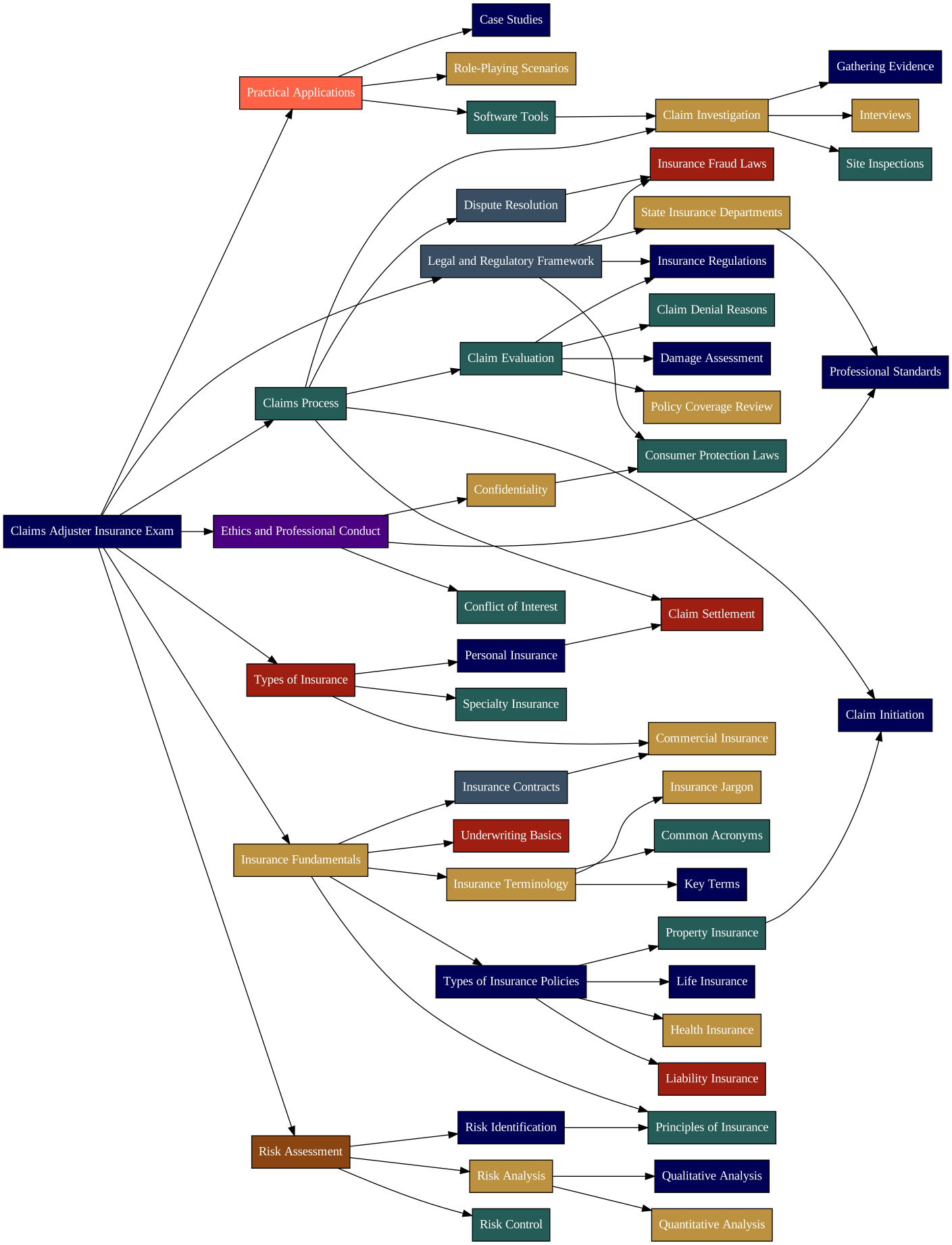
Quiz-summary
0 of 30 questions completed
Questions:
- 1
- 2
- 3
- 4
- 5
- 6
- 7
- 8
- 9
- 10
- 11
- 12
- 13
- 14
- 15
- 16
- 17
- 18
- 19
- 20
- 21
- 22
- 23
- 24
- 25
- 26
- 27
- 28
- 29
- 30
Information
Premium Practice Questions
You have already completed the quiz before. Hence you can not start it again.
Quiz is loading...
You must sign in or sign up to start the quiz.
You have to finish following quiz, to start this quiz:
Results
0 of 30 questions answered correctly
Your time:
Time has elapsed
You have reached 0 of 0 points, (0)
Categories
- Not categorized 0%
- 1
- 2
- 3
- 4
- 5
- 6
- 7
- 8
- 9
- 10
- 11
- 12
- 13
- 14
- 15
- 16
- 17
- 18
- 19
- 20
- 21
- 22
- 23
- 24
- 25
- 26
- 27
- 28
- 29
- 30
- Answered
- Review
-
Question 1 of 30
1. Question
During a review of the latest industry trends affecting claims adjusting in Ohio, you encounter the increasing influence of technology on customer interactions and claims processing. You realize that advancements like artificial intelligence and blockchain are altering traditional methods. Considering these changes, how would you describe the impact of telematics on auto insurance policies specifically in Ohio? Address the regulatory implications and customer expectations that accompany these technological innovations.
Correct
In the field of insurance claims adjusting, staying informed about industry trends and developments is crucial for effective decision-making and ensuring compliance with regulations. An understanding of emerging technologies, such as artificial intelligence and blockchain, can significantly impact claims processes and customer interactions. For instance, AI can expedite claims processing by automating initial assessments, while blockchain can enhance transparency and security in writing and managing policies. Additionally, the rise of telematics in auto insurance presents opportunities for more personalized policies based on individual driving behavior, making the claims process more responsive and fair. Adjusters must also be aware of evolving regulations at both state and federal levels that may affect how claims are handled, including consumer protection laws. In Ohio, the Department of Insurance frequently updates guidelines that can influence claims operations and the ethical considerations surrounding them. Furthermore, understanding trends in customer expectations, such as the demand for digital claim submissions and faster resolution times, is essential for providing high-quality service. Thus, the interplay of technology, regulations, and consumer behavior forms an integral part of a claims adjuster’s professional landscape.
Incorrect
In the field of insurance claims adjusting, staying informed about industry trends and developments is crucial for effective decision-making and ensuring compliance with regulations. An understanding of emerging technologies, such as artificial intelligence and blockchain, can significantly impact claims processes and customer interactions. For instance, AI can expedite claims processing by automating initial assessments, while blockchain can enhance transparency and security in writing and managing policies. Additionally, the rise of telematics in auto insurance presents opportunities for more personalized policies based on individual driving behavior, making the claims process more responsive and fair. Adjusters must also be aware of evolving regulations at both state and federal levels that may affect how claims are handled, including consumer protection laws. In Ohio, the Department of Insurance frequently updates guidelines that can influence claims operations and the ethical considerations surrounding them. Furthermore, understanding trends in customer expectations, such as the demand for digital claim submissions and faster resolution times, is essential for providing high-quality service. Thus, the interplay of technology, regulations, and consumer behavior forms an integral part of a claims adjuster’s professional landscape.
-
Question 2 of 30
2. Question
When you are faced with an insurance claim from a policyholder in Ohio, how would you articulate the significance of the claims process in relation to their overall experience with the insurance company? Consider the regulatory environment and the potential consequences for both the insurer and the insured if the claims process is not handled effectively. Your answer should reflect an understanding of the key principles governing claims handling in Ohio and the impact on customer satisfaction.
Correct
Claims play a pivotal role in the insurance industry, particularly in Ohio where the regulatory framework emphasizes prompt and fair claims handling. The importance of claims in insurance lies in their function as the primary mechanism through which policyholders receive the financial support they are entitled to following a loss. An insurance claim is a request made by the insured for compensation from the insurer when a covered event occurs, such as damage or loss to property. The claims process not only impacts the financial stability of the insured but also reflects the insurer’s reliability and integrity. A well-managed claims process can enhance customer satisfaction, foster loyalty, and ensure compliance with Ohio laws and regulations governing fair claims practices. The Ohio Department of Insurance oversees the standards for claims handling, ensuring that insurers act in good faith and provide timely responses to claims submissions. Thus, understanding the claims process, including the evaluation and adjustment of claims, is crucial for claims adjusters in navigating both the legal landscape and the expectations of clients.
Incorrect
Claims play a pivotal role in the insurance industry, particularly in Ohio where the regulatory framework emphasizes prompt and fair claims handling. The importance of claims in insurance lies in their function as the primary mechanism through which policyholders receive the financial support they are entitled to following a loss. An insurance claim is a request made by the insured for compensation from the insurer when a covered event occurs, such as damage or loss to property. The claims process not only impacts the financial stability of the insured but also reflects the insurer’s reliability and integrity. A well-managed claims process can enhance customer satisfaction, foster loyalty, and ensure compliance with Ohio laws and regulations governing fair claims practices. The Ohio Department of Insurance oversees the standards for claims handling, ensuring that insurers act in good faith and provide timely responses to claims submissions. Thus, understanding the claims process, including the evaluation and adjustment of claims, is crucial for claims adjusters in navigating both the legal landscape and the expectations of clients.
-
Question 3 of 30
3. Question
During a dispute between an insured client and an insurance company in Ohio regarding a denied claim, what strategy should a claims adjuster prioritize to effectively resolve the conflict? The adjuster is faced with both parties expressing strong emotions and differing interpretations of the policy coverage. It is crucial for the adjuster to navigate this situation delicately to ensure that both sides feel heard while working towards a resolution. The adjuster must consider not only the facts of the claim but also the underlying interests of each party to facilitate a productive dialogue. How should the adjuster approach this mediation process to foster understanding and reach a fair conclusion for both parties?
Correct
Conflict resolution and mediation skills are crucial for a claims adjuster in Ohio, as they often deal with disputes between insurance companies and policyholders. Effective mediation requires an understanding of the underlying interests of both parties, not just their positions. A claims adjuster must be skilled in active listening, allowing each party to express their perspective without interruption. This is critical in building trust and facilitating open communication. Additionally, the adjuster should be aware of the Ohio insurance laws and regulations that govern claims processes, as this knowledge can guide the resolution process to ensure compliance and fairness. Understanding the legal framework helps the adjuster frame discussions in a way that aligns with state laws, potentially reducing the likelihood of further disputes. Moreover, a good mediator should remain impartial, avoiding any appearance of bias in favor of either party. By employing these skills, an adjuster can effectively resolve conflicts, which not only expedites the claims process but also enhances customer satisfaction and maintains the company’s reputation in the industry.
Incorrect
Conflict resolution and mediation skills are crucial for a claims adjuster in Ohio, as they often deal with disputes between insurance companies and policyholders. Effective mediation requires an understanding of the underlying interests of both parties, not just their positions. A claims adjuster must be skilled in active listening, allowing each party to express their perspective without interruption. This is critical in building trust and facilitating open communication. Additionally, the adjuster should be aware of the Ohio insurance laws and regulations that govern claims processes, as this knowledge can guide the resolution process to ensure compliance and fairness. Understanding the legal framework helps the adjuster frame discussions in a way that aligns with state laws, potentially reducing the likelihood of further disputes. Moreover, a good mediator should remain impartial, avoiding any appearance of bias in favor of either party. By employing these skills, an adjuster can effectively resolve conflicts, which not only expedites the claims process but also enhances customer satisfaction and maintains the company’s reputation in the industry.
-
Question 4 of 30
4. Question
When you are faced with a complex damage claim in Ohio, what is the most effective first step for an adjuster to identify and mitigate risks? This claim involves multiple parties, each presenting different narratives about the incident. Consider the potential implications of your actions on the overall claims process. How should you proceed to ensure that all necessary information is gathered effectively and that risks are minimized according to Ohio’s regulations?
Correct
In the realm of claims adjusting, Ohio law emphasizes the importance of thorough documentation and communication in effectively managing and mitigating risks associated with claims. A claims adjuster must possess a comprehensive understanding of potential risks that can arise during the claims process, including the risk of fraud, miscommunication, and legal disputes. To mitigate these risks, an adjuster should implement proactive measures such as detailed record-keeping and adherence to the ethical standards outlined in the Ohio Administrative Code. For instance, when an adjuster encounters a claim, it is critical to gather all necessary information promptly, including statements from all involved parties, photographs of the incident, and any relevant documentation. This thorough approach not only minimizes ambiguity but also protects the adjuster and the insurer from potential legal repercussions. Furthermore, effective communication ensures that all stakeholders understand the claims process and the decisions made, reducing the likelihood of misunderstandings that could escalate into disputes. In addition, the Ohio Department of Insurance requires adjusters to act with integrity and fairness, providing equitable treatment to all claimants. By focusing on ethical practices and clear communication, adjusters can significantly reduce the risks associated with claims and maintain compliance with state regulations.
Incorrect
In the realm of claims adjusting, Ohio law emphasizes the importance of thorough documentation and communication in effectively managing and mitigating risks associated with claims. A claims adjuster must possess a comprehensive understanding of potential risks that can arise during the claims process, including the risk of fraud, miscommunication, and legal disputes. To mitigate these risks, an adjuster should implement proactive measures such as detailed record-keeping and adherence to the ethical standards outlined in the Ohio Administrative Code. For instance, when an adjuster encounters a claim, it is critical to gather all necessary information promptly, including statements from all involved parties, photographs of the incident, and any relevant documentation. This thorough approach not only minimizes ambiguity but also protects the adjuster and the insurer from potential legal repercussions. Furthermore, effective communication ensures that all stakeholders understand the claims process and the decisions made, reducing the likelihood of misunderstandings that could escalate into disputes. In addition, the Ohio Department of Insurance requires adjusters to act with integrity and fairness, providing equitable treatment to all claimants. By focusing on ethical practices and clear communication, adjusters can significantly reduce the risks associated with claims and maintain compliance with state regulations.
-
Question 5 of 30
5. Question
When you are faced with a scenario where multiple stakeholders are involved in the claims process, how should you best utilize digital communication tools to ensure clarity and compliance? Consider the importance of maintaining confidentiality while effectively managing interactions among claims adjusters, insured parties, and other relevant entities, especially in the context of Ohio’s regulatory landscape.
Correct
In the context of the Ohio Claims Adjuster Insurance Exam, understanding the implications of digital communication tools is crucial for effective claims management. These tools not only facilitate quick and efficient communication among claims adjusters, insured parties, and other stakeholders but also have legal and compliance dimensions. Email, chat, and video conferencing allow for the documentation of conversations, which can serve as vital evidence in claims disputes. Adjusters must ensure that their digital communications adhere to confidentiality regulations and that sensitive information is transmitted securely. Moreover, the choice of tool can influence the tone and clarity of communication, which is essential in negotiating settlements or clarifying coverage issues. Miscommunication or lack of clarity in digital formats can lead to misunderstandings and escalate disputes, potentially affecting the claims process and the insurer’s reputation. Therefore, adjusters must be proficient in using these tools while being cognizant of the ethical standards and regulatory considerations involved, ensuring that all communications are professional, clear, and compliant with industry regulations.
Incorrect
In the context of the Ohio Claims Adjuster Insurance Exam, understanding the implications of digital communication tools is crucial for effective claims management. These tools not only facilitate quick and efficient communication among claims adjusters, insured parties, and other stakeholders but also have legal and compliance dimensions. Email, chat, and video conferencing allow for the documentation of conversations, which can serve as vital evidence in claims disputes. Adjusters must ensure that their digital communications adhere to confidentiality regulations and that sensitive information is transmitted securely. Moreover, the choice of tool can influence the tone and clarity of communication, which is essential in negotiating settlements or clarifying coverage issues. Miscommunication or lack of clarity in digital formats can lead to misunderstandings and escalate disputes, potentially affecting the claims process and the insurer’s reputation. Therefore, adjusters must be proficient in using these tools while being cognizant of the ethical standards and regulatory considerations involved, ensuring that all communications are professional, clear, and compliant with industry regulations.
-
Question 6 of 30
6. Question
When you are faced with a situation where a policyholder has submitted a claim for damages resulting from an accident that may involve negligent behavior, it becomes crucial to apply your knowledge of both contract law and tort law. In Ohio, how would you describe the potential implications of the policyholder’s alleged negligence in relation to their insurance coverage and liability? Consider the responsibilities outlined within their insurance policy and the relevant legal principles regarding negligence that may affect the outcome of the claim.
Correct
Understanding the principles of contract law and tort law is essential for claims adjusters in Ohio. Contract law dictates the structure and enforceability of agreements, including insurance policies, where the insurer outlines its obligations and the insured’s rights. A fundamental aspect of contract law is the presence of consideration, mutual assent, and capacity, which together create a binding agreement. Conversely, tort law addresses civil wrongs that cause harm or loss to another party, establishing a duty of care owed to others. Claims adjusters must be aware of how negligence and liability intersect, impacting the insurance claims process. For instance, if an insured party’s actions are deemed negligent, it could affect their coverage and the insurer’s liability when a claim is made. In Ohio, tort law specifics may influence how claims related to injuries or damages are evaluated, creating implications for both claims handling and policy interpretation. Therefore, grasping these legal frameworks is crucial for effectively navigating the claims process and ensuring fair determinations in accordance with statutory regulations.
Incorrect
Understanding the principles of contract law and tort law is essential for claims adjusters in Ohio. Contract law dictates the structure and enforceability of agreements, including insurance policies, where the insurer outlines its obligations and the insured’s rights. A fundamental aspect of contract law is the presence of consideration, mutual assent, and capacity, which together create a binding agreement. Conversely, tort law addresses civil wrongs that cause harm or loss to another party, establishing a duty of care owed to others. Claims adjusters must be aware of how negligence and liability intersect, impacting the insurance claims process. For instance, if an insured party’s actions are deemed negligent, it could affect their coverage and the insurer’s liability when a claim is made. In Ohio, tort law specifics may influence how claims related to injuries or damages are evaluated, creating implications for both claims handling and policy interpretation. Therefore, grasping these legal frameworks is crucial for effectively navigating the claims process and ensuring fair determinations in accordance with statutory regulations.
-
Question 7 of 30
7. Question
When faced with a situation where a claimant is disputing the compensation offered for a property damage claim in Ohio, a claims adjuster recognizes that effective negotiation skills are essential for reaching a satisfactory resolution. Understanding the nuances of the claimant’s concerns while also upholding the company’s interests becomes a pivotal aspect of this interaction. As the adjuster prepares for the negotiation, what is the most crucial step they should take to enhance the likelihood of a favorable outcome?
Correct
Negotiation skills are crucial for a claims adjuster in Ohio, as they frequently interact with various stakeholders, including claimants, insurance agents, and legal representatives. Effective negotiation requires the ability to empathize with the other party’s position while also representing the interests of the insurer. One key strategy is to prepare thoroughly by understanding the details of the claim, including coverage limits, policy terms, and applicable laws. This preparation allows the adjuster to present a well-reasoned case and helps build credibility. During negotiations, it is vital to communicate clearly and assertively, ensuring that key points are expressed while also listening to the other party’s concerns. Active listening not only aids in understanding the opposing viewpoint but can also identify areas of potential compromise or agreement. Moreover, adjusters should be familiar with Ohio-specific regulations and ethical guidelines, as these can influence negotiation dynamics, particularly in terms of transparency and good faith. Overall, mastering negotiation principles can significantly impact the resolution of claims, leading to fair settlements that satisfy all parties involved.
Incorrect
Negotiation skills are crucial for a claims adjuster in Ohio, as they frequently interact with various stakeholders, including claimants, insurance agents, and legal representatives. Effective negotiation requires the ability to empathize with the other party’s position while also representing the interests of the insurer. One key strategy is to prepare thoroughly by understanding the details of the claim, including coverage limits, policy terms, and applicable laws. This preparation allows the adjuster to present a well-reasoned case and helps build credibility. During negotiations, it is vital to communicate clearly and assertively, ensuring that key points are expressed while also listening to the other party’s concerns. Active listening not only aids in understanding the opposing viewpoint but can also identify areas of potential compromise or agreement. Moreover, adjusters should be familiar with Ohio-specific regulations and ethical guidelines, as these can influence negotiation dynamics, particularly in terms of transparency and good faith. Overall, mastering negotiation principles can significantly impact the resolution of claims, leading to fair settlements that satisfy all parties involved.
-
Question 8 of 30
8. Question
When you are faced with a situation where a policyholder has expressed frustration over the claims process in Ohio, what is the most effective approach to enhance their customer experience? Consider the factors that contribute to effective communication and support during the claims adjustment process.
Correct
In the context of claims adjusting in Ohio, customer service skills are paramount in ensuring that clients feel heard and understood during what can often be a stressful and confusing time. Effective communication is one of the most vital skills an adjuster can possess. It involves not only conveying information clearly but also active listening, which allows the adjuster to grasp the nuances of the client’s situation. Empathy plays a significant role in building rapport; demonstrating understanding and compassion can greatly impact the client’s experience and perception of the overall claims process. Additionally, maintaining professionalism, particularly when dealing with frustrated or emotional clients, is essential. An adjuster must manage their own feelings while providing support and guidance. In Ohio, it’s also crucial for adjusters to adhere to the standards set by the Ohio Department of Insurance regarding ethical conduct, ensuring that all interactions respect confidentiality and fairness, ultimately fostering trust and satisfaction among policyholders.
Incorrect
In the context of claims adjusting in Ohio, customer service skills are paramount in ensuring that clients feel heard and understood during what can often be a stressful and confusing time. Effective communication is one of the most vital skills an adjuster can possess. It involves not only conveying information clearly but also active listening, which allows the adjuster to grasp the nuances of the client’s situation. Empathy plays a significant role in building rapport; demonstrating understanding and compassion can greatly impact the client’s experience and perception of the overall claims process. Additionally, maintaining professionalism, particularly when dealing with frustrated or emotional clients, is essential. An adjuster must manage their own feelings while providing support and guidance. In Ohio, it’s also crucial for adjusters to adhere to the standards set by the Ohio Department of Insurance regarding ethical conduct, ensuring that all interactions respect confidentiality and fairness, ultimately fostering trust and satisfaction among policyholders.
-
Question 9 of 30
9. Question
When you are faced with a complex claim involving multiple parties and potential liabilities, how should you approach the risk identification process in order to effectively mitigate any issues? In Ohio, claims adjusters are tasked with analyzing various components of the claim, including understanding the relationships between the involved parties, evaluating the circumstances that led to the claim, and assessing the relevant regulations that govern liability and compensation. What strategy should be employed to ensure that all risks are adequately identified and addressed in your claims handling process?
Correct
Identifying and mitigating risks in claims is a crucial responsibility for Ohio claims adjusters. This involves understanding the potential exposures that can result in losses and implementing strategies to minimize those risks. One effective way to approach risk management is through thorough investigations when handling claims. Adjusters must analyze the circumstances surrounding each claim, identifying any factors that may contribute to a higher likelihood of fraud or misrepresentation. For instance, recognizing patterns of claims in specific geographic areas or among certain client demographics can help in flagging potentially problematic claims early. Adjusters are also advised to maintain open communication with policyholders, ensuring that they provide accurate and complete information, which can further mitigate risks associated with inaccurate claims. Additionally, being aware of the legal and regulatory frameworks governing insurance claims in Ohio helps adjusters to navigate claims processes effectively, ensuring compliance and reducing the risk of disputes. Overall, effective risk identification and mitigation requires critical thinking and an understanding of both the claims environment and the ethical responsibilities set forth in the Ohio insurance regulations.
Incorrect
Identifying and mitigating risks in claims is a crucial responsibility for Ohio claims adjusters. This involves understanding the potential exposures that can result in losses and implementing strategies to minimize those risks. One effective way to approach risk management is through thorough investigations when handling claims. Adjusters must analyze the circumstances surrounding each claim, identifying any factors that may contribute to a higher likelihood of fraud or misrepresentation. For instance, recognizing patterns of claims in specific geographic areas or among certain client demographics can help in flagging potentially problematic claims early. Adjusters are also advised to maintain open communication with policyholders, ensuring that they provide accurate and complete information, which can further mitigate risks associated with inaccurate claims. Additionally, being aware of the legal and regulatory frameworks governing insurance claims in Ohio helps adjusters to navigate claims processes effectively, ensuring compliance and reducing the risk of disputes. Overall, effective risk identification and mitigation requires critical thinking and an understanding of both the claims environment and the ethical responsibilities set forth in the Ohio insurance regulations.
-
Question 10 of 30
10. Question
When you are faced with a claim that raises complex ethical considerations, such as a potential conflict of interest involving a close friend who is a claimant, how should you approach the situation to remain compliant with Ohio’s legal and ethical standards for claims adjusters? It is essential to consider how your actions may impact the integrity of the claims process. Would it be appropriate to disclose your relationship with the claimant to your supervisor, or could it compromise the objectivity required in your role? Additionally, should you recuse yourself from handling this claim entirely, and what legal ramifications might arise from failing to adequately address these ethical considerations? Understanding the implications of your responsibilities in such scenarios is crucial for maintaining professional standards and ensuring compliance with Ohio regulations.
Correct
In Ohio, claims adjusters are expected to adhere to a strict code of ethics to ensure that claims are handled fairly, promptly, and without bias. One of the key ethical considerations relates to the principle of utmost good faith, which requires adjusters to act honestly and transparently in their dealings with claimants and insurers. This principle underpins the fiduciary duty adjusters have towards their clients, necessitating a thorough understanding of the law that governs insurance claims. Additionally, adjusters must maintain the confidentiality of sensitive information obtained during the claims process, safeguarding the rights and privacy of all parties involved. Violation of these ethical standards can lead to disciplinary action from the Ohio Department of Insurance, including the potential for fines or license revocation. It is imperative that claims adjusters understand the implications of legal negligence and the importance of upholding ethical practices to foster trust and integrity within the insurance profession.
Incorrect
In Ohio, claims adjusters are expected to adhere to a strict code of ethics to ensure that claims are handled fairly, promptly, and without bias. One of the key ethical considerations relates to the principle of utmost good faith, which requires adjusters to act honestly and transparently in their dealings with claimants and insurers. This principle underpins the fiduciary duty adjusters have towards their clients, necessitating a thorough understanding of the law that governs insurance claims. Additionally, adjusters must maintain the confidentiality of sensitive information obtained during the claims process, safeguarding the rights and privacy of all parties involved. Violation of these ethical standards can lead to disciplinary action from the Ohio Department of Insurance, including the potential for fines or license revocation. It is imperative that claims adjusters understand the implications of legal negligence and the importance of upholding ethical practices to foster trust and integrity within the insurance profession.
-
Question 11 of 30
11. Question
When you are faced with an insurance claim where the circumstances are unclear and multiple parties are involved, what is the primary method for gathering evidence that a claims adjuster in Ohio should prioritize to ensure a fair and thorough investigation? Consider how different techniques could impact the outcome of the claim and the overall compliance with state regulations regarding evidence collection.
Correct
Gathering evidence in the context of insurance claims is a critical process that involves several methods, including interviews, statements, and documentation. Effective claims adjusters must be skilled in conducting thorough interviews to extract relevant information from claimants, witnesses, and involved parties. This requires a keen understanding of how to ask open-ended questions that encourage detailed responses while remaining compliant with regulatory standards. In Ohio, claims adjusters must adhere to a code of conduct that emphasizes fairness, transparency, and respect for the privacy of individuals during the claims process. Documentation is equally important; it serves as the foundation for the decision-making process. Properly maintained records of conversations, statements, and pertinent evidence not only support a claims adjuster’s findings but also protect the insurer from potential disputes. Furthermore, adjusters must ensure that all evidence gathered is relevant and admissible in potential legal scenarios. The integrity of the evidence collection process directly impacts the outcome of the claim and, ultimately, the insurer’s reputation.
Incorrect
Gathering evidence in the context of insurance claims is a critical process that involves several methods, including interviews, statements, and documentation. Effective claims adjusters must be skilled in conducting thorough interviews to extract relevant information from claimants, witnesses, and involved parties. This requires a keen understanding of how to ask open-ended questions that encourage detailed responses while remaining compliant with regulatory standards. In Ohio, claims adjusters must adhere to a code of conduct that emphasizes fairness, transparency, and respect for the privacy of individuals during the claims process. Documentation is equally important; it serves as the foundation for the decision-making process. Properly maintained records of conversations, statements, and pertinent evidence not only support a claims adjuster’s findings but also protect the insurer from potential disputes. Furthermore, adjusters must ensure that all evidence gathered is relevant and admissible in potential legal scenarios. The integrity of the evidence collection process directly impacts the outcome of the claim and, ultimately, the insurer’s reputation.
-
Question 12 of 30
12. Question
When you are faced with a complex claim in Ohio that involves significant property damage and potential personal injury, how should you approach the use of experts like appraisers or medical professionals? Additionally, what considerations must you keep in mind regarding the ethical implications and regulatory compliance associated with utilizing their services? Consider the various factors that would ensure that your process is thorough, compliant, and leads to a fair resolution for all parties involved.
Correct
In Ohio, claims adjusters are often required to utilize the expertise of professionals such as appraisers, engineers, or medical professionals to ensure accurate assessments in claims handling. The Ohio Revised Code and the specific regulations governing claims adjusters outline that the use of experts is vital in providing evidence-based evaluations, which leads to fair settlements. For instance, in property or auto damage claims, appraisers can provide insights into the extent of damage and appropriate repair costs, while engineers might be called upon to assess structural integrity in complex property claims. Similarly, in instances involving personal injury claims, medical experts are crucial in determining the extent of injuries and the associated treatment costs. The engagement of these professionals must be carefully documented, and the claims adjuster must remain compliant with the ethical standards and codes of conduct that govern the profession, ensuring transparency and integrity in the claims process. Misusing expert opinions or failing to adequately consider their recommendations can result in improper claims handling, which can have serious repercussions, including legal liability.
Incorrect
In Ohio, claims adjusters are often required to utilize the expertise of professionals such as appraisers, engineers, or medical professionals to ensure accurate assessments in claims handling. The Ohio Revised Code and the specific regulations governing claims adjusters outline that the use of experts is vital in providing evidence-based evaluations, which leads to fair settlements. For instance, in property or auto damage claims, appraisers can provide insights into the extent of damage and appropriate repair costs, while engineers might be called upon to assess structural integrity in complex property claims. Similarly, in instances involving personal injury claims, medical experts are crucial in determining the extent of injuries and the associated treatment costs. The engagement of these professionals must be carefully documented, and the claims adjuster must remain compliant with the ethical standards and codes of conduct that govern the profession, ensuring transparency and integrity in the claims process. Misusing expert opinions or failing to adequately consider their recommendations can result in improper claims handling, which can have serious repercussions, including legal liability.
-
Question 13 of 30
13. Question
When you are faced with a situation where a close friend files a claim with the insurance company you represent, what steps should you take to maintain ethical standards in accordance with Ohio’s claims handling regulations? It is essential to navigate this scenario carefully to avoid potential conflicts of interest. As a claims adjuster, you have a responsibility to ensure that your actions do not compromise your professional integrity or the confidentiality of the claims process. How would you best address this conflict, ensuring compliance with ethical obligations while protecting sensitive information related to the claim?
Correct
Claims adjusters in Ohio are bound by a strict ethical code that emphasizes confidentiality and the avoidance of conflicts of interest. Confidentiality is paramount; adjusters must ensure that the sensitive information they handle, including insured clients’ personal details and claims data, remains secure and private. Breaching this confidentiality can lead to severe legal consequences, damage to the policyholder’s trust, and could even result in disciplinary actions against the adjuster. Conflicts of interest must also be diligently avoided. An adjuster must not allow personal relationships or other financial interests to influence their professional decisions. This principle is crucial to maintain the integrity of the insurance process and ensure that claims are assessed fairly and impartially. Adjusters should disclose any potential conflicts to their employer and refrain from engaging in situations where their objectivity could be questioned. Understanding these ethical responsibilities ensures that adjusters act in the best interests of all parties involved and uphold the standards of the insurance profession in Ohio.
Incorrect
Claims adjusters in Ohio are bound by a strict ethical code that emphasizes confidentiality and the avoidance of conflicts of interest. Confidentiality is paramount; adjusters must ensure that the sensitive information they handle, including insured clients’ personal details and claims data, remains secure and private. Breaching this confidentiality can lead to severe legal consequences, damage to the policyholder’s trust, and could even result in disciplinary actions against the adjuster. Conflicts of interest must also be diligently avoided. An adjuster must not allow personal relationships or other financial interests to influence their professional decisions. This principle is crucial to maintain the integrity of the insurance process and ensure that claims are assessed fairly and impartially. Adjusters should disclose any potential conflicts to their employer and refrain from engaging in situations where their objectivity could be questioned. Understanding these ethical responsibilities ensures that adjusters act in the best interests of all parties involved and uphold the standards of the insurance profession in Ohio.
-
Question 14 of 30
14. Question
During a property claims adjustment in Ohio, a homeowner has reported substantial water damage in their residential property, which is covered under their homeowners insurance policy. As the claims adjuster, you need to evaluate the type of coverage that may apply to the homeowner’s loss. How would you best explain the difference between actual cash value and replacement cost coverage, and why it is essential to clearly delineate this to the homeowner during the claims process? Understanding this difference is paramount not only for the adjustment but also for ensuring the homeowner has a realistic expectation of the claim payout and comprehensive understanding of their policy.
Correct
In the context of property claims, particularly for homeowners’ insurance in Ohio, it is crucial to understand the coverage provided under a standard homeowners policy. Such policies typically encompass various risks, including damage to the physical structure of the home and personal property within. However, the specifics of what is covered may differ between the actual cash value (ACV) and replacement cost coverage. Actual cash value policies may only reimburse the policyholder for the depreciated value of damaged items, taking into account wear and tear. In contrast, replacement cost coverage allows for the reimbursement of the cost to replace damaged items without deduction for depreciation, leading to potentially higher payouts. Additionally, understanding the claims process involves knowing how to adequately document losses, collaborate with adjusters, assess damages accurately, and ensure compliance with Ohio’s insurance regulations. Failure to recognize these key elements can significantly impact the outcome of a claim and the satisfaction of the policyholder.
Incorrect
In the context of property claims, particularly for homeowners’ insurance in Ohio, it is crucial to understand the coverage provided under a standard homeowners policy. Such policies typically encompass various risks, including damage to the physical structure of the home and personal property within. However, the specifics of what is covered may differ between the actual cash value (ACV) and replacement cost coverage. Actual cash value policies may only reimburse the policyholder for the depreciated value of damaged items, taking into account wear and tear. In contrast, replacement cost coverage allows for the reimbursement of the cost to replace damaged items without deduction for depreciation, leading to potentially higher payouts. Additionally, understanding the claims process involves knowing how to adequately document losses, collaborate with adjusters, assess damages accurately, and ensure compliance with Ohio’s insurance regulations. Failure to recognize these key elements can significantly impact the outcome of a claim and the satisfaction of the policyholder.
-
Question 15 of 30
15. Question
When you are faced with a claim that involves unique circumstances, such as a workers’ compensation issue or a flood insurance scenario in Ohio, how important is specialized training and access to resources in effectively managing these claims? Explain your reasoning considering the different complexities that arise from each type of claim and how they impact the adjusting process.
Correct
In Ohio, specialized training and resources for unique claims types, such as workers’ compensation or flood insurance, are vital for claims adjusters to effectively assess and manage claims. Each unique claim type presents distinct challenges and complexities that require in-depth knowledge and understanding of specific laws and regulations. For example, workers’ compensation claims require an understanding of medical treatment guidelines, employer obligations, and the different types of benefits available to injured workers. Similarly, flood insurance claims involve navigating the National Flood Insurance Program policies, federal regulations, and specific documentation requirements. When adjusters are equipped with the right training and resources, they are better positioned to evaluate claims accurately, determine liability, and ensure compliance with applicable laws. This not only aids in efficient claims processing but also enhances customer satisfaction and trust in the insurance process. Adjusters must continually update their skills to stay informed about evolving laws and practices, making continuous education and specialized training an essential aspect of their professional development in Ohio.
Incorrect
In Ohio, specialized training and resources for unique claims types, such as workers’ compensation or flood insurance, are vital for claims adjusters to effectively assess and manage claims. Each unique claim type presents distinct challenges and complexities that require in-depth knowledge and understanding of specific laws and regulations. For example, workers’ compensation claims require an understanding of medical treatment guidelines, employer obligations, and the different types of benefits available to injured workers. Similarly, flood insurance claims involve navigating the National Flood Insurance Program policies, federal regulations, and specific documentation requirements. When adjusters are equipped with the right training and resources, they are better positioned to evaluate claims accurately, determine liability, and ensure compliance with applicable laws. This not only aids in efficient claims processing but also enhances customer satisfaction and trust in the insurance process. Adjusters must continually update their skills to stay informed about evolving laws and practices, making continuous education and specialized training an essential aspect of their professional development in Ohio.
-
Question 16 of 30
16. Question
In the context of the Ohio insurance industry, consider a scenario where a claims adjuster is assessing a claim involving an accident that was monitored by telematics technology. The data collected indicates unusual driving behavior prior to the accident, which suggests potential negligence on the part of the policyholder. What impact does the integration of such emerging technologies, particularly telematics and AI, have on the claims assessment process, and how should the adjuster consider regulatory and ethical guidelines in their evaluation?
Correct
In recent years, the insurance industry has witnessed transformative changes driven by emerging technologies. These technologies include telematics, artificial intelligence (AI), and data analytics, which are reshaping how insurance claims are processed and how risks are assessed. For instance, telematics allows insurers to gather real-time data from policyholders’ vehicles, leading to more accurate risk assessments and pricing strategies tailored to individual driving behaviors. AI enhances this further by facilitating quicker claims processing through automated systems that can analyze claims and identify patterns, potentially flagging fraudulent activities more effectively. The integration of these technologies not only improves efficiency but also promotes a more personalized approach to customer service. However, these advancements also come with challenges, including privacy concerns and the necessity for insurance professionals to stay updated on technological trends and regulatory changes. Hence, Ohio claims adjusters must understand these dynamics to effectively adapt to and navigate this evolving landscape while upholding ethical standards and industry regulations.
Incorrect
In recent years, the insurance industry has witnessed transformative changes driven by emerging technologies. These technologies include telematics, artificial intelligence (AI), and data analytics, which are reshaping how insurance claims are processed and how risks are assessed. For instance, telematics allows insurers to gather real-time data from policyholders’ vehicles, leading to more accurate risk assessments and pricing strategies tailored to individual driving behaviors. AI enhances this further by facilitating quicker claims processing through automated systems that can analyze claims and identify patterns, potentially flagging fraudulent activities more effectively. The integration of these technologies not only improves efficiency but also promotes a more personalized approach to customer service. However, these advancements also come with challenges, including privacy concerns and the necessity for insurance professionals to stay updated on technological trends and regulatory changes. Hence, Ohio claims adjusters must understand these dynamics to effectively adapt to and navigate this evolving landscape while upholding ethical standards and industry regulations.
-
Question 17 of 30
17. Question
When you are tasked with reviewing a claim involving damage to a client’s home due to a storm in Ohio, how would you best categorize the insurance type that applies to this situation? Consider that the claim involves both physical damages to the structure and potential injuries to visiting guests as a result of the damages. Understanding the coverage provisions is essential for proper claim handling. Which type of insurance would primarily cover the damage to the property, as well as any liability associated with injuries that occur on the property?
Correct
In the realm of insurance, understanding the various types is critical for claims adjusters, especially in Ohio. Life insurance is a contract that provides a payment upon the death of the insured, acting as a safety net for beneficiaries. Health insurance covers medical expenses incurred due to illnesses and injuries, often requiring an understanding of what is included in coverage and potential exclusions. Property insurance protects physical assets against risks like fire, theft, and natural disasters. Liability insurance, on the other hand, provides protection against claims resulting from damages to others or their property caused by the insured. Each type of insurance serves distinct purposes and has unique conditions that must be understood to effectively evaluate claims and determine coverage. For example, a claims adjuster must differentiate between property and liability claims to apply the correct policy provisions. In Ohio, regulations emphasize the responsibility of adjusters to know these distinctions, ensuring that claims are handled fairly and in accordance with state laws. Thus, a broad understanding of these types facilitates better decision-making and compliance with insurance regulations.
Incorrect
In the realm of insurance, understanding the various types is critical for claims adjusters, especially in Ohio. Life insurance is a contract that provides a payment upon the death of the insured, acting as a safety net for beneficiaries. Health insurance covers medical expenses incurred due to illnesses and injuries, often requiring an understanding of what is included in coverage and potential exclusions. Property insurance protects physical assets against risks like fire, theft, and natural disasters. Liability insurance, on the other hand, provides protection against claims resulting from damages to others or their property caused by the insured. Each type of insurance serves distinct purposes and has unique conditions that must be understood to effectively evaluate claims and determine coverage. For example, a claims adjuster must differentiate between property and liability claims to apply the correct policy provisions. In Ohio, regulations emphasize the responsibility of adjusters to know these distinctions, ensuring that claims are handled fairly and in accordance with state laws. Thus, a broad understanding of these types facilitates better decision-making and compliance with insurance regulations.
-
Question 18 of 30
18. Question
In the context of Ohio’s insurance regulations, why is it essential for claims adjusters to engage in continuing education and professional development? Consider the implications of staying informed about changes in the industry, the impact on claims handling, and the importance of ethical practices. How does this ongoing education affect their professional integrity and compliance with state laws?
Correct
Continuing education is crucial for claims adjusters in Ohio to maintain their professional competence and stay updated on changes in laws, regulations, and industry practices. The Ohio Department of Insurance mandates that licensed adjusters complete a specific number of hours of continuing education (CE) every renewal period. This requirement is designed to ensure that adjusters remain knowledgeable about the evolving insurance landscape, including insights into new technologies, claims handling processes, and regulatory changes. Moreover, pursuing CE enhances an adjuster’s skills in navigating complex claims situations and improves their ability to serve clients effectively. Engaging in professional development opportunities, such as workshops, seminars, and training sessions, not only fulfills regulatory obligations but also promotes ethical practices within the industry. A strong commitment to ongoing education reflects an adjuster’s dedication to professionalism and helps foster trust with clients, insurers, and regulatory bodies. Thus, understanding the importance of continuing education is essential for claims adjusters aiming to advance their careers and maintain compliance with state requirements.
Incorrect
Continuing education is crucial for claims adjusters in Ohio to maintain their professional competence and stay updated on changes in laws, regulations, and industry practices. The Ohio Department of Insurance mandates that licensed adjusters complete a specific number of hours of continuing education (CE) every renewal period. This requirement is designed to ensure that adjusters remain knowledgeable about the evolving insurance landscape, including insights into new technologies, claims handling processes, and regulatory changes. Moreover, pursuing CE enhances an adjuster’s skills in navigating complex claims situations and improves their ability to serve clients effectively. Engaging in professional development opportunities, such as workshops, seminars, and training sessions, not only fulfills regulatory obligations but also promotes ethical practices within the industry. A strong commitment to ongoing education reflects an adjuster’s dedication to professionalism and helps foster trust with clients, insurers, and regulatory bodies. Thus, understanding the importance of continuing education is essential for claims adjusters aiming to advance their careers and maintain compliance with state requirements.
-
Question 19 of 30
19. Question
In the context of Ohio’s claims adjustment process, how should an adjuster handle a situation where a client is expressing frustration and disappointment over a denied claim? It is important for the adjuster to consider the emotional aspects of the interaction. What approach would best illustrate the use of emotional intelligence and empathy in this scenario?
Correct
Emotional intelligence and empathy are crucial in claims adjusting, particularly when interacting with clients who may be experiencing distress due to a loss or unexpected event. Effective claims adjusters must not only process the technical aspects of a claim but also recognize and respond to the emotional state of the claimant. Demonstrating empathy involves actively listening, validating the claimant’s feelings, and providing reassurance. This helps in building trust, which is essential for a smooth claims process and ensures that clients feel heard and respected during a vulnerable time. Adjusters must be aware of their own emotional responses and maintain professionalism to avoid making judgments based on personal biases. Additionally, recognizing that each client’s response to their situation may vary allows adjusters to tailor their communication and approach effectively. Ultimately, cultivating strong emotional intelligence leads to enhanced client satisfaction, better relationships, and fewer disputes, aligning with regulations that prioritize consumer protection and ethical conduct in claims handling.
Incorrect
Emotional intelligence and empathy are crucial in claims adjusting, particularly when interacting with clients who may be experiencing distress due to a loss or unexpected event. Effective claims adjusters must not only process the technical aspects of a claim but also recognize and respond to the emotional state of the claimant. Demonstrating empathy involves actively listening, validating the claimant’s feelings, and providing reassurance. This helps in building trust, which is essential for a smooth claims process and ensures that clients feel heard and respected during a vulnerable time. Adjusters must be aware of their own emotional responses and maintain professionalism to avoid making judgments based on personal biases. Additionally, recognizing that each client’s response to their situation may vary allows adjusters to tailor their communication and approach effectively. Ultimately, cultivating strong emotional intelligence leads to enhanced client satisfaction, better relationships, and fewer disputes, aligning with regulations that prioritize consumer protection and ethical conduct in claims handling.
-
Question 20 of 30
20. Question
Consider a scenario where a claims adjuster in Ohio has met with a policyholder who is distressed after a recent home fire. The policyholder is anxious about the claims process and feels overwhelmed by the paperwork required. What interpersonal skill should the adjuster prioritize to effectively assist the policyholder while ensuring compliance with Ohio insurance regulations?
Correct
Interpersonal skills are crucial for claims adjusters, especially in the context of an insurance environment in Ohio. A claims adjuster must often deal with policyholders who are experiencing stress or financial strain due to a recent loss or damage. Essential components of interpersonal skills include effective communication, active listening, empathy, and conflict resolution. Active listening allows the adjuster to fully understand the policyholder’s situation and concerns, which in turn builds trust and rapport. This trust can facilitate smoother negotiations and outcomes, as well as encourage the policyholder to provide accurate information. Empathy plays a significant role, as it helps the adjuster to acknowledge the emotional aspects of a claim, leading to a more compassionate approach when discussing claims settlements. Furthermore, conflict resolution skills are vital when disagreements arise regarding coverage or claim amounts. A successful adjuster must navigate these challenging conversations while maintaining professionalism and adherence to Ohio’s regulatory requirements for claims handling. Understanding these interpersonal dynamics not only aids in compliance with the Ohio insurance laws but also enhances customer satisfaction and retention.
Incorrect
Interpersonal skills are crucial for claims adjusters, especially in the context of an insurance environment in Ohio. A claims adjuster must often deal with policyholders who are experiencing stress or financial strain due to a recent loss or damage. Essential components of interpersonal skills include effective communication, active listening, empathy, and conflict resolution. Active listening allows the adjuster to fully understand the policyholder’s situation and concerns, which in turn builds trust and rapport. This trust can facilitate smoother negotiations and outcomes, as well as encourage the policyholder to provide accurate information. Empathy plays a significant role, as it helps the adjuster to acknowledge the emotional aspects of a claim, leading to a more compassionate approach when discussing claims settlements. Furthermore, conflict resolution skills are vital when disagreements arise regarding coverage or claim amounts. A successful adjuster must navigate these challenging conversations while maintaining professionalism and adherence to Ohio’s regulatory requirements for claims handling. Understanding these interpersonal dynamics not only aids in compliance with the Ohio insurance laws but also enhances customer satisfaction and retention.
-
Question 21 of 30
21. Question
When analyzing the needs of individuals affected by a recent disaster in Ohio, how should a claims adjuster incorporate psychological first aid into their response? Consider the emotional impact of the event on claimants, and identify the most effective strategies for providing immediate support while remaining sensitive to their psychological state. The adjuster must balance the role of addressing practical claims-related issues with the need for emotional reassurance and understanding. What principles should guide the adjuster’s interactions with these individuals to ensure they feel heard, supported, and connected to additional mental health resources if necessary?
Correct
Psychological first aid is a critical component in the aftermath of any traumatic event, particularly in the insurance claims landscape where individuals may be dealing with loss, injury, or emotional distress. It focuses on providing immediate support to individuals impacted by a disaster or crisis, helping them to cope with the experience. In Ohio, claims adjusters are often on the front lines of these situations. They must be equipped to recognize signs of psychological distress and to provide appropriate support, which involves active listening, empathy, and offering reassurance. Furthermore, adjusters should be trained in methods to facilitate connections with mental health resources when necessary. This includes being aware of community resources such as hotlines, counseling services, and support groups. It is important for adjusters to remember that their role extends beyond just assessing the physical damages from a claim; they should also attend to the emotional needs of the individuals involved. Proper implementation of psychological first aid emphasizes the importance of stability and safety for affected individuals, allowing them to begin the healing process and move forward with their claims.
Incorrect
Psychological first aid is a critical component in the aftermath of any traumatic event, particularly in the insurance claims landscape where individuals may be dealing with loss, injury, or emotional distress. It focuses on providing immediate support to individuals impacted by a disaster or crisis, helping them to cope with the experience. In Ohio, claims adjusters are often on the front lines of these situations. They must be equipped to recognize signs of psychological distress and to provide appropriate support, which involves active listening, empathy, and offering reassurance. Furthermore, adjusters should be trained in methods to facilitate connections with mental health resources when necessary. This includes being aware of community resources such as hotlines, counseling services, and support groups. It is important for adjusters to remember that their role extends beyond just assessing the physical damages from a claim; they should also attend to the emotional needs of the individuals involved. Proper implementation of psychological first aid emphasizes the importance of stability and safety for affected individuals, allowing them to begin the healing process and move forward with their claims.
-
Question 22 of 30
22. Question
Consider a scenario where you are reviewing a claim for a homeowner’s insurance policy in Ohio after a severe storm caused property damage. During your assessment, you discover that the previous claims adjuster’s documentation is lacking in several key areas, including the specifics of the damage and the conversations held with the policyholder. Given the significance of these documents in determining the claim’s outcome, what would be the most appropriate approach to address this documentation issue while ensuring compliance with state regulations and maintaining effective claims handling practices?
Correct
Accurate documentation in claims adjusting is paramount for several reasons. Firstly, it serves as the primary basis for the evaluation of claims, ensuring that all relevant information is systematically captured and easily accessible for review. This includes detailed notes of conversations with claimants, the assessment of damages, and recorded observations made during investigations. Such documentation supports the claims adjuster’s decisions and recommendations, providing evidence of the adjuster’s due diligence and compliance with regulatory requirements in Ohio. Moreover, well-maintained documentation helps mitigate disputes that may arise regarding the claims process. In cases of litigation or disputes, comprehensive records can serve as vital evidence, supporting the adjuster’s positions and actions taken throughout the claims process. Additionally, precise documentation is essential for compliance with insurance regulations in Ohio, which mandate insurers to maintain accurate and fair records to protect consumers’ rights. Failing to document properly can lead to regulatory sanctions or adverse judgments that can affect the insurer’s reputation and financial stability. Furthermore, efficient documentation practices can streamline the claims settlement process, allowing for quicker resolution and increased customer satisfaction. Hence, the role of accurate documentation cannot be overstated in ensuring the integrity, efficiency, and legality of the claims adjusting process.
Incorrect
Accurate documentation in claims adjusting is paramount for several reasons. Firstly, it serves as the primary basis for the evaluation of claims, ensuring that all relevant information is systematically captured and easily accessible for review. This includes detailed notes of conversations with claimants, the assessment of damages, and recorded observations made during investigations. Such documentation supports the claims adjuster’s decisions and recommendations, providing evidence of the adjuster’s due diligence and compliance with regulatory requirements in Ohio. Moreover, well-maintained documentation helps mitigate disputes that may arise regarding the claims process. In cases of litigation or disputes, comprehensive records can serve as vital evidence, supporting the adjuster’s positions and actions taken throughout the claims process. Additionally, precise documentation is essential for compliance with insurance regulations in Ohio, which mandate insurers to maintain accurate and fair records to protect consumers’ rights. Failing to document properly can lead to regulatory sanctions or adverse judgments that can affect the insurer’s reputation and financial stability. Furthermore, efficient documentation practices can streamline the claims settlement process, allowing for quicker resolution and increased customer satisfaction. Hence, the role of accurate documentation cannot be overstated in ensuring the integrity, efficiency, and legality of the claims adjusting process.
-
Question 23 of 30
23. Question
In the situation of a major natural disaster impacting several policyholders in Ohio, how should a claims adjuster effectively manage the crisis to ensure a streamlined and compliant claims process? Consider the importance of establishing communication channels, assessing damages, and adhering to state regulations while addressing the needs of affected clients.
Correct
Crisis management in the context of insurance claims adjusting involves a structured approach to addressing and managing the aftermath of a significant event that disrupts normal operations. In Ohio, the role of a claims adjuster during a crisis includes assessing damages, communicating effectively with claimants, and ensuring compliance with state regulations and industry standards. An effective crisis management plan must incorporate procedures for rapid response, transparent communication with stakeholders, and the implementation of mitigation strategies to restore operations and maintain client trust. Understanding the nuances of Ohio’s regulatory environment is crucial, as the state has specific laws regarding the handling of claims during emergencies. This includes the necessity for adjusters to remain transparent about the claims process and to ensure that all communications are clear and compliant with Ohio’s consumer protection regulations. The adjuster’s ability to navigate these complexities while providing empathetic and professional service can directly influence the resolution of claims and the reputation of the insurance company involved.
Incorrect
Crisis management in the context of insurance claims adjusting involves a structured approach to addressing and managing the aftermath of a significant event that disrupts normal operations. In Ohio, the role of a claims adjuster during a crisis includes assessing damages, communicating effectively with claimants, and ensuring compliance with state regulations and industry standards. An effective crisis management plan must incorporate procedures for rapid response, transparent communication with stakeholders, and the implementation of mitigation strategies to restore operations and maintain client trust. Understanding the nuances of Ohio’s regulatory environment is crucial, as the state has specific laws regarding the handling of claims during emergencies. This includes the necessity for adjusters to remain transparent about the claims process and to ensure that all communications are clear and compliant with Ohio’s consumer protection regulations. The adjuster’s ability to navigate these complexities while providing empathetic and professional service can directly influence the resolution of claims and the reputation of the insurance company involved.
-
Question 24 of 30
24. Question
During a home insurance claim in Ohio, a claims adjuster meets with a claimant who has recently experienced a significant loss due to fire damage. The claimant is visibly upset and struggling to communicate effectively about the incident. As the adjuster, what approach should you prioritize to effectively build rapport and facilitate a more productive discussion regarding the claim?
Correct
Building rapport with claimants is essential for claims adjusters as it fosters trust and effective communication, which can lead to smoother claims processing. A genuine approach that includes active listening, empathy, and acknowledgement of the claimants’ experiences is critical. Understanding the psychological state of claimants, particularly after a loss or distressing event, allows an adjuster to tailor their communication style to meet the claimant’s emotional needs. This involves not only providing clear information about the claims process but also responding sensitively to the claimant’s concerns and emotions. The ability to establish a personal connection can significantly impact the outcome of the claims process, making it more cooperative. Furthermore, it can mitigate potential conflicts by ensuring that claimants feel heard and valued, which can reduce frustration and lead to more amicable resolutions. As claims adjusters navigate the intricacies of Ohio’s laws and regulations, being attuned to the nuances of claimant interactions remains a foundational skill that enhances the adjuster’s effectiveness and upholds ethical practices in handling claims.
Incorrect
Building rapport with claimants is essential for claims adjusters as it fosters trust and effective communication, which can lead to smoother claims processing. A genuine approach that includes active listening, empathy, and acknowledgement of the claimants’ experiences is critical. Understanding the psychological state of claimants, particularly after a loss or distressing event, allows an adjuster to tailor their communication style to meet the claimant’s emotional needs. This involves not only providing clear information about the claims process but also responding sensitively to the claimant’s concerns and emotions. The ability to establish a personal connection can significantly impact the outcome of the claims process, making it more cooperative. Furthermore, it can mitigate potential conflicts by ensuring that claimants feel heard and valued, which can reduce frustration and lead to more amicable resolutions. As claims adjusters navigate the intricacies of Ohio’s laws and regulations, being attuned to the nuances of claimant interactions remains a foundational skill that enhances the adjuster’s effectiveness and upholds ethical practices in handling claims.
-
Question 25 of 30
25. Question
When reviewing an automobile insurance policy in Ohio, you encounter various types of coverage. Your client is unsure about the purpose and implications of comprehensive, collision, and liability coverage. Which type of coverage would you explain as specifically providing protection against damages caused by events other than vehicle collisions, such as theft or natural disasters, and is an essential option for those looking to safeguard their vehicle comprehensively?
Correct
Understanding the nuances of various types of auto insurance coverage is crucial for claims adjusters. In Ohio, comprehensive coverage provides protection against damage to a vehicle not involving a collision, such as theft, vandalism, or natural disasters. This contrasts with collision coverage, which specifically covers damage from collisions with other vehicles or objects, regardless of fault. Liability coverage, mandated by Ohio law, protects the policyholder against claims from third parties for bodily injury or property damage arising from an accident for which the insured is legally responsible. Each type of coverage serves distinct functions and informs how claims are processed and evaluated. It’s essential for claims adjusters to be adept at assessing each situation and understanding the applicable coverages to guide policyholders appropriately. The adjustments made to each claim can depend on the insurance type involved. Therefore, recognizing the limits, exclusions, and specific responsibilities tied to each of these coverage types is vital for ensuring fair and accurate claims management in Ohio.
Incorrect
Understanding the nuances of various types of auto insurance coverage is crucial for claims adjusters. In Ohio, comprehensive coverage provides protection against damage to a vehicle not involving a collision, such as theft, vandalism, or natural disasters. This contrasts with collision coverage, which specifically covers damage from collisions with other vehicles or objects, regardless of fault. Liability coverage, mandated by Ohio law, protects the policyholder against claims from third parties for bodily injury or property damage arising from an accident for which the insured is legally responsible. Each type of coverage serves distinct functions and informs how claims are processed and evaluated. It’s essential for claims adjusters to be adept at assessing each situation and understanding the applicable coverages to guide policyholders appropriately. The adjustments made to each claim can depend on the insurance type involved. Therefore, recognizing the limits, exclusions, and specific responsibilities tied to each of these coverage types is vital for ensuring fair and accurate claims management in Ohio.
-
Question 26 of 30
26. Question
When reviewing a series of claims, you come across a situation where the initially set reserves for several claims appear to be consistently lower than the anticipated settlements based on recent assessments. As an Ohio claims adjuster, what should your course of action be to align the reserves with the projected liabilities? This scenario requires you to consider the implications of reserve adjustments not only for compliance but also for the financial health of the insurance organization.
Correct
In the context of claims adjusting, setting reserves accurately is crucial for managing an insurance company’s financial obligations and liabilities. Reserves represent the amount of money that an insurer sets aside to pay future claims. In Ohio, claims adjusters must adhere to state regulations that require them to evaluate claims thoroughly and establish reserves based on the expected cost of claims, legal expenses, and other relevant costs. A well-set reserve not only ensures compliance with statutory obligations but also reflects a commitment to sound financial practices. Conversely, if reserves are underestimated, an insurer may face liquidity issues, regulatory scrutiny, or reputational damage. Ohio regulations emphasize the necessity of regularly reviewing and adjusting reserves based on new information or developments in the claims process. This proactive approach is vital in maintaining accurate financial reporting and ensuring that the insurance company can meet its liability obligations to policyholders and stakeholders alike. Therefore, a strong understanding of the methodologies and principles behind reserve setting is essential for any claims adjuster operating in Ohio.
Incorrect
In the context of claims adjusting, setting reserves accurately is crucial for managing an insurance company’s financial obligations and liabilities. Reserves represent the amount of money that an insurer sets aside to pay future claims. In Ohio, claims adjusters must adhere to state regulations that require them to evaluate claims thoroughly and establish reserves based on the expected cost of claims, legal expenses, and other relevant costs. A well-set reserve not only ensures compliance with statutory obligations but also reflects a commitment to sound financial practices. Conversely, if reserves are underestimated, an insurer may face liquidity issues, regulatory scrutiny, or reputational damage. Ohio regulations emphasize the necessity of regularly reviewing and adjusting reserves based on new information or developments in the claims process. This proactive approach is vital in maintaining accurate financial reporting and ensuring that the insurance company can meet its liability obligations to policyholders and stakeholders alike. Therefore, a strong understanding of the methodologies and principles behind reserve setting is essential for any claims adjuster operating in Ohio.
-
Question 27 of 30
27. Question
When you are faced with a situation where a client is upset about a denied claim in Ohio, what is the best approach to handle the conversation effectively? The client expresses frustration and emotional distress over what they perceive as an unfair decision. In this scenario, how should you proceed to ensure that the conversation remains constructive and addresses the client’s concerns while also adhering to the ethical standards required of a claims adjuster?
Correct
When engaging with clients who are emotionally charged due to disputes or denials, especially in the context of a claims adjustment in Ohio, it is crucial to approach the conversation with empathy and active listening. Acknowledging the client’s emotions can defuse potential escalation of tensions and foster a more collaborative atmosphere. Active listening involves not only hearing the client’s words but also understanding the underlying concerns they express. This skill allows the adjuster to clarify misconceptions and offer relevant information that could resolve the issue at hand. Moreover, it is essential to maintain professionalism throughout the interaction to ensure that the conversation remains productive. Emotional clients may respond better when they feel heard and understood, which can lead to a more favorable outcome for both parties. Additionally, being transparent about the claims process and clearly explaining the reasons behind any denials or disputes will contribute to building trust and credibility, which are paramount in the insurance industry. Following the Ohio laws regarding claims handling also emphasizes the importance of clear communication and proper documentation, ensuring that the adjuster adheres to ethical standards.
Incorrect
When engaging with clients who are emotionally charged due to disputes or denials, especially in the context of a claims adjustment in Ohio, it is crucial to approach the conversation with empathy and active listening. Acknowledging the client’s emotions can defuse potential escalation of tensions and foster a more collaborative atmosphere. Active listening involves not only hearing the client’s words but also understanding the underlying concerns they express. This skill allows the adjuster to clarify misconceptions and offer relevant information that could resolve the issue at hand. Moreover, it is essential to maintain professionalism throughout the interaction to ensure that the conversation remains productive. Emotional clients may respond better when they feel heard and understood, which can lead to a more favorable outcome for both parties. Additionally, being transparent about the claims process and clearly explaining the reasons behind any denials or disputes will contribute to building trust and credibility, which are paramount in the insurance industry. Following the Ohio laws regarding claims handling also emphasizes the importance of clear communication and proper documentation, ensuring that the adjuster adheres to ethical standards.
-
Question 28 of 30
28. Question
When you are faced with the situation of handling multiple claims from a common client in Ohio, it is essential to consider the ethical responsibilities involved. Suppose you realize that due to a close personal relationship with the client, your ability to make impartial decisions regarding their claims may be compromised. What is the most ethically responsible action you should take in this scenario to maintain integrity and uphold your duties as a claims adjuster?
Correct
In Ohio, claims adjusters are held to a high standard of ethical responsibility, particularly regarding conflicts of interest and the maintenance of confidentiality. A conflict of interest arises when a claims adjuster has a personal stake in the outcome of a claim that may compromise their objectivity. It is crucial for adjusters to remain independent and impartial, ensuring that their decisions are solely based on the merits of the claim and the evidence presented. Failure to disclose a conflict can lead to serious repercussions, including disciplinary actions from regulatory bodies or damage to professional reputation. Confidentiality is another cornerstone of the ethical obligations for claims adjusters in Ohio. Adjusters have access to sensitive personal and financial information about policyholders and claimants. It is imperative that this information is safeguarded and only shared with authorized entities as required by law. Breaching confidentiality not only violates ethical standards but also can result in legal consequences and loss of trust from clients and employers. Thus, claims adjusters must consistently navigate these ethical waters with care, ensuring that they act in the best interests of all parties while adhering to legal standards.
Incorrect
In Ohio, claims adjusters are held to a high standard of ethical responsibility, particularly regarding conflicts of interest and the maintenance of confidentiality. A conflict of interest arises when a claims adjuster has a personal stake in the outcome of a claim that may compromise their objectivity. It is crucial for adjusters to remain independent and impartial, ensuring that their decisions are solely based on the merits of the claim and the evidence presented. Failure to disclose a conflict can lead to serious repercussions, including disciplinary actions from regulatory bodies or damage to professional reputation. Confidentiality is another cornerstone of the ethical obligations for claims adjusters in Ohio. Adjusters have access to sensitive personal and financial information about policyholders and claimants. It is imperative that this information is safeguarded and only shared with authorized entities as required by law. Breaching confidentiality not only violates ethical standards but also can result in legal consequences and loss of trust from clients and employers. Thus, claims adjusters must consistently navigate these ethical waters with care, ensuring that they act in the best interests of all parties while adhering to legal standards.
-
Question 29 of 30
29. Question
Consider a scenario where you are working as a claims adjuster in Ohio, and you receive two claims for processing. One claim is from a homeowner who experienced a fire in their house and is seeking compensation from their own insurance policy. The other claim involves a driver who wants to file against another driver’s insurance after being involved in a collision where they believe the other driver was at fault. How would you classify these two claims, and what implications do these classifications have for the claims process?
Correct
In the context of insurance claims, understanding the distinction between first-party and third-party claims is crucial for claims adjusters in Ohio. First-party claims are filed by the insured individual or entity directly against their own insurance policy. This situation arises when an insured party suffers a loss, such as damage to their own property, and seeks compensation from their own insurer to recover those losses. On the other hand, third-party claims occur when an individual or entity files a claim against another party’s insurance to seek compensation for damages or injuries that they caused. In Ohio, claims adjusters must navigate these types of claims with a clear understanding of the legal implications, coverage limits, and the responsibilities that accompany each type. Familiarity with the relevant state laws and regulations, such as the Ohio Revised Code, is essential for effectively handling claims efficiently and ethically. This foundational knowledge ensures that adjusters can adequately assess claims, determine liability, and communicate the claims process accurately to all parties involved.
Incorrect
In the context of insurance claims, understanding the distinction between first-party and third-party claims is crucial for claims adjusters in Ohio. First-party claims are filed by the insured individual or entity directly against their own insurance policy. This situation arises when an insured party suffers a loss, such as damage to their own property, and seeks compensation from their own insurer to recover those losses. On the other hand, third-party claims occur when an individual or entity files a claim against another party’s insurance to seek compensation for damages or injuries that they caused. In Ohio, claims adjusters must navigate these types of claims with a clear understanding of the legal implications, coverage limits, and the responsibilities that accompany each type. Familiarity with the relevant state laws and regulations, such as the Ohio Revised Code, is essential for effectively handling claims efficiently and ethically. This foundational knowledge ensures that adjusters can adequately assess claims, determine liability, and communicate the claims process accurately to all parties involved.
-
Question 30 of 30
30. Question
When you are faced with assessing a claim for a client in Ohio who has experienced a significant loss due to an unforeseen event, it is crucial to determine which type of insurance coverage applies to their situation. Your client has endured damage to their home and personal property from a severe storm, resulting in extensive repairs and loss of valuable belongings. As a claims adjuster, you need to classify the type of insurance that would primarily cover these types of losses. What insurance type should you focus on in this case, considering the specific nature of the loss and the potential financial implications for your client?
Correct
Understanding the various types of insurance is essential for an Ohio claims adjuster, as each type serves a distinct purpose and involves different coverage details. Life insurance provides financial support to beneficiaries upon the policyholder’s death, ensuring that loved ones are protected from the financial burdens following the loss. Health insurance, on the other hand, covers medical expenses, including hospital visits, surgeries, and preventive care, thereby mitigating the financial risks associated with health-related issues. Property insurance protects physical assets, such as homes and businesses, against risks like fire, theft, and natural disasters, while liability insurance provides coverage against legal claims for damages or injuries caused to third parties. Each type of insurance has its own set of regulations, definitions, and conditions that adjusters must navigate effectively. In Ohio, claims adjusters must adhere to the state’s legal framework, which emphasizes honesty, ethics, and thoroughness in claims assessments. This multifaceted knowledge allows adjusters to apply appropriate coverage options when addressing claims, ensuring compliance and adequacy in the insurance process.
Incorrect
Understanding the various types of insurance is essential for an Ohio claims adjuster, as each type serves a distinct purpose and involves different coverage details. Life insurance provides financial support to beneficiaries upon the policyholder’s death, ensuring that loved ones are protected from the financial burdens following the loss. Health insurance, on the other hand, covers medical expenses, including hospital visits, surgeries, and preventive care, thereby mitigating the financial risks associated with health-related issues. Property insurance protects physical assets, such as homes and businesses, against risks like fire, theft, and natural disasters, while liability insurance provides coverage against legal claims for damages or injuries caused to third parties. Each type of insurance has its own set of regulations, definitions, and conditions that adjusters must navigate effectively. In Ohio, claims adjusters must adhere to the state’s legal framework, which emphasizes honesty, ethics, and thoroughness in claims assessments. This multifaceted knowledge allows adjusters to apply appropriate coverage options when addressing claims, ensuring compliance and adequacy in the insurance process.