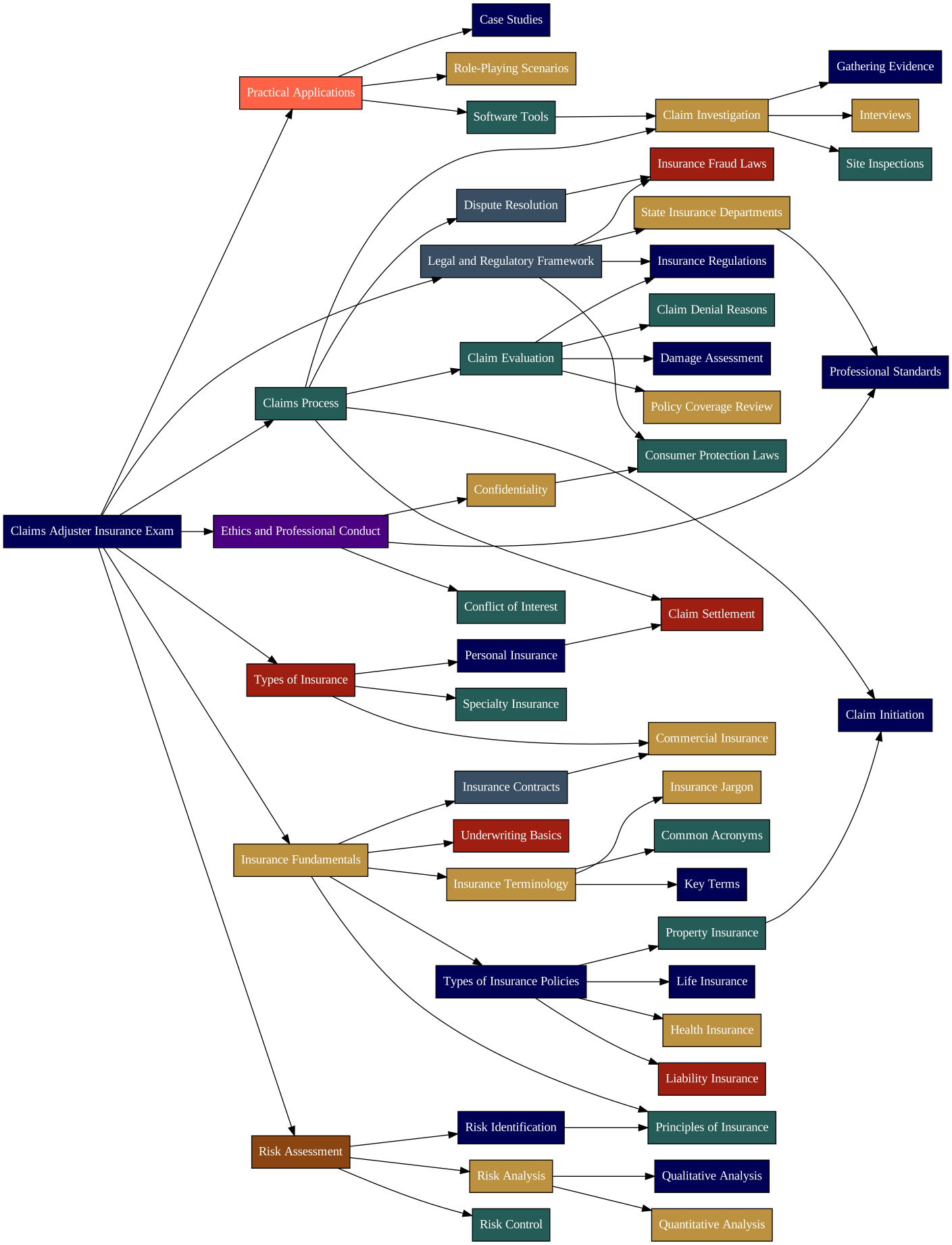
Quiz-summary
0 of 30 questions completed
Questions:
- 1
- 2
- 3
- 4
- 5
- 6
- 7
- 8
- 9
- 10
- 11
- 12
- 13
- 14
- 15
- 16
- 17
- 18
- 19
- 20
- 21
- 22
- 23
- 24
- 25
- 26
- 27
- 28
- 29
- 30
Information
Premium Practice Questions
You have already completed the quiz before. Hence you can not start it again.
Quiz is loading...
You must sign in or sign up to start the quiz.
You have to finish following quiz, to start this quiz:
Results
0 of 30 questions answered correctly
Your time:
Time has elapsed
You have reached 0 of 0 points, (0)
Categories
- Not categorized 0%
- 1
- 2
- 3
- 4
- 5
- 6
- 7
- 8
- 9
- 10
- 11
- 12
- 13
- 14
- 15
- 16
- 17
- 18
- 19
- 20
- 21
- 22
- 23
- 24
- 25
- 26
- 27
- 28
- 29
- 30
- Answered
- Review
-
Question 1 of 30
1. Question
You discover that a major hurricane has struck a coastal region in South Carolina, resulting in widespread devastation and a significant influx of insurance claims. In this context, what is the most critical factor an adjuster should prioritize when managing the large-scale claims that arise from such a catastrophic event? Consider the implications of timeliness, communication, and collaboration with different entities involved in the claims process.
Correct
In South Carolina, handling catastrophic claims requires a deep understanding of the principles of mass claims management, particularly after large-scale disasters. Adjusters must recognize the unique challenges that arise in these situations, including the sheer volume of claims, the urgency of timely responses, and the need for effective communication with claimants. It is critical for adjusters to adopt a collaborative approach, often working in conjunction with other stakeholders, including emergency response teams and government agencies. This not only facilitates a more efficient claims process but also ensures that the needs of policyholders are addressed in a timely manner. Furthermore, adjusters must be aware of the legal and ethical obligations that govern their conduct during such events, including the importance of transparency and fairness in claims handling. Given the heightened emotional states of claimants recovering from disasters, adjusters should employ empathy while also adhering to the regulatory framework set forth by the South Carolina Department of Insurance, ensuring that all claims are processed equitably and responsibly.
Incorrect
In South Carolina, handling catastrophic claims requires a deep understanding of the principles of mass claims management, particularly after large-scale disasters. Adjusters must recognize the unique challenges that arise in these situations, including the sheer volume of claims, the urgency of timely responses, and the need for effective communication with claimants. It is critical for adjusters to adopt a collaborative approach, often working in conjunction with other stakeholders, including emergency response teams and government agencies. This not only facilitates a more efficient claims process but also ensures that the needs of policyholders are addressed in a timely manner. Furthermore, adjusters must be aware of the legal and ethical obligations that govern their conduct during such events, including the importance of transparency and fairness in claims handling. Given the heightened emotional states of claimants recovering from disasters, adjusters should employ empathy while also adhering to the regulatory framework set forth by the South Carolina Department of Insurance, ensuring that all claims are processed equitably and responsibly.
-
Question 2 of 30
2. Question
In the context of South Carolina’s insurance industry, how would you best describe the importance of loss control strategies in risk mitigation for an adjusting professional? Consider a scenario where an adjuster is evaluating an industrial client that has experienced repeated accidents on-site. The adjuster is tasked with identifying how effective loss control measures could be integrated into the client’s operation to avoid future incidents. What knowledge should the adjuster prioritize to ensure these measures are appropriately implemented?
Correct
Loss control strategies are essential for adjusting claims in South Carolina as they play a crucial role in risk mitigation and protection of assets. Effective loss control involves identifying potential hazards, evaluating the risks, and implementing measures to minimize those risks before losses occur. This proactive approach not only helps clients prevent future claims but also reduces the frequency and severity of losses that may occur, ultimately benefiting both policyholders and insurers. Strategies may include regular safety audits, employee training programs, and the adoption of technological solutions to monitor risks proactively. Furthermore, adherence to regulatory requirements and the ethical implications of loss control should not be overlooked. Adjusters must navigate these complexities while maintaining a clear line of communication with policyholders about their responsibilities in risk management. Proper implementation of these strategies can significantly influence the outcome of claims and promote a culture of risk awareness and safety among clients, which is critical in the adjuster’s role.
Incorrect
Loss control strategies are essential for adjusting claims in South Carolina as they play a crucial role in risk mitigation and protection of assets. Effective loss control involves identifying potential hazards, evaluating the risks, and implementing measures to minimize those risks before losses occur. This proactive approach not only helps clients prevent future claims but also reduces the frequency and severity of losses that may occur, ultimately benefiting both policyholders and insurers. Strategies may include regular safety audits, employee training programs, and the adoption of technological solutions to monitor risks proactively. Furthermore, adherence to regulatory requirements and the ethical implications of loss control should not be overlooked. Adjusters must navigate these complexities while maintaining a clear line of communication with policyholders about their responsibilities in risk management. Proper implementation of these strategies can significantly influence the outcome of claims and promote a culture of risk awareness and safety among clients, which is critical in the adjuster’s role.
-
Question 3 of 30
3. Question
In the scenario of managing multiple insurance claims in South Carolina, an adjuster needs to decide which tasks to prioritize to ensure compliance with regulatory timelines. As the adjuster reviews their workload, they note various tasks, including contacting clients for updates, evaluating claims for accuracy, and preparing necessary reports for submission. How should the adjuster determine the order in which to tackle these tasks to optimize their efficiency while adhering to state requirements?
Correct
Effective time management is crucial for adjusters in South Carolina as it enables them to handle multiple claims efficiently while adhering to regulatory deadlines. Adjusters often face situations where they must prioritize tasks such as communicating with clients, gathering necessary documentation, and analyzing claims. Understanding which tasks require immediate attention versus those that can be scheduled for later can significantly impact the overall workflow. Additionally, managing deadlines effectively ensures compliance with South Carolina’s regulatory requirements, as the state mandates specific timelines for claim processing and reporting. An organized adjuster will utilize tools such as calendars and task management software to track deadlines and prioritize work accordingly. By cultivating strong organizational skills, including the ability to differentiate between urgent and important tasks, adjusters can streamline their processes and reduce the risk of falling behind. This proactive approach not only enhances efficiency but also contributes to better customer service, ensuring clients receive timely updates regarding their claims. Ultimately, mastering time management is essential for success in the adjuster’s role, promoting a disciplined and responsive work environment.
Incorrect
Effective time management is crucial for adjusters in South Carolina as it enables them to handle multiple claims efficiently while adhering to regulatory deadlines. Adjusters often face situations where they must prioritize tasks such as communicating with clients, gathering necessary documentation, and analyzing claims. Understanding which tasks require immediate attention versus those that can be scheduled for later can significantly impact the overall workflow. Additionally, managing deadlines effectively ensures compliance with South Carolina’s regulatory requirements, as the state mandates specific timelines for claim processing and reporting. An organized adjuster will utilize tools such as calendars and task management software to track deadlines and prioritize work accordingly. By cultivating strong organizational skills, including the ability to differentiate between urgent and important tasks, adjusters can streamline their processes and reduce the risk of falling behind. This proactive approach not only enhances efficiency but also contributes to better customer service, ensuring clients receive timely updates regarding their claims. Ultimately, mastering time management is essential for success in the adjuster’s role, promoting a disciplined and responsive work environment.
-
Question 4 of 30
4. Question
When you are faced with a client who is anxious about the claims process following a significant loss in South Carolina, what is the most effective initial step you should take to establish trust and rapport? Consider that the client may feel vulnerable and uncertain about their situation, and approach your response based on principles of effective client engagement.
Correct
Building rapport with clients is essential, especially in the insurance adjustment field, where trust can significantly impact the outcome of claims. Establishing trust involves effective communication, active listening, and empathy. Active listening means giving full attention to the client, acknowledging their concerns, and responding thoughtfully, which helps clients feel understood and valued. Empathy requires understanding the clients’ feelings and perspectives, which can foster a stronger emotional connection. It’s also important to maintain transparency throughout the adjustment process; being open about procedures and expectations can alleviate clients’ fears and uncertainties. Additionally, demonstrating knowledge of the industry and being professional in your demeanor can instill confidence in your capabilities. Overall, combining these techniques creates a foundation of trust that is crucial for successful interactions in this sensitive industry and aligns with the South Carolina regulatory framework promoting ethical conduct and client-centric service.
Incorrect
Building rapport with clients is essential, especially in the insurance adjustment field, where trust can significantly impact the outcome of claims. Establishing trust involves effective communication, active listening, and empathy. Active listening means giving full attention to the client, acknowledging their concerns, and responding thoughtfully, which helps clients feel understood and valued. Empathy requires understanding the clients’ feelings and perspectives, which can foster a stronger emotional connection. It’s also important to maintain transparency throughout the adjustment process; being open about procedures and expectations can alleviate clients’ fears and uncertainties. Additionally, demonstrating knowledge of the industry and being professional in your demeanor can instill confidence in your capabilities. Overall, combining these techniques creates a foundation of trust that is crucial for successful interactions in this sensitive industry and aligns with the South Carolina regulatory framework promoting ethical conduct and client-centric service.
-
Question 5 of 30
5. Question
Consider a scenario where a newly licensed adjuster in South Carolina is looking to enhance their career prospects and stay updated on industry changes. They are contemplating joining a professional organization dedicated to the insurance and adjustment field. What key benefits would they likely gain from being a member of such an association that could significantly impact their professional growth and compliance with industry standards?
Correct
Professional organizations play a vital role in the development and support of adjusters and the insurance industry as a whole. In South Carolina, these associations provide networking opportunities that can enhance an adjuster’s career by connecting them with experienced professionals and potential employers. Through events such as conferences, seminars, and workshops, adjusters gain access to resources that may include industry news, updates on regulations, training programs, and best practices. Networking within these organizations can also lead to mentorship opportunities, where seasoned adjusters offer guidance to those new to the field. Moreover, these associations often advocate for the interests of their members, influencing legislation and policy. By becoming involved in a professional organization, adjusters can stay informed about changes in laws and regulations that could affect their practice. This involvement not only contributes to their professional development but also enhances integrity and ethical conduct within the industry, aligning with the standards set by regulatory authorities.
Incorrect
Professional organizations play a vital role in the development and support of adjusters and the insurance industry as a whole. In South Carolina, these associations provide networking opportunities that can enhance an adjuster’s career by connecting them with experienced professionals and potential employers. Through events such as conferences, seminars, and workshops, adjusters gain access to resources that may include industry news, updates on regulations, training programs, and best practices. Networking within these organizations can also lead to mentorship opportunities, where seasoned adjusters offer guidance to those new to the field. Moreover, these associations often advocate for the interests of their members, influencing legislation and policy. By becoming involved in a professional organization, adjusters can stay informed about changes in laws and regulations that could affect their practice. This involvement not only contributes to their professional development but also enhances integrity and ethical conduct within the industry, aligning with the standards set by regulatory authorities.
-
Question 6 of 30
6. Question
When you are faced with a claim involving a homeowner’s policy in South Carolina, it is essential to evaluate any endorsements or extensions that may be attached to the policy. For example, if the homeowner has an endorsement for increased personal property coverage but is unaware of it, this could significantly affect the settlement of their claim. As an adjuster, what is the primary purpose of reviewing endorsements in this scenario, especially concerning additional coverage options and their implications on the policyholder’s claims?
Correct
Endorsements and extensions in insurance policies serve as additional coverage options that provide policyholders with enhanced protection beyond what is originally offered in the base policy. In South Carolina, understanding these additional coverages is crucial for adjusters, as they can significantly impact a claim’s outcome. For instance, an endorsement may cover specific risks that are not included in the standard policy, such as water backup or additional living expenses during a home reconstruction. It is important to highlight that extending coverage typically involves higher premiums, thereby enhancing the risk assessment responsibilities of the adjuster. Adjusters must thoroughly review the endorsements applied to a policy to accurately assess coverage limits and exclusions. This knowledge enables them to make informed decisions during the claims process and communicate effectively with policyholders about what is covered and what is not. Moreover, knowing the implications of various endorsements can aid adjusters in evaluating the cause of loss, addressing any potential disputes, and ensuring that clients receive comprehensive claims support. Thus, understanding endorsements requires deep insight into both the policy language and the specific needs of the insured.
Incorrect
Endorsements and extensions in insurance policies serve as additional coverage options that provide policyholders with enhanced protection beyond what is originally offered in the base policy. In South Carolina, understanding these additional coverages is crucial for adjusters, as they can significantly impact a claim’s outcome. For instance, an endorsement may cover specific risks that are not included in the standard policy, such as water backup or additional living expenses during a home reconstruction. It is important to highlight that extending coverage typically involves higher premiums, thereby enhancing the risk assessment responsibilities of the adjuster. Adjusters must thoroughly review the endorsements applied to a policy to accurately assess coverage limits and exclusions. This knowledge enables them to make informed decisions during the claims process and communicate effectively with policyholders about what is covered and what is not. Moreover, knowing the implications of various endorsements can aid adjusters in evaluating the cause of loss, addressing any potential disputes, and ensuring that clients receive comprehensive claims support. Thus, understanding endorsements requires deep insight into both the policy language and the specific needs of the insured.
-
Question 7 of 30
7. Question
When you are faced with an insurance claim in South Carolina that appears suspicious, it is essential to identify potential indicators of fraudulent activity. You notice that the claimant has provided an overly detailed and somewhat inconsistent account of the incident. Furthermore, the delay in submitting the claim is notable, and you have discovered that the claimant has previously filed similar claims. Considering these factors, what would be the most prudent initial assessment of this claim in terms of potential fraud?
Correct
Identifying fraudulent claims is a crucial skill for adjusters in South Carolina. Fraud can manifest in various ways, and being able to recognize the red flags is essential for ensuring the integrity of the insurance system. Common indicators of potential fraud include inconsistencies in a claimant’s story, delays in reporting the claim, vague or overly detailed descriptions of the incident, and the involvement of multiple claims from the same individual or group within a short time frame. Additionally, claims that lack substantial evidence or documentation to support the loss can be a red flag. Understanding typical fraud schemes, such as staged accidents or exaggerated claims, is also critical. Recognizing these patterns allows the adjuster to conduct further investigation and safeguard the interests of the company and policyholders. The principles outlined in the South Carolina insurance regulations emphasize the importance of ethical conduct and thorough investigation practices, which are vital components in effectively dealing with potential fraud cases in the claims process.
Incorrect
Identifying fraudulent claims is a crucial skill for adjusters in South Carolina. Fraud can manifest in various ways, and being able to recognize the red flags is essential for ensuring the integrity of the insurance system. Common indicators of potential fraud include inconsistencies in a claimant’s story, delays in reporting the claim, vague or overly detailed descriptions of the incident, and the involvement of multiple claims from the same individual or group within a short time frame. Additionally, claims that lack substantial evidence or documentation to support the loss can be a red flag. Understanding typical fraud schemes, such as staged accidents or exaggerated claims, is also critical. Recognizing these patterns allows the adjuster to conduct further investigation and safeguard the interests of the company and policyholders. The principles outlined in the South Carolina insurance regulations emphasize the importance of ethical conduct and thorough investigation practices, which are vital components in effectively dealing with potential fraud cases in the claims process.
-
Question 8 of 30
8. Question
Consider a scenario where you are reviewing a claim in South Carolina that involves property damage caused by a severe storm. After assessing the damage, you notice that the client has a commercial property insurance policy but also works remotely and has recently invested in enhanced cybersecurity measures. Given the evolving market trends and industry changes, how should your understanding of these elements influence your approach to this claim, particularly considering the potential coverage implications and client needs?
Correct
Understanding market trends and industry changes is critical for adjusters in South Carolina, particularly in how these factors influence claims processes and insurance products. Adjusters must be aware of the current economic environment, including how shifts in consumer behavior, regulatory changes, and technological advancements impact the insurance landscape. For instance, an increase in remote work arrangements may lead to heightened demand for cyber insurance as companies protect against digital risks. Adjusters should analyze how these trends not only affect the types of coverage that clients require but also the overall risk landscape that insurers need to account for. Additionally, staying informed about legislative changes, such as those affecting the insurance industry in South Carolina, is essential. These changes can dictate how adjusters interact with clients, manage claims, and assess risk. A sophisticated understanding of these dynamics enables adjusters to better advocate for their clients, provide more knowledgeable guidance, and ultimately influence settlement outcomes in favor of their clients’ needs.
Incorrect
Understanding market trends and industry changes is critical for adjusters in South Carolina, particularly in how these factors influence claims processes and insurance products. Adjusters must be aware of the current economic environment, including how shifts in consumer behavior, regulatory changes, and technological advancements impact the insurance landscape. For instance, an increase in remote work arrangements may lead to heightened demand for cyber insurance as companies protect against digital risks. Adjusters should analyze how these trends not only affect the types of coverage that clients require but also the overall risk landscape that insurers need to account for. Additionally, staying informed about legislative changes, such as those affecting the insurance industry in South Carolina, is essential. These changes can dictate how adjusters interact with clients, manage claims, and assess risk. A sophisticated understanding of these dynamics enables adjusters to better advocate for their clients, provide more knowledgeable guidance, and ultimately influence settlement outcomes in favor of their clients’ needs.
-
Question 9 of 30
9. Question
When you are faced with a situation where a client discloses confidential information about their claim that could potentially conflict with the interests of the insurance company, how should you proceed as a licensed adjuster in South Carolina? Consider the ethical implications of your choices and the possible repercussions if confidentiality is breached. Your responsibility is to balance the fiduciary duties owed to your client with the legal obligations to the insurer. What is the most appropriate course of action in this scenario that aligns with the ethical standards outlined in the South Carolina Adjuster License Exam?
Correct
In the realm of insurance adjusting, ethical considerations, fiduciary duties, and confidentiality are paramount. An adjuster must act with integrity and honesty, maintaining the trust of all parties involved, including the insured, insurers, and third parties. Fiduciary duty obligates the adjuster to act in the best interest of their client while ensuring that they maintain fairness and transparency throughout the claims process. This requires the adjuster to avoid any conflicts of interest and to disclose any potential bias. Confidentiality is another critical aspect, as adjusters often deal with sensitive information that could impact an individual’s privacy. In South Carolina, failing to uphold these responsibilities can lead to severe repercussions, including disciplinary action from the South Carolina Department of Insurance. Adjusters are also expected to adhere to the National Association of Insurance Commissioners (NAIC) guidelines regarding ethical conduct. Overall, understanding and implementing the principles of ethical behavior and fiduciary responsibility is crucial for effective claims management within the insurance industry.
Incorrect
In the realm of insurance adjusting, ethical considerations, fiduciary duties, and confidentiality are paramount. An adjuster must act with integrity and honesty, maintaining the trust of all parties involved, including the insured, insurers, and third parties. Fiduciary duty obligates the adjuster to act in the best interest of their client while ensuring that they maintain fairness and transparency throughout the claims process. This requires the adjuster to avoid any conflicts of interest and to disclose any potential bias. Confidentiality is another critical aspect, as adjusters often deal with sensitive information that could impact an individual’s privacy. In South Carolina, failing to uphold these responsibilities can lead to severe repercussions, including disciplinary action from the South Carolina Department of Insurance. Adjusters are also expected to adhere to the National Association of Insurance Commissioners (NAIC) guidelines regarding ethical conduct. Overall, understanding and implementing the principles of ethical behavior and fiduciary responsibility is crucial for effective claims management within the insurance industry.
-
Question 10 of 30
10. Question
When you are faced with a claim involving property damage, the adjuster’s role encompasses several critical steps that are foundational to the claims process. As an adjuster operating in South Carolina, how would you describe the interplay between reporting, investigation, evaluation, and settlement in effectively handling this claim? What considerations must you keep in mind to ensure that you are acting in accordance with state regulations and the ethical standards of the profession throughout these stages? It’s important to evaluate how each step builds upon the previous one, and how failing to follow protocol in any of these areas can lead to compliance issues or unfavorable outcomes for the policyholders and the insurer.
Correct
In the context of the claims process, an adjuster plays a vital role in ensuring that claims are managed efficiently, accurately, and in compliance with state laws and regulations. For an adjuster in South Carolina, understanding the importance of thorough reporting, investigation, evaluation, and settlement is crucial. Reporting involves documenting the circumstances surrounding the claim along with relevant facts that affect the outcome. A meticulous investigation follows, where the adjuster collects evidence, interviews witnesses, and assesses damages to obtain a comprehensive view of the incident. This stage is essential to establish the validity of the claim. After gathering all pertinent information, the adjuster evaluates the claim, which involves applying knowledge of coverages and laws to determine the amount owed to the claimant. Finally, the settlement phase synthesizes all previous actions, where the adjuster negotiates and arrives at a fair compensation amount. Throughout this process, adherence to the ethical codes of conduct established by the South Carolina Department of Insurance is essential to maintain trust and protect the integrity of the insurance profession.
Incorrect
In the context of the claims process, an adjuster plays a vital role in ensuring that claims are managed efficiently, accurately, and in compliance with state laws and regulations. For an adjuster in South Carolina, understanding the importance of thorough reporting, investigation, evaluation, and settlement is crucial. Reporting involves documenting the circumstances surrounding the claim along with relevant facts that affect the outcome. A meticulous investigation follows, where the adjuster collects evidence, interviews witnesses, and assesses damages to obtain a comprehensive view of the incident. This stage is essential to establish the validity of the claim. After gathering all pertinent information, the adjuster evaluates the claim, which involves applying knowledge of coverages and laws to determine the amount owed to the claimant. Finally, the settlement phase synthesizes all previous actions, where the adjuster negotiates and arrives at a fair compensation amount. Throughout this process, adherence to the ethical codes of conduct established by the South Carolina Department of Insurance is essential to maintain trust and protect the integrity of the insurance profession.
-
Question 11 of 30
11. Question
Consider a scenario where an individual is injured while participating in a recreational activity. The injured party is found to have engaged in reckless behavior, ignoring safety warnings provided by the activity organizers. As the adjuster assigned to this case in South Carolina, you must assess the defenses available to the organizers. Which of the following defense strategies would best apply in this situation when considering the injured party’s actions and the potential liability of the organizers?
Correct
In South Carolina, understanding defense strategies such as comparative negligence, assumption of risk, and contributory negligence is essential for adjusters. Comparative negligence allows for a party’s damages to be reduced by their own level of fault in an accident. For instance, if a claimant is found to be 30% at fault, their recoverable damages will be reduced by 30%. This principle underscores the need for adjusters to thoroughly evaluate all contributing factors to an incident. Assumption of risk involves a situation where an individual voluntarily exposes themselves to a known danger, which can limit or eliminate their ability to claim for damages. Adjusters need to establish whether the injured party was aware of the risks associated with their actions. Contributory negligence, while less commonly applied in South Carolina, posits that if a claimant is found to have contributed to their own injury, they may be barred from recovery altogether. Understanding these concepts and how they interplay in personal injury claims is critical for adjusters to effectively evaluate claims and defend against potential liability.
Incorrect
In South Carolina, understanding defense strategies such as comparative negligence, assumption of risk, and contributory negligence is essential for adjusters. Comparative negligence allows for a party’s damages to be reduced by their own level of fault in an accident. For instance, if a claimant is found to be 30% at fault, their recoverable damages will be reduced by 30%. This principle underscores the need for adjusters to thoroughly evaluate all contributing factors to an incident. Assumption of risk involves a situation where an individual voluntarily exposes themselves to a known danger, which can limit or eliminate their ability to claim for damages. Adjusters need to establish whether the injured party was aware of the risks associated with their actions. Contributory negligence, while less commonly applied in South Carolina, posits that if a claimant is found to have contributed to their own injury, they may be barred from recovery altogether. Understanding these concepts and how they interplay in personal injury claims is critical for adjusters to effectively evaluate claims and defend against potential liability.
-
Question 12 of 30
12. Question
When you are faced with a dispute during the claims adjustment process in South Carolina, what strategy should you prioritize to ensure an effective negotiation outcome? You have an understanding that both parties have vested interests that need to be acknowledged; therefore, it becomes crucial to develop a strategy that incorporates active listening, rapport building, and a collaborative approach. This scenario also raises the importance of adhering to ethical practices as outlined in South Carolina insurance regulations. Given the complexities of insurance claims, how can you best approach this negotiation to maximize the potential for a fair resolution for all parties involved?
Correct
Effective negotiation and conflict resolution are essential skills for an adjuster, particularly in South Carolina, where the insurance landscape can be complex and dynamic. Adjusters must navigate various interests and perspectives during the claims process. Building rapport is crucial; it helps establish trust and facilitates open communication. Additionally, understanding the other party’s motivations and concerns allows adjusters to tailor their negotiation strategies. Active listening is another vital skill; it enables the adjuster to accurately identify the underlying issues and interests of all parties involved. Moreover, adjusting tactics dynamically based on ongoing discussions can lead to more favorable outcomes. Strategies such as “interest-based negotiation” focus on collaborative solutions rather than adversarial positions, aligning with ethical practices outlined in South Carolina’s insurance regulations. These practices encourage fair treatment of all parties, which is not only a legal requirement but also a best practice for maintaining integrity and professionalism in the insurance industry. Overall, effective negotiation and conflict resolution enhance the adjuster’s ability to reach equitable settlements while adhering to the code of conduct established by state regulations.
Incorrect
Effective negotiation and conflict resolution are essential skills for an adjuster, particularly in South Carolina, where the insurance landscape can be complex and dynamic. Adjusters must navigate various interests and perspectives during the claims process. Building rapport is crucial; it helps establish trust and facilitates open communication. Additionally, understanding the other party’s motivations and concerns allows adjusters to tailor their negotiation strategies. Active listening is another vital skill; it enables the adjuster to accurately identify the underlying issues and interests of all parties involved. Moreover, adjusting tactics dynamically based on ongoing discussions can lead to more favorable outcomes. Strategies such as “interest-based negotiation” focus on collaborative solutions rather than adversarial positions, aligning with ethical practices outlined in South Carolina’s insurance regulations. These practices encourage fair treatment of all parties, which is not only a legal requirement but also a best practice for maintaining integrity and professionalism in the insurance industry. Overall, effective negotiation and conflict resolution enhance the adjuster’s ability to reach equitable settlements while adhering to the code of conduct established by state regulations.
-
Question 13 of 30
13. Question
When analyzing a client’s insurance portfolio in South Carolina, how would you categorize the distinct types of insurance they may require? Recognizing that each policy serves its unique purpose, which categorization best outlines the essential types of coverage that should be considered to mitigate potential risks? Consider a scenario where a homeowner also runs a small business from their residence. How do you identify the different policy types they would need to ensure comprehensive protection against various liabilities and damages?
Correct
Policy types in insurance are essential for understanding the coverage needs specific to clients in South Carolina. Homeowners insurance typically protects against damages to a residence and associated liabilities, while auto insurance covers vehicles. Commercial insurance is vital for business operations, safeguarding against various risks, including property damage and liability. Liability insurance, on the other hand, is designed to cover legal claims against an individual or entity, often encompassing both personal and professional scenarios. Furthermore, workers’ compensation is crucial for businesses, providing benefits to employees who sustain work-related injuries. Each type of policy serves different purposes and must align with the client’s needs, exposure to risk, and regulatory requirements. Adjusters must be well-versed in these policy types to effectively assess claims and advise clients, ensuring compliance with South Carolina law. Understanding the nuances of these insurance policies, including coverage limits, exclusions, and endorsements, is imperative for successful claims management and assessment.
Incorrect
Policy types in insurance are essential for understanding the coverage needs specific to clients in South Carolina. Homeowners insurance typically protects against damages to a residence and associated liabilities, while auto insurance covers vehicles. Commercial insurance is vital for business operations, safeguarding against various risks, including property damage and liability. Liability insurance, on the other hand, is designed to cover legal claims against an individual or entity, often encompassing both personal and professional scenarios. Furthermore, workers’ compensation is crucial for businesses, providing benefits to employees who sustain work-related injuries. Each type of policy serves different purposes and must align with the client’s needs, exposure to risk, and regulatory requirements. Adjusters must be well-versed in these policy types to effectively assess claims and advise clients, ensuring compliance with South Carolina law. Understanding the nuances of these insurance policies, including coverage limits, exclusions, and endorsements, is imperative for successful claims management and assessment.
-
Question 14 of 30
14. Question
When reviewing a series of claims with suspicious details, you notice patterns indicative of potential insurance fraud. Under South Carolina law, what are the possible consequences for individuals engaged in such fraudulent activities? Consider how these penalties might affect the insurance claims process and the responsibilities of an adjuster in detecting and reporting fraud.
Correct
In South Carolina, the legal framework governing insurance fraud is designed to prevent dishonest practices that harm both the insurance industry and consumers. Insurance fraud can take various forms, including knowingly submitting false claims, misrepresenting facts when obtaining insurance, or staging accidents with the intent to defraud insurers. The consequences for engaging in such activities are significant and can lead to severe legal repercussions. Under South Carolina law, individuals found guilty of insurance fraud may face both criminal and civil penalties. Criminally, fraud can be classified as a felony, resulting in imprisonment and hefty fines, which can serve as both punishment and deterrent. Civilly, insurers may pursue legal action against individuals for damages, recovery of funds, and other penalties, which can further impact an individual’s financial standing. The South Carolina Department of Insurance actively investigates fraudulent activities and has set up various initiatives aimed at educating consumers and professionals about the ramifications of insurance fraud. A thorough understanding of these laws and their implications is crucial for adjusters in ensuring compliance and ethical conduct in their practice.
Incorrect
In South Carolina, the legal framework governing insurance fraud is designed to prevent dishonest practices that harm both the insurance industry and consumers. Insurance fraud can take various forms, including knowingly submitting false claims, misrepresenting facts when obtaining insurance, or staging accidents with the intent to defraud insurers. The consequences for engaging in such activities are significant and can lead to severe legal repercussions. Under South Carolina law, individuals found guilty of insurance fraud may face both criminal and civil penalties. Criminally, fraud can be classified as a felony, resulting in imprisonment and hefty fines, which can serve as both punishment and deterrent. Civilly, insurers may pursue legal action against individuals for damages, recovery of funds, and other penalties, which can further impact an individual’s financial standing. The South Carolina Department of Insurance actively investigates fraudulent activities and has set up various initiatives aimed at educating consumers and professionals about the ramifications of insurance fraud. A thorough understanding of these laws and their implications is crucial for adjusters in ensuring compliance and ethical conduct in their practice.
-
Question 15 of 30
15. Question
During a complex claims process in South Carolina, a situation arises where you need to collaborate closely with both your team of adjusters and external professionals like contractors and engineers. How would you best ensure that all parties are effectively engaged and informed throughout the process? Consider the nuances involved in maintaining transparency, sharing relevant information, and establishing trust while adhering to ethical standards and regulatory requirements.
Correct
Collaboration is essential in the role of an adjuster, particularly when working with various stakeholders such as colleagues, insurers, and external professionals. Effective teamwork helps ensure that claims are handled efficiently and accurately. An important aspect of collaboration is communication, which involves sharing relevant information and updates about claims status, risks, and necessary actions. All parties must be kept in the loop to avoid misunderstandings that could delay the claims process. Additionally, understanding each team member’s role and expertise allows for better coordination and more informed decision-making. For example, an adjuster might rely on the expertise of a construction professional when assessing the damages to a property. Establishing trust and an open communication channel fosters a supportive environment where colleagues feel empowered to share insights and concerns. Adhering to ethical standards and following the laws and regulations set forth in South Carolina’s Department of Insurance is also vital in maintaining professionalism within team dynamics. This collaborative approach not only enhances the efficiency of claims handling but also supports a positive reputation for the adjuster and their organization.
Incorrect
Collaboration is essential in the role of an adjuster, particularly when working with various stakeholders such as colleagues, insurers, and external professionals. Effective teamwork helps ensure that claims are handled efficiently and accurately. An important aspect of collaboration is communication, which involves sharing relevant information and updates about claims status, risks, and necessary actions. All parties must be kept in the loop to avoid misunderstandings that could delay the claims process. Additionally, understanding each team member’s role and expertise allows for better coordination and more informed decision-making. For example, an adjuster might rely on the expertise of a construction professional when assessing the damages to a property. Establishing trust and an open communication channel fosters a supportive environment where colleagues feel empowered to share insights and concerns. Adhering to ethical standards and following the laws and regulations set forth in South Carolina’s Department of Insurance is also vital in maintaining professionalism within team dynamics. This collaborative approach not only enhances the efficiency of claims handling but also supports a positive reputation for the adjuster and their organization.
-
Question 16 of 30
16. Question
While working on a project for a client in South Carolina, you discover that the client has been experiencing frequent small losses due to equipment failure. To help mitigate these risks and improve the overall integrity of their operations, what would be the most effective loss control strategy to recommend? Consider the implications of both immediate actions and long-term adjustments in your response, emphasizing how these measures could positively influence the client’s claims history and relationship with their insurer.
Correct
Loss control strategies are critical for adjusters in South Carolina to understand as they play a vital role in mitigating risks associated with insurance claims. Implementing effective loss control measures involves assessing potential hazards and putting plans in place to minimize their impact on insured properties. A proactive approach to loss control can significantly reduce the frequency and severity of claims, which is beneficial not only for the insurer but also for the policyholders. By identifying risk factors in advance and employing strategies such as safety training, regular maintenance, and employing state-of-the-art monitoring systems, an adjuster can help clients significantly lower their exposure to loss. Furthermore, maintaining open communication with policyholders about their responsibilities in loss prevention can enhance claims handling and foster better relationships. Understanding that loss control is not just about responding to incidents after they occur, but rather about preventing them, is a core principle that every adjuster should embrace in their practice within the context of South Carolina’s insurance regulations and standards.
Incorrect
Loss control strategies are critical for adjusters in South Carolina to understand as they play a vital role in mitigating risks associated with insurance claims. Implementing effective loss control measures involves assessing potential hazards and putting plans in place to minimize their impact on insured properties. A proactive approach to loss control can significantly reduce the frequency and severity of claims, which is beneficial not only for the insurer but also for the policyholders. By identifying risk factors in advance and employing strategies such as safety training, regular maintenance, and employing state-of-the-art monitoring systems, an adjuster can help clients significantly lower their exposure to loss. Furthermore, maintaining open communication with policyholders about their responsibilities in loss prevention can enhance claims handling and foster better relationships. Understanding that loss control is not just about responding to incidents after they occur, but rather about preventing them, is a core principle that every adjuster should embrace in their practice within the context of South Carolina’s insurance regulations and standards.
-
Question 17 of 30
17. Question
When analyzing a situation in South Carolina where an individual has sustained an injury while visiting a friend’s home, you need to determine the type of liability that could be involved. If the injury resulted from a loose railing that the homeowner failed to fix after previous complaints from other guests, which type of liability claim would most likely apply? Consider the responsibilities of the property owner regarding the safety of guests and how the failure to address known hazards could impact the outcome of the claim.
Correct
In South Carolina, liability claims often stem from various incidents, including personal injuries, premises liabilities, and product liabilities. Personal injury claims arise when an individual suffers harm due to someone else’s negligence or intentional actions. In such cases, the burden of proof lies on the claimant to establish that the defendant had a duty of care toward them, that this duty was breached, and that the breach directly caused the injury. Premises liability, on the other hand, deals with injuries sustained on someone else’s property due to unsafe conditions or hazards. Property owners must maintain a safe environment for visitors, and failure to do so can result in liability claims. Product liability claims involve injuries caused by defective or unsafe products. Manufacturers, distributors, and retailers can be held responsible if a product’s design, manufacturing process, or marketing misleads consumers about its safety. Understanding these distinctions is crucial for adjusters, as they influence the handling of claims, the investigation process, and the determination of liability in South Carolina. Moreover, evaluating facts critically and understanding the nuances of each type of liability is essential for making sound claims decisions and ensuring fair outcomes for all parties involved.
Incorrect
In South Carolina, liability claims often stem from various incidents, including personal injuries, premises liabilities, and product liabilities. Personal injury claims arise when an individual suffers harm due to someone else’s negligence or intentional actions. In such cases, the burden of proof lies on the claimant to establish that the defendant had a duty of care toward them, that this duty was breached, and that the breach directly caused the injury. Premises liability, on the other hand, deals with injuries sustained on someone else’s property due to unsafe conditions or hazards. Property owners must maintain a safe environment for visitors, and failure to do so can result in liability claims. Product liability claims involve injuries caused by defective or unsafe products. Manufacturers, distributors, and retailers can be held responsible if a product’s design, manufacturing process, or marketing misleads consumers about its safety. Understanding these distinctions is crucial for adjusters, as they influence the handling of claims, the investigation process, and the determination of liability in South Carolina. Moreover, evaluating facts critically and understanding the nuances of each type of liability is essential for making sound claims decisions and ensuring fair outcomes for all parties involved.
-
Question 18 of 30
18. Question
When you are faced with the aftermath of a catastrophic event in South Carolina, how should you approach the management of mass claims to ensure both compliance and efficiency? Consider the nuances of triaging claims, keeping clients informed, and adhering to state regulations. What are the key strategies that you should implement to create an effective claims handling process during such a crisis?
Correct
In the context of handling catastrophic claims, particularly during large-scale disasters, it is crucial to understand the importance of effective mass claims management. When multiple claims arise from a single incident, adjusters must be able to triage claims based on urgency and severity. This involves prioritizing claims that may be time-sensitive or pose immediate risks to the insured parties. A well-defined communication plan is also essential; adjusters must ensure that they keep claimants informed, mitigating anxiety and confusion while establishing trust. Furthermore, understanding the regulatory landscape in South Carolina regarding claims, including the procedures set forth by the South Carolina Department of Insurance, is vital. Adjusters should be aware of the implications of statutes that pertain to claims handling, such as the timeliness of claim responses and the standards for adjusting in disaster situations. This comprehensive understanding of both practical and regulatory aspects allows adjusters to effectively navigate the complexities of catastrophic claims, ultimately leading to more favorable outcomes for both insurers and insureds.
Incorrect
In the context of handling catastrophic claims, particularly during large-scale disasters, it is crucial to understand the importance of effective mass claims management. When multiple claims arise from a single incident, adjusters must be able to triage claims based on urgency and severity. This involves prioritizing claims that may be time-sensitive or pose immediate risks to the insured parties. A well-defined communication plan is also essential; adjusters must ensure that they keep claimants informed, mitigating anxiety and confusion while establishing trust. Furthermore, understanding the regulatory landscape in South Carolina regarding claims, including the procedures set forth by the South Carolina Department of Insurance, is vital. Adjusters should be aware of the implications of statutes that pertain to claims handling, such as the timeliness of claim responses and the standards for adjusting in disaster situations. This comprehensive understanding of both practical and regulatory aspects allows adjusters to effectively navigate the complexities of catastrophic claims, ultimately leading to more favorable outcomes for both insurers and insureds.
-
Question 19 of 30
19. Question
In the context of South Carolina’s insurance landscape, consider a scenario where you are an adjuster faced with numerous claims related to property damage from recent natural disasters. Given the increasing frequency and severity of such events, how should you approach understanding market trends and industry changes to effectively manage these claims? This understanding will not only aid in processing claims efficiently but will also enhance your ability to counsel clients on risk management strategies and policy adjustments.
Correct
Understanding market trends and industry changes is essential for adjusters in South Carolina, as these factors significantly influence the insurance landscape and claims management. A solid grasp of emerging trends enables adjusters to anticipate shifts in coverage needs, pricing, and customer expectations. Trends such as increased concern for climate change, technological advancements, and the rise of telematics in auto insurance all play a role in shaping the kinds of claims adjusters will encounter. For instance, the proliferation of smart home devices can lead to more sophisticated types of claims involving cyber risks or liability associated with automated systems. Furthermore, regulatory changes can impact how adjusters process claims and what documentation is required. This dynamic environment necessitates continuous professional development and awareness of industry best practices, as adaptiveness can directly affect the outcomes of claims handling. Adjusters must stay attuned to these trends not only to meet legal and regulatory requirements but also to provide superior service to their clients, helping to mitigate risks that may arise from evolving market conditions.
Incorrect
Understanding market trends and industry changes is essential for adjusters in South Carolina, as these factors significantly influence the insurance landscape and claims management. A solid grasp of emerging trends enables adjusters to anticipate shifts in coverage needs, pricing, and customer expectations. Trends such as increased concern for climate change, technological advancements, and the rise of telematics in auto insurance all play a role in shaping the kinds of claims adjusters will encounter. For instance, the proliferation of smart home devices can lead to more sophisticated types of claims involving cyber risks or liability associated with automated systems. Furthermore, regulatory changes can impact how adjusters process claims and what documentation is required. This dynamic environment necessitates continuous professional development and awareness of industry best practices, as adaptiveness can directly affect the outcomes of claims handling. Adjusters must stay attuned to these trends not only to meet legal and regulatory requirements but also to provide superior service to their clients, helping to mitigate risks that may arise from evolving market conditions.
-
Question 20 of 30
20. Question
During a crucial phase of processing a claim in South Carolina, you realize that effective communication is essential for obtaining accurate information from the claimant. You decide to conduct a thorough interview with them. In this context, which communication technique should you prioritize to ensure a successful interaction, fostering trust and clarity in the discussion?
Correct
Effective communication is a critical skill for adjusters in South Carolina, as it directly impacts the quality of service provided to clients and stakeholders. In the context of insurance claims, adjusters must convey complex information clearly and diplomatically. This includes not only verbal communication during interviews or discussions but also the ability to document findings in writing accurately and comprehensively. Active listening is equally important; it allows the adjuster to understand the concerns and needs of the claimant fully. An adjuster who practices active listening can glean essential details that might not be explicitly stated, leading to a more thorough assessment of the claim. Furthermore, communication skills in this field are governed by ethical considerations and regulations that dictate how information should be handled. Adjusters must be sensitive to the needs of claimants and other parties involved, ensuring that they communicate with empathy while maintaining professionalism and compliance with legal requirements. This holistic approach ensures the adjuster’s effectiveness and enhances the credibility of the claims process.
Incorrect
Effective communication is a critical skill for adjusters in South Carolina, as it directly impacts the quality of service provided to clients and stakeholders. In the context of insurance claims, adjusters must convey complex information clearly and diplomatically. This includes not only verbal communication during interviews or discussions but also the ability to document findings in writing accurately and comprehensively. Active listening is equally important; it allows the adjuster to understand the concerns and needs of the claimant fully. An adjuster who practices active listening can glean essential details that might not be explicitly stated, leading to a more thorough assessment of the claim. Furthermore, communication skills in this field are governed by ethical considerations and regulations that dictate how information should be handled. Adjusters must be sensitive to the needs of claimants and other parties involved, ensuring that they communicate with empathy while maintaining professionalism and compliance with legal requirements. This holistic approach ensures the adjuster’s effectiveness and enhances the credibility of the claims process.
-
Question 21 of 30
21. Question
Consider a scenario where a visitor slips and falls in a retail store in South Carolina due to a spilled beverage that was not cleaned up in a timely manner. The injured party seeks compensation for medical expenses and lost wages. As an adjuster handling this premises liability claim, what key factors should you consider when evaluating the liability of the store owner in this situation, especially in the context of South Carolina law?
Correct
In the context of liability claims in South Carolina, understanding the nuances of personal injury, premises liability, and product liability is crucial for adjusters. Personal injury claims typically arise when an individual suffers harm due to the negligence of another party. This can include accidents caused by distracted driving, slip and fall incidents, or medical malpractice. In contrast, premises liability deals specifically with the responsibilities of property owners in maintaining safe conditions for visitors. If a person is injured due to unsafe conditions on a property—like a wet floor or insufficient lighting—they can pursue a claim against the property owner for failing to address those hazards. Product liability, on the other hand, involves claims against manufacturers or sellers for distributing defective products that cause harm. Understanding these distinctions is critical because the adjuster’s role involves evaluating the circumstances surrounding the claim, determining liability, and assessing the extent of damages. Furthermore, adjusters must be aware of the legal standards and statutes in South Carolina that govern each type of claim, including the comparative negligence rules and potential defenses available to defendants.
Incorrect
In the context of liability claims in South Carolina, understanding the nuances of personal injury, premises liability, and product liability is crucial for adjusters. Personal injury claims typically arise when an individual suffers harm due to the negligence of another party. This can include accidents caused by distracted driving, slip and fall incidents, or medical malpractice. In contrast, premises liability deals specifically with the responsibilities of property owners in maintaining safe conditions for visitors. If a person is injured due to unsafe conditions on a property—like a wet floor or insufficient lighting—they can pursue a claim against the property owner for failing to address those hazards. Product liability, on the other hand, involves claims against manufacturers or sellers for distributing defective products that cause harm. Understanding these distinctions is critical because the adjuster’s role involves evaluating the circumstances surrounding the claim, determining liability, and assessing the extent of damages. Furthermore, adjusters must be aware of the legal standards and statutes in South Carolina that govern each type of claim, including the comparative negligence rules and potential defenses available to defendants.
-
Question 22 of 30
22. Question
When you are faced with a claim that is approaching the policy limits set forth in the insurance policy in South Carolina, what would be the most effective technique for negotiating a settlement? Consider how you would balance the policy constraints with the claimant’s expectations and the overall merits of the claim to achieve a fair resolution for both parties.
Correct
Negotiating settlements is a critical skill for adjusters in South Carolina, requiring a nuanced understanding of both policy limits and the nuances of individual claims. Effective negotiation involves more than just stating the policy limits; it encompasses assessing the claim’s merits and understanding the claimant’s needs and expectations. To craft a successful negotiation strategy, adjusters should first gather all relevant information, including documentation of damages, witness statements, and any pertinent policy language. Recognizing the emotional aspects of claims is also vital, as claimants often seek acknowledgment for their loss and a fair resolution. In South Carolina, adjusters are expected to act in good faith and with reasonable consideration for the claimant’s rights. This legal obligation means that during negotiations, adjusters must be transparent and provide justifiable reasons for settlement offers, especially when they are at or near policy limits. Building a rapport with the claimant can also facilitate open communication, leading to more satisfactory outcomes for both parties. Therefore, the best technique in negotiating settlements is one that aligns with ethical practices while adhering to regulatory standards, ensuring that the adjuster maintains integrity throughout the process.
Incorrect
Negotiating settlements is a critical skill for adjusters in South Carolina, requiring a nuanced understanding of both policy limits and the nuances of individual claims. Effective negotiation involves more than just stating the policy limits; it encompasses assessing the claim’s merits and understanding the claimant’s needs and expectations. To craft a successful negotiation strategy, adjusters should first gather all relevant information, including documentation of damages, witness statements, and any pertinent policy language. Recognizing the emotional aspects of claims is also vital, as claimants often seek acknowledgment for their loss and a fair resolution. In South Carolina, adjusters are expected to act in good faith and with reasonable consideration for the claimant’s rights. This legal obligation means that during negotiations, adjusters must be transparent and provide justifiable reasons for settlement offers, especially when they are at or near policy limits. Building a rapport with the claimant can also facilitate open communication, leading to more satisfactory outcomes for both parties. Therefore, the best technique in negotiating settlements is one that aligns with ethical practices while adhering to regulatory standards, ensuring that the adjuster maintains integrity throughout the process.
-
Question 23 of 30
23. Question
You are reviewing a series of claims for clients in South Carolina, and you notice that some clients are expressing frustration and confusion over the claims process. Upon closer examination, you realize that these clients come from various cultural backgrounds, each with different perspectives on insurance and communication styles. What is the best approach for you to take in order to ensure that all clients feel understood and supported throughout the claims process, considering their diverse backgrounds and needs?
Correct
Cultural competence in the context of insurance adjusting is essential for fostering trust and effective communication between adjusters and clients from diverse backgrounds. When adjusters approach claims, they must recognize and appreciate the cultural differences that influence how clients perceive insurance and the claims process. Understanding factors such as language, socioeconomic status, past experiences with insurance, and cultural values can significantly impact an adjuster’s ability to effectively assist clients. For instance, in South Carolina, where the population comprises a variety of ethnic and cultural groups, adjusters need to adapt their communication styles and methods to suit each client’s unique needs. This means actively listening to clients, demonstrating empathy, and being aware of potential biases that could hinder a fair assessment. Failure to engage with clients in a culturally competent manner may lead to misunderstandings, dissatisfaction with the claims process, and possible legal consequences. Additionally, insurers in South Carolina are encouraged to provide training in cultural competence to ensure their adjusters are effective and sensitive to the needs of all claimants, ultimately leading to better outcomes for both parties involved.
Incorrect
Cultural competence in the context of insurance adjusting is essential for fostering trust and effective communication between adjusters and clients from diverse backgrounds. When adjusters approach claims, they must recognize and appreciate the cultural differences that influence how clients perceive insurance and the claims process. Understanding factors such as language, socioeconomic status, past experiences with insurance, and cultural values can significantly impact an adjuster’s ability to effectively assist clients. For instance, in South Carolina, where the population comprises a variety of ethnic and cultural groups, adjusters need to adapt their communication styles and methods to suit each client’s unique needs. This means actively listening to clients, demonstrating empathy, and being aware of potential biases that could hinder a fair assessment. Failure to engage with clients in a culturally competent manner may lead to misunderstandings, dissatisfaction with the claims process, and possible legal consequences. Additionally, insurers in South Carolina are encouraged to provide training in cultural competence to ensure their adjusters are effective and sensitive to the needs of all claimants, ultimately leading to better outcomes for both parties involved.
-
Question 24 of 30
24. Question
Consider a scenario where a newly licensed adjuster in South Carolina is seeking to enhance their expertise and expand their professional network. They come across various upcoming workshops and seminars tailored for adjusters. What would be the most beneficial reason for this adjuster to attend these events, considering the industry’s landscape and regulatory requirements?
Correct
Participating in workshops and seminars is crucial for adjusters in South Carolina, as these events provide opportunities for skill enhancement and networking with peers and industry professionals. Workshops often focus on the latest trends in claims adjustment, such as innovative technologies or regulatory changes affecting the profession. Networking at these events facilitates connections that can lead to mentorship opportunities, partnerships, and sharing of best practices among adjusters. Moreover, such gatherings often feature experienced speakers who can provide insights based on real-world cases, enhancing the learning experience. Additionally, many of these workshops meet the continuing education requirements set forth by the South Carolina Department of Insurance, making attendance not just beneficial for personal growth but also necessary for maintaining licensure. Adjusters can gain a competitive edge by being proactive in their professional development through these avenues. Therefore, the value derived from attending these events extends beyond mere knowledge acquisition; it fosters a community of best practices and professional relationships that are vital for long-term career success.
Incorrect
Participating in workshops and seminars is crucial for adjusters in South Carolina, as these events provide opportunities for skill enhancement and networking with peers and industry professionals. Workshops often focus on the latest trends in claims adjustment, such as innovative technologies or regulatory changes affecting the profession. Networking at these events facilitates connections that can lead to mentorship opportunities, partnerships, and sharing of best practices among adjusters. Moreover, such gatherings often feature experienced speakers who can provide insights based on real-world cases, enhancing the learning experience. Additionally, many of these workshops meet the continuing education requirements set forth by the South Carolina Department of Insurance, making attendance not just beneficial for personal growth but also necessary for maintaining licensure. Adjusters can gain a competitive edge by being proactive in their professional development through these avenues. Therefore, the value derived from attending these events extends beyond mere knowledge acquisition; it fosters a community of best practices and professional relationships that are vital for long-term career success.
-
Question 25 of 30
25. Question
In the situation of an injured worker in South Carolina who is navigating the workers’ compensation process, what is the predominant function of medical evaluations within the claims process? These evaluations not only assess the nature and extent of the injuries sustained but also inform various aspects of the claims process, affecting everything from the approval of benefits to the development of return-to-work strategies. How do these evaluations influence the overall outcome of the claim and the injured employee’s capacity to resume their duties?
Correct
In South Carolina, the workers’ compensation system is designed to provide financial and medical benefits to employees who are injured on the job. A pivotal element of this system is the claims process, which begins when an injured employee reports an injury to their employer. Employers must then file a claim with their insurance carrier, ensuring that all necessary documentation is completed accurately and promptly. Medical evaluations play a critical role in this process, as they determine the extent of the worker’s injuries and the required treatment. The evaluation typically occurs through a medical professional who examines the injured employee and provides a report to the insurer. The findings influence the benefits the employee may receive, including medical expenses and wage loss payments. Return-to-work programs are essential as they facilitate the employee’s reintegration into the workplace, helping them transition back to their duties as they recover. Effective return-to-work strategies can significantly reduce the duration of claims and promote faster recovery, ultimately benefiting both employees and employers. Understanding the nuances of these processes, including compliance with regulations governing medical evaluations and return-to-work policies, is essential for claims adjusters.
Incorrect
In South Carolina, the workers’ compensation system is designed to provide financial and medical benefits to employees who are injured on the job. A pivotal element of this system is the claims process, which begins when an injured employee reports an injury to their employer. Employers must then file a claim with their insurance carrier, ensuring that all necessary documentation is completed accurately and promptly. Medical evaluations play a critical role in this process, as they determine the extent of the worker’s injuries and the required treatment. The evaluation typically occurs through a medical professional who examines the injured employee and provides a report to the insurer. The findings influence the benefits the employee may receive, including medical expenses and wage loss payments. Return-to-work programs are essential as they facilitate the employee’s reintegration into the workplace, helping them transition back to their duties as they recover. Effective return-to-work strategies can significantly reduce the duration of claims and promote faster recovery, ultimately benefiting both employees and employers. Understanding the nuances of these processes, including compliance with regulations governing medical evaluations and return-to-work policies, is essential for claims adjusters.
-
Question 26 of 30
26. Question
When you are faced with the task of managing multiple insurance claims in South Carolina, the choice of claims management software becomes crucial. Consider a situation where you need to ensure compliance with state regulations while also improving the efficiency of your claims processing system. Which aspect of claims management software is most vital in achieving these goals? Focus on how the software supports both regulatory adherence and operational efficiency in your daily claims handling activities.
Correct
In the realm of claims processing, especially for adjusters operating in South Carolina, the selection and effective utilization of claims management software is crucial for maintaining efficiency and accuracy in their work. Claims management software serves as a comprehensive platform that facilitates various administrative tasks involved in handling insurance claims. These platforms are designed to automate processes such as data entry, document management, communication with policyholders, and the analysis of claims. By integrating features like real-time tracking of claims, adjusters can ensure that all necessary documentation is efficiently managed and readily accessible, leading to smoother interactions with clients and other stakeholders. Moreover, many modern claims management systems are equipped with advanced analytics tools that allow adjusters to assess claim patterns, identify fraudulent activities, and improve decision-making processes. They also enhance compliance with regulatory standards unique to South Carolina, ensuring that adjusters adhere to best practices and legal requirements throughout the claims process. The correct choice would reflect a comprehensive understanding of the software’s critical role in the intricate landscape of claims management, particularly how it streamlines workflows and boosts overall productivity for adjusters facing diverse challenges in the field.
Incorrect
In the realm of claims processing, especially for adjusters operating in South Carolina, the selection and effective utilization of claims management software is crucial for maintaining efficiency and accuracy in their work. Claims management software serves as a comprehensive platform that facilitates various administrative tasks involved in handling insurance claims. These platforms are designed to automate processes such as data entry, document management, communication with policyholders, and the analysis of claims. By integrating features like real-time tracking of claims, adjusters can ensure that all necessary documentation is efficiently managed and readily accessible, leading to smoother interactions with clients and other stakeholders. Moreover, many modern claims management systems are equipped with advanced analytics tools that allow adjusters to assess claim patterns, identify fraudulent activities, and improve decision-making processes. They also enhance compliance with regulatory standards unique to South Carolina, ensuring that adjusters adhere to best practices and legal requirements throughout the claims process. The correct choice would reflect a comprehensive understanding of the software’s critical role in the intricate landscape of claims management, particularly how it streamlines workflows and boosts overall productivity for adjusters facing diverse challenges in the field.
-
Question 27 of 30
27. Question
Consider a scenario where an adjuster in South Carolina is tasked with assessing a homeowner’s insurance claim following a severe storm that caused extensive damage to the insured’s house and personal property. The adjuster must differentiate between the various types of insurance policies that may apply to the situation. Specifically, the adjuster needs to understand how homeowners, commercial, and auto insurance policies differ in coverage and liability. What is the primary distinction that the adjuster should keep in mind when evaluating the claim related to the homeowner’s insurance policy compared to other types of coverage?
Correct
In the context of insurance policies, it is essential to understand the differences between coverage types due to their implications for claims handling and risk management. Homeowners insurance primarily protects residences and their contents, covering losses from perils like fire, theft, and liability claims occurring on the property. Auto insurance, on the other hand, focuses on protecting vehicles and provides liability coverage for damages or injuries caused while operating the vehicle. Commercial insurance is tailored for businesses and encompasses various types of coverage, including property, liability, and worker’s compensation, to mitigate risks associated with operating a business. Workers’ compensation insurance specifically provides wage replacement and medical benefits to employees injured in the course of employment. In South Carolina, the regulatory framework stipulates that adjusters must be well-versed in these different types of policies, as the nuances between them significantly impact how claims are assessed and processed. Adjusters need to navigate these complexities while adhering to the state laws and regulations governing each type of coverage, ensuring compliance with the South Carolina Department of Insurance guidelines, which emphasize fair treatment and adherence to insurance contract terms.
Incorrect
In the context of insurance policies, it is essential to understand the differences between coverage types due to their implications for claims handling and risk management. Homeowners insurance primarily protects residences and their contents, covering losses from perils like fire, theft, and liability claims occurring on the property. Auto insurance, on the other hand, focuses on protecting vehicles and provides liability coverage for damages or injuries caused while operating the vehicle. Commercial insurance is tailored for businesses and encompasses various types of coverage, including property, liability, and worker’s compensation, to mitigate risks associated with operating a business. Workers’ compensation insurance specifically provides wage replacement and medical benefits to employees injured in the course of employment. In South Carolina, the regulatory framework stipulates that adjusters must be well-versed in these different types of policies, as the nuances between them significantly impact how claims are assessed and processed. Adjusters need to navigate these complexities while adhering to the state laws and regulations governing each type of coverage, ensuring compliance with the South Carolina Department of Insurance guidelines, which emphasize fair treatment and adherence to insurance contract terms.
-
Question 28 of 30
28. Question
You discover that a client’s insurance claim has inconsistencies in the provided documentation and statements from various parties involved. During your investigation, you find that the witness statements contradict each other and the physical evidence does not align with the claim’s narrative. As a licensed adjuster in South Carolina, what would be the most appropriate initial step to take in addressing this situation?
Correct
In the context of the South Carolina Adjuster License Exam, analytical skills such as critical thinking and problem-solving are essential for effectively assessing claims and determining their validity. For example, an adjuster needs to analyze evidence collected from a claim thoroughly, such as photographs, witness statements, and policy details, to establish the facts of the case. A critical approach involves evaluating the credibility of sources and the consistency of the information presented. Furthermore, problem-solving techniques are crucial when adjusters encounter discrepancies or conflicts in a claim. This may involve engaging with other professionals, such as forensic experts or legal advisors, to gather more information and make informed decisions related to the claim. Adjusters must also stay updated with South Carolina’s laws and regulations governing claims handling to ensure compliance and ethical conduct. By utilizing analytical skills, adjusters can navigate complex claims, ultimately leading to fair and accurate resolution outcomes while upholding their professional responsibilities and the trust of their clients.
Incorrect
In the context of the South Carolina Adjuster License Exam, analytical skills such as critical thinking and problem-solving are essential for effectively assessing claims and determining their validity. For example, an adjuster needs to analyze evidence collected from a claim thoroughly, such as photographs, witness statements, and policy details, to establish the facts of the case. A critical approach involves evaluating the credibility of sources and the consistency of the information presented. Furthermore, problem-solving techniques are crucial when adjusters encounter discrepancies or conflicts in a claim. This may involve engaging with other professionals, such as forensic experts or legal advisors, to gather more information and make informed decisions related to the claim. Adjusters must also stay updated with South Carolina’s laws and regulations governing claims handling to ensure compliance and ethical conduct. By utilizing analytical skills, adjusters can navigate complex claims, ultimately leading to fair and accurate resolution outcomes while upholding their professional responsibilities and the trust of their clients.
-
Question 29 of 30
29. Question
You are reviewing a series of claims for an insurance company in South Carolina, and you notice a pattern of claims that could either be legitimate or potentially fraudulent. As part of your responsibilities as an adjuster, you must conduct a cost-benefit analysis to determine whether the company should proceed with further investigations, accept the claims, or deny them. What factors should you prioritize when evaluating the financial implications of these claims, considering both the costs to the company and the potential benefits to the claimants?
Correct
In the context of insurance claims, especially for adjusters in South Carolina, conducting a thorough cost-benefit analysis is crucial. This analytical process helps adjusters to evaluate whether the financial implications of a claim decision align with the potential benefits or outcomes. A cost-benefit analysis involves comparing the costs associated with pursuing a claim against the anticipated benefits that could be derived from that claim. This includes considerations such as the cost of litigation, the potential for settlement, and the overall impact on the insurer’s financial standing. Adjusters must weigh these factors carefully, considering the possible financial strain on both the insurer and the insured, along with the time and resources required for further investigation or litigation. In South Carolina, regulatory guidelines mandate a fair and ethical approach when making these determinations. Adjusters are expected to act in good faith while assessing claims, ensuring that their evaluations are grounded in reality rather than mere speculation. This process ultimately aims to prevent unfair denial of valid claims while also protecting insurers from fraudulent claims. The delicate balance between pursuing legitimate claims and mitigating unnecessary costs is the essence of an effective cost-benefit analysis in the claims process.
Incorrect
In the context of insurance claims, especially for adjusters in South Carolina, conducting a thorough cost-benefit analysis is crucial. This analytical process helps adjusters to evaluate whether the financial implications of a claim decision align with the potential benefits or outcomes. A cost-benefit analysis involves comparing the costs associated with pursuing a claim against the anticipated benefits that could be derived from that claim. This includes considerations such as the cost of litigation, the potential for settlement, and the overall impact on the insurer’s financial standing. Adjusters must weigh these factors carefully, considering the possible financial strain on both the insurer and the insured, along with the time and resources required for further investigation or litigation. In South Carolina, regulatory guidelines mandate a fair and ethical approach when making these determinations. Adjusters are expected to act in good faith while assessing claims, ensuring that their evaluations are grounded in reality rather than mere speculation. This process ultimately aims to prevent unfair denial of valid claims while also protecting insurers from fraudulent claims. The delicate balance between pursuing legitimate claims and mitigating unnecessary costs is the essence of an effective cost-benefit analysis in the claims process.
-
Question 30 of 30
30. Question
You are reviewing the licensing requirements for insurance adjusters in South Carolina and want to ensure compliance with both state and federal regulations. Considering the mixed regulatory landscape, how would you best describe the primary distinction regarding the oversight of adjusters in South Carolina? Is it more accurate to say that while federal regulations provide overarching guidelines related to consumer protection, the intricacies of licensing and operational standards for adjusters are predominantly dictated by state law, which specifically mandates pre-licensing education and examinations unique to South Carolina?
Correct
In South Carolina, the regulation of insurance adjusters falls under both state and federal guidelines, and understanding the distinction between these regulations is crucial for compliance. The state regulations typically govern specific licensing requirements, including the types of adjusters (e.g., public adjusters, independent adjusters) and the criteria they must meet to obtain their license. South Carolina law mandates that all adjusters must complete the required pre-licensing education and pass a state examination. Additionally, adjusters must also adhere to the South Carolina Code of Laws, Title 38, which outlines the practices and ethical standards expected in the industry. Federal regulations, such as the Gramm-Leach-Bliley Act, impact certain aspects of privacy and consumer protection but do not extend to the details of adjuster licensing or state-specific operational rules. Therefore, the adjuster’s role is heavily defined by state law, emphasizing the need for thorough knowledge of South Carolina’s requirements over any broad federal guidelines that may influence the industry at large. This layered regulatory approach ensures that adjusters are accountable not only to their clients but also to the state laws that protect the insurance market and consumers.
Incorrect
In South Carolina, the regulation of insurance adjusters falls under both state and federal guidelines, and understanding the distinction between these regulations is crucial for compliance. The state regulations typically govern specific licensing requirements, including the types of adjusters (e.g., public adjusters, independent adjusters) and the criteria they must meet to obtain their license. South Carolina law mandates that all adjusters must complete the required pre-licensing education and pass a state examination. Additionally, adjusters must also adhere to the South Carolina Code of Laws, Title 38, which outlines the practices and ethical standards expected in the industry. Federal regulations, such as the Gramm-Leach-Bliley Act, impact certain aspects of privacy and consumer protection but do not extend to the details of adjuster licensing or state-specific operational rules. Therefore, the adjuster’s role is heavily defined by state law, emphasizing the need for thorough knowledge of South Carolina’s requirements over any broad federal guidelines that may influence the industry at large. This layered regulatory approach ensures that adjusters are accountable not only to their clients but also to the state laws that protect the insurance market and consumers.