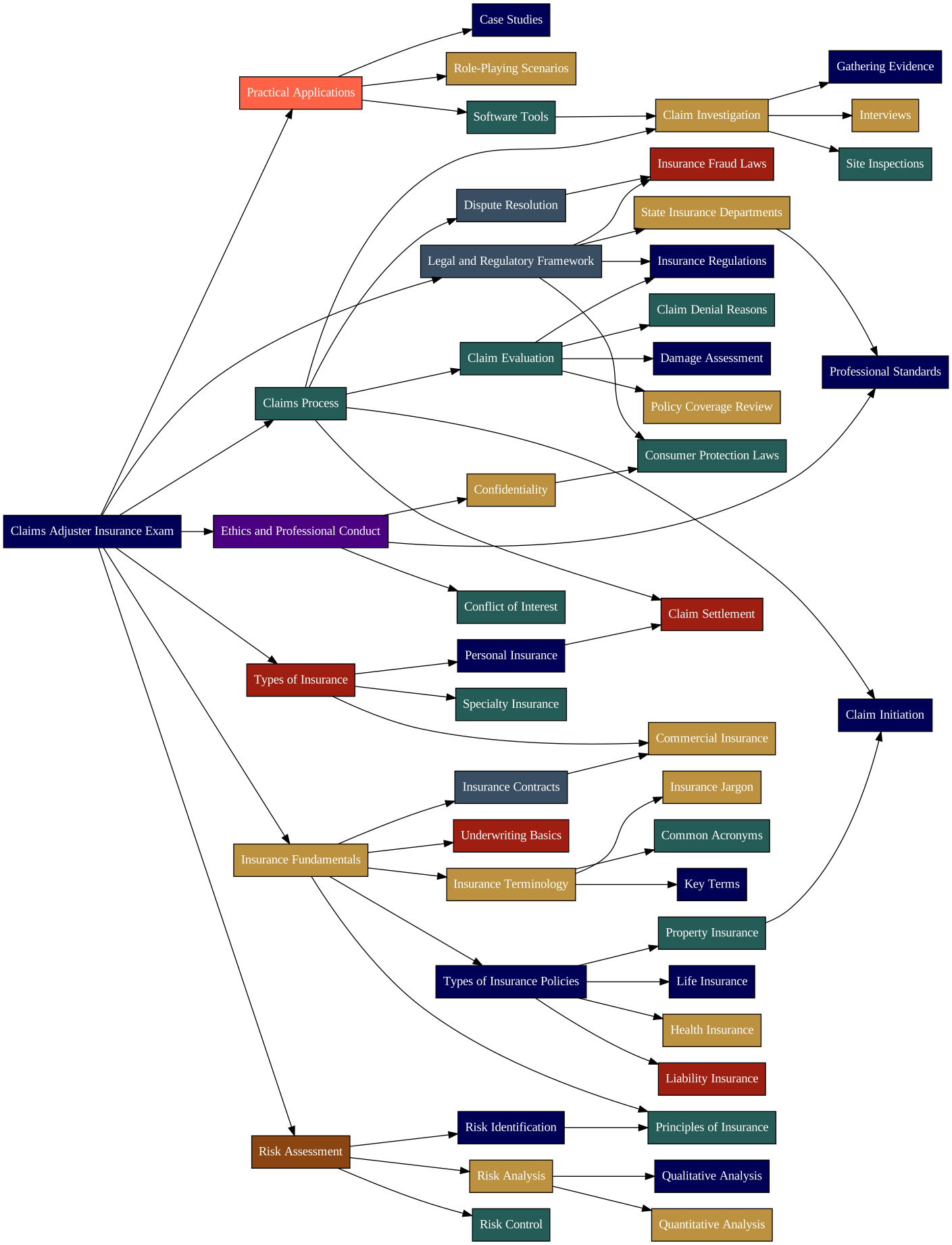
Quiz-summary
0 of 30 questions completed
Questions:
- 1
- 2
- 3
- 4
- 5
- 6
- 7
- 8
- 9
- 10
- 11
- 12
- 13
- 14
- 15
- 16
- 17
- 18
- 19
- 20
- 21
- 22
- 23
- 24
- 25
- 26
- 27
- 28
- 29
- 30
Information
Premium Practice Questions
You have already completed the quiz before. Hence you can not start it again.
Quiz is loading...
You must sign in or sign up to start the quiz.
You have to finish following quiz, to start this quiz:
Results
0 of 30 questions answered correctly
Your time:
Time has elapsed
You have reached 0 of 0 points, (0)
Categories
- Not categorized 0%
- 1
- 2
- 3
- 4
- 5
- 6
- 7
- 8
- 9
- 10
- 11
- 12
- 13
- 14
- 15
- 16
- 17
- 18
- 19
- 20
- 21
- 22
- 23
- 24
- 25
- 26
- 27
- 28
- 29
- 30
- Answered
- Review
-
Question 1 of 30
1. Question
When you are faced with a surge in suspicious claims in Texas, it becomes essential to implement effective fraud detection methods. What approach should your organization prioritize to identify potential fraudulent activities? Consider the current technology landscape and the tools available for analysis. You might explore various strategies such as data analytics, claimant interviews, or automated fraud detection systems. How can these methods be applied together to ensure a comprehensive assessment of claims? What specific methodologies should be deployed to enhance the accuracy of identifying fraud, especially in a market where fraudulent activities are becoming increasingly sophisticated?
Correct
Fraud detection in property and casualty insurance is crucial for maintaining the integrity of the insurance market. Various methods and tools are employed to identify potential fraudulent activities. One of the most effective tools is data analytics, which can sift through vast amounts of information and highlight anomalies indicative of fraud. For instance, predictive modeling can analyze historical data to spot patterns that precede fraudulent claims, while machine learning algorithms improve upon these models over time. Additionally, social media monitoring and external databases play a significant role in confirming the authenticity of claims by cross-referencing claimants’ information. Investigative techniques, including surveillance and interviews, are also employed but are often used as a secondary step when fraud is suspected based on the initial assessment. Understanding how these tools can be combined helps insurance professionals develop robust fraud detection systems, enhancing both compliance with Texas Insurance Code regulations and overall operational efficiency in the sector.
Incorrect
Fraud detection in property and casualty insurance is crucial for maintaining the integrity of the insurance market. Various methods and tools are employed to identify potential fraudulent activities. One of the most effective tools is data analytics, which can sift through vast amounts of information and highlight anomalies indicative of fraud. For instance, predictive modeling can analyze historical data to spot patterns that precede fraudulent claims, while machine learning algorithms improve upon these models over time. Additionally, social media monitoring and external databases play a significant role in confirming the authenticity of claims by cross-referencing claimants’ information. Investigative techniques, including surveillance and interviews, are also employed but are often used as a secondary step when fraud is suspected based on the initial assessment. Understanding how these tools can be combined helps insurance professionals develop robust fraud detection systems, enhancing both compliance with Texas Insurance Code regulations and overall operational efficiency in the sector.
-
Question 2 of 30
2. Question
Consider a scenario where a Texas homeowner discovers that their property has been severely damaged due to a flood. Upon reviewing their insurance policy, they find that claims for water damage are denied. This situation raises an important question about the nature of exclusions in property insurance. Specifically, which of the following best describes the role of exclusions in property insurance policies in Texas, particularly regarding natural disasters and maintenance issues?
Correct
Exclusions and limitations in property insurance policies are critical components that define the scope of coverage provided to policyholders in Texas. These exclusions delineate what is not covered under a policy and can significantly impact a claimant’s ability to receive compensation for losses. Common exclusions include events like flooding, earthquakes, and wear and tear, which are outside the standard coverage of most homeowners’ insurance policies. Insurers include these provisions to manage risk more effectively and to keep premiums at reasonable levels, as including coverage for high-risk events would lead to increased costs for all policyholders. Additionally, certain types of property, such as collectibles or personal items of high value, may have limitations or require additional endorsements for full coverage. Understanding these exclusions and limitations is vital for both agents advising clients and for policyholders who must be aware of their coverage gaps. Recognizing these nuances aids in making informed decisions about obtaining supplemental coverage or adjusting policies to suit individual risk profiles.
Incorrect
Exclusions and limitations in property insurance policies are critical components that define the scope of coverage provided to policyholders in Texas. These exclusions delineate what is not covered under a policy and can significantly impact a claimant’s ability to receive compensation for losses. Common exclusions include events like flooding, earthquakes, and wear and tear, which are outside the standard coverage of most homeowners’ insurance policies. Insurers include these provisions to manage risk more effectively and to keep premiums at reasonable levels, as including coverage for high-risk events would lead to increased costs for all policyholders. Additionally, certain types of property, such as collectibles or personal items of high value, may have limitations or require additional endorsements for full coverage. Understanding these exclusions and limitations is vital for both agents advising clients and for policyholders who must be aware of their coverage gaps. Recognizing these nuances aids in making informed decisions about obtaining supplemental coverage or adjusting policies to suit individual risk profiles.
-
Question 3 of 30
3. Question
In the context of Texas property and casualty insurance, how should insurers incorporate sustainability and environmental considerations into their risk assessment processes? Given the state’s vulnerability to natural disasters and changing regulations, it is crucial for insurers to evaluate not just the financial risks but also the environmental impacts that may affect property values and insurance liabilities. What strategies can they implement to effectively address these considerations while maintaining compliance with Texas insurance laws and ethical guidelines?
Correct
In the context of property and casualty insurance, sustainability and environmental considerations have become increasingly relevant due to changing regulations and the growing awareness of environmental impacts on insurance risks. Insurers are now expected to assess and manage risks not only from a financial outlook but also through an environmental lens. This shift is driven by both ethical considerations and regulatory frameworks that are emerging in the United States, including Texas. The state’s growing concern over natural disasters, climate change, and resource management compels insurers to incorporate sustainability into their risk assessments. This involves evaluating how environmental factors such as pollution, climate-related events, and resource depletion affect property values and overall insurance risk. By adopting sustainable practices—such as promoting energy-efficient homes or underwriting policies that incentivize environmentally friendly business practices—insurers can mitigate risks, reduce potential liabilities, and appeal to environmentally conscious consumers. Effective communication about these practices is crucial for transparency and maintaining ethical standards in the industry, as well as ensuring customers are aware of the benefits of sustainability in their coverage options.
Incorrect
In the context of property and casualty insurance, sustainability and environmental considerations have become increasingly relevant due to changing regulations and the growing awareness of environmental impacts on insurance risks. Insurers are now expected to assess and manage risks not only from a financial outlook but also through an environmental lens. This shift is driven by both ethical considerations and regulatory frameworks that are emerging in the United States, including Texas. The state’s growing concern over natural disasters, climate change, and resource management compels insurers to incorporate sustainability into their risk assessments. This involves evaluating how environmental factors such as pollution, climate-related events, and resource depletion affect property values and overall insurance risk. By adopting sustainable practices—such as promoting energy-efficient homes or underwriting policies that incentivize environmentally friendly business practices—insurers can mitigate risks, reduce potential liabilities, and appeal to environmentally conscious consumers. Effective communication about these practices is crucial for transparency and maintaining ethical standards in the industry, as well as ensuring customers are aware of the benefits of sustainability in their coverage options.
-
Question 4 of 30
4. Question
When analyzing the functions of the insurance ombudsman and the role of consumer advocacy groups in Texas, how do these entities contribute to consumer protection and the overall effectiveness of the insurance industry? Consider the implications of their activities on consumer trust, conflict resolution, and legislative advocacy. Which of the following statements best captures the essence of their contributions in the context of property and casualty insurance within Texas?
Correct
The role of the insurance ombudsman and consumer advocacy groups in Texas property and casualty insurance is vital in ensuring transparency and fairness within the insurance marketplace. The ombudsman serves as an independent, impartial entity that helps consumers navigate disputes with insurance companies, providing guidance and assistance in filing claims or appealing decisions. This process is especially crucial as it enhances consumer protection by mediating conflicts that may arise due to claims handling practices or policy interpretations. Consumer advocacy groups play a complementary role by educating consumers about their rights, promoting awareness of insurance products and services, and lobbying for fair regulations and practices within the insurance industry. They empower consumers to make informed decisions by providing resources that detail policy options, coverage limitations, and claims procedures. In Texas, these groups are instrumental in advocating for legislative changes that benefit consumers, ensuring their voices are heard in the policymaking process. The collaborative efforts of the ombudsman and consumer advocacy organizations ultimately serve to enhance consumer confidence and promote ethical practices among insurers, leading to a more equitable insurance market.
Incorrect
The role of the insurance ombudsman and consumer advocacy groups in Texas property and casualty insurance is vital in ensuring transparency and fairness within the insurance marketplace. The ombudsman serves as an independent, impartial entity that helps consumers navigate disputes with insurance companies, providing guidance and assistance in filing claims or appealing decisions. This process is especially crucial as it enhances consumer protection by mediating conflicts that may arise due to claims handling practices or policy interpretations. Consumer advocacy groups play a complementary role by educating consumers about their rights, promoting awareness of insurance products and services, and lobbying for fair regulations and practices within the insurance industry. They empower consumers to make informed decisions by providing resources that detail policy options, coverage limitations, and claims procedures. In Texas, these groups are instrumental in advocating for legislative changes that benefit consumers, ensuring their voices are heard in the policymaking process. The collaborative efforts of the ombudsman and consumer advocacy organizations ultimately serve to enhance consumer confidence and promote ethical practices among insurers, leading to a more equitable insurance market.
-
Question 5 of 30
5. Question
When you are faced with evaluating the pricing strategy of an insurance policy in Texas, what key elements must be taken into account to ensure that the pricing not only reflects the risks associated with underwriting the policy but also remains competitive in the market? Specifically, consider how risk assessment, loss history, and market competition interplay to influence the premiums set by insurance providers. This understanding is vital when developing strategies for pricing that align with regulatory requirements and consumer expectations within the state.
Correct
Insurance pricing within the Texas Property and Casualty Insurance market is heavily influenced by various interrelated factors, namely risk assessment, loss history, and market competition. Risk assessment refers to the process of evaluating the likelihood of a policyholder making a claim based on their individual characteristics, such as driving history for auto insurance or the condition of a property for homeowners insurance. Insurers analyze this data to determine the level of risk associated with each client, which subsequently informs the premiums charged. Loss history is also critical, as previous claims can signal potential future risk; a policyholder with a history of frequent claims may be deemed a higher risk, leading to higher premiums. Market competition further impacts pricing strategies; insurers must remain competitive while also factoring in their risk assessments and loss histories. In a saturated market, companies might lower rates to attract new customers, creating a balance between affordability and sufficient coverage. Therefore, understanding these dynamics is essential for professionals in the insurance industry.
Incorrect
Insurance pricing within the Texas Property and Casualty Insurance market is heavily influenced by various interrelated factors, namely risk assessment, loss history, and market competition. Risk assessment refers to the process of evaluating the likelihood of a policyholder making a claim based on their individual characteristics, such as driving history for auto insurance or the condition of a property for homeowners insurance. Insurers analyze this data to determine the level of risk associated with each client, which subsequently informs the premiums charged. Loss history is also critical, as previous claims can signal potential future risk; a policyholder with a history of frequent claims may be deemed a higher risk, leading to higher premiums. Market competition further impacts pricing strategies; insurers must remain competitive while also factoring in their risk assessments and loss histories. In a saturated market, companies might lower rates to attract new customers, creating a balance between affordability and sufficient coverage. Therefore, understanding these dynamics is essential for professionals in the insurance industry.
-
Question 6 of 30
6. Question
Consider a scenario where an insurance company in Texas is evaluating its exposure to significant weather-related claims. The company has seen an uptick in catastrophic events, which has increased its potential liabilities. To manage these risks effectively, the company is contemplating entering into a reinsurance agreement. In this context, how does reinsurance impact the company’s risk management strategies and capital requirements?
Correct
Reinsurance plays a crucial role in risk management for insurance companies by allowing them to transfer portions of risk to other insurers, thus relieving some of the financial burden associated with potential large losses. This practice is particularly vital in Texas, where natural disasters and severe weather events can lead to catastrophic claims. By engaging in reinsurance, an insurer can maintain its capital requirements more efficiently; it reduces the amount of capital that must be reserved to cover potential claims, as the reinsurance partner shares in the risk. This not only helps stabilize the insurer’s financial position but also enhances its capacity to write more business, as it can safely take on additional risks without exceeding regulatory capital thresholds. Moreover, the reinsurance process enables companies to achieve greater leverage, allowing them to optimize their balance sheets. However, while reinsurance provides significant advantages, it also introduces complexities such as counterparty risk, where the reliability of the reinsurer becomes a factor in the primary insurer’s risk management strategy. Therefore, understanding the nuances of reinsurance is essential for effective capital management and risk assessment, especially for insurers operating in volatile environments like Texas.
Incorrect
Reinsurance plays a crucial role in risk management for insurance companies by allowing them to transfer portions of risk to other insurers, thus relieving some of the financial burden associated with potential large losses. This practice is particularly vital in Texas, where natural disasters and severe weather events can lead to catastrophic claims. By engaging in reinsurance, an insurer can maintain its capital requirements more efficiently; it reduces the amount of capital that must be reserved to cover potential claims, as the reinsurance partner shares in the risk. This not only helps stabilize the insurer’s financial position but also enhances its capacity to write more business, as it can safely take on additional risks without exceeding regulatory capital thresholds. Moreover, the reinsurance process enables companies to achieve greater leverage, allowing them to optimize their balance sheets. However, while reinsurance provides significant advantages, it also introduces complexities such as counterparty risk, where the reliability of the reinsurer becomes a factor in the primary insurer’s risk management strategy. Therefore, understanding the nuances of reinsurance is essential for effective capital management and risk assessment, especially for insurers operating in volatile environments like Texas.
-
Question 7 of 30
7. Question
Consider a scenario where an insurance agent in Texas discovers that a client has submitted a claim for damages that were significantly exaggerated compared to what actually occurred. The agent is aware that the client has a history of similar behavior in past claims with other insurers. In this situation, what is the most appropriate course of action for the agent to take, considering the potential legal implications and consequences of insurance fraud under Texas law?
Correct
Insurance fraud is a serious offense in Texas that can lead to severe penalties for both the person committing the fraud and the insurance company involved. Under Texas law, insurance fraud occurs when an individual knowingly submits false information or intentionally fails to disclose pertinent details in order to gain a benefit from an insurance policy. The legal implications of committing insurance fraud can include criminal charges, civil penalties, and the possibility of incarceration. Additionally, victims of insurance fraud may face higher premiums, as the costs associated with fraudulent claims are typically passed on to policyholders. It is essential for insurance professionals to understand the various types of fraud, including staged accidents, inflated claims, and misrepresentation of facts, as well as the methods required to investigate potential fraud. The Texas Department of Insurance emphasizes the importance of reporting suspected fraud and has established frameworks to encourage the retaliation of fraudulent activities. Furthermore, those found guilty of fraud can face long-term consequences, including a damaged reputation and difficulty in obtaining insurance in the future.
Incorrect
Insurance fraud is a serious offense in Texas that can lead to severe penalties for both the person committing the fraud and the insurance company involved. Under Texas law, insurance fraud occurs when an individual knowingly submits false information or intentionally fails to disclose pertinent details in order to gain a benefit from an insurance policy. The legal implications of committing insurance fraud can include criminal charges, civil penalties, and the possibility of incarceration. Additionally, victims of insurance fraud may face higher premiums, as the costs associated with fraudulent claims are typically passed on to policyholders. It is essential for insurance professionals to understand the various types of fraud, including staged accidents, inflated claims, and misrepresentation of facts, as well as the methods required to investigate potential fraud. The Texas Department of Insurance emphasizes the importance of reporting suspected fraud and has established frameworks to encourage the retaliation of fraudulent activities. Furthermore, those found guilty of fraud can face long-term consequences, including a damaged reputation and difficulty in obtaining insurance in the future.
-
Question 8 of 30
8. Question
When you are faced with the challenge of creating a marketing strategy for property and casualty insurance products in Texas, it’s essential to navigate the complex landscape of regulations and ethical considerations. To effectively develop such a strategy, which key principle should you prioritize in your approach? This principle not only guides the integrity of your marketing materials but also aligns with the legal framework established by the Texas Department of Insurance. By adhering to this principle, you can ensure that your marketing practices resonate well with consumers while remaining compliant with state regulations. Consider how this principle impacts transparency in your communication, the accuracy of your representations, and the overall trustworthiness of your organization in the eyes of potential clients.
Correct
In Texas, developing a marketing strategy for property and casualty insurance products requires careful consideration of applicable regulations and ethical guidelines. The Texas Department of Insurance (TDI) enforces strict rules to ensure that marketing practices are transparent and do not mislead consumers. Importantly, insurance marketers must avoid deceptive practices, such as misrepresenting the benefits of coverage or the terms of a policy. Additionally, ethical conduct mandates that insurers maintain accurate records of advertising expenditures and provide clear disclosures to potential clients about policy terms and limitations. Utilizing a customer-focused approach in marketing, including thorough market research and feedback mechanisms, is crucial. This ensures that the products developed meet the actual needs and preferences of the target market while adhering to legal standards. By emphasizing transparency, ethical practices, and regulatory compliance, insurers can enhance their reputation and build consumer trust, which ultimately drives successful product development and marketing in the competitive Texas insurance landscape.
Incorrect
In Texas, developing a marketing strategy for property and casualty insurance products requires careful consideration of applicable regulations and ethical guidelines. The Texas Department of Insurance (TDI) enforces strict rules to ensure that marketing practices are transparent and do not mislead consumers. Importantly, insurance marketers must avoid deceptive practices, such as misrepresenting the benefits of coverage or the terms of a policy. Additionally, ethical conduct mandates that insurers maintain accurate records of advertising expenditures and provide clear disclosures to potential clients about policy terms and limitations. Utilizing a customer-focused approach in marketing, including thorough market research and feedback mechanisms, is crucial. This ensures that the products developed meet the actual needs and preferences of the target market while adhering to legal standards. By emphasizing transparency, ethical practices, and regulatory compliance, insurers can enhance their reputation and build consumer trust, which ultimately drives successful product development and marketing in the competitive Texas insurance landscape.
-
Question 9 of 30
9. Question
During a risk assessment for your small business client in Texas, you realize they are considering a Business Owners Policy (BOP) as their primary coverage. What critical factors should you emphasize about the BOP, especially concerning coverage exclusions and limitations, to ensure they fully understand its applicability to their business operations? Discuss how these considerations might affect their decision and overall risk management strategy.
Correct
A Business Owners Policy (BOP) is designed to combine various types of coverage needed by small to medium-sized businesses into a single policy. This typically includes coverage for property and liability, making it a streamlined and cost-effective solution for business owners. In Texas, a BOP often covers business personal property, loss of income, and liability protection, among other features. It’s essential for business owners to understand that not all risks are automatically included. For instance, certain types of businesses, such as those involved in high-risk activities or certain service industries, may require additional coverage not provided in standard BOPs. Additionally, businesses in Texas must consider specific state regulations and endorsements that might apply, ensuring that the policy aligns with local legal requirements and business needs. Understanding the scope and limitations of a BOP is crucial for compliance and adequate risk management, allowing businesses to mitigate potential financial losses effectively.
Incorrect
A Business Owners Policy (BOP) is designed to combine various types of coverage needed by small to medium-sized businesses into a single policy. This typically includes coverage for property and liability, making it a streamlined and cost-effective solution for business owners. In Texas, a BOP often covers business personal property, loss of income, and liability protection, among other features. It’s essential for business owners to understand that not all risks are automatically included. For instance, certain types of businesses, such as those involved in high-risk activities or certain service industries, may require additional coverage not provided in standard BOPs. Additionally, businesses in Texas must consider specific state regulations and endorsements that might apply, ensuring that the policy aligns with local legal requirements and business needs. Understanding the scope and limitations of a BOP is crucial for compliance and adequate risk management, allowing businesses to mitigate potential financial losses effectively.
-
Question 10 of 30
10. Question
During a complex property insurance claim dispute in Texas, the insured is frustrated with the delay and lack of communication from the insurance company. To achieve a resolution that is satisfactory for both parties, which approach would represent the best practice for resolving disputes in this scenario? Consider the implications of effective communication strategies, documentation accuracy, and adherence to legal frameworks specific to Texas insurance regulations.
Correct
When addressing disputes in insurance claims, effective communication and understanding of the claims process are vital for resolution. The first step is to encourage open dialogue between the insured and the insurer. Establishing a clear line of communication helps to clarify misunderstandings and misinterpretations. Another best practice is to ensure that all documentation related to the claim is complete and accurate. This may include policy details, prior communications, and any supporting evidence for the claim. In Texas, understanding the regulatory framework, such as the Texas Department of Insurance regulations, helps agents and adjusters guide clients through this process effectively. Furthermore, mediation can be a useful method for resolving disputes without escalating them to litigation, which is often costly and time-consuming. By taking proactive steps to facilitate discussion and ensure transparency in the claims process, both parties can work toward a satisfactory resolution that aligns with state laws and the principles of fair dealing and good faith.
Incorrect
When addressing disputes in insurance claims, effective communication and understanding of the claims process are vital for resolution. The first step is to encourage open dialogue between the insured and the insurer. Establishing a clear line of communication helps to clarify misunderstandings and misinterpretations. Another best practice is to ensure that all documentation related to the claim is complete and accurate. This may include policy details, prior communications, and any supporting evidence for the claim. In Texas, understanding the regulatory framework, such as the Texas Department of Insurance regulations, helps agents and adjusters guide clients through this process effectively. Furthermore, mediation can be a useful method for resolving disputes without escalating them to litigation, which is often costly and time-consuming. By taking proactive steps to facilitate discussion and ensure transparency in the claims process, both parties can work toward a satisfactory resolution that aligns with state laws and the principles of fair dealing and good faith.
-
Question 11 of 30
11. Question
A business owner in Texas is reassessing their insurance coverage after experiencing a significant operational downtime due to a fire that damaged their premises. In their review, they want to ensure that not only their physical assets are covered but also that they can sustain their income during rebuilding efforts. This raises a question about the interplay between the various types of insurance coverage available. What component of their insurance policy should the business owner primarily focus on to protect against income loss during this downtime caused by the fire while ensuring complete protection of their assets as well?
Correct
Property insurance provides coverage for physical damage to property, while liability insurance protects against claims for damages to others or their property. Understanding the interrelationship between these two coverage components is vital for effective risk management. In Texas, property insurance can cover structures (like buildings), personal property, and loss of income due to business interruption. Business interruption insurance specifically helps compensate for income lost during periods of operational downtime due to an insured peril, such as fire or natural disasters. On the other hand, liability insurance is essential for covering potential legal expenses and settlements that may arise from claims of negligence or accidents occurring on an insured’s premises or as a result of their business operations. Clients must grasp how these components work together to adequately protect their interests. Clear distinctions between property, liability, and business interruption coverage help configure an insurance policy that addresses all potential risks while ensuring compliance with Texas regulations and the ethical obligations of insurance professionals.
Incorrect
Property insurance provides coverage for physical damage to property, while liability insurance protects against claims for damages to others or their property. Understanding the interrelationship between these two coverage components is vital for effective risk management. In Texas, property insurance can cover structures (like buildings), personal property, and loss of income due to business interruption. Business interruption insurance specifically helps compensate for income lost during periods of operational downtime due to an insured peril, such as fire or natural disasters. On the other hand, liability insurance is essential for covering potential legal expenses and settlements that may arise from claims of negligence or accidents occurring on an insured’s premises or as a result of their business operations. Clients must grasp how these components work together to adequately protect their interests. Clear distinctions between property, liability, and business interruption coverage help configure an insurance policy that addresses all potential risks while ensuring compliance with Texas regulations and the ethical obligations of insurance professionals.
-
Question 12 of 30
12. Question
In the state of Texas, a significant number of regulations govern the insurance industry, including the requirements for obtaining an insurance license. As an aspiring insurance agent, you are required to fulfill certain prerequisites before being eligible to sell insurance products. Which of the following statements best encapsulates the essential regulations regarding licensing in the Texas insurance market? Consider the implications of these regulations on both consumer protection and the overall stability of the insurance industry.
Correct
In Texas, insurance laws and regulations are designed to protect consumers, ensure the solvency of insurance companies, and establish licensing requirements for agents and insurers. The Texas Department of Insurance (TDI) supervises the insurance industry to ensure compliance with these laws. One important regulation is the requirement for insurance agents to obtain a license before they can legally sell insurance policies. This licensing process includes meeting educational requirements, passing examinations, and undergoing a background check to ensure the agent’s fitness for the role. Solvency is also crucial; insurers must maintain adequate financial reserves to pay claims, which protects consumers from the risk of insurer insolvency. Additionally, various consumer protection laws are enacted to safeguard policyholders’ rights, ensuring transparent communication regarding policy terms, premium adjustments, and claims processes. Understanding these regulations is essential for anyone seeking to work in the insurance industry in Texas, as they not only promote ethical practices but also enhance consumer trust and stability within the market.
Incorrect
In Texas, insurance laws and regulations are designed to protect consumers, ensure the solvency of insurance companies, and establish licensing requirements for agents and insurers. The Texas Department of Insurance (TDI) supervises the insurance industry to ensure compliance with these laws. One important regulation is the requirement for insurance agents to obtain a license before they can legally sell insurance policies. This licensing process includes meeting educational requirements, passing examinations, and undergoing a background check to ensure the agent’s fitness for the role. Solvency is also crucial; insurers must maintain adequate financial reserves to pay claims, which protects consumers from the risk of insurer insolvency. Additionally, various consumer protection laws are enacted to safeguard policyholders’ rights, ensuring transparent communication regarding policy terms, premium adjustments, and claims processes. Understanding these regulations is essential for anyone seeking to work in the insurance industry in Texas, as they not only promote ethical practices but also enhance consumer trust and stability within the market.
-
Question 13 of 30
13. Question
Consider a scenario where a Texas-based contractor is repairing a hotel roof and inadvertently causes structural damage that leads to a tenant’s injuries. The contractor is insured under a general liability policy. If the injured tenant files a lawsuit claiming negligence on the part of the contractor, what is the most likely outcome regarding the contractor’s liability insurance coverage? How would the principles of liability insurance, particularly concerning duty to defend and negligence, come into play in this situation?
Correct
Liability insurance is designed to protect individuals and entities from the financial repercussions of lawsuits or claims made against them for negligence or misconduct. A critical concept in liability insurance within Texas is the principle of “negligence,” which involves failing to take reasonable care to prevent harm to others. When evaluating liability insurance policies, it is essential to understand how coverage applies in various scenarios, including both personal and commercial contexts. The duty to defend is a key component, whereby the insurer is obligated to provide a legal defense and cover costs up to the policy limits when a covered claim is made. This is particularly important in Texas, where legal standards and interpretations may vary. For instance, Texas follows a “modified comparative negligence” rule, which can affect the outcome of claims and the extent of liability insurance coverage. Thus, understanding how these principles interplay in real-world situations enables stakeholders to better navigate liability claims, assess risks, and ensure adequate coverage, ultimately safeguarding their financial interests.
Incorrect
Liability insurance is designed to protect individuals and entities from the financial repercussions of lawsuits or claims made against them for negligence or misconduct. A critical concept in liability insurance within Texas is the principle of “negligence,” which involves failing to take reasonable care to prevent harm to others. When evaluating liability insurance policies, it is essential to understand how coverage applies in various scenarios, including both personal and commercial contexts. The duty to defend is a key component, whereby the insurer is obligated to provide a legal defense and cover costs up to the policy limits when a covered claim is made. This is particularly important in Texas, where legal standards and interpretations may vary. For instance, Texas follows a “modified comparative negligence” rule, which can affect the outcome of claims and the extent of liability insurance coverage. Thus, understanding how these principles interplay in real-world situations enables stakeholders to better navigate liability claims, assess risks, and ensure adequate coverage, ultimately safeguarding their financial interests.
-
Question 14 of 30
14. Question
You are reviewing the insurance policy of a Texas-based construction company that has recently faced multiple claims under its general liability policy. The policy includes both per occurrence and aggregate coverage limits. As you analyze this information, it is essential to clarify how these limits function, particularly regarding potential defense costs. If the policy has a $1 million limit per occurrence and a $2 million aggregate limit, what implications does this have for the company should multiple claims arise in one policy period? Understanding these limits will help in strategizing future coverage options and risk assessments.
Correct
Coverage limits play a crucial role in property and casualty insurance, particularly concerning how claims are handled and how much the insurer will pay. Within this context, “per occurrence” limits apply to each individual loss event, meaning that the insurer will pay up to a specific amount for each incident. This is essential for policyholders to understand, as different incidents can incur different costs, and knowing the limit helps in evaluating the adequacy of coverage. On the other hand, “aggregate” limits refer to the total amount an insurer will pay for all claims during a policy period. This is particularly pertinent for businesses that may face numerous claims over time, ensuring that they have a clear understanding of when they might exhaust their coverage limits. Additionally, defense costs can often be subject to both per occurrence and aggregate limits, which means a policy may cover legal expenses up to a point for each claim and a total amount over the policy period. Understanding these concepts helps policyholders make informed decisions when selecting coverage and aid insurance professionals in advising clients on risk management effectively.
Incorrect
Coverage limits play a crucial role in property and casualty insurance, particularly concerning how claims are handled and how much the insurer will pay. Within this context, “per occurrence” limits apply to each individual loss event, meaning that the insurer will pay up to a specific amount for each incident. This is essential for policyholders to understand, as different incidents can incur different costs, and knowing the limit helps in evaluating the adequacy of coverage. On the other hand, “aggregate” limits refer to the total amount an insurer will pay for all claims during a policy period. This is particularly pertinent for businesses that may face numerous claims over time, ensuring that they have a clear understanding of when they might exhaust their coverage limits. Additionally, defense costs can often be subject to both per occurrence and aggregate limits, which means a policy may cover legal expenses up to a point for each claim and a total amount over the policy period. Understanding these concepts helps policyholders make informed decisions when selecting coverage and aid insurance professionals in advising clients on risk management effectively.
-
Question 15 of 30
15. Question
When you are faced with determining the essential elements of an insurance contract in Texas, what would you identify as the most critical feature that ensures the validity of the agreement? It is important to consider how each element, such as offer, acceptance, and mutual consent, works together to form a binding contract. Furthermore, how does the specific regulatory environment in Texas affect these elements? Understanding not only the basic components of a contract but also the legal expectations set forth in state law can provide significant insights into the creation and enforcement of insurance agreements. This clarity is essential for both assessing coverage and addressing potential disputes that may arise during the life of an insurance policy.
Correct
Understanding the essential elements of an insurance contract is vital for both consumers and insurance professionals, particularly in Texas where specific regulations govern these agreements. An insurance contract is fundamentally a legally binding agreement between the insurer and the insured, which typically includes several critical components: an offer, acceptance, consideration, and mutual assent. First, the offer is initiated by the insured seeking coverage for specific risks, and acceptance occurs when the insurer agrees to provide that coverage, often manifesting in the issuance of a policy. Consideration refers to the value exchanged within the contract, usually in the form of premiums paid by the insured and the promise of the insurer to pay claims. Mutual assent indicates that both parties understand and agree to the terms of the contract, establishing a foundation for the relationship. Additionally, Texas law mandates that all insurance contracts disclose material facts and terms clearly to avoid misrepresentation, thereby ensuring the contract’s enforceability. Recognizing that these elements must be present and interrelated allows for a better assessment of policy validity and the responsibilities entailed.
Incorrect
Understanding the essential elements of an insurance contract is vital for both consumers and insurance professionals, particularly in Texas where specific regulations govern these agreements. An insurance contract is fundamentally a legally binding agreement between the insurer and the insured, which typically includes several critical components: an offer, acceptance, consideration, and mutual assent. First, the offer is initiated by the insured seeking coverage for specific risks, and acceptance occurs when the insurer agrees to provide that coverage, often manifesting in the issuance of a policy. Consideration refers to the value exchanged within the contract, usually in the form of premiums paid by the insured and the promise of the insurer to pay claims. Mutual assent indicates that both parties understand and agree to the terms of the contract, establishing a foundation for the relationship. Additionally, Texas law mandates that all insurance contracts disclose material facts and terms clearly to avoid misrepresentation, thereby ensuring the contract’s enforceability. Recognizing that these elements must be present and interrelated allows for a better assessment of policy validity and the responsibilities entailed.
-
Question 16 of 30
16. Question
During a review of insurance policies for a client who is considering purchasing a new home in Texas, you encounter various types of property insurance. Your client expresses confusion about the differences between homeowners insurance, renters insurance, and commercial property insurance. How would you explain which type of insurance provides the most comprehensive coverage for a homeowner and what distinguishes it from the other types? It is crucial to clarify the specific features that make homeowners insurance uniquely suited for individuals who own their property compared to those who rent or operate a business.
Correct
Homeowners insurance is a multifaceted policy that provides coverage not just for the dwelling itself, but also for personal property, liability, and additional living expenses in case the home is uninhabitable due to a covered loss. In Texas, homeowners insurance typically includes various endorsements that can further customize coverage, such as protection against natural disasters like floods or hurricanes. Renters insurance, however, primarily focuses on protecting personal belongings within a rented space, without covering the physical structure itself, which is the landlord’s responsibility. On the other hand, commercial property insurance is designed for businesses and covers a wide array of potential risks, including damage to buildings, equipment, inventory, and loss of income due to business interruption. Understanding these key differences is essential for making informed decisions about the appropriate type of insurance coverage needed based on one’s living or business situation. Therefore, while homeowners insurance provides a comprehensive approach to residential risk, renters insurance is more limited, and commercial property insurance addresses business-related exposures.
Incorrect
Homeowners insurance is a multifaceted policy that provides coverage not just for the dwelling itself, but also for personal property, liability, and additional living expenses in case the home is uninhabitable due to a covered loss. In Texas, homeowners insurance typically includes various endorsements that can further customize coverage, such as protection against natural disasters like floods or hurricanes. Renters insurance, however, primarily focuses on protecting personal belongings within a rented space, without covering the physical structure itself, which is the landlord’s responsibility. On the other hand, commercial property insurance is designed for businesses and covers a wide array of potential risks, including damage to buildings, equipment, inventory, and loss of income due to business interruption. Understanding these key differences is essential for making informed decisions about the appropriate type of insurance coverage needed based on one’s living or business situation. Therefore, while homeowners insurance provides a comprehensive approach to residential risk, renters insurance is more limited, and commercial property insurance addresses business-related exposures.
-
Question 17 of 30
17. Question
In the context of Texas insurance regulations, how is the principle of disclosure critical to ensuring that policyholders fully understand their insurance policies? Consider a scenario where a policyholder discovers that their homeowners’ insurance policy excludes certain types of water damage that they assumed were covered. Analyze the implications of this lack of disclosure and how it might affect the relationship between the insurer and the insured, particularly concerning consumer rights and regulatory compliance.
Correct
In Texas, the Texas Insurance Code mandates that insurance companies and agents provide clear and accurate information regarding policy terms and conditions to consumers. This requirement emphasizes the principles of disclosure and transparency, ensuring that policyholders understand the limits, coverages, and exclusions of their insurance products. For instance, an insurer must inform the policyholder of any material changes to the policy during its term, which includes modifications in coverage or changes in deductibles. Failure to adequately disclose such information may lead to claims denial or disputes between insurers and policyholders. Additionally, agents must provide a clear summary of the policy benefits and obligations to ensure that customers have all the necessary information before making an informed decision. Transparency in insurance practices not only fosters trust between insurance companies and consumers but also enhances the overall functioning of the insurance market in Texas. Adhering to these disclosure requirements helps prevent misunderstandings and promotes ethical conduct within the industry.
Incorrect
In Texas, the Texas Insurance Code mandates that insurance companies and agents provide clear and accurate information regarding policy terms and conditions to consumers. This requirement emphasizes the principles of disclosure and transparency, ensuring that policyholders understand the limits, coverages, and exclusions of their insurance products. For instance, an insurer must inform the policyholder of any material changes to the policy during its term, which includes modifications in coverage or changes in deductibles. Failure to adequately disclose such information may lead to claims denial or disputes between insurers and policyholders. Additionally, agents must provide a clear summary of the policy benefits and obligations to ensure that customers have all the necessary information before making an informed decision. Transparency in insurance practices not only fosters trust between insurance companies and consumers but also enhances the overall functioning of the insurance market in Texas. Adhering to these disclosure requirements helps prevent misunderstandings and promotes ethical conduct within the industry.
-
Question 18 of 30
18. Question
When analyzing a client’s insurance needs, it is important to distinguish between property and casualty insurance products. In Texas, property insurance typically provides coverage for physical assets such as homes and personal belongings, mitigating the financial impact of unforeseen events. In contrast, casualty insurance primarily deals with legal liabilities arising from accidents or damages caused to others. Given this context, how would you best describe the primary distinction and purpose of property insurance as it relates to a Texas homeowner’s policy, especially in terms of protecting financial interests and responsibilities?
Correct
Understanding the key property and casualty insurance products is essential for anyone preparing for the Texas Property and Casualty Insurance Exam. Property insurance primarily protects homeowners and businesses from financial loss due to damage to their property. This includes coverage for dwelling, personal property, and liability in cases of accidents involving the insured’s property. Casualty insurance, on the other hand, covers loss or damage caused by the insured, providing protection against lawsuits resulting from bodily injury or property damage to others. In Texas, these insurance products must comply with state regulations, including the Texas Insurance Code, which mandates certain minimum coverages and outlines consumer rights. The interplay between property and casualty coverages often means that policies can be bundled for efficiency and cost-effectiveness, such as in a homeowner’s policy that includes liability protection. Recognizing the distinctions and interconnections between these types of insurance is crucial for effective risk management and policy selection, and it ensures that agents can guide clients appropriately in their coverage choices.
Incorrect
Understanding the key property and casualty insurance products is essential for anyone preparing for the Texas Property and Casualty Insurance Exam. Property insurance primarily protects homeowners and businesses from financial loss due to damage to their property. This includes coverage for dwelling, personal property, and liability in cases of accidents involving the insured’s property. Casualty insurance, on the other hand, covers loss or damage caused by the insured, providing protection against lawsuits resulting from bodily injury or property damage to others. In Texas, these insurance products must comply with state regulations, including the Texas Insurance Code, which mandates certain minimum coverages and outlines consumer rights. The interplay between property and casualty coverages often means that policies can be bundled for efficiency and cost-effectiveness, such as in a homeowner’s policy that includes liability protection. Recognizing the distinctions and interconnections between these types of insurance is crucial for effective risk management and policy selection, and it ensures that agents can guide clients appropriately in their coverage choices.
-
Question 19 of 30
19. Question
When analyzing a claim within the Texas property and casualty insurance framework, how should an insurance adjuster approach the investigation phase after the initial report is made? The adjuster needs to ensure that the process adheres to the ethical standards required by Texas regulations while also gathering comprehensive information. Consider a scenario where a policyholder has reported significant damage due to a storm, and the adjuster must determine the extent of the coverage and validity of the claim. What is the most appropriate strategy for the adjuster at this stage, considering both legal compliance and effective claims handling?
Correct
The claims process is a critical component of property and casualty insurance, ensuring that policyholders receive the benefits to which they are entitled following a loss. The process typically begins with initiation, where the policyholder contacts the insurer to report the loss. This is followed by an investigation stage, where the adjuster gathers pertinent information, examines the circumstances of the claim, and assesses the extent of the damage. This could involve interviews, inspections, and collecting documentation to substantiate the claim. After the investigation, the adjustment phase occurs, where the adjuster determines the value of the claim based on the collected evidence and formulates a recommendation for settlement. Finally, the settlement phase involves communication of the findings to the policyholder and, if agreed upon, the disbursement of payment for the claim. Understanding this cycle is essential, as each step is guided by regulations and standards set forth in Texas law, which emphasizes fair treatment, timely communication, and diligent investigation of all claims to ensure compliance and uphold the integrity of the insurance system.
Incorrect
The claims process is a critical component of property and casualty insurance, ensuring that policyholders receive the benefits to which they are entitled following a loss. The process typically begins with initiation, where the policyholder contacts the insurer to report the loss. This is followed by an investigation stage, where the adjuster gathers pertinent information, examines the circumstances of the claim, and assesses the extent of the damage. This could involve interviews, inspections, and collecting documentation to substantiate the claim. After the investigation, the adjustment phase occurs, where the adjuster determines the value of the claim based on the collected evidence and formulates a recommendation for settlement. Finally, the settlement phase involves communication of the findings to the policyholder and, if agreed upon, the disbursement of payment for the claim. Understanding this cycle is essential, as each step is guided by regulations and standards set forth in Texas law, which emphasizes fair treatment, timely communication, and diligent investigation of all claims to ensure compliance and uphold the integrity of the insurance system.
-
Question 20 of 30
20. Question
When you are faced with a situation where you must recommend insurance policies to a client, you notice that one policy significantly benefits the client but offers you a lower commission compared to another policy that is less suitable but more profitable for you. How should you ethically approach this dilemma in accordance with Texas regulations and codes of conduct for insurance professionals?
Correct
In the insurance industry, ethical dilemmas can arise due to various pressures, including client expectations, company policies, and regulatory compliance. One common situation involves agents facing conflicting interests between what is best for the client and what may be more profitable for themselves or their agency. For instance, an agent may discover that a particular policy is more beneficial for their client but offers a lower commission compared to a policy that would yield higher earnings. In this scenario, the agent must exercise integrity and prioritize the client’s needs over potential financial gain. This ties into the broader ethical standards and regulations governing the insurance industry in Texas, which emphasize transparency, honesty, and the best interests of the client. Agents are expected to disclose all relevant information that could affect a client’s decision-making process and to avoid misleading practices. Prioritizing client welfare not only builds trust but also aligns with the legal obligations under the Texas Insurance Code, which advocates for fair treatment and ethical conduct in all dealings, thus reinforcing the importance of ethical decision-making in insurance practices.
Incorrect
In the insurance industry, ethical dilemmas can arise due to various pressures, including client expectations, company policies, and regulatory compliance. One common situation involves agents facing conflicting interests between what is best for the client and what may be more profitable for themselves or their agency. For instance, an agent may discover that a particular policy is more beneficial for their client but offers a lower commission compared to a policy that would yield higher earnings. In this scenario, the agent must exercise integrity and prioritize the client’s needs over potential financial gain. This ties into the broader ethical standards and regulations governing the insurance industry in Texas, which emphasize transparency, honesty, and the best interests of the client. Agents are expected to disclose all relevant information that could affect a client’s decision-making process and to avoid misleading practices. Prioritizing client welfare not only builds trust but also aligns with the legal obligations under the Texas Insurance Code, which advocates for fair treatment and ethical conduct in all dealings, thus reinforcing the importance of ethical decision-making in insurance practices.
-
Question 21 of 30
21. Question
You discover that when assessing the insurance pricing for a client in Texas, various elements significantly come into play. The client’s previous claims history reveals they have made several claims in the past three years, which raises concerns about their risk profile. Additionally, you recognize that the company must also consider the competitive landscape of insurers offering similar products. The influence of these factors appears crucial in determining the final premium amount. Considering these aspects, how would you best articulate the primary component that most directly informs the pricing of insurance coverage in Texas?
Correct
Insurance pricing in Texas is influenced by multiple factors, including risk assessment, loss history, and market competition. Risk assessment involves evaluating the potential for loss associated with an insured entity. Insurers analyze factors such as the insured’s history of insurance claims, the nature of the risk being insured, and any mitigating factors that might lower the likelihood of a loss. Loss history is particularly significant; frequent or severe claims can lead to higher premiums or denial of coverage due to the perception of elevated risk. Market competition also plays a crucial role—insurers must consider how their prices compare to competitors to remain attractive to potential clients. This competition can sometimes result in lower premiums if insurers attempt to capture a larger market share. Understanding how these elements interplay is essential for effective risk management and pricing strategies. Therefore, an insurer’s holistic assessment of these factors directly impacts the pricing structure they establish for insurance policies in the state of Texas.
Incorrect
Insurance pricing in Texas is influenced by multiple factors, including risk assessment, loss history, and market competition. Risk assessment involves evaluating the potential for loss associated with an insured entity. Insurers analyze factors such as the insured’s history of insurance claims, the nature of the risk being insured, and any mitigating factors that might lower the likelihood of a loss. Loss history is particularly significant; frequent or severe claims can lead to higher premiums or denial of coverage due to the perception of elevated risk. Market competition also plays a crucial role—insurers must consider how their prices compare to competitors to remain attractive to potential clients. This competition can sometimes result in lower premiums if insurers attempt to capture a larger market share. Understanding how these elements interplay is essential for effective risk management and pricing strategies. Therefore, an insurer’s holistic assessment of these factors directly impacts the pricing structure they establish for insurance policies in the state of Texas.
-
Question 22 of 30
22. Question
You are reviewing the code of ethics for insurance professionals in Texas when you come across a section emphasizing the importance of ethical conduct in underwriting, claims handling, and sales. Considering the implications of this section, how would you characterize the primary function of ethics in these areas? Specifically, reflect on how ethical practices can affect the relationship between insurers and policyholders, and what role they play in maintaining compliance with Texas regulations. Additionally, consider any potential outcomes that may arise from a failure to adhere to ethical standards in these practices.
Correct
In the context of Texas insurance regulations, ethics plays a crucial role in underwriting, claims handling, and sales practices. Underwriters are responsible for evaluating risks and determining appropriate coverage, and ethical considerations ensure that they do so with fairness and integrity. For instance, they must not discriminate against applicants based on non-related factors such as race or gender. In claims handling, adjusters must act in good faith, ensuring that claims are processed in an unbiased and impartial manner, which protects the insured’s rights to fair compensation. Furthermore, sales agents have an ethical obligation to accurately represent policy terms and conditions, ensuring that consumers understand what they are purchasing. This commitment to ethical conduct not only fosters trust with clients but also upholds the overall integrity of the insurance industry. The Texas Department of Insurance (TDI) emphasizes adherence to ethical standards, providing guidelines that help prevent fraudulent practices and promoting transparency in all insurance dealings. Thus, understanding and applying ethical principles is essential for ensuring compliance with state regulations and serving the best interests of policyholders.
Incorrect
In the context of Texas insurance regulations, ethics plays a crucial role in underwriting, claims handling, and sales practices. Underwriters are responsible for evaluating risks and determining appropriate coverage, and ethical considerations ensure that they do so with fairness and integrity. For instance, they must not discriminate against applicants based on non-related factors such as race or gender. In claims handling, adjusters must act in good faith, ensuring that claims are processed in an unbiased and impartial manner, which protects the insured’s rights to fair compensation. Furthermore, sales agents have an ethical obligation to accurately represent policy terms and conditions, ensuring that consumers understand what they are purchasing. This commitment to ethical conduct not only fosters trust with clients but also upholds the overall integrity of the insurance industry. The Texas Department of Insurance (TDI) emphasizes adherence to ethical standards, providing guidelines that help prevent fraudulent practices and promoting transparency in all insurance dealings. Thus, understanding and applying ethical principles is essential for ensuring compliance with state regulations and serving the best interests of policyholders.
-
Question 23 of 30
23. Question
When you are faced with evaluating different property insurance claims in Texas, how would you distinguish between various valuation methods such as actual cash value, replacement cost, and agreed value to ensure the policyholder receives a fair settlement? Knowing the implications of each method is essential, especially in situations where the insured property has experienced significant depreciation. For example, if an insured homeowner suffers a loss of a home appliance after several years of use, the application of actual cash value versus replacement cost could significantly alter the settlement amount. Additionally, understanding how agreed value can prevent disputes during the claims process is critical. What considerations should be made to determine the most appropriate valuation method in this context?
Correct
In Texas, understanding the different valuation methods is crucial when determining how much an insured party is entitled to in the event of a loss. The primary methods of valuation include actual cash value (ACV), replacement cost, and agreed value. Actual cash value is calculated as the replacement cost minus depreciation, which can lead to lower payouts, especially for older items. Replacement cost, on the other hand, provides coverage for the cost to replace the lost or damaged property without factoring in depreciation. This can offer more comprehensive coverage and higher payouts, ideal for valuing new or recently acquired property. Agreed value is a method where both the insurer and the insured agree on a specific value for the property at the inception of the policy. This method simplifies claims as it eliminates disputes over valuation at the time of a loss. It’s essential to understand each method’s nuances, as Texas law mandates clear disclosures about these valuation methods in property policies, ensuring that consumers are aware of how their property will be valued at the time of a loss.
Incorrect
In Texas, understanding the different valuation methods is crucial when determining how much an insured party is entitled to in the event of a loss. The primary methods of valuation include actual cash value (ACV), replacement cost, and agreed value. Actual cash value is calculated as the replacement cost minus depreciation, which can lead to lower payouts, especially for older items. Replacement cost, on the other hand, provides coverage for the cost to replace the lost or damaged property without factoring in depreciation. This can offer more comprehensive coverage and higher payouts, ideal for valuing new or recently acquired property. Agreed value is a method where both the insurer and the insured agree on a specific value for the property at the inception of the policy. This method simplifies claims as it eliminates disputes over valuation at the time of a loss. It’s essential to understand each method’s nuances, as Texas law mandates clear disclosures about these valuation methods in property policies, ensuring that consumers are aware of how their property will be valued at the time of a loss.
-
Question 24 of 30
24. Question
During a review of your insurance agency’s risk management strategy in Texas, you notice that the company has been utilizing reinsurance as a tool to mitigate exposure to high-value claims. In this situation, how does reinsurance impact the company’s capital requirements and overall risk management practices? What should be considered when evaluating the effectiveness of these reinsurance agreements on the company’s financial stability and operational capacity?
Correct
Reinsurance plays a significant role in the risk management strategies of property and casualty insurers, particularly in Texas, where exposure to various risks such as natural disasters is prevalent. By transferring a portion of the risk to a reinsurer, primary insurers can stabilize their loss experience, reduce their capital requirements, and enhance their underwriting capacity. This risk transfer allows insurers to better manage the volatility of claims that might arise from catastrophic events, ultimately leading to improved solvency and financial strength. For example, an insurer can engage in excess-of-loss reinsurance, where the reinsurer covers losses that exceed a certain threshold, thus providing protection against extreme claims. Moreover, reinsurance arrangements can free up capital, allowing insurers to write more policies and expand their business without being overly exposed to significant losses. By efficiently managing risk through reinsurance, insurers also align with regulatory requirements that may dictate certain capital thresholds relative to their risk exposures. This alignment is crucial for maintaining consumer confidence and fulfilling the obligations set forth in Texas insurance regulations.
Incorrect
Reinsurance plays a significant role in the risk management strategies of property and casualty insurers, particularly in Texas, where exposure to various risks such as natural disasters is prevalent. By transferring a portion of the risk to a reinsurer, primary insurers can stabilize their loss experience, reduce their capital requirements, and enhance their underwriting capacity. This risk transfer allows insurers to better manage the volatility of claims that might arise from catastrophic events, ultimately leading to improved solvency and financial strength. For example, an insurer can engage in excess-of-loss reinsurance, where the reinsurer covers losses that exceed a certain threshold, thus providing protection against extreme claims. Moreover, reinsurance arrangements can free up capital, allowing insurers to write more policies and expand their business without being overly exposed to significant losses. By efficiently managing risk through reinsurance, insurers also align with regulatory requirements that may dictate certain capital thresholds relative to their risk exposures. This alignment is crucial for maintaining consumer confidence and fulfilling the obligations set forth in Texas insurance regulations.
-
Question 25 of 30
25. Question
In the context of Texas property and casualty insurance, how does reinsurance contribute to an insurer’s risk management strategies and impact its capital requirements? Consider the implications of transferring risk to a reinsurer and how this affects the insurer’s financial stability and regulatory compliance. Reflect on how an insurer could leverage reinsurance to handle large claims and maintain competitive premium offerings in the market.
Correct
Reinsurance plays a significant role in risk management and capital requirements for insurers in Texas. By transferring portions of risk to a reinsurer, primary insurers can effectively manage their exposure to large losses, which, in turn, allows them to maintain more favorable capital ratios. This process not only stabilizes the insurer’s financial condition but also enhances its ability to underwrite additional policies without the need for proportional increases in capital. For instance, when an insurer experiences a high volume of claims, having reinsurance in place can mitigate the immediate financial impact. Moreover, regulators often look at the insurer’s reinsurance arrangements when assessing its overall financial health and ability to meet claims obligations. By strategically utilizing reinsurance, insurers can also improve their solvency ratios, thereby ensuring compliance with state regulations regarding capital requirements. Furthermore, this aspect of insurance encourages competition in the marketplace, as companies are able to offer more attractive premiums to consumers by managing their risk exposure through reinsurance effectively.
Incorrect
Reinsurance plays a significant role in risk management and capital requirements for insurers in Texas. By transferring portions of risk to a reinsurer, primary insurers can effectively manage their exposure to large losses, which, in turn, allows them to maintain more favorable capital ratios. This process not only stabilizes the insurer’s financial condition but also enhances its ability to underwrite additional policies without the need for proportional increases in capital. For instance, when an insurer experiences a high volume of claims, having reinsurance in place can mitigate the immediate financial impact. Moreover, regulators often look at the insurer’s reinsurance arrangements when assessing its overall financial health and ability to meet claims obligations. By strategically utilizing reinsurance, insurers can also improve their solvency ratios, thereby ensuring compliance with state regulations regarding capital requirements. Furthermore, this aspect of insurance encourages competition in the marketplace, as companies are able to offer more attractive premiums to consumers by managing their risk exposure through reinsurance effectively.
-
Question 26 of 30
26. Question
While working on a client’s insurance portfolio in Texas, you discover that some of the policies presented to them contain terms that may be misleading. The client, unaware of the potential pitfalls, relies heavily on your guidance to make crucial decisions about their coverage. As a licensed insurance professional in Texas, what ethical obligation do you have in this scenario when considering Texas’s regulatory framework and the principles of fair dealing?
Correct
Ethical principles in insurance are pivotal to maintaining trust and integrity within the industry. In Texas, the Texas Department of Insurance (TDI) enforces laws that uphold these ethical standards, ensuring that insurance professionals conduct themselves with honesty and fairness. One of the core ethical tenets is the duty to act in the best interest of clients, which includes providing clear and accurate information about policies, coverage, and limitations. Ethical practice also prohibits misleading or deceptive conduct, which could infringe on a client’s ability to make informed decisions. Additionally, insurance professionals must avoid conflicts of interest that could compromise their ability to act in the client’s best interest. Upholding confidentiality and protecting sensitive client data are also vital components of ethical behavior. By adhering to these principles, insurance professionals in Texas not only comply with the law but also foster a positive reputation for the industry, ultimately contributing to consumer confidence and the overall health of the market.
Incorrect
Ethical principles in insurance are pivotal to maintaining trust and integrity within the industry. In Texas, the Texas Department of Insurance (TDI) enforces laws that uphold these ethical standards, ensuring that insurance professionals conduct themselves with honesty and fairness. One of the core ethical tenets is the duty to act in the best interest of clients, which includes providing clear and accurate information about policies, coverage, and limitations. Ethical practice also prohibits misleading or deceptive conduct, which could infringe on a client’s ability to make informed decisions. Additionally, insurance professionals must avoid conflicts of interest that could compromise their ability to act in the client’s best interest. Upholding confidentiality and protecting sensitive client data are also vital components of ethical behavior. By adhering to these principles, insurance professionals in Texas not only comply with the law but also foster a positive reputation for the industry, ultimately contributing to consumer confidence and the overall health of the market.
-
Question 27 of 30
27. Question
When you are faced with a situation where a client is uncertain about the implications of a policy they are considering, how should you ethically approach the conversation to ensure full compliance with Texas regulations? In this instance, what steps should you take to fulfill your ethical obligations while also promoting transparency and trust? Consider the importance of thorough disclosure and the impact of your communication on the client’s decision-making process.
Correct
In the insurance industry, ethical principles are vital for maintaining trust and integrity between insurance professionals and their clients. One core ethical principle is disclosure, which necessitates that agents and insurers provide comprehensive information regarding policy terms, coverage scopes, exclusions, and premium costs. This means that insurance representatives must avoid any form of misrepresentation or omission of important facts when discussing policies with clients in Texas. Failure to properly disclose all necessary information could not only lead to consumer dissatisfaction but also result in legal consequences, including violations of the Texas Department of Insurance regulations. Moreover, ethical conduct emphasizes the importance of protecting client confidentiality and ensuring that personal information is not disclosed without consent. Adhering to these principles helps foster a transparent environment, which is essential for maintaining long-term relationships with clients and promoting the ethical reputation of the insurance industry as a whole in Texas. Insurance professionals must continuously engage in training and ethical discussions to ensure they are well-equipped to navigate complex situations that require ethical decision-making.
Incorrect
In the insurance industry, ethical principles are vital for maintaining trust and integrity between insurance professionals and their clients. One core ethical principle is disclosure, which necessitates that agents and insurers provide comprehensive information regarding policy terms, coverage scopes, exclusions, and premium costs. This means that insurance representatives must avoid any form of misrepresentation or omission of important facts when discussing policies with clients in Texas. Failure to properly disclose all necessary information could not only lead to consumer dissatisfaction but also result in legal consequences, including violations of the Texas Department of Insurance regulations. Moreover, ethical conduct emphasizes the importance of protecting client confidentiality and ensuring that personal information is not disclosed without consent. Adhering to these principles helps foster a transparent environment, which is essential for maintaining long-term relationships with clients and promoting the ethical reputation of the insurance industry as a whole in Texas. Insurance professionals must continuously engage in training and ethical discussions to ensure they are well-equipped to navigate complex situations that require ethical decision-making.
-
Question 28 of 30
28. Question
When analyzing a property insurance company’s approach to premium calculations in Texas, it is essential to evaluate how they balance loss costs, expense ratios, and profit margins. Consider a scenario where an insurer’s loss costs are rising due to an increase in catastrophic events, while their expense ratios remain stable. In this situation, how should the insurer adjust their premium calculations to ensure financial viability while adhering to Texas regulations? The insurance company must find an appropriate strategy that aligns with the state’s emphasis on consumer protection and market competitiveness. What would be the best course of action for the insurer to take to address this issue?
Correct
Understanding premium calculations is crucial in the property and casualty insurance sector, particularly when considering elements like loss costs, expense ratios, and profit margins. Loss costs represent the expected losses that an insurer anticipates from claims, while expense ratios indicate the proportion of premiums taken up by administrative and operational costs. Profit margins are the earnings an insurer aims to retain after covering both claims and expenses. In Texas, the insurance market is regulated to ensure that these calculations are fair and transparent. For example, if an insurer sets premiums too low, they may not cover their loss costs or expenses, jeopardizing financial stability. Conversely, setting premiums excessively high can lead to reduced competitiveness in the market. Insurers must balance these factors to maintain profitability while adhering to Texas regulations, which emphasize fair treatment of consumers and financial soundness of the insurance provider, ultimately affecting the sustainability of the insurance market as a whole.
Incorrect
Understanding premium calculations is crucial in the property and casualty insurance sector, particularly when considering elements like loss costs, expense ratios, and profit margins. Loss costs represent the expected losses that an insurer anticipates from claims, while expense ratios indicate the proportion of premiums taken up by administrative and operational costs. Profit margins are the earnings an insurer aims to retain after covering both claims and expenses. In Texas, the insurance market is regulated to ensure that these calculations are fair and transparent. For example, if an insurer sets premiums too low, they may not cover their loss costs or expenses, jeopardizing financial stability. Conversely, setting premiums excessively high can lead to reduced competitiveness in the market. Insurers must balance these factors to maintain profitability while adhering to Texas regulations, which emphasize fair treatment of consumers and financial soundness of the insurance provider, ultimately affecting the sustainability of the insurance market as a whole.
-
Question 29 of 30
29. Question
In the context of Texas property and casualty insurance, how do underwriting decisions integrate various risk factors, loss history, and market conditions? Suppose an underwriter is evaluating an application for homeowner’s insurance in Houston. Given the applicant’s previous claims history, the general crime rates in the area, and the competitive landscape among insurers in Texas, what specific considerations should the underwriter focus on to arrive at a fair and accurate underwriting decision?
Correct
Underwriting decisions in the realm of property and casualty insurance rely heavily on a combination of risk factors, loss history, and prevailing market conditions. Risk factors may include the type of coverage requested, the policyholder’s credit score, the location of the property, and any previous claims made by the customer. These criteria help underwriters assess the likelihood of future claims. Loss history is another critical element; a history of frequent or severe claims can indicate higher risk, leading to adjustments in premiums or even policy denial. Additionally, market conditions play a substantial role; during periods of high competition among insurers, underwriters may adopt more lenient standards, whereas in a tight market, they might tighten underwriting criteria to mitigate potential losses. Collectively, these elements create a framework within which underwriters make informed decisions about policy issuance and pricing, ensuring that they balance risk management with customer service.
Incorrect
Underwriting decisions in the realm of property and casualty insurance rely heavily on a combination of risk factors, loss history, and prevailing market conditions. Risk factors may include the type of coverage requested, the policyholder’s credit score, the location of the property, and any previous claims made by the customer. These criteria help underwriters assess the likelihood of future claims. Loss history is another critical element; a history of frequent or severe claims can indicate higher risk, leading to adjustments in premiums or even policy denial. Additionally, market conditions play a substantial role; during periods of high competition among insurers, underwriters may adopt more lenient standards, whereas in a tight market, they might tighten underwriting criteria to mitigate potential losses. Collectively, these elements create a framework within which underwriters make informed decisions about policy issuance and pricing, ensuring that they balance risk management with customer service.
-
Question 30 of 30
30. Question
When you are faced with the integration of technology within the Texas insurance sector, how do advancements like insurtech, artificial intelligence, and big data fundamentally change the operational landscape? Consider the implications these technologies have on customer interactions, risk assessment, and regulatory compliance. In what ways can the application of these technological innovations enhance the overall efficiency and effectiveness of insurance services while ensuring alignment with state regulations?
Correct
The impact of technology on the insurance industry, particularly regarding insurtech, artificial intelligence (AI), and big data, is significant as these innovations streamline operations and enhance customer service. Insurtech refers to the use of technology to improve the efficiency of the insurance industry. It encompasses a wide range of solutions, including online platforms for purchasing insurance and tools that enhance risk assessment. AI plays a crucial role in automating processes, enabling predictive analytics that can forecast claims and identify policyholder behavior, leading to improved underwriting practices. Big data allows insurers to analyze vast amounts of information, enhancing their ability to tailor products and services to individual needs while also improving risk management strategies. The integration of these technologies results in a more sophisticated understanding of risk and enables insurers to offer personalized pricing and coverage options. In Texas, as in other states, this technological evolution raises regulatory considerations, ensuring that consumer data privacy is protected and that the technology used adheres to state laws and ethical standards.
Incorrect
The impact of technology on the insurance industry, particularly regarding insurtech, artificial intelligence (AI), and big data, is significant as these innovations streamline operations and enhance customer service. Insurtech refers to the use of technology to improve the efficiency of the insurance industry. It encompasses a wide range of solutions, including online platforms for purchasing insurance and tools that enhance risk assessment. AI plays a crucial role in automating processes, enabling predictive analytics that can forecast claims and identify policyholder behavior, leading to improved underwriting practices. Big data allows insurers to analyze vast amounts of information, enhancing their ability to tailor products and services to individual needs while also improving risk management strategies. The integration of these technologies results in a more sophisticated understanding of risk and enables insurers to offer personalized pricing and coverage options. In Texas, as in other states, this technological evolution raises regulatory considerations, ensuring that consumer data privacy is protected and that the technology used adheres to state laws and ethical standards.