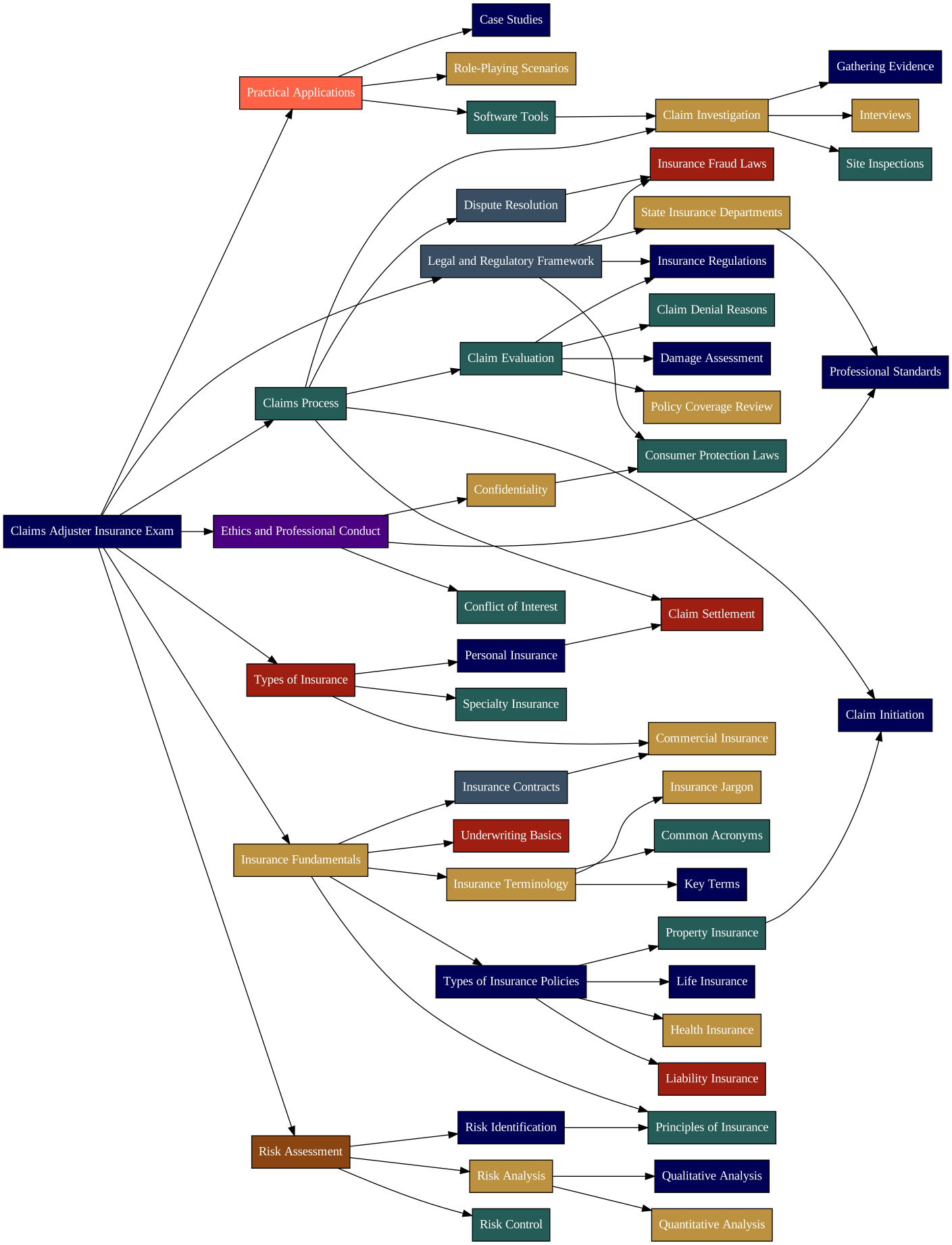
Quiz-summary
0 of 30 questions completed
Questions:
- 1
- 2
- 3
- 4
- 5
- 6
- 7
- 8
- 9
- 10
- 11
- 12
- 13
- 14
- 15
- 16
- 17
- 18
- 19
- 20
- 21
- 22
- 23
- 24
- 25
- 26
- 27
- 28
- 29
- 30
Information
Premium Practice Questions
You have already completed the quiz before. Hence you can not start it again.
Quiz is loading...
You must sign in or sign up to start the quiz.
You have to finish following quiz, to start this quiz:
Results
0 of 30 questions answered correctly
Your time:
Time has elapsed
You have reached 0 of 0 points, (0)
Categories
- Not categorized 0%
- 1
- 2
- 3
- 4
- 5
- 6
- 7
- 8
- 9
- 10
- 11
- 12
- 13
- 14
- 15
- 16
- 17
- 18
- 19
- 20
- 21
- 22
- 23
- 24
- 25
- 26
- 27
- 28
- 29
- 30
- Answered
- Review
-
Question 1 of 30
1. Question
When you are faced with a claim adjustment in Virginia, it is essential to recognize the ethical obligations that guide your conduct as an adjuster. Imagine you are assigned a claim where the policyholder has provided documentation that seems inconsistent with the initial report of loss. As you begin your investigation, what should be your primary course of action to ensure ethical compliance while maintaining the integrity of the claims process?
Correct
When adjusting claims in Virginia, understanding the specific duties and responsibilities that come with the role of an adjuster is crucial. This knowledge is part of the ethical and professional standards that govern the industry and is outlined in various regulations. An adjuster must not only investigate the facts surrounding a claim but also evaluate the circumstances in light of applicable policies and regulations. This includes verifying coverage, assessing damages, and ensuring that there are no conflicts of interest in the handling of claims. A key part of the role is the ability to communicate effectively with all parties involved, including policyholders and insurers. Miscommunication or lack of transparency can lead to mistrust and further complications. Moreover, the adjuster should remain impartial, documenting all findings thoroughly and providing clear rationale for all decisions made regarding a claim. Adhering to these principles is essential for maintaining compliance with Virginia laws governing insurance claims, as well as upholding the ethical standards expected of licensed adjusters in the state.
Incorrect
When adjusting claims in Virginia, understanding the specific duties and responsibilities that come with the role of an adjuster is crucial. This knowledge is part of the ethical and professional standards that govern the industry and is outlined in various regulations. An adjuster must not only investigate the facts surrounding a claim but also evaluate the circumstances in light of applicable policies and regulations. This includes verifying coverage, assessing damages, and ensuring that there are no conflicts of interest in the handling of claims. A key part of the role is the ability to communicate effectively with all parties involved, including policyholders and insurers. Miscommunication or lack of transparency can lead to mistrust and further complications. Moreover, the adjuster should remain impartial, documenting all findings thoroughly and providing clear rationale for all decisions made regarding a claim. Adhering to these principles is essential for maintaining compliance with Virginia laws governing insurance claims, as well as upholding the ethical standards expected of licensed adjusters in the state.
-
Question 2 of 30
2. Question
When you are faced with a complex claim involving damages caused by water intrusion in Virginia, it is essential to analyze the policy in detail. Specifically, how would you approach the identification of coverage for such damages, considering potential exclusions and conditions in the policy? What aspects of the policy must you pay particular attention to in order to determine if the claim is valid and if the loss is covered under the specific terms?
Correct
In Virginia, an adjuster must have a thorough understanding of how insurance policies work, particularly concerning coverage limits, exclusions, and conditions. When assessing a policy, the adjuster must distinguish between covered and non-covered events based on the terms outlined in the insurance contract. An insurance policy generally includes a declarations page, policy forms, endorsements, and exclusions, which together define the scope of coverage. For instance, an adjuster must be able to analyze how specific exclusions, such as flood or earthquake coverage, may impact a claim. Additionally, recognizing the importance of conditions like timely notice of a claim can affect a policyholder’s ability to receive coverage upon a loss. By understanding these fundamental aspects, an adjuster can effectively interpret the policy terms, assess claims fairly, and ensure compliance with Virginia’s regulatory requirements. This understanding also aids in communicating effectively with policyholders and stakeholders, which is critical in the processing of claims and ensuring customer satisfaction.
Incorrect
In Virginia, an adjuster must have a thorough understanding of how insurance policies work, particularly concerning coverage limits, exclusions, and conditions. When assessing a policy, the adjuster must distinguish between covered and non-covered events based on the terms outlined in the insurance contract. An insurance policy generally includes a declarations page, policy forms, endorsements, and exclusions, which together define the scope of coverage. For instance, an adjuster must be able to analyze how specific exclusions, such as flood or earthquake coverage, may impact a claim. Additionally, recognizing the importance of conditions like timely notice of a claim can affect a policyholder’s ability to receive coverage upon a loss. By understanding these fundamental aspects, an adjuster can effectively interpret the policy terms, assess claims fairly, and ensure compliance with Virginia’s regulatory requirements. This understanding also aids in communicating effectively with policyholders and stakeholders, which is critical in the processing of claims and ensuring customer satisfaction.
-
Question 3 of 30
3. Question
When you are faced with a client who is anxious about their claim process in Virginia, what technique should you employ to effectively build rapport and ensure they feel heard and understood? Consider the various strategies that could alleviate their concerns and foster a trusting relationship. Think about how active engagement through communication can shape their experience with the claims process. What approach should you prioritize in this scenario to create a strong foundation for your professional relationship?
Correct
Establishing rapport with clients and stakeholders is crucial for an adjuster as it lays the foundation for effective communication and trust, which are essential for navigating the complexities of insurance claims in Virginia. One effective technique to build rapport is to actively listen to clients’ concerns. This goes beyond simply hearing their words; it involves understanding their emotions and validating their feelings. Engaging in reflective listening, where the adjuster paraphrases what the client has said, not only shows that the adjuster is attentive but also reassures the client that their concerns are taken seriously. Additionally, using open body language and maintaining eye contact fosters a sense of trust. Sharing relatable personal experiences can also help create connections, making clients feel more comfortable and willing to communicate openly. It is important to align expectations by clearly explaining the claims process and timelines to prevent misunderstandings. Establishing this form of trust can significantly improve the overall client experience and lead to successful claim resolutions.
Incorrect
Establishing rapport with clients and stakeholders is crucial for an adjuster as it lays the foundation for effective communication and trust, which are essential for navigating the complexities of insurance claims in Virginia. One effective technique to build rapport is to actively listen to clients’ concerns. This goes beyond simply hearing their words; it involves understanding their emotions and validating their feelings. Engaging in reflective listening, where the adjuster paraphrases what the client has said, not only shows that the adjuster is attentive but also reassures the client that their concerns are taken seriously. Additionally, using open body language and maintaining eye contact fosters a sense of trust. Sharing relatable personal experiences can also help create connections, making clients feel more comfortable and willing to communicate openly. It is important to align expectations by clearly explaining the claims process and timelines to prevent misunderstandings. Establishing this form of trust can significantly improve the overall client experience and lead to successful claim resolutions.
-
Question 4 of 30
4. Question
When analyzing a claim in Virginia, you notice several elements that seem inconsistent with the usual patterns you have encountered in other cases. The claimant has provided documentation that appears to be incomplete, and there are significant discrepancies between reported injuries and witness accounts. As an adjuster, what steps should you take to address these potential signs of fraud while ensuring compliance with Virginia’s regulations and maintaining ethical standards?
Correct
Fraud detection and prevention is a critical aspect of the insurance industry, particularly for adjusters in Virginia. One of the key methods for identifying potential fraud involves analyzing claims for unusual patterns or discrepancies that do not align with standard industry practices. Indicators of fraud can include inconsistencies in the information provided by the claimant, such as discrepancies in reported injuries, timelines, or witness accounts that are improbable or unverifiable. Adjusters must remain vigilant and apply a keen analytical eye to the details of each case. In Virginia, laws and regulations mandate that insurance adjusters maintain a code of conduct that emphasizes ethical behavior and diligence in handling claims. This includes being proactive in the identification of potential red flags that suggest fraudulent activity. Effective communication with various parties involved in the claim process, including policyholders, witnesses, and service providers, is crucial in gathering accurate information and understanding the context of the claim. Additionally, following up on previous claims filed by the same individual can reveal patterns of suspicious behavior that warrant further investigation. Understanding the legal implications and consequences of fraud is also important for adjusters, as they must ensure compliance with state regulations while navigating the complex landscape of insurance fraud. The ability to recognize fraudulent claims while maintaining ethical responsibility helps protect the integrity of the insurance profession in Virginia.
Incorrect
Fraud detection and prevention is a critical aspect of the insurance industry, particularly for adjusters in Virginia. One of the key methods for identifying potential fraud involves analyzing claims for unusual patterns or discrepancies that do not align with standard industry practices. Indicators of fraud can include inconsistencies in the information provided by the claimant, such as discrepancies in reported injuries, timelines, or witness accounts that are improbable or unverifiable. Adjusters must remain vigilant and apply a keen analytical eye to the details of each case. In Virginia, laws and regulations mandate that insurance adjusters maintain a code of conduct that emphasizes ethical behavior and diligence in handling claims. This includes being proactive in the identification of potential red flags that suggest fraudulent activity. Effective communication with various parties involved in the claim process, including policyholders, witnesses, and service providers, is crucial in gathering accurate information and understanding the context of the claim. Additionally, following up on previous claims filed by the same individual can reveal patterns of suspicious behavior that warrant further investigation. Understanding the legal implications and consequences of fraud is also important for adjusters, as they must ensure compliance with state regulations while navigating the complex landscape of insurance fraud. The ability to recognize fraudulent claims while maintaining ethical responsibility helps protect the integrity of the insurance profession in Virginia.
-
Question 5 of 30
5. Question
When you are faced with an auto accident claim in Virginia involving two vehicles where both parties seem to share responsibility, how should you proceed to assess liability and damage evaluations effectively? Consider a scenario where significant damage is observed on both vehicles, and the preliminary investigation reveals conflicting accounts from each driver about the events leading to the collision. What steps should you take to ensure a fair and thorough assessment of liability?
Correct
Understanding auto claims, particularly regarding liability assessment and damage evaluation, is crucial for adjusters in Virginia. In a situation where multiple vehicles are involved in an accident, an adjuster must carefully analyze the circumstances to determine who is primarily at fault. Liability can often be divided among parties based on the actions leading up to and during the incident, requiring a thorough examination of police reports, witness statements, and physical evidence. When assessing damage, the adjuster must differentiate between actual repair costs and the potential total loss of a vehicle. Total loss judgments in Virginia consider the actual cash value of the vehicle versus the cost of repairs. An adjuster must also be aware of Virginia laws regarding liability, which can include comparative negligence, significantly impacting how compensation is allocated among involved parties. Familiarity with these laws enables adjusters to make well-informed decisions that align with regulatory standards and ethical practices in the field.
Incorrect
Understanding auto claims, particularly regarding liability assessment and damage evaluation, is crucial for adjusters in Virginia. In a situation where multiple vehicles are involved in an accident, an adjuster must carefully analyze the circumstances to determine who is primarily at fault. Liability can often be divided among parties based on the actions leading up to and during the incident, requiring a thorough examination of police reports, witness statements, and physical evidence. When assessing damage, the adjuster must differentiate between actual repair costs and the potential total loss of a vehicle. Total loss judgments in Virginia consider the actual cash value of the vehicle versus the cost of repairs. An adjuster must also be aware of Virginia laws regarding liability, which can include comparative negligence, significantly impacting how compensation is allocated among involved parties. Familiarity with these laws enables adjusters to make well-informed decisions that align with regulatory standards and ethical practices in the field.
-
Question 6 of 30
6. Question
Consider a scenario where you are reviewing a series of claims at an insurance company in Virginia. You notice that the reserves for several claims appear to be insufficient based on the severity and nature of each claim. What are the potential implications of maintaining inadequate reserves in this context, and how can this impact overall claims management and compliance within your organization? Additionally, how does this align with your responsibilities as an adjuster under state regulations?
Correct
Reserves are a critical component in claims management, particularly within the context of the Virginia Adjuster License Exam. They represent the estimated amounts set aside by an insurance company to cover future claim payments. The significance of reserves lies in their role in both financial stability and accurate claims handling; they help determine the insurer’s financial health and ensure that adequate funds are available to meet future obligations. Proper reserve management can also affect an adjuster’s performance evaluation, as it reflects their ability to assess claims accurately and forecast potential liabilities. An inaccurate reserve may lead to either overestimation, which can skew financials negatively, or underestimation, risking the company’s ability to pay valid claims. Furthermore, the regulatory environment in Virginia requires that adjusters maintain thorough documentation and justification for reserve levels to ensure compliance with state laws. Understanding the nuances between different types of reserves—such as case reserves for individual claims and bulk reserves for groups of claims—is essential for effective claims management and to fulfill legal and ethical obligations.
Incorrect
Reserves are a critical component in claims management, particularly within the context of the Virginia Adjuster License Exam. They represent the estimated amounts set aside by an insurance company to cover future claim payments. The significance of reserves lies in their role in both financial stability and accurate claims handling; they help determine the insurer’s financial health and ensure that adequate funds are available to meet future obligations. Proper reserve management can also affect an adjuster’s performance evaluation, as it reflects their ability to assess claims accurately and forecast potential liabilities. An inaccurate reserve may lead to either overestimation, which can skew financials negatively, or underestimation, risking the company’s ability to pay valid claims. Furthermore, the regulatory environment in Virginia requires that adjusters maintain thorough documentation and justification for reserve levels to ensure compliance with state laws. Understanding the nuances between different types of reserves—such as case reserves for individual claims and bulk reserves for groups of claims—is essential for effective claims management and to fulfill legal and ethical obligations.
-
Question 7 of 30
7. Question
You are reviewing a claim in Virginia where the insured has a liability policy with specific coverage limits. During the negotiation phase, you encounter a situation where the total damages claimed by the plaintiff exceed the policy limits. In this context, how should you approach the negotiation process to accommodate the limitations imposed by the existing policy while still seeking a fair resolution for all parties involved?
Correct
In the realm of insurance claims, limits directly impact the settlement amounts and the negotiation strategies employed by adjusters. When an insurance policy outlines specific limits for coverage, these amounts become a significant factor in the adjuster’s ability to negotiate settlements. For instance, if a policy has a cap on liability, the adjuster must work within that limit to find an acceptable settlement for both the claimant and the insurer. This can create challenges when the actual damages exceed the policy limit, necessitating the adjuster to effectively communicate with the claimant about the constraints of the policy while also striving to mitigate the insurer’s exposure to higher payouts. Additionally, limits influence the adjuster’s approach during negotiations. An adjuster might need to prioritize which damages to address first, focusing on those that fall within the insured amount. A clear understanding of the policy’s limits helps the adjuster facilitate better discussions, ensuring that stakeholders have realistic expectations. Furthermore, when conducting negotiations involving multiple claims against the same limit, the adjuster must also consider how to allocate coverage effectively among competing claims, which can require advanced negotiation skills and an in-depth understanding of the claim priorities as determined by state regulations and guidelines.
Incorrect
In the realm of insurance claims, limits directly impact the settlement amounts and the negotiation strategies employed by adjusters. When an insurance policy outlines specific limits for coverage, these amounts become a significant factor in the adjuster’s ability to negotiate settlements. For instance, if a policy has a cap on liability, the adjuster must work within that limit to find an acceptable settlement for both the claimant and the insurer. This can create challenges when the actual damages exceed the policy limit, necessitating the adjuster to effectively communicate with the claimant about the constraints of the policy while also striving to mitigate the insurer’s exposure to higher payouts. Additionally, limits influence the adjuster’s approach during negotiations. An adjuster might need to prioritize which damages to address first, focusing on those that fall within the insured amount. A clear understanding of the policy’s limits helps the adjuster facilitate better discussions, ensuring that stakeholders have realistic expectations. Furthermore, when conducting negotiations involving multiple claims against the same limit, the adjuster must also consider how to allocate coverage effectively among competing claims, which can require advanced negotiation skills and an in-depth understanding of the claim priorities as determined by state regulations and guidelines.
-
Question 8 of 30
8. Question
Consider a scenario where you are negotiating a settlement for a claim in Virginia. The claimant has expressed frustration over the insurer’s slow response and is demanding a higher settlement amount than what is covered by the policy limits. As an adjuster, what negotiation strategy would best facilitate a resolution that respects the parameters of the policy while addressing the claimant’s concerns?
Correct
In negotiation settlements, particularly within the context of Virginia’s regulatory framework, an adjuster must understand both the policy limits and the strategies that can influence a successful resolution. One critical technique involves articulating the value of the claim based on established precedents and effective communication with all parties involved. This includes presenting comprehensive documentation that aligns with policy terms, demonstrating a deep understanding of the claimant’s needs and the insurer’s position. Adjusters must be skilled in active listening, as it fosters a collaborative atmosphere, encouraging the claimant to share their expectations, which can lead to a mutually beneficial agreement. Moreover, an adjuster should be aware of the emotional aspects of negotiation, as empathy can significantly impact the claimant’s perception of the settlement offer. Additionally, adapting the negotiation approach based on the unique circumstances of each case and the personalities involved can make a substantial difference. Ultimately, the goal is not only to settle within policy limits but also to build trust and rapport, ensuring a positive long-term relationship with clients while fulfilling legal and ethical obligations set forth in Virginia insurance regulations.
Incorrect
In negotiation settlements, particularly within the context of Virginia’s regulatory framework, an adjuster must understand both the policy limits and the strategies that can influence a successful resolution. One critical technique involves articulating the value of the claim based on established precedents and effective communication with all parties involved. This includes presenting comprehensive documentation that aligns with policy terms, demonstrating a deep understanding of the claimant’s needs and the insurer’s position. Adjusters must be skilled in active listening, as it fosters a collaborative atmosphere, encouraging the claimant to share their expectations, which can lead to a mutually beneficial agreement. Moreover, an adjuster should be aware of the emotional aspects of negotiation, as empathy can significantly impact the claimant’s perception of the settlement offer. Additionally, adapting the negotiation approach based on the unique circumstances of each case and the personalities involved can make a substantial difference. Ultimately, the goal is not only to settle within policy limits but also to build trust and rapport, ensuring a positive long-term relationship with clients while fulfilling legal and ethical obligations set forth in Virginia insurance regulations.
-
Question 9 of 30
9. Question
Consider a scenario where you are an adjuster in Virginia who has just assessed a complicated property claim involving multiple parties, including an underwriter, an insurance agent, and a legal team. To ensure that the claim is processed efficiently and accurately, what approach would you take to foster collaboration among these professionals? Specifically, how would you facilitate the sharing of critical information and ensure that everyone involved understands their respective roles in the claims process?
Correct
In Virginia, adjusters are not only responsible for evaluating claims but also for collaborating effectively with underwriting teams, agents, and legal professionals. This collaboration is crucial as it ensures comprehensive risk assessment and adherence to the state’s regulatory framework. A successful adjuster must engage in open communication and information sharing, which helps in developing a clear understanding of policy terms and conditions. When working with underwriters, adjusters should possess the ability to identify and articulate specific risks associated with claims, leading to better-informed decisions regarding coverage and liability. Additionally, when collaborating with agents, it is vital to maintain transparency and proactive communication to clarify client expectations and ensure that all parties are aligned on claim processing strategies. Legal teams provide essential guidance on compliance and regulatory obligations, enabling adjusters to navigate complex legal landscapes. Therefore, the ability to foster positive relationships and facilitate productive discussions among these professionals is essential for achieving favorable outcomes and compliance with Virginia’s insurance regulations.
Incorrect
In Virginia, adjusters are not only responsible for evaluating claims but also for collaborating effectively with underwriting teams, agents, and legal professionals. This collaboration is crucial as it ensures comprehensive risk assessment and adherence to the state’s regulatory framework. A successful adjuster must engage in open communication and information sharing, which helps in developing a clear understanding of policy terms and conditions. When working with underwriters, adjusters should possess the ability to identify and articulate specific risks associated with claims, leading to better-informed decisions regarding coverage and liability. Additionally, when collaborating with agents, it is vital to maintain transparency and proactive communication to clarify client expectations and ensure that all parties are aligned on claim processing strategies. Legal teams provide essential guidance on compliance and regulatory obligations, enabling adjusters to navigate complex legal landscapes. Therefore, the ability to foster positive relationships and facilitate productive discussions among these professionals is essential for achieving favorable outcomes and compliance with Virginia’s insurance regulations.
-
Question 10 of 30
10. Question
Consider a scenario where an insurance adjuster in Virginia is contemplating whether to pursue additional certifications to enhance their professional standing. They have heard varying opinions about the value of certifications, with some colleagues claiming they are unnecessary for fieldwork while others assert that certifications significantly bolster an adjuster’s knowledge and credibility. Given that the adjuster is aware of the importance of ethical conduct as outlined in Virginia’s regulations, how should they evaluate the pursuit of relevant certifications in relation to their career development in the insurance adjusting field?
Correct
Certifications in the field of insurance adjusting denote a level of expertise and professionalism that is increasingly valued in the industry. For adjusters in Virginia, obtaining relevant certifications can provide several key benefits that go beyond just recognition. For instance, certifications such as the Associate in Claims (AIC) or the Chartered Property Casualty Underwriter (CPCU) indicate that an adjuster has not only met a standard level of knowledge but also shows a commitment to continued education and ethical practices. This is particularly important under Virginia law, which emphasizes the ethical conduct of adjusters. This ethical framework is pivotal, as it governs the adjuster’s responsibilities towards policyholders and insurers. The process of obtaining these certifications often requires completing rigorous coursework and passing difficult examinations that prepare adjusters for complex claim scenarios. Thus, possessing these credentials can enhance a professional’s credibility, potentially leading to better job prospects and advancement opportunities in the field. Additionally, understanding the nuances of state regulations is critical, as adherence to Virginia’s insurance laws is essential for maintaining licensure and safeguarding consumer interests.
Incorrect
Certifications in the field of insurance adjusting denote a level of expertise and professionalism that is increasingly valued in the industry. For adjusters in Virginia, obtaining relevant certifications can provide several key benefits that go beyond just recognition. For instance, certifications such as the Associate in Claims (AIC) or the Chartered Property Casualty Underwriter (CPCU) indicate that an adjuster has not only met a standard level of knowledge but also shows a commitment to continued education and ethical practices. This is particularly important under Virginia law, which emphasizes the ethical conduct of adjusters. This ethical framework is pivotal, as it governs the adjuster’s responsibilities towards policyholders and insurers. The process of obtaining these certifications often requires completing rigorous coursework and passing difficult examinations that prepare adjusters for complex claim scenarios. Thus, possessing these credentials can enhance a professional’s credibility, potentially leading to better job prospects and advancement opportunities in the field. Additionally, understanding the nuances of state regulations is critical, as adherence to Virginia’s insurance laws is essential for maintaining licensure and safeguarding consumer interests.
-
Question 11 of 30
11. Question
You are reviewing an insurance policy in Virginia that provides coverage for general liability. As part of your analysis, you notice that it features both a per occurrence limit and an aggregate limit. In the event of a major incident that leads to multiple claims against the insurer, how would you explain the impact of these limits on the total payout for related claims? Consider the nuances of these coverage types and their implications for the insurer’s obligations.
Correct
Understanding coverage limits is vital for adjusters in managing claims effectively. The key distinctions in coverage limits, such as per occurrence, aggregate limits, and sub-limits, dictate how claims are evaluated and paid out. A per occurrence limit refers to the maximum payout an insurer will make for a single claim or incident. This means that each individual claim is assessed against this set limit, which can be critical when multiple claims emerge from a single event. Alternatively, an aggregate limit encompasses the total amount an insurer will pay for all claims during a policy period, providing a cap that applies across multiple incidents or claims within that timeframe. Sub-limits, on the other hand, are specific caps set for particular categories of coverage, such as property damage or specific risks like flood damage. For adjusters in Virginia, it’s essential to accurately interpret these different limit types when managing claims for clients. Misunderstanding or misapplying these limits can lead to disputes and regulatory issues, which may also affect compliance with state laws governing insurance practices.
Incorrect
Understanding coverage limits is vital for adjusters in managing claims effectively. The key distinctions in coverage limits, such as per occurrence, aggregate limits, and sub-limits, dictate how claims are evaluated and paid out. A per occurrence limit refers to the maximum payout an insurer will make for a single claim or incident. This means that each individual claim is assessed against this set limit, which can be critical when multiple claims emerge from a single event. Alternatively, an aggregate limit encompasses the total amount an insurer will pay for all claims during a policy period, providing a cap that applies across multiple incidents or claims within that timeframe. Sub-limits, on the other hand, are specific caps set for particular categories of coverage, such as property damage or specific risks like flood damage. For adjusters in Virginia, it’s essential to accurately interpret these different limit types when managing claims for clients. Misunderstanding or misapplying these limits can lead to disputes and regulatory issues, which may also affect compliance with state laws governing insurance practices.
-
Question 12 of 30
12. Question
Consider a scenario where a Virginia resident has filed a liability claim against your client, alleging that their dog bit the plaintiff while he was walking in his neighborhood. As the claims adjuster, your responsibility is to thoroughly investigate the claim. In the context of Virginia’s liability regulations, what is the most important aspect for you to consider when determining potential liability?
Correct
In Virginia, liability claims involve an intricate understanding of legal principles, adjuster responsibilities, and the specific nuances embedded in the state’s insurance regulations. When an adjuster handles a liability claim, they must assess whether the insured party is liable for the damages claimed by a third party and determine the extent of the insurer’s liability. Adjusters must be aware of the applicable coverage, exclusions, and any potential defenses that might absolve the insured from liability, such as comparative negligence statutes, which allocate fault between parties involved in an incident. The adjuster’s role is not merely to evaluate the claim amount but to ensure compliance with Virginia’s regulations, which stipulate fair and prompt treatment of claims. Ethical considerations are paramount; adjusters are required to act in good faith, ensuring that they do not mislead claimants and that settlements are fair and justified based on the evidence at hand. Understanding the impact of these regulations on both the claims process and the adjuster’s conduct is critical for effective claim resolution.
Incorrect
In Virginia, liability claims involve an intricate understanding of legal principles, adjuster responsibilities, and the specific nuances embedded in the state’s insurance regulations. When an adjuster handles a liability claim, they must assess whether the insured party is liable for the damages claimed by a third party and determine the extent of the insurer’s liability. Adjusters must be aware of the applicable coverage, exclusions, and any potential defenses that might absolve the insured from liability, such as comparative negligence statutes, which allocate fault between parties involved in an incident. The adjuster’s role is not merely to evaluate the claim amount but to ensure compliance with Virginia’s regulations, which stipulate fair and prompt treatment of claims. Ethical considerations are paramount; adjusters are required to act in good faith, ensuring that they do not mislead claimants and that settlements are fair and justified based on the evidence at hand. Understanding the impact of these regulations on both the claims process and the adjuster’s conduct is critical for effective claim resolution.
-
Question 13 of 30
13. Question
You are reviewing a recent case involving a claims adjustment in Virginia, where the adjuster utilized cutting-edge technology to streamline the process. The adjuster implemented real-time data analytics to assess the claim, which allowed for quicker decision-making and enhanced communication with all stakeholders. However, it became apparent that while technology improved efficiency, there were potential pitfalls, such as over-reliance on automated systems that might miss nuanced aspects of the claim. In this scenario, what is the most significant principle that the adjuster should keep in mind while leveraging technology in claims handling?
Correct
In the realm of claims adjusting, especially within Virginia, the integration of technology plays a pivotal role in enhancing the efficiency and accuracy of the claims process. Utilizing advanced data analytics allows adjusters to derive insights from large sets of data, which can inform decisions about claims processing. For example, technology provides tools for tracking claim statuses in real-time, improving transparency for all parties involved. Furthermore, the use of mobile applications allows adjusters to collect information directly from the field, leading to faster assessments and reducing the time taken to settle claims. The convenience of digital documentation streamlines the submission and review processes, thus minimizing errors associated with traditional paperwork. However, it is crucial to understand that while technology greatly aids in claims adjusting, it does not replace the necessity for human judgment and ethical considerations. Adhering to the regulations set forth by the Virginia Bureau of Insurance ensures that technology’s use is compliant and maintains the industry’s integrity.
Incorrect
In the realm of claims adjusting, especially within Virginia, the integration of technology plays a pivotal role in enhancing the efficiency and accuracy of the claims process. Utilizing advanced data analytics allows adjusters to derive insights from large sets of data, which can inform decisions about claims processing. For example, technology provides tools for tracking claim statuses in real-time, improving transparency for all parties involved. Furthermore, the use of mobile applications allows adjusters to collect information directly from the field, leading to faster assessments and reducing the time taken to settle claims. The convenience of digital documentation streamlines the submission and review processes, thus minimizing errors associated with traditional paperwork. However, it is crucial to understand that while technology greatly aids in claims adjusting, it does not replace the necessity for human judgment and ethical considerations. Adhering to the regulations set forth by the Virginia Bureau of Insurance ensures that technology’s use is compliant and maintains the industry’s integrity.
-
Question 14 of 30
14. Question
During a policy review in Virginia, an adjuster discovers that a homeowner has added a rider that explicitly excludes coverage for certain types of water damage. The adjuster is tasked with explaining to the homeowner the implications of this rider. What is the most significant consideration the adjuster should communicate regarding the exclusion of water damage in their policy?
Correct
Endorsements and riders are crucial components of insurance policies, particularly in the context of offering additional coverage or modifying existing terms to better suit the needs of policyholders. In Virginia, as in other states, these modifications allow for tailored coverage that can address specific risks or circumstances not covered by standard policies. Endorsements typically add, remove, or alter coverage and are often added at the policyholder’s request. For instance, a homeowner might request an endorsement to include coverage for specific valuables that exceed the limits of their standard policy. Conversely, a rider may limit or exclude certain coverages, such as water damage in a homeowner’s policy if the homeowner lives in a flood-prone area. Understanding the distinction between these tools is vital for adjusters as they navigate claims, assess coverage adequacy, and ensure that they are adhering to both state regulations and ethical standards in the industry. Adjusters must also communicate effectively with clients about the implications of these modifications, ensuring that clients are fully informed about their coverage options and any resulting changes to their premiums.
Incorrect
Endorsements and riders are crucial components of insurance policies, particularly in the context of offering additional coverage or modifying existing terms to better suit the needs of policyholders. In Virginia, as in other states, these modifications allow for tailored coverage that can address specific risks or circumstances not covered by standard policies. Endorsements typically add, remove, or alter coverage and are often added at the policyholder’s request. For instance, a homeowner might request an endorsement to include coverage for specific valuables that exceed the limits of their standard policy. Conversely, a rider may limit or exclude certain coverages, such as water damage in a homeowner’s policy if the homeowner lives in a flood-prone area. Understanding the distinction between these tools is vital for adjusters as they navigate claims, assess coverage adequacy, and ensure that they are adhering to both state regulations and ethical standards in the industry. Adjusters must also communicate effectively with clients about the implications of these modifications, ensuring that clients are fully informed about their coverage options and any resulting changes to their premiums.
-
Question 15 of 30
15. Question
During a high-stress claims process involving a recent disaster, an adjuster in Virginia is tasked with working closely with clients who have experienced significant losses. It is critical for the adjuster to establish trust and build rapport to ensure effective communication and cooperation throughout the claims procedure. Which approach would best facilitate the development of a trusting relationship with the clients during this challenging time?
Correct
Building rapport with clients is an essential skill for insurance adjusters in Virginia, as it establishes the foundation for trust and effective communication. One key technique in building rapport is active listening, where the adjuster gives full attention to the client, acknowledging their concerns and feelings. This not only helps clients feel heard and valued but also allows the adjuster to gain important insights into the client’s perspective. Another effective approach is demonstrating empathy; by relating to the client’s experiences and expressing understanding of their situation, adjusters can foster a stronger connection. Furthermore, maintaining transparency throughout the claims process enhances trust, as clients appreciate clear communication regarding the steps involved and any potential outcomes. Finally, consistently following up and being accessible during the claims process reinforces the adjuster’s dedication to client service. In summary, effective rapport-building techniques hinge on active listening, empathy, transparency, and consistent communication, all of which contribute to a positive client experience and successful claims resolution.
Incorrect
Building rapport with clients is an essential skill for insurance adjusters in Virginia, as it establishes the foundation for trust and effective communication. One key technique in building rapport is active listening, where the adjuster gives full attention to the client, acknowledging their concerns and feelings. This not only helps clients feel heard and valued but also allows the adjuster to gain important insights into the client’s perspective. Another effective approach is demonstrating empathy; by relating to the client’s experiences and expressing understanding of their situation, adjusters can foster a stronger connection. Furthermore, maintaining transparency throughout the claims process enhances trust, as clients appreciate clear communication regarding the steps involved and any potential outcomes. Finally, consistently following up and being accessible during the claims process reinforces the adjuster’s dedication to client service. In summary, effective rapport-building techniques hinge on active listening, empathy, transparency, and consistent communication, all of which contribute to a positive client experience and successful claims resolution.
-
Question 16 of 30
16. Question
When considering the importance of continuing education for licensed adjusters in Virginia, what would be the most significant benefit derived from participating in these required training programs? Your analysis should reflect on both regulatory compliance and ethical practice standards within the industry.
Correct
Continuing education and professional development are crucial components for adjusters to maintain their licensing and stay current with industry standards and practices. In Virginia, the Department of Insurance mandates that licensed adjusters complete a specific number of continuing education (CE) hours to renew their licenses. This requirement ensures that adjusters remain knowledgeable about changing laws, regulations, and best practices in the field. The focus on specific areas, such as ethics, claims handling, and new legislation, directly relates to the adjuster’s ability to perform their duties effectively and responsibly. Moreover, professional development opportunities, including workshops, seminars, and online courses, allow adjusters to specialize in various aspects of insurance adjusting, including property, casualty, or liability claims. These educational efforts not only enhance the adjuster’s skill set but also foster a culture of ethical responsibility and professionalism that is expected in the industry. By actively engaging in ongoing education, adjusters can improve their critical thinking and decision-making skills, which are essential for complex claim evaluations. All of these factors contribute to the overall competence and integrity of adjusters operating within Virginia’s regulatory framework.
Incorrect
Continuing education and professional development are crucial components for adjusters to maintain their licensing and stay current with industry standards and practices. In Virginia, the Department of Insurance mandates that licensed adjusters complete a specific number of continuing education (CE) hours to renew their licenses. This requirement ensures that adjusters remain knowledgeable about changing laws, regulations, and best practices in the field. The focus on specific areas, such as ethics, claims handling, and new legislation, directly relates to the adjuster’s ability to perform their duties effectively and responsibly. Moreover, professional development opportunities, including workshops, seminars, and online courses, allow adjusters to specialize in various aspects of insurance adjusting, including property, casualty, or liability claims. These educational efforts not only enhance the adjuster’s skill set but also foster a culture of ethical responsibility and professionalism that is expected in the industry. By actively engaging in ongoing education, adjusters can improve their critical thinking and decision-making skills, which are essential for complex claim evaluations. All of these factors contribute to the overall competence and integrity of adjusters operating within Virginia’s regulatory framework.
-
Question 17 of 30
17. Question
When you are faced with the task of enhancing your professional knowledge and skills as a Virginia adjuster, how might involvement in professional organizations benefit you most? Consider the various aspects such as networking opportunities, access to resources, and the latest industry practices. How do these elements collectively contribute to your overall effectiveness and advancement within the field of insurance adjustment?
Correct
Professional organizations play a crucial role for adjusters in Virginia by providing a platform to enhance their knowledge, develop their skills, and connect with other professionals in the field. These organizations often host training sessions, seminars, and workshops that focus on industry trends, regulatory changes, and best practices in claims handling. Through networking opportunities, adjusters can establish valuable contacts that may lead to collaborative partnerships, mentorships, or job opportunities, which can significantly contribute to their professional growth. Additionally, these organizations may offer resources like access to legal updates, industry publications, and tools that aid in the efficient handling of claims. By being a part of these associations, adjusters can stay informed about the evolving landscape of insurance regulations specific to Virginia. Furthermore, membership in a professional organization can often enhance an adjuster’s credibility and marketability in a competitive job market. Engaging actively within such networks can help build a reputation for professionalism and expertise, which are key factors in career advancement.
Incorrect
Professional organizations play a crucial role for adjusters in Virginia by providing a platform to enhance their knowledge, develop their skills, and connect with other professionals in the field. These organizations often host training sessions, seminars, and workshops that focus on industry trends, regulatory changes, and best practices in claims handling. Through networking opportunities, adjusters can establish valuable contacts that may lead to collaborative partnerships, mentorships, or job opportunities, which can significantly contribute to their professional growth. Additionally, these organizations may offer resources like access to legal updates, industry publications, and tools that aid in the efficient handling of claims. By being a part of these associations, adjusters can stay informed about the evolving landscape of insurance regulations specific to Virginia. Furthermore, membership in a professional organization can often enhance an adjuster’s credibility and marketability in a competitive job market. Engaging actively within such networks can help build a reputation for professionalism and expertise, which are key factors in career advancement.
-
Question 18 of 30
18. Question
When you are faced with a situation where a policyholder disputes the denial of their claim, it is essential to assess the reasons behind the denial thoroughly. How should an adjuster approach this scenario to ensure adherence to the ethical standards and legal regulations set forth in Virginia? Consider the implications of the adjuster’s actions, the necessity for clarity in communication, and the overall impact on the relationship with the policyholder.
Correct
In the context of the Virginia Adjuster License Exam, understanding the principles of claim adjustment is crucial for effective practice. An adjuster is tasked with investigating and assessing the validity of insurance claims, ensuring that they adhere to the relevant laws and regulations. The adjuster must also maintain a standard of conduct that promotes fairness and transparency throughout the process. Claims adjustments often involve evaluating the causes of loss, determining policy coverages, and considering the eligibility for claims based on policy conditions. Furthermore, adjusters must be adept at communicating findings clearly to all parties involved, which can include policyholders, insurers, and legal representatives. Ethical considerations play an important role; adjusters must avoid conflicts of interest and ensure that they act in good faith, putting the policyholder’s interests into consideration while also fulfilling their responsibilities to the insurer. Mastery of these concepts is pivotal in ensuring compliance with the Virginia Code and delivering equitable outcomes in the claims adjustment process.
Incorrect
In the context of the Virginia Adjuster License Exam, understanding the principles of claim adjustment is crucial for effective practice. An adjuster is tasked with investigating and assessing the validity of insurance claims, ensuring that they adhere to the relevant laws and regulations. The adjuster must also maintain a standard of conduct that promotes fairness and transparency throughout the process. Claims adjustments often involve evaluating the causes of loss, determining policy coverages, and considering the eligibility for claims based on policy conditions. Furthermore, adjusters must be adept at communicating findings clearly to all parties involved, which can include policyholders, insurers, and legal representatives. Ethical considerations play an important role; adjusters must avoid conflicts of interest and ensure that they act in good faith, putting the policyholder’s interests into consideration while also fulfilling their responsibilities to the insurer. Mastery of these concepts is pivotal in ensuring compliance with the Virginia Code and delivering equitable outcomes in the claims adjustment process.
-
Question 19 of 30
19. Question
In the context of claims settlement strategies for the Virginia Adjuster License Exam, consider a scenario where an adjuster is mediating a claim dispute between an insurance company and a claimant who is dissatisfied with the initial settlement offer. The claimant believes their losses are not fully represented in the company’s evaluation. What approach should the adjuster prioritize to facilitate an effective resolution while adhering to state regulations and ethical practices?
Correct
In the realm of claims settlement strategies, an adjuster must navigate multiple factors to reach a resolution that is both fair and aligned with the policyholder’s rights. One critical method employed is mediation, which involves a neutral third party facilitating discussions between the insurer and the claimant to help reach a mutually agreeable settlement. This method is particularly effective in Virginia, where the adjuster’s role is not only to assess damages but also to advocate for fair practices and transparency. An adjuster must balance the interests of the insurer with the needs of the claimant, ensuring that all parties feel heard and understood. The importance of effective communication cannot be overstated; an adjuster must articulate complex insurance language in an understandable way, helping claimants grasp their options. Moreover, familiarity with Virginia’s regulatory environment and ethical guidelines is essential, as these dictate how adjusters should conduct negotiations to avoid potential conflicts of interest and maintain professionalism throughout the process. Ultimately, the goal is to achieve a settlement that respects the policy, adheres to state regulations, and provides a satisfactory resolution for all involved parties without resorting to litigation.
Incorrect
In the realm of claims settlement strategies, an adjuster must navigate multiple factors to reach a resolution that is both fair and aligned with the policyholder’s rights. One critical method employed is mediation, which involves a neutral third party facilitating discussions between the insurer and the claimant to help reach a mutually agreeable settlement. This method is particularly effective in Virginia, where the adjuster’s role is not only to assess damages but also to advocate for fair practices and transparency. An adjuster must balance the interests of the insurer with the needs of the claimant, ensuring that all parties feel heard and understood. The importance of effective communication cannot be overstated; an adjuster must articulate complex insurance language in an understandable way, helping claimants grasp their options. Moreover, familiarity with Virginia’s regulatory environment and ethical guidelines is essential, as these dictate how adjusters should conduct negotiations to avoid potential conflicts of interest and maintain professionalism throughout the process. Ultimately, the goal is to achieve a settlement that respects the policy, adheres to state regulations, and provides a satisfactory resolution for all involved parties without resorting to litigation.
-
Question 20 of 30
20. Question
In the context of managing multiple claims in Virginia, you are faced with several tasks that need completion by specific deadlines. Some claims require immediate follow-up due to client complaints, while others are approaching their settlement deadlines. As you evaluate your workload, which strategy best embodies effective time management for an insurance adjuster in this situation?
Correct
Effective time management is crucial for an insurance adjuster operating in Virginia, as they often manage multiple claims simultaneously under strict deadlines. Understanding how to prioritize tasks based on urgency and importance can significantly impact the quality of service provided to clients and the overall efficiency of claims processing. For instance, an adjuster may have claims that require immediate attention due to impending litigation or client dissatisfaction, while others may allow for more extended processing time. Furthermore, organizational skills play a pivotal role in maintaining an orderly workflow—using tools such as digital calendars, task management software, or even simple checklists can help ensure that no deadlines are missed and that each claim is handled efficiently. Additionally, it is essential to be aware of regulatory requirements and the timeframes involved, as failing to adhere to these can result in penalties or legal complications. Thus, balancing these factors not only enhances productivity but also aligns with the ethical obligations of an adjuster to act with due diligence and professionalism while servicing clients’ needs.
Incorrect
Effective time management is crucial for an insurance adjuster operating in Virginia, as they often manage multiple claims simultaneously under strict deadlines. Understanding how to prioritize tasks based on urgency and importance can significantly impact the quality of service provided to clients and the overall efficiency of claims processing. For instance, an adjuster may have claims that require immediate attention due to impending litigation or client dissatisfaction, while others may allow for more extended processing time. Furthermore, organizational skills play a pivotal role in maintaining an orderly workflow—using tools such as digital calendars, task management software, or even simple checklists can help ensure that no deadlines are missed and that each claim is handled efficiently. Additionally, it is essential to be aware of regulatory requirements and the timeframes involved, as failing to adhere to these can result in penalties or legal complications. Thus, balancing these factors not only enhances productivity but also aligns with the ethical obligations of an adjuster to act with due diligence and professionalism while servicing clients’ needs.
-
Question 21 of 30
21. Question
When you are faced with a complex insurance claim in Virginia that involves conflicting statements from the claimant and witnesses, how would you best approach the situation to ensure a fair evaluation? Consider the need for analytical skills, critical thinking, and adherence to legal and ethical standards throughout the process. Your methodology should reflect an understanding of the implications of these elements in the claims adjustment process. Additionally, what steps would you take to ensure compliance with Virginia’s adjuster regulations while addressing any discrepancies in the information provided?
Correct
In the context of the Virginia Adjuster License Exam, analytical skills are essential for effectively evaluating claims, understanding policy language, and identifying pertinent coverage issues. A critical aspect of this is the ability to synthesize information from various sources, including policy documents, inspection notes, and claimant statements. This process often requires adjusters to dissect complicated scenarios, recognize patterns or inconsistencies, and apply their understanding of the law and regulations governing insurance practices within Virginia. Critical thinking allows adjusters to navigate ambiguities, consider multiple perspectives, and approach problem-solving with a structured mindset. For example, when encountering a claim with disputed details, an adjuster must weigh the evidence presented while adhering to ethical standards and state regulations. One important element of the Virginia Code of Conduct for insurance professionals is honesty and thoroughness in the evaluation process. This not only builds trust with clients but also ensures that the adjuster remains compliant with legal and ethical obligations. Ultimately, strong analytical skills help adjusters make informed decisions that are fair, legally sound, and reflective of the interests of all parties involved.
Incorrect
In the context of the Virginia Adjuster License Exam, analytical skills are essential for effectively evaluating claims, understanding policy language, and identifying pertinent coverage issues. A critical aspect of this is the ability to synthesize information from various sources, including policy documents, inspection notes, and claimant statements. This process often requires adjusters to dissect complicated scenarios, recognize patterns or inconsistencies, and apply their understanding of the law and regulations governing insurance practices within Virginia. Critical thinking allows adjusters to navigate ambiguities, consider multiple perspectives, and approach problem-solving with a structured mindset. For example, when encountering a claim with disputed details, an adjuster must weigh the evidence presented while adhering to ethical standards and state regulations. One important element of the Virginia Code of Conduct for insurance professionals is honesty and thoroughness in the evaluation process. This not only builds trust with clients but also ensures that the adjuster remains compliant with legal and ethical obligations. Ultimately, strong analytical skills help adjusters make informed decisions that are fair, legally sound, and reflective of the interests of all parties involved.
-
Question 22 of 30
22. Question
A homeowner in Virginia has suffered water damage due to a burst pipe that originated from a neighboring property. Considering the principles of insurable interest and subrogation, how does this scenario affect the homeowner’s insurance claim process? What factors will determine whether the insurance company can pursue the neighbor for recovery of the payout made to the homeowner? It is essential to evaluate the necessity of insurable interest in the property damaged and the implications of subrogation on the claim.
Correct
In the context of insurance contracts, insurable interest is a fundamental requirement that ensures the policyholder has a legitimate stake in the subject matter of the insurance. This principle prevents moral hazard and discourages fraudulent claims. It means that the insured must stand to suffer a direct financial loss if the insured item is damaged or destroyed. For instance, a homeowner has an insurable interest in their property because they would suffer a loss if it were damaged. On the other hand, subrogation allows the insurer to pursue a third party that caused a loss to the insured after compensating the insured. This process helps prevent the insured from obtaining a windfall and promotes fairness in the insurance contract. Additionally, the concept of indemnity ensures that the insured is restored to the same financial position after a loss, without profiting from the loss. Understanding these elements is crucial for adjusters, as they must navigate these principles while investigating claims in Virginia, ensuring compliance with state regulations.
Incorrect
In the context of insurance contracts, insurable interest is a fundamental requirement that ensures the policyholder has a legitimate stake in the subject matter of the insurance. This principle prevents moral hazard and discourages fraudulent claims. It means that the insured must stand to suffer a direct financial loss if the insured item is damaged or destroyed. For instance, a homeowner has an insurable interest in their property because they would suffer a loss if it were damaged. On the other hand, subrogation allows the insurer to pursue a third party that caused a loss to the insured after compensating the insured. This process helps prevent the insured from obtaining a windfall and promotes fairness in the insurance contract. Additionally, the concept of indemnity ensures that the insured is restored to the same financial position after a loss, without profiting from the loss. Understanding these elements is crucial for adjusters, as they must navigate these principles while investigating claims in Virginia, ensuring compliance with state regulations.
-
Question 23 of 30
23. Question
When you are faced with a situation where a client is unclear about what their homeowner’s insurance covers in the state of Virginia, which approach should you take to clarify the implications of the coverage limits and deductibles? Start by assessing the specifics of the policy to identify which events or damages are covered. Next, explain how the limits apply to different types of claims and detail the deducible process, ensuring the client grasps their financial obligation and any potential out-of-pocket expenses they could anticipate. It’s also crucial to discuss any exclusions or limitations explicitly mentioned in the policy that could impact their claim. By providing a comprehensive overview, you can empower the client to make informed decisions regarding their coverage and potential claims. What is the best way to convey this information to ensure complete understanding without overwhelming them?
Correct
Understanding coverage applicability, limits, and deductibles is crucial for adjusters in Virginia. Coverage applicability refers to the determination of what is covered under a specific insurance policy, including the conditions and circumstances under which the coverage holds. Limits define the maximum amount the insurer will pay for a covered loss, which can significantly affect the outcome for policyholders during a claim. Deductibles are the amounts that the insured must pay out of pocket before the insurance coverage kicks in. Knowledge of these elements allows an adjuster to assist the insured effectively and ensure they understand their policy’s provisions. When explaining coverage applicability, adjusters must take into account the specific terms and conditions outlined in the policy, including any exclusions that limit that coverage. It’s also essential to evaluate how deductibles may impact the insured’s financial responsibility in various scenarios. Thus, a thorough analysis of the policy terms is necessary to accurately inform clients and facilitate effective claims processing.
Incorrect
Understanding coverage applicability, limits, and deductibles is crucial for adjusters in Virginia. Coverage applicability refers to the determination of what is covered under a specific insurance policy, including the conditions and circumstances under which the coverage holds. Limits define the maximum amount the insurer will pay for a covered loss, which can significantly affect the outcome for policyholders during a claim. Deductibles are the amounts that the insured must pay out of pocket before the insurance coverage kicks in. Knowledge of these elements allows an adjuster to assist the insured effectively and ensure they understand their policy’s provisions. When explaining coverage applicability, adjusters must take into account the specific terms and conditions outlined in the policy, including any exclusions that limit that coverage. It’s also essential to evaluate how deductibles may impact the insured’s financial responsibility in various scenarios. Thus, a thorough analysis of the policy terms is necessary to accurately inform clients and facilitate effective claims processing.
-
Question 24 of 30
24. Question
When you are faced with a claim involving a property previously used for industrial purposes in Virginia, how should you approach the situation considering environmental implications? It is essential to identify potential hazardous materials that may have been left behind and assess their impact on the surrounding environment and public health. What is the first critical step an adjuster should take in addressing these environmental considerations related to the claim?
Correct
In Virginia, environmental considerations are paramount when adjusting claims related to properties that may be affected by hazardous materials. An adjuster’s role involves evaluating the potential environmental impacts of these materials and ensuring compliance with federal and state regulations. A good adjuster must be familiar with the Virginia Environmental Policy Act (VEPA), which requires that environmental assessments be conducted before significant actions are undertaken. The assessment must identify potential contamination sources, evaluate risks to human health and the environment, and propose mitigation measures. Additionally, adjusters must be aware of the regulatory frameworks set forth by the Virginia Department of Environmental Quality (DEQ), which oversees the management of hazardous waste and ensures that properties are compliant with environmental standards. Understanding the legal implications of environmental assessments allows adjusters to make informed decisions that not only address the claim but also uphold public safety and ecological integrity. By prioritizing these assessments, adjusters protect the interests of both the insured and the broader community.
Incorrect
In Virginia, environmental considerations are paramount when adjusting claims related to properties that may be affected by hazardous materials. An adjuster’s role involves evaluating the potential environmental impacts of these materials and ensuring compliance with federal and state regulations. A good adjuster must be familiar with the Virginia Environmental Policy Act (VEPA), which requires that environmental assessments be conducted before significant actions are undertaken. The assessment must identify potential contamination sources, evaluate risks to human health and the environment, and propose mitigation measures. Additionally, adjusters must be aware of the regulatory frameworks set forth by the Virginia Department of Environmental Quality (DEQ), which oversees the management of hazardous waste and ensures that properties are compliant with environmental standards. Understanding the legal implications of environmental assessments allows adjusters to make informed decisions that not only address the claim but also uphold public safety and ecological integrity. By prioritizing these assessments, adjusters protect the interests of both the insured and the broader community.
-
Question 25 of 30
25. Question
During a challenging situation where a policyholder is expressing frustration over a delayed claim in Virginia, how should you best utilize your interpersonal skills to manage their concerns effectively? What techniques can help reassure the client while ensuring that you maintain professionalism and adhere to the regulatory standards of the state? It’s crucial to understand the balance between addressing the emotional aspects of the claim process and providing factual information. By utilizing appropriate interpersonal communication strategies, how can you facilitate a productive dialogue that alleviates the client’s frustration and promotes a sense of understanding?
Correct
Interpersonal skills are crucial for an adjuster operating within the state of Virginia, as these skills can significantly influence the outcome of claims and the overall satisfaction of the clients involved. An adjuster must approach each interaction with empathy and strive to build rapport, as this facilitates open communication and promotes trust between the adjuster and the policyholder. When faced with a situation where clients or stakeholders are frustrated about their claims, an adjuster with strong interpersonal skills will actively listen, validate concerns, and respond thoughtfully. This thoughtful approach is essential not only for resolving issues but also for maintaining a professional demeanor aligned with Virginia’s code of conduct for insurance adjusters, which emphasizes integrity and respect. Additionally, effective interpersonal communication involves being clear yet compassionate while explaining complex policy details or claim processes. This ensures clients are not only informed but also feel valued and understood. Good interpersonal skills can also prevent potential disputes and foster a collaborative environment that can lead to quicker resolutions and better outcomes for both parties.
Incorrect
Interpersonal skills are crucial for an adjuster operating within the state of Virginia, as these skills can significantly influence the outcome of claims and the overall satisfaction of the clients involved. An adjuster must approach each interaction with empathy and strive to build rapport, as this facilitates open communication and promotes trust between the adjuster and the policyholder. When faced with a situation where clients or stakeholders are frustrated about their claims, an adjuster with strong interpersonal skills will actively listen, validate concerns, and respond thoughtfully. This thoughtful approach is essential not only for resolving issues but also for maintaining a professional demeanor aligned with Virginia’s code of conduct for insurance adjusters, which emphasizes integrity and respect. Additionally, effective interpersonal communication involves being clear yet compassionate while explaining complex policy details or claim processes. This ensures clients are not only informed but also feel valued and understood. Good interpersonal skills can also prevent potential disputes and foster a collaborative environment that can lead to quicker resolutions and better outcomes for both parties.
-
Question 26 of 30
26. Question
In the context of the Virginia Adjuster License Exam, how can participation in professional organizations significantly enhance an adjuster’s career and professional practice? Consider the various aspects of networking, access to resources, and adherence to ethical standards that such organizations provide.
Correct
Professional organizations play a crucial role in the development and support of insurance adjusters in Virginia. These associations provide networking opportunities that can lead to both mentorship and collaboration with other professionals in the field. By participating in such organizations, adjusters can gain access to valuable resources, including continuing education and industry-specific training. This continuous learning is essential due to the evolving nature of insurance laws and regulations. Moreover, these organizations often conduct seminars and workshops that highlight best practices and emerging trends in the industry, ensuring that adjusters stay informed. Another important function is advocacy, where these organizations represent the interests of their members at the state level, influencing legislation that affects the insurance landscape. In Virginia, being active in a professional organization can also enhance one’s credibility, as these associations often require adherence to a code of conduct, thereby ensuring a high standard of professionalism among their members. Overall, the benefits gained from participation in professional organizations extend beyond personal and professional development; they serve to foster a community of ethical practice and knowledge-sharing among adjusters in Virginia.
Incorrect
Professional organizations play a crucial role in the development and support of insurance adjusters in Virginia. These associations provide networking opportunities that can lead to both mentorship and collaboration with other professionals in the field. By participating in such organizations, adjusters can gain access to valuable resources, including continuing education and industry-specific training. This continuous learning is essential due to the evolving nature of insurance laws and regulations. Moreover, these organizations often conduct seminars and workshops that highlight best practices and emerging trends in the industry, ensuring that adjusters stay informed. Another important function is advocacy, where these organizations represent the interests of their members at the state level, influencing legislation that affects the insurance landscape. In Virginia, being active in a professional organization can also enhance one’s credibility, as these associations often require adherence to a code of conduct, thereby ensuring a high standard of professionalism among their members. Overall, the benefits gained from participation in professional organizations extend beyond personal and professional development; they serve to foster a community of ethical practice and knowledge-sharing among adjusters in Virginia.
-
Question 27 of 30
27. Question
When you are faced with a homeowner’s insurance claim in Virginia, the policy indicates that certain types of damages are specifically excluded from coverage. One of the exclusions listed is for damages caused by flooding, while another stipulates that damage resulting from neglect or lack of maintenance is not covered. In assessing the claim, how should you interpret these exclusions in relation to the homeowner’s liability? Furthermore, what steps should you take to ensure that your analysis aligns with Virginia insurance regulations and standards for adjusters?
Correct
In Virginia, as in many other states, understanding the nuances of insurance policy analysis is critical for anyone seeking an Adjuster License. One key element is recognizing how exclusions and conditions within an insurance policy can affect a claim. Exclusions are specific situations or circumstances that are not covered by the policy, which can include natural disasters, acts of war, or certain pre-existing damages. Understanding these nuances allows adjusters to accurately determine when a claim is valid and when it may be denied based on policy terms. Additionally, adjusters must be aware of the conditions that must be met for coverage to apply, such as timely reporting of a claim or adherence to specific procedural requirements outlined in the policy. By carefully analyzing policy provisions and understanding the broader context of claims handling, adjusters can navigate the claims process effectively, ensuring compliance with Virginia regulations and providing fair assessments to policyholders.
Incorrect
In Virginia, as in many other states, understanding the nuances of insurance policy analysis is critical for anyone seeking an Adjuster License. One key element is recognizing how exclusions and conditions within an insurance policy can affect a claim. Exclusions are specific situations or circumstances that are not covered by the policy, which can include natural disasters, acts of war, or certain pre-existing damages. Understanding these nuances allows adjusters to accurately determine when a claim is valid and when it may be denied based on policy terms. Additionally, adjusters must be aware of the conditions that must be met for coverage to apply, such as timely reporting of a claim or adherence to specific procedural requirements outlined in the policy. By carefully analyzing policy provisions and understanding the broader context of claims handling, adjusters can navigate the claims process effectively, ensuring compliance with Virginia regulations and providing fair assessments to policyholders.
-
Question 28 of 30
28. Question
Consider a scenario where you, as an insurance adjuster in Virginia, are assessing a claim for a vehicle accident. The claimant presents a detailed account of the incident, but some elements of their story appear inconsistent with the provided police report. Furthermore, the claimant has a history of filing similar claims. Your task is to determine the most appropriate initial action you should take when you suspect potential fraud in this case. What would be the best course of action for you to pursue in compliance with Virginia’s regulations regarding fraud detection and reporting?
Correct
In the realm of insurance adjusting within Virginia, understanding fraud detection and prevention is pivotal to maintaining the integrity of the insurance system. Insurance fraud can manifest in a myriad of forms, including exaggerated claims, staged accidents, and misrepresentation of facts. One critical aspect of fraud detection involves the identification of red flags—indicators that a claim may be fraudulent. These can include inconsistencies in the details provided by the claimant, such as discrepancies in the timeline of events or conflicting witness statements. Additionally, adjusters are trained to scrutinize the behavior of claimants; for example, overly eager claimants may raise suspicion. Moreover, a systematic approach to fraud prevention involves implementing robust internal controls within the insurance agency, fostering an ethical culture, and ensuring employees are well-versed in recognizing fraudulent behaviors. This is further supported by state laws that mandate adjustments to investigations when fraud is suspected. In Virginia, the law dictates that insurers must report any suspected fraudulent claim to the appropriate authorities. Therefore, an adjuster must not only be adept in identifying suspicious claims but also be aware of the legal ramifications and responsibilities concerning reporting such claims, thereby ensuring compliance with both ethical standards and legal requirements.
Incorrect
In the realm of insurance adjusting within Virginia, understanding fraud detection and prevention is pivotal to maintaining the integrity of the insurance system. Insurance fraud can manifest in a myriad of forms, including exaggerated claims, staged accidents, and misrepresentation of facts. One critical aspect of fraud detection involves the identification of red flags—indicators that a claim may be fraudulent. These can include inconsistencies in the details provided by the claimant, such as discrepancies in the timeline of events or conflicting witness statements. Additionally, adjusters are trained to scrutinize the behavior of claimants; for example, overly eager claimants may raise suspicion. Moreover, a systematic approach to fraud prevention involves implementing robust internal controls within the insurance agency, fostering an ethical culture, and ensuring employees are well-versed in recognizing fraudulent behaviors. This is further supported by state laws that mandate adjustments to investigations when fraud is suspected. In Virginia, the law dictates that insurers must report any suspected fraudulent claim to the appropriate authorities. Therefore, an adjuster must not only be adept in identifying suspicious claims but also be aware of the legal ramifications and responsibilities concerning reporting such claims, thereby ensuring compliance with both ethical standards and legal requirements.
-
Question 29 of 30
29. Question
When you are faced with a situation where you suspect that an insurance claim may be fraudulent, it is essential to understand the proper procedures for reporting this suspicion according to Virginia law. As an adjuster, you have a duty to act responsibly and ethically. What steps should you take to ensure that you fulfill your legal obligations while adhering to the appropriate conduct in this matter? Consider the implications not only for the potential fraud but also for the integrity of the claims process as a whole.
Correct
In the context of the Virginia Adjuster License Exam, understanding the procedures for reporting suspected fraud is crucial for adjusters. When an adjuster suspects that fraud has occurred, it is essential to report these suspicions to the appropriate authorities in a timely and effective manner. According to Virginia law, adjusters are mandated to report any known or suspected fraudulent activity to the Bureau of Insurance. This includes documenting the evidence that led to the suspicion and providing a detailed description of the circumstances surrounding the case. Adjusters must maintain a professional demeanor and act ethically, ensuring that they do not jump to conclusions without sufficient evidence. This is in line with the Code of Virginia, which outlines the responsibilities of insurance professionals and promotes transparency in reporting practices. In cases where fraud is reported, the adjuster should also ensure confidentiality and protect the interests of all parties involved until a thorough investigation has been conducted. Adequate training in recognizing the signs of fraud, along with knowledge of the reporting procedures, is critical for all licensed adjusters in Virginia.
Incorrect
In the context of the Virginia Adjuster License Exam, understanding the procedures for reporting suspected fraud is crucial for adjusters. When an adjuster suspects that fraud has occurred, it is essential to report these suspicions to the appropriate authorities in a timely and effective manner. According to Virginia law, adjusters are mandated to report any known or suspected fraudulent activity to the Bureau of Insurance. This includes documenting the evidence that led to the suspicion and providing a detailed description of the circumstances surrounding the case. Adjusters must maintain a professional demeanor and act ethically, ensuring that they do not jump to conclusions without sufficient evidence. This is in line with the Code of Virginia, which outlines the responsibilities of insurance professionals and promotes transparency in reporting practices. In cases where fraud is reported, the adjuster should also ensure confidentiality and protect the interests of all parties involved until a thorough investigation has been conducted. Adequate training in recognizing the signs of fraud, along with knowledge of the reporting procedures, is critical for all licensed adjusters in Virginia.
-
Question 30 of 30
30. Question
You are reviewing an insurance policy in Virginia and come across an endorsement that broadens the coverage for personal property. It specifies additional types of losses that are now included under the policy. Considering this endorsement, what implications should you be aware of when discussing it with the policyholder? Specifically, how might this affect their overall coverage, premium costs, and the importance of understanding any new exclusions that accompany this endorsement?
Correct
Endorsements and extensions in insurance policies are important tools that allow for the customization of coverage to suit the specific needs of an insured party. In Virginia, understanding the implications of these additional coverage options is essential for adjusters to effectively serve clients. An endorsement modifies the original policy, adding or altering coverage, which can protect against specific risks not covered in the base policy. Extensions, on the other hand, typically broaden the existing coverage under certain conditions. The implications of such modifications include potential changes in premiums, coverage limits, and exclusions. For example, if an endorsement is added for increased coverage on valuable items, the adjuster must be aware that this may also lead to a higher premium. Furthermore, it is crucial to communicate clearly with policyholders about how these changes affect their overall risk exposure. This understanding helps manage expectations and ensures compliance with Virginia’s laws and regulations regarding proper disclosure and transparency in insurance practices.
Incorrect
Endorsements and extensions in insurance policies are important tools that allow for the customization of coverage to suit the specific needs of an insured party. In Virginia, understanding the implications of these additional coverage options is essential for adjusters to effectively serve clients. An endorsement modifies the original policy, adding or altering coverage, which can protect against specific risks not covered in the base policy. Extensions, on the other hand, typically broaden the existing coverage under certain conditions. The implications of such modifications include potential changes in premiums, coverage limits, and exclusions. For example, if an endorsement is added for increased coverage on valuable items, the adjuster must be aware that this may also lead to a higher premium. Furthermore, it is crucial to communicate clearly with policyholders about how these changes affect their overall risk exposure. This understanding helps manage expectations and ensures compliance with Virginia’s laws and regulations regarding proper disclosure and transparency in insurance practices.