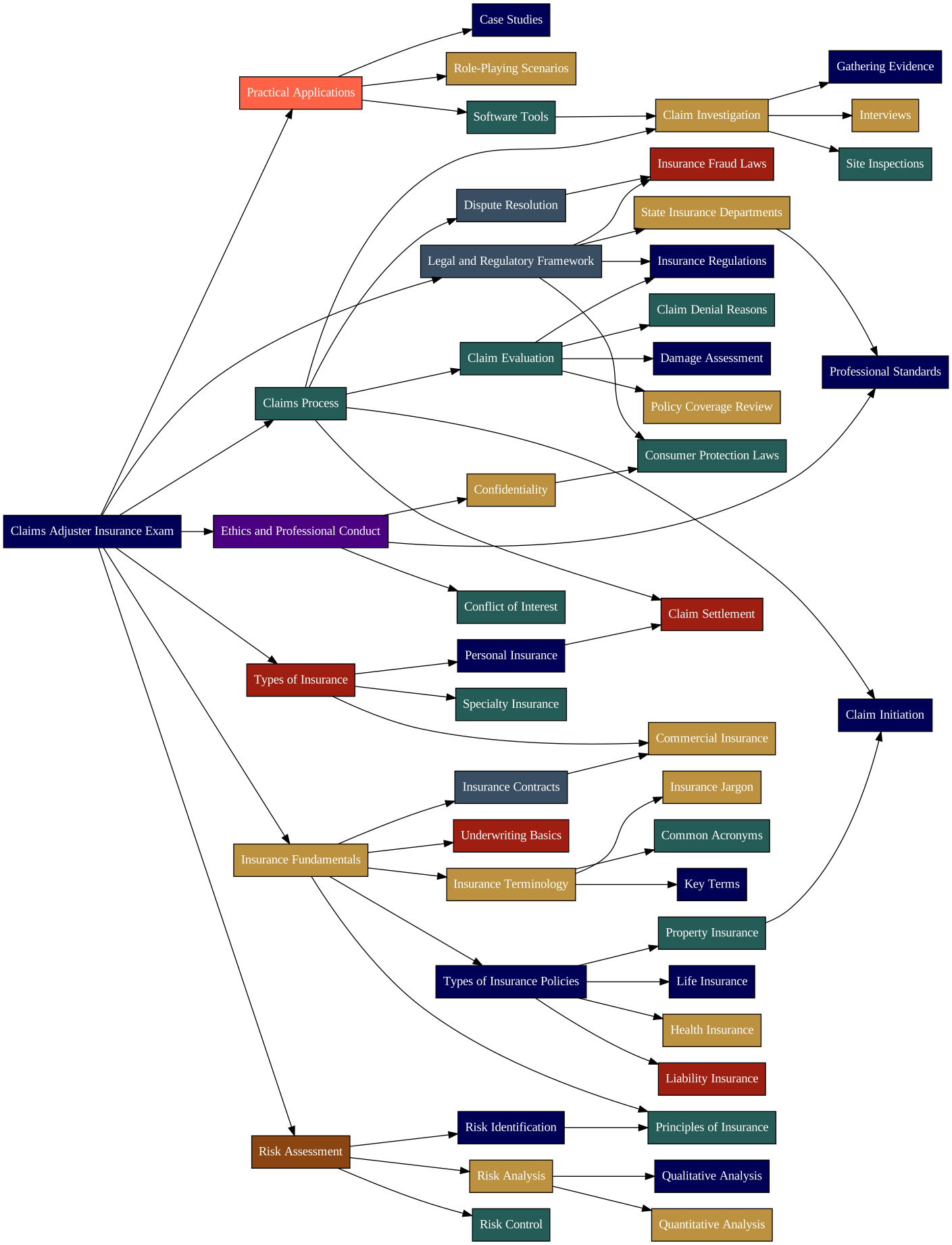
Quiz-summary
0 of 30 questions completed
Questions:
- 1
- 2
- 3
- 4
- 5
- 6
- 7
- 8
- 9
- 10
- 11
- 12
- 13
- 14
- 15
- 16
- 17
- 18
- 19
- 20
- 21
- 22
- 23
- 24
- 25
- 26
- 27
- 28
- 29
- 30
Information
Premium Practice Questions
You have already completed the quiz before. Hence you can not start it again.
Quiz is loading...
You must sign in or sign up to start the quiz.
You have to finish following quiz, to start this quiz:
Results
0 of 30 questions answered correctly
Your time:
Time has elapsed
You have reached 0 of 0 points, (0)
Categories
- Not categorized 0%
- 1
- 2
- 3
- 4
- 5
- 6
- 7
- 8
- 9
- 10
- 11
- 12
- 13
- 14
- 15
- 16
- 17
- 18
- 19
- 20
- 21
- 22
- 23
- 24
- 25
- 26
- 27
- 28
- 29
- 30
- Answered
- Review
-
Question 1 of 30
1. Question
When analyzing the responsibilities of local governments in flood mapping, it is essential to understand the collaborative nature of their role within the flood insurance framework. Local governments not only gather and provide critical data regarding flood-prone areas but also actively participate in the review and update processes of flood maps to reflect current conditions. In a situation where updated flood insurance rate maps (FIRMs) are being released, what key actions should local governments prioritize to ensure effective communication and compliance with these updates? Specifically, consider how they can engage the community, collaborate with stakeholders, and implement necessary changes to local regulations in response to new flood risk information.
Correct
Local governments play a crucial role in flood mapping and management, primarily through their involvement in the National Flood Insurance Program (NFIP). Their responsibilities include collaborating with state and federal agencies to develop accurate flood insurance rate maps (FIRMs). These maps help establish flood zones, which are critical for determining flood insurance requirements and potential risks to properties. By conducting local assessments of flood-prone areas, municipalities can provide valuable data for these maps. The local government is also responsible for engaging the community in the flood mapping process, ensuring that residents and stakeholders understand flood risk areas and the significance of adhering to building regulations designed to mitigate flood damage. This includes implementing land-use planning strategies that consider local topography, hydrology, and historical flood events. Moreover, when updated FIRMs are released, local governments must educate their citizens about changes to flood zones and building codes, thereby fulfilling their obligation to promote public safety and improve resilience against flooding.
Incorrect
Local governments play a crucial role in flood mapping and management, primarily through their involvement in the National Flood Insurance Program (NFIP). Their responsibilities include collaborating with state and federal agencies to develop accurate flood insurance rate maps (FIRMs). These maps help establish flood zones, which are critical for determining flood insurance requirements and potential risks to properties. By conducting local assessments of flood-prone areas, municipalities can provide valuable data for these maps. The local government is also responsible for engaging the community in the flood mapping process, ensuring that residents and stakeholders understand flood risk areas and the significance of adhering to building regulations designed to mitigate flood damage. This includes implementing land-use planning strategies that consider local topography, hydrology, and historical flood events. Moreover, when updated FIRMs are released, local governments must educate their citizens about changes to flood zones and building codes, thereby fulfilling their obligation to promote public safety and improve resilience against flooding.
-
Question 2 of 30
2. Question
When you are faced with a complex flood insurance claim that involves potential conflicts of interest, how should you approach the decision-making process to ensure ethical standards are upheld? Consider the implications of transparency, potential biases, and the importance of adhering to industry regulations. Your role necessitates a critical evaluation of how to balance the expectations of stakeholders, the need for accurate claims processing, and the ethical obligations to your clients. Take into account how your decisions might affect your organization’s reputation and the trust of the community you serve. How do you proceed to ensure that your decision reflects the highest ethical standards while navigating these complexities?
Correct
Ethical decision-making in flood insurance requires a nuanced understanding of various principles and practices that safeguard the interests of policyholders while maintaining compliance with regulations. One key aspect involves understanding the potential conflicts of interest that may arise during the underwriting process or when managing claims. Professionals in the field must prioritize transparency and honesty by disclosing any personal relationships or financial interests that could influence their decisions. Furthermore, understanding the implications of misrepresentation or fraud is crucial, as these actions can lead to severe consequences for both the insurer and the insured. Effective ethical decision-making also entails considering the long-term impacts of decisions on community relations and the insurer’s reputation. Adopting a principled approach, guided by established codes of conduct and ethical standards, can enhance trust and credibility within the industry. Ultimately, the objective is to foster an environment where the needs of the policyholders are met while ensuring compliance with laws and regulations governing flood insurance.
Incorrect
Ethical decision-making in flood insurance requires a nuanced understanding of various principles and practices that safeguard the interests of policyholders while maintaining compliance with regulations. One key aspect involves understanding the potential conflicts of interest that may arise during the underwriting process or when managing claims. Professionals in the field must prioritize transparency and honesty by disclosing any personal relationships or financial interests that could influence their decisions. Furthermore, understanding the implications of misrepresentation or fraud is crucial, as these actions can lead to severe consequences for both the insurer and the insured. Effective ethical decision-making also entails considering the long-term impacts of decisions on community relations and the insurer’s reputation. Adopting a principled approach, guided by established codes of conduct and ethical standards, can enhance trust and credibility within the industry. Ultimately, the objective is to foster an environment where the needs of the policyholders are met while ensuring compliance with laws and regulations governing flood insurance.
-
Question 3 of 30
3. Question
You are reviewing a community’s flood management plan and notice that the local government has not fully adopted the floodplain management regulations as outlined by the National Flood Insurance Program. In this context, which primary function of the Federal Emergency Management Agency (FEMA) is most directly impacted by this lack of compliance? Consider how this affects both the insurance availability and community preparedness.
Correct
The Federal Emergency Management Agency (FEMA) plays a pivotal role in the administration of flood insurance programs in the United States, particularly through its implementation of the National Flood Insurance Program (NFIP). One of FEMA’s primary responsibilities is to identify flood-prone areas and manage flood plain development to mitigate risks. This involves conducting risk assessments, setting insurance rates, and providing technical guidance. FEMA also oversees community participation in the NFIP, encouraging local governments to adopt and enforce floodplain management regulations. Through these regulations, FEMA ensures that communities take proactive steps to reduce flood damage, thereby improving safety and sustainability. Additionally, FEMA is tasked with educating both the public and local officials about flood risks and insurance options available under the NFIP. This comprehensive approach not only enhances individual preparedness but also strengthens community resilience against flooding events. Understanding FEMA’s multifaceted role helps stakeholders appreciate the importance of complying with floodplain management requirements and seeking local assistance to navigate insurance claims effectively.
Incorrect
The Federal Emergency Management Agency (FEMA) plays a pivotal role in the administration of flood insurance programs in the United States, particularly through its implementation of the National Flood Insurance Program (NFIP). One of FEMA’s primary responsibilities is to identify flood-prone areas and manage flood plain development to mitigate risks. This involves conducting risk assessments, setting insurance rates, and providing technical guidance. FEMA also oversees community participation in the NFIP, encouraging local governments to adopt and enforce floodplain management regulations. Through these regulations, FEMA ensures that communities take proactive steps to reduce flood damage, thereby improving safety and sustainability. Additionally, FEMA is tasked with educating both the public and local officials about flood risks and insurance options available under the NFIP. This comprehensive approach not only enhances individual preparedness but also strengthens community resilience against flooding events. Understanding FEMA’s multifaceted role helps stakeholders appreciate the importance of complying with floodplain management requirements and seeking local assistance to navigate insurance claims effectively.
-
Question 4 of 30
4. Question
When you are faced with a community that frequently experiences flooding, it is essential to evaluate various flood mitigation techniques to determine the best approach to reduce future damages. In assessing these methods, which technique would you identify as the most effective for managing floodwaters while also considering environmental sustainability? Additionally, think about how this technique integrates into the community’s overall flood management strategy. What are the characteristics of this approach that contribute to its efficacy in mitigating flood risks, and what considerations should be taken into account regarding maintenance and long-term effectiveness in the face of changing environmental conditions?
Correct
Flood mitigation techniques are essential strategies employed to reduce the risk of flooding and limit the damage it can cause to properties and infrastructure. One of the most effective methods is the construction of flood barriers, such as levees and flood walls, which can redirect water and protect vulnerable areas. These barriers work by elevating the ground level or creating a physical barrier that limits the flow of floodwaters into populated regions. Another technique is the use of retention basins, which collect excess rainwater and slowly release it into waterways, helping to control stormwater runoff. These basins can be constructed on-site or integrated into urban planning. Furthermore, restoration of wetlands plays a significant role as they can absorb excess rainfall and act as natural flood controls. Each of these mitigation techniques has its unique benefits, and their effectiveness often depends on the specific geographical and environmental conditions of an area. When evaluating these techniques, it is crucial to consider factors such as cost, environmental impact, and long-term sustainability to select the best approach for a given community.
Incorrect
Flood mitigation techniques are essential strategies employed to reduce the risk of flooding and limit the damage it can cause to properties and infrastructure. One of the most effective methods is the construction of flood barriers, such as levees and flood walls, which can redirect water and protect vulnerable areas. These barriers work by elevating the ground level or creating a physical barrier that limits the flow of floodwaters into populated regions. Another technique is the use of retention basins, which collect excess rainwater and slowly release it into waterways, helping to control stormwater runoff. These basins can be constructed on-site or integrated into urban planning. Furthermore, restoration of wetlands plays a significant role as they can absorb excess rainfall and act as natural flood controls. Each of these mitigation techniques has its unique benefits, and their effectiveness often depends on the specific geographical and environmental conditions of an area. When evaluating these techniques, it is crucial to consider factors such as cost, environmental impact, and long-term sustainability to select the best approach for a given community.
-
Question 5 of 30
5. Question
In the context of flood risk management, a property owner is considering various mitigation strategies to protect their home from flooding. They want to ensure their actions are both effective and compliant with local regulations. What type of individual property mitigation measure would be the most effective in decreasing flood risk while potentially lowering their flood insurance premiums?
Correct
Individual property mitigation measures are essential strategies implemented to reduce flood risk and manage the consequences of flooding. These measures can significantly impact both the physical resilience of a property and its insurability under the National Flood Insurance Program (NFIP). Effective mitigation can include elevating structures above the Base Flood Elevation (BFE), using flood-resistant materials, and integrating proper drainage systems to divert floodwaters away from critical areas. Additionally, these approaches promote compliance with local zoning laws and building codes, which are critical for ensuring the long-term sustainability of properties in flood-prone areas. Understanding the nuances of these measures not only helps in protecting properties but also enhances community flood resilience. Furthermore, property owners who undertake these mitigation steps may qualify for premium discounts on their flood insurance policies, reflecting the reduced risk associated with well-prepared properties. Thus, the implementation of effective mitigation measures is not just a property-specific decision; it is a community-wide initiative that can lead to improved public safety and reduced economic losses from future flood events.
Incorrect
Individual property mitigation measures are essential strategies implemented to reduce flood risk and manage the consequences of flooding. These measures can significantly impact both the physical resilience of a property and its insurability under the National Flood Insurance Program (NFIP). Effective mitigation can include elevating structures above the Base Flood Elevation (BFE), using flood-resistant materials, and integrating proper drainage systems to divert floodwaters away from critical areas. Additionally, these approaches promote compliance with local zoning laws and building codes, which are critical for ensuring the long-term sustainability of properties in flood-prone areas. Understanding the nuances of these measures not only helps in protecting properties but also enhances community flood resilience. Furthermore, property owners who undertake these mitigation steps may qualify for premium discounts on their flood insurance policies, reflecting the reduced risk associated with well-prepared properties. Thus, the implementation of effective mitigation measures is not just a property-specific decision; it is a community-wide initiative that can lead to improved public safety and reduced economic losses from future flood events.
-
Question 6 of 30
6. Question
When analyzing the importance of flood insurance in Washington, particularly in coastal and riverine areas, what best defines the essence of a flood insurance policy? Consider not just the coverage aspects, but also the broader implications for property owners who may assume they are protected under a standard homeowner’s policy. This distinction can have significant financial consequences in the event of a disaster. Given the climate and geographical factors in Washington, how should one conceptualize what flood insurance truly encompasses, and what critical elements should be highlighted to ensure comprehensive understanding by potential policyholders?
Correct
Flood insurance is a specialized type of insurance policy designed to protect property owners from financial losses resulting from water-related incidents, particularly flooding. It covers damages caused by rising water, which is distinct from water damage due to other sources like leaks or broken pipes. Flood insurance policies typically include provisions that specify the definitions of flood events, exclusions, and the types of property covered. Understanding flood insurance is crucial for individuals and businesses in flood-prone areas, particularly in Washington, where the risk of flooding can be significant due to environmental factors. Additionally, flood insurance often operates under federal programs, such as the National Flood Insurance Program (NFIP), which provides standardized coverages and rates. Knowledge of the policy limits, endorsements, and the claims process is essential for both agents and policyholders. Professionals in this field must be able to explain the complexities surrounding flood coverage to ensure that clients are adequately protected, which includes understanding regulatory requirements and the importance of maintaining appropriate insurance levels against flooding risks.
Incorrect
Flood insurance is a specialized type of insurance policy designed to protect property owners from financial losses resulting from water-related incidents, particularly flooding. It covers damages caused by rising water, which is distinct from water damage due to other sources like leaks or broken pipes. Flood insurance policies typically include provisions that specify the definitions of flood events, exclusions, and the types of property covered. Understanding flood insurance is crucial for individuals and businesses in flood-prone areas, particularly in Washington, where the risk of flooding can be significant due to environmental factors. Additionally, flood insurance often operates under federal programs, such as the National Flood Insurance Program (NFIP), which provides standardized coverages and rates. Knowledge of the policy limits, endorsements, and the claims process is essential for both agents and policyholders. Professionals in this field must be able to explain the complexities surrounding flood coverage to ensure that clients are adequately protected, which includes understanding regulatory requirements and the importance of maintaining appropriate insurance levels against flooding risks.
-
Question 7 of 30
7. Question
During a flood event, a community faces significant challenges in coordinating their response and recovery efforts. As you evaluate their disaster preparedness plan, which aspect should be prioritized to enhance their effectiveness in mitigating flood impacts and ensuring swift recovery? Consider the importance of inter-agency collaboration, community education, and the integration of sustainable rebuilding practices in your analysis of the best approach to disaster response in flood-prone areas.
Correct
Effective disaster response and recovery processes are essential for minimizing the impact of flooding on communities. One key aspect of this process is the development of comprehensive preparedness plans, which include risk assessment, resource allocation, and training for emergency personnel. These plans should address potential hazards, such as flash floods or riverine flooding, and outline specific actions to be taken before, during, and after a disaster event. Coordination among local, state, and federal agencies is also critical, as it ensures that there is a unified response and that resources are utilized efficiently. Furthermore, community engagement plays a pivotal role; educating residents about flood risks and response strategies fosters resilience and empowers individuals to act effectively during emergencies. Recovery efforts must not only focus on restoring damaged infrastructure but also consider long-term implications, such as rebuilding in a way that reduces future risk. This includes implementing sustainable practices and adhering to updated regulations that prioritize safety and mitigation strategies.
Incorrect
Effective disaster response and recovery processes are essential for minimizing the impact of flooding on communities. One key aspect of this process is the development of comprehensive preparedness plans, which include risk assessment, resource allocation, and training for emergency personnel. These plans should address potential hazards, such as flash floods or riverine flooding, and outline specific actions to be taken before, during, and after a disaster event. Coordination among local, state, and federal agencies is also critical, as it ensures that there is a unified response and that resources are utilized efficiently. Furthermore, community engagement plays a pivotal role; educating residents about flood risks and response strategies fosters resilience and empowers individuals to act effectively during emergencies. Recovery efforts must not only focus on restoring damaged infrastructure but also consider long-term implications, such as rebuilding in a way that reduces future risk. This includes implementing sustainable practices and adhering to updated regulations that prioritize safety and mitigation strategies.
-
Question 8 of 30
8. Question
In the situation of flood insurance compliance, consider the potential repercussions for an insurance company that fails to follow the regulations set forth by the National Flood Insurance Program (NFIP) and Washington state law. If a policyholder files a claim after a flood event and the insurer has not complied with required standards, which of the following potential consequences could arise from this non-compliance?
Correct
The consequences of non-compliance in flood insurance practices are significant and can affect various stakeholders, including policyholders, insurance companies, and regulatory bodies. When an entity fails to adhere to the established flood insurance regulations, it can result in denied claims during flood events, which can lead to financial devastation for homeowners and businesses. Non-compliance may also lead to increased scrutiny from regulatory authorities, who may impose fines or penalties. Insurers risk losing their license to operate if they cannot demonstrate adherence to the National Flood Insurance Program (NFIP) guidelines or the specific regulations set out by Washington state law. Additionally, the reputation of the insurance company can suffer, resulting in a loss of trust among clients and the community. Policyholders are then left to bear the financial burden caused by inadequate insurance, which can contribute to a broader risk of economic instability in flood-prone areas. Therefore, understanding and adhering to flood insurance practices is essential for maintaining compliance and ensuring the protection of all stakeholders involved.
Incorrect
The consequences of non-compliance in flood insurance practices are significant and can affect various stakeholders, including policyholders, insurance companies, and regulatory bodies. When an entity fails to adhere to the established flood insurance regulations, it can result in denied claims during flood events, which can lead to financial devastation for homeowners and businesses. Non-compliance may also lead to increased scrutiny from regulatory authorities, who may impose fines or penalties. Insurers risk losing their license to operate if they cannot demonstrate adherence to the National Flood Insurance Program (NFIP) guidelines or the specific regulations set out by Washington state law. Additionally, the reputation of the insurance company can suffer, resulting in a loss of trust among clients and the community. Policyholders are then left to bear the financial burden caused by inadequate insurance, which can contribute to a broader risk of economic instability in flood-prone areas. Therefore, understanding and adhering to flood insurance practices is essential for maintaining compliance and ensuring the protection of all stakeholders involved.
-
Question 9 of 30
9. Question
When you are faced with the challenge of implementing floodplain management regulations in your community, it is crucial to understand the interplay between local planning practices and compliance with federal standards. The regulations not only establish guidelines for new construction but also mandate the assessment of existing structures in flood-prone areas. Consider a scenario where a local government has identified a significant increase in flooding incidents due to unregulated development in adjacent areas. How should they approach the integration of effective floodplain management strategies while ensuring compliance with both local and federal requirements?
Correct
Floodplain management regulations are designed to minimize the risks associated with flooding and ensure communities adhere to specific standards to promote safety and sustainability. These regulations often arise from the National Flood Insurance Program (NFIP), which mandates participating communities to enforce land-use planning and development practices that reduce flood risk. A comprehensive understanding of these regulations includes grasping concepts such as floodplain zoning, the establishment of base flood elevation (BFE), and the necessity for floodplain development permits. Failure to comply with these regulations can result in the loss of eligibility for federal flood insurance programs and can expose communities to increased vulnerability to flood disasters. Additionally, effective floodplain management involves ensuring that new developments do not exacerbate flooding issues. This includes implementing strategies that mitigate potential risks to both existing and future developments, thus fostering community resilience. Each component of floodplain management regulations works in tandem to create a cohesive framework that protects communities, reduces economic losses, and enhances public awareness regarding flood-related hazards.
Incorrect
Floodplain management regulations are designed to minimize the risks associated with flooding and ensure communities adhere to specific standards to promote safety and sustainability. These regulations often arise from the National Flood Insurance Program (NFIP), which mandates participating communities to enforce land-use planning and development practices that reduce flood risk. A comprehensive understanding of these regulations includes grasping concepts such as floodplain zoning, the establishment of base flood elevation (BFE), and the necessity for floodplain development permits. Failure to comply with these regulations can result in the loss of eligibility for federal flood insurance programs and can expose communities to increased vulnerability to flood disasters. Additionally, effective floodplain management involves ensuring that new developments do not exacerbate flooding issues. This includes implementing strategies that mitigate potential risks to both existing and future developments, thus fostering community resilience. Each component of floodplain management regulations works in tandem to create a cohesive framework that protects communities, reduces economic losses, and enhances public awareness regarding flood-related hazards.
-
Question 10 of 30
10. Question
Consider a scenario where a claims adjuster is dispatched to evaluate a flood damage claim for a homeowner whose property was significantly impacted by a recent storm. The adjuster must determine the extent of the damage, gather evidence, and communicate findings to both the homeowner and the insurance company. What is the primary responsibility of a claims adjuster in the context of flood insurance, ensuring adherence to ethical and legal standards throughout this process?
Correct
Claims adjusters play a crucial role in the flood insurance process, acting as intermediaries between policyholders and insurance companies. Their primary responsibility is to assess and evaluate the damage after a flood event, determining the extent of loss and verifying the claims submitted by insured individuals. This process requires a comprehensive understanding of flood insurance policies, the specific coverages provided, and the applicable regulations governing claims. Adjusters must meticulously gather evidence, including photographs, repair estimates, and witness statements, to create a detailed report that supports their findings. They also engage with policyholders to explain the claims process and address any concerns, ensuring transparency and effective communication. This role is governed by ethical guidelines and legal standards, requiring adjusters to act impartially and fairly, safeguarding the rights of policyholders while also meeting the requirements of the insurer. Understanding the nuances of the claims process, including how to identify covered perils and assess damage accurately, is essential for adjusters to perform their duties effectively and uphold the integrity of the flood insurance system.
Incorrect
Claims adjusters play a crucial role in the flood insurance process, acting as intermediaries between policyholders and insurance companies. Their primary responsibility is to assess and evaluate the damage after a flood event, determining the extent of loss and verifying the claims submitted by insured individuals. This process requires a comprehensive understanding of flood insurance policies, the specific coverages provided, and the applicable regulations governing claims. Adjusters must meticulously gather evidence, including photographs, repair estimates, and witness statements, to create a detailed report that supports their findings. They also engage with policyholders to explain the claims process and address any concerns, ensuring transparency and effective communication. This role is governed by ethical guidelines and legal standards, requiring adjusters to act impartially and fairly, safeguarding the rights of policyholders while also meeting the requirements of the insurer. Understanding the nuances of the claims process, including how to identify covered perils and assess damage accurately, is essential for adjusters to perform their duties effectively and uphold the integrity of the flood insurance system.
-
Question 11 of 30
11. Question
When analyzing the current landscape of flood insurance, it becomes increasingly important to consider the role of ongoing education for professionals in this field. With the rapid changes in policies, regulatory requirements, and best practices, how essential is it for insurance agents and adjusters to engage in continuous learning? Reflecting on the various dimensions of this topic, what might be the primary benefit of such educational pursuits in ensuring compliance and enhancing client service?
Correct
Ongoing education in flood insurance is critical for professionals in the field due to the ever-evolving nature of regulations, policies, and best practices. Flood insurance is governed by a complex set of laws including the National Flood Insurance Act, and related state regulations that can change frequently. Continuous learning helps insurance agents and adjusters stay up-to-date on changes that can impact policy standardization, claims processing, and risk assessment. Moreover, as new technologies and data become available, understanding these advancements is essential to effectively advise clients on their flood insurance needs. Without ongoing education, professionals may struggle to identify coverage gaps, provide accurate risk assessments, or advocate effectively for clients during claims disputes. Additionally, such education can enhance customer trust, as clients are more likely to feel confident in an agent’s expertise when they demonstrate a current understanding of the nuances of flood insurance and the associated legal landscape. By regularly participating in training sessions, workshops, and webinars, professionals can not only maintain compliance but also deliver the highest standard of service to their clients.
Incorrect
Ongoing education in flood insurance is critical for professionals in the field due to the ever-evolving nature of regulations, policies, and best practices. Flood insurance is governed by a complex set of laws including the National Flood Insurance Act, and related state regulations that can change frequently. Continuous learning helps insurance agents and adjusters stay up-to-date on changes that can impact policy standardization, claims processing, and risk assessment. Moreover, as new technologies and data become available, understanding these advancements is essential to effectively advise clients on their flood insurance needs. Without ongoing education, professionals may struggle to identify coverage gaps, provide accurate risk assessments, or advocate effectively for clients during claims disputes. Additionally, such education can enhance customer trust, as clients are more likely to feel confident in an agent’s expertise when they demonstrate a current understanding of the nuances of flood insurance and the associated legal landscape. By regularly participating in training sessions, workshops, and webinars, professionals can not only maintain compliance but also deliver the highest standard of service to their clients.
-
Question 12 of 30
12. Question
In the context of developing new products within the flood insurance market, consider a scenario where an insurer is looking to enhance customer engagement and improve risk management strategies. They are exploring options that utilize new technologies and data analytics to better predict and manage flood risks for their policyholders. Which innovative approach would most effectively achieve these goals while also addressing the need for prompt claims processing and customer satisfaction?
Correct
Innovations in flood insurance products are increasingly important as they help to address the evolving nature of flood risks due to climate change and urban development. A key innovation is the introduction of parametric insurance products, which provide payouts based on predefined parameters, such as rainfall levels or river gage readings, rather than traditional loss assessments. This model enhances response times for policyholders and reduces administrative costs associated with claims processing. Furthermore, improvements in technology and data analytics have enabled insurers to refine risk assessments, allowing them to offer tailored products that better meet the needs of individual clients or communities. Additionally, some insurers are integrating flood insurance with other forms of property coverage, creating bundled products that simplify the purchasing process for consumers. These innovations not only provide greater coverage options but also promote greater participation in flood insurance, addressing the underinsurance challenge faced in many flood-prone areas. Understanding these innovations is crucial for professionals in the field to adapt and provide appropriate recommendations to policyholders.
Incorrect
Innovations in flood insurance products are increasingly important as they help to address the evolving nature of flood risks due to climate change and urban development. A key innovation is the introduction of parametric insurance products, which provide payouts based on predefined parameters, such as rainfall levels or river gage readings, rather than traditional loss assessments. This model enhances response times for policyholders and reduces administrative costs associated with claims processing. Furthermore, improvements in technology and data analytics have enabled insurers to refine risk assessments, allowing them to offer tailored products that better meet the needs of individual clients or communities. Additionally, some insurers are integrating flood insurance with other forms of property coverage, creating bundled products that simplify the purchasing process for consumers. These innovations not only provide greater coverage options but also promote greater participation in flood insurance, addressing the underinsurance challenge faced in many flood-prone areas. Understanding these innovations is crucial for professionals in the field to adapt and provide appropriate recommendations to policyholders.
-
Question 13 of 30
13. Question
In the situation of elevated flood risk in a local community, how can community awareness play a transformative role in increasing resilience and preparedness among residents? Consider the various facets of impact this awareness can have, particularly in regard to promoting proactive measures, enhancing policy support, and fostering collective action. What aspects should communities emphasize to ensure that such awareness translates into effective risk reduction strategies?
Correct
Community awareness regarding flood risks is crucial for effective disaster preparedness and mitigation. It empowers individuals and neighborhoods to recognize their vulnerability to flooding and the impact it can have on their lives and properties. Informed communities can better understand flood zones, the importance of flood insurance, and available resources for risk reduction. For instance, by encouraging residents to engage in preparedness initiatives—such as participating in local emergency planning or learning about flood prediction technologies—communities can enhance their overall resilience. A proactive approach to awareness not only fosters a culture of safety but also encourages community members to support policies that address flood risk management. This can lead to improved infrastructure, better zoning laws, and increased funding for flood mitigation projects. Additionally, community awareness can mobilize collective action in advocacy for local and state government accountability in floodplain management. Thus, the strength of community engagement lies in its ability to create informed citizens who take personal responsibility and advocate for broader structural changes in flood risk management.
Incorrect
Community awareness regarding flood risks is crucial for effective disaster preparedness and mitigation. It empowers individuals and neighborhoods to recognize their vulnerability to flooding and the impact it can have on their lives and properties. Informed communities can better understand flood zones, the importance of flood insurance, and available resources for risk reduction. For instance, by encouraging residents to engage in preparedness initiatives—such as participating in local emergency planning or learning about flood prediction technologies—communities can enhance their overall resilience. A proactive approach to awareness not only fosters a culture of safety but also encourages community members to support policies that address flood risk management. This can lead to improved infrastructure, better zoning laws, and increased funding for flood mitigation projects. Additionally, community awareness can mobilize collective action in advocacy for local and state government accountability in floodplain management. Thus, the strength of community engagement lies in its ability to create informed citizens who take personal responsibility and advocate for broader structural changes in flood risk management.
-
Question 14 of 30
14. Question
You are reviewing a flood insurance policy for a client who is concerned about potential coverage limits and exclusions. During your review, you explain that flood insurance policies typically impose specific coverage limits for different types of loss. Additionally, you highlight that there are particular exclusions that could significantly impact their protection. In this context, which statement best describes the implications of coverage limits and exclusions in flood insurance policies?
Correct
In flood insurance, understanding coverage limits and exclusions is crucial for both policyholders and agents. Coverage limits refer to the maximum amount the insurer is obligated to pay under the policy in the event of a loss due to flooding. Each coverage type, such as structural damage, personal belongings, or additional living expenses, has a designated limit, which must be properly comprehended to ensure adequate protection. Exclusions are specific conditions or scenarios that will not be covered by the policy, thus it is essential for agents to communicate these effectively to clients. Common exclusions in flood insurance might include damage caused by mold, deterioration, or certain types of water intrusion that are not classified as floods. It’s also vital for policyholders to be aware of waiting periods before coverage begins, as many policies impose a standard waiting period after purchase. Proper understanding helps in setting realistic expectations and ensuring that the coverage aligns with the individual’s or organization’s risk exposure. This knowledge greatly influences customer satisfaction and helps prevent disputes at the time of claims.
Incorrect
In flood insurance, understanding coverage limits and exclusions is crucial for both policyholders and agents. Coverage limits refer to the maximum amount the insurer is obligated to pay under the policy in the event of a loss due to flooding. Each coverage type, such as structural damage, personal belongings, or additional living expenses, has a designated limit, which must be properly comprehended to ensure adequate protection. Exclusions are specific conditions or scenarios that will not be covered by the policy, thus it is essential for agents to communicate these effectively to clients. Common exclusions in flood insurance might include damage caused by mold, deterioration, or certain types of water intrusion that are not classified as floods. It’s also vital for policyholders to be aware of waiting periods before coverage begins, as many policies impose a standard waiting period after purchase. Proper understanding helps in setting realistic expectations and ensuring that the coverage aligns with the individual’s or organization’s risk exposure. This knowledge greatly influences customer satisfaction and helps prevent disputes at the time of claims.
-
Question 15 of 30
15. Question
A team is developing a presentation to educate homeowners in Washington about the various flood insurance policies available through the National Flood Insurance Program (NFIP). They plan to highlight the coverage provided by different policy types to help homeowners make informed decisions. In this context, which type of flood insurance policy specifically covers the structure of the building itself, including its foundation, while another policy type protects personal property within that structure? Understanding these distinctions can guide policy selection for clients based on individual needs and flood risk assessments.
Correct
Understanding the different types of flood insurance policies is crucial for professionals involved in flood insurance in Washington. The National Flood Insurance Program (NFIP) provides two primary types of policies: the Building Property Coverage, which insures the structure itself, and the Personal Property Coverage, which protects personal belongings within the building. Building Property Coverage generally includes coverage for the building and its foundation, while Personal Property Coverage focuses on movable items and contents. It is essential to comprehend these distinctions because they determine the level of protection a property owner has against flood damages. Additionally, it’s important for agents and brokers to convey the differences in coverage effectively to clients, as many may not be aware of the specifics. The policies have different limits, exclusions, and deductibles, which can greatly affect an insured’s financial recovery in the event of a flood. Furthermore, there are also preferred risk policies available for lower-risk areas, which can provide additional opportunities for cost savings while still delivering adequate protection. Knowledge of these policies allows insurance professionals to tailor recommendations to clients based on their specific risk profiles and needs, thus ensuring compliance with regulatory standards and ethical guidelines in the insurance industry.
Incorrect
Understanding the different types of flood insurance policies is crucial for professionals involved in flood insurance in Washington. The National Flood Insurance Program (NFIP) provides two primary types of policies: the Building Property Coverage, which insures the structure itself, and the Personal Property Coverage, which protects personal belongings within the building. Building Property Coverage generally includes coverage for the building and its foundation, while Personal Property Coverage focuses on movable items and contents. It is essential to comprehend these distinctions because they determine the level of protection a property owner has against flood damages. Additionally, it’s important for agents and brokers to convey the differences in coverage effectively to clients, as many may not be aware of the specifics. The policies have different limits, exclusions, and deductibles, which can greatly affect an insured’s financial recovery in the event of a flood. Furthermore, there are also preferred risk policies available for lower-risk areas, which can provide additional opportunities for cost savings while still delivering adequate protection. Knowledge of these policies allows insurance professionals to tailor recommendations to clients based on their specific risk profiles and needs, thus ensuring compliance with regulatory standards and ethical guidelines in the insurance industry.
-
Question 16 of 30
16. Question
In the context of the evolving landscape of environmental risks, how has climate change specifically influenced the regulation and underwriting practices associated with flood insurance? As flood events become more frequent and severe due to rising sea levels and changing weather patterns, the insurance industry faces the challenge of adapting its policies to these new realities. Insurers are required to reassess risk models and adjust premiums accordingly, leading to a comprehensive review of flood zones. How does this interconnectedness of climate change and flood insurance regulation shape the future of underwriting practices and risk assessments, particularly in regions that were once deemed to have minimal flood exposure?
Correct
Climate change significantly influences flood risk, which in turn affects flood insurance policies and premium calculations. Rising sea levels and increased frequency of extreme weather events, such as heavy rainfall and hurricanes, elevate the likelihood of flooding in many areas that were previously considered low-risk. This shift causes insurance underwriters to reassess risk profiles, leading to potential adjustments in coverage availability and premium rates. Furthermore, areas that were once classified as flood zones may become newly designated flood-prone regions, impacting property values and insurability. Insurers may also face increased claims due to more frequent and severe flooding events, which can result in overall market instability. As such, policies must adapt to these climatic realities by incorporating innovative risk assessment tools and regulatory frameworks that account for the changing environment. This includes updating mapping techniques and leveraging technology to predict future flood events more accurately. Therefore, the awareness and understanding of the link between climate change and flood insurance is crucial for informed policy-making and risk management strategies.
Incorrect
Climate change significantly influences flood risk, which in turn affects flood insurance policies and premium calculations. Rising sea levels and increased frequency of extreme weather events, such as heavy rainfall and hurricanes, elevate the likelihood of flooding in many areas that were previously considered low-risk. This shift causes insurance underwriters to reassess risk profiles, leading to potential adjustments in coverage availability and premium rates. Furthermore, areas that were once classified as flood zones may become newly designated flood-prone regions, impacting property values and insurability. Insurers may also face increased claims due to more frequent and severe flooding events, which can result in overall market instability. As such, policies must adapt to these climatic realities by incorporating innovative risk assessment tools and regulatory frameworks that account for the changing environment. This includes updating mapping techniques and leveraging technology to predict future flood events more accurately. Therefore, the awareness and understanding of the link between climate change and flood insurance is crucial for informed policy-making and risk management strategies.
-
Question 17 of 30
17. Question
In the context of preparing for the Washington Flood Insurance Exam, you are tasked with ensuring that your knowledge reflects the most current regulatory changes and industry trends. What is considered the best practice for maintaining this level of awareness? Reflect on the various methods and resources available to flood insurance professionals that can assist in staying informed.
Correct
Staying updated on regulatory changes and industry trends is crucial for professionals dealing with flood insurance, particularly within Washington State. Given that flood insurance regulations are subject to modification based on environmental changes, economic factors, and legislative actions, practitioners must actively seek out information regarding these updates to ensure compliance and provide accurate advice to clients. This involves monitoring federal and state government announcements, subscribing to relevant industry publications, and engaging in professional networks which discuss changes affecting flood insurance policies, underwriting practices, and claims processes. The Federal Emergency Management Agency (FEMA) also plays a significant role in flood insurance regulations and is a key entity for updates. By integrating the latest regulatory information into practice, professionals can better serve their clients, understand risk assessments, and maintain the integrity of their operations. Additionally, embracing technology, such as flood mapping tools and predictive analytics, helps professionals interpret how emerging trends may impact flood risks and insurance costs, ultimately shaping their advice and service offerings.
Incorrect
Staying updated on regulatory changes and industry trends is crucial for professionals dealing with flood insurance, particularly within Washington State. Given that flood insurance regulations are subject to modification based on environmental changes, economic factors, and legislative actions, practitioners must actively seek out information regarding these updates to ensure compliance and provide accurate advice to clients. This involves monitoring federal and state government announcements, subscribing to relevant industry publications, and engaging in professional networks which discuss changes affecting flood insurance policies, underwriting practices, and claims processes. The Federal Emergency Management Agency (FEMA) also plays a significant role in flood insurance regulations and is a key entity for updates. By integrating the latest regulatory information into practice, professionals can better serve their clients, understand risk assessments, and maintain the integrity of their operations. Additionally, embracing technology, such as flood mapping tools and predictive analytics, helps professionals interpret how emerging trends may impact flood risks and insurance costs, ultimately shaping their advice and service offerings.
-
Question 18 of 30
18. Question
In the context of flood insurance, you are evaluating a property to determine the factors that contribute to its insurance premium. Consider a scenario where a house is situated in a designated high-risk flood zone, yet the owner has undertaken several improvements to enhance its flood resilience. As you analyze the various factors affecting the premium, which element would most significantly influence the overall cost of flood insurance for this property? Your assessment must consider not only the risk of flooding inherent due to the flood zone designation but also the implications of the improvements made and other relevant factors.
Correct
Flood insurance premiums are influenced by an array of factors that insurers use to assess risk and determine pricing. Primary among these factors is the elevation of the building above the base flood elevation (BFE). Properties located in flood-prone areas that are below BFE usually face higher premiums due to the increased risk of flooding. Additionally, the type of flood zone designated by FEMA, such as A or V zones, plays a critical role in premium determination. High-risk zones typically require mandatory flood insurance, which further escalates the premiums. Another significant factor is the construction materials and methods used for the home; for instance, homes built with flood-resistant materials often receive premium discounts. The age of the structure can also affect premiums, as older homes may not meet the latest flood-resistant construction standards. Lastly, the local community’s flood management practices, including levee systems and drainage improvements, can influence insurance costs. Understanding these interconnected factors is essential for accurately evaluating flood insurance premiums and ensuring compliance with regulations set forth by the National Flood Insurance Program (NFIP).
Incorrect
Flood insurance premiums are influenced by an array of factors that insurers use to assess risk and determine pricing. Primary among these factors is the elevation of the building above the base flood elevation (BFE). Properties located in flood-prone areas that are below BFE usually face higher premiums due to the increased risk of flooding. Additionally, the type of flood zone designated by FEMA, such as A or V zones, plays a critical role in premium determination. High-risk zones typically require mandatory flood insurance, which further escalates the premiums. Another significant factor is the construction materials and methods used for the home; for instance, homes built with flood-resistant materials often receive premium discounts. The age of the structure can also affect premiums, as older homes may not meet the latest flood-resistant construction standards. Lastly, the local community’s flood management practices, including levee systems and drainage improvements, can influence insurance costs. Understanding these interconnected factors is essential for accurately evaluating flood insurance premiums and ensuring compliance with regulations set forth by the National Flood Insurance Program (NFIP).
-
Question 19 of 30
19. Question
Consider a scenario where a property owner is trying to understand the significance of flood insurance in relation to their standard homeowner’s insurance policy. They live in a designated flood zone and are concerned about potential flooding that may occur due to heavy rainfall and the nearby river overflowing. The homeowner learns that their traditional insurance does not cover flood damages. Given this context, what is the primary function of flood insurance, and how does it differ from other types of insurance coverage?
Correct
Flood insurance is a specialized form of insurance designed to provide financial protection against damage to property caused by flooding. It plays a crucial role in safeguarding individuals and businesses in flood-prone areas, where standard homeowners or commercial insurance policies may exclude flood-related damages. The coverage typically extends to buildings and personal property, ensuring that policyholders receive compensation for losses due to flooding, as defined by the National Flood Insurance Program (NFIP). One of the fundamental aspects of flood insurance is that it operates on a system of risk assessment, where the premium is determined by various factors, including the location of the property, its elevation, and the flood zone classification. Importantly, obtaining flood insurance is often a requirement for securing a mortgage in high-risk flood areas. Additionally, a key principle of flood insurance is that it provides both pre-disaster support to encourage preparedness and post-disaster aid to facilitate recovery, thus helping communities to rebuild after a flood event.
Incorrect
Flood insurance is a specialized form of insurance designed to provide financial protection against damage to property caused by flooding. It plays a crucial role in safeguarding individuals and businesses in flood-prone areas, where standard homeowners or commercial insurance policies may exclude flood-related damages. The coverage typically extends to buildings and personal property, ensuring that policyholders receive compensation for losses due to flooding, as defined by the National Flood Insurance Program (NFIP). One of the fundamental aspects of flood insurance is that it operates on a system of risk assessment, where the premium is determined by various factors, including the location of the property, its elevation, and the flood zone classification. Importantly, obtaining flood insurance is often a requirement for securing a mortgage in high-risk flood areas. Additionally, a key principle of flood insurance is that it provides both pre-disaster support to encourage preparedness and post-disaster aid to facilitate recovery, thus helping communities to rebuild after a flood event.
-
Question 20 of 30
20. Question
In the context of floodplain management in Washington, consider a scenario where a local government is tasked with updating the flood maps in response to recent flooding events. The government must engage with various stakeholders and incorporate new data into their assessment. What is the primary responsibility of local governments in the flood mapping process during this scenario, particularly in terms of their contribution to accurate flood risk assessment and community engagement?
Correct
In Washington, local governments play a critical role in flood mapping, which is essential for effective flood risk management. They are responsible for implementing and updating floodplain management regulations to ensure that flood maps reflect the most current data on flood risks. This includes reviewing and providing input on flood mapping studies conducted by state or federal agencies, such as the Federal Emergency Management Agency (FEMA). Local jurisdictions must assess their unique geographic characteristics, historical flood data, and community needs to advocate for accurate flood hazard delineation. Furthermore, local governments are tasked with educating the public about flood risks and the importance of flood insurance. This educational role helps to ensure that residents understand the implications of flood maps on property values and insurance requirements. Additionally, they often collaborate with regional planning bodies and community stakeholders to integrate flood risk considerations into broader land use and development planning, fostering resilience against flooding events. Ultimately, local governments are vital in ensuring that flood maps are utilized effectively to mitigate flood impacts and enhance community preparedness.
Incorrect
In Washington, local governments play a critical role in flood mapping, which is essential for effective flood risk management. They are responsible for implementing and updating floodplain management regulations to ensure that flood maps reflect the most current data on flood risks. This includes reviewing and providing input on flood mapping studies conducted by state or federal agencies, such as the Federal Emergency Management Agency (FEMA). Local jurisdictions must assess their unique geographic characteristics, historical flood data, and community needs to advocate for accurate flood hazard delineation. Furthermore, local governments are tasked with educating the public about flood risks and the importance of flood insurance. This educational role helps to ensure that residents understand the implications of flood maps on property values and insurance requirements. Additionally, they often collaborate with regional planning bodies and community stakeholders to integrate flood risk considerations into broader land use and development planning, fostering resilience against flooding events. Ultimately, local governments are vital in ensuring that flood maps are utilized effectively to mitigate flood impacts and enhance community preparedness.
-
Question 21 of 30
21. Question
You are reviewing a flood insurance claim where the policyholder is unhappy with the initial determination made by the insurance company regarding their claim. They believe that the process for resolving their dispute is unclear and are unsure of their next steps. In Washington, what is the first step a policyholder should take if they wish to formally appeal the insurer’s decision? What considerations should they keep in mind to ensure the process is handled efficiently and within regulatory guidelines?
Correct
The process of dispute resolution within the context of flood insurance claims is governed by specific laws and regulations that aim to provide a fair, efficient way to address disagreements between policyholders and insurance providers. In Washington, for instance, the appeals process typically follows a structured sequence that begins with an internal review by the insurer. If the policyholder is dissatisfied with the outcome, they may request an independent review, often involving a third-party mediator or an administrative hearing. It is essential for participants in this process to understand their rights and responsibilities, including adherence to deadlines for appeals and the necessary documentation required to substantiate their claims. This process emphasizes the importance of clear communication between stakeholders and the need for thorough record-keeping to ensure that all relevant information is available for consideration. State regulations also stipulate that any decisions made during the resolution process must comply with fair practices, which include transparency, impartiality, and respect for consumer rights. Understanding these elements is critical for effectively navigating the complexities of dispute resolution in flood insurance matters.
Incorrect
The process of dispute resolution within the context of flood insurance claims is governed by specific laws and regulations that aim to provide a fair, efficient way to address disagreements between policyholders and insurance providers. In Washington, for instance, the appeals process typically follows a structured sequence that begins with an internal review by the insurer. If the policyholder is dissatisfied with the outcome, they may request an independent review, often involving a third-party mediator or an administrative hearing. It is essential for participants in this process to understand their rights and responsibilities, including adherence to deadlines for appeals and the necessary documentation required to substantiate their claims. This process emphasizes the importance of clear communication between stakeholders and the need for thorough record-keeping to ensure that all relevant information is available for consideration. State regulations also stipulate that any decisions made during the resolution process must comply with fair practices, which include transparency, impartiality, and respect for consumer rights. Understanding these elements is critical for effectively navigating the complexities of dispute resolution in flood insurance matters.
-
Question 22 of 30
22. Question
During a community meeting aimed at addressing flood preparedness, members of the audience express confusion about the differences between various flood mitigation strategies. You are tasked with explaining how educational programs for homeowners and businesses can enhance understanding and responsiveness to flood risks. What primary benefit does investing in such educational initiatives provide to the community regarding flood insurance and preparedness? Consider the long-term impact these programs could have on risk awareness, financial decisions, and community resilience in the face of floods.
Correct
Educational programs for homeowners and businesses are essential components of flood risk management and insurance awareness. These programs aim to enhance understanding among property owners regarding the need for flood insurance, the coverage provided, and the specific risks associated with living in flood-prone areas. Comprehensive educational initiatives often involve workshops, informational materials, and community outreach, all designed to empower individuals and businesses to make informed decisions about flood protection measures. Effective educational programs emphasize the importance of understanding flood zones as delineated by FEMA and help homeowners recognize the limitations of their standard homeowner’s insurance policies, which generally do not cover flood damage. Furthermore, these programs often address the financial implications of flooding, including potential losses and the long-term benefits of acquiring flood insurance. This proactive approach not only aids in risk reduction but also fosters a sense of community preparedness that can mitigate the aftermath of flood events. By educating the public, these programs ultimately aim to decrease the number of uninsured properties and improve recovery efforts after flooding incidents.
Incorrect
Educational programs for homeowners and businesses are essential components of flood risk management and insurance awareness. These programs aim to enhance understanding among property owners regarding the need for flood insurance, the coverage provided, and the specific risks associated with living in flood-prone areas. Comprehensive educational initiatives often involve workshops, informational materials, and community outreach, all designed to empower individuals and businesses to make informed decisions about flood protection measures. Effective educational programs emphasize the importance of understanding flood zones as delineated by FEMA and help homeowners recognize the limitations of their standard homeowner’s insurance policies, which generally do not cover flood damage. Furthermore, these programs often address the financial implications of flooding, including potential losses and the long-term benefits of acquiring flood insurance. This proactive approach not only aids in risk reduction but also fosters a sense of community preparedness that can mitigate the aftermath of flood events. By educating the public, these programs ultimately aim to decrease the number of uninsured properties and improve recovery efforts after flooding incidents.
-
Question 23 of 30
23. Question
During a discussion on the importance of financial preparedness for natural disasters, you encounter various views on the necessity of flood insurance within the disaster recovery process. One colleague argues that flood insurance is merely a financial aid and lacks a direct impact on community resilience. In contrast, another suggests that flood insurance is a fundamental tool that not only aids individual recovery but also stabilizes local economies affected by flooding events. How would you assess the role of flood insurance in enhancing disaster recovery, considering its implications on both individual and collective resilience?
Correct
The role of flood insurance in disaster recovery is a critical aspect of managing the financial implications of flooding events. Flood insurance primarily serves as a safety net to protect property owners from the financial burdens incurred during and after flood-related disasters. It provides necessary funds that assist in rebuilding structures, replacing personal belongings, and covering living expenses if the insured properties become uninhabitable. Moreover, the availability of flood insurance fosters a sense of security within communities, encouraging investments in flood-prone areas and aiding in the mitigation of long-term economic impacts. The regulatory framework, such as the National Flood Insurance Program (NFIP), ensures that flood insurance is accessible to a broad base of property owners, which is vital for equitable disaster recovery. Additionally, flood insurance plays a significant role in encouraging property owners to adopt mitigation measures, as these policies may offer incentives for reduced premiums when proactive steps are taken to lessen potential damage. Understanding this multifaceted role of flood insurance helps stakeholders appreciate its value not just as a financial product, but as a key component of comprehensive disaster recovery planning.
Incorrect
The role of flood insurance in disaster recovery is a critical aspect of managing the financial implications of flooding events. Flood insurance primarily serves as a safety net to protect property owners from the financial burdens incurred during and after flood-related disasters. It provides necessary funds that assist in rebuilding structures, replacing personal belongings, and covering living expenses if the insured properties become uninhabitable. Moreover, the availability of flood insurance fosters a sense of security within communities, encouraging investments in flood-prone areas and aiding in the mitigation of long-term economic impacts. The regulatory framework, such as the National Flood Insurance Program (NFIP), ensures that flood insurance is accessible to a broad base of property owners, which is vital for equitable disaster recovery. Additionally, flood insurance plays a significant role in encouraging property owners to adopt mitigation measures, as these policies may offer incentives for reduced premiums when proactive steps are taken to lessen potential damage. Understanding this multifaceted role of flood insurance helps stakeholders appreciate its value not just as a financial product, but as a key component of comprehensive disaster recovery planning.
-
Question 24 of 30
24. Question
When analyzing the impact of advocacy groups on flood insurance reform, consider a scenario where a community is disproportionately affected by rising flood risks but lacks sufficient access to affordable flood insurance. In this context, how do advocacy groups contribute to addressing these challenges? What strategies do they employ to ensure that vulnerable populations are represented in the legislative process? Additionally, reflect on the implications of these endeavors for future flood mitigation and community resilience. Understanding the multifaceted roles played by these groups is essential for grasping the broader landscape of flood insurance reform.
Correct
Advocacy groups play a crucial role in advocating for flood insurance reform by influencing policies that directly affect communities vulnerable to flooding. These organizations often bring together impacted individuals and experts to present a unified voice, pushing for changes to flood insurance laws and regulations. They aim to address inequities, such as the affordability and accessibility of insurance for low-income families and historically underserved areas. By conducting research, raising awareness, and engaging with lawmakers, advocacy groups can highlight the need for reforms like more equitable premium rates or expanded coverage options. Furthermore, they assist in educating the public about flood risks and the importance of insurance. Through collaborations with local governments, stakeholders, and insurance providers, these groups can facilitate dialogue that promotes effective policy changes. Their efforts can lead to the adoption of more comprehensive flood mitigation measures, ultimately contributing to safer communities and better preparedness for future flooding events. The interplay between community engagement and legislative advocacy is vital for long-term reform and resilience.
Incorrect
Advocacy groups play a crucial role in advocating for flood insurance reform by influencing policies that directly affect communities vulnerable to flooding. These organizations often bring together impacted individuals and experts to present a unified voice, pushing for changes to flood insurance laws and regulations. They aim to address inequities, such as the affordability and accessibility of insurance for low-income families and historically underserved areas. By conducting research, raising awareness, and engaging with lawmakers, advocacy groups can highlight the need for reforms like more equitable premium rates or expanded coverage options. Furthermore, they assist in educating the public about flood risks and the importance of insurance. Through collaborations with local governments, stakeholders, and insurance providers, these groups can facilitate dialogue that promotes effective policy changes. Their efforts can lead to the adoption of more comprehensive flood mitigation measures, ultimately contributing to safer communities and better preparedness for future flooding events. The interplay between community engagement and legislative advocacy is vital for long-term reform and resilience.
-
Question 25 of 30
25. Question
In the context of flood risk management, consider a scenario where a community has recently constructed a series of levees and floodwalls to protect against river flooding. While these structures provide a sense of security, they may also lead to unforeseen challenges. How would you best describe the implications for flood risk understanding and management in this situation?
Correct
Levees, floodwalls, and other flood control structures are critical components in managing flood risks and protecting communities from potential disasters. Their effectiveness, however, relies on several factors, including their design, maintenance, and the hydrological characteristics of the surrounding environment. While these structures can significantly reduce the risk of flooding, they are not foolproof. For instance, a levee may mislead residents into believing they are completely safe from flooding, which can lead to complacency and inadequate preparedness for emergencies. Furthermore, the presence of levees can sometimes result in increased downstream flooding, as they alter the natural flow of water, potentially exacerbating risks in unprotected areas. Understanding the limitations and potential unintended consequences of these structures is vital for floodplain management and for developing comprehensive flood risk strategies. As such, professionals involved in flood insurance and hazard mitigation must thoroughly assess these factors and communicate the limitations to stakeholders, ensuring that expectations regarding flood safety are realistic and informed.
Incorrect
Levees, floodwalls, and other flood control structures are critical components in managing flood risks and protecting communities from potential disasters. Their effectiveness, however, relies on several factors, including their design, maintenance, and the hydrological characteristics of the surrounding environment. While these structures can significantly reduce the risk of flooding, they are not foolproof. For instance, a levee may mislead residents into believing they are completely safe from flooding, which can lead to complacency and inadequate preparedness for emergencies. Furthermore, the presence of levees can sometimes result in increased downstream flooding, as they alter the natural flow of water, potentially exacerbating risks in unprotected areas. Understanding the limitations and potential unintended consequences of these structures is vital for floodplain management and for developing comprehensive flood risk strategies. As such, professionals involved in flood insurance and hazard mitigation must thoroughly assess these factors and communicate the limitations to stakeholders, ensuring that expectations regarding flood safety are realistic and informed.
-
Question 26 of 30
26. Question
You are reviewing a flood insurance policy for a client in Washington who is concerned about potential coverage gaps. In your analysis, you discover that the policy contains terms that may limit coverage in situations described as “substantial damage.” Given this context, what is the fundamental legal principle that dictates how these terms are constructed and their implications on claims? Understanding these terms is critical for the client to ensure they are adequately covered against flood risks.
Correct
Understanding the legal aspects of flood insurance policies is crucial for both policyholders and insurers, particularly in regions prone to flooding such as Washington. Legal requirements dictate that flood insurance policies must adhere to the National Flood Insurance Act and any specific state regulations. Policies are often required to include specific terms that define coverage, exclusions, and conditions under which claims may be made. For instance, a policy might stipulate that a property owner must maintain their property to certain standards to mitigate risks, reflecting the legal expectation of due diligence. Additionally, policyholders must be aware of the implications of terms such as “substantial damage,” which can affect coverage and claims. Insurers are also bound by laws that require fair practices, including proper disclosures to policyholders regarding coverage limits and exclusions. Understanding these nuances protects both parties and ensures compliance with state and federal laws, thereby enabling informed decision-making regarding flood risk management and insurance procurement.
Incorrect
Understanding the legal aspects of flood insurance policies is crucial for both policyholders and insurers, particularly in regions prone to flooding such as Washington. Legal requirements dictate that flood insurance policies must adhere to the National Flood Insurance Act and any specific state regulations. Policies are often required to include specific terms that define coverage, exclusions, and conditions under which claims may be made. For instance, a policy might stipulate that a property owner must maintain their property to certain standards to mitigate risks, reflecting the legal expectation of due diligence. Additionally, policyholders must be aware of the implications of terms such as “substantial damage,” which can affect coverage and claims. Insurers are also bound by laws that require fair practices, including proper disclosures to policyholders regarding coverage limits and exclusions. Understanding these nuances protects both parties and ensures compliance with state and federal laws, thereby enabling informed decision-making regarding flood risk management and insurance procurement.
-
Question 27 of 30
27. Question
Consider a scenario where a real estate agent is advising a homeowner about the implications of their property’s flood zone classification. The homeowner’s property is located in a designated Zone A, which is known for a higher risk of flooding. The agent is explaining how the flood zone designation will impact insurance requirements and premium costs. What are the key aspects the agent should emphasize regarding the homeowner’s need for flood insurance and the potential financial implications of not securing adequate coverage?
Correct
Flood zone determination is a critical process in the realm of flood insurance, particularly given the implications it has for property owners and insurance coverage. Understanding the Federal Emergency Management Agency (FEMA) Flood Insurance Rate Maps (FIRMs) is essential for accurately classifying properties into specific flood zones, such as Zone A, Zone X, or Zone V. The flood zone designation significantly influences the availability of flood insurance and the rates associated with it. For instance, properties in high-risk flood zones (Zone A or V) may require mandatory flood insurance by lenders, whereas properties in lower-risk zones (Zone X) might be eligible for lower coverage or not require insurance at all. Additionally, the methodology used in determining flood zones can include analyzing historical flood data, coastal topography, and land use, which informs both insurance agents and property owners about potential risk exposure. Misunderstanding or misapplying flood zone information can lead to inadequate insurance coverage, exposing property owners to financial loss during flood events.
Incorrect
Flood zone determination is a critical process in the realm of flood insurance, particularly given the implications it has for property owners and insurance coverage. Understanding the Federal Emergency Management Agency (FEMA) Flood Insurance Rate Maps (FIRMs) is essential for accurately classifying properties into specific flood zones, such as Zone A, Zone X, or Zone V. The flood zone designation significantly influences the availability of flood insurance and the rates associated with it. For instance, properties in high-risk flood zones (Zone A or V) may require mandatory flood insurance by lenders, whereas properties in lower-risk zones (Zone X) might be eligible for lower coverage or not require insurance at all. Additionally, the methodology used in determining flood zones can include analyzing historical flood data, coastal topography, and land use, which informs both insurance agents and property owners about potential risk exposure. Misunderstanding or misapplying flood zone information can lead to inadequate insurance coverage, exposing property owners to financial loss during flood events.
-
Question 28 of 30
28. Question
In the context of community resilience, consider a scenario where a major flood event impacts a small coastal town. The majority of properties in the town are covered by flood insurance policies. Discuss the potential economic implications for the community following this disaster. How does the presence of flood insurance affect the recovery process, property values, and future investment decisions within the town?
Correct
Flood insurance plays a crucial role in supporting economic stability and resilience in communities prone to flooding. When communities engage in flood insurance programs, they facilitate a safety net that can help mitigate financial losses typically associated with flood events. By having such insurance, homeowners and businesses can recover more swiftly after a disaster, which directly contributes to the overall economic health of the community. Moreover, flood insurance encourages adherence to floodplain management regulations, which can lead to reduced flood risks and lower overall costs. Properties that are insured against flood risks tend to retain higher market values, thus positively influencing local tax revenues. However, the economic implications of flood insurance extend beyond mere recovery; they also encompass the potential for reduced disaster-related expenditures from government entities. In essence, communities with comprehensive flood insurance programs can better navigate the economic challenges posed by inevitable flood events, ensuring a more robust and sustainable future.
Incorrect
Flood insurance plays a crucial role in supporting economic stability and resilience in communities prone to flooding. When communities engage in flood insurance programs, they facilitate a safety net that can help mitigate financial losses typically associated with flood events. By having such insurance, homeowners and businesses can recover more swiftly after a disaster, which directly contributes to the overall economic health of the community. Moreover, flood insurance encourages adherence to floodplain management regulations, which can lead to reduced flood risks and lower overall costs. Properties that are insured against flood risks tend to retain higher market values, thus positively influencing local tax revenues. However, the economic implications of flood insurance extend beyond mere recovery; they also encompass the potential for reduced disaster-related expenditures from government entities. In essence, communities with comprehensive flood insurance programs can better navigate the economic challenges posed by inevitable flood events, ensuring a more robust and sustainable future.
-
Question 29 of 30
29. Question
When you are faced with a situation where you must evaluate a flood insurance claim, what is the most critical factor to consider in the process of loss assessment? It is essential to ensure that your evaluation not only adheres to the guidelines provided under the National Flood Insurance Program but also accounts for the unique circumstances surrounding the incident. You should focus on accurately assessing the damages incurred to the property and understanding the scope of coverage outlined in the insured’s policy. What should be prioritized to ensure a thorough and fair assessment of the claim?
Correct
In flood insurance claims adjusting, understanding the nuances of loss assessment is crucial for accurately evaluating the extent of damages and determining appropriate compensation. A claims adjuster must gather detailed information about the incident, including the flood’s severity, duration, and the responsiveness of the insured prior to and after the flooding. This involves not only physical inspection of the property but also documentation supporting the claim, such as photographs, previous insurance documents, and loss mitigation efforts. Proper training in the principles governing claims adjusting ensures compliance with relevant regulations. It is vital for adjusters to distinguish between direct and indirect losses, recognizing that the latter may not be covered under standard policies. Additionally, familiarity with the National Flood Insurance Program (NFIP) guidelines is essential for evaluating claims correctly, as these guidelines stipulate specific procedures and requirements. Ultimately, successful claims adjusting hinges on a comprehensive understanding of the policy coverage, effective communication with policyholders, and the capability to navigate complex regulatory frameworks. Therefore, mastering these elements is key to successful loss assessments in flood insurance.
Incorrect
In flood insurance claims adjusting, understanding the nuances of loss assessment is crucial for accurately evaluating the extent of damages and determining appropriate compensation. A claims adjuster must gather detailed information about the incident, including the flood’s severity, duration, and the responsiveness of the insured prior to and after the flooding. This involves not only physical inspection of the property but also documentation supporting the claim, such as photographs, previous insurance documents, and loss mitigation efforts. Proper training in the principles governing claims adjusting ensures compliance with relevant regulations. It is vital for adjusters to distinguish between direct and indirect losses, recognizing that the latter may not be covered under standard policies. Additionally, familiarity with the National Flood Insurance Program (NFIP) guidelines is essential for evaluating claims correctly, as these guidelines stipulate specific procedures and requirements. Ultimately, successful claims adjusting hinges on a comprehensive understanding of the policy coverage, effective communication with policyholders, and the capability to navigate complex regulatory frameworks. Therefore, mastering these elements is key to successful loss assessments in flood insurance.
-
Question 30 of 30
30. Question
Consider a scenario where two neighboring states are facing repeated flooding due to heavy rainfall and river overflow. Both states have implemented individual flood management policies; however, they have noticed that flooding impacts are escalating, affecting communities across their borders. The leaders of both states are considering developing a coordinated cross-border flood risk management strategy. What is the primary benefit they could achieve by collaborating on flood risk management?
Correct
Cross-border flood risk management strategies are essential in addressing the complexities of flood events that do not respect political boundaries. Such strategies often require collaboration between different levels of government, private sectors, and community stakeholders across borders. Effective cross-border management entails establishing frameworks for data sharing, joint planning initiatives, and coordinated emergency response measures. By aligning policies and regulatory frameworks, neighboring jurisdictions can enhance their capacity to mitigate flood risks and respond to incidents more effectively. It is crucial to recognize that flood management is not solely a local concern; regional approaches allow jurisdictions to consider the cumulative impact of flood events on larger watersheds. Moreover, engaging in transboundary agreements not only promotes equitable resource allocation but also fosters community resilience. Numerous successful models demonstrate that integrated flood risk management, characterized by cooperation and shared resources, can substantially reduce vulnerabilities and enhance preparedness. Understanding the legal, social, and technical aspects of these collaborative efforts is vital for flood insurance practitioners to effectively advise clients and stakeholders in managing risks associated with floods comprehensively.
Incorrect
Cross-border flood risk management strategies are essential in addressing the complexities of flood events that do not respect political boundaries. Such strategies often require collaboration between different levels of government, private sectors, and community stakeholders across borders. Effective cross-border management entails establishing frameworks for data sharing, joint planning initiatives, and coordinated emergency response measures. By aligning policies and regulatory frameworks, neighboring jurisdictions can enhance their capacity to mitigate flood risks and respond to incidents more effectively. It is crucial to recognize that flood management is not solely a local concern; regional approaches allow jurisdictions to consider the cumulative impact of flood events on larger watersheds. Moreover, engaging in transboundary agreements not only promotes equitable resource allocation but also fosters community resilience. Numerous successful models demonstrate that integrated flood risk management, characterized by cooperation and shared resources, can substantially reduce vulnerabilities and enhance preparedness. Understanding the legal, social, and technical aspects of these collaborative efforts is vital for flood insurance practitioners to effectively advise clients and stakeholders in managing risks associated with floods comprehensively.